After two winters of stuffing my face around town, I thought I would put together a guide to Saigon street food, gathering some of the places I love in one place. These are not the absolute best of everything, but rather a cross-section of delicious, cheap and authentic foods that are also conveniently located. I tended to head to outer districts more often, on the hunt for that bun mam a friend told me about, or what was billed as “the best Peking duck in town” by my enthused landlady. While fun side trips to outer districts are great, I wanted to put together a post that would be more helpful for short-term trips. The restaurants and street stalls below are fairly central to where most travellers stay, meaning people can frequent them even if in town only briefly.
Fasten your seatbelts, people: this post is close to 10,000 words long.
The focus is, of course, food. One specific soup, a sweet-and-sour canh chua (photo in the “street food” section below), was what initially led me to the city. I was lured in by the complicated tastes and unfamiliar sting of the rice paddy herb on my tongue. It might have been one soup that brought me to Saigon, but it was the rest of the food that kept me there, and keeps me coming back. It is not just taste of food that makes Saigon so enthralling, but the act of eating as well, and all of the craziness that eating comprises. The swirling noise, the families all sitting and enjoying a meal on the street, smiling at you fumbling with your condiments. The beauty of food being not just a necessity but also a sight in and of itself: a window into culture, and a source of endless wonder.
Countless moments of me smiling as an old lady came over shaking her head at my terrible rice paper folding skills, correcting my technique as we sat at the edge of traffic. Or the bo la lot vendor who discovered my love of starfruit and made sure to have extra on hand when I returned. The beloved grandpa at the pho ga restaurant below, who ran over to my bowl repeatedly to ensure I added pickled garlic, lest I forget. The landladies that adopted me into their homes, feeding me, giving me hugs, teaching me how to cook.
There are hundreds of moments like these baked into the aggregate of my memories in Vietnam. Most of them derive from food. As Luke Nguyen says in The Songs of Sapa: Stories & Recipes from Vietnam,
For Vietnamese people, food is our life; we are forever eating, cooking and talking about food. Food is communication – food is culture.

Streetside eating.
This is not an exhaustive list, but hopefully it provides a good start. Yes, I know I could have offered this post as an e-book for sale (thank you to those suggesting this already), but I’d prefer to have it freely available. If you want to support the site, pick up my book about travel and food, or a t-shirt in the shop instead.
Or, for those of you who loved your time in Vietnam and want to commemorate it at home with something a bit more tangible, please see my hand-drawn, one-of-a-kind Vietnamese maps of food. They’re available in t-shirt and poster form.

Hand-drawn typographic food map of Vietnam
I also realize some of you would have preferred diacritical marks in lieu of plain Roman letters, but when typing into Google Maps to find these places, most travellers have indicated they prefer the non-Tieng Viet script. I’m happy to update the post if this is no longer the case.
I should also note that I’ve never gotten sick from eating street food in Saigon, and I’ve eaten at all sorts of places, dodgy or otherwise. The culture of food is so prevalent that fast turnover and fresh ingredients rule the roost. At 4pm when I want soup, there is usually a gaggle of other people also chowing down. I joke that I graze like a cow, eating mini meals every few hours, and Saigon is an ideal place to do so. One can eat through the country as a whole — foods from the North and South, the Central region and the Mekong Delta — all in one city.
Saigon is most definitely a magical place for your tastebuds. The balancing act between warming and cooling ingredients, between heavier meats and lighter rice-based carbs, fresh herbs to round out the taste, never get old. I’m no culinary anthropologist, but in learning through eating, and being corrected by others also passionate about food, I’ve hopefully created a crash course here that will help travellers discover more about the city. For celiacs like me, I have included tips for gluten-free eating. I’ve also added a long basics for navigating Saigon section at the end, in the vein of my other “crash courses“. Here you’ll find information about taxis, visas, foot massages and more.
Browse by Section:
Street Food and Local Stalls
A Slightly Fancier Meal
Non-Vietnamese and International Food
Drinks and Smoothies
Gluten-Free Tips
Basic Information for Navigating Saigon
Books and Blogs About Vietnam and its Food
I’ve tried to include as many photos of these foods as possible, since my descriptions might not do the trick but a photo usually does. These are all my pictures, except for the bun moc (thanks Tom!).
Finally, I plan to put these all onto a Google Map, but haven’t done so yet as I’m tethering to 3G in Greece. I’ll update the post when it is in map form.
Bon appetit!
-Jodi
Street Food and Local Stalls
Banh Beo

Banh beo from Nam Giao in Saigon
Part of the cuisine from central Vietnam, banh beo (literally “water fern cake”) are small round discs of rice flour, formed to look like lily flower pads found in the estates surrounding the old imperial city of Hue. Topped with crunchy pork rinds and toasted shrimp powder and served with fish sauce, they are a very rewarding dish to share as they usually come in multiples of 8 or 10.
Where: Nam Giao
136 Le Thanh Ton Street, in an alleyway behind Ben Thanh market. District 1
+84 (8) 3825 0261
Banh Da Xuc Hen

Banh Da Xuc Hen in all its delicious glory.
I have a list of foods that sound like other foods in the local language. For example, the word for water in Bahasa Indonesia or Bahasa Malaysia is “air” — and obviously air in English is not food. In Vietnamese, the word for baby clams is “hen” — quite confusing at first, since I ordered it expecting a rice and chicken bowl, not even thinking that obviously hen would not be an actual hen. My brain did not compute.
Banh da xuc hen is a lovely and satisfying snack. A large rice paper crisp with hints of sesame and coconut arrives on a plate. It looks bare, but then you lift up the rice cracker and peek underneath, finding a pile of teeny tiny clams fried in lemongrass, rau ram (Vietnamese coriander), chilli, onion and garlic. It is a simple dish in terms of ingredients but the taste is profoundly different than anything else I have tried. If you want a heavier version of this plate, opt for the com hen, rice topped with the same type of clams and served with a small bowl of clam broth on the side.
Where: Hong Hanh
17A Nguyen Thi Minh Khao Street, District 1
+84 (8) 3827 4252
Banh Canh Cua

Crabtastic.
Banh canh noodles are Vietnam’s version of udon, a thicker noodle that can be made with either tapioca flour, rice flour, or a combination of the two. The cua in this soup is crab, and the result is a viscous crab soup with thick noodles — not for those who shrink from goopy foods. Thickened with tapioca flour (and thus gluten free) it’s a satisfying meal for those who like their food consistencies to be adventurous, and with chillies, green onions, and fresh lime on top, a very tasty bowl.
Where: Kim Long
80/68 Tran Quang Dieu Street, District 3
+84 (8) 3843 6498
Banh Cuon

Banh cuon on the streets of Saigon

Fried mung bean cakes, available at Banh Cuon Tay Ho
Steamed rice crepes filled with wood ear mushrooms and ground pork often seasoned with white pepper, banh cuon are a wonderful breakfast meal that covers all bases. I’d take this for breakfast over eggs and bacon any day, to the consternation of Western friends. But why not? You’ve got your carbs, your meat, your vegetables, and it comes topped with lightly steamed bean sprouts, chopped basil, and fried curls of shallots. It’s filling but not heavy, peppery but not too spicy. The dish literally translates to “rolled cake”, and originated up North, but is prevalent throughout Saigon. Each bite can be dipped into a sweet fish sauce with as much chilli as you’d like to add. When heading to the restaurant below, also try the fried bean cakes (photo below). Bonus points for the cutest chilli holder in all of Saigon.

Cutest chilli bottle in all of Saigon
Where: Banh Cuon Tay Ho 1
27 Dinh Tien Hoang Street, District 1
Banh Khot & Banh Xeo

Banh khot, without the herbs you wrap these mini pancakes in, then shove in your drooling mouth.

Banh xeo, crispy and delicious.
I wrote about banh khot (mini knots of fried rice cakes) with a recipe here, but am grouping them with banh xeo (larger sizzling rice crepes) since the restaurant serves both. There are many recommendations in town for banh xeo, most famously Banh Xeo 46A, which is on the ‘Bourdain trail’ (he visited the place during his Saigon episode). I personally like them both, especially when wrapped in a blanket of mustard leaves and herbs.
Given that it’s a personal preference, I am sending you to a restaurant that does both well. The banh xeo is not oily, the banh khot come with a variety of toppings on offer, and it’s got a filtered water system for the fresh herbs and vegetables so those with extremely delicate stomachs need not fear.
Where: Banh Khot Co Ba Vung Tau
102 Cao Thang, District 3
www.cobavungtau.com
Banh Tam Bi

I was too busy eating banh tam bi to take any more photos, so this phone picture is all I have.
I only discovered banh tam bi recently, toward the end of my latest visit to the city. On my way to the Co-op supermarket for some groceries, I passed a lovely new-looking restaurant with wood tables and chairs and a fun logo. Looking at the menu I saw the familiar hu tieu (see below), but did not know what banh tam bi was. So of course I delayed my grocery trip for a meal, a bit concerned because banh tam translated to “silkworm noodles” and I wondered what I would get for lunch. It turns out that they are tapioca noodles that merely look like silkworms, and are coated with a thick coconut sauce, pickled vegetables, a pork meatball, some pork sausage, and more.
I proceeded to text a bunch of food-inclined friends “I FOUND A NEW FOOD COME MEET ME NOW IT’S DELICIOUS”. Unsurprisingly, I returned quite a few times before I left town. I’ve found few places in Saigon that serve this Mekong dish from Bac Lieu, but Quan Sadec remains the best I’ve tried in town. Those who take issue with goopy foods might want to skip it; it’s gelatinous and fabulous, but not for those who are sensitive to consistencies in food.
Where: Quan Sadec
154 Nguyen Dinh Chieu Street, District 1
www.sadecquan.com
Bot Chien

Instagram of bot chien fried goodness.
A greasy fave, bot chien involves rice flour cakes that are chopped into chunky squares and then fried in a large flat pan with whipped eggs and green onions. For those familiar with Singapore food, it’s reminiscent of chai tow kueh, but with rice instead of radish. It’s served when crispy, with a sweet rice vinegar and soy sauce concoction, and some shredded pickled young papaya to cool down the dish. While available throughout Saigon, usually on the street, the restaurant below has indoor long table seating and waitresses in quintessentially bright Vietnamese daytime pyjamas. No one spoke English on my visits, but pointing at the bot chien ought to do you fine.
Where: Bot Chien Dat Thanh
277 Vo Van Tan Street, District 3
Bun Bo Hue

Bun bo hue, spicy and citrusy.

Bun bu Hue broth
I wish this wonderful soup from central Vietnam’s city of Hue was as popular as pho outside the country. The two are very different soups. Bun bo Hue is made with lemongrass and chilli, its broth both citrusy and strong, laden with thick cuts of meat. Paprika or anatto oil render the broth its fiery orange colour, and fermented shrimp paste lends a complicated layer of taste, one my Western palate was not acquainted with before trying the soup. These ingredients have been in other dishes I’ve tasted, but for some reason, this soup from the former imperial capital of Vietnam manages to bring them together in magical ways.
For a recipe, Wandering Chopsticks goes into the soup in more detail.
Where: Bun Bo Hue Dong Ba
110A Nguyen Du, District 1
+84 (8) 3912 5742
Bun Cha Ha Noi

Bun cha Ha Noi, as seen through someone’s phone.
As with many of the meals in Hanoi that were taken to Saigon, what is normally a breakfast or early lunch food up north is an all-day treat in Saigon. While some bun cha joints are open early only, most will be full around lunch and dinnertime as well, hungry diners piling bowls with fresh herbs and smoky pork. This dish, a fave among my friends, comprises seasoned pork patties and thin slices of pork belly, both grilled until crispy and served in a bowl with sweet fish sauce, slices of young papaya and carrot, and garlic. On the side, a bowl of plain rice noodles (the “bun” part of the name) and a big basket of fresh herbs like perilla, mint, and stinky fish herb. To eat, a bit of everything goes into your serving bowl: a handful of noodles, some pieces of pork, spoonfuls of the sweet fish sauce and herbs. If you like perilla as much as I do, you’ll need to ask for seconds. I’ve tried quite a few places around town but this one on Mac Dinh Chi remains my fave. It’s busiest at lunch time, and closes at 8pm.
Where: Quan Anh Hong
34A Mac Dinh Chi, District 1
Bun Mam

Bun mam, fermented fish soup in a sweet sour broth.
When I describe bun mam to friends — a noodle soup with a fermented fish broth and seafood and pork belly and so much more — I watch their faces fall. For many the words “fermented fish broth” isn’t what they want to hear. But the soup is actually skews sweet thanks, and with thick rice noodles and chunks of delicious fish and meat, it’s not to be missed.
This bun mam stand is also close to Ben Thanh market, but it is often full of locals. Tourists walk by with a concerned and curious look on their face, but rarely stop in. I usually bring people here if it is their first visit to Saigon, convincing them that the words “fermented” and “fish” don’t need to be a bad thing when grouped together. The owner, a gruff but loveably guy, finally stopped a reporter who was interviewing me to ask what I did for a living, baffled at how I kept rocking up with new people. When told I was a “food journalist” he beamed, and started having me flag tourists down to convince them to eat there when I was in the area. I brought him the full piece, which included a big photo outside his stall and the title “Girl Eats World” before I left town. It’s more expensive than the usual street meal – 65,000 dong – but locals pay the same price. The portions are generous and the ingredients very good quality, so I have no problem paying a bit more.
Where: Bun Mam Dac San
22 Phan Boi Chau, District 1
Bun Moc
Bun moc has been my go-to soup when I had no idea what else to eat, when my tastebuds were overwhelmed with the variety of other meals throughout the day and just wanted a simple bowl, with savoury pork and mushroom broth. Broth aside, the soup’s fun lies in its accoutrements — slices of cha lua (a pork meatloaf coated in a cinnamon outer layer), slices of thin pork meat, and meatballs made of pork. Despite being a pork festival, it’s actually quite light, and the thin rice noodles compliment the meat well. The soup is topped with fried shallots and fresh cilantro. Most tourists haven’t heard of bun moc, but it’s a nice counterpoint to the strong flavours of the pork and rice dishes below. The few kids I’ve brought seem to love it too, so it might be a good starter dish if you are travelling with a family.
Where: Bun Moc Than Mai
14 Truong Dinh, District 1
Bun Rieu Cua

Bowl of bun rieu on the street.

Bun rieu cua on the streets of Saigon
I wrote at length about bun rieu, including some history, in a post about how I had to fight for a bowl in the Mekong. Suffice it to say that this pungent crab and tomato soup is incredible, and the version in the photos above (address below) is not as strongly fishy as some of the others in town. If you want to dip your foot into bun rieu start with the lovely lady above, and then try it about town. She usually avoids giving foreigners the blood cube prevalent in bun rieu, so if offal is your thing, insist on yours. She’ll provide extra with a beaming smile.
Where: Corner of Pasteur Street & Ly Tu Trong street, District 1
The lady above is the person you’re looking for :-)
Only open between 10am – 3pm
Bun Thit Nuong Cha Gio

Bun thit nuong cha gio, a bowl of win.

Grilling the thit nuong, marinated pork.

Cha gio, fried spring rolls. They’re made with rice paper and are gluten-free. And ridiculously good.
Ah, bun thit nuong, how I love thee. Abbreviated as BTN by friends, this dish is found throughout the city and combines all of the satisfying textures you might want for lunch in one heaping bowl of food. Rice vermicelli noodles, grilled boneless pork, a crispy pork spring roll (often with taro), which is the cha gio part of the name, and fresh lettuce and herbs. You top it with spoonfuls of sweet fish sauce and chilli, letting the sweet and pungent liquid seep into every bit of your food. There are a myriad of BTN places that I frequent and enjoy, but the one below is my favourite because the spring rolls remain the most satisfying. Instead of rolling them in cloudy rice paper, this vendor uses a big banh trang rice paper that has been softened, much like we use for the fresh goi cuon (summer rolls) when making them in Canada. The result is a thin and crispy outside layer and extraordinary spring roll. I’ve ordered extra every time I frequent Chi Thong.
Where: Chi Thong
195 Co Giang, District 1
Canh Chua

Instagram of canh chua soup from my recommended restaurant
As I’ve mentioned when I came to Vietnam in 2012 for the first time, and in my recent posts, canh chua was the reason I first visited. This sweet and sour soup with rice paddy herb and pineapple, fish and tomatoes, can be found along the street in the Mekong, but rarely as street food in District 1. This restaurant, which also serves some good chicken dishes and fried fish, provides a heaping bowl — photo is above. Order with a side of white rice to make it into a full meal.
Where: Quan Com So 7
3 Nguyen Van Trang, District 1,
+84 8 3835 8175
Canh Kho Qua

Pork stuffed inside bitter melon (served in soup)

Com Tam joint serving the great bitter melon soup.
Not everyone enjoys bitter tastes, but for those who do: bitter melon is for you. For this dish, canh kho qua nhoi thit, the bitter melon is boiled long enough so the bitterness curls just at the end of your tongue, after the other flavours sink in. A light but comforting meal, it is served in soup form, with the melon stuffed with ground pork, wood ear mushrooms and occasionally glass noodles. It is then tied together and cooked in a clear broth, topped with cilantro for serving. If you can’t get to Saigon but this sounds like it is up your alley, a recipe here. For those heading to the restaurant below, you can order with some pork chops for the table, or with just a side of rice.
Where: Com Tam Tu Quy
Cho Tan Dinh (Tan Din Market), near the corner of Hai Ba Trung street and Nguyen Huu Cau street, District 3
Yellow sign of the same name, plus waiters all wearing yellow shirts
5pm until late
Che Chuoi

Che chuoi in Saigon
Che chuoi is a sweet banana and tapioca dessert, floating in a sea of coconut cream and topped with sesame and crushed peanuts. It is one che dessert in a long line of che options; see the Wikipedia page for a start on the others. I’ve found many friends didn’t enjoy the mung bean or black bean che treats, but all went for che chuoi like it was going out of style. The stall below is actually run by one gentleman — sometimes aided by his son — and his bowls of desserts, so you can pick and choose different options, including taro with coconut milk (che khoi mon).
Where: 241 Vo Van Tan Street, District 3
Located right on the street, directly in front of Thien Ban Pagoda
Com Suon

Streetside com suon grilling.
A very popular Saigon lunch or dinner (sometimes breakfast too), this rice and grilled pork chop meal will fill you up quickly and cheaply. You will also get a spoonful of green onions fried in pork fat atop the chop itself, as well as some crispy pieces of pork rind. Served with a tiny pile of pickled vegetables, and usually a small bowl of light broth on the side. For those even hungrier, try com suon op la (grilled pork chop over rice with a fried egg). You’ll be full well into dinner time.
Where: The com suon joint directly across the street from the entrance to the water puppets show on Nguyen Thi Minh Khi, not far from the park’s entrance. Essentially: between Truong Dinh and Huyen Trang Cong Chua.
It’s on the opposite side of the road as the park, and you will find it based on your nose, and the grill of pork at the side of the road.
So good.
Com Tam

Ca kho to, braised claypot catfish, from the best com tam joint in town.
Com tam, literally “broken rice”, started out as a dish served with lowered prices, since the rice did not meet standards for export and was thus available at a reduced price. It is a street food staple in Saigon, found on almost every corner in one form or another. The broken rice is kept to the side, with a glass shelf holding the stars of the lunch show: a panoply of incredible cooked dishes, some braised, some boiled, some stewed, that are meant to be eaten with the rice. Some of the restaurants also give you a banana as dessert.
A favourite with com tam is ca kho to, photo above, a rich braised catfish dish. For those who don’t like fish, fried chicken, pork belly with braised eggs, and fish cooked in pineapple and vegetables are usually on offer too. The best advice I can give is go in a group and order to share.
The restaurant below is owned by Hai of Eating Saigon (blog below), and provides a field trip out of District 1 and some terrific food. For those wanting to stay closer to ‘home’ you can head to the corner of Mac Dinh Chi and Nguyen Thi Minh Khai for a com tam place (just past the KFC) that opens from 10am-2pm.
Where: Dong Hoa Xuan
49 No Trang Long, Binh Thanh District
+84 (8) 3510 1771
Cuon Diep
These are a simple but surprisingly fulfilling treats consisting of mustard leaves that are rolled around vermicelli noodles and chopped up mushrooms and tofu. Served with a sweet peanut sauce, they satisfy both the crunchy and the healthy wants at once. I would often head to Tib Chay for a fix.

Cuon Diep (from Instagram photo)
Where: Tib Chay
11 Tran Nhat Duat, District 1
+84 8 3843 6460
Hu Tieu

Hu tieu nam vang, kho. Dry version of Hu tieu from Phnom Penh.
Hu tieu soups are a complicated beast. I’ll kick this off with a paragraph from the Loving Pho blog, who wrote about the soup:
The three most recognized types are Hu Tieu Nam Vang (hu tieu Phnom Penh style,) Hu Tieu My Tho (after the capital city of Tiền Giang Province, located in the Mekong Delta region of southern Vietnam,) and Hu Tieu Chinese style. The Chinese had a lot to do with hu tieu being in Vietnam in the first place. […] Chinese-Cambodian brought the dish from Cambodia (hence the Phnom Penh style,) and Vietnamese borrowed it and made their own Viet versions.
The complicatedness doesn’t stop there, however, because hu tieu also means just the noodle and not necessarily in soup form. I know. Let’s turn to Andrea Nguyen’s great recipe for hu tieu Nam Vang for more.
The noodles in a bowl of hu tieu can be chewy clear tapioca noodles, opaque white rice noodles like you’d use for pho noodle soup, or thin Chinese egg noodles (mi). The toppings cover a wide territory, and may include boneless pork, pork ribs, pork offal, shrimp, squid, wonton dumplings, fried garlic, fried shallot, and/or scallion. As usual, you pick and choose whatever you want. Hu tieu is the extreme have-it-your-way Vietnamese food experience. I’ve seen a ‘dry’ version too but have never tried it.
Basically what I’m saying is, on your wanderings around town if you see a form of hu tieu you should just try it because it’s rarely the same twice. Though Andrea’s recipe is the ‘wet’ version of broth in the soup, I prefer it kho or dry, where the noodles are separate as in the photo above. This is because I like to add just a few spoonfuls of the broth, so the noodles remain springy. Plus, the post-meal dessert? More broth. The restaurant below is central, but this category of soup is also all over the streets, with the Chinese-style soup found more often than not in beautifully ornate wooden carts with Chinese lettering.
I’ve got a hu tieu lady in every District. You should too.
Where: Quan Mi Cat
62 Truong Dinh District 1
Pho Bo
PHO! I couldn’t leave this dish out of the list, though as I quickly found when I visited for the first time, there is so much more to food in Vietnam than this popular soup. It merits repeating that there two primary types of beef phos you can get in Saigon, the Southern-style (sweeter, less spices in the broth, sometimes cuttlefish added to the broth as well), or Hanoi-style. Hanoi was where the soup originated and while I love Saigon dishes, I do prefer the northern broth. It is more savoury, with a heady aftertaste of cinnamon, star anise, and roasted ginger. It tastes denser to me, thicker with the spices, and regardless of whether I eat it with raw or cooked beef, it is a satisfying meal. I think my preference also stems from novelty; many of the soups I’ve tried in Montreal or New York were from Southern Vietnamese who fled during the diaspora, and thus brought with them a more Southern recipe. I was surprised to find the Northern-style soups far less sweet than I remembered from Montreal.
When I first spent the winter in Vietnam, I dedicated specific days of the week to a particular dish. Wednesdays were banh xeo days, Tuesdays were all about oc, snails, and Thursdays were earmarked for pho. So, I have eaten many-a-pho around town but three different options stand out. The first was recommended by Tom of Vietnam Coracle (his blog is in the blog section below), and remains my favourite, as close as I’ve found to the great phos I tried in Hanoi. The second is owned by Prison Granny from my Why I Love Saigon piece, and is part of why I decided to take an apartment nearby; it was just that good. The third is a Chinese-style pho, a bit sweeter, but for meat-lovers it is a solid option. The nearby area — especially the side alleys off of Vo Van Tan street — is fun to explore.
Where: Pho Phuong (photo below)
25 Hoang Sa Street, District 1, right on the canal’s edge
+84 (8) 3910 2422

The best pho bo in Saigon
Where: Pho Thanh Binh (photo below)
18bis Nguyen Thi Minh Khai Street, District 1

Prison pho, aka Pho Thanh Binh
Where: Pho Le (no photo)
303-305 Vo Van Tan Street
+84 (8) 3834 4486
Pho Ga

Staging station for my favourite pho ga in town.
I don’t know about you, but when I’m sick, all I want is chicken noodle soup. Sadly this option is often off the table (literally) in North America; as a celiac, I can’t eat the noodles. But Vietnam is a perfect place for sick celiacs, because their chicken soup is made with thick rice noodles. This pho ga (ga is chicken) place also serves pho bo (bo meaning beef), but I wouldn’t go there for the beef soup. Instead opt for their flavourful, rich chicken broth and thinly sliced chicken breast. For those wanting a different fix, opt for mien ga (mien are mung bean noodles), both of which come with their signature spicy sauce, pickled garlic, and basket ‘o herbs. Note that this is a place taxi drivers frequent at all hours of the night — it’s open 24 hours a day. It was a frequent visit during bouts of the flu, or even when full but walking by; one sniff of their chicken broth and you do an about turn and sit down for a bowl.
Where: Pho So 1 Ha Noi
25 Nguyen Thi Minh Khai Street, District 1
Open 24 hours.
Banh Mi
I can’t eat it, since it’s wheat, so I apologize for not being able to opine about the best one. However! Voracious friends recommend the two following places:
Where:
Banh Mi Huynh Hoa (Known as “lesbian banh mi” by Vietnamese friends, assumably because it might be owned by a female couple but I did not ask)
26 Le Thi Rieng Street, District 1
and
The banh mi stall at 37 Nguyen Trai, District 1
A Slightly Fancier Meal
May Restaurant is tucked at the end of a tiny alleyway near the canal’s edge, not far from my recommended Pho place on Hoang Sa. It’s set in a lovely old colonial-style house, and run efficiently with delicious food. Would recommend trying the beef wrapped in mustard leaves, the tofu with lemongrass, and the sour soup, among other dishes. It’s a nice change from the more chaotic restaurants near the heart of District 1, and a lovely choice place for a date or anniversary.
Where: May Restaurant
3/5 Hoang Sa Street, District 1
+84 8 3910 1277
www.may-cloud.com
For vegetarians wanting a bit of a nicer restaurant, try Hum Restaurant, located near the War Remnants Museum in District 3. For more vegetarian eats, see this Foursquare list.
Where: Hum Vegetarian
32 Vo Van Tan Street, District 3
+84 (8) 3930 3819
www.hum-vegetarian.vn
Non-Vietnamese and International Food
BBQ Ribs and Smoked Pork: My friend Mark opened his new restaurant ,Quan Ut Ut, with no advertising and only word-of-mouth referrals. It’s packed almost every night and with good reason: the food is exceptional, you get tremendous value for money and it’s built around the American BBQ concept but made with local ingredients. Whether you order family style or get your own, you must be sure to try the smoked ribs or pork shoulder, the grilled okra, and if you’re not celiac like me, the bacon bacon burger, which a friend described as “a burger literally made out of bacon”. Ut is actually the onomatopoeia for the sound a pig makes, the Vietnamese for “oink”.
Where: Quan Ut Ut
168 Vo Van Kiet Street, District 1
www.quanutut.com
Pizza: I can’t attest to its deliciousness as they don’t make a gluten-free version but friends rave about a Japanese pizza place called 4 Ps, and a recent New York Times feature has made them even more popular. For those missing this food group, highly recommended by Vietnamese and expats alike. The owner picked the name — short for Platform of Personal Pizza for Peace — to reflect what he calls “delivering wow and happiness”. Love it. Wish I could eat it.
Where: Pizza 4Ps
8/15 Le Thanh Ton Street, District 1
+84 120 789 4444 (Wise to call first — they’re quite busy!)
Gluten-free Pasta: If you are celiac like me, there is a gluten-free option for pasta, provided you’ve tired of rice noodles. I can’t speak to their food generally but they use corn pasta for their dishes, and half portions were available. It was filling and I ended up with a slow cooked meat sauce, which was delicious.
Where: Ciao Bella
11 Dong Du, District 1
+84 (8) 3822 3329
Sushi: My friends John and Brooke first discovered this tiny restaurant, set slightly away from the road, sliding doors covered in a light curtain from the inside. Walking inside, you can choose to sit at the sushi bar (recommended, of course) or in the bigger dining room. While more expensive than other options like Sushi Bar, the quality of the fish reflects the price point, and the meals are meticulously prepared.
Since I can’t eat Japanese soy sauce as it contains wheat, I took to ordering their salmon donburi bowl, fresh raw salmon fanned over sushi rice and topped with a shiso leaf filled with salmon roe. The roe gave me the salt that was missing from the soy sauce, and made for an expensive (by street food prices, that is — approx $17) but delicious meal. I’d rather have sushi less frequently but enjoy quality fish, so I recommend this versus some other joints in town. Their lunch set includes a dessert and small side dishes.
Where: La Phong Sushi House
Lunch 11:30am-2pm
Dinner: 5:30pm-10:30pm
9 Tran Cao Van Street, District 1
+84 (8)48 3824 7882
Indian: Fun fact: antibiotics make me crave Indian food. I have no idea why this is, but when I was sick near the end of my Saigon stay, all I wanted to eat was paneer and dosa and thick creamy mutton korma. There are many delicious options for Indian in town, but two central ones are Ganesh and BaBa’s Kitchen. Ganesh is set near the Opera House, away from the backpacker area, whereas BaBa’s is smack in the middle of backpacker central. So, if you want to avoid the “khao san road of Saigon”, opt for Ganesh. However, both are great and have lovely owners and helpful waiters and waitresses. I prefer Ganesh’s palak paneer to that of BaBas, but BaBa’s dopiaza and vindaloo dishes were superior. Solution: try them both. And report back please!
Where:
BaBa’s Kitchen
164 Bui Vien Street, District 1
+84 (8) 3838 6661
www.babaskitchen.in
Ganesh
38 Hai Ba Trung Street, District 1
+84 974 453 087
www.ganeshvn.com
Salad: Au Parc, specifically the Nicoise salad made with smoked fish and quail eggs. For those with kids, also a great option for weekend brunch as they have a free child care area plus nanny on their upper floor.
Where: Au Parc Cafe
23 Han Thuyen Street, District 1
+84 (8) 3829 2772
www.auparcsaigon.com
French Fries: L’Usine’s two location make these fries, but I was able to eat them at the Dong Khoi location only as the chef was kind enough to fry them in new oil so as not to have them contaminated with the breaded products they also fry.
Where: L’Usine Dong Khoi
151 Dong Khoi Street, District 1
(upstairs after going into an art gallery-lined alleyway)
www.lusinespace.com
Drinks and Smoothies
Selection of places for beverages of different kinds, fancy and casual.
Smoothies: Many a smoothie fan in Saigon, and they are available just about everywhere. But for a wonderful place to watch the world go by, owned by a lovely lady with a great smile, head to Juicy.

The owner of Juicy Smoothies

A Juicy mango smoothie with no sugar and added whipped cream.
Where: Juicy Smoothie Bar
Next to alley 18A Nguyen Thi Minh Khai (Between Mac Dinh Chi and Dinh Tien Hoang)
Quiet Coffee: L’Usine has some delicious coffee as well, but I headed to Morning News when I wanted to read or write quietly. (Their business cards say “writers hideout, book lovers corner” after all!) Set in a teeny alley off the busier main street, you walk up several floors and then into a wood and art-filled room. More on the cafe from Nomadic Notes in his cafes of HCMC roundup here.
Where: The Morning Cafe
2nd Floor, 36 Le Loi Street, District 1
+84 93 838 33 30
Vietnamese Coffee: There are no shortage of Vietnamese cafes dotting the streets in Saigon; walk around for more than 5 minutes and you are sure to find one, filled with (mostly) men drinking coffee at the side of the road, smoking and gazing out at the street. These are also quite fun to frequent, but for somewhere more relaxing to try Vietnamese coffee, opt for a cup at Cuc Gach cafe. (Note: this is a different location from their main restaurant).
Where: Cuc Gach Cafe
79 Phan Ke Binh Street, District 1
+84 (8) 3911 0120
Chrysanthemum tea: My Vietnamese friends believe that chrysanthemum tea is a coolant on hot days, and has medicinal properties as well. So it’s no surprise that this tiny tea joint at the intersection of two main arteries is always hopping. Motorbikes stop by to grab a glass before handing it back and driving off; others pick up litres of the sweet (seriously: SWEET) tea for their families at home. The taste might not be for everyone but it is worth a try at least once. It’s an easy walk from the Banh Cuon Tay Ho restaurant above — think of it as your dessert.

Chrysanthemum tea.

Drinking chrysanthemum tea on the side of the road on the commute home.
Where: Nuoc Sam Co Ba
Dien Bien Phu, near the corner of Dinh Tien Hoang Street
Strangest drink location: I didn’t believe it at first, but the address for Animus is actually the address for the South African consulate, and they are attached to each other. The “Cigar Lounge” door in the back? It’s actually a door to the consulate. Unsurprisingly they serve South African wine (try the pinotage) and have had a two-for-one happy hour from 6pm-8pm for the last few months. Opulent decor, comfortable leather seats or wooden bar tables and chairs, and a very nice manager and staff.
Where: Animus Bar and Lounge
19 Phung Khac Khoan Street, District 1
+84 (8) 730 50066
www.animus.com.vn
Fancier rooftop: Recommended in many a guidebook, Shri isn’t at all off-the-path, but it remains my preferred rooftop bar for a sunset drink. I’ll usually grab some street soup nearby and then take the elevator to the top floor of the building, with choice of indoor and outdoor seating. Good wine selection and great views, but pricey. Other options include the Chill Sky Bar (much more dressy — no running shoes or flip flops), or the Cobalt Bar atop the newer Pullman Hotel.
Where: Shri Bar
27 Nguyen Thi Minh Khai Street, District , Top Floor
+84 (8) 3827 9631
Jazz: Weekly jazz sessions at Le Fenetre Soleil, and while drinks are pricier than neighbouring bars, you don’t usually pay cover for the venue or music. Lovely setup with back terrace and funky decor. Definitely skews toward expats, not locals.
Where: Le Fenetre Soleil
44 Ly Tu Trong Street, District 1
+84 (8) 3824 5994
Less fancy rooftop: With a view of Notre-Dame Cathedral, a narrow and unlit alley entrance, a bathroom with a profoundly permanent smell of mothballs and a rickety staircase to the roof, Casbah isn’t for those seeking an opulent rooftop experience. But it is usually full of locals, the wine is reasonably priced, and the location is central. Definitely do not sit in the smokey indoor section, but rather motion to the staff to keep walking upstairs, past the bar and to the roof, where you can choose between cubbyholes with cushions surrounding a table and sit cross-legged, a long bar, or couches and chairs on the other side of the rooftop.
Where: Casbah Shisha Bar
59 Nguyen Du Street, District 1
(Entrance to the alley between the small convenience store. If you are walking from Dong Khoi and hit the place selling grilled chicken feet, you’ve gone too far.)
Relaxed Alternative: Live music, art, outdoor seating, casual food, usually on the grill, and skateboarding options, Saigon Outcast became a favourite Sunday afternoon activity for many of my friends. It’s not conveniently located as it’s out in District 2, but if you’re looking for a chill way to spend a Sunday and have some beer at the same time, it’s a good bet.
Where: Saigon Outcast
188/1 Nguyen Van Huong Street, Thao Dien, District 2
+84 12 2428 3198
www.saigonoutcast.com
Gluten-Free Tips
I was diagnosed as celiac in early 2000s, though I rarely wrote about it when I started Legal Nomads. Honestly, I didn’t think readers would be interested, and it was something I struggled with heavily as I travelled but I kept it to myself. When I met readers, many mentioned they also had celiac disease, so I started making sure I provided tips for celiacs or those following a gluten-free diet.
I kid you not, Saigon is a paradise for celiacs. I have been “glutened” inadvertently in Hanoi, where wheat is used more frequently. In the South, Saigon and the Mekong, I have not had any trouble. I should note cross-contamination is an issue as I am really sensitive to gluten, but despite this the soy sauce in Southern Vietnam has been fine for me. The soy sauce does not have wheat listed as an ingredient, unlike the ones we find in the West or in China and Japan. Whether that means there is no trace gluten in the sauce remains in question, but I did not get sick when eating soy sauce dishes on the street.
Tourist-driven (read: fancier) restaurants will import wheat-y soy sauce from elsewhere, so my solution was to eat everything streetside, and I did not get sick. The sushi spot I list above was confused to see me reject their soy sauce when they told me it was from Japan, but otherwise it was fine.
I created these rough guidelines for those travelling with the same restrictions:
Foods to avoid
-
nui (macaroni noodles)
-
mi or my noodles (egg noodles with wheat)
-
hu tieu won ton (won ton soup with egg noodles) – however, hu tieu Nam Vang is fine as it is made with tapioca noodles.
-
banh mi (bread, obviously)
- fish or meat that is deep fried, as they are often dredged in flour first.
Foods you can eat
Usually the soups will have the name of the noodle in the name, which makes your choice easy. Also other than the 4ps Pizza, all of the dishes I listed in this post I’ve eaten and are gluten-free, though condiments — the plum or hoisin sauce with pho, for example — ought to be chosen quite carefully. I stuck to lime and chilli for the most part. And fish sauce, of course!

Fish sauce aplenty, to stay or to go.
- For banh xeo and banh khot, please be sure to ask if their batter has wheat and rice flour. The recipe is meant to be made with rice flour but some places are using pre-made mixes, in which case it is not safe for celiacs.
-
hu tieu (tapioca)
-
goi cuon – fresh spring rolls, which are wrapped in rice paper. Often called summer rolls in North America.
-
mien (mung beans)
-
pho (rice)
-
bun (rice)
-
banh canh (tapioca and rice)
-
cha gio (fried spring rolls, wrapped in rice paper) Northern style restaurants will call these nem. Note that for celiacs eating in Hanoi, they are not always made with rice paper as the wrapper, as they are in the South. Northern nem are sometimes dipped in bread crumbs before being fried, so again please be cautious if not in Saigon.
-
com (rice) – com tam, com suon, com hen — com anything, really.
-
chao long – this is a congee-like porridge, made with rice and some deliciously nutritious offal like lungs and intestines, as well as blood cubes. It’s not for everyone, but it is amazing if you enjoy your grisly parts. Note that they usually come with bread on the side, or chopped inside, but you can just decline them.
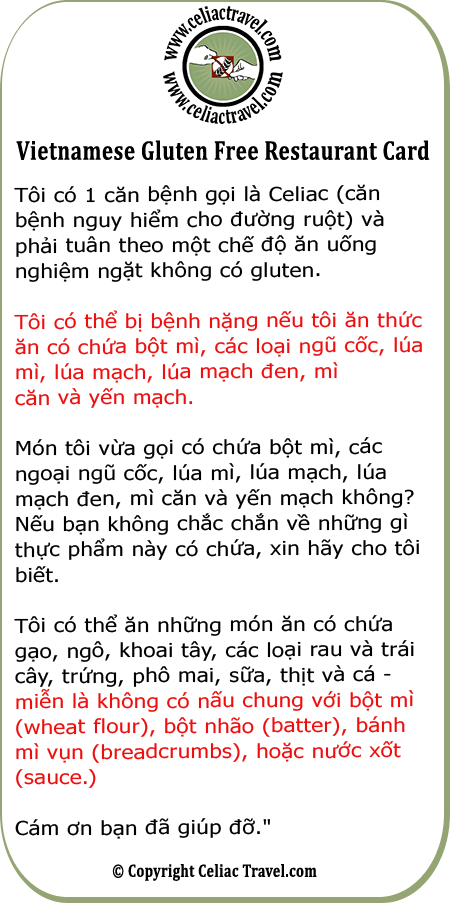
For a gluten-free travel card, please see this option from Celiac Travel. I only needed it at tourist restaurants, as those were the places that used flour to dredge meat/fish. On the street, it was far easier to merely choose places that were gluten-free by nature.
Basic Information for Navigating Saigon
Visas
Several options for visas exist. Most popular is the Visa on Arrival (VOA) scheme, whereby you pay for a letter that invites you to the country from an online agency, and then you receive your visa upon arrival in Saigon or Hanoi. This is not available for land entries. Note that if you do this, you will need to bring a passport sized photo of you as well as your stamping fee for your visa, which differs depending on how many entries you have / how long you are staying.
- E-visa agencies will offer online application of VOA, then email it to you as a PDF and you can print and bring with you for airline officials and to use for your actual visa on arrival in Saigon. Sometimes it took some serious explaining to the airlines that yes, it was a visa invitation and no it wouldn’t result in my being rejected. Airlines will customarily look for the actual visa in your passport instead. I’ve been using Evisa, but as they are not an official agency I would do some internet research to see what is best for your nationality.
Taxis
Taxis get a bad rep in town but in my two winters of time living in Saigon, I’ve had only one negative experience. And it barely was negative — just a cab driver who insisted on extra charges because we were four people in the cab. In contrast, sometimes we piled in a clown car of 7 people into a van cab, with no extra charges levied by any of the drivers. This was clearly just a bad apple, not indicative of taxi drivers overall. Yes, I’ve occasionally had a driver say he knows the way and get lost, or my pronunciation of the street name sent another in the wrong direction before I realized where I was headed. But generally if you stick to the tips below, you should be fine.
- Use VinaSun cabs if you can. White cab with green lettering. Of all the experiences, VinaSun proved time and time again to be the best. The other company I would recommend is Mai Linh, all green taxis, but my rides with VinaSun were always better.
- When you leave the airport, you can actually choose whatever company you want. It seems crazy but it’s true. After you exit the international terminal and turn left to the taxi stand, there are a bunch of dispatchers across the same street, just facing the taxi stand. While there will likely be grey taxis waiting (of a different company), you can merely walk across the street or wave the dispatcher over, and request a VinaSun cab from the VinaSun dispatcher. They will call one for you and you can just wait a few minutes until it arrives.
- Unlike in Bangkok, where you usually have to ask if they will take you to where you want to go (and they often say no), I’ve never been refused a ride. I’ve also never had to tell a cab driver to turn on his or her meter — it’s automatic.
- I do round up fares usually, but only by 5,000 – 8,000 Dong or so. No 20% tip or anything like that, but rounding up is appreciated (albeit not required). I do tip right before or right after Tet (the lunar new year) however, since it’s an expensive time of year for most Vietnamese people as they are paying off debts and buying things for the house, etc.
- When you’re waiting for a cab that someone is getting out of, don’t be irate that the prior passenger closes the door despite you waiting in front of them. The VinaSun cabs have to have the door closed from a prior fare to “reset” their fare recording and system, so it’s not that the driver is about to run off without you, or that the prior passenger is trying to deny you entry.
- Cab drivers are usually unwilling and sometimes unable to make change for a bigger (500,000 Dong) bill. I’ve seen more than one driver fish out a second pile of bills in his pockets when pressed to make change, but another run off to a store to obtain change as he honestly did not have any. I tried to just bring smaller bills with me (50,000s or 20,000s) when taking a cab.
- Asking for intersections of two streets was the easiest way to get to where I needed to go, or picking bigger landmarks like churches or hotels or famous skyscrapers (e.g Bitxeco tower) that are nearby.
Buses
Futa Buslines’ bright orange Phuong Trang buses (link to Vietnamese-only site) is reliable and leaves from the central De Tham area in District 1. Tickets can be booked at the office on De Tham near Pham Ngu Lao (272 De Tham; link is to Google map. Phone is +84 838 309 309), and small timetable cards available to keep on you for each destination, also from their offices.
Hospitals
Having been to a few of them, I recommend the Family Medical Practice in the Diamond Plaza if you are staying in District 1. It’s expensive – $60 for a consultation – but test turnaround is quick and their equipment is modern. If you need a specialist, you can make an appointment for here as well, such as a tropical diseases doctor or for those with kids, a pediatrician. Their receptionist is extremely helpful, so you can always just stop in to ask questions in lieu of calling if you are in the area. As I’ve said in my “Why I Love Saigon” post, the American Chiropractor Clinic is a very good value for people needing to see a specialist for back, neck or other joint pain.
SIM cards
I’ve found the best pay-as-you-go SIM for unlocked photos in need of a data plan to be the Mobifone SIM. You can go to any corner store and ask for a SIM, or to many of the iPhone/Android/Everything Stores that have popped up around town.
When you get the SIM card, also buy 100,000 Dong of credit. To activate the plan (this worked up until June 2014, but of course might change): Text the words DK MIU to the number 999. When a text comes back to you, reply with just the letter Y.
PRESTO. You are now signed up for the DK MIU data plan, which offers unlimited use of data (quicker speeds up to 5GB, then you get put into the slow plan) for the month.
If you ensure you keep at least 70,000 Dong (the cost of the plan as of June 2014) on your phone, you will be able to auto-renew once the month is up. Note that you’ll also get a few 50% sale messages, since Mobifone has days where credit is half off, meaning you receive double what you pay for in phone credit. These will be stored as ‘bonus’ credits in your phone, under the KM2 and KM3 headings when you check your credit. So I would just buy the data plan and then on a 50% day, I’d add another 100,000, which would keep my plan in action for the next few months. Texting not included on the plan, but quite cheap.
Currency
The Dong. Currently at a rate of 21, 185 Dong to 1 USD.
Added bonus: crass jokes. No matter how long I stayed in the country, the jokes (“fistful of Dong” or “show me your Dong” or any use of “YEAH YOU DID” after a Dong statement) did not get old. I even made my landlady a Dong flower with my rent money, but she was extremely unimpressed with my Dong Decorating Skillz.
Best to keep change / smaller denominations when you can, as many smaller stores or street stalls will be reticent to break a 500,000 note — and of course the banks give 500,000 notes for the most part.
Foot Massage
I consider this a “basics” because to me living in Asia includes availing myself of the reasonably priced and relaxing foot massages around the region. I try to go once a week or once every few weeks, especially since I enjoy long walks around Saigon.
This place is on a busy street behind the big Citibank building and is often full of Japanese business men on a lunch break. Chairs are laid out side by side on three different floors, and the 70 minute treatment (220,000 Dong at time of writing) includes the foot massage (45 minutes) plus a 25 minute head-shoulder-back combo. Of course, it is finished off by yogaesque stretching and cracking. Usually extremely busy during lunch hours for reasons above, so best to head there in the later afternoon.
Professional Foot Massage
44 Ton That Thiep Street, District 1
Books and Blogs About Vietnam and its Food
Books
Into the Vietnamese Kitchen, by Andrea Nguyen. For those who can eat bread (i.e. not celiacs like me), Andrea also has a cookbook about banh mi that was just published.
Pleasures of the Vietnamese Table: Recipes and Reminiscences from Vietnams’ Best Market Kitchens, Street Cafes, and Home Cooks, by Mai Pham (Also titled: New Flavours of the Vietnamese Table in the UK)
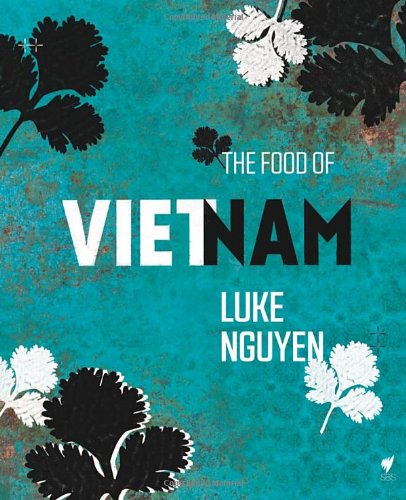
Cover from one of the recommended books.
The Food of Vietnam, by Luke Nguyen.
Vietnam: A History, by Stanley Karnow. (Long, but worth it)
Catfish and Mandala: A Two-Wheeled Voyage Through the Landscape and Memory of Vietnam, by Andrew X. Pham (Kindle version here).
Vietnam: A Traveler’s Literary Companion, by John Balaban and Nguyen Qui Duc.
The Quiet American, by Graham Greene.
Fire in the Lake, by Frances Fitzgerald.
The Battle of Dien Bien Phu, by Jules Roy
And, I haven’t read but looks interesting given the current conflict in the region — Asia’s Cauldron: The South China Sea and the End of a Stable Pacific, by Robert Kaplan.
Blogs about Saigon and Food in Vietnam
Historic Vietnam – from friend Tim Doling, one of the most knowlegeable people about Saigon, Vietnam and their architectural history. His blog is a wonderful exploration of old buildings and their background, as well as interesting people from Vietnam’s history.
Vietnam Coracle – Tom has been living in Saigon for many years and speaks great Vietnamese. He believes in sharing longform, useful content without making people pay for it, and he’s a really fun writer. His site has alley wanders, posts about food, and details about motorcycle trips away from the city, along with many other updates from his time in the country.
A Global Kitchen – my friend Cam is one of the more curious people I’ve ever met, always diving deep into the culture of food and sharing it with others. His blog houses some of the stories from his travels, as well as a great page on cooking classes around Southeast Asia.
From Swerve of Shore – photography from Vietnam with side trips elsewhere in Southeast Asia.
Eating Saigon – Joe and Hai explore and review street food around town.
Viet World Kitchen – Andrea Nguyen’s books are listed above, but her blog is also a source of recipes, information about ingredients and herbs, and commentary about Vietnamese food and traditions.
The Ravenous Couple – This lovely couple is not based in Vietnam at the moment but they have plenty of recipes for many of the dishes I’ve posted here, alongside stories of how those dishes figured prominently in their respective families.
Eating Asia’s Saigon posts – food and photography from around town, over a few years of visits and from former residents Dave & Robyn.
Sticky Rice – when people say they are going to Hanoi, I send them to Mark’s blog. He runs food tours with his partner Tu and the blog’s contents make that evident — it’s chock full of foods to try around town.
Hanoi Cooking Centre – another resource for Saigon. Tracey’s new book “Real Vietnamese Cooking” is coming out in September in North America, but you can still take cooking lessons at her cooking centre today.
Saigoneer – News, photos and events around town. Very useful for those visiting.
The Word – Event listings for Saigon and Hanoi, lots of features about food and drink and a print and online edition.
Oi Vietnam – Newer competitor to The Word, Oi also covers events around town, restaurant reviews, and has features from international locations as well.
AsiaLIFE Saigon – News, updates and feature pieces about Ho Chi Minh City, with print editions around town too.
Travelfish Vietnam Blog – updated frequently, an arm of the general Travelfish site, my go-to for news and updates for travel in Southeast Asia.
Rusty Compass Saigon guide – Mark’s page about the city, updated often, with mini reviews of restaurants and sights around town.
* * *
If your eyes haven’t glazed over, I hope this post was helpful. I plan to return to Vietnam in the coming years, but in the interim if any of these places moves or goes out of business, please do send me a note on the contact form above. If you want more in-depth narrative about how to pick street food places safely, please see my Food Traveler’s Handbook. I welcome all additional suggestions and/or additions to the post, and am also working on a map of the places mentioned.
The post The Legal Nomads Guide to Saigon Street Food appeared first on Legal Nomads.




 facebook
 reddit