Death Star Ice Sphere Mold
Sold on Amazon by Kotobukiya - $14.50

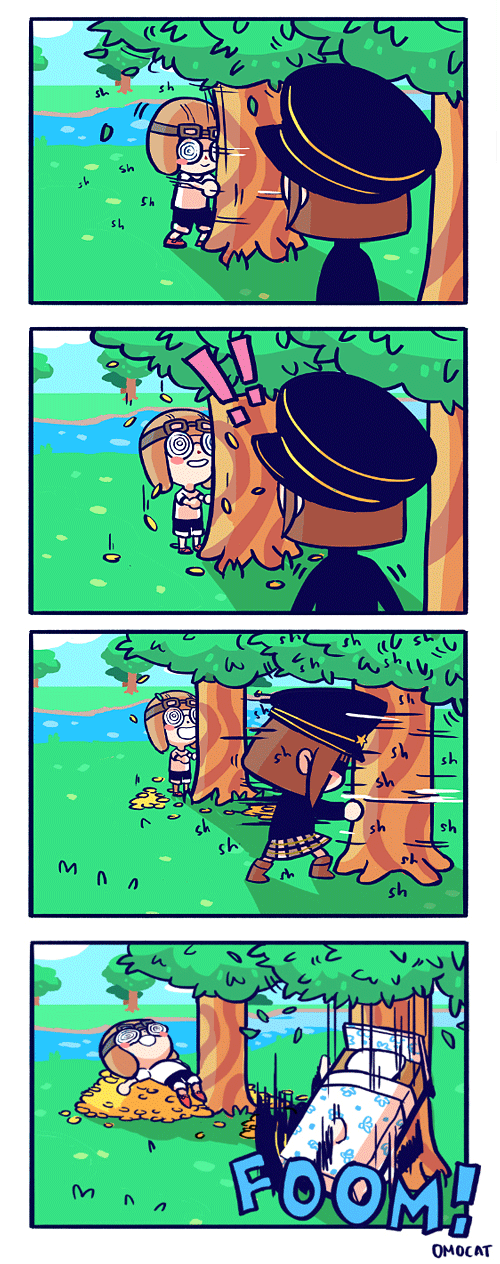
yo im selling this alpine sofa. starting price is 2400 bells inbox me if youre interested
Michael Collins"Rather than accepting “falling returns to skill,” I would sooner say that education doesn’t measure true skill as well as it used to."
Peter Orszag considers that possibility in his recent column. About one in four bartenders has some kind of degree. Orszag draws heavily on this paper by Beaudry and Green and Sand, which postulates falling returns to skill. It’s one of the more interesting pieces written in the last year, but note their model relies heavily on a stock/flow distinction. They consider a world where most of the IT infrastructure already has been built, and so skilled labor has not so much more to do at the margin. This stands in noted contrast to the common belief — which I share — that “IT-souped up smart machines” still have a long way to go and are not a mature technology. You can’t hold that view and also buy into the Beaudry and Green and Sand story, unless you think we have suddenly jumped to a new margin where machines build machines, with little help from humans.
Rather than accepting “falling returns to skill,” I would sooner say that education doesn’t measure true skill as well as it used to.
The more likely scenario is that the variance of the return to having a college education has gone up, and indeed that is what you would expect from a world of rising income inequality. Many people get the degree, yet without learning the skills they need for the modern workplace. In other words, the world of work is changing faster than the world of what we teach (surprise, surprise). The lesser trained students end up driving cabs, if they can work a GPS that is. The lack of skill of those students also raises wage returns for those individuals who a) have the degree, b) are self-taught about the modern workplace, and c) show the personality skills that employers now know to look for. All of a sudden those individuals face less competition and so their wages rise. The high returns stem from blending formal education with their intangibles (there is also more pressure to get an advanced degree to show you are one of the privileged, but that is another story.)
This polarization of returns — among degree holders — explains both why incomes are rising at the top end, and why the rate of dropping out of college is rising too. At some point along the way in the college experience, lots of students realize they won’t be able to “cross the divide,” and the degree alone won’t do it for them. They foresee their future tending bar and act accordingly.
Too many discussions of the returns to education focus on the mean or median and neglect the variance and what is likely a recent increase in that variance.
Nice essay:
The biological world is also open source in the sense that threats are always present, largely unpredictable, and always changing. Because of this, defensive measures that are perfectly designed for a particular threat leave you vulnerable to other ones. Imagine if our immune system were designed to deal only with a single strain of flu. In fact, our immune system works because it looks for the full spectrum of invaders low-level viral infections, bacterial parasites, or virulent strains of a pandemic disease. Too often, we create security measures such as the Department of Homeland Security's BioWatch program that spend too many resources to deal specifically with a very narrow range of threats on the risk spectrum.Advocates of full-spectrum approaches for biological and chemical weapons argue that weaponized agents are really a very small part of the risk and that we are better off developing strategies like better public-health-response systems that can deal with everything from natural mutations of viruses to lab accidents to acts of terrorism. Likewise, cyber crime is likely a small part of your digital-security risk spectrum.
A full-spectrum approach favors generalized health over specialized defenses, and redundancy over efficiency. Organisms in nature, despite being constrained by resources, have evolved multiply redundant layers of security. DNA has multiple ways to code for the same proteins so that viral parasites can't easily hack it and disrupt its structure. Multiple data-backup systems are a simple method that most sensible organizations employ, but you can get more clever than that. For example, redundancy in nature sometimes takes the form of leaving certain parts unsecure to ensure that essential parts can survive attack. Lizards easily shed their tails to predators to allow the rest of the body (with the critical reproductive machinery) to escape. There may be sacrificial systems or information you can offer up as a decoy for a cyber-predator, in which case an attack becomes an advantage, allowing your organization to see the nature of the attacker and giving you time to add further security in the critical part of your information infrastructure.
I recommend his book, Learning from the Octopus: How Secrets from Nature Can Help Us Fight Terrorist Attacks, Natural Disasters, and Disease.


If my original NES boxes were animated like this, I would have never thrown any of them away.