10 Nov 00:21
by Mahsa Kimiaghalam, Hossein Nasr Isfahani, Gholam Hossein Zohuri, Ali Keivanloo
The catalyst (N,N-bis(2,6-dibenzhydryl-4-ethoxyphenyl)butane-2,3-diimine)nickel dibromide, a late transition metal catalyst, was prepared and used in ethylene polymerization. The effects of reaction parameters such as polymerization temperature, co-catalyst to catalyst molar ratio and monomer pressure on the polymerization were investigated. The α-diimine nickel-based catalyst was demonstrated to be thermally robust at a temperature as high as 90 °C. The highest activity of the catalyst (494 kg polyethylene (mol cat)−1 h−1) was obtained at [Al]/[Ni] = 600:1, temperature of 90 °C and pressure of 5 bar. In addition, the performance of a binary catalyst using nickel- and palladium-based complexes was compared with that of the corresponding individual catalytic systems in ethylene polymerization. In a study of the catalyst systems, the average molecular weight and molecular weight distribution for the binary polymerization were between those for the individual catalytic polymerizations; however, the binary catalyst activity was lower than that of the two individual ones. The obtained polyethylenes had high molecular weights in the region of 105 g mol−1. Gel permeation chromatography analysis showed a narrow molecular weight distribution of 1.44 for the nickel-based catalyst and 1.61 for the binary catalyst system. The branching density of the polyethylenes generated using the binary catalytic system (30 branches/1000 C) was lower than that generated using the nickel-based catalyst (51/1000 C). X-ray diffraction study of the polymer chains showed higher crystallinity with lower branching of the polymer obtained. Also Fourier transform infrared spectra confirmed that all obtained polymers were low-density polyethylene.

A benzhydryl-derived ligand framework and the corresponding nickel(II) α-diimine complex were synthesized, characterized and the complex used in ethylene polymerization. High thermal stability of the complex was a significant aspect. The performance of a binary catalyst system involving nickel and palladium complexes in polymerization was compared with that of corresponding single catalysts. The branching of polyethylene obtained in the presence of the binary catalyst was lower compared to corresponding individual catalytic systems.
10 Nov 00:19
by Lishen Zhang, Honoria Kwok, Xiaochun Li and Hua-Zhong Yu

ACS Applied Materials & Interfaces
DOI: 10.1021/acsami.7b08957

10 Nov 00:08
by Fei-Fei Chen, Ying-Jie Zhu, Zhi-Chao Xiong, Li-Ying Dong, Feng Chen, Bing-Qiang Lu and Ri-Long Yang

ACS Applied Materials & Interfaces
DOI: 10.1021/acsami.7b09484

09 Nov 23:56
by Jiale Yong, Feng Chen, Yao Fang, Jinglan Huo, Qing Yang, Jingzhou Zhang, Hao Bian and Xun Hou

ACS Applied Materials & Interfaces
DOI: 10.1021/acsami.7b14819

08 Nov 23:40
by managing.editor@est.acs.org (American Chemical Society)

Environmental Science & Technology
DOI: 10.1021/acs.est.7b04206

08 Nov 02:44
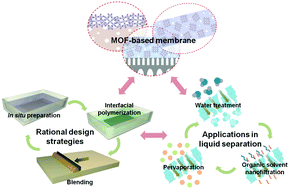
Chem. Soc. Rev., 2017, 46,7124-7144
DOI: 10.1039/C7CS00575J, Tutorial Review
Xin Li, Yuxin Liu, Jing Wang, Jorge Gascon, Jiansheng Li, Bart Van der Bruggen
This Tutorial Review highlights the achievements in the rational design and the latest applications of MOF-based membranes in liquid separation.
The content of this RSS Feed (c) The Royal Society of Chemistry

08 Nov 02:26
by Yifa Chen, Fan Chen, Shenghan Zhang, Ya Cai, Sijia Cao, Siqing Li, Wenqi Zhao, Shuai Yuan, Xiao Feng, Anyuan Cao, Xiaojie Ma and Bo Wang

Journal of the American Chemical Society
DOI: 10.1021/jacs.7b10265

03 Nov 00:59
by Yimu Hu, Elisabeth Drouin, Dominic Larivière, Freddy Kleitz and Frédéric-Georges Fontaine

ACS Applied Materials & Interfaces
DOI: 10.1021/acsami.7b12589

03 Nov 00:43
Publication date: 1 February 2018
Source:Journal of Membrane Science, Volume 547
Author(s): Jing Wang, Li’an Hou, Kangkang Yan, Lin Zhang, Qiming Jimmy Yu
Superhydrophilic and underwater superoleophobic membranes are emerging materials for effective oil/water separation. In this paper, an electrospun nanofibrous (ENF) membrane with hierarchical structures was prepared by the construction of polydopamine nanoclusters onto a cross-linked polyacrylonitrile/hyperbranched polyethyleneimine (PAN/HPEI/PDA) ENF membrane. This hierarchical structure endows the membrane with superhydrophilicity with a low water contact angle of 0°, and underwater superoleophobicity with a high oil contact angle of 162°. This membrane can effectively separate oil/water emulsions with a high permeate flux (~ 1600Lm
−2 h
−1) and high oil rejection (~ 98.5%), solely driven by gravity. Furthermore, the membrane also showed an excellent antifouling ability for oil droplets and recyclability (>10 cycles), making it a promising candidate for treatment of oily wastewater.
Graphical abstract

02 Nov 23:08
by Libin Liu, Wenyuan Fang, Gailan Guo
Abstract
Polymer-dominated membranes with switchable wettability are highly desired due to their on-demand applications for oil/water separation. Herein, a low-cost methodology to fabricate membranes consisting of hyperbranched polyurethane (HBPU) and fluorine-modified silica (F-SiO2) with tunable wettability by electrospinning is reported. The HBPU/F-SiO2 composite membranes can be transformed from superhydrophobicity to -philicity through plasma treatment; these membranes exhibit different wettability for effective separation of surfactant-stabilized water-in-oil and oil-in-water emulsions.

Creating divisions: Membranes composed of hyperbranched polyurethane (HBPU) and fluorine-modified silica (F-SiO2) with tunable wettability can be prepared through electrospinning. These membranes can be transformed from superhydrophobicity to -philicity through plasma treatment and used for the effective separation of surfactant-stabilized water-in-oil and oil-in-water emulsions (see figure).
02 Nov 23:06
by Weerapha Panatdasirisuk, Zhiwei Liao, Thammasit Vongsetskul and Shu Yang

Langmuir
DOI: 10.1021/acs.langmuir.7b01138

02 Nov 22:33
Chem. Sci., 2017, 8,6542-6554
DOI: 10.1039/C7SC02296D, Edge Article

Open Access
Dibyangana Parbat, Sana Gaffar, Adil Majeed Rather, Aditi Gupta, Uttam Manna
A chemical approach for the regulation of oil (under water) and water (in air) wettability. The super-wetting properties are highly durable at harsh physical/chemical settings.
The content of this RSS Feed (c) The Royal Society of Chemistry

02 Nov 13:36
Publication date: 1 January 2018
Source:Journal of Membrane Science, Volume 545
Author(s): Yan Lv, Yong Du, Zhi-Xiong Chen, Wen-Ze Qiu, Zhi-Kang Xu
Nanocomposite membranes (NCMs) provide inspiration to combine the superiorities of inorganic nanomaterials and polymeric matrices for outstanding nanofiltration performance. Herein, novel NCMs have been fabricated via co-deposition of polydopamine (PDA), polyetheylenimine (PEI) and electropositive gold nanoparticles (GNPs) followed by crosslinking. The GNPs distribute in the formed selective layer uniformly without obvious aggregation due to their good dispersion and compatibility with the positively charged PDA/PEI matrix. Thus the selective layer remains defect-free and the surface potential is enhanced by the positively charged GNPs. These endow the NCMs with high retention ratio (> 90%) for bivalent cations, such as Mg
2+, Ca
2+, and various heavy metal ions. Meanwhile, the permeate flux of the NCMs doubles compared with the PDA/PEI co-deposited nanofiltration membranes (NFMs) attributed to the hydrophilicity of the embedded GNPs and the loosened selective layer structures. The compact resistance and the structural stability of the NCMs are also improved effectively in contrast with the PDA/PEI ones, which are of significant importance for the practical use of NFMs. Moreover, the quaternary amine moieties on GNPs improve the antibacterial activity of NCMs against S. aureus and E. coli.
Graphical abstract

02 Nov 07:15
by Feng Luo
Abstract
A significant synergic effect between a metal–organic framework (MOF) and Fe2SO4, the so-called MOF+ technique, is exploited for the first time to remove toxic chromate from aqueous solutions. The results show that relative to the pristine MOF samples (no detectable chromate removal), the MOF+ method enables super performance, giving a 796 Cr mg g−1 adsorption capacity. The value is almost eight-fold higher than the best value of established MOF adsorbents, and the highest value of all reported porous adsorbents for such use. The adsorption mechanism, unlike the anion-exchange process that dominates chromate removal in all other MOF adsorbents, as unveiled by X-ray photoelectron spectroscopy (XPS), scanning electron microscopy (SEM), and transmission electron microscopy (TEM), is due to the surface formation of Fe0.75Cr0.25(OH)3 nanospheres on the MOF samples.

A pause from pores: Relying on the surface rather than the pores of metal–organic frameworks (MOFs), the MOF+ method enables an ultrahigh chromate removal in aqueous solution of up to 796 Cr mg g−1, exceeding any porous material for this kind use. The hexavalent chromate is reduced by FeSO4 to generate FeIII and CrIII ions, the MOF surface then induces the formation of Fe0.75Cr0.25(OH)3 nanospheres.
02 Nov 00:40
by Yan Song, Lihua He, Xiaofei Zhang, Fei Liu, Nan Tian, Yusheng Tang and Jie Kong

The Journal of Physical Chemistry C
DOI: 10.1021/acs.jpcc.7b07646

02 Nov 00:35
by Merry K. Smith and Katherine A. Mirica

Journal of the American Chemical Society
DOI: 10.1021/jacs.7b08840

02 Nov 00:30
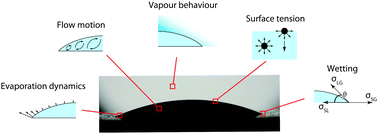
Chem. Soc. Rev., 2018, 47,558-585
DOI: 10.1039/C6CS00902F, Review Article
D. Brutin, V. Starov
Wetting and evaporation of a simple sessile droplet is a very complex problem involving strongly coupled physics.
The content of this RSS Feed (c) The Royal Society of Chemistry

30 Oct 23:56
by managing.editor@est.acs.org (American Chemical Society)

Environmental Science & Technology
DOI: 10.1021/acs.est.7b03405

30 Oct 23:48
by Zhuonan Song, Fen Qiu, Edmond W. Zaia, Zhongying Wang, Martin Kunz, Jinghua Guo, Michael Brady, Baoxia Mi and Jeffrey J. Urban

Nano Letters
DOI: 10.1021/acs.nanolett.7b02910

30 Oct 14:28
by Xiaowen Tong, Zhiquan Yang, Jinna Feng, Ying Li, Hongguo Zhang
Semiconductor-based photocatalysis is an environmental friendly and cost-effective technique for water treatment. Due to their unique properties, metal–organic frameworks (MOFs) are considered as ideal platform to develop composite photocatalyst. In this study, Bismuth oxychloride (BiOCl) was first attempt to be incorporated with highly stable MOFs, UiO-66(Zr) by hydrothermal reaction. Different characterization methods including X-ray diffraction, Scanning electron microscopy, Fourier transform infrared spectroscope, X-ray photoelectron spectroscopy had been used to prove the successful synthesis of composite photocatalyst. The resultant BiOCl/UiO-66 composite showed higher photodegradation performance of Rhodamine B (RhB) under ultraviolet and visible light irradiation than that of pristine materials and their mechanically mixed sample. In addition, the composite exhibited good structural stability and reusability. The photocatalytic mechanism of RhB degradation over the composite under visible light proceeded via a photosensitization process. A better adsorptivity of RhB and effective electron transfer within the hybrid material might be responsible for the enhanced photocatalytic performance.

BiOCl and UiO-66(Zr) were combined together through chemical bonds (C-Cl), and a different morphology compared to pristine material was obtained in the preparation process, which brought a better adsorptivity of RhB and effective electron transfer within the hybrid material. The BiOCl/UiO-66(Zr) composite shows prior photosensitization degradation performance for RhB under visible light than pristine materials.
27 Oct 00:53
by Hao-Yang Mi, Xin Jing, Han-Xiong Huang and Lih-Sheng Turng

ACS Applied Materials & Interfaces
DOI: 10.1021/acsami.7b10901

27 Oct 00:09
by Qianyou Wang, Shan Wang, Xiao Feng, Le Wu, Guoying Zhang, Mingrui Zhou, Bo Wang and Li Yang

ACS Applied Materials & Interfaces
DOI: 10.1021/acsami.7b12767

26 Oct 23:58
by Zhiping Yin and Xiao-Feng Wu

Organic Process Research & Development
DOI: 10.1021/acs.oprd.7b00332

25 Oct 00:17
by Xiaoqin Zou, Guangshan Zhu
Abstract
Membrane materials with excellent selectivity and high permeability are crucial to efficient membrane gas separation. Microporous organic materials have evolved as an alternative candidate for fabricating membranes due to their inherent attributes, such as permanent porosity, high surface area, and good processability. Herein, a unique pore-chemistry concept for the designed synthesis of microporous organic membranes, with an emphasis on the relationship between pore structures and membrane performances, is introduced. The latest advances in microporous organic materials for potential membrane application in gas separation of H2, CO2, O2, and other industrially relevant gases are summarized. Representative examples of the recent progress in highly selective and permeable membranes are highlighted with some fundamental analyses from pore characteristics, followed by a brief perspective on future research directions.

Recent advances regarding microporous organic materials for membrane gas separation are reviewed. Critical challenges associated with the designed synthesis of membrane materials with defined porous structures, and the correlations between pore chemistry and membrane separation performance, in terms of selectivity and permeability, are discussed.
25 Oct 00:09
Publication date: 1 February 2018
Source:Journal of Membrane Science, Volume 547
Author(s): Lei Chen, Feng Wu, Yangling Li, Yidi Wang, Liping Si, Ka I. Lee, Bin Fei
A superhydrophobic fibrous membrane (FM), which consists of elastic polyurethane (PU) and chromatic polydiacetylenes (PDA), is fabricated using an electrospinning technique, followed by short-time UV irradiation and heating treatment. The FM with fine hierarchical roughness exhibits excellent superhydrophobicity and breathability under even 300% strain of biaxial stretching. It can effectively separate the oil–sea water mixture, solely using gravity, with fascinating permeate flux (6369.4 ± 37.7Lm
−2 h
−1), high separation efficiency, excellent recyclability and stability against corrosive liquids. Furthermore, the FM shows good air permeability and mechanical properties. Our design starts from simple chemistry, and may offer a versatile and scalable approach to fabricate hierarchically structured superhydrophobic FMs for variously potential applications, including the cleanup of oil spills, waste water treatment, packaging of stretchable electronics and protective clothing.
Graphical abstract

24 Oct 01:36
by Lorenzo Maserati, Stephen M. Meckler, Jonathan E. Bachman, Jeffrey R. Long and Brett A. Helms

Nano Letters
DOI: 10.1021/acs.nanolett.7b03106

21 Oct 22:55
by John T. Sypek
Superelasticity and cryogenic linear shape memory effects of CaFe2As2
Nature Communications, Published online: 20 October 2017; doi:10.1038/s41467-017-01275-z
Shape memory materials are capable of returning to their original form post-deformation, but those with high actuation performances remain scarce. Here the authors reveal that CaFe2As2 exhibits cryogenic linear shape memory behaviour with high recoverable strain and yield strength, owing to a reversible uni-axial phase transformation.

21 Oct 14:03
by Jianan Zhang, Jihong Yu
Antireflection surfaces and coatings have attracted considerable interests because they can maximize light transmittance of the substrates. In this work, zeolite antireflective (ZAR) coatings are prepared via layer-by-layer (LBL) assembly of MFI-type zeolite silicalite-1 and polyelectrolyte. A micro- and macroporous hierarchical structure was obtained which contributes to the antireflective property of the zeolite coatings. The light transmittance of the coating on quartz can achieve as high as 99.3% at 650 nm. Furthermore, a superhydrophobic ZAR coating can be obtained by chemical modification with 1H,1H,2H,2H–perfluorooctyl-triethoxysilane. This work demonstrates that zeolites are excellent candidates as high transparent superhydrophobic coatings.

Zeolite antireflective (ZAR) coatings have been successfully prepared by LBL assembly method with silicalite-1 nano-crystals and polyelectrolyte, followed by calcination to eliminate the organic component. A superhydrophobic ZAR coating can be obtained by chemical modification. The present work demonstrates that zeolites are excellent materials for highly transparent superhydrophobic coatings.
20 Oct 00:25
by managing.editor@est.acs.org (American Chemical Society)

Environmental Science & Technology
DOI: 10.1021/acs.est.7b04141

20 Oct 00:14
by Nan Nan Xia, Xiao Min Xiong, Min Zhi Rong, Ming Qiu Zhang and Fangong Kong

ACS Applied Materials & Interfaces
DOI: 10.1021/acsami.7b11230