30 Jan 12:26
by Raziyeh Ghafouri-Nejad, Maryam Hajjami, Razieh Nejat
In this work, complex of Ni-modified graphene oxide was prepared and characterized using FT-IR spectroscopy, SEM, XRD, TGA and ICP-OES techniques. This compound used as an efficient and recoverable catalyst for the C–S coupling reaction using sulfur-transfer reagents (S8 or thiourea). The catalyst was easily separated using a simple filtration and reusable without significant loss of their catalytic efficiency.

Complex of Ni-Modified Graphene Oxide was prepared and characterized using FT-IR spectroscopy, SEM, XRD, TGA and ICP-OES techniques. This compound used as an efficient and recoverable catalyst for the C–S coupling reaction using sulfur-transfer reagents (S8 or thiourea).
30 Jan 04:15
by Jiankun Huang and Zifeng Yan

Langmuir
DOI: 10.1021/acs.langmuir.7b03866

30 Jan 00:55
by Yearin Byun, Ali Coskun
Abstract
The synthesis of highly microporous, epoxy-functionalized porous organic polymers (ep-POPs) by a one-pot, catalyst-free Diels–Alder cycloaddition polymerization is reported. The high oxygen content of ep-POPs offer efficient hydrogen-bonding sites for water molecules, thus leading to high water-uptake capacities up to 39.2–42.4 wt % under a wide temperature range of 5–45 °C, which covers the span of climatic conditions and manufacturing applications in which such materials might be used. Importantly, ep-POPs demonstrated regeneration temperatures as low as 55 °C, as well as excellent water stability, recyclability, and high specific surface areas up to 852 m2 g−1.

Thirsty polymers: Porous organic polymers incorporating epoxy moieties were synthesized by a one-pot, catalyst-free Diels–Alder cycloaddition polymerization. The hydrogen bonding between epoxy groups and water molecules optimizes binding affinity, thus balancing between high water uptake and low regeneration temperature.
30 Jan 00:49
by Linyuan Lian, Yong Xia, Changwang Zhang, Bing Xu, Lei Yang, Huan Liu, Daoli Zhang, Kai Wang, Jianbo Gao and Jianbing Zhang

Chemistry of Materials
DOI: 10.1021/acs.chemmater.7b04825

29 Jan 22:24
Chem. Sci., 2018, 9,2042-2064
DOI: 10.1039/C7SC05370C, Perspective

Open Access
Marco Leonardi, Mercedes Villacampa, J. Carlos Menendez
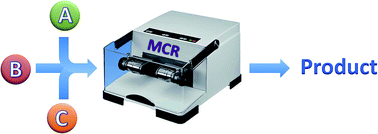
Multicomponent reactions promoted by mechanical energy are critically reviewed.
The content of this RSS Feed (c) The Royal Society of Chemistry

29 Jan 22:21
Soft Matter, 2018, 14,2586-2593
DOI: 10.1039/C7SM02354E, Paper
Sung Ho Lee, Sung Woo Kim, Bong Su Kang, Pahn-Shick Chang, Moon Kyu Kwak
Continuous fabrication method of micro/nano structure using thermosetting polymer and dry adhesive production as its application are presented.
The content of this RSS Feed (c) The Royal Society of Chemistry

29 Jan 22:20
Green Chem., 2018, 20,1065-1073
DOI: 10.1039/C7GC03296J, Paper
Prakash Venkatesan, Tom Vander Hoogerstraete, Tom Hennebel, Koen Binnemans, Jilt Sietsma, Yongxiang Yang
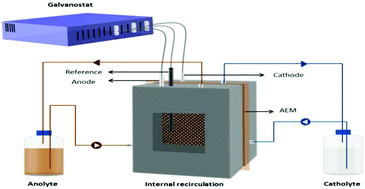
A closed loop room temperature electrochemical process for selective recovery of REEs from NdFeB magnet waste.
The content of this RSS Feed (c) The Royal Society of Chemistry

29 Jan 22:12
by Marian Rauser, Christoph Ascheberg, Meike Niggemann
Abstract
The first general protocol for the direct reductive N-functionalization of aliphatic nitro compounds is presented. The nitro group is partially reduced to a nitrenoid, with a mild and readily available combination of B2pin2 and zinc organyls. Thereby, the formation of an unstable nitroso intermediate is avoided, which has so far severely limited reductive transformations of aliphatic nitro compounds. The reaction is concluded by an electrophilic amination of zinc organyls.

No N=O! The first general protocol for a direct reductive N-functionalization of aliphatic nitro compounds is presented. This type of transformation was so far limited to nitro compounds devoid of α-protons, due to the fast nitroso-oxime tautomerization. N-functionalization is enabled by an alternative reaction path via a more stable nitrenoid intermediate.
29 Jan 22:09
Publication date: 1 May 2018
Source:Desalination, Volume 433
Author(s): Ming Qiu, Jianxiu Wang, Chunju He
A stable and hydrophilic substrate is of critical significance for forward osmosis (FO) membrane with excellent performance. This study presents a simple, facile and efficient approach for the fabrication of polyethersulfone/poly (acrylic acid) thin-film composite forward osmosis (TFC FO) membrane through in-situ cross-linked polymerization and interfacial polymerization. The resulting network structure improves the hydrophilic stability of membranes. Compared with the pristine membrane, the blending membrane exhibits not only more than four times decrease in structural parameter, but also higher water flux (up to 32.9 and 56.3 L m−2 h−1 under forward osmosis and pressure retarded osmosis mode). In addition, poly (acrylic acid) chains can form ionic bonds with the m-phenylenediamine during the interfacial polymerization, resulting in a better polyamide layer, high salt rejection and long-term stability. This research opens a new avenue to improve the performance of TFC FO membrane by in-situ cross-linked polymerization.
29 Jan 22:09
Publication date: 1 April 2018
Source:Journal of Membrane Science, Volume 551
Author(s): Jiaxin Guo, Muhammad Usman Farid, Eui-Jong Lee, Dickson Yuk-Shing Yan, Sanghyun Jeong, Alicia Kyoungjin An
We have reported on the potential use of membrane distillation (MD) to remove emerging pollutants from wastewater as an alternative to other biological and chemical treatments. For every successful application of MD, the fouling and scaling associated with membrane wetting must be reduced to minimize the deterioration in performance. Here, we have hypothesized that the effectiveness of the antibiotic removal from wastewater can be significantly influenced by the interfacial interaction between the antibiotics and the membrane surface. To verify this, we investigated the applicability of the direct contact MD (DCMD) to treat the antibiotics, including positively-charged tobramycin (TOB), negatively-charged cefotaxime (CTX), and neutral ciprofloxacin (CFX). DCMD tests were performed with negatively-charged commercial polyvinylidene fluoride (PVDF) membranes, with the observance of a significant decline in flux and wetting issues during the MD treatment of TOB. The PVDF membrane exhibited a stable flux (CTX: 19.76 LMH and CFX: 19.81 LMH), with almost 100% rejection of the CTX and CFX due to electrostatic repulsion. Optical coherence tomography (OCT) further elucidates the in-situ fouling development for TOB, CTX and CFX.
Graphical abstract

29 Jan 12:11
by Abdol R. Hajipour, Farzaneh Fakhari, Gholamreza Nabi Bidhendi
An environmentally friendly copper-based catalyst supported on 2-Methoxy-1-phenylethanone functionalized MCM-41 was prepared and characterized by FT-IR, FE-SEM, TEM, XRD, EDX, BET and ICP techniques. The catalyst was applied for the C−S cross-coupling reaction of aryl halides with thiourea. Corresponding products were produced in good yields in aerobic conditions. The catalyst could be recovered and recycled for several times.

Cu(II)-2-MPE@MCM-41 was prepared for the C–S cross-coupling reaction of aryl halides with thiourea and corresponding products were produced in good yields.
26 Jan 21:59
by Filiz Ugur Nigiz, Nilufer Durmaz Hilmioglu
Abstract
A poly(styrenesulfonic acid)-carboxymethylcellulose (PSSA-CMC) blend catalytic membrane was prepared for ethyl lactate production in a pervaporation-aided membrane reactor. The effects of PSSA/CMC concentration, initial molar ratio, and temperature on acid conversion were evaluated. Additionally, the separation performance of membrane was investigated as a function of flux and separation factor. Increasing the temperature enhanced lactic acid conversion at constant alcohol:acid ratio.

In order to achieve high lactic acid conversion associated with a high-purity final product without the need of a further purification step, a reactive and functional poly(styrenesulfonic acid)-carboxymethylcellulose blend catalytic membrane was developed and applied in a pervaporation-aided membrane reactor for ethyl lactate production. Excellent acid conversion could be realized.
25 Jan 23:48
by Zhengqi Wu, Chun Zhang, Li Peng, Xuerui Wang, Qingqing Kong and Xuehong Gu

ACS Applied Materials & Interfaces
DOI: 10.1021/acsami.7b17191

25 Jan 23:42
by Xiaojing Su, Hongqiang Li, Xuejun Lai, Lin Zhang, Xiaofeng Liao, Jing Wang, Zhonghua Chen, Jie He and Xingrong Zeng

ACS Applied Materials & Interfaces
DOI: 10.1021/acsami.7b15909

25 Jan 23:37
by Xiaoyi Wang, Yulong Liao, Huaiwu Zhang, Tianlong Wen, Dainan Zhang, Yuanxun Li, Mingzhen Liu, Faming Li, Qiye Wen, Zhiyong Zhong and Xingtian Yin

ACS Applied Materials & Interfaces
DOI: 10.1021/acsami.7b17582

25 Jan 23:32
by Ryo Togasawa, Mizuki Tenjimbayashi, Takeshi Matsubayashi, Takeo Moriya, Kengo Manabe and Seimei Shiratori

ACS Applied Materials & Interfaces
DOI: 10.1021/acsami.7b15689

25 Jan 22:23
by Jin Liu, Jufang Hao, Chencheng Hu, Baojiang He, Jiangbo Xi, Junwu Xiao, Shuai Wang and Zhengwu Bai

The Journal of Physical Chemistry C
DOI: 10.1021/acs.jpcc.7b10237

24 Jan 05:15
Chem. Sci., 2018, 9,2533-2539
DOI: 10.1039/C7SC04974A, Edge Article
Open Access
Yanju Wang, Xiaoqin Zou, Lei Sun, Huazhen Rong, Guangshan Zhu
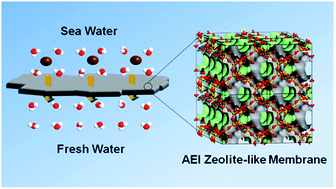
A fascinating membrane material composed of polycrystalline zeolite-like aluminophosphate with narrow pore and high water uptake is well developed, which exhibits superior desalination performance in terms of excellent ion rejection and record water flux.
The content of this RSS Feed (c) The Royal Society of Chemistry

24 Jan 01:30
by Bingbing Liang, Shiliang Wang, Daitao Kuang, Lizhen Hou, Bowen Yu, Liangwu Lin, Lianwen Deng, Han Huang and Jun He
FeCo-C core–shell nanoparticles (NPs) with diameters of 10–50 nm have been fabricated on a large
scale by one-step metal-organic chemical vapor deposition using the mixture of cobalt
acetylacetonate and iron acetylacetonate as the precursor. The Fe/Co molar ratio of the alloy
nanocores and graphitization degree of C shells, and thus the magnetic and electric properties of
the core–shell NPs, can be tuned by the deposition temperature ranging from 700 °C to 900 °C.
Comparative tests reveal that a relatively high Fe/Co molar ratio and low graphitization degree
benefit the microwave absorption (MA) performance of the core–shell NPs. The composite with 20 wt%
core–shell NP obtained at 800 °C and 80 wt% paraffin exhibits an optimal reflection loss ##IMG##
[http://ej.iop.org/images/0957-4484/29/8/085604/nanoaaa52fieqn1.gif] {$({\rm{R}}{\rm{L}})$} of −60.4
dB at 7.5 GHz with a thickness of 3.3 mm, and an effective absorption bandwidth (frequency range for
RL ≤10 d...
24 Jan 01:22
by managing.editor@est.acs.org (American Chemical Society)

Environmental Science & Technology
DOI: 10.1021/acs.est.7b04553

24 Jan 01:16
by Shaozheng Guo, Zhiqun Yu and Chuanming Yu

Organic Process Research & Development
DOI: 10.1021/acs.oprd.7b00358

24 Jan 01:09
by Yulian He, Zachary S. Fishman, Ke R. Yang, Brandon Ortiz, Chaolun Liu, Julia Goldsamt, Victor S. Batista and Lisa D. Pfefferle

Journal of the American Chemical Society
DOI: 10.1021/jacs.7b11654

23 Jan 11:54
by Mohammed Iqbal Khazi, Woomin Jeong, Jong-Man Kim
Abstract
“Paper” has greatly contributed to the development and spread of civilization. Even in today's “digitalized” world, paper continues to play a key role in socioeconomic growth, as is evidenced by the growth in global paper consumption. Unfortunately, the use of paper has its cost in terms of the exhaustion of world's natural resources. Consequently, new, cost-effective technologies that preserve natural resources are required for this purpose. Functional materials have revolutionized the way people think about developing new technologies. Especially important in this regard are “smart reactive materials,” which are capable of actively responding to external stimuli such as heat, light, mechanical stress, and specific molecular orientations. Moreover, functionalized chromogenic materials, which undergo reversible color switching upon external stimulation, have attracted great attention in the context of developing rewritable paper. Here, investigations of various materials and systems that are devised for use as rewritable paper are reviewed with the hope that the coverage will stimulate and guide future studies in this area.

“Rewritable Paper” functions as an alternate medium of documenting and can be reused multiple times based on a “write–erase–write” concept. This approach appears to be ideal for reducing paper-related negative environmental consequences. In this context, advantage of functional materials to perform design-driven reversible chromism has been explored to design rewritable papers.
23 Jan 11:52
Abstract
In this research, the Polysulfone (PS) membrane was blended with ZrO2–SnO2 nanocomposite as a promising tool for pharmaceutical wastewater to evaluate the impression of the synthesized ZrO2–SnO2 nanocomposite membrane on the efficiency and antibiofouling behaviors. The hydrophilicity, pharmaceutical wastewater permeability, photocatalytic activity and anti-fouling behavior of nanocomposite membranes were studied in details. The outcomes demonstrate that the nanocomposite membranes indicated considerable photocatalytic degradation of pharmaceutical wastewater under UV light irradiation during filtration separation, and nanocomposite membrane fouling could be remarkably diminished after UV irradiation, leading to high pharmaceutical wastewater treatment for long-term performance. The flux of the ZrO2–SnO2 nanocomposite membranes after being irradiated by UV light was increased significantly in comparison with an origin PS membrane. The results of PS0.5 membrane show the best flux of 73.78 l/m2 h increase 50.7% compared to the neat membrane. Likewise, the degradation efficiency, COD removal and flux recovery ratio of this modified membrane was also improved to 90, 57.1 and 68.5%, respectively. The hydrophilicity of PS0.5 membrane under UV irradiation was realized with a decline from 62.9° to 45.97°. Our research indicates that ZrO2–SnO2 nanocomposite membranes with photocatalytic attributes under UV light are an impressive method to resolve the pharmaceutical wastewater fouling problem.
Graphical Abstract

22 Jan 22:24
Soft Matter, 2018, 14,1608-1613
DOI: 10.1039/C7SM01904A, Paper
Aditya Jetly, Ivan U. Vakarelski, Sigurdur T. Thoroddsen
A thin air layer sustained on the surface of superhydrophobic sphere can reduce drag by up to 80%.
The content of this RSS Feed (c) The Royal Society of Chemistry

21 Jan 05:51
Publication date: 1 April 2018
Source:Journal of Membrane Science, Volume 551
Author(s): Yuan Liao, Shuwen Goh, Miao Tian, Rong Wang, Anthony G. Fane
Extractive membrane bioreactors (EMBRs) are promising wastewater treatment processes combining an aqueous-aqueous extractive membrane process and biodegradation. The target contaminants diffuse through an extractive membrane and are metabolized by the active biofilm attached on the downstream membrane surface and microorganisms in the bioreactor. The benefit of EMBRs is that the biomass is not exposed to the potentially hostile feed conditions (high salinity, pH extremes etc.). The physicochemical properties of membrane surfaces on the receiving side facing the bioreactor are critical in controlling the extent and nature of the membrane-attached biofilm. In this work, novel nanofibrous composite membranes with a superhydrophobic surface (coded as NC) or a superhydrophilic surface (coded as M-NC) on the receiving side have been designed, developed and evaluated in EMBRs. Compared to commercial polydimethysiloxane (PDMS) tubular membranes, both NC and M-NC possessed 10 times higher phenol extraction efficiency in an aqueous-aqueous extractive membrane process. The uncontrolled biofilm growth on the membrane surface after 12 days of cross flow EMBR (CF-EMBR) operation resulted in 62% reductions of overall mass transfer coefficients (k 0 ) of both NC and M-NC. However, both membranes exhibited better performance in a submerged EMBR (S-EMBR) configuration due to the presence of air bubbles scouring on the membrane surface. Moreover, the fouling-releasing fluoro-polymeric surface of the hydrophobic NC was able to attenuate the tendency of microbial attachment and encourage biofilm scouring from the membrane surface in the S-EMBR. In contrast, more polysaccharides were present in the biofilm on the poly (ethylene glycol) (PEG)-modified M-NC surface, which acted as adhesives to tightly immobilize the biofilm on the membrane surface. Lastly, the NC which exhibited a higher stable k 0 of 5.7 × 10⁻⁷ m/s in 12 days of S-EMBR operation, has been tested in a pilot S-EMBR to treat actual industrial wastewater. It showed a stable and competitive k 0 of 6.5 × 10⁻⁷ m/s in 31 days operation, demonstrating its feasibility for hostile industrial wastewater treatment.
19 Jan 22:28
by Dinesh Shetty, Ilma Jahovic, Jesus Raya, Zouhair Asfari, John-Carl Olsen and Ali Trabolsi

ACS Applied Materials & Interfaces
DOI: 10.1021/acsami.7b16546

19 Jan 22:26
by Carlos García Núñez, William Taube Navaraj, Fengyuan Liu, Dhayalan Shakthivel and Ravinder Dahiya

ACS Applied Materials & Interfaces
DOI: 10.1021/acsami.7b15178

19 Jan 22:22
by Alexander Davis, Salvatore Surdo, Gianvito Caputo, Ilker S. Bayer and Athanassia Athanassiou

ACS Applied Materials & Interfaces
DOI: 10.1021/acsami.7b15088

19 Jan 22:19
by Yuntao Zhao, Xiao Wang, Yiwei Ren and Desheng Pei

ACS Applied Materials & Interfaces
DOI: 10.1021/acsami.7b15309