Shared posts

16 Apr 15:18

Shorter Clarence Thomas: Progressives are traitors, and my wife’s seditious attempt to overthrow the government was therefore a good thing

by Paul Campos

When I posted earlier this morning about Sonia Sotomayor apologizing to Brett Kavanaugb for hurting his feelings by telling the truth, I wasn’t aware that just a few hours earlier Clarence Thomas had declared that the approximately 55% of the population that doesn’t worship Confederate Jesus aren’t really Americans at all, and should be extirpated as an alien presence in the body politic.

Supreme Court Justice Clarence Thomas on Wednesday delivered a televised broadside against progressivism, a political philosophy he described as an existential threat to America and the principles that founded it 250 years ago. 

“Progressivism seeks to replace the basic premises of the Declaration of Independence and hence our form of government,” Thomas said in a speech at the University of Texas Austin Law School pegged to the nation’s upcoming milestone birthday. 

A spirit of “cynicism, rejection, hostility and animus” toward America — by Americans — has taken hold, Thomas said in remarks carried live on CSPAN.

I do agree wholeheartedly with that latter observation.

He said that the values enshrined in the 1776 Declaration of Independence have “fallen out of favor” among Americans — a trend perpetrated, he argued, by “intellectuals” and the nation’s colleges and universities. 

Once more with feeling:

Irrationalism also depends on the cult of action for action’s sake. Action being beautiful in itself, it must be taken before, or without, any previous reflection. Thinking is a form of emasculation. Therefore culture is suspect insofar as it is identified with critical attitudes. Distrust of the intellectual world has always been a symptom of Ur-Fascism, from Goering’s alleged statement (“When I hear talk of culture I reach for my gun”) to the frequent use of such expressions as “degenerate intellectuals,” “eggheads,” “effete snobs,” “universities are a nest of reds.” The official Fascist intellectuals were mainly engaged in attacking modern culture and the liberal intelligentsia for having betrayed traditional values.

Umberto Eco, “Ur-Fascism”

 “[Progressivism] holds that our rights and our dignities come not from God, but from government,” he said. “It requires of the people a subservience and weakness incompatible with a constitution premised on the transcendent origin of our rights.”

This is ultimately an argument for a literal theocracy, and you don’t have to stay on that train for many subway stops to get there, as we’re seeing at this precise historical moment.

Thomas said Washington has been overrun by elected and appointed officials who lack commitment to “righteous cause, to traditional morality, to national defense, to free enterprise, to religious piety or to the original meaning of the Constitution.”

I missed the Free Enterprise, Religious Piety, Traditional Morality, and Original Meaning clauses of the Constitution, but maybe that’s because my law school was a nest of reds.

“They recast themselves as Institutionalists, pragmatists or thoughtful moderates, all as a way of justifying their failures to themselves, their consciences, and their country,” he said. 

Thomas called on Americans to stand up for their principles and endure personal “sacrifices,” if necessary, to preserve the nation’s democracy.  

“In my view, we must find in ourselves that same level of courage that the signers of the Declaration have so that we can do for our future what they did for theirs,” he said. 

In other words, sedition in the defense of liberty is no vice. Just ask my wife!

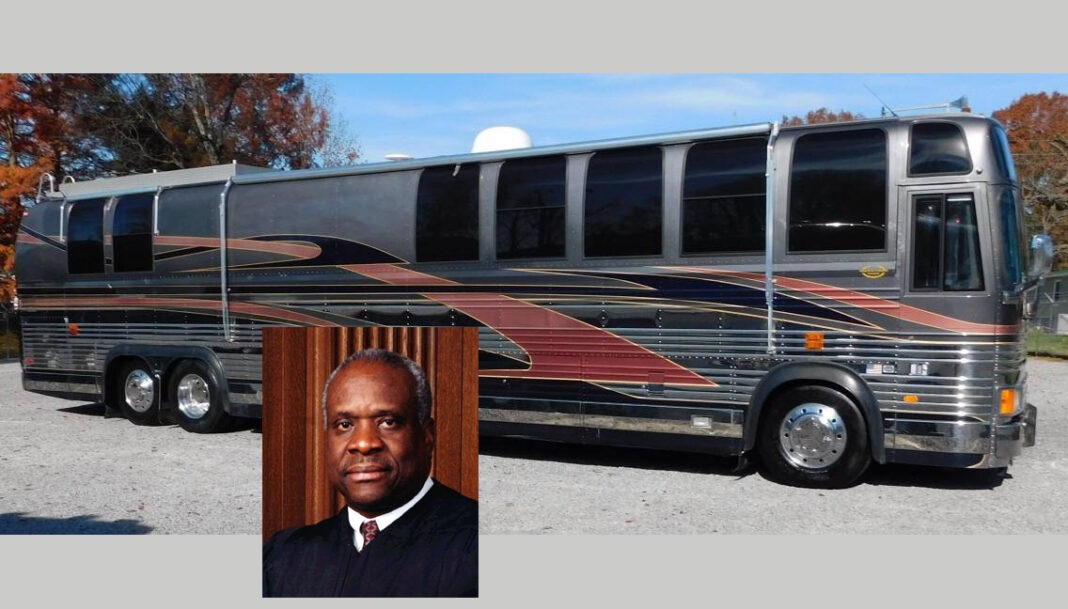
Also too, shame on the University Texas’s law school for platforming this disgrace to the judiciary, although I’m fully aware that not giving Thomas another half million dollar RV is probably a violation of the Federalist Society Secret Constitution’s emoluments clause.

The post Shorter Clarence Thomas: Progressives are traitors, and my wife’s seditious attempt to overthrow the government was therefore a good thing appeared first on Lawyers, Guns & Money.

15 Apr 04:06

Happy Hour

by Atrios
Get happy.
13 Apr 21:46

Critics say president is demented and mentally ill; White House disagrees

by Paul Campos

Peter Baker on the front page of the New York Times:

President Trump’s erratic behavior and extreme comments in recent days and weeks have turbocharged the crazy-like-a-fox-or-just-plain-crazy debate that has followed him on the national political stage for a decade.

A series of disjointed, hard-to-follow and sometimes-profane statements capped by his “a whole civilization will die tonight” threat to wipe Iran off the map last week and his head-spinning attack on the “WEAK on Crime, and terrible for Foreign Policy” pope on Sunday night have left many with the impression of a deranged autocrat mad with power.

The White House rejected such assessments, saying that Mr. Trump is sharp and keeping his opponents on edge. But the president’s eruptions have raised questions about America’s leadership in a time of war. While the country has had presidents whose capacity came under question before, most recently the octogenarian Joseph R. Biden Jr. as he aged demonstrably before the public’s eyes, never in modern times has the stability of a president been so publicly and forensically debated — and with such profound consequences.

Democrats who have long challenged Mr. Trump’s psychological fitness have issued a fresh chorus of calls to invoke the 25th Amendment to remove the president from power for disability. But it is not just a concern voiced by partisans on the left, late-night comics or mental health professionals making long-distance diagnoses. It can be heard now among retired generals, diplomats and foreign officials. And most strikingly, it can be heard now on the political right among onetime allies of the president.

Former Representative Marjorie Taylor Greene, the Georgia Republican who recently broke with Mr. Trump, advocated using the 25th Amendment, telling CNN that threatening to destroy Iran’s civilization was “not tough rhetoric, it’s insanity.” Candace Owens, the far-right podcaster, called him “a genocidal lunatic.” Alex Jones, the conspiracy theorist and founder of Infowars, said Mr. Trump “does babble and sounds like the brain’s not doing too hot.”

Mr. Trump at his golf club in Bedminster, N.J. in 2022, with former Representative Marjorie Taylor Greene and Tucker Carlson, who had previously been among his biggest supporters.Credit…Doug Mills/The New York Times

Some of the questions about Mr. Trump’s soundness come from people who once worked with him and have since become critics. Even before the civilization post, Ty Cobb, a White House lawyer in Mr. Trump’s first term, told the journalist Jim Acosta that the president is “a man who is clearly insane” and that his recent string of belligerent, middle-of-the-night social media posts “highlights the level of his insanity.” Stephanie Grisham, a former White House press secretary for Mr. Trump, wrote online last week that “he’s clearly not well.”

Mr. Trump fired back in a long, angry social media post that did not exactly radiate calm stability. “They have one thing in common, Low IQs,” he wrote of Ms. Owens, Mr. Jones, Megyn Kelly and Tucker Carlson. “They’re stupid people, they know it, their families know it, and everyone else knows it, too!” He threw the crazy charge back at them. “They’re NUT JOBS, TROUBLEMAKERS, and will say anything necessary for some ‘free’ and cheap publicity.”

The dissent on the right has not extended to Congress, where Republican lawmakers remain publicly loyal to the president, nor has it reached the cabinet, which would have to approve any invocation of the 25th Amendment, rendering that idea moot. But it reflects growing unease among Americans who in recent surveys have increasingly questioned the fitness of Mr. Trump, already the oldest president ever inaugurated, as he approaches his 80th birthday.

“Is the president mentally ill?” is one of those debates that it’s impossible for a president to win, because merely having the debate is a massive loss in regard to the marginal voters to whom it will trickle down in one form or another. Plus as we all know, the way this stuff works is that once it’s out there, it’s out there, as somebody or the other once said.

This again is why banging on the 25th amendment drum is a good thing to do: Not because Trump can actually be removed that way, but because making the invocation of the amendment a topic of discussion among Very Serious People is a big win in regard to the de-legitimation that needs to be happening on multiple levels at the same time.

Note that this story was obviously reported and written before Trump posted an image of himself as Jesus Christ, before turning around a few hours later and deleting it — he almost never does this — while claiming he thought it was just him playing doctor, not God. As incidents like that pile up, and they will continue to do so, the discourse about his craziness and dementia will become more embedded in the general public’s consciousness.

The post Critics say president is demented and mentally ill; White House disagrees appeared first on Lawyers, Guns & Money.

13 Apr 17:05

China bridge carries security risks: PCC

13 Mar 17:20

Mommy He Hit Me Back

by Atrios
"War with Iran is tricky because of the importance of the Strait of Hormuz" is something a precocious 9-year-old could tell you.
Top Trump officials acknowledged to lawmakers during recent classified briefings that they did not plan for the possibility of Iran closing the strait in response to strikes, according to three sources familiar with the closed-door session.


08 Mar 14:13

Life In The Cuck Chair

by Atrios
It takes all kinds.
WASHINGTON — Bryon Noem‘s family members are hoping he finally leaves his wife, embattled Homeland Security Secretary Kristi Noem, after the ultimate “humiliation” from her alleged affair with a top adviser — but fear he’ll continue to stay in his marriage due to his Christian faith and commitment to his vows.

Members of the extended family of Bryon Noem told The Post on Friday that the South Dakota businessman has long felt it was his religious duty to stand behind his wife — even as the very public scandal rocks their marriage.
07 Mar 05:06

Russia first

by Scott Lemieux

Russia is providing intelligence about American militray assets to Iran:

Russia is providing Iran with targeting information to attack American forces in the Middle East, the first indication that another major U.S. adversary is participating — even indirectly — in the war, according to three officials familiar with the intelligence.

The assistance, which has not been previously reported, signals that the rapidly expanding conflict now features one of America’s chief nuclear-armed competitors with exquisite intelligence capabilities.

Since the war began Saturday, Russia has passed Iran the locations of U.S. military assets, including warships and aircraft, said the three officials, who spoke on the condition of anonymity because of the matter’s sensitivity.

You would think that the President of the United States would find this highly objectionable. But this is Trump, this is Putin, and besides there’s some stupid executive order about college sports to talk about. Even Steve Doocy can’t make Trump pretend to care:

DOOCY: It sounds like the Russians are helping Iran target and attack Americans– TRUMP: That's an easy problem compared to what we're doing here. What a stupid question that is to be asking at this time. We're talking about something else.

[image or embed]

— Aaron Rupar (@atrupar.com) Mar 6, 2026 at 2:58 PM

The REAL Russiagate was Russia engaging in extensive and material ratufcking of the 2016 elections, and getting a phenomenally high return on its investment.

The post Russia first appeared first on Lawyers, Guns & Money.

08 Feb 01:47

Music Notes

by Erik Loomis

I saw Sudan Archives last week in Boston. I was curious what this would be like live. I am a big fan of her 2022 album Natural Brown Prom Queen, though I haven’t heard her new album. She brings a unique palette to pop/electronic/R&B because she is also a violinist and plays that during her sets. She’s such a smart songwriter too. But live? This wasn’t great. The problem is both understandable and frustrating, which is that she plays as a solo act with tons of prerecorded beats and even backing vocals. I get this on one level–she doesn’t have to share the tour money with anyone else (outside of staff, which I assume there are at least a couple). But it means that there is zero spontaneity in the show. Everything is practiced down to the second because it has to be in order for the prerecorded material to work. It also requires her to be on at all moments. There’s nothing else to look at. She’s pretty good at it, but you know, it’s hard to pay attention to one person between songs and with every little change in song and all that. There’s also not a ton of violin in the live show–it’s there, but she pulls it out for 10 or 15 seconds and it isn’t as prominent in the mix as it could be. She does hold the bow in a quiver like Athena out hunting and that works for effect. But this is not a super great live show. Still love that album, probably would not pay to see her again.

A few deaths in the music world this week. Chuck Hegron of Three Dog Night died at 83, which is pretty good considering all the heroin. Television bassist Fred Smith died at 77. I realize no one listens to Television for the bass, but still, great band, big loss. More shocking was John Forté, who had really pulled his life together after some rough years, but did not get past 50. Seems to have been natural too. Dang. Billy Bass Nelson of Funkadelic also died, speaking of 70s bass players. Finally, we lost Sly Dunbar, the reggae drummer. That’s a lot for a week.

Interview with jazz living legend Andrew Cyrille, definitely recommended.

I know everyone is excited to see Moral Leader Kid Rock instead of Bad Bunny during Super Bowl halftime tomorrow. I can’t think of someone better designed to lead Trump era conservatism than the singer of “Balls in Your Mouth.” Speaking of Kid Rock, his stupid Trumpest country festival planned for this summer is falling apart as acts bail faster than Ted Cruz from Texas when it gets below freezing.

Interesting Hanif Abdurraquib article on the latest releases of the electronic music pioneer Beverly Glenn-Copeland.

I was catching on recent New Yorker issues (I rarely read the thing, but my wife likes it) and found this profile of David Byrne interesting, although it also reinforces why I don’t really have that much interest in seeing his solo act, which both borrows heavily from Talking Heads without having anything like the energy. That’s fine of course, he’s in his 70s and who has the energy they had 40 years earlier. But having seen the Spike Lee concert film and comparing it to the Jonathan Demme version, it’s B-level material.

Get drunk, play classical music. Maybe anyone under the age of 80 would listen to it if this was something that happened more often.

This week’s playlist. Pretty short since I spent most of the week listening to stuff on shuffle, plus the new albums for the album reviews below.

  1. Jessica Pavone, Lull
  2. Bruce Cockburn, World of Wonders
  3. Sy Smith, Until We Meet Again
  4. Kurt Vile, B’lieve I’m Goin’ Down
  5. Fontaines D.C., Dogrel
  6. Bomba Estereo, Ayo
  7. Bill Callahan, Gold Record
  8. Turnpike Troubadours, A Cat in the Rain
  9. Buddy Miller, Universal United House of Prayer
  10. Paul Simon, Graceland
  11. Yo La Tengo, Stuff Like That There
  12. High Lonesome: The Story of Bluegrass Music Original Motion Picture Soundtrack
  13. Ches Smith & We All Break, Path of Seven Colors
  14. Merle Haggard, Down Every Road, disc 1
  15. Palace Music, Lost Blues and Other Songs
  16. George Jones, The Essential, disc 1
  17. Jenny Scheinman and Allison Miller, Parlour Game
  18. Jenny Don’t & the Spurs, Broken Hearted Blue
  19. Laura Veirs, Warp & Weft
  20. Willie Nelson, Phases and Stages
  21. Drive By Truckers, Brighter than Creation’s Dark
  22. Patterson Hood, Heat Lightning Rumbles in the Distance
  23. Drive By Truckers, American Band
  24. Frank Ocean, Nostalgia, Ultra, Sno-Cheetah

Album Reviews:

The Long Ryders, Native Sons (Expanded)

Going into the archives to hear something I should heard a long time ago. The Long Ryders were a pioneering alt-country band, coming out of LA in the early 80s, where a lot of this stuff started–X, Los Lobos, Dave and Phil Alvin, Concrete Blonde, Dwight Yoakam, Lone Justice, there was a lot going on down there back then that laid the groundwork for a whole movement of bands to come. The Long Ryders had a very Beatles/Beach Boys kind of vibe to their country-rock sound, which included Mel Tillis covers like “Mental Revenge.” It’s a very 80s sound and so only occasionally country, with a strong emphasis on melody. I don’t love it, but I absolutely respect it and can see why so many bands in the 90s would look back and see Long Ryders as an influence. This is basically a double album with all the bonus tracks and holds up pretty well, but is really too long, as most of this kind of thing is. Who needs 24 tracks of anything? So the bonus tracks probably hurt this as an actual listening experience, though they are by and large fine on their own and the cover of “Masters of War” is excellent, complete with violin freakout and very droning guitar.

B+

Ivo Perelman’s Sao Paulo Creative 4, Supernova

Saxophone quartets are almost by nature challenging. It’s a big instrument better for bleating and solos than rhythm. Put four of them together and it’s a lot of noise. One of the first jazz shows I ever saw, the first time I ever visited New York, was an Anthony Braxton all-saxophone quintet, which was a hell of a way to be introduced to a type of music live. The World Saxophone Quartet may not have invented the sax quartet, but they defined it for a long time and it was never for the George Benson listeners out there. Anything coming from Brazilian sax genius Ivo Perelman is by definition going to push the boundaries. Here, for his sax quartet, he adds three people I didn’t know before this–Livio Tragtenberg, Rogerio Costa, and Many Fallerios, all of whom I assume are part of the Brazilian scene. Perelman handles all the tenor duties, Tragtenberg handles the alto, as well as the bass clarinet, Costa is on soprano and alto, and Fallerios is on soprano and baritone. Guess what? It’s a lot of noise! But it’s a really beautiful noise in many parts. Do I want to listen to this every day? OK, no. Is this a worthy positive project of four excellent players working together in fascinating ways? Yes it is.

B+

Mon Laferte, Femme Fatale

Laferte is one of the top musicians in Latin America these days, a Chilean artist who fell in love with Mexican music and basically provides a hipster yet not really that ironic vision of those great Mexican traditions, combined with bits of Chilean folk and modern electronics. But mostly, she’s just a fantastic singer and her album from late last year once again demonstrates her great command over her powerful tool. This is exactly what you want it to be–something that sounds like it’s from 1955 but is in fact very much of 2025.

A-

Sam Wilkes, Iiyo Iiyo Iiyo

Wilkes is a well-respected bassist who is frequently at Big Ears, including a band this year. I hadn’t actually heard him before, I don’t think. This didn’t do much for me though. It’s mostly a smooth jazz kind of feel, only very occasionally getting interesting–part of one track felt a bit like the north African desert blues had been imbibed a bit. But it is a groove-oriented background thing that has limited appeal to me.

C+

Sleaford Mods, English Tapas

I always appreciate the electronic-based ranting of Jason Williamson. I haven’t heard the brand new album yet, but I also hadn’t heard this 2017 release and it seemed like time to tick that one off. The thing about this band is it really shouldn’t work this well. It’s just Williamson ranting and the other guy pushing a few buttons on his computer and then dancing around (it’s funny live). They’ve started using more guests recently, which probably makes sense, but at this point, it was still just Williamson going off about everyone he doesn’t like, which is most people, capitalism, patriotism, assholes, poseurs, everyone in power in England, and modern life. OK, it isn’t surprising I’d like this. But let’s face it, sonically, this should get old. It’s a very limited range of music they are doing here. And yet, at least for me it totally works musically as well as lyrically. I guess the electronics combined with being usually amused by Williamson, plus the propulsive beats always comes together for me. So yeah, this is great.

A-

Julia Sabra, Natural History Museum

This is nice but the kind of very quiet folk music that really blends in with so, so many other singers and especially women. Women in folk don’t have to sing sad songs with no accompaniment than acoustic guitar or piano, but it’s a thing and that’s fine except that it really really relies on the texture of the voice and songs to pull it off and this doesn’t quite do it. Everything about this is perfectly fine. The songs are more than acceptable lyrically. Sabra has a lovely voice. A lot of this album processes her vocals a bit so it sounds like it’s being recorded in an airplane hanger, making her feel farther away and providing some additional texture. This was intentional, these are just songs recorded to tape and that’s it to provide a particularly kind of raw effect. It mostly works fine. But there’s just a sameness to the album that makes it hard to stand out too much.

B

Tomeka Reid/Craig Taborn/Ches Smith, Dream Archive

It amazes me about ECM in that every album for that label can slow things down considerably. Do they have a house production standard here? It’s not that these three total greats–cello, piano, drums respectively–have to make a ton of noise on every outing, though they certainly can. It’s just that every ECM album sounds a bit like this, as if anything over midtempo is a crime against music. I do have a lot of ECM albums and I enjoy them, but I can’t think of a single ECM album that is among my favorites. That said, this approach works well here because there is so much going on in these relatively spare arrangements. They really allow you to hear Smith’s taps and brush work and other small noises that might get lost in another recording. Reid completely holds down the strings, sounding much larger than a single instrument. Taborn, the nominal leader here, is front and center and without playing too. many notes, provides a pretty compelling tapestry of sound. Also, this is the first 2026 album I’ve heard, always a delight to head into a new year’s worth of releases.

A-

Remember Sports, Like a Stone

Remember Sports is a college band that formed at Kenyon nearly 15 years ago that just never broke up. Rock and roll is their mantra and they play a pretty good version of it. They used to be a punk band more than anything, but by this 2021 release, they were more a band that might remind one of Wednesday or Drive By Truckers, which of course in my world are high comparisons indeed, though without the shittiness of white life in the South to ground them in the same way as those bands. But big ass guitar riffs, songs about bad relationships, internal turmoil, and the good subjects of rock and roll dominate. They developed originally as a pop-punk outfit and some of this is still here, but they’ve moved beyond its limitations. Hell, they even close this album with a country song. This is a good band and I will have to hear more of them.

A-

As always, this is an open thread for all things music and art and none things politics.

The post Music Notes appeared first on Lawyers, Guns & Money.

29 Jan 13:25

Met Fresh Supermarket Opening at 7 Madison St. in February

by Ed Litvak

A new Met Fresh Supermarket is opening in a few weeks on the Lower East Side/Chinatown. The 9,500 square foot grocery is coming to 7 Madison St., in a commercial space owned by the Chatham Green Cooperative.

The owner of the supermarket, Danny Hamdan, has existing stores in Ridgewood, Whitestone, Bushwick and Bedford Stuyvesant (his extended family operates other NYC-area Met Fresh markets). Hamdan told us he chose the location for his first Manhattan grocery because this particular area of the Lower East Side is under-served by full-scale supermarkets. There’s a SuperFresh grocery up the block on St. James Place, but mostly smaller scale food shops in the vicinity.

Met Fresh is known for its fresh produce, organic items, hot bar serving breakfast-lunch-dinner and carving stations (featuring in-house prepared brisket, pastrami and turkey). The new store will have a meat department, seafood and a bakery. Online and phone orders will be available.

The single-story building was formerly home to a Rite Aid. The lease was signed about a year ago. Most of the interior work is finished. The awning above the front entrance and signage are going up now.

Hamdan says he’s targeting a February 20th opening.

16 Jul 01:08

Vicksburg

by Robert Farley

I have long been interested in the Battle of Vicksburg.

On the one hand, the Vicksburg campaign is one of the most well-designed, well-executed campaigns of the Civil War. The details of the campaign were well known even at the time, and even cursory investigation of those details shows Grant to be an outstanding tactical and operational commander. He appropriately assesses the importance of the objective and pursues a variety of innovative techniques for bringing Vicksburg under siege. Most of these fail, but Grant is not daunted and does not allow his men or his senior lieutenants to lose faith. He responds to each failure with the dogged determination that there Must Be a Way, and then he finds that way. He accepts casualties but does not recklessly spend the lives of his men. His opposite numbers are competent if not excellent, yet he systematically manages to curtail their options. It tells you all you need to know about post-war historiography that pop military historians somehow managed to forget the Grant of the Vicksburg campaign in preference for the Butcher of the Overland Campaign, when really the contrast between the two should demonstrate Grant’s flexibility as a commander, as well as the very real tactical proficiency of the commander of the Army of Northern Virginia.

On the other hand, the strategic and political significance of Vicksburg is immense. The Mississippi River System is the most important geographic-socioeconomic fact of the North American continent. Full control of the system grants immense military latitude and immense economic benefit, to the extent that I’m still sometimes a bit surprised that both sides didn’t commit more resources to its capture and control. In an alternative reality where Gettysburg goes differently yet Vicksburg remains the same, the problem for the Confederacy is existential. The Trans-Mississippi Confederacy effectively becomes non-viable after the Union takes full control of the river; even if Lincoln was deterred from making another effort at Richmond, the western Confederate states were basically indefensible. Possibly worse, control of the Mississippi introduced an escape valve for the huge portion of the Confederacy’s population that was in servitude. The viable Confederacy shrinks to Alabama, Florida, Georgia, east Tennessee (not friendly to Richmond), the Carolinas, and Virginia, and most of those areas are under dire threat from Union naval forces.

Anyway, it’s a pretty interesting battle. This week I am free of parental and work responsibilities, so I hopped in the car and drove the nine hours to Vicksburg, inaugurating what I’m going to call the US Grant Victory Tour. Vicksburg is a charming little town in all of the ways you expect a small Mississippi town to be charming. This morning I hit the Vicksburg National Military Park at sunup (it will surprise no one to learn that it’s fucking hot in Mississippi in July), and I was not disappointed. Some pics:

I’ll pause briefly here to note that while I generally hate Confederate iconography, I have no problem whatsoever with Confederate monuments on Civil War battlefields. These spaces belong, in an important sense, to the men who fought and died on them and to the families that supported them. If Mississippi wants to erect a monument to those who died on her behalf at a place like Vicksburg, I have no objection.

This fucker, however, should have every statue expunged from history.

Unfortunately, Grant Circle is off limits because of weather damage, so I couldn’t get a pic of the statue of Grant.

I spent the rest of the morning hitting a couple museums in Vicksburg. The Old Courthouse Museum is perfectly adequate and exactly what you would expect of a Civil War museum in a small Southern town; among other bits of Confederate nostalgia there’s an exhibit dedicated to largely imaginary Black Confederates. However, in a room set aside for general Vicksburg history I found this unexpected sight:

The history here is fascinating; quoting Wikipedia because otherwise I’d just be paraphrasing Wikipedia:

When the town of Vicksburg was incorporated in 1825, with a population of 3,000, there were approximately twenty Jewish settlers, who had immigrated from BavariaPrussia, and Alsace–Lorraine.[1][6] The early Jewish population of men and women were business owners, community leaders, physicians, lawyers, and teachers in the city of Vicksburg.[1] In 1862, fifty Jewish families came together and formed the Hebrew Benevolent Congregation Anshe Chesed in Vicksburg, and received a charter from the state.[6]

In the 1866 Vicksburg city directory, ninety Jewish families owned thirty-five businesses.[1] By 1905, there were 659 Jewish people in the city of Vicksburg, which was the peak population (4.44% of the city population).[1] As of 2014, only some twenty Jewish people were left in Vicksburg; this loss of Jewish population was due to many factors[1] and occurred statewide.

The history of Jews in the South is weird and the history of Ashkenazi Jews in the South is even weirder, but there you go.

I also hit the Vicksburg Civil War Museum where the experience was… unexpected. The proprietor is a middle-aged Black fella who looked me up and down when I said I wanted to enter and asked “Where you from? You know much about the Civil War?” After I paid my dues he instructed me to begin at the Wall of Secession Declarations, beginning with South Carolina. He had highlighted all of the parts of these declarations that mentioned slavery, which were of course substantial and absolutely damning of arguments that the war was about anything but slavery. I was then guided to a reconstructed slave cabin in which the voices of Black slaves were played on loop. The rest of the collection was absolutely fantastic and supported the general ideological thrust of the museum. As I left, dude was interrogating a bewildered family on whether or not they considered Robert E. Lee to be a traitor. Good times.

I am now in Savannah, TN. Tomorrow’s agenda is ambitious; Shiloh, then Fort Donelson, then Belmont. Planning to start things early.

The post Vicksburg appeared first on Lawyers, Guns & Money.

22 May 14:21

Sure Why Not

by Atrios

 25 diplomats, including from Spain, UK, France, Canada...


28 Nov 03:12

DPP criticizes proposed cuts to sub budget

08 May 10:50

Morning Thread

by noreply@blogger.com (Atrios)
Vaccine machine still slowing.
04 Jan 14:40

Silver Service and Florida Intrastate Travel

by Paul Druce
Just before Christmas, the National Association of Railroad Passengers (NARP) delivered an early gift to those of us who like to look into the various statistics behind Amtrak with the 2013 ridership data. Being a bit of a data junkie, I immediately took a dive into it and came up with some rather surprising information regarding the distribution of travel within the state of Florida. The perception which I had always had of the two Florida serving trains, the Silver Star and the Silver Meteor, were that they were, to a significant degree, used, or intended at least, for travel from the Northeast to Florida and back again. The truth, however, is quite different: A significant and possibly the greatest single segment of travel on these two trains is actually Florida intrastate travel.

Struck by the fact that Florida city pairs, all to Tampa, were the primary city pairs for ridership on the Silver Star, I decided to look deeper into the ridership according to distance recorded by each station stop in Florida. As NARP has presented the data, the total number of boardings and alightings is given, as well as a percentage breakdown by distance, for every hundred miles of travel. I took this information, put it into a spreadsheet, and then calculated the distance to both Jacksonville, the most northerly Florida station, and the nearest out of Florida station, Jesup, Georgia. This information was either readily available from the station data sheet when Jacksonville was one of the top city pairs or was calculated from the current Silver Service timetable and the distance to the next station on the route which did have that information readily available. I then proceeded to sum up all of the boardings and alightings which existed in bands which were indisputably within the state of Florida. This method resulted in a certain degree of undercounting: There are no boardings or alightings counted from Jacksonville because Jesup lay only 92 miles away; similarly, ridership between Tampa and Jacksonville is not counted, despite being a top ridership city pair, because Jacksonville and Jesup lay within the same distance band at 203 and 299 miles distance respectively.

That conservative underestimate gives us a figure of at least 357,162 boardings and alightings, which translates into 178,581 passengers solely traveling within the state of Florida. With a combined ridership of 770,586 for the Silver Star and Silver Meteor, this means that at least 23% of their combined ridership is from travel solely within the state of Florida. In fact, at least 42.8% of all Florida traffic is within the state of Florida. Considered as a separate service, Florida certainly wouldn’t be one of the top performing routes, ranking between #36 Washington-Lynchburg and #37 Piedmont (though I suspect ridership levels on par with the Palmetto if all Florida intrastate travel were counted), but it would be a respectable performance level nonetheless, and all the more so for how poor the current service is for intrastate travel. The fastest trip between Miami and Orlando, one of the major rail corridors, is 5 hours and 3 minutes (Southbound, North is 5:45), aboard the Meteor, arriving at Orlando at 6:55pm and Miami at 1:23pm. This compares with a driving time of three and a half hours, assuming no major delays. Between Tampa and Orlando, though the train takes an extra hour than unobstructed traffic, and is probably on par with normal freeway travel before consideration of the last mile (2:03 vs 1:18), it suffers from similarly poor timings and only a single frequency in the midday and evening.

Obviously, this inclines one to think that All Aboard Florida will do quite well when they begin service, especially if future extensions are built to Jacksonville and Tampa. It also implies that the lack of an intrastate Florida train has been a severe mistake by Amtrak and the state of Florida. There is definitely a market to be served, yet all that they are offered is a pair of long distance trains which run in close succession to each other.

Certainly there appears to be a will to spend, and to spend heavily, for passenger rail service in Florida. Twice billions were appropriated for building a high speed rail service, though twice again cancelled by the governor, and currently a billion dollars, 25% from the state and 25% from local counties, is being used to purchase and construct the SunRail commuter line in Orlando. Further back, between 1982 and 1984, the state of Florida funded a once daily train between Miami and Tampa, canceling it when it failed to maintain a 60% operating ratio as required under the enabling Florida law. This funding requirement is not as ambitious as it may nowadays seem; Amtrak’s accounting systems were different back then and under them the Pacific Surfliner had farebox recovery levels of 59.1% and 76.4% for 1982-1983 and 1983-1984 respectively (page 24). It does however, seem to be an experiment foredoomed to failure by lack of frequencies and the short timeframe in which to build up ridership. At an expense of only $2.1 million over those two years, it also does seem like quite the odd penny to pinch.

The failure of the Silver Palm may have soured the state of Florida, unreasonably in my opinion, on supporting an intercity train, but it should not have done so for Amtrak. Just a few years earlier, for about the same million dollar per year cost as the Silver Palm, Amtrak added, at their own expense, an additional round trip between Los Angeles and San Diego; this despite the fact that there were already three state supported round trips on the route (and three more that were not supported by the state). Ridership in the waning months of the second year showed increases of 66% over the previous year and it is reasonable to suggest that it could have continued to increase to the point of no longer requiring a subsidy.

Indeed, I would go so far as to suggest that strong consideration should have been made to truncating one of the Silver Service trains at Jacksonville, using its equipment for a Florida intercity service, while transferring its sleepers to the surviving train. This would have freed up four sets of equipment for use within the state of Florida while consolidating certain costs for the sleepers onto just one train, possibly allowing for greater efficiencies. Given the example of the second Silver Palm, which ran from New York to Miami, it seems likely that this would have been a ridership positive move.

First running November of 1996, ridership on the Silver Palm appeared to completely cannibalize that of the Silver Star and Silver Meteor. In a year of general increase, the Silver Palm began with 188,000 riders while the Star and Meteor collectively lost 174,000 riders (page 37). With how important intrastate ridership is to the contemporary Silver Service, it’s no wonder that the Silver Palm, which had extremely poor timing for state service, did no great miracles in increasing ridership levels. Southbound it left Jacksonville at 1:56 in the morning, skipping Orlando except for a bus connection (though at that hour, it’s doubtful there would have been many riders bound for DisneyWorld), and arriving at Tampa at 6:47 in the morning. Five minutes later it left for a 12:07 arrival into Miami.  At 5pm it left Miami, reaching Tampa at 10:13, skipping Orlando once more, and arriving at Jacksonville at 2:33am.

These were terrible times for an intercity service to run and they are worsened by the fact that the Silver Palm originated in New York, making all of its southbound times somewhat theoretical and dependent on keeping good time for nine hundred miles earlier; something that those stuck relying on the Empire Builder have known is easier said than done these past few years! Unsurprisingly, when the Silver Palm, now without sleeper or diner service and renamed the Palmetto, was cut back to Savannah, Georgia, there was only a minor change in ridership upon the Silver Service routes (combined in Amtrak’s ridership figures).

Why this is so is fairly simple of course: People want to travel only a few hours and they want to do so at reasonable times of the day, with an emphasis on day. Incredibly few intercity trips of any type are taken in the middle of the night or the earliest hours of morning; even commuter traffic is relatively rare at this time. Train stops at these times will not be well patronized, as one can clearly see in Ohio. Furthermore, these trips to be taken by train, they need to be competitive with other modes of travel, such as by air. This is, of course, ignoring the ability that speed has to induce ridership; many more trips were taken between Los Angeles and Chicago when air service began than were ever taken by train between the two cities.

If we look at NARP’s data, for all long distance trains, 31.2% of the trips taken were under three hundred miles in duration and an additional 18.8% were less than 500 miles in length and only 14.9% were over a thousand miles in duration. To a certain extent the distance which passengers travel is inflated thanks to the fact that on busier corridors, such as New York to Washington and New York to Albany, the long distance trains run receive or depart only, not allowing trips to be booked within those distances and requiring passengers to use corridor trains instead.

Now, it is suggested by some that the advantage of the long distance train is that it allows multiple of these corridors to be undertaken by a single train with the added bonus of some long distance passengers to help subsidize the travel. This comes at the downside, however, of giving many communities and even important corridors poor hours of service, especially when there is a misguided focus on creating a trip which best serves an end to end run rather than the more typical and desirable journeys in between (which may involve one end, but not both). As well, as I mentioned earlier, the long distances introduce significantly more potential for major delays to passengers as well as increased risk of train cancellation due to work on a portion of the line. Foamers may joke about how they should pay extra for the “pleasure” of riding longer in a delayed train, but passengers who are stuck waiting several hours, especially with Amtrak’s employee culture of refusing to give information about delays, for the single daily train which serves them will have rather a different view of the situation.

There is also the factor of equipment utilization. The current Silver Star and Silver Meteor use, not counting maintenance reserves and protect equipment, sixteen locomotives and seventy-six cars of various types. The Pacific Surfliner uses half that figure. Could not significant gains have been made in both ridership and revenue by having only a single train from New York to Miami while the rest of the equipment provides multiple frequencies? Certainly it could not match the frequencies of the Surfliner, not when Tampa to Orlando crawls along at 25 miles per hour (though that figure could easily have been improved with improvements to the line), but several frequencies, each conducive to more riders, could reasonably have been made, even across the whole extent of the state from Miami to Jacksonville.

Now, of course, it is far too late for Amtrak to consider such a thing. All Aboard Florida has committed to providing a significant number of frequencies with significantly improved service between Miami and Orlando, predicting three million riders and nearly twice as much revenue as the Silver Star and Silver Meteor combined, despite using less equipment. But Florida is hardly the only state where intrastate ridership makes up such a major portion of total existing ridership. Even if Amtrak is unwilling to shorten or cancel long distance routes in order to create spare equipment for more frequent corridor routings, it should still examine the potential for new corridor service that the existing long distance trains have shown may be popular that it might proactively offer this service to the states. It really makes no sense for Amtrak to be so incredibly passive and to be reliant upon the various states and local communities taking the initiative every time. It should be proactively offering plans for improved service and keeping those plans updated so that a change in the political weather does not risk losing its wind before anything is capable of starting.