If you’ve ever gotten bored with the book you’re reading on the beach and wished you could just run into a seaside library for a new one, here’s the building of your dreams: a stunning modern repository of books so close to the sea, it’s practically on the water. Vector Architects positioned this monumental concrete structure right on the edge of China’s Bohai Bay, about three hours from Beijing, with massive glass doors opening the reading space right onto the sand.
Oriented to direct nearly all of its views to the water, the library feels strong and solid, anchored to the sand. Of course, it’s hard not to worry about all of those books being ruined in the event of a severe storm. It’s not clear whether the architects have taken any particular precautions against potential disasters, but it certainly looks like a beautiful place to sit and read, especially when the lower doors are all open to the breezes coming off the water.
Steel roof trusses support the massive canopy roof, which curves down into the wall at the rear of the building. Upper-level benches and tables look out a strip of fixed windows, and a stairway leads to a small rooftop patio. In contrast, a meditation room is insulated from the rest of the space, the only windows a handful of skylights carefully directing natural light.
The building feels like a real-life version of a series of storm-proof fantasy beach structures by Dionisio Gonzalez – architecture with the heft and wherewithal to stand up to the elements when other buildings would be swept away.
Want More? Click for Great Related Content on WebUrbanist:
Shifting from paper to digital media hasn’t diminished the role of libraries in our communities, with many modern designs expanding to serve as cultural hubs ...Click Here to Read More »»
A new public library in the Netherlands by MVRDV flouts the conventional wisdom of keeping books in the dark, placing them under a glass pyramid-shaped ...Click Here to Read More »»
Stacked books form the structural columns of this remarkable structure while support beams in between serve as shelves for even more volumes that can be ...Click Here to Read More »»
West Brom and Ireland striker maintains stance not to wear shirt embroidered with poppy as it represents "the conflicts that Britain has been involved in"
• 79-year-old was suspended after major sponsors called for his exit • ’It is the American companies,’ says embattled 79-year-old
Sepp Blatter has rejected complaints made by football’s biggest sponsors over a bribery and corruption scandal, saying they were politically motivated and made at the behest of the US.
Blatter has been suspended from Fifa as part of the fallout from a US Department of Justice investigation into bribery, money-laundering and wire fraud at the sport’s governing body.
With Chelsea manager increasingly under pressure, we ask body language expert Professor Geoff Beattie what his behaviour reveals about his state of mind
Events are beginning to spiral dangerously out of control at the dystopian wasteland that was once the headquarters of Fifa, JG Ballard House. Lights flicker, windows shatter, melted foie gras streams down the walls like water. A dead dog turns on a spit. The seven presidential candidates announced today – Prince Ali bin al-Hussein of Jordan, Uefa general secretary Gianni Infantino, Liberia FA president Musa Bility, Asian Football Confederation president Sheikh Salman bin Ebrahim al-Khalifa, former diplomat Jérôme Champagne, South African businessman Tokyo Sexwale and Uefa president Michel Platini - roam the building carrying socks full of coins. They’re all prepared to administer a cotton and cupronickel shock upside the head if needs be.
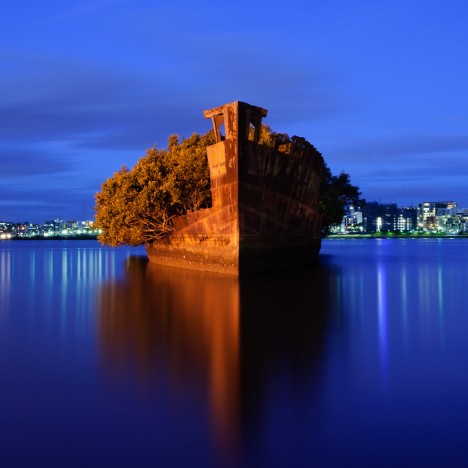
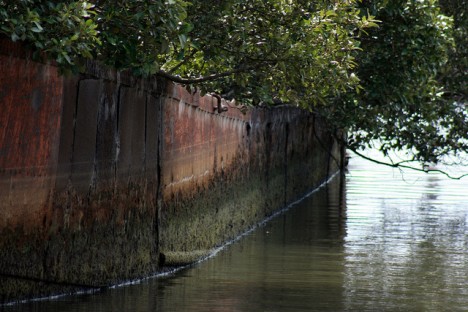
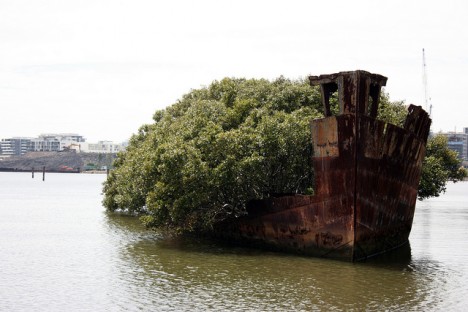
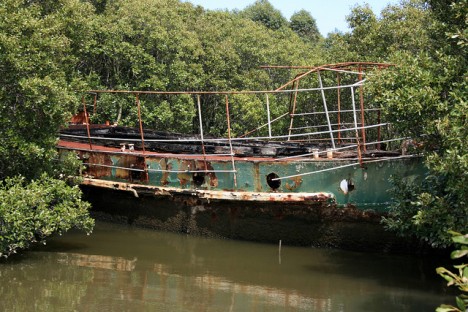
Rusted and half-sunken yet still somehow afloat on the waters of Sydney’s Homebush Bay, the remains of a century-old ship have become fertile ground for a thriving forest. Located on the south bank of the Parramatta River on the inner west side of the city, the bay was a hub for industrial activity in the mid-20th century and became a dumping ground for unwanted materials of all kinds, from busted ships to toxic waste.
The bay was ultimately rehabilitated, but many of the ships remain, lurking among a tangle of mangrove trees. Among them is the SS Ayrfield, which the mangroves clearly found quite hospitable, transforming it into a sort of artificial floating island. In its former life, the Ayrfield was used to transport supplies to American troops stationed in the Pacific during World War II before operating as a collier. It was sent to Homebush for disposal in 1972 after sixty years of service.
Awash in brilliant hues of red and orange, the hull of the 1,140-ton SS Ayrfield pokes up from the surface of the water, the Sydney skyline looming in the distance. Other ghostly ships in the bay include the steam tugboat SS Heroic and the steel boom defense vessel HMAS Karangi, which helped defend Darwin Harbour from Japanese attack in 1942.
Hawaiian artist HULA paints the head and arm of a floating woman onto the rusted steel surface of an abandoned ship, all while balancing on a surfboard. The ...Click Here to Read More »»
Remarkably intact and beautifully documented by a Russian urban explorer, this space shuttle prototype rests in a massive above-ground graveyard at ...Click Here to Read More »»
A fortress on an isolated island off the coast of Florida was abandoned for nearly a century before becoming part of a national park.
Click Here to Read More »»
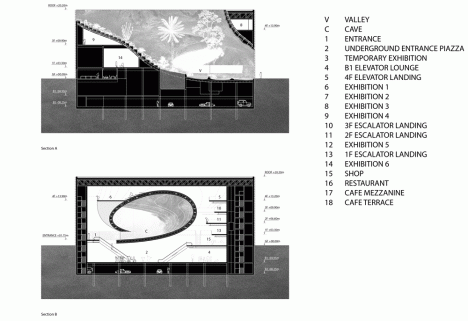
A bold break from traditional closed-box museums, this gorgeous open Museum of Indigenous Knowledge design is as much an interactive rock-hewn landscape as a work of contemporary architecture.
Kengo Kuma & Associates of Japan are the team behind this stoney structure slated for construction in Manila and designed to showcase Philippine history starting in the Neolithic period, known for its huge stoneworks.
Populated with tropical plants, waterfalls and pools, the carved-out center of the structure is made to feel both organic and inviting, encouraging visitors to climb up, wander and explore their environs.
The building is meant to stand out in contrast not only to more minimalist and austere museums but the surrounding urban environment as well, providing relief from the relentless urban cityscape on all sites.
Restaurants and shops are located along the artificial ravine toward the base of the building, meant to be accessible independently but also a gateway to the galleries and exhibition spaces on the floors above.
Want More? Click for Great Related Content on WebUrbanist:
Commissioned for Guatemala City, this weighty megalithic structure is set to be the largest museum commemorating Mayan culture and history in Central America. ...Click Here to Read More »»
Somewhere between a huge funhouse, playground and circus, the City Museum of St. Louis may be the most entertaining and interactive urban architectural ...Click Here to Read More »»
Over six years, one dedicated man has constructed his dream house, complete with (presumably fake) boulders, trees, gardens, pools and ponds. It is the kind of ...Click Here to Read More »»
The symbols carved into stones commemorating the dead can reveal a lot about the deceased’s beliefs and philosophies, or at least those attributed to them by their families when they were buried. Grave symbolism ranges from well-known symbols of major religions to the arcane and complex, each one often containing layer after layer of hidden meaning known only to those initiated into certain organizations. These 15 common symbols seen in cemeteries around the world are often meant to relay messages to those who are still living.
The winged skull most often means a dead person’s journey is not over; after they’ve shed their physical form, they are flying away to another realm. In the United States, the ‘death’s head’ was initially a non-religious symbol simply used to denote a buried corpse, as the Puritans didn’t believe in using religious symbols on graves. The particular style of the death’s head motif on older graves acted as a calling card for the carver.
The serpent represents everlasting life, especially when seen in ‘ouroboros’ form, when it creates the shape of a circle with its own tail in its mouth. The snake cheats death by shedding its skin. The Orphic Egg (a snake wrapped around an egg) is an occult symbol representing the personification of light, the hermaphroditic Greek deity Phanes/Protogonus, who created the other gods. Two snakes wrapped around a winged staff (aka the caduceus) similarly represents the hermaphroditic god Hermes and has been incorrectly used by the healthcare industry as a symbol for medicine – mistaken for the rod of asclepius, which has only one snake and isn’t winged. The latter is often seen on graves of doctors. A snake wrapped around a cross can symbolize the Masonic brazen serpent, a symbol of the 25th Degree Masons, or foreshadowing of Christ’s crucifixion.
A loved one may be gone, but those they left behind often have hopes of seeing them again someday, as represented by clasping hands on a grave. Symbolizing unity even after death, it’s often depicted on the shared graves of spouses.
‘Time flies’ and death comes too soon for many, as symbolized by an hourglass with wings. In the early 18th century, it wasn’t unusual for the dead to be buried with an actual hourglass to represent the sands of time having run out. In Masonic symbolism, it’s often paired with the scythe, another emblem of how easy it is to sever the boundary between life and death.
Hobos once traveled the country by rail, looking for honest work. Along they way, they developed their own fascinating written language to communicate secretly.
Click Here to Read More »»
Great street art can seem to jump right off of the wall at you. In this short film from Corridor Digital, the art really does come to life...and it's not nice.
Click Here to Read More »»
What do you see when you look at these logos - letters and seemingly random shapes? Take a closer look; hidden symbols and meanings abound.
Click Here to Read More »»
• New claim from suspended Fifa president casts more doubt on process • Greg Dyke says FA will look at recovering millions spent on the contest
The awarding of the 2018 World Cup to Russia has been cast in further controversy bySepp Blatter, who claims a decision on where to stage the tournament was made before voting had taken place.
The remarkable revelation by the suspended Fifa president means England, who unsuccessfully bid for the tournament along with joint attempts by Spain/Portugal and Belgium/Holland, could have wasted millions without standing a chance from the outset.
You were excited for the date: dinner and a movie. Your date picked a restaurant — “It got five stars on Yelp!” — but the movie was up to you. So you checked out what was playing and bought the tickets on Fandango’s website. You decided to check out “Fantastic Four,” and even though you hadn’t heard great things, Fandango users thought it was good! Over 7,000 people had reviewed it, and it had an average of 3 out of 5 stars. This is going to be a decent movie.
It is not a decent movie.
Online movie ratings have become serious business. Hollywood generates something on the order of $10 billion annually at the U.S. box office, and online ratings aggregators may hold increasing sway over where that money goes. Sites like Rotten Tomatoes that aggregate movie reviews into one overall rating are beingblamed for poor opening weekends. A single movie critic can’t make or break a film anymore, but maybe thousands of critics, professional and amateur together, can.
Several sites have built popular rating systems: Rotten Tomatoes,39 Metacritic40 and IMDb41 each have their own way of aggregating film reviews. And while the sites have different criteria for picking and combining reviews, they have all built systems with similar values: They use the full continuum of their ratings scale,42 try to maintain consistency,43 and attempt to limit deliberate interference in their ratings.44
These rating systems aren’t perfect, but they’re sound enough to be useful.
All that cannot be said of Fandango, a NBCUniversal subsidiary that uses a five-star rating system in which almost no movie gets fewer than three stars, according to a FiveThirtyEight analysis. What’s more, as I’m writing this, scores on Fandango.com are skewed even higher because of the weird way Fandango aggregates its users’ reviews. And while other sites that gather user reviews are often tangentially connected to the media industry, Fandango has an immediate interest in your desire to see a movie: The company sells tickets directly to consumers.
What started all this? A couple of months ago, a colleague noticed that a bad film had received a decent rating on Fandango and asked me to look into it. When I pulled the data for 510 films on Fandango.com that had tickets on sale this year (you can check out all the data yourself on GitHub),45 something looked off right away: Of the 437 films with at least one review, 98 percent had a 3-star rating or higher and 75 percent had a 4-star rating or higher.
It seemed nearly impossible for a movie to fail by Fandango’s standards.
When I focused on movies that had 3046 or more user reviews,47 none of the 209 films had below a 3-star rating. Seventy-eight percent had a rating of 4 stars or higher.
But perhaps the movies were just that good? Maybe we really do live in a society that rates “Mortdecai” as a 3.5-star film?
We don’t. The other review sites weren’t nearly as charitable. For the 209 films, I pulled IMDb’s user rating, Metacritic’s aggregate critic rating, Metacritic’s user score, the Rotten Tomatoes Tomatometer (critic) score and the Rotten Tomatoes user score. I then normalized these to the five-star rating scale that Fandango uses and rounded it to the nearest half-star.48
The ratings from IMDb, Metacritic and Rotten Tomatoes were typically in the same ballpark, which makes this finding unsurprising: Fandango’s star rating was higher than the IMDb rating 79 percent of the time, the Metacritic aggregate critic score 77 percent of the time, the Metacritic user score 86 percent of the time, the Rotten Tomatoes critic score 62 percent of the time, and the Rotten Tomatoes user score 74 percent of the time.
There are all sorts of reasons that scores might be higher on a site like Fandango compared with competitors; after all, if you ask people about a movie after they’ve paid $15 for it and devoted a couple of hours of their life to it, maybe they’ll have a more favorable opinion of the work. Maybe the profoundly rightward shift in Fandango’s bell curve is just a moviegoer’s version of Stockholm syndrome.
Still, this is a deeply flawed rating system. It’s not clear why so few movies earn less than 3 stars, and Fandango didn’t offer any explanation. “As we have not analyzed other sites’ user ratings systems and we do not have access to their customers’ profile and engagement behavior, it is unfair for us to speculate how our ratings may or may not differ from theirs,” Fandango said in an emailed statement.
So for all intents and purposes, Fandango is using a 3 to 5 star scale. And that’s not the only thing wrong with its ratings. I found an issue with the methodology Fandango uses to average user ratings on its website: Fandango never rounds the average down.
On a given film’s page on Fandango’s website, its aggregate user rating is displayed in one spot: the stars next to the film’s poster, above the area that provides showtimes. The stars are expressed on a five-point scale at half-star increments. Beneath the star ratings, Fandango lists the number of reviews the film has received.
But when you pull the HTML source of a page on Fandango’s website, there’s more information. Take “Ted 2.” When I pulled data for it on Monday, the film had 4.5 stars from 6,568 reviews.
You can see that information on the HTML backend of the page; the “AggregateRating” schema says “Ted 2” had 6,568 ratings, a maximum score of five stars and a minimum score of 0 stars. That all makes sense.
Here’s the thing, though: According to the code for the page, “Ted 2” had a “ratingValue” of only 4.1 stars.
In a normal rounding system, a site would round to the nearest half-star — up or down. In the case of “Ted 2,” then, we’d expect the rating to be rounded down to 4 stars. But Fandango rounded the “ratingValue” up. I pulled the number of stars listed on the page of each film in our sample of 437 (with at least one user review), as well as the ratingValue listed on the page’s source. And I found that Fandango doesn’t round a rating down when we’d mathematically expect that (it appears Fandango does round correctly on its mobile app — more on this in a moment).
There are even more extreme cases than that of “Ted 2.” Take “Avengers: Age of Ultron.” When I pulled data for that on Monday, the film had 5 stars from 15,116 reviews.
But according to the code for the page, “Avengers: Age of Ultron” had a “ratingValue” of only 4.5 stars, meaning that it gained a full half-star from rounding.
So what kind of effect did this have across the board?
Here’s a breakdown of how Fandango.com’s system handled the rounding for each of the 437 films in our sample:
On 109 occasions, about a quarter of the time, the ratingValue was the same as the number of stars presented. This means that a movie’s average rating was already at a half-star and no rounding occurred.
On 148 occasions, about 34 percent of the time, Fandango rounded as you would expect — rounding up 0.1 or 0.2 stars,49 like one would round a 3.9 or 3.8 to a 4.
On 142 occasions (including for “Ted 2”), 32 percent of the time, Fandango added 0.3 or 0.4 stars to the rating,50 when one would normally round down, juicing up the score by a half-star. Think of it this way: That’s the equivalent of saying your SAT score51 was about 100 to 120 points higher than it actually was.
On 37 occasions, about 8 percent of the time, Fandango’s rounding system added a half-star to the film’s rating. It’s not clear why this happened — why “Avengers: Age of Ultron” would have its 4.5 ratingValue rounded up to 5 stars — but it happened about 1 in 12 times. It may be that Fandango is rounding at the second decimal place — e.g., 4.51 to 5. But again, it’s not clear; the “ratingValue” in the HTML code is only shown to the first decimal place.
On one occasion, a film was rounded up by an entire star, from a 4 to a 5.
The cases above include movies with very few reviews; the average rating for these movies is more likely to fall on a whole or half star, which doesn’t require rounding. Returning to the 209 films that had 30 or more user reviews on Fandango.com, the average movie gained 0.25 stars from this rounding. Using a normal system, that average should be close to 0.
When I initially asked Fandango about its rounding practice, public relations coordinator Alison Ver Meulen said this in an email: “We always display stars rounded up to the nearest half star. So for example 3.6 stars would show up as 4 on our site.”
However, after further back and forth, the company described the rounding disparity — by which, for example, 4.1 is rounded to 4.5 — as a bug in the system rather than a general practice. “There appears to be a software glitch on our site with the rounding logic of our five star rating system, as it rounds up to the next highest half star instead of the nearest half star,” the company said in an emailed statement.
Fandango told us that it plans to fix the rounding algorithm on its website “as soon as possible.”
Fandango also said that “the rounding logic is accurately displayed on our mobile apps.” And that appears to be true; I checked several films that had raised red flags on the company’s website and found that their scores were accurately represented on Fandango’s iOS app. Still, the star-based scores on the app skew just as high as on the website.
Fandango.com’s rounding methodology, even if it was just an innocent bug, is a good example of why you should be skeptical of online movie ratings, especially from companies selling you tickets. If this kind of bug can survive unnoticed on the website of a major American ticket seller for who knows how long, there’s no reason a similar bug — or another issue we’re missing — couldn’t be on any other site we’re using to figure out if something is good or not.
And the Federal Trade Commission, which protects consumers from deceptive and anti-competitive business practices, pays attention to the use of ratings and endorsements to promote products. “User ratings would be material to consumers, so they have to be truthful and non-misleading,” said Mary Engle, who directs the FTC’s division related to advertising practices. Engle couldn’t comment on any specific company not already under investigation, but said there is an expectation that companies that present user ratings do so accurately. “We know that nowadays user reviews are very important, whether it’s a movie, a vacation purchase, electronics, whatever,” she said. “You go online to see what other consumers are saying. And so we’re looking at issues where those reviews aren’t what they purport to be.”
What’s The Point: Walt Hickey on the world of online reviews and the wisdom of the crowd.
All of this matters more to movie studios now than it did in the past.
“If you look over the last 20 years, the release strategy used to be much more based around a movie playing for a long time, perhaps releasing regionally and building word-of-mouth around the country,” said box office analyst Bruce Nash, who operates The-Numbers.com, which tracks box office data. “Today, it’s much more focused on getting into theaters opening weekend and hitting as hard as you can with the opening. For that, I think the reviews can have more of an effect.”
Looking at it this way, the idea of a studio inventing a critic to promote its films, as one was accused of in the early 2000s, starts to seem reasonable.
Fandango might be an extreme case, but its problems are indicative of the limitations of online movie ratings generally. Freelance film critic Ben Kenigsberg said, “They’re a useful shorthand or heuristic for readers, but I think they’re kind of a tongue-in-cheek way of looking at movies, and I think they should be taken as such.”
When it comes to critical aggregators like Metacritic and Rotten Tomatoes, the act of boiling down a nation’s worth of critics to a number does have an inaccurate air of finality to it. “I like both sites,” said Todd VanDerWerff, culture editor at Vox.com. “But I feel like they have created a sense that there’s an answer to whether a movie is good or bad when really that’s a very personal question.”
He added: “Because it looks like math, we have it in our head that it’s somehow objectively true, but in reality, it’s all based on subjective experience.”
There’s a lot more to America’s southernmost state than the headline-worthy misadventures of Florida Man and Florida Woman. Culturally distinct from the rest of the South, Florida has been heavily influenced by its Spanish and Caribbean roots, not to mention whatever mysterious set of circumstances a la the Bermuda Triangle make the state such a unique incubator for strange shenanigans. Beyond the obvious attractions like Disney World and South Beach that pull in millions of tourists every year, there are many more sights offering a little slice of the state’s unusual history. These 12 offbeat destinations are each very Florida in their own way.
An Abandoned Island Fort You Can Visit, Dry Tortugas
Take a relaxing three-hour boat ride or a 45-minute plane ride from Key West to the remains of Fort Jefferson, a massive 19th century fortress that was abandoned for nearly a century before becoming a wildlife sanctuary and national park. Once hosting Spanish explorer Ponce de Leon and the real-life Pirates of the Caribbean, the island chain known as the Dry Tortugas was crowned by a hexagonal all-masonry fort in the 1840s and briefly used as a prison for Union deserters in the Civil War before hurricane damage and all of its obsolete cannons led to its abandonment.
A single 100-pound man worked tirelessly for three decades to build Homestead’s Coral Castle, a complex of strange shapes made from over 1,000 tons of sedimentary rock. Touted as an engineering marvel rivaling Stonehenge and the Great Pyramids of Egypt, the ‘castle’ was created as a tribute to Edward Leedskalnin’s sixteen-year-old lost love, who abandoned him on her wedding day. (In fact, Billy Idol wrote a song about it – ‘Sweet Sixteen.’) While some people like to imagine that the used mystical powers to move the huge stones, the truth is, medieval techniques like winches, ropes and pulleys helped him position each porous slab of stone. Still, it’s a remarkable feat and a beautiful sight.
President John F. Kennedy’s personal nuclear fallout shelter was located in a seemingly unlikely place – a small island in the Intracoastal Waterway off Riviera Beach. Built in just two weeks in the lead-up to the Cuban Missile Crisis, the shelter is little more than a corrugated metal hole in the ground on Peanut Island, which is conveniently located a few hundred yards from a Coast Guard station and about a five-minute helicopter ride from the Kennedy estate in Palm Beach. This humble little place is the headquarters from which the president would have run the remains of the free world had any missiles actually been launched. Tours are available via the Palm Beach Maritime Museum, and the island is accessible by ferry and water taxi if you don’t have your own boat.
The industrialist and oil magnate responsible for founding the Florida East Coast Railway and nearly single-handedly developing much of Florida’s Atlantic coast was never afraid to dream big, even if it meant spectacular failure. After all of his successes elsewhere in the state, Henry Flagler envisioned a railroad extension that would take visitors from the town of Homestead all the way to the tip of Key West, an island that’s technically closer to Cuba than it is to the mainland U.S. Dubbed the ‘Overseas Railroad,’ this extension would enable Flagler to corner the trade market adjacent to the new Panama Canal and would have to span 60 miles of unobstructed water and many more miles of inhospitable islands. Through arduous effort, the workers made it happen, and upon its completion in 1912 it was called the Eighth Wonder of the World. Flagler died a year later, never to learn that his precious railroad would be partially destroyed in a hurricane in 1935, and that an astonishing 432 workers still toiling on the extension’s bridges would perish. The island where they were housed and died, Pigeon Key, was abandoned twice in the decades since, but its historical buildings have now been restored as a museum and a remaining 2.2-mile section is open to pedestrians and cyclists. A more modern roadway, the Overseas Highway, was built upon many of the other railway sections in the 1950s.
A fortress on an isolated island off the coast of Florida was abandoned for nearly a century before becoming part of a national park.
Click Here to Read More »»
Painted pink and encrusted with graffiti, the abandoned UFO House in Homestead, Florida, has a backstory as mysterious as its otherworldly architecture.
Click Here to Read More »»
At the top of a mountain, a crumbling Yellow Brick Road winds around forests filled with creepy anthropomorphic trees, Dorothy’s dilapidated house and an ...Click Here to Read More »»
Without question, French onion is my favorite all-around soup. It’s a satisfying, nourishing meal. Not only does it have all the components of a meal—a nutritious broth, a vegetable, cheese, bread, and a big glass of a big red wine—it’s also got all the textural components that satisfy: it’s soft, voluptuous, gooey, chewy, and, if the cheese is properly browned, crispy. It’s an easy and economical soup. And best of all, it requires no stock, either homemade or store-bought. Yes, the best onion soup is made with water alone, seasoned at the end with wine and, if you wish, a few drops of vinegar. And we’re using this great soup to announce a month-long special offer on our offset soup spoons and offset serving spoon (I especially love how their being offset prevents spoons from slipping Read On »
Two hundred species of edible greens occupy a quarter of this 215,000-square-foot office in Tokyo, Japan, sharing space with thousands of workers who in turn consume harvested fruits, vegetables and rice right in the building’s cafeteria, a direct farm-to-table connection.
Plants are expertly interspersed with other functions throughout the building, sustained via soil-based and hydroponic systems, including 1,000 square feet of rice paddies and extensive broccoli fields.
Kono Designs elaborates on the ways different food-bearing plants occupy any extra (and sometimes hidden) spaces throughout the structure: “Tomato vines are suspended above conference tables, lemon and passion fruit trees are used as partitions for meeting spaces, salad leaves are grown inside seminar rooms and bean sprouts are grown under benches.”
Opening this year in Newark, this 69,000-square-foot space will grow 2 million pounds of pesticide-free produce each year, turning an old steel factory into ...Click Here to Read More »»
Skeptics of improbably green skyscraper concepts might want to take a moment of silence to appreciate the successful construction of these two beautiful ...Click Here to Read More »»
The statistics for this incredibly successful indoor farming endeavor in Japan are staggering: 25,000 square feet producing 10,000 heads of lettuce per day ...Click Here to Read More »»
Editor’s note: This is the transcript of the beginning of Arsene Wenger’s 19th anniversary press conference. A press Conference which is supposed to address the match previous and the...
[[ This is a content summary only. Visit my website for full links, other content, and more! ]]
These two-ingredient biscuits have one of the lowest effort-to-greatness ratios of any recipe I can think of. They take practically no effort or practice to pull off, yet produce some of the lightest, tenderest, tastiest biscuits around.
Read More
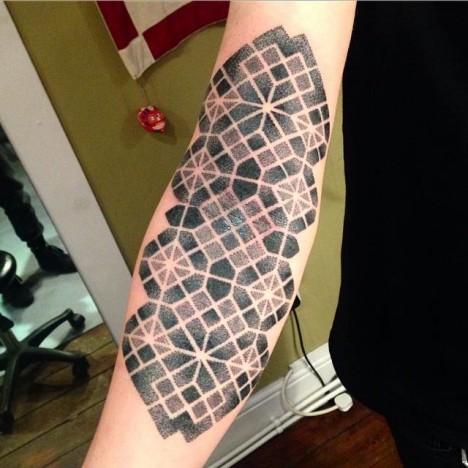
Working primarily in bold, black ink, these 13 top tattoo artists working in Kyoto, London, Berlin, Kiev and throughout the United States stand out for geometric and illustrative styles that put the emphasis on line work. Whether they prefer minimalist compositions or cover entire torsos with amazingly intricate shapes, they create living works of art that are literally walking advertisements for their talent.
Thieves of Tower
North Carolina-based tattoo duo Houston and Dagny aka Thieves of Tower have developed a distinctive style, often covering large areas of the body in sweeping landscapes full of stark architectural details. Legs might become a diptych of bold black lines contrasted with clouds, and spires rise from a cityscape stretching across a chest.
Lisa Orth
Frequently working in Los Angeles and traveling around the country, Seattle-based artist Lisa Orth works in a dark, graphic style reminiscent of old woodcut prints and etchings.
Maxime Buchi
Working primarily out of Sang Bleu studio in London, Maxime Buchi (better known as M-X-M) is a modern master of both medieval etching styles and geometric work, often combining them for an intricate and instantly recognizable result.
Thomas Hooper
If you’re looking for amazingly detailed patterns, Thomas Hooper is your guy, tattooing tiny geometric shapes that come together into astonishing tapestries of imagery. Hooper is based in Austin, Texas at Rock of Ages tattoo. s
Grace Neutral
Want to get tattooed the old-fashioned way? Hand-poking has gotten a bad rep because it’s so accessible to amateurs, but there are masters of this ancient craft who choose to work without machines professionally. Check out Grace Neutral, who has gotten incredibly proficient at the process over the years.
While visiting a prison in Mexico City to ink inmates, tattoo artist Scott Campbell had to use the same tools the prisoners do to make his own tattoo machines.
Click Here to Read More »»
Modern technology and raw talent come together in the stunning and often surreal digital illustrations of these 15 noteworthy artists.
Click Here to Read More »»
Tattoos and tattooists have made their mark on society – pun intended – but what happens to your neighborhood tattoo parlor when the ink finally runs dry?
Click Here to Read More »»
1/2tsp salt to 2c . water. Soak for 10 minutes. Rinse. Pack kid's lunch.
Once you cut an apple or pear, it's a race against the clock to eat it before it browns. So how do you prevent browning if you're cutting the fruit for later? Read this to find out the best method for the home cook.
Read More