Shared posts

05 Aug 23:32

Resentment of the Day: "Asian Girlz" Sparks Backlash for

If you haven't seen it already, prepare yourself for what may be the most obnoxious music video ever made. The Los Angeles-based alt bro rock band Day Above Ground found themselves at the epicenter of internet s**tstorm this week for their new music video "Asian Girlz," a not-so-subtle musical tribute to Asian women which has been almost unanimously denounced as racist and offensive. Click through to see it for yourself.

Note: this video contains partial nudity and explicit lyrics that may not be suitable for minors.

Submitted by: Unknown (via Know Your Meme)

Tagged: Music , thats-racist , Video
05 Aug 22:32

Sterling's "The Ecuadorian Library" vs civil liberties groups

by Cory Doctorow

Earlier today, Xeni blogged Bruce Sterling's latest essay, "The Ecuadorian Library." I thought this piece had a lot of merit, but was brought up short by one passage that made me think that despite Bruce's keen observations, he hasn't been paying very close attention to what groups like the Electronic Frontier Foundation has been doing since 2005. Indeed, when it comes to the view he presents of Internet activists, Bruce is just plain, flat-out, factually wrong.

Sterling writes,

Before Snowden showed up from a red-eye flight from Hawaii, did they have the least idea what was actually going on with the hardware of their beloved Internet? Not a clue. They’ve been living in a pitiful dream world where their imaginary rule of law applies to an electronic frontier — a frontier being, by definition, a place that never had any laws.

The civil lib contingent here looks, if anything, even stupider than the US Senate Intelligence Oversight contingent — who have at least been paying lavishly to fund the NSA, and to invent a pet surveillance court for it, with secret laws. That silly Potemkin mechanism — it’s like a cardboard steering wheel in the cockpit of a Predator drone.

This is wrong.

In 2005, a former AT&T technician named Mark Klein walked into the EFF offices in San Francisco with an amazing story: he had been ordered by his boss to install a beam-splitter on AT&T's main fiber optic trunk and run it into a secret room at the Folsom Street central office, where the NSA would be wiretapping the entire Internet, without a warrant.

For more than eight years and three presidential administrations, EFF and its allies at groups like the ACLU have waged tireless war in the courtroom and the court of public opinion over the mass, illegal, warrantless surveillance of everything and everyone on the Internet. This is no secret: it's been front-page news for close to a decade.

There is a poisonous, revisionist version of Internet history that goes like this: "The Internet was popularized by starry-eyed utopians who thought that technology would only liberate and never enslave. These people never anticipated that some day, governments and crooks would seize control of the network and use it to spy upon, compromise and prey upon the powerless at unimaginable scale. Today, as governments and criminals converge on the Internet as a convenient way of watching everyone all the time, it's time to realize that these cyber-utopians were naive fools, who should never have been given a hearing."

But the reality is that the world of civil libertarians and cyber-activists has been defined, since its very earliest days, by the fear that technology would be used for authoritarian purposes and crime. The crypto wars -- EFF's origin story -- were all about that fear.

The free software movement has always been closely entwined with the wider free speech/privacy/civil liberties world, and for good reason: the lack of transparency and freedom in our tools is a gateway to totalitarian control.

Finally, the network policy world -- with its rallying point of network neutrality, an outgrowth of early Internet principles like peering -- likewise recognizes that the major risk of concentration in the telcoms sector is the ease with which the entire sector can be captured as an element of state surveillance.

Historical revisionism be damned. Since day zero, the "civil liberties contingent" has been shouting as loudly and forcefully as they could about the dangers of technology without policies, rules, norms and code that enshrined liberty. Yes, they also dreamed of the possibilities for networked freedom, but this doesn't make them cockeyed optimists: it means that they've known, all along, what they were fighting for -- and what they were fighting against.


05 Aug 22:30

Special Remix

by juicyblog
Special Remix

We got a very special email this morning: one of our customers has tried out JuicyCanvas for the first time. Here is her first remix. Sofie is only 5 years old! ‪#‎Yay‬ ‘DinnerAwaits’ by Colleen Rochette (Remix) http://juicycanvas.com/shared/erb  
05 Aug 22:27

Bruce Sterling: The Ecuadorian Library

by Xeni Jardin


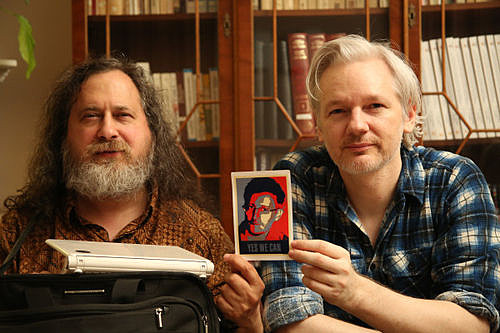
Richard Stallman and Julian Assange hold up a Shepard Fairey-ized photo of Edward Snowden. Image: Wikileaks.

Science fiction author and design futurist Bruce Sterling has written a masterful piece on the swirling vortex of cypherpunkian dystopia that is Edward Snowden/Wikileaks/NSA/Bradley Manning. Read it aloud to the loved one you'd share MREs with when the shit hits the fan. Print it out. Hand copies to strangers in the street. Know that he is right, and has superpowers with which to see and interpret our dark future. Snip:
If you’re a typical NSA geek, and you stare in all due horror at Julian, it’s impossible not to recognize him as one of your own breed. He’s got the math fixation, the stilted speech, the thousand-yard-stare, and even the private idiolect that somehow allows NSA guys to make up their own vocabulary whenever addressing Congress (who don’t matter) and haranguing black-hat hacker security conventions (who obviously do). Julian has turned out to be a Tim Leary at the NSA’s psychiatric convention. He’s a lasting embarrassment who also spiked their Kool-Aid. Crushing Julian, cutting his funding, that stuff didn’t help one bit. He’s still got a roof and a keyboard. That’s all he ever seems to need.
The Ecuadorian Library: or, The Blast Shack After Three Years (medium)


05 Aug 15:10

How to Make a Viral Video

by Miss Cellania

(YouTube link)

What happens when you try to study viral memes scientifically? You get a parody of the song "Rock Star" by Smash Mouth, starring Dave Days. SoulPancake produced this for YouTube's Geek Week. -via Viral Viral Videos

05 Aug 05:05

Eterna

by Miss Cellania

(vimeo link)

Watch this trailer mashup in full-screen mode; you'll be glad you did. It contains nothing but the most epic clips from fairly recent movies, mostly special effects and explosions, masterfully edited by Vadzim Khudabets into a trailer for an imaginary film. There's a list of the films, and a making-of video as well. -via Metafilter

05 Aug 04:57

Members of Congress denied access to basic details of NSA spying

by Cory Doctorow

Members of Congress from both sides of the house have been denied access to details of NSA spying, even as they are being asked to vote on extending funding for continued surveillance. Both GOP Rep. Morgan Griffith of Virginia and Democratic Rep. Alan Grayson of Florida have been stonewalled for weeks by the their colleagues on the House Intelligence Committee, who will not even discuss whether a vote was taken to approve NSA spying, nor how that vote went. The existence of such a vote, let alone how it went, is a secret, as are the details of the programs that Congress are being asked to vote for.

But just over four weeks later, the Chairman of the Committee, GOP Rep. Mike Rogers, wrote to Grayson informing him that his requests had been denied by a Committee "voice vote".

In a follow-up email exchange, a staff member for Grayson wrote to the Chairman, advising him that Congressman Grayson had "discussed the committee's decision with Ranking Member [Dutch] Ruppersberger on the floor last night, and he told the Congressman that he was unaware of any committee action on this matter." Grayson wanted to know how a voice vote denying him access to these documents could have taken place without the knowledge of the ranking member on the Committee, and asked: "can you please share with us the recorded vote, Member-by-Member?" The reply from this Committee was as follows:

Thanks for your inquiry. The full Committee attends Business Meetings. At our July 18, 2013 Business Meeting, there were seven Democrat Members and nine Republican Members in attendance. The transcript is classified."

Members of Congress denied access to basic information about NSA [Glenn Greenwald/The Guardian]

(via Reddit)


05 Aug 04:53

Petition to Congress: don't put people in jail for violating terms of service!

by Cory Doctorow

A large group of "security researchers, academics, and lawyers" have signed onto a letter to Congress demanding that lawmakers enact "Aaron's Law," which would reform the antiquated and terrible Computer Fraud and Abuse Act, which US prosecutors claim makes violating online terms of service into a felony punishable by imprisonment. This is the law that was used to persecute Aaron Swartz, who was accused of violating terms of service by automatically downloading academic articles, rather than accessing them one at a time. The federal prosecutor threatened Aaron with 35 years in prison.

While seldom heralded publicly, security researchers in academia, industry, public service, and independent practice work to identify serious security shortcomings in systems ranging from medical devices to voting machines to cloud services to critical national infrastructure. This research and investigation is especially urgent as we find ourselves integrating computers into our homes, vehicles—even our bodies. The security research community stands ready to meet that technical challenge, but we need Congress to clear legal hurdles out of our way.

Prominent Security Researchers, Academics, and Lawyers Demand Congress Reform the CFAA and Support Aaron's Law


04 Aug 20:37

A Montage of Life Through Clips

Submitted by: Unknown

Tagged: narration , life , montage , clips , Music
04 Aug 20:34

Starcher Trek--A Star Trek and Archer Mashup

by John Farrier


(Video Link)

The casting choices are perfect: Sterling Archer as Captain Kirk, Lana Kane as Lt. Uhura and Ray Gilette as Lt. Sulu. This funny mashup of Star Trek: The Animated Series and Archer shows a failing starship agency led by a lecherous idiot who manages to succeed in spite of himself.

-via Nerd Approved

04 Aug 20:32

12 Historical Speeches Nobody Ever Heard

by Lucas Reilly

As part of a NATO exercise in 1983, a speech was written for Queen Elizabeth to deliver in the event of nuclear war. The solemn address was recently released by the National Archives of the UK (you can read it here). Plenty of other speeches have been written just in case, or were never delivered for other reasons—speeches that would have changed the course of history. Last year we rounded up 12 of them.

1. “In Event of Moon Disaster”

As the world nervously waited for Neil Armstrong and Buzz Aldrin to land on the moon, Nixon speechwriter William Safire penned a speech in case the astronauts were stranded in space. The memo was addressed to H.R. Haldeman, Nixon’s Chief of Staff, and includes chilling directions for the president, NASA, and clergy in case something went awry.

Here's the text:

IN EVENT OF MOON DISASTER:

Fate has ordained that the men who went to the moon to explore in peace will stay on the moon to rest in peace.

These brave men, Neil Armstrong and Edwin Aldrin, know that there is no hope for their recovery. But they also know that there is hope for mankind in their sacrifice.

These two men are laying down their lives in mankind’s most noble goal: the search for truth and understanding.

They will be mourned by their families and friends; they will be mourned by their nation; they will be mourned by the people of the world; they will be mourned by a Mother Earth that dared send two of her sons into the unknown.

In their exploration, they stirred the people of the world to feel as one; in their sacrifice, they bind more tightly the brotherhood of man.

In ancient days, men looked at stars and saw their heroes in the constellations. In modern times, we do much the same, but our heroes are epic men of flesh and blood.

Others will follow, and surely find their way home. Man’s search will not be denied. But these men were the first, and they will remain the foremost in our hearts.

For every human being who looks up at the moon in the nights to come will know that there is some corner of another world that is forever mankind.

2. Eisenhower’s “In Case of Failure” Message

General Dwight D. Eisenhower sounded confident before the Normandy Invasion. “This operation is planned as a victory, and that’s the way it’s going to be. We’re going down there, and we’re throwing everything we have into it, and we’re going to make it a success,” he said.

Operation Overlord was a massive campaign—an invasion of 4000 ships, 11,000 planes, and nearly three million men. Despite a year of strategizing and a boatload of confidence, Eisenhower had a quiet plan in case his mission failed. If the armada couldn’t cross the English Channel, he’d order a full retreat. One day before the invasion, he prepared a brief speech just in case:

"Our landings in the Cherbourg-Havre area have failed to gain a satisfactory foothold and I have withdrawn the troops. My decision to attack at this time and place was based on the best information available. The troops, the air and the Navy did all that bravery and devotion to duty could do. If any blame or fault attaches to the attempt it is mine alone."

Although the allies suffered about 12,000 casualties—with an estimated 4900 U.S. troops killed—155,000 successfully made it ashore, with thousands more on the way. Within a year, Germany would surrender.

3. Wamsutta James’s 1970 Plymouth Anniversary Speech

The people of Plymouth, Massachusetts wanted to celebrate. It was the 350th anniversary of the arrival of the Pilgrims, and a day of festivities was planned. For the celebration dinner, organizers invited Wamsutta James—a descendent of the Wampanoag—to speak. They hoped James would give a cheery address recounting the friendly Pilgrim-Indian relationship. But James was not interested in that airbrushed version of history:

"It is with mixed emotion that I stand here to share my thoughts. This is a time of celebration for you—celebrating an anniversary of a beginning for the white man in America. A time of looking back, of reflection. It is with a heavy heart that I look back upon what happened to my People."

From there, James debunked a slew of cultural myths. The relationship between Pilgrims and Native Americans was always uneasy, he said. Wampanoag ancestors had lived in New England for nearly 10,000 years before the Europeans had arrived. But, in just a few years, the newcomers had brought disease and gobbled up land. The relationship eventually burst in 1675, when King Philip’s War erupted, decimating the Native American population and Wampanoag culture.

"History wants us to believe that the Indian was a savage, illiterate, uncivilized animal. A history that was written by an organized, disciplined people, to expose us as an unorganized and undisciplined entity. Two distinctly different cultures met. One thought they must control life; the other believed life was to be enjoyed, because nature decreed it. Let us remember, the Indian is and was just as human as the white man. The Indian feels pain, gets hurt, and becomes defensive, has dreams, bears tragedy and failure, suffers from loneliness, needs to cry as well as laugh. He, too, is often misunderstood."

When James submitted his address for approval, the organizers rejected it. They asked him to read a speech prepared by a public relations writer instead. James walked away.

4. “I Don’t Feel Like Resigning”

With swaths of damning evidence around him and no support behind him, Richard Nixon stared into a television camera August 8, 1974, and announced his resignation. It wasn’t supposed to be that way. That was Plan B.

A few days earlier, Nixon’s speechwriter, Raymond Price, prepared two drafts for that address. In one—titled “Option B”—Nixon announced his resignation. In the other speech, he vowed to fight for his job. Here’s an excerpt:

“Whatever the mistakes that have been made—and there are many—and whatever the measure of my own responsibility for those mistakes, I firmly believe that I have not committed any act of commission or omission that justifies removing a duly elected official from office. If I did believe that I had committed such an act, I would have resigned long ago. . .”

“If I were to resign, it would spare the country additional months consumed with the ordeal of a Presidential impeachment and trial. But it would leave unresolved the questions that have already cost the country so much in anguish, division and uncertainty. More important, it would leave a permanent crack in our Constitutional structure: it would establish the principle that under pressure, a President could be removed from office by means short of those provided by the Constitution.”

Shortly after the speech was written, the “smoking gun” was released—a tape-recording of Nixon’s plan to halt the FBI’s Watergate investigation. His political support evaporated overnight. Impeachment became a certainty: “Option B” was the only option left.

5. JFK’s Dallas Trade Mart Speech

It was late November 1963, and President Kennedy had begun a two-day, five-city tour of Texas. After a speedy 13-minute flight from Fort Worth, a motorcade picked up JFK at the Dallas airport and took him on a ten-mile tour through downtown. The president was bound for the Trade Mart, where he was scheduled to speak at a luncheon. He never made it.

Here’s a short excerpt of Kennedy’s undelivered Trade Mart speech.

“There will always be dissident voices heard in the land, expressing opposition without alternatives, finding faults but never favor, perceiving gloom on every side and seeking influence without responsibility. Those voices are inevitable.

But today other voices are heard in the land—voices preaching doctrines wholly unrelated to reality, wholly unsuited to the sixties, doctrines which apparently assume that words will suffice without weapons, that vituperation is as good as victory and that peace is a sign of weakness. . .

We cannot expect that everyone, to use the phrase of a decade ago, will ‘talk sense to the American people.’ But we can hope that few people will listen to nonsense. And the notion that this Nation is headed for defeat through deficit, or that strength is but a matter of slogans, is not but just plain nonsense.

That day, Americans sorely needed to hear Kennedy’s unread closing:

“[Our] strength will never be used in pursuit of aggressive ambitions—it will always be used in pursuit of peace. It will never be used to promote provocations—it will always be used to promote the peaceful settlement of disputes.”

A second undelivered Dallas speech, for the Texas Democratic Committee in Austin, can be found here.

6. Anna Quindlen’s 2000 Villanova Commencement Address

Pulitzer-Prize winning journalist Anna Quindlen had already written Villanova’s keynote speech when protests at the Catholic university began to roil. A handful of students disagreed with Quindlen’s views on abortion, and the issue boiled over so badly that Quindlen bowed out from the event. Although never delivered, her speech “A Short Guide to a Happy Life” has been widely circulated on the internet:

“Get a life. A real life, not a manic pursuit of the next promotion, the bigger paycheck, the larger house. . . Get a life in which you notice the smell of salt water pushing itself on a breeze over Seaside Heights, a life in which you stop and watch how a red-tailed hawk circles over the water gap or the way a baby scowls with concentration when she tries to pick up a Cheerio with her thumb and first finger.

"And realize that life is the best thing ever, and that you have no business taking it for granted. . . It is so easy to waste our lives: our days, our hours, our minutes. It is so easy to take for granted the color of azaleas, the sheen of the limestone on Fifth Avenue, the color of our kid’s eyes, the way the melody in a symphony rises and falls and disappears and rises again. It is so easy to exist instead of live.”

7. Condoleezza Rice’s 9/11 Address


Getty Images

On September 11, 2001, Condoleezza Rice was slated to deliver a speech at Johns Hopkins University, addressing “the threats and problems of today and the day after.” Terrorists made their own statement that morning, forcing Rice to scrap her speech.

In 2004, excerpts from Rice’s address leaked to The Washington Post. The speech did not mention Al Qaeda or Osama Bin Laden. Rather, it promoted missile defense as an upgraded security strategy. Of the few lines released publicly, one read:

“We need to worry about the suitcase bomb, the car bomb, and the vial of sarin released in the subway [but] why put deadbolt locks on your doors and stock up on cans of Mace then decide to leave your windows open?”

8. Ninoy Aquino Jr’s Last Remarks

Philippine Senator Benigno Aquino Jr. was not a fan of President Ferdinand Marcos. When Aquino stirred up the political pot, Marcos’s regime—ruled by martial law—tossed Aquino in jail. Years later, Aquino made his way out of prison and exiled himself in the United States. In 1983, upon hearing that life in the Philippines was getting worse, Aquino returned home to help. He came armed with a stirring speech:

“I have returned on my free will to join the ranks of those struggling to restore our rights and freedoms through nonviolence. I seek no confrontation. I only pray and will strive for a genuine national reconciliation founded on justice. . . A death sentence awaits me. Two more subversion charges, both calling for death penalties, have been filled since I left three years ago and are now pending with the courts. . . I return voluntarily armed only with a clear conscience and fortified faith that in the end justice will emerge triumphant. According to Gandhi, the willing sacrifice of the innocent is the most powerful answer to insolent tyranny that has yet been conceived by God and man.”

Aquino never read the address. Over 1000 armed soldiers awaited his landing. He was immediately arrested and, while waiting for his prison escort, was shot in the head. The assassination spurred a revolt against Marcos’s regime, which crumbled three years later.

9. JFK’s Other Cuban Missile Crisis Speech

Keystone/Getty Images

America soiled its collective pants October 22, 1962. The country’s eyes were glued to the television as President Kennedy said what everyone feared: Cuba had missiles, and they were “capable of hitting any city in the western hemisphere.” The United States was a giant bullseye.

Kennedy announced a Cuban “quarantine,” a military blockade that restricted weapons and other materials to the island. Other options, however, were on the table—a second, more aggressive, address announced plans for an airstrike. Kennedy’s speechwriter, Ted Sorensen, didn’t write the second speech, but he did read it, and he was disturbed by its opening:

“I have ordered—and the United States Air Force has now carried out—military operations with conventional weapons to remove a major nuclear weapons build-up from the soil of Cuba.”

The alternate speech said that America would use nuclear weapons if necessary—a bold statement that never appeared in Kennedy’s televised address. It’s unknown who wrote the speech and if Kennedy ever saw it. “There is still a minor mystery as to who, if anyone, was asked to draft an alternative speech announcing and justifying an air strike on the missiles,” Sorensen later wrote.

10. Romney’s 47 Percent Fixer-Upper

Rick Friedman/Corbis

When Mitt Romney’s “47 percent” comments leaked in September, his campaign scrambled for a fix. A flurry of press conferences followed as the Romney camp tried to patch the damage. Later in September, an undelivered speech was leaked to the Wall Street Journal. Here’s a taste of what it said:

“One tragedy of the Obama Presidency is how many more Americans have become dependent on the government. I know it’s not their fault. Most want to be self-sufficient, to provide for their families, they can’t because there aren’t enough jobs. . . This is a national scandal. Not because those fellow Americans are free-loaders, but because they aren’t able to get a good job that pays enough to be self-sufficient and lets them fulfill their human potential. . . I don’t want to take food stamps away from Americans in need. I want fewer Americans to need food stamps.”

11. Sarah Palin’s Victory and Concession Speeches


Getty Images

Sarah Palin’s relationship with John McCain was never very warm and fuzzy. The Palin and McCain camps constantly clashed along the campaign trail. As one McCain official explained in a New York Times interview, “It was a difficult relationship… McCain talked to her occasionally.”

The duo’s biggest duel occurred on election night. Palin’s speechwriter, Matthew Scully, had drawn up two speeches: a victory and concession address. Hours before the candidates took the stage, McCain’s senior staffers told Palin that she couldn’t read either. According to The Daily Beast, McCain aides “literally turned the lights out on Palin when she retook the stage later that night to take pictures with her family, fearing that she would give the concession speech after all.”

Here’s the best of Palin’s undelivered addresses:

Victory Speech:

“As for my own family, well, it’s been quite a journey these past 69 days. We were ready, in defeat, to return to a place and a life we love. And I said to my husband Todd that it’s not a step down when he’s no longer Alaska’s 'First Dude.' He will now be the first guy ever to become the 'Second Dude.'

Concession Speech:

“I told my husband Todd to look at the upside: Now, at least, he can clear his schedule, and get ready for championship title number five in the Iron Dog snow machine race!. . . But far from returning to the great State of Alaska with any sense of sorrow, we will carry with us the best of memories. . . and joyful experiences that do not depend on victory.”

“America has made her choice. . . Now it is time for us go our way, neither bitter nor vanquished, but instead confident in the knowledge that there will be another day… and we may gather once more. . . and find new strength. . . and rise to fight again.”

12. FDR’s Final Words


Getty Images

April 12, 1945, was a beautiful day in Warm Springs, Georgia. Franklin D. Roosevelt relaxed inside his woodland cottage, the “Little White House,” and was having his portrait painted. But during lunch, a bolt of pain shot through the back of his head, causing him to collapse. By 3:35 pm, doctors had pronounced the president dead of a cerebral hemorrhage. A speech sat in FDR’s study, unread.

Roosevelt had edited the speech the night before. It was an address for Jefferson Day, a celebration of Thomas Jefferson, and was supposed to be delivered April 13 via a national radio broadcast. Here’s an excerpt of FDR’s last words to the American people:

“Let me assure you that my hand is the steadier for the work that is to be done, that I move more firmly into the task, knowing that you—millions and millions of you—are joined with me in the resolve to make this work endure.

The work, my friends, is peace, more than an end of this war—an end to the beginning of all wars, yes, an end, forever, to this impractical, unrealistic settlement of the differences between governments by the mass killing of peoples.

Today as we move against the terrible scourge of war—as we go forward toward the greatest contribution that any generation of human beings can make in this world—the contribution of lasting peace—I ask you to keep up your faith. . .

The only limit to our realization of tomorrow will be our doubts of today. Let us move forward with strong and active faith.”

August 2, 2013 - 8:30pm
03 Aug 21:13

Kick Back and Enjoy the Best of the Web

Submitted by: Unknown

Tagged: sports , compilation , BAMF , funny , Video
03 Aug 19:16

Earnest Hemingway Look-Alikes Mimic His Iconic Portrait

by John Farrier


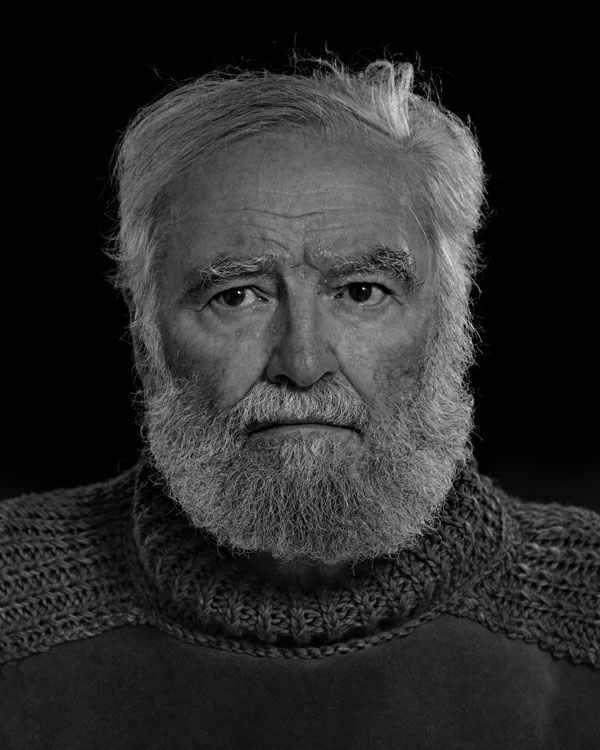
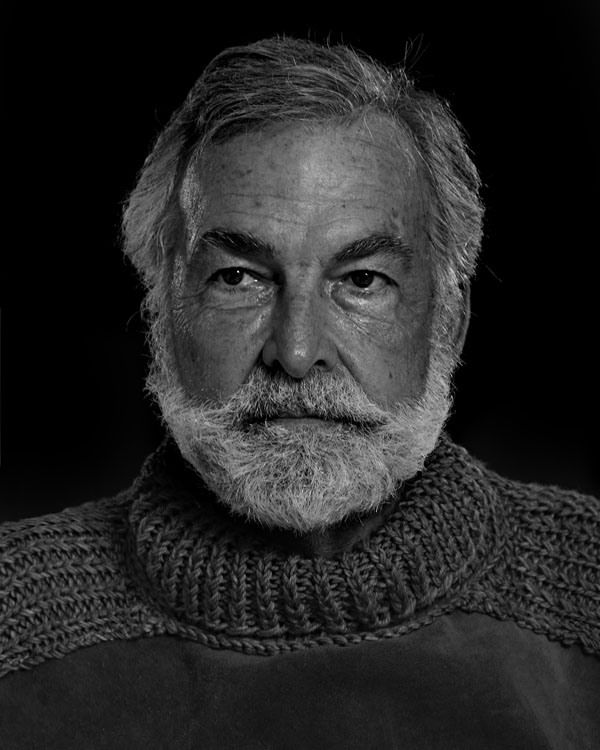
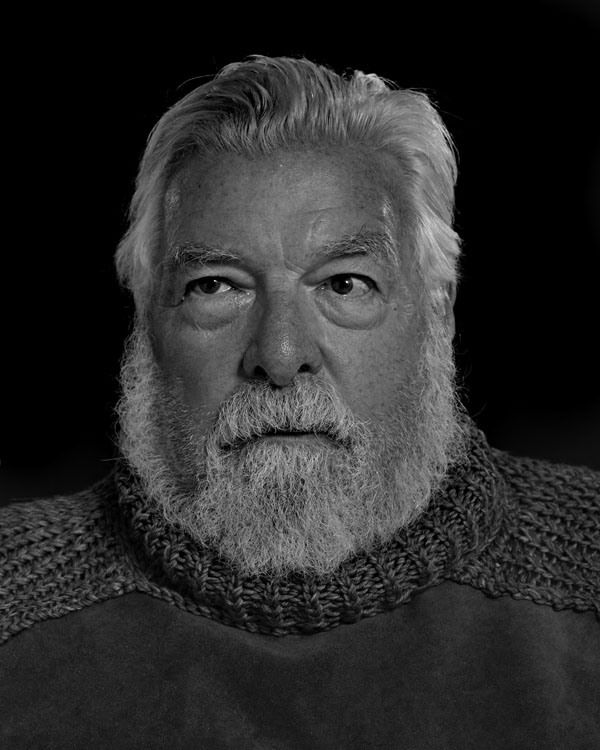
You may remember Henry Hargreaves's impressive foodphotography. More recently, he created a series of images based on a famous photo of Earnest Hemingway--that's the one at the top of the post. Mr. Hargeaves asked participants at an Earnest Hemingway look-alike contest to pose for him. You can see more images from the series at the link.

Link -via 22 Words

03 Aug 19:14

Donkey Kong, in Stop-Motion Perler Form!

Submitted by: Unknown

03 Aug 19:13

Pac-Wars

by Alex Santoso


Pac Wars by Theduc

Does your lack of wakka wakka disturb you? Check out this fantastic mash up job of Pac-Man and Star Wars by French T-shirt designer Theduc.

Visit theduc's official website and then head on over to his NeatoShop page for more super neat shirts: Theduc NeatoShop page

Walking Monty White Walkers Homo geekus Killer Bear

View more designs by Theduc | More Funny T-shirts | New T-Shirts

Are you a professional illustrator or T-shirt designer? Let's chat! Sell your designs on the NeatoShop, earn generous royalties, and get featured in front of tons of potential new fans on Neatorama!

03 Aug 19:12

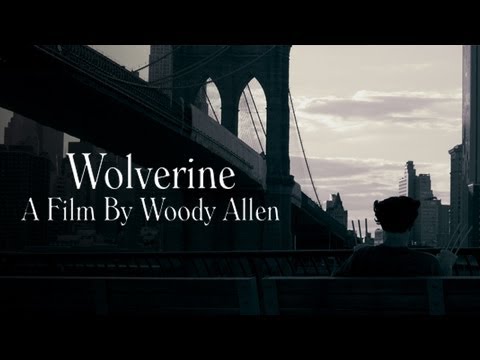
Wolverine, a Film by Woody Allen

by John Farrier


(Video Link)

He didn't ask for his claws or his neuroses. Now how can he manage a conversation with a woman without awkward stabbings? Here is Woody Allen's Wolverine, a classic romantic comedy by Official Comedy.

-via Topless Robot

03 Aug 18:53

Speeder Wieners

02 Aug 04:02

This Crazy Dad Can Rap

spriteleigh

Trending thing

Submitted by: Unknown

Tagged: Music , rap , driving , parenting
02 Aug 03:59

Trolling Effects: a database of patent trolls

by Cory Doctorow


Trolling Effects is a new clearinghouse for information about patent trolls, inspired by the excellent Chilling Effects, which meticulously tracks bogus takedown and censorship efforts. Trolling Effects will track legal threats and extortionate demands from patent trolls, establishing the first really good look at the scope of the problem. It was created as a joint effort between the Electronic Frontier Foundation and several other organizations; and they want your patent-threat letters to help them build the record; they will keep the important details private, and your contribution will help keep the momentum up to end patent-trolling.

If you have received a patent demand letter, submit it to Trolling Effects. The site has measures built in so particular items information can remain private.

Back in June, President Obama joined key members of Congress in calling for "demand letter transparency to help curb abusive suits." Trolling Effects can help provide that transparency, which currently is all but nonexistent. A combination of trolls who send demand letters but rarely sue, scheming businesses that transfer patent ownership to shell companies, and poor record-keeping infrastructure and practices has resulted in a hazy patent system where the lack of transparency has become a competitive tool.

We're joined by a great group of partners: App Developers Alliance; Ask Patents; Engelberg Center on Innovation Law & Policy at NYU School of Law; Engine Advocacy; Public Knowledge; PUBPAT; and the Samuelson Law, Technology & Public Policy Clinic at Berkeley Law. Together, we've created a simple tool that will take away one of the patent trolls favorite tools—secrecy.

Trolling Effects (via Techdirt)


02 Aug 03:51

Children, 7 and 10, faced "lifetime gag" in fracking settlement

by Rob Beschizza


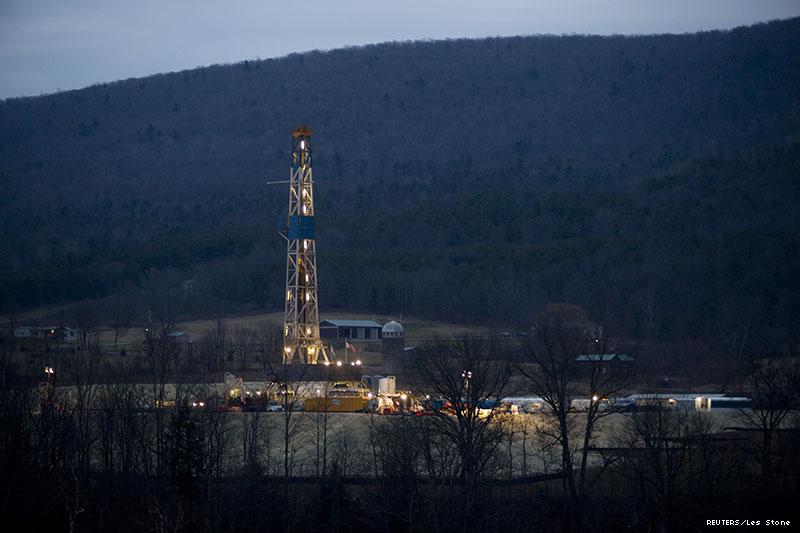
A natural gas well is drilled near Canton, in Bradford County, Pennsylvania.

After their home was "ruined" by nearby drilling operations, Stephanie and Christopher Hallowich were so frightened of the potential effects that, in return for a settlement, they agreed to a gag order that forbade them—and their minor-age children—from ever discussing the subject in public.

From The Pittsburgh Post-Gazette:

The non-disclosure agreement prohibiting Chris and Stephanie Hallowich from talking about the 2011 settlement of their high-profile Marcellus Shale damage case in Washington County, or saying anything about gas drilling and fracking, isn't unusual. It happens often in settling such cases. But the insistence that their two minor children, then ages 7 and 10, are also bound by the "gag order" is.

"Our position is it does apply to the whole family," said James Swetz, the attorney representing Range Resources at the settlement hearing. "We would certainly enforce it."

The drillers paid $750,000 to the family after being accused of ruining their home, making their land unsellable, and threatening the health of the two children.

Barbara Miller, a staff writer at the Observer-Reporter, writes that the company has now backed off from the lifetime gag claims after they were publicized by reporters: "The kids can say whatever they want."


02 Aug 03:49

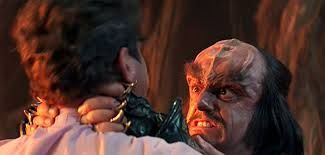
Netflix Removes Star Trek Movie Until It Can Verify That the Klingon and Vulcan Translations Are Correct

by John Farrier

Why did Netflix pull down Star Trek III: The Search for Spock? Well, you wouldn't want to accidentally say the wrong thing to a Klingon warrior. You could end up with a mek'leth through your skull. Radio Times reports:

Netflix US is to remove Star Trek III: The Search For Spock from its film listings until it is able to provide authentic subtitles for the Vulcan and Klingon diagloue.

The on-demand service thinks it can do the tranlsation work in about a week – and credit to them for trying. It seems most DVDs have simply injected a lot of English dubbing to overcome the problem, hiding behind the suggestion that people don’t like subtitles.

This is not a popular choice among fans – particularly those who’ve actually learnt the language (Netflix could do with finding these guys).

Link -via Flavorwire

(Image: Paramount)

02 Aug 03:48

German newspapers go back to Google after winning right to be excluded from it

by Rob Beschizza
After lobbying for laws to allow them to opt out of Google's search results, German newspapers have opted right back in again. The publishers claim it's a temporary measure while they figure out how to "charge aggregators for their use of its material." Which might be a problem, because Google says it would rather just let them stay opted-out than pay to link to them. [AP]


02 Aug 03:47

Brian Williams Supercut of "Good Vibrations"

Submitted by: Unknown

02 Aug 03:24

Prominent politicians and negotiators in poor countries speak out against TPP

by Cory Doctorow


The Trans-Pacific Partnership is a sweeping, secret global treaty that sets out many corporatist policies by which countries surrender their national interest and sovereignty in favor of corporations, who get to violate local regulations and rules and sue countries that try to enforce them. A lot of the opposition to TPP has centered on its insane copyright provisions (leaked TPP drafts have included things like mandatory border-searches of laptops and phones for pirated music and movies; as well as "three-strikes" rules like the failed French HADOPI system, whereby whole families would be disconnected from the Internet if their router was linked to unsubstantiated claims of piracy). But increasingly, the participating countries are growing nervous with the whole premise of TPP.

For example, the former Prime Minister of Malaysia published a post where he called TPP "a partnership of the unequal, of the strong to take advantage of the weak." And Chile's former chief TPP negotiator wrote a newspaper editorial where he said, "It is a threat to our countries. It will restrict our options for development in health and education, in biological and cultural diversity, design of public policies and the transformation of our economies."

Discontent With Secrecy And One-Sided Nature Of TPP Spreads Among Participating Nations [Glyn Moody/Techdirt]

(Image: Jefe de Estado participó hoy en la Reunión de Negociaciones del Acuerdo de Asociación Transpacífico (TPP), a Creative Commons Attribution (2.0) image from 65990097@N03's photostream)


02 Aug 03:23

Literary Ice Cream Flavors

by Miss Cellania

Brett Cohen came up with some fictional ice cream flavors inspired by books! With a little imagination and Photoshop, they are presented as flavors of Ben & Jerry's Ice Cream. They all seem like something the the company would come up with. Clockwork Orange Creamsicle sounds delicious, if a little violent. See the rest at Quirk Books. Link -via Boing Boing

02 Aug 03:23

NSA-loving, Internet-hating Rep Mike Rogers' staffers say criticism is "defamation"

by Cory Doctorow

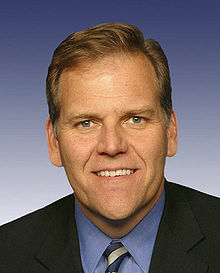
Rep Mike Rogers (R-MI) is a former FBI spook turned Congressman. In addition to being an authoritarian creep (he was one of CISPA's co-sponsors) who hates Internet users (he dismissed CISPA's millions of vociferous opponents as "14-year-olds in their basement clicking around on the internet") and loves warrantless NSA spying -- he's also apparently a coward, whose staffers reportedly say that criticizing him on the Internet is defamation. According to a Michigan reporter, they told the press that Rogers could sue Techdirt's Mike Masnick for "defamation" for closely and critically covering his policies. As Masnick says, it's "unbecoming of an elected official to try to chill the free speech of those who criticize his statements and actions with implied threats of lawsuits to silence their public participation."

I had a fun phone call with a reporter in Michigan earlier today who is apparently working on a story about Rep. Mike Rogers. In doing some research for the article, he spoke with staffers in Rogers' office about some of the things I've written about Rogers and his position on internet surveillance and cybersecurity. The reporter told me that the staffers said they're "well aware of" me, but that they felt I was "an extreme liberal" and that I was using "liberal" talking points to attack him. Also, according to this reporter, they said that they could sue me for defamation concerning things I'd said about Rogers. Yes, it's come to this.

Staffers For Rep. Mike Rogers Apparently Claim They Could Sue Me For Defamation


31 Jul 20:48

The Missing Links: No TV And No Beer Make Homer Something Something

by Colin Perkins
spriteleigh

supercut

The Simpsons Pay Homage: Part II

A few days ago I posted the video of movie references from seasons 1-5 of The Simpsons. Well, here is the inevitable, and quite enjoyable, follow-up.

*

Endless Emotion in 140 Characters

In what is probably the most thoroughly-modern tribute ever, an NPR host honors his mother by tweeting from the hospital room as she passes away. The result is extremely touching.

*

A Few Minutes of Mimicry

This guy pulls off 105 different impressive impersonations in just a matter of minutes.

*

Be Honest With Yourself, Sports Fans

There are 16 different types of sports fans. Which kind are you?

*

Arithmetic + the Apocalypse

The people that survive the coming zombie scourge may not be the biggest, fastest, strongest or most well armed. They may be the math nerds.

*

Hit the Road

It’s not too late to get in a really cool summer road trip. Here are a few unique suggestions.

*

The Tooth Knows the Truth

Would you wear a microchip in your tooth that alerts you when you are overeating?

*

Crime Scene Granny

Meet the 67-year old woman that revolutionized crime scene investigation.

July 31, 2013 - 3:30pm
31 Jul 20:45

Human Tetris, Pac-Man, and More

by Chris Higgins

Artist Guillaume Reymond is a master of human stop-motion animation. For the project GAME OVER, he assembled large groups of volunteer "pixels" (read: people in colored shirts) in auditoriums, sat them in specific seats on the grid of seats, then carefully choreographed their movements to re-create classic video games. He makes the game's sound effects by making beeps and bloops into a mic. It's amazing, trust me.

Human Tetris

I'm impressed by two things here: first, there's a human "Next" box in the upper right; and second, the game speeds up as lines are cleared.

Human Pac-Man

Crazily ambitious, particularly the cutscenes.

Human Space Invaders

My favorite part: sound effects when the UFO appears.

Human Pole Position

Yep, they can even do a driving game.

Human Pong

This was the first attempt at the form. Pong is perhaps the least exciting game here, but the "meeps" make it work.

July 31, 2013 - 12:39pm
31 Jul 17:36

Google flips on net neutrality: all pirates want to be admirals

by Cory Doctorow

For years, Google has intervened in regulatory and court proceedings on the side of net neutrality (except for its embarrassing and inexcusable joint filing with Verizon on mobile rules). But now that Google is running its own gigabit broadband service, it has told the FCC that it's perfectly reasonable to discriminate on the basis of which packets are flowing and how they were generated -- justifying its own terms-of-service that block running "servers." Without this policy, it would be harder for Google to sell a "business" service that was distinct from the gigabit home service.

Google wants to ban the use of servers because it plans to offer a business class offering in the future. A potential customer, Douglas McClendon, filed a complaint against the policy in 2012 with the FCC, which eventually ordered Google to explain its reasoning by July 29.

In its response, Google defended its sweeping ban by citing the very ISPs it opposed through the years-long fight for rules that require broadband providers to treat all packets equally.

“Google Fiber’s server policy is consistent with policies of many major providers in the industry,” Google Fiber lawyer Darah Smith Franklin wrote, going on to quote AT&T, Comcast and Verizon’s anti-server policies.

Now That It’s in the Broadband Game, Google Flip-Flops on Network Neutrality [Ryan Singel/Wired]


31 Jul 17:30

Patent life: how the Supreme Court fell short

by Maggie Koerth-Baker

Supreme Court Justice Antonin Scalia admitted he doesn’t really understand it. Justice Clarence Thomas wrote an entire court opinion implying—unconvincingly, to scientists—that he does. And, as of right now, there’s still nothing stopping you from filing patents on it. Meet complementary DNA (cDNA), the confusing molecule at the heart of the recent Supreme Court ruling on DNA patents.

The case, ruled upon in june, was hailed as a victory over efforts to turn the human genome into corporate property. But the ruling may not be the smackdown of gene patents that it appeared to be, and cDNA is where much of the uncertainly lies. Big questions remain: What is cDNA actually being used to do? Why does it matter who owns it? And what do scientists think this debate is really about?

Steinbeck Without the Turtle

On a functional level, cDNA really isn’t all that different from plain old DNA. In fact, it’s just a slimmed down copy -- the Reader’s Digest Condensed Book version. DNA is made of up of sequences of amino acid base pairs. Some of those sequences—exons—are critical to making a functioning, living thing. They provide the coding instructions that tell cells how to make proteins, and proteins do everything: muscle is made from proteins, proteins help cells communicate with one another, and they do the chemistry that turns food into energy.

Other sequences in the DNA, though—introns—just sort of sit there. You could snip them out and still make a protein, just like you could cut the chapter about a turtle crossing the road out of The Grapes of Wrath without losing any important parts of the plot. (Insert angry Steinbeck fans here.)

Essentially, that’s all cDNA is: Steinbeck without the turtle. DNA without the introns.

In the Supreme Court case, a company called Myriad Genetics attempted to patent genes known as BRCA1 and BRCA2. Mutations in these genes have been linked to an increased risk of breast cancer. Myriad developed a test to look for those mutations. But the Court threw out the company's claim of ownership over BRCA1 and 2, ruling that Myriad couldn’t patent the naturally occurring DNA that made up those genes.

But here's the catch: The BRCA genes code for proteins. In fact, that’s what makes mutations on those genes a cancer risk. Healthy BRCA genes make a protein that repairs damaged DNA, and destroys cells whose DNA can’t be fixed. Mutations prevent that protein from being made, thereby allowing damaged cells to grow unchecked. Like all protein-making genes, you don’t need the introns from BRCA1 and BRCA2 to make a functional protein. When you’re looking for potentially deadly mutations, only the exons matter. The Court said that Myriad can’t patent the DNA that contains both introns and exons, but the company can patent the exon-only cDNA.

In fact, it already claims that patent.

A Process, Not a Product

The Myriad story makes cDNA sound like it's just a backdoor to DNA patents without actually patenting DNA. But there’s more to it than that. Christina Agapakis is a postdoctoral research fellow at UCLA, where she studies synthetic biology. While working on her Ph.D. at Harvard, she helped her colleague Jake Wintermute create hydrogen-producing bacteria.

Wintermute made a pathway of enzymes, proteins that act as nature’s chemistry sets. By taking protein-coding genes from organisms such as spinach and corn, and stringing them together in just the right order, his team could create the enzymes necessary to convert sugar into hydrogen. Those genes all contained introns and exons. But, Agapakis told me, bacteria don’t really know what to do with introns. If you took a bacteria and gave it the foreign DNA, it would run into those introns and just get confused — kind of like what would happen if you took somebody who only spoke English and gave them a set of instructions written in a mixture of English and Japanese.

To keep the bacteria from throwing up its tiny metaphorical hands, Wintermute first converted the DNA into cDNA. No introns, no "confused" bacteria, no problem. Now, you’ve got a bacterium that can, theoretically, help you produce hydrogen fuel.

Eric Gaucher, associate professor of biology at Georgia Tech, offered another example of why cDNA is important to science. In 1882, his great-great grandfather Philippe identified a genetic disease that’s known as Gaucher’s disease. People with Gaucher’s lack the ability to make the enzyme that breaks down glucosylceramide, a naturally occurring fatty acid. These people end up with vast stockpiles of this chemical compound, which can lead to liver malfunction, anemia, seizures, and early death.

Thanks to cDNA, though, many people with Gaucher’s disease can be successfully treated. Scientists use cDNA to make protein-coding copies of a healthy, non-mutated version of the gene, which produces the enzyme that Gaucher’s patients lack. The people still can’t make the enzyme on their own, but if they take injections often enough, they can live symptom-free.

Both these examples are different from the Myriad case because, here, cDNA really isn’t the goal, in and of itself. Instead, it’s a tool, a way of easily producing the thing you really want.

What You Can’t Own

That fact, Eric Gaucher said, might make cDNA more patentable, not less—but in a way that’s totally different from how the Supreme Court seems to have addressed it.

Gaucher runs a synthetic biology laboratory at Georgia Tech, so he’s been following the legal precedents for gene patents, in order to understand what his team can patent—and how. There’s a long history of legal rulings against the idea of simply taking a piece of DNA and planting your flag on it.

“You can’t just extract taxol from a tree and patent the structure of the taxol,” Gaucher said, referring to a chemotherapy drug that was isolated from the bark of Pacific yew trees in 1967. And he thinks that should apply to cDNA, just like it applies to DNA.

But what you can do—and what many people have done—is patent the process of synthesizing a chemical compound, like taxol, in the lab. And, as we’ve seen, that process can include cDNA. If you went this route, you wouldn’t be patenting the cDNA, itself. Instead, you’d be patenting the way you used it to get to the product you really wanted.

What confuses Gaucher most about about the Myriad case is why Myriad didn’t just patent the specific process, to begin with, instead of trying to patent the chemical structure. The former, he says, is fair game. The latter is a clear monopoly that inhibits other researchers’ ability to be innovative.

After all, he said, think about what would happen if Myriad patented the DNA (or the cDNA) for BRCA1 and, later, somebody else figured out that a different mutation in the same gene affected the risk of some other disease totally distinct from breast cancer: say, Alzheimer’s. That would have nothing to do with Myriad’s business selling breast cancer tests, or with the work they did to find the mutations that increase the risk of breast cancer. But, if they owned the gene structure, with or without the introns, they could control discoveries they weren’t involved with.

This, he says, is a key flaw in the way the Supreme Court was thinking about those cDNA patents. To him, it suggests the judges didn’t really understand what they were ruling on and it’s something he expects to see play out in courts, perhaps the Supreme Court itself, in the near future.

Luis Campos, a biomedical historian and associate professor of history at the University of New Mexico, also thought the Supreme Court ruling was weird and logically inconsistent. Patents on cDNA are already kind of a dying breed, he said. Labs have been more focused on patenting the process of getting to an end product, rather than the structure of a gene. By calling out cDNA specifically, as though it were an end product, the Court might end up reversing that trend, Campos said, something that could have a serious chilling effect on research.

Unlike Gaucher, however, Campos sees this ruling as part of an ongoing legal trend towards patenting living things and natural (or semi-natural) structures. Historically, those things were out of bounds for patents. The American botanist Luther Burbank actually complained about this fact in the 19th century when he found himself unable to exert any control over the unique plant hybrids — spineless cactuses, white blackberries — that he’d painstakingly developed. But in 1930, the United States began to allow people to patent plants that were asexually reproduced. In 1970, that was extended to certain kinds of sexually reproduced plants. And, in 1980, the Supreme Court ruled that you could patent a microorganism. That case involved a genetically modified bacterium that had been significantly changed in order to allow it to “eat” crude oil, and the Court specifically said the ruling should be read as narrow — meant to apply to that specific bacterium and situations that were very similar.

The case of cDNA is more complex. Is it something new that scientists make? It is, but it's also true that it contains no new information. Moreover, Gaucher points out, viruses make cDNA naturally, to make copies of their own genetic information within host cells. Sometimes, they accidentally make cDNA out of bits of their host’s genes, as well. It’s completely plausible that, in the future, somebody will patent a piece of cDNA, on the basis of having created something new that doesn’t occur in nature, only to subsequently learn that a virus created the exact same sequence naturally. What will the courts say then?

From Gaucher and Campos’ perspectives, it’s likely the Supreme Court justices have absolutely no idea.

“You get the sense that they don’t understand it,” Campos said. “The fact that they called out this one kind of DNA, and felt compelled to repeat textbook details. It sounds like they were trying to get their heads wrapped around what [cDNA] was and, in the process, they completely missed the big questions.”