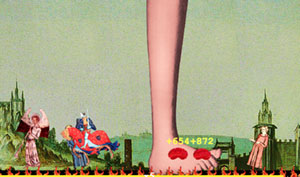
 Enjoy minutes of fun with Holy Stomping, a free video game tribute to the Monty Python foot. [via RPS]
    
|
Enjoy minutes of fun with Holy Stomping, a free video game tribute to the Monty Python foot. [via RPS]
|
|

Mozilla's sub-$50 Firefox OS smartphones are aimed at countries like India and Indonesia, where devices costing hundreds of dollars are out of reach of hundreds of millions of people. The idea is to bring a smartphone running a free/open operating system that is optimized for Internet access to people who have no net connection at all today.
The phones are slow and only have a few apps, but they're infinitely more useful than a candybar-shaped "feature phone," and with their low pricetag, many people will be able to buy them outright, rather than being beholden to phone companies who subsidize handset purchases through long-term, abusive contracts; and they'll get online using devices that don't lock them into a single company's ecosystem for email, messaging, and apps.
The phones may seem small, underpowered, and short on features to people used to modern Android and iOS phones. But Mitchell Baker, chair of the Mozilla Foundation, said at a press conference here that the devices have to be judged by a different, lower-end standard.
"Imagine the phone in your pocket is a feature phone. Imagine, when you go buy one of these devices, that every euro is precious to you," Baker said. Looking at "the richness and power we're able to offer to this market, you'll be astonished. Then imagine where we can go from there."
Mozilla has found a small niche in the mobile OS market by pursuing its low-end strategy, with the first phones debuting in countries such as Hungary, Venezuela, Colombia, Brazil, and Greece. Mozilla, a non-profit organization, hopes to use the browser-based operating system to lower the barriers that today keep people locked into ecosystems linking hardware, OS, app store, services, content, and apps.
With Firefox OS, Mozilla begins the $25 smartphone push [Stephen Shankland/Cnet] 
|
|

REUTERS/MIKE BLAKE
Reuters: "Netflix has agreed to pay one of the largest broadband providers in the United States Comcast Corp for faster speeds, throwing open the possibility that more content companies will have to shell out for better service. Comcast and Netflix made the joint announcement on Sunday, marking the first time that Netflix is paying for faster speeds in the U.S. after customers complained about slow service." Terms of the deal remain undisclosed. The news comes as US regulators wrestle with Net Neutrality, and is a perfect example of why it matters. More: "Netflix to pay Comcast for faster speeds [Reuters]
|
|
Matthew says: "[Here's} a video I put together featuring the opening titles for 20 different American game shows of the 1950s. Unfortunately, I was unable to get copies of 50s game shows from other countries. Most of the shows featured in this video were legit, a few of them weren't. Most of these aired live, so expect the occasional technical fault. The episodes excerpted in this video can be viewed in their entirety on the Internet Archive"
|
|
 You may now play the agonizingly addictive thing on the Atari 2600, the ZX81 (with 1 kilobyte of RAM!), your TI calculator, and the most-impressive Commodore 64, pictured here.
 Assuming you don't have a C64 or an emulator set up, here's video!
|
|
 Nerdcore rapper Dan Bull earns a good living from his Youtube videos, but he is constantly being dragged away from the studio to fight fraudulent copyright claims from major labels, who are able to censor his work with impunity. The video for his 2010 song I'm Not Pissed has been removed ten times by automated, fraudulent claims from the likes of BMG Rights Management and PRS, who face no consequences for lying about their involvement with his work.
In a new song called Fuck Content ID, Bull slams Google's automated Content ID takedown system, documenting his woes at the hands of Big Content, and with Google, who collaborate in a system of copyfraud that neither one seems to care about.
For his 2010 [NSFW] song “I’m not pissed”, he reveals a screen-grab showing 18 separate claims that have been made against it. While some of them were released after being disputed, two of them, BMG Rights Management and PRS, rejected the dispute and stand by their initial claim.
“It is up to me to prove myself innocent by asking eighteen different publishing companies through an automated system to revoke the automated claims. Each publisher has a month to reply, with no obligation to even do so. If even one of the eighteen publishers says ‘nope’ then it’s back to square one,” Bull explains.
“Any financial loss or restrictions on my channel are entirely on me, and will not be compensated for once the claim is lifted. This has been going on since last year with no end in sight,” he adds.
Why YouTube’s Automated Copyright Takedown System Hurts Artists [Ben Jones/Torrentfreak] 
|
|

From the sound of the title you may be expecting to see something perverted, or in the process of dying, in this video. Instead what you will find is a low tech version of the already low tech game that caused a stir on the interwebs before (most likely anyway) Nintendo put enough pressure on the game maker that he finally pulled it from distribution.
Flappy Bird in a box is a side scrolling paper version created by Fawn Qiu, a geek and founder of MakeAnything who strives to "promote creativity and engineering concepts through hands-on kits". Fawn's box hack version is just as hard as the original, but with much more DIY charm.
-Via Nerd Approved
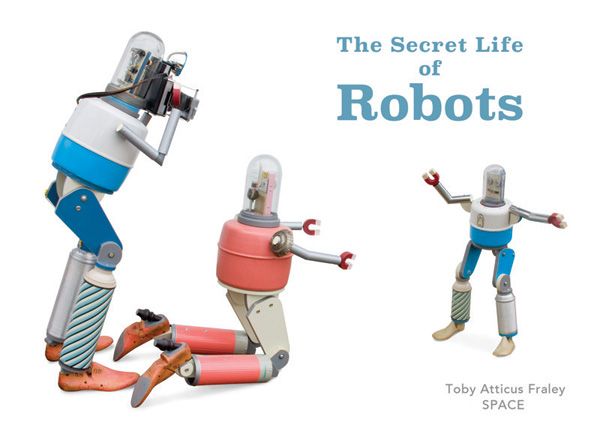
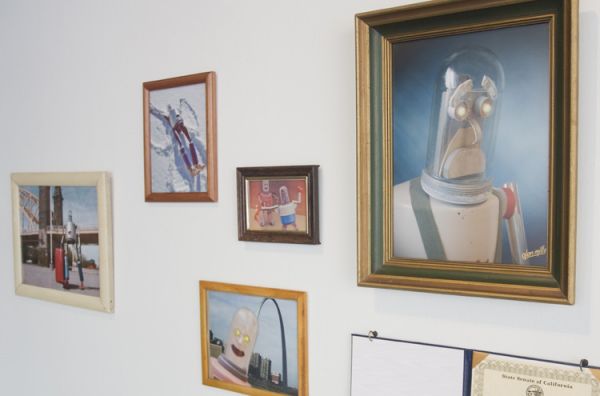
Toby Atticus Fraley, who brought us the Fraley's Robot Repair, an art installation that ended dramatically after 18 months, has a new exhibit in Pittsburgh called The Secret Life of Robots.
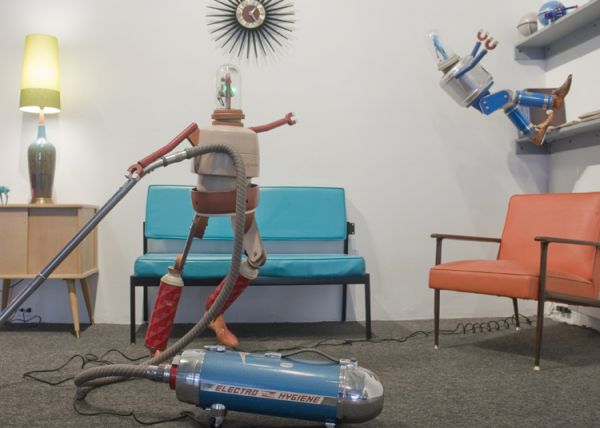
The 4- to 5-foot-tall robots are constructed from vintage thermoses, picnic coolers, and various found objects. Some robots include animatronics and custom built electronics packages that control illuminated elements, such as eyes and accent lights. Fraley offers a glimpse into the daily activities of a typical robot through various stages of its lifespan, revealing a glimpse of our lives through the looking glass.
“Everyday scenes from the lives of robots have been captured in this exhibition for us to observe,” says artist Toby Atticus Fraley. “Robots assembled from pieces of Americana illustrate mundane everyday rituals, acts of daring, and precious milestones. These scenes of great joy and crushing sadness cover the beginning to the end of a typical robot’s lifespan, celebrating and revering the beauty in the everyday.”
Presented by the Pittsburgh Cultural Trust, The Secret Life of Robots will run through April 27th at the Trust’s SPACE gallery in the Cultural District. If you can’t make it to Pittsburgh to see them, continue reading for a virtual peek at several of the robots.



-Thanks, Toby!
spriteleighGood thing we can avoid the points of badness.

An intrepid gamer has completed Super Mario Bros. with the lowest possible score. Playing the game for a low score means avoiding all coins, never stomping an enemy, never grabbing a power-up, and waiting by the flagpoles until the last possible second. (There's also a brutal jump on Level 8-1, where the player must avoid two coins over the span of a chasm.)
This video makes me insanely anxious. I just want to STOMP ALL THE THINGS. You'll love it.
For more context on this, read the YouTube description, check out this MetaFilter thread, or enjoy Super Mario Bros. in 5 minutes.
(Via MetaFilter.)

Fong Qi Wei, an artist from Singapore, is noted for his creative photography. We've previously featured his photos of exploded flowers. Now he's once again demonstrating highly original thinking by creating animated collages of landscapes. He uses photos taken at different parts of the day, then blends them to show the passage of day and night.
Fong calls the series Time in Motion. You can see the rest of it here. You have to click on each image to see it animate.
-via Colossal
Prior to Whatsapp's $19B acquisition by Facebook, the company sent a large number of spurious takedowns against projects on Github. In a DMCA notice served by Whatsapp's General Counsel to Github, a number of projects are targeted for removal on the basis that they are "content that infringes on WhatsApp Inc.'s copyrights and trademarks."
This is grossly improper. DMCA takedown notices never apply to alleged trademark violations (it's called the "Digital Millennium Copyright Act" and not the "Digital Millennium Trademark Act"). Using DMCA notices to pursue trademark infringements isn't protecting your interests -- it's using barratry-like tactics to scare and bully third parties into participating in illegitimate censorship.
The letter goes on to demand takedown of these Github projects on the basis that they constitute "unauthorized use of WhatsApp APIs, software, and/or services" -- again, this is not a copyright issue, and it is improper to ask Github to police the code its hosts on this basis. It is certainly not the sort of activity that the DMCA's takedown procedure exists to police.
So what about copyright infringement? In the related Hacker News thread, a number of the projects' authors weigh in on the censorship, making persuasive cases that they software did not infringe on any of Whatsapp's copyrights -- rather, these were tools that made use of the Whatsapp API, were proof-of-concept security tools for Whatsapp, or, in one case, merely contained the string "whatsapp" in its sourcecode.
There may well have been some legitimately infringing material on Github, but it's clear that Whatsapp's General Counsel did not actually limit her or his request to this material. Instead, the company deliberately overreached the bounds of the DMCA, with total indifference to the rights of other copyright holders -- the creators of the software they improperly had removed.
Unfortunately, there are no real penalties for this sort of abuse. Which is a shame, because Whatsapp has $19B in the bank that a smart lawyer who wanted to represent the aggrieved parties could certainly take a chunk out of.
(via Hacker News)
|
|
The ACLU has produced a video based on its Meet Jack. Or, What The Government Could Do With All That Location Data slide presentation from 2013. It's a chilling and sometimes funny look at the way that location data can be used to compromise you in ways large and small. As Josh from the ACLU notes, "It's especially interesting after the news yesterday about the DHS plan for a national license plate location history database (which got scrapped after it was exposed)."
Meet Jack. Or, What The Government Could Do With That Location Data (Thanks, Josh!) 
|
|
The governments of Hugo Chavez and Nicolas Maduro, amongst the most corrupt and inefficient in the world, have one big success: the extraordinary good will they’ve been able to garner for the so-called “revolution.” Very few authors (Will Dobson, Michael Penfold, Javier Corrales) have studied Chavez as a new form of authoritarianism. Public opinion in general, for the 14 years of the Chavez regime, viewed him as a modern-day Robin Hood: younger than Fidel Castro, less handsome than Che, but with a lot more money to give away at his discretion.
With his sharp political instinct and great advice from his mentor Fidel Castro, Chavez realized that to project himself on the world stage he needed to position himself as the archenemy of George W Bush and the U.S. In a memorable UN appearance that captured world media attention, he said it smelled like sulfur because the devil (Bush) had been there. From then on, each of his public appearances and a huge PR budget—fueled by the Venezuelan oil earnings he was supposed to be distributing among the poor—was used to build his image as the Anti-Bush. Artists, celebrities, lobbyists, and aspiring academics started going to Venezuela in a revolutionary tourism extravaganza designed to combine visits to the beautiful beaches and to experience first-hand the interesting political experiment in the Caribbean.
Meanwhile, in Venezuela, we could see every last vestige of democracy rapidly disappearing. Chavez changed the Constitution, the flag, the time-zone, and even the country’s name. Separation of powers disappeared completely and a hate campaign started on TV with the Comandante’s endless speeches in which he spoke of “pulverizing” the opposition. Anyone who did not agree with his ideas was branded a traitor, a cockroach, an insect, a piece of shit and even worse a “pitiyanky” or friend of the US. His very rudimentary notion of Venezuelan history happened to fit into the stereotypes the US and Europe have about Latin America, therefore his vision of the Venezuelan opposition as despicable fascists was accepted unquestioningly by world opinion.
And that is how these 15 years of solitude on the world stage started. Any complaint by Venezuela’s democratic opposition was perceived as fascist attempts to overthrow the beloved revolutionary government.
After the Caudillo’s death and the years of incredible ineptitude and corruption that had squandered the highest oil earnings in the history of Venezuela, propaganda money started to decrease. Due to expropriations and assaults on private property, Venezuela only produces oil, but not enough to finance the huge need for imported goods. Food, medicine and even toilet paper shortages have become chronic in a country with the world’s largest oil reserves. There are daily demonstrations by workers who have not been paid, people without homes and mostly a population exhausted by the highest inflation and crime rates in Latin America. But even then the international community is unaware. Last week at a conference in Brussels, UNESCO staffers spoke of the extraordinary education revolution under Chavez. Ignoring that in Venezuela public education has been free and mandatory since 1870, more than a century before the Bolivarian Revolution. Today there is no money for the free breakfast and lunch that used to be available in the poorest neighborhoods and Venezuela’s school teachers have the lowest salaries in Latin America.
Venezuela’s prestigious free and public universities, some founded before Harvard, were economically starved because the Chavez-funded students never won elections in them. It was precisely the students who started the most recent protests that have ended in bloodshed. One of their slogans is “they’ve taken so much away that they’ve taken our fear as well.” These fearless students have been brutally repressed by the government. They have been killed, wounded, tortured and even raped; the places where they’ve taken refuge have been raided by the military and armed paramilitary forces. This kind of repression had never been seen before in Venezuela and once again the international community and particularly Latin American countries ignore it, say nothing. Silenced by contracts and oil gifts that have flowed now for fifteen years, many presidents have expressed their solidarity for Maduro, ignoring the OAS democratic charter. Others, including the US, have protested so timidly that Maduro is convinced he can crackdown on the population with absolute impunity.
The democratic Venezuela received exiles from neighboring countries and gave asylum to political refugees fleeing military governments is, once again, alone.
These have been 15 long years of solitude.
[PHOTO: Opposition supporters stand over a monument of a tank which they dragged into the middle of the street during a protest against Nicolas Maduro's government in San Cristobal, February 19, 2014. REUTERS/Carlos Eduardo Ramirez]
|
|
If you haven’t heard about the situation in my country, it’s not surprising. The government is actively suppressing news, and policies of “communicational hegemony” are starting to pay off.
Right after Nicolás Maduro won the elections after Chávez’s death, in a highly disputed process, Venezuelans started protesting. Many of them believed this was electoral fraud.
The government reaction to the protest was swift at two levels: Brutal repression and highly sophisticated propaganda techniques. This escalated to a point where the government actually accused the opposition candidate, Henrique Capriles, of murder and arson, claiming that his followers burned hospitals and murdered six people. But the state could offer no evidence to support any of these claims. That drama fizzled out, but a lot of people remained unhappy.
Since then the Venezuelan government has devalued our currency twice (the black market rate is 7 times higher than the official rate), inflation has risen to be the highest on the planet, the crime keeps increasing and scarcity of even the most basic food items and toiletries has become a part of daily life for millions of Venezuelans.
All this has just increased the discomfort of Venezuelans, even of some of those who voted for Maduro.
Despite the fact that Chavez-Maduro have been in power for the last 15 years, that it controls our parliament, despite the fact that media have been silenced with strict laws and threats and bought by friendly plutocrats, despite the fact that there is Internet censorship of pages criticizing the government and its allies (like Infodio.com, specialized in naming high-ranking Bolivarian oligarchs), our problems just increase. The government, despite all its propaganda, cannot solve them.
We have more crime than 15 years ago. Professional salaries of what used to be middle class professions are not enough to live on. Scarcity of everyday necessities has increased despite all the economic measures. There is rampant corruption that is ignored, as it comes from government supporters. Politicians from the opposition have been physically assaulted, publicly shamed and involuntarily outed as gay.
No amount of propaganda can hide the fact that Venezuela is in a bad situation caused by terrible public policies and management, despite being an oil producing country that exports millions of barrels to the US, among other countries.
The people are angry because after being promised paradise, we are living in a nightmare.
And angry people can easily turn violent.
Since Feb 12th, when a student demonstration was organized via social media, the Venezuelan people have been on the streets to demand the release of some of these students, who were swiftly sent to a military prison, in a country where serious crimes are seldom punished.
According to their relatives, the students were tortured, and some of them were raped anally with a gun.
This time, unlike in previous occasions, the demonstrations even reached the poorest areas of major cities.
To thwart the protests the government not only uses the police and the army, even getting to the point of sending them against unarmed people, and using them to destroy the gates of building complexes, but the government also uses paramilitary colectivos that attack demonstrators openly, sometimes even in front of the police, often riding motorcycles and heavily armed.
Since the beginning of the demonstrations a lot of video evidence of abuse against citizens has emerged. More surfaces each day.
A number of people have been murdered, some of them right in front of cameras, and the government is censoring the news-- even to the point of removing the Internet access from a whole region of the country, in order to prevent the ability of people there to organize using social media. In addition to confirmation from Twitter that it was blocked in Venezuela, additional confirmation of internet censorship comes from the services Hotspot Shield and TunnelBear, who have made their apps available for free to the people living in Venezuela.
No matter one’s political opinion and thoughts about the Venezuelan government, it has committed and is now committing terrible crimes against its citizens. While all this violence was going on, President Nicolás Maduro was congratulating the colectivos, and calling for peace, while some of his governors were calling for a “fulminant counterattack” using Twitter, on a demonstration where a young woman died, shot possibly by the colectivos, and the president himself ordered a pro-government demonstration in the same place where an opposition demonstration was already scheduled.
The government also accused opposition leader Leopoldo López of murder and arson, when a group of angry people burned the office of the public prosecutor to demand the liberation of the imprisoned students. López turned himself in, and, in a bizarre turn of events, claimed it was protecting him from people in the opposition who wanted him dead. It is such a bad thing that the government cannot protect the demonstrators from thugs that are murdering them, nor can it protect the rest of the Venezuelans from the wave of crime that we have been suffering for years.
This is painful to me not only as a Venezuelan, but in more general terms. Venezuela had plenty of resources to achieve more. Even if the old days were not perfect, they were better than we have now, with a torn country on the verge of a very asymmetrical civil war, where most of the guns are held by one side.
With the sudden increase in the oil price, we could have improved our country and moved on to a more prosperous, better society, respectful of diversity and committed to preserve human rights. Compared to other countries in our region we don't have many achievements to show, considering the billion and billions of dollars we earned but squandered. We can, however, show you a lot of propaganda and nasty words to the US while we fill the their war planes and tanks with Venezuelan oil.
Rather than following the beautiful, inspiring examples of Scandinavia, Finland and other countries where the poor are well taken care of and there freedoms of assembly, and political rights to dissent, we decided to imitate Cuba and become chums with such charming fellows as Yayyah Jammeh, Mahmoud Ahmadinejad and Teodoro Obiang. Tarja Halonen has nothing on Ghadaffi, it seems.
I would like to ask my fellow progressive geeks and happy mutants to support the people of Venezuela against their government, or at least to to understand that the fact that many of us are against it does not make us rich, right wingers or supporters of the US.
No human being deserves to be killed or hurt because of their political position, or to have their opinion silenced because they don’t accept the official dogma. Progressives cannot be silent or supportive of these kinds of atrocities, even when they come from regimes nominally opposed to the US.
This is not about the US, this is about Venezuelans being oppressed and murdered. Everything else is secondary.
For more information on Venezuela, check out Caracas Chronicles.
[Photo: A supporter of opposition leader Leopoldo Lopez sets fire to a barricade during a protest against Nicolas Maduro's government in Caracas, February 19, 2014. REUTERS/Carlos Garcia Rawlins]
|
|

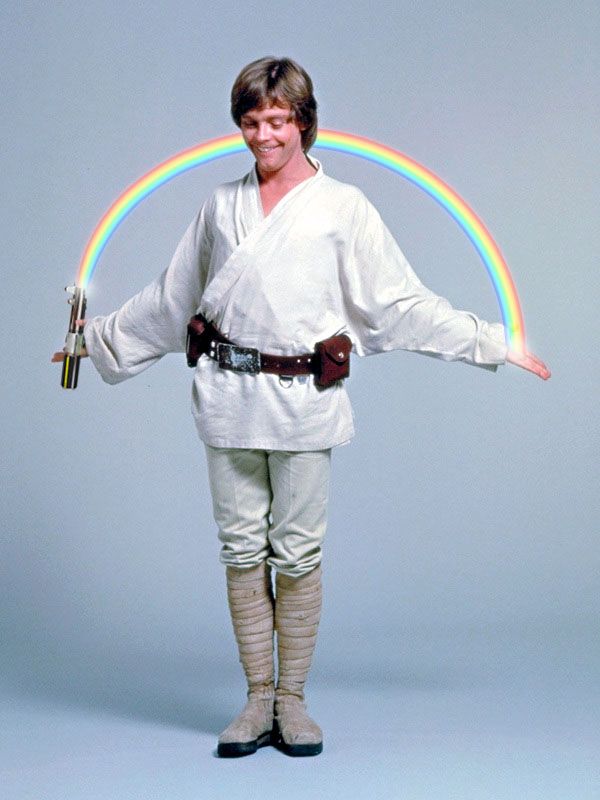
Take a silly candid behind-the-scenes shot from the set of a beloved movie and post it online and you’re bound to get lots of likes, but if it’s a photo of Mark Hamill making a goofy face while dressed like Luke Skywalker on the set of Star Wars, and that picture is posted to Reddit with an accompanying Photoshop challenge then you’re bound to get lots of hilarious submissions!
Derpy Luke Skywalker can be seen swimming with the dolphins, using the Force to create rainbows from the palms of his hands, and generally act in a manner considered quite unbecoming by the noble Jedi Council.
-Via Nerd Approved

It takes a sponge wearing square pants to solve the greatest murder mystery to ever rock the annals of Bikini Bottom superhero history, a special kind of square pants wearing sponge with a cool face mask thingie and really cool detective style clothing.
Born to raise the WTF factor to infinity times infinity, SpongeMen SquareWatch is the animated mashup nobody asked for, nobody thought they wanted, but now leaves us waiting breathlessly for a full length sequel.
Created by Rodrigo Huerta and Hans Van Harken for El-Cid, SpongeMen SquareWatch is a hilarious way to scar the already troubled minds of SpongeBob fans, and an adorably clever way to pay homage to Alan Moore's masterpiece Watchmen.
-Via Topless Robot

 The Well-Sorted Version of the King James Bible takes all the letters in the Bible, preserves the order of upper- and lower-case letters, sorts the letters into alphabetical order, and "pours" the sorted letters back "into all the structure of books, chapters, verses, paragraphs, and words." Peter Harkins, who created the Well-Sorted Version, is accepting orders for the bookin a limited, $300 edition, with cleat-sewn, acid/lignen-free paper bound into hot-foil-stamped leather, produced by the Grimm Bindery in Madison, WI. There are also plans for cheaper hardcover/paperback editions and a $20 PDF version.
I once handled and enjoyed a similarly prepared edition of Joyce's Ulysses. It was a surprisingly great read.
Though it seems like gibberish at a glance, the book rewards careful examination. Capitals are not distributed but come and go in waves, giving clues to the content. Unsurprisingly, there are far more capital Js than lowercase. The capital K's appear in clumps as a name or the title 'King' is used. And there are exactly 7 uppercase Qs.
Well-Sorted Version (via JWZ) 
|
|

|
|
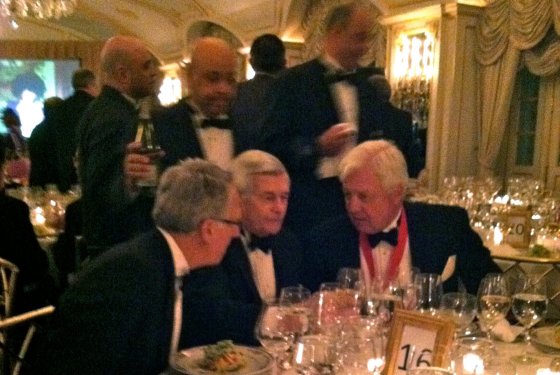
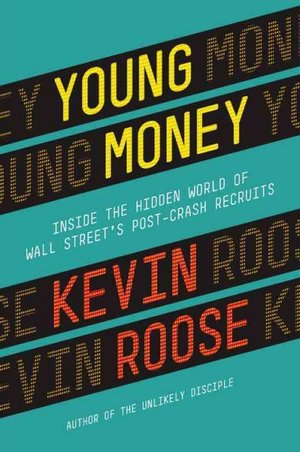
In the process of writing his just-released book Young Money, an investigative look at the bankers who've joined Wall Street since the crash of 2008, author Kevin Roose snuck into a meeting of the secretive Kappa Beta Phi club -- an organization of hyper-rich Wall Street bankers.
Roose recorded the captains of of industry, whose shady dealing had crashed the world economy and plunged millions into untold misery, cavorting on stage, making jokes about poor people and Hillary Clinton, dressing up in drag, and singing an anthem about how much bailout money they'd suckered out of the feds, to the tune of Dixie: "In Wall Street land we’ll take our stand, said Morgan and Goldman. But first we better get some loans, so quick, get to the Fed, man."
New York Magazine has a membership roll of the Kappa Beta Phis, which is a who's who of the richest, most powerful men on Wall Street.
The first and most obvious conclusion was that the upper ranks of finance are composed of people who have completely divorced themselves from reality. No self-aware and socially conscious Wall Street executive would have agreed to be part of a group whose tacit mission is to make light of the financial sector’s foibles. Not when those foibles had resulted in real harm to millions of people in the form of foreclosures, wrecked 401(k)s, and a devastating unemployment crisis.
The second thing I realized was that Kappa Beta Phi was, in large part, a fear-based organization. Here were executives who had strong ideas about politics, society, and the work of their colleagues, but who would never have the courage to voice those opinions in a public setting. Their cowardice had reduced them to sniping at their perceived enemies in the form of satirical songs and sketches, among only those people who had been handpicked to share their view of the world. And the idea of a reporter making those views public had caused them to throw a mass temper tantrum.
The last thought I had, and the saddest, was that many of these self-righteous Kappa Beta Phi members had surely been first-year bankers once. And in the 20, 30, or 40 years since, something fundamental about them had changed. Their pursuit of money and power had removed them from the larger world to the sad extent that, now, in the primes of their careers, the only people with whom they could be truly themselves were a handful of other prominent financiers.
Young Money [Amazon]
One-Percent Jokes and Plutocrats in Drag: What I Saw When I Crashed a Wall Street Secret Society [Kevin Roose/New York Magazine]
(Thanks, Josh!) 
|
|
spriteleighFirst Look Media
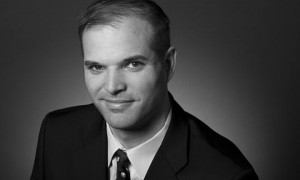 Rolling Stone's loss is Pierre Omidyar's gain. Matt Taibbi is joining First Look Media, the same organization where Glenn Greenwald, Jeremy Scahill, and Laura Poitras are on the masthead at The Intercept-- but Taibbi will lead his own publication focused on financial and political corruption. The new magazine does not yet have a name or a precise launch date.
 Ravi Somaiya was first with the scoop today at the NYT:
Mr. Taibbi will start his own publication focusing on financial and political corruption, he said in an interview on Wednesday. First Look is financed by the eBay founder Pierre Omidyar, who is worth $8.5 billion, according to Forbes. Mr. Omidyar has pledged $250 million to the project. “It’s obvious that we’re entering a new phase in the history of journalism,” Mr. Taibbi said. “This is clearly the future, and this was an opportunity for me to be part of helping to found something and create something that might carry us into the next generation.”
Looks like @pierre likes vampire squid: he hired @mtaibbi for First Look http://t.co/W0U2qNdijT
— John Schwartz -- NYT (@jswatz) February 20, 2014
And here's the press release from First Look Media:
First Look Media, the news organization created by Pierre Omidyar, today announced that acclaimed journalist and New York Times best-selling author Matt Taibbi will launch First Look’s second digital magazine. Taibbi will help assemble a top-notch team of journalists and bring his trademark combination of reporting, analysis, humor and outrage to the ongoing financial crisis – and to the political machinery that makes it possible. The magazine will launch later this year.Taibbi comes to First Look from Rolling Stone, where he served as a contributing editor for the past 10 years. During his tenure, he built a large and devoted following that has grown to rely on his in-depth and irreverent reporting on Wall Street and Washington. Whether busting Goldman Sachs for market manipulation or revealing the hidden roots of the student loan crisis, Taibbi has exposed and explained the most complicated financial scandals of the day with a fresh and compelling approach to journalism that has enraged and inspired millions of readers.
“Matt is one of the most influential journalists of our time,” said Eric Bates, executive editor of First Look Media. “His incisive explorations of the financial crisis – and Wall Street’s undue influence over our political system – have played a key role in helping to inform the public and transform the national debate. He is a journalist who can explain what a credit default swap is and why it’s important – and, make you bust out laughing while he’s doing it. I look forward to having him on our team and helping him launch a dynamic new site unlike any other.”
While at Rolling Stone, Taibbi won a National Magazine Award for his reporting on the 2008 presidential election, and was a finalist for his coverage of Occupy Wall Street. The author of two New York Times bestsellers, he earlier worked as reporter for the Moscow Times, an English-language expatriate newspaper, and co-founded The eXile, a bi-weekly newspaper based in Moscow. The paper became infamous for its satirical wit, as well as for hard-nosed reporting of corruption in both the Russian government and the American aid community. The paper was the only publication to correctly predict the 1998 Russian financial crisis.
“This is an incredible opportunity and a wonderful creative challenge,” said Taibbi. “I’m looking forward to helping build a team that produces hard-hitting coverage of politics and the economy, but delivers it in a way that’s fun, funny, and accessible. It’s a new golden age for reporting and it’s a real privilege to be part of this effort to create something innovative and lasting.”
Taibbi will be based in New York City. The name and launch date of his digital magazine will be announced in the coming months. First Look Media's first online publication, The Intercept, led by Glenn Greenwald, Laura Poitras, and Jeremy Scahill, launched on February 10.

|
|

Facebook will buy the mobile messaging service WhatsApp for $19 billion dollars in cash and stock. Yep, that's 19 buh-buh-billion with a "b." The company launched in 2009, founded by former Yahoo employees Brian Acton and Jan Koum.
I first used WhatsApp in Central America a year ago, where Guatemalan friends turned me on to it. And let me tell you, *everyone* there uses it.
Why is it so huge there, but largely unheard of here in the USA? In many Latin American countries, phone service providers charge extraordinarily high fees for SMS and MMS messages, relative to the average income in those countries. WhatsApp allows users to send short text, photo, and video messages without a per-message fee, so they can stay always-connected with a chosen group of friends, family members, or co-workers on the cheap. Few people I interacted with there in 2013 uses SMS regularly. Most, regardless of age or economic class, migrated their text and image based communications to WhatsApp. When I asked why, SMS ripoff pricing was often cited.
Another reason for WhatsApp's dominance in the developing world: mobile instant messaging apps aren't convenient in areas where cellular internet coverage is limited, spotty, and costly. WhatsApp doesn't require that you remain connected to data to maintain a single, linear communication session, as mobile IM generally does.
The context for all of this, as a friend from Peru--whose pals all use WhatsApp--just mentioned: the telecoms industry in Latin America is heavily monopolized. This is absolutely the case in Guatemala, where I first saw how thoroughly the app had permeated popular communications culture.
And just as with Facebook's own growth history, once a critical mass of your friends start using a given service, it's exponentially more useful than any other similar service. There may be better versions of the kind of app WhatsApp is. And I certainly hope there are more secure ones, or that there will be. But the social momentum in some parts of the world toward WhatsApp as a primary mobile communications platform makes that, for now, irrelevant. If WhatsApp is where everyone you know is, that's where you go.
As I understand it, the areas where WhatsApp is growing fastest are regions of the world where these are big issues, Central America being one of many. Areas where most people don't sit in front of computers all day. These are not necessarily areas where Facebook is growing, or ever will. I think that's part of why Facebook paid so much for WhatsApp. Go where the potential growth is.
The service has been plagued by serious security and privacy issues, but that hasn't scared off its more than 450 million users around the world.
Facebook founder/CEO Mark Zuckerberg says WhatsApp is growing by about a million users a day.
"WhatsApp will complement our existing chat and messaging services to provide new tools for our community," he said (via, of course, Facebook). "Since WhatsApp and (Facebook) Messenger serve such different and important users, we will continue investing in both."
Snip:
WhatsApp will continue to operate independently within Facebook. The product roadmap will remain unchanged and the team is going to stay in Mountain View. Over the next few years, we're going to work hard to help WhatsApp grow and connect the whole world. We also expect that WhatsApp will add to our efforts forInternet.org, our partnership to make basic internet services affordable for everyone.
Man, though. $19 billion. Just look at this: five years ago, WhatsApp's co-founder was a former Yahoo engineer who couldn't get hired at Facebook, and tweeted about what a bummer the rejection was.
Facebook turned me down. It was a great opportunity to connect with some fantastic people. Looking forward to life's next adventure.
— Brian Acton (@brianacton) August 3, 2009
A few years later in 2012, WhatsApp's founders wrote in a blog post titled "Why We Don't Sell Ads,"
Remember, when advertising is involved you the user are the product. At WhatsApp, our engineers spend all their time fixing bugs, adding new features and ironing out all the little intricacies in our task of bringing rich, affordable, reliable messaging to every phone in the world. That’s our product and that’s our passion. Your data isn’t even in the picture. We are simply not interested in any of it.
We aren't interested in user data. Well, Facebook sure is. Wonder how long that last part's gonna last.
Happy '14! On Dec 31st our users sent 18B msgs and received 36B = 54 Billion total messages in a day… ~3x in a year: https://t.co/BbUwBu4sgW
— WhatsApp Inc. (@WhatsApp) January 7, 2014
In a blog post today, after Facebook made the acquisition announcement, WhatsApp co-founder and CEO Jan Koum wrote on the company blog:
WhatsApp will remain autonomous and operate independently. You can continue to enjoy the service for a nominal fee. You can continue to use WhatsApp no matter where in the world you are, or what smartphone you’re using. And you can still count on absolutely no ads interrupting your communication. There would have been no partnership between our two companies if we had to compromise on the core principles that will always define our company, our vision and our product.On a personal note, Brian and I couldn’t be more proud to be part of a small team of people who, in just under five years, built a communication service that now supports over 450 million monthly active users worldwide and over 320 million daily active users. They have helped re-define and revolutionize communication for the 21st century, and we couldn’t be more grateful.
Our team has always believed that neither cost and distance should ever prevent people from connecting with their friends and loved ones, and won’t rest until everyone, everywhere is empowered with that opportunity. We want to thank all of our users and everybody in our lives for making this next chapter possible, and for joining us as we continue on this very special journey.
Or then again, maybe this explains it:
Facebook Just Bought 450 Million Phone Numbers
— Daniel Stuckey (@danstuckey) February 19, 2014
Some context for thought:
Facebook's investment in whatsapp messaging service = total annual lending by World Bank.
— Charles Kenny (@charlesjkenny) February 19, 2014
By my notes, 2014 @NASA budget is about $16 Billion. @Facebook just paid 3 Billion more for @WhatsApp. [citation http://t.co/jty8RmSqSB].
— Xeni Jardin (@xeni) February 20, 2014
@xeni But all NASA can do it put robots on Mars and send spacecraft beyond our solar system. WhatsApp is like you can chat and stuff.
— Matt Bors (@MattBors) February 20, 2014
whatsapp was founded in 2009 by ex-yahoos, and 5 years later is worth half of yahoo's market cap
— Sam Altman (@sama) February 19, 2014
The $19 billion Facebook spent on WhatsApp could fund public broadcasting in America for over 42 years at current federal funding levels.
— Josh Stearns (@jcstearns) February 20, 2014
@xeni Apparently the Orthodox Jewish community uses it a lot, too: http://t.co/fgkXyfrPB0
— Emily L. Hauser (@emilylhauser) February 20, 2014
(Gracias, BG, LG, and BB!) 
|
|
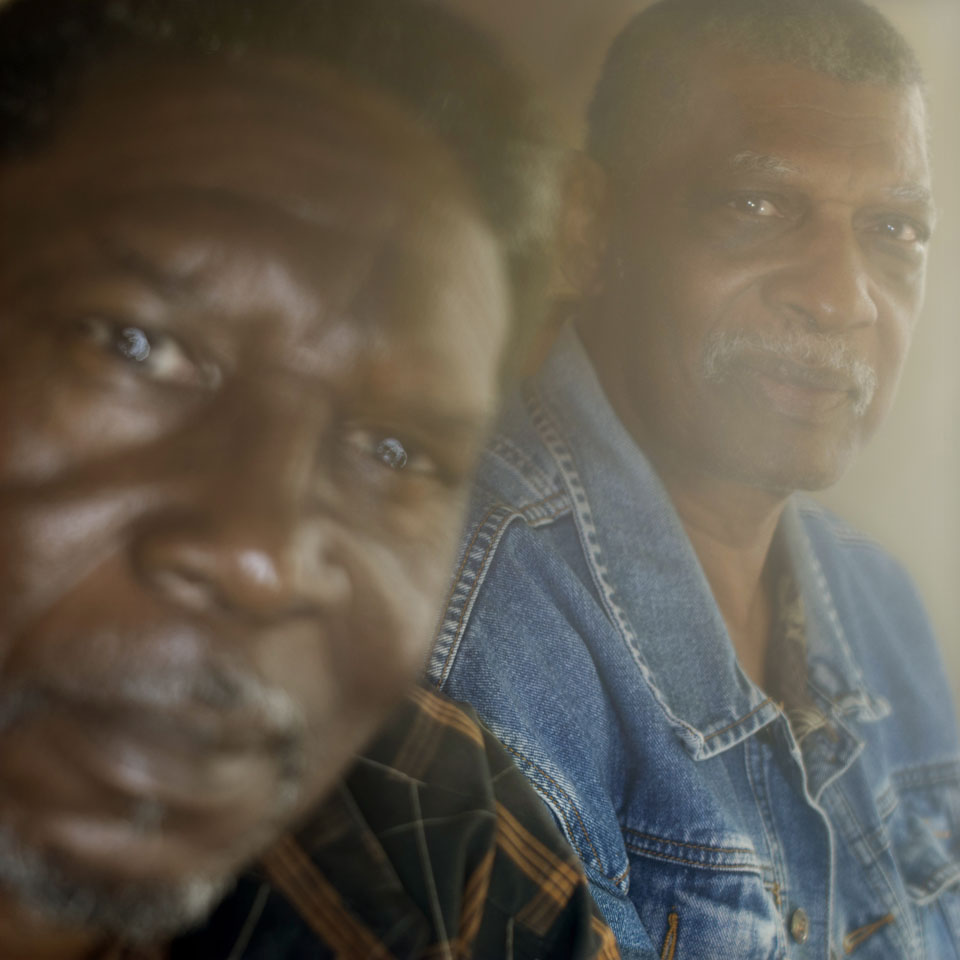
Mother Jones has published a heartbreaking story about the survivors of the Florida School for Boys; children who were, basically, kidnapped by southern cops and sent to a hellhole where backbreaking labor, torture, and murder were the order of the day. A state court has finally given the go-ahead to exhume the graves of the children who were killed and buried in anonymous, unmarked graves by their jailers. The survivors returned for a press-conference, but found themselves with almost no press to speak to.
Mike Mechanic writes, "Johnny Gaddy, 68, still doesn't understand how he landed at Florida's Dozier reform school. When he was 11, the police showed up at his front door. 'They told me the judge wanted to talk to me,' he recalls. 'I'll never forget it as long as I live. I was watching 'The Lone Ranger' on TV. My mama said, 'The officer going to take you down, the judge going to talk to you.' I said, 'Mama, why's he going to talk to me?' She said, 'Go ahead.' He took me to the police station, told me to get in a cell. I never saw a judge. I wasn't sentenced for anything as far as I know. I was handcuffed all the way to Marianna.'
There's been a lot of press about the alleged horrors that took place at the Florida School for Boys, a.k.a. the Arthur G. Dozier reform school, but not a lot about how blacks and whites were treated differently on the campus, which was segregated until 1967. Last August, around the time of a state hearing that granted scientists permission to exhume dozens of graves on the grounds to find out what had happened to those boys, five elderly black men returned to the site of their nightmares with photographer Nina Berman. This multimedia story chronicles their visit back, and some of what they experienced at the school.
"It Was Kind of Like Slavery" [Nina Berman and Michael Mechanic/Mother Jones]
(Photo: Nina Berman) 
|
|
I saw Gravity on the big screen and enjoyed it. I can’t imagine watching it anywhere else, because the visual effects are so stunning that you momentarily disregard the fact that the plot is one that would never happen in a million years. If you haven’t yet seen Gravity and plan to see it sometime, then be warned this contains massive spoilers. Otherwise, enjoy this takedown from Screen Junkies. -via Film Drunk
An armadillo gathering leaves to Michael Jackson's "Billy Jean."
Submitted by: Unknown
It is a hermetically sealed fantasy, full of digitally created memories, counterfeit physics and controlled accidents. A place where reality fails because it's too perfect, and where spectacular CGI setpieces are replaced with more introverted and complex fantasies - fantasies of the digital-artist-as-god, lost in uncanny valley.
Farbeit from me to argue with the artist, but let's forget the Uncanny Valley. There's more to this than that. It's not about what the machine can't quite show. It's not even about what the machine sees; it's about what the machine makes you see.
|
|
spriteleighCats vomiting to techno

Don't You Wish Your Kid Could Have A Nuclear Reactor? (The Presurfer)
Be Amazed by Monks Making Works of Art From Piles of Sand (Dark Roasted Blend)
Cats, Vomit, Techno....What's Not to Love? (Incredible Things)
There Are Two NYCCs Scheduled This Year (The Mary Sue)
Image: The Donkey Knight Returns (Geekosystem)
spriteleighI'm not sure what the deal is here but it is loved.
BBC Radio 1 knew that we’d all listen if David Attenborough did the commentary during an Olympic curling match. He explains it all so clearly and soothingly! Now we understand the primal urge to thrust one’s nuts down the frozen river -and its importance to the species. Attenborough should do this for every Olympic sport. -via Viral Viral Videos
Here at Neatorama, we love the work of independent filmmaker Freddie Wong. Alex and David got a chance to hang out with him for a day last year, which was a blast.
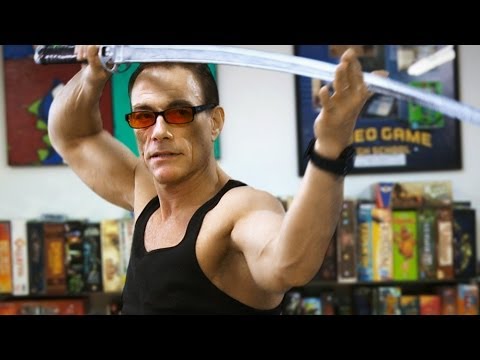
For his latest short film, Freddie managed to land famed action star Jean-Claude Van Damme. Alas, Van Damme proved to be unmanageable for the director.
-via Matt Caverhill
 (
(