08 May 13:20
by Jonas S. Laursen
Article
β-Peptoids are based on N -alkylated β-aminopropionic acid residues, which have been inspired by the more intensely studied peptoids and β-peptides. Here, the authors report X-ray crystal structures of oligomeric β-peptoids demonstrating secondary structures with this backbone.
Nature Communications doi: 10.1038/ncomms8013
Authors: Jonas S. Laursen, Pernille Harris, Peter Fristrup, Christian A. Olsen

08 May 13:18
by Punit Upadhyaya, Ziqing Qian, Nicholas G. Selner, Sarah R. Clippinger, Zhengrong Wu, Roger Briesewitz, Dehua Pei
Abstract
Ras genes are frequently activated in human cancers, but the mutant Ras proteins remain largely “undruggable” through the conventional small-molecule approach owing to the absence of any obvious binding pockets on their surfaces. By screening a combinatorial peptide library, followed by structure–activity relationship (SAR) analysis, we discovered a family of cyclic peptides possessing both Ras-binding and cell-penetrating properties. These cell-permeable cyclic peptides inhibit Ras signaling by binding to Ras-GTP and blocking its interaction with downstream proteins and they induce apoptosis of cancer cells. Our results demonstrate the feasibility of developing cyclic peptides for the inhibition of intracellular protein–protein interactions and of direct Ras inhibitors as a novel class of anticancer agents.

Round, round, get around: Cell-permeable cyclic peptides were developed that act as direct Ras inhibitors by blocking Ras–effector protein interactions. These peptides, named cyclorasins, cause growth inhibition and apoptosis in cancer cells.
Stone and -1 others like this
06 May 15:00
by Marcel Dommaschk, Morten Peters, Florian Gutzeit, Christian Schütt, Christian Näther, Frank D. Sönnichsen, Sanjay Tiwari, Christian Riedel, Susann Boretius and Rainer Herges

Journal of the American Chemical Society
DOI: 10.1021/jacs.5b00929

05 May 14:42
by Teruo Beppu, Kosuke Tomiguchi, Akito Masuhara, Yong-Jin Pu, Hiroshi Katagiri
Abstract
Benzene is the simplest aromatic hydrocarbon with a six-membered ring. It is one of the most basic structural units for the construction of π conjugated systems, which are widely used as fluorescent dyes and other luminescent materials for imaging applications and displays because of their enhanced spectroscopic signal. Presented herein is 2,5-bis(methylsulfonyl)-1,4-diaminobenzene as a novel architecture for green fluorophores, established based on an effective push–pull system supported by intramolecular hydrogen bonding. This compound demonstrates high fluorescence emission and photostability and is solid-state emissive, water-soluble, and solvent- and pH-independent with quantum yields of Φ=0.67 and Stokes shift of 140 nm (in water). This architecture is a significant departure from conventional extended π-conjugated systems based on a flat and rigid molecular design and provides a minimum requirement for green fluorophores comprising a single benzene ring.

Evergreen: An effective push–pull system supported by intramolecular hydrogen bonding between amino and sulfonyl groups generated strong fluorescence properties. The achievement of a single-benzene-core fluorescent system (see picture) allowed steady green fluorescence, independent of the surrounding environment such as solvent polarity and pH, as well as extraordinarily large Stokes shifts of up to 140 nm.
05 May 14:30
by Fang-Yuan Chang, Melinda A. Ternei, Paula Y. Calle and Sean F. Brady

Journal of the American Chemical Society
DOI: 10.1021/jacs.5b01968

04 May 18:03
by Yongju Yun

Nature Chemistry.
doi:10.1038/nchem.2250
Authors: Yongju Yun & Andrew J. Gellman
Equilibrium adsorption of non-racemic mixtures of enantiomers onto an achiral surface is shown to lead to enantioenrichment by formation of homochiral clusters. Such auto-amplification must influence enantioselective processes such as heterogeneous catalysis, adsorption-based separations, and perhaps the processes that lead to the homochirality of life on Earth.
04 May 15:21
Chem. Commun., 2015, 51,9343-9345
DOI: 10.1039/C5CC03003J, Communication
Soyeon Park, Eunjin Kim, Won Young Kim, Chulhun Kang, Jong Seung Kim
A novel biotin-guided anticancer drug delivery system, prodrug 9, consisting of biotin, nitrobenzene, and doxorubicin, with acid-triggered drug releasing capability was synthesized.
The content of this RSS Feed (c) The Royal Society of Chemistry

01 May 17:48
Chem. Commun., 2015, 51,9624-9627
DOI: 10.1039/C5CC02685G, Communication
Robert W. Newberry, Brett VanVeller, Ronald T. Raines
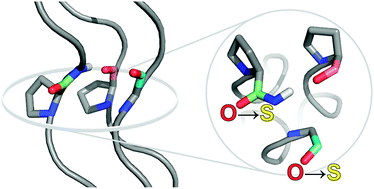
To probe noncovalent interactions within the collagen triple helix, backbone amides were replaced with a thioamide isostere.
The content of this RSS Feed (c) The Royal Society of Chemistry

30 Apr 13:07
by Giulio Gasparini, Gevorg Sargsyan, Eun-Kyoung Bang, Naomi Sakai, Stefan Matile
Abstract
The objective of the study was to explore the potential of ring tension in cyclic disulfides for thiol-mediated cellular uptake. Fluorescent probes that cannot enter cells were equipped with cyclic disulfides of gradually increasing ring tension. As demonstrated by flow cytometry experiments, uptake into HeLa Kyoto cells increased with increasing tension. Differences in carbon-sulfur-sulfur-carbon (CSSC) dihedral angles as small as 8° caused significant changes in uptake efficiency. Uptake with high ring tension was better than with inactivated or activated linear disulfides or with thiols. Conversion of thiols on the cell surface into sulfides and disulfides decreased the uptake. Reduction of exofacial disulfides into thiols increased the uptake of transporters with disulfides and inactivated controls with thiols. These results confirm the occurrence of dynamic covalent disulfide-exchange chemistry on cell surfaces. Mechanistic and colocalization studies indicate that endocytosis does not fully account for this cellular uptake with ring tension.

Mounting tension: Ring tension, which has been exploited for the modification of biological systems in many different ways, with click chemistry being a notable example, was applied to thiol-mediated cellular uptake. Fluorescent probes were conjugated to cyclic disulfides with varying degrees of ring tension and uptake into human cells was found to increase with increasing tension.
26 Apr 20:56
by Xia Zhao, Limin Chen, Jittima Amie Luckanagul, Xiaolei Zhang, Yuan Lin, Qian Wang
Abstract
Virus nanoparticles (VNPs) have been applied as carrier proteins for effective vaccine development. In this paper, we report the usage of tobacco mosaic virus (TMV) as a carrier for the display of the small molecule estriol (E3), a weakly immunogenic hapten. A highly efficient copper (I)-catalyzed azide–alkyne cycloaddition reaction (CuAAC) was performed for the conjugation of E3 onto TMV capsid at tyrosine (Tyr) 139, by which the antigen density could be controlled. The immune properties of these constructs were evaluated in mice. We found that a strong and long-term antibody response was elicited by conjugating a high density of small molecular haptens on TMV through an oligo(ethylene glycol) (OEG) linker, likely due to the effective activation of B-cells. This study suggests that TMV can serve as a promising platform to induce strong humoral immune responses and that the optimized conjugation strategy was critical to produce high quality antibodies.

What's hapten-ing: Copper-catalyzed cycloaddition was used to conjugate estriol (E3) onto a tobacco mosaic virus (TMV) capsid. A high density of these small molecular haptens on TMV with oligo(ethylene glycol) linkers was shown to elicit strong, long-term IgG antibody responses in vivo, thus providing a promising platform for induction of humoral immune responses.
21 Apr 17:00
by Marcel Best, Anna Degen, Mathis Baalmann, Tobias T. Schmidt, Richard Wombacher
Abstract
Inverse-electron-demand Diels–Alder cycloaddition (DAinv) between strained alkenes and tetrazines is a highly bio-orthogonal reaction that has been applied in the specific labeling of biomolecules. In this work we present a two-step labeling protocol for the site-specific labeling of proteins based on attachment of a highly stable norbornene derivative to a specific peptide sequence by using a mutant of the enzyme lipoic acid ligase A (LplAW37V), followed by the covalent attachment of tetrazine-modified fluorophores to the norbornene moiety through the bio-orthogonal DAinv . We investigated 15 different norbornene derivatives for their selective enzymatic attachment to a 13-residue lipoic acid acceptor peptide (LAP) by using a standardized HPLC protocol. Finally, we used this two-step labeling strategy to label proteins in cell lysates in a site-specific manner and performed cell-surface labeling on living cells.

Labeling surface proteins on living cells: A norbornene handle was fused to a signal peptide by first using a mutant of lipoic acid ligase A. In a second step, the norbornene underwent inverse-electron-demand Diels–Alder cycloaddition with tetramethylrhodamine modified with a tetrazine moiety. The norbornene handle, has high stability under live-cell conditions and is synthetically easily accessible.
21 Apr 11:51
by Brittany A. Riggle, Yanfei Wang and Ivan J. Dmochowski

Journal of the American Chemical Society
DOI: 10.1021/jacs.5b01938

19 Apr 15:15
by Ernst Wagner

pHLIP opens the door to the cell: An improved cytosolic transfer of anti-microRNAs (anti-miRs) against onco-miRs paves the way for future cancer therapies. The employed anti-miR–peptide conjugates are based on peptide nucleic acids (PNAs), which are connected with the membrane translocation peptide pHLIP through a disulfide bond. The PNAs are thus transferred into the cell and released by the cleavage of the S![[BOND]](http://onlinelibrarystatic.wiley.com/undisplayable_characters/00f8ff.gif) S bond (see scheme).
S bond (see scheme).
13 Apr 20:33
by Kaycie M. Deyle

Nature Chemistry.
doi:10.1038/nchem.2223
Authors: Kaycie M. Deyle, Blake Farrow, Ying Qiao Hee, Jeremy Work, Michelle Wong, Bert Lai, Aiko Umeda, Steven W. Millward, Arundhati Nag, Samir Das & James R. Heath
It is difficult to develop a selective ligand for point mutations in proteins that are not found in easily addressable locations. Now, an all-chemical, epitope-targeting strategy has been reported, and was used to discover an inhibitory peptide with selectivity for the E17K point mutation in the PH Domain of the Akt1 oncoprotein.
06 Apr 18:34
by Yael David

Nature Chemistry.
doi:10.1038/nchem.2224
Authors: Yael David, Miquel Vila-Perelló, Shivam Verma & Tom W. Muir
A method for engineering site-specific modifications of histone proteins within cellular chromatin has been developed using protein trans-splicing. This approach enabled a native histone modification, H2BK120 ubiquitination, to be incorporated in isolated nuclei, which was shown to trigger a downstream epigenetic effect.
01 Apr 14:10
by Sean E. Pidgeon, Jonathan M. Fura, William Leon, Morgan Birabaharan, Dmitri Vezenov, Marcos M. Pires
Abstract
Bacterial peptidoglycan is a mesh-like network comprised of sugars and oligopeptides. Transpeptidases cross-link peptidoglycan oligopeptides to provide vital cell wall rigidity and structural support. It was recently discovered that the same transpeptidases catalyze the metabolic incorporation of exogenous D-amino acids onto bacterial cell surfaces with vast promiscuity for the side-chain identity. It is now shown that this enzymatic promiscuity is not exclusive to side chains, but that C-terminus variations can also be accommodated across a diverse range of bacteria. Atomic force microscopy analysis revealed that the incorporation of C-terminus amidated D-amino acids onto bacterial surfaces substantially reduced the cell wall stiffness. We exploited the promiscuity of bacterial transpeptidases to develop a novel assay for profiling different bacterial species.

Transpeptidase domains of penicillin binding proteins catalyze the incorporation of exogenous D-amino acids onto bacterial cell surfaces. The substrates can have diverse side chains (see picture, pink), and this promiscuous enzyme can also accommodate C-terminus variations (blue). Most importantly, fluorescence labeling differences within and between bacterial species could be profiled using a panel of compounds.
04 Mar 17:05
by Bleich, R., Watrous, J. D., Dorrestein, P. C., Bowers, A. A., Shank, E. A.
Bacteria have evolved the ability to produce a wide range of structurally complex natural products historically called “secondary” metabolites. Although some of these compounds have been identified as bacterial communication cues, more frequently natural products are scrutinized for antibiotic activities that are relevant to human health. However, there has been...
28 Feb 13:52
by Haden L. Scott, Vanessa P. Nguyen, Daiane S. Alves, Forrest L. Davis, Kristen R. Booth, Jordan Bryner and Francisco N. Barrera

Biochemistry
DOI: 10.1021/acs.biochem.5b00069

26 Feb 16:43
by Yan Zhang, Chunyue Deng, Sha Liu, Jin Wu, Zhangbao Chen, Chong Li, Weiyue Lu
Abstract
Inspired by the knowledge that most antibodies recognize a conformational epitope because of the epitope’s specific three-dimensional shape rather than its linear structure, we combined scaffold-based peptide design and surface molecular imprinting to fabricate a novel nanocarrier harboring stable binding sites that captures a membrane protein. In this study, a disulfide-linked α-helix-containing peptide, apamin, was used to mimic the extracellular, structured N-terminal part of the protein p32 and then serve as an imprinting template for generating a sub-40 nm-sized polymeric nanoparticle that potently binds to the target protein, recognizes p32-positive tumor cells, and successfully mediates targeted photodynamic therapy in vivo. This could provide a promising alternative for currently used peptide-modified nanocarriers and may have a broad impact on the development of polymeric nanoparticle-based therapies for a wide range of human diseases.

Magic bullet: A peptide served as an “indirect” targeting ligand to mediate active tumor-targeted drug delivery. A disulfide-linked α-helix containing peptide, apamin, was used to mimic the extracellular, structured N-terminal part of the protein p32. The combination with surface molecular imprinting produced a nanocarrier that recognizes p32-positive tumors in vivo.
24 Feb 22:04
by Min Soo Kim, Jennifer S. Y. Ma, Hwayoung Yun, Yu Cao, Ji Young Kim, Victor Chi, Danling Wang, Ashley Woods, Lance Sherwood, Dawna Caballero, Jose Gonzalez, Peter G. Schultz, Travis S. Young and Chan Hyuk Kim

Journal of the American Chemical Society
DOI: 10.1021/jacs.5b00106

20 Feb 18:29
by Aaron D. Pearson
The fleeting lifetimes of the transition states (TSs) of chemical reactions make determination of their three-dimensional structures by diffraction methods a challenge. Here, we used packing interactions within the core of a protein to stabilize the planar TS conformation for rotation around the central carbon-carbon bond of biphenyl so that it could be directly observed by x-ray crystallography. The computational protein design software Rosetta was used to design a pocket within threonyl-transfer RNA synthetase from the thermophile Pyrococcus abyssi that forms complementary van der Waals interactions with a planar biphenyl. This latter moiety was introduced biosynthetically as the side chain of the noncanonical amino acid p-biphenylalanine. Through iterative rounds of computational design and structural analysis, we identified a protein in which the side chain of p-biphenylalanine is trapped in the energetically disfavored, coplanar conformation of the TS of the bond rotation reaction.
Authors: Aaron D. Pearson, Jeremy H. Mills, Yifan Song, Fariborz Nasertorabi, Gye Won Han, David Baker, Raymond C. Stevens, Peter G. Schultz
18 Feb 15:49
by Hannah R Meredith

Nature Chemical Biology 11, 182 (2015).
doi:10.1038/nchembio.1754
Authors: Hannah R Meredith, Jaydeep K Srimani, Anna J Lee, Allison J Lopatkin & Lingchong You

16 Feb 18:25
by Kristen A. Andersen, Matthew R. Aronoff, Nicholas A. McGrath and Ronald T. Raines

Journal of the American Chemical Society
DOI: 10.1021/ja5095815

03 Feb 18:05
by Renee Bouley, Malika Kumarasiri, Zhihong Peng, Lisandro H. Otero, Wei Song, Mark A. Suckow, Valerie A. Schroeder, William R. Wolter, Elena Lastochkin, Nuno T. Antunes, Hualiang Pi, Sergei Vakulenko, Juan A. Hermoso, Mayland Chang and Shahriar Mobashery

Journal of the American Chemical Society
DOI: 10.1021/jacs.5b00056

26 Jan 21:44
by Vinh X. Truong, Matthew P. Ablett, Stephen M. Richardson, Judith A. Hoyland and Andrew P. Dove

Journal of the American Chemical Society
DOI: 10.1021/ja511681s

20 Jan 20:33
by Gerardo Cárcamo-Oyarce
Article
Bacteria secrete signalling molecules (AHLs) to coordinate actions such as biofilm formation and the release of public goods, in a process called quorum sensing. Here, the authors show that AHLs are stochastically produced and control asocial (self-directed) traits in young biofilms of P. putida .
Nature Communications doi: 10.1038/ncomms6945
Authors: Gerardo Cárcamo-Oyarce, Putthapoom Lumjiaktase, Rolf Kümmerli, Leo Eberl

09 Jan 15:50
by Brian M. G. Janssen, Martijn van Rosmalen, Lotte van Beek, Maarten Merkx
Abstract
Oligonucleotide-based molecular circuits offer the exciting possibility to introduce autonomous signal processing in biomedicine, synthetic biology, and molecular diagnostics. Here we introduce bivalent peptide–DNA conjugates as generic, noncovalent, and easily applicable molecular locks that allow the control of antibody activity using toehold-mediated strand displacement reactions. Employing yeast as a cellular model system, reversible control of antibody targeting is demonstrated with low nM concentrations of peptide–DNA locks and oligonucleotide displacer strands. Introduction of two different toehold strands on the peptide–DNA lock allowed signal integration of two different inputs, yielding logic OR- and AND-gates. The range of molecular inputs could be further extended to protein-based triggers by using protein-binding aptamers.

Logic antibody locks: Bivalent peptide–DNA conjugates are presented as generic, noncovalent, and easily applicable molecular locks that allow the control of antibody activity using toehold-mediated strand displacement. By connecting antibody-based molecular recognition and DNA-based computing, this new approach allows the introduction of autonomous signal-processing in antibody-based targeting.
08 Jan 15:21
by Losee L. Ling
Nature advance online publication 07 January 2015. doi:10.1038/nature14098
Authors: Losee L. Ling, Tanja Schneider, Aaron J. Peoples, Amy L. Spoering, Ina Engels, Brian P. Conlon, Anna Mueller, Till F. Schäberle, Dallas E. Hughes, Slava Epstein, Michael Jones, Linos Lazarides, Victoria A. Steadman, Douglas R. Cohen, Cintia R. Felix, K. Ashley Fetterman, William P. Millett, Anthony G. Nitti, Ashley M. Zullo, Chao Chen & Kim Lewis

02 Jul 21:19
Org. Biomol. Chem., 2013, 11,5325-5331
DOI: 10.1039/C3OB40684A, Paper
Ahmed M. Ali, G. Andrew Woolley
Photo-control of helix content is maximized when a photoisomerizable cross-linker are introduced into a region of high intrinsic helical propensity.
The content of this RSS Feed (c) The Royal Society of Chemistry

No more posts. Check out what's trending.