Shared posts

20 Jun 15:28

Cross-membranes orchestrate compartmentalization and morphogenesis in Streptomyces

by Katherine Celler

Article

Streptomycetes are multicellular bacteria that grow as multinucleoid filaments with infrequent cross-walls. Here, the authors describe a membrane system that forms protein-impermeable barriers and compartmentalizes the multinucleoid filaments independently from the FtsZ-guided cell division machinery.

Nature Communications doi: 10.1038/ncomms11836

Authors: Katherine Celler, Roman I. Koning, Joost Willemse, Abraham J. Koster, Gilles P. van Wezel

20 Jun 02:36

Membrane anchoring stabilizes and favors secretion of New Delhi metallo-β-lactamase

by Lisandro J González

Nature Chemical Biology 12, 516 (2016). doi:10.1038/nchembio.2083

Authors: Lisandro J González, Guillermo Bahr, Toshiki G Nakashige, Elizabeth M Nolan, Robert A Bonomo & Alejandro J Vila

20 Jun 02:32

An inhibitor of KDM5 demethylases reduces survival of drug-tolerant cancer cells

by Maia Vinogradova

Nature Chemical Biology 12, 531 (2016). doi:10.1038/nchembio.2085

Authors: Maia Vinogradova, Victor S Gehling, Amy Gustafson, Shilpi Arora, Charles A Tindell, Catherine Wilson, Kaylyn E Williamson, Gulfem D Guler, Pranoti Gangurde, Wanda Manieri, Jennifer Busby, E Megan Flynn, Fei Lan, Hyo-jin Kim, Shobu Odate, Andrea G Cochran, Yichin Liu, Matthew Wongchenko, Yibin Yang, Tommy K Cheung, Tobias M Maile, Ted Lau, Michael Costa, Ganapati V Hegde, Erica Jackson, Robert Pitti, David Arnott, Christopher Bailey, Steve Bellon, Richard T Cummings, Brian K Albrecht, Jean-Christophe Harmange, James R Kiefer, Patrick Trojer & Marie Classon

17 Jun 18:25

Silver-Lactoferrin Nanocomplexes as a Potent Antimicrobial Agent

by Paweł Pomastowski, Myroslav Sprynskyy, Petar Žuvela, Katarzyna Rafińska, Maciej Milanowski, J. Jay Liu, Myunggi Yi and Bogusław Buszewski

TOC Graphic

Journal of the American Chemical Society
DOI: 10.1021/jacs.6b02699
16 Jun 19:30

Penicillin-Binding Protein Transpeptidase Signatures for Tracking and Predicting {beta}-Lactam Resistance Levels in Streptococcus pneumoniae

by Li, Y., Metcalf, B. J., Chochua, S., Li, Z., Gertz, R. E., Walker, H., Hawkins, P. A., Tran, T., Whitney, C. G., McGee, L., Beall, B. W., on behalf of the Active Bacterial Core Surveillance Team
ABSTRACT

β-Lactam antibiotics are the drugs of choice to treat pneumococcal infections. The spread of β-lactam-resistant pneumococci is a major concern in choosing an effective therapy for patients. Systematically tracking β-lactam resistance could benefit disease surveillance. Here we developed a classification system in which a pneumococcal isolate is assigned to a "PBP type" based on sequence signatures in the transpeptidase domains (TPDs) of the three critical penicillin-binding proteins (PBPs), PBP1a, PBP2b, and PBP2x. We identified 307 unique PBP types from 2,528 invasive pneumococcal isolates, which had known MICs to six β-lactams based on broth microdilution. We found that increased β-lactam MICs strongly correlated with PBP types containing divergent TPD sequences. The PBP type explained 94 to 99% of variation in MICs both before and after accounting for genomic backgrounds defined by multilocus sequence typing, indicating that genomic backgrounds made little independent contribution to β-lactam MICs at the population level. We further developed and evaluated predictive models of MICs based on PBP type. Compared to microdilution MICs, MICs predicted by PBP type showed essential agreement (MICs agree within 1 dilution) of >98%, category agreement (interpretive results agree) of >94%, a major discrepancy (sensitive isolate predicted as resistant) rate of <3%, and a very major discrepancy (resistant isolate predicted as sensitive) rate of <2% for all six β-lactams. Thus, the PBP transpeptidase signatures are robust indicators of MICs to different β-lactam antibiotics in clinical pneumococcal isolates and serve as an accurate alternative to phenotypic susceptibility testing.

IMPORTANCE The human pathogen Streptococcus pneumoniae is a leading cause of morbidity and mortality worldwide. β-Lactam antibiotics such as penicillin and ceftriaxone are the drugs of choice to treat pneumococcal infections. Some pneumococcal strains have developed β-lactam resistance through altering their penicillin-binding proteins (PBPs) and have become a major concern in choosing effective patient therapy. To systematically track and predict β-lactam resistance, we obtained the sequence signatures of PBPs from a large collection of clinical pneumococcal isolates using whole-genome sequencing data and found that these "PBP types" were predictive of resistance levels. Our findings can benefit the current era of strain surveillance when whole-genome sequencing data often lacks detailed resistance information. Using PBP positions that we found are always substituted within highly resistant strains may lead to further refinements. Sequence-based predictions are accurate and may lead to the ability to extract critical resistance information from nonculturable clinical specimens.

16 Jun 18:42

High-flexibility combinatorial peptide synthesis with laser-based transfer of monomers in solid matrix material

by Felix F. Loeffler

Article

Peptide arrays are used in areas such as measuring protein-protein interactions, but achieving high density in synthesis is challenging. Here, the authors report a method for the combinatorial synthesis of high density peptides arrays by laser driven sequential transfer of monomers onto acceptor surfaces.

Nature Communications doi: 10.1038/ncomms11844

Authors: Felix F. Loeffler, Tobias C. Foertsch, Roman Popov, Daniela S. Mattes, Martin Schlageter, Martyna Sedlmayr, Barbara Ridder, Florian-Xuan Dang, Clemens von Bojničić-Kninski, Laura K. Weber, Andrea Fischer, Juliane Greifenstein, Valentina Bykovskaya, Ivan Buliev, F. Ralf Bischoff, Lothar Hahn, Michael A. R. Meier, Stefan Bräse, Annie K. Powell, Teodor Silviu Balaban, Frank Breitling, Alexander Nesterov-Mueller

16 Jun 13:45

Host-mediated sugar oxidation promotes post-antibiotic pathogen expansion

by Franziska Faber

Nature advance online publication 15 June 2016. doi:10.1038/nature18597

Authors: Franziska Faber, Lisa Tran, Mariana X. Byndloss, Christopher A. Lopez, Eric M. Velazquez, Tobias Kerrinnes, Sean-Paul Nuccio, Tamding Wangdi, Oliver Fiehn, Renée M. Tsolis & Andreas J. Bäumler

Changes in the gut microbiota may underpin many human diseases, but the mechanisms that are responsible for altering microbial communities remain poorly understood. Antibiotic usage elevates the risk of contracting gastroenteritis caused by Salmonella enterica serovars, increases the duration for which patients shed the pathogen in their faeces, and may on occasion produce a bacteriologic and symptomatic relapse. These antibiotic-induced changes in the gut microbiota can be studied in mice, in which the disruption of a balanced microbial community by treatment with the antibiotic streptomycin leads to an expansion of S. enterica serovars in the large bowel. However, the mechanisms by which streptomycin treatment drives an expansion of S. enterica serovars are not fully resolved. Here we show that host-mediated oxidation of galactose and glucose promotes post-antibiotic expansion of S. enterica serovar Typhimurium (S. Typhimurium). By elevating expression of the gene encoding inducible nitric oxide synthase (iNOS) in the caecal mucosa, streptomycin treatment increased post-antibiotic availability of the oxidation products galactarate and glucarate in the murine caecum. S. Typhimurium used galactarate and glucarate within the gut lumen of streptomycin pre-treated mice, and genetic ablation of the respective catabolic pathways reduced S. Typhimurium competitiveness. Our results identify host-mediated oxidation of carbohydrates in the gut as a mechanism for post-antibiotic pathogen expansion.

16 Jun 13:42

Proteome-wide covalent ligand discovery in native biological systems

by Keriann M. Backus

Nature advance online publication 15 June 2016. doi:10.1038/nature18002

Authors: Keriann M. Backus, Bruno E. Correia, Kenneth M. Lum, Stefano Forli, Benjamin D. Horning, Gonzalo E. González-Páez, Sandip Chatterjee, Bryan R. Lanning, John R. Teijaro, Arthur J. Olson, Dennis W. Wolan & Benjamin F. Cravatt

Small molecules are powerful tools for investigating protein function and can serve as leads for new therapeutics. Most human proteins, however, lack small-molecule ligands, and entire protein classes are considered ‘undruggable’. Fragment-based ligand discovery can identify small-molecule probes for proteins that have proven difficult to target using high-throughput screening of complex compound libraries. Although reversibly binding ligands are commonly pursued, covalent fragments provide an alternative route to small-molecule probes, including those that can access regions of proteins that are difficult to target through binding affinity alone. Here we report a quantitative analysis of cysteine-reactive small-molecule fragments screened against thousands of proteins in human proteomes and cells. Covalent ligands were identified for >700 cysteines found in both druggable proteins and proteins deficient in chemical probes, including transcription factors, adaptor/scaffolding proteins, and uncharacterized proteins. Among the atypical ligand–protein interactions discovered were compounds that react preferentially with pro- (inactive) caspases. We used these ligands to distinguish extrinsic apoptosis pathways in human cell lines versus primary human T cells, showing that the former is largely mediated by caspase-8 while the latter depends on both caspase-8 and -10. Fragment-based covalent ligand discovery provides a greatly expanded portrait of the ligandable proteome and furnishes compounds that can illuminate protein functions in native biological systems.

16 Jun 13:39

A Genetically Encoded β-Lactamase Reporter for Ultrasensitive 129Xe NMR in Mammalian Cells

by Yanfei Wang, Benjamin W. Roose, Eugene J. Palovcak, Vincenzo Carnevale, Ivan J. Dmochowski

Abstract

Molecular imaging holds considerable promise for elucidating biological processes in normal physiology as well as disease states, but requires noninvasive methods for identifying analytes at sub-micromolar concentrations. Particularly useful are genetically encoded, single-protein reporters that harness the power of molecular biology to visualize specific molecular processes, but such reporters have been conspicuously lacking for in vivo magnetic resonance imaging (MRI). Herein, we report TEM-1 β-lactamase (bla) as a single-protein reporter for hyperpolarized (HP) 129Xe NMR, with significant saturation contrast at 0.1 μm. Xenon chemical exchange saturation transfer (CEST) interactions with the primary allosteric site in bla give rise to a unique saturation peak at 255 ppm, well removed (≈60 ppm downfield) from the 129Xe-H2O peak. Useful saturation contrast was also observed for bla expressed in bacterial cells and mammalian cells.

Thumbnail image of graphical abstract

Xenon-assisted MRI: TEM-1 β-lactamase (bla) is a single-protein reporter for hyperpolarized 129Xe NMR, with significant saturation contrast. Xenon chemical exchange saturation transfer interactions with an allosteric site in bla give rise to a unique saturation peak at 255 ppm, well removed from the 129Xe-H2O peak, and allowed bla to be detected in bacterial and mammalian cells.

16 Jun 13:38

Integrin-Targeting Knottin Peptide–Drug Conjugates Are Potent Inhibitors of Tumor Cell Proliferation

by Nick Cox, James R. Kintzing, Mark Smith, Gerald A. Grant, Jennifer R. Cochran

Abstract

Antibody–drug conjugates (ADCs) offer increased efficacy and reduced toxicity compared to systemic chemotherapy. Less attention has been paid to peptide–drug delivery, which has the potential for increased tumor penetration and facile synthesis. We report a knottin peptide–drug conjugate (KDC) and demonstrate that it can selectively deliver gemcitabine to malignant cells expressing tumor-associated integrins. This KDC binds to tumor cells with low-nanomolar affinity, is internalized by an integrin-mediated process, releases its payload intracellularly, and is a highly potent inhibitor of brain, breast, ovarian, and pancreatic cancer cell lines. Notably, these features enable this KDC to bypass a gemcitabine-resistance mechanism found in pancreatic cancer cells. This work expands the therapeutic relevance of knottin peptides to include targeted drug delivery, and further motivates efforts to expand the drug-conjugate toolkit to include non-antibody protein scaffolds.

Thumbnail image of graphical abstract

Tied up in knottins: Tumor-targeted knottin peptide-drug conjugates (KDC) are significantly smaller than antibody–drug conjugates, allowing for facile synthesis and conjugation. A KDC bearing the nucleoside gemcitabine is internalized by an integrin-mediated mechanism, releases its payload intracellularly, and is shown to be a highly potent inhibitor of several malignant cell lines.

14 Jun 13:25

Dual targeting of p53 and c-MYC selectively eliminates leukaemic stem cells

by Sheela A. Abraham

Nature advance online publication 08 June 2016. doi:10.1038/nature18288

Authors: Sheela A. Abraham, Lisa E. M. Hopcroft, Emma Carrick, Mark E. Drotar, Karen Dunn, Andrew J. K. Williamson, Koorosh Korfi, Pablo Baquero, Laura E. Park, Mary T. Scott, Francesca Pellicano, Andrew Pierce, Mhairi Copland, Craig Nourse, Sean M. Grimmond, David Vetrie, Anthony D. Whetton & Tessa L. Holyoake

11 Jun 19:39

Crystal structure of NOD2 and its implications in human disease

by Sakiko Maekawa

Article

NOD2 has a role in host innate immune responses, activating the NF-κB signalling pathway and mutations have been associated with chronic inflammatory disorders. Here, Maekawa et al . solved the structure of NOD2 in its inactive form, suggesting a mechanism for autoinhibition.

Nature Communications doi: 10.1038/ncomms11813

Authors: Sakiko Maekawa, Umeharu Ohto, Takuma Shibata, Kensuke Miyake, Toshiyuki Shimizu

10 Jun 03:26

Are two better than one? Comparing intermolecular and intramolecular indicator displacement assays in pyrophosphate sensors

Chem. Commun., 2016, 52,8463-8466
DOI: 10.1039/C6CC03680E, Communication
Xuejian Liu, David G. Smith, Katrina A. Jolliffe
Pyrophosphate recognition using indicator displacement assays is compared to that of analogous receptors with covalently attached indicators.
The content of this RSS Feed (c) The Royal Society of Chemistry
10 Jun 02:52

In Vivo Site-Specific Protein Tagging with Diverse Amines Using an Engineered Sortase Variant

by Jeff E. Glasgow, Marc L. Salit and Jennifer R. Cochran

TOC Graphic

Journal of the American Chemical Society
DOI: 10.1021/jacs.6b03836
03 Jun 18:30

Elucidation of the Teixobactin Pharmacophore

by Hyunjun Yang, Kevin H. Chen and James S. Nowick

TOC Graphic

ACS Chemical Biology
DOI: 10.1021/acschembio.6b00295
03 Jun 15:02

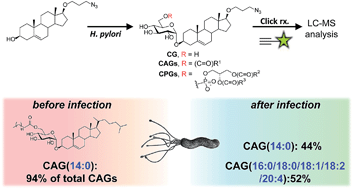
Metabolic labelling of cholesteryl glucosides in Helicobacter pylori reveals how the uptake of human lipids enhances bacterial virulence

Chem. Sci., 2016, 7,6208-6216
DOI: 10.1039/C6SC00889E, Edge Article
Open Access Open Access
Creative Commons Licence&nbsp This article is licensed under a Creative Commons Attribution 3.0 Unported Licence.
Hau-Ming Jan, Yi-Chi Chen, Yu-Yin Shih, Yu-Chen Huang, Zhijay Tu, Arun B. Ingle, Sheng-Wen Liu, Ming-Shiang Wu, Jacquelyn Gervay-Hague, Kwok-Kong Tony Mong, Yet-Ran Chen, Chun-Hung Lin
Helicobacter pylori infects approximately half of the human population and is the main cause of various gastric diseases.
The content of this RSS Feed (c) The Royal Society of Chemistry
01 Jun 20:40

Modulation of Backbone Flexibility for Effective Dissociation of Antibacterial and Hemolytic Activity in Cyclic Peptides

by Alberto Oddo, Thomas T. Thomsen, Hannah M. Britt, Anders Løbner-Olesen, Peter W. Thulstrup, John M. Sanderson and Paul R. Hansen

TOC Graphic

ACS Medicinal Chemistry Letters
DOI: 10.1021/acsmedchemlett.5b00400
31 May 16:14

Molecular Dynamics Simulations Reveal the Conformational Flexibility of Lipid II and Its Loose Association with the Defensin Plectasin in the Staphylococcus aureus Membrane

by Sarah Witzke, Michael Petersen, Timothy S. Carpenter and Syma Khalid

TOC Graphic

Biochemistry
DOI: 10.1021/acs.biochem.5b01315
29 May 03:29

β-Lactamases: Why and How

by R. F. Pratt

TOC Graphic

Journal of Medicinal Chemistry
DOI: 10.1021/acs.jmedchem.6b00448
26 May 20:12

[Report] Biosynthesis of a broad-spectrum nicotianamine-like metallophore in Staphylococcus aureus

by Ghassan Ghssein
Metal acquisition is a vital microbial process in metal-scarce environments, such as inside a host. Using metabolomic exploration, targeted mutagenesis, and biochemical analysis, we discovered an operon in Staphylococcus aureus that encodes the different functions required for the biosynthesis and trafficking of a broad-spectrum metallophore related to plant nicotianamine (here called staphylopine). The biosynthesis of staphylopine reveals the association of three enzyme activities: a histidine racemase, an enzyme distantly related to nicotianamine synthase, and a staphylopine dehydrogenase belonging to the DUF2338 family. Staphylopine is involved in nickel, cobalt, zinc, copper, and iron acquisition, depending on the growth conditions. This biosynthetic pathway is conserved across other pathogens, thus underscoring the importance of this metal acquisition strategy in infection. Authors: Ghassan Ghssein, Catherine Brutesco, Laurent Ouerdane, Clémentine Fojcik, Amélie Izaute, Shuanglong Wang, Christine Hajjar, Ryszard Lobinski, David Lemaire, Pierre Richaud, Romé Voulhoux, Akbar Espaillat, Felipe Cava, David Pignol, Elise Borezée-Durant, Pascal Arnoux
26 May 18:13

Host response: Sensing microbial sabotage

by John Trowsdale

Host response: Sensing microbial sabotage

Nature Microbiology, Published online: 26 May 2016; doi:10.1038/nmicrobiol.2016.71

Several microbes produce proteases that cleave antibodies to evade immune recognition. Humans seem to have a receptor on myeloid cells that detects the presence of cleaved antibodies and activates innate immunity.

26 May 15:18

In Vivo Probe of Lipid II-Interacting Proteins

by Sourav Sarkar, Elizabeth A. Libby, Sean E. Pidgeon, Jonathan Dworkin, Marcos M. Pires

Abstract

β-Lactams represent one of the most important classes of antibiotics discovered to date. These agents block Lipid II processing and cell wall biosynthesis through inactivation of penicillin-binding proteins (PBPs). PBPs enzymatically load cell wall building blocks from Lipid II carrier molecules onto the growing cell wall scaffold during growth and division. Lipid II, a bottleneck in cell wall biosynthesis, is the target of some of the most potent antibiotics in clinical use. Despite the immense therapeutic value of this biosynthetic pathway, the PBP–Lipid II association has not been established in live cells. To determine this key interaction, we designed an unnatural d-amino acid dipeptide that is metabolically incorporated into Lipid II molecules. By hijacking the peptidoglycan biosynthetic machinery, photoaffinity probes were installed in combination with click partners within Lipid II, thereby allowing, for the first time, demonstration of PBP interactions in vivo with Lipid II.

Thumbnail image of graphical abstract

Lipid II probes: Lipid II is a critical intermediate in the biosynthesis of bacterial cell walls and it is also the purported target of several antibiotic agents. Unnatural dipeptides were used to gain entry into the biosynthetic pathway to deliver a dual-functioning probe that can report on potential Lipid II-interacting proteins.

25 May 18:17

Microbiology: Pumping persisters

by Kenn Gerdes

Nature advance online publication 25 May 2016. doi:10.1038/nature18442

Authors: Kenn Gerdes & Szabolcs Semsey

The finding that antibiotics are pumped out of drug-tolerant bacterial cells by the TolC protein complex provides insight into how some cells, known as persisters, survive in the face of antibiotic treatments.

23 May 21:12

Biomimetic proteolipid vesicles for targeting inflamed tissues

by R. Molinaro

Nature Materials. doi:10.1038/nmat4644

Authors: R. Molinaro, C. Corbo, J. O. Martinez, F. Taraballi, M. Evangelopoulos, S. Minardi, I. K. Yazdi, P. Zhao, E. De Rosa, M. B. Sherman, A. De Vita, N. E. Toledano Furman, X. Wang, A. Parodi & E. Tasciotti

20 May 14:38

The Methylene Alkoxy Carbamate Self-Immolative Unit: Utilization for the Targeted Delivery of Alcohol-Containing Payloads with Antibody–Drug Conjugates

by Robert V. Kolakowski, Karl T. Haelsig, Kim K. Emmerton, Chris I. Leiske, Jamie B. Miyamoto, Julia H. Cochran, Robert P. Lyon, Peter D. Senter, Scott C. Jeffrey

Abstract

A strategy for the conjugation of alcohol-containing payloads to antibodies has been developed and involves the methylene alkoxy carbamate (MAC) self-immolative unit. A series of MAC β-glucuronide model constructs were prepared to evaluate stability and enzymatic release, and the results demonstrated high stability at physiological pH in a substitution-dependent manner. All the MAC model compounds efficiently released alcohol drug surrogates under the action of β-glucuronidase. To assess the MAC technology for ADCs, the potent microtubule-disrupting agent auristatin E (AE) was incorporated through the norephedrine alcohol. Conjugation of the MAC β-glucuronide AE drug linker to the anti-CD30 antibody cAC10, and an IgG control antibody, gave potent and immunologically specific activities in vitro and in vivo. These studies validate the MAC self-immolative unit for alcohol-containing payloads within ADCs, a class that has not been widely exploited.

Thumbnail image of graphical abstract

MAC out: A strategy for the conjugation of alcohol-containing payloads to antibodies has been developed using the methylene alkoxy carbamate (MAC) self-immolative unit. A series of MAC β-glucuronide model constructs were prepared and demonstrated high stability at physiological pH, and efficiently released alcohol drug surrogates under the action of β-glucuronidase.

18 May 19:29

Charge-density analysis of an iron–sulfur protein at an ultra-high resolution of 0.48 Å

by Yu Hirano

Nature advance online publication 18 May 2016. doi:10.1038/nature18001

Authors: Yu Hirano, Kazuki Takeda & Kunio Miki

The fine structures of proteins, such as the positions of hydrogen atoms, distributions of valence electrons and orientations of bound waters, are critical factors for determining the dynamic and chemical properties of proteins. Such information cannot be obtained by conventional protein X-ray analyses at 3.0–1.5 Å resolution, in which amino acids are fitted into atomically unresolved electron-density maps and refinement calculations are performed under strong restraints. Therefore, we usually supplement the information on hydrogen atoms and valence electrons in proteins with pre-existing common knowledge obtained by chemistry in small molecules. However, even now, computational calculation of such information with quantum chemistry also tends to be difficult, especially for polynuclear metalloproteins. Here we report a charge-density analysis of the high-potential iron–sulfur protein from the thermophilic purple bacterium Thermochromatium tepidum using X-ray data at an ultra-high resolution of 0.48 Å. Residual electron densities in the conventional refinement are assigned as valence electrons in the multipolar refinement. Iron 3d and sulfur 3p electron densities of the Fe4S4 cluster are visualized around the atoms. Such information provides the most detailed view of the valence electrons of the metal complex in the protein. The asymmetry of the iron–sulfur cluster and the protein environment suggests the structural basis of charge storing on electron transfer. Our charge-density analysis reveals many fine features around the metal complex for the first time, and will enable further theoretical and experimental studies of metalloproteins.

17 May 12:29

Pseudomonas aeruginosa elastase cleaves a C-terminal peptide from human thrombin that inhibits host inflammatory responses

by Mariena J. A. van der Plas

Article

Neutrophil elastase cleaves thrombin generating anti-inflammatory peptides. Here the authors show that cleavage of thrombin by Pseudomonas aeruginosa elastase generates a peptide that prevents TLR dimerization and signaling, interfering with the inflammatory response to avoid host defense.

Nature Communications doi: 10.1038/ncomms11567

Authors: Mariena J. A. van der Plas, Ravi K. V. Bhongir, Sven Kjellström, Helena Siller, Gopinath Kasetty, Matthias Mörgelin, Artur Schmidtchen

09 May 17:57

Sequence-defined bioactive macrocycles via an acid-catalysed cascade reaction

by Mintu Porel

Nature Chemistry. doi:10.1038/nchem.2508

Authors: Mintu Porel, Dana N. Thornlow, Ngoc N. Phan & Christopher A. Alabi

Macrocyclic oligomers are a unique structural class of compounds in which the ring size and structure can be tuned through the precise control of the primary sequence. Now, it has been shown that oligothioetheramide (oligoTEA) macrocycles can be synthesized using a one-pot acid-catalysed cascade reaction. Preliminary results indicate that cationic oligoTEAs are promising bactericidal agents.

06 May 14:20

The extracellular interactome of the human adenovirus family reveals diverse strategies for immunomodulation

by Nadia Martinez-Martin

Article

Viruses interact with their hosts via secreted and membrane-bound proteins to affect host immune responses and virulence. Here the authors contribute to our understanding of this relationship with an extracellular interaction map of human and adenoviral E3 immunomodulatory proteins.

Nature Communications doi: 10.1038/ncomms11473

Authors: Nadia Martinez-Martin, Sree R. Ramani, Jason A. Hackney, Irene Tom, Bernd J. Wranik, Michelle Chan, Johnny Wu, Maciej T. Paluch, Kentaro Takeda, Philip E. Hass, Hilary Clark, Lino C. Gonzalez

05 May 19:17

[Research Article] De novo design of protein homo-oligomers with modular hydrogen-bond network–mediated specificity

by Scott E. Boyken
In nature, structural specificity in DNA and proteins is encoded differently: In DNA, specificity arises from modular hydrogen bonds in the core of the double helix, whereas in proteins, specificity arises largely from buried hydrophobic packing complemented by irregular peripheral polar interactions. Here, we describe a general approach for designing a wide range of protein homo-oligomers with specificity determined by modular arrays of central hydrogen-bond networks. We use the approach to design dimers, trimers, and tetramers consisting of two concentric rings of helices, including previously not seen triangular, square, and supercoiled topologies. X-ray crystallography confirms that the structures overall, and the hydrogen-bond networks in particular, are nearly identical to the design models, and the networks confer interaction specificity in vivo. The ability to design extensive hydrogen-bond networks with atomic accuracy enables the programming of protein interaction specificity for a broad range of synthetic biology applications; more generally, our results demonstrate that, even with the tremendous diversity observed in nature, there are fundamentally new modes of interaction to be discovered in proteins. Authors: Scott E. Boyken, Zibo Chen, Benjamin Groves, Robert A. Langan, Gustav Oberdorfer, Alex Ford, Jason M. Gilmore, Chunfu Xu, Frank DiMaio, Jose Henrique Pereira, Banumathi Sankaran, Georg Seelig, Peter H. Zwart, David Baker