Marcos Pires
Shared posts
Commensal Microbes Induce Serum IgA Responses that Protect against Polymicrobial Sepsis
MreB filaments align along greatest principal membrane curvature to orient cell wall synthesis
Detection and localization of surgically resectable cancers with a multi-analyte blood test
Earlier detection is key to reducing cancer deaths. Here, we describe a blood test that can detect eight common cancer types through assessment of the levels of circulating proteins and mutations in cell-free DNA. We applied this test, called CancerSEEK, to 1005 patients with nonmetastatic, clinically detected cancers of the ovary, liver, stomach, pancreas, esophagus, colorectum, lung, or breast. CancerSEEK tests were positive in a median of 70% of the eight cancer types. The sensitivities ranged from 69 to 98% for the detection of five cancer types (ovary, liver, stomach, pancreas, and esophagus) for which there are no screening tests available for average-risk individuals. The specificity of CancerSEEK was greater than 99%: only 7 of 812 healthy controls scored positive. In addition, CancerSEEK localized the cancer to a small number of anatomic sites in a median of 83% of the patients.
Super-chelators for advanced protein labeling in living cells
Live-cell labeling, super-resolution microscopy, single-molecule applications, protein localization or chemically induced assembly are emerging approaches, which require specific and very small interaction pairs. The minimal disturbance of protein function is essential to derive unbiased insights into cellular processes. Here, we define a new class of hexavalent N-nitrilotriacetic acid (hexaNTA) chelators, displaying the highest affinity and stability of all NTA-based small interaction pairs described so far. Coupled to bright organic fluorophores with fine-tuned photo-physical properties, these super-chelator probes were delivered into human cells by chemically gated nanopores. These super-chelators permit kinetic profiling, multiplexed labeling of His6 and His12-tagged proteins as well as single-molecule based super-resolution imaging.
Clinical challenges in antimicrobial resistance
Clinical challenges in antimicrobial resistance
Clinical challenges in antimicrobial resistance, Published online: 20 February 2018; doi:10.1038/s41564-018-0121-y
Antimicrobial resistance is one of the great challenges for twenty-first century healthcare. While new therapeutics are undoubtedly required, there are major challenges in rapidly identifying resistant infections and tailoring therapy accordingly; and in how we deploy antimicrobials with suppression of resistance in mind.Conditional toxicity and synergy drive diversity among antibacterial effectors
Conditional toxicity and synergy drive diversity among antibacterial effectors
Conditional toxicity and synergy drive diversity among antibacterial effectors, Published online: 19 February 2018; doi:10.1038/s41564-018-0113-y
The activity of effectors transported by the type VI secretion system of Pseudomonas aeruginosa varies under different environmental conditions and some effectors act synergistically, which elucidates why some bacteria carry multiple toxins with distinct activities.[ASAP] Thienyl-Substituted a-Ketoamide: A Less Hydrophobic Reactive Group for Photo-Affinity Labeling

[ASAP] Selective Photoaffinity Probe That Enables Assessment of Cannabinoid CB2 Receptor Expression and Ligand Engagement in Human Cells

Cover Feature: Synthetic Cancer-Targeting Innate Immune Stimulators Give Insights into Avidity Effects (ChemBioChem 5/2018)

The cover feature picture shows three men on a climbing wall representing molecules binding to a cell with one, two or four binding moieties. To explore avidity effects on immune stimulation and cancer cell binding, chemoselective ligations were used to assemble molecules that mimic the functions of antibodies with various numbers and combinations of immune-stimulating and cancer-targeting peptides. More information can be found in the full paper by A. C. Conibear, C. F. W. Becker et al. on page 459 in Issue 5, 2018 (DOI: 10.1002/cbic.201700522).
Synthesis and Bioactivity Investigation of the Individual Components of Cyclic Lipopeptide Antibiotics

Lipopolysaccharide is transported to the cell surface by a membrane-to-membrane protein bridge
Gram-negative bacteria have an outer membrane that serves as a barrier to noxious agents in the environment. This protective function is dependent on lipopolysaccharide, a large glycolipid located in the outer leaflet of the outer membrane. Lipopolysaccharide is synthesized at the cytoplasmic membrane and must be transported to the cell surface. To understand this transport process, we reconstituted membrane-to-membrane movement of lipopolysaccharide by incorporating purified inner and outer membrane transport complexes into separate proteoliposomes. Transport involved stable association between the inner and outer membrane proteoliposomes. Our results support a model in which lipopolysaccharide molecules are pushed one after the other in a PEZ dispenser–like manner across a protein bridge that connects the inner and outer membranes.
Lysozyme Counteracts β-Lactam Antibiotics by Promoting the Emergence of L-Form Bacteria
SnoopLigase Catalyzes Peptide–Peptide Locking and Enables Solid-Phase Conjugate Isolation

Unraveling Tetrazine-Triggered Bioorthogonal Elimination Enables Chemical Tools for Ultrafast Release and Universal Cleavage

[ASAP] Antimicrobial Metallopeptides

Affinity-Based Screen for Inhibitors of Bacterial Transglycosylase

Exploring the Antimicrobial Action of Quaternary Amines against Acinetobacter baumannii
Marcos Piresalmost -- oh no!
Quaternary amine compounds (QAC) are potent antimicrobials used to prevent the spread of pathogenic bacteria. While they are known for their membrane-damaging properties, QAC action has been suggested to extend beyond the surface to intracellular targets. Here we characterize the range of action of the QAC biocide benzalkonium chloride (BZK) against the bacterial pathogen Acinetobacter baumannii. At high concentrations, BZK acts through membrane disruption, but at low concentrations we show that wide-spread protein aggregation is associated with BZK-induced cell death. Resistance to BZK is found to develop through ribosomal protein mutations that protect A. baumannii against BZK-induced protein aggregation. The multifunctional impact of BZK led us to discover that alternative QAC structures, with low human toxicity, retain potent action against multidrug-resistant A. baumannii, Staphylococcus aureus, and Clostridium difficile and present opportunities for their development as antibiotics.
IMPORTANCE Quaternary amine compounds (QACs) are widely used to prevent the spread of bacterial pathogens, but our understanding of their mode of action is incomplete. Here we describe disruption of bacterial proteostasis as an unrecognized action of QAC antimicrobial action and uncover the potential of diverse QAC structures to act as multitarget antibiotics.
A Cisplatin-Loaded Immunochemotherapeutic Nanohybrid Bearing Immune Checkpoint Inhibitors for Enhanced Cervical Cancer Therapy
Abstract
The efficacy of conventional chemotherapy is hindered by cancer cell escape from the immune system. A multifunctional nanohybrid system is reported for effective immunochemotherapy against cervical cancer. This nanohybrid contains both immune checkpoint inhibitor and cisplatin anticancer prodrug, showing improved cellular accumulation and increased binding of Pt to DNA and resulting in elevated apoptosis than using cisplatin alone when tested in cervical cancer cells. The immune checkpoint inhibitor enables the inhibition of indoleamine-2,3-dioxygenase and reverses immunosuppressive T cells to recognize cancer cells, leading to T cell proliferation and activation, cancer cell cycle arrest, and ultimately increased cancer cell death. The nanohybrid is also active in vivo against the growth of human cervical tumors. Overall, a strategy is provided using a multifunctional nanohybrid system to boost the antitumor activity of cisplatin.

An immunochemotherapy weapon: A cisplatin-loaded nanohybrid bearing inhibitors of indoleamine-2,3-dioxygenase significantly activates T cells, leading to cervical cancer cell cycle arrest and further increased cancer cell death.
Rox, a Rifamycin Resistance Enzyme with an Unprecedented Mechanism of Action
Cytosolic and Secreted Peptidoglycan-Degrading Enzymes in Drosophila Respectively Control Local and Systemic Immune Responses to Microbiota
Allostery, Recognition of Nascent Peptidoglycan, and Cross-linking of the Cell Wall by the Essential Penicillin-Binding Protein 2x of Streptococcus pneumoniae

Mitigating the Impact of Antibacterial Drug Resistance through Host-Directed Therapies: Current Progress, Outlook, and Challenges
Increasing incidences of multidrug resistance in pathogenic bacteria threaten our ability to treat and manage bacterial infection. The development and FDA approval of novel antibiotics have slowed over the past decade; therefore, the adoption and improvement of alternative therapeutic strategies are critical for addressing the threat posed by multidrug-resistant bacteria. Host-directed therapies utilize small-molecule drugs and proteins to alter the host response to pathogen infection. Here, we highlight strategies for modulating the host inflammatory response to enhance bacterial clearance, small-molecule potentiation of innate immunity, and targeting of host factors that are exploited by pathogen virulence factors. Application of state-of-the-art "omic" technologies, including proteomics, transcriptomics, and image-omics (image-based high-throughput phenotypic screening), combined with powerful bioinformatics tools will enable the modeling of key signaling pathways in the host-pathogen interplay and aid in the identification of host proteins for therapeutic targeting and the discovery of host-directed small molecules that will regulate bacterial infection. We conclude with an outlook on research needed to overcome the challenges associated with transitioning host-directed therapies into a clinical setting.
Method to generate highly stable D-amino acid analogs of bioactive helical peptides using a mirror image of the entire PDB [Biophysics and Computational Biology]
Light-Activated Control of Translation by Enzymatic Covalent mRNA Labeling
Abstract
Activation of cellular protein expression upon visible-light photocleavage of small-molecule caging groups covalently attached to the 5′ untranslated region (5′ UTR) of an mRNA was achieved. These photocleavable caging groups are conjugated to in vitro transcribed mRNA (IVT-mRNA) through RNA transglycosylation, an enzymatic process in which a bacterial tRNA guanine transglycosylase (TGT) exchanges a guanine nucleobase in a specific 17-nucleotide motif (Tag) for synthetic pre-queuosine1 (preQ1) derivatives. The caging groups severely reduce mRNA translation efficiency when strategically placed in the 5′ UTR. Using this method, we demonstrate the successful spatiotemporal photoregulation of gene expression with single-cell precision. Our method can be applied to therapeutically relevant chemically modified mRNA (mod-mRNA) transcripts. This strategy provides a modular and efficient approach for developing synthetic gene regulatory circuits, biotechnological applications, and therapeutic discovery.

Activation of translation: Activation of gene expression upon visible-light photocleavage of caging groups (red) attached to the 5′ untranslated region of an mRNA is demonstrated. The caging groups are attached through enzymatic RNA transglycosylation and severely reduce mRNA translation efficiency. This method enables spatiotemporal photoregulation of gene expression with single-cell precision.
Glycosyl-Substituted Dicarboxylates as Detergents for the Extraction, Overstabilization, and Crystallization of Membrane Proteins
Abstract
To tackle the problems associated with membrane protein (MP) instability in detergent solutions, we designed a series of glycosyl-substituted dicarboxylate detergents (DCODs) in which we optimized the polar head to clamp the membrane domain by including, on one side, two carboxyl groups that form salt bridges with basic residues abundant at the membrane–cytoplasm interface of MPs and, on the other side, a sugar to form hydrogen bonds. Upon extraction, the DCODs 8 b, 8 c, and 9 b preserved the ATPase function of BmrA, an ATP-binding cassette pump, much more efficiently than reference or recently designed detergents. The DCODs 8 a, 8 b, 8 f, 9 a, and 9 b induced thermal shifts of 20 to 29 °C for BmrA and of 13 to 21 °C for the native version of the G-protein-coupled adenosine receptor A2AR. Compounds 8 f and 8 g improved the diffraction resolution of BmrA crystals from 6 to 4 Å. DCODs are therefore considered to be promising and powerful tools for the structural biology of MPs.

Detergents used for extracting membrane proteins (MPs) in aqueous solutions tend to destabilize them because of their high exchangeability. Glycosyl-substituted dicarboxylate detergents clamp the membrane domain and form salt bridges with basic residues of the MPs. They preserve the ATPase function of BmrA upon extraction, and improve its stability and crystallization.
Promysalin Elicits Species-Selective Inhibition of Pseudomonas aeruginosa by Targeting Succinate Dehydrogenase

Improving the Cell Permeability of Polar Cyclic Peptides by Replacing Residues with Alkylated Amino Acids, Asparagines, and d-Amino Acids

Are Phage Lytic Proteins the Secret Weapon To Kill Staphylococcus aureus?
Methicillin-resistant Staphylococcus aureus (MRSA) is one of the most threatening microorganisms for global human health. The current strategies to reduce the impact of S. aureus include a restrictive control of worldwide antibiotic use, prophylactic measures to hinder contamination, and the search for novel antimicrobials to treat human and animal infections caused by this bacterium. The last strategy is currently the focus of considerable research. In this regard, phage lytic proteins (endolysins and virion-associated peptidoglycan hydrolases [VAPGHs]) have been proposed as suitable candidates. Indeed, these proteins display narrow-spectrum antimicrobial activity and a virtual lack of bacterial-resistance development. Additionally, the therapeutic use of phage lytic proteins in S. aureus animal infection models is yielding promising results, showing good efficacy without apparent side effects. Nonetheless, human clinical trials are still in progress, and data are not available yet. This minireview also analyzes the main obstacles for introducing phage lytic proteins as human therapeutics against S. aureus infections. Besides the common technological problems derived from large-scale production of therapeutic proteins, a major setback is the lack of a proper legal framework regulating their use. In that sense, the relevant health authorities should urgently have a timely discussion about these new antimicrobials. On the other hand, the research community should provide data to dispel any doubts regarding their efficacy and safety. Overall, the appropriate scientific data and regulatory framework will encourage pharmaceutical companies to invest in these promising antimicrobials.
Conjugation Chemistry-Dependent T-Cell Activation with Spherical Nucleic Acids

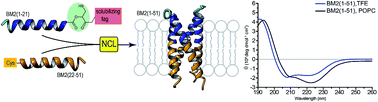
Chemical synthesis of membrane proteins: a model study on the influenza virus B proton channel
DOI: 10.1039/C8SC00004B, Edge Article
 Open Access
   This article is licensed under a Creative Commons Attribution 3.0 Unported Licence.
NCL results in the quantitative yield of a membrane protein, where a thioester peptide is formed from an oxo-ester with an in situ cleavable solubilizing tag.
The content of this RSS Feed (c) The Royal Society of Chemistry