Marcos Pires
Shared posts
Copper-Binding Small Molecule Induces Oxidative Stress and Cell-Cycle Arrest in Glioblastoma-Patient-Derived Cells
[ASAP] Deficient Lipid A Remodeling by the arnB Gene Promotes Biofilm Formation in Antimicrobial Peptide Susceptible Pseudomonas aeruginosa

Personalized vaccines for cancer immunotherapy
Cancer is characterized by an accumulation of genetic alterations. Somatic mutations can generate cancer-specific neoepitopes that are recognized by autologous T cells as foreign and constitute ideal cancer vaccine targets. Every tumor has its own unique composition of mutations, with only a small fraction shared between patients. Technological advances in genomics, data science, and cancer immunotherapy now enable the rapid mapping of the mutations within a genome, rational selection of vaccine targets, and on-demand production of a therapy customized to a patient’s individual tumor. First-in-human clinical trials of personalized cancer vaccines have shown the feasibility, safety, and immunotherapeutic activity of targeting individual tumor mutation signatures. With vaccination development being promoted by emerging innovations of the digital age, vaccinating a patient with individual tumor mutations may become the first truly personalized treatment for cancer.
CAR T cell immunotherapy for human cancer
Adoptive T cell transfer (ACT) is a new area of transfusion medicine involving the infusion of lymphocytes to mediate antitumor, antiviral, or anti-inflammatory effects. The field has rapidly advanced from a promising form of immuno-oncology in preclinical models to the recent commercial approvals of chimeric antigen receptor (CAR) T cells to treat leukemia and lymphoma. This Review describes opportunities and challenges for entering mainstream oncology that presently face the CAR T field, with a focus on the challenges that have emerged over the past several years.
[ASAP] Photochemical Barcodes

Whole-organism phenotypic screening for anti-infectives promoting host health
Whole-organism phenotypic screening for anti-infectives promoting host health
Whole-organism phenotypic screening for anti-infectives promoting host health, Published online: 19 March 2018; doi:10.1038/s41589-018-0018-3
Targeting the host during antibiotic discovery efforts is a viable strategy, and the approach has benefited from phenotypic screening of model organisms such as worms, zebrafish, and mice.Immunization with outer membrane vesicles displaying conserved surface polysaccharide antigen elicits broadly antimicrobial antibodies [Applied Biological Sciences]
Duplicated TLR5 of zebrafish functions as a heterodimeric receptor [Immunology and Inflammation]
Nutritional preferences of human gut bacteria reveal their metabolic idiosyncrasies
Nutritional preferences of human gut bacteria reveal their metabolic idiosyncrasies
Nutritional preferences of human gut bacteria reveal their metabolic idiosyncrasies, Published online: 19 March 2018; doi:10.1038/s41564-018-0123-9
Here the authors have characterized the growth of 96 human gut bacteria on a range of defined media, providing valuable insights into their metabolic capabilities and unique media for future studies.Specific Interactions Measured by AFM on Living Cells between Peroxiredoxin-5 and TLR4: Relevance for Mechanisms of Innate Immunity
[ASAP] Small Molecule Interactome Mapping by Photoaffinity Labeling Reveals Binding Site Hotspots for the NSAIDs

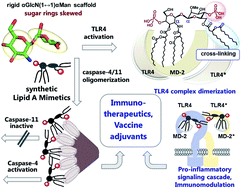
Synthetic glycan-based TLR4 agonists targeting caspase-4/11 for the development of adjuvants and immunotherapeutics
DOI: 10.1039/C7SC05323A, Edge Article
 Open Access
   This article is licensed under a Creative Commons Attribution 3.0 Unported Licence.
The skewed molecular shape of the rigid [small alpha],[small alpha]-(1[leftrightarrow]1[prime or minute])-linked disaccharide core of novel synthetic anionic glycan-based immunostimulants is accountable for potent and adjustable TLR4-mediated signaling which is dissociable from the induction of caspase-11 protease activity.
The content of this RSS Feed (c) The Royal Society of Chemistry
Strain-promoted cycloaddition of cyclopropenes with o-quinones: a rapid click reaction.
Novel click reactions are of continued interest in fields as diverse as bio-conjugation, polymer science and surface chemistry. Qualification as a proper 'click' reaction requires stringent criteria, including fast kinetics and high conversion, to be met. Herein, we report a novel strain-promoted cycloaddition between cyclopropenes and o-quinones in solution and on a surface. We demonstrate the 'click character' of the reaction in solution and on surfaces for both monolayer and polymer brush functionalization.
[ASAP] Synthesis and Characterization of a Bidirectional Photoswitchable Antagonist Toolbox for Real-Time GPCR Photopharmacology

Functionalized Proline-Rich Peptides Bind the Bacterial Second Messenger c-di-GMP
c di GMP is an attractive target in the fight against bacterial infections as it is a near ubiquitous second messenger that regulates important cellular processes, including biofilm formation and virulence of pathogens. The screening of a combinatorial peptide library enabled the identification of the proline-rich tetrapeptide Gup-Gup-Nap-Arg that binds c di GMP in water with selectivity over other nucleotides. Computational and CD spectroscopic studies provided a binding mode of the complex and enabled the design of a pentapeptide with even higher binding strength towards c di GMP. Biological studies showed that the tetrapeptide inhibits biofilm growth of the opportunistic pathogen P. aeruginosa.
Chemically induced proximity in biology and medicine
Proximity, or the physical closeness of molecules, is a pervasive regulatory mechanism in biology. For example, most posttranslational modifications such as phosphorylation, methylation, and acetylation promote proximity of molecules to play deterministic roles in cellular processes. To understand the role of proximity in biologic mechanisms, chemical inducers of proximity (CIPs) were developed to synthetically model biologically regulated recruitment. Chemically induced proximity allows for precise temporal control of transcription, signaling cascades, chromatin regulation, protein folding, localization, and degradation, as well as a host of other biologic processes. A systematic analysis of CIPs in basic research, coupled with recent technological advances utilizing CRISPR, distinguishes roles of causality from coincidence and allows for mathematical modeling in synthetic biology. Recently, induced proximity has provided new avenues of gene therapy and emerging advances in cancer treatment.
Gut bacteria selectively promoted by dietary fibers alleviate type 2 diabetes
The gut microbiota benefits humans via short-chain fatty acid (SCFA) production from carbohydrate fermentation, and deficiency in SCFA production is associated with type 2 diabetes mellitus (T2DM). We conducted a randomized clinical study of specifically designed isoenergetic diets, together with fecal shotgun metagenomics, to show that a select group of SCFA-producing strains was promoted by dietary fibers and that most other potential producers were either diminished or unchanged in patients with T2DM. When the fiber-promoted SCFA producers were present in greater diversity and abundance, participants had better improvement in hemoglobin A1c levels, partly via increased glucagon-like peptide-1 production. Promotion of these positive responders diminished producers of metabolically detrimental compounds such as indole and hydrogen sulfide. Targeted restoration of these SCFA producers may present a novel ecological approach for managing T2DM.
Carbapenem-Resistant Klebsiella pneumoniae Exhibiting Clinically Undetected Colistin Heteroresistance Leads to Treatment Failure in a Murine Model of Infection
Antibiotic resistance is a growing crisis and a grave threat to human health. It is projected that antibiotic-resistant infections will lead to 10 million annual deaths worldwide by the year 2050. Among the most significant threats are carbapenem-resistant Enterobacteriaceae (CRE), including carbapenem-resistant Klebsiella pneumoniae (CRKP), which lead to mortality rates as high as 40 to 50%. Few treatment options are available to treat CRKP, and the polymyxin antibiotic colistin is often the "last-line" therapy. However, resistance to colistin is increasing. Here, we identify multidrug-resistant, carbapenemase-positive CRKP isolates that were classified as susceptible to colistin by clinical diagnostics yet harbored a minor subpopulation of phenotypically resistant cells. Within these isolates, the resistant subpopulation became predominant after growth in the presence of colistin but returned to baseline levels after subsequent culture in antibiotic-free media. This indicates that the resistance was phenotypic, rather than due to a genetic mutation, consistent with heteroresistance. Importantly, colistin therapy was unable to rescue mice infected with the heteroresistant strains. These findings demonstrate that colistin heteroresistance may cause in vivo treatment failure during K. pneumoniae infection, threatening the use of colistin as a last-line treatment for CRKP. Furthermore, these data sound the alarm for use of caution in interpreting colistin susceptibility test results, as isolates identified as susceptible may in fact resist antibiotic therapy and lead to unexplained treatment failures.
IMPORTANCE This is the first report of colistin-heteroresistant K. pneumoniae in the United States. Two distinct isolates each led to colistin treatment failure in an in vivo model of infection. The data are worrisome, especially since the colistin heteroresistance was not detected by current diagnostic tests. As these isolates were carbapenem resistant, clinicians might turn to colistin as a last-line therapy for infections caused by such strains, not knowing that they in fact harbor a resistant subpopulation of cells, potentially leading to treatment failure. Our findings warn that colistin susceptibility testing results may be unreliable due to undetected heteroresistance and highlight the need for more accurate and sensitive diagnostics.
IgG Responses to Porins and Lipopolysaccharide within an Outer Membrane-Based Vaccine against Nontyphoidal Salmonella Develop at Discordant Rates
Antibodies acquired after vaccination or natural infection with Gram-negative bacteria, such as invasive Salmonella enterica serovar Typhimurium, can protect against disease. Immunization with naturally shed outer membrane vesicles from Gram-negative bacteria is being studied for its potential to protect against many infections, since antigens within vesicles maintain their natural conformation and orientation. Shedding can be enhanced through genetic modification, and the resulting particles, generalized modules for membrane antigens (GMMA), not only offer potential as vaccines but also can facilitate the study of B-cell responses to bacterial antigens. Here we show that the response to immunization with GMMA from S. Typhimurium (STmGMMA) provides B-cell-dependent protection and induces antibodies to two immunodominant antigens, lipopolysaccharide (LPS) and porins. Antibodies to LPS O antigen (O-Ag) markedly enhance protection in the spleen, but this effect is less marked in the liver. Strikingly, IgG responses to LPS and porins develop with distinct kinetics. In the first week after immunization, there is a dramatic T-cell-independent B1b-cell-associated induction of all IgG isotypes, except IgG1, to porins but not to LPS. In contrast, production of IgG1 to either antigen was delayed and T cell dependent. Nevertheless, after 1 month, cells in the bone marrow secreting IgG against porins or LPS were present at a similar frequency. Unexpectedly, immunization with O-Ag-deficient STmGMMA did not substantially enhance the anti-porin response. Therefore, IgG switching to all antigens does not develop synchronously within the same complex and so the rate of IgG switching to a single component does not necessarily reflect its frequency within the antigenic complex.
IMPORTANCE Vaccines save millions of lives, yet for some infections there are none. This includes some types of Salmonella infections, killing hundreds of thousands of people annually. We show how a new type of vaccine, called GMMA, that is made from blebs shed from the Salmonella cell wall, works to protect against infection in mice by inducing host proteins (antibodies) specifically recognizing bacterial components (antigens). The rate of development of IgG antibody to antigens within GMMA occurred with different kinetics. However, the antibody response to GMMA persists and is likely to provide prolonged protection for those who need it. These results help show how antibody responses to bacterial antigens develop and how vaccines like GMMA can work and help prevent infection.
O-GlcNAc Transferase Recognizes Protein Substrates Using an Asparagine Ladder in the Tetratricopeptide Repeat (TPR) Superhelix

Dual Inhibitor of Staphylococcus aureus Virulence and Biofilm Attenuates Expression of Major Toxins and Adhesins

Incomplete host immunity favors the evolution of virulence in an emergent pathogen
Immune memory evolved to protect hosts from reinfection, but incomplete responses that allow future reinfection may inadvertently select for more-harmful pathogens. We present empirical and modeling evidence that incomplete immunity promotes the evolution of higher virulence in a natural host-pathogen system. We performed sequential infections of house finches with Mycoplasma gallisepticum strains of various levels of virulence. Virulent bacterial strains generated stronger host protection against reinfection than less virulent strains and thus excluded less virulent strains from infecting previously exposed hosts. In a two-strain model, the resulting fitness advantage selected for an almost twofold increase in pathogen virulence. Thus, the same immune systems that protect hosts from infection can concomitantly drive the evolution of more-harmful pathogens in nature.
Regulated Stochasticity in a Bacterial Signaling Network Permits Tolerance to a Rapid Environmental Change
A Versatile Approach to Noncanonical, Dynamic Covalent Single- and Multi-Loop Peptide Macrocycles for Enhancing Antimicrobial Activity

Aspirin Recapitulates Features of Caloric Restriction
S. aureus Evades Macrophage Killing through NLRP3-Dependent Effects on Mitochondrial Trafficking
Phosphorylation-dependent activation of the cell wall synthase PBP2a in Streptococcus pneumoniae by MacP [Microbiology]
Python Cathelicidin CATHPb1 Protects against Multidrug-Resistant Staphylococcal Infections by Antimicrobial-Immunomodulatory Duality

Resistance to nonribosomal peptide antibiotics mediated by d-stereospecific peptidases
Resistance to nonribosomal peptide antibiotics mediated by d-stereospecific peptidases
Resistance to nonribosomal peptide antibiotics mediated by <span class="small-caps">d</span>-stereospecific peptidases, Published online: 26 February 2018; doi:10.1038/s41589-018-0009-4
Networking-associated genome mining on bacterial genomes followed by chemical and enzymatic analysis identified a mechanism of resistance toward nonribosomal peptide antibiotics based on hydrolytic cleavage by d-stereospecific peptidases.