30 Aug 13:15
Publication date: 18 July 2017
Source:Immunity, Volume 47, Issue 1
Author(s): Anthony J. St. Leger, Jigar V. Desai, Rebecca A. Drummond, Abirami Kugadas, Fatimah Almaghrabi, Phyllis Silver, Kumarkrishna Raychaudhuri, Mihaela Gadjeva, Yoichiro Iwakura, Michail S. Lionakis, Rachel R. Caspi
Mucosal sites such as the intestine, oral cavity, nasopharynx, and vagina all have associated commensal flora. The surface of the eye is also a mucosal site, but proof of a living, resident ocular microbiome remains elusive. Here, we used a mouse model of ocular surface disease to reveal that commensals were present in the ocular mucosa and had functional immunological consequences. We isolated one such candidate commensal, Corynebacterium mastitidis, and showed that this organism elicited a commensal-specific interleukin-17 response from γδ T cells in the ocular mucosa that was central to local immunity. The commensal-specific response drove neutrophil recruitment and the release of antimicrobials into the tears and protected the eye from pathogenic Candida albicans or Pseudomonas aeruginosa infection. Our findings provide direct evidence that a resident commensal microbiome exists on the ocular surface and identify the cellular mechanisms underlying its effects on ocular immune homeostasis and host defense.
Graphical abstract

Teaser
Although the eye is a mucosal site, there has been a long-standing controversy regarding whether a resident microbiome exists on the ocular surface. St. Leger et al. show that a microorganism that lives on the conjunctiva tunes local mucosal immunity and protects the eye from pathogenic infection.
09 Aug 23:47
by Sean E. Pidgeon and Marcos M. Pires

Bioconjugate Chemistry
DOI: 10.1021/acs.bioconjchem.7b00363

09 Aug 14:48
by Yoshihiro Ojima, Kyota Yamaguchi, Masahito Taya
Outer membrane vesicles (OMVs) are spherical bilayered proteolipids released from the cell surfaces of bacteria, which have gained traction in the biotechnology fields. Bacterial cellular machinery can be genetically engineered to produce and package heterologous enzymes into OMVs, producing nanocarriers and nanoparticle catalysts. However, the productivity or efficiency of packaging the target protein into OMVs has not been quantitatively evaluated. In this study, we packaged green fluorescence protein (GFP) into the OMVs of Escherichia coli through N-terminal fused expression to outer membrane protein W (OmpW). The OMV productivity and amount of OmpW-GFP packaged in the OMVs were quantitatively compared between two hypervesiculating mutant strains ΔnlpI and ΔdegP. Both strains increased the OMV production, but the ΔnlpI strain additionally enhanced the packaging of OmpW-GFP into OMVs. It was further confirmed that Spr, a peptidoglycan endopeptidase, plays an important role in the enhanced packaging of OmpW-GFP into OMVs through the increased OmpW-GFP expression on the ΔnlpI cells. Finally, the amount of OmpW-GFP released in the OMV fraction of both mutants was determined in terms of the OMV productivity and the packaging efficiency of OmpW-GFP into OMVs. © 2017 American Institute of Chemical Engineers Biotechnol. Prog., 34:51–57, 2018
09 Aug 13:45
by Jad Sassine, Meizhu Xu, Karzan R. Sidiq, Robyn Emmins, Jeff Errington, Richard A. Daniel
Summary
Bacterial cell division involves the dynamic assembly of a diverse set of proteins that coordinate the invagination of the cell membrane and synthesis of cell wall material to create the new cell poles of the separated daughter cells. Penicillin-binding protein PBP 2B is a key cell division protein in Bacillus subtilis proposed to have a specific catalytic role in septal wall synthesis. Unexpectedly, we find that a catalytically inactive mutant of PBP 2B supports cell division, but in this background the normally dispensable PBP 3 becomes essential. Phenotypic analysis of pbpC mutants (encoding PBP 3) shows that PBP 2B has a crucial structural role in assembly of the division complex, independent of catalysis, and that its biochemical activity in septum formation can be provided by PBP 3. Bioinformatic analysis revealed a close sequence relationship between PBP 3 and Staphylococcus aureus PBP 2A, which is responsible for methicillin resistance. These findings suggest that mechanisms for rescuing cell division when the biochemical activity of PBP 2B is perturbed evolved prior to the clinical use of β-lactams.

The bacterial division complex is a dynamic assembly of multiple proteins. Here, we show that the essential Penicillin Binding Protein 2B (PBP 2B) has a redundant biochemical activity, but an essential structural role in complex formation. Whereas, PBP 3 can act to provide the biochemical activity required for division but is not able to functionally replace PBP 2B. The results provide a functional role for PBP 3 in Bacillus subtilis and may suggest how penicillin resistance has evolved.
09 Aug 11:38
Chem. Commun., 2017, 53,10632-10635
DOI: 10.1039/C7CC05251K, Communication
Jian Fu, Huixiao Fu, Marc Dieu, Iman Halloum, Laurent Kremer, Yufen Xia, Weidong Pan, Stephane P. Vincent
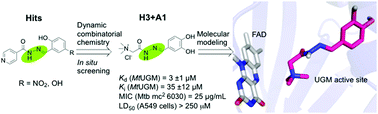
In this study, we report a dynamic combinatorial approach along with highly efficient in situ screening to identify inhibitors of UDP-galactopyranose mutase (UGM), an essential enzyme involved in mycobacterial cell wall biosynthesis.
The content of this RSS Feed (c) The Royal Society of Chemistry

02 Aug 19:01
by Clarissa C. Forneris, Seyma Ozturk, Marcus I. Gibson, Erik J. Sorensen and Mohammad R. Seyedsayamdost

ACS Chemical Biology
DOI: 10.1021/acschembio.7b00456

31 Jul 15:35
Publication date: 2016
Source:Methods in Microbiology, Volume 43
Author(s): Y.-P. Hsu, X. Meng, M.S. VanNieuwenhze
Peptidoglycan is a rigid envelope surrounding the cytoplasmic membrane of most bacterial species. It helps protect bacterial cells from environmental stress and helps preserve cell morphology throughout their life cycle. Peptidoglycan biosynthesis is also an important regulator of bacterial cell division. Since the discovery of penicillin, it has also been an important drug target for antibacterial discovery and development. As a result, a significant effort has been directed at expanding our knowledge of peptidoglycan biosynthesis and dynamics. One approach directed towards this goal enables visualization of peptidoglycan structures in either live or fixed cells. Recent advancements in microscopy have enabled scientists to study peptidoglycan structure, morphology, and organization at high resolution. In combination with structurally defined molecular probes, scientists are now able to perform highly specific, bioorthogonal probing of peptidoglycan structure and dynamics. In this chapter, we will survey peptidoglycan imaging techniques and discuss the findings obtained by these methods.
28 Jul 14:46
by Allison Rae Sherratt, Yanouchka Rouleau, Christian Luebbert, Miroslava Strmiskova, Teodor Veres, Sabah Bidawid, Nathalie Corneau, John Paul Pezacki
Sherratt et al. optimized bioorthogonal non-canonical amino acid tagging (BONCAT) approaches for rapid imaging, capture, and identification of living pathogenic organisms in their native wild-type form, and distinguishing between living and dead microorganisms.
28 Jul 14:45
by Azucena Ramos, Michael T. Hemann
The tumor microenvironment has recently been shown to play decisive roles in chemotherapeutic response. In this issue of Cell, Yu et al. add to these findings by identifying the bacterium Fusobacterium nucleatum as a previously unrecognized chemoresistance mediator in colorectal cancer, thereby establishing the microbiota as a potential therapeutic target.
25 Jul 19:43
by Amy K. Schaefer, James E. Melnyk, Michael M. Baksh, Klare M. Lazor, M. G. Finn and Catherine Leimkuhler Grimes

ACS Chemical Biology
DOI: 10.1021/acschembio.7b00469

25 Jul 16:57
by Freitas, C. G., Lima, S. M. F., Freire, M. S., Cantuaria, A. P. C., Junior, N. G. O., Santos, T. S., Folha, J. S., Ribeiro, S. M., Dias, S. C., Rezende, T. M. B., Albuquerque, P., Nicola, A. M., de la Fuente-Nunez, C., Hancock, R. E. W., Franco, O. L., Felipe, M. S. S.
Fungal Candida species are commensals present in the mammalian skin and mucous membranes. Candida spp. are capable of breaching the epithelial barrier of immunocompromised patients with neutrophil and cell-mediated immune dysfunctions and can also disseminate to multiple organs through the bloodstream. Here we examined the action of innate defense regulator 1018 (IDR-1018), a 12-amino-acid-residue peptide derived from bovine bactenecin (Bac2A): IDR-1018 showed weak antifungal and antibiofilm activity against a Candida albicans laboratory strain (ATCC 10231) and a clinical isolate (CI) (MICs of 32 and 64 μg · ml–1, respectively), while 8-fold lower concentrations led to dissolution of the fungal cells from preformed biofilms. IDR-1018 at 128 μg · ml–1 was not hemolytic when tested against murine red blood cells and also has not shown a cytotoxic effect on murine monocyte RAW 264.7 and primary murine macrophage cells at the tested concentrations. IDR-1018 modulated the cytokine profile during challenge of murine bone marrow-derived macrophages with heat-killed C. albicans (HKCA) antigens by increasing monocyte chemoattractant protein 1 (MCP-1) and interleukin-10 (IL-10) levels, while suppressing tumor necrosis factor alpha (TNF-α), IL-1β, IL-6, and IL-12 levels. Mice treated with IDR-1018 at 10 mg · kg–1 of body weight had an increased survival rate in the candidemia model compared with phosphate-buffered saline (PBS)-treated mice, together with a diminished kidney fungal burden. Thus, IDR-1018 was able to protect against murine experimental candidemia and has the potential as an adjunctive therapy.
19 Jul 19:46
by Wei Wang, Yuntao Zhu and Xing Chen

Biochemistry
DOI: 10.1021/acs.biochem.7b00539

18 Jul 12:15
by Justine N. deGruyter, Lara R. Malins and Phil S. Baran

Biochemistry
DOI: 10.1021/acs.biochem.7b00536

13 Jul 19:00
by Laurence Zitvogel
Nature Reviews Microbiology 15, 465 (2017).
doi:10.1038/nrmicro.2017.44
Authors: Laurence Zitvogel, Romain Daillère, María Paula Roberti, Bertrand Routy & Guido Kroemer
The human gut microbiome modulates many host processes, including metabolism, inflammation, and immune and cellular responses. It is becoming increasingly apparent that the microbiome can also influence the development of cancer. In preclinical models, the host response to cancer treatment has been improved by modulating

13 Jul 19:00
by Robert A. Fisher
Nature Reviews Microbiology 15, 453 (2017).
doi:10.1038/nrmicro.2017.42
Authors: Robert A. Fisher, Bridget Gollan & Sophie Helaine
Many bacteria can infect and persist inside their hosts for long periods of time. This can be due to immunosuppression of the host, immune evasion by the pathogen and/or ineffective killing by antibiotics. Bacteria can survive antibiotic treatment if they are resistant or tolerant to

17 Jun 18:53
by Des R. Kashyap, Marcin Kuzma, Dominik A. Kowalczyk, Dipika Gupta, Roman Dziarski
Summary
Mammalian Peptidoglycan Recognition Proteins (PGRPs) kill both Gram-positive and Gram-negative bacteria through simultaneous induction of oxidative, thiol and metal stress responses in bacteria. However, metabolic pathways through which PGRPs induce these bactericidal stress responses are unknown. We screened Keio collection of Escherichia coli deletion mutants and revealed that deleting genes for respiratory chain flavoproteins or for tricarboxylic acid (TCA) cycle resulted in increased resistance of E. coli to PGRP killing. PGRP-induced killing depended on the production of hydrogen peroxide, which required increased supply of NADH for respiratory chain oxidoreductases from central carbon catabolism (glycolysis and TCA cycle), and was controlled by cAMP-Crp. Bactericidal PGRP induced a rapid decrease in respiration, which suggested that the main source of increased production of hydrogen peroxide was a block in respiratory chain and diversion of electrons from NADH oxidoreductases to oxygen. CpxRA two-component system was a negative regulator of PGRP-induced oxidative stress. By contrast, PGRP-induced thiol stress (depletion of thiols) and metal stress (increase in intracellular free Zn2+ through influx of extracellular Zn2+) were mostly independent of oxidative stress. Thus, manipulating pathways that induce oxidative, thiol and metal stress in bacteria could be a useful strategy to design new approaches to antibacterial therapy.

Bactericidal PGRP induces oxidative stress through a block in respiratory chain, which diverts electrons from NADH oxidoreductases to O2, generates H2O2 and results in decreased respiration. Production of H2O2 depends on increased supply of NADH from cAMP-Crp-controlled glycolysis and TCA cycle. CpxRA is a negative regulator of PGRP-induced oxidative stress. PGRP-induced thiol stress (depletion of thiols) and metal stress (increase in intracellular free Zn2+ through influx of extracellular Zn2+) are mostly independent of oxidative stress.
15 Jun 17:50
Scientists from Rutgers University-New Brunswick, the biotechnology company NAICONS Srl., and elsewhere have discovered a new antibiotic effective against drug-resistant bacteria: pseudouridimycin. The new antibiotic is produced by a microbe found in a soil sample collected in Italy and was discovered by screening microbes from soil samples. The new antibiotic kills a broad spectrum of drug-sensitive and drug-resistant bacteria in a test tube and cures bacterial infections in mice.
15 Jun 17:47
by Hea-Jin Jung
Nature advance online publication 14 June 2017. doi:10.1038/nature23084
Authors: Hea-Jin Jung & Eric G. Pamer
Pili are filamentous bacterial structures that promote adhesion to host cells. It emerges that a small molecule that inhibits this adhesion can prevent colonization of the mouse gut by a pathogenic bacterium.
13 Jun 22:31
by Kevin Ferreira, Hai-Yu Hu, Verena Fetz, Hans Prochnow, Bushra Rais, Peter P. Müller, Mark Brönstrup
Abstract
There is a strong need to better diagnose infections at deep body sites through noninvasive molecular imaging methods. Herein, we describe the synthesis and characterization of probes based on siderophore conjugates with catechol moieties and a central DOTAM scaffold. The probes can accommodate a metal ion as well as an antibiotic moiety and are therefore suited for theranostic purposes. The translocation of the conjugates across the outer and inner cell membranes of E. coli was confirmed by growth recovery experiments with enterobactin-deficient strains, by the antibacterial activity of ampicillin conjugates, and by confocal imaging using a fluorogen-activating protein–malachite green system adapted to E. coli. The suitability of the probes for in vivo imaging was demonstrated with a Cy5.5 conjugate in mice infected with P. aeruginosa.

Trojan horses: A siderophore motif was coupled to functional imaging and/or antibiotic moieties via a DOTAM scaffold. The conjugates are internalized into Gram-positive as well as Gram-negative pathogenic bacteria and can be used for multiple theranostic applications, such as the in vivo imaging of infections.
13 Jun 20:32
Using high magnification imaging, a team of researchers has identified several never before seen structures on bacteria that represent molecular machinery. The research is published this week in the Journal of Bacteriology, published by the American Society for Microbiology.
13 Jun 12:43
by François Lebreton, Abigail L. Manson, Jose T. Saavedra, Timothy J. Straub, Ashlee M. Earl, Michael S. Gilmore
Why, among the vast diversity of gut microbiota, have enterococci become so well adapted to the modern hospital environment?
13 Jun 02:08
by Fumiaki Tabuchi
D-cycloserine increases the effectiveness of vancomycin against vancomycin-highly resistant Staphylococcus aureus
The Journal of Antibiotics advance online publication, June 7 2017.
doi:10.1038/ja.2017.56
Authors: Fumiaki Tabuchi, Yasuhiko Matsumoto, Masaki Ishii, Keita Tatsuno, Mitsuhiro Okazaki, Tomoaki Sato, Kyoji Moriya & Kazuhisa Sekimizu

05 Jun 23:32
Lactobacillus parafarraginis metabolites hindered the growth of multiple, distantly related bacterial pathogens.
05 Jun 23:32
A Lactobacillus isolate from commercial yogurt, identified as Lactobacillus parafarraginis, inhibited the growth of several multidrug-resistant/extended spectrum β-lactamase bacteria from patients at a hospital in Washington, D.C.. The research was presented at ASM Microbe 2017 in New Orleans, Louisiana.
05 Jun 15:21
by Kelly L. George and W. Seth Horne

Journal of the American Chemical Society
DOI: 10.1021/jacs.7b03114

22 May 22:59
by com.springer.oscar.shared.search.Author@7bd6ebfe[name=Hyungjin Eoh,email=none()]
Metabolic anticipation in Mycobacterium tuberculosis
Nature Microbiology, Published online: 22 May 2017; doi:10.1038/nmicrobiol.2017.84
When faced with hypoxic conditions, Mycobacterium tuberculosis adapts its metabolism to generate intermediates reserved for re-initiation of peptidoglycan biosynthesis that can be used as soon as it is re-exposed to normoxia.

19 May 12:18
by Xiaobao Bi, Juan Yin, Giang K. T. Nguyen, Chang Rao, Nurashikin Bte Abdul Halim, Xinya Hemu, James P. Tam, Chuan-Fa Liu
Abstract
Butelase-mediated ligation (BML) can be used to modify live bacterial cell surfaces with diverse cargo molecules. Surface-displayed butelase recognition motif NHV was first introduced at the C-terminal end of the anchoring protein OmpA on E. coli cells. This then served as a handle of BML for the functionalization of E. coli cell surfaces with fluorescein and biotin tags, a tumor-associated monoglycosylated peptide, and mCherry protein. The cell-surface ligation reaction was achieved at low concentrations of butelase and the labeling substrates. Furthermore, the fluorescein-labeled bacterial cells were used to show the interactions with cultured HeLa cells and with macrophages in live transgenic zebrafish, capturing the latter's powerful phagocytic effect in action. Together these results highlight the usefulness of butelase 1 in live bacterial cell surface engineering for novel applications.

Enzymatic cell surface engineering: Butelase-mediated ligation (BML) is used to modify live bacterial cell surfaces with diverse cargo molecules for different applications. The fluorescein-labeled bacterial cells are shown useful to visualize pathogen–host interactions with cultured HeLa cells and with macrophages in live transgenic zebrafish, capturing the latter's powerful phagocytic effect in action.
17 May 15:14
by Sharanjeet Atwal, Suparat Giengkam, Suwittra Chaemchuen, Jack Dorling, Nont Kosaisawe, Michael VanNieuwenhze, Somponnat Sampattavanich, Peter Schumann, Jeanne Salje
Summary
Bacterial cell walls are composed of the large cross-linked macromolecule peptidoglycan, which maintains cell shape and is responsible for resisting osmotic stresses. This is a highly conserved structure and the target of numerous antibiotics. Obligate intracellular bacteria are an unusual group of organisms that have evolved to replicate exclusively within the cytoplasm or vacuole of a eukaryotic cell. They tend to have reduced amounts of peptidoglycan, likely due to the fact that their growth and division takes place within an osmotically protected environment, and also due to a drive to reduce activation of the host immune response. Of the two major groups of obligate intracellular bacteria, the cell wall has been much more extensively studied in the Chlamydiales than the Rickettsiales. Here, we present the first detailed analysis of the cell envelope of an important but neglected member of the Rickettsiales, Orientia tsutsugamushi. This bacterium was previously reported to completely lack peptidoglycan, but here we present evidence supporting the existence of a peptidoglycan-like structure in Orientia, as well as an outer membrane containing a network of cross-linked proteins, which together confer cell envelope stability. We find striking similarities to the unrelated Chlamydiales, suggesting convergent adaptation to an obligate intracellular lifestyle.

Orientia tsutsugamushi is an obligate intracellular bacterium of the family Rickettsiaceae. It is insensitive to ß-lactam antibiotics and was previously thought to completely lack peptidoglycan, which is unusual amongst bacteria but can be tolerated in the osmotically protected intracellular replicative niche. Here we use a combination of mass spectrometry, gene expression analysis, drug sensitivity assays and D-alanine probes to present the first direct evidence for a minimal peptidoglycan-like structure in this organism.
11 May 19:09
Leading hospital "superbugs," known as the enterococci, arose from an ancestor that dates back 450 million years—about the time when animals were first crawling onto land (and well before the age of dinosaurs), according to a new study led by researchers from Massachusetts Eye and Ear, the Harvard-wide Program on Antibiotic Resistance and the Broad Institute of MIT and Harvard. Published online today in Cell, the study authors shed light on the evolutionary history of these pathogens, which evolved nearly indestructible properties and have become leading causes of modern antibiotic-resistant infections in hospitals.
08 May 19:34
Mol. BioSyst., 2017, 13,1223-1234
DOI: 10.1039/C7MB00110J, Paper
Zeynab Fakhar, Thavendran Govender, Glenn E. M. Maguire, Gyanu Lamichhane, Ross C. Walker, Hendrik G. Kruger, Bahareh Honarparvar
The implications of inhibitor binding on the flap dynamics in L,D-transpeptidase2 from mycobacterium tuberculosis.
The content of this RSS Feed (c) The Royal Society of Chemistry