On a sunny May day last year, with not a cloud to mar the blue sky, Kishan Kumar opened the barn doors and led the whinnying horses and nickering foals out. They joined the steady stream of equine traffic in the narrow alley of Sagnam village on the banks of River Pin in the Spiti region of the northern Indian state of Himachal Pradesh.
People moved aside to give way. The meditative eyes of the Buddha gazed from the walls of houses and shops as they walked past. They crossed a frozen section of the river and climbed up into the hills in the western margin of the Tibetan plateau.
After an hour’s walk, the men accompanying the animals stopped. With a last look around, they left the horses to their devices and returned. The animals would free-range for the following months with no human in sight.
By the time spring turns to summer, trickles of snowmelt course down the mountains, transforming River Pin, which separates the village from its pastures, into a roaring river. The currents are too strong to wade through, and horses are skittish about walking on rickety bridges spanning the river. So the villagers have no choice but to let the animals free-range.
Kumar and his community worry about losing horses during the summer months. The culprits aren’t horse rustlers but snow leopards and brown bears. The predators pick the time and place of attack with impunity.
Leaving animals to free-range may seem cavalier, but the community has little choice because they must work elsewhere to make ends meet. To cover their losses, people insure their horses. But there’s no insurance company involved. Instead, villagers run their own scheme, an innovative insurance program that compensates owners for the loss of their precious horses.
These are, after all, not ordinary horses.
While man and any other beast can become breathless and nauseous, neither snow nor heat fazes these animals.
For centuries, ancestors of Kumar transported salt, carpets, and silks over the high mountain passes between Tibet and India on the backs of these muscular Chamurti horses. Spiti became the Indian homeland of this indigenous breed after the 1962 Sino-Indian War ended trade with Tibet. Sagnam, the largest village in Pin Valley, owns the largest number of the horses.
In the old days, Changpa traders from neighbouring Ladakh purchased most of these descendants of the Prezwalski’s horse that run wild across the steppes of Central Asia. They valued the breed’s unique ability to work hard in the thin mountain air. While man and any other beast can become breathless and nauseous, neither snow nor heat fazes these animals. The tough beasts of burden climb rocky mountainous paths without stumbling, while their natural gait allows horsemen to stay in the saddle for hours.
The River Pin separates horse pastures from the village.(Janaki Lenin)
Demand for the ponies shot up in 2012, when the Indo-Tibetan Border Police sought these steeds for deployment along India’s mountainous borders. Inhabitants of Pin Valley began rearing more horses for the market. With higher profits at stake, the loss of animals to predators hurts more.
Kumar had a lot of aspirations riding on his animals. If all went well, in November, his three-year-old colts would fetch a good price, between Rs50,000 and Rs80,000 each. A stallion can sell for as much as Rs1,50,000 at the Lavi Fair in Rampur Bushahr, 300 km away. For most of the 300-year-old fair’s history, merchants from Tibet, Afghanistan, Ladakh, and Kinnaur gathered there. These traders from neighbouring countries no longer visit, but it still remains the largest trade festival in the western Himalayas.
When horses fetch such high prices, one would expect people to watch over them. Until a decade ago, families took turns camping in the meadows and guarding the horses in the summer months. But this changed when they began cultivating green peas as a cash crop for high profits. Members of every family worked flat out in the fields. Once a week, someone from the village trekked up to collect dung and check on the animals.
Notwithstanding the minimal oversight of their animals, villagers outside Pin Valley admire the horse breeders of Sagnam. “They value their horses greatly,” says Tanzin Thinley, a villager from Kibber, 50 km away, a regular visitor to Sagnam. “When their mares are pregnant in winter, they sleep next to them. They take care of their animals’ every comfort. We don’t do so much work.”
For a breed so highly prized, the Himachal Pradesh Forest Department paid a measly Rs1,500 as compensation for the death of a horse until 2014. This was hardly any succour for the embattled villagers. In autumn, they slogged from dawn to dusk for days to gather enough forage to feed the horse throughout the six-month-long winter. This naturally caps the number of horses a family can own. They also set aside their own comforts to make sure their animals lacked for nothing. Although they don’t estimate their investment in man-hours, they scoffed at the state’s meagre offering.
The long-winded bureaucratic process also tried the patience of villagers, and they detested the long bumpy bus ride to Kaza, the sub-district headquarters, to file their claims. Eventually, their frustration with the department and helplessness in preventing losses aroused hostility against wildlife.
“When their mares are pregnant in winter, they sleep next to them. They take care of their animals’ every comfort.”
Rancorous villagers could go to the extent of poisoning carcasses, killing snow leopards, brown bears, and scavengers. If the antagonism towards these wild animals went unchecked, wildlife would suffer, feared conservationists. Something had to be done before it was too late.
In 2013, Nature Conservation Foundation volunteered to fund an insurance program. If villagers were willing to pay a nominal amount for each animal, the Mysore-based non-profit would invest one-and-a-half times that amount to create the capital. By then, the foundation already supported five schemes in seven other villages in Ladakh and Spiti, in aid of snow leopards.
A three-person committee, elected by villagers, administers the scheme. It fixes the annual premium amount—between Rs480 and Rs720 depending on the age and sex of the animal. Even unborn foals are insured as soon as mares become pregnant. Any cause of death—disease or predators—is covered.
“We only show them the possibility,” says Ajay Bijoor of Nature Conservation Foundation, who oversees the project. “But it’s their decision what premium to collect, what rules to impose, and how to manage the scheme.”
But the organisation stipulated one rule: only 60% of the total capital can be used to settle claims, and the remaining 40% should be held in reserve. If the annual claims were less than 60%, affected families got the full assured sum. Each claim could range between Rs5,000 and Rs12,000, again depending on the age and sex of the horse. If the losses were more, 60% of the capital was divided among the affected families.
“The 60-40 rule is a safety against fraudulent claims,” says Yash Veer Bhatnagar, senior scientist at the Nature Conservation Foundation. “If someone cheats the system, the other villagers will not keep quiet since their own claims will be reduced.”
Almost bankrupt
This past year almost bankrupted the scheme. One late summer evening, Kumar’s neighbour, who had visited the pastures that day, gave him the bad news. One of his foals was nowhere to be seen, and its mother was wandering alone. A team of men found the half-eaten carcass and a neat pile of its eviscerated guts covered by leaves and grass. Feces of a brown bear lay nearby.
Since the insurance program began, by a quirk of fate, losses have mounted. In the first year, villagers lost four animals, and six horses in the second. During this past year, snow leopards and brown bears killed nine foals in five days, one of the worst losses in memory. Despite insurance, the families lost a sizeable chunk of income since the insured sum is far less than the market value.
Fodder stored on the flat roofs of houses in Sangam village for the winter.(Janaki Lenin)
Before they lost the three remaining foals, villagers hired a guard to watch over them, and the rest of the season passed uneventfully. In November, Kumar and his fellow villagers rounded up the horses and brought them back to Sagnam. They led the animals not meant for sale into the barns and transported the others to the Lavi Fair, where Kumar sold two.
Kumar blames the weather for the catastrophic year. “Since the time of our ancestors, we gave the far reaches of our pastures—those areas where horses don’t graze—on lease to the gaddhis,” explains Kumar. Livestock belonging to these nomadic shepherds from the foothills buffers the horses from predators.
Last year, however, the snow in the high mountain pass lasted a long time so the gaddhis reached the pastures late in the season. Winter set in early, and the gaddhis left. So, the horses bore the brunt of predator attacks. Brown bears caused about 70% of the damage, according to Kumar. “This is also the first time bears caused severe losses,” he says.
Although horse owners receive just a fraction of the animal’s market value from the insurance program, they were happy to get something rather than nothing according to Kumar. “We tend to think people want to be compensated the full market value,” adds Bijoor. “But people are happy with what they get for the premium they pay.”
For the summer of 2016, the villagers aren’t taking any chances. They plan to hire a guard or two because more losses could mean the collapse of the insurance scheme.
Back in Kumar’s dark barn, the only surviving foal is already a yearling. And one of the mares is heavily pregnant, and expected to deliver any day now. Kumar sleeps by her side.
The Cotopaxi volcano sits 55 km away from Quito. After lying dormant for 75 years, it began emitting sulfur dioxide and ash last June.
(Ecuadorpostales / Shutterstock.com)
QUITO, Ecuador—Until recently, the giant snow-capped volcano known as Cotopaxi was Quito’s quiet neighbor—a dramatic photo op for tourists and locals alike, as well as a playground for mountaineers who climb the iconic peak.
Then, last June, the mountain woke up from a 75-year slumber. Seismologists recorded hundreds of minor localized earthquakes, and Cotopaxi began belching sulfur dioxide and ash. The emissions were modest and not dangerous. But the plume from the volcano’s cone was clearly visible from Quito, just 55 km (34 miles) away, and hinted at the possibility of a larger eruption to come. Suddenly, the picturesque mountain had become a menace, the world’s most dangerous active volcano because it is so close to a major metropolitan area.
But Quito and its suburbs are a complex urban sprawl, layered into multiple valleys and sliced up by mountainous ridges. And Cotopaxi poses a bigger risk to some parts of that area than others.
In the valley where Quito sits and the majority of the region’s 2.5 million people live, a major eruption may cause logistical inconveniences, but would not threaten life and limb. A thin coating of ash could fall on the city, depending on which way the wind blows, and protective masks may become a must-have accessory. The international airport could shut down for a few days. And a major north-south highway could be closed. City officials are taking the risk seriously but not treating it as an existential threat.
The story is different in some of the southern suburbs closest to Cotopaxi, where a raging torrent of lava, mud and rocks known as “lahar” is likely to flow down the side of the mountain and could wipe away entire neighborhoods. In these places, an eruption will set off an evacuation race against the clock. The challenge will be to get as many people as possible—and in some cases, the livestock that sustains them—out of harm’s way.
Of course, Ecuador has a lot of experience handling volcanoes. Cotopaxi is just one of numerous active peaks along the country’s so-called “Avenue of the Volcanoes.” In fact, it’s only one of four volcanoes in the country in some state of eruption right now. While Cotopaxi’s awakening triggered a 60-day “state of emergency” in August, Ecuador’s Geophysical Institute—the go-to source for up-to-the-minute monitoring of the country's 16 major volcanoes—has never issued an alert indicating that a serious eruption by Cotopaxi is imminent.
Patricia Mothes, chief volcanologist at Ecuador’s Geophysical Institute consults monitors tracking the status of the country’s live volcanoes. (Greg Scruggs)
“We have had several volcanoes in eruption for years and we know how to live with erupting volcanoes,” says Maria Duarte, Ecuador’s minister for Housing and Urban Development. “More than any other country, we have the capacity for resilience when it comes to volcanoes.”
On a visit to Quito a few months ago, I went out to see what it means to prepare a major urban area for a potentially serious volcanic eruption. I toured one of the suburban danger zones close to Cotopaxi. Then I spoke with local leaders in Quito proper who came up with an innovative way to crowdsource disaster-prep ideas. What emerged was two very different portraits of preparation that may offer lessons to other cities around the world who have their own natural hazards to contend with.
‘Mercedes Benz of alert systems’
On the southern outskirts of Quito near the base of Cotopaxi is Sangolquí, a bustling and relatively prosperous suburb centered on a Spanish colonial plaza. It’s the capital of a larger local jurisdiction known as Rumiñahui and home to the Military Polytechnic School, one of the country’s best institutions of higher learning. Small streams bubbling downhill from Cotopaxi cut through the town, and the land near them has become coveted real estate. There’s even a shopping center called River Mall on the banks of one of the tributaries.
Diego Trujillo is responsible for Rumiñahui’s security. He met me on a Saturday at a military base in Sangolquí after a morning of target practice and horseback riding near polo grounds close by. Trujillo exudes a military leader’s confidence, though this former soldier wouldn’t go into details of his career—a friend who joined us hinted at special forces.
“We understood the situation and pushed the government and mayor to do a whole plan,” Trujillo says of Rumiñahui’s preparations for Cotopaxi. “The mayor allowed us to do whatever is needed.”
Trujillo took me to some of the neighborhoods that sit along the path of expected lahar flows. Based on historical evidence, geologists can anticipate how much lahar will overflow the banks of rivers and streams born on the volcano’s flanks. (The last major eruption occurred in 1877.) Local leaders have used this information to map out which houses are at risk and to plan for how to get the people living in them to safety. About 16,000 people in the immediate area live in danger zones.
In these areas, bright green lines are painted on the streets. The lines are a crucial element of the preparedness plan here. They point the way to higher ground, providing simple no-need-to-think-about-it wayfinding for people who, when the time comes to use it, may be inclined to panic.
Diego Trujillo, chief security officer for the suburban jurisdiction of Rumiñahui, has spearheaded the country’s most sophisticated volcano warning system. (Greg Scruggs)
When Cotopaxi erupts, sirens will immediately blare and people in Sangolquí will have about 45 minutes to get to safety. They will grab an emergency kit stashed by the door—residents are advised to pack essentials such as a protection mask, goggles, flashlight, water, and medications. Then, following a family plan they are supposed to have practiced numerous times, evacuees will walk out the front door and follow the green line to the nearest safe place—a park, plaza, or other public space where up to a thousand people can congregate.
Trujillo imagines an orderly evacuation of military precision. He says the people in Sangolquí have practiced enough times to know exactly what to do. Schools run volcano evacuation drills. “Cotopaxi has changed the lifestyle for the entire community,” Trujillo says. Before June, “nobody thought about the risks.”
In addition to the green lines, Rumiñahui also developed a smartphone application to alert residents. Emergencia Cotopaxi provides detailed maps of risk areas and anticipated lahar flows, as well as features for users to send an SOS and report an emergency to authorities. (Several government sources say they expect cellular and data service to experience only minor interruptions in the event of an eruption.)
“We bought the Mercedes Benz of alert systems,” Trujillo says, likening the system in a poorer suburb nearby to a Chevy and the one in Quito to a Toyota. The Rumiñahui system consists of ten sirens and covers all eight risk zones in the jurisdiction so that, in theory, every at-risk resident will be warned. It is automated and will sound the alarm the moment monitoring devices detect seismic activity consistent with an eruption. The sirens in Rumiñahui are equipped with a better sound system than the ones in Quito and also feature flashing lights to warn the deaf.
Rumiñahui developed a smartphone app that provides detailed maps of risk areas and anticipated lahar flows.
A lot of planning has also gone into the aftermath of an eruption, Trujillo says. Lahar flows would be expected to finish within a few hours, and trained police will inspect houses to see which evacuees can return home immediately. Families with damaged homes are expected to live with relatives. Shelters will be available for those who need them, at least until they can be placed with strangers who have preregistered with a national ministry to host evacuees.
Still, there are numerous ways these plans could go awry, both during and after an actual evacuation.
As we drove through Sangolquí’s streets of densely clustered concrete houses and brightly painted roadside shops, Trujillo stopped his car at random. He rolled down his window to ask a pair of girls who were walking by and looked to be about seven years old if they had done a family drill recently. Yes, they replied—just last Saturday. This was the answer Trujillo wanted to hear.
But then he asked the girls if they have emergency backpacks ready. No, they said—the national government had downgraded its warning from “dangerous” to “cautious” and their mother doesn’t want to pack a bag until the government deems an eruption to be near.
“When the state of emergency ended, people got more relaxed,” Trujillo says, shaking his head. “The biggest risk is psychological. Complacency.”
Despite all the preparations, one question remains stubborn, if not outright taboo: Should the people whose homes are almost certain to be destroyed be permanently relocated? Trujillo says about 10 percent of those at-risk in his area, most of them elderly, are simply unwilling to leave. He says they consider their house their only asset, and they believe that without it, life is not worth living. In rural communities less than 90 minutes from Quito, giving up grazing land is likewise a non-starter for poor peasants whose livestock is their only means of income.
LINQed In
Nestled in a valley a safe distance from Cotopaxi, Quito may not be on the front lines of an eruption in quite the way Sangolquí is. But the volcano is still a hot topic of conversation in the capital—especially when plumes of ash can be spotted drifting over the ridges surrounding the historic city. At the Museum of Colonial Art, in a restored 17th-century building, a recent exhibit entitled “Volcano Avenue” featured contemporary photographs and historic paintings of the 30 volcanoes in mainland Ecuador.
Just a few blocks from the museum, the Quito Innovation Laboratory occupies another renovated colonial building in a former retirement home for priests. Known by its Spanish acronym, LINQ, the lab is a newly created arm of the municipality charged with finding innovative solutions to city problems. The dynamic director, Carolina Pozo, works from a laptop covered in stickers, mementos from civic hackathons and open-data conventions. Flanked by a coterie of young staffers educated overseas, Pozo speaks in the global language of tech start-ups. She likes to say LINQ’s goal is to “disrupt” the Quito municipal government.
Pozo was laying the foundation for LINQ around the time that Cotopaxi began smoking. She knew right away that one of the lab’s first projects would have to involve preparing for an eruption. She teamed up with an outfit called The GovLab at New York University to embark on a crowdsourcing effort to generate ideas for dealing with the volcanic threat.
The Quito Innovation Laboratory (LINQ) is applying open-data concepts to the city’s preparations for a volcanic eruption. (Greg Scruggs)
What they came up with was a creative tool for marshaling global expertise quickly. In October and November, they held a dozen online meetings, each themed around a different aspect of disaster preparation, such as sheltering strategies or maintaining access to health services. The GovLab tapped its network of researchers and practitioners to recruit experts from around the world to attend the meetings; Pozo brought in key officials from city government to answer and ask questions. The 90-minute sessions, mostly in English and Spanish, were held using a video-conferencing tool called Zoom.
Pozo would start these sessions with a brief overview of the situation with Cotopaxi. Then through a structured but open conversation, the experts would offer ideas from their own experiences. Many of these experts from universities, think tanks, multilateral organizations, and the private sector later followed up with Pozo and her team to figure out how ideas could be implemented.
“We had high expectations,” Pozo told me. “We liked that it wasn’t just crowdsourcing ideas, but crowdsourcing collaboration.”
Ideas that percolated through the process include building a platform where citizens can report their needs during an eruption over the web, smartphone app or SMS; and a version of the “Airbnb for refugees” that emerged during the European migrant crisis which could help connect Cotopaxi evacuees with hosts. These ideas supplement other preparations going on in Quito such as the installation of an early-warning alert system and efforts to safeguard Quito’s water supply, a small portion of which comes from glacial melt on Cotopaxi.
Pozo says these sessions allowed Quito to access vast amounts of expertise and good will without tremendous effort. “If we had wanted to contact any of the big organizations for help, it would take many calls to find someone who knows someone there, or sending letters,” she says. “One thing this does that is very, very valuable is it breaks the usual bureaucratic processes of requesting help.”
César Navas, who as Ecuador’s security minister is in charge of Cotopaxi response at the national level, is supportive of LINQ’s crowdsourcing efforts. In an email to me, he called it “a great contribution” to Quito’s preparedness efforts, although he also acknowledged “there is still some way to go.”
A staffer at Ecuador’s Geophysical Institute receives radio reports on volcanic activity from trained volunteers in the field. (Greg Scruggs)
Not everyone in Quito was enamored of having distant experts weigh in on local affairs. Patricia Mothes, chief volcanologist at the Geophysical Institute, was dismissive when I asked her about it. “People who just drop in add more noise than we need,” she says.
In a few weeks, LINQ intends to launch a citizen reporting platform for Cotopaxi, loosely modeled on PorMiBarrio, an online tool developed by a civil-society group in Uruguay. Users will be able to report, for example, that their street lacks evacuation signage or early-warning sirens. They also can access local advice on how to create a family plan. Although developers for PorMiBarrio were not at the initial crowdsourcing sessions, LINQ’s team sought them out and worked closely with them to prepare their platform.
Once the platform is in place, LINQ’s team will monitor it closely for useful data that will help the city respond to citizen needs during and after an eruption. They also may look to expand the tool’s capacities over time. Pozo’s office applies an iterative process to what they build—another hallmark of tech entrepreneurs. With any luck, Cotopaxi will give them as much time as they need.
“We want to solve one problem at a time and validate this process," Pozo says. “We want to be able to measure impact.”
This story previously appeared on Citiscope, an Atlantic partner site. Christopher Swope contributed reporting to this article.
On this week’s episode of Freakonomics Radio: The first woman to get tenure in the Harvard economics department has tried to uncover the reasons for the pay gap between men and women. Turns out discrimination doesn’t explain why women earn so much less. It’s much more complicated than that.
Also, what’s behind the surprising fact that a marriage that produces a girl is more likely to end in divorce than one that produces a boy? In this episode we delve into the research — and the broader economic implications of so many girls living without their dads.
How much would a 17th century Londoner recognize their home city if they visited it today? A new exhibition opening this weekend at London’s Guildhall Galleries asks just that, featuring views of London from 1616 and 2016 side by side. The answer is perhaps predictable—not a lot—but the journey there is fascinating.
The exhibition’s window into the subject is two remarkably detailed panoramic views of the city. The old panorama is by Dutch artist Claes Jansz Visscher, a famous 6.5-foot-long engraving of London, portrayed as if seen from the skies above the Thames’ south bank. A genuinely iconic view of the city created before most of London was destroyed by fire in 1666, this intricate view has scarcely been rivaled since. It is all the more impressive when you learn that Visscher never actually visited Britain.
The modern panorama, created by artist Robin Reynolds, attempts to recreate Visscher’s view as exactly as possible, which it does with great skill. The one difference: it shows the same view as it appears today.
Robin Reynolds’s 2016 panorama of London. (Robin Reynolds)
So much has changed it’s hard to know where to start. In Visscher’s view, for instance, St. Paul’s Cathedral—not yet rebuilt by Christopher Wren—is still a gothic hulk. The city’s spires are easily its tallest structures, so high and numerous it makes London look like a giant’s pin cushion.
The new St. Paul’s, completed in 1720, is almost as prominent today, thanks to height controls of buildings surrounding it. But now its neighbors on the skyline are cranes and residential towers.
A close-up of St. Paul’s Cathedral in the 2016 panorama. (Robin Reynolds)
Further upstream in Visscher’s panorama, Old London Bridge—its southern gatehouse bristling with the heads of the executed—is still covered in houses, and crosses a far wider river.
In Reynolds’s modern version, towers also dominate the view, but this time it’s London’s new knot of squat, eccentric skyscrapers that looms over the rooftops.
A close-up of London Bridge in the 2016 panorama. (Robin Reynolds)
Look closely elsewhere, however, and a few aspects of the city haven’t much changed. On the Thames’ southern bank, Southwark Cathedral (pictured in the details above) is still there, as are the dome-capped towers of the Tower of London’s keep.
There’s also one unexpected returnee. In Visscher’s view we clearly see the Globe Theatre, flanked by a bear garden and surrounded by vegetable plots in what was then a notoriously rough part of town.
Inspect Reynold’s view closely and you’ll notice that the theater is back, its thatched roof appearing just to the right of the slim Millennium Bridge after having been reconstructed and reopened in 1997. In the interim, the bear garden site has gone up in the world. It has now been replaced by Tate Modern, the world’s most visited art museum, itself occupying a former power station.
A close-up of the Globe Theatre in the 2016 panorama. (Robin Reynolds)
These survivors might not seem like much for a city that’s roughly 2,000 years old, but the Great Fire and attacks by the Luftwaffe both took their toll. A first glance might also not reveal a larger truth: London still often feels like an ancient city, even if it doesn’t look like one. Echoes of the past are everywhere. Streets now lined with modern steel and glass have names like Crutched Friars and French Ordinary Court, while construction often unearths century-old plague pits. Remnants of medieval ramparts blend surprisingly well with 1960s brutalism, while when the Thames’ sludge and shingle is laid bare by low tide, antique clay pipes from sailors poke out of the mud like so many bleached bones.
The Robin Reynolds panorama might not contain much that remains from 400 years ago, but somehow Visscher’s city is still underneath, sleeping but unquiet.
The exhibition “Visscher Redrawn 1616 — 2016” runs at London’s Guildhall Galleries from February 20 to November 20, 2016.
The details of the story are weird. The man posted the data to Reddit and asked for analysis help. But the point is that the data can reveal pregnancy, and this might not be something a person wants to tell a company who can sell that information for profit.
Her: “Is it possible for you to talk on menstruation and child sexual abuse to young girls?”
Me: “Sure. What age are they?”
Her: “Studying in class 5 and 6.”
Me: “Great. That shouldn’t be a problem.”
Her: “There is one thing though, you can’t talk about sex.”
Awkward silence followed.
I had no choice but to agree.
This was my first encounter with sex education.
I had been working with a feminist organisation in Hyderabad for a year already. I was 24 years old. I trained on legal rights, human rights, and legislations, but had not started training on sex, sexuality or reproductive health, for that matter. Those were reserved for experienced trainers. The above conversation was merely an introduction to the long list of conditions sex educators must work with.
To prepare for this class in a private school in a posh part of the city, I spent two weeks reading. I read about the human body. I studied how the parts looked. I read books for kids, for adults, for trainers, for teachers all in the hope that I would find the language to talk about sex without talking about sex. I worried about the language I could use. I worried about the details I could go into. I worried about the questions the girls would raise. A colleague advised me to stop fretting so much and just be honest and tell them everything I knew.
I walked into a classroom full of excited 10-12-year-old girls armed with illustrations, stories and honesty.
Yes, only girls.
It was a co-ed school. But the boys were not going to learn about the body.
An illustrated and simple path was used to explain the body to them. We had two hours to ourselves. They asked questions about bodily changes. I responded to them as simply as I could, trying to conceal my uncertainty. To add to my unease, female teachers sat around the classroom like word-police to monitor the words used. I survived my first session.
After that first experience, I got more relaxed at doing sex-ed classes. I realised how relevant it was for girls (and boys). I struggled trying to explain sex without saying sex. But in order to conduct this session, we negotiated to do a free session on gender, with both boys and girls in an older age group. The hope was that we would be able to touch some more complex issues as well while staying away from sex.
One day a young girl from the same school came up after class to say, “Ma’am, there is a girl in my class who’s had…” Her voice drifted. She obviously had been warned to not say the word. I was terrified. How will I respond to her without using the forbidden word? What am I supposed to ask her now? Where were these kids having sex without any adult catching them?
(Illustrated by Samidha Gunjal)
I found the words to ask her how she knew. She said she had seen them. The imagery that flooded my brain in those moments is hard to pen down. To be honest, I was shocked and worried for her and for the children she had seen engaging in the act. These kids were after all just 10. Seeing two people have sex must have raised all kinds of questions. But how could I even ask further?
After a few moments of silence, I summoned the courage to ask her to describe what she saw. When she explained, I realised she hadn’t seen them have sex but seen them kiss. I was relieved. But kissing was taboo for me to address as well. I struggled to find words to help ease her worries and to say that they weren’t actually having sex.
To explain menstruation or puberty, and not sex or how reproduction works often, means young girls and boys often have no idea HOW the sperm enters the female body. In their minds, it could have travelled through the mouth.
Till of course, they discover the internet or maybe porn.
As I continued on the path of sex education, it only got more complicated. This wasn’t an isolated experience where sex educators are encouraged to talk about menstruation, health, child sexual abuse and even violence without bringing up sex. We can explain the process of menstruation without talking about the male parts or male functions. But every time I left it at “when the sperm fertilises the egg”, a hand would go up in class, “But how?”
Soon I learnt that their curiousity and questions were not the only things I would have to tackle. We used illustrations while talking about the body, sex and sexuality, because we felt it would be easier to digest these concepts this way. Once my colleague and I were training a group of 80 women on sexual and reproductive rights in the old city of Hyderabad. There were women of all age groups, married, unmarried, young, sexually active, not active yet, the whole spectrum. We began with a few exercises through mapping of parts of the female body, including sexual parts and, in a box, the parts of the male body.
Girl: Woh wahan hota hai na. (“That” is there, no?)
Us: Woh kya hai? Aur kahan hai? Dikha toh do. (What is “that”? And where is it? Do show us.)
Girl: *giggle*
It took us a good hour-and-a-half to just get the parts of the body down on the chart paper. Many of them were not named and the shapes were unknown. Most of the women and girls didn’t know about the several orifices in the female body. Ovaries were the easiest to name. Fallopian tubes existed somewhere in that area. Vagina and uterus were hard to differentiate. They beat around the bush when asked about female pleasure. Anger, hate and pain were easier to pinpoint on the body. Pleasure, joy were more difficult. Giggles were the most common response.
They had trouble using the word ‘penis’; forget drawing it. We moved on by showing illustrations with close ups of the body parts. Particularly sexual body parts. We also circulated a labelled drawing of the female sexual parts to show the many different parts of the body. To our surprise, one of the girls in the front row began to weep. I nudged my colleague who continued the class as I led the girl outside the classroom.
Talking about the body, I have learnt, can lead to varied experiences. The young girl confessed that she had never seen a picture of a penis before. It was overwhelming for her. She told us that it was not like what she imagined or knew. She was shaken by the open conversation we were attempting.
I was unnaturally nervous when I had to address my first mixed gender group. I had fallen deep into a comfort zone of only addressing same-sex groups. Talk about this to both in the same room? Will they react well? Will the girls giggle? Will the boys be accepting?
(Illustrated by Samidha Gunjal)
I was reminded of my own biology class on reproduction. My teacher made little or no eye contact with us. We all giggled.
Not making eye-contact, was just like talking about menstruation, but not sex.
But I had learnt that eye-contact helped. And one could talk about sex while having to talk about something else.
It was a week-long course at a college in the city. HIV/AIDS was the chosen one. We had to talk about it (without talking about sex, remember). The only relief was that there weren’t any teachers in the room. After breaking up the class into small groups, we handed out sheets of paper on HIV/AIDS and we sneakily added questions on sex, sexuality, masturbation.
The questions were provocative, attempting to break myths about masturbation as well as sexual pleasures. The effect was beautiful. The class was initially shy, but as they realised this was a non-judgmental space they began to talk about how no one had ever used the word masturbation above a whisper. After their group work, we addressed the questions together. Some of them more vocal than the others but questions were answered in loud cheers of yes and no.
“Is masturbation dirty? – No.
Can we have sex during menstrual cycle? – Yes.
Condoms are 100% effective. – No.”
It was one of my most open and honest experiences during sex-ed. Students talked about how no one had ever spoken to them openly about sex, which had led to several misconceptions. Especially about the female body and pleasure. Unfortunately, when they discussed the class with their political sciences teacher, I received a look of disapproval from her the next day.
I did not make eye-contact. I just smiled to myself.
The sessions helped me see that it is never too late for a sex-ed class. But a safe (pun intended), fun and explorative space, where we can use the word sex, like we use other words, is what we need.
I’m an Indian woman in her mid-forties, single, childless, jobless, who dresses like an uncool teenager, wraps presents in newspaper, drinks, smokes, occasionally pops into a bar or a movie theatre alone, drives around in the middle of the night, has no ambition, dances tango, has taken to the guitar, is a commitment-phobe and an atheist, and says no a lot. For many people, if there’s a box that this fits into, it’s got a big “Handle with care” sign painted on it. People do.
At a nearby petrol station, there’s a mechanic who’s been topping up my car and checking my tyre pressure since I was twenty-six years old. The first time I ever took my car in for servicing, I jumped down into the filthy pit after him to look up the skirt of my car. To this day, when I pull into the station, this mechanic asks, “You’re here on holiday?” It’s no use telling him, for the ten-thousandth time, that I live in Delhi, right around the corner: he decided, eighteen years ago, that I either am not Indian or live abroad. He believes this with unshakable resolve.
Driving at night, you might be followed by a car filled with men who try to run you off the road.
India is a famously complicated place. For women, it’s doubly complicated—we live with staggering mainstream sexism and both casual and egregious violence at every level of the power pyramid. You can choose not to conform, but only if you’re willing to negotiate the crass misogyny and judgement that will come your way, and to risk your physical safety. Driving at night, you might be followed by a car filled with men who try to run you off the road. Walking down the street, you might find people staring and breaking into song, or groping you. People will try to make you aware of your shameful oddness in thousands of little ways.
Shame is key
India’s goddesses are fearsome, beautiful, bare-breasted power-houses who make and break universes. They hold weapons in their many hands, and represent power. India’s flesh-and-blood women have vaginas, which make them the very fountainhead of shame. This country worships phalluses, but women are raised to believe in their own shamefulness, and taught that female modesty protects the whole world’s honour. There are degrees, of course—perhaps you’re a rural woman who allowed an unrelated man to see her face uncovered, or you’re a city slicker showing too much cleavage—but shame is the monkey on your back, and when it shows up, it imperils your whole family’s reputation. It’s been a long historical fall from the erotic celebration of Khajuraho to the prudery of today.
I appear not to have come preloaded with shame. My parents had more of it; they were raised in boarding schools by Irish nuns and Jesuit priests, but they were also great readers, well educated and forward thinking. They didn’t make a big deal of shame while we lived outside of India. I did ten formative years of growing up in Switzerland and Indonesia, blissfully unaware of the shit-storm that a bare leg or a public kiss could elicit. When we were home on vacation I had spectacular fights with my parents over things like wearing shorts or going out for a late coffee with a man I had only just met, but they argued for my safety, not against shame. I wore shorts anyway, and I went out for coffee anyway.
There was just one time in my teenage years that I confronted their socialisation—my father walked in on my boyfriend and me necking, and exploded: “This is not a flophouse!”
I remember being not ashamed of myself but shocked that he was calling me a hooker by implication. I yelled at him about it later and got a remorseful apology. I never heard anything like that from him again, whatever his opinions may have been. Indian women live with staggering mainstream sexism and both casual and egregious violence.
I moved back to Delhi after college, living alone in my parents’ house while they were abroad. I chose to not choose shame, or the crappy words that come with it—loose, bold, fast, immodest, forward, slut, whore. A neighbour once leaned out of his window, wearing a singlet, and called across to the balcony where I was having a late-night smoke with a male friend: “You shouldn’t do all these wrong things.”
You could point to many things about my life that aren’t terribly orthodox, but the bottomline is I’m not squeamish about bodies. They sweat, bleed, excrete and get horny. This is, first and foremost, what it means to be human, as much as appreciating opera and writing philosophical treatises. Bodily truth is the frontline of existence in the world. I’m given to potty talk, menstruation talk and sex talk. I use my vagina the way I want to, and I am not ashamed of being a sexual being.
How do you go about being like this in a society that bleeps the word “arse” out of TV shows?
I discovered very early that eight times out of ten, doing the unexpected (or not doing the expected) deliberately, calmly and normally can calm and normalise the situation. Twenty years ago, the first time I walked into the local hole-in-the-wall liquor store, which is also stuffed groin-to-butt exclusively with men, you could hear a pin drop. I made my way in, making eye contact, smiling and saying excuse me, and they shifted scrupulously aside. They stared, but they were courteous.
When you don’t fit in, people are much more likely to assume that you don’t belong and don’t know any better than that you need to be taken down a peg or two. When they know that you do belong, they are very much more uncertain about how to treat you. Uncertainty has two positive points: it is not objectionable; and it makes people hesitate, a breach which you can nimbly fill with deliberate calm and normalcy. When you choose calmness and normalcy, you are often choosing it for the other person too, who didn’t know which way to go. I use my vagina the way I want to, and I am not ashamed of being a sexual being.
The columns I write for a national newspaper range in subject matter from the conceptual and political to the wildly personal, and they reflect my life as much as my thoughts. I’ve talked about a chequered love life, about not being built for marriage, about not wanting children. As much as I’ve received appreciation, I’ve also received reader mail like, “I think you are insane… For god’s sake, stop your corrupting writings in a responsible newspaper.”
Unhinged Hindu fundamentalist keyboard warriors cry “Prostitute!” at the drop of a hat, but usually only when a column criticises the government. Men sometimes write to say that they’re fans; those emails are filled with a kind of benign, intense curiosity—“How does your life work?” “What sort of creature are you?” “Do you think we could get a drink sometime?”—forgetting, I guess, that people you like in print are usually disappointing in the flesh.
But most of the people who bother to write say something that boils down to “Exactly!” and “Me too!” (I think there’s a square peg, round hole cohort out there.) Inexplicably, one notable slice of mail comes from readers asking me for a job, or some vaguely worded “guidance”. I’m constantly writing about how financially and professionally clueless I am, so that always cracks me up.
I left my brief marriage, to an absolutely lovely man, for no good reason other than I’m not built for marriage, which, if you ask me, is a very good reason. I knew that before we got married, and told him so. He said that it would just be easier on everyone than if we lived together. I said that if I got restless or unhappy I would leave. He said we’d cross that bridge when we came to it.
When the time came, he said, “Well, you always said that this might happen, and I will support whatever decision you take.” That makes him a jewel among men, particularly Indian men.
Leaving a jewel of a man is not the sort of thing you do lightly. In a society that is pathologically devoted to marriage, and hates free-range vaginas, you can expect shock and horror. Oddly, other than a few close friends who urged me to think about it, nobody said a single word to me, though I know people talked about it a lot. That’s the upside of living in a liberal elite cocoon in which people are too polite to bring up your separation, but love to speculate behind your back about whether maybe you’re a lesbo. After we split, my ex-husband used to take special pleasure in making sure we arrived simultaneously at a party, just to confuse the crap out of everyone.
Excerpted with permission from Walking Towards Ourselves: Indian Women Tell Their Stories,edited by Catriona Mitchell, HarperCollins India.
I grew up playing chess. It taught me a lot of great lessons about competition — and a lot of wrong lessons about life.
From the age of seven, I played chess constantly and competitively. I played in school, online, at national competitions. Chess taught me patience, perseverance, critical thinking — crucial skills for tackling life’s hard problems and difficult situations.
Chess wired me to think causally at a young age. Move your knight here; you’ll trap his bishop. Capture that pawn; you’ll weaken his right side. Every correct move led me closer to a checkmate; every false step brought me closer to defeat.
Chess also introduced the idea of the “other”. Black versus white. Our school versus theirs. And every game was zero sum — there was only ever one point to score, either to be shared or taken in its entirety. No way to grow the pie.
I played chess seriously until the age of fifteen, around the time I got my first cell phone. The cell phone was a significant mark of freedom for a teenager, even though it lacked real utility. I remember it well — a small flip phone with a color screen. I carried it everywhere with me as a symbol of my independence. My phone couldn’t access the internet or send a Snapchat, but I found it could kill boredom with its one included game: Tetris. And I became addicted.
Tetris, to some, is frustration incarnate. It’s repetitive! It’s impossible to win! It’s driven by luck! But to me, it became the truest representation of life there is. In comparison, chess is just a silly war game.
I don’t play chess competitively anymore. But to this day, Tetris is the only game on my phone. It sits on the front page of my apps, a constant reminder that life is Tetris, not chess.
I’ll make this distinction clear in four simple points. Maybe you’ve been playing the game wrong too.
1. In life, your only opponent is yourself.
I grew up looking for opponents — people to fight, people to blame, people to prove wrong. I imagined enemies when there were none because fighting was easy. I treated everything like it was zero-sum when there was so much else to gain.
That’s the chess mindset. And it holds you back.
In Tetris, you’re only playing against time and the never-ending flow of pieces from top to bottom. The mindset is internally focused — you are challenging yourself to correctly manipulate a random stream of inputs into an orderly configuration. There’s no final boss. No blame to assign.
The real game of life is completely internal. There really are no big, bad enemies who exist to make you suffer. There is no absolute right or wrong move that a certain opponent can punish. And your score can increase to infinity, if you just push yourself harder. Your life score can increase slowly or quickly, depending on how hard you push yourself. Which brings me to…
2. In life, things don’t get harder — they just get faster.
Some games get harder the longer you play, including chess. Positions get more complicated, opponents become more challenging, the stakes increase. You have a public rating, and thus more to lose when you play the same opponents.
Not Tetris. The game remains the same from Piece One until you run out of space on the screen. The only thing that changes is the speed.
If you played Tetris at the slowest possible speed for the rest of your life, you could possibly never lose. The only enemy would be fatigue. But the algorithm for beating Tetris is not complicated, and you have plenty of time to move the pieces to their optimal locations.
In Tetris, more often than not, we challenge ourselves. We are not content with simply making one row at a time. We push ourselves to get a Tetris — four rows simultaneously. It’s the name of the game. Why bother playing if you don’t go for it?
I treated life like chess for a long time — a series of ever-increasing challenges. I would invent problems where none were required and take on a victim mindset. But life doesn’t actually get harder the longer you play. As we get older, we have more money and more wisdom. Our independence increases. We don’t have to take on new challenges if we don’t wish to. But we seek fulfillment, so we often do.
However, life does get faster. Every day we live is a smaller percentage of our total life, and we perceive time as moving more quickly. Our responsibilities grow until tasks we should sincerely enjoy are treated as annoyances or mindless distractions.
The only way to master life — like Tetris — is to learn to play with the same self-control at the highest speeds. You can’t allow your goals to be compromised, no matter the pace at which you move. You must control your own mind, your own behaviors, and your own time. Which leads us to…
3. In life, you can’t control the board.
As I mentioned earlier, chess is causal. There is a “best move” for any given position. You can force your opponent into a corner. You can see twenty moves into the future, if you’re a supercomputer.
Chess comes with a set of prescriptions and best practices. 1. e4 is considered a strong opening move for white. 1. h3 is not. That’s because chess is a closed system. There’s no random constraints, no dumb luck. The pieces always move the same, and the starting position is always identical.
Tetris? You only know what the next piece is. You play for the present moment, trying to construct the best possible configuration of pieces, knowing that it is impossible to predict the situation even two pieces from now. You don’t get fooled into thinking you can control the future.
I spent much of my life in that chess mindset, trying to find the best possible play or force my way toward a predetermined conclusion. I was hard-wired to see causality all around me and to seek control.
But real life isn’t causal. There is always a distribution of possible events. Things happen that are one in a billion. There is no direct, predictable response to our actions. Our lives are open systems, where any number of unobservable events can change our outlooks and perspectives in moments. Even life’s biggest decisions are hardly calculable — that’s why lots of marriages end in divorce.
Don’t try to guess what pieces are coming when you try to improve your situation. Like Tetris, you can simply put yourself in the best possible position without seeking to completely control the system you play in. By all means, control and challenge yourself — seriously, go for that Tetris — but don’t expect any favors just because you did. And remember…
4. In life, no one tells you when you’ve won.
In chess, you’ll get to see your opponent tip over his king in resignation. You’ll see the final tournament scores posted. You’ll feel the satisfaction of victory — unless, one day, you don’t.
I remember the day I quit chess. I didn’t get beaten and give up in frustration. In fact, I won a tournament. And afterwards, I felt nothing.
According to the millennia-old rules of chess, there’s only two ways to lose — get checkmated, or resign. The day I quit chess, I came up with another. If I wasn’t learning, if I wasn’t enjoying the struggles or victories, I had already lost.
The decision to quit was liberating, terrifying, and confusing. Why did I feel so free when I had given up one of my first loves? But quitting felt good for the reason that starting to play chess felt right in the first place — it was entirely my choice to do so. And with that decision, my competitive, causal chess mindset began to weaken, and my perspective finally cleared.
Meanwhile, Tetris began to fill my gaming void. I play Tetris every day, and every day I pick up the game knowing that I will lose. How long will I play before I lose? How fast will the pieces go? How much will I score? Those are the metrics the game tracks. But I added a way to win — if I play Tetris every day.
I enjoy being uncompromising in setting goals for myself. I get great satisfaction from knowing that I can regularly set myself a personal challenge and attack it daily. Whether I accomplish what I set out to achieve, only I know.
Playing Tetris every day builds my determination, my focus, my will to persevere at things I know have no conclusion. And I don’t play to win — I play to play.
One of the many observations Zaher presents in his brief but lyrical essay (which appeared in Arcade Journal, in an issue I also contributed to), and an observation he attributes to Maria Golia, a columnist for the Lebanon Daily Star and author of Cairo: City of Sand and Photography and Egypt, is that in the 1960s and 1970s, the final years of the Bretton Woods system of national economies and capital controls, Cairo was a "recycling heaven." But with the de-nationalization of the economy in the 1980s, it became an "environmental nightmare."
Zaher writes:
In the ’60s and ’70s, Cairo’s streets were full of revamped cars; cars that would only be found in museums in the US were functioning beasts in Cairo. Why? Because Cairo mechanics were miracle makers, and their miracles were a result of necessity due to a lack of resources.
I saw the same sort of thing in the Harare of my youth. The great mechanics around the capital of Zimbabwe often operated outdoors on some piece of land that had not been claimed by the state or individuals and were considered not just miracle makers but gods. They kept old cars going and going, often in great condition. (Note: The sermon about how new cars are more fuel-efficient loses much of its moral force when you realize that cars are becoming heavier and heavier.)
Now, in the West, it has become too easy for those in the environmental movement to blame our increasing climate problems solely on the consumption of fossil fuels. But the production of new cars is also very energy-intensive. Treating cars as easily disposable commodities is just as bad as burning fossils, which is why electric cars alone do not provide a great solution to the climate crisis. What we need, on top of a significant decline in automobile dependency, are more mechanics and fewer car dealers (particularly those who push new vehicles).
There has been lots of talk of the sharing economy, but almost no or very little talk about the repair economy, which has been shrinking since globalization was revived with a vengeance in the 1980s and transformed China into the cheap products factory of the world. (The first modern globalization was between 1870 and 1914.)
With this development, all manner of appliances become disposable, and all manner of repairpersons became unemployed. This has been a catastrophe of the first order. Globalization, which has little to do with comparative advantage and almost everything to do with taking advantage of price differences in labor markets (in short, arbitrage), has left us with a decimated repair and maintenance market. And many of the jobs in that once-thriving market were not globalizable. They tended to be very local, sustainable, and much more meaningful than factory work. Rarely are factory employees described as "miracle makers."
A thriving repair economy would also bring an urban system closer to an ecosystem. The amount of energy cities waste at present, however, make them more like feedlots, which tend to have lots of energy going in and lots of wasted energy going out. (This analogy is discussed in Jeb Brugmann's Welcome to the Urban Revolution.) An ecosystem is another matter altogether. Rainforests like the Amazon capture energy and recycle and degrade it extensively before it escapes. This is one of the reasons why, as Schneider and Sagan explain, temperatures above the massive rainforests tend to be cool.
Finally, a repair economy is also anti-capitalist in the sense that capitalism cannot function without great and heavily subsidized waste. Writes Peter Wilby of the New Statesman:
[W]aste is integral to what Robert Reich, in his most recent book, calls "supercapitalism". Unchecked supercapitalism produces waste as inevitably as it produces inequality, job insecurity, loss of community and so on.
Sanders is a lot of things, many of them good. But he is not the candidate of moderation and unification, so much as the candidate of partisanship and radicalism. There is neither insult nor accolade in this. John Brown was radical and divisive. So was Eric Robert Rudolph. Our current sprawling megapolis of prisons was a bipartisan achievement. Obamacare was not. Sometimes the moral course lies within the politically possible, and sometimes the moral course lies outside of the politically possible. One of the great functions of radical candidates is to war against equivocators and opportunists who conflate these two things. Radicals expand the political imagination and, hopefully, prevent incrementalism from becoming a virtue.
Unfortunately, Sanders’s radicalism has failed in the ancient fight against white supremacy.
I’d lost almost $200 million in October. November wasn’t looking any better.
It was 2008, after the Lehman Brothers bankruptcy. Markets were in turmoil. Banks were failing left and right. I worked at a major investment bank, and while I didn’t think the disastrous deal I’d done would cause its collapse, my losses were quickly decimating its commodities profits for the year, along with the potential pay of my more profitable colleagues. I thought my career could be over. I’d already started to feel those other traders and salespeople keeping their distance, as if I’d contracted a disease.
My eyes started to fill from a sudden wash of gratitude and relief that came, I think, from no longer being alone.
I landed in London on the morning of November 4, having flown overnight from New York. I was a derivatives trader, but also the supervisor of the bank’s oil options trading team, about a dozen guys split between Singapore, London, and New York. Until this point I’d managed the deal almost entirely on my own, making the decisions that led to where I ... we ... were now. But after a black cab ride from Heathrow to our Canary Wharf office, I got the guys off the trading floor and into a windowless conference room and confessed: I’d tried everything, but the deal was still hemorrhaging cash. Even worse, it was sprouting new and thorny risks outside my area of expertise. In any case, the world was changing so quickly that my area of expertise was fast becoming obsolete. I pleaded for everyone to pitch in. I said I was open to any ideas.
As I spoke, I noticed that one of the guys had tears welling up in his eyes. I paused for a second, stunned. Then my own eyes started to fill from a sudden wash of gratitude and relief that came, I think, from no longer being alone.
Stress testing is a standard technique derivatives traders use to test how their portfolio will perform in an imagined “worst-case” scenario. The problem is that “worst-case” is subjective, making stress testing as much of an art as a science, and exposing the trader doing the testing to something called the “illusion of control.”
The psychologist Ellen Langer coined the phrase in 1975 to describe “an expectancy of personal success probability inappropriately higher than the objective probability would warrant.” Experimental evidence for the illusion goes back at least to 1965, when one research team found that college-educated employees of AT&T asked to press buttons to illuminate lights had the tendency to believe they had more control than they actually did, even when the lights lit randomly, and even when they used pen and paper to track their results.
In another study, done in 1992, a group of Israeli college students was found to be more willing to bet on dice, and to bet bigger, before they rolled than after, reflecting the belief that they had control over their rolls. Such a preference for prediction over postdiction had been observed before, but this study also found that the preference grew stronger when the students were threatened with an electric shock if they guessed wrong—evidence that stress amplifies the illusion of control.
Langer’s work showed that the illusion is also intensified by “skill cues”: circumstances that make people feel like they’re engaged in acts of skill rather than luck. Such cues include competition, choice, and familiarity with the task at hand. Therefore people will tend to overestimate their prospects in a game of pure chance even more than usual if they face a nervous-looking opponent, or if they pick rather than get assigned a lottery ticket, or if they’re given the chance to familiarize themselves with an apparatus that’s simply spitting out random numbers.
Or, I might add, if they’ve toiled over complicated mathematical equations to back up their decisions.
I thought I knew what I was getting into. I’d helped my bank win the fateful deal by developing a complex option on crude oil, together with a risk management strategy. My equations told me how I could buy and sell simpler financial products over time to approximately offset my daily gains and losses on the option I’d sold.
While I was still executing the trade, I’d stress tested my strategy by imagining oil prices plummeting by 30 percent, option-implied volatilities spiking to record levels, and so on. The “worst-case” loss I derived in September was $30 million, less than a sixth of what I ended up losing in October alone.
And I still had 13 months to go before the option expired.
Standardized Testing: The U.S. Federal Reserve has conducted stress tests on the biggest American banks every year since the 2008 financial crisis.Orhan Cam
I was the archetypical physics Ph.D. hired by Wall Street for my experience modeling the universe with math, based on the belief that the same could be done for markets, particularly for derivatives. I had studied physics because I wanted to make sense of the world—if not to control it, then to at least control my experience of it, to organize it for the comfort that comes with order. When I ended up working for a bank after graduation, I found that I enjoyed it far more than I expected. As in physics, I still had the pleasure of figuring things out, and I still had a chance to get to the bottom of things, even if only in one small part of the world.
By 2008, I’d spent over a decade developing derivatives and trading strategies, most of them successful. And I was successful too, not for any ability to forecast the future, but simply for being careful and logical and systematic. Basically Wall Street rewarded me for doing the sorts of things I’d hoped to do in physics; the only difference was that I now applied probability theory to markets rather than quantum mechanics.
But until 2008, I’d never really experienced the extreme tail of a probability distribution firsthand. And that experience disabused me of more than one illusion.
The derivative I’d sold was an option, but it worked just like an insurance policy. The buyer was the government of Mexico, the sixth largest exporter of crude oil in the world at the time, and a country dependent on those exports for about a third of its federal budget. A crash in crude’s price could cause deficits or the need for drastic cuts to social programs, neither of which was particularly palatable to the country’s politicians. Traditionally, Mexico had used derivatives to lock in a minimum sale price for the crude it would sell the following year. In 2008, they covered a fraction of their 2009 exposure with me.
I got wind of the leak in an email from our head salesperson, who added the comment, “This press coverage is going to kill us.”
The option they bought from me was complex, or at least unusual, in that it was written on Maya crude, a heavy and sour grade comprising nearly 90 percent of Mexico’s production. For years, Mexico had hedged using options on West Texas Intermediate (WTI), the United States crude most commonly quoted in the news as “the price of oil,” and the most heavily traded commodity in the world, thanks to the extensive derivative market that trades on it. For Mexico, buying WTI options was convenient and cheap, like buying a suit off the rack. But it also exposed the country to the risk that Maya might underperform WTI in the event of a crash, in which case its off-the-rack insurance might fail to cover its made-to-order losses.
Enter my bank and I, offering Mexico a custom suit in the form of an option on Maya. It cost more, but the strategists in Mexico’s finance ministry liked it enough to pay the premium, and to let my bank participate for the first time in its annual hedging program. This was a big deal for my bank because it was vying to be the top commodities bank in the world, and Mexico’s program was the largest and most prestigious of its kind. It was a big deal for me too, given its potential impact on my prospects for promotion and a bonus.
But there was a reason no other bank had sold Maya options to Mexico before, and it was the same reason I found myself contemplating a career change in November of 2008: Unlike WTI, there was no derivatives market on Maya, and therefore no opportunity for me to hedge my risk using standard derivative techniques. I had to improvise.
As with my stress testing, I depended on historical data—how Maya’s value had changed in the past relative to that of other oil and refined products—to drive my hedging strategy, which involved proxying Maya with a basket of other hydrocarbons, including fuel oil. Fuel is a refined product like gasoline or diesel, but of lower quality and used to power ships. Very roughly, you could think of my proxy for Maya as a blend of WTI and fuel. The key was that, unlike with Maya, I could trade derivatives on fuel and WTI in the interbank market. The problem was what happened to that market as oil prices crashed.
As prices sunk lower and lower, and it became more and more likely that Mexico’s insurance would pay off—so that I would effectively be responsible for buying the country’s 2009 Maya at the price I’d guaranteed it—my strategy required me to sell more and more fuel to hedge my increasing exposure.
And therein lay the rub.
In markets, at least, size matters. I said earlier that I’d insured a fraction of Mexico’s exports. What I didn’t say was that that fraction was two-thirds: two-thirds of the world’s sixth largest oil exporter’s product, 220 million barrels, or around $17 billion worth, enough to fill 100 supertankers and then some. That meant I had to sell a lot of fuel. More, as I quickly and painfully found out, than the market could bear.
The Big Deal: Our deal with Mexico insured two-thirds of their oil exports, enough to fill more than 100 supertankers.Harald Sund/Getty
Through October, I couldn’t sell fuel fast enough to keep up with my exploding exposure. Making matters worse, fuel’s price fell far faster, relative to other oil products, than it ever had before. I lost money on all manner of risks in those weeks, but about half of the damage came from fuel.
And, adding insult to injury, part of the reason for fuel’s exceptional weakness was my own feverish selling. The fuel market is small and the deal was ginormous, and so my sales flooded the market with both fuel and information about my position, weakening my bargaining power and making it harder to sell as the days went by. Hitting a market’s ceiling like this was something that none of my methodologies accounted for.
Nor did they account for other information leaks, beyond fuel. The same week I landed in London, Mexico’s finance minister broke with convention and—trying to reassure markets about his country’s finances—spilled the beans about the deal to a reporter. I got wind of the leak in an email from our head salesperson, who added the comment, “This press coverage is going to kill us.”
Yes.
Success in “normal” circumstances says little about your chances in crisis, since in crisis the rules change. But it sure can make you feel confident—which is how I felt after the successes I’d had before 2008.
A 2014 study by Helena Matute, the director of the experimental psychology lab at the Unversidad de Duesto in Bilbao, Spain, asked 50 pairs of participants to administer fictional medicine to fictional patients suffering from a fictional disease. Half had 30 doses of the medicine to disburse among 100 patients, and the other half had 70. Eighty percent of the patients recovered, regardless of whether or not they were given medicine.
Slightly less than half of the participants giving 30 doses believed that the medicine was effective, but more than two-thirds of the 70-dose crowd believed they’d played a role in patients’ recovery. The experience of repetition, and greater personal involvement, strengthens the illusion of agency even with no causality. Success with some causality, like mine, surely must strengthen it even more.
People would avoid cars, planes, marriages ... everything really.
This happens on the institutional level too, Exhibit A being the Federal Reserve, which has conducted stress tests on the biggest banks every year since the crisis. The Fed’s goal is the same as mine was in September 2008: to calculate how bad things might get. In the Fed’s case, that means testing what might happen to the banks’ capital (assets minus debts) in a crisis when assets depreciate. Negative capital is called insolvency. For a bank, insolvency is a fast track to bankruptcy. In “supervisory” stress testing, regulators like the Fed—this is being done in Europe too—posit one or more worst-case scenarios and compute the consequences for capital, similar to how I tried to calculate how much I’d lose in a crash.
The Fed’s first test in 2009 was an unmitigated success, widely credited with ending the most acute stage of the crisis. The test was based on a scenario in which the market tanked even further than it already had and a deep recession followed. The Fed concluded that several big banks would suffer capital shortfalls as a result, Bank of America leading the list with a deficit of $33 billion. The Treasury Department then topped off the needy banks with cash from its Troubled Asset Relief Program, reassuring markets and kick-starting a recovery.
Now, the Fed stress tests the big banks every year, partly because the chief piece of post-crisis financial regulation in the U.S., the 2010 Dodd-Frank Act, requires it. Banks have long operated under regulatory capital limits, such as minimum ratios of capital to assets. What’s new since the crisis is that those minima have increased and that stress testing is used to regulate banks’ capital plans—limiting share buybacks and dividend payments, for example—to try to guarantee that they’ll have sufficient capital no matter what.
The Fed’s test this year concluded that the 31 largest bank holding companies in the U.S., which account for more than 80 percent of the country’s banking assets, would lose a grand total of $490 billion in its worst-case scenario. And yet, for the first time in the tests’ history, not a single bank failed the test by having its capital to asset ratio fall below the Fed’s 5 percent hurdle. The implication was that the banks were finally under control.
Or was it just an illusion of control?
I took a look at the Fed’s stress test scenario myself recently, on the bank’s website. My first reaction was that it seemed almost farcically fashioned to “fight the last war”: The Dow drops by about half, U.S. GDP dips around 5 percent, unemployment spikes to 10 percent—basically it’s the aftermath of 2008 all over again. It doesn’t account for other potential calamities, like a breakup of the Euro, for example, or an emerging market crisis, or hyperinflation, or shock-induced feedback effects like the ones I faced with fuel.
There’s also the inconvenient fact that both Fannie Mae and Freddie Mac were stress tested regularly by their regulator, and declared well capitalized—right up until they failed in 2008. The same was true for Iceland’s banks.
I’m not alone in my skepticism. The former Fed economist Til Schuermann, who had a hand in designing the Fed’s tests, thinks that they actually add risk to the system, rather than reduce it, a position he outlined in a 2013 Wall Street Journal op-ed. “The danger is that the financial system and its regulators are moving to a narrow risk-model gene pool that is highly vulnerable to the next financial virus,” he wrote. “By discouraging innovation in risk models, we risk sowing the seeds of our next systemic crisis.”
In other words, the Fed, by centralizing stress testing around its own approach, is incentivizing banks to follow suit, which may push them to accumulate similar exposures to one another and to manage them in similar ways, resulting in decreased diversification and increased risk. This is a question raised by particularly prescriptive rules like the Fed’s 5 percent hurdle, which are simple to monitor but may be just as simple to game.
What’s more, the Fed’s own incentives may support an illusion of control.
“They’re grading their own papers and they always pass,” said Kevin Dowd recently on a Cato Institute podcast. Dowd, another Fed stress test skeptic, is a professor of finance and economics at Durham University in England. “A central bank stress test can never be credible because of the incentives built in to get a pass result,” he added.
Dowd reasons that, given the Fed’s mandate to keep the financial system safe, it’s motivated to find that it is safe, similar to the way that I was incentivized to get stress testing results that supported doing my potentially mega-profitable deal.
You don’t argue when someone’s handing you a big check, but I wondered what the hell he was thinking.
I got Dowd on the phone recently and asked him what the Fed could do to improve its tests.
“First off, don’t do them,” was his response. So what model should the Fed use instead?
“I would not use any model at all. I do not believe financial risk modeling works,” he replied.
“It takes a model to beat a model,” I challenged, plagiarizing a phrase I’d learned from another professor of finance when I started in banking and which became something of a mantra of mine thereafter.
Dowd chuckled, but was unmoved. “I would always go for history over a model,” he replied, before explaining that he’d look to what capital levels were in the 19th century, when banks were private companies and less subject to government regulation.
But even history requires a model to interpret it. Riccardo Rebonato, global head of interest rates and FX at Pimco, and author of one of the very few books dedicated to the art of stress testing, made this point when I called him, by asking me to imagine that a Martian had landed on Earth.
Suppose, he said, that the extraterrestrial and I both witnessed the same event: another human being pulling a penny from his pocket, flipping it four times, and having heads come up each time.
I, Rebonato guessed, wouldn’t think much of this coincidence, because of my past experience with coins. Four heads in a row is not an especially rare event. So I’d probably still guess the odds of heads coming up a fifth time were 50-50.
But, he proposed, “The Martian knows absolutely nothing about coins. For all he knows coins are devices for producing heads when you flip them.” Therefore the Martian would be more likely to bet on heads against me.
“The point of the story,” Rebonato continued, “is that you always come to data with a structural model behind”—meaning some preconception of causes and effects, and therefore some prejudice for how to interpret the data.
I understood immediately, having spent countless hours over many years struggling to extract probabilities and other forward-looking metrics from historical data. The biggest challenge was always that the answers depended so much on which timeframe you focused on. The past month? Year? Five years? And if you want to use data to estimate the probability of a very rare event, then you need a lot of data—the more rare, the more data—which means taking data from further back in the past, and the further back you go, the less relevant it probably is.
But what’s the alternative to estimating probabilities? If we can’t say anything about what the probabilities are, then we really are forced to worry about the absolute worst possible scenario. A trader would never sell options or short stocks, since his losses could be infinite. People would avoid cars, planes, marriages ... everything really, for fear of the worst possible result. We’d all be paralyzed.
Which is why Rebonato told me that professed ignorance of probabilities is “a form of tyranny that’s an excuse for inaction.” And why his favored approach to stress testing (a technique called Bayesian nets) doesn’t involve trying to derive probabilities at all, but rather asks the user to just “produce your best-informed guess.”
The most stressful part of my 2008 experience taught me how to guess.
The day after Lehman fell I lost $20 million, and the day after that $30 million—enough in two days to wipe out all the profits I’d made the previous year. (And that had been a pretty good year.)
But worse was that I felt trapped. My models showed I was destined to lose far more money in the coming weeks, no matter what I did. All roads seemed to lead to an unavoidable abyss. I could practically feel that hot hole breathing under my desk. I actually got dizzy, and lost my ability to think. When my boss stopped by to warn me that Goldman Sachs and Morgan Stanley looked likely to fall next, he seemed almost amused when he told me that I looked green.
I stumbled home early that day, mentally incapacitated for the first time in my career.
But stress had other effects too.
Psychologists say that the illusion of control can be adaptive, in the sense that it encourages a focus on problem-solving behaviors as opposed to emotional response. So once I got past flight and started to fight, I may have had a dose of delusional thinking to thank for the guesses I made next.
The Sunday after Lehman fell, pacing my empty trading floor, I realized once and for all that my models and reports could no longer tell me what to do. The one unmistakable fact was that my risks would increase if oil continued its decline. I decided that when I came in on Monday, I’d place a big bet that WTI would do just that.
And on a Saturday morning bike ride up the Hudson, it occurred to me that Mexico might be willing to restructure its deal—selling us back the option it owned, and buying a new one—in a way that would lock in billions of profits for the country, while giving me a much needed windfall too. I dropped my bike in a bush and texted our salesperson about the idea.
There were many other decisions and guesses, some made alone, others with help from my team, and still others made by my boss. All were guesswork, none could I have anticipated in stress testing, and all involved abandoning my original strategy along with the illusion of control it gave me.
In their 2003 paper “Trading on Illusions,” the organizational-behavior researcher Mark Fenton-O’Creevy and his colleagues argued that the stress, competition, and choice involved in trading financial instruments naturally give rise to illusions of control, something my own experience affirmed. They also found that those illusions are inversely related to trader performance. They even got it down to a number: “An increase in illusion of control of one standard deviation is associated with a decrease in annual remuneration of £58,000 [$87,500].”
Having relinquished at least some of my illusions, I couldn’t be sure that what happened next wasn’t just dumb luck.
First, Mexico bought into my idea of a restructure, executed the trade, and allowed me to make enough on it to fill a good fraction of the hole left by another $200 million of losses I suffered that month on my original risk.
Then WTI continued its decline, hitting bottom in December at $33 and change. I made a killing on my short position, unwound it, and started making money on other bets, on fuel and volatility, for example. December went so well that I recouped most of my losses by the end of the year.
Then, in 2009, persistently low oil prices caused me to accumulate a massive position in Maya, all 220 million barrels, which strengthened significantly relative to my hedges, something that my original model said should happen, but which could have been more fluke than foresight. In any case, things went so well during the first quarter that one executive visiting from Singapore marveled at how I was “printing money faster than Obama.”
The deal matured in December of 2009, with happy repercussions all around. Mexico netted over $6 billion and kept its budget whole. Futures and Options World magazine bestowed its award for “Most Innovative or Creative Use of Derivatives” on the country and presented it to the minister of finance at a press conference in New York that some of my colleagues and I attended. The minister was lauded in the press for his prescience, and was ultimately made, as I heard was his ambition, the head of Mexico’s central bank.
I got promoted too, paid a big bonus, and was told that I’d presided over the most profitable deal in my bank’s history.
In the February 2010 meeting in which my boss gave me my number, he said that to his mind I’d earned it more for the part I’d played in winning the deal in the first place than by all the work I’d done after.
You don’t argue when someone’s handing you a big check, but I wondered what the hell he was thinking. To me, everything important had come after. Only by managing that monstrosity through the crisis did I come to fully appreciate how unlike physics markets are, how crucial to outcomes other people and luck are, and how, no matter how hard I worked or how much I prepared, there would always be some things I couldn’t completely fathom.
Bob Henderson studied physics, worked on Wall Street, and is now an independent writer focused on science and finance.
My DH101 class this year was my biggest yet, with 45 undergrads. I suppose that’s not huge compared with many other classes, but DH101 is very hands-on. I am fortunate enough to have a TA, the awesome Francesca Albrezzi, who runs separate weekly labs. Still, I often have to teach students to do technical things in a large-group setting, and the size of the class this year prompted me to rethink how I do this.
As I see it, many of my students’ biggest problem with computers is their own anxiety. Obviously, I have a self-selecting group, since I teach a class with “digital” in the title, but even so, many of my students tell me that they are just “not technical.” Many of them are so convinced of this that they see any failure to get something to work as confirmation of what they already knew: they’re just not good with computers.
And since this is UCLA, the vast majority of my students do not fit the stereotype of the Silicon Valley programmer. This is awesome for the class, since we have so many different voices in the room. But it also puts many of my students at risk for stereotype threat, in which students’ performance suffers because they fear their mistakes will be seen as representative of their entire race or gender.
I’ve seen a version of this happen in workshops countless times. The instructor issues directions while students try to keep up at each step. Some students accomplish each step quickly, but some students take a little longer to find the right menu item or remember where they’ve saved a file. No matter how often you tell students to please interrupt or raise a hand if they need help, most students won’t do this. They don’t want to slow everyone else down with what they’re sure is a stupid question. Eventually, these students stop trying to follow along, and the workshop becomes, in their minds, further evidence that they’re not cut out for this.
This is how I always taught workshops, and I just couldn’t seem to get past this problem. I made and printed detailed tutorials, enlisted people to circulate and watch students’ screens, and gave speeches about the importance of patience and asking questions — all to no avail. Some people ended up bored, others (including me) frustrated.
Finally, this year, I admitted it wasn’t working and tried something else. I’d always made detailed, illustrated tutorials for my students anyway — it’s how I think through the steps students need to take (and often it’s a way for me to learn the software myself). So this time, instead of standing in front of the class and walking the students through the steps as one, I seated the students in groups and instructed each student to go through the tutorial individually.
This is simple and head-smackingly obvious, but it has a number of positive effects. First, students can work at their own pace. College students, of course, are perfectly good at entertaining themselves on computers if they finish early, so there’s not as much pressure on the slower people to work quickly. Second, students can ask each other for help as a first line of defense. Duh. Of course they like to do that. It’s so much easier to lean over and ask a tablemate what you missed than to raise your hand in front of the whole class. Third, it’s fun for them. They can laugh and joke with each other, rather than sit in silence as I repeat information that’s right in front of them anyway.
The final missing piece was Post-It notes, a strategy I borrowed from Deb Verhoeven. (Thanks, Deb!) Every student starts with a green Post-It note on her laptop. That means everything’s OK. Run into a problem that they need me for? Swap it out for red. Finished? Swap it out for white.
It might sound a little silly, but it works great. It makes students laugh and reassures them that I’m there to help. And I can, at a glance, gauge how the room is doing. When students are done, I like to ask them to get up and help anyone who puts up a red flag. That assists me, of course, but I think it also conveys to students that their job is not just to learn a skill but to contribute to an environment where everyone can succeed.
I got 45 students to make pivot tables in Excel, build websites with HTML and CSS, and build network graphs with Gephi this way. And that’s not easy, in case you didn’t know! (Next time around, I’d like to use this class formation as a setting for them to solve problems that require creativity, rather than just follow my tutorials by rote.) I’ve started using this method whenever I teach workshops and I’ve been very happy with it. Even faculty members play along with the Post-It notes, because I think they see the logic to it, too.
I would love to hear what you do to teach technical skills! I know there are many different strategies for this.
A flock of starlings flies over Rome on December 15, 2015. (REUTERS/Tony Gentile)
Over the past week, Rome has been drowning in poop. The Italian capital woke a few days back to find roads, sidewalks, and cars slicked with a layer of bird feces—so slimy and thick that it required a special cleanup operation to make some streets safe to drive on. Windshields have become murky and road surfaces so slippery that skidding accidents have spiked.
The culprits: a vast flock of up to a million starlings that had come to rest in the city during their annual migration from Northern Europe. The birds arrived some months back and have been causing problems ever since. What’s made the new year notably worse is heavy rain that has blasted off droppings that had built up on tree branches, layer after layer, sending them flooding into the streets below. Some parts of Rome have become covered with a layer of ordure so dense that the place has started to resemble an avian-afflicted Pompeii.
Rome’s bird-poop deluge is actually an annual phenomenon, an affliction that begins in October as up to four million birds migrate from Northern Europe. They home in on the city because they’re attracted by its relative warmth compared to the surrounding countryside. Locals are already pretty used to the swarm. According to this report, autumn tourists in Rome are often confused to see people walking near the river Tiber with umbrellas up on a sunny day—confused, that is, until they find their clothes tagged by some airborne vandal.
Starling guano storms are nothing new for Rome; droppings cover a car and scooter near the Tiber river in November 2008. (REUTERS/Chris Helgren)
It would be easier to accept the phenomenon with a shrug did it not come at a time when Rome’s public cleanliness and order is in general hitting a low. Italy’s capital has become notorious for its degrado, the steady piling up of the city’s streets with rubbish and graffiti thanks to a mixture of public indifference and official incompetence.
Austerity policies that have cut back on city services have also been linked to the poop storm. The newspaper La Stampa protested in the fall that the city had stopped financing previous bird-scaring measures, such as a municipal cast of falcons and sonic bird-scaring devices placed in trees along the Tiber. Such measures have in fact been reintroduced in the past few months, but have not been enough to stem the plague. It’s no wonder La Stampa characterized the influx as a form of poopocalypse—a “sign from god to show how low we’ve fallen.”
The millions of starling calling cards will wash off soon enough. But the spectacle of a city teetering on the edge of dysfunction should unfortunately linger for a while yet.
Every item on the menu at Taco Bell is just a different configuration of roughly eight ingredients. With this simple periodic table of meat and produce, the company pulled down $1.9 billion last year.
The more I write code and design systems, the more I understand that many times, you can achieve the desired functionality simply with clever reconfigurations of the basic Unix tool set. After all, functionality is an asset, but code is a liability. This is the opposite of a trend of nonsense called DevOps, where system administrators start writing unit tests and other things to help the developers warm up to them - Taco Bell Programming is about developers knowing enough about Ops (and Unix in general) so that they don't overthink things, and arrive at simple, scalable solutions.
Here's a concrete example: suppose you have millions of web pages that you want to download and save to disk for later processing. How do you do it? The cool-kids answer is to write a distributed crawler in Clojure and run it on EC2, handing out jobs with a message queue like SQS or ZeroMQ.
The Taco Bell answer? xargs and wget. In the rare case that you saturate the network connection, add some split and rsync. A "distributed crawler" is really only like 10 lines of shell script.
Moving on, once you have these millions of pages (or even tens of millions), how do you process them? Surely, Hadoop MapReduce is necessary, after all, that's what Google uses to parse the web, right?
32 concurrent parallel parsing processes and zero bullshit to manage. Requirement satisfied.
Every time you write code or introduce third-party services, you are introducing the possibility of failure into your system. I have far more faith in xargs than I do in Hadoop. Hell, I trust xargs more than I trust myself to write a simple multithreaded processor. I trust syslog to handle asynchronous message recording far more than I trust a message queue service.
Taco Bell programming is one of the steps on the path to Unix Zen. This is a path that I am personally just beginning, but it's already starting to pay dividends. To really get into it, you need to throw away a lot of your ideas about how systems are designed: I made most of a SOAP server using static files and Apache's mod_rewrite. I could have done the whole thing Taco Bell style if I had only manned up and broken out sed, but I pussied out and wrote some Python.
If you don't want to think of it from a Zen perspective, be capitalist: you are writing software to put food on the table. You can minimize risk by using the well-proven tool set, or you can step into the land of the unknown. It may not get you invited to speak at conferences, but it will get the job done, and help keep your pager from going off at night.
With hundreds of thousands of books published every year, the choice of what to stock can prove bewildering for booksellers. The owner of one small bookshop in Tokyo has taken an unusual approach to the problem: Morioka Shoten, located in the luxury shopping district of Ginza, offers just one title to its customers.
Owned by experienced bookseller Yoshiyuki Morioka, the store opened in May, stocking multiple copies of just one title, which changes weekly. Books to have featured in the shop include Finnish author Tove Jansson’s novel The True Deceiver, in which a young woman fakes a burglary of an elderly artist’s house to persuade her she cannot live alone, and Hans Christian Andersen’s Fairy Tales.
“Before opening this bookstore in Ginza, I had been running another one in Kayabacho for 10 years. There, I had around 200 books as stock, and used to organise several book launches per year. During such events, a lot of people visited the store for the sake of a single book. As I experienced this for some time, I started to believe that perhaps with only one book, a bookstore could be managed,” said Morioka.
“This bookstore that sells only one book could also be described as ‘a bookstore that organises an exhibition derived from a single book’. For instance, when selling a book on flowers, in the store could be exhibited a flower that actually appears in the book. Also, I ask the authors and editors to be at the bookstore for as much time as possible. This is an attempt to make the two-dimensional book into three-dimensional ambience and experience. I believe that the customers, or readers, should feel as though they are entering ‘inside a book’.”
Other titles to have featured in Morioka Shoten include Tsukiyo To Megane (Moon Night and Glasses) by Mimei Ogawa, Karachi No Moto (Source of Form) by Akito Akagi, Koichi Uchida and Takejiro Hasegawa, and Karl Blossfeldt: Working Collages, a collection of the artist’s photographs of plants. The first title to be sold next year will be Maseru Tatsuki’s photo anthology Fish-Man.
“The concept of this bookstore seems to have gained the sympathy of a lot of people, and I receive a number of guests from all over the globe,” said Morioka, who has sold 2,100 books so far.
The bookseller added that while “the current book market seems to be taking second billing to ebooks and other media such as social networking services”, he believes that “a book is a physical object with special attraction that has been, is and will always be the same, and that many will continue to utilise physical books, especially as a communication tool”.
Congestion charging for cars has become a standard measure of traffic control in many cities. But what about “reverse congestion charging” for cyclists?
This is an idea being proposed for Stockholm in a new report from Sweden’s Royal Institute of Technology. Having studied the barriers Stockholmers face in switching from cars to bikes, the institute has recommended that the city’s existing congestion charge zone be adapted to benefit people commuting by bike. Some money earned through the congestion charge (which covers most of the inner city) could be funneled back into cycling benefits—not as cash in hand, but as credits towards bike repairs or upgrades to studded tires for winter riding. According to institute staff, the plan would do more than provide practical incentives.
“It's all about [sending the right] signals,” project leader Teo Enlund told newspaper Dagens Nyheter. “Those who make the jump to start cycling rather than traveling by car should get a pat on the back, not a kick in the face.”
The proposal addresses an important next step in weaning the Stockholm region off cars. While the city proper has become increasingly bike-, public transit-, and pedestrian-friendly, the wider suburbs are still lagging behind. This is understandable, given that densities are lower and that longer distances to the city center make cycling there a less casual undertaking. Providing active encouragement to residents outside the current congestion zone to pedal into the city could help tip the balance.
Other proposals suggested by the institute could also help, including allowing bikes on trains and creating broader two-lane cycle highways that heighten a rider’s sense of safety.
The institute’s recommendation of cash or in-kind benefits for cyclists isn’t the first of its kind. Several European countries have lined up various incentives and benefits to get people on to bikes—most notably an experiment in France last summer where a control group of 10,000 employees were paid €0.25 a kilometer to cycle to work. This had only limited success, partly because commuters still had access to free parking. Given that the habits the scheme tried to discourage were heavily ingrained, the reward itself was also arguably on the low side.
The Stockholm method could potentially prove more effective because it has a better balance of carrot and stick. The cycling benefits would be funded by drivers paying a fee to enter the congestion zone, so the incentive to bike would be matched more explicitly with a disincentive to drive.
This form of behavioral engineering might sounds intrusive to some, but it also reflects the real, hidden costs that cars incur for cities. So far, much of the revenue from Stockholm’s congestion charge is being funneled into another road project: the massive, controversial Förbifart Stockholm, a new, mainly underground expressway which will channel through-traffic across the city into tunnels. Given that getting Stockholmers to switch to bikes would lower pollution and congestion levels—and thus reduce long-term costs for the region’s municipalities—it seems fair enough to pass some of these savings on to the people who made them possible.


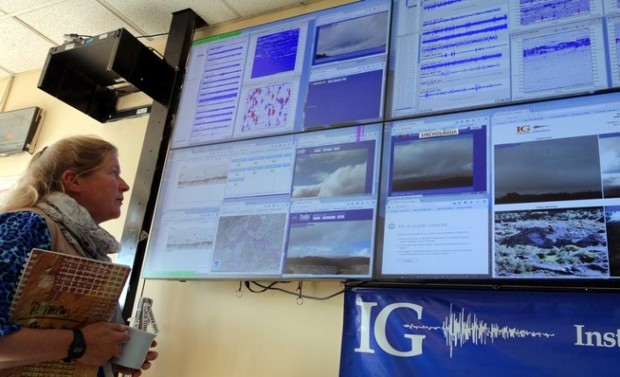
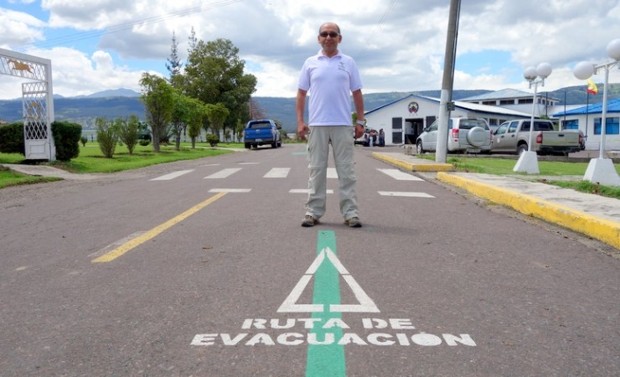
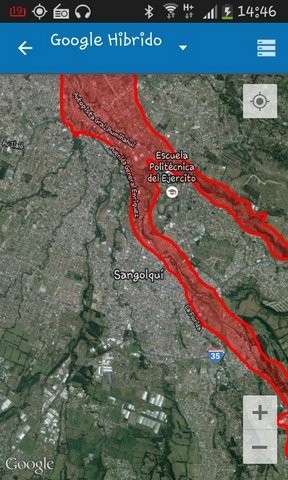
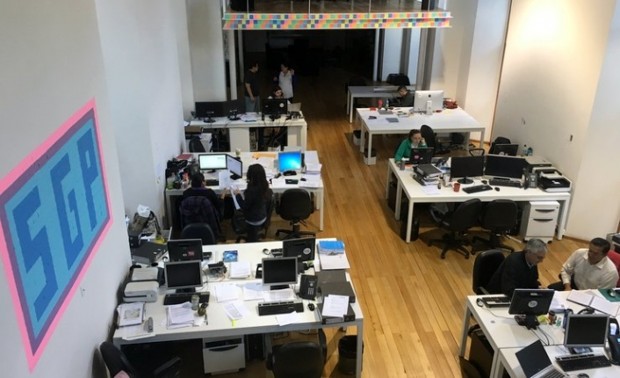
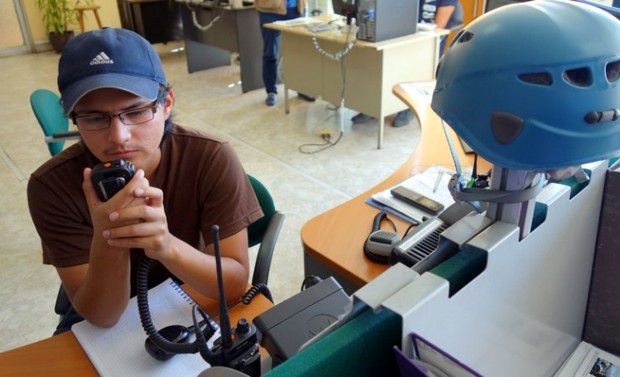

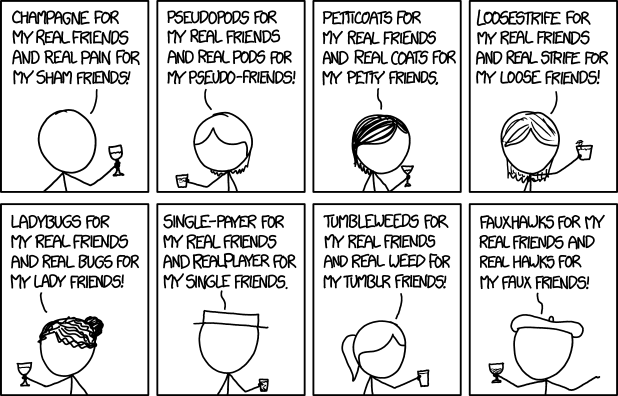


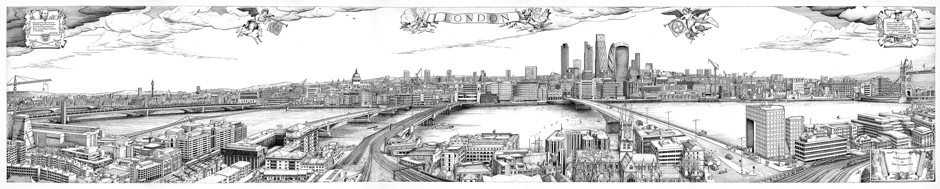
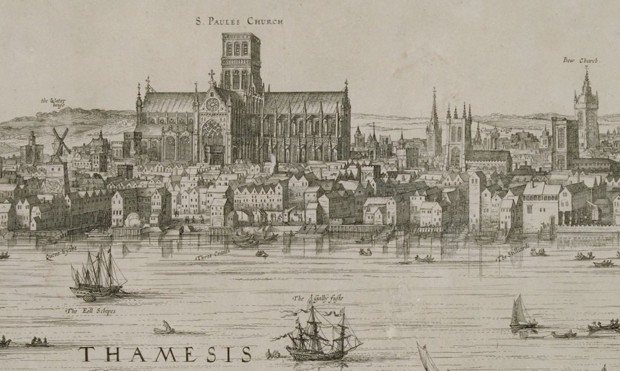
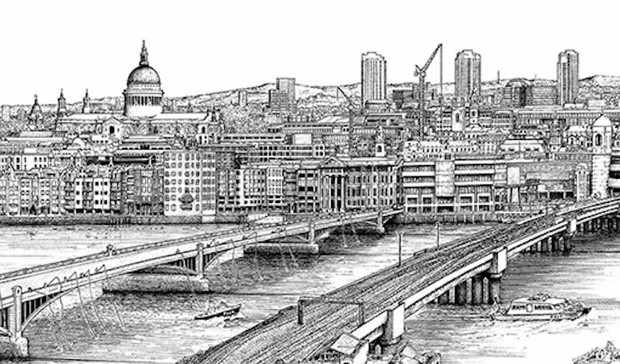
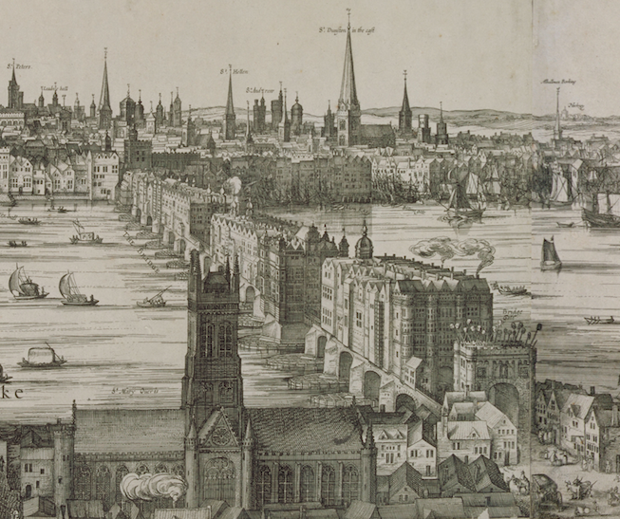


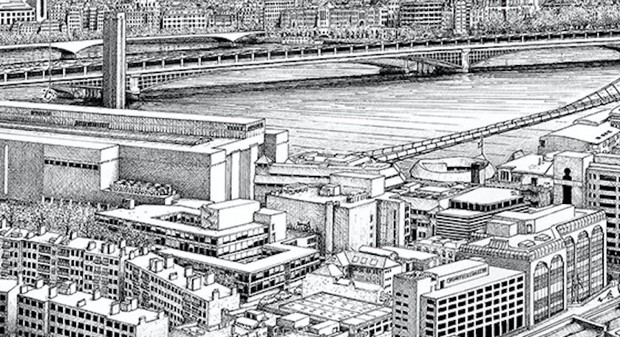


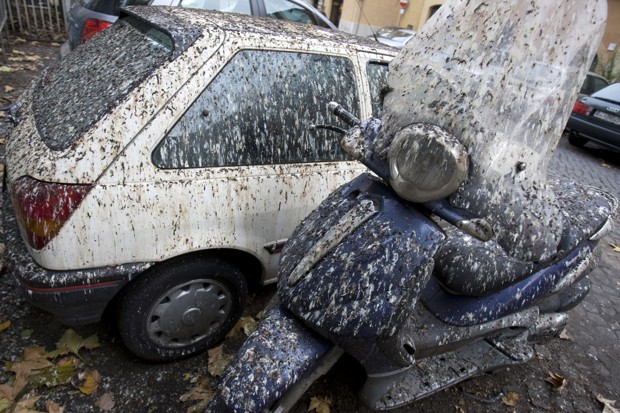

 Every item on the menu at Taco Bell is just a different configuration of roughly eight ingredients. With this simple periodic table of meat and produce, the company pulled down $1.9 billion last year.


