Shared posts

04 May 06:07

The long history of Indians in the US, as told by a portrait of an anonymous woman

by Saudamini Jain, Scroll.in

In a 1966 portrait currently on display at an art gallery in Manhattan, a dimpled young Indian woman sits on a deck chair looking amused.

Her mauve bandhani sari, its pallu wrapped snugly around her hips, accentuates her figure. The white of her petticoat is visible under layers of chiffon (too diaphanous to be polyester, not crumpled or starched enough to be cotton). Her blouse, also white, is sleeveless. Bollywood heroines started wearing sleeveless blouses in the 1960s, so she must have been quite fashionable.

She looks a little like Sharmila Tagore.

Her thick braid falls down her right shoulder and dangles below the seat. She poses with the long fingers of her right hand resting on her cheek, her chin a few inches above her palm. Her large brown eyes are lined with kohl, her gaze is confident. She stands out in Alice Neel, Uptown, an exhibition of selected portraits by the American artist Alice Neel at the David Zwirner gallery in Chelsea.

Neel painted these portraits during the five decades she lived in New York City’s Spanish Harlem and the Upper West Side until her death in 1984. Most of them focus on African-Americans and Latinos whom she encountered in her neighbourhoods and in the art world. The others are of people of colour, too: Cyrus, the Gentle Iranian (1979); Abdul Rahman (1964), a Black Muslim; Ron Kajiwara (1971), the Japanese-American designer.

There is no information, however, about the only south Asian face here—just the title, Woman (1966).

She also remains conspicuous by her absence in the art historian Pamela Allara’s Pictures of People: Alice Neel’s American Portrait Gallery, which chronicles Neel’s life and work. Allara writes that Neel “revived and redirected the dying genre of ameliorative portraiture by merging objectivity with subjectivity, realism with expressionism.” Neel described herself as a “collector of souls,” Allara writes, adding that she was categorised as “a sort of artist-sociologist”.

Neel painted the mysterious woman a year after the 1965 Immigration and Nationality Act profoundly changed American immigration policy, removing longstanding quotas on newcomers from India (among other places). Indians called it the “brain drain”, as the highly educated—particularly doctors—left for the American dream.

Was the woman in the portrait a young doctor then?

She wears gold jewellery—balis, a bangle, and a ring on her middle finger. A red bindi dots her forehead. A pinkish shadow on her hairline seems like the remnant of sindoor. She evokes a picture of Ashima Ganguli, the Bengali housewife in Jhumpa Lahiri’s The Namesake, set in the American Northeast during the same time period.

Neel had moved to a “more middle-class neighborhood” near Columbia University when she painted this young woman. Was she then a student at Columbia? Or a professor?

Hilton Als, a theater critic at The New Yorker, who curated the Alice Neel exhibition in Chelsea, writes, “In the years since her death, viewers young and old have experienced the kind of thrill I feel, still, whenever I look at Neel’s work, which, like all great art, reveals itself all at once while remaining mysterious.”

The identity of this sitter of Neel’s portrait does seem a great mystery. Even the internet offers no clues.

Ujjaini Bhattacharya, just before she left for the US.

The answer to the mystery finally arrived in an email from a research archivist at the David Zwirner gallery: “The sitter in the portrait is known to be the daughter of the Indian social-realist novelist Bhabani Bhattacharya (1906-1988), who had been invited to New York at the time by his American editor Millen Brand of Crown Publishers. At the time of this sitting, Bhattacharya’s daughter was enrolled as a student at Columbia University.”

Bhattacharya was a pioneering Indian writer who wrote in English. He was a contemporary of RK Narayan, Mulk Raj Anand, and Raja Rao. His books were translated into several European and Indian languages. The New York Times’ literary critic, Charles Poore, in a 1952 review of Music for Mohini, wrote about Bhattacharya’s protagonist Mohini: “We’ll all be lucky if we meet a more appealing heroine this year.”

It took five hours to locate his family. Their names are not in any academic paper, news clippings, or obituaries about Bhattacharya, who spent the last two decades of his life in the US. His two daughters and a son are mentioned in a small 1988 funeral notice in the St Louis Post-Dispatch, a local Missouri newspaper: “Surviving are his wife, Salila Bhattacharya; a son, Dr Arjun Bhattacharya of Ladue; two daughters, Ujjaini Khanderia of Ann Arbor, Michigan, and Indrani Mukerji of Calcutta, India; and six grandchildren.”

Ujjaini Bhattacharya in 1967.

Ujjaini Khanderia of Ann Arbor, Michigan, avoids all calls from phone numbers she doesn’t recognise. She is particularly bothered by a caller who leaves a morbid message: pick up the phone or you will die.

She ignores the first message left on her voicemail asking for an interview, but answers the phone in the middle of the second.

Khanderia, now in her seventies, remembers when the portrait was made, but the details are hazy. She remembers the artist, but not quite. “She said would you like me to… I didn’t even know who she was, she made a portrait of me.” Khanderia speaks in fragments, then stops mid-sentence, gathers her thoughts and asks: “So tell me a little bit more. This is some famous gallery? What’s her name again?”

Fifty-one years ago, Ujjaini Bhattacharya came to America on a scholarship to attend the University of Michigan. (She never went to Columbia, the gallery had the information wrong.) Before starting graduate school, she spent a week in New York City, where she lived with the family of her father’s friend and publisher Millen Brand.

“I was terribly homesick and wanted to go back to India the same day that I landed in New York,” she said. “I was NOT good company given my depressed and sad state of mind.” Brand took her sightseeing, and they stopped by at his friend Alice Neel’s studio apartment. Khanderia says she agreed to sit for the portrait. “Since I was lonely and homesick, I thought this was a good opportunity to be left alone without having to act friendly.”

When she met her now husband Sharad Khanderia in college, she remembers telling him about the “lady who drew a portrait of me. And that’s all. That was the end of the conversation.”

It never came up again, she said. She didn’t even think about it.

“I just thought she was a local artist,” she said. “I thought she was just practicing something.” She remembers Neel to be friendly and unassuming, engrossed in painting more than talking. She sat for Neel for about seven hours and was pleased by the finished portrait, “But my thoughts were elsewhere—I was more concerned about how I would survive in Ann Arbor where I knew nobody and had no help.”

She wondered whether her portrait can be shown in public without her permission. She said she never heard from Neel again. She tried to remember if Neel sent her a picture of the painting.

It was so long ago. It takes her a few minutes to get her bearings.

“Oh, so you’re going to be writing about the portrait,” she said, with a nervous laugh. “Ah, I thought you were writing something about my father. My goodness! That’s unbelievable! I could never imagine what you’re saying!”

The day she reached the US, Ujjaini Bhattacharya wanted to return to Nagpur.

In 1966, New York was a blur, in an America where Indians were not yet a “model minority.” They lived on the margins of American society, straddling the line that kept people of colour firmly outside. It was overwhelming for a 21-year-old from Nagpur. “I was too homesick to think about anything but home.” As a young student in Michigan, she said, “I was terribly afraid, I was totally unprepared. It was very scary. It was very, very difficult for me.”

It took her years to adjust to the country, the culture, the clothes. “I used to wear saris when I came to the US,” she said. “In Nagpur, we didn’t wear Western dresses, we wore saris more comfortably.” (She bought that mauve bandhani in Nagpur.)

She lost her way on the first day of college and was almost in tears when “a young student from India who saw my plight, offered to show me my way around campus”. Soon after, Ujjaini Bhattacharya married Sharad Khanderia in America. They both eventually taught at the university’s College of Pharmacy. They had two children. This year, they will celebrate their 50th wedding anniversary. They still live in Ann Arbor.

Indians have been in the news in America the last few weeks, and America has been in the news internationally, the last few months. In the midst of vicious attacks and vitriol, Neel’s portrait gently celebrates Ujjaini Khanderia’s—and that of other people of colour—contribution and belonging in America.

Cyrus, the gentle Iranian, 1979. Oil on canvas 39 7/8 x 30 1/8 inches © The Estate of Alice Neel.

Ron Kajiwara, 1971. Oil on canvas 67 7/8 x 35 1/8 inches © The Estate of Alice Neel

Alice Neel, Uptown was on display at the David Zwirner gallery, New York City, till April 22. It will be on show at the Victoria Miro Gallery, London, from May 18 to July 29.

This post first appeared on Scroll.in. We welcome your comments at ideas.india@qz.com.

03 May 18:47

The Transformative Power of Play in Urban India

by Priti Salian

On a pleasant spring evening in March, a group of about 20 children from the Husadiya slum in Lucknow, a north Indian city, have congregated in a vacant plot opposite a flyover. Everybody opens their arms, thrusts out their chest, and imitates a crow in flight.

The kids, ages 7 to 14, do this every Wednesday and Saturday. It’s part of their session with Project KHEL (Kids Holistic Education and Lifeskills), an NGO that leverages the power of sports to captivate and empower India’s marginalized youth. Rohit Srivass, their facilitator, whom the kids call bhaiyya (or “elder brother”), begins each session with a song to help kids loosen up.

This one, “Have you seen a crow who drinks tea?” leads into a jingle about personal hygiene and toilet etiquette, which teaches kids to clean themselves and flush the lavatory before leaving. Most of these kids are accustomed to defecating on the nearby railway tracks, and the song reminds them of habits they’ll need to practice if they enroll in school, where some of them would see a toilet for the first time. “This activity addresses self-awareness, an important life-skill, and helps the kids learn to respect their bodies,” says Angana Prasad, the executive director of Project KHEL.

Rohit Srivass and a group of kids circle up to play near the Husadiya slum. (Priti Salian)

As a consequence of urbanization, Indian cities have battled shrinking play spaces for years. More than 90 percent of India’s youth never use a playground, and less than 1 percent of the country’s population under 35 has any access to organized sports. The worst affected are, of course, children who drop out of school either due to poverty or in order to contribute to the family income. Meanwhile, many kids looking for open spaces are driven to play in risk-prone areas such as roadsides, construction sites, and even railway tracks.

Project KHEL makes use of spaces within slums, parks, agricultural fields, empty plots, and playgrounds in government schools to teach kids about life skills such as self-awareness, empathy, problem solving, and interpersonal relationships. Global organizations like UNICEF consider sports, play, and physical activity to be powerful and cost-effective ways to advance the Millennium Development Goals, and Project KHEL carries on that work. The organization engages high-risk children and adolescents from shelter homes, orphanages, government-run schools, and other disadvantaged backgrounds to keep them in classes, spread awareness about gender equity and substance abuse issues, and veer them away from conflict. “The spaces we provide are safe physically, emotionally, and intellectually,” says Akshai Abraham, who founded Project KHEL in 2012.

In a slum where children grow up grappling with poverty or watching their fathers drink and beat up their moms, the only way many kids know to resolve conflict is through violence. “Most of the time, they don’t hesitate in slapping or hitting their mates,” says Abraham. So, the first thing Project KHEL teaches is how to resolve fights through dialogue, which could have long-lasting effects on the way they function as adults in society. Lessons also touch on dishonesty, stealing, and cruelty toward animals.

In Husadiya, the kids warm up with a quick game of volleyball and move on to a mixed-gender game of Ultimate Frisbee. About 10 minutes in, Neha, a 10-year-old girl, complains that no one is passing her the Frisbee. Ankul, 11, cries out when another boy hits him. Srivass calls for time-out.

“Why aren’t you enjoying the game today?” he asks.

“No one is passing the Frisbee properly,” says Ankul.

“Shall I give you a minute for planning?” asks Srivass. The teams cheerfully agree.

Post-planning, the game proceeds in a more organized manner, with equal participation from all kids. A debriefing after the match helps them realize where they faltered and why they need to improve.

Vikram Namdeo, a former Project KHEL participant, has seen firsthand how these lessons accumulate over time and help reduce biases. Four years ago, Namdeo, now 20, was attending a charity school for poor children. He doubted girls’ ability to kick a ball; he hadn’t ever seen girls from low-income homes playing in public spaces. So when Project KHEL landed in his school, he sniggered at the girls and the facilitators who were trying to get them to play a game of football.

A few months on, when he couldn’t resist playing his favorite sport anymore, Namdeo joined the mixed group. The hour-long sessions would begin with a round of football, followed by a break for small talk and then an activity. Mid-session discussions encouraged respecting every person’s right—regardless of gender—to claim public spaces. Now, Namdeo works for the program, and it continues to open his eyes. He recently attended Project KHEL’s menstrual hygiene workshop. It is not a subject he had discussed with anyone before.

Project KHEL’s Made in Maidaan program visits over 1,400 children biweekly and works with them for a span of at least two years. But Abraham is interested in an even longer-term impact. “Just by getting boys and girls to play together as children,” he says, “we could inculcate a respect for the opposite gender and maybe prevent teasing, harassment, and rape when they grow up.”

02 May 17:34

SQL is 43 years old – Here’s why we still use it today

by d4nt

Article URL: http://blog.sqlizer.io/posts/sql-43/

Comments URL: https://news.ycombinator.com/item?id=14245354

Points: 581

# Comments: 370

01 May 05:49

There’s A War On Sugar. Is It Justified?

by Stephen J. Dubner

(Photo Credit: MattyFlicks / flickr)

Our latest Freakonomics Radio episode is called “There’s a War on Sugar. Is It Justified?” (You can subscribe to the podcast at Apple Podcasts or elsewhere, get the RSS feed, or listen via the media player above.)

Some people argue that sugar should be regulated, like alcohol and tobacco, on the grounds that it’s addictive and toxic. How much sense does that make? We hear from  a regulatory advocate, an evidence-based skeptic, a former FDA commissioner — and the organizers of Milktoberfest.

Below is a transcript of the episode, modified for your reading pleasure. For more information on the people and ideas in the episode, see the links at the bottom of this post. And you’ll find credits for the music in the episode noted within the transcript.

*      *      *

[MUSIC: Jonathan Still, “Lederhosen”]

Surely you’re familiar with the beloved autumn festival that revolves around folk dancing and lots and lots of drinking …

LAYTON: Milktoberfest! The holiday for drinking milk and doing homework.

Okay, not what you were expecting. Bavaria has Oktoberfest; Brigham Young University, in Provo, Utah, has Milktoberfest — Brigham Young being a Mormon university, and therefore prohibiting the consumption of, among other substances, alcohol.

LAYTON: People don’t drink, but we still like to have a lot of fun.

Roger Layton, communications manager at the B.Y.U. library, helps produce Milktoberfest.

LAYTON: And so we thought, “Let’s just embrace that. Let’s just enjoy it.” We had a very energetic group of German folk dancers come in and perform, and we brought in cases and cases of chocolate milk. As soon as the milk was there and we said, “Go!” — it basically became a free-for-all.

OLDROYD: People love it because Milktoberfest was almost B.Y.U. lite or something like that.

That’s Brenna Oldroyd, a B.Y.U. student who helped put together Milktoberfest.

OLDROYD: Like, “Hey, this is what we love to drink all the time!”

The chocolate milk they’re drinking isn’t just any chocolate milk. It’s some pretty legendary chocolate milk, made in B.Y.U.’s own creamery.

LAYTON: If you show up at a party with chocolate milk, no one’s going to complain. It may seem a little childish, but people will drink it. It’s a friendly, it’s safe, and it’s happy.

OLDROYD: And one of the great things about partying with chocolate milk is if you’re smart, you’re not going to throw up later. That’s a plus.

This all sounds pretty awesome, right? And wholesome, too — swapping out beer for chocolate milk. But is chocolate milk really as wholesome as it seems? Do you know how much sugar there is in your standard serving of chocolate milk? The answer is 24 grams — a bit more than you’d find in a standard serving of soda. And there are those who argue that the detriments of sugar — well, they’d argue that, from a metabolic standpoint at least, Milktoberfest isn’t much better than Oktoberfest.

Robert LUSTIG: We started comparing what sugar did versus what alcohol did, and we realized, you know what, sugar and alcohol do the exact same thing.

If you’ve been following health news in the last decade, you’ve likely noticed that there’s a war on sugar.

(Photo credit: Jonny Goldstein / flickr)

Belva DAVIS in a clip from KQED’s This Week in Northern California: An alarming rise in the rate of obesity and related health problems has prompted a nationwide movement to ban or restrict sugary drinks …

How justified is that war? Today’s episode was inspired by a question we received …

Saul ARNOW: Dear Freakonomics, My name is Saul Arnow, and I’m an 11-year-old listener from Chicago. I was wondering why sugar isn’t considered a drug even though it is addictive and stimulates the brain. Sincerely, Saul.

Okay, Saul — we’ll do our best to answer your question. Along the way, we’ll learn some sugar history:

Elizabeth ABBOTT: [St.] Thomas Aquinas,way back in the 13th century, pronounced sugar a medicine.

We’ll hear from some people who fully agree with you:

Robert LUSTIG: Now alcohol, tobacco, morphine and heroin clearly meet these four criteria.

Some people who don’t agree with you:

Richard KAHN: We have no clue, no real good evidence that it’s going to do any good whatsoever.

And we’ll hear about your sugar habits.

BOY: I tried to give it up once, but it didn’t work out at all because I’m addicted to sugar. I can’t help it.

*      *      *

[MUSIC: Paul Freitas, “Sugar Daddy” (from Salon de Cabaret)]

Before we get into the nitty-gritty on sugar, let me offer a sort of caveat.

KAHN: In general, nutrition studies are not very robust compared to many other fields in biological science.

That’s Richard Kahn.

KAHN: I’m the former chief scientific and medical officer of the American Diabetes Association.

So what’s the problem with nutrition studies?

KAHN: There are often no controls, no randomization, small number of subjects — it’s very difficult to conduct very robust, long-term studies on nutrition.

Okay? This is a really important point. It’s the kind of thing we talk about all the time on this program — the legitimacy of data, yada yada. But with nutrition, there are a few things going on that make it particularly tough. Number one: this is about something that we all put in our mouth every day . Which means we all think of ourselves as experts. Unlike particle physics or financial engineering, this is something we all do all the time, so of course we know what we’re talking about. Number two: most nutrition science is built on survey data — that is, asking people about what they’ve eaten, or asking them to keep food diaries, things like that. If you’ve been paying any attention at all to Freakonomics Radio over the years, you know this is a surefire way to gather some not-so-realistic, or at least not-so-robust data. And so, as Richard Kahn said, it can be a real challenge to run a really convincing nutrition study.

KAHN: Because people do not want to participate. They don’t want to alter their diet patterns for a long time and they don’t comply with the regimen of the instructions in the randomized trial.

Now, if we could take a few thousand people, and randomize them, and then control every single thing they ate and drank for a few years — well, that that’d be great. But, absent that, we do our best. We look for data. We ask questions. Starting … here:

Stephen J. DUBNER: As a public health official in New York and at the national level, you’ve tried to stem AIDS and TB and pandemic flu. You’ve tried to prepare the public for a potential bioterror attacks. How, in light of those dangers, would you rank the consumption of sugar?

HAMBURG: Well, they’re very different threats. But we have to recognize that while acute public health crises really demand all of our attention and get a lot of response — how we live, what we eat, if we exercise — many aspects of our daily lives have the greatest impact on health and disease.

That’s Margaret Hamburg.

HAMBURG: I am a medical doctor and a public health professional who has served in government at many levels over many years now including most recently as the U.S. FDA commissioner.

DUBNER: I wanted to ask you briefly about some FDA definitions. When I read them I have to say they — they are somewhere between comical and incomprehensible. When the FDA defines food, food additives, drugs and, then “substances generally regarded as safe.” So those are the categories. Which of these definitions apply to sugar?

HAMBURG: You know, I have to agree with you that many of the definitions are hard to penetrate.

DUBNER: I didn’t mean to slam you. I assumed you didn’t write them and that there were 40 lawyers between whoever wrote them and …

HAMBURG: No, no! Congress is responsible for some of it, and the FDA lawyers for some of it. And, of course, you know many of these laws and regulations and guidances and definitions have evolved over many, many years. But it is complicated and confusing and it’s why there are almost as many lawyers as scientists at the FDA.

DUBNER: For instance, the very first thing: “food.” Number one, “articles used for food or drink for man or other animals.” I can imagine that could easily fit within FDA regulation, FDA guidelines then, if it were used for food. Yep?

HAMBURG: It’s really hard to answer a question like the one you just posed to me. Sugar is intrinsic to many food products. It’s not going to be regulated in the same way that a completely exogenous additive to a food product can be regulated.

DUBNER: But technically, the categories under which sugar falls are “food additive” and GRASgenerally regarded as safe” and not food itself. Correct?

HAMBURG: This is my point. I’m not going to answer your question because I don’t have my lawyers here.

DUBNER: I see.

HAMBURG: But there are sugars in fruits and vegetables, there are sugars in dairy products, there’re sugars in various grasses that people consume. It’s intrinsic to the food product itself.

[MUSIC: Paul Freitas, “A Little Crazy” (from Again Spring)]

For instance, let’s get back to chocolate milk for a minute. As we said, it’s got 24 grams of sugar per one-cup serving, more than soda. But regular old milk, without the chocolate, has about 12 grams of sugar — it’s naturally sweet from the lactose. And then there’s the sugar that’s added to many foods.

HAMBURG: No. Products that you think are actually very healthy — yogurt — the levels of sugar are astonishingly high. Things like barbecue sauce and spaghetti sauce and soup actually have much higher levels of sugar than you would ever imagine. Not to mention, you know, the levels that are in you know pies and cakes and ice cream and things where you would expect to see sugar.

So how much sugar, overall, do we actually consume?

LUSTIG: Right now we are about 60 to 65 percent over our limit, and that’s average.

That’s Robert Lustig.

LUSTIG: I’m a professor of pediatrics at the University of California San Francisco School of Medicine, also a member of their Institute for Health Policy Studies. I’m the president of a nonprofit known as the Institute for Responsible Nutrition. My job is to try to treat obese children and now, also, alter the global food supply.

DUBNER: Easy picking the low hanging fruit for yourself, I see.

LUSTIG: Easier said than done. In both cases.
(Photo credit: FaceGuard / pixabay)

The data vary — again, this is nutrition science we’re talking about here — but the most recent estimates show that Americans consume between 20 and 30 teaspoons of added sugar per day. That’s down a bit from our peak consumption, sometime around the early 2000s, but Americans still consume more added sugar than anyone else. This has turned Lustig into one of the most outspoken sugar critics you will find. He came to this position over many years.

LUSTIG: I’m a pediatric endocrinologist. I take care of glandular hormonal problems in children. I was doing that pretty seamlessly for a good two to three decades. Then the kids started getting fat on me. The question was, “What’s going on?” We started looking at what sugar did to the body, and what we realized was it caused this thing called insulin resistance and particularly in the liver. We started comparing what sugar did versus what alcohol did, and we realized, you know what, sugar and alcohol do the exact same thing, and it makes sense that it should, because after all, where do you get alcohol from? Fermentation of sugar. We were now seeing the diseases of alcohol without the alcohol. That started my, shall we say, advocacy in this field of obesity and public health.

KAHN: If you are indeed overweight or obese, you want to lose weight, the first place to start is to reduce sugar consumption.

That, again, is Richard Kahn, formerly of the American Diabetes Association.

KAHN: The reason being that we get plenty of energy from other carbohydrates, we don’t have to rely on sugar to get our energy. And the second reason is that sugar itself does not come along with any other essential nutrients, vitamins or minerals.

So you might think that Kahn and Lustig are in precisely the same camp. But there you’d be wrong.

KAHN: There’s no question that there is a real obesity epidemic throughout the world. That, I think is very real. It’s very important. It’s very serious. It has clear adverse health consequences. In addition, that has led directly to a dramatic increase in the incidence of diabetes throughout the world. We first saw this in the United States. We’ve seen it in European countries. We’re now seeing it in Asian countries. Diabetes is clearly a serious disease. It has quite serious complications and that’s a problem. Then the question becomes, “What has caused the obesity epidemic?” And that is, to use the euphemism, the $64,000 question.

(Photo credit: reXraXon / VisualHunt)

There are many potential contributors to the rise in obesity.

KAHN: There’s been some evidence that with the increased use of psychotropic drugs, anti-depressive drugs, drugs for schizophrenia and other mental disorders — those drugs tend to promote weight gain. Another possibility is that we’ve seen, clearly, smoking cessation in a large proportion of the population. And when people stop smoking, that’s usually been associated with weight gain. Psychotropic drugs, smoking cessation, potential infections have been attributed to a rise in obesity.

There’s also a lot of research arguing the rather obvious point that we consume more calories today than we used to — for a lot of reasons. The relative low cost of food; the deliciousness of food; the availability of food — especially the availability of cheap, delicious, sweet food.

KAHN: Many people do believe that sugar consumption has been the cause, is the cause, of our obesity epidemic and then, subsequently, diabetes. But I believe that the evidence for this is pretty weak.

When the City of San Francisco wanted to add warning labels to soda, Kahn submitted an expert report on behalf of, among others, the American Beverage Association. He wrote: “There is no scientific consensus that added sugar (including added sugar in beverages) plays a unique role in the development of obesity and diabetes.”

KAHN: If we look as an analogy, for example, to cigarette smoking, and try to make the link between sugar and obesity or diabetes, and cigarette smoking to cancer. What are the differences?

Okay, what are the differences?

KAHN: In the cigarette-smoking realm, the lowest smoking rate produced an enormous incidence of lung cancer. The highest rate of smoking was just simply off the charts in terms of the likelihood of developing lung cancer. Conversely, with sugar consumption, it’s less than a two-fold increase at the highest levels.

This gets into tricky territory. As Kahn says, some studies do find a two-fold increase in diabetes at the highest level of sugar consumption — but other analyses, including one by Robert Lustig, argue it’s considerably higher. That said, the relationship between sugar and obesity is nowhere near as strong as the relationship between smoking and lung cancer. According to the NIH, even “light smoking” results in a nine-fold increase.

KAHN: The next one is something called temporality. In other words, is there association in time between sugar consumption and obesity? That held pretty true from about 1985 to the year 2000. Where obesity levels went up, sugar consumption went up. But thereafter starting in the year 2000, even to today, sugar consumption has declined somewhere around 15 to 20 percent, whereas obesity rates continue to rise. We don’t see that at all with smoking, the analogous situation. Cigarette smoking rises, cancer rises. Cigarette smoking declines, cancer declines.

This, of course, doesn’t mean that sugar doesn’t contribute to obesity. Just that, again, the relationship isn’t so definitive. Kahn points to another difference between smoking and sugar.

KAHN: In cigarette smoking, we found a link between cigarette smoking and cancer in every population, every ethnicity, both genders, all kinds of tobacco use and even in bystanders. Conversely, with sugar, we don’t have that consistency whatsoever.

For instance: some studies show a strong relationship between weight gain and sugar-sweetened beverages — SSBs — but that relationship is most consistent when the SSBs are consumed in addition to a person’s regular diet. So the problem might simply be the extra calories, not the sugar per se. It could also be that people who drink a lot of sugary drinks do other things that lead to weight gain. There’s also the fact that, as Richard Kahn said earlier …

KAHN: In general, nutrition studies are not very robust compared to many other fields in biological science. In sugar consumption, most of [the studies have] either no controls, a very small number of subjects … They’ve only lasted for days or weeks at the most. The experimental studies have not been robust.

So in Kahn’s view, the science on sugar is not settled. Which means that the notion of regulating sugar is, at best, premature.

KAHN: I don’t think that there is any absolute amount of sugar that we should be under in our consumption. It all relates to eating a well-rounded diet.

To Robert Lustig, meanwhile, the time for regulation is now.

[MUSIC: Ruby Velle & The Soulphonics, “It’s About Time” (from It’s About Time)]

DUBNER: This episode was inspired by a listener, who wrote in to say, “If sugar is as bad for us as a lot of people are now saying it is, why isn’t it regulated the way other potentially harmful substances, like alcohol or tobacco, are regulated?” How do you answer that question?

LUSTIG: Well, the public health community has identified four separate criteria that are needed to be fulfilled before a substance can be considered for regulation. Number one: ubiquity, that is, can’t get away from it. Number two: toxicity, that it’s dangerous. Number three: abused, that increased consumption is inherent in the molecule itself. Finally, number four is externalities. That is, your consumption hurts me. Now alcohol, tobacco, morphine, and heroin clearly meet these four criteria. The question is, “Does sugar meet them?” And the answer is, yes, it does, absolutely.

Okay, let’s look at those four criteria for sugar. Ubiquity? That’s pretty much a no-brainer. But what about toxicity? Lustig’s hypothesis has to do with how the body handles fructose.
(Photocredit: National Institutes of Health / Wikicommons)

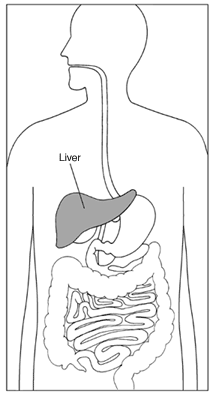
LUSTIG: When you consume dietary sugar, the glucose molecules can go anywhere in the body; only about 20 percent hit the liver. But the fructose molecules have to be handled in the liver, because there’s a specific transporter called the GLUT5 transporter; it is only in the liver. When you consume a soda, you are flooding your liver, and your liver can’t handle the flood. The liver has no choice but to turn that fructose into liver fat. It’s that liver fat that causes the chronic metabolic disease. We have the data that demonstrates that it’s the liver fat made from dietary sugar that is at the nidus, at the beginning of type-2 diabetes, heart disease, fatty liver disease. We’re starting to ferret out the links between dietary sugar and cancer and dementia as well.

DUBNER: But I know there’s other research that says that the toxicity argument may be overstated. That it’s not an acute toxin but a chronic one.

LUSTIG: You are absolutely right that sugar is not an acute toxin. Chronic toxins are still toxins even though they don’t make you keel over and die. Is benzene a toxin? We regulate it as such. Benzene doesn’t kill you acutely.

DUBNER: What about alcohol?

LUSTIG: Alcohol is both. It’s an acute toxin. You can die on a bender. Or it’s a chronic toxin you can fry your liver. It’s both. The point is that the FDA regulates acute toxins, because it’s in their charter, The Food Drug and Cosmetics Act of 1938. Very specifically, it does not say anything about chronic toxins. The FDA does not regulate chronic toxins.

Criteria number three for regulation: the potential for abuse.

LUSTIG: It turns out that there is no biochemical reaction in any vertebrate on the planet that requires dietary fructose. Now, it happens to be sweet. It happens to signal our brain reward centers that we like the stuff. We happen to crave it. We happen to really enjoy it, and a little too much. In fact, now we have data that shows that it happens to be addictive as well.

Nicole AVENA: The question about whether sugar can meet the criteria for an addiction or an abused substance is something that I’ve been studying for many years now. It’s something that I think has become of interest to a lot of people.

That’s Dr. Nicole Avena. She’s a research neuroscientist at the Mount Sinai School of Medicine in New York.

AVENA: The way in which we’ve been studying this and the way in which others have studied this is to use these DSM criteria for addiction and ask the question, “Can sugar, when it’s consumed in excess, produce some of these behavioral indications and neurochemical indications that you would typically see with a substance of abuse?”

The DSM is the Diagnostic and Statistical Manual of Mental Disorders. It defines addiction or substance abuse along four main criteria: impaired control; social impairment; risky use; and pharmacological indicators like tolerance and withdrawal.

AVENA: You certainly don’t need to meet all of them and many people who are addicts don’t meet all those criteria. But you do need to meet a certain number of them for a protracted period of time. What the research has suggested in both animal models and in clinical studies is that the criteria for addiction as we classically define it in the DSM can be met when the substance of abuse is a sugar or a palatable food, in many cases. We see evidence of bingeing, withdrawal, craving. We also see changes in the brain.

Now, it’s worth pointing out that some of the most troubling studies are animal studies, which can be problematic on two fronts. One: the lab animals aren’t people, so they process sugar differently. Two: the doses of sugar they receive in the lab are often so large as to not be comparable to what most people would consume. Moreover, sugar isn’t the only thing we consume that has “addictive” qualities: pizza and french fries are also at the top of the list. So how well does this emerging model of sugar addiction line up to the addictive criteria for the sort of drugs that we do regulate?

AVENA: It’s a difficult question, because sugar is safe when it’s used in moderation. But the problem is that most people are unaware of how much sugar they’re consuming. Also, if the data suggests that the sugar is producing addictive-like changes in the brain, then we’re talking about something very different. Because if you’re no longer be able to have full volitional control over your decision to eat or not eat the sugar, then that becomes a different type of discussion.

The fourth criteria for regulation, that Robert Lustig was telling us about: externalities.

LUSTIG: That is, your consumption hurts me.

A classic case of externalities is auto travel. Every time you drive, it costs me something whether I’m driving or not. More pollution; more congestion; more risk of accident. We share all those costs, regardless of my actions.

LUSTIG: The question is, “Does this fit for sugar? Do I have anything to say about your consumption?” And the answer is, “Yeah, you’re costing me in obesity-related health care whether I’m obese or not because of your obesity.” It’s economic, but it’s real. 62 percent of all the health care costs in this country are shouldered by the federal government. Damn right, we share it!

[MUSIC: Ruby Velle & The Soulphonics, “My Dear” (from It’s About Time)]

Coming up on Freakonomics Radio: okay, having heard what we’ve heard about sugar, how would you think about regulating it?

HAMBURG: I’m not sure that I can really embrace the proposal to regulate sugar in that way.

And we’ll find one sugar fact that everyone agrees on:

LUSTIG: I mean, sugar’s celebratory! Sugar’s fun!

*      *      *

[MUSIC: Vic & Gab, “When You Walk In The Room” (from Love of Mine)]

It’s hard to find anyone who doesn’t like sugar. And nearly just as hard to find anyone who doesn’t think they’re having too much of it …

YOUNG WOMAN: I really like sugar. I know it’s bad for you, but I like it.

SOUTHERN MAN: Right now, I am staying away from sugar, trying to eat a better, have a better diet.

MAN: I’ve tried to cut back on it, but I’ve never given it up. I think it tastes delicious in the right thing, and I think that, at this point, it’s probably an addiction that my body just needs to have. I’ve never tried to give it up, nor will I try any time soon.

GIRL: I’ve definitely eaten too much of it, because I had a sleepover at my friend’s, and for breakfast we had lollies!

It wasn’t always thus.

ABBOTT: Sugar started out as a minor commodity that was used for medicine and for spice, up into the Middle Ages.

That’s Elizabeth Abbott. She teaches history at Trinity College, University of Toronto, and is the author of Sugar: A Bittersweet History. She says the debate over what sugar is — a food, a drug, or something in between — is hardly new.

ABBOTT: St. Thomas Aquinas, way back in the 13th century, pronounced sugar a medicine. He said: “Though nutritious in themselves, sugared spices are nonetheless not eaten with the end in mind of nourishment, but rather for ease in digestion. Accordingly, they do not break the fast any more than the taking of any other medicine.”

One reason sugar was welcome in medicine was because a lot of medicine tasted terrible — a combination bitter roots, animal feces, even bits of corpse. So yeah, a spoonful of sugar really does make the medicine go down! Outside of medicine, however, sugar was decidedly aristocratic.

ABBOTT: For example, Persia or Iran today [sugar] was very popular among the elite. They are the ones that started this trend, this architecture of sugar. They would make beautiful sculptures often like, for example, life-size trees.

Sugar was costly, and sugar was rare. But the sugar trade began to grow, built on the back of the slave trade.

Slaves planting and tilling in the process of sugar making c. 1823. (Drawing by William Clark / The British Library)

ABBOTT: By 1680, sugar costs only half what it had in 1630. That was thanks to slavery. By 1700, the percentage of imported foodstuffs including sugar had more than doubled and they quadrupled between 1700 and 1740. England and Wales consumed 60 times more — six zero times more sugar — though their populations did not quite double.

It was the Industrial Revolution, Abbott argues, that helped turn sugar into an everyday thing.

ABBOTT: People started going from their farms and so on into cities and into factories. They couldn’t go home for lunch because they had maybe a fifteen-minute break. So sugared tea and a bun or some sort of thing like that, often with jam on it was offered instead, and that was what popularized it. It’s said that it fueled the Industrial Revolution because sugared tea and it would be really sugary has calories. They’re not nutritious but they are units of energy.

The sugar boom helped create another boom that we’re still living through.

ABBOTT: They had a lobby that was extremely powerful. We could say all the big heavy industrial lobbying probably stems from the success of the sugar lobby.

That’s right: it wasn’t enough to benefit from slave labor and huge demand for their product.

ABBOTT: The sugar plantations were profitable not just because of the demand but largely because of how they were politically strong. If they had failures, if they had hurricanes, if they had bad crops which they often did they could keep the price. They could get Parliament to help them out with good legislation and tariffs and so on that would favor them. By the way, the sugar lobby is still a very important on. It has a lot of weight still, and it now is an alliance of cane sugar planters and beet sugar planters. They get together to lobby when and when they feel that their interests are at stake.

Just last year, it was discovered that in the 1960s, the sugar industry paid three Harvard scientists to write a review that shifted the blame for heart disease from sugar to saturated fat. Much more recently, Coca-Cola spent millions of dollars on research arguing that the real culprit in obesity is lack of exercise, not sugary drinks. So you can’t blame people for being confused, maybe conflicted, about the degree to which sugar is a health risk. I brought this up with Robert Lustig.

DUBNER: Right now, we’re talking in the year 2017. A lot of people now are convinced that the U.S. government and many others erred terribly in declaring fat to be the cause of obesity. Many people now believe, as you argue, that sugar is a much bigger villain. How do we know you’re not the guy that’s wrong this time, that you’re not just another — perhaps well-intentioned — big-brained do-gooder who is making a massive mistake?

LUSTIG: An awfully good question. This is known as the pessimistic meta-induction theory. What it says is, “Everything we knew 10 years ago is already wrong, and everything we know today will be wrong 10 years from now. Why should we do anything differently when we know that whatever it is that we believe today will end up being wrong?” If you play that game, then you might as well never do any research, never do anything at all, and live with the current dogma.

There’s also the confounding fact, pointed out by former FDA commissioner Margaret Hamburg, that a lot of time you’re eating sugar even when you don’t know you’re eating sugar.

HAMBURG: Things like barbecue sauce and spaghetti sauce and soup actually have much higher levels of sugar than you would ever imagine.

DUBNER: Talk to me for a moment about the Smart Choices program and what the FDA did there.

(Photo Credit: Mike Licht / flickr)

HAMBURG: The Smart Choices program was an effort spearheaded by industry. A number of major food-producing companies came together to create a system where you would give different scores to different aspects of the nutritional value of a product. The total number would then either give you the green check, the smart choice, or not.

DUBNER: The name, I gather, was an industry name, yes?

HAMBURG: Right. Exactly. The problem with it was that you could score adequately high to get that “green smart choice check” without the food truly reflecting what any sensible nutrition expert would view as a healthy smart choice. Some of the products that got the smart choice label were over 40 percent sugar. We joked that you could practically take sawdust and if you added enough nutrients to it and the fiber of sawdust, you could have it labeled as a healthy choice, a smart choice.

DUBNER: All right. How long did that last?

HAMBURG: It was out there for a little while. We expressed our concerns to the group that had put this together and was implementing it. They listened and understood. They decided voluntarily to withdraw the program. There have been a number of efforts to look at other strategies for providing consumers with important information about foods. The nutrition facts label, of course, is one important aspect. The nutrition facts label that’s on most processed foods and beverages in this country was first put into place more than two decades ago. But then it was never updated. When I was commissioner, we decided it did need to be updated to reflect both deeper understandings about how people eat. Serving size for example. Also, advances in nutrition science. We embarked on a process to update it. I think the most important contribution that this updated nutrition facts label provides is in the area of added sugar.

DUBNER: As I understand it, food and beverage companies are already adjusting their products to consider the new labeling. Was that your intention?

HAMBURG: Absolutely. One of the goals of putting out that information is to encourage companies to reformulate foods towards healthier products. We’ve certainly seen that happen as we move towards this the implementation of this new nutrition facts label. Stonyfield Yogurt just recently decided to significantly reduce levels of sugar before the new facts label is actually in place. FDA, in some ways, has the opportunity to use both the carrot and the stick. Knowing that we could do mandatory guidelines on certain things often encouraged industry to work with us, to come to voluntary approaches. But there’s no doubt that there are tensions.

DUBNER: Robert Lustig and several others in that camp argue that sugar should be regulated substantially because it meets criteria for substances that should be controlled or regulated: unavoidability, toxicity, potential for abuse, and negative impact on society. I’m curious what your thoughts are on sugar fitting those criteria and whether you think that’s even a useful framework.

HAMBURG: We need to reduce excess sugar in our diets and in the products that we consume. Consumers need more education and information. But I’m not sure that I can really embrace the proposal to regulate sugar in that way.

DUBNER: Because it would be too overreaching? Because it would be too difficult? Why?

HAMBURG: It’s a complex area to regulate in that sugars are intrinsic components of many foods which should be part of a balanced nutritious diet. Fruits and vegetables and dairy products are good examples. I think that some of the concerns that have been raised may not be fully grounded in the best possible science.

“Not fully grounded in the best possible science.” That, you’ll recall, was Richard Kahn’s main objection to the idea of regulating sugar. But there’s another one too:

KAHN: If you reduce it or get rid of it or put policies and laws regulating it, what good is it going to do? We have no clue, no real good evidence that it’s going to do any good whatsoever. Therefore, unintended consequences become a very important factor.

Robert Lustig, meanwhile, is — as you’ve likely figured out by now — in favor of just about any kind of sugar regulation you can imagine. Taxes, for instance, and price hikes — both of which worked to reduce cigarette smoking, and are already being used on sugary drinks in a few places.

LUSTIG: The modeling studies that have been done suggests that you have to raise the price of a can of soda by about 20 percent in order to see any meaningful reduction in consumption.

Lustig’s also in favor of limiting the availability of sugar — removing vending machines from schools for instance. Also, banning TV commercials for products with added sugar. Also: getting rid of subsidies.

LUSTIG: Subsidies for food make no sense because subsidies distort the market.

DUBNER: One last question, perhaps ridiculous or impossible: let’s say we’re in a world where you could edit genes quite easily. It seems we’re not that far from it. Whether we’re talking about a 50-year-old person or a zygote. How would you consider editing the genes related to what seems to be a craving, perhaps even dangerous craving for sugar?

LUSTIG: That’s a really tough question. We don’t want to turn off our reward system entirely. If we do, we get into trouble. We actually did this. We did this experiment with a medicine back in the early 2000s. That medicine was called Rimonabant . What it was was it was the anti-marijuana medicine. It blocked the endo-cannabinoid receptors in the brain, and by doing so reduced reward for alcohol and for food. In fact, people who took Rimonabant lost a fair amount of weight. It looked very promising. Until we started looking at the Phase 3 data and started realizing that a lot of these people became severely depressed, and many of them committed suicide. We didn’t realize it, until we did those Phase 3 trial. It was never approved here in the United States. Bottom line is, if you take away a reward, you take away the reason for living. Be careful about gene editing our rewards system.

Most of the regulatory measures Robert Lustig would like to see around sugar lie somewhere between unlikely and impossible, at least for now. In any case, we asked a bunch of people in Times Square what they thought of it …

YOUNG MAN: Most definitely shouldn’t ban sugar. Sugar’s one of the best things in the world. But I don’t think it should be taxed, either. I feel like it should just be accessible to everybody, because it’s a nice thing. It’s the best thing out there!

YOUNG WOMAN: Probably a tax, but not a ban. I don’t think a ban would work very well. There’s just too much sugar in the world. But maybe a tax would have people thinking more about what they’re buying a little bit more.

SOUTHERN MAN: A tax or ban on sugar? I feel that would backfire really bad. Look back at the Revolutionary War. The British put a tax on tea and people didn’t really like that too much!

SMALL GIRL: I would probably cry because I love sugar!

A love of sugar seems, from what we can tell, pretty universal. Including among the scientists and doctors we’ve been speaking with today. From Richard Kahn, formerly of the American Diabetes Association …

KAHN: One clear thing that comes to mind is just pleasure. Sugar is enjoyable to eat. It’s part of our culture, keeping our community together, our families together.

To Margaret Hamburg, former FDA commissioner …

HAMBURG: I will admit to having a sweet tooth. Oatmeal cookies, I’ll tell you, are my particular vice.

To the most anti-sugar one of all, Dr. Robert Lustig:

LUSTIG: Sugar’s celebratory! Sugar’s fun! Sugar’s Apple Pie. Sugar is reward — but once a week.

[MUSIC: Stubborn Son, “Vixen” (from Birthright)]

Coming up next week on Freakonomics Radio: more useful facts about things that go in your mouth.

Jo ROBINSON: It’s difficult to find science to support the idea that we’re healthier eating raw produce than lightly cooked produce.

Kenji LOPEZ-ALT: If I’m going to eat a hamburger, I want it to be the best damn hamburger I can make.

“Food + Science = Victory!” That’s next time, on Freakonomics Radio .

Freakonomics Radio is produced by WNYC Studios and Dubner Productions. This episode was produced by Stephanie Tam with help from Eliza Lambert, Matt Fidler, and Sam Bair . Our staff also includes Shelley Lewis, Christopher Werth, Merritt Jacob, Greg Rosalsky, Alison Hockenberry, Emma Morgenstern, Harry Huggins and Brian Gutierrez . You can subscribe to Freakonomics Radio on Apple Podcasts, Stitcher, or wherever you get your podcasts .

Here’s where you can learn more about the people and ideas in this episode:

SOURCES

RESOURCES

EXTRA

The post There’s A War On Sugar. Is It Justified? appeared first on Freakonomics.

25 Apr 23:29

India Is Winning Its War on Human Waste

Bill Gates shares how by fighting poor sanitation, India is saving lives, keeping girls in school, and boosting the economy.
21 Apr 03:01

Landscaping As An Investment: Focus On Aesthetics And Functionality

by Financial Samurai
R.P. Aditya

@Heather, is this what you want to do to our backyard?

Landscaping advice: focus on aesthetics and functionality

Gardens of Versailles

One of the most gratifying investments I’ve made this year is landscaping a fixer I bought in 2014. Investing in various real estate crowdfunding projects around the country for a potential 8% – 15% return is nice. But there’s something wonderful about coming up with a design and making it come true to improve an asset’s value.

Here are some things I’ve done to the fixer:

  • Ripped out the green shag carpet and refinished the original hardwood floors.
  • Changed the knob and tube wiring for the latest TR compliant electrical wiring.
  • Gutted the kitchen and opened it up to flow into the dining room.
  • Replaced the roof.
  • Replaced all windows.
  • Painted the interior and exterior.
  • Built a 175 sqft luxury master bathroom (before and after pics).
  • Installed sliding doors from the master bedroom that open out onto a 260 sqft composite deck (before and after pics) with custom boards and railings.
  • Built a new retaining wall to hold up my foundation.

Once all of these essential renovations were out of the way, the next step was to landscape! 

Landscaping For The Win

I don’t have a big house (~1,910 sqft) because I’ve purposefully decided to keep my housing expenses to under 10% of my gross income, but I do have a relatively large lot for San Francisco (5,000 sqft with a front yard, side yard, and backyard). My house sits on roughly 40% of the lot, leaving me with 3,000 sqft to manage. Since I’m on a hill, the back half of my lot slopes downward, making it non-user friendly.

The key to any successful landscaping project is to implement aesthetics with functionality. You want to maximize use of your land while also making it look easy on the eyes. My backyard was a jungle that needed to be cleaned up. At the same time, I wanted to turn the hill into some flat, useable space. Therefore, the ultimate solution was to create large tiers.

With this idea in mind, I solicited some bids from various landscaping companies around the Bay Area. One guy quoted me $75,000. Another guy quoted me $60,000 – $80,000. And another guy who was working on a similar type project across the street for three months said his company originally quoted that client $125,000, but the project ended up costing $160,000! WTH?

I’ve hired fellas for small landscaping jobs before, but I’ve never hired anybody for a project this large. Not wanting to spend close to six figures on a backyard, I decided to sit on the project for a couple months. After all, I’m addicted to investing and felt putting some money into stocks and bonds post presidential election was a good idea.

Then I had an epiphany. Why not just go to the neighbor’s house and hire one of their workers directly! Every hardworking person is looking for a side hustle. Even if he said no, at least I could find out more about the landscaping business and get some design ideas.

Luis popped by during his lunch break, surveyed my backyard, and told me he would have no problems creating tiers like he did for my neighbor. He never gave me a quote, but he just said he’d be in touch whenever he had some free time.

Months went by without hearing a word from Luis. Then he texted me on a random Thursday afternoon while I was coaching tennis and said he was ready to work that weekend. He asked me whether I was still interested, and I told him absolutely without even knowing the cost. When there is someone eager and able to do remodeling/landscaping work for you in a tight labor market, you say YES!

Given the neighbor was paying $125,000+ for their landscaping job (including materials), I figured Luis would come back to me with a quote of around $50,000 + materials. After all, the neighbor was paying the general contractor who then paid Luis and his crew. Surely there was fat to cut.

After spending roughly 15 minutes climbing up and down my hill, Luis came back with a labor quote of $10,000 for all four levels! Not only would he create all four levels, he’d also de-weed everything, create steps with pebbles, construct a fence around a playground level, roll out black tarp and gopher netting, mulch everything, and create a 4″ thick hot tub platform with rebar that I’d also been meaning to get done!

Even though the price was much less than expected, I negotiated him down to $9,500 and told him I would pay cash if he wanted. He accepted. Luis finished the project over 3.5 weekends with a crew of 5 – 6 people working eight hours a day. It turns out his employer is highly reputable and worked on Softbank billionaire Masayoshi Son’s $120M house for three years recently.

My total cost for this project came out to $17,000 as I ended up paying $7,500 for materials. This is a huge win because I was seriously expecting to spend at least $50,000 after all the quotes I was given.

Now for the before and after pics!

Before And After Pics

Playground before pic.

Meticulously measured each level

Dug 10 feet deep and pour cement in each post hole

Filled the steps with black tarp and pebbles, while each step had two rebar rods screwed six feet deep for stability.

Used the thickest black tarp and gopher netting available to prevent animals and roots from disrupting.

Hot tub platform with rebar before cement pouring

Poured 4 inches worth of concrete over rebar to create a level hot tub platform underneath the 11 foot high deck

Reinforced the redwood fence with brackets so the little ones and adults don’t fall out.

A 20 gallon agave plants costs $275+! Gotta take my time planting

Playground for the kids

300 sqft playground for kids

Final Landscaping project outcome

How about them apples! I’ve now got a clean backyard with roughly 1,000 square feet of flat useable space on the first three tiers and 600 square feet of slightly sloped space on the last two tiers. All for the price of less than my Honda Fit.

For functionality, the 300 sqft first tier playground is key. One day there may also be a playground set with slides and swings. The mulch is actually called “playground mulch” because it’s splinter free. The ground is also nice and cushiony because Luis and his team piled on three inches of mulch throughout.

Another idea for functionality is making the second flat tier a putting green or a been bag toss field. Can you see it? I definitely can. The top tier right above the playground and below the 11 foot high deck is where the adults will hang around the hot tub. The final functionality is now I have my own private steps to climb when I feel like getting my four-pack back.

Got Mulch?

For aesthetics, I’ve planted two agave plants and a cabbage patch succulent on the third tier that’s unobstructed by the playground fence. I plan to slowly plant more succulents to fill out the spaces.

I chose cordovan brown staining throughout to contrast the golden colored mulch. I was thinking of using chopped rubber or synthetic grass at first, but after reading there may be potential negative health risks with those materials, I decided to use mulch and stay green for the children playing back there someday.

I realize the backyard is pretty plain at the moment, but that’s OK. I believe in low maintenance because my time is better spent doing other things. Further, everybody has their own tastes. I’m all about getting 90% of the way there with all the heavy lifting, and letting a new buyer put their own finishing touches if they so choose. So many remodels I’ve seen go 100% of the way there, but they never satisfy 100% of the tastes out there.

Some of you living in less expensive areas of the world might be shaking your head at the cost. But San Francisco land is expensive. A vacant lot similar in topography to mine, but 20% smaller with NO house sold two years ago for $1,000,000. Add on the fact that every single tier in my backyard has some sort of view of the ocean and spending $100,000, let alone $17,000 to make it useable is quite reasonable.

Single Family Home All Day

The older I get, the more I love owning a single family home over a condo. First, I don’t need to get permission from the Homeowners Association Board to do any remodeling. Second, I’m not afraid of disrupting my neighbors as much. Finally, it’s a home run to be able to create more functionality and resale value at the same time.

If I was working a full-time job, it would be unlikely that I’d have the time to find Luis and manage a project like this. If I really wanted a landscaped backyard, I would have done what my neighbors did and hire an expensive contractor for $100,000+ to do all the work. So in a way, being an early retiree saved me $50,000 – $80,000. Or an investor could say a $17,000 investment created a 200%+ return.

Luis and his team ended up doing such a great job on my backyard that I asked him to do the front part of my house as well. It turned out more beautiful than I imagined. This is where picking the plants, the stain color, the material, and the flooring really counts since curb appeal is key for resale value.

After 2.5 years, I’m now done with all my home remodeling work. All I’ve got to do now is wait for the 6-person hot tub to arrive and then it’s party time!

Investor Mindset Recap

1) Before spending any money on landscaping, always think about value creation in the form of functionality e.g. adding more useable land. Then focus on aesthetics.

2) Not everyone will have the same taste as you no matter how beautiful you think your finished product is. Therefore, don’t finish it. Get 90% of the way there and allow other people to do the final easy work e.g. planting.

3) Everybody likes to focus on the house, but the majority of value is in the land. Don’t neglect good landscaping when it comes to resale or getting top rental income.

4) Cut out the middle man by going directly to the workers actually doing the work. Any good hustler wants to do more work on the side. Just make sure you have a discussion regarding liability. It’s also important to have an umbrella policy in case something were to happen.

5) With good landscaping, not only will you make an economic return when it comes time for resale, you’ll also get a satisfaction return as you look and use the finished product as well.

Real Estate Recommendations

Explore Real Estate Crowdsourcing: If you don’t have the downpayment to buy a property, don’t want to tie up your liquidity in physical real estate, or are not interested in dealing with tenants, take a look at RealtyShares, one of the largest real estate crowdsourcing companies today. Real estate is a key component of a diversified portfolio with historical returns of between 8% – 16%. Real estate crowdsourcing allows you to be more flexible in your real estate investments by investing beyond just where you live for the best returns possible. Sign up for free and take a look at all the residential and commercial investment opportunities around the country.

RealtyShares Investment Curation Funnel

Realtyshares pre-vetting funnel to highlight only the best opportunities on their platform

Shop around for a mortgage: Mortgage rates are coming back down after the initial ramp post Trump’s victory. Check the latest mortgage rates online through LendingTree. They’ve got one of the largest networks of lenders that compete for your business. Your goal should be to get as many written offers as possible and then use the offers as leverage to get the lowest interest rate possible. This is exactly what I did to lock in a 2.375% 5/1 ARM for my latest refinance. For those looking to purchase property, the same thing is in order. If you’ve found a good deal, can afford the payments, and plan to own the property for 10+ years, I’d get neutral inflation and take advantage of the low rates.

21 Apr 03:00

Contemporary cork-clad shed lets musician & seamstress work from backyard

by Kimberley Mok
Built in one end of a small London garden, this modern work shed uses cork to create a structure that's well-insulated and blends in.
21 Apr 00:38

Neglected No More

Bill Gates talks about some of the world’s oldest and most horrifying diseases that continue to afflict the world’s poorest people.
18 Apr 22:53

USA Facts – Federal, state, and local data from government sources

by neuralFatigue

Article URL: http://usafacts.org/

Comments URL: https://news.ycombinator.com/item?id=14139186

Points: 1027

# Comments: 331

18 Apr 17:45

Retiring: Declaring War on Financial Abuse of Older People

by ELIZABETH OLSON
After Amy Lecoq’s grandmother had her life savings stolen by a woman who posed as a friend, she became an advocate for stricter protections for older Americans.
16 Apr 19:42

Filing Taxes in Japan Is a Breeze. Why Not in the US?

by Cbasedlifeform
14 Apr 16:19

Who Will Buy Baby Boomers' Homes?

by Mimi Kirk

A recent report from Harvard’s Joint Center for Housing Studies forecasts that the remodeling industry will remain robust over the next ten years. The growth will be driven, as ever, by the Baby Boomer generation, 80 percent of whom own homes, and two-thirds of whom have expressed a desire to “age in place.” This means that many of them are modifying their living quarters to include such “universal design” features as wider doors and hallways to accommodate wheelchair use.

Boomers—those born between 1946 and 1964—are a plentiful and relatively affluent lot; they’ve steered economic trends for decades. But as the oldest members of the generation amble into their 70s, housing analysts are wondering who will take up the mantle of remodeling—and home ownership—when they’re gone. Hopes are often pinned on the generation that last year overtook Boomers as the country’s largest: Millennials.

But Millennials are a big question mark. The generation, born between 1985 and 2004 according to Harvard’s Joint Center, has been slower to buy houses than previous ones, including the smaller Generation X. This isn’t from a lack of desire but of affordability, says Abbe Will, a co-author of the report. That could change. “The oldest Millennials will be approaching their mid-40s in another decade,” she says. “We’re looking at the next ten years to see what will happen. Will this group catch up? We don’t know.”

It’s a dilemma that has preoccupied Arthur C. Nelson, a University of Arizona professor who spoke with former CityLab staff writer Emily Badger in 2013 about what he dubbed “the great senior sell-off.” Nelson postulated that Boomers would soon be selling their homes in droves, but would be hard-pressed to find buyers—mainly because Millennials wouldn’t want to buy them.

Nelson pointed to the affordability issue as well as the fact that about a quarter of Millennials prefer urban housing, such as condos or townhouses, over the detached suburban homes that were the Boomers’ preferred habitat. Younger buyers, he said, will also be looking for starter homes—smaller than the big Colonials and split-levels that line America’s cul-de-sacs. “We can predict the next housing crash,” he said at the time. “That’ll be in about 2020.”

Four years later, Nelson tells CityLab that that he believes the sell-off will still occur—but later, in the mid- to late 2020s. This has to do with people deciding to defer selling their homes, hoping to get a better price later than settling for a lower price now. “Home values in much of the country are still less than those before the Great Recession of 2007 to 2009,” he says. Prior to the recession, the typical homeowner would sell a house about every six years. “It was like clockwork,” says Nelson. “This drove a lot of planning and development projections.”

Frequent sales put pressure on the market to produce homes catering to changing tastes among buyers. Nelson notes that the home building industry is now producing less than half the number of new houses it did in the mid-2000s. Though demand now outpaces supply, homeowners are hanging on to properties significantly longer—nine to ten years—because they owe more on their houses than they can get for them, their houses are worth less than before the recession, or they can’t find a home that meets their needs due to insufficient supply.

“It’s not that Boomers are going to ‘age in place,’” says Nelson. “They’re going to be stuck in place, and they’re going to make the best of it.” Those who can afford it will remodel.

Regardless of when it occurs, the great senior sell-off won’t affect every Boomer equally. A large chunk of Millennials—Nelson posits around two-thirds—will want to buy suburban homes because they like the lifestyle, or because they will be priced out of cities like Washington, D.C. or Los Angeles, where housing costs are exorbitant. Most of the other third, he says, will want to live in central cities and the oldest, closest suburbs—though not necessarily downtown. The small percentage who prefer downtown living but cannot afford certain cities may move to more affordable ones, such as Philadelphia or Minneapolis.

Nelson predicts that the fringe areas surrounding cities will bring the biggest headaches for Boomers looking to unload their houses. Because Millennials will be looking for small homes when they finally start to buy in larger numbers, the sprawling McMansions of the exurbs won’t be desirable to many of them. “The Boomers in the exurbs are going to be in a real pickle,” says Nelson. “Even in a dynamic market like Washington, D.C. or other booming cities, the market for those homes is going to be soft.”

Though Jennifer Molinsky, a senior research associate at Harvard’s Joint Center for Housing Studies, agrees that exurbs and rural areas will likely be vulnerable to the Boomer/Millennial housing mismatch, she’s not as pessimistic about the sell-off as a whole.“The Baby Boomers are a large generation,” she says. “Nothing they do is going to happen en masse.” She also believes that the Boomers who don’t age in place will demand an increasing array of housing options that will help spread out sales over time, decreasing the likelihood of a sudden glut of housing.

But many analysts do agree on one thing: More housing will need to be built for Millennials—and it needs to be scaled to their desires, not their parents’s. “Millennials are likely to prioritize different features in their homes, such as greener materials or in-law suites,” says Molinsky. And according to the Harvard Joint Center’s projections, nearly 90 percent of those looking for homes in 2035 will be under 35 or 70 and over—and both groups tend to buy less square footage.

The challenge for local governments and developers, says Nelson, “is to anticipate these future needs and build different and smaller homes now—before getting trapped with too many larger homes later.”

13 Apr 22:34

The network is a living organism

by Yousef Khalidi
R.P. Aditya

hey some of the things I work on!

Organism, from Greek word Organismos, depicts a complex structure of living elements. But, what does a network have in common with organisms?

At Microsoft, we build and manage a hyper-scale global network that’s constantly growing and evolving. Supporting workloads such as Microsoft Azure, Bing, Dynamics, Office 365, OneDrive, Skype, Xbox, and soon LinkedIn, has stringent needs of reliability, security, and performance. Such needs make it imperative to continually monitor the pulse of the network, to detect anomalies, faults, and drive recovery at the millisecond level, much akin to monitoring a living organism.

Monitoring a large network that connects 38 regions, as of April 2017, hundreds of datacenters, thousands of servers with several thousand devices, and millions of components requires constant innovation and invention.

Figure 1 the network is a living organism

Figure 1. Microsoft global network

WAN

Figure 2. Illustration of a physical network in a datacenter

Four core principles drive the design and innovation of our monitoring services:

  • Speed and accuracy: It’s imperative to detect failures at the sub-second level and drive recovery of the same.
  • Coverage: From bit errors to bytes, to packets, to protocols, to components, to devices that make up the end-to-end network, our monitoring services must cover them all.
  • Scale: The services must process petabytes of logs, millions of events, and thousands of correlations that are spread over several thousand miles of connectivity across the face of the planet.
  • Optimize based on real user metrics: Our monitoring services must use metrics from a network topology level—within a rack, to a cluster, to a datacenter, to a region, to the WAN and the edge—and they must have the capability to zoom in and out.

We built innovations to proactively detect and localize a network issue, including PingMesh and NetBouncer. These services are always on and monitor the pulse of our network for latency and packet drops.

PingMesh uses lightweight TCP probes (consuming negligible bandwidth) for probing thousands of peers for latency measurement (RTT, or round trip time) and detects whether the issue is related to the physical network. RTT measurement is a good tool for detecting network reachability and packet-level latency issues.

After a latency deviation or packet drop is discovered, Netbouncer’s machine learning algorithms are then used to filter out transient issues, such as top-of-rack reboots for an upgrade. After completing temporal analysis in which we look at historical data and performance, we can confidently classify the incident as a network issue and accurately localize the faulty component. After the issue is localized, we can auto-mitigate it by rerouting the impacted traffic, and then either rebooting or removing the faulty component. In the following figure, green, yellow, or red visualize network latency ranges at the 99th percentile between a source-destination rack-pair.

Network Latency

Figure 3. Examples of network latency patterns for known failure modes

In some customer incidents, the incident might need deeper investigation by an on-call engineer to localize and find the root cause. We needed a troubleshooting tool to efficiently capture and analyze the life of a packet through every network hop in its path. This is a difficult problem because of the necessary specificity and scale for packet-level analysis in our datacenters, where traffic can reach hundreds of terabits per second. This motivated us to develop a service called Everflow—it’s used to troubleshoot network faults using packet-level analysis. Everflow can inject traffic patterns, mirror specific packet headers, and mimic the customer’s network packet. Without Everflow, it would be hard to recreate the specific path taken by a customer’s packet; therefore, it would be difficult to accurately localize the problem. The following figure illustrates the high-level architecture of Everflow.

Everflow

Figure 4. Packet-level telemetry collection and analytics using Everflow

Everflow is one of the tools used to monitor every cable for frame check sequence (FCS) errors. The optical cables can get dirty from human errors like bending or bad placement, or simply aging of the cable. The following figure shows examples of cable bending and cable placed near fans that can cause an FCS error on this link.

Cable bending

Figure 5. Examples of cable bending, and cable placed near the fans that can cause an FCS error on this link

We currently monitor every cable and allow only one error for every billion packets sent, and we plan to further reduce this threshold to ensure link quality for loss-sensitive traffic across millions of physical cables in each datacenter. If the cable has a higher error rate, we automatically shut down any links with these errors. After the cable is cleaned or replaced, Everflow is used to send guided probes to ensure that the link quality is acceptable.

Beyond the datacenter, supporting critical customer scenarios on the most reliable cloud requires observing network performance end-to-end from Internet endpoints. The Azure WAN evolved to build a service called the Map of the Internet that monitors Internet performance and customer experience in real time. This system can disambiguate between expected client performance across wired and wireless connections, separates sustained issues from transient ones, and provides visibility into any customer perspective on demand. For example, it helps us to answer questions like, “Are customers in Los Angeles seeing high RTT on AT&T?”, “Is Taipei seeing increased packet loss through HiNet to Hong Kong?”, and “Is Bucharest seeing reliability issues to Amsterdam?” We use this service to proactively and reactively intervene on impact or risks to customer experiences and quickly correlate them to the scenario, network, and location at fault. This data also triggers automated response and traffic engineering to really minimize impact or mitigate ahead of time whenever possible.

Latency Degradation alert

Figure 6. Example of latency degradation alert with a peering partner

The innovation built to monitor our datacenters, and its connectivity is also leveraged to provide insights to our customers.

Typically, customers use our network services via software abstractions. Such abstractions, including virtual networks, virtual network interface cards, and network access control lists, hide the complexity and intricacies of the datacenter network. We recently launched Azure Network Watcher, a service to provide visibility and diagnostic capability of the virtual/logical network and related network resources.

Using Network Watcher, you can visualize the topology of your network, understand performance metrics of the resources deployed in the topology, create packet captures to diagnose connectivity issues, and validate the security perimeter of your network to detect vulnerabilities and for compliance/audit needs.

Topology view of a customer network

Figure 7. Topology view of a customer network

The following figure shows how a remote packet capture operation can be performed on a virtual machine.

Variable packet

Figure 8. Variable packet capture in a virtual machine

Building and operating the world’s most reliable and hyper-scale cloud is underpinned by the need to proactively monitor and detect network anomalies and take corrective action—much akin to monitoring a living organism. As the pace, scale, and complexity of the datacenters evolve, new challenges and opportunities emerge, paving the way for continuous innovation. We’ll continue to invest in networking monitoring and automatic recovery, while also sharing our innovations with customers to also help them manage their virtual networks.

References

PingMesh: Guo, Chuanxiong, Lihua Yuan, Dong Xiang, Yingnong Dang, Ray Huang, Dave Maltz, Zhaoyi Liu, et al. "Pingmesh: A large-scale system for data center network latency measurement and analysis." ACM SIGCOMM Computer Communication Review 45, no. 4 (2015): 139-152.

Everflow: Zhu, Yibo, Nanxi Kang, Jiaxin Cao, Albert Greenberg, Guohan Lu, Ratul Mahajan, Dave Maltz, et al. "Packet-level telemetry in large datacenter networks." In ACM SIGCOMM Computer Communication Review, vol. 45, no. 4, pp. 479-491. ACM, 2015.

Read more

To read more posts from this series please visit:

13 Apr 19:53

A Bollywood actor hilariously rips his peers to shreds for endorsing skin-whitening creams

by Ananya Bhattacharya
Men try to lure customers to their show at the Jan Baz circus in Islamabad

“WE ARE NOT A RACIST COUNTRY!” a charged-up Abhay Deol wrote on his Facebook page. “I will prove it to you.”

The 41-year-old Bollywood actor, known for his offbeat movies, made an unconventional choice: In an industry many say is saturated with nepotism, he had the nerve to take down his contemporaries. But this was no bitter battle over cinema. His beef was with the stereotype that light skin—fairness—means beauty. His enemy: India’s biggest celebrities, endorsing skin-lightening and skin-whitening creams on billboards, TV, and in magazines.

In a series of Facebook posts on April 12, Deol called out a slew of actors like John Abraham, Ileana D’Cruz, Vidya Balan, Shahid Kapoor, Deepika Padukone, Siddharth Malhotra, Sonam Kapoor and even the Badshah (King) of Bollywood, Shah Rukh Khan.

John Abraham’s ad for a Garnier skin-lightening product

To start off, Deol shares an ad for Garnier Men PowerLight where Abraham holds a shade card up to his face, to prove his skin color matches the lightest tone on the strip. “Hey! You can see the promise of darker skin too if you read the card from left to right! He’s not telling you to go from right to left! Duh!” Deol writes sarcastically. “Even if the writing on the tube reads ‘Intensive FAIRNESS moisturiser.'”

Then there’s Shahid Kapoor’s Vaseline ad, which shows one side of his face in the dark while the other glows white. Deol suggests ironically that they must be showing how time in the sun can improve a person’s complexion. “They are clearly not trying to show a dark shade going on to light,” he writes. “Shame on you to think our celebs would be so irresponsible, there’s a good explanation for everything!”

Deepika Padukone Fairness Cream

Deepika Padukone’s fairness cream ad.

Deol goes on to mock Padukone’s Garnier Fair Miracle poster, which he says appears intensely photoshopped. “If you notice, her eyes are also lighter than they are in real life,” he writes. “So ‘2-in-1′ must be you can put it in your eyes to change their colour.” He also calls out Ileana D’Cruz Ponds’ White Beauty ad for resorting to obvious photoshopping of her face to make her look more white.

Shahrukh Khan Fairness Cream ad

Shah Rukh Khan’s ad for his “Fair and Handsome” men’s skin-lightening cream

Next he scrutinizes an ad starring Shah Rukh Khan, arguably the world’s biggest movie star, which suggests that men should not use women’s fairness cream. Why do that when you can have your own damdar (powerful) cream called “Fair And Handsome?” “He’s clearly trying to make you a man, becoming whiter in the process is just a side effect,” Deol writes sardonically.

Deol also put international cosmetics brand L’Oreal on notice. Their ad for their “White Perfect” cream in India said, “Indian women agree, skin looks visibly fairer: 88%.” Deol dug up a foreign L’Oreal commercial showing two women, one Latina and one black girl, with the tagline: “Finally a way for everyone to make their OWN SKIN ideal!” The point Deol made by juxtaposing the two ads was that the company appear to be pandering to skin-color discrimination in India while preaching diversity abroad. Deol didn’t even want to jokingly defend this one.

Finally, Deol called actress Nandita Das—a crusader against the glorification of fairness and the face of the Dark Is Beautiful campaign—”silly” for trying to convince India’s millions that being dark-skinned doesn’t make you any less beautiful. “Doesn’t she know that we already know that? Why else would we be so accepting of people from the south?” he says. It was a dig at Tarun Vijay, the former member of parliament who recently said, “If we were racist, why would we have the entire South, which is complete…you know…Tamils…. you know Kerala, you know Karnataka, Andhra? Why do we live with them? We have black people all around us.”

Which came first?

Celebrity endorsements of fairness products present a classic chicken-and-egg problem. Some would argue that the celebrities are just the faces of India’s deep-seated racism. These products sell because there is actually an outsize demand for them.

The country’s fairness-cream industry—whose value is already pegged at over $450 million and growing—is a testament to the fanatical desire for whiter skin. Sales of fairness creams trump in India trump sales of moisturizing, anti-aging, and sunscreen products by a wide margin, despite research repeatedly rejecting claims that these whitening tactics actually work.

Instances of discrimination against people with dark complexion have long pervaded Indian society: Marriage advertisements in newspapers and matrimonial websites blatantly privilege fairness in potential brides. The darker women are often charged higher dowries. African students in the country say they often find themselves subject to racial harassment and are denied accommodation because of their dark skin.

“There are two factors driving this absurd mania,” Urvashi Butalia, co-founder of India’s first feminist publisher Kali for Women, told the Guardian. “Firstly there’s the invasions, with the idea that the Aryans are superior to the Dravidians.” Legend has it that dark-skinned south Indians are descendants of Dravidians—the original inhabitants of India—while fair-skinned north Indians’ ancestors are Aryans, who invaded India and ruled over the Dravidians. (The north-south split in the lineage is likely not true.) “Secondly,” said Butalia, “the caste system, the upper castes supposedly being fairer skinned than their lowlier fellows. India’s rulers have often been white, from the Aryans to British colonialists. A pale skin is associated with the exercise of power.”

Despite the long history of discrimination, film stars don’t get a pass for perpetuating it, especially given the power they yield over their fans. Some Bollywood stars, like Kangana Ranaut, Ranbir Kapoor and Randeep Hooda, have acknowledged their responsibility toward dismantling this age-old fascination and declined offers to endorse fairness products, no matter the money. Yet, the Bollywood-crazed nation has more idols perpetuating the notion than those who do not. “No one at the top of their game in any field is going to tell you that it is demeaning, false, and racist,” says Deol. But they should.

12 Apr 01:03

Autodraw – Fast Drawing for Everyone

by kbyatnal
07 Apr 20:48

Albany home sells for $2.45M, setting a record for the city

by Janis Mara

Factors behind the record-shattering sale price include it being on the "most desirable street in Albany," the home's size and its meticulous renovation, say agents.

The post Albany home sells for $2.45M, setting a record for the city appeared first on Berkeleyside.

26 Mar 17:16

A Pedestrian Battle Cry, in Comic Form

by Tanvi Misra

Colonial rule in India ended in 1947, but one man’s grip over the lives of the nation’s residents lingers, at least in Delhi. Edwardian architect Edwin Lutyens planned the imperial capital of the British empire with wide avenues, roundabouts, and zones for sprawling bungalows. The modern result: India’s more car-intensive city.

Plans to make the Indian capital a more democratic space failed post-independence. Today, pockets of density exist in gated middle and upper middle class neighborhoods around retail hotspots, haphazardly developed neighborhoods in the older, poorer parts of the city, and of course, slums. But sidewalks, where they exist, are narrow and decrepit, and border vacuums abound. The sprawling city of 11 million boasts the largest number of private cars in India, and if you don’t have one, getting around can try your safety and health. It’s really not a coincidence that Delhi tops the national list in traffic fatalities, with a staggering 1622 deaths in 2015.*

Delhi is the most glaring example of a common urban condition in India—one that is increasingly coming to the surface through citizen-led campaigns to promote walkability, think tank led-Vision Zero initiatives, and even some legislative efforts. But conversation about remaking road infrastructure, in particular, has just not been loud enough, according to Nikhil Chaudhary, an urban designer with World Resources Institute India, an organization leading some of the discussion about walkability. “Having worked extensively with city authorities, it’s been an uphill climb to convince them to move away from car-oriented design and planning,” he tells CityLab via email. “I believe, it is only when citizens join the dialogue, does problem solving gain momentum.” To publicize the issue, Chaudhary has been using his other talent: making comics.

And his latest is in the form of a short film about the rise of India’s pedestrians. In it, common folks tower over a city, Godzilla-like, sweeping aside the cars, and reclaiming urban space. The film is the third in a three-part series. (Check out part one and two of Chaudhary’s Facebook page.) “The binding theme is that the administrative victim-blaming of pedestrians or even motorists must stop,” Chaudhary says. “Civic infrastructure must be looked at as much as a cause of crashes amongst others. As an urban designer, nothing drives me more than the fact that the urban built environment can literally save lives.”

Chaudhary is hopeful that the videos will help drive that point home, in India and elsewhere. “Change is a painfully slow process,” he says. “Art that is moving can go a long way in accelerating it.”

*CORRECTION: A previous version of this article misstated the number of traffic fatalities in Delhi.

24 Mar 21:41

The Gig Economy Celebrates Working To Excess

by type4
R.P. Aditya

At the root of this is the American obsession with self-reliance, which makes it more acceptable to applaud an individual for working himself to death than to argue that an individual working himself to death is evidence of a flawed economic system.

21 Mar 05:30

Basing Life on What You Can Afford

by RON LIEBER
We all face financial trade-offs. Needs over wants. Faith over financial facts. A dozen people from around the country share their stories.
17 Mar 03:58

Japan's School Lunch Program Puts Others to Shame

by Mimi Kirk

Do efforts to feed students help improve their performance in school? Mick Mulvaney, director of the U.S. Office of Management and Budget, grabbed headlines Thursday when he argued in favor of cutting federal funds to programs that provide food to poor students. His justification: There’s “no demonstrable evidence” that the programs help them do better in school.

Tell that to Japan, where more than 10 million kids receive delicious, fresh food every school day, in large part because the country considers lunch part of a child’s education, not a break from school. What students there receive is a far cry from the processed, reheated meals you’d find in American schools. Picture a tray filled with fish with pear sauce, mashed potatoes, and vegetable soup. The ingredients come from local farmers or the school’s farm, and a team of cooks made the dishes that morning.

Elementary and junior high school students eat lunch in their classroom, where they learn about nutrition and Japan’s food history and culture. They also take turns serving the meal to each other, cleaning up, and recycling. As government school lunch experts Nobuko Tanaka and Miki Miyoshi write, this helps children acquire “a sense of gratitude” and “spirit to appreciate foods and social manners.”

In the late 19th century, some Japanese schools began to provide lunches for poor children. But it wasn’t until after WWII, with the School Lunch Act of 1954, that school lunch became a nationwide program. In the years following the war Japanese school lunches consisted largely of U.S. and other international donations—lots of powdered skim milk and bread. By the 1970s the meal had become much like what kids eat today. Soups, vegetables, fish, and rice are common.

While municipalities pay for the labor it takes to make the lunches, parents pay for the food, about $2.50 per meal. Reduced or free lunches are available for those in need. Some children depend on school lunch for their main meal; around 16 percent of two-parent households in Japan aren’t able to supply enough food for their children, and this figure increases to 32 percent for single-parent households. An education official from Fukuoka, in southern Japan, told Japan Today, “There are many elementary and junior high kids who depend on school lunches, who come back from summer break looking very thin.”

There’s a term in Japanese for “food and nutrition education”: Shokuiku. In 2005, with more children battling eating disorders, the government enacted a law on Shokuiku that encourages schools to educate children on good food choices. In 2007, the government advocated for hiring diet and nutrition teachers. Though these teachers are only in a small percentage of elementary and junior high schools, research has shown their positive effects, from better school attendance to fewer leftovers.

(Yuriko Nakao/Reuters)

Japan’s school lunch program has also no doubt contributed to the country’s low global rate of obesity. And Japan’s life expectancy, at 85, is one of the world’s highest. In contrast, the U.S. has a high obesity rate and a lower life expectancy of 79.8.

The likes of Jamie Oliver and Michelle Obama have tried to improve American school lunch. The 2010 Healthy Hunger-Free Kids Act, championed by Obama, mandated larger portions of whole grains, fruits, and vegetables, and limited calories. Studies showed some positive effects, though the legislation is now under threat by lobbyists looking to capitalize on the new administration’s likely sympathetic stance on their calls to allow more sodium and reduce whole grains in school food.

As U.S. politicians and local leaders debate these issues, they might do well to consider the Japanese system. Where else do reverence and nostalgia for healthy school meals spur a restaurant to serve up the fare? One municipality in northern Tokyo even publishes a cookbook of its greatest school lunch hits. And parents call up their children’s schools for recipes.

“[They] hear their kids talking about what they had for lunch,” a Tokyo principal told The Washington Post. “Kids ask them to re-create the meals at home.”

14 Mar 22:33

Populism and the Politics of Health

by By Paul Krugman
R.P. Aditya

from the linked article: "The uncomfortable truth is that America’s lack of a European-style welfare state hurts a lot of white Americans. But a large number of white voters believe that social spending programs mostly benefit nonwhites. As such, they oppose them with far more fervor than any similar voting bloc in Europe."

Real populism doesn't sell, but fake populism has problems too.
14 Mar 00:35

Sketch Guy: The Wish List I Made After My Wife Almost Died

by CARL RICHARDS
The shock of nearly losing a loved one can bring things into focus. What’s on your wish list? What might you regret if you don’t do it soon?
07 Mar 22:47

Inside Mrs. Money Mustache’s Top-Secret Five-Figure Etsy Shop

by Mr. Money Mustache

oil-mixFor the past two years or so I’ve been keeping a secret from you, and I think today it is finally time to spill the beans.

The secret is that my wife is no longer really retired, and in fact she started a business that is now big enough to fund our entire family’s lifestyle. Making this confession will subject both of us to the full fury of the Internet Retirement Police. But it’s worth it, because there are some valuable lessons in her experience that could be useful to other people hoping to take control of their own income.

I’m always fascinated and happy to see people making money through self-employment, (especially in fields that don’t require a university degree) because it presents a nice shortcut around most of the problems that the world of work presents to us. Prefer to set your own schedule? Go right ahead. Unhappy with work conditions? Change them. Want a raise? Company profits are under your control. Don’t like your boss? Just find a mirror and have a quick word with yourself.  Sure, there are loads of great jobs out there, but conventional employment is often only a small, boring slice of a life’s work experience.

The Etsy Shop

labeling-soap

You’ve almost certainly heard of  Etsy, a highly popular online marketplace that specializes in handmade, small batch products – most often produced by a single person. Almost everything there is cute, unique, and custom, which makes it a hit in the gift-giving and personal pampering markets. And because the focus is on small entrepreneurial business and relatively natural products, even Mr. Money Mustache can get behind the general theme without too much grumbling about clueless consumers.

My wife was a fan and an occasional customer, but also became curious about just how difficult it would be to make some of the things that were for sale – often at relatively high prices. So she launched an investigation, which has led to two years of fun and learning, and is still growing.

Update: When I first posted this article, we asked people to please avoid trying to track down her Etsy shop, just to keep her experiment realistic. A small percentage of good-hearted but mischievous Mustachians disregarded this request and flooded her shop with orders anyway. Almost her entire current soap inventory (over $1000 worth) was quickly sold out. So if you do find her shop, you’ll only see a few remaining products for now. You’ll have to use your imagination to picture what it usually looks like – an array of 20 different fancy looking soaps and other products.

So to continue this tale, let’s launch into an interview with the lady herself.

An Interview With an Etsy Entrepreneur


Mr. Money Mustache: Hello there wife! Thanks so much for allowing me to do this interview with you – I know you’re normally not a fan of the public eye.

So to start things off, what is it exactly that tempted you to get into the business of being an Etsy seller in the first place?

Mrs. Money Mustache: Hello husband! It is strange and fun to be back on the blog, so thanks for doing this article.

Becoming an Etsy Seller was a gradual process, as it is with many folks, I suspect. I was sitting around being all retired and, frankly, I was bored sometimes. At the time, I didn’t have a real plan for all my free time.

One day, while standing with a group of parents at the after-school pickup, I became enamored with these lovely wrap bracelets with pretty beads all the moms seemed to be wearing. I hadn’t seen them before and became curious, so I started shopping online. I found out they cost a small fortune and, not really being a jewelry person, I quickly dismissed the purchase.

But, upon further review, I saw they were selling on Etsy and this prompted me to think I could make one myself. So, I dove down into a rabbit hole of watching videos and buying supplies and I was hooked. Learning and making really filled a void in my life, so I went a little crazy. I made a bunch of bracelets, gave them to friends, and at a certain point, I had spent more than I felt comfortable on the whole endeavor.

This is when I came back to Etsy and the idea of selling was born. I figured if I could sell enough of these bracelets I had learned to make, I could pay myself back for all the stuff I had bought to make them recreationally.

MMM: Wow, that’s interesting – selling as an atonement for consumer guilt? It sounds negative when you put it that way, but it seems to have become a big positive in your life. So anyway, what date was this?

Mrs. MM: This was in April of 2014. That’s when I started my first shop.

MMM: How long did it take to get your first sale? And how have your sales ramped up since then? What was your busiest month so far?

Mrs. MM:  It definitely took a while to get my first sale. About 2.5 months after first opening my shop. But, I was so busy making items and learning about Etsy that I didn’t really notice the time pass. I remember it was a holiday-specific item (a fourth of July bracelet) and that’s when I realized the importance of holidays in retail (duh!)

My sales increased really slowly over time. I did so much research by lurking around in the Etsy forums and finding out what makes other shops successful. I created a lot of different products (necklaces, bracelets, guitar picks, even crocheted dish cloths!) so I could test them out and see which were successful. A wise man once said: “Work is better when you don’t need the money.” and he was right. :) I was able to do a lot more than a shop that can’t invest much due to money constraints.

My busiest time, by far, was the holiday season of 2015. In November and December of 2015 I was so busy that I couldn’t keep up and had to place my shop on vacation mode (Etsy has an option for that, which basically means: I’m not open for business at the moment.) During just those two months I sold about $10,000 of stuff. I was working constantly and it got in the way of family time and I realized I needed more balance.

blending

Blending various fancy oils in the home workshop, with a stick blender.

MMM: I noticed that even after your first shop became fairly successful, you actually started a second Etsy shop. What was the cause of this? How has the experience been, compared to the first?

Mrs. MM: Yes! I decided to start a second Etsy shop in August 2016. As an Etsy Seller, I really wanted to support other Etsy sellers, so I started buying stuff from them quite a bit. I purchased almost all my shop supplies on Etsy and I also started buying small gifts.

One year, I bought some handmade soaps for family members at Christmas and tried one out myself. I fell in love with it and realized how much better my skin felt. Of course, as a crazy-researcher-type (which is what I realize I am, post retirement), I decided to try making my own soap. This led to a second love and once I felt confident in my products, I opened my second shop, which sells mostly natural bath and body products (soaps, scrubs, lotions, and oils).

This second shop is so much more fun than the first. For one thing, I am making products that I love using myself and really believe in. I also had so much experience at making my first shop successful that the second one was much easier. I had a few customers that shopped at my first shop that immediately bought from my second shop. So, that first sale came much faster.

I also really love the “soaping community”. All the soapers I’ve met through Instagram (which is a platform I used to hate and now love) are so generous with time and information and they make beautiful products too. It’s just a completely different (and more fulfilling) experience this time around.

MMM: How do you decide what to make and what to sell – and which products to discontinue?

Mrs. MM: In both shops, I try a lot of different things. I follow my own feelings of what I’d like to wear or use. I like to make new items and sometimes they do really well and sometimes they don’t. I also find that in the bath & body world, you get repeat customers much more easily. So, they will let me know what they want more of, which has led me to keep products that I wasn’t sure if I should continue and making new ones.

I also follow my values. For example, right now many of my bath and body products are all natural, but I’ve also tried using ingredients that aren’t considered natural. I like to experiment and decide for myself what I like. But, after dabbling in fragrance oils and other “not 100% natural” ingredients, I find myself veering back towards all-natural. I’m trying out a lot of different packaging and am finding that this is a challenge as well, as I want everything to be eco-friendly, but also reasonably priced.

So, I guess I discontinue items that aren’t doing well and that I’m not a huge fan of either. But, I will always make new things (because that’s the fun part), so I will always want to sell new items along with the ones that stay on and sell well.

MMM: What are the factors in your success – Is this something just anybody can do? If not, what skills or personal tendencies do you think would create a good Etsy shop owner?

To take nicer photos like this, she had to figure out lighting, background, and camera - For both Etsy and MMM pruposes, we upgraded to a Sony alpha6300 with separate Sigma prime F/1.4 lens.

To get nicer photos like this, she had to figure out lighting, background, and camera. For both Etsy and MMM purposes, we upgraded to a Sony alpha6300 with separate Sigma prime F/1.4 lens. I love the camera – takes amazing film-quality videos too.

Mrs. MM: My success (or, my definition of success anyway) is probably due to incessant research. I am always researching. I read a lot and look at a lot of other shops and try to figure stuff out. It’s a fun puzzle and I think it is the most interesting part of owning an Etsy shop for me. I would get bored if I wasn’t doing that. The business half of my degree is finally coming in handy!

To be successful on Etsy, you need to understand how SEO (search engine optimization) works. Etsy has their own search engine, so you just need to figure out how to make your listings show up near the top, which is easier said than done!

Once you know that, you need beautiful pictures so that people actually click on your listing. Again, this takes a lot of research and some photography skills. I look at every single picture in a search result and figure out what makes me click on an image. I also look at my listing in that list and see if it stands out.

For example: I recently realized that I was clicking more on photos of soap with packaging than “naked soap”, so I changed one of my listings so that the first photo had packaging – and it did result in more sales.

Doing what it takes to get the shot.

Doing what it takes to get the shot.

SEO and quality photos are the two biggest things. After that, you need to give excellent customer service and ship your packages out in time. It helps if your packages look cute upon arrival too. That leads to good reviews and word of mouth, which leads to more sales.

MMM: What has been the biggest unexpected positive, and negative, in your experience in dealing with customers?

Mrs. MM: The biggest positive has come from my second shop, as I have built up repeat customers in a relatively short amount of time. These are people that leave me incredible reviews, send me a message that brightens my day, post their purchases on Instagram, etc. I am very surprised by this, but it does bring me a lot of joy.

The negatives used to affect me a lot, but I’ve learned that they will always be there. There are people that leave one star reviews without contacting me first. People can be pretty brutal when reviewing a product. I don’t think they realize they are leaving a review to a single person (as opposed to a company). It’s one thing to say “Amazon sucks”, but when someone says “You suck”, that’s totally different. Sometimes they are folks that own a competing shop on Etsy (or have a friend that does), so you know the review isn’t even accurate or relevant, but it still sits there staring you in the face.

MMM: I hear you on that Mean Internet Strangers thing. Sometimes I stumble across multi-page discussions on Reddit or Bogleheads, among people I’ve never met, who are just making the most bizarre and pessimistic speculations about our personal lives, or my motivation for writing the blog, or whatever. There is no practical way to set everyone straight, so you really just have to develop a thicker skin instead.

Mrs. MM: I think it’s a bit easier in the smaller world of an Etsy shop. There are also a lot of difficult customers, but I always answer all their questions and do my best and some of them have actually made large purchases or become repeat customers. One of my best customers in my second shop was someone that was previously difficult.

MMM: What do you think the upper limit on profit would be in an etsy shop? Do any of your role models or competitors seem to be running pretty big operations?

Doing the Math

Doing the Math

Mrs. MM: The sky is the limit! There are many shops on Etsy that started off as one-person endeavors and now they own huge businesses with many employees. Most of them move on from Etsy and start their own web sites, which makes sense as they no longer need the Etsy platform to generate sales.

Etsy also has rules about manufacturing help and the handmade nature of items, so if you get big and want to start selling different things, it makes sense to move on.

That’s not the goal for me, although I might use a helper during the holidays sometimes. (MMM himself has been known to sit on the couch and cut out hundreds of cardboard squares for my packaging material)

My goal is to keep making and to keep learning… not to have a huge money-making operation. My word for 2017 is ‘balance’. :)

I should also add that on the lower end, it’s very easy to make nothing, or even lose money on an Etsy shop. There’s a lot of competition, so it is not easy to get established. Hard work and endless patience are essential to get through that painful first year.

MMM: Hmm, there were no numbers in your answer, but I guess we don’t really know how any of those huge Etsy sellers personally. But based on their photographs of daily production I’d estimate that the upper limit might be in the $200,000 range of annual profit for a single-person shop. $1000 per day in sales, minus about 33% in cost of materials and other overhead.

But as you say, shops can get much bigger than that – they just usually leave Etsy, hire some employees, and expand into a standalone operation.

So let’s talk about your situation instead – what’s the net hourly profit you would say you make at this stage, now that you are established?

Mrs. MM:  Hmmm… that’s tricky because I keep wanting to make new things, so I am spending more than I would be if I were purely profit-driven. My first shop is at a stage where my profits are very good compared to my revenue because I’ve lost a bit of interest in that shop and am not spending much on it. Hourly, I’m guessing around $30 per hour. However, as a result of me losing interest, it has slowed down quite a bit and it is actually “on vacation” on Etsy at the moment.

My second shop is still in the growing stages, so profits are not that great at the moment. I’m also finally at a place where my prices are set where I want them to be. My up front investment was quite big and soap takes 4-6 weeks to cure, so that shop is still up in the air, profit-wise. But, I’m guessing it will become more profitable on an hourly basis than my first shop once I ramp up my operations by making larger batches (less time spent and supplies cost less when bought in bulk).

So yeah, good question. I guess my answer is: “I’m not sure. I should probably calculate that.”

wet_soap

A freshly poured batch of soap. This hardens overnight, and you cut it into 16 bars. 4 weeks later, it is cured and ready to sell.

For example, to make a 5 pound batch of soap (a “loaf”) takes about $20 worth of materials if you are using high-end stuff like coconut and olive oils. This takes roughly 2 hours of labor by the time you make it, clean up, and later cut and package the soap. You end up with 16 bars, which sell on Etsy for $6 each. So, your profit is about $80, for roughly two hours of work. But that work is spread over a month, so you need make a bunch of batches to keep things in stock.

MMM: Where do you see this hobby taking you?

Mrs. MM:  Ultimately, I want to be able to use this hobby for community building. I imagine owning a store somewhere on Main Street that sells my products, but also empowers others to make. I see myself teaching others how to make their own things and how to start their own shops. I see myself making alongside others and having this ongoing conversation about our common problems and our successes. I imagine connecting with other makers in a community space. I see us all teaching kids that you can make instead of buy, create instead of consume. You can own your own business while also doing the things you enjoy.

MMM (update): During the casual yearlong process of working on this article, we ended up stumbling upon an interesting, underpriced old building on Main Street, and are now about to purchase it. It will make for some interesting stories (and parties too), so I’ll keep you posted on that.

Mrs. MM: The maker’s movement is huge and is having a big resurgence in our modern lives. I am the type of person that never considered myself “creative”. I still wouldn’t use that word to describe myself, but I am now a handmade maker. I make stuff with my hands and they are sometimes even useful things! You can do it too!

I would love to go back in time (or forward in time) and live in a world where everyone is a maker of things and we just make and trade with each other. The simplicity and the community of that framework really appeals to me and it gets at the root of what makes us human.

MMM: During these past two years, I have mentioned your growing Etsy hobby, but never told anyone how to find your shop. And even with this article, I still want to encourage readers not to go out and try to find her shop on Etsy. We both felt that doing so would be a form of “cheating”.  Can you explain this philosophy?

Mrs. MM: It was really important for me to create my own success, independently. Success isn’t as fulfilling if you cheat! I’m pretty sure that almost every single person who purchased from me didn’t know my secret identity and that feels good.

I’ve built all of this myself, from scratch. I’ve also learned that many people will pay big bucks to cheat the system (whether it is online selling, blogging, etc). I’ve found that the harder, longer road, is always better in the end.

MMM: That’s really cool. And it’s also more educational for you. As a relatively high achiever with skills in software and technology, and no financial pressure, it can be argued that you are already “cheating” compared to most Etsy sellers.

But if you do it right, financial independence is the good kind of cheating – you preserve the learning and effort, but cut off the stress and any temptation to create shortcuts.

And even without financial independence, entrepreneurship is a huge advantage to add to your collection of life experiences. I have a bunch more stories of entrepreneurial friends I’ve been wanting to share with you, so let’s do it in the months to come.


Somewhat Related Reading:

50 Jobs over $50,000 – Without a Degree
Interview with a CEO – Ridiculous Student Loans vs. the Future of Education

28 Feb 06:36

The New Health Care: If Obamacare Exits, Some May Need to Rethink Early Retirement

by AUSTIN FRAKT
The concept is called “job lock,” the need to maintain employment, not for income, but for health insurance.
27 Feb 03:48

The Future of Not Working

by WheelsAtLarge
25 Feb 23:32

How to Be a Stoic

by Tomte
24 Feb 05:25

School Choice: Dismal Voucher Results Surprise Researchers as DeVos Era Begins

by KEVIN CAREY
The new studies come at an interesting moment, with a proponent of vouchers newly in charge of the Education Department.
15 Feb 02:44

Warren Buffett’s Best Investment

Bill and Melinda Gates share their 2017 Annual Letter.
14 Feb 01:52

Fair Game: The Watchdog Protecting Consumers May Be Too Effective

by GRETCHEN MORGENSON
Republicans have taken aim at the Consumer Financial Protection Bureau, a lone safeguard for Main Street against financial predation.
13 Feb 03:35

Weekend reading: Jane Black on school lunches

by Marion

Jane Black sent me a link to her Huffington Post article on school lunches.  As she puts it, “it’s a long read—perfect for a snowy weekend.

Indeed it is.  Riveting, and brilliantly illustrated.
This is Jane’s astonishingly well researched account of what happened to school meals in Huntington, West Virginia—after Jamie Oliver left.

Surprise: They got better!

The subtitle explains why: “How an unassuming bureaucrat outsmarted Jamie Oliver and pulled off an honest-to-god miracle in one of America’s unhealthiest cities.”

The conclusion:

What McCoy had done in Huntington was exactly the kind of thing Republicans claim to celebrate. She wasn’t a Washington bureaucrat telling people to do it her way, or no way at all; she was a well-intentioned local who had figured out what made sense for her community and acted on it.

This is a truly inspiring “yes we can” story, so worth reading—and so welcome.

Thanks Jane.