R.P. Aditya
Shared posts
Doctors Said Immunotherapy Would Not Cure Her Cancer. They Were Wrong.

Seattle Cut Car Commuting Downtown While Adding 60,000 Jobs


Op-Ed Contributor: America’s Real Digital Divide

Op-Ed Columnist: Everyone a Changemaker

The little-known story of how the Mughals inspired one of Europe’s most iconic painters

The 17th century Dutch painter Rembrandt Harmenszoon van Rijn is remembered as one of the most prolific artists of his time. He is known for his paintings of the countryside and biblical scenes, now displayed in museums around the world. But his lesser-known titles feature some unlikely subjects: Mughal emperors Jahangir, Shah Jahan, and Aurangzeb from far away India.
Rembrandt was born in what was then called the Dutch Republic, and never visited India. But his 23 surviving drawings of Mughal emperors, princes, and courtiers, believed to have been produced between 1656 and 1661, show how trade between the East and West sparked an unlikely instance of creative cross-pollination.
One of these detailed drawings, which features Shah Jahan and his son Dara Shikoh, belongs to the collection of the J Paul Getty Museum in Los Angeles. This museum will soon launch an exhibition titled Rembrandt and the Inspiration of India that reveals how the iconic European painter was inspired by artists from thousands of miles away. It will include 22 of his works, alongside Mughal paintings with similar compositions.
Rembrandt’s paintings are believed to be based on Mughal works of art brought to Amsterdam by the Dutch East India Company, which began trading in India in 1604. Over the following years, the Dutch established factories and warehouses along the coast near the city now known as Surat, in Gujarat, and in Calcutta (Kolkata). As their business, exporting cotton, silk, and even opium, flourished, the Dutch also carried home many Indian artefacts, some of which would end up in Rembrandt’s personal collection.
As Stephanie Schrader, curator of the exhibition, notes in its catalogue, the Dutch painter owned “East Indian cups, boxes, baskets, and fans as well as 60 Indian hand weapons, including arrows, shafts, javelins, and bows, and a pair of costumes for an Indian man and woman.”
Rembrandt himself doesn’t seem to have owned the Mughal paintings he tried to imitate, Schrader says. However, he may have had access to those owned by his clientele, which included wealthy merchants who made their fortunes working for the Dutch East India Company. These merchants were likely to have come in contact with the trade representatives of the Mughals.
In his drawings, Rembrandt paid close attention to the way Indians dressed.
“Rembrandt’s copies reveal his fascination with the Mughal style as well as his curiousity about the depiction of elaborate clothing and jewelry,” Schrader writes in the catalogue. “The fine tasseled lappets of the Muslim jamas (stitched coats) at the right shoulder, the intricate folds of the turban, the rouched paijamas (loose pants), the transparent muslin skirts, the soft leather folds of the upturned jutis (shoes), and the intricately patterned patkas (sashes), all rendered by Rembrandt in laborious detail, are unmistakably Mughal.” She adds that the Dutch master even tried to depict their turban ornaments, decorated daggers, and sword hilts.
It also turns out that this cross-pollination worked both ways: The Mughal emperors were great patrons of the arts, and the empire’s artists, too, were known to paint western rulers and distinctly European scenes. For instance, included in the Getty exhibition is a painting by an unknown Indian of an aged Dutch woman making pancakes, a theme often found in the oeuvres of Rembrandt and other Dutch artists themselves. The Indian has woven in Mughal elements in his interpretation, including a coloured, cloudy sky and local architecture.

Left: Peasant Woman Baking Pancakes, 1634-1676. Theodore Matham. Right: The Pancake Maker, after print by Theodor Matham, about 1640 – 1680. Mughal artist unknown.
Here’s a selection of Rembrandt’s works, inspired by Mughal paintings:

Jahangir, about 1656, Rembrandt Harmensz. van Rijn (Dutch, 1606 – 1669).

Shah Jahan, about 1656 – 1661, Rembrandt Harmensz. van Rijn.

Shah Jahan and his Son, about 1656. Rembrandt Harmensz. van Rijn.

Shah Jahan and Dara Shikoh, about 1656-1661. Rembrandt Harmensz. van Rijn.

How a Startup from Krakow Got Mentioned in “The Art of Computer Programming”
Article URL: https://www.sinterit.com/how-a-startup-from-krakow-got-mentioned-in-the-art-of-computer-programming/
Comments URL: https://news.ycombinator.com/item?id=16307898
Points: 305
# Comments: 27
Pizza Time: A Compendium of Seattle's Superb Slices
50 Years of Art Books from the Met, for Free Download
Article URL: https://www.metmuseum.org/art/metpublications/titles-with-full-text-online?searchtype=F
Comments URL: https://news.ycombinator.com/item?id=16303046
Points: 420
# Comments: 38
Stop Answering Your Kid's Questions

Before you can tell them that you got a C- in geography or that you once thought the word XING on the road was pronounced “Zing,” your children will see you as a perfect human knowledge-dispensing machine. And they will ask you a lot of questions.
Opinion: How White Supremacy Forgot the Women

Trilobites: How to Get a Killer Whale to Say ‘Hello’

Put Your Needs Before Your Kid's Wants
Parents today are stressed. They’ve lost old friends. They miss their old hobbies. They’re too tired for sex. They feel judged. A few years ago, one study reported that the drop in happiness after having a first kid was larger than when experiencing unemployment, divorce or the death of a partner. Yes, unemployment, …
The New Health Care: The Connection Between Retiring Early and Living Longer

On Journalistic Curiosity: Down the Rabbit Hole With Dan Barry

Ties: Building a Baby Sleep Machine in India

Trilobites: This Is How You Escape a Cheetah, if You’re an Impala

Brown University animates science communication
The SciToons program pairs students with different levels of scientific expertise to create animated science explainers.
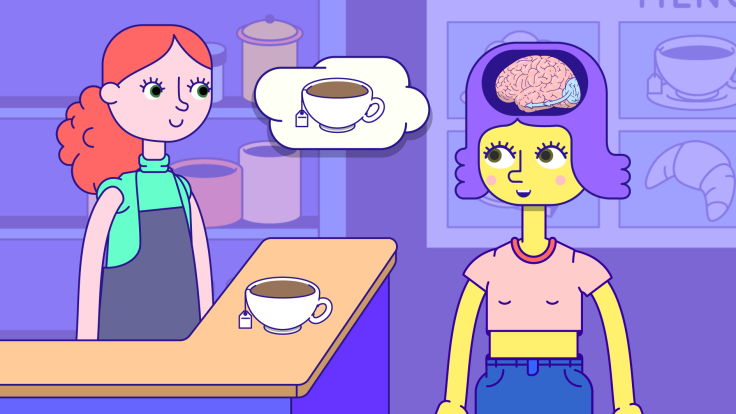
Once a week at Brown University, professors and students with backgrounds ranging from neuroscience to literary arts come together to collaborate. They're participating in a program called "SciToons," created in 2011 by Oludurotimi Adetunji, an adjunct assistant professor of physics and Brown's associate dean of undergraduate research and inclusive science. The program pairs "experts" with "novices" to search for the best way to combine scientific concepts and animation in a three- to five-minute YouTube video.
"Many people have this perception that those who don't attend college or have a background in science can't understand things like quantum physics," says Aisha Keown-Lang, a senior at Brown double-majoring in biology and political science. "But it is really about the ability to communicate properly."
SciToons aims to reach an audience of students in high school and above, so the video teams must take into account that the viewers will not be aware of all the specialized language scientists use. This is where the mesh between expert and novice comes in; they communicate back and forth to make sure all information is not only scientifically accurate but also understandable for the presumably inexperienced audience. "They fill in each other's gaps," Adetunji says.
Creating a SciToons video takes about six months. After brainstorming a topic, the teams must write a script. "This takes several months because every word is thoroughly thought through," says Torrey Truszkowski, a neuroscience graduate student at Brown. Both the expert and the novice must approve the script before the project moves into the next phase.
After developing the script, the writers hand the project over to the animators, who develop a storyboard and visuals. The experts and novices reconvene to discuss and give feedback on the result.
Before uploading the final product to YouTube, all participants in the program—animators, professors, writers and students from all types of educational backgrounds—come together to ask the final question: "Does this work?"
If their answer is yes, they hit publish and wait to see if their audience agrees. Some videos have struck a definite chord. The most popular SciToons video so far—"How do we see color?"—has reached over 145,000 views.
"I was thinking narrowly with neuroscience, but now I see how I can apply myself in many different ways," Truszkowski says. She is now planning to pursue a career in science communications.
SciToons has also created an atmosphere for scholars to discuss and collaborate on topics outside their select fields of study, Adetunji says. This has allowed both novice and expert to deviate from the isolation in their personal career paths.
Currently all members of SciToons are either students or professors at Brown, but Adetunji hopes to eventually include high school students and collaborators in the process as well.
Micro-Progress and the Magic of Just Getting Started

Pet City: The Pied Piper of Parrots

An Indian artist is turning women’s sexuality, health, and farts into Instagram art

Tired of the sanitised, filtered, and happy depictions of the everyday lives of her friends and family on social media, Kaviya wanted to talk about things and issues that not many like to discuss or even acknowledge in public. So, much in the vein of #100DaysOfHappiness and #100DaysOfExercise, the Mumbai-based artist decided to take up her own 100-day challenge on Instagram; but hers is #100DaysOfDirtyLaundry.
“All we see are posts with filtered selfies, vacation check-ins, fitness goals achieved, stylish clothes, and fancy restaurant dinners,” said the 28-year-old. “However, behind the rose-tinted glasses of social media, ours is a generation that is grappling with serious issues—complicated relationships, materialistic binges, mental health, addiction to our mobile phones, sexuality, and body negativity. I felt a strong need to address these so-called dirty taboos from a personal perspective and to help have an open conversation about them online.”

A real look at life
With this mid-year resolution, Kaviya uploaded the first post of #100DaysOfLaundry on her Instagram page on June 6, 2017. The topic was something most women shy away from—flatulence. The illustration shows a woman leaning on the arm of a chair while letting out a fart. In the accompanying note, Kaviya talked about the time she accidentally broke wind in front of her boyfriend—“Oh, it was such a hell of a smelly, noisy one that I should have jumped onto a rocket and disappeared into space. But what did I do? I went into a manic fit of laughter. So did he. And that’s when I knew that hey this relationship is here to stay.”
Most of Kaviya’s illustrations are on the lighter side. Apart from bowel movements, she discusses habits such as stalking people on Facebook, taking a million selfies, being overly possessive of boyfriends, girlfriends and best friends and internet trolling. The women on her Instagram feed flaunt their unshaved legs, imperfections, and, most importantly, opinions.

However, there are times when Kaviya talks about issues that deeply affect her and her generation—the fear of being lonely, cynicism, relying on social media to validate one’s self worth.
“I have many times, during the project, deliberated on openly speaking about certain intense, difficult topics like sexuality, relationships, and fears because they felt fiercely personal to be shared online,” she said. “I have been questioned by my close ones as to what purpose sharing my dirty laundry to the world served. But I was, and I am still, convinced how art can be a powerful medium for opening uncomfortable but necessary conversations. Most issues we are grappling with as a generation—like loneliness, anxiety, depression—are because we are always told not to openly talk about such taboos. Why? Because then people would judge us. But I think the more unbiased conversations we have about such topics, the more normalised they become.”

Bouquets and brickbats
Though Kaviya has no formal training in art, growing up, she maintained an art journal, in which she would doodle and write down her thoughts. But once she started working, she forgot about it. In 2017, frustrated with her corporate job, she started sketching again.
Kaviya has been inspired by various social media projects. One that particularly stayed with her was a 100-days project—artist Indu Harikumar’s #100IndianTinderTales. Harikumar illustrated the experience of Indian Tinder users based on the stories sent in by people who were using the dating app regularly. “In a country where we immediately hush someone at the mention of the word sex, her brilliant project discussed closeted topics like sexuality, intimacy, and desires,” said Kaviya.

Kaviya is no stranger to trolls on the internet. On uploading posts related to topics like menstruation, misogyny, and sexual harassment, she has been accused of doing this project for the shock value. At the same time, she has received words of encouragement and support from strangers. “For all its drawbacks, social media can be a very powerful medium to build a global community of shared experiences. I have had many women from countries such as Pakistan and Brazil reach out saying how much they related to the work; it makes one realise that whichever part of the world you belong to, the range of emotions and experiences most people go through is pretty much the same.”
Kaviya recently posted the Day 74 of #100DaysOfLaundry on the tendency to post every moment of one’s relationship on Facebook and Instagram. “If your relationship isn’t online, is it even real?” she asks in her post.
She has 26 days’ worth of laundry left to air.

This piece was first published on Scroll.in. We welcome your comments at ideas.india@qz.com.

High-Fat Diet May Fuel Spread of Prostate Cancer

After a Debacle, How California Became a Role Model on Measles

Let’s Cut the Bars Between Muni and BART

Come on Over to My Place, Sister Girlfriend, and We’ll Co-Work

The Look: Somewhere, Away From It All

Contributing Op-Ed Writer: Robots Can’t Vote, but They Helped Elect Trump

From Brooklyn to India, in Search of the Secret to Parenthood

Be the Parent Who Puts 'No Gifts' on Your Kid's Birthday Party Invite

It’s not easy being a disrupter. With any new trail you blaze, you’re bound to face backlash. But it is 2018, and I just feel that this is a year for bold gestures. It is time.

