R.P. Aditya
Shared posts
Personal Health: An Underappreciated Key to College Success: Sleep

A $250 Biohack That’s Revolutionizing Life with Diabetes
Article URL: https://www.bloomberg.com/news/features/2018-08-08/the-250-biohack-that-s-revolutionizing-life-with-diabetes
Comments URL: https://news.ycombinator.com/item?id=17714764
Points: 316
# Comments: 154
The First Palestinian in Jerusalem’s City Hall?

Trilobites: Give a Cow a Brush, and Watch It Scratch That Itch

When Adopted Children Want to Meet Their Birth Parents

Americans Are Terrible at Small Talk

How America Uses Its Land
Article URL: https://www.bloomberg.com/graphics/2018-us-land-use/
Comments URL: https://news.ycombinator.com/item?id=17658236
Points: 458
# Comments: 229
Frugal Traveler: Berkeley on a Budget

The City’s Buried Treasure Isn’t Under the Dirt. It Is the Dirt.

From butt hoses to Burger King: Tourists recount their first experiences of India

This question originally appeared on Quora: What are some unexpected things first-time visitors to India notice? Answers have been mildly edited for style and grammar.
Samantha Ryan from the US, who has visited India 6 times:
- Several people on a single bike
- Bank guards and airport guards with giant guns
- Over-the-top security in malls, hotels, and cinemas
- Everyone having a maid (yet calling foreigners lazy, lol)
- Beggars
- The amount of English thrown in the middle of sentences. It helped me get a small idea of what people around me were saying
- Outlets having switches
- Having to turn on the heater for taking a shower
- Using a butt hose for the first time in a Chili’s
- …I experienced a bucket shower and honestly loved it
- How many American chains are there—KFC, McDonalds, Burger King, Starbucks, Chili’s, California Pizza Kitchen, Dunkin’ Donuts, Pizza Hut, Dominos, etc
- How much more Indian food there is than what restaurants serve (…when you take into account all of the different state cuisines available)
- Movies playing the national anthem before starting
- People standing outside actors’s houses
- School uniforms
- Gas cylinders in kitchens
- Hanging clothes to dry instead of using a dryer
- My friend’s house costing Rs1 crore despite being just a 3 BHK apartment
- Everyone in advertisements being more white than me, but the people being tan
Muhammed Borhanuddin, a resident of Jakarta, who recounted his one-day-one-night trip to Kolkata from Bangladesh back in 1992:
From the first to last moments during our trip, we saw that the only one model of car that was mostly plying in the streets of West Bengal was Ambassador—be it privately owned or taxis, be it new or rusty. Wherever we went, always we saw this one car the most. I asked many people, “How is it possible that almost all of you people seem to use this one car?” They proudly answered, “Yes we don’t want imported cars.” I kept on asking many more people of different walks of life to verify the answer. The answer never changed, even a little. Even they did not blame the government for it, rather backed the government stance, “We have to wait until we can make other cars.” What nationalism, we never even thought of, we had rather used to know that car means always a Japanese thing that we had to import only, as it was the case back at our home country! Making our own car, even hoping for making a better one than this Ambassador, was just something beyond our imagination!
[…]
Today, decades later, we see the stars of India lightening the global sky while our dark-faced workers construct other people’s facilities around the world. The descendants of Ambassador, modern India today is one of the major car manufacturers of the world, while Bangladesh has become a major importer of them instead of making their own; the IT youngsters of India are dominating a vast portion of the world IT sector, while labourers of Bangladesh are cleaning streets of the world. Today we see Sundar Pichai sitting in America leading Google—the no. 1 search engine of the globe and making billions, while our “great sons” like Sajib Joy and Tarek Rahman are stealing billions of people’s money and laundering to Europe and America! Bangladeshis and their leaders still lack much of such holistic nationalistic motivation as of the Indians, ambition among people to attain self-dependency and self-empowerment.
Liz Deacle, a Britisher who migrated to Australia in 2009, went backpacking in India with her 13-year-old daughter:
Whether they mean to be or not, Indian people are nosy. Almost everyone you meet—if they can speak English then you’d better be ready to answer some personal questions. On average, we were asked about twenty-seven times a day:
Where do you live?
How much is your mortgage?
What job do you have?
Why are you wearing those hideous white boots and…
Does your son want to marry my daughter?
Ok. I made that last bit up, but seriously, I have never been faced with such upfront questioning in all of my life.
It was wonderful. Like going on holiday with Jimmy Fallon.
You can follow Quora—the place to gain and share knowledge, empowering people to learn from others and better understand the world—on Twitter, Facebook, and Google+.
We welcome your comments at ideas.india@qz.com.
When We Eat, or Don’t Eat, May Be Critical for Health

Eat less meat: more evidence from climate change and health
GRAIN and the Institute for Agriculture and Trade Policy (IATP) have issued a devastating report on the effects of meat and dairy production on climate change.
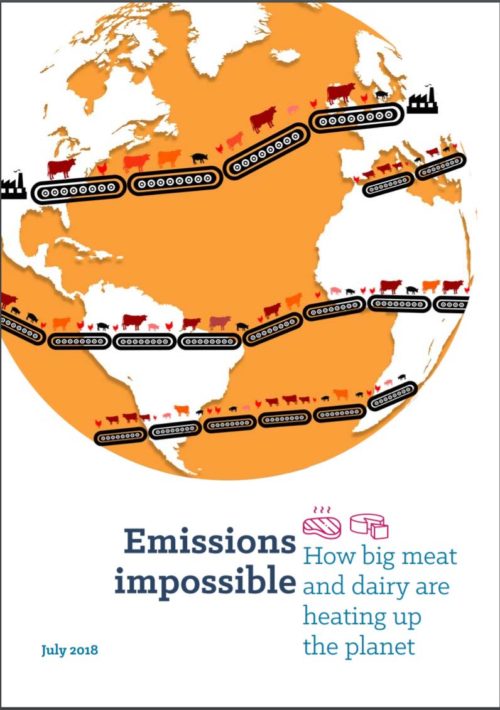
The report’s principal finding:
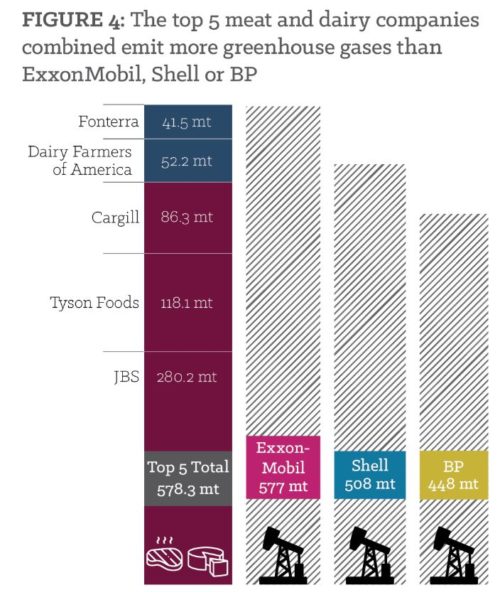
At issue are demands for growth in the meat and dairy industries.
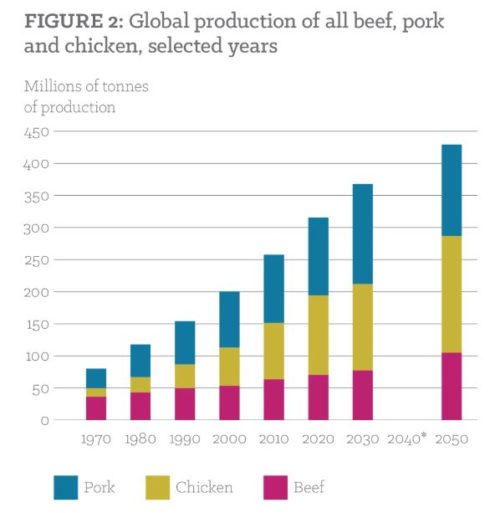
The report explains:
Current industrial levels of production cannot be sustained, nor can growth models for meat and dairy remain unchanged. The paradox of the corporate business model based on high rates of annual growth versus the urgent climate imperative to scale back meat and dairy production and consumption in affluent countries and populations is untenable.
Its inevitable conclusion:
cheap meat and dairy comes at a high cost due to social, environmental and animal welfare problems that continue to be under-regulated. In addition, this production is only made possible because the corporations receive an indirect subsidy from taxpayers in the form of government-funded price supports that keep grain cheap.
It is past time to regulate the industry and redirect the massive subsidies and other public expenditures that currently support the big meat and dairy conglomerates towards local food and farming systems capable of looking after people and the planet.
That’s the challenge. The need to address it is urgent. Let’s get to work.
Also see:
Meat consumption, health, and the environment. Science July 20, 2018. Authors: H. Charles J. Godfray, Paul Aveyard, Tara Garnett, Jim W. Hall, Timothy J. Key, Jamie Lorimer, Ray T. Pierrehumbert, Peter Scarborough, Marco Springmann, Susan A. Jebb.
This lengthy, extensively illustrated and referenced article covers much of the same territory but with greater emphasis on the health impact of meat consumption, and the amounts of water used in meat production, primarily from feed.
Chemicals in Food May Harm Children, Pediatricians’ Group Says

Costly coal has pushed Karnataka to become India’s renewables leader

The southern Indian state of Karnataka is now a renewable energy leader.
Over the last one year, it has toppled Tamil Nadu to become the country’s biggest renewable power producer with an installed capacity of 12.3 gigawatts (GW, or 1,000 megawatts). This includes 5 GW of solar, 4.7 GW of wind, and around 2.6 GW of other renewables such as small hydro, biomass, and heat and power cogeneration. In comparison, the state’s coal power capacity is around 9.8 GW.
In 2013, Karnataka, whose capital Bengaluru is India’s tech hub, had a coal power capacity of 6.8 GW, far higher than its clean energy capacity of 4 GW back then.
So, what drove this shift in the electricity mix of the state? The rising prices of coal, coupled with some innovative policies from the government, experts say.
Costly coal
Over the last year, wind and solar power have become cheaper than thermal energy in India. Meanwhile, the thermal power sector is under stress, with electricity tariffs rising due to an increase in coal prices and a shortage of coal.
This has resulted in the country’s power sector shifting aggressively from coal-based power to renewables.
For Karnataka, which was facing a power crunch, moving to renewables seemed like the obvious option. “There was more demand as compared to supply. (Karnataka) wanted power badly and with low gestation period, and solar fit the bill. That’s why they came out with encouraging schemes that would fill up the demand quickly,” Amit Kumar, cleantech partner at consulting firm PwC, told Quartz.
As a result, there has been a massive push in the state to change its electricity mix, according to a study by US-based think-tank Institute for Energy Economics and Financial Analysis (IEEFA), released on July 24.
“Recent solar tenders in Karnataka have seen near record low bids of Rs2.82-3.06 (per unit), materially below the average Rs3-5 for domestic thermal power tariffs and the Rs4-6 tariffs required for imported coal-fired power,” the IEEFA said in the study. “Given the expensive imported coal-based tariff… distribution companies have a major incentive to contract for new solar and wind at below Rs3 (per unit).”
Generous policies and regulations
In quick time, Karnataka came out with multiple policies that encourage setting up of solar parks, pilot new technologies, and help farmers get into renewable energy generation.
For starters, the Karnataka Electricity Regulatory Commission (KERC) withdrew a slew of surcharges levied on private companies that sell renewable power directly to consumers and not through the state electricity utility. This led to a sharp rise in private power production.
Then, the state devised a unique scheme to acquire land to set up solar plants. Procuring land from farmers for industrial use is one of the biggest problems in India, but Karnataka planned a workaround.
“The constraint usually is the land resource because you need so much land for each megawatt. The government identified pockets of the state where agriculture is not very intensive and not very remunerative. So without going in for land acquisition, they made a very good arrangement of making use of land for a fixed payment for (a) year. It is a partnership between government and farmers,” said MR Sreenivasa Murthy, former chairman of the Karnataka Electricity Regulatory Commission.
This move, in particular, helped develop the 2 GW Pavagada industrial solar park, the world’s second-largest such facility that’s under construction.
There was also a scheme specifically designed to get farmers to produce solar power. Under this, farmers could use government subsidies to switch to solar-powered irrigation pumps and sell the surplus power into the grid.
In addition, the state encouraged piloting new technologies such as the solar-wind hybrid where both windmills and solar panels are put up on the same piece of land. Karnataka today houses India’s first major hybrid plant.
Short-lived glory?
Will Karnataka maintain its lead?
Analysts believe it depends on how rapidly demand grows.
“All this they were able to plan well, execute it well because there was a supply-demand gap,” Kumar of PwC pointed out. “They will have to plan (for the development of renewables). But in case they are able to meet the demand going forward, you will find the same issues that other power-surplus states face.”
Today, states such as Gujarat or Madhya Pradesh have seen a slowdown in renewable energy growth because of surplus supply and a lack of demand for additional capacity.
Meanwhile, policies that attracted many renewable energy companies to Karnataka are now being rolled back.
“These kind of adjustments are quite to be expected. Once the generation cost of renewables has gone even below the cost of thermal, then of course, some of those highly-favourable (policies) need to be moderated,” Murthy said. In May 2018, the state repealed its order on zero surcharges, and also imposed charges on power developers.
New Traffic Signals in London Will Give Pedestrians the Green Light By Default

‘Green man’ authority is a radical technique where the traffic signals show a green signal for pedestrians continuously, until vehicular traffic is detected, at which time the pedestrians are stopped on a red signal, and vehicles are given a green light to proceed. This technique has previously only been used at two locations in London, on bus-only streets in Hounslow and Morden. TfL has identified the next 10 new locations where this approach will be set up, where it would significantly benefit pedestrians, with very little detriment to traffic.
Airbnb Reviews of My Childhood Home

Why Indian farmers must grow less rice and wheat

If Indian farmers replaced plots of water-guzzling rice and wheat with less thirsty crops, this moderate shift could cut down the country’s water consumption by a whopping one-third. Plus, crop-swapping would have the added benefit of boosting national nutrition, a new Science Advances study finds. As the second-largest country in the world with 1.3 billion mouths to feed, transforming agriculture in India while maintaining food security could carry lessons for the rest of the globe.
By 2050, the country will have to feed almost 400 million more people, and already 30% of the population are undernourished because they lack enough iron in their diets. What’s more, water availability has become increasingly threatened as groundwater extraction intensifies, and climate change makes rainfall less predictable. That puts wheat and rice–two of the country’s most important and thirsty crops–under threat. But the new Columbia University-led research shows that with some agricultural tweaks, India might be able to dodge this fate.
The researchers modelled the impact of different crops on water use and the provision of four key nutrients—iron, zinc, protein, and calories—across several regions of India. When compared with other cereal crops like sorghum, maize, and millet, the wheat and rice just didn’t stack up, water- and nutrition-wise. In particular, the researchers found that rice provided the least nutrition for the amount of water consumed. Replacing rice paddies with other grains, the study found, would collectively cut irrigation by 33% across the country. This would also boost the quantity of available nutrients overall, crucially increasing iron by 27%, and zinc by 13% (but protein by only 1%).
This new farming tactic isn’t a cure-all, however. Regions vary by climatic and growing conditions, so while It would also boost the quantity of available nutrients like iron by 27% and zinc by 13%. replacing rice with other cereal crops works in some places, it actually makes farming less productive in others—meaning it produces fewer nutrients, too. Switching sorghum, maize, and millet into the landscape could therefore only work in regions with optimum growing conditions.
To switch crops on this scale, India would also have to reckon with its deep-seated, historical appetite for rice and wheat, the researchers say. In the 1960s, an agricultural boom in the country suddenly elevated these two crops to star status. That’s since been upheld by government subsidies which encourage farmers to keep producing these valuable staples–especially since India is the world’s biggest exporter of rice.
Now, decades later, the country is having to deal with excessive water use (and compromised nutrition) as the flipside to this agricultural boom. With climate change now complicating things further, having a greater variety of staple crops could make India’s agricultural sector more resilient–whereas relying on just one or two major staple crops would leave the agricultural system vulnerable to drought and other threats. And, if this new crop model works, India could become an example for other parts of the world.
Already, change is afoot: The Indian government has labeled 2018 the Year of Millets in recognition of the fundamental agricultural shifts that could reshape the country’s farming future.
Davis, et. al. “Alternative cereals can improve water use and nutrient supply in India.” Science Advances. 2018.
This piece was originally published on Anthropocene Magazine, a publication of Future Earth dedicated to creating a Human Age we actually want to live in. We welcome your comments at ideas.india@qz.com.
On Medicine: What Can Odd, Interesting Medical Case Studies Teach Us?

Stories About Marathon Walking Commuters Receiving Benevolent Donations of Cars Are Actually Terrible

In India, Summer Heat Could Soon Be Unbearable. Literally.

These Women Were Told Not to Play Soccer. Instead They Formed a Team.

Drought and Drone Reveal ‘Once-in-a-Lifetime’ Signs of Ancient Henge in Ireland

Diagnosis: The Young Woman Was a Healthy and Avid Runner. Now She Could Barely Walk. Why?

Benefits, Work, and Poverty
Employers will do almost anything to find workers except pay them more
Article URL: http://www.latimes.com/business/hiltzik/la-fi-hiltzik-employment-20180710-story.html
Comments URL: https://news.ycombinator.com/item?id=17506044
Points: 413
# Comments: 435
No, “Drunk Walking” Is Not Causing the Rise in Pedestrian Deaths

In Austin, where a dozen drunken walkers died in 2016 and seven died in 2017, many crashes were on a stretch of Interstate 35, an eight-lane, high-speed highway divided by a concrete barrier, said police Detective Pat Oborski. The highway is lined with fast-food restaurants on one side and low-cost motels on the other. Drunken pedestrians cross the highway, going back and forth between the motels and restaurants located on frontage roads, Oborski says. While there’s a bridge over the highway about a quarter of a mile away, some people figure it’s easier to run across than to walk to the bridge.Without realizing it, Bergal is describing one of the great threats to pedestrians: Dangerous, high-speed arterial roads without safe crossings. These conditions put people on foot at greatest risk even when they’re stone-cold sober. Stories like this cause real harm. They give officials in cities like Austin cover not to do anything but blame the victims. They perpetuate the marginalization of people with no choice but to walk on dangerous streets, who are more likely to be poor, black, or brown. The more press coverage of pedestrians fatalities blames victims, the less pressure there is to rethink the eight-lane speedways and dangerous SUV designs that jeopardize people’s lives.
Parenting Lessons From the World Cup

With a Sniff and a Signal, These Dogs Hunt Down Threats to Bees

1 Neighborhood. 24 Kindergarten Classes. 40 Languages. (Some Miming Helps.)
R.P. AdityaMost children, when they arrive at Fraser Mustard for the first time, stop at the bottom of the stairs, bewildered. They don’t know how to climb them.

