Shared posts

25 Sep 22:08

AppStories, Episode 23 – The Apps Behind Federico’s iOS 11 Review

by John Voorhees

On this week's episode of AppStories, we lift the curtain on some of the special events at MacStories and Club MacStories surrounding the release of iOS 11, discuss the removal of the App Store from iTunes on macOS, and dive into the apps Federico used to plan, research, write, and produce his iOS 11 review.

Sponsored by:

→ Source: appstories.net

25 Sep 22:08

The Terror of Total Dasein | Hito Steyerl

The Terror of Total Dasein | Hito Steyerl:

Hito Stereyl gives us ‘junktime’:

According to William T. Mitchell, the economy of presence1 is characterised by a technologically enhanced market for attention, time, movement – a process of investment that requires careful choices. The point is that technology gives you tools that allow for remote and delayed presence, so that physical presence becomes the scarcest option among a range of alternatives..

According to Mitchell: “Presence choice occurs when an individual decides whether face-to-face presence is worth the time and money”. Presence in fact becomes a mode of investment. It is not opposed to technology but it´s [sic] consequence.

The economy of presence is not only relevant for people whose time is in demand and who could basically sell (or barter) more time than they have, but even more so to those that must work multiple jobs in order to make a living or even not make a living. It is equally relevant to those who coordinate a jumble of micro jobs, complete with the logistical nightmare of harmonising competing schedules and negotiating priorities, or that are on permanent standby in the hope that their time and presence will become exchangeable for something else eventually. The aura of unalienated, unmediated and precious presence depends on a temporal infrastructure that consists of fractured schedules and dysfunctional and collapsing just-in-time economies in which people frantically try to figure out reverberating asychronicities and the continuous breakdown of riff raff timetables. It´s junktime, broken down, kaputt on any level. Junktime is wrecked, discontinuous, distracted and runs on several parallel tracks. If you tend to be in the wrong place at the wrong time, and if you even manage to be in two wrong places at the same wrong time it means you live within junktime. With junktime, any causal link is scattered. The end is before the beginning and the beginning was taken down for copyright violations. Anything in-between has been slashed because of budget cuts. Junktime is the material base of the idea of pure unmediated endless presence.

Junktime is exhausted, interrupted, dulled by Ketamine, Lyrica, and corporate imagery. Junktime happens when information is not power, but comes as pain. Acceleration is yesterday´s delusion. Today you find yourself crashed and failing. You try to occupy the square or bandwidth, but who is going to pick up the kid from school? Junktime depends on velocity as in the lack thereof. It is time´s substitute: it´s a crash test dummy.

I got whiplash reading this.

(h/t Silvio Lorusso)


1.   William T. Mitchell, ETopia: Urban Life, Jim, But Not As We Know It 

25 Sep 22:08

Twitter Favorites: [MrSteveTweedale] The assumption that people have a moral claim to their pretax income as such collapses under @Philip_Goff's scrutiny https://t.co/pktsqBqxJO

Stephen Tweedale @MrSteveTweedale
The assumption that people have a moral claim to their pretax income as such collapses under @Philip_Goff's scrutiny aeon.co/essays/if-your…
25 Sep 22:08

Mobike launches new, lighter stronger model

by Timmy Shen

Mobike, China’s major bike-rental company, today launched a new model of its smart bike called “New Lite.” It features a minimalist design, longer lifespan, and lighter weight.

The all-new model comes with a stronger bike frame which is 50 percent stronger than European standards and weighs 15.5 kilograms, making it the lightest mainstream bike rental model on the market, according to Mobike. The new model also has an internal chain transmission that guarantees the chain will neither fall off nor catch the users’ pants.

Mobike's new model New Lite (Image credit: TechNode)

Mobike’s new model New Lite (Image credit: TechNode)

Beijing city’s transportation unit this week announced new regulations, stating that all bike rentals must be replaced or discarded after three years in use (in Chinese). Mobike’s new model also reflects the new rule.

“Our new models can last for at least three years,” Hu Weiwei, Mobike’s CEO, told TechNode after the launch event in Beijing, adding that the team initially designed the model for a four-year lifespan. “I particularly appreciate the design [of the new model] which is not designed for the market but for everyday life.”

While major cities in China have seen an overwhelming amount of shared bikes invading the streets, many local governments have halted new bike placement.

“Volume control is a good thing, in my opinion. It makes everyone more rational,” said Hu.

Mobike also revealed another new concept bike model that comes with a white body but has yet to release to the market. It’s designed by the Japanese industrial designer Naoto Fukasawa who also designed the classic MUJI CD player. It remains unknown when this model will be placed on the streets.

Mobike's new concept bike designed by Naoto Fukasawa

Mobike’s new concept bike designed by Naoto Fukasawa (Image credit: Mobike)

Launched in April 2016, Mobike has since deployed in 180 cities around the world and operated more than 7 million bikes. The company this week just landed in Washington D.C., their first US city. Besides the company’s home turf, Mobike has so far expanded to Singapore, US, UK, Italy, Japan, Thailand, and Malaysia.

25 Sep 22:07

Mobike vs ofo: The race for the world’s bike rental market

by Masha Borak

It is almost two years since Mobike co-founder Hu Weiwei put around 50 bicycles on the streets of Shanghai and drove away. Ofo had a similar beginning, spreading out shared bikes on Beijing’s university campuses. This is how China’s dockless bike rental economy was born—from moves that could easily be branded as crazy.

Today, bikes are so bountiful that they are literally blocking the streets of Chinese cities. Although both companies have been hesitant to release numbers, the latest iResearch’s data (in Chinese) show that Mobike has 8.65 million daily active users while for ofo that number climbs to 9.65 million. During 2017, Mobike has raised $1 billion and Ofo $1.15 billion, according to their own data.

The meteoric rise of the bike rental market has drawn much attention, not just for its disruptive business model, but also because it is one of the first tech trends coming from China that has swept the entire world.

Different paths, same goal

The two bike rental giants have taken very different roads to success in China. Ofo took the fast route by quickly spreading cheap bikes from campuses to the streets of Chinese cities. It then worked on its technology with the help of investors China Telecom and Huawei by adding GPS tracking and upgrading its locks.

Mobike was more meticulous in planning: the company first set up its own factory to produce sturdy bikes integrating GPS and QR code authentication and then moved on to expanding their business.

Co-founder of ofo Austin Zhang (left) and co-founder of Mobike Weiwei Hu.

Co-founder of ofo Austin Zhang (left) and co-founder of Mobike Weiwei Hu.

As Grace Gu, principal at one of ofo’s backer ZhenFund, explained during this year’s ChinaBang Awards, ofo showed a typical Northern China style of expansion, while Mobike has the Southern China business style.

“In short, Southern style is bottom-up with a ready product, and Northern style is top-down strategy and later do optimization,” said Gu.

The two companies have transplanted their styles into the global arena. Ofo is following its co-founder’s Austin Zhang’s credo “rapid spread, yellow will cover the world” and has ambitious plans to cover 200 cities by the end of 2017. Half of that goal is already fulfilled, mostly in China. Besides Chinese cities, the little yellow bikes can currently be seen on the streets of UK, US, Singapore, Thailand, Austria, Malaysia, Kazakhstan, and Japan. On September 22nd World Car Free Day the company announced it will be launching in a cluster of four European countries of Russia, Czech Republic, Italy, and Netherlands.

ofo chart

Ofo also went beyond the simple yet effective marketing tactic the two companies have been using in China. With their flashy colors, the bikes market themselves; all they had to do is offer free rides and the good word was spread by the users. Now, ofo is taking a more vocal approach: it has teamed up with UNPD to offer grants for green projects and has announced smog-filtering bicycles by the end of the year. It has even gotten Rihanna on board by sending bikes to schoolgirls in Malawi through the singer’s foundation.

Mobike, on the other hand, has been behaving in the Southern Chinese fashion—slow and cautious. According to the company’s Head of Global Partnerships Florian Bohnert, the company is now focusing on raising their efficiency through technology and strong support from the local government.

Mobike has set the same target as ofo for this year—200 cities. Besides China, the company has so far entered Singapore, US, UK, Italy, Japan, Thailand, and Malaysia.

mobike chart

But Mobike has been compensating for its lack of speed by investing in AI data monitoring platform Magic Cube which will help operate its bikes and fight illegal parking. The company has also partnered up with tech giants such as Foxconn, Qualcomm, Vodafone, AT&T, Cisco, and Ericsson.

“These partners help us in a number of different fields (chip intelligence, telecoms, IoT, and more) to always improve the service: more accurate location of the bike, more precise data research, more reliable components, etc. This plays in line with the fact that Mobike is at heart a technology company, unlike any of its peers,” said Bohnert.

But ofo is catching up on the big data game. In Japan, ofo is cooperating with SoftBank C&S’s division for IOT, robotics and the cloud. It was also the first bike rental company to announce implementing near-field communication (NFC) locks which will enable users to unlock bikes even faster.

Bumps, curbs, and potholes

The two companies have geared up to fight for the global market, but the road ahead will be slippery. As Brian Chaitoff from research company 7Park Data explained in an earlier interview with TechNode, bike rental will face unique growth dynamics in different markets.

“The success of expansion into other markets will be in part based on these factors–including population density (i.e., high capacity utilization and high availability), economic factors, conducive environments for safe biking (i.e., physical layouts, base rates of crime, etc.), and state/government regulations that do not hinder growth,” Chaitoff said.

One of the bigger issues is gaining the trust of local governments. Bluegogo’s example reminds us that not all cities are willing to take the risk of flooding its streets with shared bikes. The company shipped hundreds of bikes to San Francisco just to have the government issue regulations that would make it unfeasible to operate in the city.

Even when the cities agree to welcome shared bikes, there are other factors to consider—factors that make us think “This is why we can’t have nice things.” Many still recall the notorious case of Paris docked bike-sharing scheme Vélib which reported half of its bikes were stolen, some of them being discovered as far away as Romania. And while vandalism and theft are not rare in China, bike sharing companies in foreign markets will be left without the possibility of quickly replacing stolen and damaged bikes.

Finally, both ofo and Mobike will have to face local competition. US companies are joining the race: LimeBike already covers nine cities and it is taking on ofo in Seattle along with Spin, while Vbike is starting is growth in Dallas. Even regulation-obsessed Europe has welcomed its first homegrown dockless bike rental scheme Urbo. Recent news from Singapore—both Mobike’s and ofo’s first foothold abroad—has shown that the Chinese bike rental giants could lose out: local company oBike is currently the most popular bike renting option and it is making its way to London.


The previous version of this article published on September 22nd, 2017 stated that LimeBike is present in eight cities in the US. The latest news from LimeBike states that it has covered nine US cities and eight universities.

25 Sep 22:07

Photon Engineering Newsletter #16

by dolske

Time to get your groove on! It’s Photon Newsletter #16!

But first. Do you remember the 21st night of September? As of today (September 21st) Firefox 57 has passed its penultimate milestone by entering Beta. This is a pretty big deal, as it means many millions of users on Beta will soon experience all the awesomeness that’s packed into 57. Note that Beta builds won’t actually go out until next week, on the 26th. But if you’re running Developer Edition, we’ve already pushed out an early sneak-peek!

Did I mention that Developer Edition also got a snazzy new Firefox icon? It’s nice. And blue.

firefox-logo-developer-edition

The past week has been very busy as we’ve been doing a major burst of bug triage, just to make sure we’re not missing any already-reported critical issues. The front-end teams went through nearly 600 untriaged bugs in just a few days! The good news is that we didn’t find anything alarming, which matches up with our general impression that 57 is shaping up to be a really solid release.

Recent Changes

Menus/structure:
Animation:
  • Investigation is ongoing into bug 1397092, where a user has reported an interesting case of high cpu usage possibly caused by the new tab loading indicator
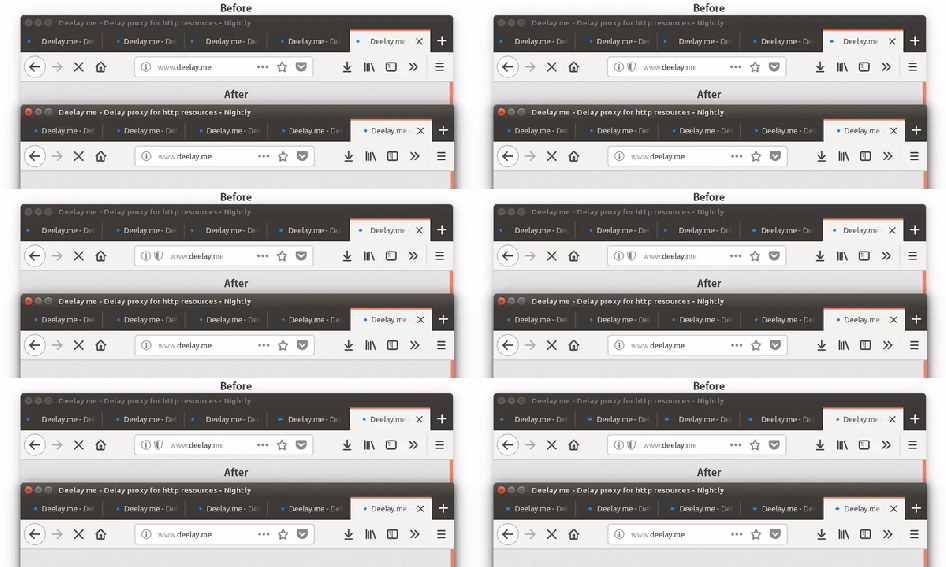
  • The tab loading indicators are now synchronized, so when multiple tabs are loading the “bouncing balls” move left and right in unison.
    sync
  • The Animation team is shifting focus to help with polish bugs in the Visual Redesign and Menus/structure areas, as most remaining animation bugs are lower priority.
Preferences:
  • All P1 bugs landed – MVP feature-complete!
  • Added a setting to bring back the search box. With 57 it won’t be added to newly created profiles, but can be restored through Customize Mode. By adding additional preferences UI we hope to make is as easy as possible to get it back for anyone wondering where it went.
    searchprefs
  • Did a UI review, and landed a batch of polish fixes to address a number of minor issues found.
  • Deferred the loading of some information to improve the amount of time it takes to open the main Preferences page.
Visual redesign:
Onboarding:
Performance:
  • Fixed a white flash in the content area when opening new tabs and new windows, which made things look janky.
  • Separately, fixed a flickering in the awesomebar results when updating search suggestions.
  • We had to disable tab warming when hovering tabs, because it caused more regressions than we are comfortable fixing for 57. We are now planning to ship this significant perf improvement in 58.
  • Our dashboards show very good wins on all things we measure when comparing 55 to 57. Eg. startup is about 50% faster in 57 than it was in 55!
  • Not planning any further significant performance work for 57, to avoid risk of causing regressions. We are starting to look at what improvements can go into 58/59, and where we should put performance efforts in the longer term.

That’s all for now. There are only a few more weeks for us to do more polish work in 57 Beta, so there will probably only be a few more Engineering Newsletters as well. (But fear not, there’s been such positive response to these newsletters that we’ll likely continue them post-Photon in some form.)

25 Sep 22:07

Learning To Build Internal Alliances That Work

by Richard Millington

More than a dozen people I’ve interviewed for the new book mentioned having to protect their community from requests from marketing.

At the same time they want marketing to better support the work they’re doing.

Can you see the problem? If you act like a guardian of your community against your company, you can’t expect much support. But if you look to find ways the company offer things your members want, you start to build useful relationships.

If you want marketing on your side, find how you can support their goals.

The easiest is turning members into advocates. There is plenty that members can do to support marketing goals here:

  1. Leave positive reviews of your product/services on relevant sites.
  2. Help recruit/advertise jobs.
  3. Write testimonials or participate in case studies.
  4. Drive referrals.
  5. Create and share content about you (photos on instagram, blog posts, etc…).
  6. Share news and promotions.

Anything that helps plead the case of your organization to outsiders is advocacy.

But you shouldn’t ask all your members to do one of these. Different objectives work better for different members.

Your objectives might ask your top members to do the most time-consuming tasks, your regulars to take a simple action, and lurkers to do anything that will only take a few clicks.

A real-world example from a friend of a video game series I helped out:

Community Strategy Statement

Goal: Drive huge online buzz for each new release of the game during launch month.

1) Get top members (top 100 participants in the past 6 months) to learn how to create short, slick, videos to share on YouTube, Twitch, and other video channels.

2) Get top members (top 100 participants in the past 6 months) to create popular videos featuring the game upon release.

3) Get regular members (avg. 3 to 10 posts per month) to post positive reviews of the game upon release.

4) Get lurkers/low-activity participants to share promotions on social media.

Each objective naturally led into an emotional strategy.

Top members were perfectly willing to learn how to create short videos when we made it exclusive and hired one of the world’s top short video creators for videos to train them.

Regular members were happy to leave positive reviews simply by being asked nicely and thanked graciously. We sensed they wanted to give back to the game.

Lurkers and low-activity members received points for each promotional item they shared on their social channels which could be exchange for in-game currency.

The key lesson is none of this would have been possible if we had continued to act like guardians and shut down any intrusion into the community. Instead we helped marketing achieve their goals and more importantly perhaps, helped our members get more from the community in return.

Don’t act like a gatekeeper, get involved and figure out solutions.

Remember our Strategic Community Management course begins on October 9th. If you want to stop chasing engagement metrics and start driving valuable results, I hope you will join us:

www.feverbee.com/scm

25 Sep 22:07

Intel Discontinues Their 802.11ad Notebook Cards – The End Of WiGig?

by Martin

As Anandtech says ‘in a surprise move’ Intel has announced last week that they will discontinue their 60 GHz WiGig + Wifi + Bluetooth cards. As they were pretty much the only ones selling WiGig connectivity options for notebooks so far I can’t help but wonder if this move has just spelled the end for moving to mmWave spectrum in the home and enterprise domain!?

Just the other day I’ve read another article I read somewhere tat touted that 5G is about to move to where Wifi has already gone. And now Intel buries it. Let’s hope 5G doesn’t follow that example as well. But even if it doesn’t, it just shows what kind of a rocky ride mmWave frequencies are and will also be for 5G. Massive MIMO, beam-forming, beam-sweeping and lots of other technology innovations are necessary to make it work. Compared to that, the move from 3G WCDMA to LTE OFDMA was childs play.

25 Sep 22:07

Twitter Favorites: [caseorganic] Calm Technology is a compression algorithm for attention. How to create things that use less attention but still get a message across.

Amber Case @caseorganic
Calm Technology is a compression algorithm for attention. How to create things that use less attention but still get a message across.
25 Sep 22:07

Testing Nikon D850 for Camera Scans

by admin

Nikon sent me a D850 to do some camera scan testing. My initial impression is that it it really promising, but I have not been able to get it to do exactly what I want. It does a pretty good job for most negatives, but it’s having problems on dark images.

I’ll run a number of rolls through it over the weekend and report back.  I will say that even if it’s not perfect now, I can tell this is going to be a great solution for camera scanning color negatives, particularly in conjunction with Lightroom.

The post Testing Nikon D850 for Camera Scans appeared first on The DAM Book.

25 Sep 22:07

Thermal structure of Hurricane Maria

by Nathan Yau

Hurricane Maria touched down in Puerto Rico. This visualization by Joshua Stevens at NASA shows what the thermal structure of the storm looked like, based on data collected by the Terra satellite.

Colder clouds, which are generally higher in the atmosphere, are shown with white. Somewhat warmer, lower clouds appear purple. The image reveals a very well-defined eye surrounded by high clouds on all sides—an indication that the storm was very intense.

Ugh.

Tags: hurricane, NASA, weather

25 Sep 22:06

Ohrn Image — Yaletown

by Ken Ohrn

Or, more precisely, Yaletown-Roundhouse Canada Line station.

plaza

Click to enlarge.


25 Sep 22:06

Friday Funny — Twisted Words

by Ken Ohrn
25 Sep 22:06

Smoke Signals

by pricetags

The Kenow Fire in southeast BC is contained.  But it spread rapidly, crossed into Alberta at Waterton Lakes National Park, and did damage. The park was evacuated.

Glacier National Park in Montana, however, was open – even though enveloped in smoke.

A terrible beauty, given that it will be followed by more. This year we got some tangible ways to see the consequences of climate change pushing things to extremes.  Just as we did.


25 Sep 22:06

Twitter Favorites: [Planta] My first attempt at cornbread. https://t.co/NiFQGJPk6y

Joseph Planta @Planta
My first attempt at cornbread. pic.twitter.com/NiFQGJPk6y
25 Sep 22:06

Reviewers discover that the Apple Watch Series 3 can't get online

This just in, from the “You had one jobdepartment…

The headline feature of the new $400 Apple Watch 3 is that it’s got cellular. For $10 a month, your watch can take calls, get texts, and stream music over the LTE cellular network. And you don’t have to have your phone with you.

It’s an appealing idea. Unfortunately, in the first Apple Watches, it doesn’t work.

Apple’s hand-picked reviewers (which did not include me this time) included The Verge (Lauren Goode) and the Wall Street Journal (Joanna Stern). Both tried out the Apple Watch 3, and both found that the cellular thing simply doesn’t work. (“Untethered and Unreliable,” says Stern’s headline.) They left their homes without their phones and regretted it. They had no Internet connection at all.

Apple says that it has discovered a bug. The watch tries to hop onto WiFi networks whenever possible, to save you money and battery life; it uses the cellular connection only when necessary. Unfortunately, the current watch tries to hop onto what Apple calls unauthenticated WiFi networks—nearby networks that you haven’t actually logged onto. The watch therefore has no actual Internet connection all. No WiFi and no cellular, and therefore no phone calls, no texts, no Siri.

Those reviewers also discovered that the cellular feature rips through the watch’s already puny battery capacity. Goode reports that after three hours, the watch’s battery was down to 30 percent.

What this means, of course, is that you probably can’t get through a single day with it. Even if all you do is run, the watch would probably be dead by the end of a marathon.

Of course, the world is full of hot new products that launched with show-stopping bugs. GoPro’s drone was immediately recalled when it turned out that its battery would slip out in flight, causing the whole thing to crash. Nest discovered that its flagship smoke detector would sometimes delay alerting you to a fire. It does happen. But when it’s Apple? When it’s the one big feature? Yikes.

Apple will fix the cellular/WiFi bug in the Apple Watch 3, for sure. They won’t fix the battery life; they, and we, have reached the current limits of battery chemistry technology. And until there’s some kind of power breakthrough, smartwatches will remain specialty gifts for techies.

David Pogue, tech columnist for Yahoo Finance, welcomes non-toxic comments in the Comments below. On the Web, he’s davidpogue.com. On Twitter, he’s @pogue. On email, he’s poguester@yahoo.com. You can read all his articles here (http://finance.yahoo.com/news/david-pogue/), or you can sign up to get his columns by email (http://j.mp/2mCizxV). 

25 Sep 22:05

Quantum Flow Engineering Newsletter #25

by ehsan

The Quantum Flow project started as a cross-functional effort to study and fix the most serious performance issues of Firefox affecting real world browsing use cases for the Firefox 57 release.  Thanks to the hard work of everyone who helped us along the way, we believe that we have managed to fix a significant portion of the issues discovered in the past seven months or so that this project has run and have managed to achieve the performance goals that we had set for ourselves.

A Short Retrospective

Looking back at the past months, the Quantum Flow project went through three different stages in terms of the type of issues we focused on (even though these stages weren’t consecutive in time).  In the first stage, we focused most of our energy on gathering information about performance issues and planning work that would fit in the scope of Firefox 57.  A lot of time was spent doing profiling and measurements to gather evidence around the most problematic areas of the code needing attention.  We also spent time thinking about what parts of our plans may or may not finish in time for Firefox 57, and thought about which issues were the most urgent to fix, and which ones could be deprioriotized to future releases.  In this time we had a work week to consult various platform teams for help in various areas of their expertise.

After the scope of all the work that was necessary to be done became more clear, we knew that we needed help from other teams to oversee some aspects of the ongoing work independently.  We started to work with the Firefox front-end team to ask for their help on reducing synchronous layout/style flushes and scheduled timers in the UI code.  That relationship grew with their effort on reducing the browser start-up time (which has been a great success so far!) and eventually with the Photon Performance project in place, the amount of effort on the Quantum Flow side to keep track of the UI performance was greatly reduced, which was a huge help.  Another successful example here was working with the layout team to improve reflow performance.  During our measurements we had seen a lot of reflow performance issues, which were not easy for us to diagnose and analyze.  The layout team was really busy with a lot of ongoing work all along, but they did a great job at keeping track of the issues we reported to them and fix the ones which were important.  They also didn’t stop there, a lot of great work happened based on other independent investigations which would benefit reflow performance in these past few months.

The last stage and the longest running one perhaps was a cross-functional effort at fixing the bugs we had discovered and prioritized which I’m sure you are all familiar with by now.  There were some challenges to overcome here.  Perhaps the most obvious was the sheer number of bugs at hand.  I remember triage meetings with 50+ bugs to go through, and we had to be careful to not miscategorize something or not miss something important.  The other challenge was the amount of time we had and the number of people who could help with fixing the bugs.  The number of person-hours of help we could get from each team depended on the existing workload of the team and their other priorities, so sometimes it was hard to predict how much help we can count on in a given area especially in the earlier stages.  As more people got involved, we needed to do more communication to make sure things kept moving forward, and nobody was blocked on something where we could give help.  Because of the number of bugs on our plate, we also always needed more help!  We continually thought about new ways of seeking help from more people and teams.  Due to the short amount of time that we had before our final deadline for the development of Firefox 57, we had to experiment with ideas to deal with these issues quickly, see what works, abandon what didn’t, and rinse and repeat.

Over this time, at the time of this writing, we triaged 895 bugs in total.  We used a three-tier priority scheme, and out of these, 277 P1 bugs, 38 P2 bugs and 54 P3 bugs were fixed (as in, marked FIXED, not counting other resolutions such as WONTFIX, DUPLICATE, etc.).  We mass-moved all remaining open P1 bugs to P2 (because the definition of P1 was bugs that we want to fix for the 57 release), and we are now left with 141 P2 open bugs and 133 open P3 bugs.

The Future of Quantum Flow

From the beginning of this project, it was clear that we are going to discover more issues that we will have time to fix for Firefox 57, so the fact that we have so many open bugs is a good thing.  We tried to be intentional in what we focus on first for Firefox 57, but we didn’t expect to stop there.

Now we have a large pool of existing bugs, some in progress, some in need of owners to pick them up.  But we also need more people to measure the performance of the browser in their areas of expertise, and plan future work to improve the existing issues.  Going forward, we would like to start experimenting with a different structure to continue the performance work that Quantum Flow started.  Instead of having a small team doing triage and prioritization in a centralized fashion, we would like to distribute this across the existing teams at Mozilla, to allow them to integrate the performance work with their existing development work (if they don’t already!) and triage and fix these issues on their own pace.

So, instead of using the [qf] status whiteboard tag, we will use the existing perf keyword in Bugzilla, and when triaging, teams will use the normal Bugzilla Priority fields to assign priority to the performance bugs.  The existing set of open QF bugs will be moved to use the perf keyword as well to unify how we handle these bugs.

Long term, we view performance as an aspect of quality very much like stability and security.  This means both running periodic projects to improve on the solid foundation that we have built so far, and continually monitor and measure the performance of the various aspects of the browser to make sure regressions are caught and fixed in time, and new features are developed with performance in mind from early on.   And to do so, we need to continue our investment in the tooling around performance, perfherder, AWFY, Profilerarewesmoothyet, and perhaps more tools in the future.

Continuing the QF project into the future is an area of active planning.  I expect more details about the next steps for this project will be shared as the plans continue to shape up.

On QF Newsletters

The idea of starting to write an ongoing newsletter about the Quantum Flow project was first suggested to me by Bill McCloskey.  Our first goal was to find a way to increase the visibility into what the QF project is, and highlight people’s contributions to the effort, because we felt like due to the speed at which the project was spun up and the vast scope of the project, it may be difficult for a lot of people to understand in detail what actually happens under the hood.

Over time, I tried to shed light into the most important aspects of the work that happened in the project, and document the history of the technical work that happened throughout the past seven months or so.  At its lowest level, Quantum Flow consisted of many performance bug fixes all over the place.  I think it was important to highlight that fact, but also explain to some extent how and why some classes of bugs were investigated in-depth.  But it’s also possible to not see the forest when looking at the trees, so at times I also tried to highlight some of the ongoing higher level efforts in addition to listing the individual fixes landing each week.

Another super important goal of mine was to give credit where it’s due.  What we have accomplished for Quantum Flow (and Firefox 57) so far couldn’t have been accomplished without the help of many wonderful people in the community.  I often think that we need to take more opportunities to thank people for the hard work that they are doing, and I took these newsletters as my opportunity to do just that!

Also, I have always wanted to read newsletters like this myself about what happens in projects and teams that I’m not actively involved in myself.  I’m extremely happy that there are now a number of newsletters that people have started writing recently, and I look forward to seeing even more of them!  Writing about what we work on is important, it helps share knowledge across Mozilla and keeps people informed and engaged.  I urge more people to write about what they do, and I’ll try to continue to do so myself.

Before closing, it is time to give credits where it’s due one last time in these series.  Firstly, I would like to thank Jan de Mooij, Mike Conley, and Florian Quèze who helped me with collecting the credits section at the end of the newsletters in the past few months!  Also, I would like to extend to thank the following people who helped land the last performance improvements for Firefox 57:

25 Sep 22:05

The Significance Behind Steve Jobs Theater

by Neil Cybart

On paper, Steve Jobs Theater doesn’t make complete sense. The price tag would lead many to question the rationale in building a massive underground theater for unveiling products. It’s difficult to envision any other company wanting to undertake such a project. However, after I attended Apple’s inaugural event at Steve Jobs Theater, Apple’s motivation behind the building became crystal clear. Steve Jobs Theater is an Apple product, and a closer look at the building uncovers a side to Apple that few have seen before.

Initial Visit

Steve Jobs Theater is located in Cupertino and positioned in the southeast corner of Apple's new $5 billion Apple Park headquarters. The 167,000-square-foot building consists of a 921-seat underground theater and accompanying product demo room. Apple plans on utilizing Steve Jobs Theater for product unveilings and the periodic corporate event. Apple hired Norman Foster and his firm Foster + Partners as the project's architect although Apple Chief Design Officer Jony Ive and other Apple designers played a pivotal role.  

 Steve Jobs Theater. Photo credit: Apple

Steve Jobs Theater. Photo credit: Apple

Most visitors arriving at Steve Jobs Theater for the first time will be impressed by its seclusion and allure. Unlike the 2.8-million-square-foot ring building, Steve Jobs Theater cannot be seen from nearby streets surrounding Apple Park. Instead, visitors must walk along a path that winds its way through a series of carefully landscaped hills. It soon becomes clear that this short walk is actually part of the broader experience Apple was trying to achieve.

The path empties out into a basin containing Steve Jobs Theater’s lobby. The 22-foot curved panes of glass create a strong first impression. To the right is an unobstructed view of the giant, circular ring building. The entire experience is reminiscent of Disney World as it becomes clear that someone has created this specific experience to be consumed at this particular location. The lobby, the only part of Steve Jobs Theater that is above ground, is massive, intriguing, and even magical. It doesn’t take long to notice the lack of walls or support structure. This leads to the inevitable question of how the 155-foot roof is being held up. (Spoiler: the glass supports the carbon fiber roof.) Additional questions are raised regarding how plumbing for the water sprinklers and electricity for the lights and speakers are piped to the roof. As it turns out, a little magic is indeed at work. As reported by Lance Ulanoff over at Mashable, all of the necessary plumbing and wiring is found in 20 of the narrow gaps between the large panes of glass. 

   Steve Jobs Theater floor plans.

Steve Jobs Theater floor plans.


The other item that stood out about Steve Jobs Theater was the two sets of stairs on either side of the lobby that are used by visitors to walk down to the theater. The intriguing use of Castagna stone and handrails hand-carved into the stone walls reminded me of a mix between an Egyptian structure and something from space. Photos and videos don't do them justice. 

(My complete review of Apple's inaugural event at Steve Jobs Theater is available for Above Avalon members here.)

Not Perfect

Steve Jobs Theater is far from perfect. A strong argument can be made that Apple outgrew the theater before it even opened. Apple's prior two iPhone launches took place in a venue that fit 50% more people, which allowed Apple to invite many more Apple employees than they did to the inaugural event at Steve Jobs Theater.

Despite the building's large footprint, the exhibit space felt incredibly cramped. While Apple may like the visual of hundreds of people bumping into each other to get their hands on the latest products, it's not exactly the best experience to go through. My suspicion is that the exhibit space needs a few modifications to reflect the new era of reporters wanting to live stream. 

   The Steve Jobs Theater exhibit space was still packed after an hour of hands-on time. 

The Steve Jobs Theater exhibit space was still packed after an hour of hands-on time. 


In addition, there were a number of odd design decisions found at Steve Jobs Theater. These range from the awkward paper towel dispensers in the restroom to uneven temperature control in the lobby and doors that are unusually difficult to open. There was also a decent probability of getting a little wet from water dripping off the carbon fiber roof in the morning. However, the building's accomplishments end up vastly outweighing these minor oddities.

Observations

Much of the discussion regarding Steve Jobs Theater up to now has been superficial. Most people agree that the building is impressive and fits within Apple's broader design focus. However, upon closer examination, Steve Jobs Theater provides a fascinating look at today's Apple. A number of items stood out to me. 

An Apple Product. Apple is no longer a company that just ships consumer hardware powered by differentiated software. The unveiling of Steve Jobs Theater is the latest sign of this reality. The theater is an Apple product, in the same vein as Apple's redesigned Retail stores. Apple approached Steve Jobs Theater and the broader Apple Park headquarters in the same way that it would any other product. Significant time and resources were spent on modeling and prototyping before construction. An identical process occurs for Apple products that eventually end up on our desks, in our pockets, and on our wrists. 

One of the most significant takeaways from Steve Jobs Theater is that Apple is no longer a company content in just focusing on making well-designed electronics. Apple is moving into bigger and bolder initiatives. Jony Ive has hinted in various interviews about his never-ending drive to make technology more personal and create tools for people. While this goal will inevitably lead Apple further into wearables, including glasses, there is a very high likelihood that Apple will focus on bigger tools like self-driving cars. These bigger tools will require Apple to move much further into construction and architecture. Apple reportedly owns and leases a collection of heavy manufacturing facilities close to Apple Park that includes some of the last remaining open space in the San Jose vicinity. (A listing and map of these Apple buildings are available for Above Avalon members here). The day when Apple designers build their very own state-of-the-art transportation R&D center minutes away from Apple Park is no longer a fantasy. All of this puts the PR photos with Tim Cook and Jony wearing Apple hardhats into a new light. 

   Tim Cook and Jony Ive at Apple Park. Photo credit: The Telegraph

Tim Cook and Jony Ive at Apple Park. Photo credit: The Telegraph


We have arrived at a weird point in time. Silicon Valley giants are gaining unfathomable amounts of power yet remaining remarkable aloof when it comes to manufacturing and construction. Apple is the notable exception. Apple is the company most eager to step outside its comfort zone and experiment in construction and architecture realms. Apple sees the gap between architecture and design starting to shrink. According to Jony, architecture is "a sort of product design; you can talk about it in terms of scale and function and materials, material types. I think the delineation is a much, much softer set of boundaries that mark our expertise."

Experience. There's a reason why Steve Jobs Theater and the overall Apple Park campus is reminiscent of Disney World. Both locations provide an unmatched experience to the visitor. When walking around the grounds surrounding Steve Jobs Theater, it truly felt as if the building is meant to represent Earth while the large circular ring building off in the distance is the Sun. 

Steve Jobs Theater symbolizes how Apple is doubling down on extending the Apple experience beyond just iPhones in our pockets and Apple Watches on our wrists. As Apple's Retail store strategy shows, the idea of using architecture and physical spaces to explain the Apple story isn't new. However, Apple has taken the idea further to include its headquarters and even the theater at which it plans to unveil many of its future products.  

Focus. It's easy to look at Steve Jobs Theater and forget the amount of work and resources that went into the building. Jony and Apple's Industrial Design team reportedly worked alongside Foster + Partners on nearly every aspect of the theater and the entire Apple Park campus. Apple management likes to use every opportunity to reiterate its goal of remaining focused and saying no to a lot of great ideas. The company's product line demonstrates such focus. Accordingly, there is logic in considering how much attention went into Apple Park over the past few years and where that attention is now being placed. This brings us to the most crucial takeaway regarding Steve Jobs Theater: Jony Ive.

Jony Ive

In May 2015, Jony was promoted to Chief Design Officer. The transition kicked off a debate regarding the underlying motivation behind the move. Many argued that the promotion marked the beginning of the end for Jony's time at Apple. Some observers argued Apple is setting the stage for Jony's eventual retirement by shifting day-to-day responsibilities to Richard Howarth and Alan Dye. The degree to which Jony then took a less visible presence in subsequent months (which was clearly telegraphed by Apple in announcing his promotion) added oxygen to the fire.

Others said Jony's Chief Design Officer title is mostly ceremonial with little-to-no responsibility and compared it to Steve Jobs giving the Chief Software Technology Officer title to Avie Tevanian in 2003. Tevanian ended up leaving Apple a few years later. In reality, such a comparison is so off base it could classify as intellectual dishonestly. 

I've held a completely different view of Jony's promotion. The day after Jony's promotion was announced (via a Stephen Fry article), I wrote

"With Howarth and Dye serving as Jony's two lieutenants in terms of managing day-to-day aspects of Apple design, what would such a dynamic look like and where would Jony fit into the picture? I consider Jony's new role to be much more about leadership while Howarth and Dye handle the more corporate side of things - the actual management of teams. The amount of additional time and attention that Jony can spend on entirely new projects, while leaning on his two right hands to make sure that schedules are being met and projects are receiving all of the resources they need, goes a long way in describing Apple's strategy over the next few years.

I see an environment in which Jony's potential can be unleashed even more now than the world has already seen. Similar to how Steve Jobs was known to head down to Jony's design lab to hang out, I suspect in some ways, Jony wants to do the same - check out of the day-to-day executive grind and lose himself in research and design elements on whatever topic or subject he choses. By being positioned in more of a leadership role than a managerial role, Jony could maybe be more like Jony."  

Two years later, and with Steve Jobs Theater officially open, it is clear Jony holds the role closest to the one held by Steve Jobs. The promotion to Chief Design Officer represented sustainability for Jony. It has been reported that Apple Watch development, in addition to overtaking leadership of human interface, took its toll on Jony. The entire Apple Park project represents much of Jony's focus in recent years. Jony reportedly was the one who carried Apple Park on his shoulders. Its completion now gives Jony the freedom to focus on new initiatives and projects at Apple. 

A Design Company

"[O]ne of the ways that I believe people express their appreciation to the rest of humanity is to make something wonderful and put it out there." - Steve Jobs

It's difficult to envision any other company building something like Steve Jobs Theater. Based on the reported $14 million price of the theater seating, my estimate for the overall cost of the building exceeds $100 million. Most management teams will struggle to find how such an initiative would ever come back to boost sales or benefit the company. The fact is that Apple is unlike any other Silicon Valley firm. Steve Jobs Theater symbolizes how Apple isn't a tech company but rather a design company. Apple believes that how we experience and interact with a product is more important than a single focus on the technology powering that product. Apple is now bringing that philosophy to the way we experience architecture. As for the why behind it all, Apple's answer would probably be to make something wonderful. 

Receive my analysis and perspective on Apple throughout the week via exclusive daily emails (2-3 stories a day, 10-12 stories a week). To sign up, visit the membership page.

25 Sep 22:04

When College Students Don’t Understand the Concept of Free Speech

files/images/ednext-sept17-blog-finn-civics.jpg

Chester E. Finn, Education Next, Sept 25, 2017


Icon

Americans can govern themselves however they want, of course, but they like to export ideas like 'freedom of speech', and when the content of this export is pernicious, it becomes necessary to respond. This is the case here with Chester E. Finn. He takes pains to make it clear that "Congress shall make no law…abridging the freedom of speech…" and then argues that students don't understand this principle. In particular, he finds it offensive that the majority of the students find it acceptable that "a student group opposed to the speaker disrupts the speech by loudly and repeatedly shouting so that the audience cannot hear the speaker." The freedom of speech does not require that I sit quietly and listen to attestations of hate. It entitles me to rise up and shout against it. And common decency requires that I do so.

[Link] [Comment]
25 Sep 22:03

Why Books Will Always Matter

files/images/Lisa_Lucas.PNG

Lisa Lucas, The Scholarly Kitchen, Sept 25, 2017


Icon

It's no surprise to me that the Executive Director for the National Book Foundation would offer a spirited defense of books. “They connect us to one another," she says. "They make people who are not like us more human.” But I find it ironic that this short video would give me more of a glimpse into who Lisa Lucas is and what she's like than any book she's ever written. New media gives us a reach books never did - both as readers and writers. 

[Link] [Comment]
25 Sep 22:03

Losing out on learning: Action to ensure refugee children get an education

files/images/peace-day-2.png

Joseph Nhan-O’Reilly, World Education Blog, Sept 24, 2017


Icon

According to this article, "More than half of all the refugee children in the world – 3.5 million – are not in school. In the last year alone refugee children have missed more than 700 million days of school, with this figure increasing by 1.9 million days every day." I have two views that have become more firm over the last few years: first, we should use the means at our disposal, including digital media, to ensure refugees do not miss out on an education; and second, we should not use refugee populations to experiment on or to promote our favourite learning theories. 

[Link] [Comment]
25 Sep 22:03

Conduct AR: Desktop Micromanaging at its Finest

by Jake Underwood

I never was the kid to play with toy trains, but that hasn’t stopped me from becoming engrossed in augmented reality ones thanks to Conduct AR.

An AR follow-up game to Northplay’s Conduct THIS, Conduct AR puts you in control of trains barreling down the tracks. As they make their routes, they’ll pick up passengers at stations for later drop off, but only if you can guide the trains there without crashing into obstacles along the way.

To do that, you’ll switch tracks, stop, and start the trains, carefully pointing your camera at them and tapping the screen at the same time. In AR, though, this can be tricky, as Conduct AR requires you to move around, peer into the level, and get close enough to where you can control the trains in a precise way.

Many AR apps are meant to be seen as a big picture experience, like a rocket ship landing in your backyard pool. That’s not Conduct AR. In order to play the game right, you have to survey the level and get a perfect understanding of how to play it. As you progress through the levels, so much is happening that you always have to be moving, checking tunnels, and guaranteeing your trains don’t crash.

Conduct AR’s performance is sufficient but occasionally shaky, sometimes in the literal sense; there were occasions where the tracking fell off and required an app restart. Still, those issues are relatively uncommon, and the game often runs well.

If you’re looking to dive into Conduct AR, I really recommend that you play it on a desktop or table – with a flat surface directly in front of you, it’s much easier to stand up, move around, but also play comfortably. You should also know that the game has run hot on my iPhone 7, but I’d expect this to get figured out on the iOS end as ARKit develops.

Once you become addicted to Conduct AR, you’ll be happy to see that there’s plenty of content to work through before you finish the game. For $3.99, it’s worth the experience alone, but having many levels makes it all that much sweeter. Those interested in the new AR experiences in iOS should pick up Conduct AR in the App Store here.


Support MacStories Directly

Club MacStories offers exclusive access to extra MacStories content, delivered every week; it's also a way to support us directly.

Club MacStories will help you discover the best apps for your devices and get the most out of your iPhone, iPad, and Mac. Plus, it's made in Italy.

Join Now
25 Sep 22:03

Daring Fireball Black and White Version :-) added as a favorite.

by marikoen
marikoen added this as a favorite.

Daring Fireball Black and White Version :-)

25 Sep 22:03

Meet the New Plan, Same as the Old Plan?

by dandy

Illustration by Warren Wheeler

Meet the New Plan, Same as the Old Plan?

Less than 4% of plan implemented heading towards end of year two

by Albert Koehl

Toronto’s no-longer-new ten-year cycling plan, adopted by Council in June 2016, is similar to the old ten-year plan in its promise to deliver hundreds of kilometres of new bike lanes. And it’s very similar to the old plan in another significant way: the slow pace of implementation. The plan may only be approaching the end of year two, but there is reason for alarm. If we want to see the city finally turn the corner on becoming a place that respects cyclists there’s no time to waste in putting pressure on Mayor John Tory, and councillors, to ramp up implementation of the plan.

The new plan provides a 2016-2025 look-ahead and a blueprint for 280 km of new bike lanes or cycle tracks, and 55 km of sidewalk-level boulevard trails. How much of it has been implemented in the first two years? Last year 5.4 km of bike lanes (including the Bloor pilot) were implemented, and this year a total of 7.6 km – amounting to 3.8% of the total plan. It’s worth noting that some of the bike lanes we include in this measure were approved before the new bike plan was in place.)

This Implementation Tracking Table: [2016-2025 Tracking Implementation Table 2016-2017] tells the story of the current state of affairs. The recently installed Woodbine and Renforth bike lanes are this year’s big accomplishments. There have also been some upgrades of existing infrastructure, measuring a total of 4.6 km. By comparison, Montreal has installed 58 km of new cycling infrastructure this year, most of it consisting of bike lanes, according to Bartek Komorowski of Vélo Québec. But, of course, Montreal was already far ahead of Toronto before this year.

What are some of the initiatives the cycling community can take to ensure the new bike plan is actually implemented?

First, cyclists have to carefully monitor the actual state of implementation. There is so much talk in the Toronto media about bike lanes that it’s easy to be deluded into thinking that bike lanes are increasing in leaps and bounds. It’s also time to call on the City to produce an annual progress report on the bike plan. Other cities, even other departments, are required to do this; and considering Toronto’s dismal record, let’s demand transparency and accountability on this important infrastructure.

Less than 2% of our roads have bike lanes. It would be foolhardy to wait until year eight to point out implementation shortfalls, as we’ve learned based on past experience. Unfortunately, it’s challenging to determine precisely what has been implemented without a trip to the street itself. A comprehensive online city map is useful though it doesn’t reveal particular nuances, and isn’t completely accurate. For example, “edge lines” have been substituted for promised bike lanes on the O’Connor Bridge. (These lines are apparently easier to get installed by staff without the approvals that might otherwise be required.) The Bloor pilot is also not shown, though it’s not clear if this was intentional. Sharrows on Bloor are not shown, and contra-flow lanes on Shaw and elsewhere are shown as sharrows.

Next, cyclists have to start calling out councillors. Many councillors will enthusiastically vote for expensive studies for proposed bike lanes in order to defer any real decision. Ask them if they agree that you have a right to be safe on the street where you ride. Don’t expect councillors to do the right thing, without a solid push.

Likewise, the mayor, who has spoken in reassuring tones about bike lanes, must be called to account for appointing some of the most anti-cycling councillors, Georgio Mammoliti and Stephen Holyday, to the public works committee -- a committee which decides the fate of road, cycling, and pedestrian infrastructure projects. (It’s also worth noting that, as of this writing, 4 of 15 positions in the city’s cycling infrastructure department are vacant.)

Mayor Tory and public works chair, Jaye Robinson have committed to reducing road deaths and serious injuries to zero under the Vision Zero Road Safety Plan, so they must accept bike lanes even where there is strong opposition from particular groups. When bike lanes are rejected --- despite an obvious need --- based on the level of opposition, we end up with bike lanes in out-of-the-way places instead of where we need them. Safety is a fundamental right on our public roads. Vision Zero promises safe roads – not “safer” or “saf-ish” roads. Adverse impacts on parking and motorist travel times can be mitigated with intelligent adjustments.

Overall, we need to stop shying away from demanding a reduction in the absurd number of cars in this city. Other cities around the world, like Paris and Oslo, are now going car-free in their core – meanwhile in Toronto, we can’t even get our bike plan installed and what we call‘pedestrian zones’ have two lanes of motor traffic. A good place to focus our attention is on parking as every car trip starts and ends at a parking spot. There is nothing that motorists love more than the massive subsidies they get for free or underpriced parking. When motorists start paying the true cost of parking they will think twice about driving – and start to consider transit, car-pooling, bikes, and sometimes walking.

Our experience over the last decades makes it clear that City Council will not willingly implement cycling infrastructure -- whatever its official plans, proposals, and policies might indicate. It’s our job to diligently, persistently, and assertively demand that our city and our roads be made safe for cyclists.

Albert Koehl is an environmental lawyer and founder of Bells on Bloor. The author is grateful to Robert Zaichkowski, Marvin Macaraig, Michael Black, and Joey Schwartz for their contributions to the Bike Plan Implementation Tracking Table.

Related on dandyhorsemagazine.com

Bike lane inventory 2016-2017 - as of September 2017

How many cyclists does it take...?

Pride and Privilege on Bloor

dandyArchive: From the bike plan election issue

You can order the 2010 Bike Plan Election issue here.


25 Sep 22:03

Mississauga celebrates cycling with the 10th Tour de Mississauga

by dandy


Mississauga celebrates 10 years of cycling with Tour de Mississauga

Tour de Mississauga celebrated its 10th anniversary this year. Last Sunday, thousands of cyclists participated in Mississauga’s largest cycling event. Hosted by the City of MississaugaMississauga Cycling Advisory Committee (MCAC) and SustainMobility, over 1,500 riders had the chance to discover the city by bike.

Since 2010, the City of Mississauga has been actively trying to make Mississauga a bicycle-friendly city by creating a 20-year plan. This year, the City challenged residents to cycle 150,000 kilometres to celebrate Canada’s 150th birthday through an online bike challenge. The City committed to planting a tree for every 150 kilometres cycled and logged through the challenge to thank participants. From June 29 until Tour de Mississauga, riders achieved the goal and exceeded it. Residents cycled over 200,000 kilometres and earned over 1,300 trees

“It’s hard to believe that we started the Tour de Mississauga 10 years ago,” said Chris Fonseca, Ward 3 Councillor. “Every year, I’m always amazed that our residents and cycling community come together for this spectacular event.”

This year, Tour de Mississauga offered rides for all ages and skill levels including beginner family rides of five and 10 kilometres as well as advanced rides of 25 and 50 kilometres for those who were up for the challenge.

Fonseca added, “It was great to see so many families come out and participate in the five and 10 kilometre rides.”

For more information, visit tourdesauga.ca.

At the start of the Tour de Mississauga, above. Images courtesy of the City of Mississauga.

Related on dandyhorsemagazine.com:

City of Mississauga Master Plan underway (2017)

Meet the City of Toronto's new cycling manager (2015)

Bike Plans in Other Cities (features Mississauga from 2014)

25 Sep 21:50

iFixit tears down the iPhone 8 and reveals similarities to the iPhone 7

by Dean Daley
iphone 8 taptic engine

As always, iFixit has gone deep into the latest smartphone to figure out what it’s made of and how easy it is to repair.

This time the company delves deep into the iPhone 8 to see whether or not the device is truly deserving of ‘8’ status, or if it should have been named the iPhone 7S.

Within the first couple steps of the breakdown, it’s immediately apparent that the iPhone 8 is very similar to the iPhone 7, save from a some small differences, such as the lack of tri-point screws and the inclusion of ‘Phillips #000 screws.’

iphone 8 ifixit

Further within the teardown, iFixit revealed the iPhone 8 features a a 3.82V, 1,821mAh battery, which is actually a drop in power compared to the iPhone 7, and significantly smaller than the 3,300mAh battery in the Note 8.

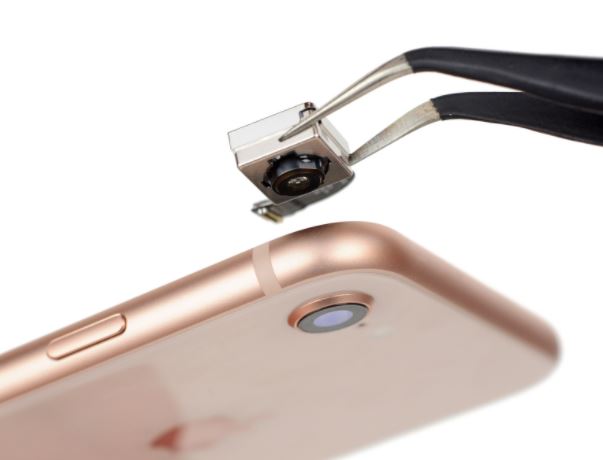
The teardown also revealed that the iPhone 8 houses an improved camera sensor. Though both devices carry a 12-megapixel,  f/1.8 aperture, the iPhone 8 utilizes a larger sensor and therefore lets in more light, improves colour and decreases noise. Additionally the phone also features better image processing software and optical image stabilization.

iFixit found that the iPhone 8 features the same speaker holes found in the iPhone 7, which reportedly aren’t as loud as Apple claims.

iphone 8 being tore down

Additionally, the tear down experts found that the light sensor is covered by a colour filter, which they believes assists Apple’s True Tone flash system.

All things considered, iFixit gave the iPhone 8 repairability score of six, due to the difficulty of finding a replacement for the extra-durable glass back.

They also noted that putting lower components back in after removing them would be a challenge because of the internal combination of brackets and “delicately folded flex cables.”

Source: iFixit 

The post iFixit tears down the iPhone 8 and reveals similarities to the iPhone 7 appeared first on MobileSyrup.

25 Sep 21:50

Freedom Mobile says it can’t guarantee iPhone 8 compatibility on Band 66 LTE ‘at this time’

by Rose Behar

Those who are seeking to buy an iPhone 8 or iPhone 8 Plus and bring it to Freedom Mobile on one of the company’s recurring data-rich promo plans will want to think twice.

“At this time, we can only confirm that LTE-Ready devices sold by Freedom Mobile are guaranteed to function with our network on Band 66 spectrum,”  Chethan Lakshman, vice president of external affairs at Freedom Mobile, told MobileSyrup in an emailed statement.

“We cannot guarantee the compatibility of any iPhones brought to our network.”

In MobileSyrup‘s review of the iPhone 8 and iPhone 8 Plus, senior editor Patrick O’Rourke found that the same issue that afflicts compatible unlocked Androids on Freedom’s Band 66 LTE also affects compatible iPhones.

Namely, the phone can get on Band 66 LTE, but when a phone call is made or the phone otherwise drops to a 3G connection, it will not return to LTE without the user rebooting their phone or toggling on/off Airplane Mode.

These issues were first broadly brought to light with the release of the OnePlus 5. At that time, Lakshman stated:

“All of Freedom Mobile’s Band 66 devices contain software developed specifically to enable Freedom Mobile’s LTE network on Band 66 spectrum. Only LTE-Ready devices sold by Freedom Mobile are guaranteed to have these necessary software features.”

The carrier also previously noted that it was working with handset partners to investigate the issue further.

The post Freedom Mobile says it can’t guarantee iPhone 8 compatibility on Band 66 LTE ‘at this time’ appeared first on MobileSyrup.

25 Sep 21:50

Apple Watch Series 3 is now available in Canada

by Bradly Shankar
Apple Watch Series 3

The Apple Watch Series 3 is now available for purchase in Canada.

The LTE-enabled Apple Watch will start at $519 CAD, while a non-LTE version is also available at a cost of $429. The smartwatch is offered in gold, silver and space grey aluminum or silver and space black stainless steel.

Service for the cellular Apple Watch is currently only offered through Bell, although you can purchase the smartwatch from Apple as well. Currently, the carrier is offering a $5 Smartwatch plan that allows users to share data and a phone number with their Canada-wide/Canada-U.S. Share plan through a new feature called ‘NumberShare.’ A one-time activation fee of $10 is also required.

Additionally, Bell is also offering a limited-time promotion that provides customers with the first three months of this plan for free.

Telus will also carry the LTE Apple Watch sometime in the future, although the carrier says it’s waiting until “the systems technology is in place.” In the meantime, Canadians can pre-register through Telus’ site to be notified when more information becomes available.

It’s worth noting that some early reviews for the Apple Watch Series 3 have cited LTE connectivity issues, which Apple says it’s working to fix. However, MobileSyrup did not encounter any such problems when using the Apple Watch Series 3 for our review.

The Apple Watch Series 3 can be ordered from Apple here.

The post Apple Watch Series 3 is now available in Canada appeared first on MobileSyrup.

25 Sep 21:50

Tesla to discontinue the Model S 75, its more affordable model

by Dean Daley
tesla model s in red

Tesla is set to officially discontinue its most affordable Model S option, according to Business Insider. The publication Says it received the information from a Tesla representative.

Coming this Sunday, Tesla will stop offering the Model S 75, with rear-wheel drive, leaving only the 75D, 100D and P100D, which are all dual-motor-all-wheel vehicles.

Tesla has already told Electrek in July that the base Model was set to be discontinued, however this is the first time the actual date of September 24th has been confirmed.

While this might be disappointing to some, the Model 3 is set to replace the Model S as Tesla’s most affordable vehicle. However, anyone who didn’t want to wait an extra year before getting a Tesla will now be disappointed, as will those who wanted an affordable dual-motor-all-wheel option due to the Model 3 not offering it right away.

However, there is a significant difference in prices between the two sedans. The Model S 75, after incentives and gas savings, costs $65,050 USD ($80,183 CAD)  — while the Model 3 is a lot cheaper at $35,000 ($43,142 CAD) according to Tesla Canada’s website, after incentives and gas savings — and at the base model.

Lastly, Sunday is the last time to custom order, although pre-configured models will be sold until inventory runs out.

Source: Electrek and Business Insider

Update: 17/09/21: Tesla Canada’s website uses American prices for the company’s vehicles. We’ve added Canadian pricing for further clarification.

The post Tesla to discontinue the Model S 75, its more affordable model appeared first on MobileSyrup.

25 Sep 21:49

Bose announces wireless SoundSport Free headphones

by Igor Bonifacic
Bose SoundSport Free headphones

In addition to finally making the first pair of ‘Bisto’ Google Assistant-enabled headphones official, Bose also unveiled a new pair of Bluetooth headphones called the SoundSport Free.


Bose's new SoundSport Free wireless headphones

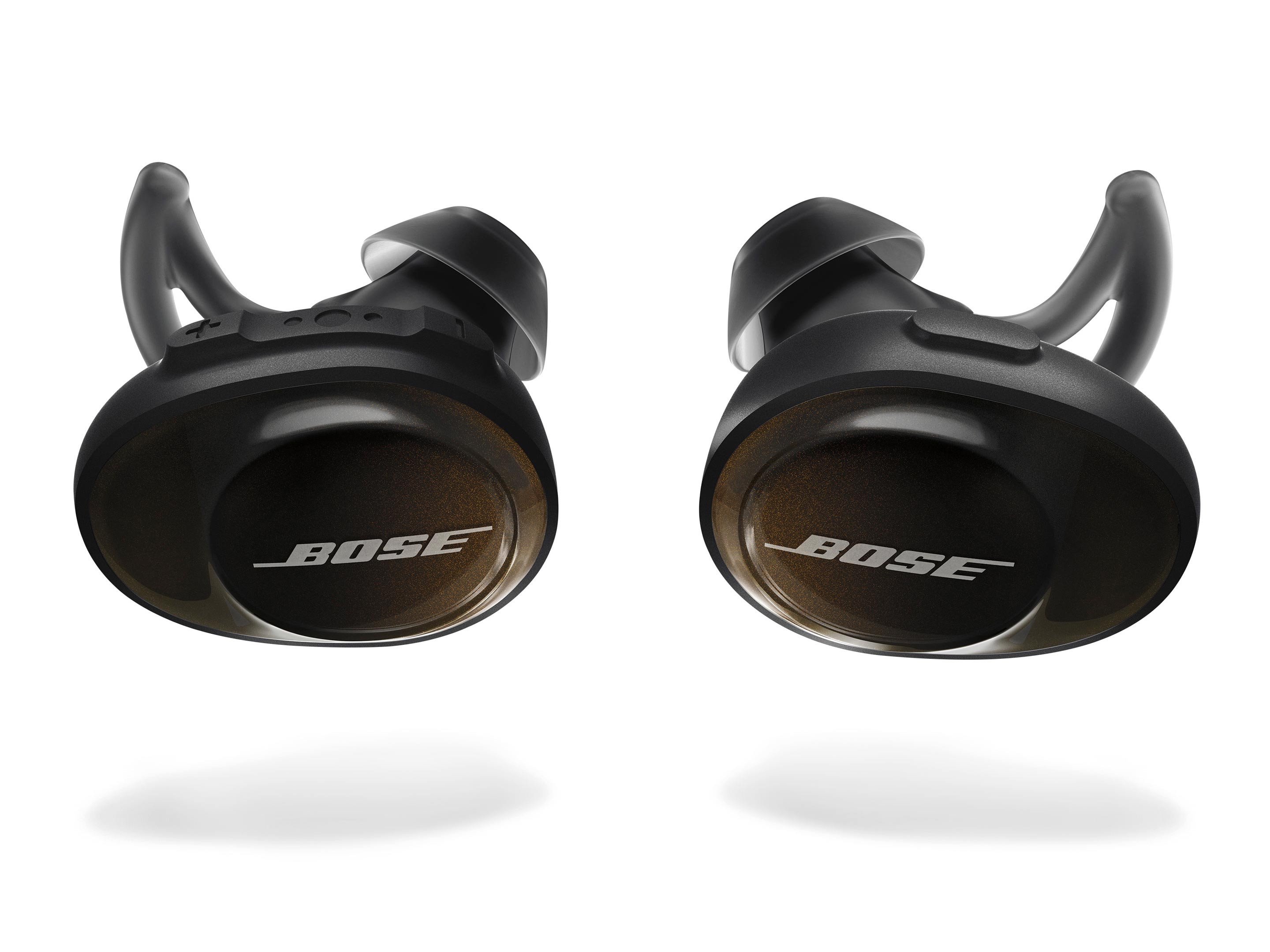
Building on the company’s popular SoundSport wired headphones, the SoundSport Frees feature Bose’s signature StayHear Sport tips. According to Bose, each bud weighs just 9.9 grams and measures 2.8cm tall by 3cm deep. An in-house designed set of antennae also allow the SoundSport Frees to maintain a solid connection with mobile devices that are up to nine metres away.

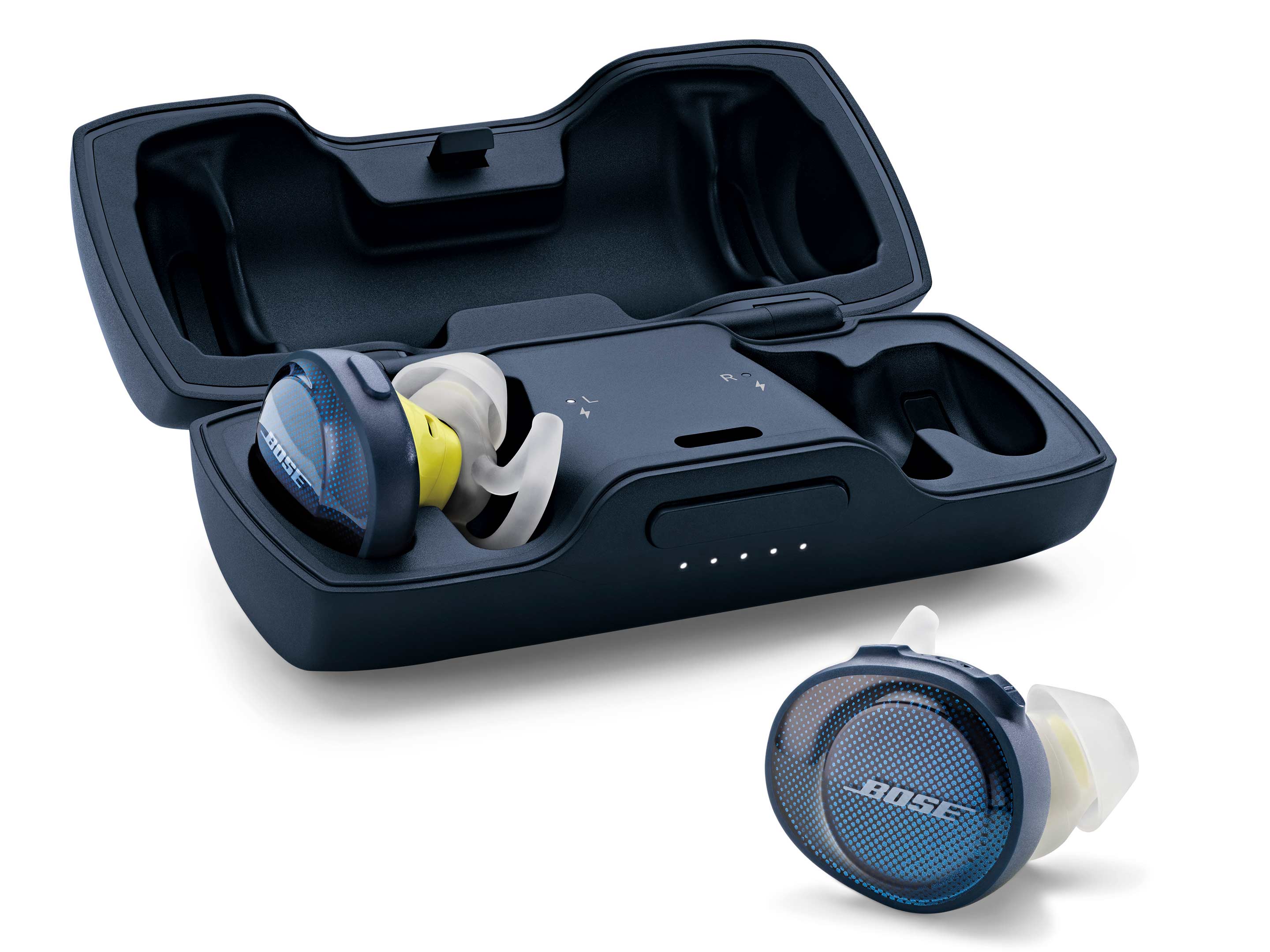
The charging case that comes with the new Bose SoundSport Free headphones

The headphones are IPX4 water- and sweat-resistant, and can deliver five hours of battery up-time on a single charge.

Each pair of SoundSport Frees come with an accompanying storage case that keeps both earbuds safe and secure with the help of magnets. In addition to providing a way to store the earbuds, the case also charges the earbuds. The case has enough additional battery capacity to provide the SoundSport Frees with two full charges, extending their up-time to 15 hours.

In case users misplace their SoundSport Frees, Bose has updated its Connect app to include a new ‘Find My Buds’ feature that will help them located their headphones.

The SoundSport Frees are available to pre-order in Canada for $329.99 starting today. The ‘triple black’ colour model will start shipping in early October, with the ‘midnight blue’ and ‘yellow citron’ colour variants shipping later in the year.

Source: Bose

The post Bose announces wireless SoundSport Free headphones appeared first on MobileSyrup.