Shared posts

03 Oct 20:16

My App Story

by John Voorhees

Last Friday, I left my job as a lawyer. Many readers may not even know that’s something I did because it’s not pertinent to what I do at MacStories. Over the course of many years, that job became less interesting and challenging. Eventually, I recognized that I needed a change, but nothing felt quite right. That is, until the day I decided to make an app. I’m not much of an app developer, but I wouldn’t be where I am now, writing this, if I hadn’t built one. This is my app story.

I started as a corporate bankruptcy attorney. I didn’t work for failed companies, though. I worked for banks owed millions of dollars by those failed companies. My job was to help navigate the process and collect what I could from what was left.

It was interesting for a long time. Each case meant learning a new industry, reverse engineering failure, and unwinding complex relationships between the parties. It was demanding, and the fact that failed companies’ debts rarely get paid back in full imposed a practical, ‘do-more-with-less’ constraint that required creativity.

Over time though, the market shifted. For a variety of reasons, the complex, interesting, hard problems were largely replaced by tedious, boring, monotonous ones. I knew I needed to try something different, but had no idea what.

Fast forward to the fall of 2013. I was sitting in the window at my local Starbucks on a Friday writing ideas into a notebook stream of consciousness-style, filling pages with nonsense and looking for a spark that could start something. It’s a practice that leads to interesting ideas when I make the time to do it.

That’s the day Blink was conceived. Blog posts by David Smith and Dr. Drang about Apple’s new affiliate linking program had lodged in my brain. There wasn’t a good way to create affiliate links on iOS devices even though they are how many links get shared on social media. I figured it wouldn’t be hard to look up App Store URLs and add affiliate credentials onto the ends of them.

I had no idea what I was getting myself into, which was good. Okay, that’s not entirely accurate. If you rewind even further, I’d spent the better part of the preceding five years helping my oldest son find the resources he needed to become an iOS developer. In the process, I’d learned a little myself, but hadn’t gotten beyond the most rudimentary of projects.

I got to working evenings and weekends in fits and starts studying the iTunes Search API, figuring out a way to bend it to my will, and learning Objective C. By WWDC in 2014, I had a mess of spaghetti code that, to my surprise, worked.

When I got to San Francisco, I showed off Blink to a few people and asked every writer I could find what they thought of the concept. Reactions to the app were mixed. There weren’t many people writing on iOS yet, and there were plenty of doubters.

As discouraging as the lukewarm response could have been, the negatives were eliminated by the announcement of share extensions in iOS 8. I immediately recognized that a Blink share extension could remove much of the friction of using the app and the complexity of relying on URL schemes. I also wanted to adopt size classes to make Blink Universal. The only trouble was, my code was a mess. What I had accomplished was a good learning experience, but it was fragile, so I burned it to the ground and started over.

I also picked an ideal customer for Blink so that I would have a concrete goal in mind. That customer, of course, was Federico. I didn’t know Federico then, but I’d read MacStories for years and listened to his podcasts as he moved more and more of his work to iOS. The idea was simple. I figured that if I could make an app that worked for him, it would work for others too.

I learned a couple of valuable things about myself that WWDC. First, being stubborn has its advantages. I’ll listen to a handful of people close to me who I trust, but I’m good at tuning others out, which came in handy when the initial reactions to Blink were mixed.

Second, the long, frustrating weeks and months of teaching myself Objective C were also incredibly satisfying and fun. I realized what I enjoyed about it, and my job as a lawyer, was the challenge and the constant change that kept me on my toes. As those qualities waned in my law job, Blink filled the gap.

As the end of 2014 approached, I made a mad dash to finish Blink. By this point, I had managed to get Federico’s attention when I’d posted a late-night teaser video on Twitter of my URL schemes in action. Five minutes later, he sent me a direct message:

Oh man, wow. Please make this universal and let me in the beta as soon as possible! ❤

@viticci November 5, 2014

I took Federico up on it and sent him an embarrassingly buggy beta. He tried it and came back with a laundry list of things he thought Blink should do. I knew I was on the right track.

I don’t mind working by myself, but by this point, I had started to feel the isolation of working solo for months. About the only person outside my family who knew what I was trying to pull off was Myke Hurley. We’d become friends after meeting at WWDC in 2013 and shared similar corporate job backgrounds that helped us relate to each other’s struggles as Myke worked to become a full-time podcaster and I developed Blink. I don’t know if I’d have made it through those early months and launched Blink without Myke’s encouragement.

The isolation faded though, replaced with a blur of sleepless nights sending out betas to a small group of testers and working on the icon and interface design with Frank Towers. My strung out state of exhaustion was preserved for posterity by Myke in his Behind the App series1 of the since-retired Inquisitive podcast.

Finally, on March 19th, I launched Blink. The feeling is hard to describe. I was exhausted and elated at the same time. I also knew immediately that something had changed. I had discovered how much making something matters to me.

Most lawyers don’t make anything except hours. As a bankruptcy lawyer, it was even worse because the best result I could achieve was that my clients lost less money than they might have otherwise, which isn’t very satisfying.

Something about building a product, as ephemeral as the bits that comprise apps are, and seeing other people use it to get their work done opened my eyes to something I didn’t even know I was missing. I sensed that I was immediately and forever ruined from cranking out hours for someone else. It was time to make a change, but it would require patience.

Blink followed the usual trajectory of most apps with several good days of sales followed by a steep decline. With a day job, I had the luxury of pouring most of the money I made back into promoting the app. Based on the goals I’d set for myself, Blink was a success, but it was clear early on that it was never going to pay my bills. I felt like I was onto something with Blink, but there were still pieces of the puzzle that were missing.

A few months later I was sitting outside on a beautiful summer day at a law firm function held at a stuffy country club. I was by myself with nothing but a pen and a notebook, just as I had been at that Starbucks nearly two years prior. A lot of crazy ideas were hatched and discarded that day, but one took hold: I would keep pushing Blink forward to see where it led by writing a guide to iTunes affiliate linking.

The article was still more concept than reality when I found myself at the first Release Notes conference walking along with Myke catching up on life. I told him about the article and how I was struggling with how to attract the biggest audience possible for it. Before I could finish, he interrupted and said ‘Send it to Federico.’ I started explaining why I thought Federico wouldn’t want to publish it, when he interrupted again, 'Just send it to him.’ Myke’s one of the handful of people who can get through my stubbornness, so I did.

I didn’t expect much to come of pitching my story to Federico and was thrilled he agreed to publish it. That evolved into what I do now at MacStories quite organically. I didn’t set out to write for MacStories, but I quickly realized I’d stumbled into something special that had the same sorts of challenges and satisfying sense of making something that I’d found in app development, but is better suited to my talents.

My experience with Blink is also why AppStories means so much to me. I knew as soon as Federico suggested it that the concept was perfect for us. As much as I like playing with all the apps I see each week, it’s the stories of the people behind them that resonate with me the most. There’s more than meets the eye to every app, even a modest little utility like Blink.

Blink gave me the confidence to walk away from my legal career without feeling like it was wasted time. It helped me understand what I liked about being a lawyer wasn’t the lawyering part of it at all. It was solving difficult problems that I enjoyed, which I could find elsewhere with something more in line with my strengths.

Friday, I made my last trip to Chicago as a lawyer. It was a strange feeling, but a good one.

Today, I’m free of the mental overhead of trying to juggle my law job and MacStories. I’ve looked forward to making this leap for almost four years, but it still feels like I’m only half prepared and just got started. I’m not sure that things will work out as I hope either, but I’m excited to see where this path takes me and fortunate to have the support of my family and friends along the way.

One thing is certain though, I’m glad to have finally told my app story.


  1. I appeared in three episodes of Behind the App. Ideas, The Night Before Launch, and Working with the Press, which for MacStories trivia buffs is the first time I was on a podcast with Federico, albeit separately. ↩︎

Support MacStories Directly

Club MacStories offers exclusive access to extra MacStories content, delivered every week; it's also a way to support us directly.

Club MacStories will help you discover the best apps for your devices and get the most out of your iPhone, iPad, and Mac. Plus, it's made in Italy.

Join Now
03 Oct 20:14

First Attempt At Using IPywidgets in Jupyter Notebooks to Display V-REP Robot Simulator Telemetry

by Tony Hirst

Having got a thing together that lets me use some magic to load a V-REP robot simulator scene, connect to it and control a robot contained inside it, I also started to wonder about we could build instrumentation on the Jupyter notebook client side.

The V-REP simulator itself has graph objects that can record and display logged data within the simulator:

But we can also capture data from the simulator as part of the Python control loop running via a notebook.

(I’m not sure if streaming data from the simulator is possible, or how to go about either setting that up in the simulator connection or rendering it in the notebook?)

So here’s my quick starter for 10 getting a simple data display running in a notebook using IPython widgets.

So here’s a simple text display to give a real time (ish) view of a couple of sensor values:

As the robot runs, the widget values update in real-time-ish .

I couldn’t figure out offhand how to generate a live-updating chart, and couldn’t quickly see how to return data from inside the magic cell as part of the magic function. (In fact, I’m not convinced I understand at all the scoping in there!)

But it seems as if we set a global variable inside the magic cell, we can get data out and plot it when the simulation is stopped:

Example notebook here.

If anyone can show me how to create and update a live chart, that would be fantastic:-)


03 Oct 20:13

Microsoft acquires social virtual reality startup Altspace VR

by Bradly Shankar
Altspace VR demo

Microsoft has announced that it has acquired the virtual reality social platform startup AltspaceVR, which will now help develop experiences for Windows Mixed Reality devices. Specific terms of the deal, such as financial agreements, were not disclosed.

AltspaceVR has created a variety of virtual reality experiences designed to encourage social interaction, such as live comedy shows that users can meet one another in and watch together.  Altogether, Altspace has brought together users from over 160 countries to attend all kinds of meetups, yoga classes, dance parties, and more, which have been hosted by the likes of NBC, Justin Roiland and Drew Carey.

The AltspaceVR app is currently available on PCs for the HTC Vive and Oculus Rift and on the Google Play Store for the Google Daydream and Samsung Gear VR.

Microsoft didn’t reveal specific Altspace Windows Mixed Reality projects, although it says it “looks forward to building the world’s preeminent mixed reality community” with the newly-revived company.

Altspace had originally announced in July that it was closing its doors, stating that a funding deal fell through at the last minute. However, the following month, the company published a post on its blog saying that it would remain open thanks to interest from outside companies. “We are now in discussions with third parties to develop a sustainable solution to continue development and growth for the future,” the company wrote in an August 15th post.

Image credit: Flickr – eVRydayVR

The post Microsoft acquires social virtual reality startup Altspace VR appeared first on MobileSyrup.

03 Oct 20:13

Trustworthy Networking

by Ben Thompson

Fifteen years on, this paragraph from a Bill Gates’ memo is a bit cringe-inducing:

The events of last year — from September’s terrorist attacks to a number of malicious and highly publicized computer viruses — reminded every one of us how important it is to ensure the integrity and security of our critical infrastructure, whether it’s the airlines or computer systems.

Equivocating computer viruses with the worst terrorist attack in U.S. history may be a bit over-the-top, but for Microsoft, anyways, 2001 was a period of real crisis: the company’s software was hit by seven different worms,1 all following on the heels of the previous year’s massively damaging ILOVEYOU worm. More and more consumers were scared to even use their computers.

That was the context for perhaps the second-most famous Gates’ memo — Trustworthy Computing — from which the above excerpt was taken. This was the core takeaway:

There are many changes Microsoft needs to make as a company to ensure and keep our customers’ trust at every level – from the way we develop software, to our support efforts, to our operational and business practices. As software has become ever more complex, interdependent and interconnected, our reputation as a company has in turn become more vulnerable. Flaws in a single Microsoft product, service or policy not only affect the quality of our platform and services overall, but also our customers’ view of us as a company…

In the past, we’ve made our software and services more compelling for users by adding new features and functionality, and by making our platform richly extensible. We’ve done a terrific job at that, but all those great features won’t matter unless customers trust our software. So now, when we face a choice between adding features and resolving security issues, we need to choose security. Our products should emphasize security right out of the box, and we must constantly refine and improve that security as threats evolve.

‘Trustworthy Computing’ was in many respects the inevitable counterpart to Gates’ most-famous memo: 1995’s The Internet Tidal Wave:

In this memo I want to make clear that our focus on the Internet is crucial to every part of our business. The Internet is the most important single development to come along since the IBM PC was introduced in 1981. It is even more important than the arrival of the graphical user interface (GUI).

Obviously Gates was right, but the memo went further: it is packed with ideas about how Microsoft can “superset the Web” in order to “make it clear that Windows machines are the best choice for the Internet”; to that end Gates wrote, “I want every product plan to try and go overboard on Internet features.” And, when Microsoft did exactly that, the result was a set of products with massive security holes, resulting in a crisis. The faster you move towards the future, the more unintended consequences — security debt, if you will — there inevitably will be.

The analogy to Facebook is straightforward: operating with the motto of “Move Fast and Break Things” the company has spent the last decade going overboard, as it were, on connecting everyone and everything. And then, to handle the deluge of information that resulted, the company helpfully presents an algorithmically curated News Feed that shows exactly what it thinks its users will enjoy seeing the most (engagement being a necessary proxy for enjoyment). It is truly a marvel: individual customization at global scale.

There have, though, been side effects.

Russian Ads

I wrote about Russian political ads on Facebook two weeks ago, explaining how the ads were bought through Facebook’s self-serve ad model; this allows the company’s five million advertisers — given that number, by definition the vast majority are small and medium-sized businesses — to run ads without having to interact with another human.

This, I argued, was a good thing, and I absolutely stand by it. From that article:

The biggest beneficiaries of zero transaction costs on the super-aggregators are not traditional advertisers, whether that be companies like CPG conglomerates or presidential campaigns. Both have the resources to advertise anywhere and everywhere, and indeed, often find that the fine-tooth targeting on super-aggregators isn’t worth the effort required. The folks that do benefit, though, are those that wouldn’t have a voice otherwise: startups and niche offerings, both in terms of business and politics. Google and Facebook have opened the field to far more entrants, and while that means there are more folks with bad intentions, there are also a whole lot more folks with ideas that were shut out by the significant transaction costs inherent in pre-Internet platforms.

That line, “folks with bad intentions”, should sound familiar: that is exactly what led to Microsoft’s crisis in 2001. Instead of building for local networks that were protected by the fact that access was non-scalable (i.e. physical access was required), Microsoft products were now on the Internet where they could be attacked from anywhere by anyone. And, when you have to defend against anyone, the likelihood of facing “folks with bad intentions” becomes a certainty. So it is with Facebook self-serve ads.

What is just as important to note, though, is that a scalable solution is also required. In the case of Microsoft, it obviously wasn’t viable to simply rip out Internet connectivity from its products; it is similarly foolhardy to suggest that Facebook abandon all of the benefits of the self-serve model by, for example, reviewing every ad.

To reiterate the point, this is impossible. To use the Russian ad numbers as a proxy, consider the math:

  • The $100,000 spent by 470 inauthentic account identified by Facebook was good for 3,000 ads, which means each ad cost an average of $30.
  • As a quick but essential aside, this exercise is going to be a very rough approximation, because the price paid for an ad varies hugely depending on how finely targeted it is, and how competitive said targeting opportunities are. In the case of these ads, Facebook revealed yesterday that for 50% of the ads less than $3 was spent, and for 99% of the ads less than $1,000 was spent (and 25% weren’t even shown because they failed to win the auction for the audience they targeted). However, given that Facebook only reveals the percentage change in its average price per ad, not the actual amount, $30 is the best we can do.
  • Last quarter Facebook had $9.2 billion in ad revenue, which was an increase of 47% over the year prior. Using that $30/ad number, that means last quarter there were approximately 276 million unique ads on Facebook (each of which could be shown multiple times, of course).

Again, the actual number could be different than this by a huge margin — it is very likely that this Russian ad buy is not at all representative — but that margin could go in either direction. The important takeaway is that looking at every ad means effectively killing self-serve, which not only kills Facebook’s revenue model, but, far more importantly, removes a truly accessible and disruptive advertising channel for small and medium businesses, particularly those uniquely enabled by the Internet.

Fixing Facebook Ads

What makes far more sense is for Facebook to find a point of leverage; for Microsoft, this was relatively easy — harden the operating system, which the company did with XP Service Pack 2. Facebook’s challenge is harder, but the point of leverage seems clear: advertisers themselves, not advertisements; after all, 5 million all-time is a much more manageable number than 276 million a quarter. To that end, the company also announced yesterday a change in how it handled U.S. political advertisers:

Increasing requirements for authenticity. We’re updating our policies to require more thorough documentation from advertisers who want to run US federal election-related ads. Potential advertisers will have to confirm the business or organization they represent before they can buy ads. As Mark said, we won’t catch everyone immediately, but we can make it harder to try to interfere.

This is the right point of leverage, but this policy change is inadequate. The only advertisers affected here are those that explicitly declare they are running ads for US federal elections; what about state elections, or other countries, or, pertinent to this case, bad actors?

Facebook should increase requirements for authenticity from all advertisers, at least those that spend significant amounts of money or place a large number of ads. I do believe it is important to make it easy for small companies to come online as advertisers, so perhaps documentation could be required for a $1,000+ ad buy, or a cumulative $5,0000, or after 10 ads (these are just guesses; Facebook should have a much clearer idea what levels will increase the hassle for bad actors yet make the platform accessible to small businesses). This will make it more difficult for bad actors in elections of all kinds, or those pushing scummy advertising generally.

Secondly, the most scalable counterweight to bad ads is massively increased transparency. Facebook took steps in this regard as well; from the same post:

Making advertising more transparent. We believe that when you see an ad, you should know who ran it and what other ads they’re running — which is why we show you the Page name for any ads that run in your feed. To provide even greater transparency for people and accountability for advertisers, we’re now building new tools that will allow you to see the other ads a Page is running as well — including ads that aren’t targeted to you directly. We hope that this will establish a new standard for our industry in ad transparency. We try to catch content that shouldn’t be on Facebook before it’s even posted — but because this is not always possible, we also take action when people report ads that violate our policies. We’re grateful to our community for this support, and hope that more transparency will mean more people can report inappropriate ads.

This will eliminate so-called Dark Ads which could only be seen by those targeted; again, though, Facebook didn’t go far enough. These ads can still only be seen by going to the actual pages, which are impossible to know about unless you are shown an ad; the company should have a central, searchable, repository of all those hundreds of millions of ads. Again, it is worth pointing out that this will hurt some small businesses (larger competitors can easily pick up on their marketing strategies), but the tradeoff when it comes to oversight of not just political ads but ads of all types is worth it.

What Facebook has to realize is that while both of these proposals are likely to hurt the bottom line — the first will increase friction in advertisers coming on board (or ramping up spend), while the second will have a commodification effect on ads — this scandal is, to use Gates’ words, “not only affect[ing] the quality of our platform and services overall, but also [their] customers’ view of [them] as a company.” This matters because Facebook’s biggest risk is government regulation, and that is ultimately a political question, where the opinion of the body politic matters greatly.

Filter Bubbles

All that said, its worth stepping back for a moment and putting this scandal in context. I gently mocked Gates for equivocating computer viruses to terrorist attacks, but the suggestion that $100,000 in Facebook ads — of which only 46% ran before the election — swung the presidential results is just as questionable. Frankly, if spending $100,000 on Facebook had that level of return, the company would be worth many multiples of the $492 billion it is today! It is concerning and frustrating to me as a citizen to see so many spend far more time prosecuting these ads at the expense of a broader reflection on the state of the country.

That includes Facebook, by the way. I actually tend to agree with Zuckerberg’s post-election comment — which he since apologized for — that it was “crazy” to think that ‘Fake News’ influenced the election; my view is that Fake News is symptom of a far more serious problem: filter bubbles.

To that end, the Zuckerberg statement that truly concerned me was on the company’s Q2 2016 earnings call; this was a few months after the brouhaha over alleged bias in the Trending Topics module, and Zuckerberg was asked about the filter bubble problem:

So we have studied the effect that you’re talking about, and published the results of our research that show that Facebook is actually, and social media in general, are the most diverse forms of media that are out there. And basically what — the way to think about this is that, even if a lot of your friends come from the same kind of background or have the same political or religious beliefs, if you know a couple of hundred people, there’s a good chance that even maybe a small percent, maybe 5% or 10% or 15% of them will have different viewpoints, which means that their perspectives are now going to be shown in your News Feed.

And if you compare that to traditional media where people will typically pick a newspaper or a TV station that they want to watch and just get 100% of the view from that, people are actually getting exposed to much more different kinds of content through social media than they would have otherwise or have been in the past. So it’s a good sounding theory, and I can get why people repeat it, but it’s not true. So I think that that’s something that if folks read the research that we put out there, then they’ll see that.

Actually, this is…questionable news (I can’t quite bring myself to use the obvious term). The Facebook-commissioned study Zuckerberg referenced had massive problems, including a non-representative sample, a non-reviewable proprietary data set (thus making the study non-reviewable), and beyond that, the study’s results actually did support the idea of filter bubbles.2

It’s rather a meta problem: I suspect Zuckerberg’s own bubble makes him inclined to dismiss the possibility of filter bubbles, while the bubble Facebook’s most strident critics live in means they too are focusing on the wrong thing. Certainly this is a conversation where everyone has more to lose; those scapegoating Facebook probably don’t want to think about their own responsibility, such that it may be, for an election result they disagree with, and the stakes are even higher for Facebook: giving people what they want to see is far more important to the company’s business model than $100,000 in illegal ads, unintended consequences or not.

  1. The Anna Kournikova, Sadmind, Sircam, Code Red, Code Red II, Nimda, and Klez worms, respectively
  2. Further references here, here, here, and here
03 Oct 20:13

Andy Yan, Aging and the Future of Seniors in Metro Vancouver

by Sandy James Planner


seniors

Daphne Bramham of the Vancouver Sun has taken a look at the census poverty figures that Andy Yan, Director of  the City Program at Simon Fraser University has been extrapolating. As Daphne observes “Women face economic disadvantages throughout their lifetimes, but it is near the end of their lives that it is most acute. Nowhere is that more evident than in Metro Vancouver, which has Canada’s highest percentage of people living in low-income households. The 2016 census data for the region indicates that the percentage of women living in low-income households is 7.5-per-cent higher than men. But past the age of 65? The percentage of poor women jumps to 15.8 per cent.”

Why are there almost 16 per cent of older women in low-income households? Andy Yan calls this “structural patriarchy“, and that age and gender must be factored in to analyses. Women do live longer and earn 25 per cent less working than men. Women leave the workplace to have kids and have less pension plan and retirement plan contributions.  “Among the oldest of today’s seniors, married women were much less likely to have done paid work outside the home, while the high mortality rates during the Second World War meant many women never married.”

Across Metro Vancouver 17.6 per cent of poor senior citizens are women compared to 15.2 per cent of men. In Langley one in four senior women are poor. The low-income”threshold” is an after tax income of $22,133 for a single person or $31,201 for a couple. The City of Vancouver has the highest concentration of poor seniors with 19,115 persons living below the low income threshold. In Chinatown Gastown and the Downtown Eastside, “71 per cent of poor seniors are women.”

What this means is that between 2005 and 2015 the percentage of low-income seniors has increased by an average of 22 per cent. This was also the time that there was a reduction of public services spending due to tax cuts.  Daphne Bramham notes that  Old Age Security and Guaranteed Income Supplement are now only 60 per cent of median income compared to 76 per cent in 1980. By looking at these factors, Provincial and municipal  governments can ascertain the need for affordable housing, accessible transit, and an increase in seniors’ community centre programming, home care and residential care for this group. In 14 years Statistics Canada expects that there will be 9.6 million seniors, “of those, 5.1 million will be women, accounting for nearly a quarter of the total female population.” There needs to be a major change in how we structure universal accessibility on streets for this population of walkers and transit users, and how we provide adequate and appropriate housing and amenities. Can Metro Vancouver adapt for this tsunami of seniors and their needs?

hands


03 Oct 20:13

Cycling Inspiration

by noreply@blogger.com (VeloOrange)
By Scott

Inspiration - defined as the process of being mentally stimulated to do or feel something, especially something creative.  Seeing other people's photos or stories for instance, can cause perfectly sane people to buy a van, pack it up, and head out for the open road with no end date in mind.  It's the reason I think Instagram is so popular. There's lots of photos that you can admire, and ones that inspire us to action.

I read a lot of books by UK cycling/travel writers in the 80's and 90's. There wasn't a lot (probably still isn't) of translated cycling books in English from German or French that I could find in the book stores of Vancouver.  Need for the Bike or The Rider were the only two books that were easily found in those days.

(A mix of old and new influences)

So my influences were largely UK riders - folks with transverse saddle bags and no front loads. Stopping to brew tea on a ride was normal for them. When I look at the bikes I've owned over the years, their style has prevailed (Clint says my bikes all look the same). I love the "all arounder" look of older British bikes, the Woodrup's and Carlton frames. They were bikes that took fenders, racks and could explore the countryside all while having wide enough tires to go on tow paths. Maybe this is one of the reasons the Polyvalent seems to be so much on my radar right now.

(Photo from The Crunch of Gravel cover)

Sometimes you find out that your inspirational look doesn't work out in your life. I had a transverse saddle bag for a few years and discovered the weight of it empty was more then my wife's trunk bag with a 600K worth of stuff in it. I installed non-aero brake levers on my Piolet. I was trying to copy a look I had seen of a touring bike in the French alps, which had non aero levers. I realized after a few rides, that I didn't like the cables out in front like that and am now swapping the levers for aero ones. Not everything works out the way we want/wish it to, I suppose.

Bunyan Velo has been doing a fine job of keeping inspiration up for a lot of folks in the four years Lucas has been publishing it. A new issue hits the internet today. We're proud to be a supporter of his efforts to help inspire others to get out for a ride.

Do you have a cycling hero or inspiration? How does it manifest in your cycling life? Do you emulate their bike, their style of riding, or in some other manner?
03 Oct 20:13

The world needs your creative energy

by Carolyn Feinstein

I’m constantly inspired by the way people use Dropbox. Musicians create and share compositions. Showrunners iterate on scripts. Set designers turn sketches into scenes that transport us to new worlds. Medical researchers coordinate data with their teams to develop vaccines.

Dropbox isn’t only a place to store your files. We’re a living workspace where people and ideas come together. But while the way people use Dropbox has changed dramatically over the past ten years, our brand hasn’t. That’s why today we’re excited to tell the story of our brand and unveil a new look for Dropbox. The design reflects our passion: building tools that help teams find focus, stay in their flow, and unleash their creative energy.

Our new brand design was inspired by the creative work of our customers. They remind us every day what we’re capable of when we unleash our creative energy. You don’t have to be a painter or documentarian. We all want to do work that has meaning, that reflects our ideas and our potential.

Read more about the new Dropbox logo design and look.

New Dropbox logo and colors

So what’s stopping us? A lot of busywork and burnout. One study found that many office workers waste 60% of their time on tasks like hunting for information in an inbox, answering email, or coordinating with colleagues. And no wonder: These days we’re all juggling between dozens of different apps, tools, and devices. The tools that were meant to save us have created endless distraction. They scatter our attention and keep us chasing our tails. It’s easier to search the entirety of human knowledge on the Internet than it is to figure out what’s going on at your office.

At Dropbox we believe creative energy is a precious resource—and the world needs it now more than ever. It’s not about working more: it’s about focusing on the work that truly matters. That’s why we build tools that automate the annoying parts of work, like Dropbox Smart Sync and version history, and distraction-free places for teams to collaborate, like Dropbox Paper. We want to free you up to do more of the stuff that nourishes and sustains you.

New Dropbox illustration style

Since our founding, Dropbox has stood for a better way of working. Now we’re showing our true colors—literally in some cases! We borrowed some of our new color palette from our global offices to reflect the passion and personality of our culture.

We can’t wait for the world to see Dropbox the same way we do. You’ll start seeing our new look everywhere, from our website to our products, over the next few weeks. We’ll also be sharing our story in a global ad campaign from the US to the UK to Australia. We’re passionate about bringing positive, meaningful change to the culture of modern work. We want to unleash the world’s creative energy.

03 Oct 20:13

YouTube Adds iMessage App for Sharing Videos

by Ryan Christoffel

Today YouTube’s iOS app received an update that includes the video service’s first iMessage app. The app only focuses on a single function – sharing videos – but it does well with that one thing, offering a robust sharing experience.

Upon opening the YouTube iMessage app, you’ll see a list of videos you’ve recently watched. This appears to pull videos directly from your full YouTube history, presenting a seemingly endless scrolling list of everything you’ve watched. Often iMessage apps contain a mere fraction of the information found in their parent apps, so I was expecting to only see a small number of recently watched videos listed; the ability to continue scrolling through my full history is a pleasant surprise. Another welcome addition is the inclusion of a search option. At the top of the iMessage app, you can search for any video on YouTube – either by text or by voice. Tapping the search box even reveals a list of your recent YouTube search queries.

When searching for the right video to share, YouTube’s iMessage app lets you view any video in full before sharing – just hit the vertically stacked dots on a video’s right hand side to find a Watch button. Once you’ve chosen a video to share, it will populate as an iMessage card that can be sent to friends, and they’ll be able to watch the video without ever leaving the iMessage conversation.

YouTube is a solid demonstration of a rich iMessage experience. Even though its purpose is limited to sharing videos, it offers access to everything you might want before sharing – your full watch history, a search option with recent search queries listed, and even the ability to watch a video inside iMessage before you send it. iMessage app developers take note: just because your app serves a single purpose doesn’t mean it has to be a bare-bones experience.


Support MacStories Directly

Club MacStories offers exclusive access to extra MacStories content, delivered every week; it's also a way to support us directly.

Club MacStories will help you discover the best apps for your devices and get the most out of your iPhone, iPad, and Mac. Plus, it's made in Italy.

Join Now
03 Oct 20:13

How We Travel

by Ken Ohrn

When choices exist, people will choose whatever works for them, and whatever they’re doing.

On this day, lots of people have chosen to ride a bike to Science World.  No big surprise, since it’s easily accessible from three major bike routes — Ontario St, Union/Adanac and Seaside (the seawall).

Note the trailers and kid carriers and kids bikes.


03 Oct 20:12

Back to the Land

by Olivia Rosane

This year, on July 12’s “Internet Wide Day of Action to Save Net Neutrality,” advocacy groups circulated images of what the internet would look like if the FCC revoked net-neutrality rules and allowed internet-service providers to block, speed up, or slow down web content or entire websites at their discretion.

For the action day, website administrators were urged to download and install a “Battle for the Web” app, which would then show visitors to their sites one of four prophetic pop-up banners. One, topped with a dollar-sign icon, instructed visitors, “Please upgrade your plan to proceed.” Another, featuring a loading wheel icon, read, “Sorry, we’re stuck in the slow lane.” The fine print on these banners explained that visitors could still access the site “for now,” but, without net neutrality protections, which Trump’s FCC is moving to repeal, companies like Verizon and AT&T could force sites to pay to have their content load at normal speeds or require consumers to pay more to access certain content. Built into the banners was a form the visitor could then fill out to send a letter to the FCC in support of net neutrality.

The threat these banners tried to simulate for visitors was the enclosure of a commons: Between internet users and their digital grazing lands, the telecoms would build a fence where none had stood before. In a 2002–04 paper for the American Library Association, David Bollier promoted the commons as “a metaphor that can help us understand the importance of the new kinds of ‘open social spaces’ made possible by the internet (and to a lesser extent, other digital media).” He called it “an unfamiliar term” for most Americans, “conjuring up images of village pastures,” and the word indeed derives from the 15th-century English for “land held in common.”

The twin conceptions of the internet a distinct space and collective enterprise makes it analogous to pre-modern agricultural commons. The metaphor is one that web users have embraced

This metaphor seems apt, given how the internet has, in many quarters, been regarded since its conception as a collaborative venture. As this Forbes history of the internet notes, in 1967 ARPANET co-designer Larry Roberts promoted the system that would become today’s internet by arguing it would “foster the ‘community’ use of computers.” Originally, though, that network  facilitated information sharing between only a small, pre-established group of scientists. As the internet developed and its user base expanded, groups met and formed whose members had no previous offline connection. People began to speak of the internet as a place itself. William Gibson coined the term cyberspace in 1982; in 1990, Tim Berners-Lee called his editing and browsing program the “World Wide Web.” Critically, though, even as the internet expanded beyond an elite group of professionals, users were still seen as having the ability to contribute to its information pool. The twin conceptions of the internet as both a distinct space and a collective enterprise makes it seem analogous to pre-modern agricultural commons, which were also distinct spaces set aside for shared use. As resources like Wikimedia Commons, Flickr: The Commons, Creative Commons, and the Digital Library of the Commons make clear, that metaphor is one that web users have embraced.

However, by the time the term commons was coined, most “common” land was actually owned by lords who merely allowed peasants to use it to keep themselves alive for work. There are examples of successfully-managed resources that are truly community owned, such as the pastures of the Swiss village of Torbel. Nonetheless, it is the English model that Bollier evoked when he pressed “the commons” into service, because it carries with it the threat of owners taking the land away: “The history of the commons as it was privatized and commercialized by the landed classes of England illuminates a similar enclosure today: the privatization and commercialization of information, creative expression and media infrastructure,” he wrote.

In Bollier’s rhetoric, the idea of the commons comes to serve as a conceptual skeuomorph, linking the pre-industrial, pastoral past to the post-industrial, digital present. But, by evoking a simplified, nostalgic view of the historical English commons, Bollier missed the complexities of his own metaphor, ignoring the similar kinds of exploitation that both unenclosed English pastures and open internet access help facilitate. Instead, he chose to allude to a “golden age” when farmers could feed and warm themselves outside a market economy, overlooking that, in their feudal context, they couldn’t aspire to much else.

This golden-age rhetoric carries over into the defense of today’s internet commons against the enclosure of net neutrality. Take Free Press’s action call, which claims, “The internet without Net Neutrality isn’t really the internet. Unlike the open internet that has paved the way for so much innovation and given a platform to people who have historically been shut out, it would become a closed-down network where cable and phone companies call the shots and decide which websites, content or applications succeed.” As dystopian as a net-neutrality repeal would be, the internet as it stands today is hardly a paradise of equal access. Not only is internet access itself unevenly distributed, but any user or group’s reach on any given platform is typically shaped by money and power and pre-existing influence. And people’s access to network resources are often organized not through cooperative arrangement but by companies that profit from the data their users generate while leaving them vulnerable to exploitation and harassment.

But net-neutrality defenders tend to lump all internet platforms and users together against the telecom companies, ignoring the very real power differentials between them. “Without Net Neutrality, the next Google or Facebook would never get off the ground,” warns the Free Press call to arms. But would another Facebook really make the internet a better place?


There’s no denying that the historical enclosure of the commons in England did real harm to countless people. But it was also part of a transition between one kind of exploitation and another. In The Commons in History: Culture, Conflict, and Ecology, Derek Wall explains how, as mentioned earlier, the Medieval English commons were transformed after the Norman conquest from truly communal properties into communally used properties owned by feudal lords. These lords allowed peasants usufruct rights — literally, the right to the fruits of the land — permitting them to graze cattle or collect firewood, so that they might sustain themselves while paying rents or providing agricultural labor.

Social media sites replace the patriarchal hierarchy of feudalism with the seeming egalitarianism of a hangout session, so that if we decide to disengage, we seem to reject not our oppressors, but our communities

The process of stripping commoners of their usufruct rights began in the 16th century and accelerated in the 18th and 19th centuries as England transitioned from feudalism to capitalism. Landowners enclosed pastures and had them farmed or grazed for private profit; their former tenants, no longer able to sustain themselves, were forced into urban factories or abroad, where they became foot soldiers in the fight to enclose indigenous commons in the Americas, Australia, and New Zealand. In fact, as Wall tells it, the history of colonialism can be seen as one long process of enclosure.

The rise of the internet has also coincided with a major economic shift. But this one seems to be moving in the opposite direction. Massive private fortunes have been built on  providing people access to the internet as a sort of quasi-commons. As Jeremy Antley pointed out in “Data Serfdom in the Digital Age,” the relationship between large “data lords” like Facebook and those of us who “toil” on their platforms could be described as feudal. Just as medieval peasants were given access to commons in exchange for rents or work, we are given usufruct rights to sow and harvest our identities on these platforms, in exchange for the data this work creates.

The exploitative nature of the arrangement led artist Laurel Flack to propose “Wages for Facebook” in a 2013 manifesto: “By denying our Facebook time a wage while profiting directly from the data it generates and transforming it into an act of friendship, capital has killed many birds with one stone,” she wrote, getting to the heart of the social-media business model.

Though Flack calls out capitalism here, that representation of exploitation as an “act of friendship” recalls feudal ideology, which treated bonds of servitude as natural expressions of quasi-familial duty. Facebook and other social media sites replace the patriarchal hierarchy of feudalism with the seeming egalitarianism of a hangout session, making themselves the means by which we keep up with our peers, so that if we decide to disengage, we seem to reject not our oppressors, but our communities.

As much as social media companies thrive on the illusion of creating commons, in practice this means delimiting a space where they can harvest the value created without taking responsibility for users’ well-being. They inadequately enforce harassment policies, haphazardly apply content-moderation standards, and rely on further labor from users for policing other users’ violations. This is partly because their business interests directly conflict with the kind of space they promise to provide. As Mike Montiero points out, Twitter won’t ban Donald Trump, despite his violating its terms of service with abusive language, because those same tweets keep the company in the news. Zeynep Tufekci explains how Facebook’s decision to maintain a smaller, cheaper staff led to its using algorithms to accommodate ad buyers (meaning they could choose to target “Jew haters,” for instance, as ProPublica reported). It also saves on paychecks by depending on users to report “inappropriate content,” a practice which results in inconsistent enforcement as well as further abuse when the reporting system is used as a means of harassment and silencing.

Elinor Ostrom, an economist who won a Nobel for her work on commons, outlined eight principles for the successful management of common-pool-resources; among them are, “Define clear group boundaries,” “Ensure that those affected by the rules can participate in modifying the rules,” and “Develop a system, carried out by community members, for monitoring members’ behavior.” Needless to say, social media platforms do not attempt to live up to these principles. They have no interest in limiting the number of users to a clearly defined community, they provide no formal mechanism by which users can shape policy, and, while they do sometimes rely on users to monitor other users’ behavior, there is no system in place to ensure this is done consistently and fairly.

This means that life on social media looks more like what Garrett Hardin famously described as the “tragedy of the commons” in a 1968 essay. Using the example of common grazing land, Hardin argued that the commons would always be over-exploited, since each individual, acting rationally, would allow their cattle to graze as much as possible, overtaxing the pasture. As Wall points out, Ostrom challenged the inevitability of Hardin’s vision, calling it a tragedy of the “unmanaged commons” and arguing communities can and do manage shared resources as effectively as private or government owners. But social media platforms don’t accommodate such common management of the spaces they provide; their prerogative dictates the terms of service. This doesn’t lead to an overuse of resources in the classic sense, but it does mean that trolls and unscrupulous advertisers can pollute the conversation, while other users have no meaningful ability to address the system that permits it. Call it the tragedy of the unmoderated comments section.

If the people affected could participate in crafting policies rather than merely implementing them, this would approach an actual commoning of these social spaces, along Ostrom’s lines, and would make the internet work more like the democratic utopia net neutrality advocates evoke.

For-profit web platforms, too, are making their choices, but doing so unilaterally while using commons rhetoric as a cloak

Given how the internet currently operates, however, it seems disingenuous when privately owned platforms link with nonprofits like Wikipedia, and Silicon Valley giants like Amazon and Ebay get to play underdog and join forces with the ACLU in fighting the common telecom enemy. Both Silicon Valley and the ISP-industrial-complex are made up of wealthy corporations looking to exploit the average internet user. Like the feudal barons and the industrial robber barons, they simply have conflicting models of exploitation.

The telecoms see internet users (both content makers and readers) as mere consumers to be nickeled and dimed for access to the content they want. Silicon Valley sees them instead as prosumers, creating valuable content and other data as they consume, and further exploits them as potential gig-economy-go-getters who will accept an extra Lyft passenger on their way to the hospital to give birth.

It’s hard to imagine ISPs winning this battle, even if the FCC does repeal Obama-era net neutrality protections, as Trump’s appointee Ajit Pai wants to do. Because who can afford to pay AT&T more for web access if their ability to drive for Lyft or host on Airbnb is stuck behind a paywall? Like the agricultural commons of old, the internet has allowed users to sustain themselves in order to pay rent, but if people are barred from today’s commons, where are the factories or colonies to absorb them?

Perhaps the difficulty some might have imagining such an enclosure is simply a sign that the commons metaphor has done its work. Using a pastoral, historical point of reference gives a sense of naturalness and inevitability to an online culture that is relatively new. In fact, that naturalness is an illusion. As Ostrom spent her career demonstrating, commons are actively chosen, not passively inherited. Writing about Torbel, for example, she draws on scholarship to show how the Swiss villagers were not trapped by tradition, but were familiar with many types of property arrangements and deliberately assigned different arrangements to different areas. For-profit web platforms, too, are making their choices, but doing so unilaterally while using commons rhetoric as a cloak.

And beyond that, app makers seek to use network technology to overwrite earlier arrangements for the use of public space with their own. Someone with access to a parking app, for example, now has an advantage when it comes to using city-wide resources over someone who does not.

Or take the case of Mission Playground in San Francisco. Before the park was renovated in 2012, locals, many of them Mexican immigrants, had been playing soccer on the asphalt for years with a free, self-regulating system. After the renovation, the Parks and Recreation Department allowed a group called San Francisco Pickup Soccer to rent the field every Tuesday evening. Users of its mobile app could now reserve field time in advance, for a fee.

The app isn’t to blame for the city deciding to start charging rents, but the story does show how the internet can be part of a process that displaces physical communities, allowing wealthier invaders to create new rules.

The internet can be a means of creating commons on and through screens, as well as managing and connecting ones that originated offscreen; it is important to defend net neutrality so that the internet can continue to play this role. However, the internet as it exists now, with net neutrality in place, is not a utopia of sharing between equal stakeholders. The “Battle for the Web” shouldn’t begin and end with net neutrality; instead, it should challenge all the ways the internet can be used to exploit or enclose, and fight to turn it into the kind of commons Ostrom describes, where all users have a meaningful role in governing their shared experience.

03 Oct 20:12

Take a SPLOT Test Drive or… Instant SPLOT?

files/images/splot-test-drive.jpg

Alan Levine, CogDogBlog, Oct 06, 2017


Icon

It's not really possible to determine what SPLOT stands for - but going back to this site (and this) I'm thinking it's 'Smallest Possible Learning Online Technology', though other variations are suggested. Anyhow, the idea here is to promote the splot.ca website, which offers a small set of WordPress Plug-Ins that create SPOLTs you can test for yourself. But it still requires WordPress, which takes some time to set up. So, as Alan Levine writes, "Now in the workshop, second year this has been offered, we have cut out all these steps, by using the StateU demo site offered by Reclaim Hosting. This site is insanely useful for introducing people to domains or making a case for it to your colleagues." So there you go.

[Link] [Comment]
03 Oct 20:12

@benwikler

@benwikler:
03 Oct 20:12

Katrin Bennhold | London’s Uber Ban Raises Questions on Race and Immigration

Katrin Bennhold | London’s Uber Ban Raises Questions on Race and Immigration:

Uber lost its London license to operate, not for the deepest societal and economic reasons – the business model that treats drivers as independent contractors without job-related benefits – but for more quotidian issues related to Uber’s approach to safety:

What most frustrated the dozen Uber drivers interviewed for this article was that labor standards, so widely mentioned by Uber’s critics over the past 10 days, did not actually come into the licensing decision.

Transport for London, or TfL, the city’s regulator, justified its decision not to renew Uber’s operating license notably by citing concerns about passenger safety, insufficient medical and criminal background checks for drivers, and the way the company reported crimes. The London police accused Uber of failing to promptly report at least six cases of sexual assault last year, but the company argues that it has worked closely with the authorities and that the issue is being blown out of proportion. Drivers also pointed to Transport for London’s role in granting them individual licenses.

“TfL used a terrible excuse,” said Mr. Shinwari, the Afghan Uber driver. “They are the ones who issue our license. They vet black-cab and they vet us. We even pay them to vet us!”

03 Oct 20:12

Google Pixel 2 Rumors: Everything We Expect from Google’s New Phones

by Rajesh Pandey
Google is all set to unveil its second-generation Pixel handsets at its Made By Google event on October 4. The first generation Pixel handsets might not have exactly set the sales chart on fire but they did set a new benchmark with their excellent camera and real-life performance. Continue reading →
03 Oct 20:12

Eton for all: will robot teachers mean everyone gets an elite education?

files/images/gettyimages-634117488.jpg

Lizzie Palmer, New Statesman, Oct 06, 2017


Icon

"There are a few certainties in this world," writes Lizzie palmer. "death, taxes, and that our jobs will eventually be taken by robots." But does this mean that everybosy will get high quality robot services? Maybe. The article describes "Pepper and Nao, two humanoid robots made by Japanese company SoftBank Robotics, (that) were trialled in two Singapore pre-schools last year." It also mentions 'Jill Watson', the robot tutor that managed to fool students at the University of georgia last year. According to Anthony Seldon (author of a recent book, natch), the AI-based tutors will liberate STEM education, but the nuances in the humanities and social sciences will take decades longer for AIs to master. Rose Luckin, also quoted in the article, points to AI's use in identifying illnesses like depression. “We could be building systems to help people understand themselves better," she says.

[Link] [Comment]
03 Oct 20:11

Adafruit’s read-only Raspberry Pi

by Alex Bate

For passive projects such as point-of-sale displays, video loopers, and your upcoming Halloween builds, Adafruit have come up with a read-only solution for powering down your Raspberry Pi without endangering your SD card.

Adafruit read-only raspberry pi

Pulling the plug

At home, at a coding club, or at a Jam, you rarely need to pull the plug on your Raspberry Pi without going through the correct shutdown procedure. To ensure a long life for your SD card and its contents, you should always turn off you Pi by selecting the shutdown option from the menu. This way the Pi saves any temporary files to the card before relinquishing power.

Dramatic reconstruction

By pulling the plug while your OS is still running, you might corrupt these files, which could result in the Pi failing to boot up again. The only fix? Wipe the SD card clean and start over, waving goodbye to all files you didn’t back up.

Passive projects

But what if it’s not as easy as selecting shutdown, because your Raspberry Pi is embedded deep inside the belly of a project? Maybe you’ve hot-glued your Zero W into a pumpkin which is now screwed to the roof of your porch, or your store has a bank of Pi-powered monitors playing ads and the power is set to shut off every evening. Without the ability to shut down your Pi via the menu, you risk the SD card’s contents every time you power down your project.

Read-only

Just in time of the plethora of Halloween projects we’re looking forward to this month, the clever folk at Adafruit have designed a solution for this issue. They’ve shared a script which forces the Raspberry Pi to run in read-only mode, so that powering it down via a plug pull will not corrupt the SD card.

But how?

The script makes the Pi save temporary files to the RAM instead of the SD card. Of course, this means that no files or new software can be written to the card. However, if that’s not necessary for your Pi project, you might be happy to make the trade-off. Note that you can only use Adafruit’s script on Raspbian Lite.

Find more about the read-only Raspberry Pi solution, including the script and optional GPIO-halt utility, on the Adafruit Learn page. And be aware that making your Pi read-only is irreversible, so be sure to back up the contents of your SD card before you implement the script.

Halloween!

It’s October, and we’re now allowed to get excited about Halloween and all of the wonderful projects you plan on making for the big night.

Adafruit read-only raspberry pi

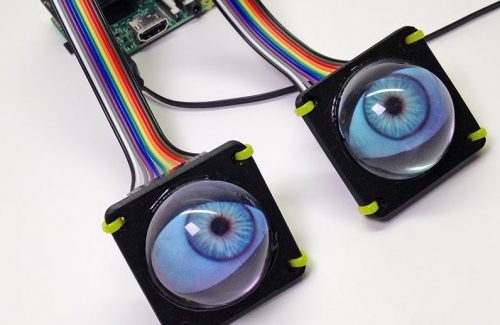
Adafruit’s animated snake eyes

We’ll be covering some of our favourite spooky build on social media throughout the month — make sure to share yours with us, either in the comments below or on Facebook, Twitter, Instagram, or G+.

The post Adafruit’s read-only Raspberry Pi appeared first on Raspberry Pi.

03 Oct 18:25

Twitter Favorites: [dethe] Thanks to @davidascher I am now the proud parent of two lovely kitties, the very stuff the internet is made of! https://t.co/Ogwdm46KGp

Dethe N. Takses @dethe
Thanks to @davidascher I am now the proud parent of two lovely kitties, the very stuff the internet is made of! pic.twitter.com/Ogwdm46KGp
03 Oct 18:25

Yeah, I enjoyed Walkaway a lot.

by Stowe Boyd

Yeah, I enjoyed Walkaway a lot.

03 Oct 18:25

The Best External Optical Drives for DVDs and Blu-rays

by Kevin Purdy
The Best External Optical Drives for DVDs and Blu-rays
After researching more than 70 optical drives across four years, testing more than a dozen by burning too many copies of movies we already own, and surveying more than 300 readers, we’ve found that the LG GP65NB60 is the best USB DVD drive and the Pioneer BDR-XD05B is the best external Blu-ray drive—if you need an optical drive at all. A Blu-ray drive can also rip, burn, and play DVDs and CDs, so buy one if you think you’ll ever deal with Blu-ray discs. But if not, you should stick with a DVD drive, because they're much cheaper.
03 Oct 18:24

The Best Screen Protectors for iPhone 8, 7, 6s, and 6 (and Their Plus Sizes)

by Nick Guy
The Best Screen Protectors for iPhone 8, 7, 6s, and 6 (and Their Plus Sizes)

You don’t have to spend as much as a video game costs to get a good glass screen protector for your iPhone. In fact, after testing 12 models ranging from $3 apiece to $50, we found one of the least expensive options to be the best: TechMatte’s amFilm Tempered Glass Screen Protector (in versions for iPhone 8, 7, 6s, and 6 and iPhone 8 Plus, 7 Plus, 6s Plus, and 6 Plus) covers the entire active area of the iPhone’s display, something not all protectors can claim. It’s also as scratch-resistant as anything else we tested, it’s crystal clear, and fingerprints wipe right off. Installation is easy enough, and we appreciate all the cleaning tools included in the box. And even if you get a speck of dust under the glass on your first attempt, it’s not that big of a deal, because you get two amFilm protectors in each package.

03 Oct 18:20

Prepare To Keep Waiting For Your Model 3: Tesla Is Way Behind On Production

by Mary Beth Quirk
mkalus shared this story from Consumerist.

If you’ve been waiting with bated breath for the arrival of the long-awaited, cheaper Tesla Model 3, well, you may have to cool your heels even longer than you thought. The company says a lot fewer vehicles have rolled off the line that it originally planned, due to “manufacturing bottlenecks.”

In a note to investors this week, Tesla says it’s fallen short of its goal of producing 1,500 vehicles between late July and the end of September, only producing 260 Model 3 cars and delivering 220 of them. The Model 3 has been positioned as the company’s most affordable car yet with a starting price of $36,000.

Tesla says this shortfall is totally not its fault.

“It is important to emphasize that there are no fundamental issues with the Model 3 production or supply chain,” the company said Monday. “We understand what needs to be fixed and we are confident of addressing the manufacturing bottleneck issues in the near-term.”

RELATED: Elon Musk Compares Model 3 To Hamburgers

Tesla notes on the Model 3 site that production will “slowly, grow exponentially,” because “we can only go as fast as our slowest supplier or production process.”

This means that if you reserve a Model 3 today, it likely won’t be delivered until mid 2018.

Here’s how the company envisions the production schedule:

This may not be a surprise as CEO Elon Musk warned back in July that the company was bracing for “production hell” as it tried to get enough Model 3s built in time to meet demand.

Shortly after announcing the Model 3 in the spring of 2016, Tesla boasted that it had received hundreds of thousands of pre-orders for the car. The company also began phasing out free, public use of its Supercharger charging stations, and planned to double the number of Superchargers, all in anticipation of a world where Model 3s are a common sight.

That world may still come, just not as quickly as Musk had hoped it would.


03 Oct 18:19

Webkit? Homekit? Healthkit? ARkit? No thanks, we have DATAKIT. pic.twitter.com/kfIdE6r9IV

by museumofcomm
mkalus shared this story from museumofcomm on Twitter.

Webkit? Homekit? Healthkit? ARkit? No thanks, we have DATAKIT. pic.twitter.com/kfIdE6r9IV


Posted by museumofcomm on Sunday, October 1st, 2017 6:34pm


20 likes, 2 retweets
03 Oct 18:19

I think most “Emergeny Exit Only - Alarm Will Sound” doors are bluffing, but I’m too much of a coward to find out.

by shutupmikeginn
mkalus shared this story from shutupmikeginn on Twitter.

I think most “Emergeny Exit Only - Alarm Will Sound” doors are bluffing, but I’m too much of a coward to find out.


Posted by shutupmikeginn on Monday, October 2nd, 2017 4:10am


2692 likes, 458 retweets
03 Oct 18:19

Burrard Bridge 1934~When Motordom Reigned Supreme

by Sandy James Planner
mkalus shared this story from Price Tags.

11223534

Price Tags is celebrating all things related to the Burrard Bridge and its 21st century transformation. And here is a blast from the past. This gem posted by Vanologue is on  YouTube showing the amateur film made by Vancouverite Sid Groberman  in 1934 of the drive across the Burrard Bridge and a trip to English Bay. You will notice that people are walking across the bridge on both sides, and that there appears to be two lanes of traffic in each direction. And you can park on the bridge to take photos.


Both the downtown and Kitsilano sides of the bridge sport three storey houses, and there is a billboard on the Kitsilano side. The Burrard Bridge was opened on July 1 1932 by then Mayor Louis Taylor. The three million dollar bridge was designed by Sharp and Thompson both graduates of the Architectural Association in London. These two architects also designed the winning master plan for the University of British Columbia’s Point Grey Campus.

There is a lot of folk-lore about the “raised gallery” or apartments above the central piers of the bridge. They was never lived in, but according to documentation from The Vancouver Archives served to hide the steel infrastructure, and provide a formal gesture to the downtown.  G.L. Thornton Sharp of Sharp and Thompson stated. “Both central piers were designed and connected with an overhead gallery across the road. This helped to mask the network of steel in the truss from the two approaches, and has been treated as an entrance gateway to the city.”

Those two busts and the city crest that are on the piers were carved by sculptor Charles Marega, who also sculpted the two lions on the Lions Gate Bridge. The figures are of Captain George Vancouver and Captain Harry Burrard. By the way, Burrard never got close to his namesake bridge~he was on the sailing ship Europa with Vancouver in the West Indies.

350px-burrard_ne_approach


03 Oct 18:19

Need a day of Twitter silence for the Vegas shooting victims. Too much speculation, disinformation, & virtue-signaling being retweeted.

by primalpoly
mkalus shared this story from primalpoly on Twitter.

Need a day of Twitter silence for the Vegas shooting victims. Too much speculation, disinformation, & virtue-signaling being retweeted.


Posted by primalpoly on Monday, October 2nd, 2017 2:03pm


179 likes, 31 retweets
03 Oct 16:45

Square launches contactless payment and chip reader in Canada

by Sameer Chhabra

U.S-based financial services company Square has launched a brand new contactless payment and chip reader in Canada.

The company announced the new product at a panel discussion led by Square CEO and Twitter co-founder Jack Dorsey.

“One word to really describe Square…is the word access,” said Dorsey, during the panel. “Giving people access to the economy in ways that they previously had not. Our purpose is to build tools to help people enter the economy.”

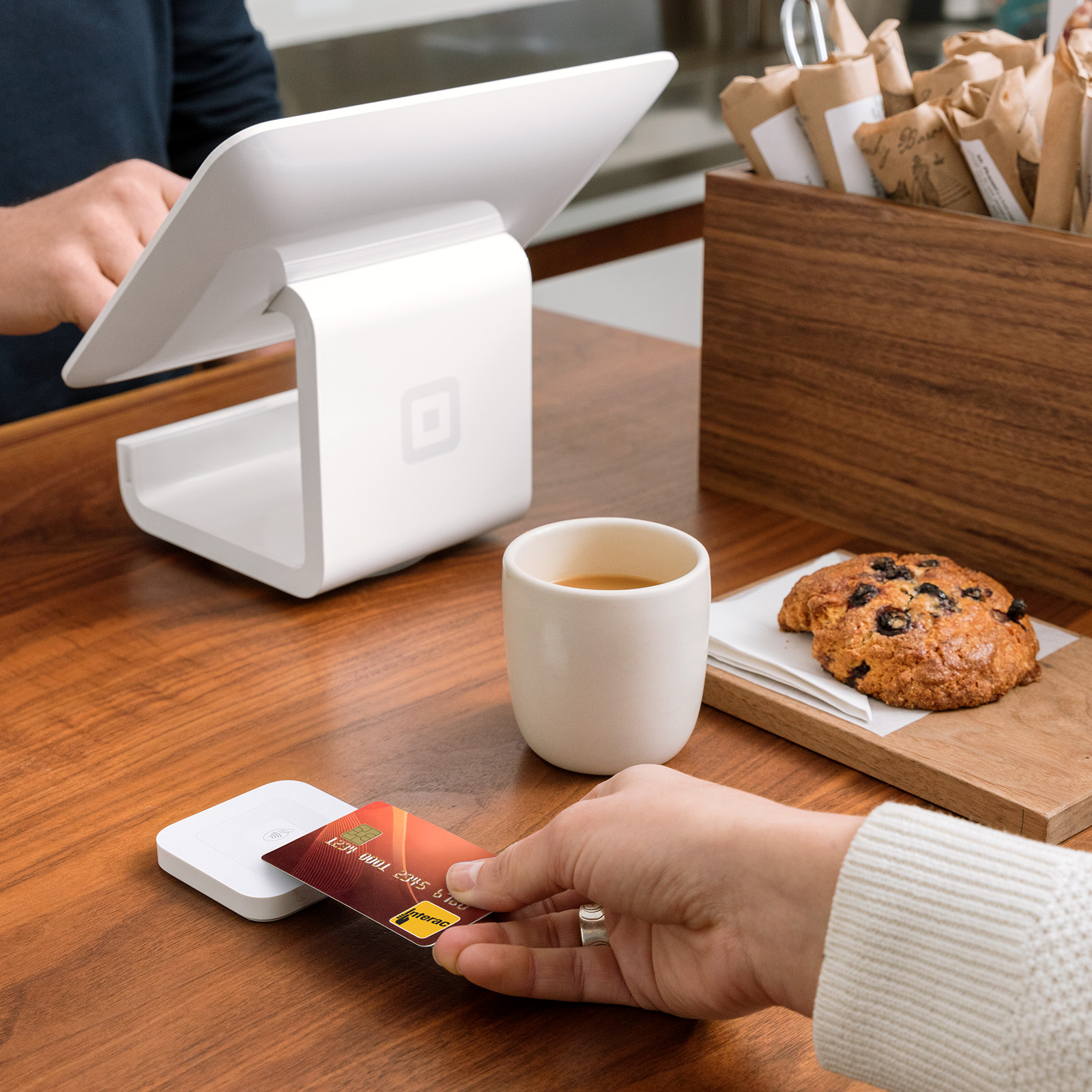
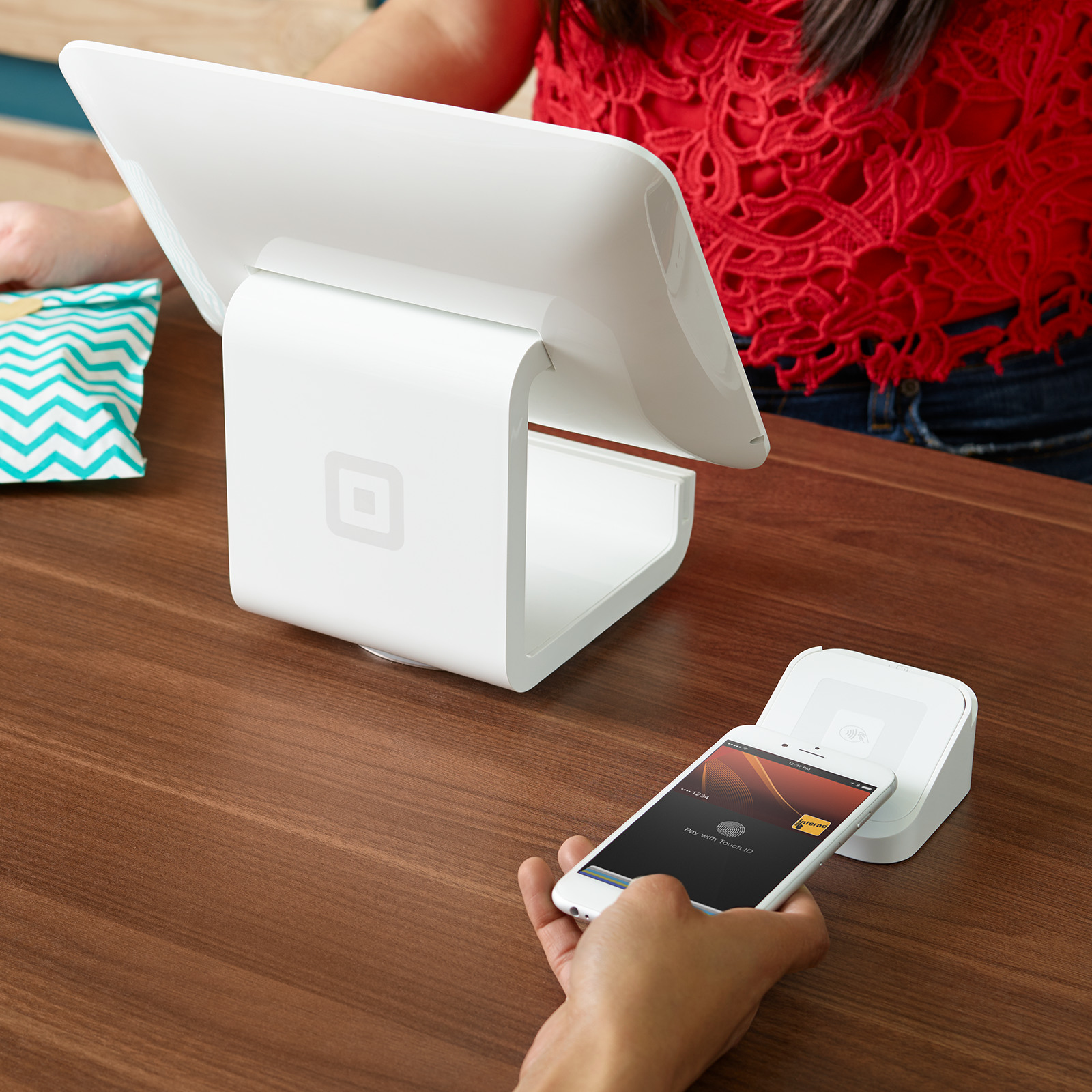
The product is a white square that can be connected to the company’s Square Stand card reader. Customers will now be able to pay with their mobile devices, tap-enabled cards and chip-enabled cards.

Additionally, the company also announced that debit transactions — a much-requested feature — will be available in Canada. Customers will now be able to pay with their chip- and tap-enabled debit cards, as well as their credit cards.

In a roundtable discussion with media, Jesse Dorogusker — Square’s vice president of hardware — confirmed that the company’s credit card fee of 2.65 percent will not change.

The company will also be waiving its $0.10 debit fee until the end of 2017.

According to Dorsey, with the introduction of the new Square chip and contactless payment reader, the company is moving towards a “complete Square.”

Dorsey also briefly touched on the subject of bringing his company’s two other major products, the Cash app and the Square Cash Card, to Canada.

While Dorsey said that he would like to see the Cash app and Cash Card in Canada, “it’s a matter of doing the work.”

“We would like to enable all of our products in every market,” said Dorsey. “It’s work, entering any market with a different product requires work on our side, it’s not just an okay from a partner. Connections that need to be made, code that needs to be written and hardware that needs to be tests — it’s work on both sides.”

The Square contactless payment and chip reader will be available through Square’s website for $59 CAD. The company said that the product will be available “in weeks” at retailers including Staples, Apple, London Drugs and Amazon.ca.

The post Square launches contactless payment and chip reader in Canada appeared first on MobileSyrup.

03 Oct 15:48

Algo-rhythmic PianoAI

by Janina Ander

It’s no secret that we love music projects at Pi Towers. On the contrary, we often shout it from the rooftops like we’re in Moulin Rouge! But the PianoAI project by Zack left us slack-jawed: he built an AI on a Raspberry Pi that listens to his piano playing, and then produces improvised, real-time accompaniment.

Jamming with PIanoAI (clip #1) (Version 1.0)

Another example of a short teaching and then jamming with piano with a version I’m more happy with. I have to play for the Pi for a little while before the Pi has enough data to make its own music.

The PianoAI

Inspired by a story about jazz musician Dan Tepfer, Zack set out to create an AI able to imitate his piano-playing style in real time. He began programming the AI in Python, before starting over in the open-source programming language Go.

The Go language gopher mascot with headphones and a MIDI keyboard

The Go mascot is a gopher. Why not?

Zack has published an excellent write-up of how he built PianoAI. It’s a very readable account of the progress he made and the obstacles he had to overcome while writing PianoAI, and it includes more example videos. It’s hard to add anything to Zack’s own words, so I shan’t try.

Paper notes for PianoAI algorithm

Some of Zack’s notes for his AI

If you just want to try out PianoAI, head over to his GitHub. He provides a detailed guide that talks you through how to implement and use it.

Music to our ears

The Raspberry Pi community never fails to amaze us with their wonderful builds, not least when it comes to musical ones. Check out this cool-looking synth by Toby Hendricks, this geometric instrument by David Sharples, and this pyrite-disc-reading music player by Dmitry Morozov. Aren’t they all splendid? And the list goes on and on

Which instrument do you play? The recorder? The ocarina? The jaw harp? Could you create an AI like Zack’s for it? Let us know in the comments below, and share your builds with us via social media.

The post Algo-rhythmic PianoAI appeared first on Raspberry Pi.

03 Oct 15:47

Here’s how to watch Google’s October 4 Pixel 2 event

by Rose Behar
Google Pixel

Google’s yearly hardware event is just around the corner and expected to bring a variety of releases, including the new generation of Pixel phones, new Home AI speakers, the Daydream View 2 headset and the release of a high-end ‘Pixelbook’ laptop.

MobileSyrup will be reporting live to keep you up to date on all the new releases, but if you’d like to follow along via live video, there’ll be a livestream of the event, as well. Here’s everything you need to tune into the event in real-time.

Date and time: October 4th, 9am PST / 12pm EST / 5pm BST.

Livestream:

Note, you can set a reminder on this to make sure you remember to tune in.

In the meantime, if you’re looking for something to read, check out our round-up of what to expect at the 2017 edition of Google’s annual major hardware event.

The post Here’s how to watch Google’s October 4 Pixel 2 event appeared first on MobileSyrup.

03 Oct 15:47

BlackBerry to move U.S. stock listing to New York Stock Exchange

by Sameer Chhabra
BlackBerry logo

Canadian enterprise, mobile and internet of things (IoT) company BlackBerry has announced that it’s finding a new home for its American stock.

The company announced that it will move its common stock from the NASDAQ Global Select Market to the New York Stock Exchange (NYSE) on October 16th, 2017.

BlackBerry will trade on the NYSE under the stock ticker ‘BB.’

“Many of the world’s greatest brands, including a large number of our customers and partners, are listed on the NYSE, and we look forward to joining them,” said John Chen, BlackBerry’s CEO, in an October 2nd, 2017 media release.

The company reiterated that its listing under the Toronto Stock Exchange (TSX) will not change.

BlackBerry currently trades at $11.34 USD on the NASDAQ, and $14.21 CAD on the TSX.

Source: MarketWired

The post BlackBerry to move U.S. stock listing to New York Stock Exchange appeared first on MobileSyrup.

03 Oct 15:47

Here are the rumoured release dates and pricing for Google’s Pixel 2 and Pixel 2 XL

by Dean Daley
Pixel 2 XL

We got our best look yet at Google’s Pixel 2 and the Pixel 2 XL phones earlier today, and now we even have information regarding when the smartphones will be available to purchase thanks to VentureBeat.

If correct, it’s likely the dates that are planned will be similar for us Canadians, which means that the Pixel 2 will be available October 19th and the November 15th, 2017, both preceded by pre-order periods.

While prices will likely be more expensive in the Great White North, Droid Life reports that the Pixel 2 will be priced at $649/$749 USD ($812/$937 CAD) depending on either the 64GB or 128GB variant. The Pixel 2 XL, on the other hand, will be $849/$949 USD ($1o69/$1187 CAD).

Pixel 2

Both the Pixel 2 and Pixel 2 XL will also ship with Android 8.0 Oreo, as well as a newer version of the Pixel launcher. The new Pixel launcher seems to place the Google Search bar at the bottom of the display, while calendar and weather information appears at the top.

Additionally, both devices will most likely sport the Qualcomm Snapdragon 835 chipset, come with 4GB of RAM, and, as mentioned previously, will include 64GB or 128GB of internal storage. Both devices will also most likely feature stereo speakers, according to the leaked photos. Reportedly, the Pixel 2 XL will feature a 6-inch nearly bezel-less edge-to-edge QHD+ P-OLED rounded display, while the Pixel 2 will sport a 5-inch, 1080p display.

As of right now, however, release date, prices and even the appearance and specs of the device remain unconfirmed until the smartphone is officially unveiled on October 4th, 2017.

Image Credit: VentureBeat

Source: VentureBeat, Droid Life

The post Here are the rumoured release dates and pricing for Google’s Pixel 2 and Pixel 2 XL appeared first on MobileSyrup.