Shared posts

10 Nov 03:23

Apple’s Big Bet on Memoji

by Neil Cybart

One takeaway from this year’s WWDC had nothing to do with what was announced on the virtual stage. Instead, it was found in the (virtual) audience.

Apple kicked off this year's WWDC keynote with a surprising twist: Tim Cook walked out on stage inside Steve Jobs Theater to an auditorium filled with 600 Memoji. (Yes, I tried to count every Memoji.)

Above Avalon Apple's Big Bet on Memoji

While the decision to include that opening scene may come off as just a way to add some fun to the keynote, my suspicion is it was part of a much larger, multi-year bet Apple is placing that amounts to using Memoji to prepare us for the upcoming mixed reality era.

What Is a Memoji?

The straightforward answer is that a Memoji is a digital representation of how we see ourselves. This explains why Apple launched Memoji with significant customization options and has continued to add seemingly every minor facial and head accessory tweak possible. Apple doesn’t want anyone to feel left out or unrepresented.

Born in the pre-AR era, Memoji were introduced in 2018 alongside iOS 12. One year prior, Apple had introduced Animoji (animated emoji) as a way of utilizing the iPhone X’s TrueDepth camera system.

The process used to create a Memoji provides clues as to how Apple sees them being used. It’s all about communication. One can navigate to the Messages app to create a Memoji. At the end of the Memoji creation process, sticker packs are offered to add more personality and touch to messages. Last year, Apple unveiled a Memoji app for Apple Watch allowing Memoji to be created on the wrist. Creating a Memoji is surprisingly fun, easy, and even relaxing. After just five minutes of customization, here is my Memoji:

 
Above Avalon Neil Cybart
 

One thing that caught my attention with Memoji is how they have a distinct look. It’s easy to pick out a Memoji from various other digital representations of oneself available via a growing number of third-party apps. In an interesting way, Memoji ends up being a form of Apple branding next to the Apple Watch’s distinctive rectangular watch face, the front-facing camera and sensor module on iPhone, and the iMac front-facing chin. 

WWDC 2021

Apple continues to lay the groundwork for a move into mixed reality. The clues of this transition were found throughout this year’s WWDC keynote.

  1. FaceTime SharePlay will have a big role to play in mixed reality as we consume content while simultaneously interacting with friends and family.

  2. Live Text in Photos is an obvious feature destined to be used while wearing Apple face wearables.

  3. Apple Maps received additional AR features that are perfectly suited for smart glasses.

  4. Spatial audio is all about rethinking the way we consume (audio) content depending on our relationship between the physical and digital worlds.

There is plenty to talk about with each of the preceding items. Some of that discussion was found in my WWDC keynote review available here. However, there was one clue supportive of Apple’s transition to mixed reality that was not included in the preceding list or in anyone else’s “WWDC clues pointing to mixed reality” list: a heavy emphasis on Memoji.

Apple went all out with Memoji at this year’s virtual WWDC. We got an early hint of this with the WWDC keynote invites. As shown below, the invites included three Memoji looking at MacBooks. Last year’s WWDC keynote invite, also shown below, was similar.

Above Avalon Apple Memoji

Some may look at the invites as merely reflections of Apple hosting virtual WWDCs. However, that explanation is unsatisfying. The MacBooks being looked at are the references to WWDC going virtual due to the pandemic, not the Memoji themselves.

In addition, Apple updated its leadership page, shown below, to include everyone’s Memoji.

 
Above Avalon Apple Memoji
 

While revising the leadership page wasn’t unprecedented as Apple did something similar to mark world emoji day in 2018, comparing the two pages shows how Apple has been serious in improving Memoji. Apple SVPs also had their Twitter profile pictures converted to Memoji.

There was then the WWDC keynote’s opening scene, which could have benefited from a bit more commentary. Due to the pandemic, Steve Jobs Theater, Apple’s $100+ million 1,000-seat underground theater, has not hosted a product event since the second half of 2019. While the theater was shown in prior virtual events, there was something about having Tim Cook stand in front of an empty theater that just didn’t feel right. By including Memoji, Apple was able to add some life, albeit animated, to the theater.

Mixed Reality

As for why Apple’s Memoji push stands out to me, Memoji is a tool Apple is relying on to prepare users for mixed realty and completely rethought ways to consume content and communicate with others.

Most people are familiar with the terms augmented reality and virtual reality. However, such terms have become confusing when figuring out what they actually mean or describe. “Mixed reality” is a more encompassing term that simply refers to technology made available via comfortable head-worn visors and goggles. Instead of being worn all day, such devices would be designed to be used while seated.

Mixed reality will introduce the idea of sharing real-world experiences with others via a digital space. Examples include “attending” everything from live sports events and awards shows to theatrical plays from the comfort of one’s home. Given the right camera technology, any real-world event will likely one day be able to be consumed in mixed reality. Instead of these live events occurring in a digital world with a vibe similar to that of a video game like The Sims or Fortnite, the user will feel like they are actually attending the event seated in the front row at Madison Square Garden or the Staples Center.

Given how live events are all about communal experiences with friends and family, mixed reality has to be able to replicate shared experiences. This will require a method of representing oneself to others while “attending” the live event via mixed reality. Instead of using odd-looking avatars or actual portraits of ourselves that have been animated to appear life-like, Memoji is Apple’s answer for that digital representation.

By pushing Memoji now, prior to actually selling mixed reality devices to the public, Apple is looking to remove whatever awkwardness may be found with creating and using a digital representation of ourselves. Higher Memoji adoption will then make it easier for people to embrace mixed reality when it is time. Strong adoption for mixed reality would then help Apple’s efforts to develop a platform developers can use to rethink our communication and social activities.

Above Avalon Apple Memoji

Apple M&A Clues

Apple recently acquired two companies that were involved in sharing real-world experiences. NextVR played in the realm of using cameras to map the real world, creating a “virtual world that is painted with images of the real world.” The company had also begun work on placing elements of live experiences “into the viewer’s physical world,” to use NextVR’s own description.

These "virtual" experiences can be achieved by mapping indoor sports arenas, concert halls, or practically any room for that matter. The point in building indoor maps isn’t to take the user into some kind of imaginary world similar to Mark Zuckerberg’s Metaverse. Instead, it’s all about delivering enhanced experiences for consuming content. Although it’s difficult to portray this point using traditional video, the following example from the 2017 Wimbledon final (via NextVR) provides some ideas as to the possibilities.

Simply put, there is something compelling found there. Apple could take this technology and interlace it with Memoji to offer a new method of consuming live sporting events digitally with friends and family.

Last year, Apple also acquired Spaces, which was founded and incubated within DreamWorks Animation. The Spaces team has an interesting perspective to share in the entertainment space. The leadership team view themselves as game developers – which explains the company’s stated mission of focusing on experiences. Spaces worked with the National Geographic Society in offering an audience the ability to consume the same VR experience led by a presenter.

About the Metaverse

As for Zuckerberg’s vision involving the Metaverse in which people will spend time in a digital world instead of hopping between digital and the real life, the idea is flawed for one very simple reason. The Metaverse is at odds with a trend that has been unfolding for decades and will continue to unfold for decades to come. As technology has become more personal, the barriers between humans and technology have eroded. It’s hard to think of a larger barrier between technology and humans than what is being described as the Metaverse.

The value and promise found with mixed reality isn’t to remove us from the real world but to bring the real world to us. There will always be a limited number of front row seats available at a sports arena or concert hall. By allowing a sports game or concert to be consumed in mixed reality, everyone will be able to have that front row experience. Instead of merely watching Tim Cook walk out on stage to kick off a product event in Steve Jobs Theater, we will be able to experience what it’s like to sit inside Steve Jobs Theater.

Listen to the corresponding Above Avalon podcast episode (24 minutes) for this article here.

Receive my analysis and perspective on Apple throughout the week via exclusive daily updates (3 stories per day, 12 stories per week). Available to Above Avalon members. To sign up and for more information on membership, visit the membership page.

For additional discussion on this topic, check out the Above Avalon daily update from August 24th.

10 Nov 03:23

Searching all columns of a table in Datasette

by Simon Willison

I came up with this trick today, when I wanted to run a LIKE search against every column in a table.

The trick is to generate a SQL query that does a LIKE search against every column of a table. We can generate that query using another query:

select
  'select * from "' || :table || '" where ' || group_concat(
    '"' || name || '" like ''%'' || :search || ''%''',
    ' or '
  )
from
  pragma_table_info(:table)

Here's what you get when you run that query against the avengers example table from FiveThirtyEight (pretty-printed):

select
  *
from
  "avengers/avengers"
where
  "URL" like '%' || :search || '%'
  or "Name/Alias" like '%' || :search || '%'
  or "Appearances" like '%' || :search || '%'
  or "Current?" like '%' || :search || '%'
  or "Gender" like '%' || :search || '%'
  or "Probationary Introl" like '%' || :search || '%'
  or "Full/Reserve Avengers Intro" like '%' || :search || '%'
  or "Year" like '%' || :search || '%'
  or "Years since joining" like '%' || :search || '%'
  or "Honorary" like '%' || :search || '%'
  or "Death1" like '%' || :search || '%'
  or "Return1" like '%' || :search || '%'
  or "Death2" like '%' || :search || '%'
  or "Return2" like '%' || :search || '%'
  or "Death3" like '%' || :search || '%'
  or "Return3" like '%' || :search || '%'
  or "Death4" like '%' || :search || '%'
  or "Return4" like '%' || :search || '%'
  or "Death5" like '%' || :search || '%'
  or "Return5" like '%' || :search || '%'
  or "Notes" like '%' || :search || '%'

Here's an example search using that generated query.

Same trick for the entire database

Here's a query that generates a query that searches every column in every table in the database!

with tables as (
  select
    name as table_name
  from
    sqlite_master
  where
    type = 'table'
),
queries as (
  select
    'select ''' || tables.table_name || ''' as _table, rowid from "' || tables.table_name || '" where ' || group_concat(
      '"' || name || '" like ''%'' || :search || ''%''',
      ' or '
    ) as query
  from
    pragma_table_info(tables.table_name),
    tables
  group by
    tables.table_name
)
select
  group_concat(query, ' union all ')
from
  queries

I tried this against the FiveThirtyEight database and the query it produced was way beyond the URL length limit for Cloud Run.

Here's the result if run against latest.datasette.io/fixtures:

select
  '123_starts_with_digits' as _table,
  rowid
from
  "123_starts_with_digits"
where
  "content" like '%' || :search || '%'
union all
select
  'Table With Space In Name' as _table,
  rowid
from
  "Table With Space In Name"
where
  "pk" like '%' || :search || '%'
  or "content" like '%' || :search || '%'
union all
select
  'attraction_characteristic' as _table,
  rowid
from
  "attraction_characteristic"
where
  "pk" like '%' || :search || '%'
  or "name" like '%' || :search || '%'
union all
select
  'binary_data' as _table,
  rowid
from
  "binary_data"
where
  "data" like '%' || :search || '%'
union all
select
  'complex_foreign_keys' as _table,
  rowid
from
  "complex_foreign_keys"
where
  "pk" like '%' || :search || '%'
  or "f1" like '%' || :search || '%'
  or "f2" like '%' || :search || '%'
  or "f3" like '%' || :search || '%'
union all
select
  'compound_primary_key' as _table,
  rowid
from
  "compound_primary_key"
where
  "pk1" like '%' || :search || '%'
  or "pk2" like '%' || :search || '%'
  or "content" like '%' || :search || '%'
union all
select
  'compound_three_primary_keys' as _table,
  rowid
from
  "compound_three_primary_keys"
where
  "pk1" like '%' || :search || '%'
  or "pk2" like '%' || :search || '%'
  or "pk3" like '%' || :search || '%'
  or "content" like '%' || :search || '%'
union all
select
  'custom_foreign_key_label' as _table,
  rowid
from
  "custom_foreign_key_label"
where
  "pk" like '%' || :search || '%'
  or "foreign_key_with_custom_label" like '%' || :search || '%'
union all
select
  'facet_cities' as _table,
  rowid
from
  "facet_cities"
where
  "id" like '%' || :search || '%'
  or "name" like '%' || :search || '%'
union all
select
  'facetable' as _table,
  rowid
from
  "facetable"
where
  "pk" like '%' || :search || '%'
  or "created" like '%' || :search || '%'
  or "planet_int" like '%' || :search || '%'
  or "on_earth" like '%' || :search || '%'
  or "state" like '%' || :search || '%'
  or "city_id" like '%' || :search || '%'
  or "neighborhood" like '%' || :search || '%'
  or "tags" like '%' || :search || '%'
  or "complex_array" like '%' || :search || '%'
  or "distinct_some_null" like '%' || :search || '%'
union all
select
  'foreign_key_references' as _table,
  rowid
from
  "foreign_key_references"
where
  "pk" like '%' || :search || '%'
  or "foreign_key_with_label" like '%' || :search || '%'
  or "foreign_key_with_blank_label" like '%' || :search || '%'
  or "foreign_key_with_no_label" like '%' || :search || '%'
  or "foreign_key_compound_pk1" like '%' || :search || '%'
  or "foreign_key_compound_pk2" like '%' || :search || '%'
union all
select
  'infinity' as _table,
  rowid
from
  "infinity"
where
  "value" like '%' || :search || '%'
union all
select
  'no_primary_key' as _table,
  rowid
from
  "no_primary_key"
where
  "content" like '%' || :search || '%'
  or "a" like '%' || :search || '%'
  or "b" like '%' || :search || '%'
  or "c" like '%' || :search || '%'
union all
select
  'primary_key_multiple_columns' as _table,
  rowid
from
  "primary_key_multiple_columns"
where
  "id" like '%' || :search || '%'
  or "content" like '%' || :search || '%'
  or "content2" like '%' || :search || '%'
union all
select
  'primary_key_multiple_columns_explicit_label' as _table,
  rowid
from
  "primary_key_multiple_columns_explicit_label"
where
  "id" like '%' || :search || '%'
  or "content" like '%' || :search || '%'
  or "content2" like '%' || :search || '%'
union all
select
  'roadside_attraction_characteristics' as _table,
  rowid
from
  "roadside_attraction_characteristics"
where
  "attraction_id" like '%' || :search || '%'
  or "characteristic_id" like '%' || :search || '%'
union all
select
  'roadside_attractions' as _table,
  rowid
from
  "roadside_attractions"
where
  "pk" like '%' || :search || '%'
  or "name" like '%' || :search || '%'
  or "address" like '%' || :search || '%'
  or "latitude" like '%' || :search || '%'
  or "longitude" like '%' || :search || '%'
union all
select
  'searchable' as _table,
  rowid
from
  "searchable"
where
  "pk" like '%' || :search || '%'
  or "text1" like '%' || :search || '%'
  or "text2" like '%' || :search || '%'
  or "name with . and spaces" like '%' || :search || '%'
union all
select
  'searchable_fts' as _table,
  rowid
from
  "searchable_fts"
where
  "text1" like '%' || :search || '%'
  or "text2" like '%' || :search || '%'
  or "name with . and spaces" like '%' || :search || '%'
union all
select
  'searchable_fts_docsize' as _table,
  rowid
from
  "searchable_fts_docsize"
where
  "docid" like '%' || :search || '%'
  or "size" like '%' || :search || '%'
union all
select
  'searchable_fts_segdir' as _table,
  rowid
from
  "searchable_fts_segdir"
where
  "level" like '%' || :search || '%'
  or "idx" like '%' || :search || '%'
  or "start_block" like '%' || :search || '%'
  or "leaves_end_block" like '%' || :search || '%'
  or "end_block" like '%' || :search || '%'
  or "root" like '%' || :search || '%'
union all
select
  'searchable_fts_segments' as _table,
  rowid
from
  "searchable_fts_segments"
where
  "blockid" like '%' || :search || '%'
  or "block" like '%' || :search || '%'
union all
select
  'searchable_fts_stat' as _table,
  rowid
from
  "searchable_fts_stat"
where
  "id" like '%' || :search || '%'
  or "value" like '%' || :search || '%'
union all
select
  'searchable_tags' as _table,
  rowid
from
  "searchable_tags"
where
  "searchable_id" like '%' || :search || '%'
  or "tag" like '%' || :search || '%'
union all
select
  'select' as _table,
  rowid
from
  "select"
where
  "group" like '%' || :search || '%'
  or "having" like '%' || :search || '%'
  or "and" like '%' || :search || '%'
  or "json" like '%' || :search || '%'
union all
select
  'simple_primary_key' as _table,
  rowid
from
  "simple_primary_key"
where
  "id" like '%' || :search || '%'
  or "content" like '%' || :search || '%'
union all
select
  'sortable' as _table,
  rowid
from
  "sortable"
where
  "pk1" like '%' || :search || '%'
  or "pk2" like '%' || :search || '%'
  or "content" like '%' || :search || '%'
  or "sortable" like '%' || :search || '%'
  or "sortable_with_nulls" like '%' || :search || '%'
  or "sortable_with_nulls_2" like '%' || :search || '%'
  or "text" like '%' || :search || '%'
union all
select
  'table/with/slashes.csv' as _table,
  rowid
from
  "table/with/slashes.csv"
where
  "pk" like '%' || :search || '%'
  or "content" like '%' || :search || '%'
union all
select
  'tags' as _table,
  rowid
from
  "tags"
where
  "tag" like '%' || :search || '%'
union all
select
  'units' as _table,
  rowid
from
  "units"
where
  "pk" like '%' || :search || '%'
  or "distance" like '%' || :search || '%'
  or "frequency" like '%' || :search || '%'

It works!

10 Nov 03:21

Labour poetry

I am taken with dagong shige, “labour poetry,” a genre that has emerged from the 300 million workers who have migrated across China to the big cities over the past four decades, as described in The Economist:

Its most famous practitioner was Xu Lizhi, who worked on an assembly line for Foxconn, a Taiwanese firm that makes most of Apple’s iPhones. Before he committed suicide in 2014, at the age of 24, he had written almost 200 poems about the drudgery of factory work. Among the best known is “I Swallowed An Iron Moon”:

– The Economist, How Chinese factory-workers express their views on life (August 2021)

Here’s the poem.

I Swallowed an Iron Moon, Xu Lizhi

I swallowed an iron moon
they called it a screw
I swallowed industrial wastewater and unemployment forms
bent over machines, our youth died young
I swallowed labour, I swallowed poverty
swallowed pedestrian bridges, swallowed this rusted-out life
I can’t swallow any more
everything I’ve swallowed roils up in my throat
I spread across my country
a poem of shame

Some of the literature refers to powerlessness and homesickness; others are proud and patriotic.

It must be a strange mix of emotions to be part of a movement so strong and so vast which is lifting the largest country in the world out of poverty and is literally building the nation and the world, but at the same time to be, well, far from home and oppressed.


I’m reminded of the British war poets: Siegfried Sassoon, Wilfred Owen… I mean Dulce et Decorum Est is so vivid and so bitter - it’s a hard read, even with familiarity, and it’s hard to imagine how the imagination could be brought closer to the trenches of the Great War.


What is the role of this kind of art?

Maybe it sits midway between being

  • a mirror
  • a memory
  • the sound of society talking out loud about a colossal event or a becoming; processing it, digesting it for all of us, creating places for our feelings.

Which is vital.


I don’t know about poetry but there were, appointed by the British government, official war artists for the First and Second World Wars.

It is a shame that the government did not appoint official pandemic artists, to document and interpret the empty streets of the lockdown, the paranoia inherent in Covid itself, the masks and the bubbles and the supermarket shelves and the diversity of experiences, the whole 18 months and wherever it goes next.

10 Nov 03:21

Wanted: a new blogging routine

by Dries

In the 15 years that I've been blogging, it's never been this quiet on my blog.

Blogging is an important part of me. It's how I crystallize ideas, reflect, and engage with thousands of people around the world. Blogging encourages me to do research; it improves my understanding of different topics. Blogging sometimes forces me to take sides; it helps me find myself.

I miss blogging. Unfortunately, I've lost my blogging routine.

At first, COVID-19 was to blame for that. I'd write many of my blog posts on the train to work. My train ride was one hour each way and that gave me plenty of time to write. Once in the office, there is zero time for blogging. COVID-19 interrupted my blogging routine and took away my protected writing time.

Then earlier this year, we moved from the suburbs of Boston to the city. Renovating our new condo, selling our old condo, and moving homes consumed much of my personal time — blogging time included. And now we live in the city, I no longer commute by train.

Admittedly, I've also felt blocked. I've been waiting to blog until I had something interesting to say, but nothing seemed interesting enough.

So I'm eager to find a new blogging routine. I'm a fan of routines. Routines add productivity and consistency to my life. Without a good blogging routine, I'm worried about the future of this blog.

To get back into a blogging routine, I made two decisions: (1) to target one blog post per week and (2) to balance my inner critic. I will no longer wait for something interesting to come along (as this blog post illustrates).

When you break out of any habit, it can be hard to get back into it. To get back into a routine, it's better to write something regularly than to write nothing at all. These seem achievable goals and I'm hopeful they get me blogging more frequently again.

10 Nov 03:21

Microfinance and public shaming in Nigeria

by Ethan

I got an interesting email from a young Nigerian today alerting me to the problem of social shaming and microlending. He wanted me to promote his petition and so I did a little research. (This post was a Twitter thread, which I tried to share with the young man in question. He pointed out that Twitter is currently blocked in Nigeria, so I’m expanding this slightly and putting this on my blog so it can be better shared by him and others.)

App-based microlending is popular in Nigeria, both because banks generally require collateral for loans and because the bureaucracy involved with lending can be overwhelming. So there’s a flock of new lending sites springing up, like FairMoney. FairMoney reported lending out $93m USD in 2020 in amounts from $3-$1000. Interest rates ranged from 30-260% APR, against 15-20% APR for bank rates. In other words, these are payday loans with sometimes predatory terms, but they’re what people can access.

FairMoney may play hardball with high rates, but there’s another tactic that’s raising eyebrows – and inspiring petitions: public shaming. Fail to pay your loans with OKash, a rival to FairMoney, and the app begins sending notes to the contacts in your phone! OKash (made by the same Chinese company behind the Opera browser) has a clause in the terms of service that reads “In the event we cannot get in contact with you or your emergency contact, you also expressly authorise us to contact any and all persons in your contact list.” In other words, default on a loan and we tell your parents, your friends, your boss… OKash has raised eyebrows in Kenya, where there’s no financial regulatory structure to protect what seems like an obvious privacy violation.

These techniques have gone even further in Nigeria. Apps access your social media and post on your behalf. Collection agents, filling a daily quota of collections, call your friends late at night and tell them they are the “guarantors” of your loan. Some collection agents use background sounds like sirens to imply that they’re in a police car, coming to capture you.

What’s most fascinating to me about this is that this is the dark side of an idea popularized a few years ago: credit scoring via social networks. The theory: analyze enough customers and their social networks and you’ll detect who is creditworthy. This is one of those ideas that’s probably terrible even if it works – imagine getting rejected for a loan and told that your friends network predicts that you’ll be a bad borrower? How does one contest that decision? Ensure that the algorithm isn’t unfairly biased against certain groups of people? But proponents argue that the upside is that this form of credit check could open lending to billions of people who have phones, but don’t have existing credit histories.

Indeed, OKash explains its need for your personal information in terms of determining your eligibility for lending: “OKash will access your mobile device for the permission of (but not limited to )contacts, location,SMS,calendar and camera to estimate the suitable loan offer for you. It is a very important part of evaluation process.” But can you trust OKash with your data? “We promise that we will never disclose your personal information to third parties without your consent. (exempted late refund and service requirement).” Oh yeah, that little exemption…

I ask students always to think adversarially about tech and ethical issues. One of the most popular assignments is when I ask students to look at a tech they’re trying to improve and write a Black Mirror episode about it. Student projects often steer in a very different direction once they’ve had the chance to consider how their preferred tech can – and likely will – be abused. It’s not that hard to imagine data used to determine creditworthiness being used, instead, to threaten and harass customers who fail to pay up in a timely fashion. In some ways, it’s amazing that it hasn’t happened sooner in societies with poor consumer protection systems.

Fortunately, Nigerian authorities are starting to act, fining another lender, Soko Loans, for invasion of privacy. And we’re starting to see more traditional methods, like blacklists for repeat deadbeats.

Two takeaways from me: 1) Tech innovation is always going to run ahead of legislation, and that can mean terrible things for consumers. 2) When you hear an optimistic new idea for financial inclusion, imagine the worst way it can be weaponized and work to eliminate it.

The post Microfinance and public shaming in Nigeria appeared first on Ethan Zuckerman.

10 Nov 03:21

When will we see the first home dishwasher cobots?

Sometime while I wasn’t paying attention, robotics got really good. But mainly in industrial settings. So beyond Roomba, how do robots come into the home?

The trend I’m tracking is cobots - collaborative robots - originated by James Colgate and Michael Peshkin at Northwestern University in 1996. From their homepage, a cobot is a robot for direct physical interaction with a human user, within a shared workspace.

The cobots patent makes the supporting role clearer: cobots guide, redirect, or steer motions that originate with the person.

Although “cobot” is a general approach, the typical approach seems to be a robot arm with sufficient sensors to avoid workplace injury.

For example, here’s Universal Robots explaining the benefits of cobots on assembly lines:

  • They’re easy to “program” (no-code style) and take over precision work but not the decision-making: you simply move the robot arm to desired waypoints
  • They’re flexible and easy to re-task: Moving the cobot to a new process is fast and easy, giving you the agility to automate even small batch runs.
  • They’re safe: 80% of the thousands of our robots worldwide operate with no safety guarding.

The difference in approach between regular robotic automation and a cobot is fundamental. It’s the familiar promise of automation, but without having to move to a 100% automated production line. So you could imagine, putting up a fence, you could have a cobot lean in to just punch in all the nails in all the right places while you hold the plank in place (which means your team size is reduced to only one human), but you don’t need to swap out to a massive fence-construction-machine.

ALSO fascinating is that these cobot snake arms generally come as general purpose platforms for which you develop “apps”. So…

  • Here’s a platform: Sawyer from Rethink Robotics. It’s a 7-jointed robot arm with a gripper on the end, collision detection sensors, computer vision, and a network connection.
  • Here’s a demo “app”: Cobot Cafe (YouTube) which is Sawyer functioning as a barista, remote controlling the coffee machine to pour the coffee, and moving the cup with its arm.

I’d like a cobot at home. They’re safe and portable, that’s the promise.

So maybe I could place my safe, portable cobot in the floor in the front room, and it would pick up all the toys and tidy them away, shelve any books, and find the TV remote control and put it back in the regular place.

What I like is that we inhabit the same space, and I think of the distinction like this:

  • I have a robot to clean the dishes already. It’s called a dishwasher, and I have to make room for it, and adapt my behaviour to use it (loading and unloading). But despite having the dishwasher machine in my kitchen, I still need the sink, and I still need a sponge and the Fairy liquid, and so on, because I wash pots and pans like that.
  • But a cobot dishwasher would stand alongside me at the sink. I would stack up the dishes and so on, and it would clean them and pass me the items to put away in the cupboards. I would get back the room previously devoted to the big machine. The cobot would use the exact same cleaning utensils as I do – and I could move it to go and do other jobs afterwards.

While we’re on dream apps for domestic cobot arms:

I open my (physical) post approx every 12 months. I pile it up over the year. It’s a pretty mechanical process to recognise each item, sort and stack it, and to pile up the recycling. If it could read the addresses, show me each unrecognised item (remembering my response for later), and run the batch process, that would cut a good few hours out of preparing my tax return.


How will the cobot be domesticated?

The mainframe was domesticated as the personal computer, and the PC was dismissed as a toy – and then came spreadsheets and then came desktop publishing, killer apps both.

So what’s the first home-use programmable cobot that seems ludicrous to begin with, but establishes a beachhead?

Part of me wonders whether it will be cooking: kneading dough, sitting by the stove to flip pancakes, using sensitive fingers and eyes to cook the perfect steak, and so on. It could even wash its own hands.

But the kitchen is a pretty inhospitable first environment.

Perhaps the first use is for hobbyists? Imagine painting miniature figures – hey arm, hold this; pass me the cobalt; rinse this brush and put it back. Or fixing a bike. Or assembling Ikea furniture.

None of these routes feels quite believable to me. But my takeaway is that the blocker is market entry. The technology is all there. If there are teams working on consumer smart glasses in readiness of them becoming commercially viable (which there clearly are) then I hope there are teams working on consumer cobot arms.


Sources

I subscribe to a small handful of blogs which track the latest in robotics (thank you RSS).

Recommendations welcome.

Also a shout-out to Robin Sloan’s 2018 novel Sourdough which, behind its deceptively gentle facade, is an exploration of human/non-human cooperation and where agency lies, whether that’s yeast or - relevant here - robot arms. (Or even machine learning, given that’s how Sloan collaborated to compose the fictional music of the Mazg for the audiobook.)

10 Nov 03:20

The Many Manners of Touring

by noreply@blogger.com (VeloOrange)

 by Connor

    It seems like every year in this industry, someone comes out with another sub-category of cycling to differentiate their product or their experience from the others. Be it the advent of the "down-country" mountain bike (Short travel, slack geo), to the "all-road" bike (just a gravel bike?), everyone wants to name their slice of the pie. 

    Velo Orange has been making touring bikes since its inception. Granted we've offered different specs and styles over the years, but the moniker never really changed all that much - life's simpler that way. Our Pass Hunter may be our one exception to this, being what would widely be defined as an "all-road" bike, but it can still take front racks, fenders, bags, and 650Bx42mm tires. 

Kevin's Pass Hunter, sans Rando Rack

    However, in today's cycling world, even touring (perhaps the most general and least-finicky flavor of cycling) isn't safe from subdivision. There's Credit Card Touring, Sport Touring, Traditional Touring, Bike Packing, Nomadic Touring, and Randonneuring, just to name a few. So what gives? You're putting your stuff on your bike and staying someplace - is it not all the same? No. At least that's what Scott tells me, so let's dive in.

    While mountain bike categorization is generally based off of amount of suspension travel, geometry, and frame kinematics, the differences in touring bikes seem to be based more on how much stuff you carry, and less on where you're going. From what I can glean, here they are listed from lightest to heaviest load:

Credit Card Touring

Light, fast road touring bike. You maybe have a small handlebar bag with a change of clothes, you're staying at hotels/BnBs, and you're paying for everything (food, shelter, utilities) on a credit card, hence the name. In theory, you could step outside your door with your bike and credit card and go for a tour.

Sport Touring

Slightly more gear, perhaps this is a longer trip, a few more changes of clothes, and you'll be staying at multiple places. Still a lighter duty bike, designed less for load carrying, and more geared towards speed.

Randonneuring

Photo courtesy of Morgan of Found in the Mountains

This is probably the "fastest" form of touring because you're dealing with a time limit. Similar to Sport Touring, but with more paperwork. See Scott's blog post here.

Traditional Touring

More tire clearance, maybe you're hitting slightly rougher roads, carrying your full load including your food and shelter. Think racks and two to four panniers.

Bikepacking

Photo courtesy of Brad from RoadRunner Bags

You're fully loaded, going on and off road, running wider, knobby tires. You likely aren't running racks, hanging bags fore and aft, and you're camping in remote areas not necessarily set aside for camping. About as remote as it gets.

Basketpacking


Perhaps a bit of a backlash from bikepacking luggage and its often times over-complex system of straps, pads, enormous saddle bags, more straps, lashes, plastic holders, and straps, basketpacking is a happy medium between the practicality of traditional touring bags and the out-of-the-way-of-obstacles afforded by bikepacking bags. Through, you do need a front rack and basket, so there are some hard mounting points to keep in mind for those seeking rougher terrain.

Nomadic Touring

You have sold all of your possessions and now indefinitely are touring, riding where you please, making home where you roam.

    So maybe it does have a little bit to do with where you're going. I feel like most "Bikepacking" bikes I see have more in common with modern long wheelbase hardtails than they do traditional touring bikes, and they're often pictured in remote, wild areas with no trace of civilization in sight. Despite this, they're still far removed in essence from mountain bikes. 


Scott and Melissa's setup during their Iceland tour

    I would challenge anyone to convince me that what we call the "modern touring bike" isn't just a gravel bike with bits and bobs bolted onto it. Endurance geometry compatible with flat or drop bars, wide tire clearance and a little room for fenders and/or bags? Sure sounds like a gravel bike to me. Recalling that gravel bikes were once your off-season cyclocross bikes with big tires squeezed in, and that the early 'cross bikes were cantilever tourers with knobby tires glued on. You see how things begin to seem a little muddled?


       Photo Credit: https://www.velonews.com/news/cyclocross/commentary-ive-been-racing-cyclocross-for-50-years/ 

Alan Hills riding his Peugeot UO-8 in an early-1970's cyclocross race. If you haven't read his 50-year saga in the 'cross scene, it's definitely a must-read for enthusiasts, and can be found here.

    I think that the modern tendency to categorize everything has its benefits - it allows people, concepts, and designs to stand apart and differentiate themselves from the crowd. Concerning bikes, however, does it not also create a whirlwind effect where there are too many categories to choose from? I recall my time as a bike mechanic and salesperson back when the gravel boom exploded. The average customer didn't know what to make of this new category. Was it a road bike, a 'cross bike, or a hybrid (or a combination of all three)?  The customer is sometimes lost in a sea of subdivisions and thus ultimately put off by the process of buying a bike.  

    This begs the question; does touring (and cycling as a whole) benefit from this kind of categorization? Or is it just another barrier to entry for folks interested in cycling and/or more specifically, touring? I'd love to hear your thoughts.

10 Nov 03:20

“WHY AREN’T YOU FIXING THIS???”

by Richard Millington

From the member’s perspective, it’s a simple equation.

They have a problem and your organisation should fix it.

Better yet, they can see other members complaining about the same problem!

It’s a no-brainer!

In their minds, if you’re not going to fix the issue, you’re either incompetent or greedy (i.e. you’re taking their money without offering a quality service).

The reality is progress is complex and there are plenty of valid reasons why you can’t fix a problem yet. For example:

  • The roadmap is established on highest priority issues and there’s no spare resource to solve it.
  • You might be working on it, but it’s going to take time.
  • You plan to depreciate that feature anyway.
  • You can’t fix that one issue without fixing a number of other issues.
  • Only a tiny number of people are voicing concern about it.
  • Etc…

Worse yet, as much as your organisation might work internally to supply and validate the feedback and ensure people are aware of the concern, you might not be allowed to explain why the issue can’t be fixed.

You might not know how long it’s going to take, there might be laws that prevent you from discussing it, your organisation has concerns about competitors knowing what’s coming next etc…

This is a frustrating situation to be in. But two things might be helpful here.

First, be open from the very beginning that there are some things you might not be able to share. Have it in a document (perhaps with examples) and refer to it when a topic like this comes up.

Second, don’t just ignore the member. Always hear them out, be empathetic, and make sure they know you’ve read and considered their post.

Third, don’t promise anything you’re not 100% sure you can deliver on.

The post “WHY AREN’T YOU FIXING THIS???” first appeared on FeverBee.

10 Nov 03:20

Lola’s Fine Hot Sauces

Lola’s Fine Hot Sauces

Not long ago, my niece the game designer was visiting for brunch. She asked for some hot sauce with her scrambled eggs. Hot sauce has fallen out of my vocabulary, so all I could offer was one of those bottles with a label that boasts that it’s even more authentically 19th-century than the old label.
So, while I don’t often accept PR pitches for prepared foods, I welcomed the chance to sample Lola’s Fine Hot Sauces. As a rule, hot sauces are engaged in an arms race with everyone trying to be hotter and more authentic than their neighbors, and that’s not very interesting. Lola’s approach is to keep a reasonable level of heat but to concentrate on flavor.

The big win here was the Carolina Reaper, which I tried as a condiment for my own Carolina smoked bbq ribs. Sure, it adds heat, but it also adds a really nice fruity note with some real spice depth. It wasn’t numbingly hot, so all the work on basting the ribs wasn't buried under the condiment, but the condiment added some useful notes. (I seldom like “Carolina yellow” bbq sauces, preferring Brian Polcyn’s sauce of brown sugar, tons of vinegar, Worcestershire sauce, dry mustard and veal stock. The veal stock helps, but chicken stock is fine and it's what I typically have on hand. )

I tried the Original sauce a with a few things — notably with some scrambled eggs. Its flavor profile is nice, though I’m not sure I know exactly how it’s done: there’s reasonable mid-palate heat, quite a bit of acid, and some tomato. It’s not a spicy ketchup, which I know is exactly what I just described. Or maybe it is, in a more concentrated form. It turns out that scrambled eggs aren’t the right foil for this, but I fancy a touch might enliven a hearty beef stew. Again, the point is to dial down the heat and allow interesting spice to shine.

10 Nov 03:19

Undermining A Strategy With Poor People Skills

by Richard Millington

A great strategy needs to be matched by good people skills.

I remember one project where we spent months working with an organisation to develop the community strategy. A few days before the presentation, the community leader fell ill and his direct report, the community manager, stepped in to do the presentation.

18 of us were in the room. The CEO opened the meeting with a short, enthusiastic, speech about the importance of community and how the organisation needed to be more engaged in all of the organisation’s community channels; forums, social media, YouTube and more…

The community manager quickly chimed in to say:

“Social media isn’t really community, it’s building an audience not connecting members to one another”

For sure, it’s an argument shared by many of us. But contradicting a highly supportive CEO in front of almost the entire executive team before beginning the presentation is an extreme act of self-sabotage.

It went downhill from there. Throughout the presentation, the community manager was stubborn and inflexible. She saw every question as a potential attack instead of an opportunity to better align and incorporate the needs of others. When the exec team began to discuss key points of the presentation between themselves, she jumped in with a ‘definitive’ answer to shut the discussion down instead of facilitating the discussion and ensuring key people were heard.

She didn’t speed up through the less important parts or slow down at the key parts. Her tone of voice wasn’t excited and enthusiastic but projected an air of ‘this is the thing you must do’. She didn’t give the audience a sense of autonomy. The strategy was presented as ‘this is the strategy, take it or leave it’.

In hindsight, this was our fault (mine and the community leader). We should have pushed back the meeting to allow more time for her to practice and prepare.

A great strategy doesn’t succeed if you appear nervous or argumentative when presenting (or executing) it. People have to like and respect you before they can like and respect your strategy. Improvement here begins with awareness. You need to solicit honest feedback from peers to find areas of improvement. It might not sound like the community work you signed up for, but it really is.

The post Undermining A Strategy With Poor People Skills first appeared on FeverBee.

08 Nov 03:43

Trust Me, You Want This

by Camilla Cannon

In a 2019 episode of politics podcast Lovett or Leave It, host Jon Lovett reads an ad for the meat subscription service Butcher Box, characteristically mixing official ad copy with his own jokey ad-libs:

This month, Butcher Box is offering finely ground beef that is clean and delicious and taken from the most [pause] favorable sections of the animal? Okay. Wow. Very intimate. The beef consists of trimming from the sirloin — is this, is this a serious ad? That is so much information. [pause] The incredible quality of Butcher Box meat starts with a commitment to raising animals free of antibiotics and hormones — unlike me.

As Lovett lists the different combinations of meat customers can choose from — “all beef, beef and chicken, beef and pork, mixed box, or a custom box” — co-host Jon Favreau asks, “Are you sure this is food?” After Lovett pitches a listener discount for a free portion of beef, the advertisement ends in a fit of giggles and hysterical shouts of “Get your beef box! Get free beef in your box! Beef box! Beef box!”

Although the tenor of this ad — in which the hosts mock the product and obscure half the copy with contagious laughter — might seem unlikely to gain Butcher Box any new subscribers, it is actually emblematic of a current trend in digital marketing: host-read podcast advertisements. In recent years, ads read directly by podcast hosts — as opposed to ads produced externally and inserted into an episode — have become coveted as a reliable and lucrative form of marketing. A 2020 report from Morning Consult, a tech consultancy, found that podcast listeners were less likely to skip over an ad read by a podcast host than a traditional ad and more likely to try a product if it were pitched directly by a host. Host-read ads were also linked to high levels of brand recall and brand loyalty among listeners. In fact, for some listeners, the personal details, in-jokery, and riffing that podcast hosts contribute to the copy has become an indispensable part of the ethos and internal world of podcasts. Giancarlo Bizzarro, the head of sales for the podcast platform Crooked Media, claims that “people reach out to us specifically and say they never skip an ad on Pod Save America. I have listeners who write in and say they’ll skip to the ads because they’re hilarious.”

Ads appear here as a key and welcome aspect of a podcast’s community building

Marketers tend to assert that host-read advertisements work because they tap into an ineffable human factor. “There’s no technological answer I can give you for why host-read ads are the best,” Krystina Rubino of the marketing firm Right Side Up, told Morning Consult. “It’s a human thing.” But it seems possible to be more specific than that: The format manifests a world that marketers have long dreamed of, in which ads have been superseded by a benevolent network of recommenders with the best interests of the consumers at heart. Everything from the listener’s trust in the host to the affective bonds of fandom and the biological intimacy of audio (particularly headphone) consumption reinforces that experience. Whereas targeted ads and programmatic advertising can evoke the sinister world of pervasive surveillance and limitless algorithmic assessment, listening to host-read ads can register as doing a friend a favor.

By leveraging the emotional investments of listeners in their podcast communities and the seeming honesty and authenticity of hosts, marketers can overcome some of the skepticism and resentment consumers have toward advertising. Ads appear instead as a key and welcome aspect of a podcast’s community building. The infusion of a signature sense of humor and personalization in host-read ads exemplifies how readily the cognitive barriers between marketer and consumer, banter and persuasion, spokesperson and friend, profit and community participation, are dissolved.


In discussions of podcast fandom, a listener’s investment in a given podcast is often framed as parasociality — a type of one-directional friendship in which the listener feels that they are close friends with a podcast host, despite the fact that the host is unaware of their particular existence. The intensity of this relation can seem to stem from the intimacy of listening on headphones. In their 2019 book on podcasting, Martin Spinelli and Lance Dann claim that “earbuds in particular, placed as they are within the opening of the ear canal, collapse the physical space between a person speaking and a listener,” creating “a hyper-intimacy in which the voice you hear is in no way external, but present inside you.”

Headphone listening is both remarkably intimate — the voice of the host travels into the listener’s body without obstruction by distance or background noise — and necessarily solitary: No one around you can hear exactly what you hear, and you are very much engaged in a private interaction, often with someone discussing intimate details of their life.

But while this intimacy and isolation may further the listener’s parasocial connection with the host, it doesn’t mean that other bonds are not in play. The host can also be seen as an indispensable focal point for the development of fan communities, in which it is not just the “friendship” a fan may experience with the host that matters but also the inside jokes, points of reference, value commitments, memories, and affective attachments they share with other fans.

For example, “Murderinos” — fans of the true crime podcast My Favorite Murder — describe discovering the podcast as an affirmation of a part of themselves they long felt ashamed of or uneasy about: a voyeuristic joy in the grisly details of true crime. Although hosts Georgia Hardstark and Karen Kilgariff initially brought Murderinos together, there is a sense that Murderinos existed before My Favorite Murder did, and the podcast helped them recognize themselves in the community that formed around it.

Both the parasocial relation to podcast host and the sense of belonging to that podcast’s community can become integral to a listener’s sense of self. This means that host-read ads are well-positioned to circumvent one of the oldest thorns in advertising’s side: “persuasion knowledge,” as the ad industry calls it, or the consumers’ awareness that ads are ultimately trying to coax them into spending on things that they might not otherwise have thought to want. Not surprisingly, this awareness has been shown to elicit resentment, hostility, and pushback toward advertisements on the part of the consumer, a phenomenon known in industry speak as “advertising resistance.” This resistance may manifest as anything from switching channels during a commercial to mocking an ad with friends or believing oneself too smart to be “duped” by a given advertisement.

Of course, successful marketing requires overcoming this resistance and negating consumer distrust and defensiveness. While advertisers have historically deployed spokespeople, humor, and cultural trends to try to convince consumers that they are on the consumer’s side, digital marketing has more sophisticated tools.

If the empowered resistance of the listener hinged on being too smart to fall for ads, it now pivots to being smart enough to know that the host is trustworthy

While some prominent forms of advertising resistance — namely, avoidance and contestation — are rooted in opinions about the advertised product (or the nature of ads in general), what’s known as “empowering resistance” is rooted in a consumer’s sense of self. Such consumers pride themselves on what they take to be the integrity of their desires, unaffected by outside influence; they define themselves in part by what they refuse to be convinced of. Rejecting and ridiculing ads help sustain this self-image. But for empowering resistance to play out, the consumer must be able to both identify an ad as an ad and, more crucially, retain identifiable boundaries between their values and the ones evoked by the advertising climate.

One strategy for overcoming this is hyper-relevance: using data collection to populate a user’s digital feeds with “recommendations” so personalized that they might hardly seem to be ads at all. Marketing messages can then appear more as climatic ambience than identifiable intrusions. This lets them work to support a particular sense of self rather than threaten to undermine it. For instance, an ad for a new limited-edition sneaker would elicit for less advertising resistance in a sneaker collector than for everyone else. For the sneaker fanatic, the ad is not just a persuasion attempt; it is an event in their subculture, relevant information that lets them participate more fully in their community of choice.

The marketer’s utopia is one in which we each belong to some similar community, where the ads we are exposed to appear as natural extensions of our sincere interests and hobbies, our affective ties — indeed, our very sense of who we are. This is where the parasociality and community feeling of podcasts come into play.

Host-read advertisements in particular can transmute “empowering resistance” into seemingly empowering advertising. As consumers become increasingly aware of how mass surveillance helps construct their online experience, podcasts seem to offer an out: You choose to listen, often after a word-of-mouth recommendation from a friend. But podcasts also invite listeners in to a specific, well-delineated community that advertisers can key into to try to provide hyper-relevance.

A host-read ad can convince a consumer that a given product or service is not incongruent to their existing attitudes and beliefs simply because it becomes part of the show. It draws on the consumer’s desire for social validation: Familiarity with the advertised product becomes a token of both the parasocial connection with the host and the fact of belonging to the larger podcast community. The host, the listener, and the rest of the community all share an insider’s frame of reference toward the ad, as if they are all in on its necessity. If the empowered resistance of the listener hinged on being too smart to fall for ads, it now pivots to a sense of being smart enough to know that the host is trustworthy, despite their mouthing an ad’s words.

Podcast communities are built partly through banter — the type of rapid, in-joke-laden rapport one might experience with an actual friend. Far from abandoning this tonal aspect during advertisements, hosts tend to ham it up — using the ad as a vehicle for comedy, self-deprecation, or disarming sharing of personal details. Aida Osman, one of the hosts of the pop culture commentary podcast Keep It, does this with their ad-libbed copy for Hendrick’s gin: “I keep trying to resist. I keep trying to resist Hendrick’s gin. But here I am, every time, making a gin and tonic as if its not 11:00 a.m. In fact, once I’m done recording this, I’m probably gonna have to break into some early morning Hendrick’s. It’s designed for the curious, which we all know I’m not. But I do love to drink!”

Persuasion ceases to register as persuasion, becoming instead a benevolent suggestion from a trusted friend

Osman’s blending of official company tagline — “Designed for the curious” — and their own deadpan, self-deprecating, personal divulgence of pre-noon drinking suggests a familiar closeness and shared sense of humor between them and the audience. If sharing laughter and expressing vulnerability are pillars of IRL friendship, then parasocial podcasting relationships are no different — it is through the inside jokes, the personal details, and the shared memory that listeners find belonging. While traditional advertisements promise self-improvement or self-actualization to the consumer — think the avalanche of admirers a man is promised he’ll receive after applying Axe body spray — host-read advertisements affirm a belonging that already exists, like an old friend telling you a story they just know you’d love because, well, they sort of know you. The use of promo codes, which listeners are extolled to use in order to “help out the podcast,” reinforces the appeal to social validation, so that buying an advertised product becomes a way of communicating with the host “friend” in the absence of actual direct channels.

Although host-read advertisements have been shown to increase sales of anything from mattresses to mortgages to alcoholic seltzers, self-care products and services have become a staple of the medium. One of the biggest investors in host-read ads is BetterHelp, an online counseling service that offers on-demand, “affordable” therapy. It spent $4.4 million on podcast advertising in January 2021 alone and has run host-read ads and provided listener promotions for Crime Junkie (#3 on the Apple podcast chart as of August 2021), My Favorite Murder (#23), and Wait Wait … Don’t Tell Me! (#35), among scores of other podcasts.

The parasocial attachment of the listener to the host helps make host-read advertisements for online therapy more able to overcome the feelings of shame and stigma around seeking mental health treatment — in fact, the hosts often encourage defiance of that stigma as a way to exemplify the podcast community’s values. On comedy podcast Here’s the Thing, co-host That Chick Angel begins an ad for Talkspace with an invocation of the purpose of life: “There are certain things we are supposed to do in life. One is love the people that we are on Earth here with. And one is handling our own demons. Sometimes you need to go to a professional, like at Talkspace.” In a BetterHelp ad on OTHERtone with Pharrell, Scott, and Fam-Lay, co-host Scott Vener begins by asking listeners for a “mental health check-in” before encouraging them to seek treatment through BetterHelp: “I know there’s still a stigma around therapy, but, look, its 2021, there really shouldn’t be a stigma around it. It’s time to stop feeling ashamed of these normal human struggles and start feeling better. I mean, you deserve to be happy.”

In each of these messages, pursuit of mental health services — through the show’s sponsors — is positioned as a sign of courage, self-worth, and commitment to shared values. The fear of social ostracization that often accompanies the prospect of seeking therapy is nullified by encouragement seeming to come from within one’s own community. By the time a host-read ad from BetterHelp or TalkSpace arrives mid-episode, the listener is already primed, by way of affective attachment and aural intimacy and the celebration of vulnerability, to be open to its invitation.

But despite its ubiquity and implicit endorsement from many hosts, BetterHelp has faced its fair share of controversy and criticism. A 2020 investigative report from Jezebel found that the app shared user information with Facebook, Google, and Snapchat. Additionally, the company faced extensive scrutiny in 2018 because it didn’t “guarantee the verification of, the skills, degrees, qualification, licensure, certification, credentials, or background of any Counselor.” Though the host-read advertisements seem like general endorsements of mental health destigmitization and accessibility, they are still providing a sheen of legitimacy and trustworthiness to specific brands that may or may not deserve it. The efficacy of host-read advertisements lies not only in obscuring this reality but in transmuting consumption into an act of self-care and admirable exercise of community belonging.

Podcasts flow naturally and pleasantly into a listener’s day to day, advertisements flow naturally and pleasantly in and out of podcasts, and persuasion ceases to register as persuasion, becoming instead a benevolent suggestion from a trusted friend, an invitation to a communal experience, an opportunity to affirm that you are loyal to the community, that you “get it,” that you belong. The danger of this is that ads, host-read or not, are profit-driven, and they deserve more skepticism than a friend’s words would warrant. Advertisements are not our friends — even if they seem to spoken by them.

20 Sep 02:49

Here’s what I learned from reading dozens of essays about the internet

by Lindsey Shepard

This past graduation season, Mozilla’s Pocket teamed up with Her Campus for The Future Connection, a writing contest for college students to reflect on what it’s like to come of age in a “hyper-online and always-connected world.” While this isn’t a new concept for them — this generation, including our essay contest winner, Esther Omole, were born into a digital society — the postponement and outright cancelation of in-person graduations and prom-nights because of COVID-19, made the last truly “offline” rites of passage to adulthood into virtual events. 

As both a mom and a leader in tech, I think about the impact of growing up with technology a lot — especially during the last 19 months. What would social distancing as a result of COVID-19 look like without the internet? Earlier this year, when I helped my mom learn to video-call so that she, too, could attend the virtual festivities of graduation season, I was so thankful for the connection of the internet. But I still wonder, have the oddly connective-yet-destructive powers of the internet created a larger void for the younger generations that never lived in a world free of shiny screens?

That same complicated feeling of ‘loss’ around the increasing dependence of being online for everything I’ve felt this year, was mirrored time and time again in the essays from young people I read. Here are my main takeaways from this experience:

They are the IoT Generation

The more conversations I have had with folks at the start of their career, the more nostalgic it makes me feel that the way I think about the ‘Internet of Things’ is outdated: Digital life and the opportunities and challenges it represents are not something young people are actively exploring. Being online is equivalent to breathing oxygen for them and has been a constant since day-one. 

It’s a different perspective and even as a CMO who frequently speaks on the ‘Internet of Things,’ that humility to move forward and steward our mission on to a new and increasingly brilliant generation is something that I need to continually remind myself of. Yes, my generation did some great shit, but it’s important for me to take a step back and recognize that even after so much change, the internet remains this incredibly innovative space. 

Speaking In Meme

Many of us feel uncomfortable or even ‘naked’ without our mobile device in hand. While society tells us that this sensation is unhealthy, one of the most provocative essays I read exuded absolute pride in the uncanny attachment their generation has with consumer technology. 

My kids are 14 and 11. They were delivered right into the internet. It completely dominates their culture, and even if they’re not online all the time, so much of how they interact with each other and how their generation relates to each other is found in the ‘Internet of Things’. They literally speak in memes – a language that’s sometimes hard for me to understand. It’s hard to blame them when the most up-to-date news information is online, the majority of today’s entertainment is consumed via Twitter threads and sub-Reddits, and even the food we eat is influenced by TikTok recipes and Instagram-foodies. So instead of questioning the morality of today’s hyper-online culture, the better question to ask is how society can expect this generation to navigate life without carrying their phones around like a second-limb? It’s the reality they were born into.

“God, it’s brutal out here!”

In the wise words of pop-princess, Olivia Rodrigo– the internet can be a pretty harsh place. The constant cycle of performance and consumption over and again on a small, bright screen filled with hundreds of others doing the exact same thing can be pretty numbing. At the same time, the internet is a gift, connecting us intimately with friends, distant family members, and even neighborly strangers that we never would have known of otherwise. This turbulent duality is a consequence of living in an always-connected world. 

There is a community of other like-minded people for everyone on the internet. This internet culture of support and constructive criticism in micro-communities has helped young people redefine what success and happiness means to them, effectively breaking the molds and cultural norms that were passed on to them from hometowns, families, and traditions. However, even though our favorite people are a text, DM or Slack away – you’re never truly alone online — it’s still possible to feel lonely and isolated. 

Speaking with Esther, who confirmed this sentiment, advised the next generation growing up in the digital age to “reclaim the way that they consume things on the Internet, knowing that the internet does mirror and perpetuate a lot of harmful images and issues that we see in society.” She also advises these next digital natives to “use their time on the Internet in a way that’s also uplifting. I’ve been seeing a lot of anti-anxiety infographics on Instagram that are really comforting.”

These takeaways certainly aren’t new and my interpretation of these essays isn’t going to shatter the world. But, maybe as you read through the winning contest essay, appropriately titled, ‘Reflection: Embracing My Undulating Image’, you’ll be caught in a wave of nostalgia. You might see yourself in these young people and remember what it was like to teeter on the cusp of adulthood. Technology has changed what growing up looks like, but it hasn’t made and can’t make the process of finding yourself online easier.

Save and discover the best articles, stories and videos on the web

Get Pocket

The post Here’s what I learned from reading dozens of essays about the internet appeared first on The Mozilla Blog.

20 Sep 02:48

Why are hyperlinks blue?

by Elise Blanchard

The internet has ingrained itself into every aspect of our lives, but there’s one aspect of the digital world that I bet you take for granted. Did you ever notice that many links, specifically hyperlinks, are blue? When a co-worker casually asked me why links are blue, I was stumped. As a user experience designer who has created websites since 2001, I’ve always made my links blue. I have advocated for the specific shade of blue, and for the consistent application of blue, yes, but I’ve never stopped and wondered, why are links blue? It was just a fact of life. Grass is green and hyperlinks are blue. Culturally, we associate links with the color blue so much that in 2016, when Google changed its links to black, it created quite a disruption

But now, I find myself all consumed by the question, WHY are links blue? WHO decided to make them blue? WHEN was this decision made, and HOW has this decision made such a lasting impact? 

I turned to my co-workers to help me research, and we started to find the answer. Mosaic, an early browser released by Marc Andreessen and Eric Bina on January 23, 1993, had blue hyperlinks. To truly understand the origin and evolution of hyperlinks though, I took a journey through technology history and interfaces to explore how links were handled before color monitors, and how interfaces and hyperlinks rapidly evolved once color became an option.

The ancestors of the blue hyperlink

By looking at these pre-color hyperlink solutions, we can see how hyperlinks evolved over time and how these early innovations impact usability on the web today.

1964 – Project Xanadu

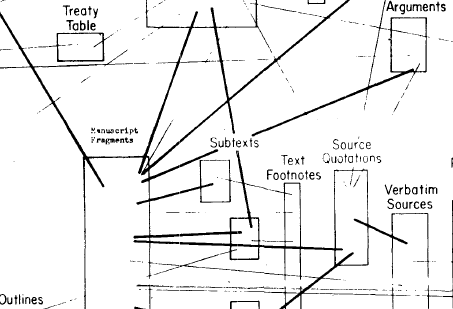
Project Xanadu connected two pages of information for the first time in history. Links were visual lines between pages.

1983 – HyperTIES system

This system introduces color, as it used cyan hyperlinks on a black background. HyperTies was used as an “electric journal.” This may be an ancestor of our blue hyperlink we know and love today, but I do not believe that this is the first instance of the blue hyperlink since this color is cyan, and not dark blue.

1985 – Windows 1.0

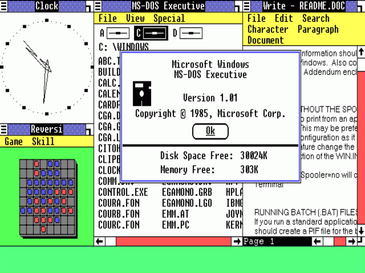
Windows 1.0 brought a full color graphic interface. The links and buttons are still black, similar to Apple’s interface at the time. What I do find interesting, however, is that this is the first instance of our dark blue used in a layout. The dark blue is heavily used in the headings and on borders around modals.

Another interesting thing about Windows 1.0 that still appears in modern websites is the underlined hyperlink. This is the first example of an underline being used to indicate a hyperlink that I have been able to find.

To make Windows 1.0 even more interesting, we see the introduction of a hover state. The hallmarks of modern interaction design were alive and well in 1985.

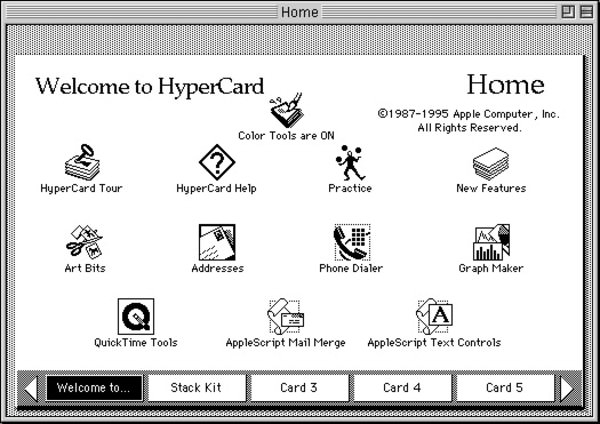
1987 – HyperCard

Released by Apple for the Macintosh, this program used hyperlinks between pages and apps. While aesthetically beautiful, this version did not use color in its hyperlinks.

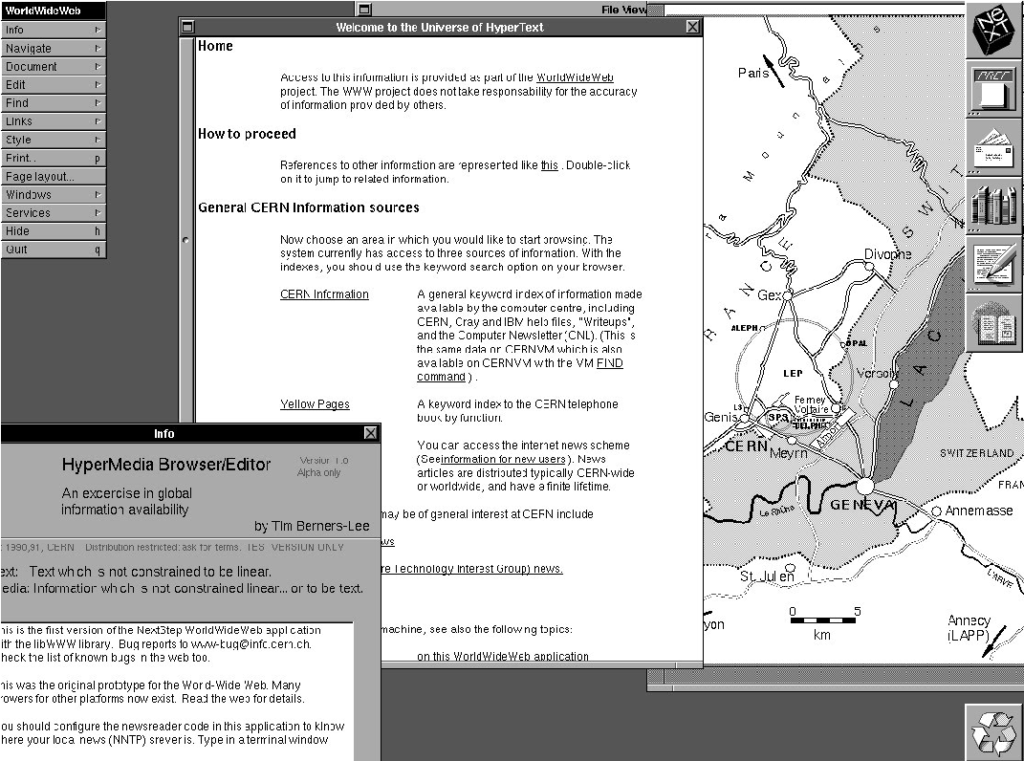
1987 – WorldWideWeb (WWW)

WWW was the first browser created by Tim Berners-Lee while working at CERN. It started out as black and white, with underlines under hyperlinks, which are still used today on modern websites, and are a great solution for colorblindness.

The hunt for who made it blue

We’ve now been able to narrow down the time frame for the blue hyperlink’s origin. WWW, the first browser, was created in 1987 and was black and white. We know that Mosaic was released on January 23, 1993 and was credited as being the first browser with blue hyperlinks. So far, we have been unable to find blue being used for hyperlinks in any interface before 1987, but as color monitors become more available and interfaces start to support color, things change quickly. The next few years will see massive innovation and experimentation in color and hyperlink management.

1990 – Windows 3.0 

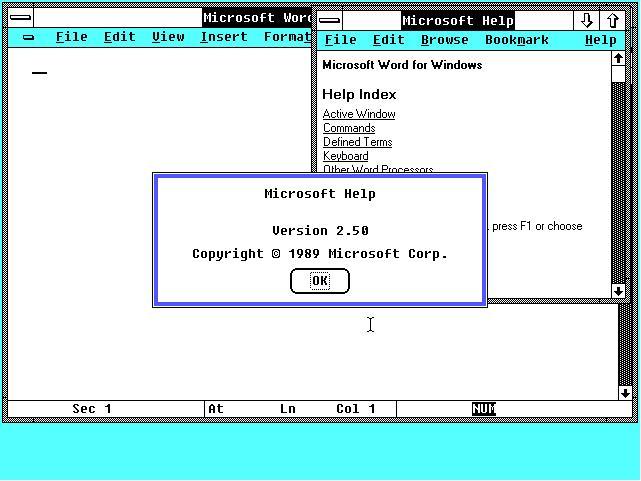
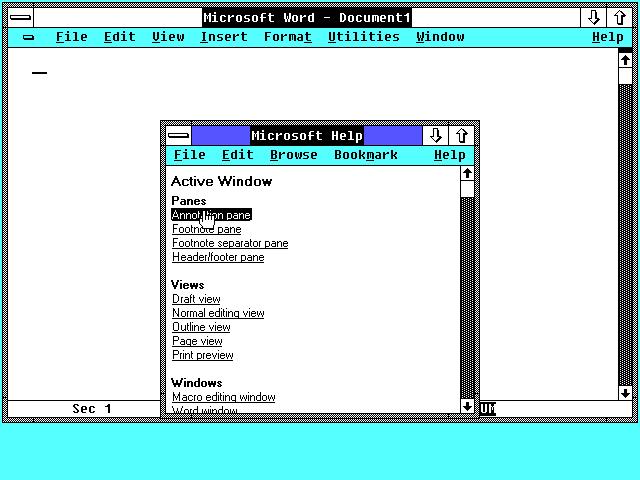
Windows 3 included support for 16 colors, however the text links were still black links on a white background, which turned to white text on a black background when selected.

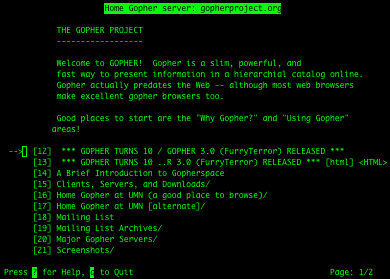
1991 – Gopher Protocol

Gopher Protocol was created at the University of Minnesota for searching and retrieving documents.  Its original design featured green text on a black background.

1991 – HyperCard (Color)

Apple brought color to its HyperCards, but notably, the text links were still black and not blue. However, some UI elements did have blue accents when interacted upon which is incredibly important as it shows the slow shift of blue being used as an interaction color.

October 5, 1991 – Linux Kernel

Linux used white text on a black background.

1992 – ViolaWWW

In the ViolaWWW browser, the text links are underlined, and the background color is gray, like we would see is Mosaic’s initial release. However, the text links are black.

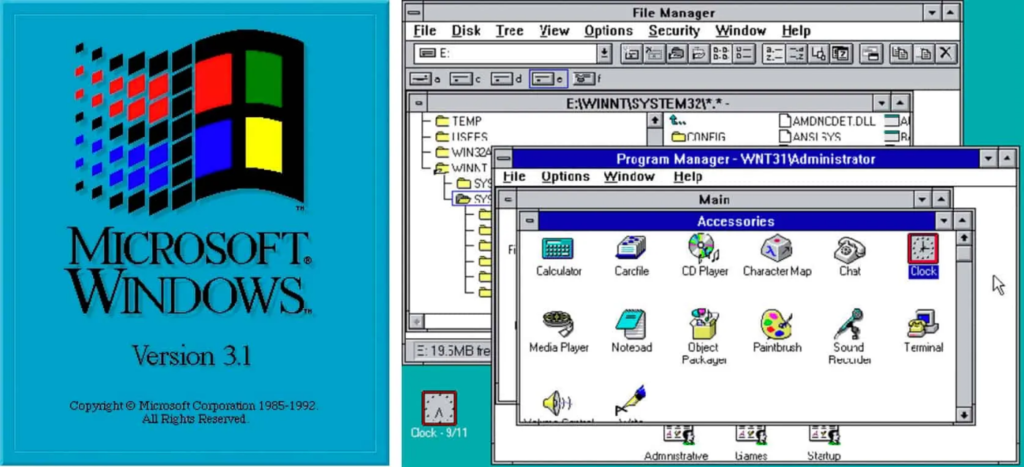
April 6, 1992 – Windows 3.1

Microsoft has been using dark blue for interfaces since 1985, but starting in 1990 they also began using it for interaction. Here Microsoft uses the “hyperlink blue” for active states when a user clicks on different drives, folders and icons. This is incredibly important because it shows the slow evolution of this blue from being a layout color to being an interactive color, preceding the time when blue would have been added to Mosaic by almost exactly a year.

January 16, 1992 – June 21, 1992 – Linux Kernel

In 1992, Linux Kernel gained support for color in their console.

Who did it first?

January, 1993 – Mosaic

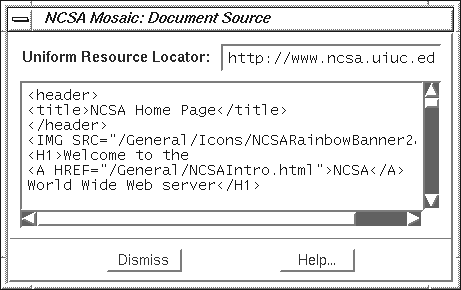
The first beta version of Mosaic was created for the X Window System for the University of Illinois. The original interface was black and white and did not have blue hyperlinks, but had black hyperlinks with a bordered outline. According to the X System user guide, the hyperlinks were underlined or highlighted.

April 12, 1993 – Mosaic Version 0.13

In the changelog for Mosaic for version 0.13, there is one bullet that is of great importance to us:

Changed default anchor representations: blue and single solid underline for unvisited, dark purple and single dashed underline for visited.

Release Notes

In the immortal words of Jeff Goldblum’s Ian Malcom character in Jurassic Park, “Well, there it is.” 

April 21, 1993 – Mosaic Version 1

Mosaic Launched for the X Window System. I was unable to find screenshots of what the interface looked like for this release, but according to the release notes, the visited color was changed to be a “Better visited anchor color for non-SGI’s”.

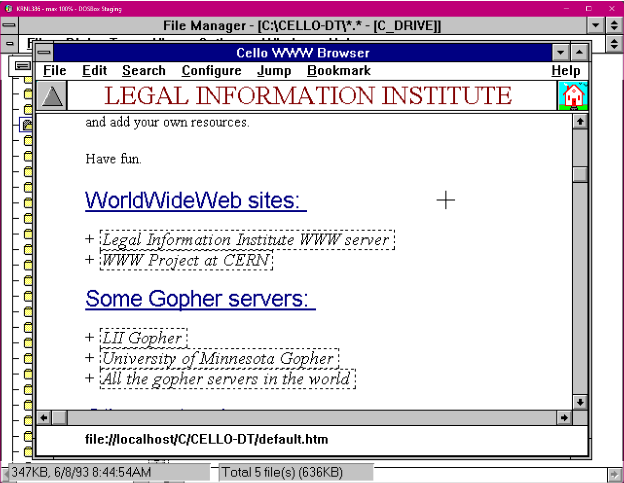
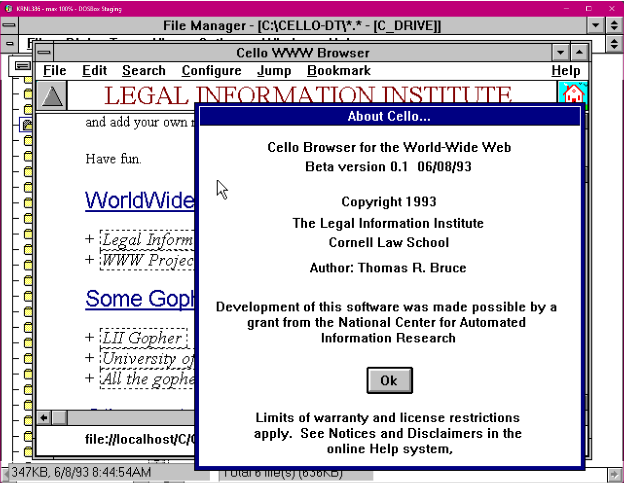
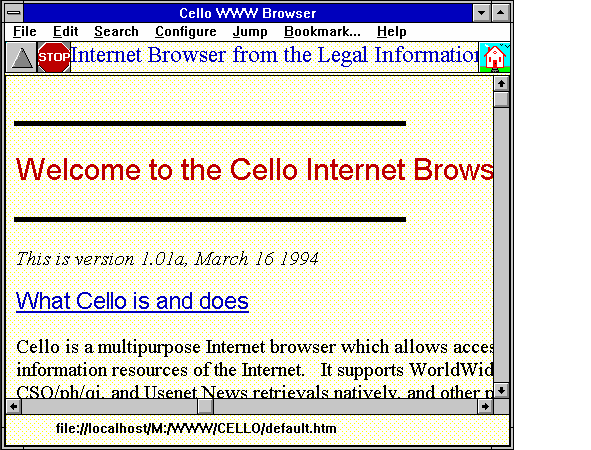
June 8, 1993 – Cello Beta

Cello was created at Cornell Law School so that lawyers could access their legal website from Windows computers. My team mate, Molly, was able to download the 0.1 beta for me, and we were shocked by what we found:

There it was! Our hyperlink style, except it wasn’t a hyperlink, it was the heading. Our “link blue” had never shown up in user interfaces before 1993, and suddenly it appears in two instances within two short months of each other in two separate browsers at two different universities being built at the same time.

September, 1993  – Mosaic Ports

By September, a port of Mosaic was released to the Macintosh 7.1 operating system. I was able to locate a screenshot of this version which included a blue hyperlink which is the first visual evidence of the color blue being used to denote a hyperlink.

What came after the blue link?

June 1993 – Unix GUI – Common Desktop Environment

Common Desktop Environment is a GUI for the UNIX operating system, the same operating system used to build Mosaic. This interface featured black text with an underline for hyperlinks.

1994 – Cello Version 1

Cello is out of beta, but now features a yellow background, and has kept it’s link-blue underlined headers and still has black hyperlinks with a border.

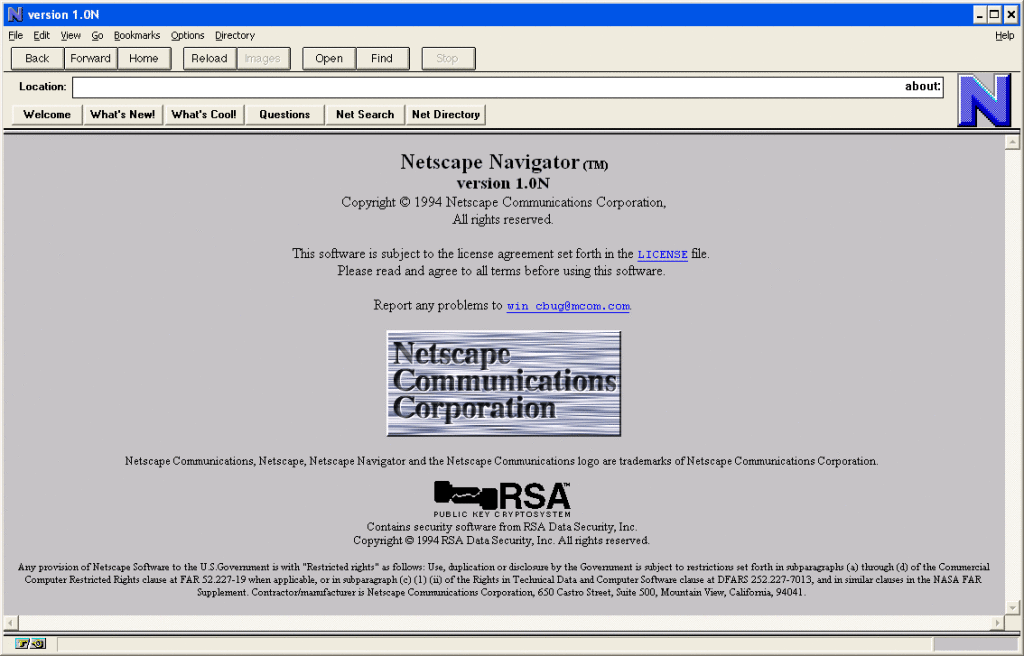
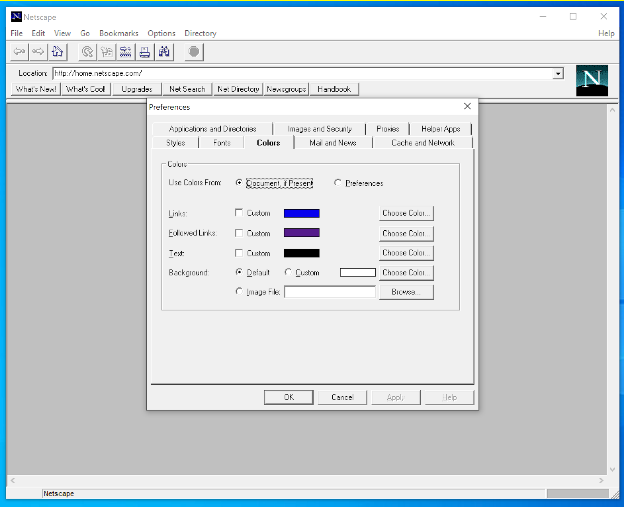
October 13, 1994 – Netscape Navigator

Created by Marc Andreessen and James H. Clark, Netscape used the same visual language of Mosaic: blue hyperlinks and a gray background.

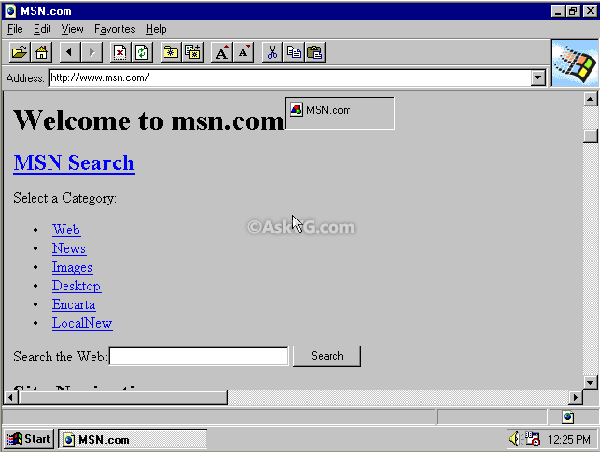
July 1995 – Internet Explorer 1.0

In 1995, Microsoft produced Internet Explorer, and no surprise, it also featured blue hyperlinks and a gray background. Internet Explorer was packaged with Windows 95, which was the first time that a browser came with an operating system. Around this time, the browser wars began, but the look and feel of hyperlinks had been firmly established.

November 9, 2004 – Firefox 1.0

Mozilla Firefox was released, and also featured blue hyperlinks, which are in use to this day. These images are from Netscape 1.22 and Firefox Nightly today.

So why blue hyperlinks?

What happened in 1993 to suddenly make hyperlinks blue? No one knows, but I have some theories.

I often hear that blue was chosen as the hyperlink color for color contrast. Well, even though the W3C wasn’t created until 1994, and so the standards for which we judge web accessibility weren’t yet defined, if we look at the contrast between black as a text color, and blue as a link color, there is a contrast ratio of 2.3:1, which would not pass as enough color contrast between the blue hyperlink and the black text. 

Instead, I like to imagine that Cello and Mosaic were both inspired by the same trends happening in user interface design at the time. My theory is that Windows 3.1 had just come out a few months before the beginning of both projects, and this interface was the first to use blue prominently as a selection color, paving the way for blue to be used as a hyperlink color. 

Additionally, we know that Mosaic was inspired by ViolaWWW, and kept the same gray background and black text that they used for their interface. Reviewing Mosaic’s release notes, we see in release 0.7 black text with underlines appearing as the preferred way of conveying hyperlinks, and we can infer that was still the case until something happened around mid April right before when blue hyperlinks made their appearance in release 0.13. In fact, conveying links as black text with underlines had been the standard since 1985 with Microsoft 1, which some once claimed Microsoft had stolen from Apple’s Lisa’s look and feel.

I think the real reason why we have blue hyperlinks is simply because color monitors were becoming more popular around this time. Mosaic as a product also became popular, and blue hyperlinks went along for the ride. Mosaic came out during an important time where support for color monitors was shifting; the standard was for hyperlinks to use black text with some sort of underline, hover state or border. Mosaic chose to use blue, and they chose to port their browser for multiple operating systems. This helped Mosaic become the standard browser for internet use, and helped solidify its user interface as the default language for interacting with the web.

When Netscape and Internet Explorer were created, the blue hyperlink was already synonymous with the web and interaction. The blue link was now browser-agnostic and well on its way to becoming a symbol of what it means to use the internet.

Rhapsody in #0000FF  

It has been almost 30 years since Mosaic put the now ubiquitous blue in its release notes, but it is no longer the early 1990s. While it is quite fun to discover the secrets of how browsers are made, here in the present, we have accepted it as gospel truth that links can and should only be blue because these early pioneers said it should be so. 

When the hyperlink was created, limited colors were available. Today we have almost every color option, so what should be the default color and state of links on the internet? When given every opportunity to deviate from tradition, do we do so for the sake of progress, or should we keep the blue because it’s an established visual pattern?

If you are to change the link color, here are my lists of requirements for the perfect color when choosing a link color:

  • Optimal text accessibility with the background color and surrounding text. Your design decisions shouldn’t be the reason a user can’t access content on a page.
  • Interactive states should always be styled in your stylesheets. Examples include: touch, visited, hover, active and focus. 
  • Links and buttons should be large enough to tap or click. You can’t be sure how people are interacting with your content on devices by using styluses, fingers, mice or trackpads. It’s your job to make sure your links are easy to navigate and have enough space around them.

In closing, should all links be blue? Maybe so, or maybe not. There has been a long path of visual elements used to denote hyperlinks, and the color blue is just one of many elements that have come to represent a hyperlink. Links are about connecting information together. Always make sure that a hyperlink stands out from the rest of the surrounding content. Sometimes that means you need an underline, or a background color, or maybe just maybe, you need the color blue.

Major thanks and credit to my colleagues Asa Dotzler, Molly Howell, M.J. Kelly, Michael Hoye, and Damiano DeMonte for help with research and inspiration for this article.

The post Why are hyperlinks blue? appeared first on The Mozilla Blog.

19 Sep 20:50

The Lenovo IdeaPad Flex 5

by Rui Carmo

This is going to be another non-Apple post, but for a good reason: As I wrote about the other day, my lovely, svelte and ultralight E111 died an accidental and ignominious death and I was left without a working “to the metal” Linux machine for low level hacking, i.e. building and flashing ESP8266 and ESP32 firmware images, messing about with network stuff, fiddling with Rust, etc.

I loved the little thing as it ran Elementary passably and was a very lightweight plastic, throwaway machine I could take with me anywhere, plus it was quite nice and distraction-free to write drafts on–in fact, most of the past two years’ posts went through it at some stage before going back to a Mac or iPad for finishing.

Finding a Replacement

Rifling through storage yielded nothing I could use besides an embarrassing amount of ancient 32-bit Atom netbooks that I am currently cleaning up and preparing to donate or recycle, so I decided to buy a replacement.

The good news is that I already had a good idea of what I wanted, since for the past year or so I have been itching to try out a Ryzen machine with an eye to using it alongside a future Apple Silicon desktop Mac. For that scenario, I was set on buying a compact desktop that could do a few things properly:

  • Provide me with a fully native, GPU-accelerated Linux desktop for the sake of having a full, unfettered experience (and as a sort of long-term alternative to macOS if it ever becomes untenable…).
  • Run Windows inside KVM for the occasional non-work thing (I have been going through personal archives, for instance, and you definitely need Windows to handle ancient file formats).
  • Run Blender and Godot well enough to see if I could revisit some ideas I have (this has since been rendered somewhat moot by their both having native M1 ports, but are still useful as examples of what I couldn’t achieve on the E111).
  • Maybe, just maybe, do some light gaming, in case I wanted to play something xCloud couldn’t.

But the pandemic has had an interesting effect: I am now very much resistant to spending all day in my office, and I feel a need to do some stuff someplace else.

Plus having a secondary desktop introduces all sorts of practical hassles: I would have to have some kind of KVM, it would probably turn out to be a noisy space heater, etc. And I already have a perfectly good i7 squirreled away in a closet for remoting to and building containers, running VMs and the like.

Finally, when my iMac started to fail I decided to have less stuff on my desk, so I have come to realize that realistically I don’t need more than one desktop machine, and that it is definitely going to be an utterly silent Mac mini of some sort.

AMD Has Ryzen

As it happens, some months ago I started looking at Ryzen 4000 series APUs as they started showing up on mini-ITX builds and laptops. My interest was piqued because the reviews were nothing short of amazing considering those chips had sub-45W TPUs and needed relatively little cooling.

And yet, they satisfied one of my latent needs as well–given my propensity for being involved in high-performance, low-latency services with high degrees of concurrency, I’m a sucker for multi-core CPUs, and all those APUs had excellent multi-core support, whereas my E111 only had two cores, making it hard to doodle with that kind of thing on a laptop.

Cutting a long, protracted selection process short, since my Linux machines tend to last at least as much as my Macs but feel a lot slower around their end of life, I decided to buck that trend, splurge a bit and get a Lenovo IdeaPad Flex 5 14ALC05 with a Ryzen 7 5700u, 16GB of RAM and a 512GB SSD.

I picked Lenovo because:

  • The hardware is generally quite good.
  • Their laptops are generally user serviceable (at least storage-wise–RAM in these models tends to be soldered to the motherboard).
  • Lenovo was one of the first to actually ship Ryzen APU laptops in volume, so they were most likely to have worked out any kinks.
  • They usually have above average Linux support (the ThinkPad range is extremely popular among Linux hackers, ad while that doesn’t quite yet translate across to the IdeaPad, it’s getting there).

Getting Physical

The machine is “unapologetically plastic” but feels sturdy, even considering the hinges are designed to flip it completely into a “tent” configuration (which I have no intention of ever using).

It comes with both a barrel jack and an USB-C connector for charging (that I can’t use for Thunderbolt video out seeing as this is an AMD machine), full-sized HDMI, and a headphone jack on the left side, plus two USB-A and a full-size (but half insert) SD card slot on the right.

The trackpad is plastic, but very nice. Not Mac or Surface-grade, but certainly good enough, and I have had zero issues with its responsiveness or feel.

Despite not being backlit (that seems to have been dropped for this year’s models, together with the fingerprint reader) the keyboard is very, very, very good, with great feel and responsiveness, and deserves a lot of praise:

A close-up of the keyboard, for your amusement.

As you can see above, a peculiarity of the Portuguese layout (that is also present in Apple keyboards) is that the left shift key is effectively halved to add the angle bracket key, and the ANSI Return key becomes an inverted L-shape to allow for jamming in tilde and circumflex keys.

This may seem odd, but is actually one of the sanest layouts on display at every local retailer, and I’m really glad it is this plain and functional.

Speaking of functional, the only real niggles I have with this are that the function key row (including Esc) is rather smaller than usual even when compared to Surface keyboards, and that Ctrl and Fn are swapped–but years of daily switching between Mac PC and US/PT layouts mean I hardly notice that anymore.

I have zero issues with the cursor keys (and, to be honest, prefer it to the old inverted-T shape), so the keyboard is just fine for me.

Touchscreen

The display I have is an “unapologetically glossy” (i.e., sometimes irritatingly so) 1080p TN panel with reasonable color range that won’t win any awards.

It is serviceable–nothing more, nothing less, and par for the course for the Lenovo display lottery given that they ship whatever is on hand to retail channels, and Portugal isn’t exactly a top tier market. I did check the Lenovo site, and there aren’t that many options (BTO is not something Lenovo seems to be keen on in Europe).

But it is a touch screen, and both it and the bundled Lenovo pen “just worked”, showing up under Elementary as a Wacom device, complete with battery reporting. This meant I could instantly start drawing in OneNote web (which works fine), and that even the infamous Gimp had no trouble detecting stroke pressure.

Linux Power Management

The Ryzen 7 is a beast of a chip even in mobile editions, and I went with the 5700u because I wanted the extra cores (8, for a total of 16 threads) in something that would fit into a laptop form factor. Having those cores is handy for long Docker builds, and the integrated GPU is quite intriguing.

The power brick is rated for 65W, so I’m assuming this can sip at least that much although I’m pretty sure the TDP is supposed to be 15-30W.

Like I wrote before, I have had pretty much zero issues (other than flaky brightness controls and lack of some trackpad gestures) with running Elementary on this hardware. Every bit of the chipset just worked from day zero, and even traditionally finicky things like Bluetooth weren’t any trouble (my Logitech M720 works fine, including side scrolling).

There is an irritating exception, though, which is managing the fan (which sounds like an irate banshee whose last drop of scotch was stolen by the living when it’s going full tilt).

Right now, I can’t set a proper fan curve (or control the fan altogether) in Linux, but changing the System Performance Mode in the BIOS settings to Battery Saving helped a lot, and I can barely hear the fan now unless I’m running a CPU-intensive task.

Just after a charge cycle, in Battery Saving setings.

Linux battery estimates can be overly optimistic, but eventually stabilize around 7-8 hours uptime for a full charge, which is about what I’m getting with moderately intensive use. And it’s great.

The machine does get warm to the touch under load, but nothing like the Intel MacBook Air we still have around, which gets positively toasty and can actually be painful to the touch if your finger slips just between the keys on the top rows.

Windows in KVM

Although the machine ran Windows for less than 15 minutes before I installed Elementary, I decided to make sure it was available if I needed it.

After getting an installer ISO and the right virtio driver ISO, firing up KVM and setting up a VM took less than 10 minutes from the moment it booted, which was impressive.

Getting Secure Boot working (to set up BitLocker inside the VM, which is something I need—and would be added overhead on top of full-disk encryption on the host) has been a bit of a pain, though, and I am still investigating how to get some sort of TPM working since QEMU apparently doesn’t like the passthrough device (or an emulated one), but that’s not critical.

Secure enough, with BitLocker enabled to boot (if you'll pardon the pun).

Suffice it to say I can run Windows on this just fine if required, and that this beast of a machine hardly slows down even on battery power.

External Monitors

I have of course tried it with my LG 34WK95U-W, and although Elementary does not seem to want to let me select 30Hz as a display rate, it supports a decent enough resolution at 60Hz:

This is a bit fuzzier than what I can get out of the Mac on this display, but perfectly serviceable.

Elementary also allowed me to select HDMI for audio out and remembered all the settings (display position, audio, etc.), which was nice. I suspect Windows will fare sligthly better in terms of resolution and refresh rates, but I don’t intend to try it anytime soon.

Gaming

This wouldn’t be a modern hardware review if there wasn’t at least a bit of gaming involved, although installing Steam in this machine felt like a lot of overhead and I’m not really interested in a universe where you need 25GB of storage for a single game – I much prefer playing Control on xCloud, which I can do more comfortably with a big TV.

But with the hype about Proton and Valve’s Steam Deck, I was also curious as to how Elementary would handle it, so I installed Steam twice–once from flatpak (which failed because Proton wouldn’t run inside flatpak), and again via a regular .deb.

And, much to my amazement, the machine ran the Windows version of Quake Champions (an old favorite of mine) at a smooth, steady 60fps, and I had zero issues (other than lack of practice playing) in getting it to work.

As far as I’m concerned, Proton is every bit as good as the hype puts it, although I can’t be bothered to download several hundreds of gigabytes’ worth of games to give it a thorough test.

But I later tried plugging it in to my LG 34WK95U-W and it worked just fine as well in battery saving mode, which I found quite remarkable:

Those 47 fps were actually on the low end, and windowed mode didn't have any practical effect on performance.

I haven’t tried messing about with settings or playing with the laptop plugged in to power and in performance mode because I can’t abide the fans, but as a highly unscientific benchmark of what this hardware can do with both hands tied behind its back, I am very much impressed.

Niceties

Something I found quite useful is that the laptop will power on just enough to and display a graphic with the battery status if you press a key when it’s shut down:

Every laptop should have this.

This can be disabled in the BIOS (and only really works if you have “Boot on lid open” disabled, otherwise it hardly shows up), but so far it’s a keeper.

The Battery Bug

Finally, a real annoyance I’ve found (so far the only one): this laptop has a weird bug apparently related to fast charging, in which it will occasionally believe that power adapter is not supplying enough charge.

This will often come up when you reboot the machine with less than 30% battery, and throw up an ugly BIOS message demanding you switch to “the manufacturer’s original power adapter” (sic) and hit F1 to continue.

Even worse, I’ve had it happen unobtrusively and stop the machine from charging overnight, which is a major pain.

The fix for that is to reset the charging state, which you can do by:

  • Unplugging the machine.
  • Powering it on and hitting Fn+F2 to access the BIOS.
  • Disabling the built-in battery (this will set the machine to maintenance mode and power it off instantly).
  • Plugging the adapter back in, after which it will charge normally (typically in under an hour).

I suspect there might be a BIOS update for this someday, but Lenovo’s support site is absolutely hideous and existing BIOS updates have very little (if anything) in the way of changelogs, so I might have to live with this for a fair bit.

Conclusion

As a (pricey, but stupendously powerful) replacement for my E111, this thing is superb, almost bordering on overkill if I didn’t consider it as an investment.

As a Linux laptop, I don’t think there are that many decent options at the same price point (although I was heavily restricted to what retailers had on hand over Summer break).

But as a general, all-in-one developer machine, I think this ticks all the boxes and is highly recommended (assuming the charging issue can be fixed).

And, of course, as an excuse for fooling around, refreshing my views on alternate platforms and generally having a lot of fun (like with Bitwig, for instance), it certainly takes the cake.

But, at least while I can still get at a terminal prompt, what I really want is a decent (post-M1) Mac, and I’ll be keeping an eye out for that in the coming months.

In the meantime, let me do some more, erm… testing with that rocket launcher…


19 Sep 17:11

MDN: Subdomain takeovers

MDN: Subdomain takeovers

MDN have a page about subdomain takeover attacks that focuses more on CNAME records: if you have a CNAME pointing to a common delegated hosting provider but haven't yet provisioned your virtual host there, someone else might beat you to it and use it for an XSS attack.

"Preventing subdomain takeovers is a matter of order of operations in lifecycle management for virtual hosts and DNS."

I now understand why Google Cloud make your "prove" your ownership of a domain before they'll let you configure it to host e.g. a Cloud Run instance.

Via @carboia

04 Sep 04:05

High-performance rail service is a solid intercity solution for Canada

by Stephen Rees

by Tony Turrittin. Originally published on Policy Options
August 16, 2021

Canada can have a network of modern, swift, affordable and efficient passenger trains, like virtually every other industrialized nation. Yet it doesn’t.

In the 1970s, both the American and Canadian passenger train systems were taken over by their federal governments. Since then, Canada has slowly dismantled most of the VIA Rail system while Amtrak, the U.S. national train system, has been improved and stabilized. Amtrak’s growing network of regional rail corridors has been especially remarkable.

Greg Gormick, an analyst and policy adviser, has suggested that high-performance rail (HPR) is the best means to improve and expand our skeletal network of deteriorating rail service. Canadian politicians and advocates at both federal and provincial levels have made calls for high-speed rail (HSR) like France’s TGV and Japan’s bullet trains.

TGV 4409
French TGV at Paris, Gare de l’Est in 2012 Stephen Rees photo on flickr

High-speed rail operates on all-new electrified lines built from scratch at a very high cost because it operates on tracks with no grade-crossings and must be separated from freight. High-performance rail, in contrast, incrementally improves all aspects of the existing service and builds on what little public funds have already been invested in it. Operating at progressively higher speeds with modern trains on tracks shared with freight trains, high-performance rail offers increased frequency, reduced travel times, better on-time performance, all-weather reliability and enhanced comfort and onboard amenities.

High-performance rail delivers improvements each step along a phased pathway to vastly improved service. Because it isn’t a “big bang” approach that takes years to deliver any benefits, high-performance rail is a practical and affordable “higher speed” option for today that may lead the way to building the more costly high-speed rail in the future.

Canada has not participated in the global move to high-performance rail. This failure is largely due to government interference and lack of political will. Passenger rail the world over requires subsidies for operating costs and capital improvements, but Canadian governments have cut back VIA since its founding in 1977. The Mulroney cuts of 1989 eliminated most trains in Western Canada and Atlantic Canada, and removed passenger service from the historic and well-used transcontinental route over the Canadian Pacific Railway (CPR). These cuts were decided in the Privy Council Office, not by VIA. In other countries, it was government commitment as much as technology and funding that helped to develop the high-performance rail networks.

In the U.S., high-performance rail is now at work on 15 corridors (see Table 1). Extensions are underway on several of these routes, and more are under construction or being planned.

https://infogram.com/turrittin-table-1-1hd12yxn0vxwx6k

The opportunities for high-performance rail in Canada are illustrated in Table 2, demonstrating its potential from coast to coast. High-performance rail trip times assume substantially upgraded track and signaling. Given its positive attributes, high-performance rail as solid conventional railroading should be a major form of interurban mobility in Canada.

https://infogram.com/turrittin-table-2-1h7g6k09300go2o

Ironically, the first wave of equipment to implement a Canadian high-performance rail solution is on order for a wildly improbable scheme cooked up by a politically manipulated VIA. In 2011, the later-defrocked Peterborough MP Dean Del Mastro proposed to return trains between Toronto and Peterborough. The plan morphed into using a long-abandoned CPR backwoods line and extending it to Smiths Falls and to Ottawa, which bypasses the heavily populated Lake Ontario shoreline. The plan changed again when a former VIA Rail CEO made this impractical route the centrepiece of what VIA calls 160-km/hour high-frequency rail (HFR) for the Montreal-Ottawa-Toronto triangle. To increase its political attractiveness, VIA extended the HFR plan to Quebec City without increasing its cost estimate.

The stated objective of VIA’s proposal is separating passenger and freight traffic to eliminate conflicts that arise because of competition for track time and capacity, as well as differences in operating speeds. This is good in theory; however, implementing this would be expensive, time consuming and largely unnecessary. The key is to add capacity to existing lines incrementally and economically for both types of traffic. On high-performance rail routes around the world, freight and passenger trains share tracks at speeds of more than 200-km/hour.

Given constantly evolving estimates for California’s all-electric high-speed rail project and another linking Vancouver with Seattle, Portland and Eugene, and taking the lowest cost-estimates, a new passenger-only route for the Quebec-Windsor Corridor alone would cost more than $135 billion. Even applying VIA’s proposal to build only a single-track line with passing sidings instead of a double-track line that is standard for these types of projects, the cost wouldn’t decrease by much.

VIA wisely placed an order in 2018 with Germany’s Siemens Mobility for 32 five-car Venture trains each powered by a state-of-the-art Siemens Charger locomotive. Delivery starts in 2022. This $1.5 billion contract is part of a wave of North American orders for these 200-km/hour diesel-electric trains, 10 of which are already operating between Miami and West Palm Beach. Amtrak will use these train sets for high-performance rail routes in California, Missouri, Wisconsin, Illinois and Michigan.

https://en.wikipedia.org/wiki/Siemens_Venture#/media/File:Venture_test_train_at_Oakland_Maintenance_Facility_(2),_July_2020.JPG

In the end, it’s governance, not hardware or software, that’s the roadblock to improved high-performance rail service in Canada. Here, too, the proven approach is on display in daily service in the U.S., particularly California. Using a combination of federal and state funding to fuel locally managed, cross-jurisdictional projects, the joint powers authorities (JPAs) employed on three routes in the Golden State are incrementally revolutionizing rail transportation in one of the most car-centric regions of America.

The Capitol Corridor JPA describes this governance structure’s application on the San Jose-Oakland-Sacramento route as “a partnership among the six local transit agencies in the eight-county service area, which shares the administration and management of the Capitol Corridor.” The Capitol Corridor offers hourly daytime trains serving all stops on its 213-km route. This allows for convenient travel between all city pairs. The route has a high concentration of universities and colleges. Amtrak operates the trains on Union Pacific track that also carries numerous freights.

It’s time for Canadians to cease being taken in by rail schemes politicians dangle in front of voters and then drop. In its top-down, politically dominated form, VIA hasn’t worked out and never will. New JPA-style governance, new equipment, a new high-performance rail approach and political will are required to give Canada a network of modern, efficient and effective rail passenger services.

How likely is this to occur?

The Trudeau government’s 2020 speech from the throne announced that “to further link our communities together, the Government will work with partners to support regional routes for airlines. It is essential that Canadians have access to reliable and affordable regional air services. This is an issue of equity, of jobs, and of economic development. The Government will work to support this.”

On the subject of rail passenger service – high-performance rail or otherwise – there was not a word.

Meanwhile, high-performance rail investment and growth strategy continues south of the border. One month after Ottawa was mute about rail’s role in a post-pandemic Canada, the U.S. Federal Transit Administration awarded the Michigan Department of Transportation funding for further improvements to its diesel-powered, 176-km/hour Pontiac-Detroit-Chicago Wolverine Corridor.

The upgrade for faster more frequent train service is now approaching completion.

Amtrak’s 15-year growth proposal unveiled early this year would expand its regional routes substantially, adding about 160 communities to its system. Gormick has suggested that high-performance rail can be applied to an Ontario region with very poor public transportation as well. Given an approaching federal election, expect government announcements of more rail projects to come, but they will still be missing the mark.

This article first appeared on Policy Options and is republished here under a Creative Commons license.

Tony Turrittin is a retired York University sociology professor. His research centred on social inequality, social mobility and their links to education. For four decades he has actively participated in national, regional and local citizen groups advocating for public transportation.

04 Sep 04:05

Testing

by Stephen Rees

I have just finished reading Walter Isaacson’s “The Code Breaker” (Simon & Schuster 2021 ISBN 978-1-9821-1585-2) It is about Jennifer Doudna, Gene Editing and the Future of the Human Race. I highly recommend it. I think it ought to have been called The Code Breakers since there were – and are – a lot more people involved. Doudna and Emmanuelle Charpentier won the 2020 Nobel Prize in Chemistry.

One of the chapters in the book describes how CRISPR was used to create tests. The important thing to note that though there were several teams all working at once they were coöperating as much as competing and all the findings and methodologies were placed in the public domain. One of the teams under Feng Zhang used a SHERLOCK process that by the end of 2020 produced “a small machine that could be used to get results in less than an hour”

“The CRISPR based tests developed by Mammoth and Sherlock are cheaper and faster than conventional PCR tests. They also have an advantage over antigen tests … can detect the presence of the RNA of the virus as soon as the person has been infected”

There are also at home tests including one that can be reprogrammed to detect “any new virus that comes along”.

The reason I want to bring this information to your attention is that once again our MOH in BC has not been keeping up. Since the beginning of the pandemic only people with symptoms have been allowed to be tested. Since many people now need a clear test result in order to go to work or travel the only way to get that has been to lie convincingly about the right sort of symptoms. And of course quite a few people who are asymptomatic will know that they have been exposed and that people in their circles have been infected. They are supposed to simply self isolate until they develop symptoms and then get a test. Of course by that time they are shedding virus copiously.

In part the reluctance to test was due to Bonnie Henry casting doubts on the veracity of tests – especially fast ones. I am not any sort of scientist or a medical professional but I think I have learned enough from just this one book to understand that the policy of restricting tests was as misguided as the early reluctance to endorse masks and the more recent foolish gesture of “opening up” by ending the indoor mask mandate far too soon and then have to reintroduce it as the numbers of infected persons rose dramatically again. Phase three need not have happened at all, but our system has never tried to achieve zero COVID and continues to put the unvaccinated (these days mostly young children) at risk.

Free tests distributed by the feds largely go unused in BC

01 Sep 18:31

Machine learning explained at five difficulty levels

by Nathan Yau

For their 5 Levels series, Wired brought in Hilary Mason to explain machine learning at five levels of difficulty. Mason’s explanations are super helpful at every level.

Tags: Hilary Mason, machine learning, Wired

01 Sep 18:30

Ghost bike ride for Miguel Joshua Escanan

by jnyyz

Miguel Joshua (MJ) Escanan, 18 years old, was killed by a cement truck driver last Wednesday on Avenue Rd just north of Bloor. His death attracted a lot of media attention as it was the first cyclist fatality of the year in Toronto.

Tonight was the ride and ghost bike installation in his memory.

The crowd gathers at Bloor and Spadina.

photo: Kay Pea

From this video, it is evident that over 200 cyclists were in attendance.

Riding up Spadina.

photo: Martin Reis
Photo: Martin Reis

Turning from Bernard onto Avenue Rd.

Down Avenue Rd. Safety in numbers for once.

Photo: Martin Reis

Geoffrey and Joey installing the ghost bike.

Photo: Martin Reis
photo: Kay Pea
Photo: Kay Pea
Photo: Kay Pea

Another view of the crowd.

Photo: Martin Reis

The Whitla family sang “We have come too far” by Jane Sapp.

photo: Martin Reis
Photo: Martin Reis

This tragedy renewed calls for more bike infrastructure. It has been pointed out that bike lanes on this stretch of Avenue Rd were suggested as part of ActiveTO, but city council turned back the request. We also remember Adam Excell who was killed at Avenue and Davenport in 2015. Better training is also essential for drivers of these huge trucks. One also recalls John Offutt, killed last year by the driver of another cement truck.

Deepest condolences to the family and friends of the deceased. We will always remember him.

Photo: Martin Reis.

Updates:

This video by Louis-Eric Simard shows the ghost bike installation, the call for a minute of silence, and the song by the Whitla family. You can also see Martin Reis and Nick Kovats taking lot of photos.

A nice annotated video of the ride from B.F. SInger.

Calls for more road safety on Global News.

Pictures by Kay Pea.

Pictures by Nick Kovats.

B&W pictures by Nick Kovats on actual film

Article about MJ’s death in Toronto.com

All cyclist deaths are tragic. Although this was the first such death of the year in Toronto, this is the fifth ghost bike installed in the GTA by ARC in 2021.

Rest In Peace:

What can you do about cyclists dying on our streets?

Stay safe, everyone!

25 Aug 02:47

Diversity within the Asian population

by Nathan Yau

Robert Gebeloff, Denise Lu and Miriam Jordan for The New York Times looked at overall increases and variation within the Asian population:

North Dakota, South Dakota, Texas, North Carolina and Indiana are among states that experienced major growth in the past decade. And people of Asian descent have been settling in ever larger numbers in states like West Virginia, where the overall population has declined.

Tags: Asian, diversity, New York Times

25 Aug 02:45

Textbooks (Alone) Are Not Enough

Yesterday I tweeted:

After reviewing three books more-or-less titled “Data Science for Social Scientists”, I think what our field desperately needs is “Social Science for Data Scientists”. I don’t know enough to write it, but I’ll pre-order a bunch of copies…

Someone replied, “…what you’re asking for is a textbook - those exist.” With respect, I disagree. Most people—including most working programmers—won’t read a textbook unless they absolutely have to. Saying that we can fix this problem by writing (or pointing at) a textbook is like saying that abstinence programs are the solution to teen pregnancy: it allows you to claim you’ve solved the problem without threatening anything else you want to believe in.

This response highlights a perspective I’ve struggled against for many years. Brent Gorda and I chose the name Software Carpentry because it wasn’t software “engineering”. We wanted to teach people the equivalent of hanging drywall and fixing leaky taps, not the equivalent of digging the Channel Tunnel. What we learned is that (a) carpentry is more useful to most people than engineering, but (b) skilled trades have lower social status than “gentlemanly” pursuits involving multi-colored algebra on whiteboards.

Academia reacts the same way to popularization: John Galbraith and Carl Sagan were both looked down on by many of their peers for deigning to explain science to non-specialists. Those who do can have tremendous impact, and not always for good. Freakonomics persuaded literally millions of readers that the only valid way to analyze social interactions was through the lens of personal interest. By doing so, it built a constituency for changes in legislation and taxation that have fueled increasing inequality in society.

So if “programmers and data scientists don’t understand how society works” is the problem, I don’t think textbooks are the answer. They can help people who are already convinced they want to know more to keep learning, but “already convinced” is the hard part. For that, we need someone who knows enough to know what corners to cut and what simplifications will not mislead, and who doesn’t think that being comprehensible is somehow shameful. We need someone who can explain to programmers steeped in Silicon Valley’s small-L libertarian zeitgeist why racial discrimination persists even though it’s economically inefficient, how regulatory capture works, why CEOs keep getting away with sexual assault, and why Radical Candor is bullshit in the service of power. If this is you, please give me a shout.

25 Aug 02:08

Preparing to Welcome Two Billion Refugees

by Dave Pollard

A-Syrian-refugee-holding-009-640x384

The iconic 2015 photo by Daniet Etter/New York Times/Redux /eyevine of Middle-Eastern refugees weeping for joy at their safe arrival in Europe

no one leaves home unless
home is the mouth of a shark
you only run for the border
when you see the whole city running as well…

you have to understand,
that no one puts their children in a boat
unless the water is safer than the land
no one burns their palms
under trains
beneath carriages
no one spends days and nights in the stomach of a truck
feeding on newspaper, unless the miles travelled
mean something more than a journey.

— from “Home”, by Warsan Shire

Sometimes we forget that humans are capable of incredible acts of courage, open-mindedness and generosity. Those capacities are going to be sorely needed over the coming decades as as many as two billion refugees — mostly fleeing utterly uninhabitable climates and irreparable storm and disaster zones, as climate collapse gains steam — come knocking on the doors of their neighbours.

Even as that is happening, we are likely to see huge waves of refugees from global economic collapse as well, as our absurdly overpriced stock, commodity and real estate markets wake up to our unsustainable way of living and lose most of their illusory value, with the resultant loss of hundreds of millions of jobs, the collapse of global trade, financial institutions, currencies, governments, resource and energy development activities, the whole house of cards, making many necessities of life suddenly unaffordable for most of the planet’s people, while eliminating essential public services that many others, already on life support, depend upon.

There will of course be strong initial resistance to welcoming such an onslaught of refugees. The onslaught and the resistance are already playing out across the world and across the political spectrum. We are understandably terrified that our already crumbling systems will not be able to bear the weight of so many more in such enormous need. That they won’t, for much longer, even support us.

But at some point, hopefully sooner rather than later for most of us, it will dawn on us: This is not an issue of us versus them. We are all in this together. The borders cannot and will not hold. If we are not already among the refugees, there is a significant chance we will be soon. And those already on that journey, perhaps a lifelong, multi-leg journey for many, can actually show us how to cope better when our own journey to find sanctuary from collapse begins.

Many refugees have learned, of necessity, skills that many of us in complacent, dependent, affluent parts of the world have forgotten: How to grow food and make nutritious meals, how to make and fix clothes, tools and vehicles, how to get along with strangers and build some modicum of community wherever they are. We will all have to relearn these things, and refugees may show us how.

There is not much information available on how to accommodate huge numbers of refugees, though it’s not a uniquely modern problem. The nations that currently harbour the largest numbers of refugees (especially as a % of their domestic population) are mostly adjacent to the countries that millions are desperate to escape: Syrians in Turkey, Venezuelans in Colombia, Afghanis in Pakistan, Congolese and Sudanese in Uganda. And more than half of the world’s displaced people are ‘internally’ displaced: They have been forced from their homes, but live in camps and other ‘temporary’ settlements within their homelands.

Five years ago, UNESCO did a major study on how to deal with this problem, noting that most refugees end up living in major cities in their adopted countries. The four pillars of their recommendations are about (1) universal human rights for refugees, (2) equitable treatment and freedom from discrimination, (3) equitable labour standards and employment opportunities, and (4) rights of asylum and due process.

Welcoming and including refugees is fraught with dangers. There is the whole philosophical and ideological issue of ‘integration’ — to what extent refugees are expected to quickly adopt the language, customs and behaviours of ‘natives’, versus their right to continue to exercise, protect and celebrate their own cultures. Often more work has to be done with the native population, to deal with their unease, suspicions and fears, than with the refugees themselves.

There is a propensity for studies and public programs on issues such as refugee accommodation to rely on what are called “best practices” — identifying and ‘replicating’ things that seem to have worked in other jurisdictions — notwithstanding that refugees’ situations are largely unique and “best practices” have repeatedly been shown to simply not work. Every situation is quite different, and there is a basic human tendency to distrust “not invented here” solutions and to reinvent the wheel again and again.

My sense is that the success or failure of our capacity to welcome, live and work with large-scale refugee migrations will depend little on government programs and other top-down solutions (which will, as collapse worsens, become more and more preoccupied with dealing with domestic crises, and will likely disappear as economic collapse bankrupts governments), and will instead be a function of two things:

  1. The degree to which there evolves genuine, one-to-one, contact, communication and understanding between refugees and the native communities they move to; and
  2. The degree to which it is realized that, as collapse becomes a global phenomenon, refugees and native populations are in this together and need to learn from each other and employ all the collective skills, knowledge and capacities at their disposal.

The staggering, unprecedented, large scale mass movement of humans to safer harbours that is now underway is, in short, not going to be solved by government, by plans, by research studies, or by deploying “best practices”. It is instructive to note that all of these classic, largely worthless crisis management techniques were in place when the global pandemic hit. We had agencies, management plans, contingency plans, cascading rollout plans, scenario plans, and gazillions of preparedness reports, and if anything they were mostly worse than useless, since they gave us a false sense of readiness for the pandemic.

Instead, we improvised, taking our lead not from the ‘leaders’ but from the data, knowledge, ideas, insights and experiments of those on the front lines, those who knew exactly what we were dealing with not from reading textbooks and management theories but from first-hand, just-in-time experience. The best wisdom was passed laterally, peer-to-peer, not “cascaded down” from the top. Much of that improvisation worked despite unprecedented amounts of misinformation and fear-mongering propagated by terrified, mentally ill people, largely through the auspices of the hapless, execrable “social media”.

The migration of two billion refugees over the next few decades will be the largest improvisation project in human history. To avoid a million small disasters, we will have to rely on maximizing the face-to-face communication between ‘them’ and ‘us’ — the personal anecdotes, the stories, the shared struggles, the fears, the needs, the skills and capacities, the passions, and most of all the commonalities.

If we are separated by camps, by gated communities, by walls, by systemic discriminatory mechanisms, by language, by cultural misunderstandings, by rhetoric-spouting ideologues, by propaganda, and by xenophobia, there is no hope for us.

But if we look each new immigrant in the face, and share and hear and tell their stories and ours, and welcome them as people whose only real difference from us is their misfortune at where they happened to be when TSHTF, then we will get through this, perhaps the greatest human adventure of all time. We will, one way or another, share that adventure, learn from each other, help each other and make it, or not, together.

Things are about to get very interesting. It’s OK to be afraid. You’re not alone. We are all leaving. Those people there, refugees like you, they can show you, show us all, the way.

25 Aug 02:08

Flying at Four Hundred Feet

by Dave Pollard

Some shots from the new digs in Coquitlam BC. It’s a little like living in an airplane taxiing very slowly in to land. I’m under the weather, but feeling blessed to have found a place. Inside, the chaos of unpacking continues.


View to the northeast. Lake Lafarge with its fountains, bandshell and red theatre centre are visible centre right. Six of the more-than-mile-high mountains of the Coast Range are in the background.


View to the east, with the Pitt River and Coast Range mountains beyond.

View to the southeast. On a clear day, there are mountains visible all around, and on such days the perpetually snow-capped Mt Baker looms astonishingly far above the horizon.



View to the north, at dusk.


View to the east, at dusk.


Night view from the lower level.

25 Aug 02:07

Espresso Macchiato at The Shed

by peter@rukavina.net (Peter Rukavina)

I’ve been making my way around the menu at The Shed, and I’ve settled on their espresso macchiato as the best experience of their coffee and their talents.

The Shed Macchiato

25 Aug 02:07

How Discord Stores Billions of Messages

How Discord Stores Billions of Messages

Fascinating article from 2017 describing how Discord migrated their primary message store to Cassandra (from MongoDB, but I could easily see them making the same decision if they had started with PostgreSQL or MySQL). The trick with scalable NoSQL databases like Cassandra is that you need to have a very deep understanding of the kinds of queries you will need to answer - and Discord had exactly that. In the article they talk about their desire to eventually migrate to Scylla (a compatible Cassandra alternative written in C++) - in the Hacker News comments they confirm that in 2021 they are using Scylla for a few things but they still have their core messages in Cassandra.

Via Hacker News

25 Aug 01:54

API Tokens: A Tedious Survey

API Tokens: A Tedious Survey

Thomas Ptacek reviews different approaches to implementing secure API tokens, from simple random strings stored in a database through various categories of signed token to exotic formats like Macaroons and Biscuits, both new to me.

Macaroons carry a signed list of restrictions with them, but combine it with a mechanism where a client can add their own additional restrictions, sign the combination and pass the token on to someone else.

Biscuits are similar, but "embed Datalog programs to evaluate whether a token allows an operation".

25 Aug 01:33

Twitter Favorites: [skinnylatte] I’ve spent a lot of time wondering why the dry noodles I make don’t taste exactly like the noodles I like in Malays… https://t.co/KJFlgaXgGL

Adrianna Tan 陈丽珍 @skinnylatte
I’ve spent a lot of time wondering why the dry noodles I make don’t taste exactly like the noodles I like in Malays… twitter.com/i/web/status/1…
25 Aug 01:33

Twitter Favorites: [skinnylatte] Pretty happy with my noodles. https://t.co/vROL7TwYqp

Adrianna Tan 陈丽珍 @skinnylatte
Pretty happy with my noodles. pic.twitter.com/vROL7TwYqp
25 Aug 01:33

Twitter Favorites: [skinnylatte] What I would give for KL wanton noodles and Ipoh chicken soup horfun right now

Adrianna Tan 陈丽珍 @skinnylatte
What I would give for KL wanton noodles and Ipoh chicken soup horfun right now
24 Aug 18:46

Apple Watch Series 7 will reportedly come in 41mm, 45mm sizes

by Jonathan Lamont
Apple Watch Series 5

A few more details about Apple’s rumoured upcoming Watch Series 7 leaked, this time revealing information about the size of the watch case.

MacRumors reports that an account by the name ‘UnclePan’ posted on Chinese social platform Weibo that the Apple Watch Series 7 would come in 41mm and 45mm case sizes, an increase from the Series 6’s 40mm and 44mm sizes.

Although the UnclePan has shared leaks in the past, this news on its own isn’t that big. However, alongside other leaks, the alleged Series 7 case sizes build on rumours of a redesign for Apple’s smartwatch.

Previously, leaker Jon Prosser shared that the Apple Watch Series 7 would sport a flat-edge design similar to the iPhone 12 line and the newer iPad Pro and Air models. Additionally, Prosser noted that the Series 7 watch would offer a bigger screen and come in a new green colour.

Additionally, 9to5Mac noted that Bloomberg’s Mark Gurman recently wrote in his Power On newsletter that the Series 7 would sport a “bit of a redesign” and in a June report, noted the watch would have a thinner display bezel, among other things.

All the rumours about a redesign and larger screen make the UnclePan leak much more credible. If the screen is bigger and the bezels smaller, it makes sense that the case size would change too.

It’s worth noting this isn’t the first time the Apple Watch size has changed. Up until the Watch Series 4, Apple Watches came in 38mm and 42mm sizes. Starting with Series 4, the sizes went to 40mm and 44mm.

Another thing worth noting is that so far, every Apple Watch has supported the same watch bands. The UnclePan account confirms this will continue to be the case going forward — the Series 7 will have new sizes, but the “new and old bands are universal.”

Apple will likely unveil the Apple Watch Series 7 at one of its September events.

Source: UnclePan Via: MacRumors, 9to5Mac

The post Apple Watch Series 7 will reportedly come in 41mm, 45mm sizes appeared first on MobileSyrup.