Shared posts

10 Oct 21:39

En vrac du lundi

by Tristan

Quelques liens qui trainent depuis trop longtemps dans mon éditeur de texte (et les onglets de mon Firefox), mais qui pourraient se révéler intéressants :

10 Oct 21:39

The best dataviz & infographics of the year: the Information is Beautiful Awards Longlist 2017

by David McCandless

With more entries from more countries than ever before, it’s been a vintage year for our celebration of the world’s finest dataviz & infographics.  

Visualized data is shining light on such a broad range of topics – everything from the American elections to craft beer, trolling and yoga – that we created a new category: People, Language & Identity.

So now, for your delectation:

The 2017 Information is Beautiful Awards Longlist:

» Arts, Entertainment & Pop Culture
» Current Affairs & Politics
» Environments & Maps
» Humanitarian / Global
» People, Language & Identity
» Science & Technology
» Sports, Games & Leisure
» Unusual

Due to numbers we removed “Corporate, Retail & Brands” and moved those entries to other categories. More on the Awards blog.

Shortlist & visitor vote starts Thurs 19 Oct

Winners will be announced London Tues 28th Nov, sharing $20,000 in prizes.

Good luck!

» Follow the Awards on Twitter | Facebook | Blog | Email

10 Oct 21:38

Doomsday Pattern

by Elisa Gabbert

On May 31, 1945, U.S. Secretary of War Henry Stimson called a meeting of experts to advise President Harry Truman on the atomic bomb: Should we use it or not? J. Robert Oppenheimer, the scientist heading the Manhattan Project, was asked to explain the difference between the new bombs and the firebombs already in use. That spring, General Curtis LeMay had been firebombing Japan with napalm, a highly flammable and “sticky” mixture of gasoline and gelling agents. Almost a million people in 60 cities were “scorched, boiled, and baked to death,” in LeMay’s own words, in these napalm raids. It must have been hard to believe that the A-bomb could be dramatically more deadly — so what would it accomplish?

Oppenheimer’s response was that anything living within two-thirds of a mile of the atomic bomb’s blast site would be irradiated, and further, the appearance of the explosion would have its own impact. The meeting notes read: “It was pointed out that one atomic bomb on an arsenal would not be much different from the effect caused by any Air Corps strike of present dimensions. However, Dr. Oppenheimer stated that the visual effect of an atomic bombing would be tremendous.”

The coldness of a cold war depends on reciprocal threat. If it works, the nuclear weapons stay symbols, and we all agree to live in constant low-level fear: the pre-apocalypse

At the time, this was purely theoretical. But six weeks later, Oppenheimer was present for the Trinity test, the first detonation of a nuclear weapon, in the desert of New Mexico. On that early morning of July 16, 1945, after an incredibly bright explosion (witnesses without eye protection were temporarily blinded), the light turned white, then red, then purple. This “purple luminescence,” the effect of ionized atmosphere, smelled like a waterfall. Physicist Robert Serber said that “the grandeur and magnitude of the phenomenon were completely breathtaking.”

The people who worked on the bomb understood that some of its power was symbolic — that the difference between nuclear warfare and previous classes of weaponry was partly aesthetic. In fact, Stimson worried that the power of the symbol might be lost if the bomb were dropped on an already devastated country. He wrote in his diary, “I was a little fearful that before we could get ready the Air Force might have Japan so thoroughly bombed out that the new weapon would not have a fair background to show its strength.” But Oppenheimer had been right about the tremendous effect. The bombs the U.S. dropped on Hiroshima and Nagasaki felt qualitatively different, even if, in the end, the death toll didn’t match that of the firebombs. As Laurens van der Post, then a prisoner of war in Japan, said, there was “something supernatural” about the atomic blasts.

I’ve often heard that the residents of Hiroshima were warned about the bomb — that the military dropped leaflets on the city instructing them to evacuate. But this is something of a myth. The warnings were vague and not specific to any particular city; LeMay had been dropping leaflets with lists of possible bomb targets for weeks. Although the people of Hiroshima were preparing for attack, they had expected more firebombing and were clearing out fire lanes. They heard air-raid sirens on the morning of August 6, but they heard those every morning. They were not prepared for an entirely new kind of weapon, and the new kind of terror it would bring. As M. Susan Lindee puts it in Suffering Made Real: American Science and the Survivors at Hiroshima, “They had been eating an orange, working in a garden, or reading a book. Minutes later they wandered, without feeling, past corpses, neighbors trapped in burning mounds of rubble, or children without skin.”

The Japanese word for the survivors of the bombings at Hiroshima and Nagasaki is hibakusha. This is not the word for survivor. It is usually translated as “bomb-affected people” or “explosion-affected persons” — a euphemism, almost politically correct. They avoid the more direct term seizonsha (“survivors”) because, as John Hersey writes in Hiroshima, “in its focus on being alive it might suggest some slight to the sacred dead.”

This sounds well-intentioned, but for all its sensitivity toward the departed, the term in practice placed a stigma on the living, who were feared and considered unclean. The Wikipedia page for hibakusha shows a woman with black cross-hatchings on her back and arms — the pattern of the kimono she was wearing burned into her skin. The hibakusha were not inclined to identify themselves as such because it made them less employable and marriageable. There was little financial incentive either, since the Japanese government didn’t offer the victims health care or other compensation until 1957.

I read Hiroshima in junior high, and the detail I remembered most clearly from Hersey’s account was that their eyeballs melted. Those words, that image. I have remembered and re-remembered it so many times — their eyeballs melted — that I became convinced it was a false memory, an invention of my imagination. It seems possible only as a metaphor, but it isn’t. On page 51:

On his way back with the water, he got lost on a detour around a fallen tree, and as he looked for his way through the woods, he heard a voice ask from the underbrush, “Have you anything to drink?” He saw a uniform. Thinking there was just one soldier, he approached with the water. When he had penetrated the bushes, he saw there were about 20 men, and they were all in exactly the same nightmarish state: their faces were wholly burned, their eye sockets were hollow, the fluid from their melted eyes had run down their cheeks. (They must have had their faces upturned when the bomb went off; perhaps they were anti-aircraft personnel.)

This passage informed my entire conception of war. For decades, I have found it difficult to accept that the bombs were necessary. The logical argument has trouble competing with the emotional impact of that etched-in detail.

Now, in its one-sidedness, the little yellow paperback with a red sun on the cover has the whiff of propaganda — but propaganda about what? Is it against nukes or war in general? Was the war necessary? Chillingly, I’ve had the same feeling, that I’m looking at propaganda, in Holocaust museums. How are we to compare these two horrors, if it’s even possible? Am I supposed to choose sides?

Reading about the Hiroshima and Nagasaki attacks, I see propaganda everywhere — axis or allies, pro- or anti-war. The persistent belief that the cities were warned — isn’t that American propaganda? A kind of victim-blaming — they had their chance to escape? In the month before the attacks, Truman wrote in his diary (I’m almost touched that these men of war kept diaries):

Even if the Japs are savages, ruthless, merciless and fanatic, we as the leader of the world for the common welfare cannot drop this terrible bomb on the old Capitol or the new … the target will be a purely military one and we will issue a warning statement asking the Japs to surrender and save lives. I’m sure they will not do that, but we will have given them the chance.

This reads like rationalization, like self-propaganda: They deserve it, even if they don’t deserve it. We can’t do it, but we will. Later, after the bombing on August 6, he would say over radio, “It is an awful responsibility that has come to us. Thank God it has come to us instead of our enemies, and we pray that He may guide us to use it in His ways and for His purposes.” When journalist Wilfred Burchett visited Hiroshima in September 1945, he described the symptoms of acute radiation sickness (severe nausea, vomiting, and diarrhea; swollen, bleeding tissue; hair loss) and called it “atomic plague.” American scientists thought this was Japanese propaganda; they believed that if you were close enough to be irradiated, you’d be dead.

Was the Hiroshima bomb necessary? In 1981, Paul Fussell called this, the title of a point-counterpoint package in the New York Review of Books, “surely an unanswerable question.” This was in an essay first published as “Hiroshima: A Soldier’s View,” later retitled “Thank God for the Atom Bomb.” It is written largely as a response to the “canting nonsense” of moralists “who dilate on the special wickedness of the A-bomb droppers.” Fussell notes that most of the people who feel the use of the atomic bomb was wrong were not lined up for combat in Japan, as he was (“the farther from the scene of horror, the easier the talk”), and goes to some lengths to disabuse the reader of any idea that wartime in the pre-nuclear era was less horrific. He describes marines “sliding under fire down a shell-pocked ridge slimy with mud and liquid dysentery shit into the maggoty Japanese and USMC corpses at the bottom, vomiting as the maggots burrowed into their own foul clothing.” He quotes Glenn Gray, a veteran and author who wrote, “When the news of the atomic bombing of Hiroshima and Nagasaki came, many an American soldier felt shocked and ashamed.” Fussell’s response: “Shocked, okay, but why ashamed? Because we’d destroyed civilians? We’d been doing that for years.” In Errol Morris’s The Fog of War, Robert McNamara, who was involved in the firebombing strategy, said LeMay once told him that if the U.S. had lost the war, they would have been prosecuted as war criminals. McNamara wondered, “But what makes it immoral if you lose and not if you win?”

Fussell’s aim in writing this provocative essay, he later explained, was “to complicate, even mess up, the moral picture,” which he felt had been oversimplified by the “historian’s tidy hindsight.” He quotes various men of war: British Admiral of the Fleet Lord Fisher: “Moderation in war is imbecility.” Marshal of the Royal Air Force Sir Arthur Harris: “War is immoral.” General William Tecumseh Sherman: “War is cruelty, and you cannot refine it.” Admiral of the Fleet Lord Louis Mountbatten: “War is crazy.” General George S. Patton: “War is not a contest with gloves. It is resorted to only when laws, which are rules, have failed.” If we follow these arguments, there can be no war crimes — war is war, and the only objective is to kill more of them than they kill of us. War must be total.

However, Fussell’s arguments seem to follow from a premise that he does not complicate or question: “The purpose of the bombs was not to ‘punish’ people but to stop the war.” In this, he says, they were effective; they prevented further land invasions that might have killed him, an American. But it’s far from an undisputed point. Eisenhower thought nuclear weapons were “completely unnecessary,” and a postwar analysis by the U.S. Strategic Bombing Command determined that Japan would have surrendered anyway, with or without the bombs and even without more invasions. As Craig Nelson writes in The Age of Radiance, “They had lost 60 cities; Hiroshima and Nagasaki were just numbers 61 and 62. If they hadn’t given up after losing Tokyo, after all, they certainly wouldn’t because of Nagasaki.” There is evidence that the bombs were used in part to justify their enormous cost, as well as to send a signal to the USSR — quite the power move.

Nukes, like poison gas, can end up killing your own men and not just your enemies, depending on which way the wind blows, so they don’t make very good weapons of war. But in their theoretical potency, their supernatural mystique — Russia’s Tsar Bomba has the force of 3,333 Little Boys, and there are more than enough nukes in existence to destroy all life on this planet — they work very well as weapons of fear. They function as a threat: of punishment by annihilation. As such, Nelson claims, the atomic bombs “did not signal the end of World War II” but “the start of the Cold War.”

The coldness of a cold war depends on reciprocal threat, the idea that assured mutual destruction will act as a deterrent against actually using the things. If it works, the nuclear weapons stay symbols, and we all agree to live in constant low-level fear: the pre-apocalypse. But this system of shared risk, which Thomas Schelling called “brinkmanship,” only works if both parties are rational — if the “adversary is not suicidal,” as Evan Osnos wrote in a recent piece in the New Yorker, “The Risk of Nuclear War With North Korea.” It’s not clear, however, that either adversary, Donald Trump or Kim Jong Un, is rational. Trump has told aides “I will be judged on how I handle [North Korea],” and his approach thus far has been one of strongman aggression. For its part, North Korea is unsure how to interpret him. Osnos’s guide, Pak Song Il, said, “He might be irrational — or too smart. We don’t know.”

Can any game theory of war account for this level of befogged daredevilism? When Osnos asked Pak if his country was really prepared for the possibility of nuclear attack, Pak seemed unfazed:

“A few thousand would survive,” Pak said. “And the military would say, ‘Who cares? As long as the United States is destroyed, then we are all starting from the same line again.’” He added, “A lot of people would die. But not everyone would die.”

It throws a wrench in the works of brinkmanship if mutually assured destruction is seen as a point in nuclear warfare’s favor.


I must have been profoundly uninterested in the news as a child, because I have no direct memory of two major events of 1986 that now obsess me: the Challenger explosion and Chernobyl. Chernobyl is by general consensus the “worst” nuclear disaster in history. But what does “worst” mean? One assumes this is measured by number of casualties, or perhaps some combination of the number of casualties and the cost of the damage. But you learn very quickly when you’re reading about nuclear disasters that it’s difficult to fact-check anything; sources contradict each other and even self-contradict. This is understandable when you consider that the nuclear energy industry was born out of the nuclear weapons industry; the Cold War military complex was naturally prone to secrecy, and the energy industry inherited a serious PR problem.

After Chernobyl, many were diagnosed with “panic disorder” or names that work roughly like “hysteria” — a way of calling people crazy. Chronic stress really does lead to worsened health outcomes. Is fear not real?

I have read over and over that Chernobyl was the worst/biggest/deadliest nuclear accident (of course not counting the bombings in Japan, which were intentional), but one of those sources (The Age of Radiance) also said it was “merely the 14th most lethal nuclear accident in USSR history” — citing for example a 1957 accident at a plutonium plant in the Urals that irradiated 270,000 people and 14,000 square miles of land. The other 13 were kept under wraps until glasnost. Someone must know about them now, but it’s not as though these accidents are common knowledge. So our cultural calculus on what constitutes the “worst” disasters clearly includes how much publicity they get.

In any case, the people most affected by Chernobyl were not aware of those earlier incidents; they had been told, and believed, that nuclear power was safe. The Chernobyl accident resulted (I hate to say ironically, but ironically) from a series of mistakes made during a safety test. The plant operators were trying to determine if the plant could function properly in a power loss due (again … ironically) to a nuclear attack. Unfortunately, Soviet nuclear plants at the time were designed to double as production facilities for weapons-grade plutonium, so they lacked the usual containment shell designed to protect the environs from radiation leaks in a worst-case scenario.

When Chernobyl exploded, workers at the plant and in the nearby town of Pripyat experienced something very like the Trinity test: a purple and pink glow in the sky; a fresh, clean smell like ozone. “It was pretty,” one witness said. They went out and watched it from their balconies like it was an L.A. sunset. If they were quite close, they tasted something metallic. You see this over and over in reports of radiation exposure — a taste of metal, like tinfoil, or in one case, “a combination of metal and chocolate.” Cancer patients receiving radiotherapy describe the same sensation. It’s not the flavor of waves or particles but a phantom taste — a sign of nerve damage.

Workers who realized what had happened called their wives and provided instructions: Swallow iodine, wash your hair, wipe down the counters, throw out the rag. If there’s laundry drying, put it back in the wash. (I was surprised to learn that some radiation is superficial; you can wash it away.) But those workers themselves, and later the many, many soldiers and volunteers who were called on to put out the fires and clean up the accident — called the liquidators — absorbed obscene amounts of radiation. Some could work for only 40 seconds at a time before reaching the lifetime limit of exposure. According to The Chernobyl Nuclear Disaster, a textbook-like account by W. Scott Ingram, Chernobyl’s director Victor Brukhanov

realized then that his closest assistants were in a condition of shock. He became even more alarmed when he asked a health worker that he encountered to take a reading of the radioactivity in the atmosphere. The instruments measured radioactivity in units called rems. A reading of 3.6 rems was considered high. The health worker told Brukhanov that the needle went off the dial at 250 rems. In other words, most of the people in the building and on the grounds had received deadly doses of radiation.

These workers faced a troublesome choice: The protective clothing was so heavy that it made them move more slowly, and it was harder to get in and out quickly. So many simply didn’t wear it.

The people in the zone of evacuation were incapable of processing the disaster. Life had not given them equipment to process it. In Chernobyl Prayer (sometimes translated as Voices of Chernobyl), Svetlana Alexievich collects 300 pages of testimony from survivors — the hibakusha of Chernobyl, the “Chernobyl people.” (“You’ve got a wife, children. A normal sort of guy. And then, just like that, you’ve turned into a Chernobyl person.”) Alexievich writes:

The night of April 26, 1986. In the space of one night we shifted to another place in history. We took a leap into a new reality, and that reality proved beyond not only our knowledge but also our imagination. Time was out of joint. The past suddenly became impotent, it had nothing for us to draw on; in the all-encompassing — or so we’d believed — archive of humanity, we couldn’t find a key to open this door. Over and over in those days, I would hear, “I can’t find the words to express what I saw and lived through,” “Nobody’s ever described anything of the kind to me,” “Never seen anything like it in any book or movie.”

When a tsunami rises over a city, or a plane flies into a skyscraper, we say it’s “just like a movie.” This suggests that in some subtle way, disaster movies help us process disaster — it’s the only exposure most of us get, outside of news clips, to deadly spectacles. (And we don’t watch the news on big screens.)

In Survivor Café, Elizabeth Rosner notes, “When I ask Holocaust survivors to tell me their stories, I notice them flinch at the word. It’s as though ‘story’ implies something invented, a fairy tale.” Chernobyl Prayer does not feel like a collection of stories, with structures imposed retroactively. It is simply people talking, relating their experience. Many speak of their fondness for jokes: “I don’t like crying. I like hearing new jokes.” Here’s a good one:

There’s a Ukrainian woman sells big red apples at the market. She was touting her wares: “Come and get them! Apples from Chernobyl!” Someone told her, “Don’t advertise the fact they’re from Chernobyl, love. No one will buy them.” “Don’t you believe it! They’re selling well! People buy them for their mother-in-law or their boss!”

The Chernobyl people don’t like to dwell:

I was struck by the indifference with which people talked about the disaster. In one dead village, we met an old man. He was living all alone. We asked him, “Aren’t you afraid?” And he answered, “Of what?” You can’t be afraid the whole time, a person can’t do that; some time goes by, and ordinary life starts up again.

There are dozens of comparisons to war — it was the closest available analogue. (In fact, nuclear accidents are usually spoken of in terms of “Hiroshimas.” It’s become a unit of measurement.) “We’d grown used to the idea that danger could only come from war.” “It was a real war, an atomic war.” “Just like in 1937.” “Instead of assault rifles they gave us spades.” “Is this what nuclear war smells like? I thought war should smell of smoke.” “They call it ‘an accident,’ ‘a disaster,’ but it was a war. Our Chernobyl monuments resemble war memorials.”

If it was a war, it was a war with no clear enemy: “To answer the question of how we should live here, we need to know who was to blame. Who was it? The scientists, the staff at the power plant? Or was it us, our whole way of seeing the world?” Another:

At first, it was baffling. It all felt like an exercise, a game.

But it was genuine war. Nuclear war. A war that was a mystery to us, where there was no telling what was dangerous and what wasn’t, what to fear and what not to fear. No one knew.

When Wilhelm Röntgen discovered X-rays in 1895, he named them X because they represented the unknown. This gets at what was, and is, so uncanny about radiation: You can’t see it, only its effects. One cameraman sent to film the scene at Chernobyl after the fact said, “It wasn’t obvious what to film. Nothing was blowing up anywhere.” But some people, it seems, are immune to this fear of the unseeable; they refused to evacuate or later returned to the contaminated land, the zone of exclusion, because “I don’t find it as scary here as it was back there.” They chose contamination over exile, the invisible over the visible threat. “This threat here, I don’t feel it. I don’t see it. It’s nowhere in my memory. It’s men I’m afraid of. Men with guns.”

As a whole Alexievich’s book is stunning, but difficult to take. It is bookended with two long monologues from women who lost the loves of their lives in the accident. They watched their husbands become unrecognizable: “His nose got somehow out of place and three times bigger, and his eyes weren’t the same anymore. They moved in opposite directions.” He begs for a mirror and she refuses. “I just didn’t want him to see himself, to have to remember what he looked like.” The other woman was pregnant, and while she sat at her husband’s bed in the hospital, the baby inside her absorbed radiation “like a buffer.” It was born two weeks early and died within four hours.

In their gut-wrenching grief, these monologues remind me of Marie Curie’s Mourning Journal:

They brought you in and placed you on the bed … I kissed you and you were still supple and almost warm … Oh! How you were hurt, how you bled, your clothes were inundated with blood. What a terrible shock your poor head, that I had caressed so often, taking it in my hands, endured. And I still kiss your eyelids which you close so often that I could kiss them, offering me your head with the familiar movement which I remember today, which I will see fade more and more in my memory.

Pierre Curie, severely weakened from radiation exposure, had fallen into the street and had his head run over by a horse and carriage.

In 1989, a group of journalists from the Chugoku Newspaper based in Hiroshima began writing a series of global investigative reports, now collected in a book called Exposure: Victims of Radiation Speak Out. One of these reports quotes an anti-nuclear activist in the Soviet Union: “All the radiation sufferers of the world have to unite!” Another describes the phenomenon of “radiophobia”:

To describe the state of mind whereby a person becomes paranoid about radiation and its effects, the Soviet media often uses the word radiophobia. It expresses the feelings of the Soviet people, who are torn between the truth as told to them by the government, and the rumors they hear through unofficial channels.

Like the Japanese concept of hibakusha, Soviet radiophobia can be extended to other nations. Conspiracy theories bloom around nuclear anything because there is so much mis- and conflicting information. Paul Fussell supported the use of the atomic bomb — and he repeats the common wisdom that Hiroshima was warned — but not nuclear energy, or “the capture of the nuclear-power trade by the inept and the mendacious (who have fucked up the works at Three Mile Island, Chernobyl, etc.).” Long-term studies of survivors in Japan, Ukraine, and Belarus have shown that ranges of exposure previously thought to be highly dangerous are only slightly dangerous — with incidences of cancer perhaps five percent higher than the normal population. (We all have some exposure to radiation through daily living, not just from X-rays but from ordinary activities like eating bananas or taking a walk.) The people most at risk in a nuclear disaster, it turns out, are emergency workers and children, who are especially prone to thyroid cancers.

But this doesn’t tell us much about the psychological effects of exposure. After Chernobyl, many were diagnosed with “panic disorder” or something called “vegetovascular dystonia,” names that work roughly like “hysteria” — a way of calling people crazy. A report of the International Atomic Energy Agency supposed that “the designation of the affected population as ‘victims’ rather than ‘survivors’ has led them to perceive themselves as helpless, weak and lacking control over their future.” Again, it seems, the nuances of terminology influence degrees of stigma.

You can’t prepare for the worst-case scenario when the scenario keeps getting rapidly worse

However, other studies have shown elevated stress levels in populations exposed to nuclear accidents even years later (for example, those living near Three Mile Island). Hersey, when he visited Hiroshima again 40 years after the bombing, described a “lasting A-bomb sickness” marked by weakness, fatigue, dizziness, digestive problems, and “a sense of doom.” Chronic stress really does lead to worsened health outcomes. Is that not real? Is fear not real? There’s a tension in the literature around nuclear disasters, between the need to accurately describe them as they are — a kind of nightmare sublime — and to balance out “hysteria” and present the “facts.” It’s difficult to reconcile the horror of nuclear disasters with our ability to move on. Where “Chernobyl people” tell jokes, the Japanese say “Shikata ga-nai” — roughly, “it can’t be helped.”

It’s hard to talk about the hibakusha without succumbing to fear mongering and nuclear phobia. So here’s a fact: There have been many more deaths, orders of magnitude more, from accidents in the fossil-fuel industries than in nuclear energy. But I can’t think of a particular accident with as much disaster capital as Chernobyl. In 2010, there were “the 33,” the trapped coal miners in Chile, but they all survived and became heroes.

Why are some deaths more horrifying than others?


In the spring of 2013, I often drove north on Route 93 in Colorado from Golden to Boulder. It’s a gorgeous, hilly route, through yellow-green grassy fields, with misty blue mountains on your left, but dangerous in the snow; I know someone who totaled their car on that road. It snowed a lot that spring, to a maddening degree, once or twice a week right up through the end of May, but the snow made it even more gorgeous and misty, and sometimes I saw herds of antelopes.

About midway between Golden and Boulder, you pass Rocky Flats on your right. This area housed a plant that made plutonium triggers for nuclear bombs; it closed in 1992. What was the plant is now a Superfund site. The plant’s first accident occurred on September 11, 1957 (the same year as that mysterious accident in the Urals), with another major and nearly catastrophic fire on Mother’s Day in 1969. Waste was found to be seeping into open fields. In 1970, airborne radiation was detected in Denver. But the unsafe conditions continued for years, until informants tipped off the EPA and FBI, triggering a raid in 1989. Where was our glasnost? The hibakusha of Colorado filed a lawsuit, but after twenty years it was denied.

Until recently, there was a bar across the street from the site called the Rocky Flats Lounge — a truly great bar, kind of a cowboy bar, with an open back so you could watch the sun set over the mountains to the west. There were horses in view. They had karaoke on the weekends, and I once heard the bartender, a woman, sing a devastating version of “Fake Plastic Trees.” They sold T-shirts and tank tops bearing mushroom clouds and the words I GOT NUCLEAR WASTED AT ROCKY FLATS. The bar is now permanently closed; it kept catching on fire.

I’m telling you this because I keep thinking about it. I keep thinking about Hurricane Irma; there were upwards of 80 Superfund sites in its path. What will become of them? The EPA is being dismantled. I keep thinking about Fukushima, the new hibakusha it created. Japan sees earthquakes and tsunamis all the time; they have a culture of disaster preparedness. But preparation takes time. Before 2011, most seismologists believed that earthquakes with magnitudes of higher than 8.4 weren’t possible in Japan. Climate change accelerates natural disasters. Earthquakes cause tsunamis and volcanoes, and volcanoes and earthquakes cause tsunamis; global warming leads to increases in all three. You can’t prepare for the worst-case scenario when the scenario keeps getting rapidly worse.

In a lyric essay about epilepsy and the Cold War, a writer who calls himself “Mike Smith of Albuquerque” includes this snippet of faux dialogue, an apt depiction of life in the pre-apocalypse:

Q:Could you talk about the Challengerexplosion in the context of the Cold War?
A: I … guess so. Well, all those shuttles were a product of the U.S./U.S.S.R. space race, for one thing. And after the Challenger, when Chernobyl exploded and burned three months later, it felt as if some doomsday pattern was beginning. Everything was going to explode. Nothing was safe. Of course, I was just a kid, and what did I know, the world’s more-or-less fine.

This is how I feel all the time now. Nothing is safe. Everything’s fine.

10 Oct 20:51

It Costs Money to Get It Right

On the latest episode of Not So Standard Deviations I talked with Hilary about Apple’s efforts to train machine learning algorithms in their Face ID technology in the iPhone X. The gist of Face ID is that it recognizes your face using a mathematical representation and then unlocks the phone when it can confirm that it is you. In its keynote presentation, Apple mentioned that it’s using machine learning to do this and even had developed its own custom chips to do the computations.

There were many questions regarding Face ID, including how exactly Apple had trained this machine learning model without it ever being released to the public. There were natural concerns that the system would only recognize certain kinds of faces, perhaps of certain ethnic backgrounds or of certain shapes or sizes. Two bits of evidence indicate that Apple likely spent a lot of money in this training process. The first bit comes from Craig Federighi, Senior Vice President for Software Engineering, in an interview with Tech Crunch,

“Phil [Schiller] mentioned that we’d gathered a billion images and that we’d done data gathering around the globe to make sure that we had broad geographic and ethnic data sets. Both for testing and validation for great recognition rates,” says Federighi. “That wasn’t just something you could go pull off the internet.”

Especially given that the data needed to include a high-fidelity depth map of facial data. So, says Federighi, Apple went out and got consent from subjects to provide scans that were “quite exhaustive.” Those scans were taken from many angles and contain a lot of detail that was then used to train the Face ID system.

The second bit of information comes from the Accidental Tech Podcast where a listener wrote in to describe a study that he had recently enrolled in that took very detailed images of his face. Although there is no explicit connection, it would sound by the description that this study could have been related to the Face ID efforts (you can hear Casey Liss discuss the study here). Apparently, the study was being conducted by Exponent which from its web site appears to be a scientific and technical consulting firm.

Given the two bits of information, I don’t think it’s a stretch to say that

  1. Apple decided it needed a huge dataset to train the Face ID algorithm and that no such dataset existed that they could access

  2. Having no real desire to collect such data themselves, Apple outsourced the study to a third party company (in much the same way a biotech company might outsource a clinical trial to a clinical research organization) to collect the data to their specifications. The outsourcing also allowed Apple to shield its identity in the process so that they could keep the whole Face ID system secret.

  3. The collected dataset (and the subsequently trained model) effectively serve as the “prior” distribution in a complex classification scheme that is adapted to a specific user once a user allows the iPhone X to collect their face data.

Apple claims that user data is not sent back to Apple for privacy reasons, so that the “big” model is not updated according to user data. Perhaps Apple will continue to collect data separately from user data, but there was no mention of that.

If any of this is true, there are a few things worth noting:

  1. This is not the way things are done Silicon Valley these days. A perhaps less costly way would be to give some app away for free (like a fun game or something similar), let the app take a bunch of pictures of you from different angles, and then gather all the data to train a model. Of course, such an approach would be subject to the selection bias that all approaches like this suffer from, because the data only represents the people whom the company could get to use the product.

  2. It must have been very expensive to conduct this study, although that is less of a big deal when you have over $150 billion in net cash. That said, only a handful of companies could afford to do this and certainly not your average startup.

  3. If the Face ID system works well and is capable of recognizing the diversity of faces that represent the iPhone customer base, then it would suggest that getting this kind of machine learning right costs a lot of money. In particular, it highlights the limitations of crowdsourcing-as-data-collection and it would suggest that old-fashioned ideas of sampling and experimental design are still needed once in a while.

Is It Research?

On Twitter, someone mused that wouldn’t it be nice if they released all this data to the public? Certainly, it would be a valuable and unique resource if they did and would likely spur a wealth of new innovations. Of course, this will almost certainly not happen, if only because Apple considers this dataset a key to their competitive advantage in the area of face detection, which they believe is the future of authentication. Why give this up to their competitors? Indeed, I don’t think anyone would expect Apple to give up this dataset any more than we might expect Google to give up data it collects from its search engine.

On the other hand, if I had conducted a study collecting similar face information (albeit on a smaller scale!) and published a paper about my findings about face morphology, there would likely be an expectation of me to release my data to the public along with the findings. And rightly so! Reproducibility is critical to moving science forward and releasing the data allows others to reproduce the findings. Furthermore, such a dataset would likely be useful to others investigations and would benefit all of science.

But why is there is no expectation for Apple to release data from its study but there is an expectation on me to release data from my study?

In my opinion, Apple is not conducting research, even though it kind of looks like it is. Rather, Apple is doing product development, which requires some gathering of information as part of the process. The fact that the information gathering was done on such a large scale isn’t relevant. Just as any consumer packaged goods company might gather a focus group before developing their next toothpaste, Apple gathered face data in order to develop Face ID.

I often argue with people over whether companies like Google, Facebook, and Apple do research. My argument is that for the most part, they do not, because they are not interested in creating new knowledge. They do not make any specific public claims or inferences about the data they’ve gathered and so there isn’t really anything for them to defend. They are interested in taking whatever information they collected and channeling it into products. Yes, all of these companies occasionally publish a paper (I think Apple has a grand total of five), and I would say that those papers represent real research. But I would wager that those papers represent a small fraction of the work going on in those companies.

As a side note, Mark Neuman on Twitter suggested that this kind of work does qualify as research for the purposes of evaluating the ethical treatment of research sbjects. I would have to agree here, and I would hope that all of these companies obtain proper informed consent from subjects before collecting their data (at least their lawyers spend a lot of time thinking about it). The fact that these companies may be collecting these data for product development and not for research doesn’t absolve them of the need to treat subjects properly.

10 Oct 20:32

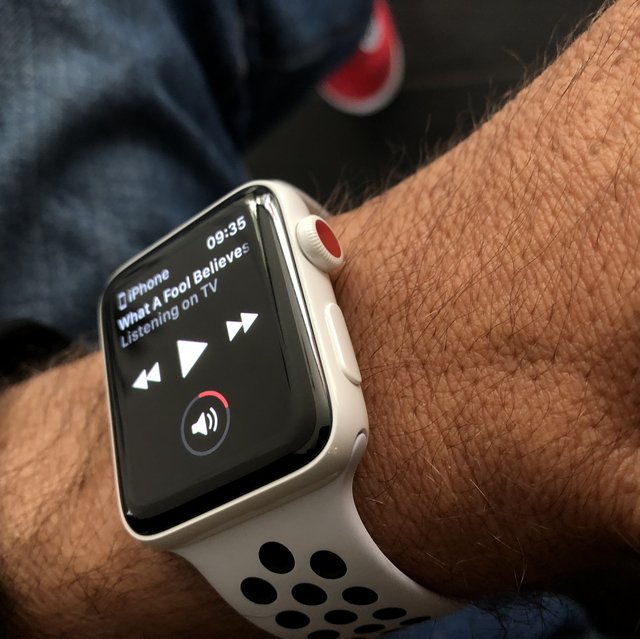
Apple Watch :: LTE is a game changer

by Volker Weber

IMG 0990

Ten days in I am pretty sure that LTE is a game changer for the Apple Watch. I have worn an Apple Watch for two and a half years and have been hooked on the activity tracking feature. That's why I never took it off.

Notifications were always nice to have, since I did not have to fetch my iPhone for unimportant updates. But I still had it on me, no matter where I went. And this has changed.

I often leave the iPhone behind when I leave the house. I still have my notifications, I get all my WhatsApp or Signal messages, and I can keep conversations going in iMessage or reply to emails via Siri Dictation. I get my phone calls and I place phone calls in a pinch.

I probably would not leave for a full day without the iPhone, but it is a perfect solution for dog walks, bike trips, running errands or going out.

10 Oct 20:10

Establishing Community Goals Answers The Technical And Tactical Questions

by Richard Millington

Maisie is starting a new community role and asks a few common questions:

“How do I get people from different countries, different departments, and different backgrounds to start communicating and sharing with each other?

What platform do I use?

How do I make my message relevant and interesting among the bombardment of emails we get every day?”

These are good questions, but they’re superseded by a far bigger question; what are the results your colleagues expect to see from the community?

Before you even consider any tactical or technical questions, you need to get the goals properly established.

This means:

  1. Identifying who is heavily interested in, and has influence over, the success of the community
  2. Interviewing this group and understanding what these people deeply care about (hopes and fears)
  3. Which of these goals can a community best achieve?
  4. Does everyone understand and support the goals of the community?

The very best goals are specific (e.g. generating leads for the sales team, nurturing advocates to drive awareness, increasing search traffic, reducing time spent searching for documents, building a database of experts people can use for support, keeping our members at the cutting edge of technology etc….).

They don’t need to specify a financial return, but they do need to be something your senior colleagues truly value. If you want more support for your goals, begin with goals your colleagues already support.

These goals will answer most of the other questions you have (if your goal is innovation or collaboration you would use innovation or collaboration platforms)

Don’t think about how to get people to engage, what platform to use, or what messages to send, until you have clear, established, goals.

Spend 80% of your time in that first month, identifying stakeholders, building relationships, understanding what people care about and setting specific targets.

It becomes a lot easier to answer every other question once you really understand what the goals are.

p.s. Last day to sign up for our Strategic Community Management course.

10 Oct 20:10

Twitter Favorites: [bmann] You might have noticed the lack of gravy. Scraped up the pan drippings & had them as is with spaetzle. Yuuuuup. https://t.co/N4HhP2VPfS

Boris Mann @bmann
You might have noticed the lack of gravy. Scraped up the pan drippings & had them as is with spaetzle. Yuuuuup. pic.twitter.com/N4HhP2VPfS
10 Oct 20:09

Twitter Favorites: [bmann] Ok, one more shot, fully plated, and the table set. https://t.co/Wodsr3xett

Boris Mann @bmann
Ok, one more shot, fully plated, and the table set. pic.twitter.com/Wodsr3xett
10 Oct 20:09

Twitter Favorites: [bmann] Sitting down to eat! Pretty happy with the pink level of the duck. https://t.co/K1yRSidBc7

Boris Mann @bmann
Sitting down to eat! Pretty happy with the pink level of the duck. pic.twitter.com/K1yRSidBc7
10 Oct 20:09

Twitter Favorites: [awesome] happy canadian thanksgiving to the @CFSnowbirds! thanks for putting on a fantastic show for your neighbours down so… https://t.co/fmgah7f28H

spookanie 👻 vacher @awesome
happy canadian thanksgiving to the @CFSnowbirds! thanks for putting on a fantastic show for your neighbours down so… twitter.com/i/web/status/9…
10 Oct 20:09

Twitter Favorites: [bmann] Thanks @emmajanehw for reminding me I have back bacon. With cauliflower, onions, cumin, nutmeg, turmeric. https://t.co/vDY30o4m0c

Boris Mann @bmann
Thanks @emmajanehw for reminding me I have back bacon. With cauliflower, onions, cumin, nutmeg, turmeric. pic.twitter.com/vDY30o4m0c
10 Oct 20:09

Twitter Favorites: [bmann] Staging photos and sharing the stove with spaetzle makers AND this last minute cauliflower is a bit ridiculous. But… https://t.co/T6oYDs9u3X

Boris Mann @bmann
Staging photos and sharing the stove with spaetzle makers AND this last minute cauliflower is a bit ridiculous. But… twitter.com/i/web/status/9…
10 Oct 20:09

Twitter Favorites: [bmann] Switched pans. Butter & onions going in as the base for Brüssel sprouts & leeks. https://t.co/XyLYLl4bwv

Boris Mann @bmann
Switched pans. Butter & onions going in as the base for Brüssel sprouts & leeks. pic.twitter.com/XyLYLl4bwv
10 Oct 20:09

Twitter Favorites: [bmann] That’s @RachaelAshe helping with the spaetzle. This is where timing for everything gets a little crazy. Am I going… https://t.co/xjJvPe21QI

Boris Mann @bmann
That’s @RachaelAshe helping with the spaetzle. This is where timing for everything gets a little crazy. Am I going… twitter.com/i/web/status/9…
10 Oct 20:09

Twitter Favorites: [bmann] My mom @AnneonBowen is starting to make spaetzle dough. https://t.co/SdDztgZbzI

Boris Mann @bmann
My mom @AnneonBowen is starting to make spaetzle dough. pic.twitter.com/SdDztgZbzI
10 Oct 20:09

photosofthehistoryandwithhstory: Louis Armstrong, Paul Newman...


photosofthehistoryandwithhstory:

Louis Armstrong, Paul Newman and Duke Ellington by Herman Leonard, Paris, 1960.

10 Oct 20:09

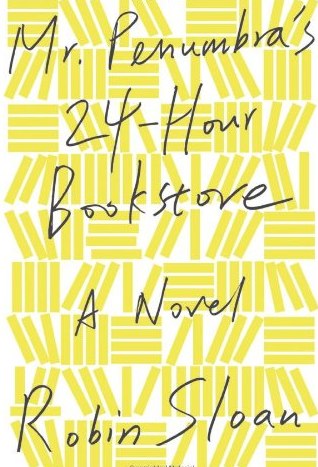
Mr. Penumbra’s 24-Hour Bookstore

Second reading of this charming romp about an unemployed, RISD-trained graphic designer who lands a night-shift job at an all-night North Beach bookstore that is, of course, more than what it seems. So, too, is the craft of this novel, for beneath the genre pastiche lies some lovely lyricism, surprising insight into the magic of technology, and a flair for drawing character or, more precisely, for depicting the narrator’s emotional response on encountering that character.

The perfect antidote to a bad case of the slums.

10 Oct 20:08

Tragic Documentation

by hrbrmstr
NOTE: If the usual aggregators are picking this up and there are humans curating said aggregators, this post is/was not intended as something to go into the “data science” aggregation sites. Just personal commentary with code in the event someone stumbles across it and wanted to double check me. These “data-dives” help me cope with these type of horrible events. The “data science” feed URL is https://rud.is/b/category/r/feed/.

I saw the story about body camera footage from a officers involved police stop & fatal shooting in Salt Lake City. The indiviual killed was a felon — convicted of aggravated assuault — with an outstanding warrant.

He tried to run. At some point in the brief chase he pivoted and appeared to be reaching for a weapon — likely a knife, which was confirmed after the fact.

One officer pulled a tazer. Another pulled a gun. Officer Fox — the one who fired the gun — said he was terrified by how close Mr. Harmon was to the officers when Mr. Harmon stopped and turned toward them.

I wasn’t there. I don’t risk getting injured or killed in the line of duty every day. I don’t face down armed suspects in fast-moving, tense situations.

But, I’m weary of this being a cut+paste story that is a nigh weekly event in America.

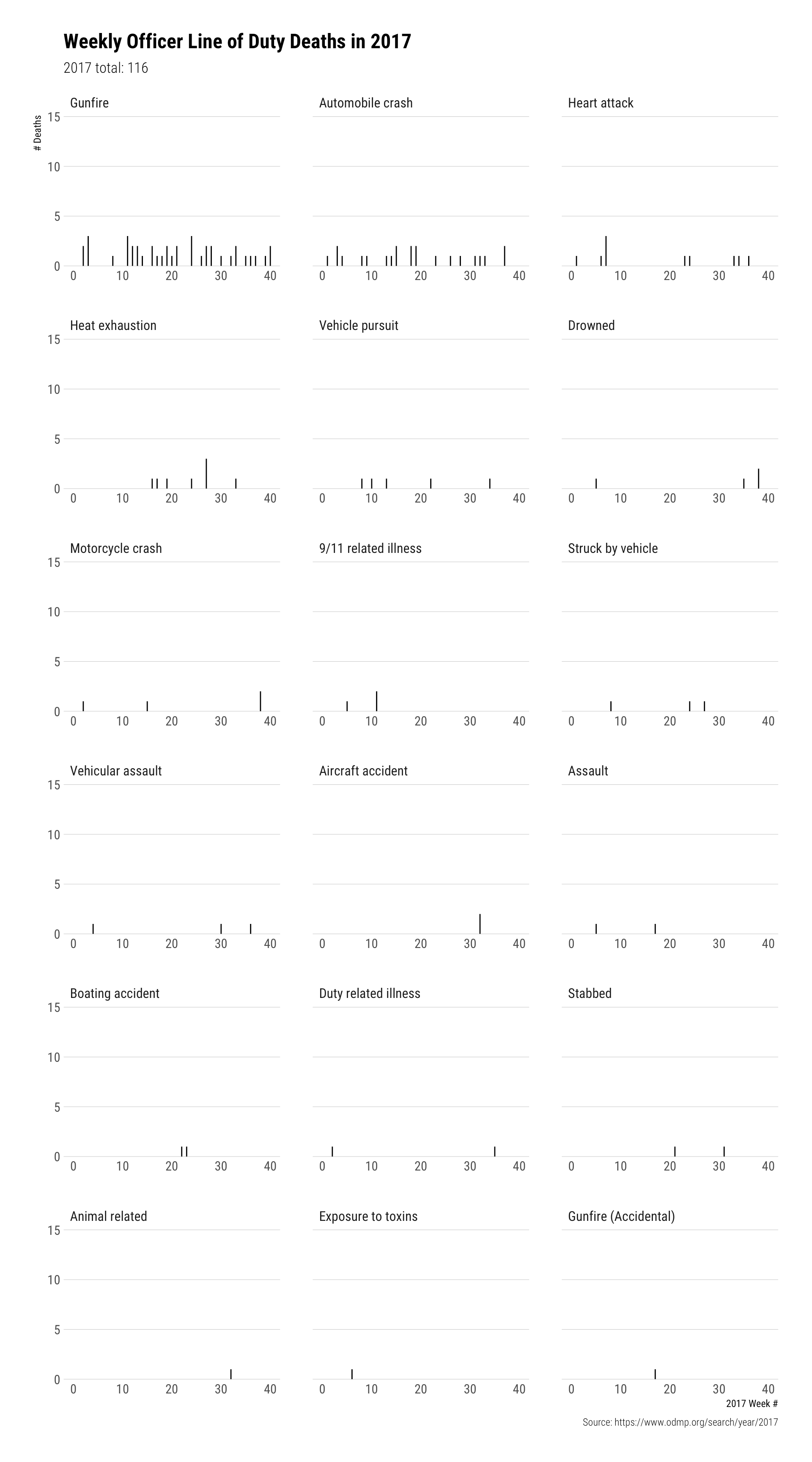
Officers are killed by suspects as well. It’s equally tragic.

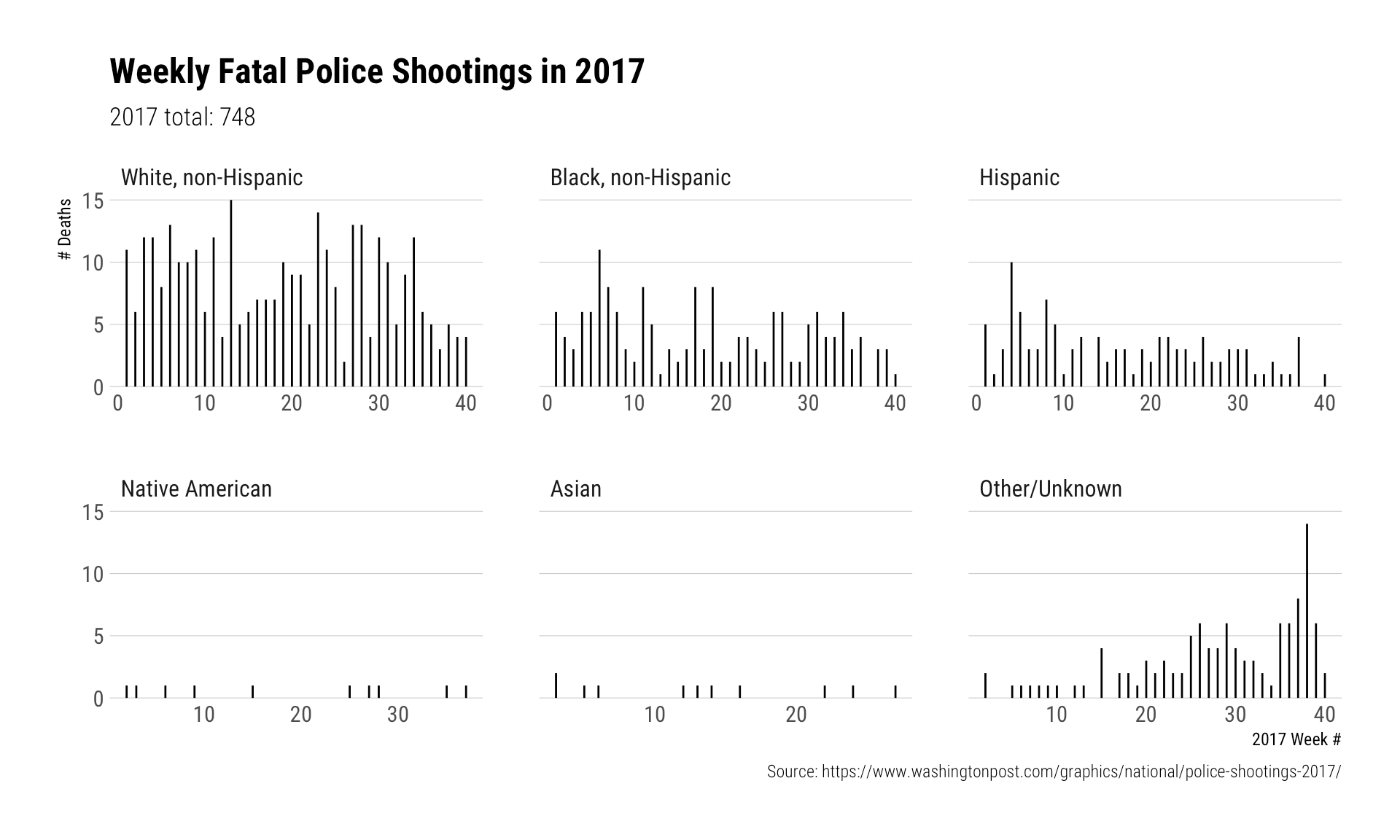
Below is just “data”. Just a visual documentary of where we are 17-ish years into the 21st Century in America.

And, most of America seems to be OK with this. Then again, most of America is OK with the “price of freedom” being one mass shooting a day.

I’m not.

I scaled the Y axis the same in both faceted charts to make it easier to glance across both sets of tragedies.

This was generated on Sunday, October 8, 2017. If you run the code after that date, remove the saved data files and tweak the Y-scale limits since the death toll will rise.

library(httr)
library(rvest)
library(stringi)
library(hrbrthemes)
library(tidyverse)

read.table(sep=":", stringsAsFactors=FALSE, header=TRUE, 
           text="race:description
W:White, non-Hispanic
B:Black, non-Hispanic
H:Hispanic
N:Native American
A:Asian
None:Other/Unknown
O:Other") -> rdf

wapo_data_url <- "https://raw.githubusercontent.com/washingtonpost/data-police-shootings/master/fatal-police-shootings-data.csv"
shootings_file <- basename(wapo_data_url)
if (!file.exists(shootings_file)) download.file(wapo_data_url, shootings_file)

cols(
  id = col_integer(),
  name = col_character(),
  date = col_date(format = ""),
  manner_of_death = col_character(),
  armed = col_character(),
  age = col_integer(),
  gender = col_character(),
  race = col_character(),
  city = col_character(),
  state = col_character(),
  signs_of_mental_illness = col_character(),
  threat_level = col_character(),
  flee = col_character(),
  body_camera = col_character()
) -> shootings_cols

read_csv(shootings_file, col_types = shootings_cols) %>% 
  mutate(yr = lubridate::year(date), wk = lubridate::week(date)) %>% 
  filter(yr >= 2017) %>% 
  mutate(race = ifelse(is.na(race), "None", race)) %>% 
  mutate(race = ifelse(race=="O", "None", race)) %>% 
  count(race, wk) %>% 
  left_join(rdf, by="race") %>% 
  mutate(description = factor(description, levels=rdf$description)) -> xdf

lod_url <- "https://www.odmp.org/search/year/2017?ref=sidebar"
lod_rds <- "officer_lod.rds"
if (!file.exists(lod_rds)) {
  res <- httr::GET(lod_url)
  write_rds(res, lod_rds)
} else {
  res <- read_rds(lod_rds)
}
pg <- httr::content(res, as="parsed", encoding = "UTF-8")

html_nodes(pg, xpath=".//table[contains(., 'Detective Chad William Parque')]") %>% 
  html_nodes(xpath=".//td[contains(., 'EOW')]") %>% 
  html_text() %>% 
  stri_extract_all_regex("(EOW:[[:space:]]+(.*)\n|Cause of Death:[[:space:]]+(.*)\n)", simplify = TRUE) %>% 
  as_data_frame() %>% 
  mutate_all(~{
    stri_replace_first_regex(.x, "^[[:alpha:][:space:]]+: ", "") %>% 
      stri_trim_both() 
    }
  ) %>% 
  as_data_frame() %>%  
  set_names(c("day", "cause")) %>% 
  mutate(day = as.Date(day, "%A, %B %e, %Y"), wk = lubridate::week(day))%>% 
  count(wk, cause) -> odf 

ggplot(xdf, aes(wk, n)) +
  geom_segment(aes(xend=wk, yend=0)) +
  scale_y_comma(limits=c(0,15)) +
  facet_wrap(~description, scales="free_x") +
  labs(x="2017 Week #", y="# Deaths",
       title="Weekly Fatal Police Shootings in 2017",
       subtitle=sprintf("2017 total: %s", scales::comma(sum(xdf$n))),
       caption="Source: https://www.washingtonpost.com/graphics/national/police-shootings-2017/") +
  theme_ipsum_rc(grid="Y")

count(odf, cause, wt=n, sort=TRUE) -> ordr

mutate(odf, cause = factor(cause, levels=ordr$cause)) %>% 
  ggplot(aes(wk, n)) +
  geom_segment(aes(xend=wk, yend=0)) +
  scale_x_continuous(limits=c(0, 40)) +
  scale_y_comma(limits=c(0,15)) +
  facet_wrap(~cause, ncol=3, scales="free_x") +
  labs(x="2017 Week #", y="# Deaths",
       title="Weekly Officer Line of Duty Deaths in 2017",
       subtitle=sprintf("2017 total: %s", scales::comma(sum(odf$n))),
       caption="Source: https://www.odmp.org/search/year/2017") +
  theme_ipsum_rc(grid="Y")
10 Oct 20:07

'Our minds can be hijacked': the tech insiders who fear a smartphone dystopia

files/images/1067.jpg

Paul Lewis, The Guardian, Oct 11, 2017


Icon

I remember having a conversation once with a friend who was having an existential crisis because she wasn't sure whether any of her thoughts were her own. She had realized (as do I) the extent to which her ideas, beliefs and habits were influenced, even controlled, by external influences. This was before the days of Facebook addition, but all the means were still present: online and mass media, social pressures, the news hype cycle, expectations at home or in the office. So while this article describes the phenomenon on social media addition, my perspective is that it's the same story in new clothing. Since when has social approval not been addictive? Since when has this not been leveraged by advertisers, educators and propagandists to entice people into working against their own best interests? I think of the Civitus Vetus of Rome, the playing grounds of Eton, and the halls of West Point all in the same breath. The only thing that changes is who is in charge.

[Link] [Comment]
10 Oct 20:07

Invisible skills

files/images/13461618063_2384257c7f.jpg

Alastair Creelman, The corridor of uncertainty, Oct 11, 2017


Icon

Summry and a bit of commentary on the Skills, Competencies and Credentials report from Alan Harrison (Higher Education Quality Council of Ontario) referenced here last week. The key bit is this: "Universities must come to terms with two facts: their undergraduate programs are where general skills are developed and second, it is these skills that make the graduates of these programs employable." Universities test for the content of these courses, but it isn't the content thata makes them employable, it's the skills. What sort of skills? Well, that's where everybody gets really vague: they include things like critical thinking, communication, collaboration, resreach and learning how to learn, and the like. But instead of enumerating the skills, both Harrison and Creelman focus on assessing them. "The answer lies probably in providing more comprehensive credentials that describe both the knowledge and skills acquired."

[Link] [Comment]
10 Oct 20:04

The Open Home Lab Stack

files/images/1-Iwi4EF6MVm4uJzp_ngqdEQ.png

Mighty Womble, HackerNoon, Oct 11, 2017


Icon

Eventually all of this will be a black box, and we'll work with features and services rujnning on top of it, but it's useful to look at the details now, so we can understand the capacities that will be avaiklable in the future. What Mighty Womble describes is essentially a hub for virtualized services; these services will be available to any device or appliance in your home or on your network, and they will support your interactions with the rest of the world. There are too many layers to list, but important ones include the virtual servers, storage and directories, firewalls, routers, VPNs, security, and authentication. These are the things that today an enterprise infrastructure contains, but what's described here is almost all open source, which means it is affordable for individual users, and eventually will be paxkaged for them. 

[Link] [Comment]
10 Oct 20:01

How I learnt to loathe England

by Volker Weber

A Dutchman reflects on what he’s learnt by living in Britain for the last six years - it isn’t pretty:

The Tories are seared by Europe, as they have been for a generation, only now with more intensity; Labour looks incapable of overcoming its own divisions on the question. Neither party dares to speak the truth to millions of people who have voted for a "have your cake and eat it" option that was never on the menu. How to carry out the will of the majority when the majority voted for something that does not exist?

This is a tough reading. The future does not look bright for England.

More >

10 Oct 20:01

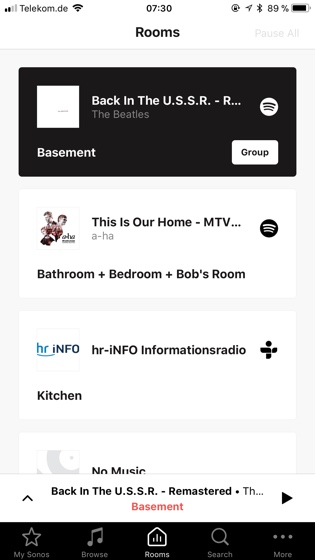
Navigating the Sonos 8.0 app

by Volker Weber

465c7e1c3a52c72307f94a87cb625bd7 31d8b770b57efab35a628e4ea2102c48

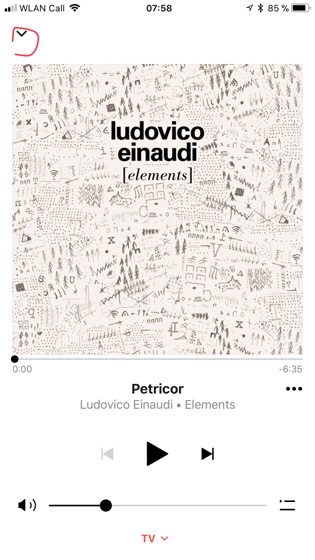
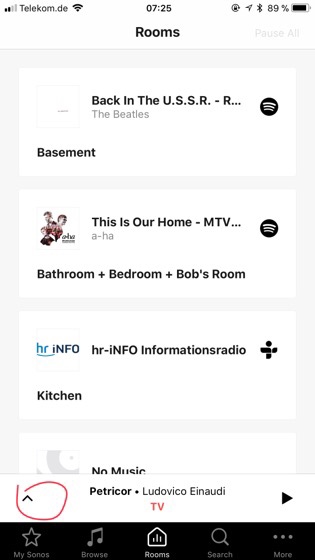
The apps have been redesigned to look more like the iOS 10 Music app and they only use black & white with some red accents. At first I was completely lost in the Now Playing panel until I learned you have to use these two carets to get in and out. You can also swipe the panel up and down.

8e1550bad30560f4dfd504d58453727d 4b419cf97b6be9b8ac20e2e667d0b009

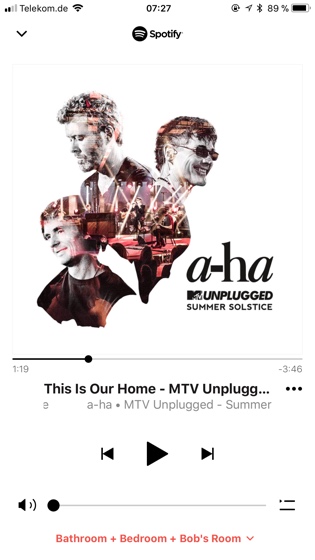
If you tap the room name in the Now Playing panel, you are not taken to the rooms screen. Instead another panel appears where you can select which rooms the music should play in. This makes it easier to transfer music from one room to the other.

37d26284c847ae4ddb7718963da47234 c4e6fcc6363c0029ad9badc002623da3

When you tap and thus select a room in the Rooms panel the Group button uncloaks. To get to the room you have to tap the room again. If you tap the group button the same sheets appears that you get when tapping the room name in the Now Playing panel. This is redundant.

6da748044fce47b4aebdc1cdbe286164

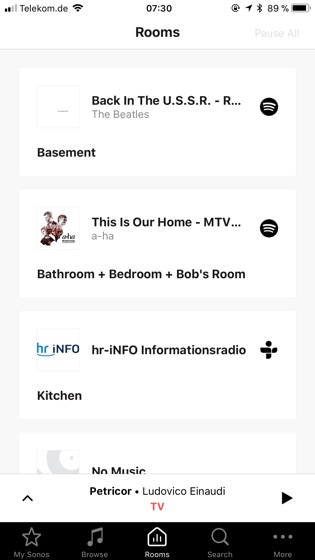
There is a very simple fix to make this design so much better. Instead of showing More ... on the main tab switcher, replace it with Now Playing. Then you don‘t have to hide the bar in the Now Playing panel and it becomes much easier to move around. You can then hide the leftovers behind a caret in the upper left.

10 Oct 20:01

When marketing and engineering collide

by Volker Weber

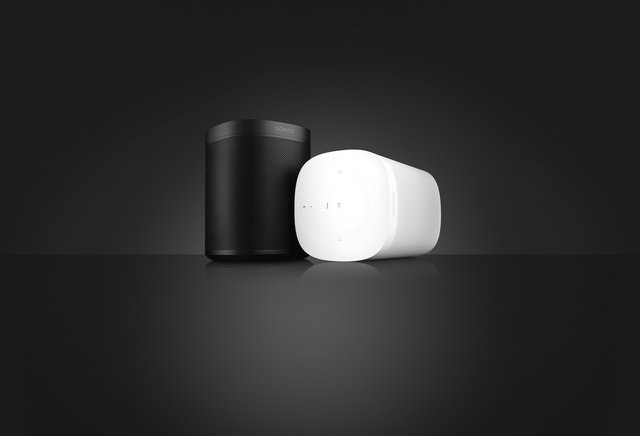
260515-SonosOne 15-d8348e-original-1507127943

This is Sonos One. It looks like the PLAY:1 special editions from 2015 in pure white and black. And it has the new top with touch controls and the microphones for voice control. It has been in production for a while and needs to ship in time for Xmas. And it needs to ship before too many people buy the Apple HomePod. Unfortunately the software isn't ready.

When Sonos was still the only serious player it would not have shipped. PLAYBAR for instance did not ship before February because it wasn't ready.

DLihQiDXcAAZG38

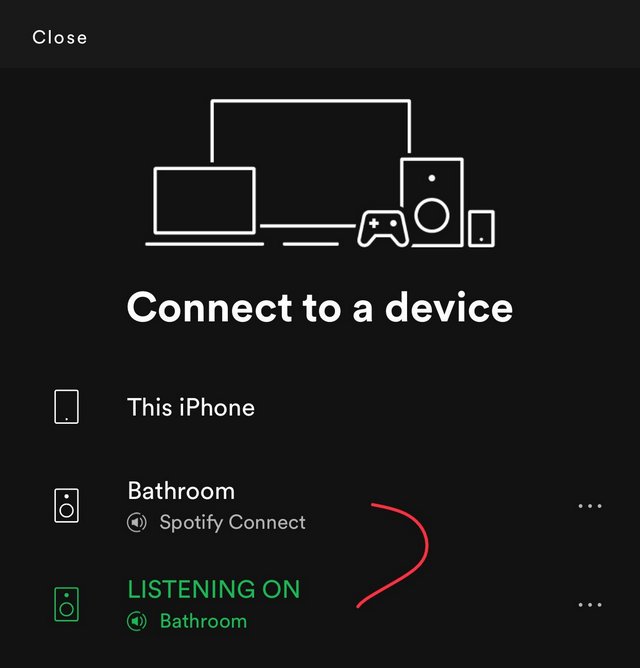
Times have changed and software can be fixed later. 90% of my music is from Spotify, the rest is from my library. Guess what other sources Alexa cannot play from? Apple Music and Google Play. I run into bugs at every turn. This morning I started to play the a-ha MTV Unplugged Summer Solstice concert via Spotify Connect in the Bathroom and later moved it to TV. Now TV is gone and is only recognized as Bathroom.

Eventually this will all be resolved. February looks like a good target date.

10 Oct 20:01

Airplay auf Sonos für kleines Geld

by Volker Weber

Ein Raspberry Pi kostet nur ein paar Mark fünzig und braucht nicht viel Strom.

In dem folgenden How To möchte ich euch zeigen wie ihr ein Raspberry Pi als Airplay Relais für Sonos benutzt um euere Sonos Lautsprecher Airplayfähig zu bekommen. Alles was ihr dazu braucht ist ein Raspberry Pi 2 oder 3, Airsonos und ein paar Linux Kentnisse.

Und schon können alle Eure Sonos-Player Airplay.

More >

10 Oct 20:00

Plenty of Work, Not Enough Pay

One of the most troubling unresolved issues in modern economics is the continued lack of wage increases even as unemployment has dropped to under 5%. This is a worldwide phenomenon and appears to be linked to a number of intertangled factors, like the decline of unions and collective bargaining, the rise of freelancing and outsourced work, immigration, and automation.

Peter Cooper and Jonathan Soble wrote a very solid exposition on this seemingly intractable problem, and its costs on society [emphasis mine]:

Peter Cooper, Jonathan Soble | Global Economy’s Stubborn Reality: Plenty of Work, Not Enough Pay

Why wages are not rising faster amounts to a central economic puzzle.

Some economists argue that the world is still grappling with the hangover from the worst downturn since the Great Depression. Once growth gains momentum, employers will be forced to pay more to fill jobs.

But other economists assert that the weak growth in wages is an indicator of a new economic order in which working people are at the mercy of their employers. Unions have lost clout. Companies are relying on temporary and part-time workers while deploying robots and other forms of automation in ways that allow them to produce more without paying extra to human beings. Globalization has intensified competitive pressures, connecting factories in Asia and Latin America to customers in Europe and North America.

“Generally, people have very little leverage to get a good deal from their bosses, individually and collectively,” says Lawrence Mishel, president of the Economic Policy Institute, a labor-oriented research organization in Washington. “People who have a decent job are happy just to hold on to what they have.”

The reasons for the stagnation gripping wages vary from country to country, but the trend is broad.

When labor markets tighten, wages are expected to rise. But in recent years, as unemployment has fallen below 5 percent in the United States, wages have not been increasing as fast as in the past. Economists debate the reasons; workers grapple with the consequences.

In the United States, the jobless rate fell to 4.2 percent in September, less than half the 10 percent seen during the worst of the Great Recession. Still, for the average American worker, wages had risen by only 2.9 percent over the previous year. That was an improvement compared with recent months, but a decade ago, when the unemployment rate was higher, wages were growing at a rate of better than 4 percent a year.

In Britain, the unemployment rate ticked down to 4.3 percent in August, its lowest level since 1975. Yet wages had grown only 2.1 percent in the past year. That was below the rate of inflation, meaning workers’ costs were rising faster than their pay.

In Japan, weak wage growth is both a symptom of an economy dogged by worries, and a force that could keep the future lean, depriving workers of spending power.

In Norway, as in Germany, modest pay raises are a result of coordination between labor unions and employers to keep costs low to bolster industry. That has put pressure on Italy, Spain and other European nations to keep wages low so as not to lose orders.

But the trend also reflects an influx of dubious companies staffed by immigrants who receive wages well below prevailing rates, undermining union power.

This is one of the defining problems of our economic system, and finding a path through to another sustainable world is critical. 

10 Oct 20:00

Twitter Favorites: [bmann] Yeah those are some nice looking onions and garlic. Added some salt & pepper too. https://t.co/LiecD5NTU2

Boris Mann @bmann
Yeah those are some nice looking onions and garlic. Added some salt & pepper too. pic.twitter.com/LiecD5NTU2
10 Oct 19:38

Twitter Favorites: [SwiftOnSecurity] Fly to a new town to work with 20 staff after an acquisition? That’s fine! Ask someone to a movie? No way. Crippling social anxiety is great

SwiftOnSecurity @SwiftOnSecurity
Fly to a new town to work with 20 staff after an acquisition? That’s fine! Ask someone to a movie? No way. Crippling social anxiety is great
10 Oct 17:42

Gastown Streets — More Than Repairs?

by Ken Ohrn
mkalus shared this story from Price Tags:
Car light? How about “car free”? If there is one street in Vancouver that qualifies it is Water. Turn West Cordova into a two way street instead.

With visions of a car-light area in Gastown, City of Vancouver is consulting residents on a transportation area plan. Tour and workshop, Saturday October 21, 1:30 to 4:30. Project, event details and signup HERE.   An online survey is available for members of Talk Vancouver.

Starting, as with Burrard Bridge, from the need to do major repair, CoV seeks input on moving Gastown towards a complete street design model.

“We have an opportunity to build on the strengths of Gastown and design the streets in a way that better serves the area. We want to work with the community to achieve the best outcome,” says Lon LaClaire, Director of Transportation for the City of Vancouver. “As part of our community engagement, we will be exploring whether Water Street could become car-light, but it is important to us to work closely with businesses in the area to see how the streets can continue to support loading and movement needs.”

gastown-complete-streets-study-area

Potential car-light street

Water Street was identified in the Downtown Eastside Plan and Transportation 2040 as a potential car-light street and as a missing link within the east-west bike network.

Car-light refers to a street design that reduces the number of vehicles travelling through an area in order to create more inviting spaces for people to walk, cycle, and enjoy.

Any car-light area will need to balance mobility and access needs for local businesses, residents and visitors with the desire to create an interesting and welcoming place for people to be.


10 Oct 17:38

Windows Phone is no longer a ‘focus’ for Microsoft, no plans for new hardware or features

by Ian Hardy
Windows Phone

Microsoft has finally admitted something that most in the mobile space already knew — the company’s mobile operating system, Windows 10 Mobile, will not see any new hardware or software updates.

Joe Belfiore, corporate vice president of operating systems group at Microsoft, stated on Twitter that the company will not be “building new features/hw” and Windows 10 Mobile is simply not its “focus.” Belfiore did note that Microsoft attempted to build up the OS and “tried VERY HARD to incent app devs. Paid money.. wrote apps 4 them.. but volume of users is too low for most companies to invest.”

Current Windows Mobile users who plan to stick with the OS can somewhat be assured that your device will remain secure as Microsoft plans to continue supporting ehe platform with “bug fixes, security updates.”

Recently, Microsoft announced its Edge browser is now available for iOS with an Android version launching soon. Belfiore started using an iPhone in 2016 and Bill Gates, Microsoft’s founder, recently switched to Android.

Unfortunately, with this news, the heavily rumoured Surface Phone will most likely never see a release.

Source: Twitter

The post Windows Phone is no longer a ‘focus’ for Microsoft, no plans for new hardware or features appeared first on MobileSyrup.