This story is interesting on several levels. The first is the surface, where the not-so-secret method is revealed: "It involves three steps: a trigger, an action and a reward. A push notification, such as a message that someone has commented on your Facebook photo, is a trigger; opening the app is the action; and the reward could be a 'like' or a 'share' of a message you posted." OLDaily works on the same model, except it rewards you with insights instead of likes. The second level is the pedagogical, and the question of why educators find influencing people to be so difficult when advertisers do it with ease. And third, with a note of irony, the number of people posting "I just turn off the internet" in the comments following this internet article. I wonder whether they're rewarded with reads.
One of the biggest resulting threats to cities around the world is sea-level rise, caused by the expansion of water at higher temperatures and melting ice sheets on the north and south poles.
Scientists at the non-profit organisation Climate Central estimate that 275 million people worldwide live in areas that will eventually be flooded at 3C of global warming.
This is a cool new website that was just launched by the University of Calgary. It points to several really interesting initiatives and articles by leaders across the university. Definitely worth spending some time reading the full website…
It’s surprising, how many of the articles point to the Taylor Institute and the work being done here both as an inspiration and an enabler of innovation across campus…
Donald Clark takes the easy sceptic's route with this article. I found myself disagreeing with most of it. For example, when he says "human fears and expectations that demand the presence of humans in the workplace" I think he has forgotten about the similar arguments around self-serve gas stations and automated tellers. Similarly, when he says "automation will not happen where the investment cost is higher than hiring human labour," I think he misses the fact, first, that automation is usually pretty cheap, and second, it is often much more reliable than human labour. But there is a good point here: "What matters is not necessary the crude measure of ‘jobs’ being automated but rather activities’ being automated." A job is a collection of activities, some of which will be automated, and some not. But (and this is key): unless we radically reform income inequality, there will be few jobs. Rich people don't employ poor people; poor people employ each other, and this is only possible when they have the means to do so.
I've covered this before, but this article has a much wider range of examples. "Someone or something or some combination of people and things is using YouTube to systematically frighten, traumatise, and abuse children, automatically and at scale, and it forces me to question my own beliefs about the internet, at every level." I want to look at Google and Facebook and Twitter in the eye and ask them, "What are you doing? Why are you doing this? What's the matter with you?" But of course, you can't.
Unlike @noamross, I am not an epidemiologist (NOTE: Noam battles pandemics before breakfast, so be super nice to him) but I do like to find kindred methodologies in other disciplines to help foster the growth of cybersecurity into something beyond it’s current Barnum & Bailey state. I also love finding and exposing hidden APIs and especially enjoy killing Adobe Flash. How does all that relate to cdcfluview?
cdcfluview🔗 was one of my first R packages. Someone, somwewhere, was trying to do something with Selenium to automate downloading of data from the CDC’s FluView Portal. It was — and, some of it still is — a Flash-based site that locked up useful data behind application screens that did little more than burn ones retinas and force folks to keep Flash alive and, hence, their browsers insecure.
Rather than let the requester suffer under the weight of a pretty significant external dependency, I used the magic of the browser “developer tools” inspector to see that it was making fairly innocuous and useful XHR requests for real data. The package sat on GitHub for a while and eventually made its way to CRAN.
Times change and Flash is dying, so the CDC paid some serious benjamins to have the site re-done in HTML, replicating the horrible UX and terrible visualizations (so. many. pie. charts.). Said revamp also caused changes to the back-end APIs and forced breaking changes. Craig McGowan jumped to the rescue and fixed some core functionality issues, but so much changed — and so much was added — that I felt it was time for a modern re-write of the cdcfluview package.
This is a pretty solid, real-world example of how dangerous it is to rely on hidden APIs. If Craig hadn’t both notified me and gone the extra mile to make a PR, I’d’ve been in the dark until I tried to commiserate (I always seem get the flu no matter what I do) with code and found my package erroring out.
Enter: cdcfluview 0.7.0.
What’s Different?
Unfortunately, everything; which is one reason I’m writing this post.
First, to have folks that are using current-gen cdcfluview kick the tyres and let me know (via issues) if you need any old API compatibility back. This isn’t anywhere near the most popular package on CRAN, but it does have users (even, I’m told, within the CDC) and I want to make sure I do as little to disrupt them as possible. But, the current package API maps much more closely to the way the revamped portal works and presents data, so I’m hoping it’s a good net-new vs crushing blow to productivity.
Speaking of maps, the package now has actual maps! A new cdc_basemap() function returns the GeoJSON files that the CDC uses in their web views as sf objects. And, there are tons of maps and multi-labeled features to tie data to:
Here’s what’s in the tin:
age_group_distribution: Age Group Distribution of Influenza Positive Tests Reported by Public Health Laboratories
cdc_basemap: Retrieve CDC U.S. Basemaps
geographic_spread: State and Territorial Epidemiologists Reports of Geographic Spread of Influenza
ili_weekly_activity_indicators: Retrieve weekly state-level ILI indicators per-state for a given season
pi_mortality: Pneumonia and Influenza Mortality Surveillance
state_data_providers: Retrieve metadata about U.S. State CDC Provider Data
surveillance_areas: Retrieve a list of valid sub-regions for each surveillance area.
who_nrevss: Retrieve WHO/NREVSS Surveillance Data
mmwr_week: Convert a Date to an MMWR day+week+year
mmwr_weekday: Convert a Date to an MMWR weekday
mmwr_week_to_date: Convert an MMWR year+week or year+week+day to a Date object
Plus there’s a new data object mmwrid_map that makes it super-easy to convert arcane MMWR identifiers to real date objects.
The README has plenty of charts and examples, so I won’t take up post-space with said code or images.
Curiously Enough
Along the way, I was able to discern that there’s a hidden layer of this new, hidden API. Exposing said layer should be as easy as figuring out the right keyword and I’m hoping a bit of fuzzing will do the trick on that. It will be interesting to see what extra data that unlocks. (Yes, I just said relying on hidden APIs is dangerous; and, relying on hidden, hidden APIs is doubly so. I’m just a glutton for punishment.)
I was also able to discern that multiple people or teams worked on this revamp and said folks did not communicate with each other. The per-app APIs are woefully inconsistent. Furthermore, someone goofed and forgot to expose some pretty critical information from a few data retrieval operations (said data is also missing on the clickable download versions, too). Hopefully they’ll be addressing the issue soon (the site is technically in beta release).
FIN
If you’ve been a user of cdcfluviewplease give the new API a try and file issues with anything you see. All contributors — testers, modders, enhancers — will get full DESCRIPTION credit (so, please also include how you’d like to be cited).
Finally, please do check out the CDC FluView Portal. It’s gosh awful horribad. I know there are some spiffy Shiny experts out there who could run rings around that portal and I’ll be glad to add you as a collaborator if you contribute a Shiny app (or two!) to the package. If you’d rather go your own route with a self-contained, self-published package, just let me know what API changes you’d like and I’ll gladly accommodate. The goal is to help epidemiologists and other researchers keep us all safe.
So, go get your flu shot!!! Then, kick the tyres on this package update and don’t hesitate to convey your criticisms, patches or accolades.
Now to get to my promised final review of cyphr (I’ve not forgotten @ma_salmon ;-)
The prediction may be plus or minus a few years, but the outcome is undeniable. "The tipping point will come when 20 to 30 percent of vehicles are fully autonomous. Countries will look at the accident statistics and figure out that human drivers are causing 99.9 percent of the accidents. Of course, there will be a transition period. Everyone will have five years to get their car off the road or sell it for scrap or trade it on a module." What does this have to do with learning technology? Nothing. Everything.
Jeff Olson, a retired urban designer for the City of Vancouver, submitted this “idea on the pathway to housing affordability.” We’re pleased to post this in its entirety (lightly edited), since Price Tags welcomes considered essays on topics relevant to our readership.
BICYCLE CITY
The essential feature that distinguishes the following urban development concept from current urban-design practice is the elimination of the street as we currently understand it. This act results in the elimination of the car and truck as a dominate feature of the urban environment, along with the disappearance of surface and underground parking.
The elimination of the street allows us to treat the ground plane as a public pedestrian space upon which we can toddle, shuffle, walk, jog, run and dance or otherwise move using our feet. Or a variety of old inventions: the little red wagon, the baby buggy, the wheel chair, and the bicycle in all its various manifestations. Then there are all the new inventions: the power unicycle, the hoover board, the skateboard, the inline skate, the Segway, the senior’s four-wheel power scooter, and the power wheelchair, etc.
All of these inventions have common characteristics: they are tiny by car standards, generally designed for the transport of one person, with the exception of the Dutch Bicycle and the very lovely bicycle built for two. Additionally, they can be accommodated on public transit or stuffed into elevators – an important feature of their utility.
All of these machines appeal to our basic human nature: the joy to be found in motion, an experience we know from the time of conception, one that brought gleeful smiles and cheerful giggles as our fathers joyfully tossed us in the air and caught us as infants and toddlers. Surely there is something very basic and human in these instinctive acts. We fly downhill on skis and snowboards, we fly across water on surf boards, sometimes pulled by sails or parachutes. We ride the thermals on sail planes and hang gliders and, when we reach old age, we jump out of airplanes hanging by treads for happy birthday celebrations. This is the cycle of life celebration.
The neat thing about all these wheel contrivances is that they are so humanizing. These wheelie things place people in active space with other people where courtesy matters – greetings and smiles. The bicycle is the most common and ubiquitous of all these machines: a social facilitator, a wonderful motion experience and a machine to be celebrated. Welcome to Bicycle City.
The urban design of Bicycle City begins like all urban designs begin: with a site circulation concept. In this case, however, we are going to apply a common architectural element to establish the movement framework. We want to use this idea to enable the riding of bicycles. Let’s give it a name: The Bicycle Galleria.
Let’s give it a dimension of, say, 60-feet wide, and a height of, say, 60 feet. Let’s enclose it with a transparent weather-proof skin. Let’s connect the lobbies of residential buildings directly to the gallery. Let’s introduce uses along its length, uses we would typically find on a shopping street: grocery stores, restaurants, cafes and tea shops, retail shops, travel agencies, flower shops, etc. Let’s add other uses: artisanal shops, business incubators, the artists’ quarter, medical and dental services, educational services.
Let’s try to fit these uses into a 30-foot depth behind the gallery walls. Let’s make sure that we have a structure, a framework, a public galleria open 24/7 that can be filled with people, the sights, sounds and aromas of everyday life.
So now we have a structure with a theoretical width 30+60+30 = 120 feet – or the typical depth of a downtown property from street to lane. It is, however, the length that defines the nature of a gallery, so let us make an assumption for now that the gallery is a minimum of one-thousand feet long with at least one gallery entrance with-in a block or two of a Skytrain station or a rail line running frequent transit service.
We can also assume, given this length, in the order of four to five residential building lobbies on each side of the gallery. If we set a target of roughly 200 units per lobby access, then given these assumptions we have a potential for 2,000 units occupied by roughly 3,600 residents. We should think of this collection of elements and uses as one very, very big building called Bicycle City.
We also need to plan for modal integration functions near a gallery entry including:
bicycle sales, repairs, rentals, parking and storage
parking for all things car share,
taxi stand
pick-up / drop-off zone
fleet of YVR style passenger shuttle carts
fleet of YVR style freight trains
shipping and receiving zone
a waste and recycling zone.
I now turn to the application of these ideas to a real-world site: a vacant brownfield site adjacent to the Cambie Bridge and bounded by First Avenue, the Hinge Park and the seaside walkway / bikeway along the edge of False Creek. This is an amenity-rich cit-owned property located within 1,200 feet of the Olympic Village Skytrain Station and within 3,000 feet of the Main Street Skytrain Station.
This city property has sufficient site area to develop a substantial number of family- occupied ground-oriented units in a park-like setting connected to the gallery by a pedestrian / bikeway network. Note also the potential use of space under Cambie Bridge for the modal integration functions discussed above.
We now come to the question of affordability. No matter the mix (studio, studio loft, one bedroom + den, two bedrooms, three bedrooms, even four bedrooms) and final tally after considerations of building height and scale, all of these residential units could be rental units owned by the City of Vancouver. Let’s think of these units in terms of a non-profit project developed by the city for the sole purpose of providing affordable housing. We should also note that a separate revenue stream from commercial / office uses can be utilized to further reduce rents.
Let us consider building this project because it is an idea without complication that could help thousands of citizens now struggling under the burden of high housing and transportation costs. Let’s build the city of tomorrow, Bicycle City.
Earlier today, Apple released iOS 11.2 beta 2 to developers. The release notes accompanying the beta include the following announcement:
Soon, you’ll be able to offer new customers a discounted introductory price for your auto-renewable subscriptions on the App Store. iOS 11.2 introduces new classes … and new properties … to provide details on the introductory pricing and billing period you’ve selected for your auto-renewable subscriptions. You’ll be able to configure introductory pricing on your in-app purchase page in iTunes Connect soon.
Auto-renewing subscriptions were made available to all app developers with iOS 10 and already include the option to offer a free trial. With iOS 11.2 though, developers will have added flexibility to help them attract customers.
Support MacStories Directly
Club MacStories offers exclusive access to extra MacStories content, delivered every week; it's also a way to support us directly.
Club MacStories will help you discover the best apps for your devices and get the most out of your iPhone, iPad, and Mac. Plus, it's made in Italy.
In addition to meanings, words have connotations. This is what the word makes you think over and above what the word actually says. My favourite, from decades of journalistic misuse, is "claimed". Compare "He said he was abducted" and "He claimed he was abducted". The use of 'claimed' injects doubt and scepticism into the sentence without ever changing the fact it describes. This article is about the use of the word 'allegedly'. It's the same sort of thing. Your average newspaper or news broadcast is filled with dozens, maybe hundreds, of these words every day. It may report facts, but it is telling you what you should believe. Unless you are aware of this impact, you have no way to defend against it. That's why children should learn critical literacy before they are taught 'facts'.
Phil Hill and Michael feldstein have each taken to posting this week to defend their assertion that the rate of new installations of Moodle has declined significantly. The first, from Phil Hill, is a detailed description of the data used to construct the argument. The main point is that it's not US-only, and that Moodle continues to dominate in terms of total installations. In the second, Michael Feldstein explains why institutional higher education adoption is important for Moodle overall: these are the source of revenues for Moodle Pty, which is the source for code updates, and Moodle Pty took in $6 million in investment money from VCs who will expect a return.
The main point of this post isn't the silly headline, it's this: "humans have many characteristics it would be impossible to mimic, including empathy, emotion, appreciation for aesthetics, and most importantly deviance - also known as breaking or bending the rules... Teachers won't be replaced by computers because it is nigh on impossible to describe accurately what teachers do." This is wrong. It represents computers as rule-following devices. This may be true of your laptop, but it is not true of today's artificial intelligence.
Spend enough time with an iPhone X, and every prior iPhone will feel surprisingly foreign. The radically new display and Face ID are not mere features of this new device – they are foundational pieces of a new iPhone experience that, once lived with, you'll never want to go back from.
While Federico is hard at work on his full review of the iPhone X, I wanted to share my early impressions of the device after a few days of use.
My iPhone X arrived late Friday morning, and the first detail that struck me upon unboxing was its weight – it's substantially heavier than I expected. It's certainly not too heavy, and the weight gives the phone a premium feel, but I'm guessing Apple will be eager to shave off some milligrams in future iterations. Due to activation issues, it took over four hours for me to move beyond the setup screen and actually use the device. While frustrating, that issue did leave me more time than usual to appreciate the iPhone's hardware.
A Nearly Timeless Design
This is easily the most beautiful iPhone I've ever seen. The screen obviously contributes to that, but every other aspect of the design is just as noteworthy. I have the Space Grey model, so I can't comment directly on the Silver, but everything about this design exudes a luxury feel. From front to back, the way glass melds with steel enables a unified, seamless appearance. The gloss and shine of the device can easily clutter with fingerprints, but incidental smudges aside, this phone is pure eye candy.
There are only two hardware details keeping me from elevating my praise further and calling the iPhone X a timeless design: the camera bump and the notch. The former looks really good with Space Grey, blending into the rest of the phone better than what I've seen of the Silver model. But there's no denying its size – for the first time in an iPhone, the camera bump is big enough that it annoys me when using the device on a flat surface. I don't use my phone that way often, but it is a flaw worth noting.
Design-wise, the notch is undoubtedly less than ideal; I'm sure we'd all agree that the screen would look better with no cutout. But in use, it is legitimately a non-issue for me. Or at least, it's a non-issue for apps that embrace it. When using an iPhone X-optimized app, my eyes focus on the beautiful fullscreen content and pay no attention to the notch. In everyday use my eyes are rarely fixed on the very top of the display; reading in iBooks is the only exception I can think of, and the notch still doesn't bother me then. But apps that hide all content below the notch and leave the top of the screen black simply look wrong; when using an app like that, I feel like I'm not on an iPhone X anymore, but instead a modern Android device. It's not an altogether bad look, but it's one that's foreign to this device.
The First OLED iPhone Display
I won't say much here other than that the iPhone X's display is a wonder to behold. Colors simply shine like never before, blacks are deep and bold; iPhone displays have always been great, but this one looks supercharged. In fact, it's so spoiled me that my less than half a year old iPad Pro display is now thoroughly underwhelming.
Besides the display's technical achievements, its extra tall orientation works beautifully in use. Getting to see more content on-screen at once, free from the distraction of bezels, is something I think you have to experience yourself to really appreciate.
Face ID, the Non-Feature
Dispelling all pre-release concerns, Face ID is undoubtedly a worthy successor to Touch ID, and an extremely impressive first-generation feature. Like with Touch ID, I expect it to get faster in the future, but it doesn't feel at all slow now. The setup process is a massive improvement over Touch ID, and after setup, it initially feels like a magical feature before fading quickly into a non-feature that just works.
On my first day of use, Face ID genuinely surprised and delighted me every time I used it. The absence of any required action to engage it seemed crazy. I just looked at my phone, as usual, and my phone knew it was me. I even caught myself laughing in disbelief several times that first day as Face ID did its magic.
It's difficult to overstate how transformative Face ID feels at first. We're so used to having to do something – even something as simple as resting our finger on the Home button – to get our devices to do something for us. Whether it's unlocking, verifying a purchase, or accessing passwords stored in 1Password, all of these tasks have always required user interaction. For a long while that was entering a passcode, but in recent years Touch ID has made it as easy as we could imagine. In fact, it's precisely because Touch ID works so fast and seamlessly that the tech community could scarcely believe initial rumors of it not being included on Apple's latest flagship. But despite Face ID's limited drawbacks – namely, not being great when the iPhone is sitting on a desk, incompatibility with some sunglasses, and the twin problem – it outranks Touch ID in practically every way.
After my first day of use, I began forgetting about Face ID as a feature altogether. When I want to look at notifications on my phone, I just look at them, and opening one means simply tapping on it. There's no authentication required because the authentication has already been completed invisibly – all without me even thinking of it. When I want to get to the Home screen, I just swipe up to get there; there's no need to do anything else. Times I need to authenticate within apps, such as for unlocking sensitive data, I don't do a single thing. My phone does all the work recognizing me, then lets me in.
Face ID's quick progression to an invisible feature is a testament to how remarkably dependable it is.
Only twice so far can I remember Face ID failing me, and both failures took place right after waking up in the morning. On my first morning with the iPhone X, I was wearing glasses and, I imagine, looked disoriented from having just woken up. I put my passcode in, then proceeded to lock the device and try Face ID again – it worked. Apparently Face ID is a quick learner. The second failure happened because I was squinting too much – a sleepy act of self-defense against the iPhone X's bright OLED display. When I realized what I was doing, I opened my eyes a bit more and Face ID worked. Overall, Face ID definitely has a higher success rate than Touch ID for me.
Miscellany
Optimized Apps: Before last week, I was afraid apps would take a while to optimize for the iPhone X's new screen size, but I'm glad to report that fear has proven unnecessary. Even on launch day, it was more rare for me to use an app that hadn't been optimized than one that had – and things have improved even since then. Certainly it helps that I use a lot of Apple's own apps, but just for a little context, among third-party apps currently on my Home screen, only three out of thirteen don't yet support the iPhone X – and one of those I know will be updated shortly. I can't remember a time when developers were so quick to support a new screen size, and that support has made the iPhone X experience immediately more pleasant.
Gestures: The iPhone X's gestures may require an adjustment period for some people, but for me, they clicked right away. Swiping to go Home is the easiest to pick up, but swiping right and left to switch between apps feels just as natural. From watching the keynote, I was a little concerned about the gesture to enter the app switcher, but in real use it's extremely simple thanks to the slight bit of haptic feedback that helps ensure you stop lifting at the right place. The app switcher gesture does seem slower than 3D Touch on past iPhones, but it's also needed less often – most of the time I switch apps by swiping back and forth along the bottom of the screen. The only gesture I would tweak if I could is pulling down from the top-right of the screen for Control Center. I don't know quite what the best fix would be, but I hope Apple's not too set on its current choice, which is hard to perform one-handed.
Tap to Wake: Since Raise to Wake works so well, I didn't know how helpful it would be tapping the iPhone X to wake it. In practice though, it's a great option for when you're not holding the phone, or as a fallback option when Raise to Wake isn't fast enough. I still need to train myself to use it more often though rather than reaching for the side button.
Animoji: It's been a busy weekend, so I haven't had much chance to play with Animoji thus far. Two quick thoughts though: I love what other people are doing with them, especially Animoji karaoke, and the ten second timer for iMessage recordings has to go.
Plus No More: I've only used a Plus size iPhone for one year, but in that time I quickly adapted to the larger screen and even the device's extra bulk. On one hand, the iPhone X is no Plus phone – it uses a standard iPhone 8 class size for apps, which means a smaller keyboard and less overall width. But the extra height of the iPhone X means the screen doesn't feel cramped, so I haven't actually felt like I was missing out on any content. It's early days, but I've had no trouble moving away from the Plus. I certainly wouldn't mind a X-style Plus model later on though.
Once you grow accustomed to the iPhone X, there's simply no going back to an older model.
After I had used the iPhone X for a mere hour, my iPhone 7 Plus seemed – to put it bluntly – like garbage. I picked it up, used Touch ID, navigated around a few apps, and the whole experience was one of using antiquated tech.
Most people will probably need more than an hour with the iPhone X to arrive at a similar conclusion, but no matter the transition time, the point is that in the end, iPhone X makes previous devices we've loved all of the sudden obsolete.
Every new iPhone contains an assortment of big and small improvements, but this one is different. Never before has an iPhone felt so radically new when compared to its predecessors. The best way I can describe the feeling is that it's similar to when I got my very first iPhone – the surprise and delight, the disbelief over what all it could do, and the sense that I'd never experienced something quite like this before.
iPhone X is like your first iPhone all over again: it's the iPhone reborn.
Support MacStories Directly
Club MacStories offers exclusive access to extra MacStories content, delivered every week; it's also a way to support us directly.
Club MacStories will help you discover the best apps for your devices and get the most out of your iPhone, iPad, and Mac. Plus, it's made in Italy.
Clearly picking up on the stacks of containers a few blocks away at the port, this under-construction development in the 900-block East Hastings adds colour and dynamism to what’s being branded as Strathcona Village.
Comprised of more than 60,000 square feet of industrial-retail flex and office space designed to LEED® Silver standards by the award winning GBL Architects, The WorkSpaces at Strathcona Village are distributed over two floors …
“When I went to police college for social media training, they told me to find your voice, find your community and be part of it. And I thought what better way to bring light to the issue, jumping into the conversation and helping out a community, and bringing the Police service forward.” And that is exactly what Kyle Ashley @TPS_parking on Twitter did.
Imagine if there was a Toronto Parking Enforcement Officer patrolling on a bicycle that truly understood what it is like for pedestrians and cyclists to get around vehicles parked in pedestrian crossings and bike lanes. Someone that understood that getting around by bike was the right thing to do, and was media savvy enough to know the power of posting the transgressors on Twitter to educate others how to deport themselves when near the most vulnerable users of the transportation network. And Kyle has a YouTube video to show what he does.
In a City like Toronto that is pretty conservative and deeply in the throes of the motordom, Kyle Ashley’s outspoken and passionate way of getting the job done obviously irked some folks. As reported to the Toronto Star Ashley has been told his Twitter account is suspended “while investigating the “appropriateness” of some of his tweets amid “numerous” complaints from people they won’t name.” You can’t make this stuff up.
“Ashley said two of his managers arrived at his home Friday, while he was off sick, and “lambasted me regarding my Twitter performance, in front of my spouse.” He said he deactivated his popular @TPS_ParkingPal account when they demanded he turn control of it over to them.”
“Ashley, a vocal advocate for cyclist and pedestrian safety, said: “You can silence my Twitter account but you can’t silence me, the person. I will continue to work with Friends and Families for Safe Streets and other organizations but, as for me on Twitter and social media, that’s up to Toronto police.”
During the day Kyle Ashley tickets vehicles in bike lanes and often “shames” the offenders while handing out ticket fines of $150.00. While he is not suspended and plans to go back to work on Monday, there will be no more tweets from TPS_parking. In fairness, Mr. Ashley has also made some comments about a Toronto member of provincial parliament that was introducing a distracted walking piece of legislation to stop the supposed road violence occurring from pedestrian distraction. Mr. Ashley had tweeted “Let’s continue to victim blame. Because walking across the street, your 160 lb body at 3 km/h can do some SERIOUS damage. This is dribble.”
How refreshing, and how wonderful for Toronto to have a cycling and pedestrian advocate in their parking enforcement fleet. Reinstate Mr. Ashley’s Twitter account and give him the keys to the city. This guy is clearly putting road violence on the shoulders of the true perpetrators-the motorists. It’s a message that the City of Toronto needs to advocate, and it will encourage more walking and cycling through education and through championing active transportation.
The Republican tax plan reduces government receipts by $1.5 trillion over the next ten years. This is not a bug, it is a feature: it is, after all, a tax cut. But a trillion is a hard number to wrap your head around. Just how big is a trillion and a half? So, here’s a … Continued
Why, oh why would Amazon want to put another 1,000 jobs into a big new building, right on the Dunsmuir bike lane, in the middle of downtown Vancouver?
Here’s an answer, directly from Alexandre Gagnon, Amazon VP for Canada/Mexico.
To quote Mr. Gagnon (from the video, below): “Amazon was drawn to Vancouver because of the remarkable technical talent and the vibrant and diverse community here.”
Many thanks for this article and video to Derrick Penner and PostMedia outlet the Vancouver Sun.
As discussed HERE, the Toronto bid for the humongous Amazon HQ2 focuses on people. Apparently, the (still secret) Metro Vancouver bid has a similar focus amid concerns about a talent shortfall.
More broadly, it seems that Metro Vancouver is already an attractive and serious tech sector location. But perhaps an even rosier future will start with an upcoming Canadian Federal Gov’t announcement on the 5 winners who will split $950M support for tech “superclusters” in Canada. The BC/Vancouver area is one of 9 shortlisted bids. Among backers of this idea is Microsoft, whose President spoke at a recent Cascadia Innovation Corridor Conference. He called Vancouver “. . . a great home for technology and technology companies”.
Currently, the BC tech economy numbers look like this: revenue of $26B per year, 150,000 people employed, with faster than average growth. Major expertise areas are Internet of Things, game production, movie animation & special effects and large-scale data analysis. Apparently, this positions Vancouver and BC well to provide emerging services and products (such as data acquisition, visualization and analytics) to traditional industries — potentially huge markets.
Bringing it back to people, these industries are mostly (if not completely) people-driven. It’s not like, say, an airline, which has to buy and maintain huge expensive machines, processes and facilities at the core of the business, in addition to lots of people. If the tech people and synergies are here, tech business will grow and tech businesses will move in.
To me, people are the real message from the Amazon HQ-Lite announcement and the 1,000 new tech jobs it brings. And it’s likely the core of the massive, daunting Amazon HQ2 RFP. If HQ2 lands in Vancouver, it will be a fundamental step-change to an already-shifting view of who we are and what we do. For better or for worse? Time will tell, and the crystal ball remains opaque.
My nonarrival in the city of N.
took place on the dot.

You'd been alerted
in my unmailed letter.

You were able not to be there
at the agreed-upon time.

The train pulled up at platform 3.
A lot of people got out.

My absence joined the throng
as it made its way toward the exit.

Several women rushed
to take my place
in all that rush.

Somebody ran up to one of them.
I didn't know him,
but she recognized him
immediately.

While they kissed
with not our lips,
a suitcase disappeared,
not mine.

The railroad station in the city of N.
passed its exam
in objective existence
with flying colors.

The whole remained in place.
Particulars scurried
along the designated tracks.

Even a rendezvous
took place as planned.

Beyond the reach
of our presence.

In the paradise lost
of probability.

Somewhere else.
Somewhere else.
How these little words ring.
The history of Apple being doomed doesn’t necessarily repeat, but it does rhyme.
Take the latest installment, from Professor Mohanbir Sawhney at the Kellogg School of Management (one of my former professors, incidentally):
Have we reached peak phone? That is, does the new iPhone X represent a plateau for hardware innovation in the smartphone product category? I would argue that we are indeed standing on the summit of peak “phone as hardware”: While Apple’s newest iPhone offers some impressive hardware features, it does not represent the beginning of the next 10 years of the smartphone, as Apple claims…
As we have seen, when the vector of differentiation shifts, market leaders tend to fall by the wayside. In the brave new world of AI, Google and Amazon have the clear edge over Apple. Consider Google’s Pixel 2 phone: Driven by AI-based technology, it offers unprecedented photo-enhancement features and deeper hardware-software integration, such as real-time language translation when used with Google’s special headphones…The shifting vector of differentiation to AI and agents does not bode well for Apple…
Sheets of glass are simply no longer the most fertile ground for innovation. That means Apple urgently needs to shift its focus and investment to AI-driven technologies, as part of a broader effort to create the kind of ecosystem Amazon and Google are building quickly. However, Apple is falling behind in the AI race, as it remains a hardware company at its core and it has not embraced the open-source and collaborative approach that Google and Amazon are pioneering in AI.
It is an entirely reasonable argument, particularly that last line: I myself have argued that Apple needs to rethink its organizational structure in order to build more competitive services. If the last ten years have shown us anything, though, it is that discounting truly great hardware — and the sort of company necessary to deliver that — is the surest way to be right in theory and wrong in reality.
The Samsung Doom
When Stratechery started in 2013, Samsung was ascendent, and the doomsayers were out in force. The arguments were, in broad strokes, the same: hardware innovation was over, and Android’s good enough features, broader hardware base, and lower prices would soon mean that the iPhone would go the way of the Mac relative to Windows.1
At that time the flagship iPhone was the iPhone 5; Apple was still only making one iPhone a year. That phone — the one that, many claimed, was the peak of hardware innovation — featured a larger (relative to previous iPhones) 4 inch LED screen, 8MP rear camera and 1.2 MP front camera, and Apple’s A6 32-bit system-on-a-chip, the first from the company that was not simply a variation on a licensed ARM design. To be sure, the relatively small screen size was a readily apparent problem: one of my first articles argued that Samsung’s focus on larger-screens was a meaningful advantage that Apple should copy.
Obviously Apple eventually did just that with the iPhones 6 and 6 Plus, but screen size is hardly the only thing that changed: later that year Apple introduced the iPhone 5S, which included the A7 chip that blew away the industry by going 64-bit years ahead of schedule; Apple has enjoyed a massive performance advantage relative to the rest of the industry ever since. The iPhone 5S also included Touch ID, the first biometric authentication method that worked flawlessly at scale (and enabled Apple Pay), the usual camera improvements, as well as a new ‘M7’ motion chip that laid the groundwork for Apple’s fitness focus (and the Apple Watch).
And, even as critics clamored that the pricing of the iPhone 5C, launched alongside the 5S, meant the company was going to be disrupted, the iPhone 5S sold in record numbers — just like every previous iPhone had.
The iPhone X
I’m spoiled, I know: gifted with the rationalization of being a technology analyst, I buy an iPhone every year. Even so, I thought the iPhone 7 was a solid upgrade: it was noticeably faster, had an excellent screen, and the camera was great; small wonder it sold in record number everywhere but China.2 What it lacked, though — and I didn’t fully appreciate this until I got an iPhone X — was delight:
Face ID isn’t perfect: there are a lot of edge cases where having Touch ID would be preferable. By its fourth iteration in the iPhone 7, Touch ID was utterly dependable and, like the best sort of technology, barely noticeable.
FaceID takes this a step further: while it takes a bit of time to change engrained habits, I’m already at the point where I simply pick up the phone and swipe up without much thought;3 authenticating in apps like 1Password is even more of a revelation — you don’t have to actually do anything.
In these instances the iPhone X is reaching the very pinnacle of computing: doing a necessary job, in this case security, better than humans can.4 The fact that this case is security is particularly noteworthy: it has long been taken as a matter of fact that there is an inescapable trade-off between security and ease-of-use; TouchID made it far easier to have effective security for the vast majority of situations, and FaceID makes it invisible.
The trick Apple pulled, though, was going beyond that: the first time I saw notifications be hidden and then revealed (as in the GIF above) through simply a glance produced the sort of surprise-and-delight that has traditionally characterized Apple’s best products. And, to be sure, surprise-and-delight is particularly important to the iPhone X: so much is new, particularly in terms of the interaction model, that frustrations are inevitable; in that Apple’s attempt to analogize the iPhone X to the original iPhone is more about contrasts than comparisons.
The Original iPhone and Overshooting
While the iPod wheel may be the most memorable hardware interface in modern computing, and the mouse the most important, touch is, for obvious reasons, the most natural. That, though, only elevates the original iPhone’s single button: everything about touch interfaces needed to be invented, discovered, and figured out; it was that button that made it accessible to everyone — when in trouble, hit the button to escape.
Over the years that button became laden with ever more functionality: app-switching, Siri, TouchID, reachability. It was the physical manifestation of another one of those seemingly intractable trade-offs: functionality and ease-of-use. Sure, the iPhone 5 I referenced earlier was massively more capable than the original iPhone, and the iPhone X vastly more capable still, but in fact an argument based on specifications makes the critics’ point: the more technology that gets ladled on top, the more inaccessible it is to normal users. Clayton Christensen, in the The Innovators’ Dilemma, called this “overshooting”:
Disruptive technologies, though they initially can only be used in small markets remote from the mainstream, are disruptive because they subsequently can become fully performance-competitive within the mainstream market against established products. This happens because the pace of technological progress in products frequently exceeds the rate of performance improvement that mainstream customers demand or can absorb. As a consequence, products whose features and functionality closely match market needs today often follow a trajectory of improvement by which they overshoot mainstream market needs tomorrow. And products that seriously underperform today, relative to customer expectations in mainstream markets, may become directly performance-competitive tomorrow.
This was the reason all of those iPhone critics were so certain that Apple’s days were numbered. “Good-enough” Android phones, sold for far less an iPhone, would surely result in low-end disruption. Here’s Christensen in an interview with Horace Dediu:
The transition from proprietary architecture to open modular architecture just happens over and over again. It happened in the personal computer. Although it didn’t kill Apple’s computer business, it relegated Apple to the status of a minor player. The iPod is a proprietary integrated product, although that is becoming quite modular. You can download your music from Amazon as easily as you can from iTunes. You also see modularity organized around the Android operating system that is growing much faster than the iPhone. So I worry that modularity will do its work on Apple.
Modularization incurs costs in the design and experience of using products that cannot be overcome, yet cannot be measured. Business buyers — and the analysts who study them — simply ignore them, but consumers don’t. Some consumers inherently know and value quality, look-and-feel, and attention to detail, and are willing to pay a premium that far exceeds the financial costs of being vertically integrated…
Not all consumers value — or can afford — what Apple has to offer. A large majority, in fact. But the idea that Apple is going to start losing consumers because Android is “good enough” and cheaper to boot flies in the face of consumer behavior in every other market. Moreover, in absolute terms, the iPhone is significantly less expensive relative to a good-enough Android phone than BMW is to Toyota, or a high-end bag to one you’d find in a department store…
Apple is — and, for at least the last 15 years, has been — focused exactly on the blind spot in the theory of low-end disruption: differentiation based on design which, while it can’t be measured, can certainly be felt by consumers who are both buyers and users.
Needless to say, in 2013 we weren’t anywhere close to peak iPhone: in the quarter I wrote that article — 4Q 2013, according to Apple’s fiscal calendar, the weakest quarter of the year — the company sold 34 million iPhones; the next quarter Apple booked $58 billion in revenue. We are now four years on, and last quarter — 4Q 2017, again according to Apple’s fiscal quarter — the company sold 47 million iPhones; next quarter Apple is forecasting between $84 and $87 billion in revenue.
More importantly, the experience of using an iPhone X, at least in these first few days, has that feeling: consideration, invention, and yes, as the company is fond to note, the integration of hardware and software. Look again at that GIF above: not only does Face ID depend on deep integration between the camera system, system-on-a-chip, and operating system, but the small touch of displaying notifications only when the right person is looking at them depends on one company doing everything. That still matters.
Moreover, it’s worth noting that the iPhone X is launching into a far different market than the original iPhone did: touch is not new, but rather the familiar; changing many button paradigms into gestures certainly presents a steeper learning curve for first-time smartphone users, but for how many users will the iPhone X be their first smartphone?
Artificial Intelligence and New Market Disruption
Still, I noted that while Apple doom-sayers rhyme, they don’t repeat. The past four years may have thoroughly validated my critique of low-end disruption and the iPhone, but there is another kind of disruption: new market disruption. Christensen explains the difference in The Innovator’s Solution:
Different value networks can emerge at differing distances from the original one along the third dimension of the disruption diagram. In the following discussion, we will refer to disruptions that create a new value network on the third axis as new-market disruptions. In contrast, low-end disruptions are those that attack the least-profitable and most overserved customers at the low end of the original value network.
Christensen ultimately concluded that the iPhone was a new market disruptor of the PC: it was seemingly less capable yet simpler to use, and thus attracted non-consumption, and eventually gained sufficient capabilities to attract PC users as well. This is certainly true as far as it goes;5 certainly there are an order of magnitude more smartphone users than there ever were PC users.
And, to that end, Sawhney’s argument is in this way different from the doomsayers of old: it’s not that Apple will be disrupted by “good-enough” cheap Android, but rather because a new vector is emerging — artificial intelligence:
The vector of differentiation is shifting yet again, away from hardware altogether. We are on the verge of a major shift in the phone and device space, from hardware as the focus to artificial intelligence (AI) and AI-based software and agents.
This means nothing short of redefinition of the personal electronics that matter most to us. As AI-driven phones like Google’s Pixel 2 and virtual agents like Amazon Echo proliferate, smart devices that understand and interact with us and offer a virtual and/or augmented reality will become a larger part of our environment. Today’s smartphones will likely recede into the background.
Makes perfect sense, but for one critical error: consumer usage is not, at least in this case, a zero sum game. This is the mistake many make when thinking about the way in which orthogonal businesses compete:
The presumption is that the usage of Technology B necessitates no longer using Technology A; it follows, then, that once Technology B becomes more important, Technology A is doomed.
In fact, though, most paradigm shifts are layered on top of what came before. The Internet was used on PCs, social networks are used alongside search engines. Granted, as I just noted, smartphones are increasingly replacing PCs, but even then most use is additive, not substitutive. In other words, there is no reason to expect that the arrival of artificial intelligence means that people will no longer care about what smartphone they use. Sure, the latter may “recede into the background” in the minds of pundits, but they will still be in consumers’ pockets for a long time to come.
There’s a second error, though, that flows from this presumption of zero-summedness: it ignores the near-term business imperatives of the various parties. Google is the best example: were the company to restrict its services to its own smartphone platform the company would be financially decimated. The most attractive customers to Google’s advertisers are on the iPhone — just look at how much Google is willing to pay to acquire them6 — and while Google could in theory convince them to switch by keeping its superior services exclusive, in reality such an approach is untenable. In other words, Google is heavily incentivized to preserve the iPhone as a competitive platform in terms of Google’s own services; granted, Android is still better in terms of easy access and defaults, but the advantage is far smaller than it could be.
Apple, meanwhile, is busy building competing services of its own, and while it’s easy — and correct — to argue that they aren’t really competitive with Google’s, that doesn’t really matter because competition isn’t happening in a vacuum. Rather, Apple not only enjoys the cost of switching advantage inherent to all incumbents, but also is, as the iPhone X shows, maintaining if not extending the user experience advantage that comes from its integrated model. That, by extension, means that Apple’s services need only be “good enough” — there’s that phrase! — to let the company’s other strengths shine.
This results in a far different picture: the “hurdle rate” for meaningful Android adoption by Apple’s customer base is far greater than the doom-sayers would have you think.
Apple’s Durable Advantage
I am no Apple pollyanna: I first made the argument years ago that the ultimate Apple bear case is the disappearance of hardware that you touch (which remains the case); I also complimented the company for having the courage to push towards that future.
Indeed, Apple’s aggressiveness in areas like wearables and, at least from a software perspective, augmented reality, suggest the company will press its hardware advantage to get to the future before its rivals, establishing a beachhead that will be that much more difficult for superior services offerings to dislodge. Moreover, there is evidence that Google sees the value in Apple’s approach: the company’s push into hardware may in part be an attempt to find a new business model, but establishing the capabilities to compete in hardware beyond the smartphone is surely a goal as well.
What is fascinating to consider is just how far might Apple go if it decided to do nothing but hardware and its associated software: if Google Assistant could be the iPhone default, why would any iPhone user even give a second thought to Android? I certainly don’t expect this to happen, but that giving away control of what seems so important might, in fact, secure Apple’s future more strongly than anything else, is the most powerful signal possible that the integration of hardware and software — and the organizational knowledge, structure, and incentives that come from that being a company’s primary business model — remains a far more durable competitive advantage than many theorists would have you think.
Speaking of China, the point of that article was that hardware differentiation mattered more there than anywhere else; I expect the iPhone X to sell very well indeed
Many of those edge cases are in cases where you are not picking up the phone and thus triggering wake-on-rise; the car, for example, or the desk
To be clear, this is all relative; in fact, Face ID is arguably even less secure than Touch ID. Sure, 1 in a million chances of a match are better than 1 in 50,000 if the sample is fully random, but given that close siblings, for example, can overcome it in theory is a reminder that relevant samples are not always random. The broader point, though, is that security people use is better than superior solutions they do not.
Christensen never did explain why the iPhone defeated Nokia et al, who he originally expected to overcome the iPhone; I put forward my theory in Obsoletive
What I wrote in this Daily Update about Google’s acquisition costs almost certainly explains the bump in Apple’s services revenue last quarter; more on this in tomorrow’s Daily Update
On paper, the differences between Apple’s iPhone cameras can be hard to discern year-to-year. That’s why I find photographer Austin Mann’s iPhone camera reviews so valuable. Every year, Mann puts Apple’s cameras through their paces while traveling around the world. In September, Mann took the iPhone 8 Plus to India. He’s back, this time from Guatemala, with a review of the iPhone X’s cameras.
When we got the telephoto lens in the 7 Plus, it was a huge upgrade but the telephoto quality was noticeably less than the wide lens, especially in low light. This created a shooting conundrum… often wishing to zoom in but not wanting to sacrifice quality. Apple closed that gap this year by investing heavily into improving the telephoto lens.
The iPhone’s screen gets high marks too:
This probably the most amazing display I’ve ever seen. Colors pop, blacks are true black and contrast feels just right. I actually found it more rewarding to shoot & share because of how amazing the screen is.
During his tests, Mann also discovered that the iPhone X’s slow-sync flash has been substantially improved:
One of my favorite things about the iPhone 8 Plus review was the slow sync flash comparison against the 7 Plus so I decided to take the iPhone X to the streets for a similar test. While I set out to see the difference in slow shutter effects, what I actually found was the iPhone 7 was easily 2 seconds slower in focusing/firing when shooting moving objects in low light…
The technical differences between the lenses in an iPhone 8 Plus and X may seem small on paper. Austin Mann does an excellent job demonstrating the added flexibility those differences afford users in everyday situations. Be sure to check out his post for examples of what the iPhone X’s camera can do.
After over 70 hours of research and hands-on grinding since 2015, we think the uber-consistent, no-frills Baratza Encore is the best grinder for most people. At a practical price, it reliably delivers the high-quality grind needed to make a great cup of drip or French press coffee.
I’m James Bridle. I’m a writer and artist concerned with technology and culture. I usually write on my own blog, but frankly I don’t want what I’m talking about here anywhere near my own site. Please be advised: this essay describes disturbing things and links to disturbing graphic and video content. You don’t have to read it, and are advised to take caution exploring further.
As someone who grew up on the internet, I credit it as one of the most important influences on who I am today. I had a computer with internet access in my bedroom from the age of 13. It gave me access to a lot of things which were totally inappropriate for a young teenager, but it was OK. The culture, politics, and interpersonal relationships which I consider to be central to my identity were shaped by the internet, in ways that I have always considered to be beneficial to me personally. I have always been a critical proponent of the internet and everything it has brought, and broadly considered it to be emancipatory and beneficial. I state this at the outset because thinking through the implications of the problem I am going to describe troubles my own assumptions and prejudices in significant ways.
One of so-far hypothetical questions I ask myself frequently is how I would feel about my own children having the same kind of access to the internet today. And I find the question increasingly difficult to answer. I understand that this is a natural evolution of attitudes which happens with age, and at some point this question might be a lot less hypothetical. I don’t want to be a hypocrite about it. I would want my kids to have the same opportunities to explore and grow and express themselves as I did. I would like them to have that choice. And this belief broadens into attitudes about the role of the internet in public life as whole.
I’ve also been aware for some time of the increasingly symbiotic relationship between younger children and YouTube. I see kids engrossed in screens all the time, in pushchairs and in restaurants, and there’s always a bit of a Luddite twinge there, but I am not a parent, and I’m not making parental judgments for or on anyone else. I’ve seen family members and friend’s children plugged into Peppa Pig and nursery rhyme videos, and it makes them happy and gives everyone a break, so OK.
But I don’t even have kids and right now I just want to burn the whole thing down.
Someone or something or some combination of people and things is using YouTube to systematically frighten, traumatise, and abuse children, automatically and at scale, and it forces me to question my own beliefs about the internet, at every level. Much of what I am going to describe next has been covered elsewhere, although none of the mainstream coverage I’ve seen has really grasped the implications of what seems to be occurring.
To begin: Kid’s YouTube is definitely and markedly weird. I’ve been aware of its weirdness for some time. Last year, there were a number of articles posted about the Surprise Egg craze. Surprise Eggs videos depict, often at excruciating length, the process of unwrapping Kinder and other egg toys. That’s it, but kids are captivated by them. There are thousands and thousands of these videos and thousands and thousands, if not millions, of children watching them.
As I write this he has done a total of 4,426 videos and counting. With so many views — for comparison, Justin Bieber’s official channel has more than 10 billion views, while full-time YouTube celebrity PewDiePie has nearly 12 billion — it’s likely this man makes a living as a pair of gently murmuring hands that unwrap Kinder eggs. (Surprise-egg videos are all accompanied by pre-roll, and sometimes mid-video and ads.)
That should give you some idea of just how odd the world of kids online video is, and that list of video titles hints at the extraordinary range and complexity of this situation. We’ll get into the latter in a minute; for the moment know that it’s already very strange, if apparently pretty harmless, out there.
Another huge trope, especially the youngest children, is nursery rhyme videos.
Little Baby Bum, which made the above video, is the 7th most popular channel on YouTube. With just 515 videos, they have accrued 11.5 million subscribers and 13 billion views. Again, there are questions as to the accuracy of these numbers, which I’ll get into shortly, but the key point is that this is a huge, huge network and industry.
On-demand video is catnip to both parents and to children, and thus to content creators and advertisers. Small children are mesmerised by these videos, whether it’s familiar characters and songs, or simply bright colours and soothing sounds. The length of many of these videos — one common video tactic is to assemble many nursery rhyme or cartoon episodes into hour+ compilations —and the way that length is marketed as part of the video’s appeal, points to the amount of time some kids are spending with them.
YouTube broadcasters have thus developed a huge number of tactics to draw parents’ and childrens’ attention to their videos, and the advertising revenues that accompany them. The first of these tactics is simply to copy and pirate other content. A simple search for “Peppa Pig” on YouTube in my case yielded “About 10,400,000 results” and the front page is almost entirely from the verified “Peppa Pig Official Channel”, while one is from an unverified channel called Play Go Toys, which you really wouldn’t notice unless you were looking out for it:
Play Go Toys’ channel consists of (I guess?) pirated Peppa Pig and other cartoons, videos of toy unboxings (another kid magnet), and videos of, one supposes, the channel owner’s own children. I am not alleging anything bad about Play Go Toys; I am simply illustrating how the structure of YouTube facilitates the delamination of content and author, and how this impacts on our awareness and trust of its source.
As another blogger notes, one of the traditional roles of branded content is that it is a trusted source. Whether it’s Peppa Pig on children’s TV or a Disney movie, whatever one’s feelings about the industrial model of entertainment production, they are carefully produced and monitored so that kids are essentially safe watching them, and can be trusted as such. This no longer applies when brand and content are disassociated by the platform, and so known and trusted content provides a seamless gateway to unverified and potentially harmful content.
(Yes, this is the exact same process as the delamination of trusted news media on Facebook feeds and in Google results that is currently wreaking such havoc on our cognitive and political systems and I am not going to explicitly explore that relationship further here, but it is obviously deeply significant.)
A second way of increasing hits on videos is through keyword/hashtag association, which is a whole dark art unto itself. When some trend, such as Surprise Egg videos, reaches critical mass, content producers pile onto it, creating thousands and thousands more of these videos in every possible iteration. This is the origin of all the weird names in the list above: branded content and nursery rhyme titles and “surprise egg” all stuffed into the same word salad to capture search results, sidebar placement, and “up next” autoplay rankings.
A striking example of the weirdness is the Finger Family videos (harmless example embedded above). I have no idea where they came from or the origin of the children’s rhyme at the core of the trope, but there are at least 17 million versions of this currently on YouTube, and again they cover every possible genre, with billions and billions of aggregated views.
Once again, the view numbers of these videos must be taken under serious advisement. A huge number of these videos are essentially created by bots and viewed by bots, and even commented on by bots. That is a whole strange world in and of itself. But it shouldn’t obscure that there are also many actual children, plugged into iphones and tablets, watching these over and over again — in part accounting for the inflated view numbers — learning to type basic search terms into the browser, or simply mashing the sidebar to bring up another video.
What I find somewhat disturbing about the proliferation of even (relatively) normal kids videos is the impossibility of determining the degree of automation which is at work here; how to parse out the gap between human and machine. The example above, from a channel called Bounce Patrol Kids, with almost two million subscribers, show this effect in action. It posts professionally produced videos, with dedicated human actors, at the rate of about one per week. Once again, I am not alleging anything untoward about Bounce Patrol, which clearly follows in the footsteps of pre-digital kid sensations like their fellow Australians The Wiggles.
And yet, there is something weird about a group of people endlessly acting out the implications of a combination of algorithmically generated keywords: “Halloween Finger Family & more Halloween Songs for Children | Kids Halloween Songs Collection”, “Australian Animals Finger Family Song | Finger Family Nursery Rhymes”, “Farm Animals Finger Family and more Animals Songs | Finger Family Collection - Learn Animals Sounds”, “Safari Animals Finger Family Song | Elephant, Lion, Giraffe, Zebra & Hippo! Wild Animals for kids”, “Superheroes Finger Family and more Finger Family Songs! Superhero Finger Family Collection”, “Batman Finger Family Song — Superheroes and Villains! Batman, Joker, Riddler, Catwoman” and on and on and on. This is content production in the age of algorithmic discovery — even if you’re a human, you have to end up impersonating the machine.
Other channels do away with the human actors to create infinite reconfigurable versions of the same videos over and over again. What is occurring here is clearly automated. Stock animations, audio tracks, and lists of keywords being assembled in their thousands to produce an endless stream of videos. The above channel, Videogyan 3D Rhymes — Nursery Rhymes & Baby Songs, posts several videos a week, in increasingly byzantine combinations of keywords. They have almost five million subscribers — more than double Bounce Patrol — although once again it’s impossible to know who or what is actually racking up these millions and millions of views.
I’m trying not to turn this essay into an endless list of examples, but it’s important to grasp how vast this system is, and how indeterminate its actions, process, and audience. It’s also international: there are variations of Finger Family and Learn Colours videos for Tamil epics and Malaysian cartoons which are unlikely to pop up in any Anglophone search results. This very indeterminacy and reach is key to its existence, and its implications. Its dimensionality makes it difficult to grasp, or even to really think about.
We’ve encountered pretty clear examples of the disturbing outcomes of full automation before — some of which have been thankfully leavened with a dark kind of humour, others not so much. Much has been made of the algorithmic interbreeding of stock photo libraries and on-demand production of everything from tshirts to coffee mugs to infant onesies and cell phone covers. The above example, available until recently on Amazon, is one such case, and the story of how it came to occur is fascinating and weird but essentially comprehensible. Nobody set out to create phone cases with drugs and medical equipment on them, it was just a deeply weird mathematical/probabalistic outcome. The fact that it took a while to notice might ring some alarm bells however.
Likewise, the case of the “Keep Calm and Rape A Lot” tshirts (along with the “Keep Calm and Knife Her” and “Keep Calm and Hit Her” ones) is depressing and distressing but comprehensible. Nobody set out to create these shirts: they just paired an unchecked list of verbs and pronouns with an online image generator. It’s quite possible that none of these shirts ever physically existed, were ever purchased or worn, and thus that no harm was done. Once again though, the people creating this content failed to notice, and neither did the distributor. They literally had no idea what they were doing.
What I will argue, on the basis of these cases and of those I’m going to describe further, is that the scale and logic of the system is complicit in these outputs, and requires us to think through their implications.
(Also again: I’m not going to dig into the wider social implications of such processes outside the scope of what I am writing about here, but it’s clear that one can draw a clear line from examples such as these to pressing contemporary issues such as racial and gender bias in big data and machine intelligence-driven systems, which require urgent attention but in the same manner do not have anything resembling easy or even preferable solutions.)
Let’s look at just one video among the piles of kid videos, and try to parse out where it comes from. It’s important to stress that I didn’t set out to find this particular video: it appeared organically and highly ranked in a search for ‘finger family’ in an incognito browser window (i.e. it should not have been influenced by previous searches). This automation takes us to very, very strange places, and at this point the rabbithole is so deep that it’s impossible to know how such a thing came into being.
Once again, a content warning: this video is not inappropriate in any way, but it is decidedly off, and contains elements which might trouble anyone.It’s very mild on the scale of such things, but. I describe it below if you don’t want to watch it and head down that road. This warning will recur.
The above video is entitled Wrong Heads Disney Wrong Ears Wrong Legs Kids Learn Colors Finger Family 2017 Nursery Rhymes. The title alone confirms its automated provenance. I have no idea where the “Wrong Heads” trope originates, but I can imagine, as with the Finger Family Song, that somewhere there is a totally original and harmless version that made enough kids laugh that it started to climb the algorithmic rankings until it made it onto the word salad lists, combining with Learn Colors, Finger Family, and Nursery Rhymes, and all of these tropes — not merely as words but as images, processes, and actions — to be mixed into what we see here.
The video consists of a regular version of the Finger Family song played over an animation of character heads and bodies from Disney’s Aladdin swapping and intersecting. Again, this is weird but frankly no more than the Surprise Egg videos or anything else kids watch. I get how innocent it is. The offness creeps in with the appearance of a non-Aladdin character —Agnes, the little girl from Despicable Me. Agnes is the arbiter of the scene: when the heads don’t match up, she cries, when they do, she cheers.
The video’s creator, BABYFUN TV (screenshot above), has produced many similar videos. As many of the Wrong Heads videos as I could bear to watch all work in exactly the same way. The character Hope from Inside Out weeps through a Smurfs and Trolls head swap. It goes on and on. I get the game, but the constant overlaying and intermixing of different tropes starts to get inside you. BABYFUN TV only has 170 subscribers and very low view rates, but then there are thousands and thousands of channels like this. Numbers in the long tail aren’t significant in the abstract, but in their accumulation.
The question becomes: how did this come to be? The “Bad Baby” trope also present on BABYFUN TV features the same crying. While I find it disturbing, I can understand how it might provide some of the rhythm or cadence or relation to their own experience that actual babies are attracted to in this content, although it has been warped and stretched through algorithmic repetition and recombination in ways that I don’t think anyone actually wants to happen.
Toy Freaks is a hugely popular channel (68th on the platform) which features a father and his two daughters playing out — or in some cases perhaps originating — many of the tropes we’ve identified so far, including “Bad Baby”, above. As well as nursery rhymes and learning colours, Toy Freaks specialises in gross-out situations, as well as activities which many, many viewers feel border on abuse and exploitation, if not cross the line entirely, including videos of the children vomiting and in pain. Toy Freaks is a YouTube verified channel, whatever that means. (I think we know by now it means nothing useful.)
As with Bounce Patrol Kids, however you feel about the content of these videos, it feels impossible to know where the automation starts and ends, who is coming up with the ideas and who is roleplaying them. In turn, the amplification of tropes in popular, human-led channels such as Toy Freaks leads to them being endlessly repeated across the network in increasingly outlandish and distorted recombinations.
There’s a second level of what I’m characterising as human-led videos which are much more disturbing than the mostly distasteful activities of Toy Freaks and their kin. Here is a relatively mild, but still upsetting example:
A step beyond the simply pirated Peppa Pig videos mentioned previously are the knock-offs. These too seem to teem with violence. In the official Peppa Pig videos, Peppa does indeed go to the dentist, and the episode in which she does so seems to be popular — although, confusingly, what appears to be the real episode is only available on an unofficial channel. In the official timeline, Peppa is appropriately reassured by a kindly dentist. In the version above, she is basically tortured, before turning into a series of Iron Man robots and performing the Learn Colours dance. A search for “peppa pig dentist” returns the above video on the front page, and it only gets worse from here.
Disturbing Peppa Pig videos, which tend towards extreme violence and fear, with Peppa eating her father or drinking bleach, are, it turns out very widespread. They make up an entire YouTube subculture. Many are obviously parodies, or even satires of themselves, in the pretty common style of the internet’s outrageous, deliberately offensive kind. All the 4chan tropes are there, the trolls are out, we know this.
In the example above, the agency is less clear: the video starts with a trollish Peppa parody, but later syncs into the kind of automated repetition of tropes we’ve seen already. I don’t know which camp it belongs to. On Twitter, it seems people are referring to some of these examples as #ElsaGate, connecting it directly to 4chan, and maybe it’s just trolls. I kind of hope it is. But I don’t think so. Trolls don’t cover the intersection of human actors and more automated examples further down the line. They’re at play here, but they’re not the whole story.
I suppose it’s naive not to see the deliberate versions of this coming, but many are so close to the original, and so unsignposted — like the dentist example — that many, many kids are watching them. I understand that most of them are not trying to mess kids up, not really, even though they are.
I’m trying to understand why, as plainly and simply troubling as it is, this is not a simple matter of “won’t somebody think of the children” hand-wringing. Obviously this content is inappropriate, obviously there are bad actors out there, obviously some of these videos should be removed. Obviously too this raises questions of fair use, appropriation, free speech and so on. But reports which simply understand the problem through this lens fail to fully grasp the mechanisms being deployed, and thus are incapable of thinking its implications in totality, and responding accordingly.
The New York Times, headlining their article on a subset of this issue “On YouTube Kids, Startling Videos Slip Past Filters”, highlights the use of knock-off characters and nursery rhymes in disturbing content, and frames it as a problem of moderation and legislation. YouTube Kids, an official app which claims to be kid-safe but is quite obviously not, is the problem identified, because it wrongly engenders trust in users. An article in the British tabloid The Sun, “Kids left traumatised after sick YouTube clips showing Peppa Pig characters with knives and guns appear on app for children” takes the same line, with an added dose of right-wing technophobia and self-righteousness. But both stories take at face value YouTube’s assertions that these results are incredibly rare and quickly removed: assertions utterly refuted by the proliferation of the stories themselves, and the growing number of social media posts, largely by concerned parents, from which they arise.
But as with Toy Freaks, what is concerning to me about the Peppa videos is how the obvious parodies and even the shadier knock-offs interact with the legions of algorithmic content producers until it is completely impossible to know what is going on. (“The creatures outside looked from pig to man, and from man to pig, and from pig to man again; but already it was impossible to say which was which.”)
Here’s what is basically a version of Toy Freaks produced in Asia (screenshot above). Here’s one from Russia. I don’t really want to use the term “human-led” any more about these videos, although they contain all the same tropes and actual people acting them out. I no longer have any idea what’s going on here and I really don’t want to and I’m starting to think that that is kind of the point. That’s part of why I’m starting to think about the deliberateness of this all. There is a lot of effort going into making these. More than spam revenue can generate — can it? Who’s writing these scripts, editing these videos? Once again, I want to stress: this is still really mild, even funny stuff compared to a lot of what is out there.
Here are a few things which are disturbing me:
The first is the level of horror and violence on display. Some of the times it’s troll-y gross-out stuff; most of the time it seems deeper, and more unconscious than that. The internet has a way of amplifying and enabling many of our latent desires; in fact, it’s what it seems to do best. I spend a lot of time arguing for this tendency, with regards to human sexual freedom, individual identity, and other issues. Here, and overwhelmingly it sometimes feels, that tendency is itself a violent and destructive one.
The second is the levels of exploitation, not of children because they are children but of children because they are powerless. Automated reward systems like YouTube algorithms necessitate exploitation in the same way that capitalism necessitates exploitation, and if you’re someone who bristles at the second half of that equation then maybe this should be what convinces you of its truth. Exploitation is encoded into the systems we are building, making it harder to see, harder to think and explain, harder to counter and defend against. Not in a future of AI overlords and robots in the factories, but right here, now, on your screen, in your living room and in your pocket.
Many of these latest examples confound any attempt to argue that nobody is actually watching these videos, that these are all bots. There are humans in the loop here, even if only on the production side, and I’m pretty worried about them too.
I’ve written enough, too much, but I feel like I actually need to justify all this raving about violence and abuse and automated systems with an example that sums it up. Maybe after everything I’ve said you won’t think it’s so bad. I don’t know what to think any more.
This video, BURIED ALIVE Outdoor Playground Finger Family Song Nursery Rhymes Animation Education Learning Video, contains all of the elements we’ve covered above, and takes them to another level. Familiar characters, nursery tropes, keyword salad, full automation, violence, and the very stuff of kids’ worst dreams. And of course there are vast, vast numbers of these videos. Channel after channel after channel of similar content, churned out at the rate of hundreds of new videos every week. Industrialised nightmare production.
For the final time: There is more violent and more sexual content like this available. I’m not going to link to it. I don’t believe in traumatising other people, but it’s necessary to keep stressing it, and not dismiss the psychological effect on children of things which aren’t overtly disturbing to adults, just incredibly dark and weird.
A friend who works in digital video described to me what it would take to make something like this: a small studio of people (half a dozen, maybe more) making high volumes of low quality content to reap ad revenue by tripping certain requirements of the system (length in particular seems to be a factor). According to my friend, online kids’ content is one of the few alternative ways of making money from 3D animation because the aesthetic standards are lower and independent production can profit through scale. It uses existing and easily available content (such as character models and motion-capture libraries) and it can be repeated and revised endlessly and mostly meaninglessly because the algorithms don’t discriminate — and neither do the kids.
These videos, wherever they are made, however they come to be made, and whatever their conscious intention (i.e. to accumulate ad revenue) are feeding upon a system which was consciously intended to show videos to children for profit. The unconsciously-generated, emergent outcomes of that are all over the place.
To expose children to this content is abuse. We’re not talking about the debatable but undoubtedly real effects of film or videogame violence on teenagers, or the effects of pornography or extreme images on young minds, which were alluded to in my opening description of my own teenage internet use. Those are important debates, but they’re not what is being discussed here. What we’re talking about is very young children, effectively from birth, being deliberately targeted with content which will traumatise and disturb them, via networks which are extremely vulnerable to exactly this form of abuse. It’s not about trolls, but about a kind of violence inherent in the combination of digital systems and capitalist incentives. It’s down to that level of the metal.
This, I think, is my point: The system is complicit in the abuse.
And right now, right here, YouTube and Google are complicit in that system. The architecture they have built to extract the maximum revenue from online video is being hacked by persons unknown to abuse children, perhaps not even deliberately, but at a massive scale. I believe they have an absolute responsibility to deal with this, just as they have a responsibility to deal with the radicalisation of (mostly) young (mostly) men via extremist videos — of any political persuasion. They have so far showed absolutely no inclination to do this, which is in itself despicable. However, a huge part of my troubled response to this issue is that I have no idea how they can respond without shutting down the service itself, and most systems which resemble it. We have built a world which operates at scale, where human oversight is simply impossible, and no manner of inhuman oversight will counter most of the examples I’ve used in this essay. The asides I’ve kept in parentheses throughout, if expanded upon, would allow one with minimal effort to rewrite everything I’ve said, with very little effort, to be not about child abuse, but about white nationalism, about violent religious ideologies, about fake news, about climate denialism, about 9/11 conspiracies.
This is a deeply dark time, in which the structures we have built to sustain ourselves are being used against us — all of us — in systematic and automated ways. It is hard to keep faith with the network when it produces horrors such as these. While it is tempting to dismiss the wilder examples as trolling, of which a significant number certainly are, that fails to account for the sheer volume of content weighted in a particularly grotesque direction. It presents many and complexly entangled dangers, including that, just as with the increasing focus on alleged Russian interference in social media, such events will be used as justification for increased control over the internet, increasing censorship, and so on. This is not what many of us want.
I’m going to stop here, saying only this:
What concerns me is not just the violence being done to children here, although that concerns me deeply. What concerns me is that this is just one aspect of a kind of infrastructural violence being done to all of us, all of the time, and we’re still struggling to find a way to even talk about it, to describe its mechanisms and its actions and its effects. As I said at the beginning of this essay: this is being done by people and by things and by a combination of things and people. Responsibility for its outcomes is impossible to assign but the damage is very, very real indeed.
Google started rolling out the November security patch update for its Pixel and Nexus devices from earlier today. More importantly for Pixel 2 XL owners though, the update brings a number of changes to fix various display related issues with the device.
Continue reading →
U.S.-based semiconductor manufacturer Broadcom has issued an unprecedented offer to acquire chip manufacturer Qualcomm.
According to a November 6th, 2017 media release, Broadcom has offered to acquire Qualcomm in a deal that would generate approximately $103 billion USD (roughly $131.6 billion CAD) in both cash and stock options.
“Our proposal provides Qualcomm stockholders with a substantial and immediate premium in cash for their shares, as well as the opportunity to participate in the upside potential of the combined company,” said Hock Tan, Broadcom’s president and CEO, in the same November release.
According to Qualcomm — which issued its own release about the offer — Broadcom’s proposal is “non-binding” and “unsolicited,” meaning that neither company had previously discussed this transaction.
Broadcom also clarified that the offer would stand whether Qualcomm merges with Dutch semiconductor manufacturer NXP Semiconductors or not.
The Broadcom release also lends some insight into why specifically Broadcom is making this offer. Of course, a Broadcom-Qualcomm merger would mean that both companies would greatly benefit from the company’s sheer presence in the semiconductor market.
However, Broadcom also clarified that “Qualcomm’s cellular business is highly complementary to Broadcom’s portfolio,” suggesting that Broadcom is looking to expand its presence in the wireless industry.
Several device manufacturers — including Samsung, HTC and LG — already use Broadcom Wi-Fi chips. Qualcomm’s portfolio not only includes the major Android manufacturers, but also currently includes global computing giant Apple.
For its part, Qualcomm has remained tight-lipped about whether it will accept or reject Broadcom’s offer.
“The Qualcomm Board of Directors, in consultation with its financial and legal advisors, will assess the proposal in order to pursue the course of action that is in the best interests of Qualcomm shareholders,” reads an excerpt from Qualcomm’s November 6th, 2017 media release. “Qualcomm has significant opportunities to drive substantial additional value for its shareholders as its technology and product roadmap move into new industries.
Some Apple users running iOS 11.1 are finding that typing the letter ‘I’ autocorrects to a random character — for instance, ‘A,”#’ or ‘!’ — with a unicode [?] symbol.
The company has confirmed to The Verge that the bug is affecting devices including the iPhone, iPad or iPod touch that have updated to iOS 11.1.
The Reddit user who found the issue, TheCravin, says two friends are experiencing it and also spotted what seemed to be the same issue in a tweet. They noted, however, that upon copying and pasting that tweet, the portion that read ‘# [?]’ corrected to ‘I.’
Following TheCravin’s post, several commenters posted that it was also happening to them, though many running iOS 11.1 reported that they weren’t experiencing the issue. Those that are experiencing the issue are reporting that disabling predictive text does not solve the issue.
Apple’s Support team has reportedly stated that it’s working on a fix for the issue. In the meantime, the company has recommended that users try text replacement (replacing ‘I’ with ‘i’) as a workaround.
Update 06/11/17: “We are aware of this autocorrect bug. A fix will be released very soon,” an Apple spokesperson told MobileSyrup.
Using a mobile device has shifted the way Canadians communicate, work and socialize. A large part of this is the design of a specific smartphone or tablet, but more importantly, its the software that makes it all work, specifically the applications.
According to the CRTC’s 2016 Monitoring Report, Canadians appetite to access mobile applications, multi-media services, social networking, Internet browsing, and other data-intensive activities have driven smartphone adoption rates higher and wireless data revenue growth to over 15.7 percent in 2015, and on average, 18.8 percent over the past five years.”
Canadians love being connected and with over 30 million Canadians hooked to mobile devices, the latest stats stem from a Flurry report in February indicating that mobile app usage has increased to 74 percent in Canada in 2016, which is up 11 percent from the global average.
Carrying on with our 2017 Readers’ Choice Awards, this week we open up voting for the Best Canadian-developed app.


















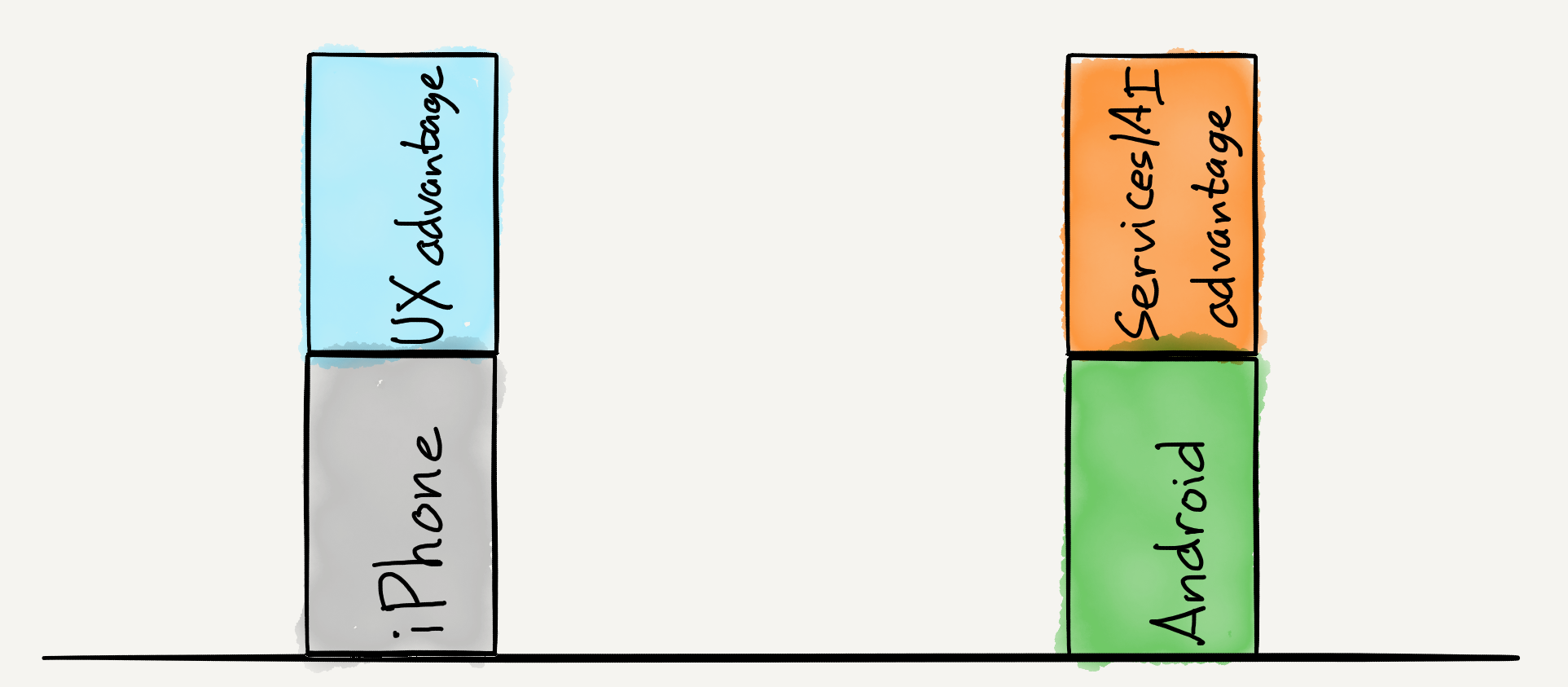
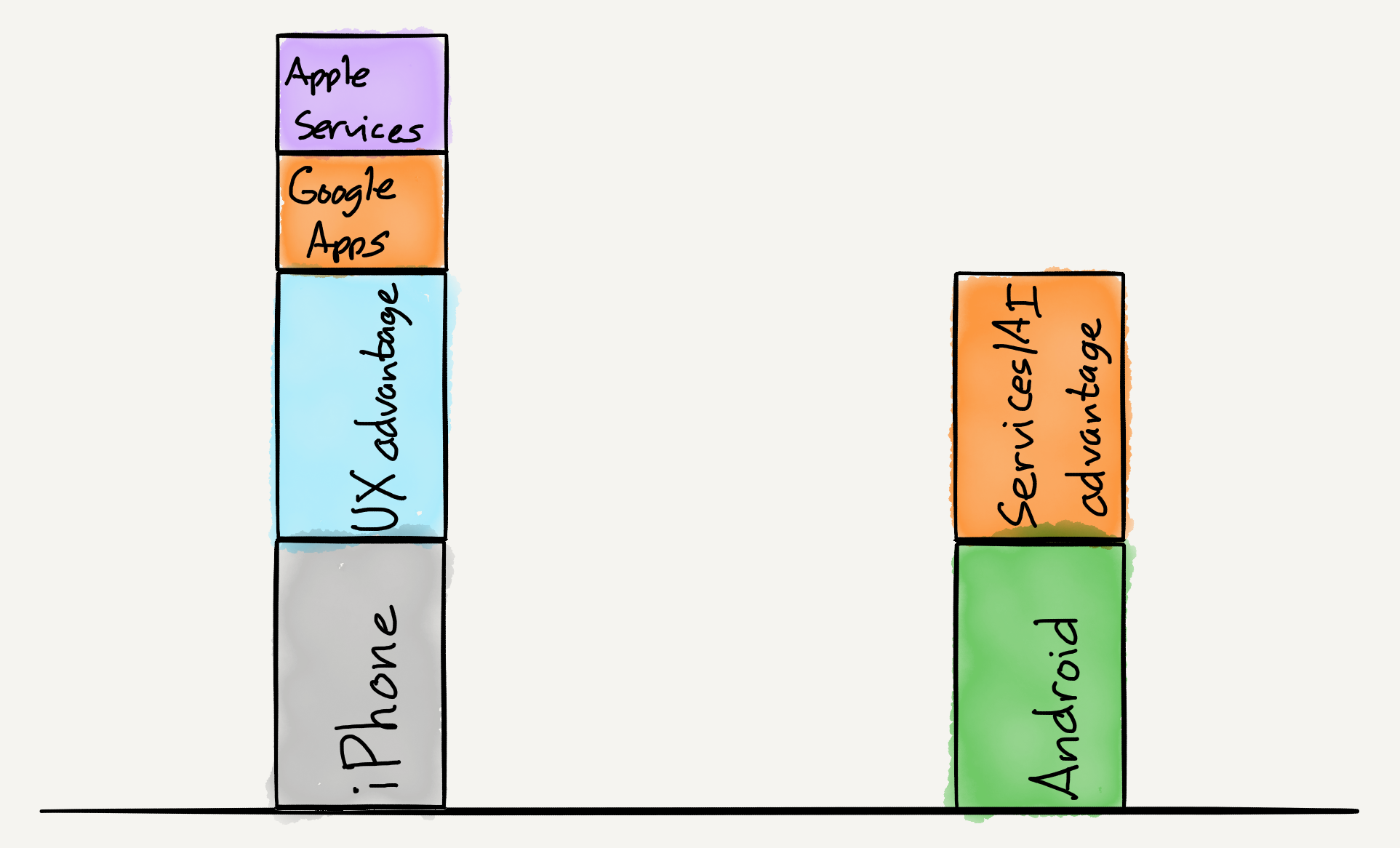

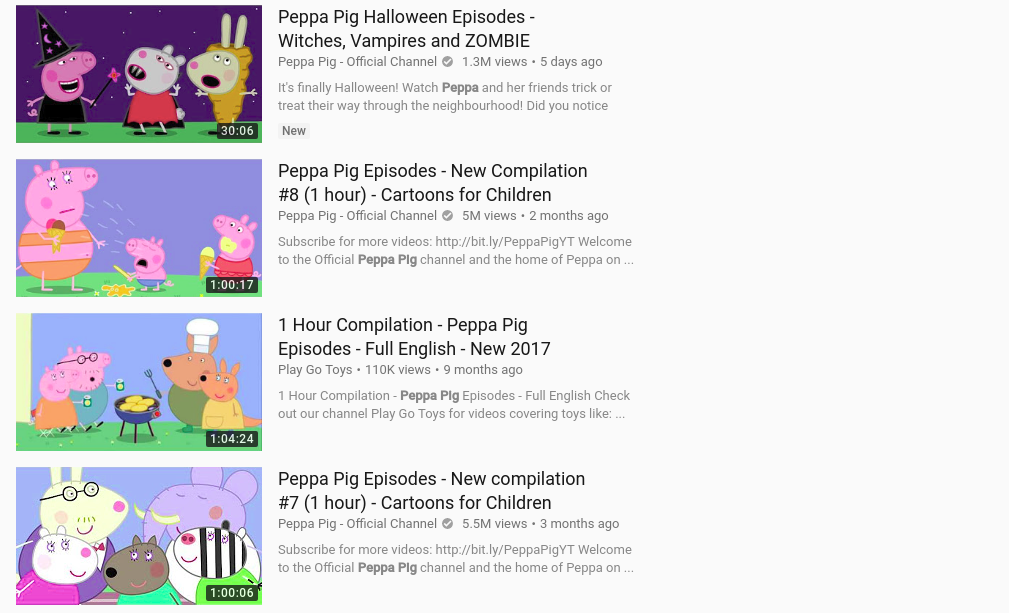

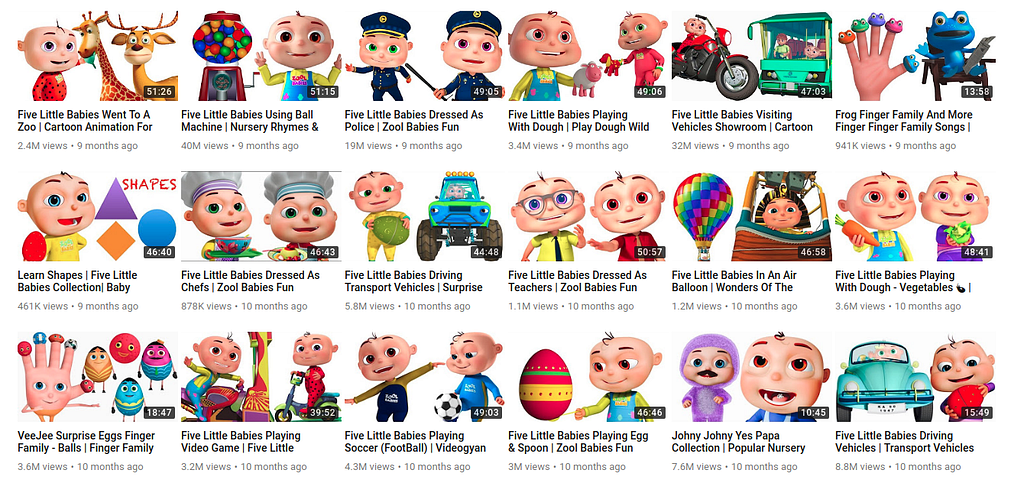






 Google started rolling out the November security patch update for its Pixel and Nexus devices from earlier today. More importantly for Pixel 2 XL owners though, the update brings a number of changes to fix various display related issues with the device.


