Shared posts

24 Nov 23:22

How Panos and Ralf made me love Windows 10

by Volker Weber

DSCF5193

Two years ago I was a Mac user. I had been a Windows user from version 1 but I had converted to Macs when they were still running on Motorola chips. But then something happened: I watched Panos Panay present the Surface 3. This was finally a machine worth a look. I liked it a lot as a travel companion. It was light, it had the right ports: microUSB for charging, USB A for the occasional thumbdrive, microSD for storage, but it wasn't powerful enough to challenge my MacBook Pro.

Then two years ago I met Ralf Groene. He heads industrial design at Microsoft and I immediately connected with him. Ralf is German, he comes from a mechanical craftsmenship background (Werkzeugmacher) and he is a person I could spend weeks with. We only had two hours over lunch in Frankfurt where we spoke about the Surface Book. But I was hooked. I needed to upgrade my computing. MacBooks are great, so are iPads, but I wanted something that does both.

IMG 20171121 232900

Much deliberation later, actually one year later, I had decided I wanted a Surface Pro. It's much lighter, it finally had a great keyboard and touchpad with the Signature cover, and it certainly is fast enough for my no-gaming, no-video-editing world. Eleven months ago I started to move my workload over from MacBook to Surface. I made one restart with a fresh install when Windows was causing me trouble, but with Creators Update in the spring I was sold on Windows 10.

The software wouldn't have done it. But the hardware Microsoft is building sure did. Watch this video from The Verge to see more of Ralf.

24 Nov 23:22

Huawei leaves a good impression

by Volker Weber

IMG 1651

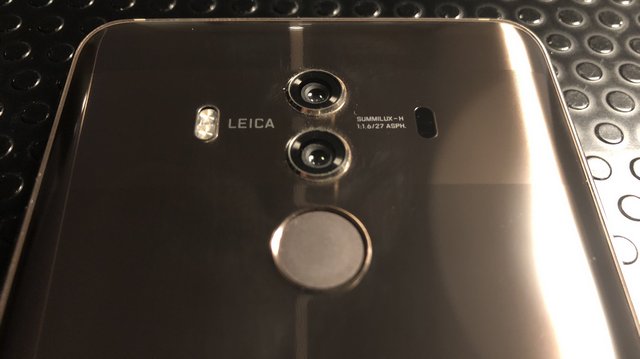
I always like to make fun of Leica fans who shoot their Leica. How do you do that, if your favorite camera is in the picture? The answer is simple: you use your second Leica camera.

I shoot most of my photos with my iPhone. I do have serious cameras from Fujifilm (and an old Nikon), but the iPhone has excellent results. No need to fetch the heavier glass and deal with a complicated workflow. But what if the iPhone itself is in the picture? Simple: I use a Huawei smartphone. I have used the P10 and now the Mate 10 Pro and their cameras have mostly impressed me, with one exception where monochrome shots did not come out as I had hoped.

I should be using the Huawei a lot more, but here is the thing: if you have an Apple Watch or if you use iMessage and Facetime, you are not going to make anything else your first phone. Lots of YouTubers who pretend otherwise are struggling with that. Rule of thumb: only if the iPhone is in the frame, the photo was shot with a Huawei. I would probably be fine with a Pixel or an S8 but I have neither.

I consider the Mate 10 Pro to be on par with the best Android phones. It's about the size of a Plus iPhone. If you are looking for the regular size, check out the P10. Is the camera better than an iPhone 8/8Plus/X? Nope. Nothing is. But consider this: these cameras are better than most photographers.

24 Nov 23:22

Distilling Canvas LMS Accusations Of ‘Openwashing’

files/images/Slide8-5.jpg

Moodle News, Nov 25, 2017


Icon

This unattributed post on Moodle News largely clears Canvas of 'openwashing'. It points out that the software is released under a good open soure license, and moreover, that its APis are open. Some cracks around the foundation: a Canvas host could charge for API access, and Instructure (Canvas parent company) might not "protect the values and principles that have maintained the open source community alive and thriving" in the future. I haven't actually run an instance of Canvas (maybe I should one of these days) so I'm not sure whether there are any practical barriers. But this article makes it sound like I'd be fine.

[Link] [Comment]
24 Nov 23:22

Fear and Loathing in the Moodle Community

files/images/Moodle-NA.1.png

Michael Feldstein, e-Literate, Nov 25, 2017


Icon

This is a long post from Michael Feldstein on the opposition to e-Literate's recent data regarding new Moodle installations. A lot of it is irrelevant (though I did learn some things about the now-abandoned dotLRN project). There are two threads to the argument. The second is that the e-Literate analysis is based on good data. The first is that exceptions to that data (of the form, say, "but it's big in Spain") are irrelevant. Feldstein also suggests that readers misunderstood some of the finer points of the analysis. I have no reason to doubt the second (though the account of 'primary LMS' is a bit sketchy). But the first leaves me wanting; I think the international market is more important than Feldstein is willing to credit, especially today, especially to non-American companies, and especially with respect to open source software. 

[Link] [Comment]
24 Nov 23:22

About time

This morning I read an article that’s been making the rounds lately: Modern Media Is a DoS Attack on Your Free Will. It’s made me think, which I must admit, I at first didn’t like. See, when I wake up in the morning (and subsequently wake up my computer) the first thing I do is go on Twitter to catch up on everything I missed while I was asleep. All this before my first coffee, mind you.
24 Nov 23:22

Adam Robinson on Understanding

by Matt

This is a long quote/excerpt from Adam Robinson I’ve been holding onto for a while, from Tribe of Mentors. Worth considering, especially if you strive to work in a data-informed product organization.

Virtually all investors have been told when they were younger — or implicitly believe, or have been tacitly encouraged to do so by the cookie-cutter curriculums of the business schools they all attend — that the more they understand the world, the better their investment results. It makes sense, doesn’t it? The more information we acquire and evaluate, the “better informed” we become, the better our decisions. Accumulating information, becoming “better informed,” is certainly an advantage in numerous, if not most, fields.

But not in the eld of counterintuitive world of investing, where accumulating information can hurt your investment results.

In 1974, Paul Slovic — a world-class psychologist, and a peer of Nobel laureate Daniel Kahneman — decided to evaluate the effect of information on decision-making. This study should be taught at every business school in the country. Slovic gathered eight professional horse handicappers and announced, “I want to see how well you predict the winners of horse races.” Now, these handicappers were all seasoned professionals who made their livings solely on their gambling skills.

Slovic told them the test would consist of predicting 40 horse races in four consecutive rounds. In the first round, each gambler would be given the five pieces of information he wanted on each horse, which would vary from handicapper to handicapper. One handicapper might want the years of experience the jockey had as one of his top five variables, while another might not care about that at all but want the fastest speed any given horse had achieved in the past year, or whatever.

Finally, in addition to asking the handicappers to predict the winner of each race, he asked each one also to state how confident he was in his prediction. Now, as it turns out, there were an average of ten horses in each race, so we would expect by blind chance — random guessing — each handicapper would be right 10 percent of the time, and that their confidence with a blind guess to be 10 percent.

So in round one, with just five pieces of information, the handicappers were 17 percent accurate, which is pretty good, 70 percent better than the 10 percent chance they started with when given zero pieces of information. And interestingly, their confidence was 19 percent — almost exactly as confident as they should have been. They were 17 percent accurate and 19 percent confident in their predictions.

In round two, they were given ten pieces of information. In round three, 20 pieces of information. And in the fourth and final round, 40 pieces of information. That’s a whole lot more than the five pieces of information they started with. Surprisingly, their accuracy had flatlined at 17 percent; they were no more accurate with the additional 35 pieces of information. Unfortunately, their confidence nearly doubled — to 34 percent! So the additional information made them no more accurate but a whole lot more confident. Which would have led them to increase the size of their bets and lose money as a result.

Beyond a certain minimum amount, additional information only feeds — leaving aside the considerable cost of and delay occasioned in acquiring it — what psychologists call “confirmation bias.” The information we gain that conflicts with our original assessment or conclusion, we conveniently ignore or dismiss, while the information that confirms our original decision makes us increasingly certain that our conclusion was correct.

So, to return to investing, the second problem with trying to understand the world is that it is simply far too complex to grasp, and the more dogged our at- tempts to understand the world, the more we earnestly want to “explain” events and trends in it, the more we become attached to our resulting beliefs — which are always more or less mistaken — blinding us to the financial trends that are actually unfolding. Worse, we think we understand the world, giving investors a false sense of confidence, when in fact we always more or less misunderstand it.
You hear it all the time from even the most seasoned investors and financial “experts” that this trend or that “doesn’t make sense.” “It doesn’t make sense that the dollar keeps going lower” or “it makes no sense that stocks keep going higher.” But what’s really going on when investors say that something makes no sense is that they have a dozen or whatever reasons why the trend should be moving in the opposite direction.. yet it keeps moving in the current direction. So they believe the trend makes no sense. But what makes no sense is their model of the world. That’s what doesn’t make sense. The world always makes sense.

In fact, because financial trends involve human behavior and human beliefs on a global scale, the most powerful trends won’t make sense until it becomes too late to profit from them. By the time investors formulate an understanding that gives them the confidence to invest, the investment opportunity has already passed.

So when I hear sophisticated investors or financial commentators say, for example, that it makes no sense how energy stocks keep going lower, I know that energy stocks have a lot lower to go. Because all those investors are on the wrong side of the trade, in denial, probably doubling down on their original decision to buy energy stocks. Eventually they will throw in the towel and have to sell those energy stocks, driving prices lower still.


24 Nov 23:22

A Dumbphone Diary

by CT Moore

Ever consider what it'd be like to give up your smartphone? Me neither, but when I forced to, I learned a few things about myself and the people around me.

The post A Dumbphone Diary appeared first on CT Moore's Blog.

24 Nov 23:22

We’re hiring: Technical Innovation Crowdsourcing and Open Source Engagement Engineer

by georgeroter

To further our work here at Mozilla in searching for and acting on ideas beyond the traditional bounds of our organisation, we’re building our Open Innovation team.

This blog post from earlier this year is a great summary of our purpose:

Mozilla’s Open Innovation Team has been formed to help implement a broad set of open and collaborative practices in our products and technologies. The main guiding principle of the team’s efforts is to foster “openness by design”, rather than by default.

I’m excited that we’re growing this team, hiring for two new roles.

Open Source Engagement Engineer – https://careers.mozilla.org/position/gh/906005
We’re looking for a community engineer who has established themselves as a leader in building successful open source software, to help Mozilla get great at open source and to contribute to advancing the state of open source more broadly.
Program Manager, Technical Innovation Crowdsourcing – https://careers.mozilla.org/position/gh/922810
We’re looking for an expert in crowdsourcing for complex technical problems, who is excited about building a brand new, cross-Mozilla program in this area.
I would love to hear from you if you’re interested in either role, or if you know someone who might be. Please reach out directly — I’m groter@mozilla.com .
24 Nov 23:22

Uber got hacked and then paid the hackers $100k to not tell anyone

by Nathan Yau

This is fine. Totally normal. Eric Newcomer reporting for Bloomberg:

Hackers stole the personal data of 57 million customers and drivers from Uber Technologies Inc., a massive breach that the company concealed for more than a year. This week, the ride-hailing firm ousted its chief security officer and one of his deputies for their roles in keeping the hack under wraps, which included a $100,000 payment to the attackers.

Ugh.

Tags: breach, privacy, Uber

24 Nov 23:22

Facebook still allowed race exclusion for housing advertisers

by Nathan Yau

Last year, ProPublica revealed that Facebook allowed housing advertisers to exclude races in their campaigns. Facebook said they would address the issue. ProPublica returned to the topic. Facebook didn’t do a very good job.

All of these groups are protected under the federal Fair Housing Act, which makes it illegal to publish any advertisement “with respect to the sale or rental of a dwelling that indicates any preference, limitation, or discrimination based on race, color, religion, sex, handicap, familial status, or national origin.” Violators can face tens of thousands of dollars in fines.

Every single ad was approved within minutes.

Ugh.

Tags: advertising, facebook, people

24 Nov 23:22

Refund? What do you mean?

by Ton Zijlstra

Supplier: we’ll be shipping you these goods soon, can you check this list if the shipment matches your order?

Me: I’ve checked, there are 3 widgets that I ordered missing.

Supplier: Yes, we came to the conclusion you don’t actually need those 3 widgets to make the thingamajigs you also ordered work, as we previously assumed. And as you ordered them for the thingamajigs, we left them out.

Me: Ok, so how and when will you be refunding me what I paid for those 3 widgets?

Supplier: What do you mean?

(to be continued….)

24 Nov 23:22

Closed Over Thanksgiving

by noreply@blogger.com (VeloOrange)
by Igor

We'll be closed on November 23rd and re-open on November 27th to give our hardworking staff some time off to spend with their families and get in some long bike rides over the Thanksgiving holiday.


If you need an order shipped today, please place it before 3pm EST and we'll get it out the door.

Please have a safe and happy Thanskgiving break, and we'll see you bright and early on Monday!

Ps. We just got in these nifty Opinel No.8 Cyclist Knives! Stainless steel blade and classic Opinel design.


24 Nov 23:21

Wired Wednesday: Tinitell, Internet Escape Pod & Pip

24 Nov 23:21

Moral Of The Story

Last week in Madeira, I spoke at the International Conference on Interactive Digital Storytelling about “Some Moral Questions Concerning Story In Immersive Hypertext Narrative” occasioned by the 20th anniversary of Janet Murray’s influential Hamlet On The Holodeck. Murray imagines a future medium in which the player-protagonist is immersed in a realistic simulation, an alternate reality, and her vision has been widely embraced as the end toward which new media naturally strives.

What, on the holodeck, are we to do about Ophelia? She is an enigmatic character, one whom the 19th century found more fascinating than the 21st. Polonius speculates that Hamlet loves her; Laertes views a sexual relationship as a threat. If, as interactor, we have meaningful choice, might some combination of choices lead us to propose to marry Ophelia? To kiss her? To have sex with her?

All these choices are problematic. Can a simulated character marry? Specifically, can she consent? The presentation of meaningful choice within the fictive world leads us to the very threshold of the Turing Test, for the characters must necessarily be sufficiently convincing as to invite suspension of disbelief . The choices, moreover, are ours and the performance is ours as well: it is one thing to witness theatrical events that you cannot affect and that harm no one; it is another thing entirely to perform yourself what might be a crime. In the playhouse, Ophelia drowns every night and twice on Saturday whether we purchase a ticket or not; on the ho- lodeck, Ophelia drowns only if we fail to prevent it. And if tonight we want to see her drown, who have we become?

24 Nov 23:21

A.I. Will Serve Humans - But Only About 1% of Them

files/images/cdea4fb144a07b59e8d778c016b66b9d.jpg

Robby Berman, Nov 25, 2017


Icon

This is another post about the limitations of AI, both in terms of their effectiveness and in terms of their explainability. In terms of effectiveness, they depend on the data they're given (which explains racist AIs) and on the uses to which they're put (which explains selective blindness in AIs). We are also told “We can’t look inside the black box that makes the decisions.” But we can know a lot about it - its data sources, its algorithms, its deployment. These are covered in Europe's new General Data Protection Regulation (GDPR). What about explainability? Because there are so many input variables, we cannot understand AI in terms of simple rules. But we can understand the range of possible outcomes, whichc allows us to create a portrait of how a given AI operates. 

[Link] [Comment]
24 Nov 23:21

An update on the Workflow Initiative for Drupal 8.4/8.5

by Dries

Over the past weeks I have shared an update on the Media Initiative and an update on the Layout Initiative. Today I wanted to give an update on the Workflow Initiative.

Creating great software doesn't happen overnight; it requires a desire for excellence and a disciplined approach. Like the Media and Layout Initiatives, the Workflow Initiative has taken such an approach. The disciplined and steady progress these initiative are making is something to be excited about.

8.4: The march towards stability

As you might recall from my last Workflow Initiative update, we added the Content Moderation module to Drupal 8.2 as an experimental module, and we added the Workflows module in Drupal 8.3 as well. The Workflows module allows for the creation of different publishing workflows with various states (e.g. draft, needs legal review, needs copy-editing, etc) and the Content Moderation module exposes these workflows to content authors.

As of Drupal 8.4, the Workflows module has been marked stable. Additionally, the Content Moderation module is marked beta in Drupal 8.4, and is down to two final blockers before marking stable. If you want to help with that, check out the Content Moderation module roadmap.

8.4: Making more entity types revisionable

To advance Drupal's workflow capabilities, more of Drupal's entity types needed to be made "revisionable". When content is revisionable, it becomes easier to move it through different workflow states or to stage content. Making more entity types revisionable is a necessary foundation for better content moderation, workflow and staging capabilities. But it was also hard work and took various people over a year of iterations — we worked on this throughout the Drupal 8.3 and Drupal 8.4 development cycle.

When working through this, we discovered various adjacent bugs (e.g. bugs related to content revisions and translations) that had to be worked through as well. As a plus, this has led to a more stable and reliable Drupal, even for those who don't use any of the workflow modules. This is a testament to our desire for excellence and disciplined approach.

8.5+: Looking forward to workspaces

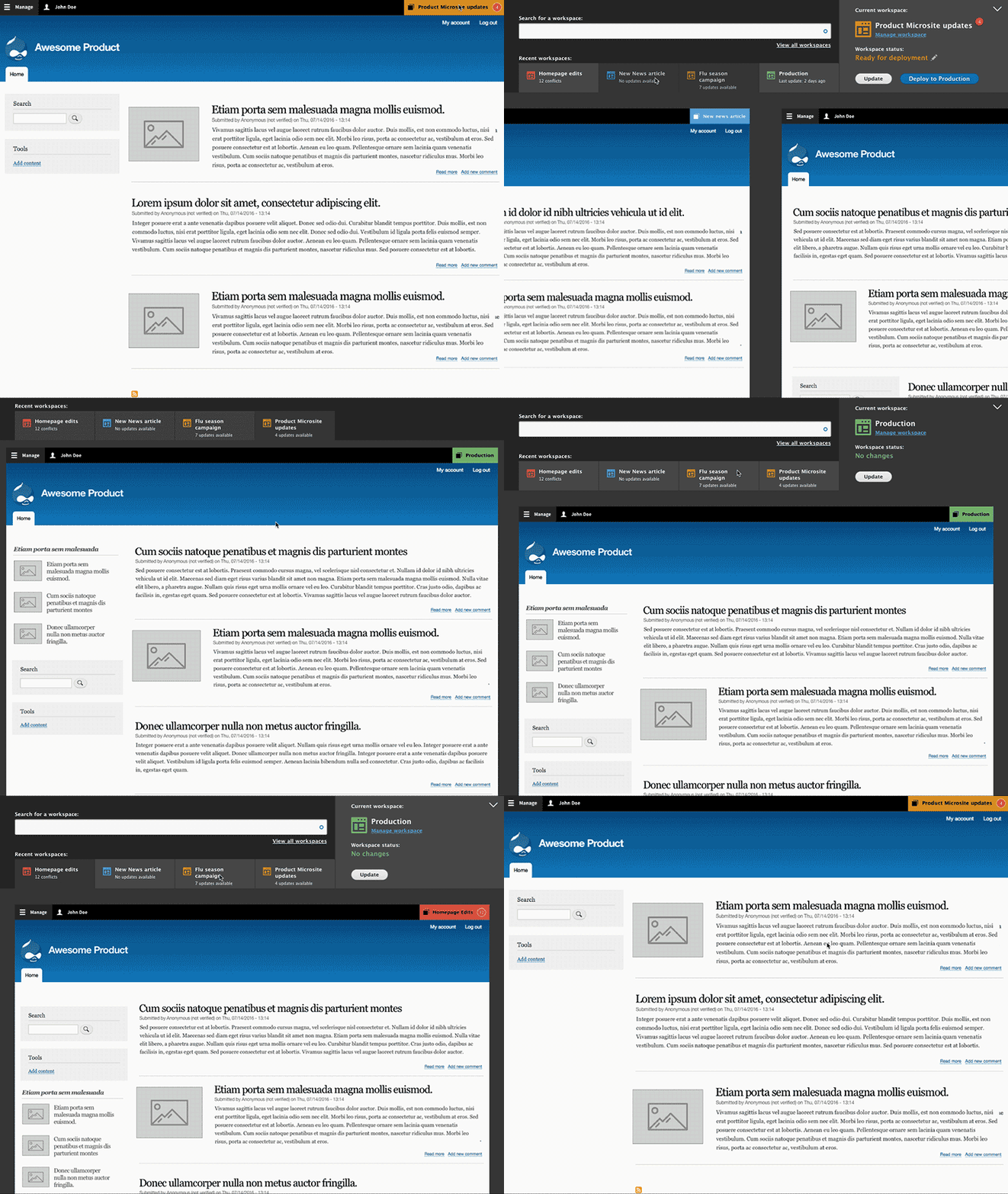
While these foundational improvements in Drupal 8.3 and Drupal 8.4 are absolutely necessary to enable better content moderation and content staging functionality, they don't have much to show for in terms of user experience changes. Now a lot of this work is behind us, the Workflow Initiative changed its focus to stabilizing the Content Moderation module, but is also aiming to bring the Workspace module into Drupal core as an experimental module.

The Workspace module allows the creation of multiple environments, such as "Staging" or "Production", and allows moving collections of content between them. For example, the "Production" workspace is what visitors see when they visit your site. Then you might have a protected "Staging" workspace where content editors prepare new content before it's pushed to the Production workspace.

While workflows for individual content items are powerful, many sites want to publish multiple content items at once as a group. This includes new pages, updated pages, but also changes to blocks and menu items — hence our focus on making things like block content and menu items revisionable. 'Workspaces' group all these individual elements (pages, blocks and menus) into a logical package, so they can be prepared, previewed and published as a group. This is one of the most requested features and will be a valuable differentiator for Drupal. It looks pretty slick too:

Drupal workspaces prototype

I'm impressed with the work the Workflow team has accomplished during the Drupal 8.4 cycle: the Workflow module became stable, the Content Moderation module improved by leaps and bounds, and the under-the-hood work has prepared us for content staging via Workspaces. In the process, we've also fixed some long-standing technical debt in the revisions and translations systems, laying the foundation for future improvements.

Special thanks to Angie Byron for contributions to this blog post and to Dick Olsson, Tim Millwood and Jozef Toth for their feedback during the writing process.

24 Nov 23:21

The Feds: Housing Affordability

by Ken Ohrn

While the BCGEU focuses on taming speculation-fuelled price increases, the Feds today released THIS $40B, 10-year plan to get back into housing.  The plan is called the National Housing Strategy, (Canada’s first-ever national housing strategy).

Just like Canada, the plan is big, broad, complex and contains elements for the very different needs of very different communities.  But there are a few new and powerful principles, like this one:

Every Canadian deserves a safe and affordable home.

From the Minister’s preface to the plan:

To be successful, the NHS requires the collaboration and commitment of more partners than ever before, in a coherent, integrated and whole-of-government approach. The provinces and territories will, of course, be primary partners in the Strategy, but we will also work more closely with municipalities, the private and non-profit sectors, and others who share our goal of creating a new generation of housing in Canada.

We have set clear goals for the NHS, including removing 530,000 Canadian families from housing need and reducing chronic homelessness by half over the next decade. We will track and report on our success, and adapt our approach as needed as the Strategy unfolds. Our primary focus will be on meeting the needs of vulnerable populations, such as women and children fleeing family violence, seniors, Indigenous peoples, people with disabilities, those dealing with mental health and addiction issues, veterans and young adults.


24 Nov 23:21

What do you want your button to do?

by Carrie Anne Philbin

Here at Raspberry Pi, we know that getting physical with computing is often a catalyst for creativity. Building a simple circuit can open up a world of making possibilities! This ethos of tinkering and invention is also being used in the classroom to inspire a whole new generation of makers too, and here is why.

The all-important question

Physical computing provides a great opportunity for creative expression: the button press! By explaining how a button works, how to build one with a breadboard attached to computer, and how to program the button to work when it’s pressed, you can give learners young and old all the conceptual skills they need to build a thing that does something. But what do they want their button to do? Have you ever asked your students or children at home? I promise it will be one of the most mindblowing experiences you’ll have if you do.

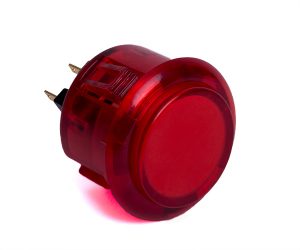
A button. A harmless, little arcade button.

Looks harmless now, but put it into the hands of a child and see what happens!

Amy will want her button to take a photo, Charlie will want his button to play a sound, Tumi will want her button to explode TNT in Minecraft, Jack will want their button to fire confetti out of a cannon, and James Robinson will want his to trigger silly noises (doesn’t he always?)! Idea generation is the inherent gift that every child has in abundance. As educators and parents, we’re always looking to deeply engage our young people in the subject matter we’re teaching, and they are never more engaged than when they have an idea and want to implement it. Way back in 2012, I wanted my button to print geeky sayings:

Geek Gurl Diaries Raspberry Pi Thermal Printer Project Sneak Peek!

A sneak peek at the finished Geek Gurl Diaries ‘Box of Geek’. I’ve been busy making this for a few weeks with some help from friends. Tutorial to make your own box coming soon, so keep checking the Geek Gurl Diaries Twitter, facebook page and channel.

What are the challenges for this approach in education?

Allowing this kind of free-form creativity and tinkering in the classroom obviously has its challenges for teachers, especially those confined to rigid lesson structures, timings, and small classrooms. The most common worry I hear from teachers is “what if they ask a question I can’t answer?” Encouraging this sort of creative thinking makes that almost an inevitability. How can you facilitate roughly 30 different projects simultaneously? The answer is by using those other computational and transferable thinking skills:

  • Problem-solving
  • Iteration
  • Collaboration
  • Evaluation

Clearly specifying a problem, surveying the tools available to solve it (including online references and external advice), and then applying them to solve the problem is a hugely important skill, and this is a great opportunity to teach it.

A girl plays a button reaction game at a Raspberry Pi event

Press ALL the buttons!

Hands-off guidance

When we train teachers at Picademy, we group attendees around themes that have come out of the idea generation session. Together they collaborate on an achievable shared goal. One will often sketch something on a whiteboard, decomposing the problem into smaller parts; then the group will divide up the tasks. Each will look online or in books for tutorials to help them with their step. I’ve seen this behaviour in student groups too, and it’s very easy to facilitate. You don’t need to be the resident expert on every project that students want to work on.

The key is knowing where to guide students to find the answers they need. Curating online videos, blogs, tutorials, and articles in advance gives you the freedom and confidence to concentrate on what matters: the learning. We have a number of physical computing projects that use buttons, linked to our curriculum for learners to combine inputs and outputs to solve a problem. The WhooPi cushion and GPIO music box are two of my favourites.

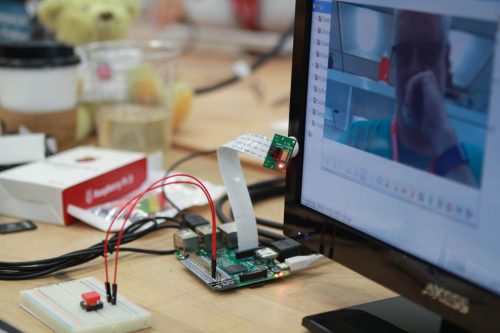
A Raspberry Pi and button attached to a computer display

Outside of formal education, events such as Raspberry Jams, CoderDojos, CAS Hubs, and hackathons are ideal venues for seeking and receiving support and advice.

Cross-curricular participation

The rise of the global maker movement, I think, is in response to abstract concepts and disciplines. Children are taught lots of concepts in isolation that aren’t always relevant to their lives or immediate environment. Digital making provides a unique and exciting way of bridging different subject areas, allowing for cross-curricular participation. I’m not suggesting that educators should throw away all their schemes of work and leave the full direction of the computing curriculum to students. However, there’s huge value in exposing learners to the possibilities for creativity in computing. Creative freedom and expression guide learning, better preparing young people for the workplace of tomorrow.

So…what do you want your button to do?

Hello World

Learn more about today’s subject, and read further articles regarding computer science in education, in Hello World magazine issue 1.

Read Hello World issue 1 for more…

UK-based educators can subscribe to Hello World to receive a hard copy delivered for free to their doorstep, while the PDF is available for free to everyone via the Hello World website.

The post What do you want your button to do? appeared first on Raspberry Pi.

24 Nov 23:21

My First Ride to Kyoto’s Deep-Mountain Soren-ji Temple

by Jeffrey Friedl
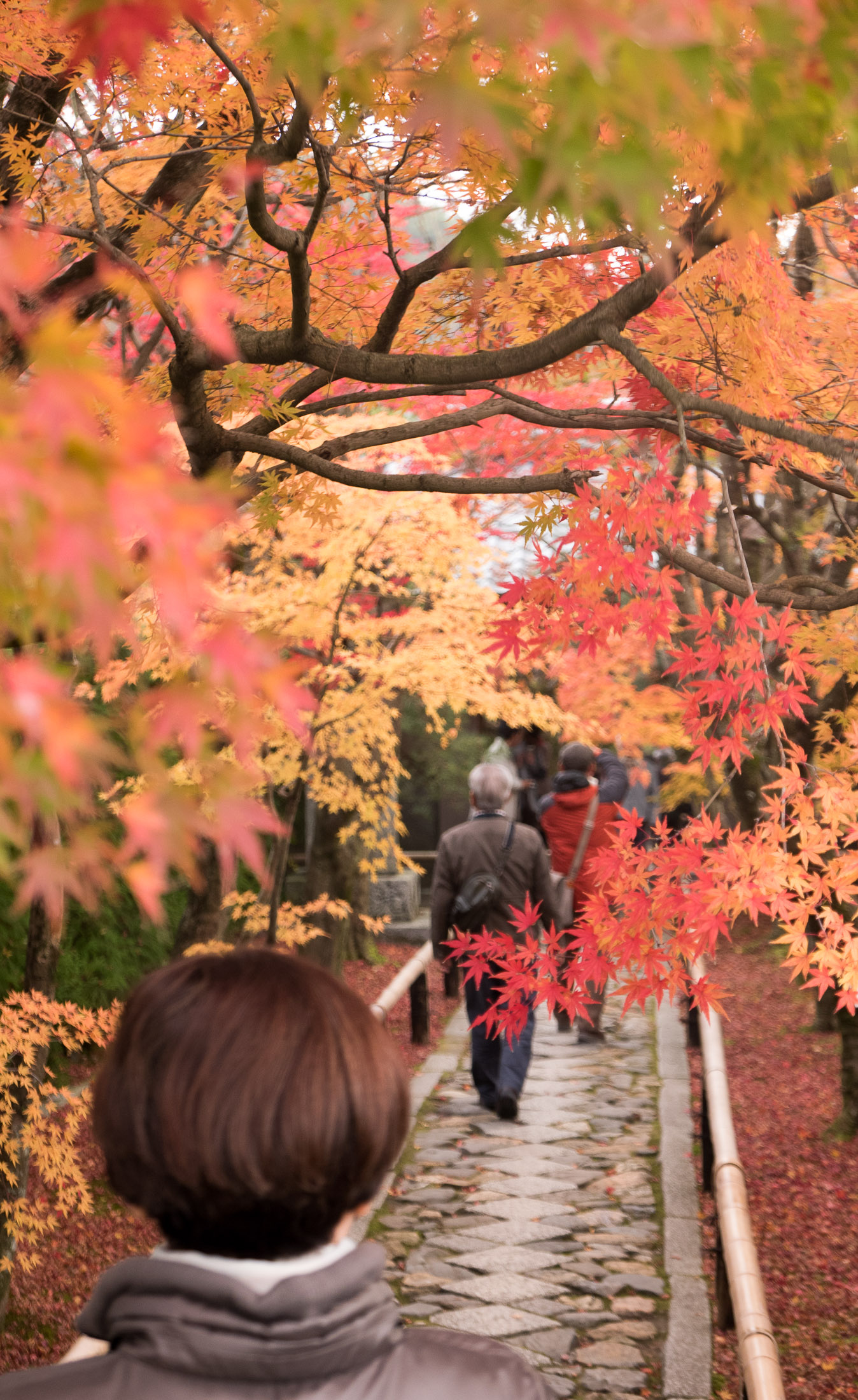
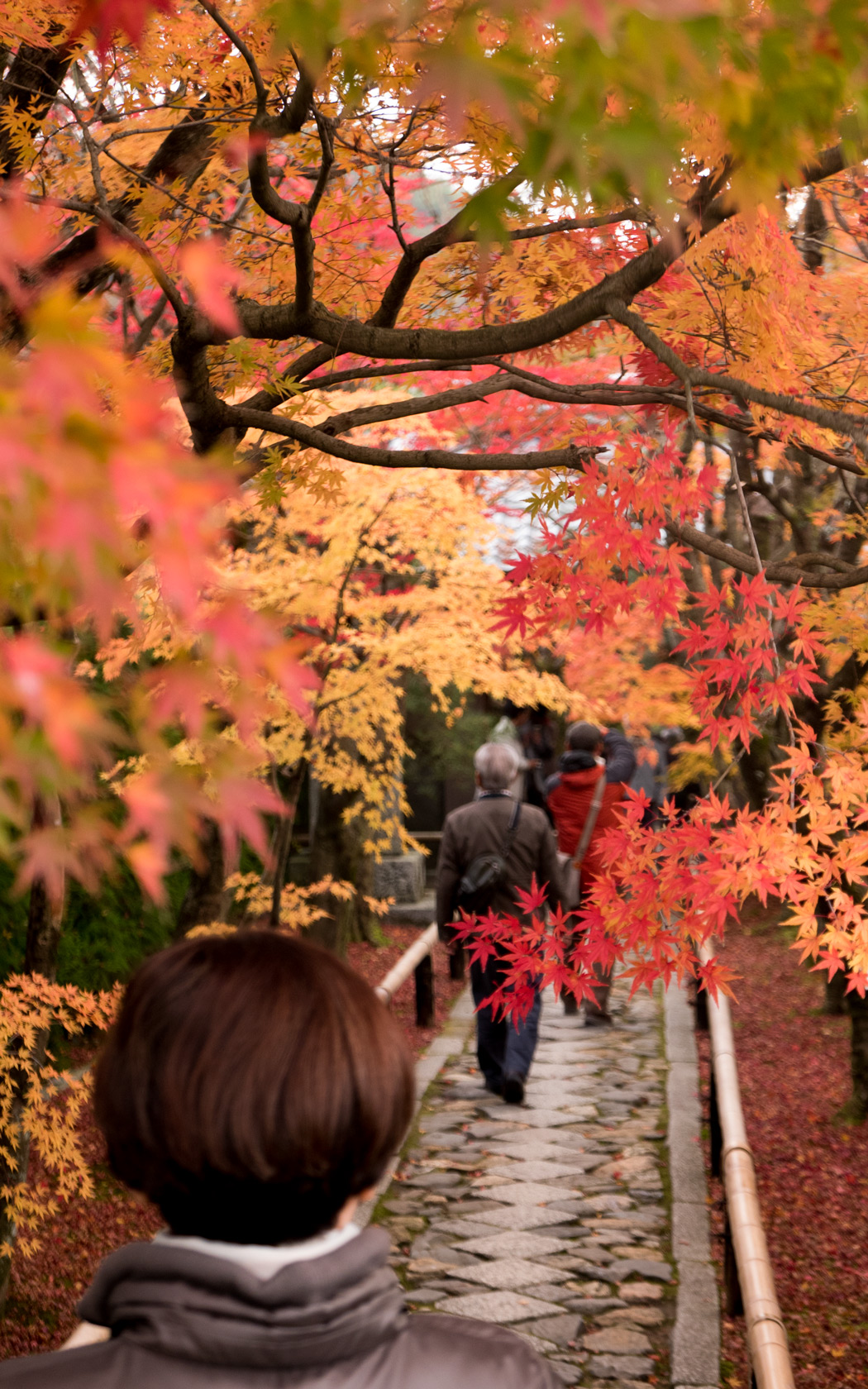
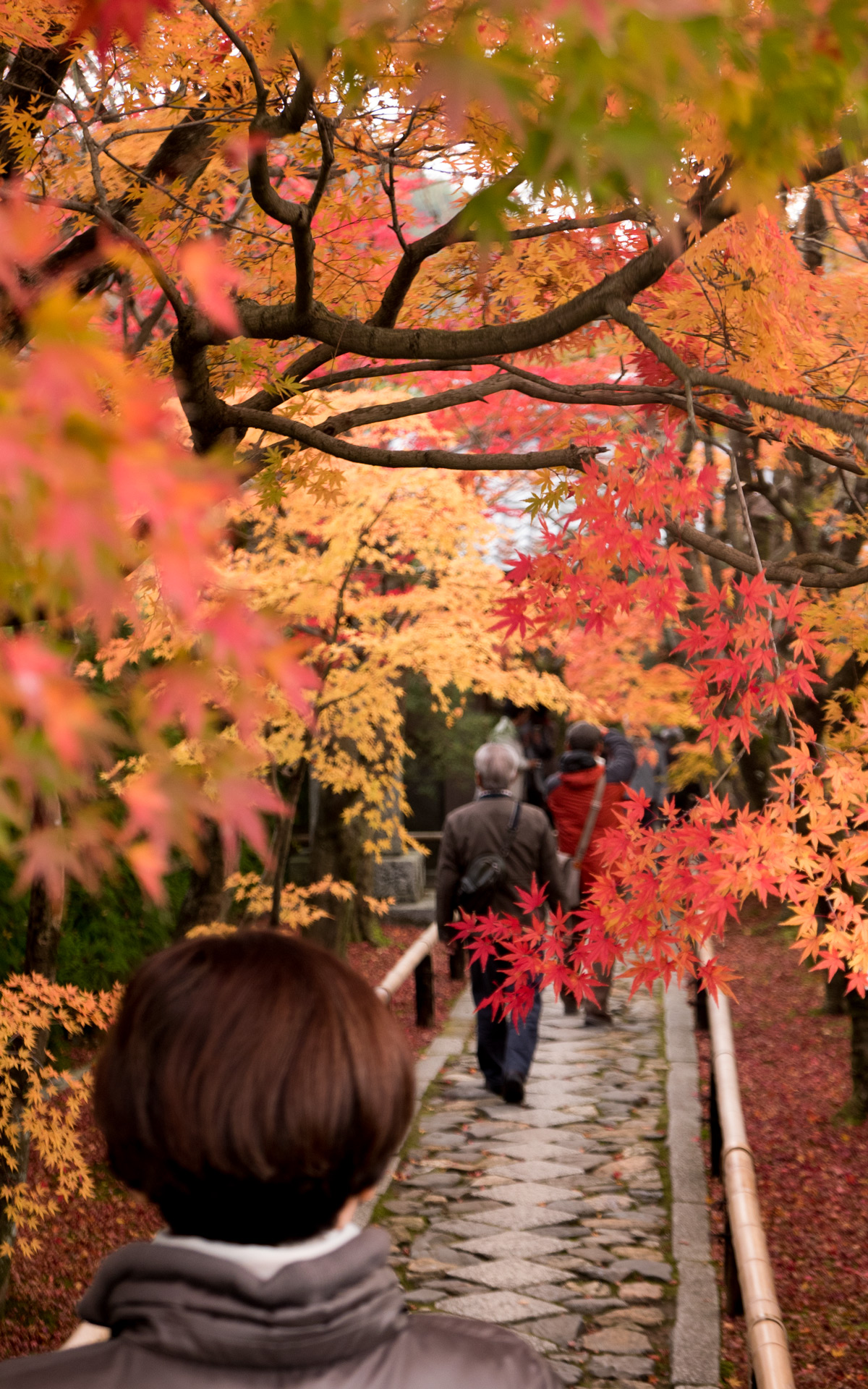
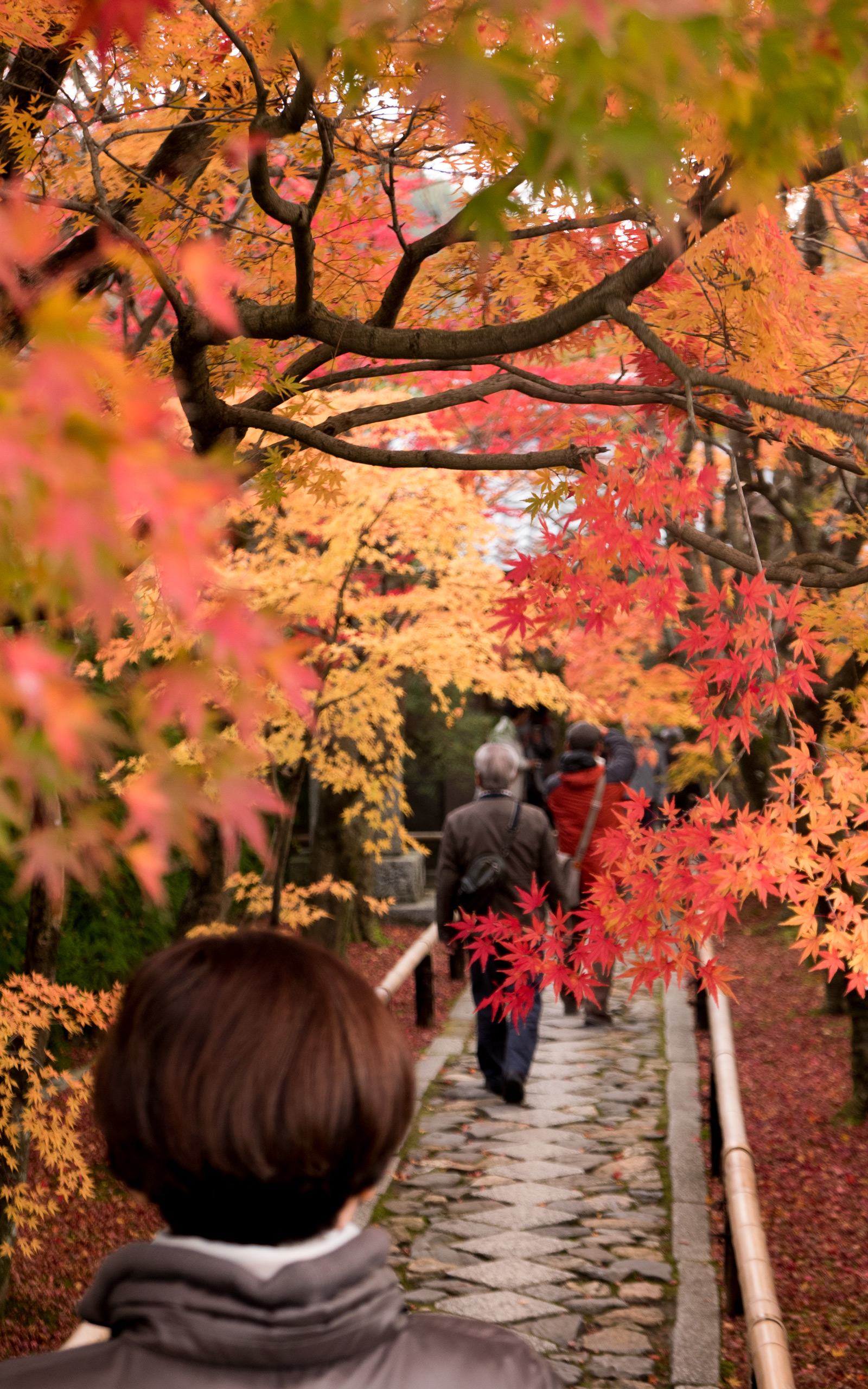
desktop background image of the entrance path to the Koetsu-ji Temple (光悦寺), Kyoto Japan, in autumn. -- Koetsu-ji Temple (光悦寺), Kyoto Japan -- Koetsu-ji Temple (光悦寺) -- Japan, Kyoto -- Copyright 2017 Jeffrey Friedl, http://regex.info/blog/ -- This photo is licensed to the public under the Creative Commons Attribution-NonCommercial 4.0 International License http://creativecommons.org/licenses/by-nc/4.0/ (non-commercial use is freely allowed if proper attribution is given, including a link back to this page on http://regex.info/ when used online)
Panasonic LX100 at an effective 70mm — 1/125 sec, f/2.8, ISO 320 — map & image datanearby photos
Koetsu-ji Temple (光悦寺), Kyoto Japan
Vertical Desktop-Background Versions
1050×1680  ·  1200×1920  ·  1600×2560

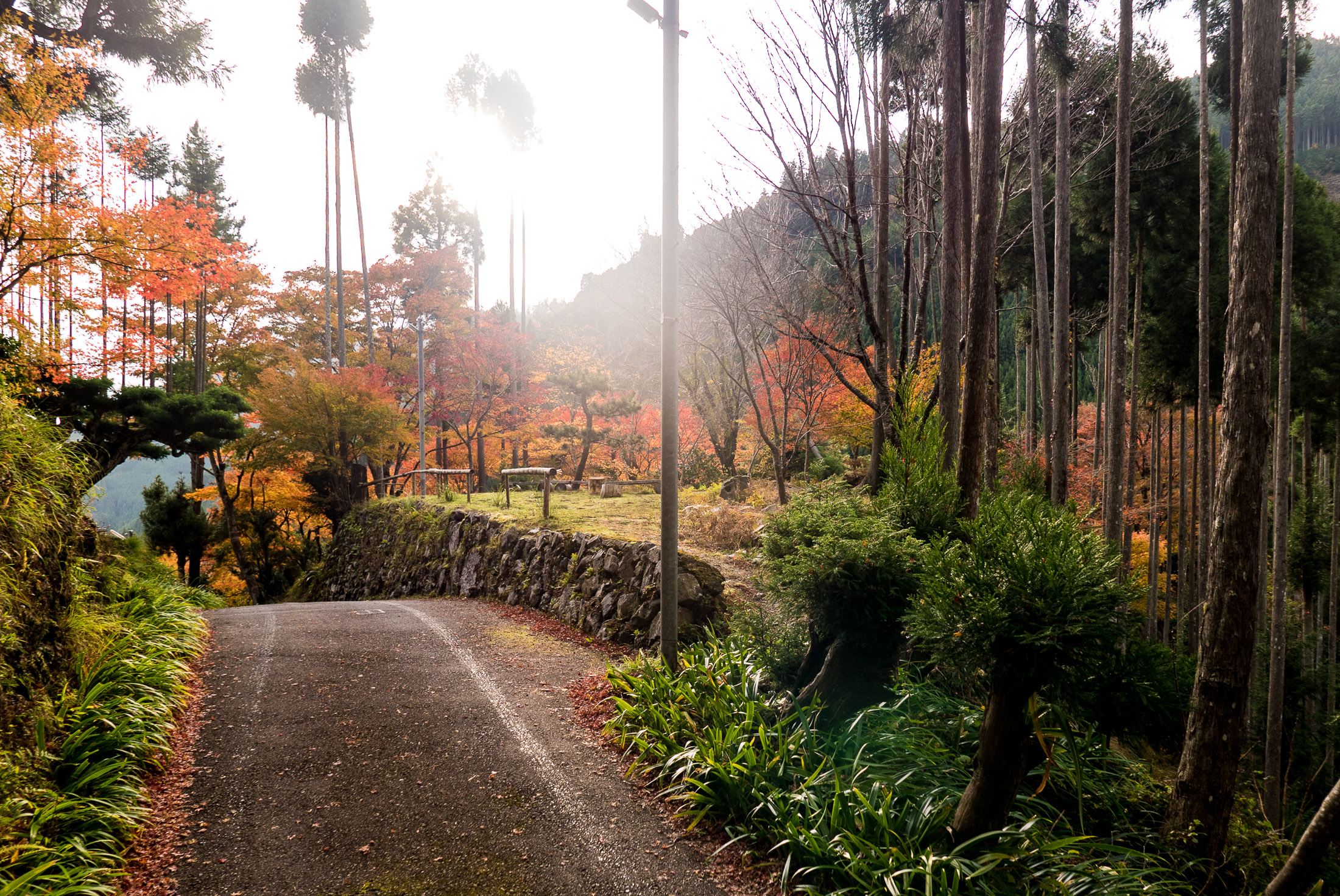
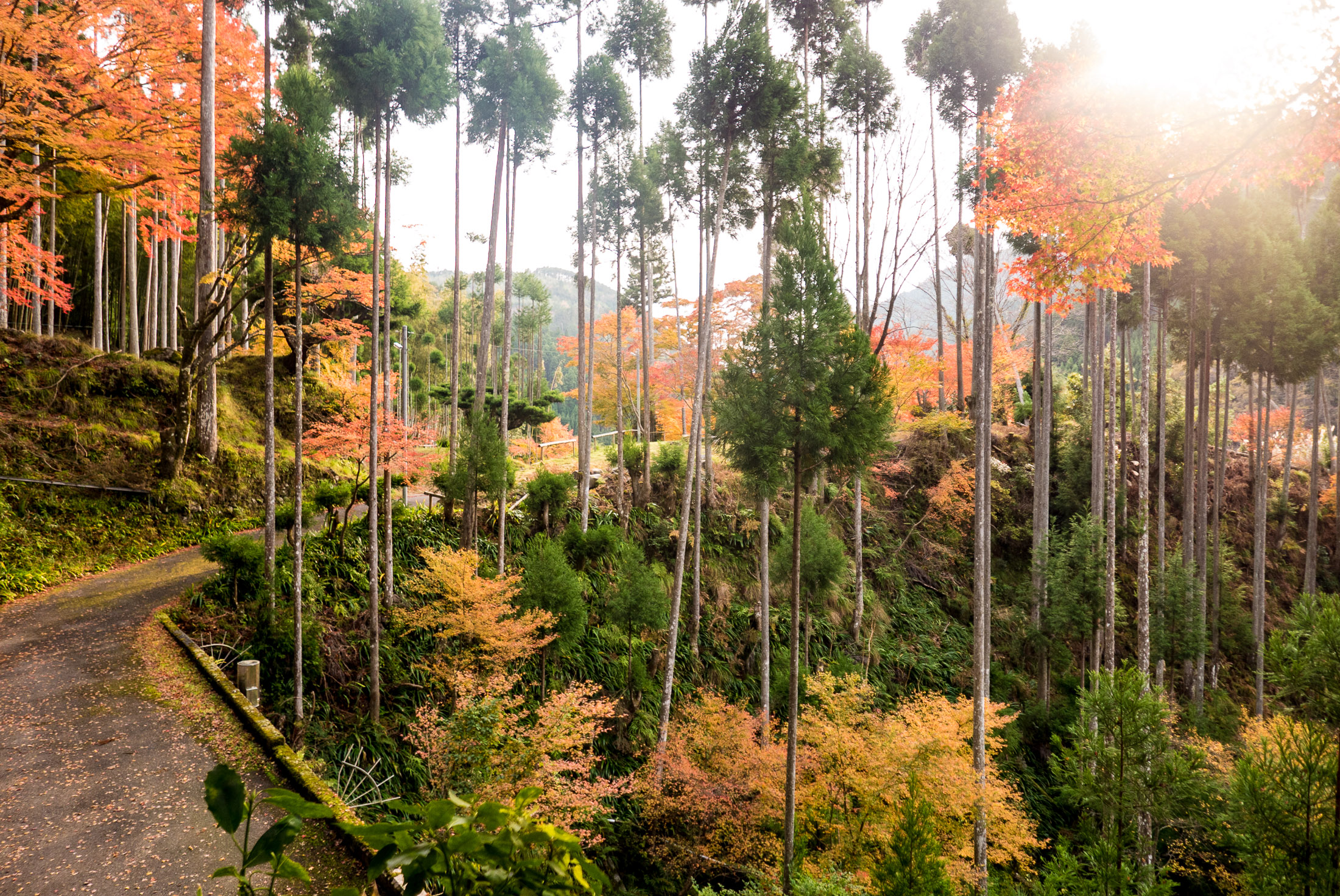
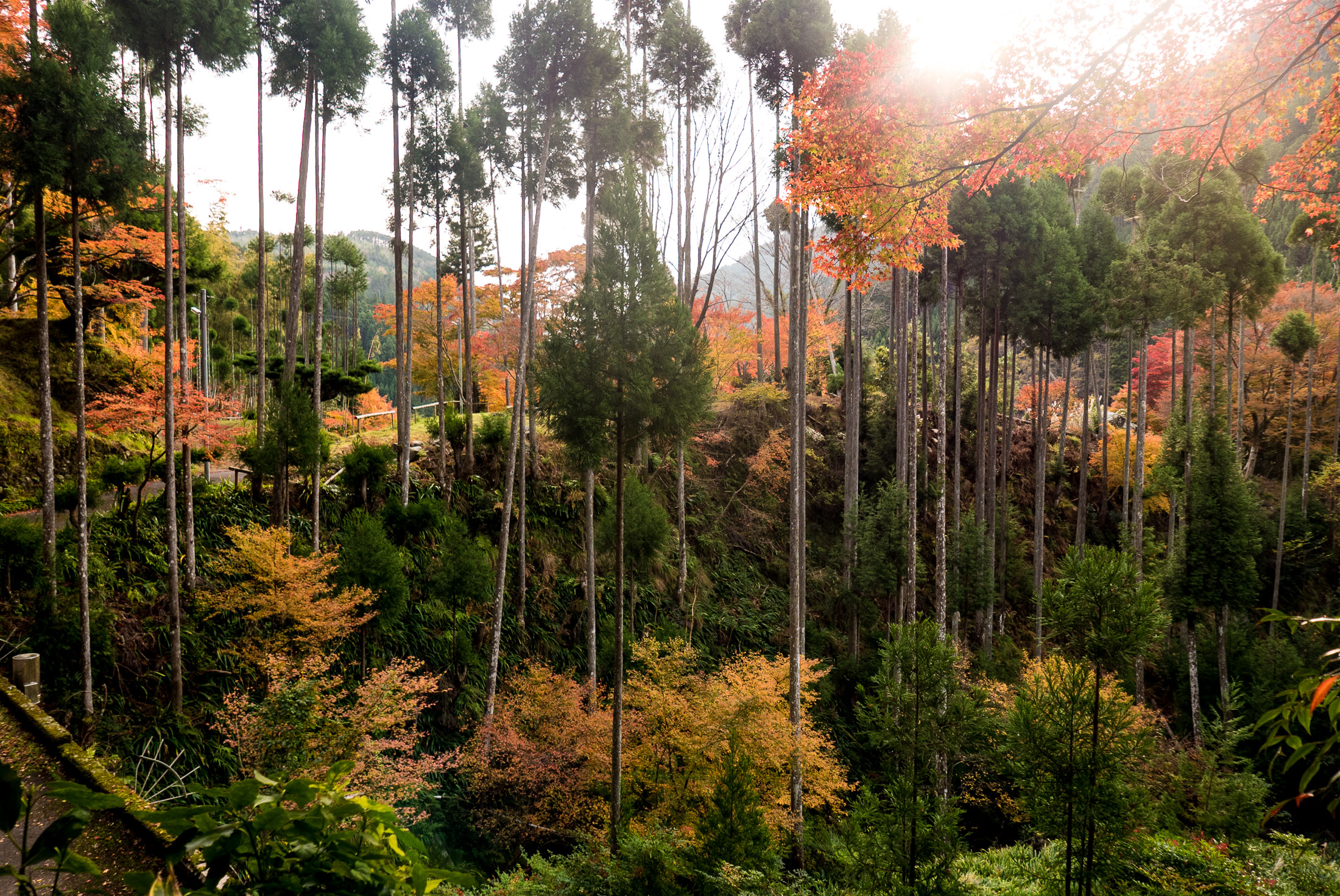
I had quite the photogenic day on Monday, with a local outing in the morning to see a nearby temple's fall foliage, then a ride into the mountains to see by bicycle some of the places seen during the weekend's “First Taste of Kyoto’s Fall-Foliage Season, 2017 Edition” post.

Today's post is about the bicycle ride (view at Strava).

The photo that opens this post is the entrance path to the Koetsu-ji Temple (光悦寺), which I pass on the edge of town just before entering the mountains and making the climb toward Kyomi Pass. We first saw it on my blog three weeks ago, in all green, here. Indeed, as I speculated there, it's spectacular dressed in fall colors, but also as expected, it was crowded.

I took the photo above expecting it to simply illustrate “crowded”, but I really like its vibe, so I made desktop-background versions.

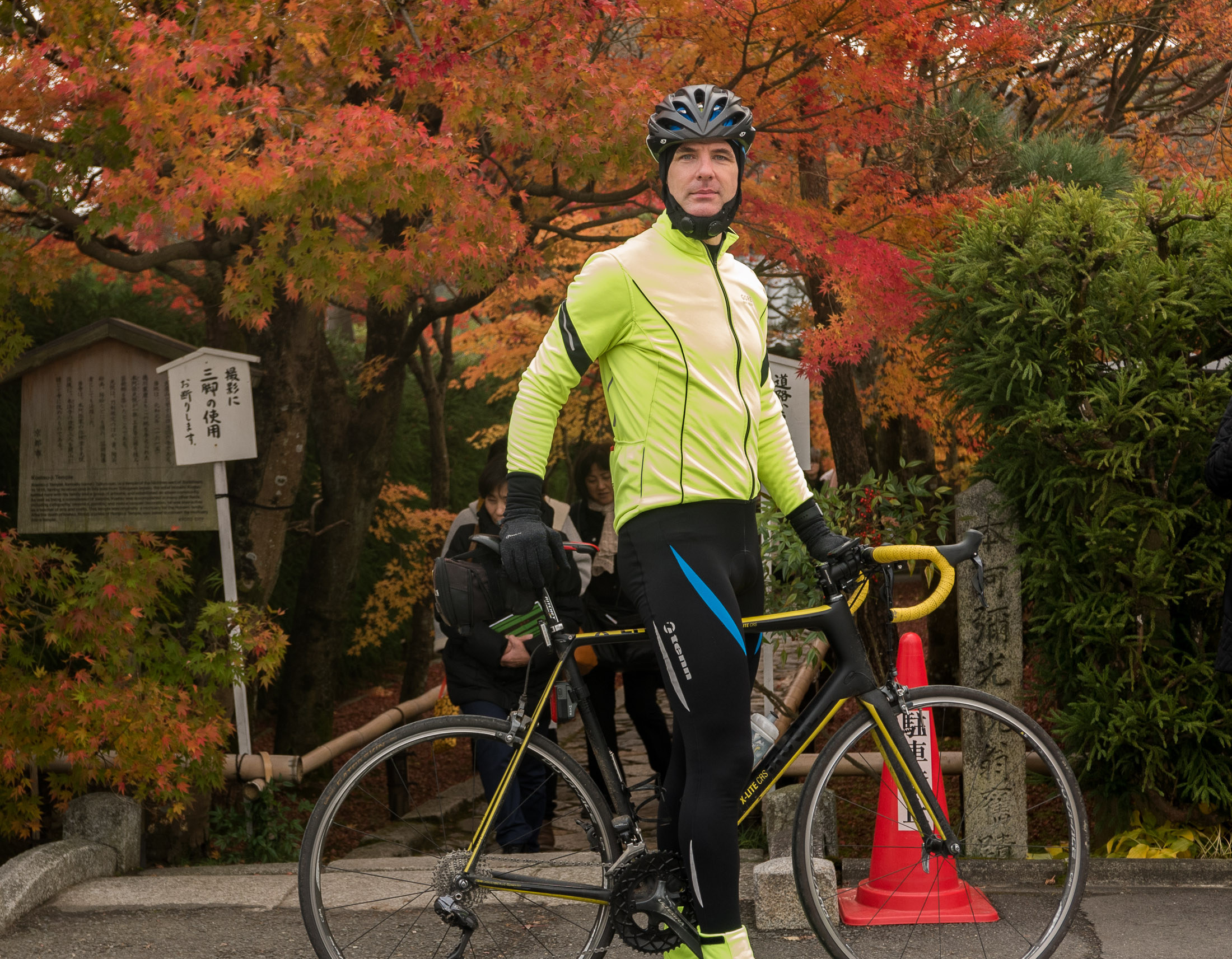
A lady kindly took my photo for me.
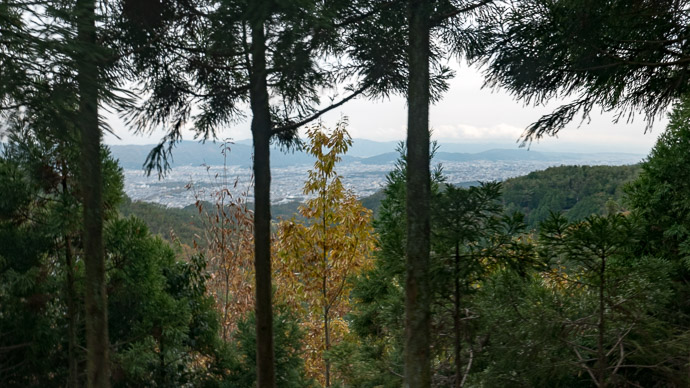
Me -- Koetsu-ji Temple (光悦寺) -- Japan, Kyoto -- Copyright 2017 Jeffrey Friedl, http://regex.info/blog/
Panasonic LX100 at an effective 56mm — 1/125 sec, f/3.5, ISO 250 — map & image datanearby photos
Me
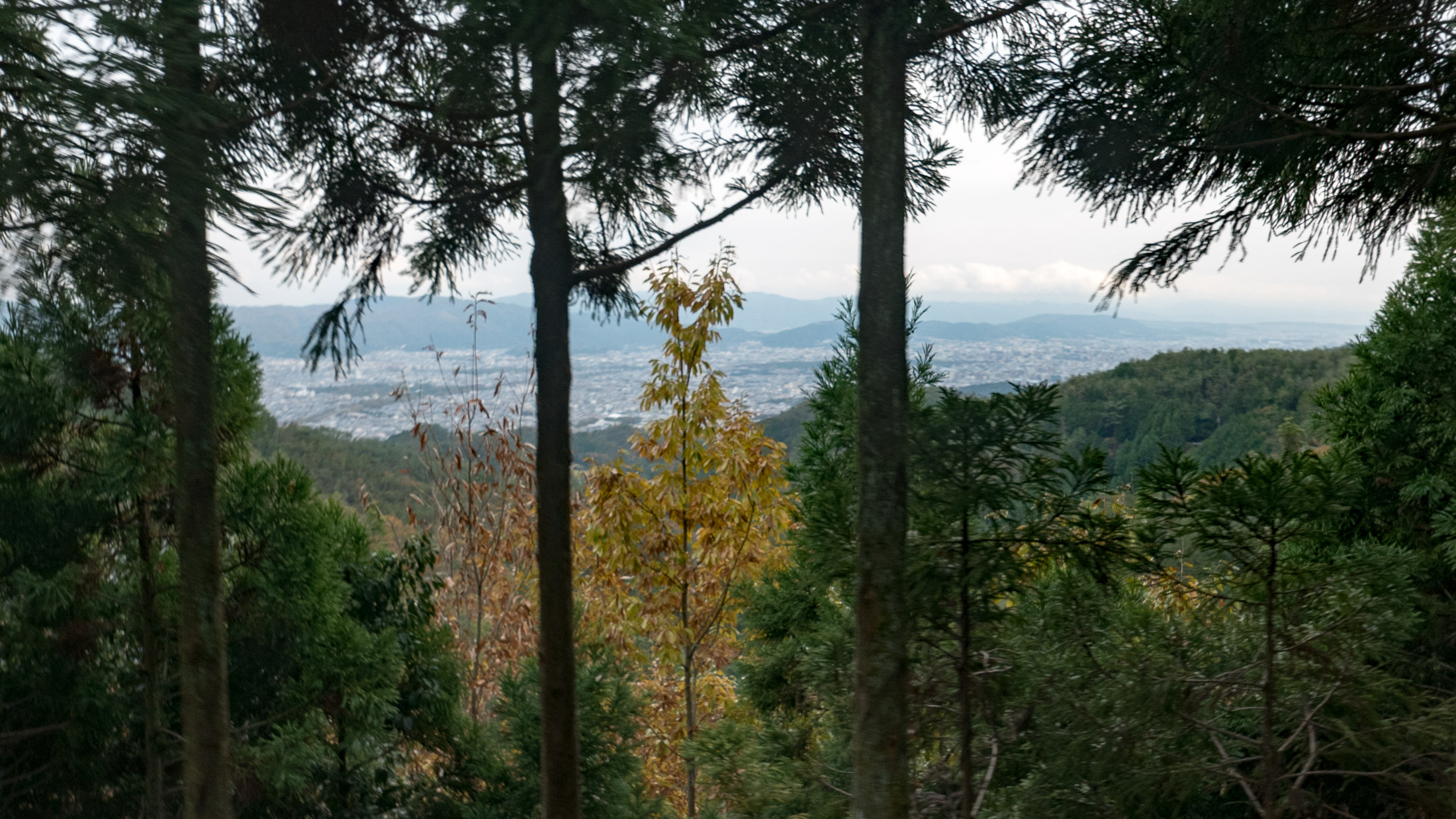
Kyoto taken on the fly, pointing the camera behind me as I climbed up toward Kyomi Pass -- Kyoto, Japan -- Copyright 2017 Jeffrey Friedl, http://regex.info/blog/ -- This photo is licensed to the public under the Creative Commons Attribution-NonCommercial 4.0 International License http://creativecommons.org/licenses/by-nc/4.0/ (non-commercial use is freely allowed if proper attribution is given, including a link back to this page on http://regex.info/ when used online)
Panasonic LX100 at an effective 24mm — 1/125 sec, f/5, ISO 200 — map & image datanearby photos
Kyoto
taken on the fly, pointing the camera behind me as I climbed up toward Kyomi Pass

On the way down I came across Yasukawa-san, who had invited me on the trip to Norikura last year. We had a nice chat for a bit.

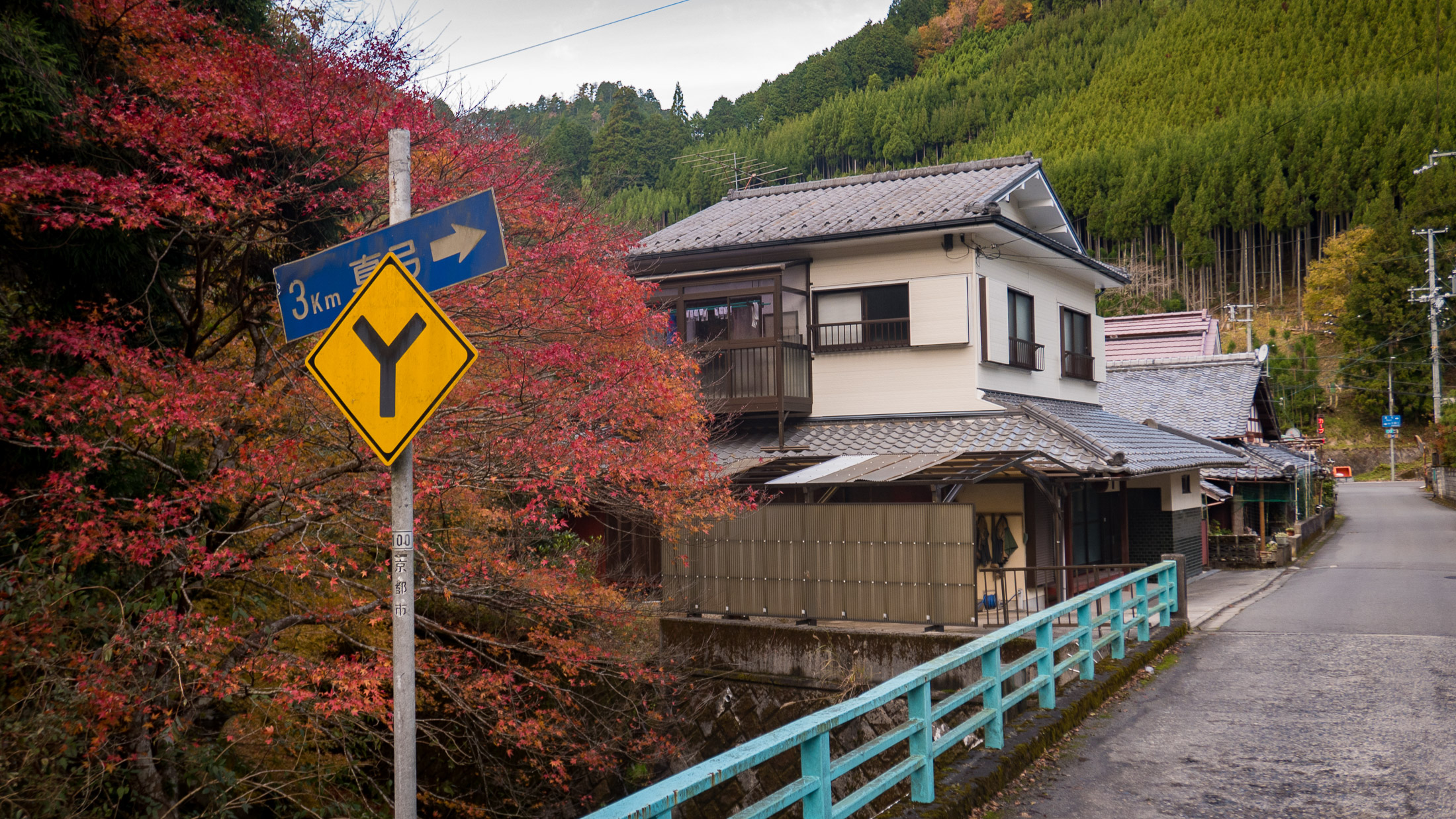
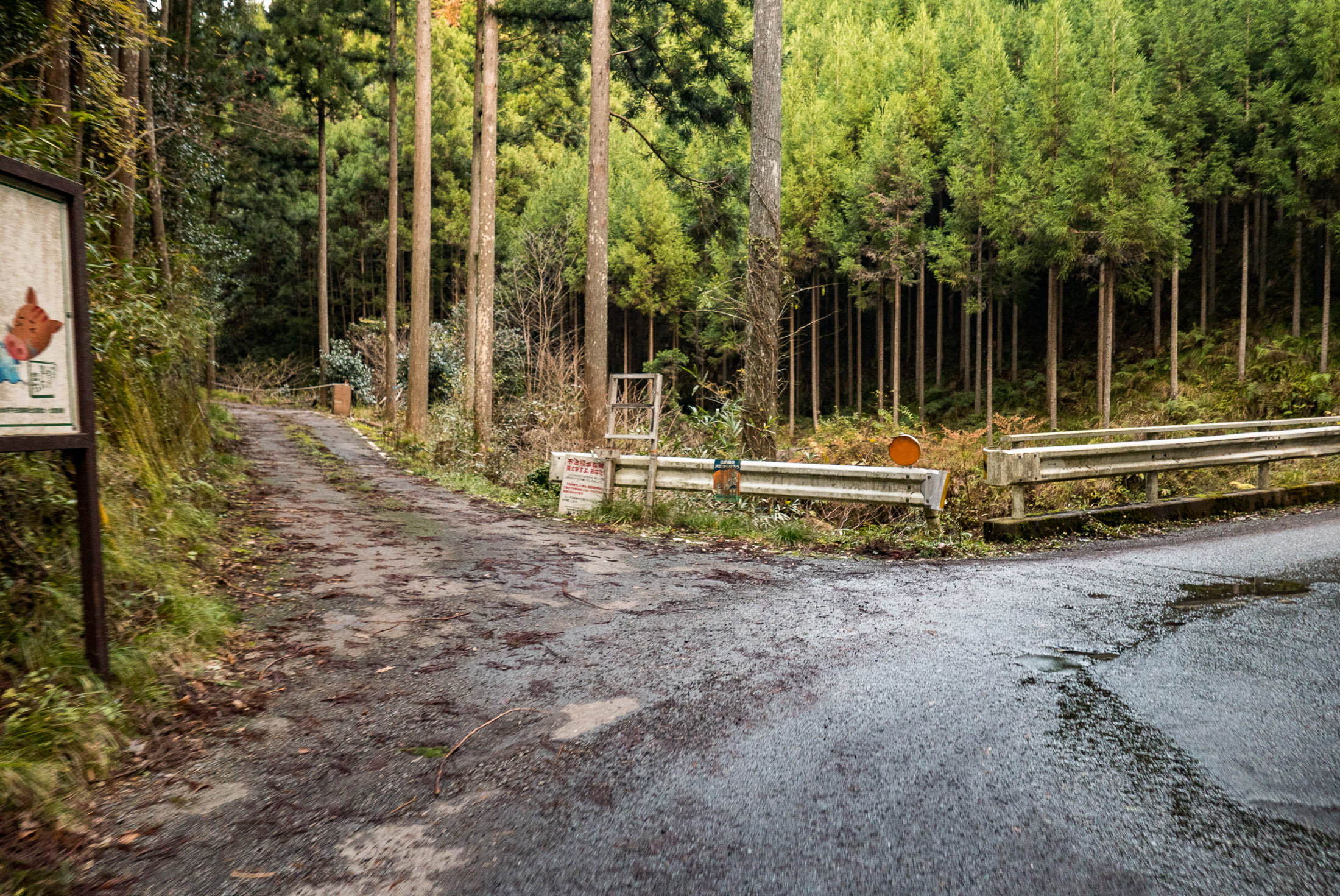
Junction on the Way -- Kyoto, Japan -- Copyright 2017 Jeffrey Friedl, http://regex.info/blog/ -- This photo is licensed to the public under the Creative Commons Attribution-NonCommercial 4.0 International License http://creativecommons.org/licenses/by-nc/4.0/ (non-commercial use is freely allowed if proper attribution is given, including a link back to this page on http://regex.info/ when used online)
Panasonic LX100 at an effective 35mm — 1/125 sec, f/2.3, ISO 200 — map & image datanearby photos
Junction on the Way
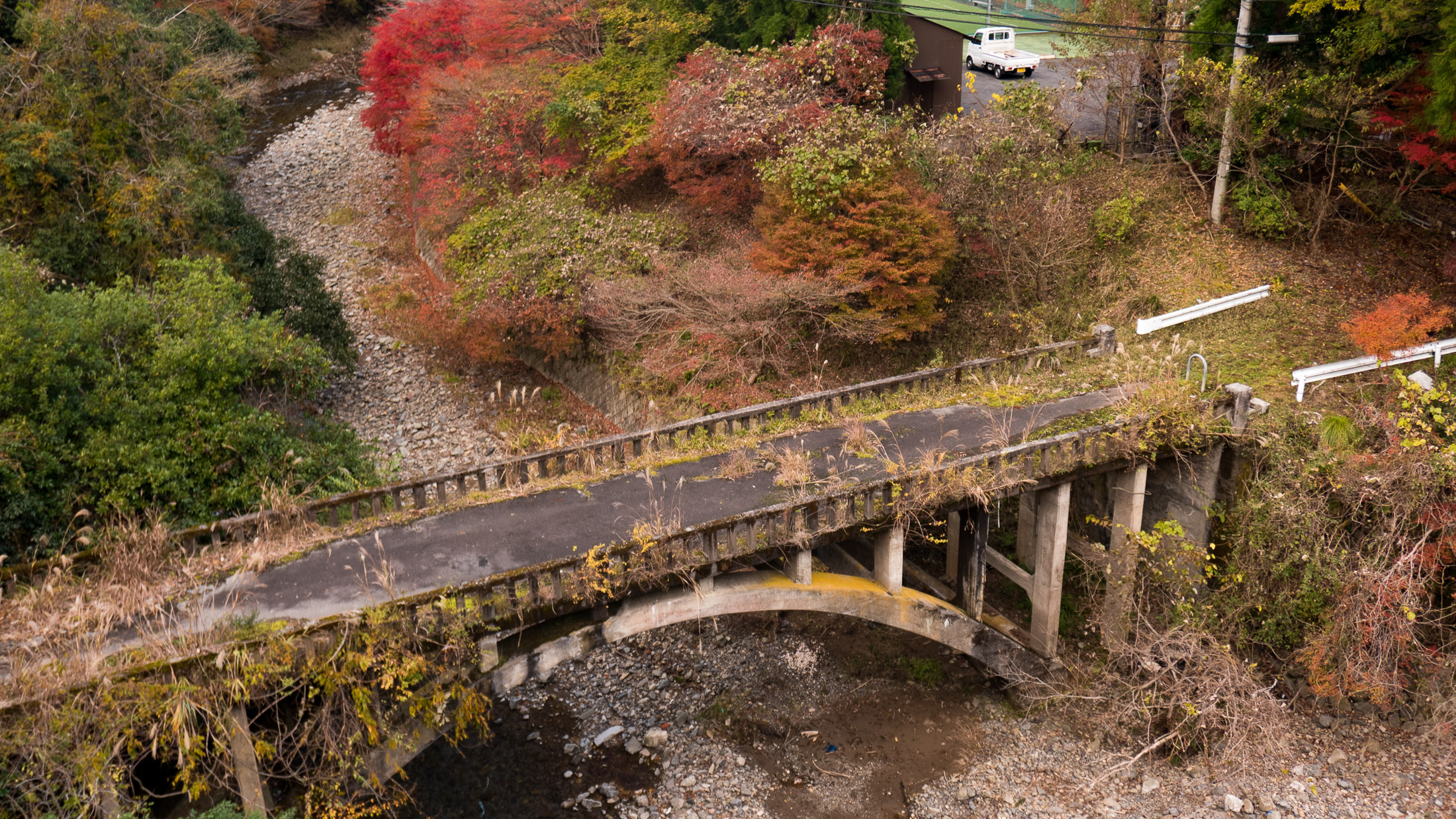
I Love this Old Bridge -- Kyoto, Japan -- Copyright 2017 Jeffrey Friedl, http://regex.info/blog/ -- This photo is licensed to the public under the Creative Commons Attribution-NonCommercial 4.0 International License http://creativecommons.org/licenses/by-nc/4.0/ (non-commercial use is freely allowed if proper attribution is given, including a link back to this page on http://regex.info/ when used online)
Panasonic LX100 at an effective 34mm — 1/80 sec, f/2.3, ISO 250 — map & image datanearby photos
I Love this Old Bridge

My post “Cycling to Kyoto’s Ochiba Shrine Amid the Fall Colors” two years ago is similar to today's, but has a better photo of the bridge, here.

I wonder how long ago the bridge was in use. It now leads to nowhere (the road just stops), because, I assume, the construction for the current modern roads completely changed the landscape in the area.
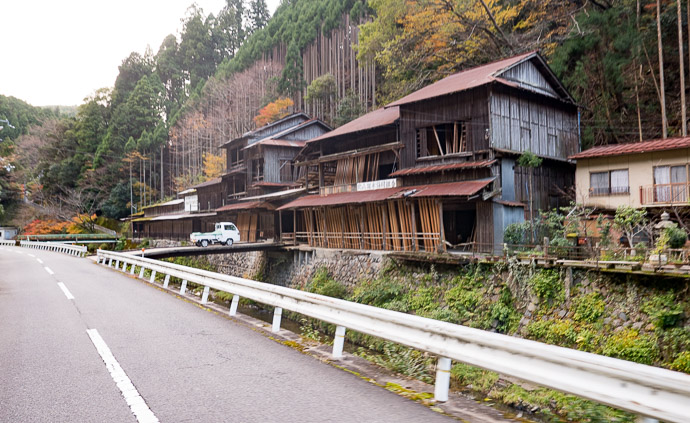
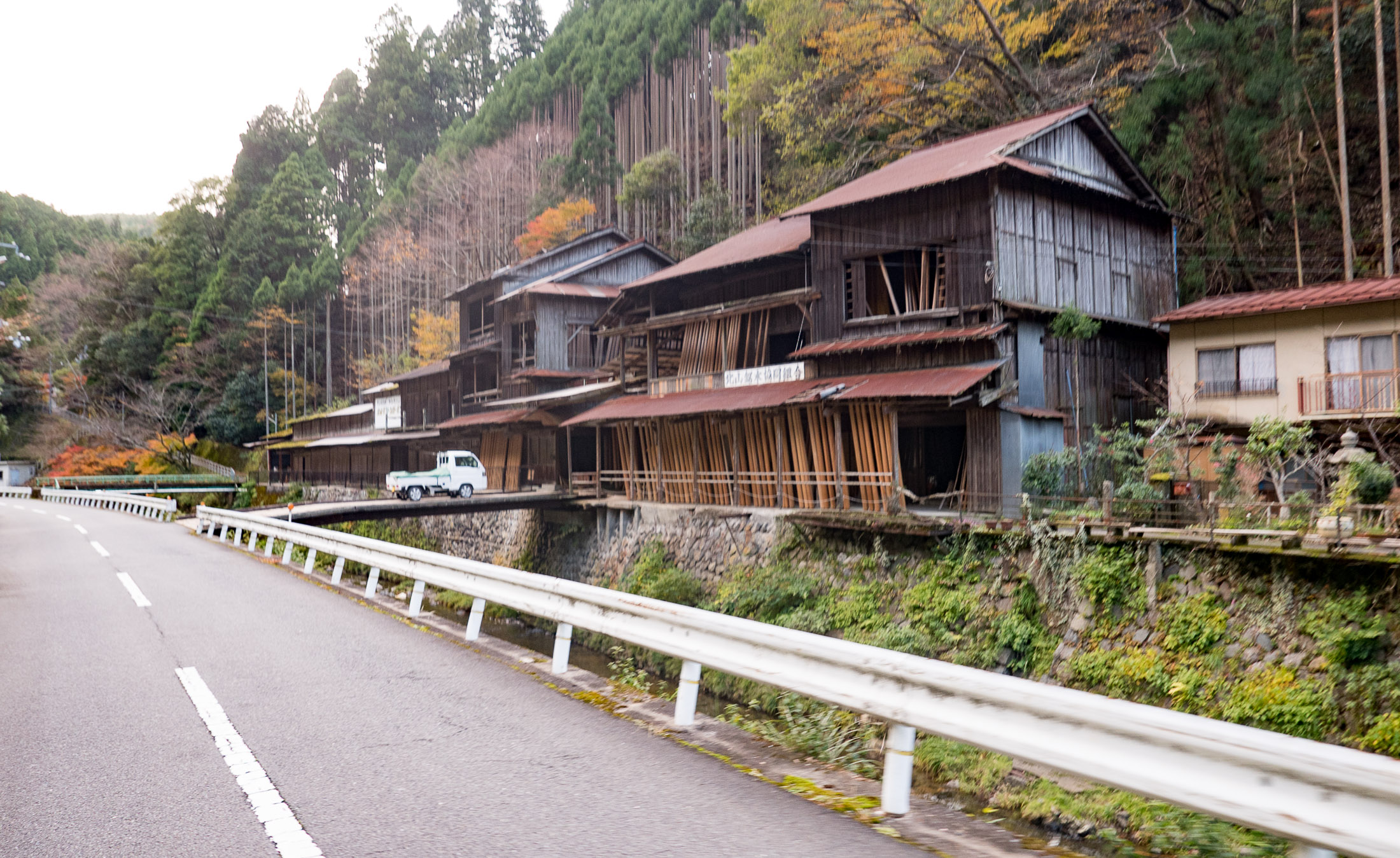
Fine Timber one of the many ceder farmers in the area taken at 28 kph (18 mph) -- Kyoto, Japan -- Copyright 2017 Jeffrey Friedl, http://regex.info/blog/ -- This photo is licensed to the public under the Creative Commons Attribution-NonCommercial 4.0 International License http://creativecommons.org/licenses/by-nc/4.0/ (non-commercial use is freely allowed if proper attribution is given, including a link back to this page on http://regex.info/ when used online)
Panasonic LX100 at an effective 24mm — 1/125 sec, f/2.2, ISO 200 — map & image datanearby photos
Fine Timber
one of the many ceder farmers in the area
taken at 28 kph (18 mph)

The main thing I wanted to do on this ride was make the short climb up to the Soren-ji Temple, which until now I'd visited only by car.

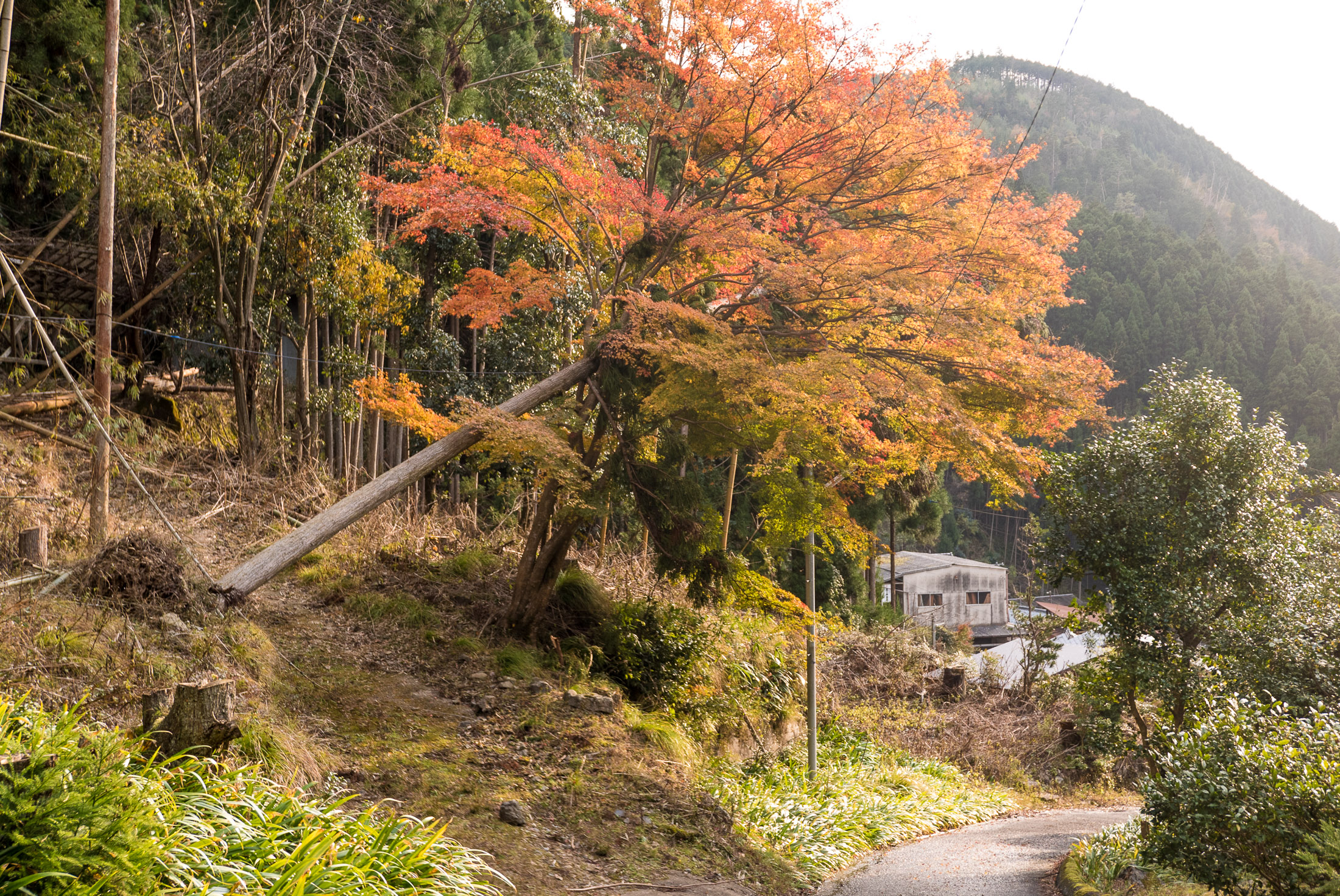
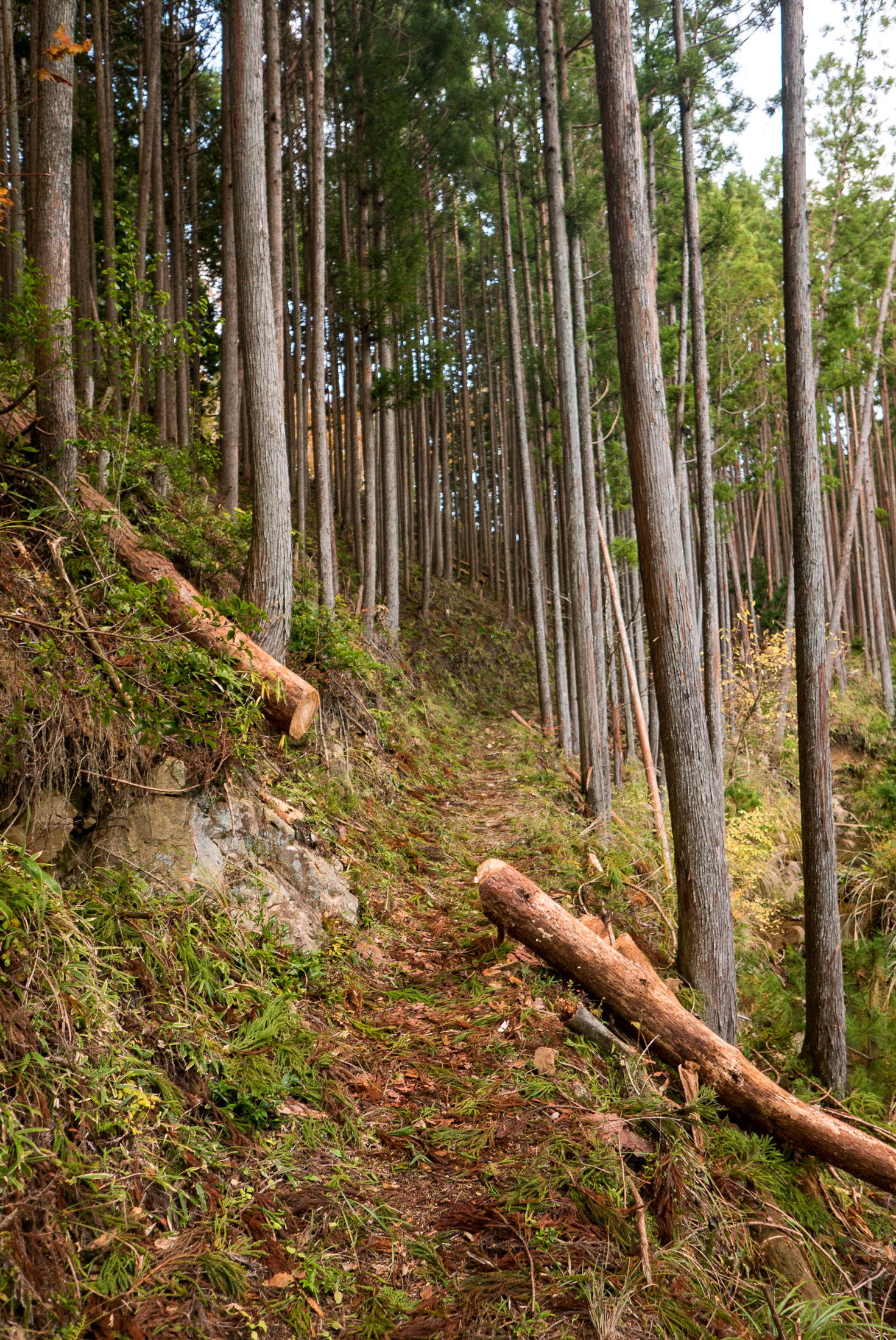
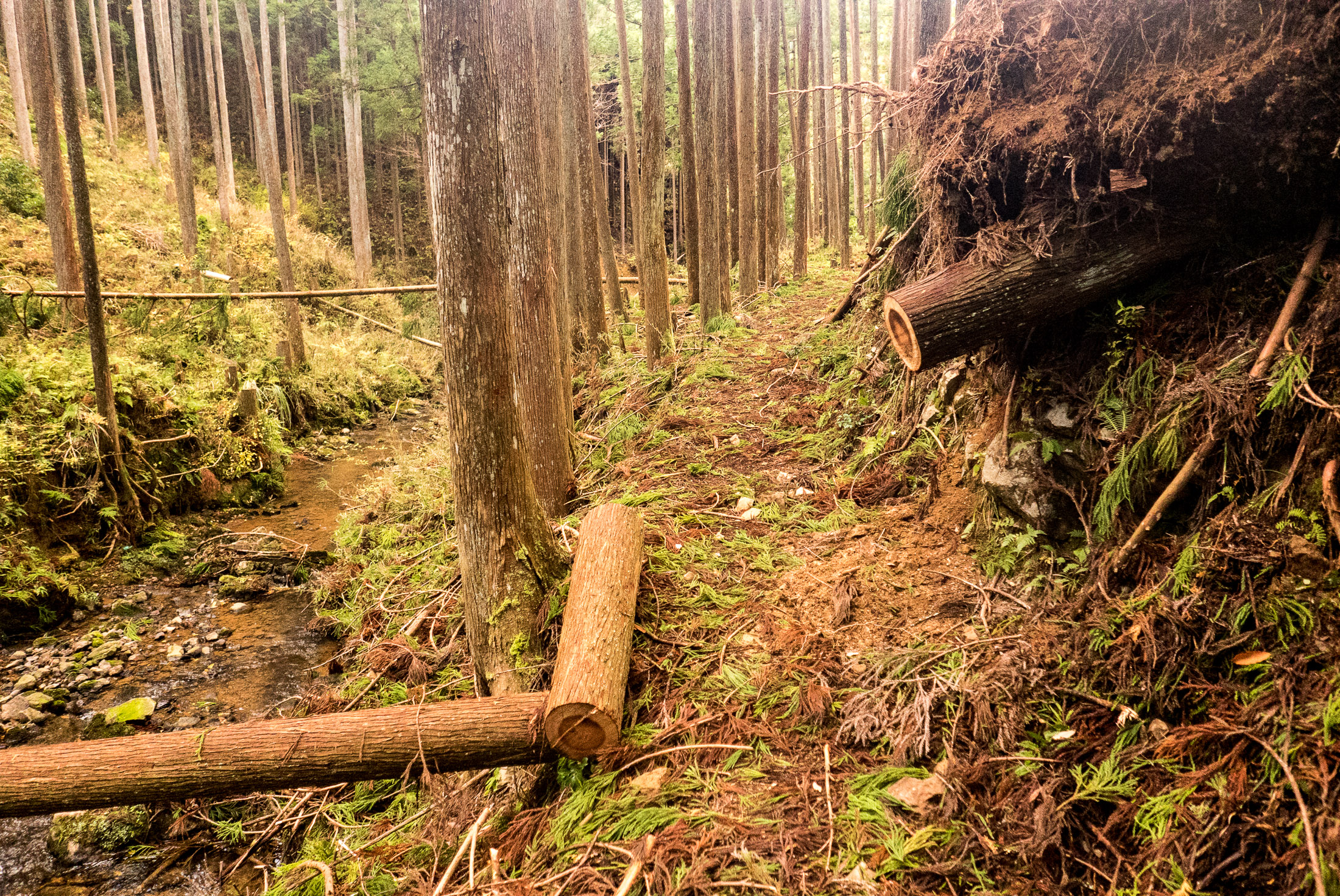
Oops fallen tree near the top of the climb -- Kyoto, Japan -- Copyright 2017 Jeffrey Friedl, http://regex.info/blog/ -- This photo is licensed to the public under the Creative Commons Attribution-NonCommercial 4.0 International License http://creativecommons.org/licenses/by-nc/4.0/ (non-commercial use is freely allowed if proper attribution is given, including a link back to this page on http://regex.info/ when used online)
Panasonic LX100 at an effective 54mm — 1/100 sec, f/2.8, ISO 200 — map & image datanearby photos
Oops
fallen tree near the top of the climb
Top of the Climb near the Soren-ji Temple -- Soren-ji Temple (宗蓮寺) -- Kyoto, Japan -- Copyright 2017 Jeffrey Friedl, http://regex.info/blog/ -- This photo is licensed to the public under the Creative Commons Attribution-NonCommercial 4.0 International License http://creativecommons.org/licenses/by-nc/4.0/ (non-commercial use is freely allowed if proper attribution is given, including a link back to this page on http://regex.info/ when used online)
Panasonic LX100 at an effective 24mm — 1/125 sec, f/3.2, ISO 200 — map & image datanearby photos
Top of the Climb
near the Soren-ji Temple

I made a segment on Strava for it, but 50 of the 52 registered rides are incorrectly attributed to this segment due to bad GPS data. In looking at them, most were recorded with Strava's iPhone app, and the pattern of wonky GPS is really consistent. I'm guessing that they all suffered the insidious iOS snap-to-road “Feature” long enough for the iPhone to think they were on this steep climb, until realizing that they couldn't be and yanking them back to the flat road they were actually zipping by on.

As it is, I think at the moment only the two slowest recorded rides are actually riding this 400m @ 11% climb. Mine is the faster of the slowest, so I've got the moral “KOM”, at least until a real cyclist shows up. 🙂

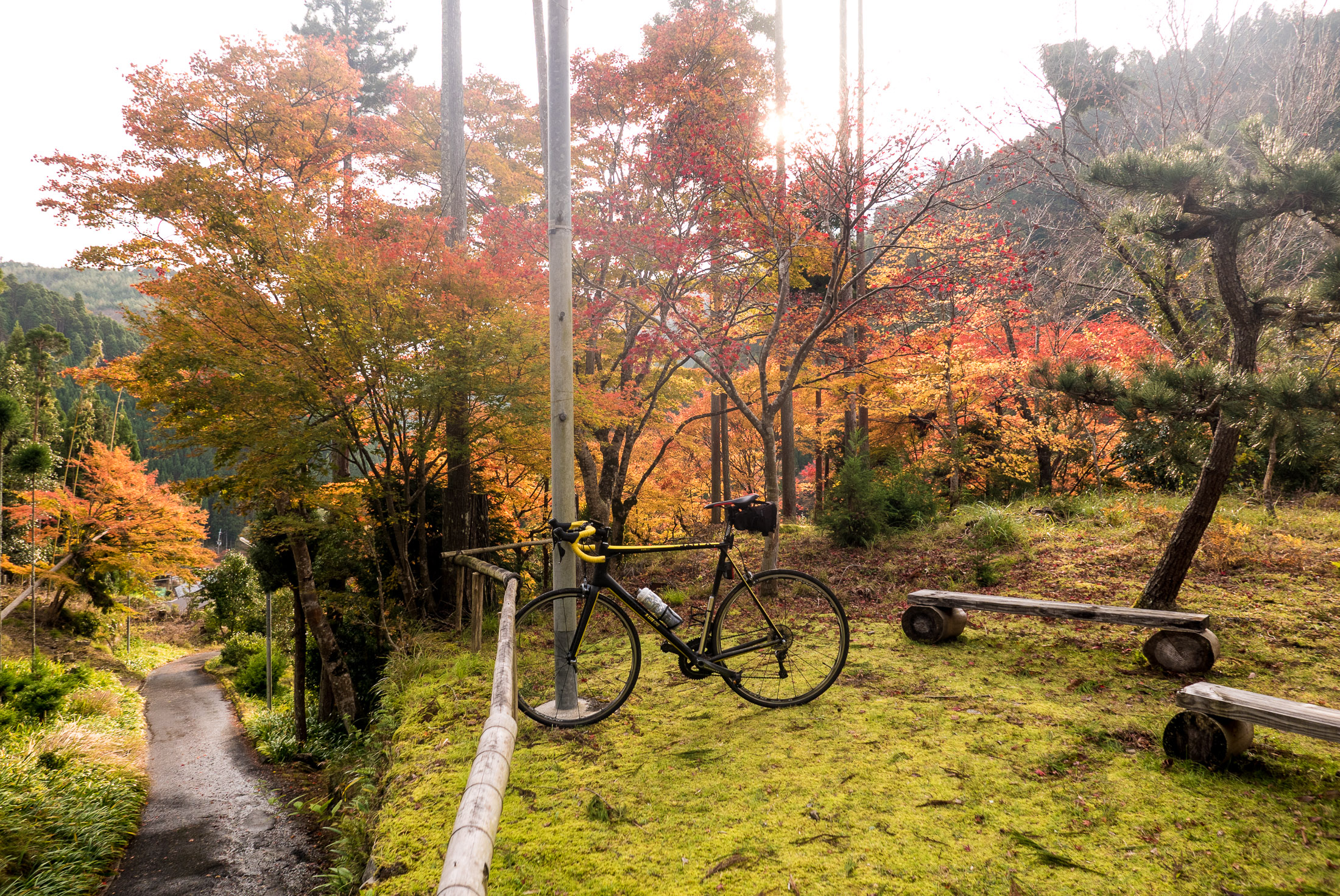
From the data above it's clear that it's not common among cyclists, but it's so lovely up there.
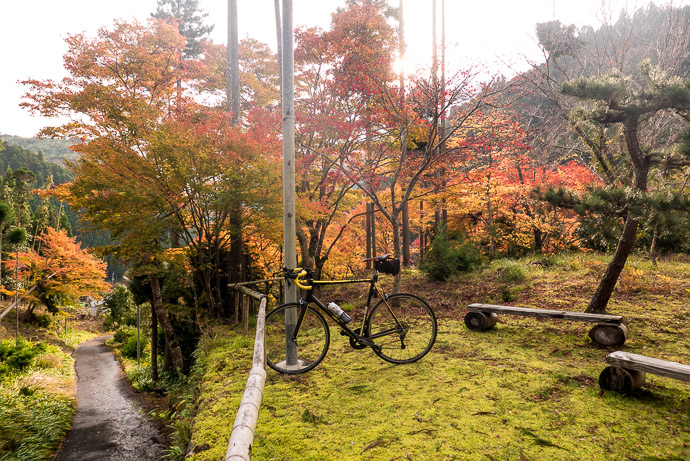
Little Park at the top of the climb (the road seen at left is the end of the climb) -- Soren-ji Temple (宗蓮寺) -- Kyoto, Japan -- Copyright 2017 Jeffrey Friedl, http://regex.info/blog/ -- This photo is licensed to the public under the Creative Commons Attribution-NonCommercial 4.0 International License http://creativecommons.org/licenses/by-nc/4.0/ (non-commercial use is freely allowed if proper attribution is given, including a link back to this page on http://regex.info/ when used online)
Panasonic LX100 at an effective 24mm — 1/125 sec, f/3.2, ISO 200 — map & image datanearby photos
Little Park
at the top of the climb
(the road seen at left is the end of the climb)
Back Entrance to the Temple -- Soren-ji Temple (宗蓮寺) -- Kyoto, Japan -- Copyright 2017 Jeffrey Friedl, http://regex.info/blog/ -- This photo is licensed to the public under the Creative Commons Attribution-NonCommercial 4.0 International License http://creativecommons.org/licenses/by-nc/4.0/ (non-commercial use is freely allowed if proper attribution is given, including a link back to this page on http://regex.info/ when used online)
Panasonic LX100 at an effective 50mm — 1/100 sec, f/2.7, ISO 800 — map & image datanearby photos
Back Entrance to the Temple
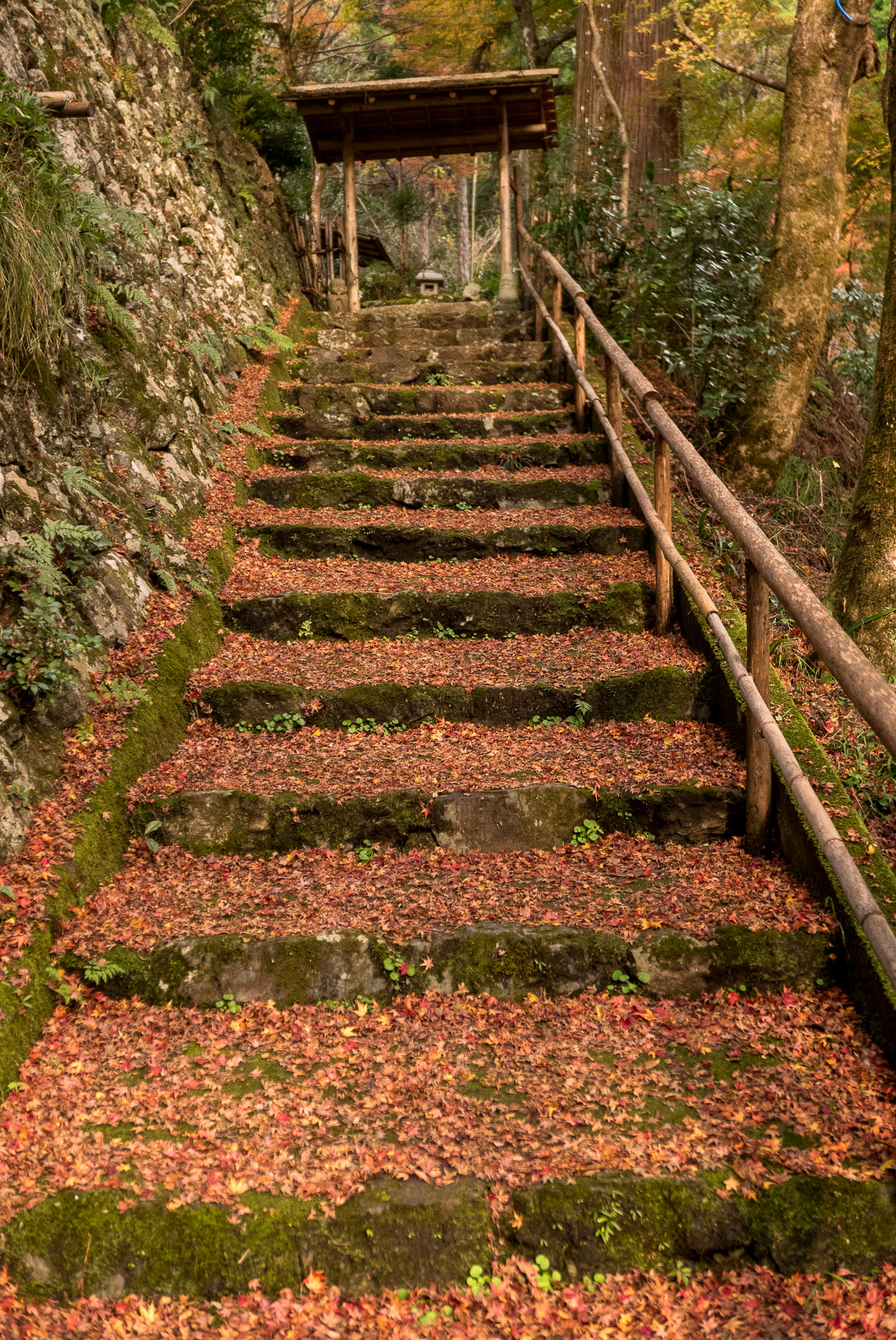
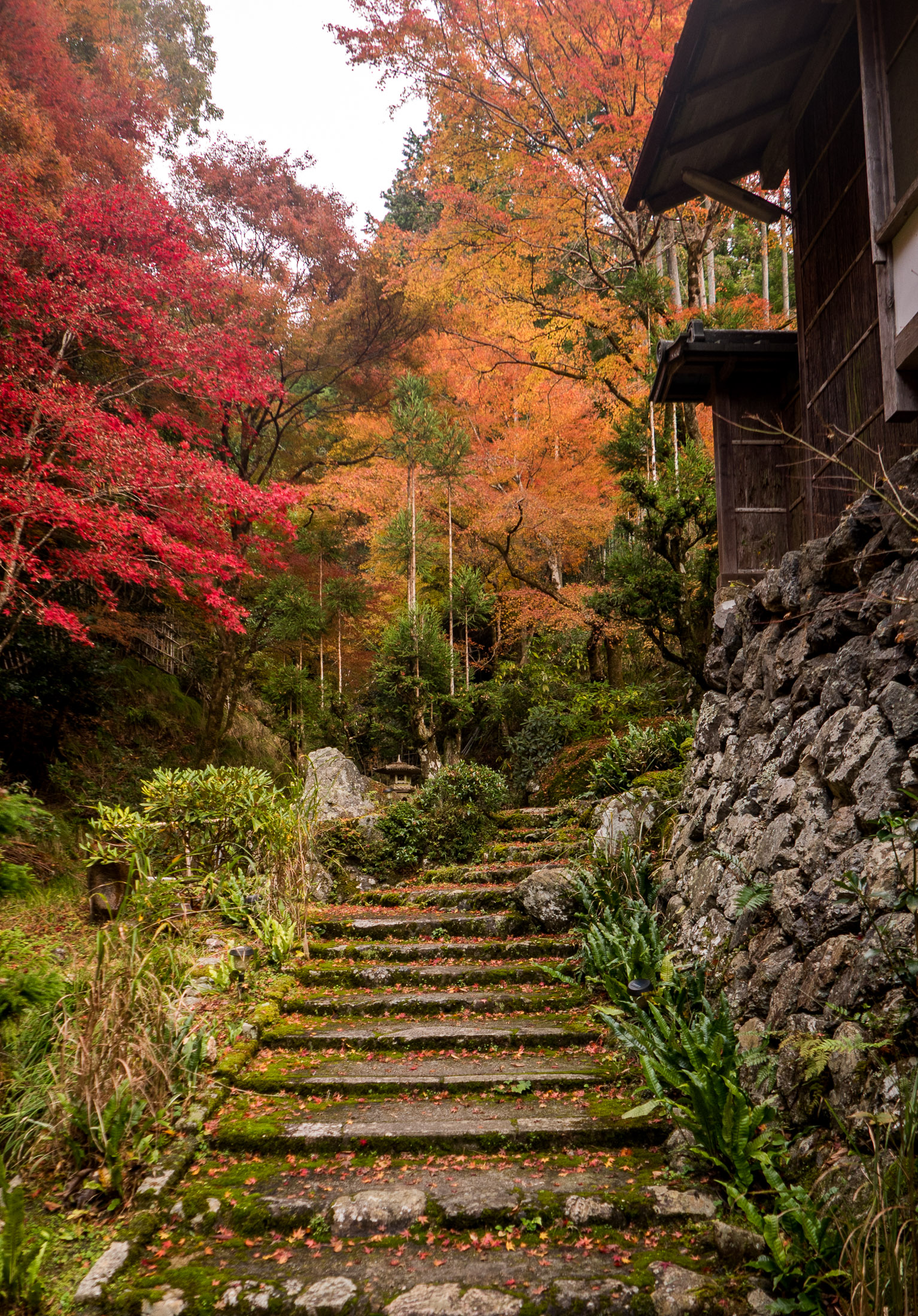
Soren-ji Temple (宗蓮寺) -- Kyoto, Japan -- Copyright 2017 Jeffrey Friedl, http://regex.info/blog/ -- This photo is licensed to the public under the Creative Commons Attribution-NonCommercial 4.0 International License http://creativecommons.org/licenses/by-nc/4.0/ (non-commercial use is freely allowed if proper attribution is given, including a link back to this page on http://regex.info/ when used online)
Panasonic LX100 at an effective 47mm — 1/125 sec, f/2.6, ISO 640 — map & image datanearby photos

The leaf-covered steps were a bit nicer a couple of years ago, as seen in the post about my first visit to this temple, “A Few Pretty Pictures from Kyoto’s Middle-of-Nowhere Sourenji Temple”. Some photos of this stairway also appeared on “Kyoto’s Souren-ji Temple at f/1.2”.
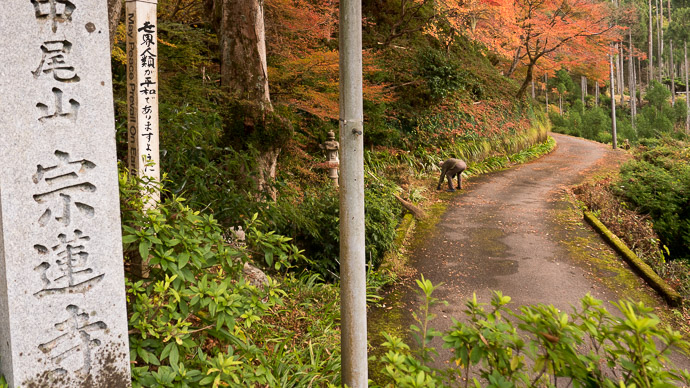
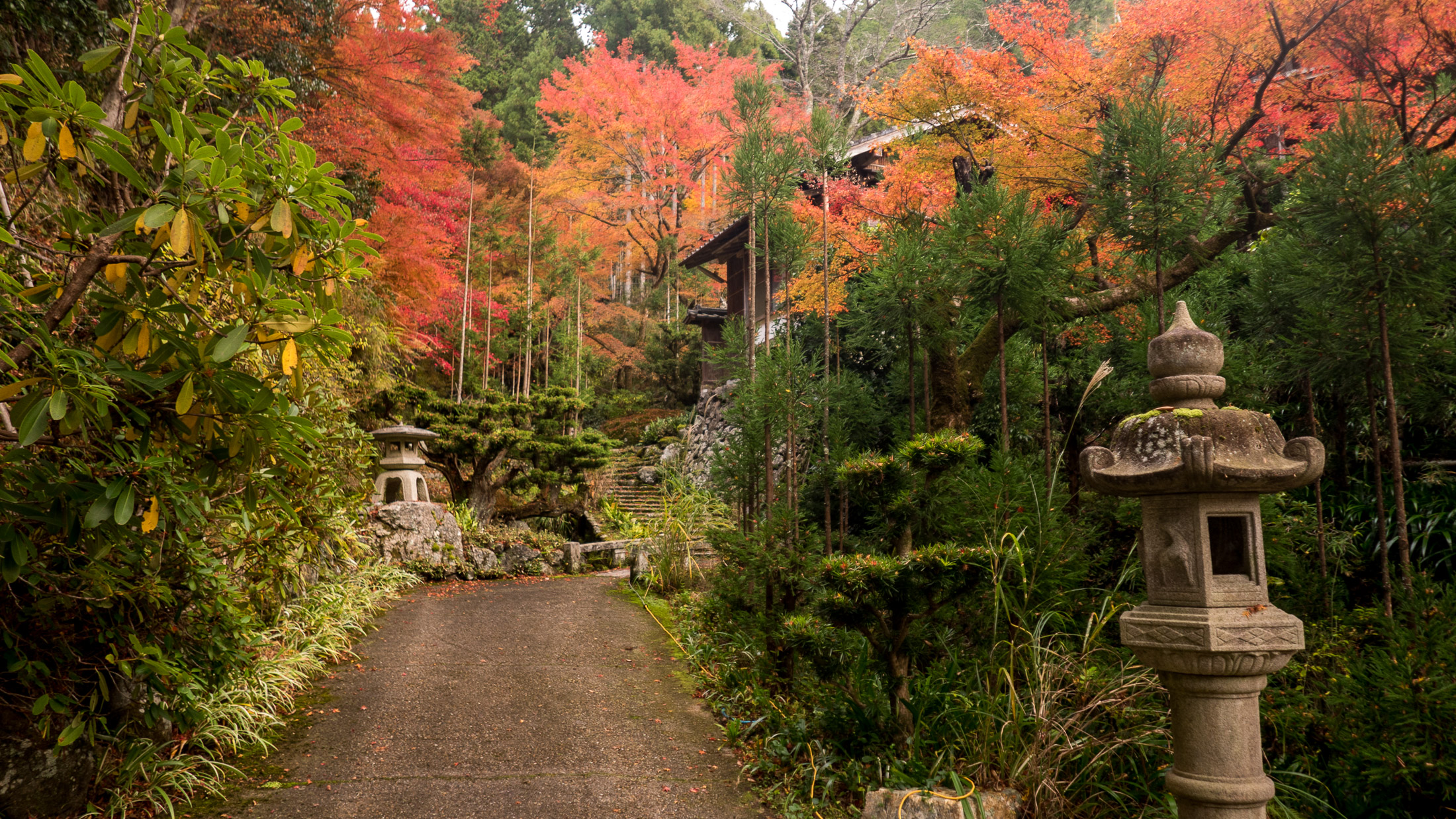
Road in Front of the Temple -- Soren-ji Temple (宗蓮寺) -- Kyoto, Japan -- Copyright 2017 Jeffrey Friedl, http://regex.info/blog/ -- This photo is licensed to the public under the Creative Commons Attribution-NonCommercial 4.0 International License http://creativecommons.org/licenses/by-nc/4.0/ (non-commercial use is freely allowed if proper attribution is given, including a link back to this page on http://regex.info/ when used online)
Panasonic LX100 at an effective 24mm — 1/125 sec, f/1.7, ISO 200 — map & image datanearby photos
Road in Front of the Temple
Just Gorgeous -- Soren-ji Temple (宗蓮寺) -- Kyoto, Japan -- Copyright 2017 Jeffrey Friedl, http://regex.info/blog/ -- This photo is licensed to the public under the Creative Commons Attribution-NonCommercial 4.0 International License http://creativecommons.org/licenses/by-nc/4.0/ (non-commercial use is freely allowed if proper attribution is given, including a link back to this page on http://regex.info/ when used online)
Panasonic LX100 at an effective 24mm — 1/125 sec, f/2.5, ISO 200 — map & image datanearby photos
Just Gorgeous
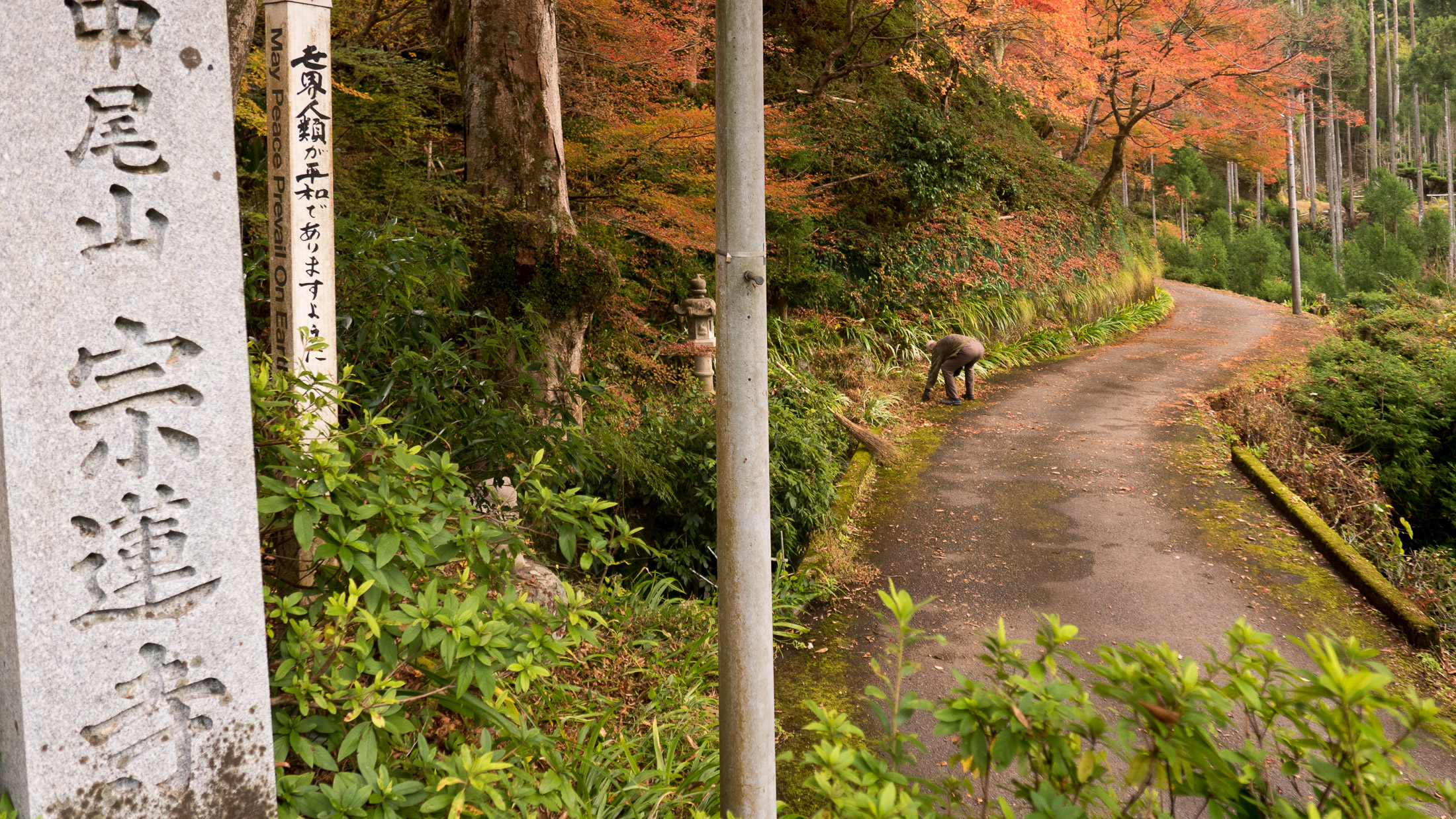
Cleaning the Leaves from the street in front of the temple -- Soren-ji Temple (宗蓮寺) -- Kyoto, Japan -- Copyright 2017 Jeffrey Friedl, http://regex.info/blog/ -- This photo is licensed to the public under the Creative Commons Attribution-NonCommercial 4.0 International License http://creativecommons.org/licenses/by-nc/4.0/ (non-commercial use is freely allowed if proper attribution is given, including a link back to this page on http://regex.info/ when used online)
Panasonic LX100 at an effective 28mm — 1/125 sec, f/2.1, ISO 400 — map & image datanearby photos
Cleaning the Leaves
from the street in front of the temple
View From the Parking Lot -- Soren-ji Temple (宗蓮寺) -- Kyoto, Japan -- Copyright 2017 Jeffrey Friedl, http://regex.info/blog/ -- This photo is licensed to the public under the Creative Commons Attribution-NonCommercial 4.0 International License http://creativecommons.org/licenses/by-nc/4.0/ (non-commercial use is freely allowed if proper attribution is given, including a link back to this page on http://regex.info/ when used online)
Panasonic LX100 at an effective 24mm — 1/100 sec, f/1.7, ISO 200 — map & image datanearby photos
View From the Parking Lot
Main Entrance -- Soren-ji Temple (宗蓮寺) -- Kyoto, Japan -- Copyright 2017 Jeffrey Friedl, http://regex.info/blog/ -- This photo is licensed to the public under the Creative Commons Attribution-NonCommercial 4.0 International License http://creativecommons.org/licenses/by-nc/4.0/ (non-commercial use is freely allowed if proper attribution is given, including a link back to this page on http://regex.info/ when used online)
Panasonic LX100 at an effective 24mm — 1/125 sec, f/2, ISO 200 — map & image datanearby photos
Main Entrance

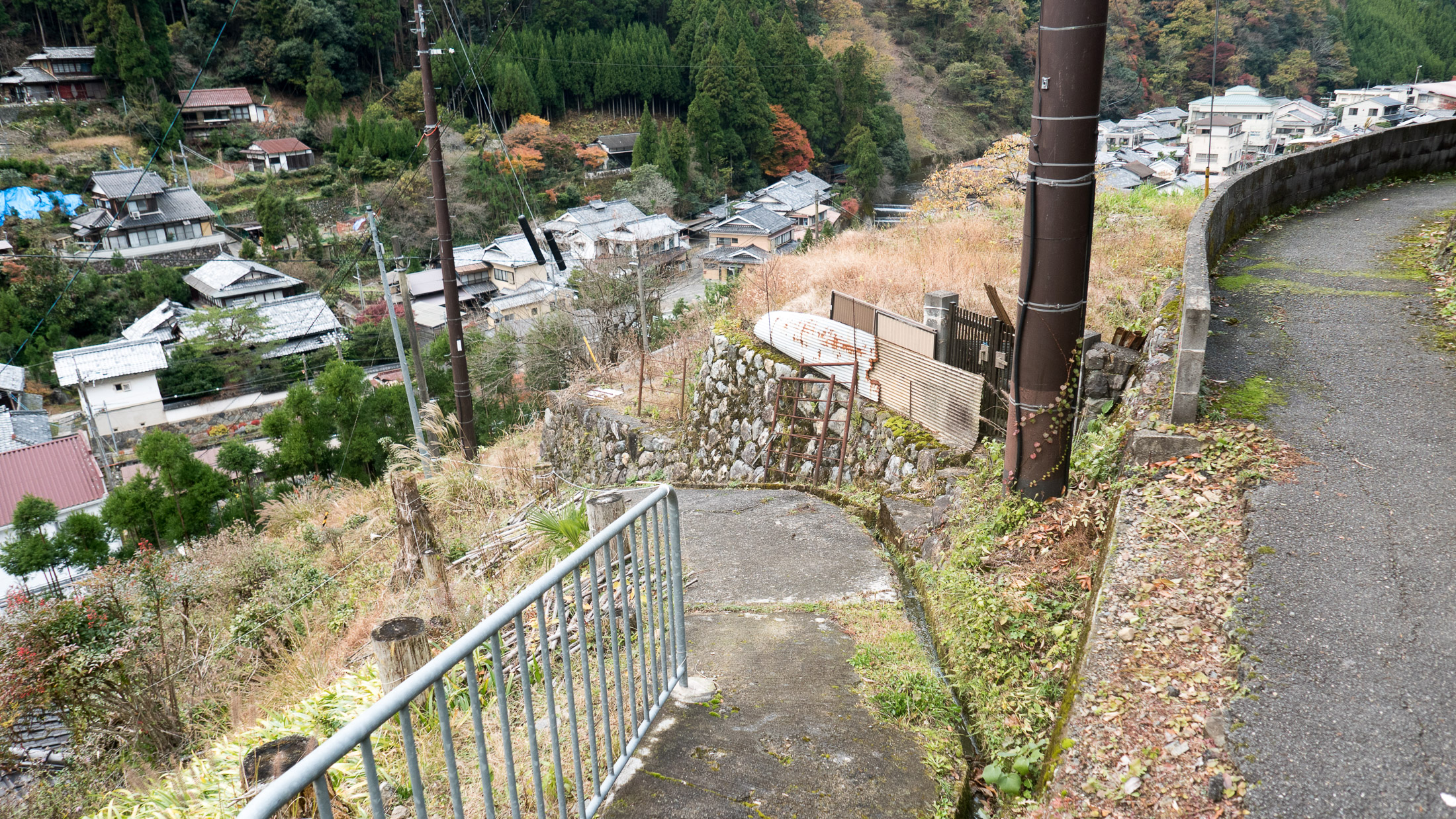
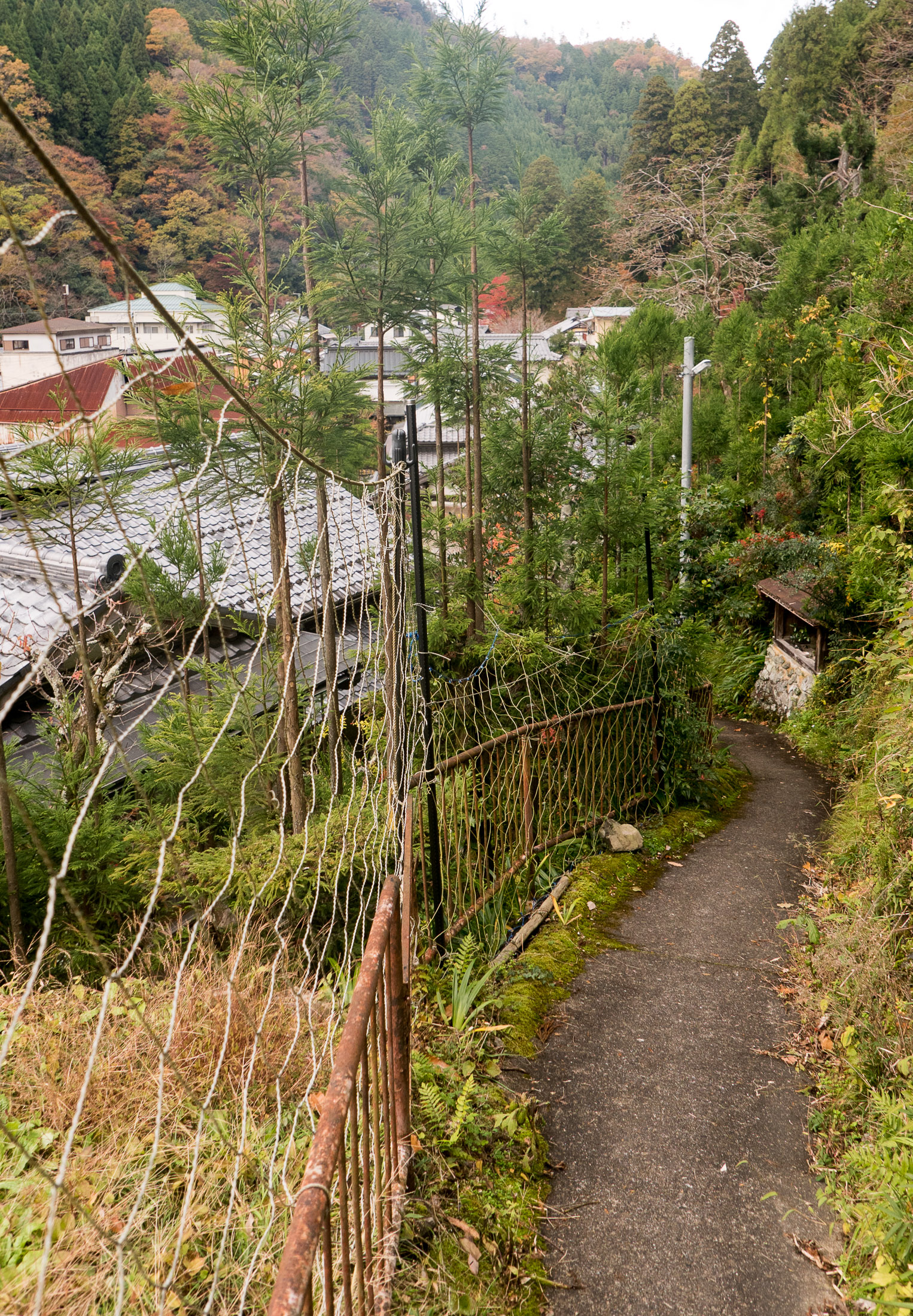
After the temple the road descends sharply, then dead ends as far as cars are concerned, but there's a path that a bicycle can take...
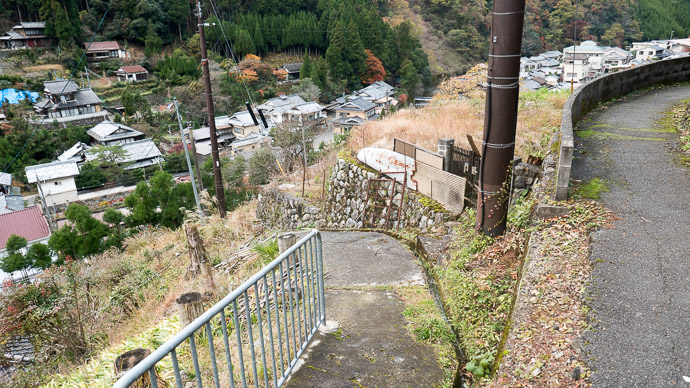
Steeper or Steepest? I took the path on the right -- Kyoto, Japan -- Copyright 2017 Jeffrey Friedl, http://regex.info/blog/ -- This photo is licensed to the public under the Creative Commons Attribution-NonCommercial 4.0 International License http://creativecommons.org/licenses/by-nc/4.0/ (non-commercial use is freely allowed if proper attribution is given, including a link back to this page on http://regex.info/ when used online)
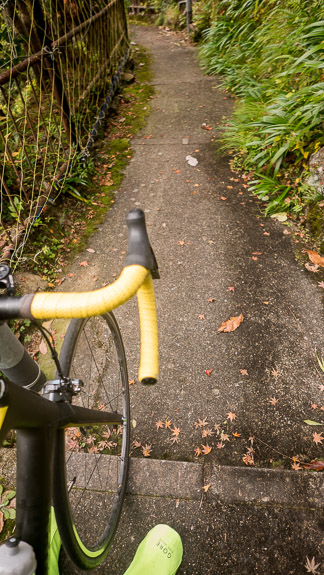
Panasonic LX100 at an effective 24mm — 1/125 sec, f/2.5, ISO 200 — map & image datanearby photos
Steeper or Steepest?
I took the path on the right
Heading Back Down -- Kyoto, Japan -- Copyright 2017 Jeffrey Friedl, http://regex.info/blog/ -- This photo is licensed to the public under the Creative Commons Attribution-NonCommercial 4.0 International License http://creativecommons.org/licenses/by-nc/4.0/ (non-commercial use is freely allowed if proper attribution is given, including a link back to this page on http://regex.info/ when used online)
Panasonic LX100 at an effective 24mm — 1/125 sec, f/2.8, ISO 200 — map & image datanearby photos
Heading Back Down
Steep and Narrow -- Kyoto, Japan -- Copyright 2017 Jeffrey Friedl, http://regex.info/blog/ -- This photo is licensed to the public under the Creative Commons Attribution-NonCommercial 4.0 International License http://creativecommons.org/licenses/by-nc/4.0/ (non-commercial use is freely allowed if proper attribution is given, including a link back to this page on http://regex.info/ when used online)
Panasonic LX100 at an effective 24mm — 1/125 sec, f/2.5, ISO 200 — map & image datanearby photos
Steep and Narrow
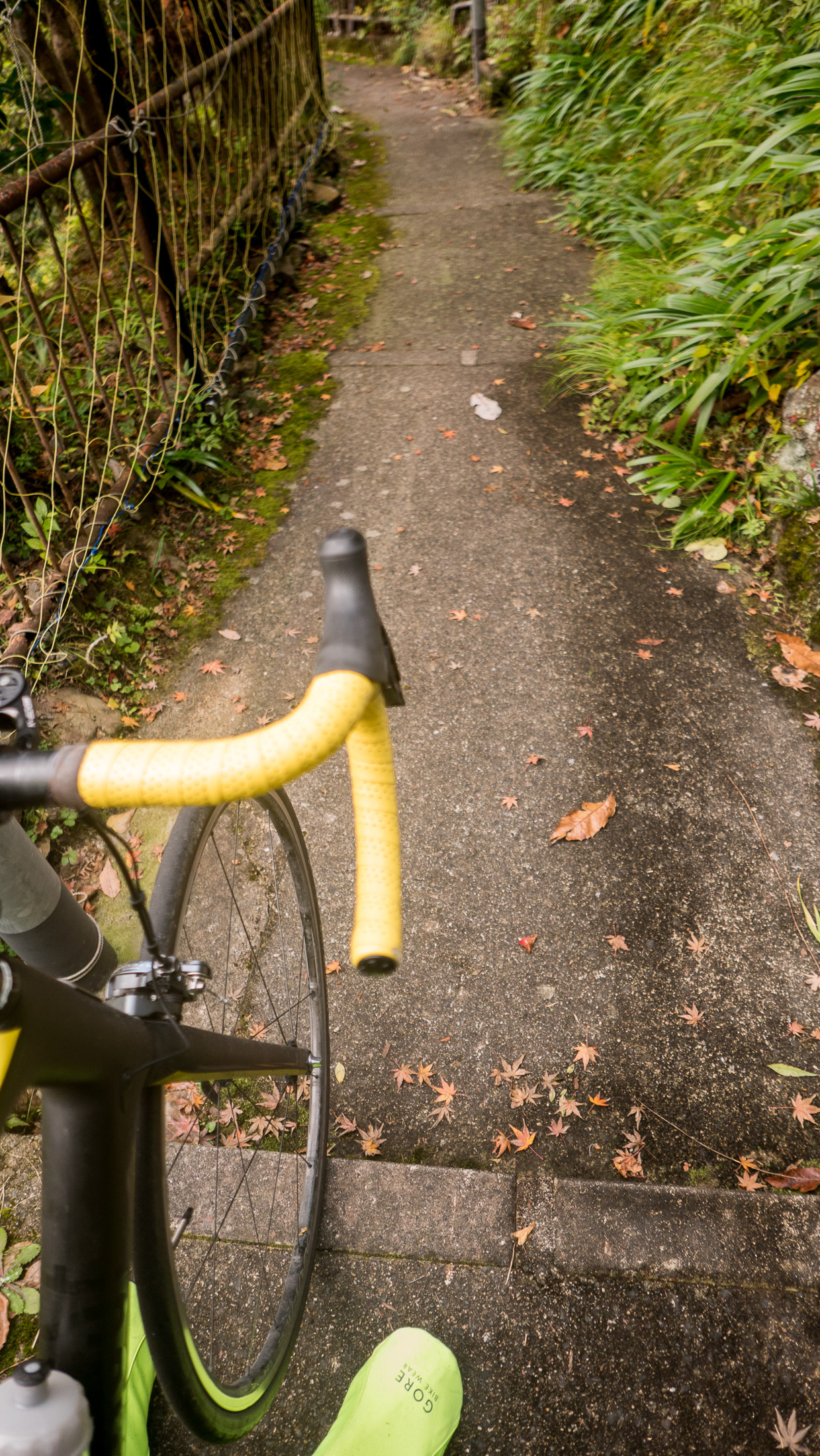
A Bit Precarious for a Bike -- Kyoto, Japan -- Copyright 2017 Jeffrey Friedl, http://regex.info/blog/ -- This photo is licensed to the public under the Creative Commons Attribution-NonCommercial 4.0 International License http://creativecommons.org/licenses/by-nc/4.0/ (non-commercial use is freely allowed if proper attribution is given, including a link back to this page on http://regex.info/ when used online)
Panasonic LX100 at an effective 24mm — 1/125 sec, f/3.2, ISO 200 — map & image datanearby photos
A Bit Precarious for a Bike
Steps! I was almost down, but I retraced my steps back to the temple -- Kyoto, Japan -- Copyright 2017 Jeffrey Friedl, http://regex.info/blog/ -- This photo is licensed to the public under the Creative Commons Attribution-NonCommercial 4.0 International License http://creativecommons.org/licenses/by-nc/4.0/ (non-commercial use is freely allowed if proper attribution is given, including a link back to this page on http://regex.info/ when used online)
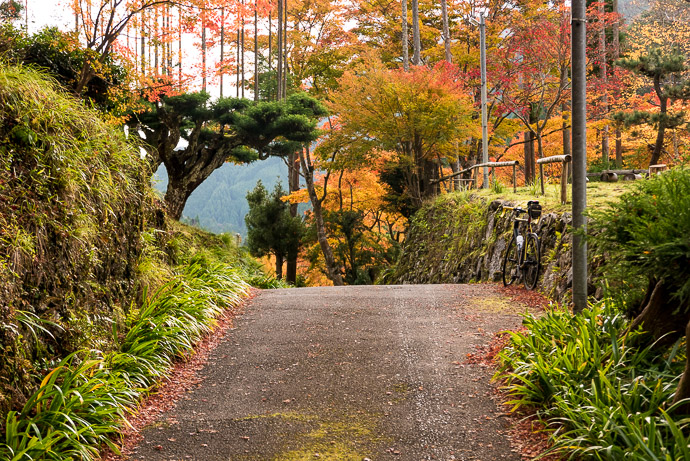
Panasonic LX100 at an effective 24mm — 1/125 sec, f/1.7, ISO 200 — map & image datanearby photos
Steps!
I was almost down, but I retraced my steps back to the temple
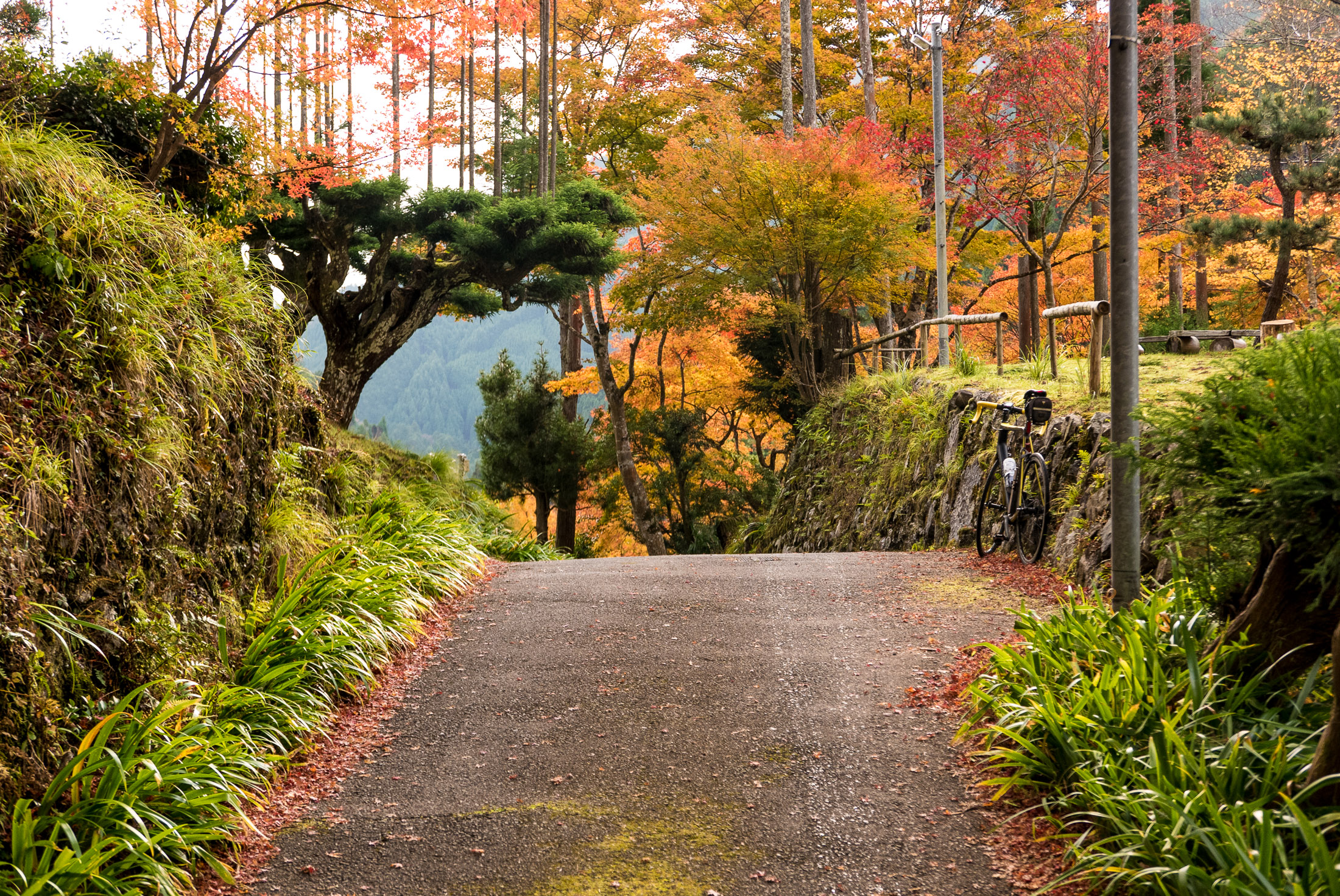
Photo Op of my bike back at the top of the climb -- Soren-ji Temple (宗蓮寺) -- Kyoto, Japan -- Copyright 2017 Jeffrey Friedl, http://regex.info/blog/ -- This photo is licensed to the public under the Creative Commons Attribution-NonCommercial 4.0 International License http://creativecommons.org/licenses/by-nc/4.0/ (non-commercial use is freely allowed if proper attribution is given, including a link back to this page on http://regex.info/ when used online)
Panasonic LX100 at an effective 60mm — 1/125 sec, f/2.8, ISO 400 — map & image datanearby photos
Photo Op
of my bike back at the top of the climb

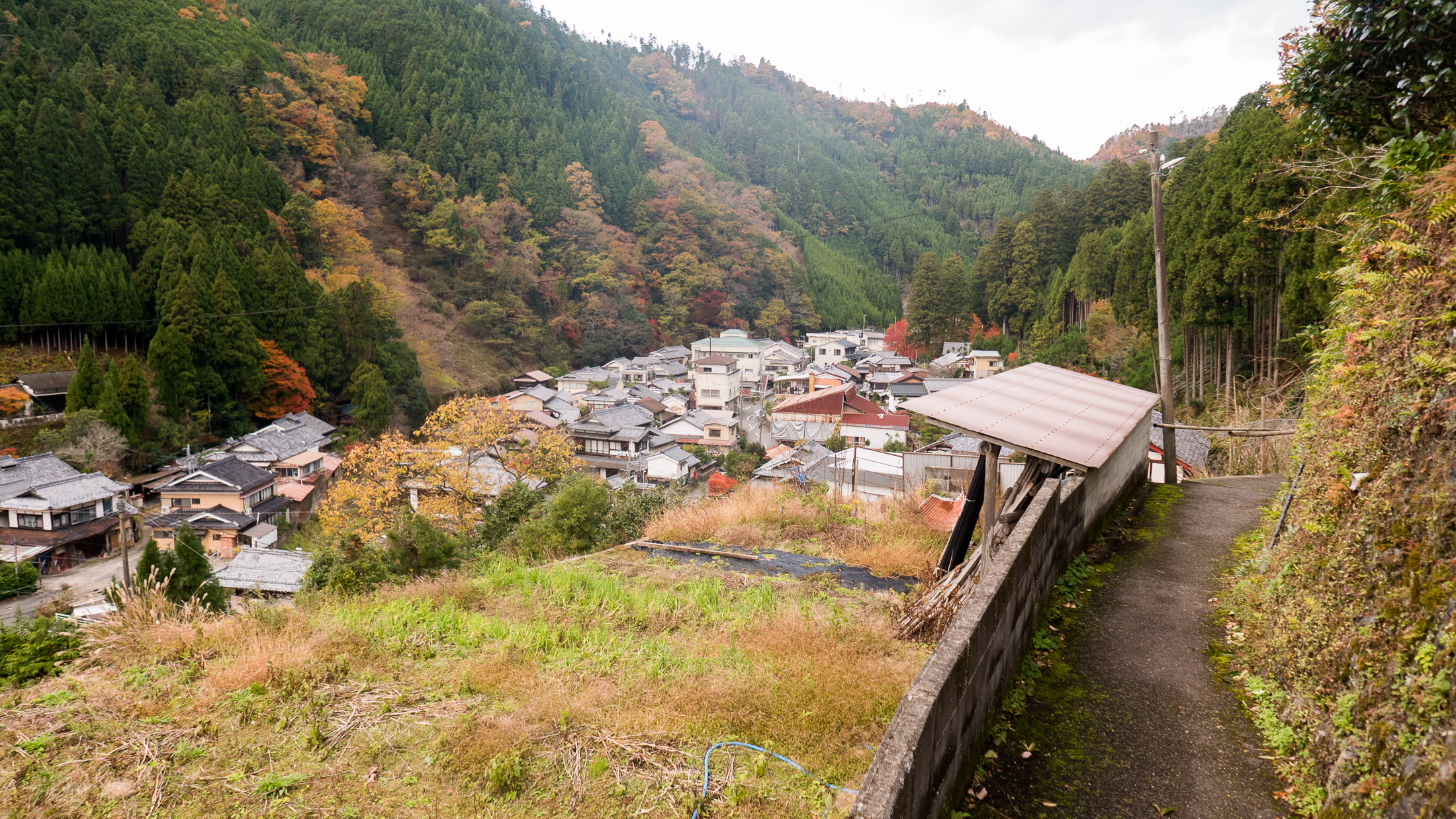
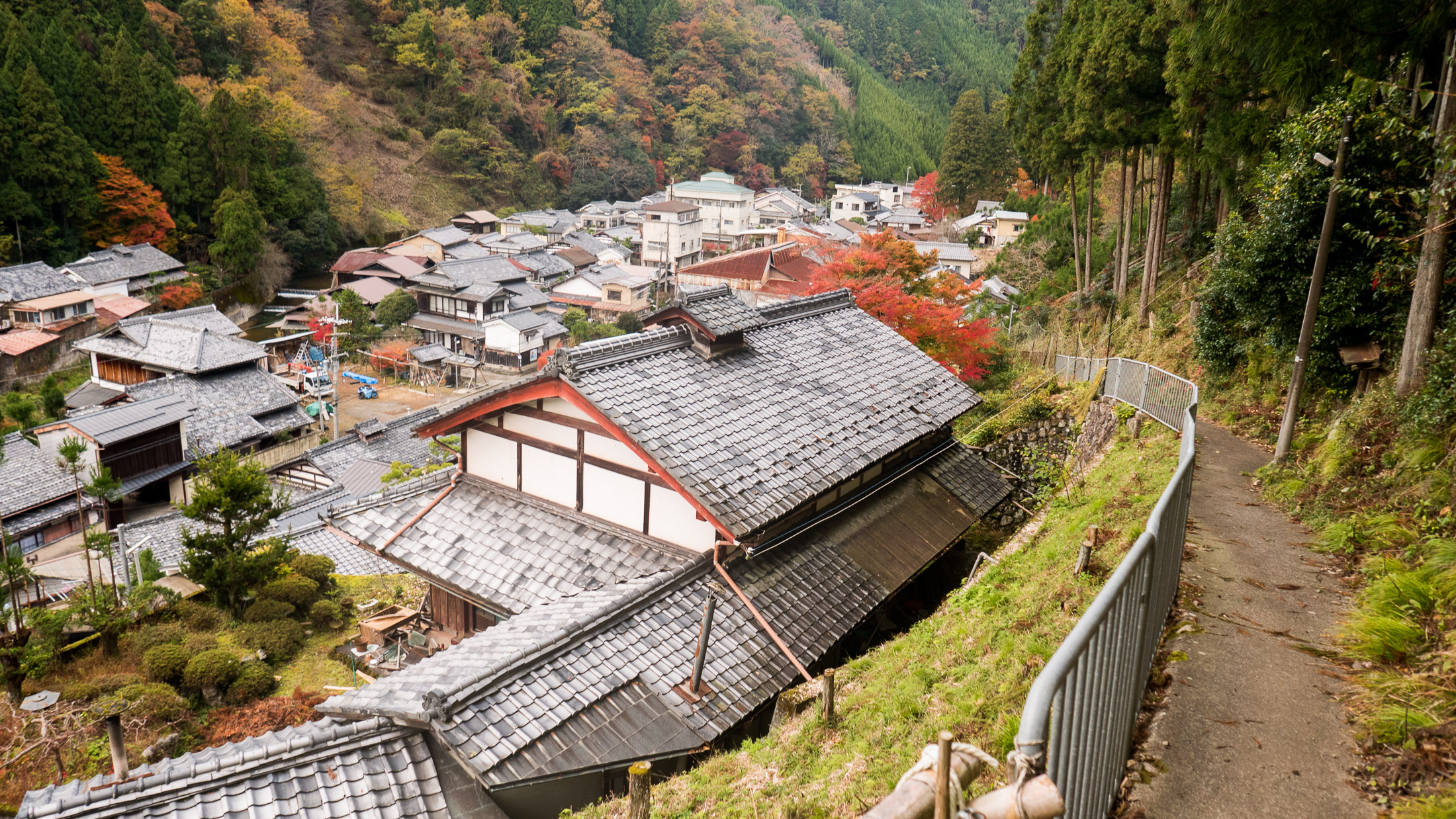
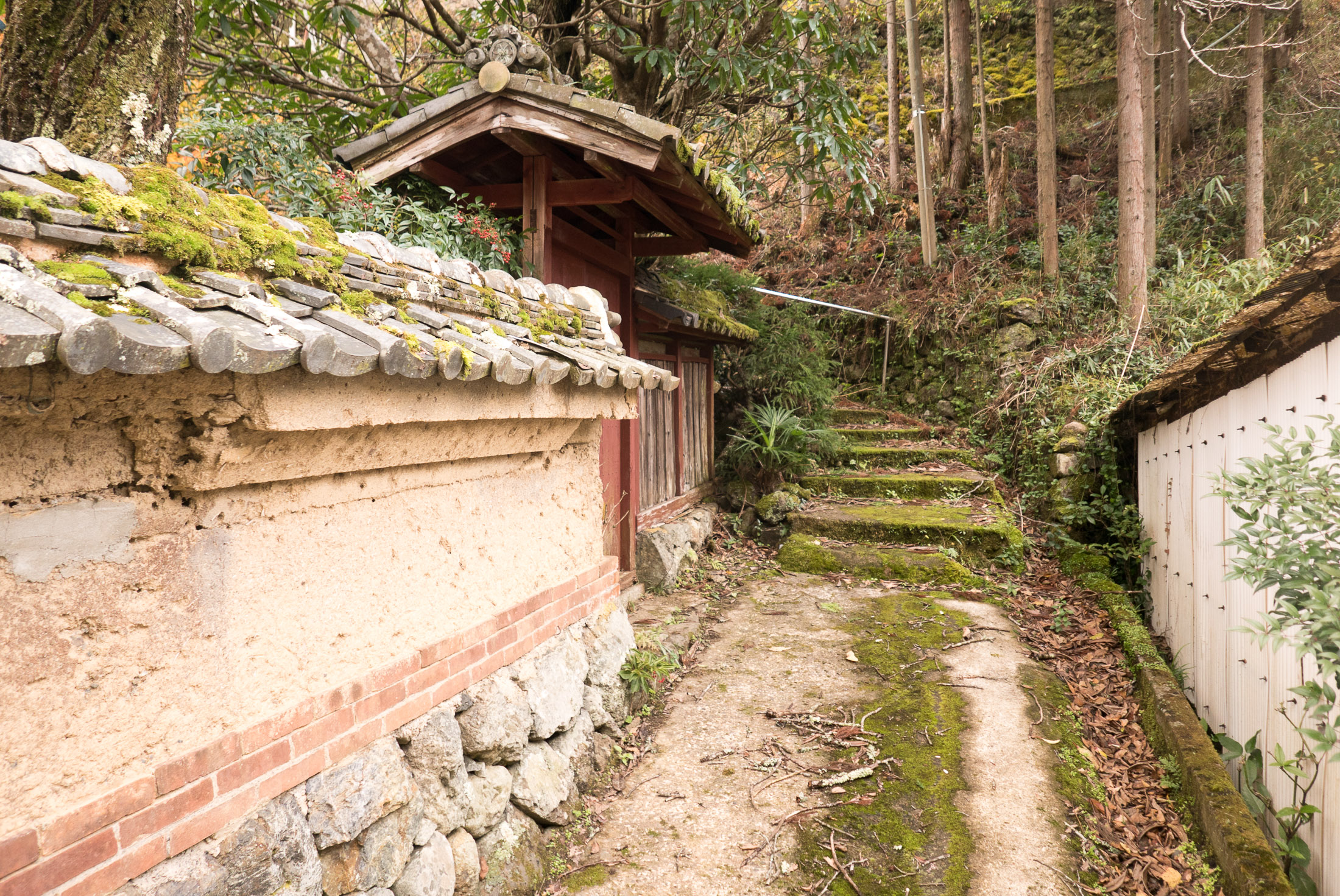
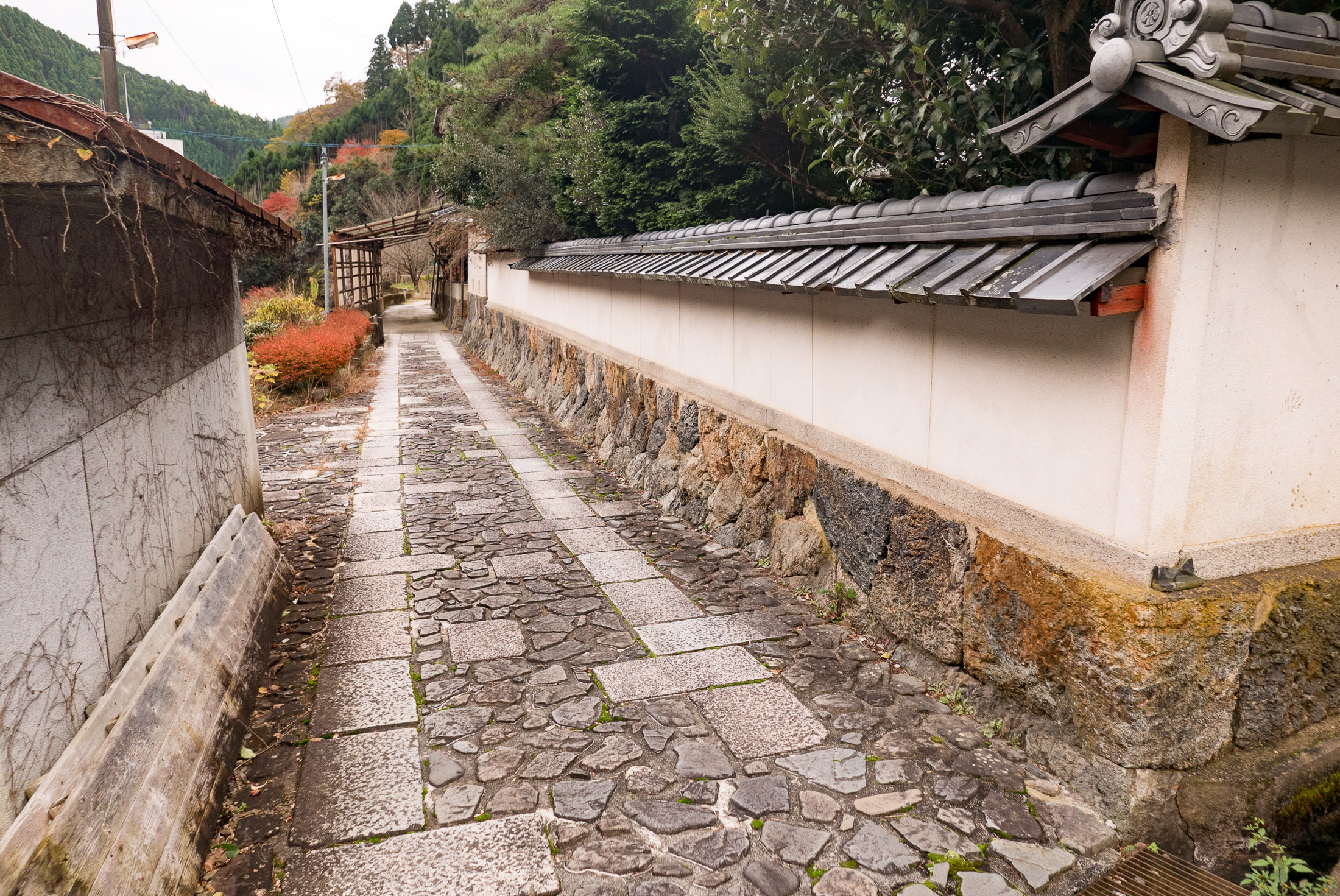
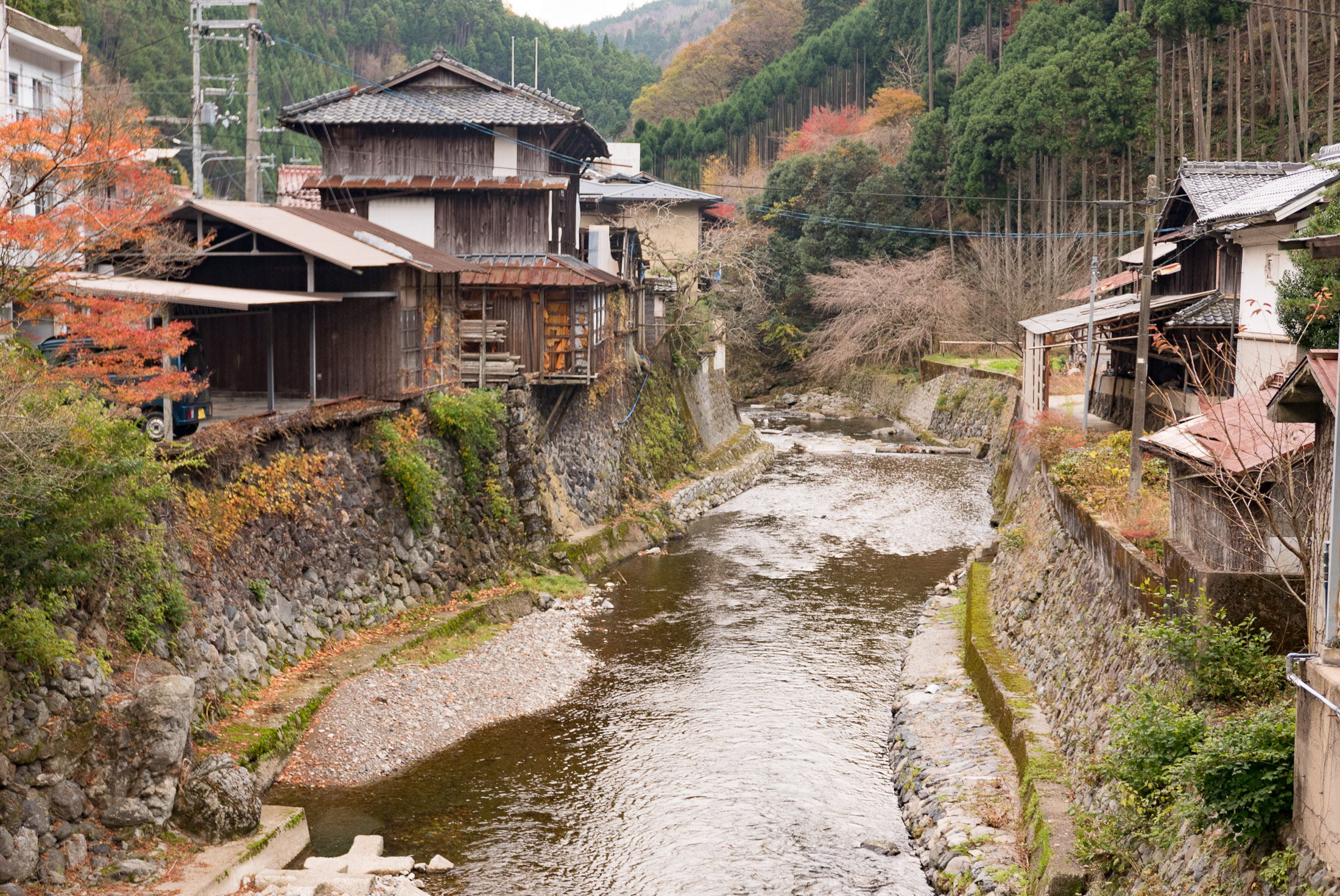
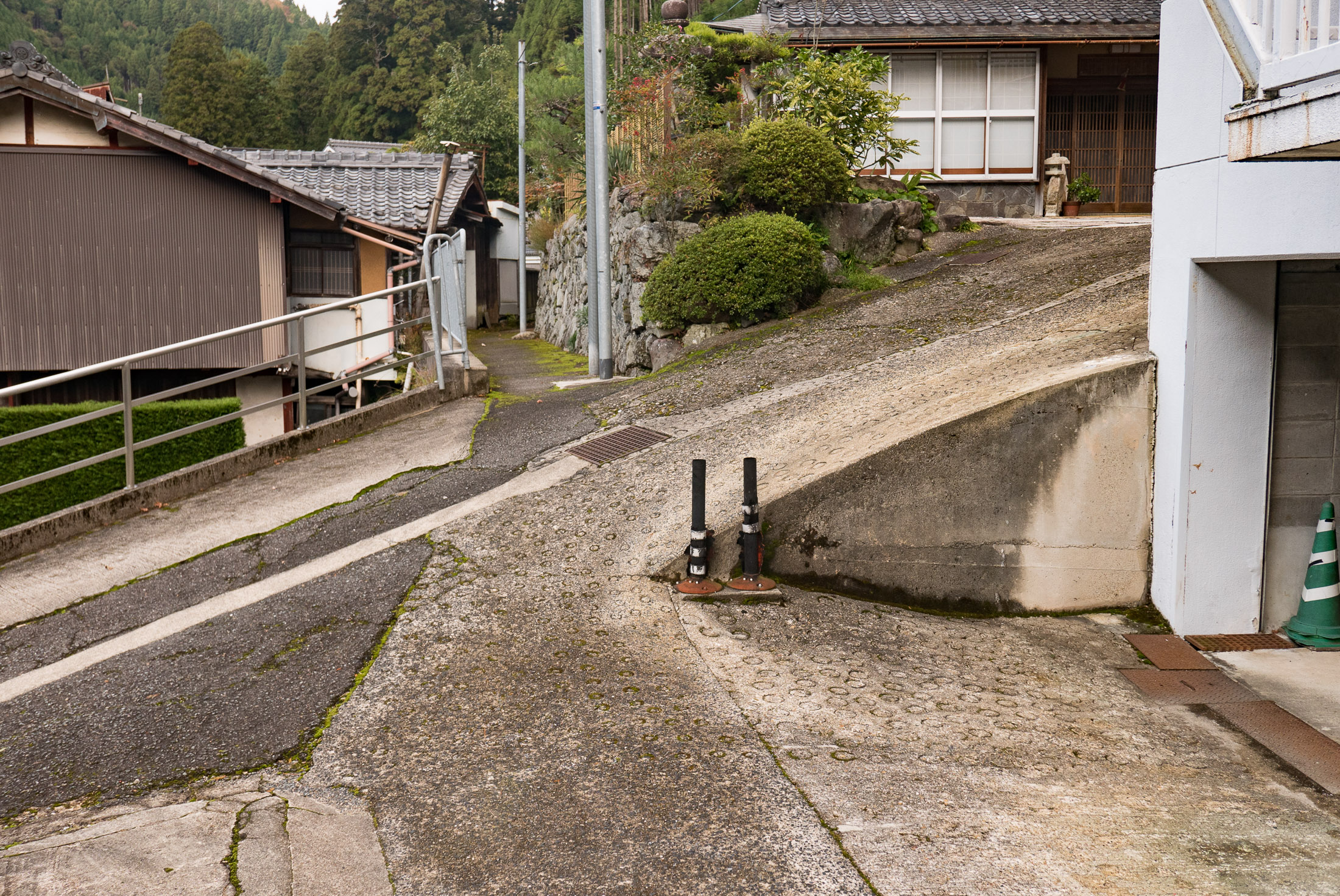
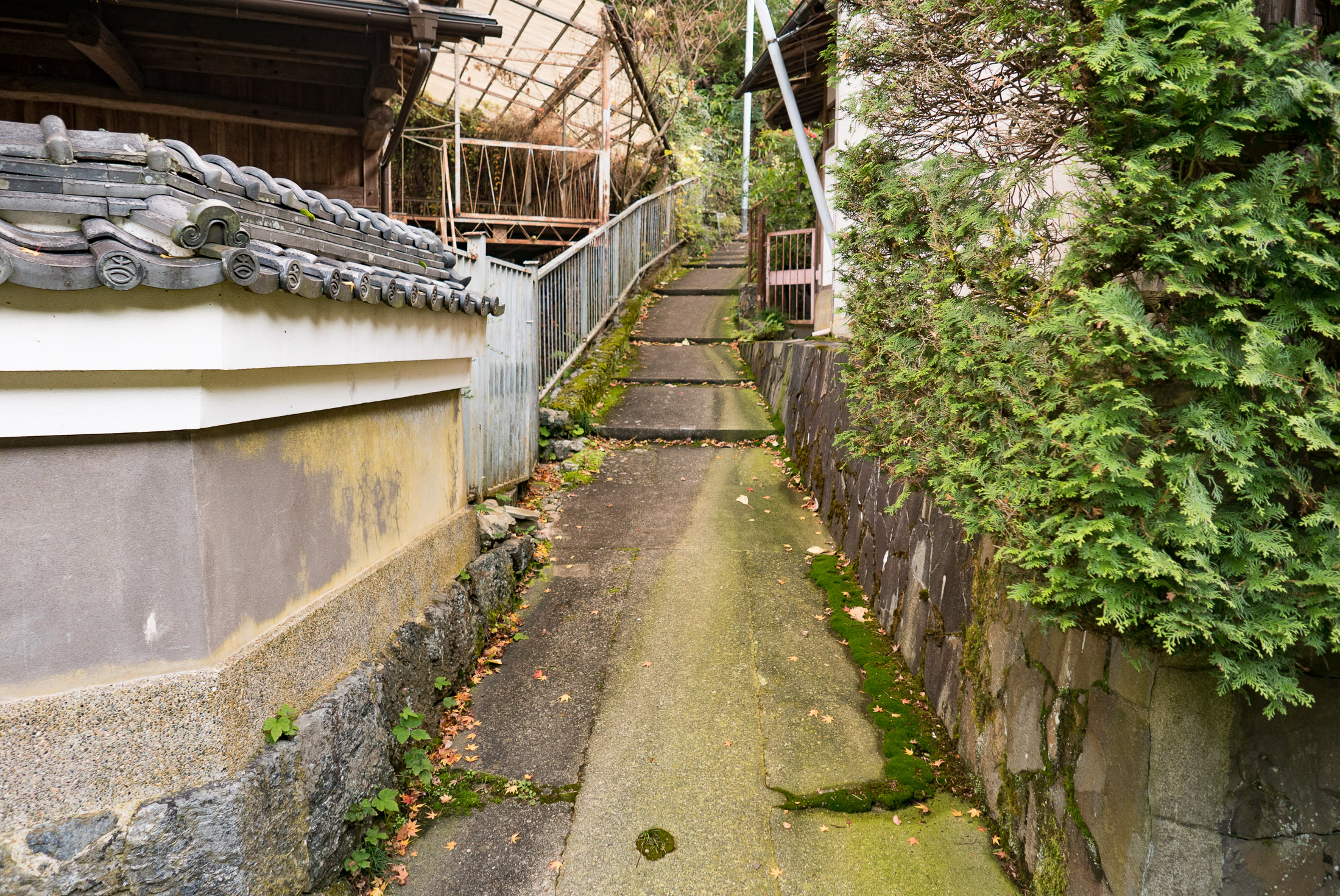
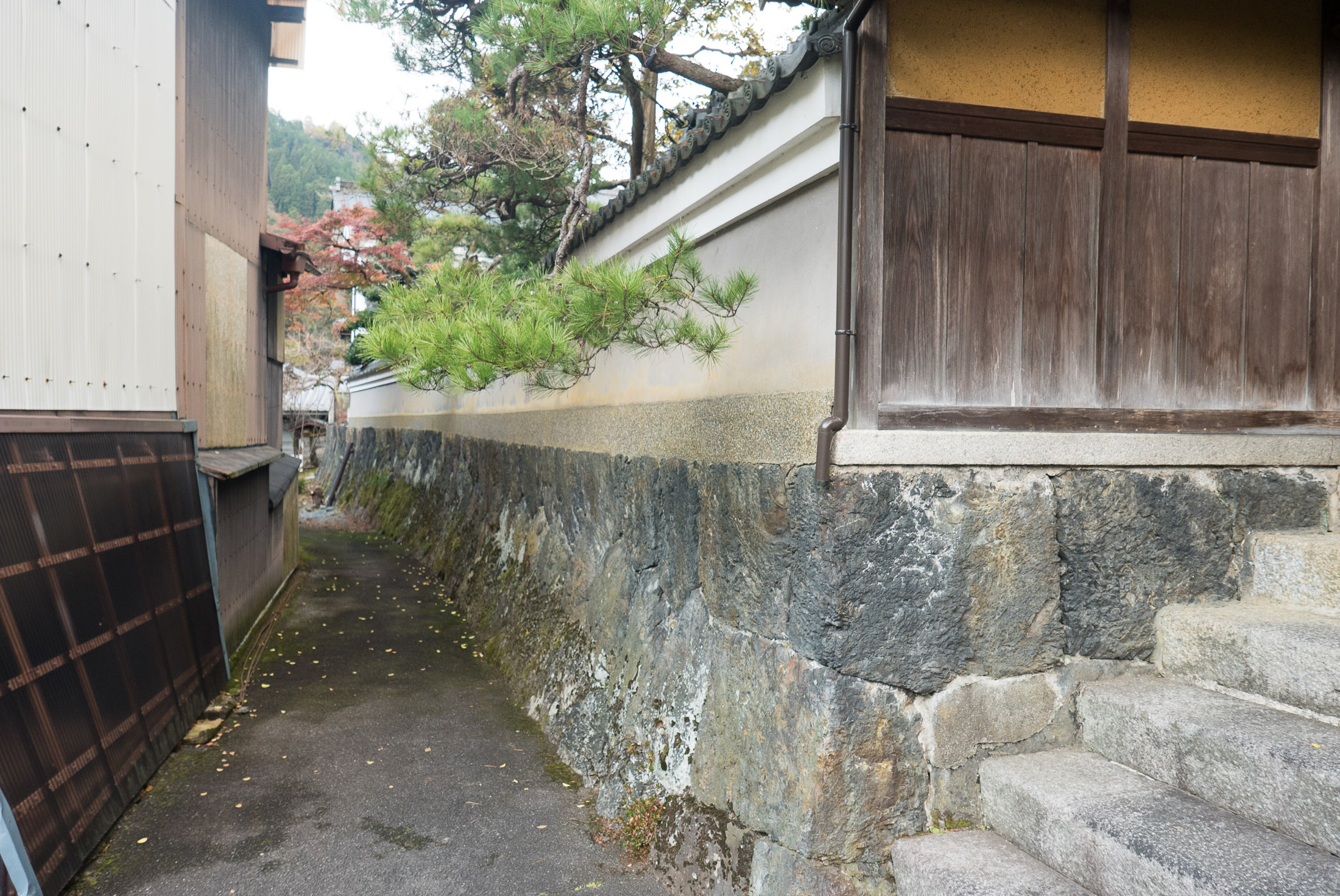
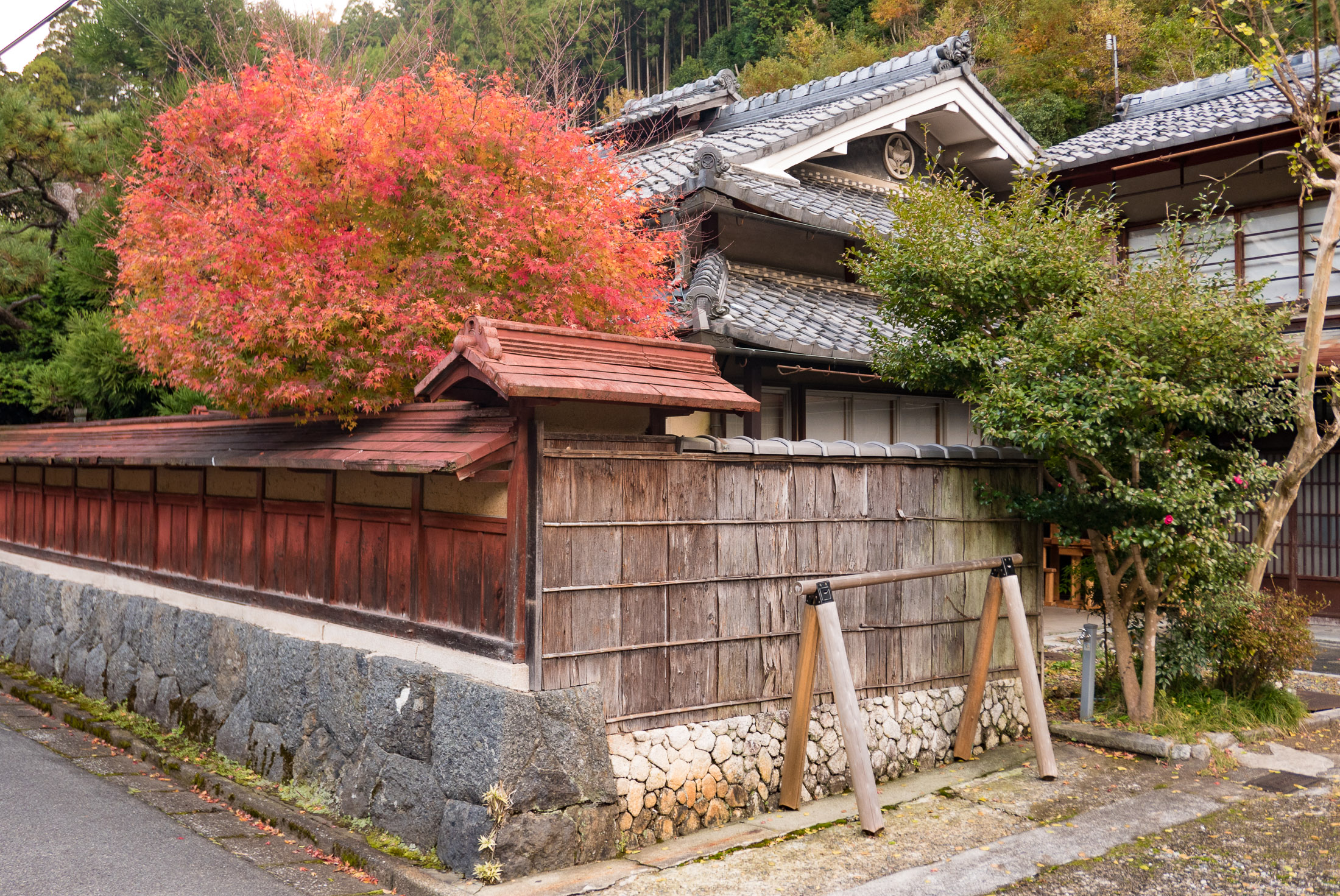
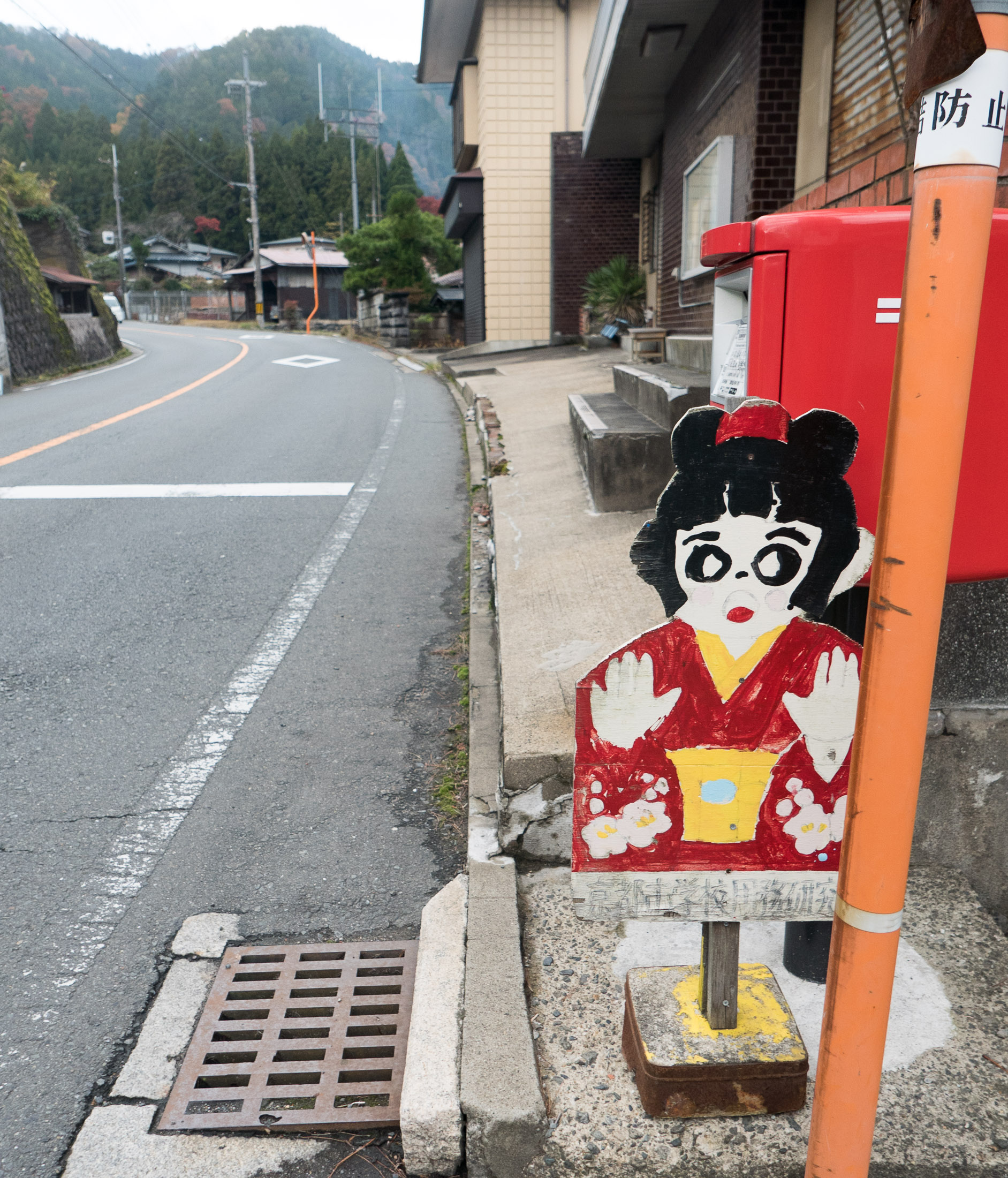
Then I went down to the village to poke around its paths and alleys.
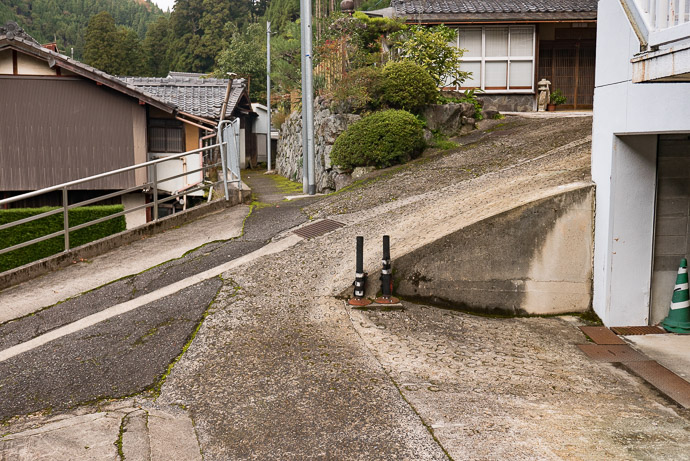
Kyoto, Japan -- Copyright 2017 Jeffrey Friedl, http://regex.info/blog/ -- This photo is licensed to the public under the Creative Commons Attribution-NonCommercial 4.0 International License http://creativecommons.org/licenses/by-nc/4.0/ (non-commercial use is freely allowed if proper attribution is given, including a link back to this page on http://regex.info/ when used online)
Panasonic LX100 at an effective 24mm — 1/125 sec, f/1.7, ISO 200 — map & image datanearby photos
Kyoto, Japan -- Copyright 2017 Jeffrey Friedl, http://regex.info/blog/ -- This photo is licensed to the public under the Creative Commons Attribution-NonCommercial 4.0 International License http://creativecommons.org/licenses/by-nc/4.0/ (non-commercial use is freely allowed if proper attribution is given, including a link back to this page on http://regex.info/ when used online)
Panasonic LX100 at an effective 24mm — 1/125 sec, f/3.5, ISO 200 — map & image datanearby photos
Kyoto, Japan -- Copyright 2017 Jeffrey Friedl, http://regex.info/blog/ -- This photo is licensed to the public under the Creative Commons Attribution-NonCommercial 4.0 International License http://creativecommons.org/licenses/by-nc/4.0/ (non-commercial use is freely allowed if proper attribution is given, including a link back to this page on http://regex.info/ when used online)
Panasonic LX100 at an effective 52mm — 1/125 sec, f/2.8, ISO 200 — map & image datanearby photos
Steep Cross Street really just a short driveway to a house -- Kyoto, Japan -- Copyright 2017 Jeffrey Friedl, http://regex.info/blog/ -- This photo is licensed to the public under the Creative Commons Attribution-NonCommercial 4.0 International License http://creativecommons.org/licenses/by-nc/4.0/ (non-commercial use is freely allowed if proper attribution is given, including a link back to this page on http://regex.info/ when used online)
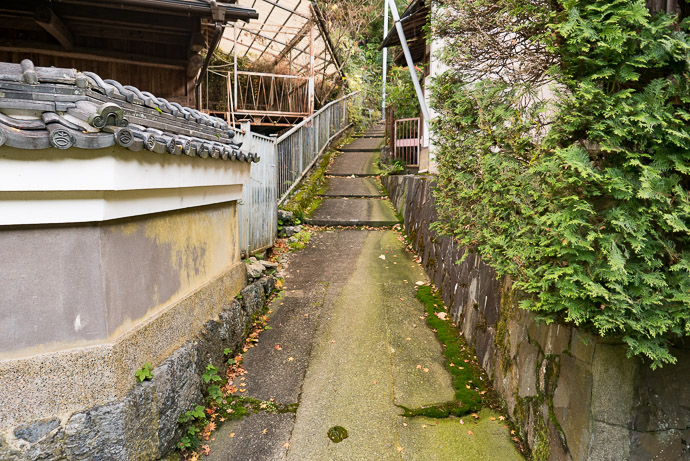
Panasonic LX100 at an effective 35mm — 1/125 sec, f/3.5, ISO 200 — map & image datanearby photos
Steep Cross Street
really just a short driveway to a house
The Aforementioned Steps this is where they led to -- Kyoto, Japan -- Copyright 2017 Jeffrey Friedl, http://regex.info/blog/ -- This photo is licensed to the public under the Creative Commons Attribution-NonCommercial 4.0 International License http://creativecommons.org/licenses/by-nc/4.0/ (non-commercial use is freely allowed if proper attribution is given, including a link back to this page on http://regex.info/ when used online)
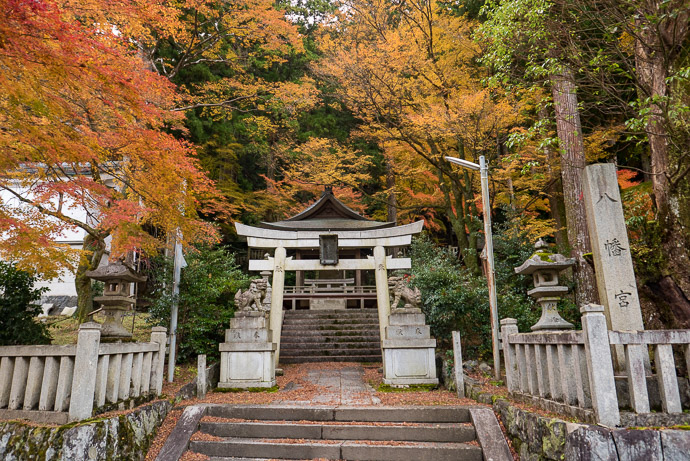
Panasonic LX100 at an effective 24mm — 1/125 sec, f/2, ISO 200 — map & image datanearby photos
The Aforementioned Steps
this is where they led to
Narrow Alley -- Kyoto, Japan -- Copyright 2017 Jeffrey Friedl, http://regex.info/blog/ -- This photo is licensed to the public under the Creative Commons Attribution-NonCommercial 4.0 International License http://creativecommons.org/licenses/by-nc/4.0/ (non-commercial use is freely allowed if proper attribution is given, including a link back to this page on http://regex.info/ when used online)
Panasonic LX100 at an effective 24mm — 1/125 sec, f/2.5, ISO 200 — map & image datanearby photos
Narrow Alley
Someone's House with a road-bike stand? -- Kyoto, Japan -- Copyright 2017 Jeffrey Friedl, http://regex.info/blog/ -- This photo is licensed to the public under the Creative Commons Attribution-NonCommercial 4.0 International License http://creativecommons.org/licenses/by-nc/4.0/ (non-commercial use is freely allowed if proper attribution is given, including a link back to this page on http://regex.info/ when used online)
Panasonic LX100 at an effective 37mm — 1/125 sec, f/2.5, ISO 200 — map & image datanearby photos
Someone's House
with a road-bike stand?
Road-side Shrine Nakagawa Hachiman Gusha (中川八幡宮社) -- Nakagawa Hachiman Gusha (中川八幡宮社) -- Kyoto, Japan -- Copyright 2017 Jeffrey Friedl, http://regex.info/blog/ -- This photo is licensed to the public under the Creative Commons Attribution-NonCommercial 4.0 International License http://creativecommons.org/licenses/by-nc/4.0/ (non-commercial use is freely allowed if proper attribution is given, including a link back to this page on http://regex.info/ when used online)
Panasonic LX100 at an effective 24mm — 1/125 sec, f/1.8, ISO 200 — map & image datanearby photos
Road-side Shrine
Nakagawa Hachiman Gusha (中川八幡宮社)

Then I headed north for a bit....
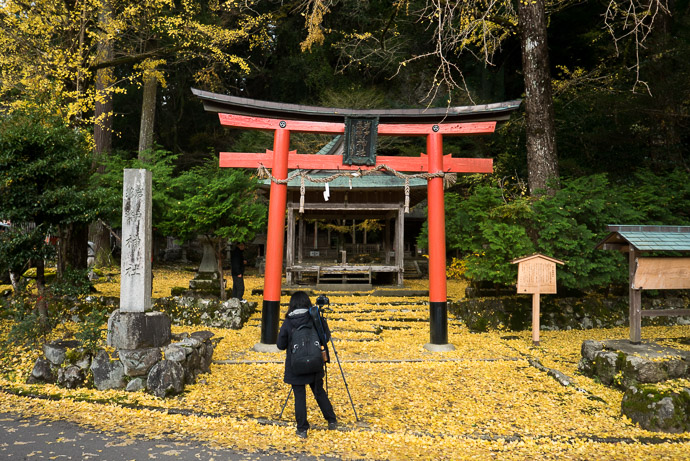
Kyoto, Japan -- Copyright 2017 Jeffrey Friedl, http://regex.info/blog/ -- This photo is licensed to the public under the Creative Commons Attribution-NonCommercial 4.0 International License http://creativecommons.org/licenses/by-nc/4.0/ (non-commercial use is freely allowed if proper attribution is given, including a link back to this page on http://regex.info/ when used online)
Panasonic LX100 at an effective 24mm — 1/125 sec, f/2.8, ISO 200 — map & image datanearby photos
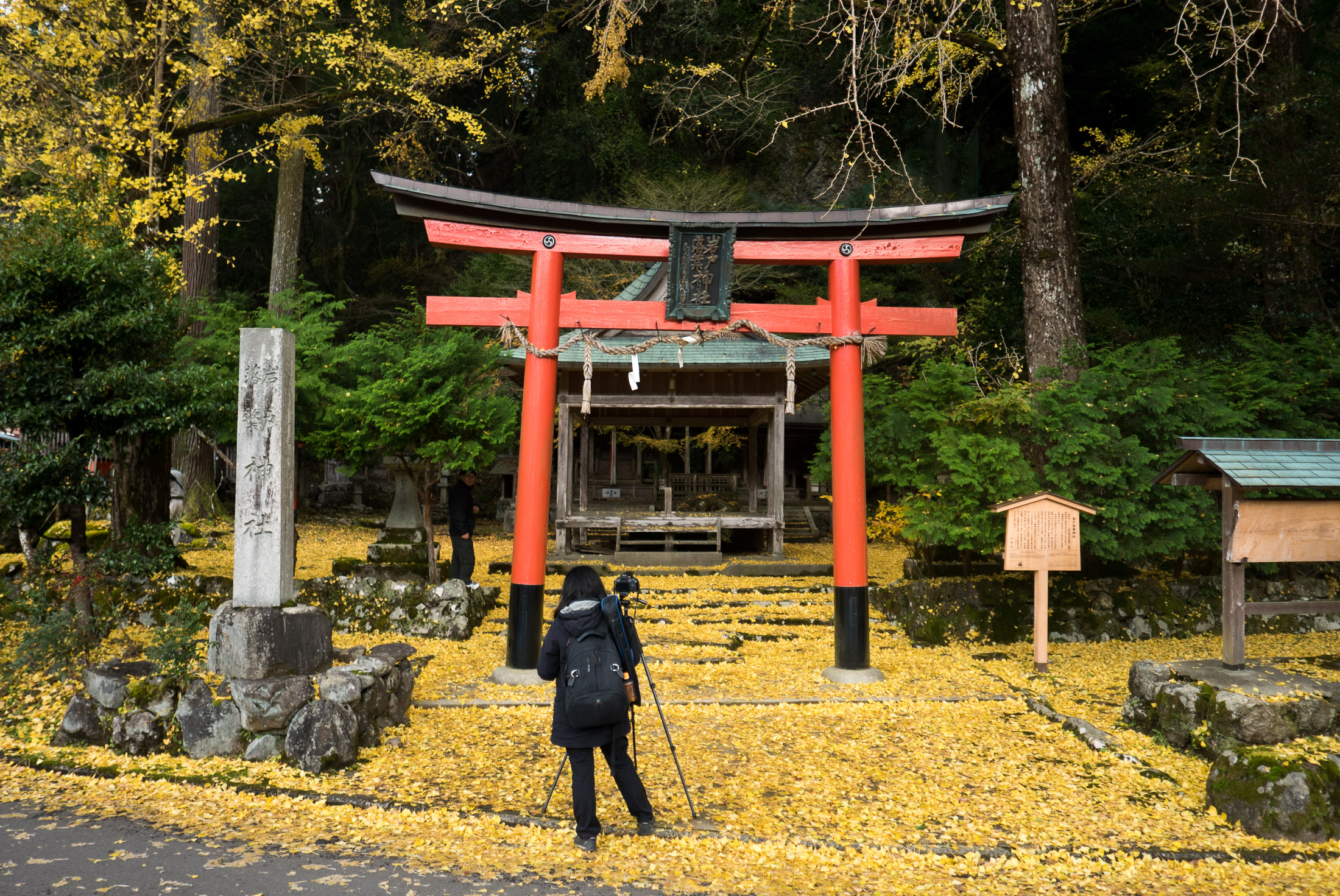
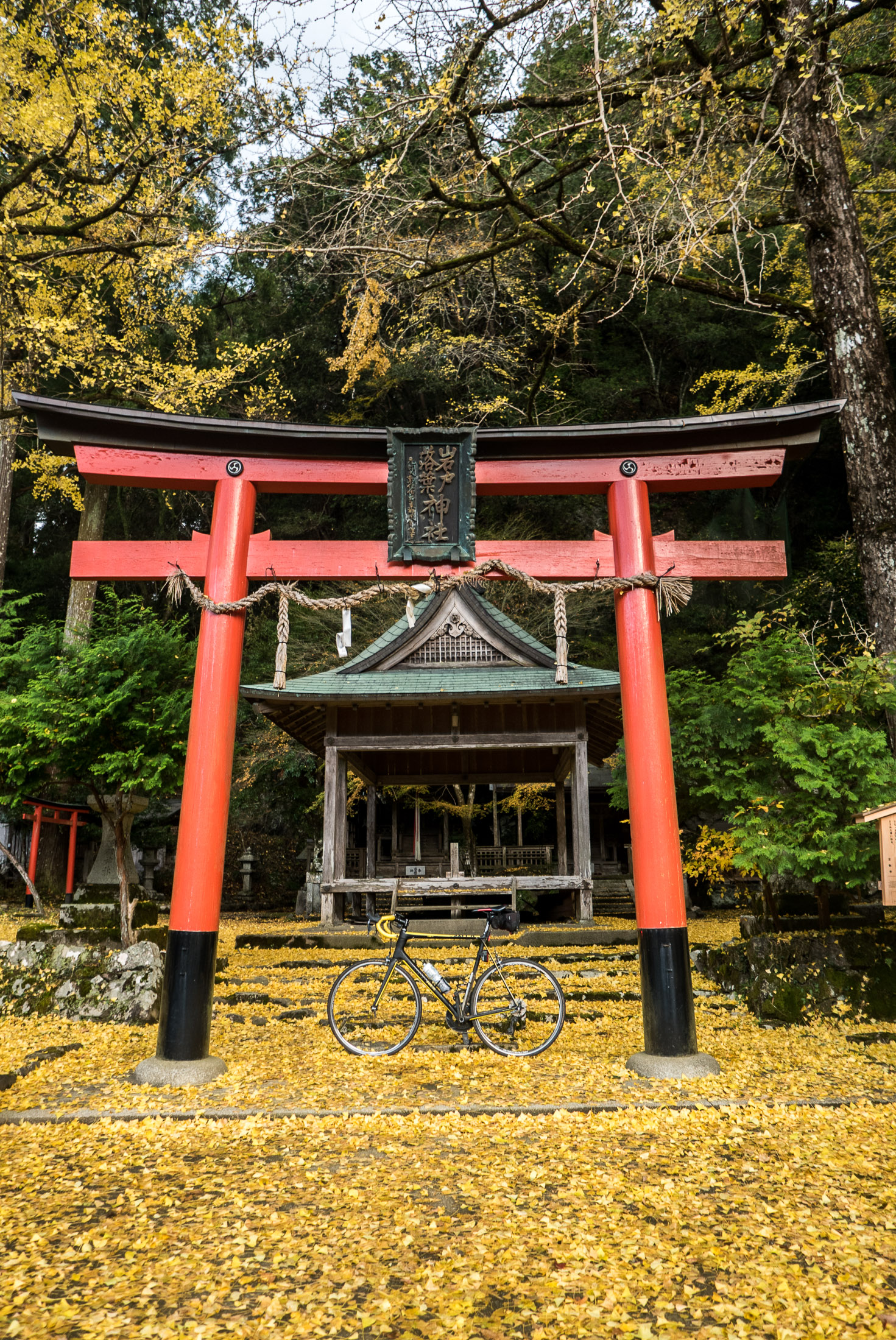
Approaching Max Carpet Iwato Ochiba Shrine (岩戸落葉神社) -- Iwato Ochiba Shrine (岩戸落葉神社) -- Kyoto, Japan -- Copyright 2017 Jeffrey Friedl, http://regex.info/blog/ -- This photo is licensed to the public under the Creative Commons Attribution-NonCommercial 4.0 International License http://creativecommons.org/licenses/by-nc/4.0/ (non-commercial use is freely allowed if proper attribution is given, including a link back to this page on http://regex.info/ when used online)
Panasonic LX100 at an effective 24mm — 1/125 sec, f/1.7, ISO 200 — map & image datanearby photos
Approaching Max Carpet
Iwato Ochiba Shrine (岩戸落葉神社)
Slightly Off Center -- Iwato Ochiba Shrine (岩戸落葉神社) -- Kyoto, Japan -- Copyright 2017 Jeffrey Friedl, http://regex.info/blog/ -- This photo is licensed to the public under the Creative Commons Attribution-NonCommercial 4.0 International License http://creativecommons.org/licenses/by-nc/4.0/ (non-commercial use is freely allowed if proper attribution is given, including a link back to this page on http://regex.info/ when used online)
Panasonic LX100 at an effective 24mm — 1/125 sec, f/2.2, ISO 200 — map & image datanearby photos
Slightly Off Center

I'm not squared up with the gate and the building in the shot above because the lady seen in the prior photo was camped where I wanted to be, standing in front of her tripod seemingly doing some light browsing on her phone, completely ignoring her camera, the shrine, and folks waiting for her to move. After a while, I finally gingerly asked whether she was standing in that particular spot for a particular reason, and she replied in English “I don't speak Japanese”. So I repeated my question in English, and she said that no, she wasn't there for a particular reason, and went back to her phone.

This was fairly jarring. It was clear that she wasn't trying to be mean or troublesome, but that she simply didn't consider that she might be bothering others. One could guess from her accent where she was from, and roll your eyes and think “yeah, those people tend to be pretty rude”, but I try so hard not to do that. Each person is individual.

I finally ask whether she'd be so kind as to move just a bit over, at which point it finally dawned on her, and she moved slightly out of the way. Japanese folks looking on smiled in appreciation of my efforts.

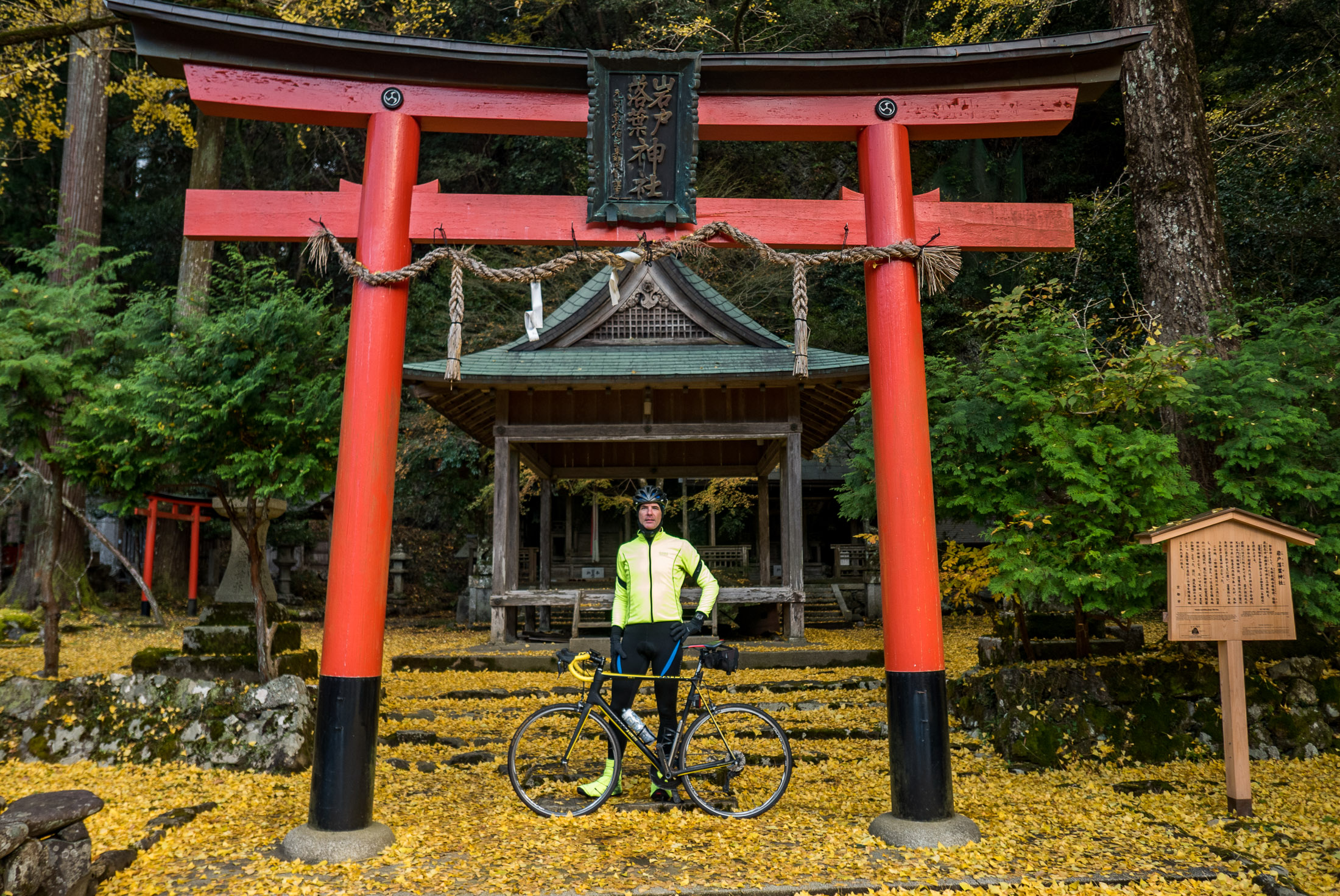
And as inconsiderate as she was, she willingly agreed to snap a photo for me when I asked...

Iwato Ochiba Shrine (岩戸落葉神社) -- Kyoto, Japan -- Copyright 2017 Jeffrey Friedl, http://regex.info/blog/
Panasonic LX100 at an effective 28mm — 1/125 sec, f/2.2, ISO 200 — map & image datanearby photos

I then spent a few minutes digging among the leaves looking for part of my polarizing filter... I had dropped it while taking this photo and the clickspring that holds the glass in had apparently sprung out and away. I hoped I might find it, but didn't. One of the Japanese photographers even helped digging through the leaves for a while. Very kind.

Then I headed back home...

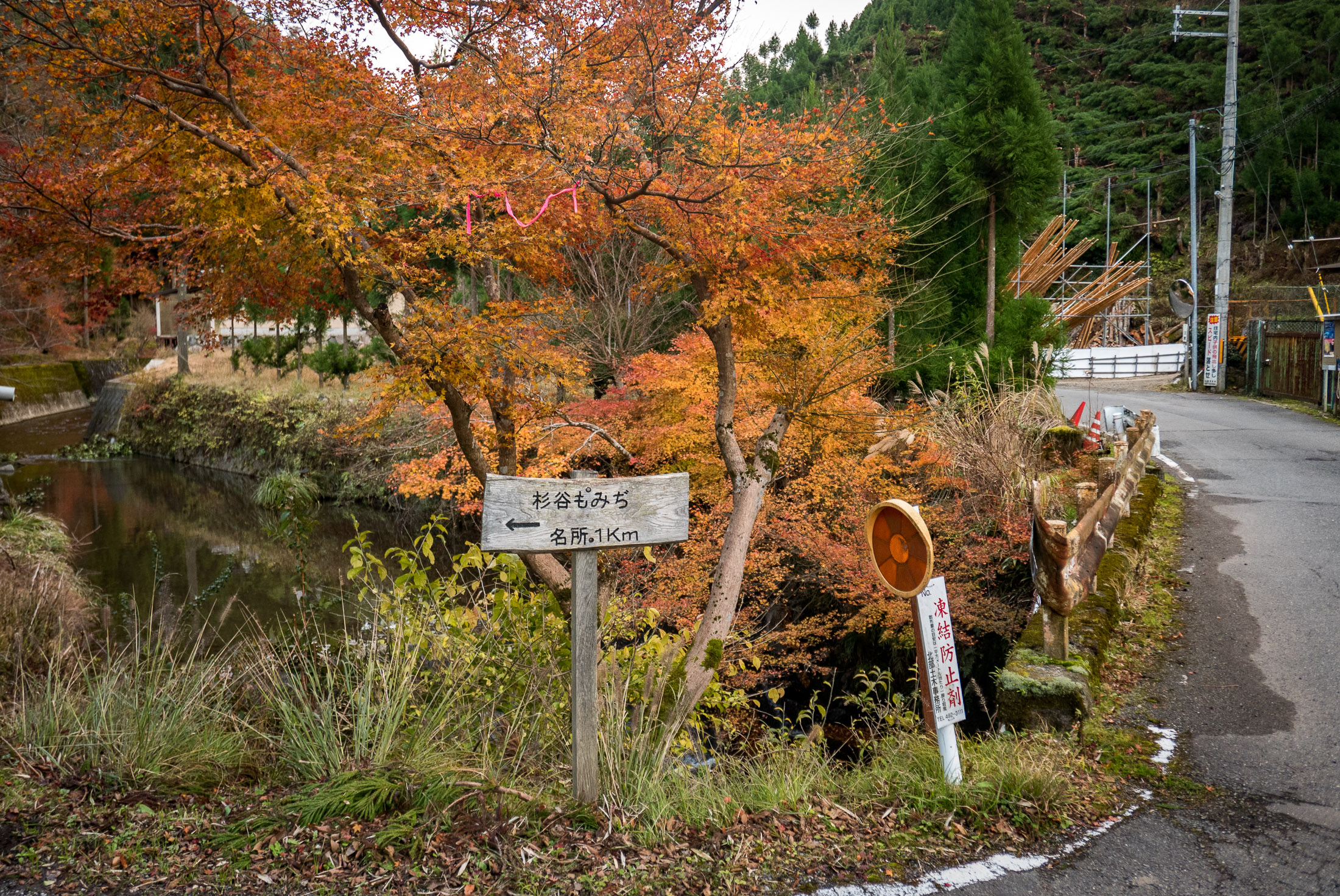
“ Sugidani Maple ” “ Famous place, 1km ” -- Kyoto, Japan -- Copyright 2017 Jeffrey Friedl, http://regex.info/blog/ -- This photo is licensed to the public under the Creative Commons Attribution-NonCommercial 4.0 International License http://creativecommons.org/licenses/by-nc/4.0/ (non-commercial use is freely allowed if proper attribution is given, including a link back to this page on http://regex.info/ when used online)
Panasonic LX100 at an effective 32mm — 1/125 sec, f/2.2, ISO 640 — map & image datanearby photos
“Sugidani Maple”
“Famous place, 1km”

I didn't make the detour to see the maple this time. I'd done so two years ago (blogged here) and came away with a flat and missing bolts on my cleats.

However, I did take the next detour...
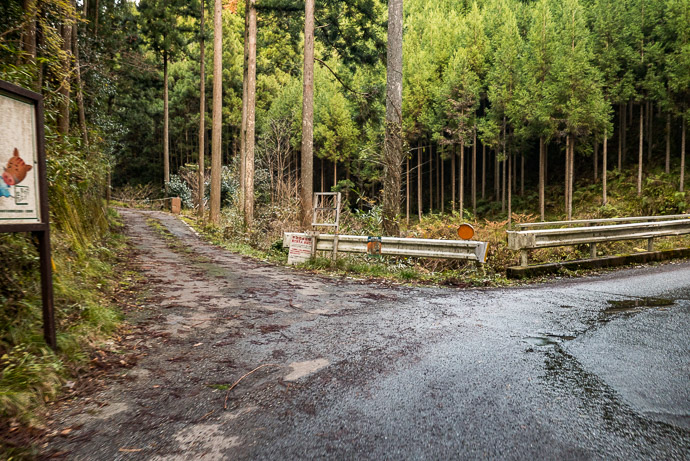
Finally Going to Explore the road on the left that I've passed dozens of times -- Kyoto, Japan -- Copyright 2017 Jeffrey Friedl, http://regex.info/blog/ -- This photo is licensed to the public under the Creative Commons Attribution-NonCommercial 4.0 International License http://creativecommons.org/licenses/by-nc/4.0/ (non-commercial use is freely allowed if proper attribution is given, including a link back to this page on http://regex.info/ when used online)
Panasonic LX100 at an effective 24mm — 1/125 sec, f/1.7, ISO 1000 — map & image datanearby photos
Finally Going to Explore
the road on the left that I've passed dozens of times

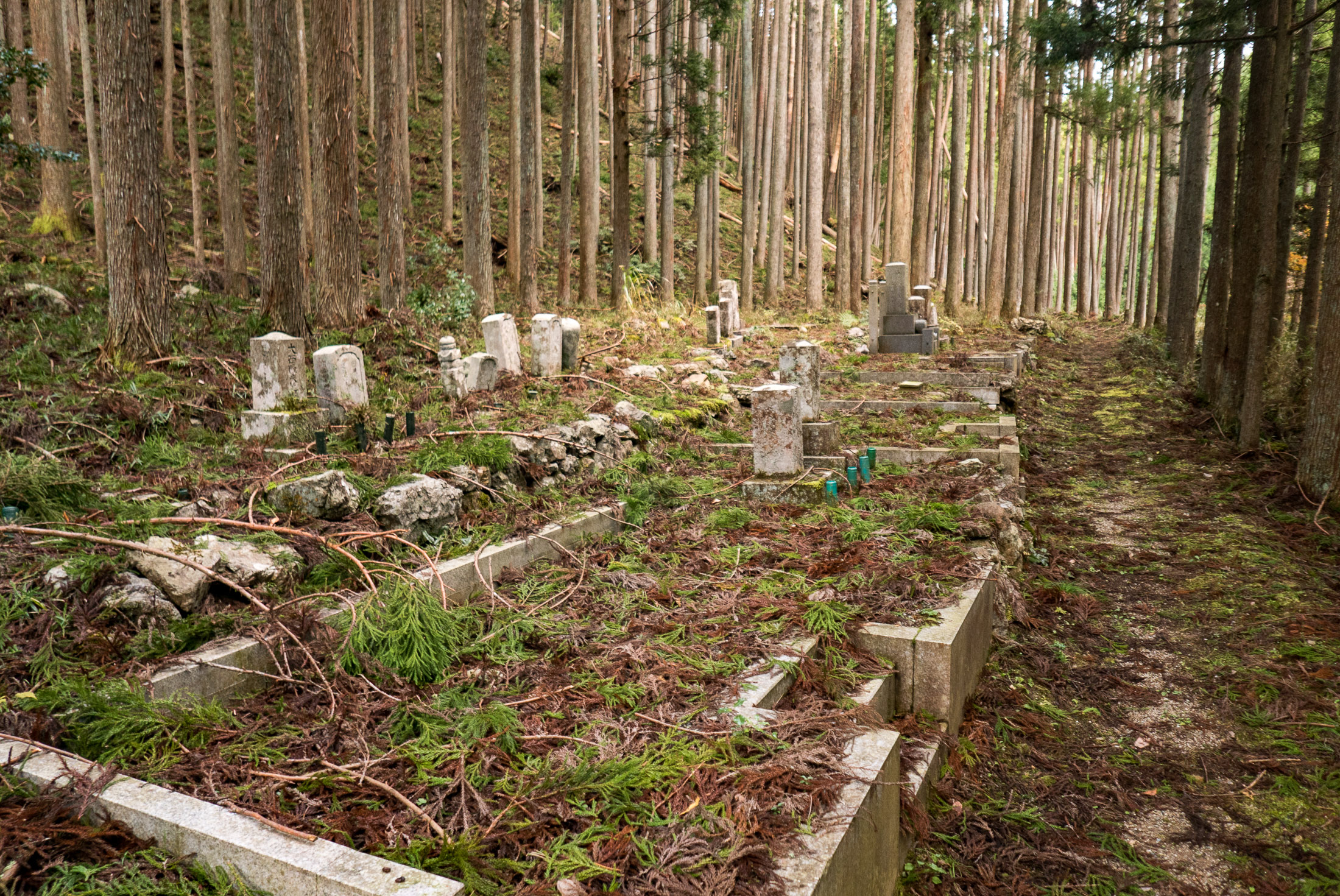
It was a lovely road that went for about a kilometer, at a mild average of 5%. It ended at a graveyard.

Isolated Graveyard -- Kyoto, Japan -- Copyright 2017 Jeffrey Friedl, http://regex.info/blog/ -- This photo is licensed to the public under the Creative Commons Attribution-NonCommercial 4.0 International License http://creativecommons.org/licenses/by-nc/4.0/ (non-commercial use is freely allowed if proper attribution is given, including a link back to this page on http://regex.info/ when used online)
Panasonic LX100 at an effective 24mm — 1/60 sec, f/1.7, ISO 320 — map & image datanearby photos
Isolated Graveyard

I made a Strava segment for this ride as well, as there wasn't already one.

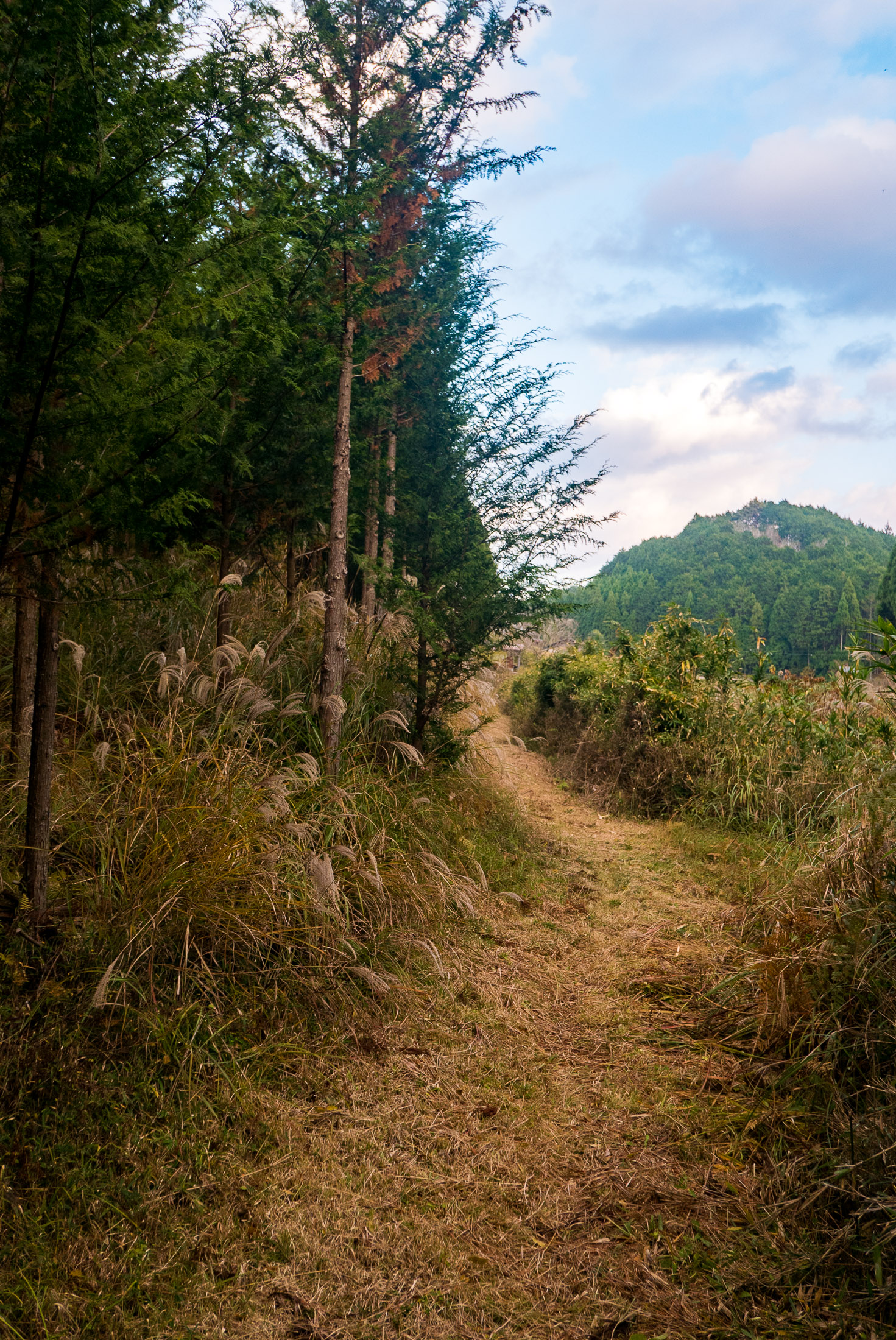
The path continued past the cemetery. Normally I'd not take this kind of path on my road bike, but it was mostly grass over dirt, so it was quite easy riding except for the occasional rock or log...
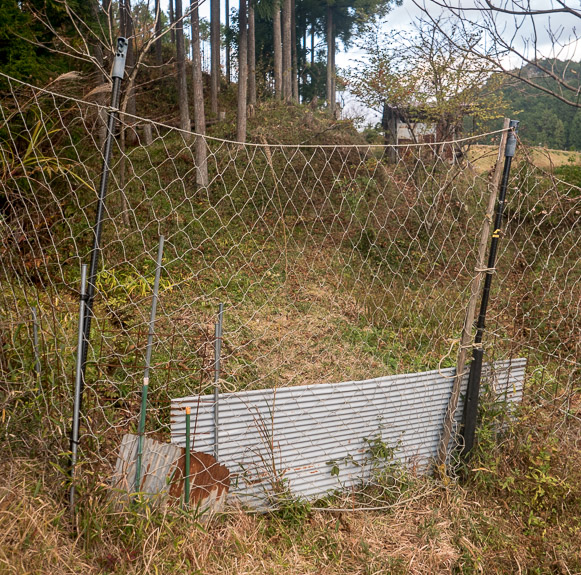
Kyoto, Japan -- Copyright 2017 Jeffrey Friedl, http://regex.info/blog/ -- This photo is licensed to the public under the Creative Commons Attribution-NonCommercial 4.0 International License http://creativecommons.org/licenses/by-nc/4.0/ (non-commercial use is freely allowed if proper attribution is given, including a link back to this page on http://regex.info/ when used online)
Panasonic LX100 at an effective 24mm — 1/60 sec, f/1.7, ISO 200 — map & image datanearby photos
Kyoto, Japan -- Copyright 2017 Jeffrey Friedl, http://regex.info/blog/ -- This photo is licensed to the public under the Creative Commons Attribution-NonCommercial 4.0 International License http://creativecommons.org/licenses/by-nc/4.0/ (non-commercial use is freely allowed if proper attribution is given, including a link back to this page on http://regex.info/ when used online)
Panasonic LX100 at an effective 35mm — 1/125 sec, f/3.2, ISO 200 — map & image datanearby photos
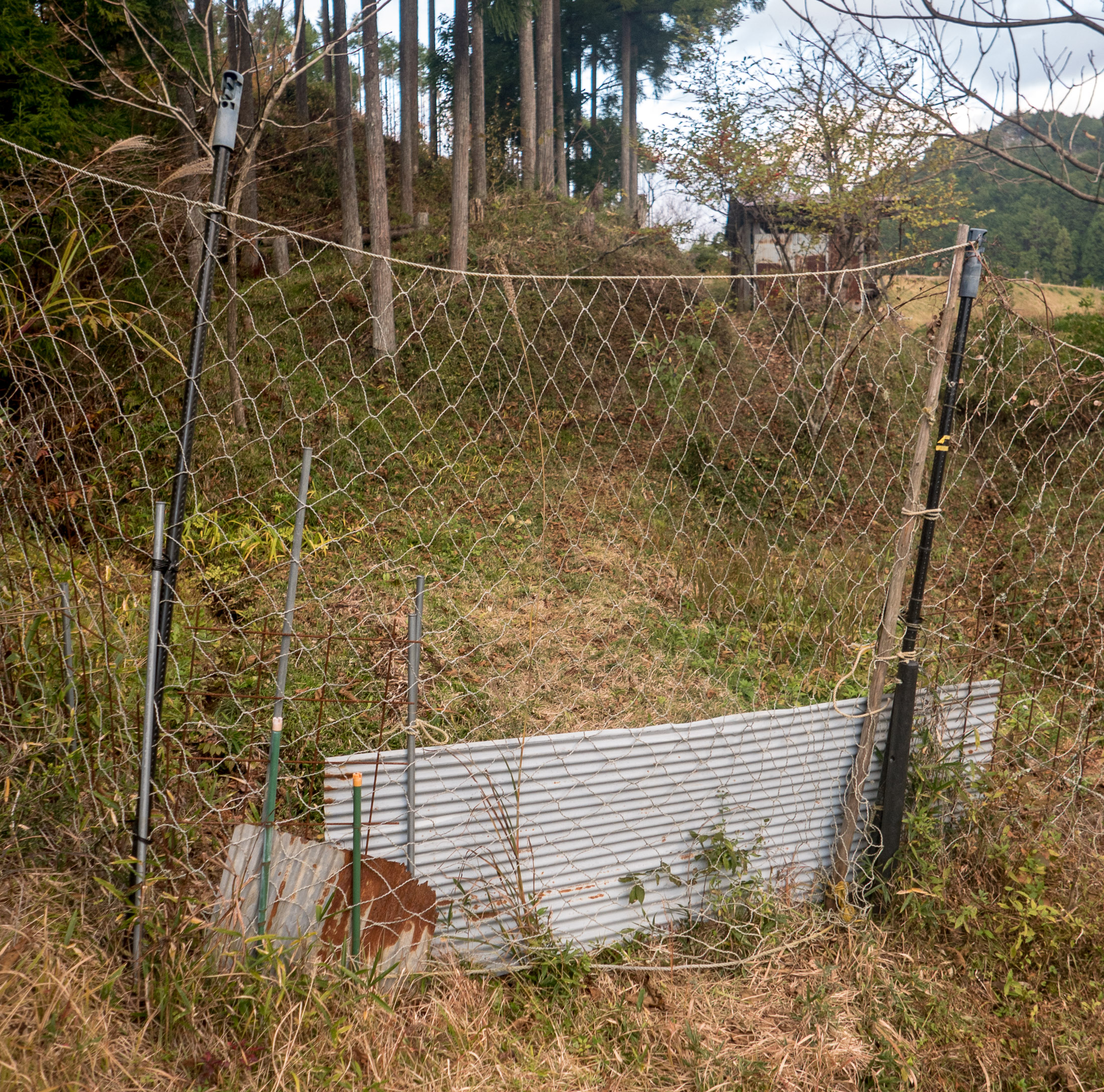
End of the Line I was told later on that I could have untied the ropes and passed, but it seemed pretty clearly “ stay out ” to me at the time -- Kyoto, Japan -- Copyright 2017 Jeffrey Friedl, http://regex.info/blog/ -- This photo is licensed to the public under the Creative Commons Attribution-NonCommercial 4.0 International License http://creativecommons.org/licenses/by-nc/4.0/ (non-commercial use is freely allowed if proper attribution is given, including a link back to this page on http://regex.info/ when used online)
Panasonic LX100 at an effective 24mm — 1/125 sec, f/2.2, ISO 200 — map & image datanearby photos
End of the Line
I was told later on that I could have untied the ropes and passed,
but it seemed pretty clearly “stay out” to me at the time

At this point I was about a minute's walk from the Himuro Shrine that I posed about seven years ago, but I couldn't get to it. It's just as well, because I wanted to return to take pictures of the road I'd just ridden.

Heading Back -- Kyoto, Japan -- Copyright 2017 Jeffrey Friedl, http://regex.info/blog/ -- This photo is licensed to the public under the Creative Commons Attribution-NonCommercial 4.0 International License http://creativecommons.org/licenses/by-nc/4.0/ (non-commercial use is freely allowed if proper attribution is given, including a link back to this page on http://regex.info/ when used online)
Panasonic LX100 at an effective 24mm — 1/125 sec, f/1.7, ISO 2000 — map & image datanearby photos
Heading Back
24 Nov 23:21

These Weeks in Firefox: Issue 28

by Johann Hofmann

Highlights

So many new tabs opened.

Too many New Tabs to contain!

Flash Click-to-Play UI

Don’t

  • The Test Pilot website is now Photonized! This was an intense sprint where we touched a huge percentage of the code, changing the styles and rearranging the directory structure of our React components so things are better componentized.
New Test Pilot Design

The site was ready the day before the 57 launch, and it took a ton of effort from everybody.

Friends of the Firefox team

Project Updates

Add-ons

Activity Stream

  • Running 2 experiments on release channel with 1% of new users and 2% of existing users getting old Tiles about:newtab.
  • Added tippy top rich icon service to show icons that are better quality but only advertised by the site to iOS devices (including twitch to avoid thumbnailing…)

Improved tile icons

Browser Architecture

  • Sync and storage team have completed a roadmap review, look for more details in our next newsletter.
  • XBL removal is proceeding. No more XBL bindings in mobile!

Firefox Core Engineering

Form Autofill

  • Credit card autofill is enabled by default on Fx58 beta 5, for users using en-US build and located in the US.
  • We’re ready to increase the availability of Address Autofill on Fx57 from 1% to 20% (Quantum release continues to get better! \o/)
  • Implemented the credit card updating mechanism, including the door hanger and deduplication rules.
  • Fixed some site compatibility issues for credit card expiration dates.
  • Fixed bugs in the suggestion dropdown footer and preferences UIs.
  • Localization push: access keys in autofill doorhangers are now localized, implemented a parser of libaddressinput for knowing which address fields in preferences should be visible in different countries.
  • Refactored FormAutofillHandler to support multiple section mechanism.

Photon

Structure

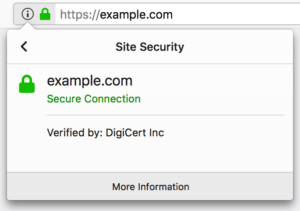
  • Paolo updated the identity popup cert/security subview to the new photon styling.

New Photon-Style Identity Popup

Animation

  • Sam is working on extracting/polishing some of the SVG utilities we bodged together for the SVG animation work. Includes some SVGO plugins.

Visuals

Privacy/Security

Search and Navigation

Address Bar & Search

Places

Sync / Firefox Accounts

Test Pilot

  • This sprint is focused on updating our dependencies which are very out of date, and cleaning up some old cruft.

Web Payments

  • Made the dialog contents hackable from file: URIs for quick iteration
  • Implemented the first Custom Element (currency-amount)
  • Finishing up the store for dialog state that Custom Elements will listen to
  • Starting to implement the UX spec
24 Nov 23:20

Harassment: ways to cope

by Caterina Fake

How to raise a feminist son. Unfortunately, raising feminist daughters doesn’t have much effect unless we also raise feminist sons. Dads! Husbands! Justice will not be served until those who are unaffected are as outraged as those who are.
• How to make things right if you’ve made a mistake. Dale Dougherty, the CEO of Make Magazine and those (awesome!) Maker Faires wrote a tweet & made assumptions based on a sexist world view, realized his mistake, and wrote a blog post in which he explained his mistake and  committed to making amends. People make mistakes, but can make amends too. A model of how to do it.

Experts in the Field. An account of sexism in the writing world. The article begins on the topic of Trump’s ascendency:  “I knew he would somehow win,” she said, “because my life has been continually shaped and distorted by the greed and ignorance of men like him, in positions of power, taking everything they can get, whatever they want, whenever they want. What am I, what is my very life, if not a projection of and product of the desires of such sick men?”

• What to do when you witness harassment in a public place. This is about Islamophobic harassment, but it works for all kinds:

CxCutEXUcAEwE3u

• In dealing with harassers, abusers and other people who’ve hurt you, first, recover as best you can. If you want to do the world a favor and talk to the offender, which is not your responsibility in any case, one approach is this. It is derived from a passage in the Bible, that old manual of the patriarchy, Matthew 18:15-17:

1. talk to the offender. If that doesn’t work:
2. bring other witnesses and talk to the offender again. If that doesn’t work:
3. take it to a neutral aribiter (mediator, priest, judge, council of elders, family council) If that doesn’t work:
4. dissociate yourself from that person.

Here’s the original:

15. Moreover if thy brother shall trespass against thee, go and tell him his fault between thee and him alone: if he shall hear thee, thou hast gained thy brother.
16. But if he will not hear thee, then take with thee one or two more, that in the mouth of two or three witnesses every word may be established.
17. And if he shall neglect to hear them, tell it unto the church: but if he neglect to hear the church, let him be unto thee as an heathen man and a publican.

Matthew 18:17 was written by patriarchs in a different era. To translate, publican would mean “tax collector”. Non-church members, replace the word “church” with whoever is your community’s neutral arbiter, and “heathen man and a publican” in contemporary parlance would be “someone you should avoid”.

•  Always remind yourself that history is written by those in power and you should find the hidden stories of those not represented and mentally correct it.

“We believe the one who has the power. He is the one who gets to write the story. So when you study history, you must always ask yourself, Whose story am I missing? Whose voice was suppressed so that this voice could come forth? Once you have figured that out, you must find that story too. From there, you begin to get a clearer, yet still imperfect, picture.”

– Homegoing, p. 226-7 by Yaa Gyasi

•  Thomas Pynchon wrote about the Herero genocide in V and Gravitys Rainbow, without writing like a colonizer. Literary geniuses, take note!


24 Nov 23:20

Google collected Android users’ location without permission

by Nathan Yau

Keith Collins reporting for Quartz:

Since the beginning of 2017, Android phones have been collecting the addresses of nearby cellular towers—even when location services are disabled—and sending that data back to Google. The result is that Google, the unit of Alphabet behind Android, has access to data about individuals’ locations and their movements that go far beyond a reasonable consumer expectation of privacy.

What.

Google says they didn’t store or use the data. But still. If you’re Google, you should know better.

Tags: Google, privacy

24 Nov 23:20

The Big @Mention List

by Richard Millington

There is a difference between ‘someone mentioned me, I better respond’ and ‘this improved how I think about the community’.

A lot of people @mention a list of newcomers when they join. It seems to work well. The person gets a notification and is prompted to respond. You get a lot of responses.

But having tried this with several organizations, the long-term impact is pretty minimal. You can install Community-analytics and test this for yourself.

@mentioning (tagging someone into a discussion) works best when someone is tagged in to make a meaningful contribution to the group or receive a useful contribution from the group.

This changes how they feel about the community. Now they’re not 1 name among 30, they are 1 among a tiny group who has been called upon to make/receive a useful contribution.

Now their opinion of the group’s ability to help them has increased. Their understanding of their value to the group has changed.

Let’s have less indistinguishable welcome lists and more specific contributions.

24 Nov 23:20

A few things that would reduce stress around reproducibility/replicability in science

I was listening to the Effort Report Episode on The Messy Execution of Reproducible Research where they were discussing the piece about Amy Cuddy in the New York Times. I think both the article and the podcast did a good job of discussing the nuances of the importance of reproducibility and the challenges of the social interactions around this topic. After listening to the podcast I realized that I see a lot of posts about reproducibility/replicability, but many of them are focused on the technical side. So I started to think about compiling a list of more cultural things we can do to reduce the stress/pressure around the reproducibility crisis.

I’m sure others have pointed these out in other places but I am procrastinating writing something else so I’m writing these down while I’m thinking about them :).

  1. We can define what we mean by “reproduce” and “replicate” Different fields have different definitions of the words reproduce and replicate. If you are publishing a new study we now have an R package that you can use to create figures that show what changed and what was the same betweeen the original study and your new work. Defining concretely what was the same and different will reduce some of the miscommunication about what a reproducibility/replicability study means.
  2. We can remember that replication is statistical, not deterministic If you are doing a new study where you re-collect data according to a protocol from another group - you should not expect to get exactly the same answer. So if a result is statistically significant in one study and not significant in another, that may be within the bounds of what we’d expect to see.
  3. We can remember that there is a difference between exploratory and confirmatory research There is a reason that randomized trials are the basis for regulatory decisions by the FDA and others. But if we require every single study to meet the requirements of a pre-registered, randomized, double blind controlled trial with a huge sample size we might miss some important discoveries.
  4. We can remember that a failed replication isn’t always a scientific failure One thing Roger and Elizabeth point out is that many scientific studies won’t replicate - nor should we expect all studies to replicate. Sometimes a study is preliminary, exploratory, or the first observation of an unusual event. It may be a perfectly well executed study, and not replicate because the sample size was too small or there was an unmodeled confounder. This doesn’t mean that the scientific study was a failure, it just was an observation that didn’t pan out.
  5. We can stop publicizing scientific results as solutions so quickly University press offices, startup companies, and researchers stressed for funding are under pressure to label every discovery as a “cure”, a “diagnosis”, a “solution to the crisis”. A lot of the frustration in the scientific community arises from this overstatement of results. It is hard to escape this (for me too!) - but we can excercise skepticism about claims of solutions on the basis of single scientific papers.
  6. We can be persistent and private as long as possible Like many people I’ve run into frustrating cases where data isn’t available from a paper that has been published. I have contacted the authors only to be rebuffed. I have found that it takes work to convince them to provide the data, but I can often do it without having to resort to publicizing the problems and trying to make it adversarial.
  7. We can make the realization that data is valuable but in science you don’t own it There is still discussion of data parasites and data symbionts. I have been both a data collector and a data analyst. I realize there is frustration to releasing your data and seeing others quickly publish ideas you may have had. At the same time I’ve seen how frustrating it can be to see people keep their data private and inaccessable indefinitely after publication. The reality is that people do deserve credit for collecting data, but that they don’t own the data they collect.
  8. We should cut each other some slack I think that a lot of the frustration around reproducibility and replicability can come from the way the problem is approached. On the one hand, if you publish a scientific paper and someone tries to reproduce or replicate your work you can realize that they are doing that because they are interested and try to help them. Even if they find some flaws (as they inevitably will) or the study doesn’t replicate (as it might not) that is not a failure by you. On the other hand if you are reproducibing or replicating, remember that the scientist on the other end is a person. That person is subject to all the same funding, publication, and promotion stresses as everyone else. So we should try not to make the discovery of reproducibility/replicability problems high profile “gotchas” but focus on pointing out the real scientific issues that arise and trying to move forward in a positive way.

Like many others, I have noticed that the stakes around reproducibility/replicability have been ratcheted up by social media and the rise in the prominence of the field of reproducibility. As someone who has experienced the real stress all of this can create in the life of real scientists, I’d love to see if we could move forward in a way that was more positive and collaborative while we address the explosion of data in the scientific enterprise.

24 Nov 23:17

joining the cult of Brompton

by jnyyz

Ever since I had the chance to compare my Bike Friday Tikit to a Brompton a couple of summers ago, I’ve been thinking about getting a Brompton. Last Thursday, I finally caved, and look what followed me home from Curbside Cycles.

IMG_7082

2017 model, nickel black edition, 6 speed. I have a very understanding wife.

IMG_7084

And here I am riding it into work for the first time this past Monday.

IMG_7104

My initial impressions reinforce what I experienced before:

  • the frame and stem are nice and stiff.
  • for me, the riding position is adequately stretched out horizontally.
  • I prefer the 2017 shifters to the earlier version. Ultimately, the shifting is not as nice as the Alfine 11 on my Tikit, but since my commute is flat, it seems that having the hub gear in 2nd and using the derailleur as a half step will be fine.
  • the braking is much better than the Tikit, and I don’t really see a need to convert to disc brakes in the future.
  • not in love with the left hand folding pedal, but I suppose I’ll get used to it.
  • going to have to swap out the saddle before longer rides
  • ditto for tweaking the handlebar position. Ideally I’d want a bullhorn set up like I have on my Tikit, but I don’t want it to interfere with the fold.

Oddly, since switching to riding the Brompton, most of my rides have been faster than average:

IMG_E7116

Of course an important part of having a Brompton is to shop for accessories. Since I didn’t immediately want to invest in one of their fancy bags, I was riding to work with my trusty Tom Bihn bag.

IMG_7107

Fun fact: this bag, circa 2004, has a hidden message on the care tag inside, for which the company got into a bit of trouble.

IMG_7106

Just for completeness, I will point out that their current bags have the following tag:

IMG_7114

The bottom line says “Made in USA” in Chinese. The other side has the company motto.

IMG_7115

At any rate, back to Brompton luggage. Most of their bags are designed to be mounted on a carrier block in front of the head tube, and this has the benefit that the bag does not turn with the handlebars. This is like the front basket on my Haul a Day. The bags have a rigid integral frame that quick releases on and off the bike.

Ideally I wanted a bag sewn in North America. Curbside carries the YNOT bag which was ideal since it is made locally, so that seemed to be the top choice. However, a search of the internet also turned up a very sweet bag by Swift Industries. Regrettably, they informed me that it was no longer in production.

With a little more research, I realized that the Brompton bag frame had virtually the same dimensions as my Tom Bihn ID Bag, notably a width of 40 cm, the critical dimension. Thus I was off again to Curbside to check to see if one of the frames would fit by bag.

A quick aside to admire mechanic Eli’s Brompton.

IMG_7111

Back home with the frame laid out on the bag.

IMG_7117

Using a good old sliver Sharpie to mark the necessary cuts

IMG_7120

Now with the frame inserted.

IMG_7122

IMG_7124

Of course a real Brompton bag inserts the frame from underneath and there are special straps to hold it in place. However, the fit of the frame to my bag is quite tight and I don’t anticipate any issues. The frame also as a but of a protruding shelf that holds the bag from underneath.

Here is the bag on the bike. The design of the bag is such that the shoulder strap can tuck under the front flap.

IMG_7121

IMG_7128

There you go, a bag that hasn’t seen much recent use now repurposed for bike commuting. I’ll let you know how it goes.

Regrettably I see that this particular model, the ID bag, is no longer made. However, the Cadet has about the same nominal width, and the back flap construction is such that it might fit a Brompton frame as it is. If anyone is willing to try it out, let me know if it works.

Screen Shot 2017-11-21 at 8.31.56 PM

Just trying to get as many rides in before the salt descends and I have to put away the Brompton for the winter.

Update:

I found this video

Update #2:

The front bag makes the handling of the Brompton fractionally more stable. I am pleased. Also according to use Killeri on the Tom Bihn forums:

“A T-bag frame does not fit in the back pocket of Cadet. Otherwise the concept feels sound, so a smaller frame probably works fine.”


24 Nov 23:17

Jobs Jar — CBC Journalist, Vancouver

by Ken Ohrn

https://cbc.taleo.net/careersection/2/jobdetail.ftl?job=VAN00775&lang=en

Reporting to the Digital Senior Producer, you copy edit, vet, package, write and publish for presentation online, on social media platforms, or for radio and/or television programs. You demonstrate and maintain exceptional skill in writing, you build multimedia-rich story packages and manage lineup and priority of stories. Work can involve the coordination of the activities of others and close co-operation with the program unit is essential.


24 Nov 23:13

Do You Love Any Dead People?

I think most of us do, so if you’re in Vancouver around Hallowe’en, you should go visit A Night For All Souls. Even if everyone you love is still alive, you should go anyhow because it’s full of extreme ethereal dark-hued beauty.

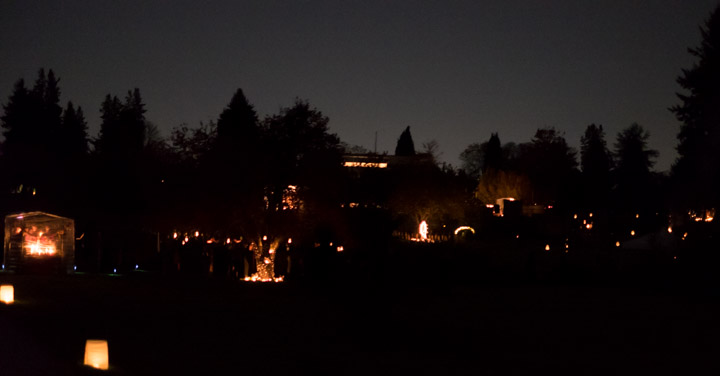
All Souls is in Vancouver’s Mountain View Cemetary, where I’ve often taken pictures and played Ingress before; it’s central and, yes, has a terrific view of the mountains. The project is city-funded and I hope they go on funding it.

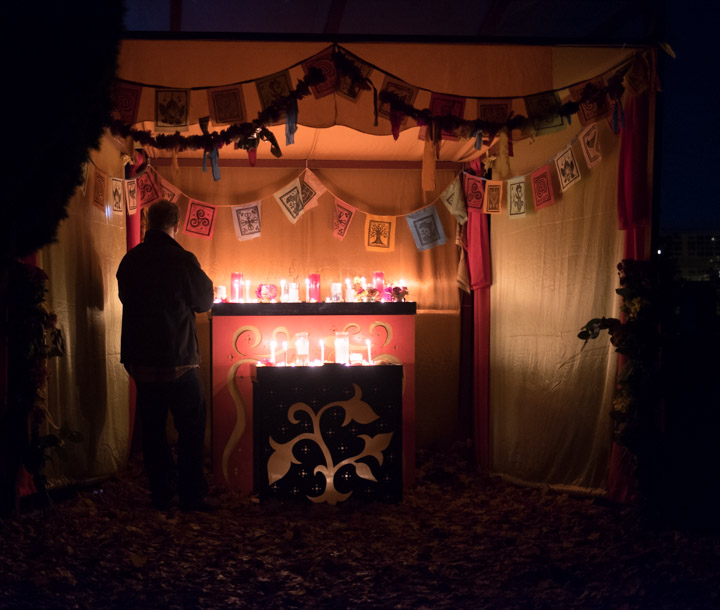
The concept is simple: After dark there are soft lights everywhere, many of them in little shrines you can visit and write a message or light a candle.

Night For All Souls

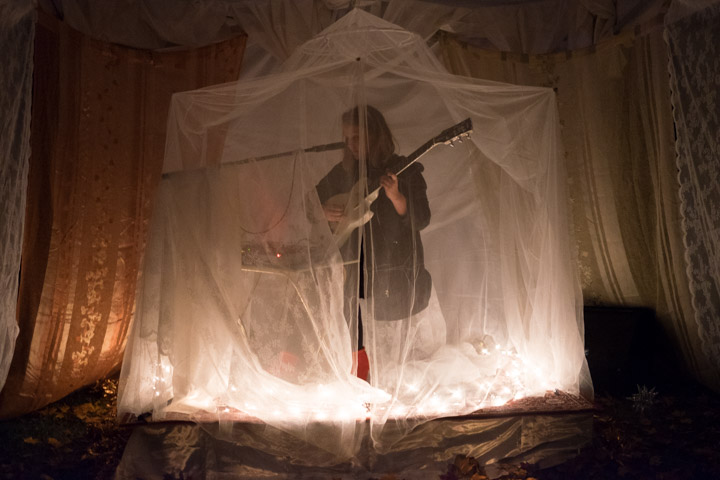
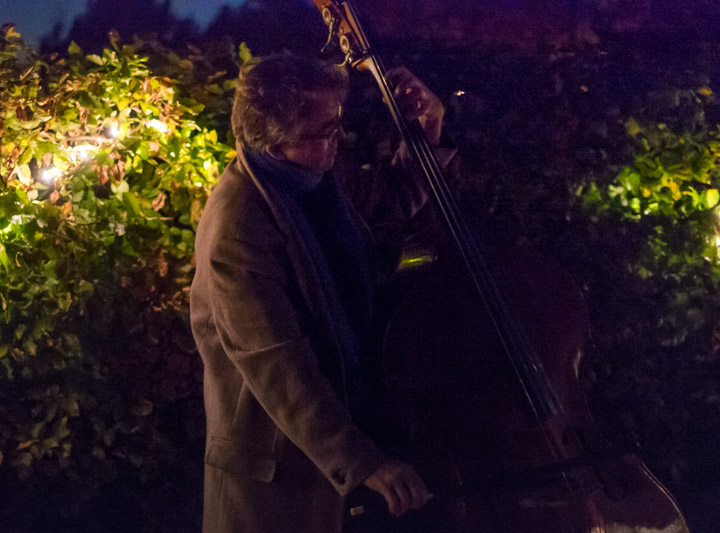
There is music of some sort; this year, the performers were scattered round the graveyard, synchronized somehow electronically, and the music was dreamy, full of sweet slow shifting shapes

Musician at the Night For All Souls Musician at the Night For All Souls

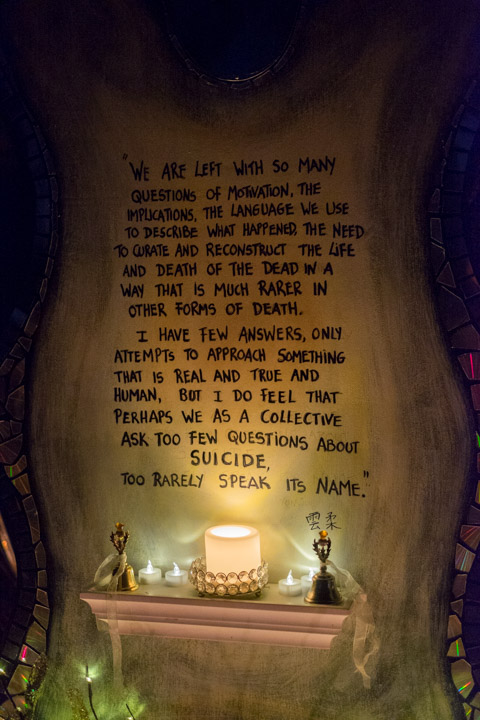
Some shrines are themed: I recall those dedicated to overdose, and to suicide.

Suicide-themed shrine at the Night For All Souls

There is a certain amount of spirituality but little overt religion.

Shrine at the Night For All Souls

I’m not spiritual in the slightest, but it’s not possible to be unmoved.

The Night For All Souls The Night For All Souls

It’s just lights in the dark for a while at the end of the day, but at the end of the day that’s all we can really hope to be.

24 Nov 23:12

The Best Coffee Makers

by Cale Guthrie Weissman
The Best Coffee Makers

For people want pour-over–quality coffee but the convenience of a one-button machine, we recommend the OXO On 9-Cup Coffee Maker. Over the years, we’ve tested nearly every method of coffee-making possible, from Chemex to cold brew, and we think the OXO On offers the best ratio of flavor to effort. But if you’re looking for an espresso machine, a coffee grinder, pour-over gear, or more, we have other recommendations.

24 Nov 23:05

The Best Wireless Charging Phone Mounts for Cars

by Nick Guy
The Best Wireless Charging Phone Mounts for Cars
Using a suction cup and/or adhesive, dash/windshield mounts can be attached to either surface, depending on which works best for you.

To wirelessly charge your phone in a car while keeping it in a place that’s safer and more convenient than, say, a cupholder, get the Kenu Airbase Wireless dash/windshield mount or the Kenu Airframe Wireless vent mount. We researched more than 30 wireless charging phone mounts and tested 20 and found that both of these have the best combination of fast charging, serious stability, and easy adjustability.

23 Nov 23:04

Samsung Galaxy S9+ May Boast Dual Rear Camera Setup

by Evan Selleck
Samsung has a positive streak with the Galaxy S8, Galaxy S8+, and the Galaxy Note 8, and it will look to capitalize on that next year. Continue reading →