Shared posts

16 Jan 23:11

Facebook is cutting out the human element of [tagging the photo]

by Andrea

NPR the two-way: Facebook Expands Use Of Facial Recognition To ID Users In Photos.

“Facebook is expanding its use of facial recognition software to alert users when photos of them are posted on the platform — whether or not they are tagged in the photo.

By default, Facebook users in the U.S. will be signed up for these face recognition alerts, unless they have previously opted out of a similar, more limited feature. But users can turn off face recognition, Facebook says.

Additionally, the company says it will roll out new tools to alert users if someone else may be impersonating them with a misleading profile photo.”

21 Dec 13:15

Bike rental companies aren’t collecting abandoned bikes because it’s too expensive: report

by Frank Hersey

Despite the transport commission’s demands that impounded bikes be collected by hire bike companies, the cost of doing so, potential per-bike fines when coming forward, and increasing regulation means the firms are staying away, according to an investigation by Q Daily (in Chinese). Piles of thousands of bikes can be seen on the edges of many […]

Bike rental companies aren’t collecting abandoned bikes because it’s too expensive: report originally appeared on TechNode

21 Dec 13:15

How To Sell Bitcoins

In 2013, I bought a few Bitcoins from a dude in a coffee shop, paying with hundred-dollar bills. Later that year I sold enough to get my money back. Then I forgot about them, Bitcoin’s price gyrations occasionally registering in a corner of my mind. But earlier this month I decided to find out if the remainder could be turned into real actual money, and it turned out they could. Here’s how.

Important note: This narrative applies specifically to exchanging BTC for Canadian dollars, in Canada. Some lessons may apply in other jurisdictions.

How I did it

There are a lot of people out there on the Net who are eager to sell you Bitcoins, but when you want to sell them back for hard cold cash, the offerings seem to thin out. If you’re in the States and go poking around, Coinbase often seems to come up top of the list. And in fact, when I publicized the fact that I was looking to sell, a few people pointed me at Coinbase.

Having said that, a lot of the names that would have turned up if you’d done the same research three years ago have left the stage, some in colorful circumstances, often leaving stakeholders’ digital wallets empty. So you want to be careful.

When I originally bought my digital cash, the Bitcoin-community dude who took my hundred-dollar bills recommended Blockchain.info as an online wallet provider, and I second the recommendation. They never surprised nor disappointed me, and I was pretty impressed with the quality of their clients and the seriousness of their security posture. In the unlikely event that I decide to go back into cryptocurrency, I’d use them again.

I quickly discovered that the most visible US buy/sell services don’t really extend across the 49th parallel. I was casting about, looking at Canadian operators, and getting kind of depressed because the whole territory is more than a bit on the sketchy side, and objective evidence that This Will Work For You is hard to come by. Then, one day at work, I overheard a conversation involving Jonathan, a colleague who’s buying a house, and he said “Yeah, I cashed in my Bitcoins to help with the down payment.” Which got my attention right away; I asked him how and who exactly, and he said he’d used Coinsquare.

Tl;dr: It worked. And here’s what I think is an important lesson: Whatever your cryptocurrency circumstances may be, if they involve real money, the best thing you can do is find someone you know personally who has done whatever you’re trying to do, and follow a well-blazed trail. And, I’d add, follow it quickly; because while it might work today, in the world of Bitcoin, who can say whether it’ll work tomorrow?

Details

When I want to try something new, I appreciate a step-by-step guide, so here you go:

  1. I set up a Coinsquare account. Other operators I’d investigated had elaborate and painful setup requirements, including FAXes and notaries and so on. Coinsquare offered “instant approval” and when I gave them a bunch of salient facts about myself, they came back after a couple seconds’ latency and said “OK, you’re approved.”

  2. I initially funded the Coinsquare account with a $100 bank transfer. I just wanted to verify to my satisfaction that my bank and Coinsquare could talk to each other. A repeating pattern first became obvious here: My $100 showed up in Coinsquare as $95. On this and every subsequent transaction, the intermediaries leaned in and took a cut.

  3. I transferred 0.1BTC from Blockchain.info over to Coinsquare; the BTC-ecosystem charge for this was tiny and felt appropriate, and they showed up in my account at Coinsquare way faster than I expected.

  4. I converted almost all the BTC to Canadian Dollars (CAD). I was a little troubled when Coinsquare rejected my 0.09BTC transaction as “too large”, but it accepted an 0.05BTC sale immediately followed by another of 0.04BTC.

  5. I requested a transfer of most of the output (roughly C$2,000) to my bank account, to establish that channel worked. Anyone who has transferred money between financial institutions knows the drill: The funds vanish from your account within microseconds of you pressing “Confirm”, then the sending institution sits on them for as long as they’re legally allowed to, then they do the actual transfer which takes another microsecond or two, then the receiving institution sits on them for as long as they’re legally allowed to, and then, some days later, the money lands in your account, often smaller than when you sent it, because “Service Charges”. In this case, my C$2K turned into C$1980. Damn, have I mentioned how much I love the finance industry?

  6. I poked around on Coinsquare and discovered their “wealth management” service, apparently aimed at high rollers, which had an attached email address, so I sent them a note saying “I want to sell quite a bit more than 0.1BTC for CAD, can you actually do this?” Almost immediately, the “concierge service” got back to me, saying “Transfer in the Bitcoin and we’ll give you a quote that’s good for ten minutes.” So I did, and they did (at several percentage points off the then-advertised price of Bitcoin), and I took it, and almost instantly, Coinsquare informed me that my account there contained a pleasing number of Canadian dollars.

  7. I fired off another wire-transfer request, and after the usual multi-day delay, and with the usual slight diminution in value, I had substantially left behind the role of “cryptocurrency investor”.

Elapsed time: About ten days.

Obviously, I was somewhat annoyed by the succession of grasping digital hands that reached into my digital wallet to extract their digital percentage every time I asked them to update a couple of fields in a database somewhere. But on the other hand, since I was selling the BTC for roughly sixty-four times my acquisition price, and I really wanted to get out of the market, I decided to go with the flow, as in the flow of dollars out of my crypto-pocket.

But I have to say, buying and selling cryptocurrencies is a good business to be in; I haven’t added up the numbers, but Coinsquare and my bank both got paid pretty well for doing some routine database updates.

Why I did it

I love Bitcoin. It is one of the most intellectually elegant constructs I have encountered in my decades in the computing profession. The system has multiple moving parts that work together, doing multiple different difficult things, to accomplish an effect that looks like it ought to be very useful. Whoever Satoshi is or was, I hope he she or they are still alive, sitting on a beach somewhere and enjoying their craftily-gotten gains.

But Bitcoin has descended into bad craziness. You can’t actually use it as money, because money needs to have a somewhat stable and predictable value. Also, its current global blockchain can only do a few transactions per second, so it obviously can’t underlie more than a tiny sliver of any commercial ecosystem.

Those who currently buy it are making the classic “Greater Fool” bet, i.e. that it’ll keep going up because it’s been going up, and some greater fool will come along and take it off their hands. This kind of bet can run much longer than anyone thinks is reasonable, but then someday the music stops and most players won’t find a chair to sit on.

Also, the concentration of Bitcoin ownership is worrying: Check out this story, and accompanying graph, over at ZeroHedge. You can bet that if (I mean when) Bitcoin deflates, the loss is going to be mostly soaked up by the people who’ve bought in recently, the 95%-plus of holders who collectively own less than 5% of BTC. What the graph doesn’t illustrate is the proportion of real non-crypto money that the 95% have injected into the market, and stands to be lost. I bet the answer is “most of it”.

To go all nerdy, I think that cryptocurrencies have a bright future, when transactions are based on something more scalable than proof-of-work, and when they are driven by a killer app that does something useful out of the box. One example might be Ripple.

Closing thoughts

I’m going to have to pay tax on this. Fortunately, since it’s a capital gain, the Canadian tax treatment should be favorable. But there may be bureaucratic difficulties, I have no idea how comfy the Canadian taxman is with this sort of thing.

If you’re in Bitcoin, now’s a good time to take money off the table. Yeah, who knows, it might go up a whole lot more, but then again it might not, and it would be totally unsurprising if there were a catastrophic deflation next Tuesday. And I’ve rarely met anyone who really regretted selling financial assets at a substantial profit.

Here’s the second important lesson: You can probably sell your Bitcoins, but you probably can’t sell them fast. So now might be a good time to start.

21 Dec 13:15

Twitter Favorites: [camcavers] How did they not think to name this app “Tender”? https://t.co/f86W4y1VyZ

Cam Cavers @camcavers
How did they not think to name this app “Tender”? twitter.com/CBCNews/status…
21 Dec 13:14

Twitter Favorites: [JohnIbbitson] Jiminy, this is good. Why Canada Is Able to Do Things Better - The Atlantic https://t.co/WjNvkDsx4n

John Ibbitson @JohnIbbitson
Jiminy, this is good. Why Canada Is Able to Do Things Better - The Atlantic theatlantic.com/business/archi…
21 Dec 13:14

The 2017 Stratechery Year in Review

by Ben Thompson

The slogan for Stratechery’s sister podcast, Exponent, is “Tech and Society”; never has that felt more appropriate than 2017. This year I wrote 136 Daily Updates (including tomorrow) and 46 Weekly Articles, and, as per tradition, today I summarize the most popular and most important posts of the year: tech and society figure prominently.

You can find previous years here: 2016 | 2015 | 2014 | 2013

Here is the 2017 list.

The Five Most-Viewed Articles

Stratechery not only had record traffic in 2017, but year-over-year growth was also the highest ever; unsurprisingly, the first three articles were in Stratechery’s all-time top five in terms of traffic (Amazon’s New Customer was number one by a long-shot), and the other two in the top twelve.

  1. Amazon’s New Customer — The key to understanding Amazon’s purchase of Whole Foods is to understand that Amazon didn’t buy a retailer: the company bought a customer.
  2. Microsoft’s Monopoly Hangover — There are striking similarities between Microsoft today and IBM in the Lou Gerstner era, but today’s IBM should be a warning to Redmond.
  3. Alexa: Amazon’s Operating System — Money is made at chokepoints, and the most valuable chokepoints are operating systems; Amazon has built exactly that with Alexa.
  4. Facebook and the Cost of Monopoly — Facebook gave one of the worst keynotes in a long time: there was no vision, just the adoption of Snap’s. It’s the inevitable outcome of a monopoly.
  5. The Uber Dilemma — Benchmark’s lawsuit against Uber is extraordinary; that is because Uber, despite everything, remains an extraordinary company. Game theory explains the implications.

Five Big Ideas

These five posts very much capture the biggest themes of 2017: the power of aggregators, one of the most important acquisitions in media history, Bitcoin, sexual harassment, and Apple and China.

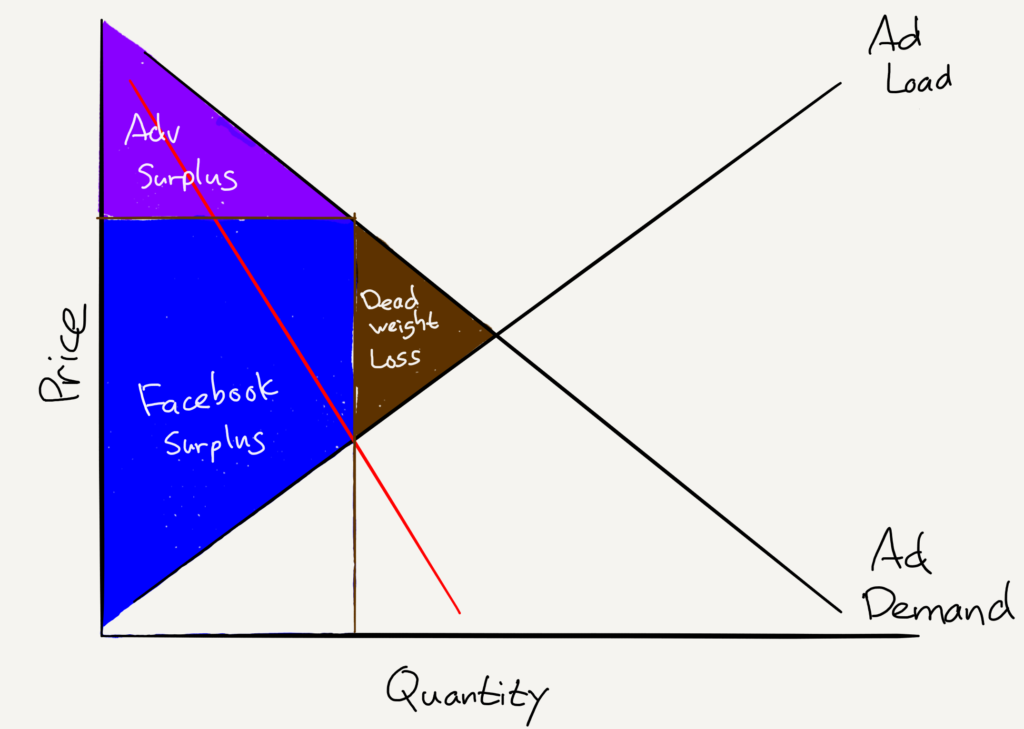
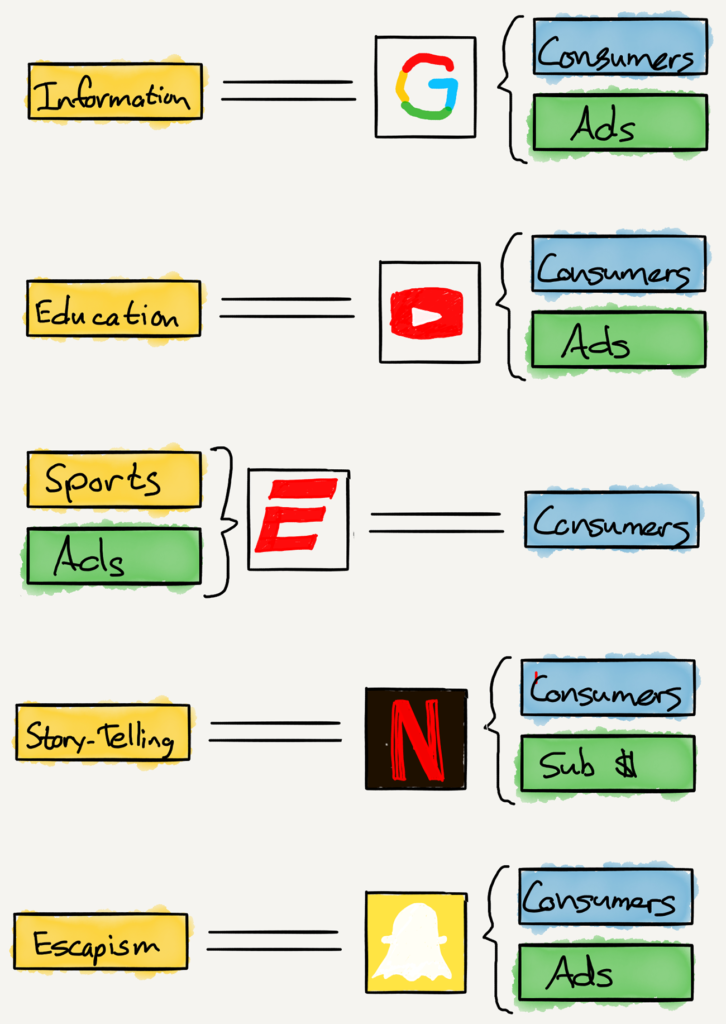
  • Defining Aggregators — Building on Aggregation Theory, this provides a precise definition of the characteristics of aggregators, and a classification system based on suppliers. Plus, how to think about aggregator regulation.
  • Disney and Fox — Disney’s rumored acquisition of 21st Century Fox is all about competing with Netflix; whether or not that is a good thing depends on your frame of reference. (See also, Disney’s Choice)
  • Tulips, Myths, and Cryptocurrencies — Did you hear the one about the tulip bubble? It’s almost certainly a myth. It is myths, though, that explain why cryptocurrencies are here to stay.
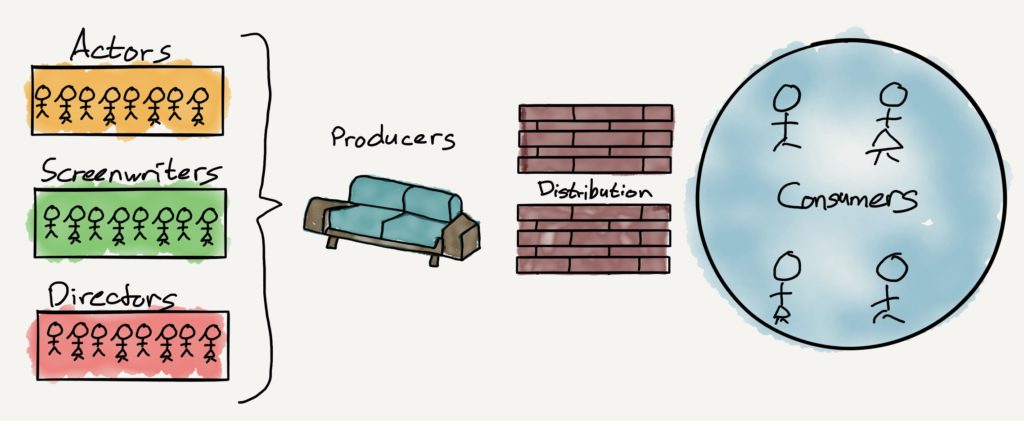
  • Goodbye Gatekeepers — Harvey Weinstein was a gate-keeper — a position that existed in multiple industries, including the media. That entire structure, though, is untenable on the Internet, and that’s a good thing.
  • Apple’s China Problem — Apple had mixed earnings: most of the world was great, but China was bad again. The reason is that in China WeChat matters more than iOS.

Five Posts About Technology and Society

The biggest theme of all, though, at least in technology, was the impact technology is having on society broadly, and how society might respond. At the center of everything was Facebook.

  • Manifestos and Monopolies — Facebook has long had too much power, but Mark Zuckerberg’s expressed willingness to use said power for political ends means it’s time to consider countermeasures (See also, the afore-linked Facebook and the Cost of Monopoly)
  • Tech Goes to Washington — Facebook, Google, and Twitter testified before a Senate committee: it provided evidence of how tech prefers power over decentralization, even if it means regulation.
  • Why Facebook Shouldn’t Be Allowed to Buy tbh — Facebook is acquiring tbh, another burgeoning social network; regulators erred in allowing the Instagram and WhatsApp acquisitions, but there is no better place to start enforcing the law than now.
  • Inspired Media — The key for products and politicians used to be maximizing paid and earned media. What matters on the Internet, though, is inspired media.
  • The Local News Business Model — Subscriptions are the future of local news: the key, though, is getting rid of newspapers (See also, Faceless Publishers)

See also: The Great Unbundling and the talk I gave at Recode Media:

The Year in Daily Updates

I am incredibly proud of the Daily Update this year: in my very biased opinion, in 2017 the depth and importance of Daily Updates easily matched Weekly Articles. Increasingly, Daily Updates were organized around a single company or topic, and often previewed themes that were later expounded on in Weekly Articles. Here are some of my favorites:

I also conducted four interviews for The Daily Update:

Finally, while I’m not sure if this will become an annual thing or not, for the first time I christened Tech’s Person of the Year: Susan Fowler. In addition, I have now made this Daily Update free to read — Fowler’s impact was extraordinary.


I can’t say it enough: I am so grateful to Stratechery’s readers and especially subscribers for making all of these posts possible. I wish all of you a Merry Christmas and Happy New Year, and I’m looking forward to a great 2018!

21 Dec 13:14

aijuboard

by Rui Carmo

This is completely off the wall, but I love the idea of someone doing dedicated hardware to run Plan9 in this day and age. It reminds me how far we strayed from the notions of distributed computing of yesteryear to the gigantic mess the Web turned out to be…

21 Dec 13:14

My Impossible Story

by Chris Lord

Keeping up my bi-yearly blogging cadence, I thought it might be fun to write about what I’ve been doing since I left Mozilla. It’s also a convenient time, as it coincides with our work being open-sourced and made public (and of course, developed in public, because otherwise what’s the point, right?) Somewhat ironically, I’ve been working on another machine-learning project, though I’m loathe to call it that, as it uses no neural networks so far, and most people I’ve encountered consider those to be synonymous. I did also go on a month’s holiday to the home of bluegrass music, but that’s a story for another post. I’m getting ahead of myself here.

Some time in March I met up with some old colleagues/friends and of course we all got to chatting about what we’re working on at the moment. As it happened, Rob had just started working at a company run by a friend of our shared former boss, Matthew Allum. What he was working on sounded like it would be a lot of fun, and I had to admit that I was a little jealous of the opportunity… But it so happened that they were looking to hire, and I was starting to get itchy feet, so I got to talk to Kwame Ferreira and one thing lead to another.

I started working for Impossible Labs in July, on an R&D project called ‘glimpse’. The remit for this work hasn’t always been entirely clear, but the pitch was that we’d be working on augmented reality technology to aid social interaction. There was also this video:

How could I resist?

What this has meant in real terms is that we’ve been researching and implementing a skeletal tracking system (think motion capture without any special markers/suits/equipment). We’ve studied Microsoft’s freely-available research on the skeletal tracking system for the Kinect, and filling in some of the gaps, implemented something that is probably very similar. We’ve not had much time yet, but it does work and you can download it and try it out now if you’re an adventurous Linux user. You’ll have to wait a bit longer if you’re less adventurous or you want to see it running on a phone.

I’ve worked mainly on implementing the tools and code to train and use the model we use to interpret body images and infer joint positions. My prior experience on the DeepSpeech team at Mozilla was invaluable to this. It gave me the prerequisite knowledge and vocabulary to be able to understand the various papers around the topic, and to realistically implement them. Funnily, I initially tried using TensorFlow for training, with the mind that it’d help us to easily train on GPUs. It turns out re-implementing it in native C was literally 1000x faster and allowed us to realistically complete training on a single (powerful) machine, in just a couple of days.

My take-away for this is that TensorFlow isn’t necessarily the tool for all machine-learning tasks, and also to make sure you analyse the graphs that it produces thoroughly and make sure you don’t have any obvious bottlenecks. A lot of TensorFlow nodes do not have GPU implementations, for example, and it’s very easy to absolutely kill performance by requiring frequent data transfers to happen between CPU and GPU. It’s also worth noting that a large graph has a huge amount of overhead that will be unrelated to the actual operations you’re trying to run. I’m no TensorFlow expert, but it’s definitely a particular tool for a particular job and it’s worth being careful. Experts can feel free to look at our repository history and tell me all the stupid mistakes I was making before we rewrote it 🙂

So what’s it like working at Impossible on a day-to-day basis? I think a picture says a thousand words, so here’s a picture of our studio:

Though I’ve taken this from the Impossible website, this is seriously what it looks like. There is actually a piano there, and it’s in tune and everything. There are guitars. We have a cat. There’s a tree. A kitchen. The roof is glass. As amazing as Mozilla (and many of the larger tech companies) offices are, this is really something else. I can’t overstate how refreshing an environment this is to be in, and how that impacts both your state of mind and your work. Corporations take note, I’ll take sunlight and life over snacks and a ball-pit any day of the week.

I miss my 3-day work-week sometimes. I do have less time for music than I had, and it’s a little harder to fit everything in. But what I’ve gained in exchange is a passion for my work again. This is code I’m pretty proud of, and that I think is interesting. I’m excited to see where it goes, and to get it into people’s hands. I’m hoping that other people will see what I see in it, if not now, sometime in the near future. Wish us luck!

21 Dec 13:13

Ultra Violet

by Volker Weber

ultraviolett

Bei der Vorstellung der neuen iPhones fiel mir ein Case besonders auf. Ich habe gleich nach der Farbe gefragt. Und dann las ich unlängst, dass Ultra Violet von Pantone zur Farbe des Jahres 2018 vorgestellt wurde. Von Apple gibt es einfach alles in Ultraviolet, etwa Silikonhüllen für iPhone, iPad und auch das Sport Band für die Apple Watch.

21 Dec 13:13

R⁶ Series — Random Sampling From Apache Drill Tables With R & sergeant

by hrbrmstr

(For first-timers, R⁶ tagged posts are short & sweet with minimal expository; R⁶ feed)

At work-work I mostly deal with medium-to-large-ish data. I often want to poke at new or existing data sets w/o working across billions of rows. I also use Apache Drill for much of my exploratory work.

Here’s how to uniformly sample data from Apache Drill using the sergeant package:

library(sergeant)

db <- src_drill("sonar")
tbl <- tbl(db, "dfs.dns.`aaaa.parquet`")

summarise(tbl, n=n())
## # Source:   lazy query [?? x 1]
## # Database: DrillConnection
##          n
##      <int>
## 1 19977415

mutate(tbl, r=rand()) %>% 
  filter(r <= 0.01) %>% 
  summarise(n=n())
## # Source:   lazy query [?? x 1]
## # Database: DrillConnection
##        n
##    <int>
## 1 199808

mutate(tbl, r=rand()) %>% 
  filter(r <= 0.50) %>% 
  summarise(n=n())
## # Source:   lazy query [?? x 1]
## # Database: DrillConnection
##         n
##     <int>
## 1 9988797

And, for groups (using a different/larger “database”):

fdns <- tbl(db, "dfs.fdns.`201708`")

summarise(fdns, n=n())
## # Source:   lazy query [?? x 1]
## # Database: DrillConnection
##            n
##        <int>
## 1 1895133100

filter(fdns, type %in% c("cname", "txt")) %>% 
  count(type)
## # Source:   lazy query [?? x 2]
## # Database: DrillConnection
##    type        n
##   <chr>    <int>
## 1 cname 15389064
## 2   txt 67576750

filter(fdns, type %in% c("cname", "txt")) %>% 
  group_by(type) %>% 
  mutate(r=rand()) %>% 
  ungroup() %>% 
  filter(r <= 0.15) %>% 
  count(type)
## # Source:   lazy query [?? x 2]
## # Database: DrillConnection
##    type        n
##   <chr>    <int>
## 1 cname  2307604
## 2   txt 10132672

I will (hopefully) be better at cranking these bite-sized posts more frequently in 2018.

21 Dec 13:13

New Surface Pen

by Volker Weber

InkedIMG 1929 LI

The Surface Pro 4 Pen and the new Surface Pen look very much alike. But the new pen is missing a clip and I was going to tell you that you can save some money and get the old one if you need a pen. Until I tried the new pen. It feels even better than the SP4 pen which is already pretty good. Now my advice is to bite the bullet and buy the new pen for Surface Pro. I am not sure about this but I think you need to have a new Surface Pro to benefit from the newer pen.

21 Dec 13:11

Statistics Canada Figures on Who is Buying What in Vancouver Real Estate

by Sandy James Planner

maxresdefault

Statistics Canada  and the Canada Mortgage and Housing Corporation released some new figures about housing in the Metro Vancouver market, and those statistics open up more questions about what is truly going on in this region. As Jen St. Denis writes in Metro News  buyers who don’t live in Canada like newer, bigger units are  buying a more costlier product that local resident  buyers. When Duke of Data and Simon Fraser University urbanist Andy Yan reviewed the figures, he found that new condo units started between 2016 and 2017 had a much higher percentage of non-resident owners. In Vancouver 19 per cent of these condo units were owned by non-resident buyers; the numbers were 24 per cent in Richmond and 23 per cent in Coquitlam.

Only 11 per cent of Vancouver condo units built between 2001 and 2005 were owned by non-resident buyers; 11 per cent in Richmond and 6 per cent in Coquitlam.

The City of Vancouver is embarking on a new Ten Year Housing Program to build and densify neighbourhoods and provide more of the “missing middle” of housing, often in the form of townhousing. But as Andy Yan observes, Vancouver is experiencing the “hyper-commodification” of real estate, and  those townhouses being built for local families are proving to be very attractive to foreign owners. Between 2016 and 2016 187 townhouses were built in Vancouver. Of that 21 townhouses or  22 per cent of those new townhouse builds, over one fifth of that housing stock went to non-resident owners. The benchmark price for a townhouse is $861,900 in East Vancouver and $1.2 million on Vancouver’s west side, suggesting that the policy may need to be rethought about who is going to live in these and how they are going to afford them.

“The numbers are part of an effort by Statistics Canada and CMHC to collect and analyze more data on Canada’s housing market. In recent years, enormous price spikes in Vancouver and Toronto have led economists and housing experts to question how much of that effect is due to money flooding in from overseas sources. But a lack of data has stymied efforts to quantify the phenomenon.” 

Questions are still being raised about the figures themselves, as some economists have been suggesting that the foreign money needs to be tracked, not just the foreign buyer who does not live in Canada and pay tax elsewhere. These figures do not include the flipping of property titles prior to building occupancy permits, or show when non-resident buyers purchase property in someone else’s name. In Metro Vancouver, non-residents own condos that are worth on average $161,200 more than those owned by full-time Vancouver residents, while single detached homes owned by non-residents were worth $707,800 more than those owned by residents.” 

And in Vancouver itself non-residents like the most expensive parts of West Vancouver and the area inclusive of the University of British Columbia’s endowment lands. The statistics suggest some sobering realities of non-residents’ buying power and interests in the property market. However it does not track or  follow the trail of foreign money in real estate market transactions. That analysis may reveal more.

screen-shot-2017-12-19-at-11-26-05-am

Source: Metro News, Andy Yan


21 Dec 13:11

Work Futures Daily - Uber Hits A Wall

I am looking forward to some time off next week – and The Last Jedi this weekend – but...
21 Dec 13:11

Clean CSS with Stylelint

by Dries

Last night I was working on the album functionality for this website. CSS is not my strong suit, so I wanted to get some help from a CSS linter. A CSS lint tool parses your CSS code and flags signs of inefficiency, stylistic inconsistencies, and patterns that may be erroneous.

I tried Stylelint, an open source CSS linter written in JavaScript that is maintained as an npm package. It was quick and easy to install on my local development environment:

$ npm install -g stylelint stylelint-config-standard stylelint-no-browser-hacks

The -g attribute instructs npm to install the packages globally, the stylelint-config-standard is a standard configuration file (more about that in a second), and the stylelint-no-browser-hacks is an optional Stylelint plugin.

Stylelint has over 150 rules to catch invalid CSS syntax, duplicates, etc. What is interesting about Stylelint is that it is completely unopinionated; all the rules are disabled by default. Configuring all 150+ rules would be very time-consuming. Fortunately you can use the example stylelint-config-standard configuration file as a starting point. This configuration file is maintained as a separate npm package. Instead of having to configure all 150+ rules, you can start with the stylelint-config-standard configuration file and overwrite the standard configuration with your own configuration file. In my case, I created a configuration file called stylelint.js in my Drupal directory.

"use strict"

module.exports = {
  "extends": "stylelint-config-standard",
  "plugins": [
    "stylelint-no-browser-hacks/lib"
  ],
  "rules": {
    "block-closing-brace-newline-after": "always",
    "color-no-invalid-hex": true,
    "indentation": 2,
    "property-no-unknown": true,
    "plugin/no-browser-hacks": [true, {
      "browsers": [
        "last 2 versions",
        "ie >=8"
      ]
    }],
    "max-empty-lines": 1,
    "value-keyword-case": "lower",
    "at-rule-empty-line-before": null,
    "rule-empty-line-before": null,
  },
}

As you can see, the configuration file is a JSON file. I've extended stylelint-config-standard and overwrote the indentation rule to be 2 spaces instead of tabs, for example.

To check your CSS file, you can run Stylelint from the command line:

$ stylelint --config stylelint.js --config-basedir /usr/local/lib/node_modules/ css/album.css

In my case it found a couple of problems that were easy to fix:

Stylelint album css

For fun, I googled "Stylelint Drupal" and found that Alex Pott has proposed adding a Stylelint configuration file to Drupal core. Seems useful to me!

21 Dec 13:11

Hardgraft hat schöne Sachen

by Volker Weber

Sketch

Johannes suchte ein Sleeve für sein iPad Pro 10.5, möglichst mit Schlaufe für Apple Pencil. Das war eine meiner Empfehlungen. Es geht auch billiger, aber das ist dem Gerät nicht angemessen.

21 Dec 13:11

Sleep Tracker für die Apple Watch

by Volker Weber

392x696bc 392x696bb

Die Apple Watch kann alles mögliche, aber bisher nicht den Schlaf überwachen. Das würde ich gerne mal ausprobieren. AutoSleep sieht vielversprechend aus. Kennt das jemand oder hat eine bessere Idee?

21 Dec 13:11

Introduction to Psychology with Professor Paul Bloom

files/images/more_modern_browser.JPG

Paul Bloom, Yale University, Dec 23, 2017


Icon

Interesting project. According to the email, "Knowledge 4 All Foundation together with the UNESCO Chair in OER in Slovenia is testing a new machine translation service specifically tailored for educational texts from EN to 11 languages." This is one of two videos they're using as a test case (Physics I: Classical Mechanics is the other). Now they want your feedback on how well the translation worked. "We need your help to answer a short survey that is available under each video and at the top of the course," writes Igor Lesko in the email. "Your answers will help us understand how valuable this product would be to other users. You can select the languages in the video player by clicking on the CC button." Note that you'll need to be able to run Flash; the site refused to run the video for me and suggested I use a "more modern browser."

[Link] [Comment]
21 Dec 12:56

Google Building Hardware Team in Shanghai with Focus on Phones and Google Home

by Rajesh Pandey
A new report from The Information suggests that Google is building a new hardware team in Shangai that will focus on the development of smartphones and Google Home. The company has increased the number of engineers in its Shanghai office from 20 to 150 in just a year. Most of the new engineers previously worked at Apple or Amazon and have excellent experience in hardware and supply chain management. Continue reading →
21 Dec 12:56

Android Apps Must Have 64-Bit Support by August 2019

by Rajesh Pandey
Google today announced that starting from August 2019, Android apps will need to support 64-bit chipsets. While Google added 64-bit support to Android with the release of Android 5.0 Lollipop in 2015, developers were under no compulsion to add support for them. Continue reading →
20 Dec 05:35

How to Design for iPhone X (Without an iPhone X)

by Federico Viticci

Great analysis by Sebastiaan de With on how they redesigned Halide for the iPhone X (the app indeed turned out to be one of the best iPhone X app updates we've seen so far):

Design for ergonomics. On regular iPhones, you have to do much less as a designer to optimize ergonomics. The iPhone X requires you to think about comfortable button placement and usability. Ergonomics is more than just tapping, but also swiping and other gestures. Lay out your UI so all actions are accessible and as comfortably usable as possible.

It’s a whole new device: Design for it. Everyone can stretch an app out to a larger screen, but just like the iPad, a fresh approach is not only welcomed but helps you stand out in the App Store. This is a great time to validate your current design. Are your approaches still valid? Is there a better solution possible? You might come to some valuable insights that you can apply to all your designs, not just the ones for the shiny new device.

If you're a developer working on iPhone X UI updates, don't miss Sebastiaan's map visualization of the device's display.

→ Source: blog.halide.cam

20 Dec 05:31

Hover’s 2017 – A Year in Review

by James Koole

The end of 2017 is rapidly approaching, and our Product and Development teams are enjoying a couple of weeks off to recharge and get ready for the challenges that 2018 will bring.

With that in mind, it seemed like a good time to reflect on all the changes and improvements they brought to Hover over the course of the year.

New Control Panel!

The year started off with a big push to get the completely new Hover Control Panel completed and rolled out to all customers. We officially cut over all customers to our new Control Panel in June after a few months in a “preview” to get the bugs worked out.

The new Control Panel was a multiple-year effort involving our Product, Design, UX and Development teams! All the work done lays down a strong foundation on which we can continue to add new features that make it easier and faster to manage your Hover domains and services.

Lots of User Testing

During the months-long “preview” phase, we improved the user experience for numerous areas of the Control Panel based on extensive user testing and feedback from customers. We also improved navigation on smaller screens (phones/tablets) with a new mobile menu.

Special thanks to everyone who provided feedback through emails to our Support team or via tweets or other channels. We also really appreciate all those who took time to answer one of our surveys or participate in interviews with our UX team.

Bulk Tools, Improved Domain Management

With the new Control Panel launched, the summer months were focused on adding a new bulk tools system and multiple new bulk tools for things like domain contact updates, toggles of auto-renew and transfer lock settings, and name server changes. Plus we added the ability to set your own default name servers for all new domain registrations and a clearer way to manage your default WHOIS contact.

TLD-specific updates included support for ICANN’s new trades process, and we also added support for updating owner contacts on .ca domains meaning Canadians no longer needed to call or email support to update certain contacts.

Tiered Price Domains and New TLDs

In the fall, Hover rolled out complete support for Tiered Price domains (aka Registry Premiums) including new registrations, renewals and transfers in. This greatly increases the number of domains available in our domain search and provides more choice and options when looking for the perfect domain for your passion or business.

We enabled the usual crop of new gTLDs over the course of the year, although the pace of new gTLD launches was quite slow this year compared to the previous years. The entire domain industry awaits the next big batch of new gTLD launches coming in the next couple of years.

Better Emails, More Security and New Ways to Pay

Starting early in 2017 and continuing through the summer and fall, we moved to a new system for our transactional (i.e. non-marketing) emails. All Hover emails are now in HTML, and we rewrote and rethought all of the information in each email to provide more or better information and clear calls to action wherever possible.

On the security front, we added a “new sign in notification via email” option and we also updated the PIN verification system that the Hover Support Team uses to support 2FA. That allows us to provide faster, more effective support to customers with 2FA enabled.

And last but not least, early in the year we also added support for Apple Pay on the Web which makes it super easy for customers to checkout and pay. Customers can pay for Hover domains and services with all major credit cards, PayPal, and now Apple Pay.

20 Dec 05:30

E.P.A. Delays Bans on Uses of Hazardous Chemicals

by SHEILA KAPLAN
Despite earlier warnings about the dangers, the agency will indefinitely postpone bans on three chemicals used in paint strippers, and in dry-cleaning and degreasing agents.
20 Dec 05:26

Thoughts on David Donoho’s "Fifty Years of Data Science"

Note: This post was originally published as part of a collection of discussion pieces on David Donoho’s paper. The original paper and collection of discussions can be found at the JCGS web site.

Professor Donoho’s commentary comes at a perfect time, given that, according to his own chronology, we are just about due for another push to “widen the tent” of statistics to include a broader array of activities. Looking back at the efforts of people like Tukey, Cleveland, and Chambers to broaden the meaning of statistics, I would argue that to some extent their efforts have failed. If you look at a textbook for a course in a typical PhD program in statistics today, I believe it would look much like the textbooks used by Cleveland, Chambers, and Tukey in their own studies. In fact, it might even be the same textbook! Progress has been slow, in my opinion. But why is that? Why can’t statistics grow to more fully embrace the many activities that Professor Donoho describes in his six divisions of “Greater Data Science”?

One frustration that I think many statisticians have in discussions of data science is that if you look at each of the six divisions that Donoho lays out—data exploration, data transformation, computing, modeling, visualization, and science of data science—statisticians do all those things. But the truth is, we do not teach most of them. Over the years, the teaching of statistics has expanded to include topics like computing and visualization, but typically as optional or ancillary courses. Many of the activities on Donoho’s list are things that students are assumed to “figure out on their own” without any formal instruction. Asymptotic theory, on the other hand, requires formal instruction.

In my own experience, the biggest challenge to teaching the areas of Greater Data Science is that it is difficult and can be very inefficient. Ultimately, I believe these are the reasons that we as a field choose not to teach this material. Many of the areas in the six divisions, data exploration and transformation, can be frustratingly difficult to generalize. If I clean up administrative claims data from Medicare and link them to air pollution data from the Environmental Protection Agency, does any of the knowledge I gain from those activities apply to the processing of RNA-seq data and linking it with clinical phenotypes? It’s difficult to see any connection. On the other hand, both datasets will likely serve as inputs to a generalized linear model. Rather than teach one course on cleaning administrative claims data and another course on processing RNA-seq data, consider how many birds can be hit with the three stones of an exponential family, a link function, and a linear predictor? Furthermore, the behavior of generalized linear models can be analyzed mathematically to make incredibly useful predictions about the variability of their estimates.

The lack of a formal framework for “data cleaning” reduces the teaching of the subject to a parade of special cases. While each case might be of interest to some, it’s unlikely that any case would be applicable to all. In any institution of higher learning with finite resources, it’s impossible to provide formal instruction on all the special cases to everybody who needs them. It’s much more efficient to teach the generalized linear model and the central limit theorem.

Is the lack of a formal framework for some areas of data science attributable to some fundamental aspect of those topics, or does it arise simply from a lack of trying? In my opinion, the evidence to date lays the blame on our field’s traditional bias towards to use of mathematics as the principal tool for analysis. Indeed, much of the interesting formal work being done in data cleaning and transformation makes use of a completely different toolbox, one largely drawing from computer science and software engineering. Because of this different toolbox, our field has been blinded to recent developments and has missed an important opportunity to cultivate more academic leaders in this area.

Professor Donoho rightly highlights the work of Hadley Wickham and Yihui Xie, both statisticians, who have made seminal contributions to the field of statistics in their development of the ggplot2, knitr, dplyr, and many other packages for R. It is notable that Wickham’s paper outlining the concept of “tidy data”, a concept which has sparked a minor revolution in the field of data analysis, was originally published in the Journal of Statistical Software, a nominally “applied” journal. I would argue that such a paper more properly belongs in the Annals of Statistics than in a software journal. The formal framework offered in that paper has inspired the creation of numerous “tidy data” approaches to analyzing data that have proven remarkably simple to use and understand. The “grammar” outlined in Wickham’s paper and implemented in the dplyr package serve as an abstraction whose usefulness has been demonstrated in a variety of situations. The lack of mathematical notation in the presentation of dplyr or any of its “tidyverse” relatives does not make it less useful nor does it make it less broadly applicable.

Finally, it is worth a comment that the people that Professor Donoho cites as driving previous pushes to widen the tent of statistics either did not initially come from academia or at least straddled the boundary. Cleveland, Chambers, and Tukey all spent significant time in industry and government settings and that experience no doubt colored their perspectives. Moving to today, it might just be a coincidence that both Wickham and Xie are employed outside of academia by RStudio, but I doubt it. Perhaps it is always the case that the experts come from somewhere else. However, I fear that academic statistics will miss out on the opportunity to recruit bright people who are making contributions in a manner not familiar to many of us.

20 Dec 05:26

Predictions 2017 – How’d I Do This Year?

by jbat

Every year, I make predictions, and every year, I score myself. As I wrote nearly 12 months ago, 2017 felt particularly unpredictable. As it turns out, my musings were often on target. Except when they weren’t…

I’ve played with all manners of scoring over the years, but this year I’m going with a straight zero to ten rating. Zero if I whiffed entirely, ten if I hit it out of the park, and some kind of partial credit in between. Then add ‘em up, divide by the number of predictions, and that’ll be my overall batting average.

So let’s see how I did. I made ten predictions, so to each in turn….

#1: The bloom comes off the tech industry rose. I believe I hit this one out of the park. The backlash is at such a fever pitch, it seems tech has been crucified forever, but I peg the beginning of the end at Susan Fowler’s astonishing takedown of Uber, which was posted in mid February of 2017. Not only did her revelations precipitate the fall of Travis Kalanick and set the tone for the #MeToo movement in tech, it also gave the press an antagonist it could truly villainize, which set the stage for later takedowns of Facebook, Google, Amazon, and Apple. Multiple books (the FourWorld Without Mind, etc) piled on, as did the Russia/Facebook sh*tshow (and hearings), and the concerns of former tech engineers like Tristan Harris, whose “Time Well Spent” movement broke out in 2017. Overall, it was one hell of a bad year for tech (and to be honest, tech brought it on itself), and my words in January certainly rang true: “2017 will be the year the industry is cast as a villain — for its ravenous and largely opaque data collection practices, its closed and self-serving approach to its own platforms, and its refusal to acknowledge or address the very real externalities…created by its products and services.”Score: 10 of 10.

#2: The conversation economy breaks out. This one is harder to judge. You may recall that a year ago, chatbots were all the rage, and voice-based interfaces like Alexa and Google Home were a novelty. One year later, chatbots have faded (but “appbots” are on the rise), and voice-driven systems have secured a place in our shared culture. That was a fast rise, comparatively speaking. In my post, I wrote: “Combine smart chat with voice, and … well, we’ll start to see a new UX for the web.” I still think that’s true, and we’ve had a year of very promising developments. But was it a breakout year? History alone will tell. Score: 5 of 10.

#3. Open starts to win again. Oh boy. Every year I have what you might call an aspirational post, in that I very much hope it will come true, but I’m pretty sure it won’t come true. What I do know, however, is that in 2017, the table was well and truly set for open approaches to make a comeback. The reason? Well, see #1: Tech’s gotten too big, and too powerful, and the best way to dissemble that power is a swing back to open data (see this post for more). I remain firmly convinced that open is on the rise. But I don’t have much proof that 2017 is the year that trend began “to win again.” I wrote a year ago: “This year won’t be a turning point in this battle, but it will show meaningful progress.” It’s true that Amazon, Google, and Apple managed to settle their differences, and Microsoft Cortana laid down with Alexa, (and this) but…a dramatic proof of my thesis did not emerge this year. Score: 4 of 10.

#4. Privacy will become a strong product category. I didn’t exactly predict the Equifax, Verizon, Uber, and scores of other data breaches which occurred this year, but they certainly reinforced my premise for prediction #4: Privacy is now front and center for all businesses and consumers. The question remains, however, if anyone will actually make a decent product suite that protects our privacy. Certainly in the business to business realm, privacy as a product boomed this year (there’s not a board in the world that didn’t authorize more spend for security this year). But last year I wrote: “But fear of cyber warfare, fraud, and over-reaching marketers and government will create huge openings for consumer friendly versions of currently opaque products like PGP, password managers, and the like.” Well, the openings are there. But the products? Not so much. Yet. Score: 7 of 10.

#5. Adtech has a ripper of a year. OK, there has to be one that was pretty much a whiff, and this one is likely it. I am still an adtech bull, and the market still grew, if mainly led by Facebook, Amazon, and Google. But the independent adtech business did not have a ripper of a year, instead, it was a year of retrenching, mostly. Yes, good growth and strong business, but not the breakout I had predicted. Score: 2 of 10.

#6. Apple releases a truly bad hardware product. Damn, if only Apple hadn’t pulled its HomePod product this year! Because if it had actually released it, it would have laid a massive egg, I’m sure of it (the company simply does not have the AI, voice recognition, and software chops). Instead, Apple was wise enough to realize it had a dud on its hand, and delayed what would have been a stinker of a consumer product. I even predicted it would be the HomePod that lays the egg…maybe someone at Apple reads me? In any case, I think I should get partial credit here, because besides predicting a bad release (the Watch release was pretty bumpy, after all), I also predicted 2017 would be the year the press turns on Apple, and that Apple would respond by acting like a typical corporation (repatriating cash to curry favor, buying companies to enter new markets, etc). It’s well on its way to doing just that (just bought Shazam, for example, and isn’t exactly fighting the tax bill). Score: 6 of 10.

#7. A Fortune 100 company will announce its intention to become a B Corp. Nope. Wishful thinking. Despite Paul Polman *sounding* like the CEO of a B Corp on Twitter all year long, this did not happen. Move along, nothing to see here. Score: 0 out of 10.

#8. President Trump leaves Twitter. Ha! He was kicked off by a mischeivious contractor, for ten whole minutes! I was…wrong. It’s true, debate did rage about why the president *should* be kicked off, and there’s still a few days left for Trump to decide he’s bigger than the blue bird, but besides that technicality, for which I am giving myself at least partial credit, this did not happen. SAD! Score: 2 of 10

#9. Snap soars — then sours. This is where a picture is worth a thousand words:

Score: 10 of 10.

10. Human connection commands a premium in the workforce. In this prediction I also wrote: “In 2017, we’ll come to realize that we’re valuing the wrong things, and start a conversation about paying people to connect with each other — because if we can automate the other stuff, why the heck wouldn’t we value each other more?! Related: The conversation around Universal Basic Income (or my preferred term, the Citizens’ Dividend) will become white hot.” So it’s complicated, but I think overall the conversation around the future of work and UBI did become white hot, and we did see a marked shift toward valuing human connection in the workplace. However, it’s rather hard for me to prove that inside of just this year. As with a few of my predictions, only time will tell. So I’ll score myself a partial win on this one. Score: 6 of 10.


So pulling back, how did I do, overall? Two whiffs (Adtech, B Corps), two home runs (tech backlash, Snap), three that were largely wins, one push, and two that were partial credit. Better than 50% — a score of 52 on a total of 100 points. Not terrible — about average over my nearly 15 years of doing this, stellar if you’re a major leaguer (of course, an “F” without a curve…). Regardless, I always have fun both making these predictions, and scoring myself against them twelve months later. I am honored that you take time to read my work, and I’ll be back early in the new year with predictions for 2018. Util then, have a great holiday season, everybody!

Related:

Predictions 2017

Predictions 2016

2016: How I Did

Predictions 2015

2015: How I Did

Predictions 2014

2014: How I Did

Predictions 2013

2013: How I Did

Predictions 2012

2012: How I Did

Predictions 2011

2011: How I Did

Predictions 2010

2010: How I Did

2009 Predictions

2009 How I Did

2008 Predictions

2008 How I Did

2007 Predictions

2007 How I Did

2006 Predictions

2006 How I Did

2005 Predictions

2005 How I Did

2004 Predictions

2004 How I Did

20 Dec 05:24

Stomp on the mystery box

Blog » First, go and watch The Force Awakens and The Last Jedi. J. J. Abrams has this storytelling device which he uses, which he calls a "mystery box". Me just telling you those two words, and then pausing for a little while as you think about all of the works of J. J. Abrams you've ever seen, might be enough for you to work out what a "mystery box" is all by yourself. The basic idea, upon which he elaborates in this TED talk, is that you, the writer of the story, construct an elaborate mystery which causes the audience to ask questions. You construct figurative or, quite commonly, real impenetrable barriers in the story — an opaque "box" — and don't show what's inside the box, and then you make it really important to know what's inside the box. A few great examples are: the locked hatch in the first season of Lost the purpose of the works of Milo Rambaldi in Alias Rey's parentage in The Force Awakens Snoke's identity and origins in The Force Awakens Having constructed this mys...
20 Dec 05:24

SM needs a heart | Malaya Business Insight - Malaya


SM needs a heart | Malaya Business Insight
Malaya
'Tanglao's case touched the heart of many except SM.'

and more »
20 Dec 05:24

Dynamicland

by Bret Victor

Dynamicland: incubating a humane dynamic medium

20 Dec 05:23

Fatal crash forces complete closure of Burrard Bridge

mkalus shared this story from Comments on: Fatal crash forces complete closure of Burrard Bridge.

VANCOUVER (NEWS 1130) – The first real snowstorm of the season has hit much of southern BC, causing flight delays, power outages and traffic snarls.

But Environment Canada has ended its snowfall warning for Vancouver, including the North Shore, northeast areas including Coquitlam and Maple Ridge, southeast areas including Surrey and Langley and the southwest cities of Richmond and Delta. A snowfall warning continues for many eastern parts of the Fraser Valley.

Just because the snow has stopped falling doesn’t mean the streets and roads are clear.

“It’s going to last until about midnight tonight,” says Matt MacDonald with Environment Canada, “so be prepared for that afternoon commute home. It’s probably going to be a slick one.”

As for how much of that snow will stick around, NEWS 1130 Meteorologist Russ Lacate says it’s difficult to say.

“Based on the fact that the ground is saturated, the freezing level isn’t going to sag low until later in the day, it’s the cold, swirling outflow wind that is the biggest determining factor,” he says. “So because of that, estimates are for five to 10 centimeters of wet snow on the ground in the valley by this evening, considerably less in Metro Vancouver, maybe one to five centimeters over higher ground.”

Power outages 

BC Hydro says snow and freezing rain have impacted thousands of customers across northern and southern Vancouver Island. Since 5:00 a.m. more than 75,000 customers have had power restored on Vancouver Island. Thousands of homes and businesses have also been without power on the Lower Mainland and Sunshine Coast.

Airports hit hard

Heavy snow has caused flight delays and cancellations at Vancouver International Airport.

Some passengers have reported being stuck on planes on the runway for five hours.

YVR has deployed their winter operations team, and is working to keep the planes free of ice. The status of all departing flights can be found here.

Meanwhile, Victoria International Airport experienced a significant power outage thanks to snow and freezing rain.

While the outage itself caused only minor delays, all retail store at YYJ were closed, and the airport was operating on emergency power.

Power was restored around 3:00 p.m.

Also, Harbour Air Seaplanes has cancelled all remaining flights for today because of the weather. Anyone who needs to cancel a reservation or re-book for another day is advised to call 1-800-665-0212.

Warming centres open Wednesday

Three temporary warming centres in the City of Vancouver will be activated starting December 20. Warming centres are activated when the temperature reaches -5°C or below (or it feels like -5°C or below).

Warming centres at the following locations will remain open to December 27:

  • Britannia Community Centre – 1739 Venables Street (9pm-8:30am)
  • Carnegie Community Centre – 401 Main Street (11:15pm – 7am)
  • West End Community Centre – 870 Denman Street (11pm – 7am)

Those looking for shelter space can call 2-1-1 to check availability or a full list of shelters is available here. Community centres and other public buildings are also available during their open hours as spaces to warm up.

Coquihalla Highway could get over a foot of snow

It’s a much snowier outlook for other parts of southwestern BC.

Some 30 to 40 centimetres is expected to fall over the Coquihalla Highway between Hope and Merritt, and Highway 3 between Hope and Princeton by Wednesday morning.

An Environment Canada winter storm warning is in place for those areas. Road closures have occurred on the Coquihalla southbound because of spun-out vehicles, and drivers are advised to consider postponing non-essential travel until conditions improve.

Snowfall warnings are also in place for the Fraser Valley today, including Chilliwack, Hope, and Abbotsford.

Police keep close watch

Mounties that patrol Highway 1 through Abbotsford and the rest of the Fraser Valley have been out in force.

“We have CVSE (Commercial Vehicle Safety and Enforcement) out on the hills that are going to be checking to make sure first of all that the commercial vehicles are chaining up as required,” says Staff Sergeant Reinhold Weissbock.

“Also, we’re going to be checking that the travelling public are properly equipped with the proper snow tires and things like that.”

He adds it only takes one accident to cause major slowdowns along the highway.

Some schools closing early

Because of the heavy snow, all students and staff at Simon Fraser University’s Burnaby Campus were instructed to leave, effective 1 p.m. Tuesday.

Students who have afternoon classes there will not be required to attend them. Normal operations are expected to resume tomorrow.

SFU’s Vancouver and Surrey campuses are so far unaffected by the storm.

Notre Dame Regional Secondary in East Vancouver was closing early. No decision had been made about Wednesday’s operations.

3:30 p.m. exams at UBC Point Grey were cancelled because of the weather. 7:00 p.m. exams at the campus will proceed as scheduled.

On Vancouver Island meanwhile, schools in district 69 are being closed early because of a widespread power outage. This affects Kwalikum Secondary School, Arrowview Elementary, Errington Elementary, L’Ecole Oceanside Elementary, and Nanoose Bay Elementary.

TransLink, municipalities get into winter mode

TransLink says it’s preparing to call in extra staff if necessary, and has de-icer ready for trolley bus wires and SkyTrain tracks when the temperature drops.

The company previously announced changes to its winter plans following last year’s transit trouble, including testing kevlar tire socks for buses on Burnaby Mountain and heat tracing and cover boards for the Canada Line’s power rail.

A full list of TransLink delays can be found here.

Municipal crews were out all day Monday laying brine on the roads, but those operations can’t continue when it’s raining.

“We’re outfitting some of those pieces of equipment that normally have a duel purpose… they’re now being prepared and getting ready to shift over in the event we see some snow,” says Brian Carter with the city of Burnaby.

He adds they will have plenty of road salt available to avoid the notorious shortages of last winter.

“We’ve made sure we have enough contracts in place to secure the quantities above and probably beyond the average year just because of last year’s event,” Carter says.

Burnaby, Coquitlam and Maple Ridge all have ploughs and sanders at the ready, but are asking home and business owners to do their part to clear sidewalks.

“Get out there right away. Shovel your sidewalks. Kids need to be able to walk safely to school for the rest of this week,” Maple Ridge spokesperson Fred Armstong says.

20 Dec 05:23

X-Ray: 1914

by Dave
mkalus shared this story from Shorpy | #1 Old Photos - Framed Prints.

"Ray Weishaar, winner of 100-mile race at Norton, Kansas. October 22, 1914. Time 2 hr. 1½ min. World record." Lawrence Ray Weishaar (1890-1924), the "Kansas Cyclone" and rider for the Harley-Davison "Wrecking Crew," died at the age of 33 after crashing his bike during a race in Los Angeles. View full size.
20 Dec 05:22

Google Chrome browser will start blocking ‘bad ads’ in February

by Bradly Shankar
Google Chrome app on Android

Google has announced that its Chrome browser will block ads that violate its policies starting on February 15th, 2018.

These kinds of “bad ads” are determined by the Coalition for Better Ads, a consortium that Google founded back in September 2016, and can include ones that automatically play video with sound, those that expand to the whole page and anything that leads a user to visit a site under false or unclear pretenses.

Google says that Chrome will also remove all ads from sites that have a “failing” status in the Ad Experience Report for over 30 days, starting February 15th.

Back in April, reports suggested Google was working on a Chrome ad-blocker, although it was unclear at the time if the feature would ever see an official release.

The ad-blocker is part of Google’s larger effort to reduce the amount of these low quality ads on the web. Last year alone, the company says it removed 1.7 billion ads that violated its policies, up from 780 million the year prior.

Source: Google Via: VentureBeat

The post Google Chrome browser will start blocking ‘bad ads’ in February appeared first on MobileSyrup.