Shared posts

29 Jan 21:52

Remove all the tracking widgets? Maybe not.

Good one from Mark Pilipczuk: Publisher Advice From a Buyer.

Remove all the tracking widgets from your site. That Facebook “Like” button only serves to exfiltrate your valuable data to an entity that doesn’t have your best interests at heart. If you’ve got a valuable audience, why would you want to help the ad tech industry which promises “I can find the same and bigger audience over here for $2 CPM, so don’t buy from the publisher?” Sticking your own head in the noose is never a good idea.

That advice makes sense for the Facebook "like button." That button is just a data shoplifter. The others, though? All those extra trackers come in as side effects of ad deals, and they're likely to be contractually required to make ads on the site saleable.

Yes, those trackers feed bots and data leakage, and yes, they're even terrible at fighting adfraud. Augustine Fou points out that Fraud filters don't work. "In some cases it's worse when filter is on."

So in an ideal world you would be able to pull all the third-party trackers, but as far as day-to-day operations go, user tracking is a Chesterton's Fence problem. What happens if a legit site unilaterally takes down the third-party trackers? All the targeted ad impressions that would have given that site a (small) payment end up going to bots.

So what can a site do? Understand that the real fix has to happen on the browser end, and nudge the users to either make their browsers less data-leaky, or switch to browsers that are leakage-resistant out of the box.

Start A/B testing some notifications to remind users to turn on tracking protection.

  • Can you get users who are already choosing "Do Not Track" to turn on real protection if you inform them that sites ignore their DNT choice?

  • If a user is running an ad blocker with a paid whitelisting scheme, can you inform them about it to get them to switch to a better tool, or at least add a second layer of protection that limits the damage that paid whitelisting can do?

  • When users visit privacy pages or opt-out of a marketing program, are they also willing to check their browser privacy settings?

Every site's audience is different. It's hard to know in advance how users will respond to different calls to action to turn up their privacy and create a win-win for legit sites and legit brands. We do know that users are concerned and confused about web advertising, and the good news is that the JavaScript needed to collect data and administer nudges is as easy to add as yet another tracker.

More on what sites can do, that might be more effective than just removing trackers: What The Verge can do to help save web advertising

16 Jan 15:35

Photo

mkalus shared this story from Shen Comix.


16 Jan 15:35

Scientists Put a Worm Brain in a Lego Robot Body - And It Worked

files/images/connectome-worm-robot-lego2_1024.jpg

Fiona MacDonald, Science Alert, Jan 18, 2018


Icon

It's not an actual worm brain, of course. It's simulated, based on the OpenWorm project that "mapped all the connections between the worm's 302 neurons and managed to simulate them in software." It also uses digital sensors in places of the worm's senses. I find the demonstration (there's a video) interesting conceptually. We know the worm doesn't have internal representations of concepts such as 'wall' or even 'space', yet it manages to navigate. This suggests that perceptual understanding is important in a way that conceptual understanding is not. Learning isn't about making meaning, it's about being able to observe and perceive. Full report.

Web: [Direct Link] [This Post]
16 Jan 15:35

The Rise and Fall of Baby Einstein

files/images/171219_SCREEN_The-Fall-Of-Baby-Einstein.jpg.CROP.promo-xlarge2.jpg

Ruth Graham, Slate, Jan 18, 2018


Icon

This is a case study that will probably be repeated for some time. Baby Einstein launched more than 20 years ago with the proposition that selected videos could propel children into advamced achievement. It was acquired by Disney in 2001. However, "Disney was forced to admit that the videos had no educational value and offered full refunds to parents who had bought them... The idea that a vaguely highbrow video can make a child smarter now sounds like a kind of old-timey tech utopianism, like the idea that social media would democratize the flow of information and unite people around the globe." Via Joanne Jacobs.

Web: [Direct Link] [This Post]
16 Jan 15:35

Google Memory Loss

[Update: As of Jan 1, 2023 this is fixed! Thanks to Danny Sullivan and John Mueller of Google for figuring out what was going on. Yay!]
I think Google has stopped indexing the older parts of the Web. I think I can prove it. Google’s competition is doing better. [Update, Feb. 2022: It’s still happening.]

Evidence

This isn’t just a proof, it’s a rock-n-roll proof. Back in 2006, I published a review of Lou Reed’s Rock n Roll Animal album. Back in 2008, Brent Simmons published That New Sound, about The Clash’s London Calling. Here’s a challenge: Can you find either of these with Google? Even if you read them first and can carefully conjure up exact-match strings, and then use the “site:” prefix? I can’t.

[Update: Now you can, because this piece went a little viral. But you sure couldn’t earlier in the day.]

Update: February 2022

Here’s the smoking pistol. Go back to Feb. 1, 2015, when there was only one article, with a two-word title. Try to find it! Most search engines accept the following syntax: stifado site:tbray.org (pardon the lack of a direct pointer because any present-day discussion with direct links to the article will cause the engines to re-index it.) This time, Bing also can’t find it either. But DuckDuckGo can!

Why?

Obviously, indexing the whole Web is crushingly expensive, and getting more so every day. Things like 10+-year-old music reviews that are never updated, no longer accept comments, are lightly if at all linked-to outside their own site, and rarely if ever visited… well, let’s face it, Google’s not going to be selling many ads next to search results that turn them up. So from a business point of view, it’s hard to make a case for Google indexing everything, no matter how old and how obscure.

My pain here is purely personal; I freely confess that I’d been using Google’s global infrastructure as my own personal search index for my own personal publications. But the pain is real; I frequently mine my own history to re-use, for example in constructing the current #SongOfTheDay series.

Competition

Bing can find it! DuckDuckGo can too! Both of them can find Brent’s London Calling piece, too.

What Google cares about

It cares about giving you great answers to the questions that matter to you right now. And I find that if I type in a question, even something complicated and obscure, Google often surprises me with a timely, accurate answer. They’ve never claimed to index every word on every page.

My mental model of the Web is as a permanent, long-lived store of humanity’s intellectual heritage. For this to be useful, it needs to be indexed, just like a library. Google apparently doesn’t share that view.

What I’m going to do

When I have a question I want answered, I’ll probably still go to Google. When I want to find a specific Web page and I think I know some of the words it contains, I won’t any more, I’ll pick Bing or DuckDuckGo.

16 Jan 15:35

SotD: Day Tripper

If someone asked me what the greatest rock&roll song of all time was, I wouldn’t be able to pick. But if they kept asking, and you got a serious conversation going, Day Tripper would be in that conversation.

Yes, I acknowledge that this is two loud-and-fast-BritPop Songs of the Day in a row.

It’s worth noting that Day Tripper is musically weird; to start with, there’s a slow backbeat behind the fast rhythms. The chords veer from major into minor and back. And if you talk to people who really care about this kind of stuff you’re apt to hear a lot of “Wow… that tambourine!” (Ringo BTW).

The historical record says this is mostly John-with-some-help-from-Paul, and that there are druggie subtexts. It never made it to the top of the charts, but the song on the other side of the same single, We Can Work It Out, did. Go figure. George Martin’s production stands up well; play it loud, but leave yourself room to dance.

This is part of the Song of the Day series (background).

Links

Amazon, Spotify, iTunes, live video - how about Paul McCartney Live in Tokyo in 2013.

16 Jan 15:35

Die Sache mit dem Mamofen

by Udo Vetter
mkalus shared this story from law blog.

Heute mal eine Geschichte, wie sie wirklich nur das Leben schreibt.

Herr J. hätte nicht gedacht, dass ausgerechnet er mit den Antidoping-Vorschriften in Konflikt gerät. Denn sportlich ist Herr J. überhaupt nicht. Eher im Gegenteil. Sein Testesteronspiegel ist stark vermindert, deshalb neigt er zu ganz erheblichem Übergewicht.

Auch mit der Familienplanung wollte es nicht so recht klappen. Herr J. ließ sich deshalb in einer Uniklinik behandeln, um seine Fertilität zu steigern. Die Therapie, unter anderem mit dem Medikament Mamofen, hatte einen durchaus angenehmen Nebeneffekt. Herr J. nahm sehr schnell rund 20 Kilogramm ab. Am Ende hatte er Normalgewicht – und fühlte sich nach eigenen Angaben prächtig.

Aber mit den Tabletten war es irgendwann vorbei. Was an dem unlängst geborenen Sohn liegt, für den sich Herr J. sozusagen bei seinen Ärzten bedanken kann. Mit Feststellung der Schwangeschaft seiner Frau kriegte Herr J. aber kein Mamofen mehr. Sein Leibesumfang erhöhte sich also leider schneller als der seiner Gattin, was wiederum Herrn J. sehr bedrückte.

Also besorgte er sich das Mamofen online bei einer Versandapotheke. Das wiederum bekam der Zoll mit. Die Folge war ein Strafverfahren gegen Herrn J., denn der Wirkstoff Tamoxifencitrat hat natürlich auch für Sportler seinen Reiz. Deshalb steht er auf der Antidoping-Liste.

Ich war allerdings zu Recht guter Dinge, dass ich den Staatsanwalt mit meiner Verteidigungsschrift nicht nur ein wenig unterhalten, sondern ihn auch zu einer Einstellung des Verfahrens wegen geringer Schuld bewegen kann. Dafür sind sie dann halt auch sehr gut geeignet, solche Geschichten, die nur das Leben schreibt.

Flattr this!

16 Jan 15:35

Foggy Sunday Greenway

by Ken Ohrn

Maybe it’s just me, but it seems that the Arbutus Greenway is busier each time I travel on it.  Even on a cool foggy Sunday in January.

Today I saw people walking, running, riding scooters, pushing strollers, lugging bags of stuff from Kerrisdale, riding bikes, sitting on a bench.  Most of them smiling.

16 Jan 15:35

Can’t Stop at 21: Twitter Recipe #22 — Tying Up Loose Threads

by hrbrmstr

NOTE: The likelihood of this recipe being added to the recent practice bookdown book is slim, but I’ll try to keep the same format for the blog post.

Problem

You want to collect all the tweets in a Twitter tweet thread

Solution

Use a few key functions in rtweet to piece the thread elements back together.

Discussion

In Twitterland, a “thread” is a series of tweets by an author that are in a reply chain to each other which enables them to be displayed sequentially to form a larger & (ostensibly) more cohesive message. Even with the recent 280 character tweet-length increase, threads are still popular and used daily. They’re very easy to distinguish on Twitter but there is no Twitter API call to collect up all the pieces of these threads.

Let’s build a function — get_thread() — that will take as input a starting thread URL or status id and return a data frame of all the tweets in the thread (in order). As a bonus, we’ll also include a way to include all first-level retweets and replies to each threaded tweet (that, too, happens quite a bit).

There are documentation snippets in the code block (below), but the essence of the function is:

  • first, finding the tweet that belongs to the status id to get some metadata
  • then doing a search for tweets from the author that occurred after that tweet (we do this to save on API calls and we grab a bunch of them)
  • rather than do a bunch of things by hand, we make from/to pairs to feed in as vertex edges into igraph
  • once that’s done, separate out the graph into unique subgraphs and find the one containing the starting status id
  • since that subgraph is just a set of status ids, rebuild the data frame from it and put it in order.

There may be occasions where we want to grab the replies or RTs of any of the original thread tweets. They aren’t always useful, but when they are it’d be good to have this context. So, we’ll add an option that — if TRUE — will cause the function to go down the list of threaded tweets and pull the first-level replies and RTs (excluding the ones from the author). We’ll do this using the Twitter search API as it’ll ultimately save on API calls and it puts the filtering closer to the data (I’m generally “a fan” of putting computation as close to the data as possible for any given task). If there were any, they’ll be in a replies column which can be unnested at-will.

Here’s the complete function:

get_thread <- function(first_status, include_replies=FALSE, .timeline_history=3000) {

  require(rtweet, quietly=TRUE, warn.conflicts=FALSE)
  require(igraph, quietly=TRUE, warn.conflicts=FALSE)
  require(tidyverse, quietly=TRUE, warn.conflicts=FALSE)

  first_status <- if (str_detect(first_status[1], "^http[s]://")) basename(first_status[1]) else first_status[1]

  # get first status
  orig <- rtweet::lookup_tweets(first_status)

  # grab the author's timeline to search
  author_timeline <- rtweet::get_timeline(orig$screen_name, n=.timeline_history, since_id=first_status)

  # build a data frame containing from/to pairs (anything the author
  # replied to) that also includes the `first_status` id.
  suppressWarnings(
    dplyr::filter(
      author_timeline,
      (status_id == first_status) | (reply_to_screen_name == orig$screen_name)
    ) %>%
      dplyr::select(status_id, reply_to_status_id) %>%
      igraph::graph_from_data_frame() -> g
  ) # build a graph from this

  # decompose the graph into unique subgraphs and return them to data frames
  igraph::decompose(g) %>%
    purrr::map(igraph::as_data_frame) -> threads_dfs

  # find the thread with our `first_status` ids

  thread_df <- purrr::keep(threads_dfs, ~any(which(unique(unlist(.x, use.names=FALSE)) == first_status)))

  # BONUS: we get them in the order we need!
  thread_order <- purrr::discard(rev(unique(unlist(thread_df))), str_detect, "NA")

  # filter out the thread from the timeline corpus & sort it
  dplyr::filter(author_timeline, status_id %in% pull(thread_df[[1]], from)) %>%
    dplyr::mutate(status_id = factor(status_id, levels=thread_order)) %>%
    dplyr::arrange(status_id) -> tweet_thread

  if (include_replies) {
    # for each status, lookup 1st-level references to it, excluding ones from the original author
    mutate(
      tweet_thread,
      replies = purrr::map(
        as.character(status_id),
        ~rtweet::search_tweets(sprintf("%s -from:%s", .x, orig$screen_name[1]))
      )
    ) -> tweet_thread
  }

  class(tweet_thread) <-  c("tweet_thread", class(tweet_thread))

  return(tweet_thread)

}

Now, if we grab this thread, the function will return the following:

xdf <- get_thread("https://twitter.com/petersagal/status/952910499825451009")

glimpse(select(xdf, 1:5))
## Observations: 10
## Variables: 5
## $ status_id   <fctr> 952910499825451009, 952910695804305408, 952911012990193664, 952911632077852679, 9529121...
## $ created_at  <dttm> 2018-01-15 14:29:02, 2018-01-15 14:29:48, 2018-01-15 14:31:04, 2018-01-15 14:33:31, 201...
## $ user_id     <chr> "14985228", "14985228", "14985228", "14985228", "14985228", "14985228", "14985228", "149...
## $ screen_name <chr> "petersagal", "petersagal", "petersagal", "petersagal", "petersagal", "petersagal", "pet...
## $ text        <chr> "Funny you mention that. I talked to Minniejean (Brown) Trickey, one of the Little Rock ...

purrr::map(xdf$text, strwrap) %>% 
  purrr::map_chr(paste0, collapse="\n") %>% 
  cat(sep="\n\n")
## Funny you mention that. I talked to Minniejean (Brown) Trickey, one of the Little Rock Nine, about
## that very day in front of CHS for my documentary, "Constitution USA." https://t.co/MRwtlfZtvp
## 
## You would think that of all people, she would be satisfied with the government's response to racism
## and hate. Ike sent the 101st Airborne to escort her to class!
## 
## But what I didn't know is that after the 101st left, CHS expelled her on a trumped up charge of
## assault after she spilled some chili on a white student.
## 
## She spilled some chili. After being tripped by another white kid. "We got rid of one of them!" the
## teachers bragged.
## 
## Then, of course, rather than continue to allow black students to attend CHS, the governor of Alabama
## closed the schools. https://t.co/2DfBEI0OTL"The_Lost_Year"
## 
## Ms Brown looked around the country post high school. She saw Jim Crow, firehoses turned on Blacks,
## the murder of the Birmingham Four and the Mississippi Three. She moved to Canada.
## 
## As of 2012, she found herself coming back to Little Rock, a place she told me she never wanted to
## see again. But she had family. And the National Historic Site center was there. She liked to drop
## by, talk to the kids about what happened.
## 
## Now she lives in Little Rock full time. She doesn't care that her name is inscribed on a bench in
## front of the school. She doesn't care that your dad welcomed her back in '99.  She spends time at
## the Center, telling people what really happened. You should go talk to her.
## 
## (Sorry: Arkansas, obviously. Typing too quickly.)
## 
## Here's me, talking to Ms Trickey and Marty Sammon, who served with the 101st at Little Rock. Buddy
## Squiers on camera. CHS is off to the left. https://t.co/ft4LUBf3sr
## 
## https://t.co/EHLbe1finj

The replies data frame looks much the same as the thread data frame — it’s essentially just another rtweet data frame, so we won’t waste electrons showing it.

While that map/map/cat sequence isn’t bad to type, it’d be more convenient if we had a print() method for this structure (this is one reason we added a class to it). It’d be even spiffier if this print() method made it easier to distinguish the main thread from the RT’s/replies — but still show those extra bits of info. We’ll use the crayon package for added emphasis:

print.tweet_thread <- function(x, ...) {
  
  cat(crayon::cyan(sprintf("@%s - %s\n\n", x$screen_name[1], x$created_at[1])))
  
  if (!("replies" %in% colnames(x))) x$replies <- purrr::map(1:nrow(x), ~list())
  
  purrr::walk2(x$text, x$replies, ~{
    
    cat(crayon::green(paste0(strwrap(.x), collapse="\n")), "\n\n", sep="")
    
    if (length(.y) > 0) {
      purrr::walk2(.y$screen_name, .y$text, ~{
        sprintf("@%s\n%s", .x, .y) %>%
          strwrap(indent=8, exdent=8) %>%
          paste0(collapse="\n") %>%
          crayon::silver$italic() %>%
          cat("\n\n", sep="")
      })
    }
    
  })
  
}

Let’s re-capture the tweet thread but also include replies this time and print it out:

ydf <- get_thread("https://twitter.com/petersagal/status/952910499825451009", include_replies=TRUE)

ydf

See Also

I’ve git-chatted with Sir Kearney to see where to best put this function. I mention that as there are some upcoming posts that kick the aforeblogged tweet_shot() up a notch or two and all of this may work better in a tweetview package.

Regardless, drop a note in the comments if there are other bits of functionality or function options you think belong in get_thread().

16 Jan 15:35

“I realise now that life isn’t about money, fame. Actually, all that crap. It’s simply love that’s important.”

by Andrea

The Telegraph: Dolores O’Riordan, singer with The Cranberries, has died aged 46.

NPR Music Tiny Desk Concert: The Cranberries. “After a long hiatus, the best-selling Irish pop-rock band is about to return with a new album called Roses. But if this performance at the NPR Music offices is any indication, the group isn’t afraid to dip into its arsenal of early hits.” (March 2, 2012)

Belfast Telegraph: Dolores O’Riordan: The demons that linger in her life. “Barry Egan tells the turbulent and tragic story of rock star Dolores O’Riordan. It involves four years of rape as a child, suicidal thoughts, depression and her arrest for an alleged assault on a plane.” (November 22, 2014)

Links via MetaFilter.

Deutsche Welle: Cranberries-Sängerin Dolores O’Riordan ist tot. “Die Frontfrau der irischen Rockband The Cranberries ist überraschend im Alter von 46 Jahren gestorben. Sie hielt sich für Studioaufnahmen in London auf. Ihre charismatische Stimme ließ niemanden kalt.”

16 Jan 15:33

"Human existence does not proceed along the lines of hopeful narrative."

“Human existence does not proceed along the lines of hopeful narrative.” - | Helena...
16 Jan 15:33

Elgato Eve Button :: Jetzt verfügbar

by Volker Weber

IMG 20180115 222819

Letzte Woche war er kurz auf Amazon gelistet und verschwand nach meinem Posting wieder. Jetzt ist er wieder verfügbar. Das Ding hat sich diese Woche bewährt. Funktioniert mit Homekit, braucht keine Bridge, sondern redet direkt mit iDevices oder Apple TV per Bluetooth LE. Das ist auch der limitierende Faktor. Logitech POP oder Philips Hue tragen weiter als Bluetooth. War bei mir aber kein Problem, da der Button im selben Zimmer wie das Apple TV ist. Entfernung etwa fünf Meter, durch den Schrank.

16 Jan 15:29

The Best Car Phone Mount

by Nick Guy
The Best Car Phone Mount

We’ve driven for hundreds of hours with more than 50 phone mounts in multiple cars—including 20 hours as a Lyft driver, picking up and dropping off passengers on unfamiliar roads—and we’re sure the iOttie iTap Magnetic 2 has the best combination of safety, convenience, and stability for holding your phone on the road.

16 Jan 15:26

Birdcage liners – Joel on Software

by D'Arcy Norman

Algorithms, tuned not to help readers but to help advertisers. Intermittent reinforcement tuned to maximize engagement/addiction. This is some scary shit, but it’s the web in 2018. We can do better.

But whereas Twitter sort of stumbled upon addictiveness through the weird 140-character limit, Facebook mixed a new, super-potent active ingredient into their feed called Machine Learning. They basically said, “look, we are not going to show everybody every post,” and they used the new Midas-style power of machine learning and set it in the direction of getting people even more hyper-addicted to the feed. The only thing the ML algorithm was told to care about was addiction, or, as they called it, engagement. They had a big ol’ growth team that was trying different experiments and a raw algorithm that was deciding what to show everybody and the only thing it cared about was getting you to come back constantly.

Source: Birdcage liners – Joel on Software

And now, Facebook has seen the light! Its former executives are lining up to denounce the horrible things that Facebook has done. Zuckerberg is now pivoting away from algorithmic news (because hey that’s evil) toward algorithmic posts-from-friends.

Good news! Except that won’t help. It will only tighten the feedback loop and prop up the bubble. If you’re more likely to see things from your friends, you’re less likely to see things serendipitously. You only see what you agree with. Therefore everyone agrees with you. Bubble intensifies

16 Jan 15:25

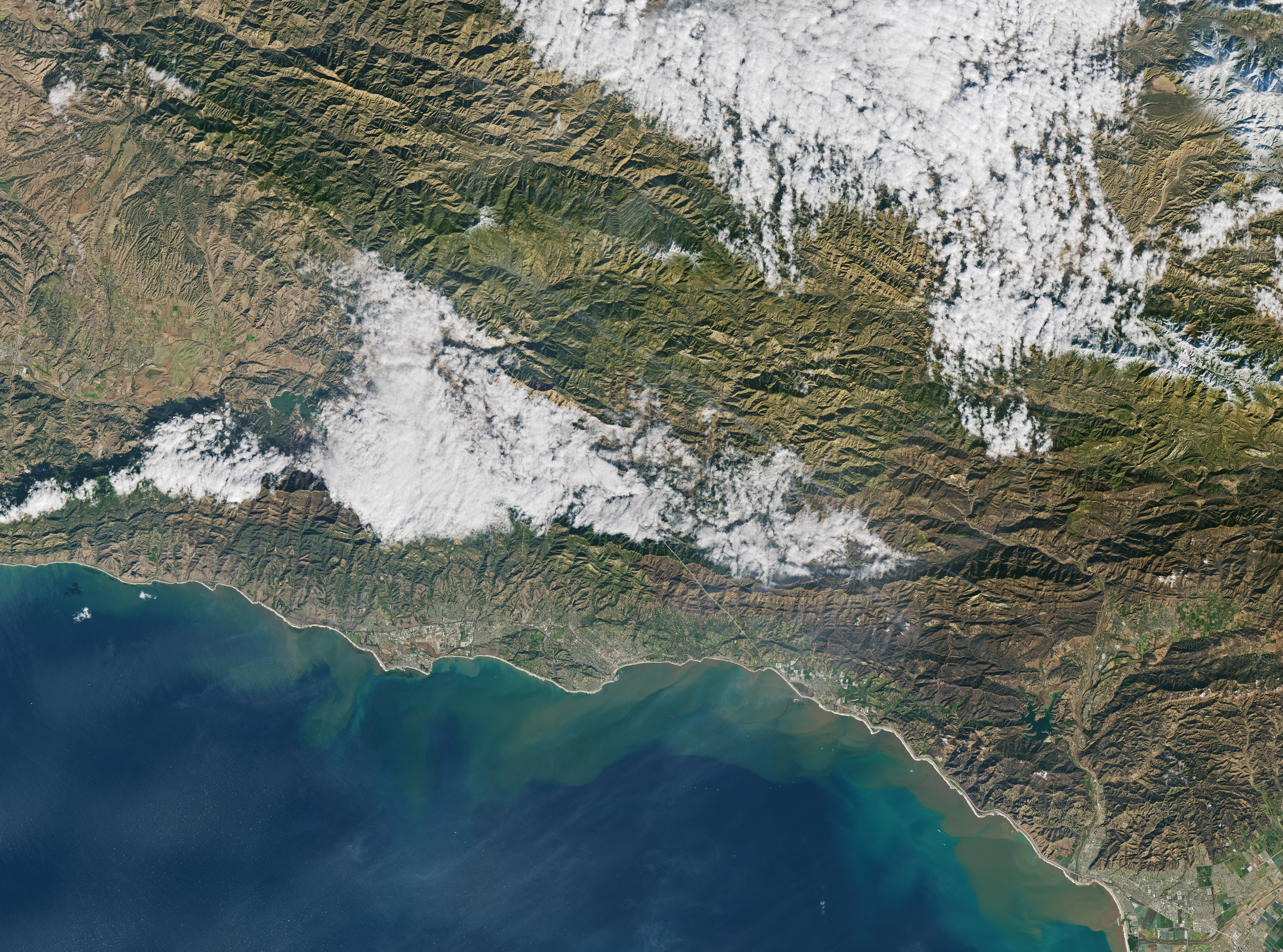
Making sense of what happened to Montecito

by Doc Searls

Montecito is now a quarry with houses in it:

So far twenty dead have been removed. It will take much more time to remove twenty thousand dump truck loads of what geologists call “debris,” just to get down to where civic infrastructure (roads, water, electric, gas) can be fixed. It’s a huge thing.

The big questions:

  1. Did we know a catastrophe this huge was going to happen? (And if so, which among us were the “we” who knew?)
  2. Was there any way to prevent it?

Geologists had their expectations, expressed as degrees of likelihood and detailed on this map by the United States Geological Survey:

That was dated more than a month before huge rains revised to blood-red the colors in the mountains above town. Worries of County Supervisors and other officials were expressed in The Independent on January 3rd and 5th. Edhat also issued warnings on January 5th and 6th.

Edhat’s first report began, “Yesterday, the National Weather Service issued a weather briefing of a potential significant winter storm for Santa Barbara County on January 9-10. With the burn scar created by the Thomas Fire, the threat of flash floods and debris/mud flows is now 10 times greater than before the fire.”

But among those at risk, who knew what a “debris/mud flow” was—especially when nobody had ever seen one of those anywhere around here, even after prior fires?

The first Independent story (on January 3rd) reported, “County water expert Tom Fayram said county workers began clearing the debris basins at San Ysidro and Gobernador canyons ‘as soon as the fire department would let us in.’ It is worth noting, Lewin said, that the Coast Village Road area flooded following the 1971 Romero Fire and the 1964 Coyote Fire. While touring the impact areas in recent days, (Office of Emergency Management Director Robert) Lewin said problems have already occurred. ‘We’re starting to see gravity rock fall, he said. ‘One rock could close a road.'”

The best report I’ve seen about what geologists knew, and expected, is The Independent‘s After the Mudslides, What Does the Next Rain Hold for Montecito?, published four days after the disaster. In that report, Kevin Cooper of the U.S. Forest Service said, “no one alive has probably ever seen one before.” [January 18 update: Nick Welch in The Independent reports, “Last week’s debris flow was hardly Santa Barbara’s first. Jim Stubchaer, then an engineer with County Flood Control, remembers the avalanche of mud that took 250 homes back in November 1964 when heavy rains followed quickly on the heels of the Coyote Fire. He was there in 1969 and 1971 when it happened again.” Here is a long 2009 report on the Coyote Fire in The Independent by Ray Ford, now with Noozhawk. No mention of the homes lost in there. Perhaps Ray can weigh in.]

My point is that debris flows over Montecito ae a sure bet in geologic time, but not in the human one. In the whole history of Montecito and Santa Barbara (of which Montecito is an unincorporated part), there are no recorded debris flows that started on mountain slopes and spread all the way to the sea. But on January 9th we had several debris flows on that scale, originating simultaneously in the canyons feeding Montecito, San Ysidro and Romero Creeks. Those creeks are dry most of the time, and beautiful areas in which to build homes: so beautiful, in fact, that Montecito is the other Beverly Hills. (That’s why all these famous people have called it home.)

One well-studied prehistoric debris flow in Santa Barbara emptied a natural lake that is now Skofield Park,dumping long-gone mud and lots of rocks in Rattlesnake Canyon, leaving its clearest evidence in a charming tree-shaded boulder field next to Mission Creek called Rocky Nook Park.

What geologists at UCSB learned from that flow is detailed in a 2001 report titled UCSB Scientists Study Ancient Debris Flows. It begins, “The next ‘big one’ in Santa Barbara may not be an earthquake but a boulder-carrying flood.” It also says that flood would “most likely occur every few thousand years.”

And we got one in Montecito last Tuesday.

I’ve read somewhere that studies of charcoal from campfires buried in Rocky Nook Park date that debris flow at around 500 years ago. This is a good example of how the geologic present fails to include present human memory. Still, you can get an idea of how big this flow was. Stand in Rattlesnake Canyon downstream from Skofield Park and look at the steep rocky slopes below houses on the south side of the canyon. It isn’t hard to imagine the violence that tore out the smooth hillside that had been there before.

To help a bit more with that exercise, here is a Google Streetview of Scofield Park, looking down at Santa Barbara through Rattlesnake Canyon:

I added the red line to show the approximate height of the natural dam that broke and released that debris flow.

I’ve also learned that the loaf-shaped Riviera landform in Santa Barbara is not a hunk of solid rock, but rather what remains of a giant landslide that slid off the south face of the Santa Ynez Mountains and became free-standing after creeks eroded out the valley behind. I’ve also read that Mission Creek flows westward around the Riviera and behind the Mission because the Riviera itself is also sliding the same direction on its own tectonic sled.

We only see these sleds moving, however, when geologic and human time converge. That happened last Tuesday when rains Kevin Cooper calls “biblical” hit in the darkest hours, saturating the mountain face creek beds that were burned by the Thomas Fire just last month. As a result, debris flows gooped down the canyons and stream valleys below, across Montecito to the sea, depositing lots of geology on top of what was already there.

So in retrospect, those slopes in various colors in the top map above should have been dark red instead. But, to be fair, much of what geology knows is learned the hard way.

Our home, one zip code west of Montecito, is fine. But we can’t count how many people we know who are affected directly. One friend barely escaped. Some victims were friends of friends. Some of the stories are beyond awful.

We all process tragedies like this in the ways we know best, and mine is by reporting on stuff, hopefully in ways others are not, or at least not yet. So I’ll start with this map showing damaged and destroyed buildings along the creeks:

At this writing the map is 70% complete. [January 17 update: 95%.] I’ve clicked on all the red dots (which mark destroyed buildings, most of which are homes), and I’ve copied and pasted the addresses that pop up into the following outline, adding a few links.

Going downstream along Cold Spring Creek, Hot Springs Creek and Montecito Creek (which the others feed), gone are—
  1. 817 Ashley Road
  2. 817 Ashley Road (out building)
  3. 797 Ashley Road
  4. 780 Ashley Road. Amazing architectural treasure that last sold for $12.9 million in ’13.
  5. 809 Ashley Road
  6. 809 Ashley Road (there are two at one address)
  7. 747 Indian Lane
  8. 631 Parra Grande Lane. That’s the mansion where the final scene in Scarface was shot.
  9. 590 Meadowood Lane
  10. 830 Rockbridge Road
  11. 800 Rockbridge Road
  12. 790 Rockbridge Road
  13. 787 Riven Rock Road B
  14. 1261 East Valley Road
  15. 1240 East Valley Road A (mansion)
  16. 1240 East Valley Road B (out building)
  17. 1254 East Valley Drive
  18. 1255 East Valley Road
  19. 1247 East Valley Road A
  20. 1247 East Valley Road B (attached)
  21. 1231 East Valley Road A
  22. 1231 East Valley Road B (detached)
  23. 1231 East Valley Road C (detached)
  24. 1221 East Valley Road A
  25. 1221 East Valley Road B
  26. 369 Hot Springs Road
  27. 341 Hot Springs Road A
  28. 341 Hot Springs Road B
  29. 341 Hot Springs Road C
  30. 355 Hot Springs Road
  31. 335 Hot Springs Road A
  32. 335 Hot Springs Road B
  33. 333 Hot Springs Road (Not marked in final map)
  34. 341 Hot Springs Road A
  35. 341 Hot Springs Road B
  36. 341 Hot Springs Road C
  37. 340 Hot Springs Road
  38. 319 Hot Springs Road
  39. 325 Olive Mill Road
  40. 285 Olive Mill Road
  41. 275 Olive Mill Road
  42. 325 Olive Mill Road
  43. 220 Olive Mill Road
  44. 200 Olive Mill Road
  45. 275 Olive Mill Road
  46. 180 Olive Mill Road
  47. 170 Olive Mill Road
  48. 144 Olive Mill Road
  49. 137 Olive Mill Road
  50. 139 Olive Mill Road
  51. 127 Olive Mill Road
  52. 196 Santa Elena Lane
  53. 192 Santa Elena Lane
  54. 179 Santa Isabel Lane
  55. 175 Santa Elena Lane
  56. 142 Santo Tomas Lane
  57. 82 Olive Mill Road
  58. 1308 Danielson Road
  59. 81 Depot Road
  60. 75 Depot Road
Along Oak Creek—
  1. 601 San Ysidro Road
  2. 560 San Ysidro Road B
Along San Ysidro Creek—
  1. 953 West Park Lane
  2. 941 West Park Lane
  3. 931 West park Lane
  4. 925 West park Lane
  5. 903 West park Lane
  6. 893 West park Lane
  7. 805 W Park Lane
  8. 881 West park Lane
  9. 881 West park Lane (separate building, same address)
  10. 1689 Mountain Drive
  11. 900 San Ysidro Lane C (all the Lane addresses appear to be in San Ysidro Ranch)
  12. 900 San Ysidro Lane Cottage B
  13. 900 San Ysidro Lane Cottage A
  14. 900 San Ysidro Lane Cottage D
  15. 900 San Ysidro Lane E
  16. 900 San Ysidro Lane F
  17. 900 San Ysidro Lane G
  18. 900 San Ysidro Lane H
  19. 900 San Ysidro Lane I
  20. 900 San Ysidro Lane J
  21. 900 San Ysidro Lane K
  22. 900 San Ysidro Lane L
  23. 900 San Ysidro Lane M
  24. 900 San Ysidro Lane N
  25. 900 San Ysidro Lane O
  26. 900 San Ysidro Lane R
  27. 900 San Ysidro Lane S
  28. 900 San Ysidro Lane T
  29. 888 San Ysidro Lane A
  30. 888 San Ysidro Lane B
  31. 888 San Ysidro Lane C
  32. 888 San Ysidro Lane D
  33. 888 San Ysidro Lane E
  34. 888 San Ysidro Lane F
  35. 805 West Park Lane B
  36. 799 East Mountain Drive
  37. 1801 East Mountain Lane
  38. 1807 East Mountain Drive
  39. 771 Via Manana Road
  40. 899 El Bosque Road
  41. 771 Via Manana Road
  42. 898 El Bosque Road
  43. 800 El Bosque Road A (Casa de Maria)
  44. 800 El Bosque Road B (Casa de Maria)
  45. 800 El Bosque Road C (Casa de Maria)
  46. 559 El Bosque Road (This is between Oak Creek and San Ysidro Creek)
  47. 680 Randall Road
  48. 670 Randall Road
  49. 660 Randall Road
  50. 650 Randall Road
  51. 640 Randall Road
  52. 630 Randall Road
  53. 619 Randall Road
  54. 1685 East Valley Road A
  55. 1685 East Valley Road B
  56. 1685 East Valley Road C
  57. 1696 East Valley Road
  58. 1760 Valley Road A
  59. 1725 Valley Road A
  60. 1705 Glenn Oaks Drive A
  61. 1705 Glen Oaks Drive B
  62. 1710 Glen Oaks Drive A
  63. 1790 Glen Oaks Drive A
  64. 1701 Glen Oaks Drive A
  65. 1705 Glen Oaks Drive A
  66. 1705 East Valley Road A
  67. 1705 East Valley Road B
  68. 1705 East Valley Road C
  69. 1780 Glen Oaks Drive N/A
  70. 1780 Glen Oaks Drive (one on top of the other)
  71. 1774 Glen Oaks Drive
  72. 1707 East Valley Road A
  73. 1685 East Valley Road C
  74. 1709 East Valley Road
  75. 1709 East Valley Road B
  76. 1775 Glen Oaks Drive A
  77. 1775 Glen Oaks Drive B
  78. 1779 Glen Oaks Drive A
  79. 1779 Glen Oaks Drive B
  80. 1779 Glen Oaks Drive C
  81. 1781 Glen Oaks Drive A
  82. 1711 East Valley Road (This and what follow are adjacent to Oprah)
  83. 1715 East Valley Road A
  84. 1715 East Valley Road B
  85. 1719 East Valley Road
  86. 1721 East Valley Road A (This might survive. See Dan Seibert’s comment below)
  87. 1721 East Valley Road B (This might survive. See Dan Seibert’s comment below)
  88. 1721 East Valley Road C (This might survive. See Dan Seibert’s comment below)
  89. 1694 San Leandro Lane A
  90. 1694 San Leandro Lane D
  91. 1690 San Leandro Lane C
  92. 1690 San Leandro Lane A
  93. 1694 San Leandro Lane B
  94. 1696 San Leandro Lane
  95. 1710 San Leandro Lane A
  96. 1710 San Leandro Lane B
  97. 190 Tiburon Bay Lane
  98. 193 Tiburon Bay Lane A
  99. 193 Tiburon Bay Lane B
  100. 193 Tiburon Bay Lane C
  101. 197 Tiburon Bay Lane A
Along Buena Vista Creek—
  1. 923 Buena Vista Avenue
  2. 1984 Tollis Avenue A
  3. 1984 Tollis Avenue B
  4. 1984 Tollis Avenue C
  5. 670 Lilac Drive
  6. 658 Lilac Drive
  7. 2075 Alisos Drive (marked earlier, but I don’t see it in the final map)
  8. 627 Oak Grove Lane
Along Romero Creek—
  1. 1000 Romero Canyon Road
  2. 1050 Romero Canyon Road
  3. 860 Romero Canyon Road
  4. 768 Winding Creek Lane
  5. 745 Winding Creek Lane
  6. 744 Winding Creek Lane
  7. 2281 Featherhill Avenue B

Below Toro Canyon—

  1. 876 Toro Canyon Road
  2. 572 Toro Canyon Park Road

Along Arroyo Paredon, between Summerland and Carpinteria, not far east of the Toro Canyon—

  1. 2000 Cravens Lane

Ten flanking Highway 101 by the ocean are marked as damaged, including four on Padero Lane.

When I add those up, I get 142 163* 178† among the destroyed alone.

[* This is on January 17, when the map says it is 95% complete. All the additions appear to be along San Ysidro Creek, especially on San Ysidro Lane, which I believe is mostly in San Ysidro Ranch. Apparently nearly the whole place has been destroyed. Adjectives such as “lovely” fail to describe what it was.]

[† This is on January 18, when the map is complete. I’ll need to go over it again, because there are subtractions as well as additions. Additional note: on March 22, the resident at 809 Ashley Road asked me to make sure that address was also added. There are two homes at that address, both gone.]

Now let’s go back and look more closely at this again from the geological perspective.

What we see is a town revised by nature in full disregard for what was there before—and in full obedience to the pattern of alluvial deposition on the flanks of all fresh mountains that erode down almost as fast as they go up.

This same pattern accounts for much of California, including all of the South Coast and the Los Angeles basin.

To see what I mean, hover your mind above Atlanta and look north at the southern Appalachians. Then dial history back five million years. What you see won’t look much different. Do the same above Los Angeles or San Francisco and nothing will be the same, or even close. Or even there at all.

Five million years is about 1/1000th of Earth’s history. If that history were compressed to a day, California showed up in less than the last forty seconds. In that short time California has formed and re-formed constantly, and is among the most provisional landscapes in the world. All of it is coming up, sliding down, spreading out and rearranging itself, and will continue doing so through all the future that’s worth bothering to foresee. Debris flows are among nature’s most casual methods for revising landscapes. (By the way, I am writing this in a San Marino house that sits atop the Raymond Fault scarp, which on the surface takes the form of a forty-foot hill. The stack of rock strata under the bottom of that hill is displaced 17,000 feet from the identical suite under the base at the top. Many earthquakes produced that displacement, while erosion has buffed 16,960 feet of rock and soil off the top.)

So we might start to look at the Santa Ynez Mountains behind Santa Barbara and Montecito not as a stable land form but rather as a volcano of mud and rock that’s sure to go off every few dozen or hundreds of years—and will possibly deliver a repeat performance if we get more heavy rains and there is plenty of debris left to flow out of mountain areas adjacent to those that flowed on January 9th. If there’s a lot of it, why even bother saving Montecito?

Here’s why:

One enters the Engineering building at the University of Wyoming under that stone plaque, which celebrates what may be our species’ greatest achievement and conceit: controlling nature. (It’s also why geology is starting to call our present epoch the anthropocene.)

This also forecasts exactly what we will do for Montecito. In the long run we’ll lose to nature. But meanwhile we strive on.

In our new strivings, it will help to look toward other places in California that are more experienced with debris flows, because they happen almost constantly there. The largest of these by far is Los Angeles, which has placed catch basins at the mouths of all the large canyons coming out of the San Gabriel Mountains. Most of these dwarf the ones above Montecito. All resemble empty reservoirs. Some are actually quarries for rocks and gravel that roll in constantly from the eroding creek beds above. None are pretty.

To understand the challenge involved, it helps to read John McPhee’s classic book The Control of Nature, which takes its title from the inscription above. Fortunately, you can start right now by reading the first essay in a pair that became the relevant chapter of that book. It’s free on the Web and called Los Angeles Against the Mountains I. Here’s an excerpt:

Debris flows amass in stream valleys and more or less resemble fresh concrete. They consist of water mixed with a good deal of solid material, most of which is above sand size. Some of it is Chevrolet size. Boulders bigger than cars ride long distances in debris flows. Boulders grouped like fish eggs pour downhill in debris flows. The dark material coming toward the Genofiles was not only full of boulders; it was so full of automobiles it was like bread dough mixed with raisins.

The Genofiles were a family that barely survived a debris flow on a slope of Verdugo Mountain, overlooking Los Angeles from Glendale. Here’s another story, about another site not far away:

The snout of the debris flow was twenty feet high, tapering behind. Debris flows sometimes ooze along, and sometimes move as fast as the fastest river rapids. The huge dark snout was moving nearly five hundred feet a minute and the rest of the flow behind was coming twice as fast, making roll waves as it piled forward against itself—this great slug, as geologists would describe it, this discrete slug, this heaving violence of wet cement. Already included in the debris were propane tanks, outbuildings, picnic tables, canyon live oaks, alders, sycamores, cottonwoods, a Lincoln Continental, an Oldsmobile, and countless boulders five feet thick. All this was spread wide a couple of hundred feet, and as the debris flow went through Hidden Springs it tore out more trees, picked up house trailers and more cars and more boulders, and knocked Gabe Hinterberg’s lodge completely off its foundation. Mary and Cal Drake were standing in their living room when a wall came off. “We got outside somehow,” he said later. “I just got away. She was trying to follow me. Evidently, her feet slipped out from under her. She slid right down into the main channel.” The family next door were picked up and pushed against their own ceiling. Two were carried away. Whole houses were torn loose with people inside them. A house was ripped in half. A bridge was obliterated. A large part of town was carried a mile downstream and buried in the reservoir behind Big Tujunga Dam. Thirteen people were part of the debris. Most of the bodies were never found.

This is close to exactly what happened to Montecito in the wee hours of January 9th. (As of March 22, two of the 23 dead still haven’t been recovered, and probably never will be.)

As of now the 8000-plus residents of Montecito are evacuated and forbidden to return for at least another two weeks—and maybe much longer if officials declare the hills above town ready to flow again.

Highway 101—one of just two major freeways between Southern and Northern California, is closed indefinitely, because it is now itself a stream bed, and re-landscaping the area around it, to get water going where it should, will take some time. So will fixing the road, and perhaps bridges as well.

Meanwhile getting in and out of Santa Barbara from east of Montecito by car requires a detour akin to driving from Manhattan to Queens by way of Vermont. And there have already been accidents, I’ve heard, on highway 166, which is the main detour road. We’ll be taking that detour or one like it on Thursday when we head home via Los Angeles after we fly there from New York, where I’m packing up now.

Expect this post to grow and change.

Bonus links:


16 Jan 15:25

Pitch Room: Fixing The Last Jedi

by rands

EXT. MORNING, MONDAY JANUARY 18th, 2016, LUCASFILM HEADQUARTERS, LETTERMAN DIGITAL ARTS CENTER, SAN FRANCISCO.

INT. THE BOARDROOM. A circular room with an equally circular grey table. Carved into the table is an off-center recessed black circle. The table is populated by executives from both Disney and Lucasfilm. Standing opposite the entrance, across the room director RIAN JOHNSON who is pacing.

RIAN: Thank you all for coming on such short notice. I realize we locked the script two weeks ago, but I want to make sure that you all have read or have heard the major plot points otherwise this meeting might spoil some things for you. Show of hands. Who isn’t up to date on the final script?

RIAN: Great. Let’s proceed.

RIAN: I woke up last night at 3 am in one of those “I have made a horrible mistake” sweats. We have a massive problem at the end of The Last Jedi. We have no villain.

EXECUTIVES: (garbled)

RIAN: I know what I said at the final pitch meeting. We had to mix things up, and we had a pave the way for the next generation of the Jedi, but at the end of this movie, there is just no one to hate. Snoke is dead, Hux is borderline comic relief, and the audience is practically rooting for Kylo – shirt on or off.

EXECUTIVES: (louder. unintelligible)

RIAN: Rey made him good. His relationship with Rey makes him human. Their Force connection shows us that Kylo’s soul is still in play and, oh yeah, you know Adam Driver seethes with charisma. He’s the most interesting character on the screen and he’s not becoming eviler, he’s becoming more neutral. Batshit crazy, but neutral.

EXECUTIVES: (muddled)

RIAN: My point is, what’s the tension in the next movie? Saving Kylo? He’s just killed his master and apparently has a thing for Rey. Building the rebellion against the First Order? The First Order gets its ass kicked twice by the last rebel ship standing. One bombs them and the other rams them. The First Order needs to learn to steer away from shit before the audience takes it seriously. Also, what resistance? There’s more porg on the Millennium Falcon than there are fighters in the resistance.

RIAN: I know I pitched the theme of the Force can be a part of anyone. We need to think about a post-Skywalker Star Wars, but as written now, we’re going to into the third movie with very little tension and no villain… and I know how to fix it.

RIAN: Rey needs to turn to the dark side. When Kylo and Ray reach out and touch hands, she turns to the dark side.

EXECUTIVES: (screaming)

RIAN: Everyone calm down. This is not a restart. All of the major plot lines remain intact. Finn’s useless Raiders of the Lost Arc-inspired trip remains the same except he sees Rey and Kylo on Snoke’s ship. Suddenly Finn is in. He’s mad! He’s relevant! Is he a Jedi? I don’t know, but let’s find out. Luke and Kylo – again, it’s unchanged. We still get the showdown at Crait and now it’s more meaningful because – just like Luke predicted – Rey is just like Kylo. Luke still projects himself because Luke is a hero and that is what heroes do.

EXECUTIVES: (slightly less screaming)

RIAN: Yes, even the escape. Chewie shows up to rescue the remaining rebels, and they escape thanks to Luke’s Kylo-delay tactics. It’s 95% the same ending except for one crucial difference. Rey can sense that they are escaping… and she lets them.

EXECUTIVES: (silence)

RIAN: Of course, she’s not going to turn. She’s a mole. She’s full-on Severus Snape and who the hell didn’t love that guy’s arc? Even better, Chewie is in on the gig, and he’s full-on Dumbledoring his way to the next rebel base.

EXECUTIVES: (continued silence)

RIAN: I don’t know. That’s Colin’s job to figure out, but we’re handing him a gift. We hand him a villain. We provide him tension. We hand him the critical question to answer, “Is Rey good or bad?” I’d watch the hell out of that movie.

EXECUTIVES: (mumbling. threatening)

RIAN: Ron Howard?

EXECUTIVES: (confirmation)

RIAN: … This is just me spitballing. I think we’ve got an incredible movie on hands… as is. Sorry for wasting your time.

16 Jan 15:22

Evergreen Diary #4: Send to Micro.blog

The latest build of Evergreen adds Micro.blog to the Share menu in the toolbar, if you have the Micro.blog Mac app.

It sends the title and link of whatever you’re reading over to the Micro.blog Mac app, and you can edit it before actually posting.

This is hugely important. RSS readers exist not to just make reading easy but to make the web a conversation.

The next release will (probably) include MarsEdit, for the exact same reason. If you have ideas for other apps to include, let me know (see the bottom of the Evergreen site for contact info).

Ideally, every app like Micro.blog and MarsEdit would have a sharing extension — but, where they don’t, I can add them as long as they support some kind of way to do so.

Technical Details

Micro.blog supports a URL scheme for sending it a post: see See SendToMicroBlogCommand.​sendObject for the implementation in Evergreen. (And of course feel free to use any Evergreen code in your app.)

History

It’s not that we realized just today that posting from an RSS reader is important. Since posting was always an absolute requirement, way back in 2003 I released NetNewsWire 1.0 with an integrated blog editor.

I got that idea from Radio UserLand, which was an RSS reader and blog editor by the company where I worked before I wrote NetNewsWire. It’s Dave’s idea, not mine.

By the time I was working on NetNewsWire 2.0, it became apparent that smooshing a blog editor into a reader app meant that the blog editor suffers. The blog editor in NetNewsWire 1.x was pretty darn bad. So I had the idea of splitting out the blog editor to a separate app — inducing mitosis — which you can read about in my MarsEdit report of late 2004.

Mitosis was a success.

One of the keys of that success was that the API for contacting MarsEdit had to be open, and NetNewsWire had to support any blog editor, or any other app, that supported that API — because otherwise I would have been unfairly leveraging success with NetNewsWire on behalf of my new blog editor, and that would have been wrong.

MarsEdit still supports that interface, and my next step is to write the client side in Evergreen, so it can send to MarsEdit and any other app that supports that interface.

I am, by the way, delighted to be writing code for a 14-year-old API that still works.

16 Jan 15:22

Evergreen Diary #5: Send to MarsEdit

The latest build of Evergreen, fresh from the lab, now adds MarsEdit to the sharing menu in the toolbar.

When you choose the command, it sends the current article to MarsEdit — which opens it in a new window, and then you can edit and add your own commentary before posting to your blog.

* * *

See SendToBlogEditorApp.m for the code that packages up the article and sends an Apple event.

The code is not MarsEdit-specific — other apps in the past have supported this same Apple event, though I don’t know if any other current apps do. If I find some, I’ll add them to the sharing menu alongside MarsEdit.

* * *

The Apple event code is written in Objective-C, even though I almost always write new code in Swift. But, with Apple events code, Objective-C is easier.

It’s easy to call from Swift: see SendToMarsEditCommand.swift.

(Reminder: this is all MIT-licensed. You can use this code.)

16 Jan 15:18

Twitter Favorites: [Lesley_NOPE] @sillygwailo Well there aren’t many payphones around anymore!

Sleeve Fierce @Lesley_NOPE
@sillygwailo Well there aren’t many payphones around anymore!
16 Jan 15:18

Twitter Favorites: [everickert] @skeskali I buy the hard copy anyway, at the place holding the signing, to support both the author and the venue as… https://t.co/9HZKSIZezo

Eve Rickert @everickert
@skeskali I buy the hard copy anyway, at the place holding the signing, to support both the author and the venue as… twitter.com/i/web/status/9…
16 Jan 15:18

Twitter Favorites: [dethe] @skeskali Remind me to tell you the story of how I tried to get Maya Angelou to sign my jacket

Dethe Elza @dethe
@skeskali Remind me to tell you the story of how I tried to get Maya Angelou to sign my jacket
16 Jan 15:18

Bike plan implementation in Toronto is too slow

by dandy

Illustration by Warren Wheeler

Tracking Toronto's Bike Plan Implementation (be prepared to be disappointed)

Only six percent of new bike plan implemented by end of year two

by Albert Koehl and Robert Zaichkowski

As 2018 begins, the cycling community can celebrate a number of new bike lanes installed last year – and celebrate we should, while continuing to push City Hall to bring a little more energy and ambition to the sluggish pace of implementation.

 In 2017, a total of 10 km of new bike lanes (including cycle tracks, contra flow lanes, and boulevard trails) were added to the city’s 5,600-km road network, including the 4-km Woodbine bike lane, which provides a much-needed north-south connection in the east end of the city. After a very long fight, the 2.4-km Bloor bike lane pilot became a permanent installation --- a huge symbolic and practical victory, despite its modest length --- thanks to a 36-6 council vote in November. The Denison-Bellevue contra-flow lane --- completed in November --- provides access from College to Queen St., while the substantially complete (though not yet open) 1.4 km Lakeshore Blvd W. bi-directional bike lane will soon close a significant gap in the Waterfront Trail where cyclists have previously been left exposed to fast-moving motor traffic.

When added to last year’s additions, the 10 km of new on-road bike facilities (excluding off-road trails) brings to 17 km the total length of bike facilities implemented since the city’s ten-year bike plan was adopted in 2016. (See our updated tracking table.) There is no denying that cyclists are better off at the start of this year than in 2016, although measured against the 280-km of new bike lanes set out in the ten-year plan --- and the fact that many popular cycling routes still have no bike lanes --- our celebrations will understandably be short before we get back to work.

The on-road cycling picture isn’t likely to get much better in 2018, even if all bike lanes listed in staff proposals to council --- amounting to 9.8 km --- are actually approved and installed. (The staff list is also subject to change pending design feasibility and public consultation.) What’s clear is that at the current pace, we won’t hit the bike plan's 2025 target until mid-century.

Among the staff proposals for 2018 is a 2.8-km lane along Port Union Rd. in Scarborough, stretching from Sheppard Ave. E to the Waterfront Trail. The other planned lanes are largely internal to the Flemington/Thorncliffe neighbourhoods and York University. Unfortunately, neither appears to have outlets along busy streets such as Don Mills Rd. in the case of Flemington/Thorncliffe or along Jane or Keele Streets in the case of the York University lanes. (The York U. lanes do, however, connect to the Finch Hydro Corridor bike trail.)

Yonge St. is also in the news again for bike lanes. There is a discussion about bike lanes both between College and Queen Streets (a discussion that started in the 1970s) and as part of the Reimagining Yonge initiative, in North York. In fact, on January 19, 2018 the Public Works and Infrastructure Committee will debate a recommendation by staff to install cycle tracks on Yonge between Avondale and Bishop Avenues, as part of a Complete Streets initiative and in line with the city’s Vision Zero Road Safety Plan. The debate provides a new opportunity for cyclists to (finally) make bike lanes on (a part of) Yonge St. a reality, though, if approved, we will have to wait a few years for implementation.

The slow pace of infrastructure improvements is not a matter of passing interest to cyclists. There are measurable consequences for the continuing failure to put in place a cycling network. Cyclists who participated in the four memorial rides this year for fallen comrades understand the consequences all too well. All these deaths, along with hundreds of other injuries, some serious, occurred on roads where the lack of safe infrastructure was a plausible cause for the burden of grief and suffering some people will take into 2018 and beyond. And yet, we find ourselves again not only fighting for new infrastructure but defending the minimal infrastructure now in place, including the recently added Woodbine bike lanes.

It’s worth recalling that although adopting the 2016 ten-year bike plan, city council decided to delay various studies about new bike lanes. These delays were premised on the need to wait for the study results of the Bloor pilot -- a pilot which showed that business was up, cycling numbers were up, and that public support had grown significantly. So shouldn’t this mean that the delayed studies will now proceed quickly and focus on ‘how’ to install the new lanes, particularly on the Danforth and additional parts of Bloor?

The continuing reluctant implementation of bike lanes by City Hall makes it clear that the city hasn’t yet ‘turned the corner’ in accepting cyclists’ right to be safe on public roads. The city doesn’t yet plan for cyclists -- if it did, bike lanes would be in place before --- instead of decades after --- thousands of cyclists are routinely being documented travelling along a particular route. This explains why the celebration of bike lane installation in Toronto is typically tinted by a certain disbelief – as if we can’t believe our good luck.

When bike lanes become part of our expectation as residents, the routine result of good planning, and part of an ongoing transition of our public roads to safe, shared spaces we will know that we’ve actually turned a corner in Toronto. In the meantime, we must remain vigilant, organized, and assertive.

Albert Koehl is an environmental lawyer and founder of Bells on Bloor. Robert Zaichkowski is an accountant and a member of Cycle Toronto’s Advocacy Committee.

 Related on dandyhorsemagazine.com 

Updated January 2018: Bike Plan Tracking Table 

 Meet the new plan, same as the old plan?

How many cyclists does it take...?

Pride and Privilege on Bloor

dandyArchive: From the bike plan election issue

16 Jan 15:16

Reclaim’s D.O.A. in Canada

by Reverend

Reclaim Hosting is happy to announce a new shared hosting server in a Digital Ocean’s Toronto-based data center. And while the Toronto data center has been around since 2015, it just got block storage in September. We named this server after the pioneer political Canadian hardcore punk band D.O.A. With their first two albums Something Better Change (1980) and Hardcore ’81 (1981) you have arguably the earliest examples of the new punk style that would dominate the 1980s. D.O.A. political anthems like “Smash the State:”

Or “F**cked Up Ronnie” as an early instance of the sonic war against Reagan that characterized much of 1980s punk:

In fact, the song has been updated for the times:

It’s pretty telling to hear both Henry Rollins and Keith Morris talk about the impact D.O.A. had on the emerging hardcore scene. 

I love Morris’s description of seeing D.O.A. open up for X in LA. 

So, it seems only fitting to christen Canada’s first Reclaim Hosting server as D.O.A. If any one would like us to move their sites to this new server for whatever reason just submit a support request and we’ll be sure to make it so. 

16 Jan 15:08

NewsBlur Blurblog: Kickstart Your Resolutions with OmniFocus and a Brain Dump

sillygwailo shared this story from The Omni Group.

This is a guest post by Amanda McLoughlin, co-host of a few podcasts, host of a youtube channel, somehow a full-time job, and more. She’s busy. Here’s her recipe for a new start on the new year.


What do you want to accomplish this year? Start a new project, or make progress on an existing one? Maybe you hope to achieve better work-life balance or start down a path to a new career altogether.

Whatever the resolution, let me recommend…a Brain Dump. (Yes, it’s a funny name. Stick with me.)

Notecards on a table.

The point of a Brain Dump is to capture the full picture of everything you need and want to do. Once you have all of your projects, goals, obligations, and dreams down in one place, you can prioritize better and get more stuff done.

So, how do you start? Set aside one calm hour—first thing in the morning or after dinner once you’re home from work—and gather your materials. You can use paper, notecards, a whiteboard, a Word document; any medium that will let you get ideas out of your brain as quickly as possible. I like using index cards that I can move all around the table, but do whatever works best for you!

Now, start writing everything down. That means all of your to-do items, work projects, housework tasks, texts to return, “wouldn’t it be nice if I…” ideas—everything! Even include things you’ve put on hold or are waiting for other people to work on with you. Write it all down.

Let your brain jump around! Don’t worry about going from “return library book” to “figure out new payroll system.” Walk through a typical week in your mind and let your routine trigger you to write down new things. What do you need to do at home? What do you think about on your commute? When you get into the office, what stresses you out that you might be able to change? What do you keep apologizing for not having gotten done?

Once you’ve written down everything you can think of, take a break. Go about your day while add items as they come to you on a notecard or a note taking app. As you go to work, come home, or visit your studio, these locations will trigger your brain into remembering more tasks. Carry the list around for a day or two and add things as they come up, but don’t read or review it.

A list of things in OmniFocus after a brain dump.

Next, it’s time to group your items. Take a look at everything you’ve written down and start to think about what groups make sense for your tasks. You may change these groups over time, so just choose the simplest ones to begin with. Mine include work, podcasts, personal administration, housework, friends/family, and relaxation/hobbies.

Of course, OmniFocus also allows you to assign contexts to your tasks, which is a handy feature that allows users to sort tasks based on where/how you do them. You might have contexts for work vs. home, pen & paper vs. computer, or online vs. offline. My contexts sort my tasks by location (neighborhoods in NYC), states of mind (“detail,” “writing,” “long term planning”), and tools needed (“online,” “phone,” “audio” [reviewing + editing podcasts]).

And… congratulations! You just finished a Brain Dump!

It may initially feel overwhelming to see everything you need and want to do spread out in front of you. But, I promise, you’ll also feel accomplished and in control. Once you understand the full picture of your life, you can start to prioritize and set goals in a smart and informed way.

Good luck!


Amanda is a co-host of several podcasts including Spirits, Join the Party, and Waystation. She’s on Twitter and Medium, and lives here.*

16 Jan 15:04

Comment about krazy man at Seattle coworking space :-) cropped-11january2018-me-f2-level-seattle-L16_00015 copy

by ddrucker

ddrucker has posted a comment:

Strange coincidence: I was just nostalgically looking at some old photos I had of WorkSpace, hit the Flicker home link, and there you are, in the Seattle incarnation of it.

krazy man at Seattle coworking space :-) cropped-11january2018-me-f2-level-seattle-L16_00015 copy

16 Jan 15:04

En vrac du mardi

by Tristan

En vedette : l’IA

Extrait de l’article « Métro, boulot, robot ? » du numéro spécial de Libération, « Voyage au cœur de l’IA », page 26 :

En 2013 deux chercheurs de l’université d’Oxford ont évalué avec l’algorithme qu’ils ont mis au point la probabilité d’automatisation de 700 professions aux États-Unis. Leur verdict ? « 47 % des emplois en risque » à un horizon de vingt ans. Selon leurs calculs, il est probable à 99 % que les télémarketeurs soient remplacés par des « chatbots » (agents conversationnels) en 2033, à 97 % que ce soit le cas pour les caissières et caissiers mais seulement à 0,7% que les archéologues soient évincés par des algorithmes ! Si l’archéologie est d’après leur classement la plus préservée des professions, ça n’est pas seulement parce que leur requiert des compétences très spécifiques de reconnaissance de formes. Mais surtout parce que cette activité ne dégage pas les profits qui justifieraient les investissements nécessaires pour l’automatiser.

En vrac

Note

[1] Ripley est le nom de l’héroïne jouée par Sigourney Weaver qui tient tête à l’alien dans le film du même nom.

16 Jan 15:04

Status Check: Define ‘User’ Again?

by Nathan Ferguson

Apple users usually expect for their devices to perform basic system management and maintenance, monitoring background processes so that a rogue task doesn’t drag down the currently active app, for example. But when Apple confirmed users’ suspicions that a recent update was aggressively slowing older devices, the story quickly gained national attention, culminating in the company cutting the price of battery replacement service and apologizing for the misunderstanding in an open letter to customers. Though Apple never goes as far as to admit wrongdoing in the letter, their direct appeals to customers’ “trust” and “faith” serve as an implicit acknowledgement that the company disregarded a boundary somewhere.

The new power management system has received justifiable attention and it isn’t the only update the company surreptitiously added recently. In a separate update, wireless and Bluetooth controls that previously functioned like manual on/off switches now only disable connectivity temporarily, until the system automatically reactivates them the following day. Similar to the new power management feature, the connectivity controls weren’t publicized and users weren’t notified of the altered functionality until a subsequent release.

Given how social media and messaging services have, as Jenny Davis says, “extended beyond apps and platforms, taking on the status of infrastructures and institutions,” Apple’s moves to smooth device performance and subtly automate connectivity make some sense. “They have become central to society’s basic functions, such as employment, public safety, and government services,” Data & Society scholars argued in response to Carpenter v. United States. On a basic level a phone’s remaining battery life can, as Jenny Davis wrote of her second night living in Australia, be the difference between calling an Uber or cab home and staying lost and stranded at night in an unfamiliar city on the other side of the world. “I could mess up, (which I did) and have layers of contingency preventing my mishap from becoming a catastrophe.”

The ubiquity of networked phones not only facilitates access but furnishes society’s layers of contingency – the many convenient, useful and at times crucial services we enjoy and rely on every day. When our societal infrastructure shifts, as it inevitably does, we feel it and often anticipate its impact. Indeed, as part of the cyborgian bargain, we both expect and are specially equipped to continually renegotiate our status within ever shifting socio-technical systems. For the trust we exercise conditionally with and through society’s mediating infrastructures and institutions, we do not expect an equitable exchange so much as we demand reciprocation, however tenuous and incomplete, commensurate with our wants and desires.

“This isn’t just a matter of items and gadgets,” as Sunny Moraine wrote back in 2013 when digital rights management (DRM) embedded in SimCity effectively broke the game for a majority of players upon release. “This is about data, about identity; if we’re our technology, this has profound implications for our relationship with ourselves.” Since 2013, the mass adoption of smartphones has mostly usurped videogames’ role as the “the canary in the coal mine,” as Sunny put it, for the tech industries’ experiments in digital ownership. While Apple’s recent updates seem relatively benign and well-intentioned compared to overtly user-hostile DRM (a low bar, admittedly), such an assessment would reduce platform ethics to lesser-evilism. Broadening our focus from platforms’ more deceptive moves to include those they pursue out in the open may be more instructive for an analysis of their potential implications for usership.

For such an example, consider Apple’s new Do Not Disturb While Driving feature. Enabled by default in iOS 11, the feature uses “a number of signals, such as the iPhone’s accelerometer, the rate at which it finds and loses nearby Wi-Fi networks, and GPS to try to detect when it thinks you are driving.” Touted in an Apple keynote event and praised by public safety officials and driving safety advocates, the feature clearly advertises itself and allows the user to opt out easily and indefinitely. The feature among other things provides a counterpoint to the company’s battery scandal, demonstrating transparent public disclosure and design flexibility.

The uptake of distracted driving laws in the US surely influenced Apple’s decision to add the feature. Similar to Facebook’s assumed responsibility for suicide prevention, failure to do so would constitute platform negligence. Coincidentally my city just passed a sweeping distracted driving ordinance that covers not only texting, but manual entry of directions into a GPS, checking your hair or makeup in the mirror, “reading anything located in the vehicle other than the operation information of vehicle gauges and equipment” and turning your head too far. The fact Apple’s own driving safety efforts parallel, and in a small sense make redundant, my local municipality’s laws, reemphasizes how digital devices and services are inseparable facets of contemporary societal infrastructure.

From the perspective of users and drivers, this instance of corporate and municipal interests converging also raises a related issue about social institutions. That is, prescriptive and otherwise coercive mechanisms, when conceived ostensibly in the interest of public safety or system health – be it a municipality’s local but far reaching driving laws or a multinational device maker’s implementation of proactive, semi-automated driving and power management features – often elude or deflect public scrutiny. Better to err on the side of caution. The point isn’t to engage in theoretical paranoia, but to account for the reality that social institutions have interests of their own beyond their stated mission and conscious intentions to serve the public. As a resident and documented citizen I certainly have more direct input and visibility into my city council’s governance than I do Apple’s, yet the capacity each entity respectively holds to arbitrarily and intimately affect my and numerous others’ daily lives is similar. The fact that for-profit corporations make up an ever larger portion of our social institutions doesn’t fundamentally change that reality, but amplifies it.

This intersection (pardon the driving pun) of municipal and corporate safety efforts seems a good place to explore the question of usership raised in Sunny Moraine’s and Jenny Davis’s work theorizing the owner-user and datafied subject, respectively. Sunny’s prescient analysis of digital rights management summed up the stakes at the time, which seem newly relevant to the present moment:

“Why should we care about this? Most simply, because it’s a continuation of an ongoing trend: The recategorization of technology owners as technology users, of the possession of private property transformed into the leasing of property owned by others, with all the restrictions on use that come along with it. And what’s most worrying about this are all the ways in which we as owner-users are being encouraged to view this as a normal part of our relationship with our stuff. When the very concept of “our stuff” is up for grabs.”

Through digital rights management, game companies sought to codify digital ownership as something more akin to renting, pushing the bounds of usership in the process. Sunny’s hyphenated owner-user term (alternately phrased ‘user-renter’ and ‘user-serf’) conveys a transitional and precarious relationship to digital possessions. To conclude that ‘we are all owner-users’ now would not only be late, but erase users’ cognizance and qualified complicity, as well as their outcry and efforts to mitigate the game industry’s rentier inclinations as epitomized in onerous DRM.

As the rise of smartphones (née teleputers) accelerated popular adoption of social platforms and services, along with many benefits it also further entrenched the user-as-renter. Which raises the question, what sort of user are we becoming now? “Our status as datafied subjects in overlapping state, commercial, institutional, and corporate databases,” Jenny Davis writes, “points to an emerging structure of data governance […]” Jenny’s argument concerns algorithmic systems, exemplified by Facebook’s automated suicide prevention service, which reflects a new and significant dimension of usership today. Datafied subjectivity then could be seen as an outgrowth of one’s perquisite user status, perhaps analogous to how in the US one’s eligibility to vote and access social services, for example, is afforded by one’s residency status. As datafied subjects, our phones serve as a multipurpose key to the datafied city.

If digital social platforms regard our individual and collective user agency (if not our aggregate customer satisfaction and data trails) as increasingly ancillary to their and society’s smooth functioning – a bug to be engineered around or away for our convenience and safety – Sunny’s owner-user and Jenny’s datafied subject provide useful correctives from users’ point of view. Drawing from these correctives, the sort of user we are becoming now might be better described as interstitial, a status emerging from our agency in relation to and actions afforded by socio-technologies. Instead of the ancillary user that platforms imagine molding and fixing in place, the interstitial user contends that our interests and desires necessarily defy simple categorization and we will use what options we have at our disposal to pursue our aims in spite of designers’ wishes.

Though this battery scandal ought to inspire reconsideration of device lifecycles and how they could be designed to last longer by encouraging extended care, concern over users’ justified resentment shouldn’t be reduced to an unfortunate side-effect of mismanaged communication. Miscommunication presumes a good faith effort on the part of engineers and designers who, by all indications, believed they owed no explanation at all.


Nathan is on Twitter.

Image credit: DS9 S1:E16 “The Forsaken” via startrektofinish.tumblr.com:


16 Jan 15:03

The MacBook Air: A Decade’s Worth of Legacy

by Stephen Hackett

Today, all of our notebooks are thin and light. We've traded our optical drives in for a series of dongles and our spinning hard drives for fast, silent SSDs.

It wasn't always like this. Once upon a time, notebooks had optical drives and a full array of ports, complemented by features like removable batteries.

A decade ago, we entered the current era of notebook design when Steve Jobs pulled the future out of an envelope.

Today marks the 10th anniversary of the Macworld 2008 keynote where Steve Jobs introduced the MacBook Air.

Design

At just three pounds, it was a full two pounds lighter than the 13-inch MacBook, which was still wrapped in white or black plastic at the time. It was also thinner than the MacBook.

Much thinner:

Despite the weight savings, Apple didn't skimp on what Jobs said were the fundamentals: a large screen and a full-sized keyboard. In this case, the screen was the same 13.3-inches found on the MacBook coupled with a full-sized, backlit keyboard and the first trackpad with support for a wide range of multitouch gestures, including panning through collections of images with three fingers and pinch to zoom.

To make a machine of this size in 2008 required Apple to make some tough decisions. I/O was limited to a single USB port, a headphone jack and a Micro-DVI port, something that would never be used in any other Apple product. These ports were accessed by flipping down a small door on the right side of the machine:

All SKUs of the original MacBook Air came with 2 GB of RAM, which was soldered to the logic board. The base model shipped with a 4,200-RPM hard drive straight out of an iPod. This led to the MacBook Air feeling slower than other Macs of the era. A 64 GB SSD option was available for a whopping $999.

(2008 was a different time.)

The CPU used was a custom Core2Duo developed by Intel to use a much smaller package than the standard CPU. In fact, during his keynote, Jobs invited Intel CEO Paul Otellini on stage to discuss the company's close relationship and the work that went into the product.

RIP, Optical Media

The biggest factor in making such a thin notebook was the lack of an optical drive. In his presentation, Jobs included what I think is my favorite of all the slides he ever used in product announcements:

Jobs methodically went through the reasons why it was time to leave the optical drive behind:

Old World: New World:
Play DVDs iTunes Movie Rentals
Install Software Remote Disc
Make Backups Time Machine + Time Capsule
Burn Music CDs iPods

In hindsight, it was clear that Apple was building toward a world without optical drives for some time. The media components of this plan were obvious, but the Time Capsule wasn't introduced until this very keynote. However, backing up to USB drives had already become habit for millions of Mac users.

Remote Disc was all-new as well. It was software that allowed the MacBook Air to access the optical drives of Macs and PCs on its local network. It still ships as part of macOS today.

Technology Troubles

All of this technology made the MacBook Air possible, and while Jobs said it did so without compromises, that wasn't quite true in the long run.

The Air's high technology came at a high price. The base model ran $1,799 with the following specs:

  • 1.6 GHz Core 2 Duo
  • 2 GB RAM
  • 80 GB HDD
  • 802.11n Wi-Fi
  • Bluetooth 2.1

Apple offered a more expensive model at $3,098 with a 1.8 GHz Core2Duo and the aforementioned SSD.

The CPU and hard drive being slower than what was in the cheaper MacBook made the Air a frustrating experience for many users. While the hard drive had a lot to do with it, the Intel Core2Duo at the heart of the thin notebook had a nasty habit of shutting off one of its two cores when the machine got hot. This meant that a user would experience tremendous slowdowns right as they were pushing their laptops the hardest.

Savvy users discovered CoolBook, a Mac utility that allowed the user to change the frequency and voltage of the processor to stave off core shutdowns. Apple eventually addressed this problem with a firmware update, but by that point, the MacBook Air had developed a reputation for being both expensive and slow.

Everything Starts Somewhere

Apple revved the MacBook Air in late 2008 to include better graphics (including MiniDisplayPort support!) and a faster bus, but the CPUs and RAM stayed the same. It wasn't until June 2009 that the machine got a third bump that included faster CPUs.

In 2010, Apple relaunched the MacBook Air. It very quickly went from an expensive, slow notebook to the company's mainstream portable. The 11.6 and 13-inch MacBook Airs enjoyed massive popularity, and didn't suffer from the performance issues that plagued the first design. These machines only used SSDs, and offered a much wider variety of I/O.

Today, the MacBook Air exists to hit a price point that the 12-inch MacBook can't quite reach yet. It may be on its way out the door, but the Air's qualities have spread across Apple's entire notebook line. The MacBook Pro has slowly shed weight and thickness, while the MacBook beat the Air at its own game. We owe a lot to this laptop, even if the first revision wasn't all that great of a computer.


Support MacStories Directly

Club MacStories offers exclusive access to extra MacStories content, delivered every week; it's also a way to support us directly.

Club MacStories will help you discover the best apps for your devices and get the most out of your iPhone, iPad, and Mac. Plus, it's made in Italy.

Join Now
16 Jan 15:01

Microsoft ends mainstream support for Windows 8.1

by Sameer Chhabra
Microsoft

Redmond computing giant Microsoft officially ended mainstream support for its Windows 8.1 operating system on January 9th, 2018. However, users who requires assistive technologies can still upgrade to Windows 10 for free until January 16th, 2018.

The software and hardware manufacturer is also not restricting users of specific assistive technologies. According to the Windows 10 upgrade site, “if you use assistive technology on Windows, you are eligible for the upgrade offer.”

While Microsoft has ended mainstream support for Windows 8.1 — almost five years after the operating system officially launched — users will be able to access extended support until January 10th, 2023.

Windows 8.1 users will no longer receive bug fixes or improvements to the operating system, but will continue to receive certain security updates.

Source: Digital Trends, Microsoft

The post Microsoft ends mainstream support for Windows 8.1 appeared first on MobileSyrup.

16 Jan 15:01

Union protests Shaw’s shutdown of Windsor, ON Freedom Mobile call center

by Rose Behar
freedom

Shaw today announced it’s shutting down the Windsor, Ontario Freedom Mobile call centre and consolidating its customer care operations in Victoria, BC, causing upset from the United Steelworkers (USW) union, which represents some Freedom workers.

“Freedom and Shaw are demonstrating that they do not properly value either their loyal employees or the Windsor community,” said Lee Riggs, national president of the Telecommunications Workers Union and USW National Local 1944, in a press statement.

USW said the decision affects over 130 employees and is an “unjustified attack.”

In response, Shaw’s vice-president of external affairs Chethan Lakshman stated via email: “These decisions are never easy, and we are grateful for the contributions of our Windsor employees.”

He also noted that “all employees will receive a severance package that exceeds statutory requirements, or, if unionized, in accordance with their collective agreement.”

According to Shaw, the shutdown is the latest step towards integrating Freedom Mobile into its larger operation following its acquisition of the carrier in the spring of 2016. Shaw it’s shutting down the call centre with the intention of centralizing “knowledge, expertise, training, management and other processes to better serve Shaw’s customers.”

USW, however, noted in its release that tensions were high between itself and Shaw and Freedom from the beginning, when Windsor call centre employees organized to join in late 2016, early 2017.

“Freedom and Shaw took an antagonistic stance against the organizing efforts,” USW wrote in its release, adding that Freedom threatened to lock out its Windsor call centre employees amid negotiations of a first collective bargaining agreement in September 2017.

Shaw’s Victoria contact centre has over 210 representatives and an additional 90 serving just Freedom Mobile customers. The company plans to transition an additional 80 of the Shaw employees over to the Freedom Mobile side now that the Windsor call centre is shutting down.

According to USW, the layoffs will take place in three waves on January 17th, February 21st and March 28th.

The closure comes after Ontario’s minimum wage increased to $14 per hour from $11.60 on January 1st, with a $15 hourly rate target rate set for January 1st, 2019.

It’s unclear whether this was a factor in the call centre’s shutdown, but USW told the Financial Post the median hourly pay in the Windsor bargaining unit is $13.68.

The post Union protests Shaw’s shutdown of Windsor, ON Freedom Mobile call center appeared first on MobileSyrup.