Shared posts

05 Feb 21:37

Doubling Taxes without Controversy: Who We Are and What We Value

by pricetags

Here’s an item you probably haven’t seen.

From Metro Vancouver Update:

Regional Parks land acquisition funds growth

Metro Vancouver has doubled the annual tax requisition for its regional park land acquisition program to protect more natural areas across the region.

The move comes amid ballooning regional real estate prices and a highly competitive property market that have challenged Metro Vancouver’s ability to acquire and protect important natural areas in recent years.

The volatile real estate market, for instance, was evident in a recent purchase of park land at Kanaka Creek in Maple Ridge. Between 2016 and 2017, the assessed value of this three-hectare property increased by 44 percent.

The increase to the park acquisition fund, approved by the Metro Vancouver Board last fall, will address the need to continue to expand the regional parks land base across the region. As a result of the Board’s decision, base funding has grown from $3.77 million to $7.54 million, providing Metro Vancouver with the opportunity to expand its natural land base for the region’s current and future generations.


It is the most popular thing Metro Vancouver – the federation of municipalities – does: buying land for regional parks.  The ones we have are jewels, getting only brighter and more valuable as the region expands.

It says something about who we are: (a) Politicians just doubled a tax requisition without fear.  (b) We paid no attention.

It’s just something we expect.

05 Feb 21:37

The Seven Maps of Mobility Pricing – Map 6

by pricetags

Last month, the (Mobility Pricing Independent) Commission released a report that outlined two possible policy approaches: congestion point charges — which involve charging someone a toll when they pass a certain congested point or location — and charging drivers for each kilometre they drive (varied by time and/or location). …

Price Tags will print all of them throughout the day.

All maps are available here.

MAP 6: Congestion Point – Metro Hot Spots

Why did we choose this example?

This example tries to directly target congested areas, but we still need to explore how to avoid creating undesirable diversionary effects and ensure that boundaries do not run through neighbourhoods.

Who would pay?

People who drive past the congestion point charges would pay. However, this charge could be higher in very specific congested hot spots, and lower in less congested areas and/or with less access to transit. As social equity is a key consideration, we are still exploring discounts and exemptions for certain individuals.

Where and how would congestion improve?

If possible, some drivers may wish to avoid the charge by not driving and use other alternative modes of transportation (if available). Other drivers may choose to drive at non-peak travel times or choose other routes. This would reduce congestion on highways, bridges, hot spots and connecting roads leading to and from bridges.

How much would I pay?

This charge may be just enough to prompt behaviour changes from some vehicle users with access to alternative modes of transportation. As affordability is a key consideration, we are still exploring what a price structure, discounts, and maximum
charges (caps) could look like.

What are related considerations we heard in Phase 1?

• Consider the availability and improvement of transit and transportation modes to provide accessible and attractive choices for vehicle users
• Consider impacts on businesses downtown, particularly small businesses
• Consider equity implications, including discounts or exemptions for those who have fewer choices or lower income
• Consider impacts from traffic diversion

*What about Bowen Island?

We know that Bowen Island residents already pay to ride the ferry. The project team will conduct further research for Bowen Island residents.

05 Feb 21:37

The Seven Maps of Mobility Pricing – Map 7

by pricetags

Last month, the (Mobility Pricing Independent) Commission released a report that outlined two possible policy approaches: congestion point charges — which involve charging someone a toll when they pass a certain congested point or location — and charging drivers for each kilometre they drive (varied by time and/or location). …

Price Tags will print all of them throughout the day.

All maps are available here.

MAP 7: Multi Zone Distance-Based

Why did we choose this example?

This example is a more effective way to target congestion at hot spots and during peak hours without charging trips that do not contribute to congestion.

Who would pay?

People who drive would pay this distance-based charge regardless of where they are in the region. However, this charge could vary based on the location, time and direction
of travel. Charges could be lower in less congested spots and in areas with fewer options for transit. As social equity is a key consideration, we are still exploring discounts and exemptions for certain individuals.

Where and how would congestion improve?

Some drivers may decide to avoid the charge by choosing other routes, travel times, or modes of transport. This could help to reduce congestion in areas where it is particularly bad. If the charge is higher at congested times of day then it could further reduce congestion at many hot spots throughout the region.

How much would I pay?

As affordability is a key consideration, we are still exploring what a price structure, discounts, and maximum charges (caps) could look like.

What are related considerations we heard in Phase 1?

How the availability and improvement of transit and transportation modes could be more attractive and accessible to vehicle users
• Equity implications, including discounts or exemptions for those who have fewer alternative transportation modes or lower income
• Options for people who rely on driving for work, childcare, or medical appointments
• Privacy and security of data
• Fairness for those who have fewer transit choices in areas with more affordable housing


*What about Bowen Island?

We know that Bowen Island residents already pay to ride the ferry. The project team will conduct further research for Bowen Island residents.

05 Feb 21:37

My 2017 Homescreen

05 Feb 21:37

The tiny, 4K Mavic Air crushes other DJI drones

Every consumer product goes through three stages of life. It’s invented; it’s improved and adjusted; and, finally, it becomes a commodity. There’s not a lot of innovation anymore in microwave ovens, ceiling fans, or toilets — they’ve pretty much stopped morphing. They’ve reached the third stage, their ultimate incarnations.

Drones, love ‘em or hate ‘em, are still in the second stage: They’re rapidly changing direction, gaining features, finding out what they want to be. It’s an exciting period in this category’s life, because new models come out fast, each better and more interesting than the last.

For proof, just look at the Chinese company DJI, the 800-pound gorilla of drones. It releases a new drone or two every single year.

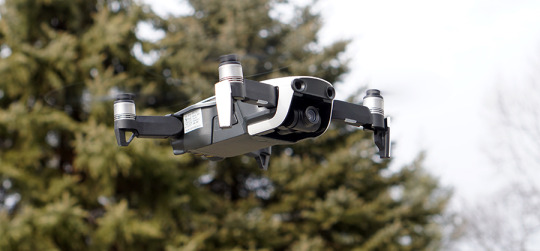
They’ve just introduced a drone called the Mavic Air ($800). It’s so small and smart, it makes you wonder why anyone would buy the 2016 Mavic Pro, which costs $200 more — but it’s not what you’d call perfect.

image
The new Mavic Pro is incredibly tiny, stable, and lightweight.

Meet the Air

The 15-ounce Mavic Air is small — and that’s huge. It folds up for travel: its four arms collapse against the body to make the whole thing small enough to fit into a coat pocket, about 6.5 inches by 3.5 inches by 2 inches. (The top two arms swing horizontally, as you’d expect. The bottom two, though, are hinged in two dimensions: They fold downward and inward, and you have to remember to do those before you do the upper arms. You’ll figure it out.)

image
The Mavic Air’s arms fold up.

Of course, there are plenty of small drones — but not in this league. The Mavic Air, for example, can capture gorgeous 4K video. And its camera is on a three-axis gimbal for stabilization; the video looks like it was shot from a tripod even when the drone was being buffeted by 20 mph winds, as you can see in the video above.

The box includes the drone, a remote control (it uses your smartphone as its screen), a battery, a charger, a set of propeller guards for indoor flying, and a spare set of propellers (in crashes, they’re the first to go).

image
The Mavic Air comes with four propeller guards for indoor flight, 1 battery, a case, spare propellers and a charger.

The Mavic Air is also smarter than any sub-$1,000 drone DJI has ever made. It has depth-sensing cameras on three sides — forward, down, and backward (that’s new) — so that it can avoid collisions automatically in those directions.

Like most drones, this one has an automatic Return to Home feature that kicks in whenever the battery is getting low or if it loses the signal with the remote control. (You can also call it home with one button press whenever you’re just feeling anxious.) Thanks to the cameras underneath, this thing lands exactly where it took off — within a few inches.

The competitive landscape

The Mavic Air’s primary competition comes from two other DJI drones. Here’s the rundown:

  • Mavic Pro (2016 model, $1,000). Twice the size of the Air. Folding arms. 4K video. “27 minutes” of flight per charge (in the real world, 22 minutes). Front and bottom collision avoidance. Remote control included with built-in screen (no phone necessary). Very few palm control gestures (see below).
  • Mavic Air (2018 model, $800 — the new one). Folds up. 4K video. “21 minutes” per charge (more like 18). Front, bottom, and back collision avoidance. Remote control folds up tiny — even the joysticks unscrew and store inside the body, for even smaller packing. Has the most palm gestures of the three drones — and the most reliable palm gestures. 8 GB of internal storage for video and stills, so you can still record if you don’t have a micro SD card on you. Another $200 buys you a “Fly More” kit that includes two extra batteries, an ingenious folding four-battery charger, and even more spare props.
  • Spark (2017 model, $400). The smallest body of all, but its arms don’t fold, so it winds up being bigger for travel. 1080p video. “18 minutes” per charge (more like 11). Front and bottom collision avoidance. Remote control is an extra purchase ($120); uses your phone as a screen. Responds to hand gestures, but not reliably.
image
The Spark may look smaller than the Mavic Air, but remember that it doesn’t fold up.

True, the Mavic Pro gets a little more flight per battery. And there’s an even more expensive model, the $1,100 Mavic Pro Platinum, that gets “30” minutes per charge.

(Do those seem like incredibly short flights? Yup. But that’s drones for you. As it is, a modern drone is basically a flying frame designed to haul its own battery around.)

But in my book, the Air’s tiny size is far more important than the marginally greater battery life. As the old saying doesn’t go, “The best drone is the drone you have with you.”

image
Only the front “arms” have landing gear (the white thing), which fold up for travel.

In-flight entertainment

You can fly the Mavic Air in three ways.

First, you can use the included remote control. If you insert your smartphone into its grippers and connect the little cord, you get a number of perks — like actual joysticks, which make the drone much easier to fly than using the phone alone. The remote also has a dial at the outer corner for adjusting the camera’s tilt in flight, as well as a switch for Sport mode, which unlocks the drone’s top speed of 42 mph (by turning off the obstacle-avoidance features).

The remote also gives the drone a much greater range. It uses a Wi-Fi connection to the drone, instead of the proprietary radio connection of the Mavic Pro. DJI says that still gives you 2.4 miles of range, but I say baloney; even in the middle of the Texas desert, you’ll be lucky to get half that distance. It doesn’t really matter, though, since Federal Aviation Administration rules say you can’t fly a drone out of sight. (Speaking of the FAA: You don’t need a license to fly the Mavic Air as a hobby, but you do need to register the drone itself. And if you intend to fly it professionally — this means you, wedding videographers, filmmakers, construction firms, realtors, police, and farmers — you have to get permission from the FAA.)

The second way to fly the drone is using your smartphone. It works, but you get a much shorter range (about 250 feet), and it’s harder; DJI’s app has become one super-crowded, complex piece of software.

The third way: using hand gestures. The drone must be facing you at all times, and it has to remain pretty close to you, so this trick is primarily useful for positioning it for “dronies” (selfies from the air). Keep in mind that you also need the phone app with you, though, to turn on the palm-control mode.

You stand with your arm out, palm forward, in a “Stop! In the name of love!” pose. Now, you can “drag” your hand up, down, or around you; the drone follows as though connected to your palm by a magnet. It’s the next best thing to The Force.

New, two-handed gestures let you push the drone farther away or pull it closer to you. And you can now make the drone land by pointing your palm toward the ground and waiting.

In the previous model, the Spark, those palm gestures were super iffy; sometimes they worked, sometimes not. The Mavic Air makes them far more reliable, although I never got the new “take off from the ground” gesture working.

As in other DJI drones, the Mavic Air can follow you as you ski, bike, drive, or run (it tracks you optically — you don’t have to have the remote control on you). Unlike earlier ones, this one doesn’t just hover when it encounters an obstacle; it actually attempts to fly aroundthe obstacle and keep going.

How’s it look?

“4K” may be a buzzword, but it doesn’t automatically mean “great picture”; it could refer to 4,000 pixels’ worth of ugly blotch.

The Mavic Air contains the same tiny camera sensor as the Spark and the Mavic Pro. The footage and stills generally look terrific — anything shot from the air is automatically kind of stunning, and the Air uses more data (100 Mbps) to record data than the Pro does.

Unfortunately, this sensor is still fairly disastrous when it comes to dynamic range. That is, it tends to “blow out” bright areas and “muddy up” dark areas. Alas, those are things you get a lot of when you’re shooting from the sky.

image
The Mavic Air’s footage is often marred by blown-out highlights (sun, left) and goopy, murky shadows (people, right).

The Air can also do half-speed slow motion (in 1080p, not 4K), and take high-dynamic range photos (not videos).

All of these drones offer preprogrammed flight patterns, called QuickShots, that make great 10-second videos, incorporating flight maneuvers and camera operations that would be incredibly difficult to do yourself.

For example, the one called Circle makes the drone fly around you, keeping the camera pointed toward you the whole time; Helix makes the drone spiral out and away from you; and so on. There are two new ones: Boomerang flies a grand oval around you, up/out and back. Asteroid combines a flight up and away, with a spherical panorama. On playback, the video is reversed, so that it seems to start with a whole planet earth viewed from space, as the camera rushes down toward you. Here, have a look.

But it’s small

Like all drones in this price range, the Mavic Air is complicated and sometimes frustrating. It does a lot of beeping at you, it’s still full of options that are “not available now” for one reason or another, and it still doesn’t come with a printed instruction manual.

And yeah, someday, we’ll look back and laugh at an $800 drone that flies for only 18 minutes.

But you can’t buy a dream drone that doesn’t exist. And among the ones that do, the Mavic Air is ingeniously designed, impressively rugged, and incredibly small. Its features beat the cheaper DJI Spark in every category — and even the more expensive Mavic Pro in almost every category.

In other words, if you’re the kind of person considering a drone, the Mavic Air strikes a new sweet spot on the great spectrum of drones, somewhere between beginner and pro, between tiny and luggage-sized, between cheap and pricey. Invest as much time learning it as you’ve invested in buying it, and you’ll be flying high.

David Pogue, tech columnist for Yahoo Finance, welcomes non-toxic comments in the Comments below. On the Web, he’s davidpogue.com. On Twitter, he’s @pogue. On email, he’s poguester@yahoo.com. You can sign up to get his stuff by email, here.  

Read more:

Exclusive: What Fitbit’s 6 billion nights of sleep data reveals about us

Tech that can help you keep your New Year’s resolutions

Pogue’s holiday picks: 8 cool, surprising tech gifts

Google’s Pixel Buds: Wireless earbuds for the extremely tolerant

Study finds you tend to break your old iPhone when a new one comes out

Rejoice: Sonos Speakers are finally voice-controllable

Follow Yahoo Finance on FacebookTwitterInstagram, and LinkedIn

05 Feb 21:37

Twitter Favorites: [aloria] Was looking for a graphic to represent a cron job and found this and now I can't stop laughing https://t.co/4Zj9OSp5s6

aloria 🦔 @aloria
Was looking for a graphic to represent a cron job and found this and now I can't stop laughing pic.twitter.com/4Zj9OSp5s6
05 Feb 19:58

The Duke of Data Andy Yan and Who is Renting Where~City of Vancouver

by Sandy James Planner
mkalus shared this story from Price Tags.

poxvmfy74vbypdmczy77ip4hgy

The Duke of Data Andy Yan, Director of the City Program at Simon Fraser University has been reviewing the 2016 census data looking at who is renting accommodations in Vancouver. Andy Yan found some surprises that challenge the stereotype of what has been termed as “large single family home” neighbourhoods.  Originally expecting that maybe 10 per cent of  units were rental in these areas,  Andy found that “West Point Grey with its big, expensive detached houses, is 38 per cent renter households. Kerrisdale is 36.8 per cent renters. Shaughnessy, with its stock of old and new mansions, is made up of 30 per cent renters.” 

The Globe and Mail’s Kerry Gold observes that Andy Yan has found  that  “24 per cent of all renter households are living in the so-called “single family home” areas that provide an invisible affordability often ignored by development pundits.That means that in terms of planning, we should be sensitive to how people are actually using housing types.  Zoning changes can be the ruin of an established community. It’s not enough to rezone without examining how that housing is being used, and by whom – not if the goal is to create affordable housing while keeping people within the community.”

While 53 per cent of Vancouverites rent their homes, the findings challenge what has been viewed as “single family” homes. The term “single family dwelling unit” is a hangover from the 1950’s zoning terminology and should perhaps be changed to reflect its form, not so much its function. Families today are rarely “nuclear” (another hangover from the atomic age) but may house multiple families or unrelated people.

Andy Yan’s takeaway is that the so called “single family” zoning does not adequately project who is living there, and the importance of exploring data. While purpose-built rental housing is necessary ““We need to get over our zoning and form fetishes and go back to creating communities for people. You just can’t spray density around and pray that affordability will follow. ” The CEO of Landlord BC David Hutniak observes that secondary rental suites in large houses make up to 54 per cent of the rental market. He notes that Vancouver has a “very incestuous development community” that can make good returns preselling and flipping condo developments and has had no reason to build rental housing.  “After 40 years of no purpose built rental construction, and a lot of condos, there is a prevalence of the secondary market for rental housing. Thank God we have it, but in terms of security of tenure it’s never been to the same degree as purpose-built rentals.”

There is also a fulsome discussion from writer Melody Ma who has written a compelling article on the importance of the Vancouver Special housing form and the opportunity these large freestanding houses had to shelter multi-generational and extended families. Ms. Ma  notes that these “are densely populated homes that encourages multiple generations to support each other within close quarters. It is an affordable way of living and arguably even a model way of living for the future”. Her article is well worth reading.

IMG_3681

Source: Andy Yan


05 Feb 19:49

Slack kills its Apple Watch app

by Patrick O'Rourke
Apple Watch Series 3

As more app developers drop support for the Apple Watch, it’s increasingly looking like the Apple’s wearable is evolving into a smartwatch that’s great for notifications and fitness tracking, whether the company wants it to or not.

Just like Twitter, Amazon and Google Maps, Slack has now killed off its Apple Watch app. The business-focused chat platform quietly announced the news in the notes for a recent update to its iOS app.

That said, Slack states that users will still be able to respond to incoming messages thanks to the Apple Watch’s notification features. However, the ability to view unread messages is going away.

Some may not even notice the change, but if you’re like me and enjoy being able to reply to private Slack messages directly from your wrist, the change will be disappointing.

Back when Twitter ditched support for the Apple Watch, the social network stated that “notifications were the most helpful part of the Apple Watch experience.”

Source: App Store Via: MacRumours 

The post Slack kills its Apple Watch app appeared first on MobileSyrup.

02 Feb 21:35

The Duke of Data Andy Yan and Who is Renting Where~City of Vancouver

by Sandy James Planner

poxvmfy74vbypdmczy77ip4hgy

The Duke of Data Andy Yan, Director of the City Program at Simon Fraser University has been reviewing the 2016 census data looking at who is renting accommodations in Vancouver. Andy Yan found some surprises that challenge the stereotype of what has been termed as “large single family home” neighbourhoods.  Originally expecting that maybe 10 per cent of  units were rental in these areas,  Andy found that “West Point Grey with its big, expensive detached houses, is 38 per cent renter households. Kerrisdale is 36.8 per cent renters. Shaughnessy, with its stock of old and new mansions, is made up of 30 per cent renters.” 

The Globe and Mail’s Kerry Gold observes that Andy Yan has found  that  “24 per cent of all renter households are living in the so-called “single family home” areas that provide an invisible affordability often ignored by development pundits.That means that in terms of planning, we should be sensitive to how people are actually using housing types.  Zoning changes can be the ruin of an established community. It’s not enough to rezone without examining how that housing is being used, and by whom – not if the goal is to create affordable housing while keeping people within the community.”

While 53 per cent of Vancouverites rent their homes, the findings challenge what has been viewed as “single family” homes. The term “single family dwelling unit” is a hangover from the 1950’s zoning terminology and should perhaps be changed to reflect its form, not so much its function. Families today are rarely “nuclear” (another hangover from the atomic age) but may house multiple families or unrelated people.

Andy Yan’s takeaway is that the so called “single family” zoning does not adequately project who is living there, and the importance of exploring data. While purpose-built rental housing is necessary ““We need to get over our zoning and form fetishes and go back to creating communities for people. You just can’t spray density around and pray that affordability will follow. ” The CEO of Landlord BC David Hutniak observes that secondary rental suites in large houses make up to 54 per cent of the rental market. He notes that Vancouver has a “very incestuous development community” that can make good returns preselling and flipping condo developments and has had no reason to build rental housing.  “After 40 years of no purpose built rental construction, and a lot of condos, there is a prevalence of the secondary market for rental housing. Thank God we have it, but in terms of security of tenure it’s never been to the same degree as purpose-built rentals.”

There is also a fulsome discussion from writer Melody Ma who has written a compelling article on the importance of the Vancouver Special housing form and the opportunity these large freestanding houses had to shelter multi-generational and extended families. Ms. Ma  notes that these “are densely populated homes that encourages multiple generations to support each other within close quarters. It is an affordable way of living and arguably even a model way of living for the future”. Her article is well worth reading.

IMG_3681

Source: Andy Yan


02 Feb 21:34

Yaletown Commute

by pricetags
02 Feb 21:34

Reflections on 20 Years of Open Content: Lessons from Open Source

files/images/David-Wiley.jpg

David Wiley, OER18, Association for Learning Technology, Feb 05, 2018


Icon

David Wiley candidly admits that this history is written from his own point of view, which is a good thing, because my experience of these events was very different. For example, in the mid-1990s, when Wiley was working on an ISP startup, I was working on a FreeNet. I had been using and creating non-commercial shareware (including most especially extensive BBS systems and MUDLibs) for years by the time open source advocates gathered to launch the movement in 1998. When Wiley was writing Richard Stallman and Eric Raymond about his ideas for 'open content' in that same year my own non-commercial open content had been online for three years. When Wiley says we would be "close to nowhere" had we not commercialized free software and free content, I think that the appropriation of an already existing and robust sharing community by commercial interests is what is breaking the internet today. For some people it's cash; for other people it's community. I know where I stand.

Web: [Direct Link] [This Post]
02 Feb 21:33

Building bikes for the Boys and Girls Club

by Dries
Bike building in progress

Throughout the years, the team at Acquia has heard me talk about doing well and doing good. We've embedded this philosophy into Acquia's culture since we started the company. As a result, one of Acquia's core values is to "give back more".

Acquia dna

The "give back more" principle recognizes that Acquia was born from community. We cherish our open source roots and contribute both time and talent to strengthen our communities. This means not only contributing to the open source communities that we are part of, but our local communities as well.

This week our global sales and marketing teams came together for a week of strategic planning and training. For one of our team building activities, we built 60 bikes for the children of the Boys and Girls Club of Boston! We felt that this was a special way to strengthen our team, in addition to being a great opportunity to give back.

Bike building done

The next day, five children from the Boys and Girls Club came to pick up their bikes in our closing session. It was very touching — a lot of our team got teary eyed. It made me very proud of what we were able to accomplish for our local community. I'm excited to continue to "give back more" in 2018.

02 Feb 21:33

David Pogue’s sneak preview of the Apple HomePod

After missing its holiday shipping deadline, Apple (AAPL)  is almost ready to release the HomePod, its new smart speaker — something like the Amazon Echo or Sonos One. It will ship on Feb. 9.

Apple hasn’t yet let reviewers take one home for testing. But this week, it did something uncharacteristic and a little weird: It invited us to one-on-one listening sessions in a Manhattan corporate apartment. The rules were: listen, don’t touch. (And listen, don’t take pictures.)

I’ll write a full review once I get my hands on this little rounded cylinder. But even the 45-minute demo was enough to confirm one thing: This smart speaker is more about “speaker” than “smart.”

image
Apple is entering the smart-speaker game with the HomePod.

All about that bass and treble

A smart speaker is like Siri for the home (or “OK Google,” or Microsoft Cortana): You can ask it questions and give it commands by speaking from across the room, rather than hauling out your phone. The killer app, of course, is music: you can just say, “Alexa, play some light jazz” or “OK Google, play some Billy Joel,” and it starts.

The HomePod is a squat, rounded cylinder (6.8 inches by 5.6 inches), available in black or white. You tap the top to pause playback or make the + and – volume buttons appear. You can double-tap for “next track,” or triple-tap for “previous track.” (Of course, you can also adjust the volume, play/pause, or skip tracks by voice.) A very cool colorful swirling LED light appears whenever HomePod is speaking or listening, and then disappears as though no screen were present.

image
This cool LED swirl animates whenever the Pod is talking or listening.

The HomePod joins a long list of smart speakers, starting with the original, the Amazon Echo ($100); Google, Sonos, Harmon Kardan, and others make them, too. But Apple has tried to differentiate the HomePod, and justify its high price ($350), by giving it better sound than any competitor — and in that, it has succeeded.

In a devastatingly effective demo, Apple lines up four of these things: The Google Home Max ($400), Sonos One ($200), Amazon Echo ($100), and the HomePod. They’re volume-matched and rigged to an A/B/C/D switch, so a single song can hop from one to the other. (Apple even installed a halo backlight behind each speaker that illuminated to show you which one was playing.)

The HomePod sounded the best. Its bass, in particular, was amazing: full and deep, but also distinct and never muddy — you could hear the actual pitch of the bass notes, not just the thud. That, unsurprisingly, is where other small speakers have trouble.

The Amazon Echo is a much smaller, slimmer device, one-third the price, so it’s forgiven for sounding thin compared with the HomePod. The Sonos One came awfully close to the HomePod’s rich sound; you’d really have to hear the A/B test to declare a difference. The real shock was the Google Home Max, a massive, 12-pound machine that’s supposed to be all about the sound; it sounded like cardboard compared with the HomePod and Sonos.

Maybe that’s because it contains only two tweeters and two woofers; the HomePod contains seven tweeters, arrayed in a circle, and a gigantic, 4-inch woofer, capable of moving 0.8 inches, pointing out the top. Or, as Apple describes it, “array of seven beam-forming tweeters, each with its own amplifier and transducer. And each custom designed with a precision acoustic horn that focuses sound for tremendous directional control.”

image
Apple says that the HomePod detects whether it’s in a corner or against a wall, and adjusts the speaker output automatically.

So there’s your good news: If Apple wanted to win in sound quality, it’s succeeded.

And now the bad news.

Not so smart

The HomePod has Siri built in. So you can ask about sports, weather, news, measurements, facts, timers, remindes, and so on.

And you can voice-control your home, to the extent that you’ve bought Apple HomeKit-compatible thermostats, lights, and so on. (Unfortunately, Siri can’t control anything from Nest, which is probably the most popular brand.)

And you can call up whatever music you want, just as on the other speakers — except that the HomePod works only with Apple’s own Apple Music service ($10 a month), not Spotify, not Pandora, not Google Play, not iHeart Radio.

To be clear: You can start up these services on an iPhone app and direct the playback through the HomePod; but you cannot command them by voice.

The rival speakers, on the other hand, all let you control the most popular music services by voice, which is fantastic.

image
You can direct any sound source on your iPhone to play from the HomePod.

The HomePod is not multi-room yet, either, so you can’t say “Play Barry White in the bedroom,” as you can with its rivals. (That will come later in the year, Apple says.) You can’t even buy two HomePods and get stereo, as you can with is rivals. (That’s coming soon, too — which is good, because in a “preview” demo, Apple played me two HomePods in stereo, and they sounded incredible. You could close your eyes and imagine a pair of expensive tower speakers.)

The HomePod lets you dictate and read aloud text messages through your iPhone, and can be a speakerphone for the iPhone. But it doesn’t let you make free phone calls to any phone number, as the Amazon Echo and Google Home do (without your needing a phone).

Bringing it home

We’ll know more about the HomePod in the real world once Apple makes it available to reviewers.

In the meantime, it’s pretty obvious that the HomePod sounds better than any other smart speaker —but its limited smarts make it attractive only to Apple Music subscribers.

Remember the iPod? When it was released in 2001, it worked only with the Mac. Not until Apple made it compatible with Windows, too, a year later, did it become a mega-hit. Apple might do well to remember that with the HomePod: Compatibility sells.

David Pogue, tech columnist for Yahoo Finance, welcomes non-toxic comments in the Comments below. On the Web, he’s davidpogue.com. On Twitter, he’s @pogue. On email, he’s poguester@yahoo.com. You can sign up to get his stuff by email, here.  

Read more:

There’s a new drone that will fit into your pocket

Exclusive: What Fitbit’s 6 billion nights of sleep data reveals about us

Tech that can help you keep your New Year’s resolutions

Pogue’s holiday picks: 8 cool, surprising tech gifts

Google’s Pixel Buds: Wireless earbuds for the extremely tolerant

Study finds you tend to break your old iPhone when a new one comes out

Rejoice: Sonos Speakers are finally voice-controllable

Follow Yahoo Finance on FacebookTwitterInstagram, and LinkedIn

02 Feb 21:33

Hack Education Weekly News

Each week, I gather a wide variety of links to education and education technology articles. All this feeds the review I write each December on the stories we are told about the future of education.

(National) Education Politics


The State of the Union is a right mess. President Trump gave the annual speech to Congress on Tuesday night. (Thankfully, I had class and didn’t have to listen.) Some of the education-related moments: “Less Community, More Vocational,” as Inside Higher Ed put it. “What Trump Didn’t Say About Education,” according to The Atlantic.

More on the Department of Education and for-profit higher ed in the for-profit higher ed section below. And more on the Department of Education and its plans for financial aid in “the business of financial aid” section below.

From the press release: “U.S. Department of Education Launches New English Learner Data Story.” “Data story” is a fancy way of saying “website.”

There’s news about Department of Education hires in the HR section below.

Via The New York Times: “Republicans Stuff Education Bill With Conservative Social Agenda.”

Religious colleges would be able to bar openly same-sex relationships without fear of repercussions.


Religious student groups could block people who do not share their faith from becoming members.


Controversial speakers would have more leverage when they want to appear at colleges.

Via The Chronicle of Higher Education: “Top Official at Justice Dept. Says More Colleges Should Punish Hecklers.” Because “free speech” matters, right up until someone laughs at a Keebler Elf during his Senate confirmation hearing.

Trump’s 5G proposal is destructive nonsense,” says The Verge. “Let’s socialize wireless networks in America. Just keep Trump out of it,” says The Outline.

Via the Broadcast Law Blog: “Time for the FCC to Review Children’s Television Educational Programming Obligations of Broadcasters? Commissioner O’Rielly Thinks So.”

(State and Local) Education Politics


Newark has control once again of its public school system, which the state took away from the city 22 years ago.

Via BocaNews: “Parents throughout South Palm Beach County are using iReady on behalf of their children, possibly skewing scores – and usefulness – of the $6-Million diagnostic computer system.” iReady is owned by Curriculum Associates.

Discovery Creemos Academy – formerly known as the Bradley Academy of Excellence – a charter school in Goodyear, Arizona, has abruptly closed its doors.

Via Chalkbeat: “Rocketship becomes latest charter network to pull the plug on Tennessee’s Achievement School District.”

Via NPR: “In D.C., 34 Percent Of Graduates Received A Diploma Against District Policy.”

Via The Atlantic: “The Libraries Bringing Small-Town News Back to Life.”

Immigration and Education


Via NPR: “Nearly 9,000 DACA Teachers Face An Uncertain Future.”

Education in the Courts


Via The Phoenix New Times: “The Battle Isn’t Over Between ASU Professor and Cop Who Arrested Her in 2014.”

“Free College”


Via The Chronicle of Higher Education: “In West Virginia, Free Community College Would Come With a Drug Test.”

The Business of Financial Aid


Via Buzzfeed: “Betsy DeVos Wants To Put Your Student Loan Money On A Bank Card.” All the better to surveil you with, my dear.

Via The Washington Post: “Use of financial aid continues to grow, though fewer students are borrowing for college.”

The “New” For-Profit Higher Ed


“The U.S. Department of Education on Monday distributed proposals for rewriting the gainful-employment rule, which the Trump administration halted last summer,” Inside Higher Ed reports. “The department’s do-over on the vocational education rule, which applies to for-profit college programs and to nondegree programs at nonprofit colleges, continues with a negotiated rule-making session next week.” The proposal would expand the gainful employment rule to all schools that receive federal aid, but it would remove any penalties for schools that fail to meet acceptable levels.

An op-ed in The Washington Post: “On ITT and the Education Department, no more excuses.”

More on bootcamps in the job training section below.

Online Education (and the Once and Future “MOOC”)


It’s baaaaack: “Return of the MOOC,” The City Journal tells us.

Via The Jordan Times: “Edraak.org launches new platform for school learners, teachers.”

“The problem with online charter schools,” according to Vox.

There’s some (sorta) MOOC-related news in the venture funding section below.

Meanwhile on Campus…


The Baffler on Turning Point USA and its harassment campaigns.

Via Inside Higher Ed: “Scholars Defend Stanford Professor Receiving Threats.”

Via The Triton: “White Supremacist UCSD Student Disrupts Lecture.”

Columbia Plans to Commit Unfair Labor Practice in Hopes of Denying Graduate Student Workers Their Labor Rights,” says Remaking the University. (Disclosure: I currently have a fellowship at the Columbia J School.) More on Columbia University’s dastardly move in Inside Higher Ed. Happy 50th anniversary of 1968, Columbia administrators!

Via The Chronicle of Higher Education: “Hypothetical ‘Shark Tank’ Session Sets Off Real Worries at U. of Baltimore.”

Via the Lansing State Journal: “Some faculty leaders at Michigan State University are threatening to seek the resignations of the entire MSU Board of Trustees if it follows through with a reported plan to appoint John Engler interim president.”

Via the AP: “Two students were shot and wounded, one critically, inside a Los Angeles middle school classroom Thursday morning and police arrested a female student believed to be 12 years old, authorities said.”

MIT students are being scared straight with episodes of ‘Black Mirror’,” says The Outline. Funny that the Media Lab turns to fiction. Student could read about the actual history of MIT, if they want to think about the ethical implications of their work, and its ties to the military industrial complex.

Via The New York Times: “Yale’s Most Popular Class Ever: Happiness.”

“‘Happiness 101’ Courses Are a Necessary Stop-Gap for the Campus Mental Health Crisis,” says Slate. Ah yes, this old canard: “positive psychology” in lieu of addressing underlying structural issues.

Via NPR: “Student Journalists Launch Website After They Say School Censored Their Paper.”

Via Buzzfeed: “This Student Newspaper Let A Nazi Sympathizer Write For Them.”

(To be clear, these are two different student newspapers.)

Accreditations and Certifications and Competencies


Via The New York Times: “University of Pennsylvania Takes Away Steve Wynn’s Honors. And Bill Cosby’s, Too.”

Via Bitcoin Magazine: “Pilot Project Verifies Academic Credentials on the Bitcoin Blockchain.” Phew! Good thing Bill Cosby’s degree wasn’t on the blockchain as there’d be no adjusting it, amirite? The pilot, by the way, is at University College London’s Centre for Blockchain Technologies.

Via Inside Higher Ed: “The Higher Learning Commission has placed Lutheran School of Theology in Chicago on probation, citing financial troubles that threaten to undermine its educational programs.”

Memos from HR


Stanford researcher Candace Thille is heading to Amazon. The “pioneer in the science of learning,” as Inside Higher Ed puts it, will help the technology company with its internal training program.

Via Politico: “Families for Excellent Schools CEO fired after investigation into ‘inappropriate behavior’.” That’s Jeremiah Kittredge, who’s run one of the best funded pro-charter advocacy groups in the company.

New hires at the Department of Education.

The Business of Job Training


Inside Higher Ed on “Phase 2 for Boot Camps.”

Via Techcrunch: “Google expands Howard West to a full-year program to train more black engineers.”

Contests and Awards


Well, well, well. I was wondering when #metoo would come to education technology. The Verge reports that “GDC rescinds award for Atari founder after criticisms of sexually inappropriate behavior.” That’s Nolan Bushnell.

This Week in Betteridge’s Law of Headlines


Hey Alexa, Can You Help Kids Learn More?asks Michael Horn in Education Next. (The “voice-activated classroom” would discriminate against some people with disabilities and against people who do not speak English, but hey.)

(Reminder: according to Betteridge’s Law of Headlines, “Any headline that ends in a question mark can be answered by the word no.”)

Upgrades and Downgrades


Code.org is bringing computer education to Alaska Airlines’ in-flight entertainment,” says Techcrunch. Because MOOCs on an airplane proved to be such an effective mode of instruction.

Via Techcrunch: “Sphero’s CEO discusses the company’s shift from Star Wars to schools.” The company, which has raised some $107.4 million, laid off 45 employees last week. So time for some friendly PR, I guess.

Via The New York Times: “Turn Off Messenger Kids, Health Experts Plead to Facebook.”

Mindwires Consulting’s Michael Feldstein and Phil Hill are launching a “matchmaking service” called the Empirical Educator Project. Edsurge has some of the details.

Via The New York Times: “School Shooting Simulation Trains Teachers for the Worst.”

Via Campus Technology: “One of the founders and former CEO of online proctoring company ProctorU, Don Kassner, is launching a new venture: MonitorEDU, an online proctoring service powered by technology from ProctorExam. Kassner created Proctor U in 2008 with colleague Jarrod Morgan while serving as president of Andrew Jackson University (now known as New Charter University), and left the company in 2016.” Sounds like there’s some proctoring company drama underlying this story.

Campus Technology also says that Indiana University is expanding its use of Salesforce. It’s just a rewrite of a press release, sure, but I’m noting it here so as to monitor how Salesforce attempts to “platform” education.

It’s 2018, and folks are still so desperate to make VR a thing.

Via EdWeek’s Market Brief: “Google for Education Launches Beta for ‘Create Your Own’ Virtual Reality Experience.” And by “experience,” they mean “uploading a 360 degree image to Google and adding some explanatory content.”

How a Montessori classroom of fourth graders is like an International Baccalaureate classroom is a real article – and a good demonstration of how Montessori can be reshaped to fit any agenda. Sponsored by the Chan Zuckerberg Initiative, of course.

“Why Students Are Still Spending So Much for College Textbooks,” according to The Atlantic.

“Reflections on 20 Years of Open Content: Lessons from Open Source” by David Wiley.

Via Techcrunch: “Pearson is adding LittleBits kits to its STEM curriculum.”

Edsurge on “An Education ‘Intrapreneur’ on the Difficulties Innovating in a Conservative Industry.” That’s former Pearson exec Larry Singer, who now runs Open Up Resources.

Please stop making up cute variations of the word “entrepreneur.” Please stop.

You can learn a lot about how entrepreneurs view education when they’re talking with their investors about the business.

Tom Hanks as Mr. Rogers. Ugh.

Robots and Other Education Science Fiction


Via Inside Higher Ed: “Americans don’t fear artificial intelligence as much as is commonly believed, a new study by Gallup and Northeastern University has found. Officials at Northeastern say that it shows higher education should be more involved in training people for the artificial intelligence world.” More on the survey from The Chronicle of Higher Education.

Elsevier on “The Augmented Researcher: What Does 2018 Hold for AI in Publishing?”

Edsurge predicts the future of ed-tech. Or at least the year in ed-tech.

(Venture) Philanthropy and the Business of Education Reform


Via The Washington Post: “Koch network laying groundwork to fundamentally transform America’s education system.”

Venture Capital and the Business of Education


Liveedu.TV has raised $10 million in an initial coin offering. Liveedu.TV is a learn-to-code platform. ICOs are… something else indeed.

The digital reading platform Ellabook has raised $6.3 million from Qingsong Fund, QF Capital, and Vtron Investment.

Packback has raised $4.2 million from University Ventures, Mark Cuban, and Hyde Park Angels. The digital textbook provider has raised $8.2 million total.

Lambda School has raised $4 million from Y Combinator and Tandem Capital. The coding school has raised $4.1 million total and plans to use the money to expand its income-sharing agreement program.

LearnPlatform, the startup formerly known as Learntrials, has raised $3.2 million from New Markets Venture Partners and Emerson Collective. The company, which helps schools evaluate their ed-tech usage, has raised $4 million total.

TeacherGaming has raised $1.6 million from Founders Factory and Makers Fund. The company sold MinecraftEDU to Microsoft in 2016.

Edovo has raised $250,000 from Twilio. The company provides “tablet-based educational content for incarcerated individuals.”

LivingTree has acquired Edbacker.

ASSIST has acquired the online school Advantages School International.

Asteria Education has acquired ECS Learning Systems.

Taskstream, Tk20, and LiveText have merged to launch a new company: Watermark.

The former for-profit higher ed chain Laureate Education – it’s now a “public benefit company” – is selling off a number of its schools, Inside Higher Ed reports.

Coursera co-founder “Andrew Ng officially launches his $175M AI Fund,” says Techcrunch. It isn’t really a fund per se. But that’s okay. MOOCs weren’t really MOOCs either.

Data, Surveillance, and Information Security


EdTech Strategies’ Doug Levin has released a new study on the many security and privacy issues with school (and school district and department of education) websites. More coverage in Edsurge and in Boing Boing.

“It’s Time to Make Student Privacy a Priority,” says the EFF.

Via Buzzfeed: “Here’s What Happens When Your Mom Or Dad Steals Your Identity.”

Via The Guardian: “Amazon patents wristband that tracks warehouse workers’ movements.” Worth thinking about, I’d say, in light of the Candace Thille news (see above), as well as the announcement that the technology giant is working with Berkshire Hathaway and Chase to form a new healthcare company.

Via The Guardian: “Fitness tracking app Strava gives away location of secret US army bases.” The story is not directly education-related, of course, except for all those ridiculous arguments that we need some sort of “FitBit for education.”

“The Latest Data Privacy Debacleby Zeynep Tufekci

FERPA, COPPA and the myths we tell each other” by Jim Siegl.

The GM of a “situational awareness technology company” offers thoughts on “Preventing Problems with Predictive Analyticsin the Getting Smart blog. This article is mostly about fire extinguishers, oddly. Might I suggest, one way you can avoid problems – something not mentioned in the article – is by not using predictive analytics.

More predictive analytics PR.

Research, “Research,” and Reports


I’ve run the numbers on ed-tech funding for the month of January – details available on funding.hackeducation.com.

Via Inside Higher Ed: “Roughly three million Americans live more than 25 miles from a broad-access public college and do not have the sort of high-speed internet connection necessary for online college programs, according to a new report from the Urban Institute’s education policy program.”

From Educause: “Higher Education’s Top 10 Strategic Technologies and Trends for 2018.”

Alex Usher reviews George Mason University professor Brian Caplan’s new book The Case Against Education.

Via The Chronicle of Higher Education: “International Grad Students’ Interest in American Higher Ed Marks First Decline in 14 Years.”

Also via The CHE: “4-Year Colleges That Drew the Highest Percentages of First-Time Students From Out of State, Fall 2016.”

Via Campus Technology: “Personalized Text Messages Boost STEM Student Persistence in Community College Study.”

Edsource on an Aspen Institute study: “Student social, emotional and academic development becoming more intertwined in K–12 classrooms.”

Via Inside Higher Ed: “Nearly three-quarters of ninth graders tracked in a major federal study had received some kind of postsecondary education or training within seven years – and nearly a quarter of them had left their programs without a credential of any sort.”

The Atlantic’s Melinda D. Anderson on “What Kids Are Really Learning About Slavery.” Historian Angus Johnston posted a series of questions on Twitter about the claims made in the Teaching Tolerance report about what students do and do not know about slavery.

“‘White Supremacists Are Targeting College Campuses Like Never Before’,” says The Chronicle of Higher Education. More on the report from the Anti-Defamation League in Inside Higher Ed.

Via Chalkbeat’s Matt Barnum: “Did new evaluations and weaker tenure make fewer people want to become teachers? A new study says yes.”

And Matt Barnum is my journalist hero this week for poking some holes in the claims made in Bloom’s famous “2 Sigma” study – a study that gets trotted out all the time to justify various education technology projects: “Why ‘personalized learning’ advocates like Mark Zuckerberg keep citing a 1984 study – and why it might not say much about schools today.”

Icon credits: The Noun Project

02 Feb 18:18

The TSP Pledge: Shared Mobility Principles for Livable Cities

by pricetags

From Curbed:

Fifteen leading technology and transportation companies announced the Shared Mobility Principles for Livable Cities, a voluntary set of rules and principles meant to help steer the future of transportation towards solutions that address equity, environmental, and social concerns.

The initial signatories—Uber and Lyft, as well as BlaBlaCar, Citymapper, Didi, Keolis, LimeBike, Mobike, Motivate, Ofo, Ola, Scoot Networks, Via, and Zipcar—account for 77 million passenger trips per day and inform the travel decisions of 10 million people each day, according to a statement released by the World Resources Institute, the organization which facilitated the agreement.

The non-binding principles are general ideas. But they suggest a vision of a multimodal, more sustainable solution to urban mobility, especially if companies truly live up to these principles, and collaborated closely with cities to make them a reality.

Principles such as prioritizing people over vehicles, supporting the shared and efficient use of “vehicles, lanes, curbed, and land,” and pushing towards open data and fair user fees would, if followed, fulfill many wishlists for urban transit advocates. The group also pledged to “lead the transition towards a zero-emission future and renewable energy.”

City transit officials would be especially happy if Uber and Lyft, which haven’t been completely forthcoming about sharing transit information, would do more than “aim for public benefits via open data” and truly share data. During a press call yesterday, Lyft Vice President of Government Relations Joe Okpaku said ride-share companies need to figure out how to share data with partners and cities in a way that is “protecting the very legitimate privacy interests of our consumers.”

Representatives from both ride-hailing companies also said they support the use of congestion pricing to ease traffic.


Here are some of the key pledges:

2. WE PRIORITIZE PEOPLE OVER VEHICLES.

The mobility of people and not vehicles shall be in the center of transportation planning and decision-making. Cities shall prioritize walking, cycling, public transport and other efficient shared mobility, as well as their interconnectivity. Cities shall discourage the use of cars, single-passenger taxis, and other oversized vehicles transporting one person.

3. WE SUPPORT THE SHARED AND EFFICIENT USE OF VEHICLES, LANES, CURBS, AND LAND.

Transportation and land use planning and policies should minimize the street and parking space used per person and maximize the use of each vehicle. We discourage overbuilding and oversized vehicles and infrastructure, as well as the oversupply of parking.

10. WE SUPPORT THAT AUTONOMOUS VEHICLES (AVS) IN DENSE URBAN AREAS SHOULD BE OPERATED ONLY IN SHARED FLEETS.

Due to the transformational potential of autonomous vehicle technology, it is critical that all AVs are part of shared fleets, well-regulated, and zero emission. Shared fleets can provide more affordable access to all, maximize public safety and emissions benefits, ensure that maintenance and software upgrades are managed by professionals, and actualize the promise of reductions in vehicles, parking, and congestion, in line with broader policy trends to reduce the use of personal cars in dense urban areas.

And importantly, this one:

8. WE AIM FOR PUBLIC BENEFITS VIA OPEN DATA.

The data infrastructure underpinning shared transport services must enable interoperability, competition and innovation, while ensuring privacy, security, and accountability.

Gord Price:

The requirement to provide data should not be voluntary, subject to a non-binding pledge.  It should be a condition of an operating licence for using public owned, financed and regulated roads.  

Data is power.  Whoever has it, controls it and profits from it must be regulated by the public.  If private companies can keep data proprietorial, they will soon come to control the transportation system – and hence the operations, design and purpose of our cities.


02 Feb 17:36

Ev Williams Hires Siobhan O’Conner from Time, to Continue Transition into Megamagazine

by Stowe Boyd

Ev Williams in doubling down on the conversion of Medium into a megamagazine ( as I discussed in Why I Am Moving Work Futures to Substack from Medium). He’s hired Siobhan O’Conner from Time to serve as VP of Editorial, reports Joe Pompeo, who called Medium the ‘chameleon of web publisher’:

Medium — best known as an online community where people (often well-known people like politicians, executives, and journalists) can self-publish op-eds, personal essays, and reportage, potentially attracting a large audience — has gone through various iterations since its founding in 2012. The most recent is a subscription play, to which Medium pivoted last year after an ad-based model proved difficult. Some outlets — The Awl, The Ringer, and Pacific Standard, among others — had even moved their content over to the platform, but subsequently pulled out. (Backchannel, a tech-oriented publication that debuted on Medium in 2014, is now owned by Condé Nast, the parent company of Vanity Fair’s Hive; an array of lesser-known, niche publications still host content exclusively on Medium, which also syndicates articles from big shots like The New York Times and The Economist.)
O’Connor and a small team of editors will focus largely on doing stories and commissioning paid writers to build out Medium’s membership program, as well as finding the best stories from Medium’s user-base to promote. Medium has struggled with people not quite understanding exactly what it is. (A blog network? A platform? A publisher? All of the above?) Now, like many media companies, it wants to be a place that compels readers to open their wallets for digital journalism, so the idea is to generate professionally edited features for which people would be willing to pay $5 a month after a monthly stipend of three free articles runs out. (The user-generated stuff will remain free unless the creator decides to put it behind the metered paywall, as a way to be compensated based on the extent to which readers engage.) O’Connor was traveling this week so wasn’t able to get on the phone to tell me more, but a Medium representative said to expect a mix of essays and reported pieces on a broad range of topics that generally aren’t news-driven.

Will Medium evolve away from the ‘pro-am’ model, like HuffPost has, with O’Conner steering the editorial direction that way? Of course, they could mutate the subscription system, fracturing members subscriptions to specific topical subsets. Will have to see.

Another option would be to build a B2B platform, liked Linkedin has done around recruitment, but with the hiring of O’Conner it seems Williams is not following that path

Actually published at stoweboyd.com, but cross-posted here.

02 Feb 17:36

"Not knowing yourself is inevitable, and not knowing yourself demands courage."

“Not knowing yourself is inevitable, and not knowing yourself demands courage.” -...
02 Feb 17:36

The Seven Maps of Mobility Pricing – Map 1

by pricetags

Last month, the (Mobility Pricing Independent) Commission released a report that outlined two possible policy approaches: congestion point charges — which involve charging someone a toll when they pass a certain congested point or location — and charging drivers for each kilometre they drive (varied by time and/or location). …

Price Tags will print all of them throughout the day.

All maps are available here.

MAP 1: Congestion Point – Downtown Vancouver

Why did we choose this example?

• Getting to, from and around downtown Vancouver was identified as one of the top congestion areas

• Good availability of alternative modes of transportation already exist in the area

• Downtown decongestion charging has been effective in many other cities Who would pay?

Who would pay?

People who drive past the congestion point charges would pay. However, this charge could be higher in very specific congested hot spots, and lower in less congested areas and/or with less access to transit. As social equity is a key consideration, we are still exploring discounts and exemptions for certain individuals.

Where and how would congestion improve?

Drivers may avoid travelling in and out of downtown Vancouver during peak hours which would reduce congestion. Congestion would be reduced in and around downtown Vancouver, major arteries and hot-spots that connect the rest of the region to downtown.

How much would I pay?

This charge may be just enough to prompt behaviour changes from some vehicle users with access to alternative modes of transportation. As affordability is a key consideration, we are still exploring what a price structure, discounts, and maximum charges (caps) could look like.

What are related considerations we heard in Phase 1?

• Consider the availability and improvement of transit and transportation modes to provide accessible and attractive choices for vehicle users

• Consider impacts on businesses downtown, particularly small businesses

• Consider equity implications, including discounts or exemptions for those who have fewer choices or lower income

• Consider impacts from traffic diversion


What about Bowen Island?

We know that Bowen Island residents already pay to ride the ferry. The project team will conduct further research for Bowen Island residents

02 Feb 17:36

Apple temporarily removed Telegram from the App Store

by Igor Bonifacic
Telegram

On Thursday, Apple temporarily removed popular security-focused instant messaging apps Telegram and Telegram X from the iOS App Store.

9to5Mac was the first publication to report on the removal, with Telegram CEO Pavel Durov later saying, in response to a tweet, that Apple had taken down the two apps due to “inappropriate content”.

“We were alerted by Apple that inappropriate content was made available to our users and both apps were taken off the App Store,” said Durov. “Once we have protections in place we expect the apps to be on the App Store.”

It’s not clear what kind of inappropriate content was found on Telegram. However, Apple may have had issues with how the two apps filtered for such content.

The company’s iOS guidelines include a section on “upsetting or offensive content”, with a further sub-section devoted to user-generated content, which applies to any messaging app with a public broadcast feature (in order to be on the App Store, Telegram and Telegram X are required to comply with this section of Apple’s guidelines).

According to TechCrunch, messaging apps must include a mechanism that allows them to automatically filter objectionable material; some kind of functionality to allow users to report offensive content; and the ability for developer to easily block users from their service.

Additionally, Apple states:

“Apps with user-generated content or services that end up being used primarily for pornographic content, objectification of real people (e.g. “hot-or-not” voting), making physical threats, or bullying do not belong on the App Store and may be removed without notice.”

Whatever the case, Telegram later returned to the App Store.

Telegram first launched in 2013. At the time, it was one of the few messaging apps to offer end-to-end encryption.

Since then, taking a cue from Telegram, other popular messaging services such as WhatsApp have also implemented end-to-end encryption to protect their users.

Source: Telegram Via: TechCrunch

The post Apple temporarily removed Telegram from the App Store appeared first on MobileSyrup.

02 Feb 15:56

Dude, You Broke the Future! Charles Stross at 34C3

by Ton Zijlstra

I appreciate the work of science fiction author Charles Stross a lot (his blog is here). At the 34th Chaos Communication Conference (which took place in December in Leipzig, Germany) he gave an interesting presentation. He isn’t much of a presenter, reading from his notes, so go read the transcript that he posted (the video is online as well). With some deserved criticism of the singularity, and corporations as 19th century slow AI, as context blind single purpose algorithms.

And on how exploring the (near) future as SF is becoming more and more difficult:

My recipe for fiction set ten years in the future used to be 90% already-here, 9% not-here-yet but predictable, and 1% who-ordered-that. But unfortunately the ratios have changed. I think we’re now down to maybe 80% already-here—climate change takes a huge toll on infrastructure—then 15% not-here-yet but predictable, and a whopping 5% of utterly unpredictable deep craziness.

02 Feb 15:56

Apple völlig daneben

by Volker Weber

Gute Nachrichten sind keine Nachrichten. Und so jagten sich die letzten Tage mal wieder die Schlagzeilen um Apple. "iPhone X Failure To Ignite Passion Is Bad News For Tim Cook" (Forbes) oder "Here's Where Apple Went Wrong With the iPhone X" (Fortune). Bei sowas lächle ich immer und warte einfach mal ab, was Apple selbst zu berichten hat.

Tim Cook: The iPhone X has surpassed our expectations and has been the top selling iPhone every week since it shipped in November.

Das teuerste iPhone aller Zeiten hat sich am besten verkauft. Also müssen neue Schlagzeilen her. "iPhone X is the top seller, but total iPhone sales take a step back" (CNET).

Apple says the iPhone X, iPhone 8, and iPhone 8 Plus lineup brought in the highest revenue of any iPhone lineup in the company's history.

Ja, aber, aber "... der Umsatz ist vielleicht gestiegen, aber Apple hat nur 77,3 Mio. iPhones verkauft und letztes Jahr waren es 78,3 Mio." Kleine Rechenaufgabe: letztes Jahr war das Quartal 14 Wochen lang und dieses Jahr 13 Wochen. Wieviele iPhones sind das? Circa 5 Millionen. So gesehen hat Apple dieses Jahr vier Millionen mehr verkauft, nicht eine Million weniger. Ach, es ist aber auch ein Kreuz.

Überhaupt, ein klägliches Ergebnis. Nur 222 Millionen verdient. Allerdings "every single f&cking day". 5 Milliarden hat das neue Bürogebäude und der ganze Park außen rum gekostet. Apple braucht nicht mal einen Monat, um das zu verdienen.

IMG 20180202 100808

Am Ende liegt es doch an den Produkten. Das iPhone X ist in der Tat das beste Handy, das ich je in der Hand hatte. Es war ein mutiger Schritt, das Erfolgsrezept von 10 Jahren iPhone zu ändern. Mir gefällt es. Den Kunden auch.

Tim Cook: customer satisfaction is "off the charts" for the iPhone X.

Und der Smartwatch-Markt? Es gibt keinen Smartwatch-Markt. Seit drei Jahren baut Apple eine Watch, immer noch im selben Design, jedes Jahr besser als zuvor. Dutzende, wenn nicht hunderte anderer Modelle gibt es und kein einziges hat bisher einen Fuß auf den Boden bekommen. Die Schlagzeilen-Macher gieren nach Zahlen, aber es würde mich nicht wundern, wenn Apple den Park allein mit der Apple Watch bezahlen könnte.

Apropos bezahlen mit der Apple Watch. Wie wäre es mal damit, Ihr Schnarchnasen von deutschen Banken? Ihr seid ein fieser weißer Fleck auf der Europäischen Landkarte.

02 Feb 15:53

Alien VTOL by Alex Ries

by Igor Tkac (noreply@blogger.com)
mkalus shared this story from concept ships.

Ship art by our good friend Alex Ries.


Keywords: vtol vertical take off and land alien ship concept spaceship art illustration painting design by alex ries artstation portfolio image sample
02 Feb 15:52

Asia will return golden lustre to Olympics – and for that the ‘Lords of the Rings’ should bow forever

by Tim Noonan
The Olympic Games long seemed to matter. They were a global phenomenon and many nations could barely contain their lust for the opportunity to host the quadrennial international circus. Their appointed representatives would come from far and wide bestowing lavish gifts upon the International Olympic Committee (IOC) regents, who became known as the “Lord of the Rings”. Exalted and imperious, every itch was scratched for the Lords. But on the heels of numerous corruption and doping...
02 Feb 15:52

I am an IBM Champion – 2018

by Thejesh GN

So I am IBM Champion for cloud – 2018. It happened earlier this year, but I was waiting for the official announcement before blogging about it. IBM Champion is a non IBMer who demonstrate both expertise in and extraordinary support and advocacy for IBM technology, communities, and solutions.

I am interested in Free and Open Source software at IBM and some of their implementation in the cloud. Products like Cloudant (CouchDB), IBM Functions (OpenWhisk), StrongLoop, SystemML have been focus of some of my writings last year. I will continue to cover more Open Source and their implementations in 2018.

The IBM Champion program recognizes these innovative thought leaders in the technical community and rewards these contributions by amplifying their voice and increasing their sphere of influence. IBM Champions are enthusiasts and advocates: IT professionals, business leaders, developers, executives, educators, and influencers who support and mentor others to help them get the most out of IBM software, solutions, and services.

It’s a great honour to be part of champions community. I would like to thank everyone who nominated me, Cloud team and IBM Champion program team.

02 Feb 15:52

Slowing down to navigate fuzzy boundaries

by Jim

aerial view of shorelineI’ve been thinking about the space between strategy and tactics for a long time. It seemed at one time to be a very sharp and well-defined boundary. Some folks worked on strategy, others executed a collection of tactics to make the strategy happen. Sharp boundaries make for simple academic disciplines, neat organizational boundaries, and simplistic management practices.

The real world doesn’t respect sharp boundaries. Straight lines and sharp edges are human creations; they rarely appear in the natural world. That should have been a clue that we picked up on a lot earlier. Machiavelli understood this. A handful of the smartest thinkers did too.

But the forces that want to simplify are strong. Simple stories fit on PowerPoint slides. Simple models fit into spreadsheets.

The world always insists on complexity, but for the longest time it was possible to look past the complexity. The most interesting threads of the last decades are those that force us to reexamine the belief that there is a knife-sharp edge where I end and you begin. These threads are visible at all level of inspection. One of the hot topics in human biology today is the role of the microbiome; the line between me and not-me is muddied with intestinal bacteria and internal cell materials that are essential to life but are not part of our DNA. At the other extreme, there is the impact of human activity on the global climate. It takes a conscious effort of will to cling to simple explanations.

Simple explanations do support the temporary preservation of the status quo. “It’s complicated” or “it depends” are never popular conversational gambits. But our anxieties are triggered and amplified as reality continues to insist on being messy and complicated.

These anxieties are a clue that we can pay attention to.

I was teaching my class on organizational development this morning. We were looking at a collection of readings that talked about and around the challenges that individual knowledge workers and leaders must struggle with in today’s world. What is the role of emotional intelligence inside organizations? Why is resilience becoming more important even as efforts to pursue efficiency and optimization erode that very resilience? When does skill interfere with learning?
What struck me as I was trying to orchestrate the discussion was that the common thread connecting the diagnoses and the advice across these readings was speed. Speed drove anxiety. Figuring out ways to slow things down enough to make sense of them was that unifying thread.

For all that we celebrate speed, it separates us. We know this in the realm of personal relationships; they strengthen when calm displaces the frenetic. That chance in speed is subjective; to an outside observer that pace might still look rapid. On the inside, the principals have found methods and practices to move in sync. To use a phrase from Donella Meadows, the late thinker on dynamic systems, they have “learned to dance with the system.”

The post Slowing down to navigate fuzzy boundaries appeared first on McGee's Musings.

02 Feb 15:52

6 murderers are paroled in a small Japanese town. Will they bring the place back to life or bring more death? See “The Scythian Lamb”

by Kaori Shoji

Rural depopulation is a serious problem in Japan, so much that for the past decade, media fiction has devoted an entire genre into telling its stories. Bankrupt shops with their shutters permanently closed, desolate mountain and sea landscapes, no one out on the streets but a handful of old people. These are both metaphors for, and the hard facts of, most Japanese rural areas. Regional governments have been desperate to bring in new residents and to this end, they’re offering stipends, free housing, even matchmaking parties – on the governments’ dime. Rumor has it that since the early nineties, rural towns have been recruiting parolees to become part of the local populace. This information cannot be verified. The people involved will never admit to such a program even existing. But it’s there, and “The Scythian Lamb” is a brilliant fable about what happens when this program kicks in (pun fully intended) on a sleepy little coastal town. A town where, “the people are kind and the seafood is delicious.”

© 2018『羊の木』製作委員会 ©山上たつひこ、いがらしみきお/講談社

With its slow burning violence and small town melodrama, “The Scythian Lamb” is mindful in many ways of “Fargo” (the TV series) but without the broad streak of snarkiness and splashy bloodletting. Most of all, the dystopian despair that make up much of “Fargo” (and like-minded others) is missing from “Scythian…”

This isn’t a spoiler but the ending is hopeful, even happy. The final scenes close on a rural town whose residents are marginally more joyous than they were last year and there is absolutely no mention of the violence that erupted briefly like fireworks, then disappeared into the night sky. However, the journey to the peaceful end is not easy.

Six ex-cons, all who had served time for murder and now on parole, are selected to live in a fictional seaside town called Uobuka (which means ‘fish deep’). One by one, they arrive – four men and two women between the ages of early 30s to mid-60s – and are given a welcome by the city hall worker Tsukisue (played with breezy finesse by Ryo Nishikido). They are allowed to live in the town, on the condition that they take jobs provided them by city hall, and that they stay for 10 years. In other words, they’ve exchanged a shorter prison sentence for another kind of penance. Already, one of them (Kazuki Kitamura), who represents Japan’s new breed of criminal, has started to complain that he will be “bored to death” here.

Tsukisue is still young, lithe and naive though his high school pal Sudo (Satoru Matsui) assures him that living out in the boonies ages everyone twice as fast. “In your case, it’s four times as fast,”  Tsukisue jokes to the noticeably overweight Sudo. But Tsukisue may be envious of the fact that fat or not, at least his friend has a wife and daughter to go home to. Tsukisue on the other hand, looks like a guy who has been celibate for a long time, which is fast becoming the norm for many single Japanese men. But (and this is the thing about Tsukisue) the guy is NOT bitter. He’s gentle, kind and above all, conscientious. He does his job, and then goes home to take care of his dad who is recovering from a stroke. Not much of a life for a good-looking dude. But when he discovers that the newcomers he had chaperoned were each convicted for murder or manslaughter, Tsukisue’s equilibrium is shattered. Will they, you know, like, do it again? His supervisor intones to Tsukisue not to dwell on the past. “And don’t go telling people they’ve just gotten out of prison,” adds the supervisor, because this project could well have a bearing on “Japan’s future.”

Based on the award-winning manga by Tatsuhiko Yamagami and Mikio Igarashi, “The Scythian Lamb” is directed by Daihachi Yoshida. As one of Japan’s last old-school filmmakers, Yoshida has a solid reputation for churning out crime/suspense blockbusters like “Pale Moon” in 2014. “Scythian…” shows Yoshida in an unusually political mode, exploring the many woes of Japan’s rapidly shrinking, super aged population and the general feeling that ours is a no-hope, claustrophobic society. Which is probably true, but in “Scythian…,” the suggested silver bullet is violence. No one is excited about Uobuka being, in the words of Tsukisue, “a nice place with kind people and great seafood.” But when a dead body turns up on the pier, everyone seems to get a glint in their eye. A cloudy sky turns blue. An old man even gets laid.

All this is cause for celebration, considering that most of the Uobuka populace acts half-dead most of the time. Even Tsukisue’s high school crush Aya (Fumino Kimura), the supposed heroine of the story, hardly speaks and never smiles. Aya, Tsukisue and Sudo had once played in the same rock band and Tsukisue tries to rekindle their friendship by inviting them to practice again. Aya reluctantly agrees. Big surprise for Tsukisue when he learns that she has started dating one of the ex-cons: Miyakoshi (Ryuhei Matsuda) who comes off like a bullied victim but actually hoards menace like a grandmother with yarn. You know those skinny, quiet guys who may or may not be a serial killer in a Netflix series? That’s Miyakoshi, right down to his discount sneakers. (Editor’s note:And if you’re a student of true crime in Japan, he channels all the skinny sociopaths who have been responsible for some of Japan’s more horrendous mass murders in recent years–but of course, he’s not one. Not quite) 


A troubled young man who is quick to appreciate that the town has “nice people and good seafood.” He has one small issue.
© 2018『羊の木』製作委員会 ©山上たつひこ、いがらしみきお/講談社

The others are as compelling if not as troublesome. Still, whenever one or the other is in the frame you sense a storm brewing: Min Tanaka as the ex-yakuza who did eighteen years for killing another boss and feels that it may be too late to start afresh. There is Kazuki Kitamura’s Sugiyama who really enjoys stirring things up, and seems like a refugee from the dismantled gang, Kanto Rengo, which won fame for beating their enemies to death with baseball bats. His confrontation with the ex-yakuza rings surprisingly true. And there’s Shingo Mizusawa as Fukumoto, an ex-barber who slashed his boss’s throat with a razor. The women are given less to do but Mikako Ichikawa and Yuka try to make the most of their roles. Yuka is in her usual hot-chick mode, but Ichikawa manages to steal some scenes as a woman who had routinely been beaten by her boyfriend until one night she cracked his skull as he slept, with a large bottle of sake. “I’m a scary woman,” she tells Tsukisue and it’s moments like these that Uobuka morphs from a nice place with great seafood, to somewhere real.

Opens February 3rd.

Editor’s note: In my opinion, one of the best Japanese films in recent years. The story is subtle, the acting restrained, the quiet violence is convincing.  The movie also has a hypnotic, ethereal  soundtrack that matches well with the buried mystical theme that pulls the film together. (Jake) 

02 Feb 15:51

Canadian Olympic speed skater is the first athlete sponsored by cryptocurrency

by Dean Daley
CEEK VR Bloeman

Ted-Jan Bloemen, Canadian speed skater and double world record holder, has become the first athlete sponsored by a cryptocurrency.

The Canadian speed skater has teamed up with ONG Social and Ceek VR, who included a cyroptocurrency compensation in the terms of agreement of Bloeman’s sponsorship.

In return, Bloemen will share his success on the ONG social network — a secure network built using a dual Blockchain. Bloemen will also be featured in a 360-degree Virtual Reality Experience on the CEEK VR headset.

The cryptocurrency sponsorship allows Bloemen to take advantage of crypto trade opportunities. The sponsorship will also let Bloemen to earn cryptocurrency to help finance his Olympic goals.

Bloemen is to compete for Canada next week at the 2018 Winter Olympic Games in the 5,000 metre, 10,000 metre and Team Pursuit events in PyeongChang, Korea.

The 2018 Pyeongchang Winter Olympic games began next week Friday, with Bloeman’s first speed skating event set for February 11th.

You may not see any ads about this on Facebook or Google, though, as the two companies have been cracking down on cryptocurrency ads as of late.

The post Canadian Olympic speed skater is the first athlete sponsored by cryptocurrency appeared first on MobileSyrup.

02 Feb 15:51

Redistricting the congressional map with different goals

by Nathan Yau

FiveThirtyEight asks, “There’s a lot of complaining about gerrymandering, but what should districts look like?” Looking for an answer, they imagined redistricting with different goals in mind, such as gerrymandering favoring Republicans or Democrats, promoting competitive elections, and maximizing majority-minority.

Check out the possibilities for the nation or zoom in to a specific state. The latter provides a further breakdown by district and then race. So yeah, if you’re into this stuff, set aside some time to poke at this one.

Tags: FiveThirtyEight, gerrymandering, government

02 Feb 15:50

Tear down this paywall: Germany’s taz newspaper launches a reader revolution from Berlin

files/images/14231913293_aacce3c6e8_o.jpg

Anna Rohleder, ijnet, Feb 05, 2018


Icon

There's no reason why this model couldn't work for academic or educational content as well. "Berlin-based daily Tageszeitung (taz for short) has more than 10,000 supporters who make recurring donations to fund its operations; 50,000 subscribers to its print and digital editions; and more than 17,000 reader-owners who pay a minimum of EUR500 to join the taz cooperative." Access to the content is free; no paywall.  Of course nobody is getting rich, but that's the point. Herde Hitziger, a member of the cooperative, writes, “For me, taz is part of my political identity… I think that the reader cooperative and taz zahl ich [“I pay”] is a visionary idea. Together we are making something available that is educational, including people who would not be able to afford it otherwise. I also feel that I am part of a community through taz.”

Web: [Direct Link] [This Post]
02 Feb 15:50

Zeitung macht mit Unwahrheit Stimmung gegen Radfahrer

by noreply@blogger.com (Christine Lehmann)
mkalus shared this story from Radfahren in Stuttgart.

Die Stuttgarter Nachrichten behaupten, dass Anwohner an der Neuen Weinsteige wegen eines Radwegs Nachteile haben werden. Das ist eine Falschmeldung.

Sie zielt darauf, Empörung abzurufen. Leider stimmt schon mal die Voraussetzung nicht. Es wird keinen Radweg die neue Weinsteige hinauf geben. Was es aber gibt, ist ein Gehweg, der endlich begehbar ist und der für Radfahrende freigegeben wird. Parkplätze wird es weiterhin geben, sie werden sehr teuer extra gebaut, ohne dass die Anwohner dafür etwas bezahlen müssen.

Eine Sanierung des bisherigen viel zu engen und immer zugeparkten Gehwegs wird möglich und nötig, weil die Stützmauer der Neuen Weinsteige saniert werden muss.
Während der Baumaßnahmen, die ab Pfingsten beginnen, fällt eine Fahrspur für Autos aufwärts weg, und die Parkplätze sind nicht benutzbar. Danach wird es nur noch die Hälfte der Parkplätze geben, denn mehr werden nicht gerbraucht, wie ich schon mehrfach erzählt habe. Selbst wenn am Ende ein gemischter Geh-/Radweg daraus werden sollte, weil die Verwaltung die Radler von der Fahrbahn verbannen möchte, geht es hier um Fußgänger. Wir Radfahrenden haben kein Interesse an einem gemischten Geh.-/Radweg, eine Freigabe für Fahrräder reicht völlig, denn die, die wollen, sollen weiterhin auf der Fahrbahn die Neue Weinsteige hinauf radeln können. Verworfen wurde bisher aus Rücksicht auf die Autofahrer ein echter Radweg (baulich von der Fahrbahn getrennt und vom Fußgängerbereich getrennt) die Neue Weinsteige hinauf. Der wäre wichtig und nötig, meine ich, aber jetzt testen wir halt erst einmal, wie viele Menschen die Neue Weinsteige tatsächlich hinauf radeln, wenn das autoverkehrsfern auf einem Gehweg möglich ist.

Es ärgert mich, dass die Stuttgarter Nachrichten mit einer Falschbehauptung Stimmung gegen Radfahrende machen. Zumindest ist der Artikel schlecht recherchiert. Unseren Zeitungsjournalisten sollte der Unterschied zwischen Radweg und einem Gehweg, der für Radler freigegeben wird, jedochlangsam mal klar werden. Ich möchte nicht annehmen müssen, dass hier bewusst das Wort Radweg anstelle von Gehweg gewählt wird, weil man unbedingt Empörung abrufen, aber dabei nicht gegen Fußgänger Stimmung machen möchte. Als fleißige Leserin der Stuttgarter Zeitung (Artikel erscheinen wechselseitig in beiden Zeitungen bestürzt es mich zunehmend, dass das Medium, das ich für eines der seriösesten gehalten habe, mit falschen Tatsachenbehauptung auf Emotionalisierung setzt, statt auf Information.