Shared posts

19 Mar 15:54

Spring Preparation Check list

by Blix PR

Dust off your bike, pump up the tires, grease the chain, put on your sunglasses, and get ready for the spring time!

Here are the basic steps to get your electric bike back to premium riding condition.

Dust it off:

If your bike has been sitting in your garage over the winter period it might need a little bit of TLC to be restored to its former glory. Wipe the bike down with a rag and if that's not enough a small amount of dish soap and water goes a long way. Make sure to dry your bike afterward, the most important area to look out for is the base of the battery. 

Blix Top Tip: You should avoid cleaning your e-bike with a hose, but if you like to live dangerously make sure never to use high pressure and avoid spraying directly at any area with bearings or electric components.


Pump up the tires:

Ideally, you should pump up your tires once a week to ensure a comfy ride and to prevent punctures from occurring. Your tires should always be within the range printed on them. For example, on the Blix Aveny, the range is between 50 - 85 PSI. Anywhere below this means its time to get pumping!

Blix Top Tip: For lighter riders, you should pump up your tires close to the lower range for maximum comfort. Unless you are carrying a lot of cargo on the e-bike then you will want to be around the maximum pressure.


Grease the chain: 

Lubricating the chain is an important part of bike maintenance. It will increase the lifespan of any components around the drive chain by reducing unnecessary friction and it will also put an end to any annoying squeaking noises you might have been hearing while pedaling. First, you should wipe down the chain with a rag to apply the lubricant to a clean chain. Apply bike specific lubricant directly onto the chain for about one complete revolution (a little goes a long way). Then backpedal to let the lubricant soak into the chain. Finally, wipe excess lubricant off the outside of the chain to prevent dust from collecting on it.

Blix Top Tip: For a more in-depth tutorial to check out our Basic Bike Maintenance Video.


Now your bike should be looking good and riding better! Don't forget to tag us and share your spring riding photos with us on social media.

We love to see our Blix Community in action!

Tag us and use the #blixbike!

Blix Bike Facebook   Blix Bike Instagram


19 Mar 15:54

Apple Promotes Face ID with a Video That Asks What if You Could Open Anything by Looking at It?

by John Voorhees

A new tongue-in-cheek ad from Apple highlighting the power of Face ID has been published on YouTube. The ad begins with a girl walking through the halls of a high school who looks startled when she unlocks her iPhone X by looking at it. Next, she looks at a locker in the hallway that unlocks too, spilling its contents onto the floor. From there, the girl runs through the school unlocking and opening everything in sight, wreaking havoc to the beat of Bang Bang by Pete Cannon, a single that was released on Apple Music today.

The video is fun way of promoting Face ID by imagining what it would be like if you could unlock anything with just a glance.


Support MacStories Directly

Club MacStories offers exclusive access to extra MacStories content, delivered every week; it's also a way to support us directly.

Club MacStories will help you discover the best apps for your devices and get the most out of your iPhone, iPad, and Mac. Plus, it's made in Italy.

Join Now
19 Mar 15:53

Ink Cartridges Are A Scam

by Volker Weber

19 Mar 15:53

The greatest party and why it was so great

by Josh Bernoff

My friend, who used to be a startup CEO, gave a party at her apartment. The party was for her husband and his new book. I don’t know him well, but I do know books, which is one reason I was invited. I have to admit, I have no idea what people mean when they … Continued

The post The greatest party and why it was so great appeared first on without bullshit.

19 Mar 15:53

Pi 3B+: 48 hours later

by Alex Bate

Unless you’ve been AFK for the last two days, you’ll no doubt be aware of the release of the brand-spanking-new Raspberry Pi 3 Model B+. With faster connectivity, more computing power, Power over Ethernet (PoE) pins, and the same $35 price point, the new board has been a hit across all our social media accounts! So while we wind down from launch week, let’s all pull up a chair, make yet another cup of coffee, and look through some of our favourite reactions from the last 48 hours.

Twitter

Our Twitter mentions were refreshing at hyperspeed on Wednesday, as you all began to hear the news and spread the word about the newest member to the Raspberry Pi family.

Tanya Fish on Twitter

Happy Pi Day, people! New @Raspberry_Pi 3B+ is out.

News outlets, maker sites, and hobbyists published posts and articles about the new Pi’s spec upgrades and their plans for the device.

Hackster.io on Twitter

This sort of attention to detail work is exactly what I love about being involved with @Raspberry_Pi. We’re squeezing the last drops of performance out of the 40nm process node, and perfecting Pi 3 in the same way that the original B+ perfected Pi 1.” https://t.co/hEj7JZOGeZ

And I think we counted about 150 uses of this GIF on Twitter alone:

YouTube

Andy Warburton 👾 on Twitter

Is something going on with the @Raspberry_Pi today? You’d never guess from my YouTube subscriptions page… :D

A few members of our community were lucky enough to get their hands on a 3B+ early, and sat eagerly by the YouTube publish button, waiting to release their impressions of our new board to the world. Others, with no new Pi in hand yet, posted reaction vids to the launch, discussing their plans for the upgraded Pi and comparing statistics against its predecessors.

New Raspberry Pi 3 B+ (2018) Review and Speed Tests

Happy Pi Day World! There is a new Raspberry Pi 3, the B+! In this video I will review the new Pi 3 B+ and do some speed tests. Let me know in the comments if you are getting one and what you are planning on making with it!

Long-standing community members such as The Raspberry Pi Guy, Alex “RasPi.TV” Eames, and Michael Horne joined Adafruit, element14, and RS Components (whose team produced the most epic 3B+ video we’ve seen so far), and makers Tinkernut and Estefannie Explains It All in sharing their thoughts, performance tests, and baked goods on the big day.

What’s new on the Raspberry Pi 3 B+

It’s Pi day! Sorry, wondrous Mathematical constant, this day is no longer about you. The Raspberry Pi foundation just released a new version of the Raspberry Pi called the Rapsberry Pi B+.

If you have a YouTube or Vimeo channel, or if you create videos for other social media channels, and have published your impressions of the new Raspberry Pi, be sure to share a link with us so we can see what you think!

Instagram

We shared a few photos and videos on Instagram, and over 30000 of you checked out our Instagram Story on the day.

Some glamour shots of the latest member of the #RaspberryPi family – the Raspberry Pi 3 Model B+ . Will you be getting one? What are your plans for our newest Pi?

5,609 Likes, 103 Comments – Raspberry Pi (@raspberrypifoundation) on Instagram: “Some glamour shots of the latest member of the #RaspberryPi family – the Raspberry Pi 3 Model B+ ….”

As hot off the press (out of the oven? out of the solder bath?) Pi 3B+ boards start to make their way to eager makers’ homes, they are all broadcasting their excitement, and we love seeing what they plan to get up to with it.

The new #raspberrypi 3B+ suits the industrial setting. Check out my website for #RPI3B Vs RPI3BPlus network speed test. #NotEnoughTECH #network #test #internet

8 Likes, 1 Comments – Mat (@notenoughtech) on Instagram: “The new #raspberrypi 3B+ suits the industrial setting. Check out my website for #RPI3B Vs RPI3BPlus…”

The new Raspberry Pi 3 Model B+ is here and will be used for our Python staging server for our APIs #raspberrypi #pythoncode #googleadwords #shopify #datalayer

16 Likes, 3 Comments – Rob Edlin (@niddocks) on Instagram: “The new Raspberry Pi 3 Model B+ is here and will be used for our Python staging server for our APIs…”

In the news

Eben made an appearance on ITV Anglia on Wednesday, talking live on Facebook about the new Raspberry Pi.

ITV Anglia

As the latest version of the Raspberry Pi computer is launched in Cambridge, Dr Eben Upton talks about the inspiration of Professor Stephen Hawking and his legacy to science. Add your questions in…

He was also fortunate enough to spend the morning with some Sixth Form students from the local area.

Sascha Williams on Twitter

On a day where science is making the headlines, lovely to see the scientists of the future in our office – getting tips from fab @Raspberry_Pi founder @EbenUpton #scientists #RaspberryPi #PiDay2018 @sirissac6thform

Principal Hardware Engineer Roger Thornton will also make a live appearance online this week: he is co-hosting Hack Chat later today. And of course, you can see more of Roger and Eben in the video where they discuss the new 3B+.

Introducing the Raspberry Pi 3 Model B+

Raspberry Pi 3 Model B+ is now on sale now for $35.

It’s been a supremely busy week here at Pi Towers and across the globe in the offices of our Approved Resellers, and seeing your wonderful comments and sharing in your excitement has made it all worth it. Please keep it up, and be sure to share the arrival of your 3B+ as well as the projects into which you’ll be integrating them.

If you’d like to order a Raspberry Pi 3 Model B+, you can do so via our product page. And if you have any questions at all regarding the 3B+, the conversation is still taking place in the comments of Wednesday’s launch post, so head on over.

The post Pi 3B+: 48 hours later appeared first on Raspberry Pi.

19 Mar 15:52

Michael Wolff’s Trumpland tell-all, Fire and Fury, has set Washington ablaze

by Andrea

Here’s the Thing with Alec Baldwin: Michael Wolff, Chronicler of Chaos in Trumpland. (Listen or download, 53 minutes.)

“The man behind the book has gotten surprisingly little attention, even though it was partly Wolff’s position at the top of New York media’s social heap that won him Trump’s trust, and access to the White House. Alec set out to do a different Michael Wolff interview. At a live event at Manhattan’s Town Hall, audience-members learned about the Jewish kid from Jersey with a shoeleather reporter for a mom, who gave up on being a novelist to do big-money media deals – even as he wielded his poison pen against peers in the New York media elite. And Wolff lives up to his reputation as one of New York’s best conversationalists, giving answers by turns open, cantankerous, and very, very funny.”

If you prefer, you can also listen to the interview on YouTube.

This was published on 13 February, 2018, but I only listened to it tonight.

19 Mar 15:52

MEC and network-edge computing is overhyped and underpowered

by Dean Bubley
I keep hearing that Edge Computing is the next big thing - and specifically, in-network edge computing models such as MEC. (See here for a list of all the different types of "edge"). 

I hear it from network vendors, telcos, some consultants, blockchain-based startups and others. But, oddly, very rarely from developers of applications or devices.

My view is that it's important, but it's also being overhyped. Network-edge computing will only ever be a small slice of the overall cloud and computing domain. And because it's small, it will likely be an addition to (and integrated with) web-scale cloud platforms. We are very unlikely to see edge-first providers become "the next Amazon AWS, only distributed".

Why do I think it will be small? Because I've been looking at it through a different lens to most: power. It's a metric used by those at the top- and bottom ends of the computing industry, but only rarely by those in the middle, such as network owners. This means they're ignoring a couple of orders of magnitude.

(This is a long post. You might want to grab a coffee first....)


How many zeroes?

Cloud computing involves huge numbers. There are many metrics that you can use - numbers of servers, processors, standard-sized equipment racks, floorspace and so on. But the figure that gets used most among data-centre folk is probably power consumption in watts, or more commonly here kW, MW & GW. (Yes, it's a lower-case k for kilo). 

Power is useful, as it covers the needs not just of compute CPUs and GPUs, but also storage and networking elements in data centres. It's not perfect, but given that organising and analysing information is ultimately about energy it's a valid, top-level metric. [Hey, I've got a degree in physics, not engineering. Helloooo, thermodynamics & entropy!]

Roughly speaking, the world's big data centres have a total power consumption of about 100GW. A typical one might have a capacity of 30MW, but a number of the world's largest data centres already use over 100MW individually, and there are enormous plans for locations with 600MW or even 1GW (link). No, they're not all running at full power, all the time - but that's true of any computing platform.

This growth is partly driven by an increase in the number of servers and equipment racks needed (hence growing floor-space for these buildings). But it also reflects power consumption for each server, as chips get more powerful. Most equipment racks use 3-5kW of power, but some can go as high as 20kW if that power - and cooling - is available.

So, to power "the cloud" needs 100GW, a figure that is continuining to grow rapidly. We are also seeing a rise in smaller, regional data-centres in second- and third-tier cities. Companies and governments often have private data-centres as well. These vary quite a bit, but 1-5MW is a reasonable benchmark.


How many decimal places?

At the other end of the computing power spectrum, are devices, and the components inside them. Especially for battery-powered devices, managing the power-budget down to watts or milliwatts is critical. This is the "device edge".

  • Sensors might use less than 10mW when idle & 100mW when actively processing data
  • A Raspberry Pi might use 0.5W
  • A smartphone processor might use 1-3W
  • An IoT gateway (controlling various local devices) might be 5-10W
  • A laptop might draw 50W
  • A decent crypto mining rig might use 1kW

New innovations are pushing the boundaries. Some researchers are working on sub-milliwatt vision processors (link). ARM has designs able to run machine-learning algorithms on very low-powered devices.

But perhaps the most interesting "device edge" is the future top-end Nvidia Pegasus board, aimed at self-driving vehicles. It is a 500W supercomputer. That might sound a lot, but it's still less than 1% of the engine power on most cars. A top-end Tesla P100D puts over 500kW to the wheels in "ludicrous mode", or 1000x that figure. Cars' aircon might use 2kW, to give context.

Of course, all of these device-edge computing platforms are numerous. There are billions of phones, and hundreds of millions of vehicles and PCs. Potentially, we'll get 10s of billions of sensors. Most aren't coordinated, though. 


And in the middle?

So we have milliwatts at one end of distributed computing, and gigawatts at the other, from device to cloud.

So what about the middle, where the network lives?

There are many companies talking about MEC (multi-access edge computing) and fog-computing products, with servers designed to run at cellular base stations, network aggregation points, and also in fixed-network nodes and elsewhere. 

Some are "micro-data-centres" capable of holding a few racks of servers near the largest cell towers. The very largest might be 50kW shipping-container sized units, but those will be pretty rare and will obviously need a dedicated power supply.

It's worth noting here that a typical macro-cell tower might have a power supply of 1-2kW. So if we consider that maybe 10% could be dedicated to a compute platform rather than the radio (a generous assumption), we get 100-200W, in theory. Or in other words, a cell tower edge-node will be less than half as powerful as a single car's computer.

Others are smaller server units, intended to hook into cellular small-cells, home gateways, cable street-side cabinets or enterprise "white boxes". For these, 10-30W is more reasonable.


Imagine the year 2023

Let's think 5 years ahead. By then, there could probably be 150GW of large-scale data centres, plus a decent number of midsize regional data-centres, plus private enterprise facilities.

And we could have 10 billion phones, PCs, tablets & other small end-points contributing to a distributed edge, although obviously they will spend a lot of time in idle-mode. We might also have 10 million almost-autonomous vehicles, with a lot of compute, even if they're not fully self-driving. 

Now, imagine we have a very-bullish 10 million "deep" network-compute nodes, at cell sites large and small, built into WiFi APs or controllers, and perhaps in cable/fixed streetside cabinets. They will likely have power ratings between 10W and 300W, although the largest will be numerically few in number. Choose 100W on average, for a simpler calculation. (Frankly, this is a generous forecast, but let's run with it for now).

And let's add in 20,000 container-sized 50kW units, or repurposed central-offices-as-datacentres, as well. (Also generous)

In other words, we might end up with:

150GW large data centres
50GW regional and corporate data centres
20,000x 50kW = 1GW big/aggregation-point "network-edge"
10m x 100W = 1GW "deep" network-edge nodes
1bn x 50W = 50GW of PCs
10bn x 1W = 10GW "small" device edge compute nodes
10m x 500W = 5GW of in-vehicle compute nodes
10bn x 100mW = 1GW of sensors & low-end devices

Now admittedly this is a very crude analysis. And a lot of devices will be running idle most of the time, and may need to offload functions to save battery power. Laptops are often switched off entirely. But equally, network-edge computers won't be running at 100%, 24x7 either.


The 1% edge

So at a rough, order-of-magnitude level, we can see that the total realistic "network edge", with optimistic assumptions, will account for less than 1% of total aggregate compute capability. And with more pessimistic assumptions, it might easily be just 0.1%. 

Any more will simply not be possible to power, unless there are large-scale upgrades to the electricity supply to network infrastructure - installed at the same time as backhaul upgrades for 5G, or deployment of FTTH. (And unlike copper, fibre can't even power small devices on its own). And haven't seen announcements of any telcos building hydroelectric power stations anywhere.

Decentralised, blockchain-based edge "fogs" are unlikely to really solve this problem either, even if they also use decentralised, blockchain-based power supply and management.

Now it could be argued that this 0.1-1% of computing workloads will be of such pivotal importance, that they will bring everything else into their orbit and indirect control. Could the "edge" really be the new frontier? 

I think not.

In reality, the reverse is more likely. Either device-based applications will selectively offload certain workloads to the network, or the webscale clouds will distribute certain functions. Yes, there will be some counter-examples, where the network-edge is the control point for certain verticals or applications - I think some security functions make sense, for instance, as well as an evolution of today's CDNs. But will IoT management, or AI, be concentrated in these edge nodes? It seems improbable.


Conclusion & TL:DR

In-network edge-computing architectures, such as MEC, will become more important. There are various interesting use-cases. But despite that, they will struggle to live up to the hype. 

There will be almost no applications that run *only* in the network-edge - it’ll be used just for specific workloads or microservices, as a subset of a broader multi-tier application. The main compute heavy-lifting will be done on-device, or on-cloud. As such, collaboration between edge-compute providers and industry/webscale cloud will be needed, as the network-edge will only be a component in a bigger solution, and will only very rarely be the most important component. 

One thing is definite: mobile operators won’t become distributed quasi-Amazons, running image-processing for all nearby cars or industry 4.0 robots in their networks, linked via 5G. 

Yes, MEC nodes could host Amazon Greengrass or other functions on a wholesale basis, but few developers will want to write directly to telcos' distributed-cloud APIs on a standalone basis, with or without network-slicing or 5G QoS mechanisms.

Indeed, this landscape of compute resource may throw up some unintended consequences. Ironically, it seems more likely that a future car's hefty computer, and abundant local power, could be used to offload tasks from the network, rather than vice versa.

Comments and feedback are very welcome. I'm aware I've made many assumptions here, and will doubtless generate various comments and detailed responses, either on my blog or LinkedIn posts. I haven't seen an "end to end" analysis of compute power before - if there's any tweaks to my back-of-envelope calculations, I'd welcome suggestions. If you'd like to contact me about projects or speaking engagements, I can be reached via information at disruptive-analysis dot com.
19 Mar 15:52

Plantronics 8200 UC :: Jetzt fluppt das

by Volker Weber

ccac566dda8596bafd7fdbd8e1f2b438

Ich muss sagen, ich bin ein bisschen erleichtert. Dieses Headset hatte mich bei der Markteinführung enttäuscht, und das passte gar nicht zu meinen Erfahrungen mit Plantronics. Aber ich wusste damals schon, dass sich Softwareprobleme lösen lassen und dass Plantronics das auch macht. Man kann sich die Software-Historie jedes Headsets anschauen und man sieht, dass die Produkte dauerhaft gepflegt werden. Sowas ist mir wichtig.

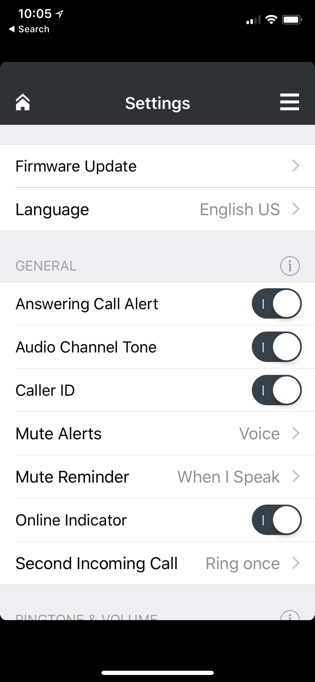
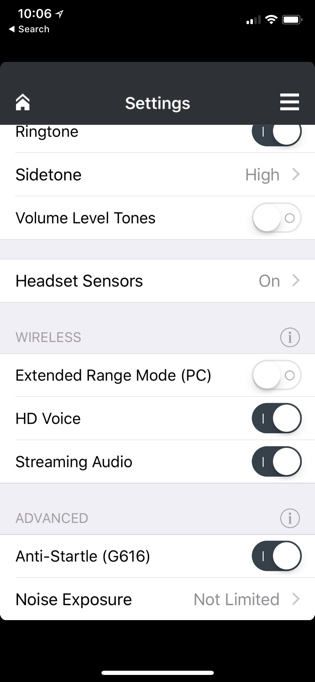
Gut ein halbes Jahr und zwei Software Releases später bin ich sehr angetan. Und das hat auch ein bisschen damit zu tun, dass ich mich ausgiebiger mit dem PLT Hub beschäftigt habe, den es für Android und iOS, sowie macOS und Windows gibt. Da waren eine ganze Reihe von Einstellungen drin, die man leicht übersieht. Die für mich wichtigsten waren Firmware Update, HD Voice und Sidetone.

4f06957ed849768678b8079765831971 f9fb82a94df54b8cf309f204f8a88cbf

Was ist Sidetone? Damit stellt man die Lautstärke der Monitorfunktion ein. Monitorfunktion? Ist Euch aufgefallen, dass Bühnenmusiker Kopfhörer tragen? Das dient dazu, dass sie sich selbst hören. Früher standen auf der Bühne Monitor-Lautsprecher direkt vor den Musikern, aber die Headsets sind noch viel besser. Das 8200 nutzt den Sidetone dazu, bei Telefongesprächen den ausgehenden Tonkanal über die Ohrmuscheln wiederzugeben. Damit hört man sich selbst sprechen und zwar nicht nur aus dem eigenen Kopf, sondern so, wie die andere Seite einen hört. Das ist bei geschlossenen Kopfhörern, und noch mehr bei solchen, die Geräusche aus dem Raum aktiv unterdrücken, sehr wichtig. Jeder, der schon mal mit einem geschlossenen Kopfhörer telefoniert hat, kennt dieses Unter-Wasser-Gefühl.

Der ausgehende Tonkanal ist bei Telefongesprächen nicht etwa die gesamte Klangkulisse des Raums, sondern (möglichst) nur das, was man selbst spricht. Den Unterschied hört man, wenn man vom Headset auf das iPhone umschaltet. Das iPhone klingt besser, aber es nimmt auch das Raumecho auf. Das Headset-Signal klingt weniger natürlich, aber dafür ist die Stimme aus dem Hintergrund herausgelöst. Der Unterschied wird nochmal klarer, wenn man die OpenMic-Funktion nutzt. Die schaltet man über einen kleinen Knopf auf der Unterseite der rechten Ohrmuschel ein. Dann wird das Außensignal nach innen verstärt, sozusagen das Gegenteil der Geräuschunterdrückung. So hört man Ansagen im Bahnhof oder im Flugzeug die Frage "Darf ich Ihnen etwas zu trinken anbieten?". OpenMic ist creepy. Jeder nimmt an, dass man mit den dicken Kopfhörern nichts hören kann, dabei hört man beinahe besser als ohne.

Wie man oben im ersten Bild sehen kann, sind die Seiten des Headsets mit einem dicken L oder R in den Hörmuscheln angezeigt. Das ist nicht nur wichtig, weil links und rechts unterschiedliche Bedienelemente sind, sondern auch, weil die beiden Mikrofone links und rechts die Stimme "vorne" haben wollen. Dreht man das Headset um, dann schlägt die (ausgehende) Geräuschunterdrückung zu und man ist schlecht zu hören.

Apropos Geräuschunterdrückung: Darunter versteht man allgemein, dass man selbst vom Lärm abgeschirmt wird. Der Benchmark ist das Bose QC35, das wirklich phänomenal effektiv ist. Die Unterdrückung im Plantronics ist weniger deutlich und ich habe eine Anfrage gestellt, warum das so ist. Beim 8200 gibt es drei Einstellungen, die ich so übersetze: Off, Office, Airplane. Ich hätte gerne noch eine vierte: kein Babygeschrei, keine Businesskapser, keine Kegelclubs.

Die ganzen anderen Settings des Headsets gehe ich mal kurz durch. (Ich benutze die englische Software, weil ich die Übersetzungen unerträglich finde.) Und weil das lang ist, gibt es das in einem eigenen Abschnitt.

19 Mar 15:51

Vier Plantronics Voyager :: Vergleichtest der Geräuschunterdrückung

by Volker Weber

InkedIMG 2617 LI

Um das 8200 UC besser verstehen zu können, habe ich mal einen Vergleichstest von vier verschiedenen Plantronics Voyager Headsets gemacht. Dazu brauchte ich ordentlich Lärm und den habe ich bei Soundcloud gefunden. Diesen Lärm habe ich über zwei PLAY:5 bei 75% Lautstärke abgespielt und mich in etwa einen Meter davor aufgebaut.

756d83d5b505d58414ca5c6c12e0ef9e

Bei dieser Aufnahme drehe ich mich mit jedem Headset jeweils von links nach rechts und zurück. Der Mikrofonarm ist jeweils rechts. Um den Lärm einordnen zu können, beginne und ende ich ohne Headset. An zweiter Position die Apple AirPods, außer Konkurrenz. Auch wenn ich das immer ansage, noch mal die Reihenfolge: iPhone, AirPods, Edge UC, 5200 UC, Focus UC, 8200 UC, iPhone. Hört Euch die Aufnahme an:

Was klar auffallen dürfte: Die Bearbeitung des Mikrofonsignals erzeugt eine "metallische" Stimme, dafür ist der Hintergrund weg. Was mich total überrascht hat: Das 8200 kommt locker mit, auch wenn es keinen Mikrofonbügel hat. Im Video wird erklärt, wie das funktioniert.

Beam forming, davon hat auch Apple beim Homepod sehr viel erzählt. Die Sonos Playbar macht das seit fünf Jahren. Man kann das auch als "Richtcharakteristik" bezeichnen. Statt drei Mikros auf einem Mikrofonarm wie die anderen Plantronics Headsets nimmt das 8200 vier Stück in zwei Paaren links und rechts.

Das 8200 UC kann wie das Focus auch Geräuschunterdrückung (ANC) für die eigenen Ohren. Die zweistufige ANC vereint die beiden Modi des Backbeat Pro 2 (Airplane) und des Focus (Office). Gerade der Airplane-Modus funktioniert bei mir sehr gut. Er nimmt die tiefen Töne weg, die meinem Unterbewusstsein Gefahr signalisieren. Zusammen mit den Long Ambient Sounds von Moby bin ich dann zuverlässig weg.

Ich bin beeindruckt.

19 Mar 15:51

"A human society would never willingly harm nature."

“A human society would never willingly harm nature.” - | Curtis White, The Ecology of...
19 Mar 15:50

"Having safely established that Jordan Peterson is an intellectual fraud who uses a lot of words to..."

“Having safely established that Jordan Peterson is an intellectual fraud who uses a lot of...
19 Mar 15:50

"The workers in an auto plant are strongly affected by the decision as to whether or not it should..."

“The workers in an auto plant are strongly affected by the decision as to whether or not it...
19 Mar 15:49

Investigating ClaimReview

by Jon Udell

In Annotating the Wild West of Information Flow I discussed a prototype of a ClaimReview-aware annotation client. ClaimReview is a standard way to format “a fact-checking review of claims made (or reported) in some creative work.” Now that both Google and Bing are ingesting ClaimReview markup, and fact-checking sites are feeding it to them, the workflow envisioned in that blog post has become more interesting. A fact checker ought to be able to highlight a reviewed claim in its original context, then capture that context and push it into the app that produces the ClaimReview markup embedded in fact-checking articles and slurped by search engines.

That workflow is one interesting use of annotation in the domain of fact-checking, it’s doable, and I plan to explore it. But here I’ll focus instead on using annotation to project claim reviews onto the statements they review, in original context. Why do that? Search engines may display fact-checking labels on search results, but nothing shows up when you land directly on an article that includes a reviewed claim. If the reviewed claim were annotated with the review, an annotation client could surface it.

To help make that idea concrete, I’ve been looking at ClaimReview markup in the wild. Not unexpectedly, it gets used in slightly different ways. I wrote a bookmarklet to help visualize the differences, and used it to find these five patterns:

https://www.washingtonpost.com/news/fact-checker/wp/2018/03/16/does-president-trumps-border-wall-pay-for-itself

{
  "urlOfFactCheck": "https://www.washingtonpost.com/news/fact-checker/wp/2018/03/16/does-president-trumps-border-wall-pay-for-itself/?utm_term=.31281569ab46",
  "reviewRating": {
    "@type": "Rating",
    "ratingValue": "-1",
    "alternateName": "Fuzzy math",
    "worstRating": "-1",
    "bestRating": "-1",
    "image": "https://dhpikd1t89arn.cloudfront.net/custom-rating/custom-ratings-b89013e8-729f-44aa-816e-93a9307b079c"
  },
  "itemReviewed": {
    "@type": "CreativeWork",
    "author": {
      "@type": "Person",
      "name": "Donald Trump ",
      "jobTitle": "President",
      "image": "https://dhpikd1t89arn.cloudfront.net/custom-rating/custom-ratings-b89013e8-729f-44aa-816e-93a9307b079c",
      "sameAs": [
        "www.whitehouse.gov"
      ]
    },
    "datePublished": "2018-03-13",
    "name": "in a tweet"
  },
  "claimReviewed": "\"The $18 billion wall will pay for itself by curbing the importation of crime, drugs and illegal immigrants who tend to go on the federal dole.”"
}

https://www.snopes.com/fact-check/did-captured-islamic-state-obama/

{
  "urlOfFactCheck": "https://www.snopes.com/fact-check/did-captured-islamic-state-obama/",
  "reviewRating": {
    "alternateName": "False",
    "ratingValue": "",
    "bestRating": ""
  },
  "itemReviewed": {
    "datePublished": "2018-03-13T08:25:46+00:00",
    "name": "Snopes",
    "sameAs": "http://dailyworldupdate.com/2018/03/11/breaking-captured-isis-leader-had-obama-on-speed-dial/"
  },
  "claimReviewed": "A captured Islamic State leader's cell phone contained the phone numbers of world leaders, including former President Barack Obama."
}

https://www.factcheck.org/2018/03/trump-misses-mars-attack/

{
  "urlOfFactCheck": "https://www.factcheck.org/2018/03/trump-misses-mars-attack/",
  "reviewRating": {
    "@type": "Rating",
    "ratingValue": "-1",
    "alternateName": "Clinton Endorsed Mars Flight",
    "worstRating": "-1",
    "bestRating": "-1",
    "image": "https://dhpikd1t89arn.cloudfront.net/custom-rating/custom-ratings-76945159-07c1-49d6-833e-717c1da2478f"
  },
  "itemReviewed": {
    "@type": "CreativeWork",
    "author": {
      "@type": "Person",
      "name": "Donald Trump",
      "jobTitle": "President of the United States",
      "image": "https://dhpikd1t89arn.cloudfront.net/custom-rating/custom-ratings-76945159-07c1-49d6-833e-717c1da2478f",
      "sameAs": [
        "http://www.whitehouse.gov"
      ]
    },
    "datePublished": "2018-03-13",
    "name": "Speech at military base"
  },
  "claimReviewed": "NASA “wouldn’t have been going to Mars if my opponent won.\""
}

http://www.politifact.com/texas/statements/2018/mar/15/ted-cruz/ted-cruz-says-beto-orourke-wants-open-borders-and-/

{
  "urlOfFactCheck": "http://www.politifact.com/texas/statements/2018/mar/15/ted-cruz/ted-cruz-says-beto-orourke-wants-open-borders-and-/",
  "reviewRating": {
    "@type": "Rating",
    "ratingValue": "2",
    "alternateName": "False",
    "worstRating": "1",
    "bestRating": "7",
    "image": "https://dhpikd1t89arn.cloudfront.net/rating_images/politifact/tom-false.jpg"
  },
  "itemReviewed": {
    "@type": "CreativeWork",
    "author": {
      "@type": "Person",
      "name": "Ted Cruz",
      "jobTitle": "U.S. senator for Texas",
      "image": "https://dhpikd1t89arn.cloudfront.net/rating_images/politifatc/tom-false.jpg",
      "sameAs": [
        "https://www.youtube.com/watch?v=MvKElqdUxZg"
      ]
    },
    "datePublished": "2018-03-06",
    "name": "Houston, Texas"
  },
  "claimReviewed": "Says Beto O’Rourke wants \"open borders and wants to take our guns.\""
}

https://climatefeedback.org/claimreview/breitbart-repeats-bloggers-unsupported-claim-noaa-manipulates-data-exaggerate-warming/

{
  "urlOfFactCheck": "https://climatefeedback.org/claimreview/breitbart-repeats-bloggers-unsupported-claim-noaa-manipulates-data-exaggerate-warming/",
  "reviewRating": {
    "@type": "Rating",
    "alternateName": "Unsupported",
    "bestRating": 5,
    "ratingValue": 2,
    "worstRating": 1
  },
  "itemReviewed": {
    "@type": "CreativeWork",
    "author": {
      "@type": "Person",
      "name": "James Delingpole"
    },
    "headline": "TBD",
    "image": {
      "@type": "ImageObject",
      "height": "200px",
      "url": "https://climatefeedback.org/wp-content/uploads/Sources/Delingpole_Breitbart_News.png",
      "width": "200px"
    },
    "publisher": {
      "@type": "Organization",
      "logo": "Breitbart",
      "name": "Breitbart"
    },
    "datePublished": "20 February 2018",
    "url": "TBD"
  },
  "claimReviewed": "NOAA has adjusted past temperatures to look colder than they were and recent temperatures to look warmer than they were."
}

To normalize the difference I’ll need to look at more examples from these sites. But I’m also looking for more patterns, so if you know of other sites that routinely embed ClaimReview markup, please drop me links!


19 Mar 15:49

Two methods for writing a paper outline: Answering questions and listing topic sentences

by Raul Pacheco-Vega

Since I usually write blog posts by request, unless there’s a pressing thought that I really want to get out and get off my chest, I normally make a list of what I’m supposed to be blogging about. A topic that I saw people insisting upon was the question of how to write an outline for a paper. The process can be escalated to a book, or a doctoral dissertation, a Masters thesis, or an undergraduate honors major paper.

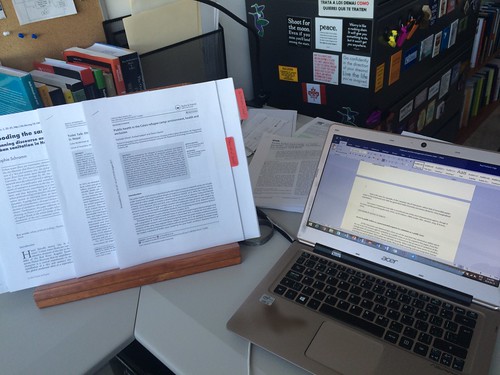
AcWri at my campus office

I use a couple of methods, and in this post, I discuss two methods I use. Both are inquiry-focused, but in one I set up questions, whereas in the other I basically throw words or sentences and then list and group them to see if they make a coherent argument when assembled. There are, as I mention in my Twitter thread (which you can open by clicking anywhere on the tweet below) other methods, such as IMRAD, Introduction – Body – Conclusion, etc. Mine are just two methods, and hopefully they may be of use to others who are interested in writing outlines for their papers, books and dissertations.

My Twitter thread began here (you can click anywhere on the tweet, and the thread will expand and open in a new window – scroll down all the way to the end to read the entire thread and people’s responses):

1. ASKING QUESTIONS

I tend to dialogue with myself, and I use writing as a form of conversation, where I am the interlocutor and the speaker too. In the example I posted, where I shared the outline for my ethnographic methods in public policy analysis chapter, I asked questions that can become sections of the paper.

When I ask questions to myself, I usually add anything that can help me create sentences and paragraphs. For example, in the tweet below, I have used those questions as prompts to force me out of a writing rut.

2. WORD SALAD + LIST OF TOPIC SENTENCES + FEEDBACK

This method works really well for me, as I ask for feedback from fellow academics very early in the process. What I did with my paper on the global governance of plastics was that I wrote a list of ideas I had, a list of topic sentences from where I could create entire paragraphs, I gave it some coherence, and asked for feedback from Dr. Robin Nagle and Dr. Kate O’Neill, both experts on waste.

I am a big fan of conceptual maps (also known as mind maps). I usually draw them in different colours and I use them to connect ideas, concepts and authors. For example here, I more or less have drawn the connections between local, national and international environmental regulation of plastics, thanks to the feedback Robin and Kate offered.

I don’t think there’s anything wrong with having a conversation with oneself on paper, especially when we are at the early stages of composition. I try to always write topic sentences that can have one idea, and then flesh out that idea by assembling additional written sentences until they form an entire paragraph.

The “Listing Topic Sentences” method works very well for me when I know the literature so well that I can use it to write topic sentences that I can then flesh out. For example, in this case I link my own work with that of Dr. Malini Ranganathan and Dr. Colin McFarlane. We all three have written about informal sanitation mechanisms.

Topic sentences work wonderfully for my writing because they act as prompts or anchors from where I can spin off the thread that will compose my entire argument.

This is another example that is a variation from the Listing Topic Sentences, which is Listing Key Ideas.

Do note how in the previous case, each concept is one sentence, whereas in the case below, I have a more well thought out idea of what I want to say.

I always keep going back-and-forth between my paper, my Everything Notebook and my handwritten conceptual maps. Doing this allows me to maintain control over my ideas and grasp what I’m trying to understand more clearly.

The pair of tweets below clearly summarize my approach.

One final thought: research is social, contrary to what you hear. When you write, you put ideas down that (if you submit them to a peer reviewed journal) somebody else needs to read and understand. Therefore, the earlier you can share your drafts with fellow scholars, the better developed your argument.

Hopefully my method will be useful to students, early career scholars and other fellow academics and writers.

19 Mar 15:49

The Cambridge Analytica Files

by Volker Weber
The data analytics firm that worked with Donald Trump’s election team and the winning Brexit campaign harvested millions of Facebook profiles of US voters, in one of the tech giant’s biggest ever data breaches, and used them to build a powerful software program to predict and influence choices at the ballot box.

This is painted by some media as a Facebook leak. But it is not. This is just the core of what Facebook is. When will you walk away?

More >

19 Mar 15:49

"The American Union feels itself to be a Nordic-German state and by no means an international..."

“The American Union feels itself to be a Nordic-German state and by no means an international...
19 Mar 15:48

Baptism | Hieu Minh Nguyen

Convinced she’s in hell my mother wakes me & begs to be taken to the lake. Wailing in prayer on...
19 Mar 15:48

Family fun with deepfakes. Or how I got my wife onto the Tonight Show

files/images/deepfake.PNG

Sven Charleer, Mar 21, 2018


Icon

Content sites are beginning to block and take down deepfakes animations and videos. These are created by AIs and essentially put the face of one person onto the body of another (where the other may be depicted in some very compromising positions (or to insert Nicolas Cage into all your favourite motion pictures)). This post is safe for viewing, however, and the fakes are clearly labeled as fakes. And it demonstrates quite nicely how the transition from ordinary person to guest on the Tonight Show can appear seamless. The technology poses new challenges to our understanding of truth and veracity. More about deepfakes. More.

Web: [Direct Link] [This Post]
19 Mar 15:48

Cambie Report: Civic Basics

by Ken Ohrn

Brush up on the wonderful weirdness of Vancouver’s past and upcoming civic election scene.

Cambie.ReportThe Cambie Report podcast:  Episode 1. (A rambling, fun and informative 1:03).
Ballot goofiness; Parks Board; UBC governance; alphabet roulette; ward wariness; why do we have a highly partisan party that calls itself the Non Partisan party; the losing days of bike lane haze; manhole covers; power sharing strategies; vote blocking; South Asian candidates; party prospects in 2018; inter-party agreements; dancing chickens; emerging Green ascendancy; OneCity rising; who’s got the money; group branding (Vision, Green, OneCity — a lefty coalition); the achievement gap–  balancing promises and problems and results; prospects in a change election for the NPA, watching their internal civil war including Bremnerization; rise of the millennial friend-pod; the open and fresh feeling for October 2018; the Mayor’s race – the chorus of “not me”; waiting for coalitions to emerge; equity slates.

19 Mar 15:48

Why the Social Sciences are Irreducible

files/images/screen_shot_2015-08-13_at_aug_13_9.52.59__112486.jpg

Tobias Hansson Wahlberg, Mar 21, 2018


Icon

This is a very common position in the social sciences (including education): "“We can hold that any particular social entity at a given time and its causal powers are token identical with the sum of individuals composing it.” Or "it might well be true that each instance of a social kind - for example, a state structure - is identical with an ensemble of individual actors having certain properties." This paper examines, in detail, some of the arguments for and against this position. It is a tough analytical slog and may well take several hours to work though. The effort is worthwhile, however, as it raises (among many others) questions like 'at what point does an ensemble turn into a team?' And even, 'what makes a team a team?' This in turn raises questions like 'is teaching a class the same as teaching an individual?' and 'how do you assign responsibility for the actions of a group?' 36 page PDF.

Web: [Direct Link] [This Post]
19 Mar 15:47

15+ Easy, Cheap and Fun Indoor Activities for Kids

by Andrea Fraser-Winsby

When we think of Spring Break, many people picture kids in shorts frolicking outside on a sunny day. But we live in Canada, and in many parts of the country, Spring Break doesn’t always mean spring-like weather, which means we’re dealing with entertaining the kids indoors. We’re here to help! You don’t need to leave spring break to the iPad this year, and you don’t need to spend a lot of money or effort to have some fun with kids within your four walls.


Giant Box Art

Have a big cardboard box taking up space in the house? Before you toss it into the recycling bin, take a handful of crayons or markers and drop them inside, add one toddler (or two if you have another on hand) and watch it come to life. We all know toddlers love to write on walls, and these walls are fair game. Older kids can join in the fun too with more elaborate creations on the outside–pirate ship, princess castle, space shuttle, airplane–the possibilities are endless! Speaking of endless, there are loads of fun and simple activities to do with cardboard boxes.


The Floor is Lava

This classic indoor game became a meme for a reason – it’s super fun! You don’t even need anything special to set it up: sheets of paper, books, pillows, blankets, towels, furniture, or anything else around the house that’s safe to step on will work great. Little ones will love building a path and just hiking around the house, and older kids can add a challenging element like a race or a scavenger hunt.


Escape the Volcano

This fantastic game is inspired by The Floor Is Lava, but it’s a little more involved. The planning is worth it, though, because it gets your kids moving and thinking with colour matching, exercise, riddles, and more.


Sponge Finger Painting

If your kids love finger painting but you hate the mess, keep it under control with sponges. Makeup sponges work great for keeping the paint in one place, and clean up is easy if you keep them on a plate or plastic tray.


Baking

indoor activities - baking

Baking is a great rainy-day activity for kids of any age. Not only do they get yummy treats at the end, but they learn a little about chemistry and where their food actually comes from. No worries if you’re not an expert baker yourself – try these super-simple recipes from Delish.com that anyone can master. Don’t forget to stock up on baking tools and supplies!


Yoga

Yes, your little ones can do yoga! There are lots of great DVDs to help your toddlers and kids get started with yoga, but our favourite videos are from Cosmic Kids. In each free YouTube video, likeable host Jamie walks little yogis through a new adventure, including favourites like Moana, Star Wars, Frozen, and other fun stories, while learning the basics of flexibility, balance, strength, and mindfulness. Move the coffee table, grab your mat, and get ready for some fun. Bonus–you can sneak in your own workout right next to the kids!


Indoor Picnic

If grilled cheese and baby carrots are getting a bit boring, inject some fun into lunch and have an indoor picnic! Pack portable containers into a basket, clear some space, put down a blanket or tablecloth, and voilà! For extra fun, add some “outdoor” details like homemade grass, flowers, trees (aka tall potted plants), etc. Don’t forget to invite the stuffed animals! You can also continue the fun into the night with an indoor campout. Especially fun for a sleep over!


Spy Laser Obstacle Course

A ball of yarn or string is all you need for this secret mission. Find a narrow passageway like a hallway or stair case, and wrap the string at different angles back and forth at kid-height. Little kids will have a blast trying to climb through the configuration, and you can take the challenge up a notch for older kids with spy back stories, timed races, secret maps, special treasure missions, or a spy movie shoot. More ideas and instructions at mykidsadventures.com.

Make Your Own Book

If you’ve read the 478th book to your kids, why not get them to make their own books? There are many tutorials online about homemade book projects, but we found a great place to start with this simple one, which is good for beginner crafters, or for a sweet gift for someone. All you’ll need is a few sheets of paper, scissors, and crayons or markers. You could also add magazine cut-outs to practice pre-schooler scissor skills.

Cotton Swab Blow Darts

Don’t be alarmed by the name! This game is as safe as it gets. For this one, you’ll only need some cotton swabs, bowls or small bins (even old yogurt containers would work!), number stickers or tape, and some drinking straws. You’ll foster some healthy competition with everyone in the family with this lively game. Full instructions at thatswhatchesaid.net.

Sticky Spider Web 

Painter’s tape, light, throw-able objects, and a doorway is all you need for this active game. Have fun looking for things around the house that will stick in the web, like balled up newspaper, balloons, small toys, etc, or make it a competition by adding points or a timer.

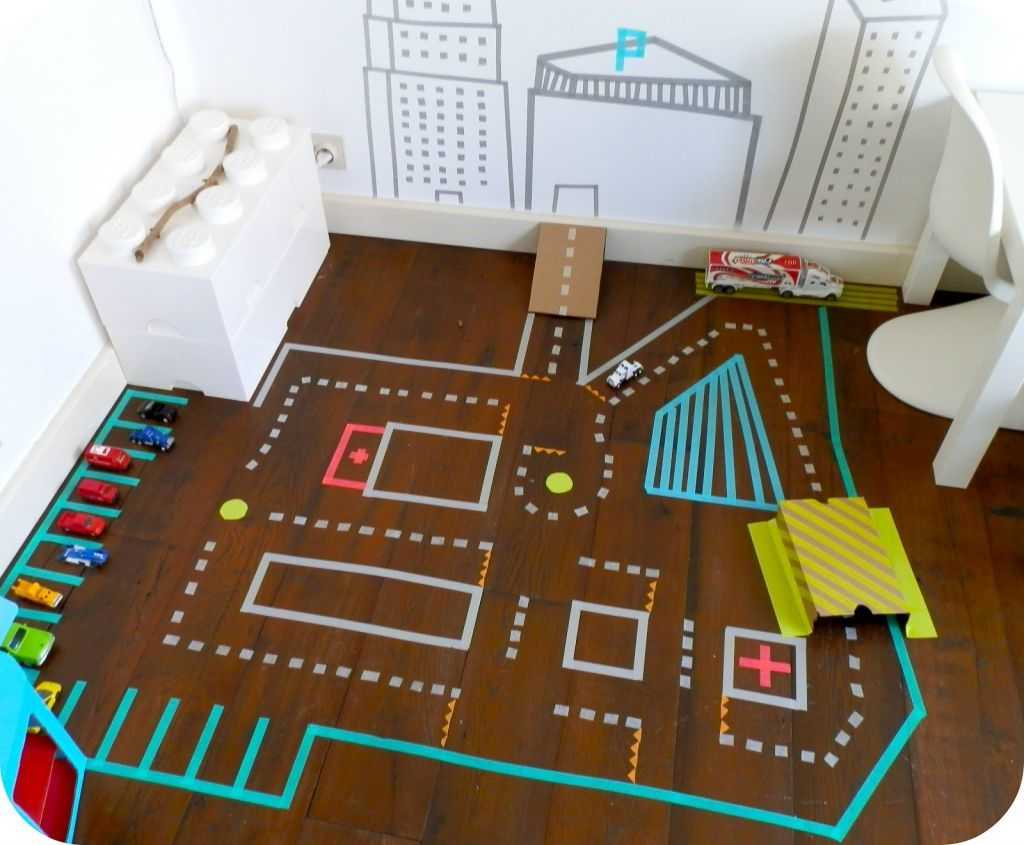
Masking Tape Race Track

A no-brainer if you’ve got a tub full of toy cars or trains. Make it colourful and fancy with washi tape like the one above, but regular old painter’s tape works well too (and is just as fun on carpet and furniture!). You can keep it contained in the kid’s room, or take it all over the house for an epic race. You can even add a souped-up garage or train station, like this one:

indoor activities - gas station

Want more ideas for fun and learning with just a roll of tape? Check out more ideas at Hands On As We Grow.

Minute to Win It

If you’ve got a house full of kids, Minute to Win It games are a surefire hit. Bring the popular game show into your living room with rip-roaring races like “Junk in the Trunk,” “Cookie Face,” or “Pong Tac Toe.” The entire family, neighbours, cousins and the mail carrier are all going to want to join in this one. More ideas for MTWI games at happinessishomemade.net.

Sewing Station

This indoor activity is perfect for 4-6 year olds to practice fine motor skills. You will need to pick up a few supplies, but it’s a creative and colourful project that your pre-schooler can be proud of.  Full instructions at kleas.typepad.com.


I’m Bored Jar 

If you’ve reached your creativity limit, an I’m Bored Jar will be your best friend. Simply put, it’s a container filled with things for kids to do. Some people fill it with fun stuff, others mix in chores kids can help with around the house. You can get creative with the design using tokens, popsicle sticks or laminated cards, if that’s your cup of tea, or you can just write the activities on slips of paper and put them in a jar. Every time you hear a small person in your house utter the phrase “Mooooooom/Daaaaaad, I’m BOOOORED!”, you can bring them the jar and let it do its work. More ideas for jar design and activities at wellnessmama.com.


What’s your favourite activity for beating kids’ cabin fever? Let us know in the comments!

The post 15+ Easy, Cheap and Fun Indoor Activities for Kids appeared first on London Drugs Blog.

19 Mar 15:47

Before The Fall

This polished, intriguing, and formally-innovative mystery brings a collection of interesting and colorful rich people together in a modern locked-room, country-house mystery. A small private jet crashes on a hop from Martha’s Vineyard to Teterboro, NJ. Something or someone caused the crash. Everyone wants to find out — the anchorman on the cable news empire whose owner chartered the jet, the NTSB chief investigator, the FBI whose had planned to arrest another of the passengers the following morning for money laundering. Scott Burroughs, who somehow swam to safety, and the network head’s 4-year-old boy whom he rescued, are the only survivors. Hawley takes an Agatha Christie format and updates it with a vengeance; his minor characters are sometimes synthetics but they’re detailed and though through.

19 Mar 15:47

Peerless

A fascinating, nimble play in which two Asian-American high school sisters, L and M, find that their plans to both attend The College are in trouble despite their 2400 SATs, amazing softs, and impeccable grades. (M, “the smart one,” has a 4.8/4 weighted GPA. L only has 4.6/4.) They’re both double-minority. But each year, The College only accepts one, and this year the fat early-decision envelope fell (from the heavens) on a classmate with a slight claim to American Indian descent and a brother with cystic fibrosis. Macbeth ensues, naturally.

19 Mar 15:47

Borderline

A Jason Snell

recommendation and Nebula finalist, this faery noir saga pits a young film director with borderline personality disorder (and without legs, which she lost jumping off her dormitory roof in a failed suicide attempt) against a frightening magical conspiracy.
19 Mar 15:46

Grant

A comprehensive but pleasant biography, Grant never bogs down. That’s a challenge for the biography of any general, but especially challenging for Grant because his life before the war was far from notable and his postwar life was not entire successful. The axis of this book, it seems to me, revolves around the disastrous Johnson administration and its strenuous efforts to give the defeated South what it could not win in battle. The calamities of the Johnson era, in which one cabinet member barricaded himself in his office to prevent his replacement, are strikingly resonant today.

19 Mar 15:46

Fledgling

Theo, a charming, isolated daughter of two professors, lives on a planet dedicated to scholarship. This has advantages; everyone understands why tenure matters. It has disadvantages, too: Mom and Dad are splitting up in order to improve Mom’s academic visibility, the whole planet is governed by the Safety Committee, and because Theo is sometimes clumsy and sometimes just a bit too assertive, Mom’s rivals think it might be a good idea to sedate her for everyone’s safety. It’s a space opera, and if it’s not really adventurous science fiction, it’s a skillful exploration of coming-of-age with spaceships and telepathic bears.

19 Mar 15:46

Lakeshore Cycle Track

by jnyyz

Cycling along the lakefront is a very popular pastime. Towards the west end of the Martin Goodman Trail, a separated pathway extends beyond the bridge at the Humber River, through Mimico, ending at Norris Ave. From that point, cyclists are expected to use a 1.4 km stretch of Lakeshore Blvd until First Ave, at which point the waterfront trail continues through residential streets. This has been a sore point for cyclists in South Etobicoke, and the city finally started planning a protected cycle track to bridge this gap. The construction process has been very slow, but it appears at this point that the cycle track is more or less done, needing just a bit more signage and some sweeping before it can be officially opened.

Here is the west end of the track, at First Ave, near where Susan Trainor died.

IMG_8046

Here you can see the concrete barriers separating the bidirectional cycle track from car traffic. There are many gaps in the barrier at cross streets, and also at every single driveway along the south side.

IMG_8047

The fact that one of the bike symbols is not inverted bothers me.

Also, a more serious issue: it looks like the directions for the bike lanes are reversed. As far as the actual bike lane markings go, the lane closest to the car traffic should be westbound, which is downwards on this sign that is visible from the eastbound direction. Not that it really matters since this sign is clearly meant for car drivers. Still there is the potential for some confusion.

IMG_8048

Riding east, here is the first of three raised bus stops at Royal York. The fact that they are relatively far apart makes them much less annoying than the ones along Roncesvalles.

IMG_8049

Here is the east end of the track at Norris Cres.

IMG_8050

From here you can join onto the lakefront trail. Note the Brompton rider riding no hands.

IMG_8053


19 Mar 15:39

Cayan Tower, Dubai, United Arab Emirates by instagram.com/maselzr pic.twitter.com/6tAguH03tQ

by archpics
mkalus shared this story from archpics on Twitter.

Cayan Tower, Dubai, United Arab Emirates by instagram.com/maselzr pic.twitter.com/6tAguH03tQ


Posted by archpics on Sunday, March 18th, 2018 12:58am


654 likes, 197 retweets
19 Mar 15:27

How To Stop Kinder Morgan

Yesterday, I was arrested and charged with Civil Contempt for failing to respect an injunction forbidding protesters from coming within 5 meters of the property where Kinder Morgan is trying to bring a pipeline for tar-sands bitumen to the Pacific. Herewith a few words on why this kind of action might work and how to go about doing it. Well, and I guess I should tack on a note about why the pipeline is a stupid idea and should be stopped, but I suspect most readers here are already on-board with that.

But before any of that, my strongest thanks to our gracious hosts, the good people of the Coast Salish, whose unceded territory we were on. They were friendly, inspirational, supportive, eloquent, and politically savvy. If we win this, it’ll be their victory as much as anyone’s.

No Courage Here

A lot of the social-media buzz is fulsome about the “Courage” of the protesters. Gimme a break; if this was a “brush with the law”, it was a soft-bristled make-up brush. Now bear in mind that I am speaking from a position of maximum privilege as a grey-bearded clean-cut well-off white guy. But the legal and financial consequences seem likely to be trivial, and there seems to be an awesome support organization in place for those a little less privileged than me.

Tim at Protect the Inlet

Thanks to the photog, who wishes to remain uncredited.

Seriously, the praise is embarrassing. I took public transit to within five minutes’ walk of the gathering place, marched for about fifteen minutes to the front gates, sat in the sun for a few hours singing songs, and was eventually courteously escorted away by affable police officers to a nice processing area under the trees where, in order to get released that day, we had to sign a document promising not to do it again. The only mildly scary bit was when the cop made a little speech claiming that getting arrested could damage your ability to travel, get a job, volunteer, and so on. Which in this particular scenario is almost certainly not true.

Then we walked back down the hill and took the train home. What could have gone wrong, but didn’t, in decreasing order of likelihood:

  1. It could have been a horrible freezing rainy sort of Pacific Northwest March day.

  2. There could have been cops with attitude problems who worked hard at making the experience unpleasant.

  3. There could have been people doing Black-bloc shit with the aim of making real violence happen.

  4. Some Kinder Morgan jerk might have decided to wade in and make trouble.

Why it might work

The project has been officially approved by the Government of Canada. Kinder Morgan has raised hundreds of millions of dollars from investors to finance it. Depending on how you slice your sampling, somewhere around 50% of Canadians (or British Columbians) support the project. How can a few people getting arrested in Burnaby slow down this juggernaut?

Charge sheet

Well, there are politics and there are economics. First, the Feds’ approval was unenthusiastic not to say agonized; it happened after the petro-heads moved the Overton Window by proposing this other batshit-crazy project called Northern Gateway and created a situation where it seemed like if you shut that down, you had to give something back, and that’s what Kinder Morgan is. But I’m pretty sure the local Liberal MPs around here are tossing and turning sweatily in their beds at night. And if you surveyed Liberal voters, I bet you’d find a huge anti-Kinder-Morgan majority. Thus, I expect that the Feds are prepared to expend exactly zero serious political capital to backstop this project.

More politics: The government of BC, which the pipeline traverses and where the tar-sands tar will leak when it leaks, is dead-set against the project. So is the government of Burnaby, where the pipeline terminates and accidents are most likely, as in totally going to happen. So is the government of Vancouver, which depends existentially on its harbor, where the tanker spill will happen when the tanker spill inevitably happens. And maybe most important, so are a large number of First-nations organizations, who are litigating furiously at multiple points along the route.

Which is to say, you’re not just one of a few rag-tag environmentalists up against the whole world. You have a lot of allies.

The important thing to remember is: Decisions that matter come down to politics and economics. If you want to stop this stupid pipeline, the thing to do is to make it politically painful for its backers and economically painful for its investors. Then go back and do it again and again and again.

Delay is the planet’s friend. The economics of tar-sands oil get lousier every month oil remains in global surplus, and every month that the disastrous effects of global warming become more evident, and every month renewable and battery technologies get a little better and cheaper. Which is to say, we don’t really need to stop this pipeline, we just need to slow it down and make its awfulness visible, then go back and do it again and again, and eventually the other side will, uh, run out of gas.

There are a lot of ways this could happen, but I’d like to highlight one of them. Suppose a few thousand people decided to do what I did, each requiring police intervention to write up all those Civil Contempt charges. Then suppose the City of Burnaby decided their taxpayers just couldn’t afford it and slammed the brakes on police overtime. Yesterday they had like 30 officers there, and it took them hours to arrest us and write us up. Suppose there were 300 protesters and five cops? Writer’s cramp alone might be enough to bring it to a grinding halt.

You think I’m joking? I’m not.

Practical advice

If you want to get involved, the first thing to do is to go visit Protect the Inlet and hit the Sign me Up link.

The people who are organizing this, first of all, are not recommending that you go out and violate injunctions. But since there are a lot of people like me who are so mad at the process that they are just gonna go take bold action anyhow, they’re providing training, advice, and legal support. The training is excellent and super-practical. If you’re trying to block access to something, is it better to stand up or sit down? If you’re being arrested, what should you say, and be careful not to say? If someone on your side is being crazy and escalating things, what can you do? And so on. So if you’re going to do this, please take the training.

Now, how do you get there? One good way is to drive (it’s at Burnaby 200 soccer field); there’s plenty of parking up there. You might get trolls sneering at you for driving to protest an oil pipeline, but screw ’em; obviously we’re heading for an electric-car future but we’re not there yet, and one of the key points is that even today’s oil-dependent world doesn’t actually need the tar-sands product.

But public transit is a good option too; that’s how I went yesterday. Take the Skytrain to Production Way, then go stand at the #3 bus stop and take the 136 line to a stop named “WB Forest Grove Dr NS Meridian Pl”. It only runs every half-hour, but no protest has ever started on time.

More advice:

  • Take something to sit on. I had a folding pad that I use for uncomfortable seats at ball games, and it may have saved my life. If, like me, you are a not-terribly-flexible person with a skinny bony butt, an extended sit-in can be seriously uncomfortable. But not with the right pad.

  • Dress with care. I had multiple layers and was glad of it; the morning was chilly, and then it got baking hot up against the south-facing Kinder Morgan gate under the direct sun. Also, I wore my Saskatchewan Rough Riders baseball cap, to inject a little Prairie culture and hey, it was St. Paddy’s, for the wearing o’ the green. And mostly to keep the sun from my eyes.

  • Should you take your phone? In the training course, they warned us that police have been known to confiscate phones, make sincere efforts to crack into them, and find excuses to not return them. So I didn’t take mine, which I ended up regretting — because I couldn’t take pictures and tweet away. And the arresting officer didn’t show the slightest interest in what I was carrying. Having said that, it was the first time in many years that I’ve been on a multi-hour outing without my mobile. I wouldn’t make a habit of it, but it did add an edge and some flavor to the day.

Why

There’s an excellent chance we’re heading for global climate-change catastrophe. If it isn’t obvious why digging up highly carbon-loaded fuel and making it cheaper and easier to get it into the energy economy is an egregiously stupid idea, I’m not sure that there’s much I can say that will help you.

But there are three other specific arguments in this case. First, this project is being rammed through against the wishes of a high proportion of the Native peoples whose land this is; their economies and spiritualities depend on the earth, and not the version that’s soaked in this nasty black toxic shit. Second, the place where it’s coming from, the Tar Sands project in Northern Alberta, is utterly appalling, wreaking havoc on the landscape and the water and the people. Third, a couple of dozen tanker-loads of bitumen a month running through Vancouver harbour, which has strong tidal currents, three bridges crossing it, and a couple of million people living around it, is really not very smart. The Globe and Mail has a fabulous multimedia article on the subject.

Please

If you’re in Vancouver, and care about this stuff, you can make a difference and it isn’t difficult or dangerous. Please consider coming along.

You don’t have to get arrested. Help is needed with cheerleading, supporting, and financial donations. But putting yourself on the line between Kinder Morgan and the planet you live on, it’s a thing that leaves you feeling good.

19 Mar 15:26

SotD: I Put A Spell On You

This song was written in 1956 by Screamin’ Jay Hawkins as a ballad, but he claims the producer got him drunk in the studio and that’s when he started Screamin’, and people loved it, so he never stopped. Since then, it’s been recorded a whole lot. I’m here to recommend a mini video festival’s worth of takes, and one recording, and this may be a little weird but I think it’s the best out there, by Creedence Clearwater Revival.

I actually think the Jay Hawkins story is a little sad. He was a good songwriter with a huge, thunderous voice, and after this song he turned his stage act into a sort of slapstick voodoo-shaman sideshow. I have to admit it makes for pretty amusing video; also I gather he got paid pretty well for it, and it’s hard to be against anything that gets a musician paid.

Screamin’ Jay Hawkins

Anyhow, the way I Put A Spell On You became a Song of the Day is I was walking to the train listening to Shuffle All Songs and this wicked-sharp excellent blues came on, just outstanding singing and feeling and guitar, and I asked myself “Who the hell is that?” and it turned out to be Creedence. When I sat down to write this I immediately discovered Screamin’ Jay, and, well, just skip down to the Links section for some weird and wonderful stuff.

I suppose few people under sixty even know that there was once a band called Creedence Clearwater Revival but when I was about twelve the teenager upstairs used to play them, and I’d lie in my room with the window open and just listen. If this goes on long enough I’ll drop in one or two more of their songs, which are a unique blend of soulful American electric flavors. It turns out they were mostly a vehicle for John Fogerty, who wrote a lot of songs that you’d recognize even if you never heard of Creedence. But anyhow, this is just a cover of Screamin’ Jay’s original.

This is part of the Song of the Day series (background).

Links

Spotify playlist. Creedence’s take on Amazon, iTunes, Spotify. Now, as for video, oh my goodness gracious. I guess I should start with the classic Screamin’ Jay shtick. And since I recommend the Creedence recording, here they are at Woodstock (sloppy), and then here’s John Fogerty in 1997; a very fine performance, maybe the purest, and John really brings it on guitar.

Now, for some reason, there seems to be something that happens when two famous and entirely unrelated musicians get together in a studio that makes them want to do I Put a Spell on You. For example, here’s British blueswoman Mica Paris with a super-hot slow-burn, some dude named David Gilmour playing guitar. Speaking of Gilmour, here he is backing up anther skinny Brit white boy, name of Pete Townshend. Two of the biggest guitar names in history on stage and they don’t play much, but you might want to watch this anyhow, Pete bites down hard on the vocals in a weirdly campy way but with total commitment, it’s a really ace piece of blues singing. Famous guitarist/singer combos? Here’s Jeff Beck and Joss Stone and they’re only OK. Let’s leave the guitars behind and appreciate some late-stage Joe Cocker; not everyone’s cup of tea but I thought it was honest and moving.

I’ve saved the best — well, the weirdest, anyhow — for the last; Iggy Pop with French chanteuse Catherine Ringer. I totally lack words to describe what they do, but if you watch it, you won’t soon forget it. Seriously.