A comment under Our Looming Tower by Ralph Segal that’s worth bringing forward:
This intriguing 497 ft. high tower by Bjarke Ingels (Westbank is the developer) is a worthy demonstration of the intent of the City’s Higher Building Policy in delivering not merely outstanding architectural design at specific locations that avoid protected view corridors but further, a development that addresses an array of city planning and urban design objectives and requirements.
Included in the development (which replaced a mini-storage warehouse and vehicle repair shops) is a 98 unit rental housing component (lower podium) and soon to emerge unique, green-roofed, low scale buildings between the bridge and on/off ramps that will transform this bleak under-bridge area into an active retail/commercial hub for the neighbourhood. In addition to the rental housing, a further $13.5m CAC developer contribution will fund City cultural, heritage and off-site public realm needs.
Another notable example is the striking, Bing Thom-designed 556 ft. high “Butterfly” (rezoned in 2017, in conjunction with the West End Community Plan, 2013) on 1000- block Nelson behind the heritage First Baptist Church on Burrard St., which will be restored and seismically upgraded as part of the development.
In addition to this highly acclaimed tower design and Church rehab, the development, again by Westbank, will include 66 units of TRUE, much needed social housing to be owned and managed by the Church, a 37 space daycare and cash contributions totalling, in all, a CAC package valued at $93.3m.
Such needed public benefits, provided by the developer in exchange for additional density and height, are, frankly, beyond the budgets of governments to deliver. So long as a thorough, robust assessment against City policy and guidelines of the urban design quality and “fit” of proposed developments in their context, along with public consultation, confirms that the additional density and height can be accommodated, such proposals, in specifically identified areas, should continue to be considered.
"New technologies mean new perceptions." So says Katinka Matson in her artist's statement introdducing an exhibit where she scans ordinary objects to see them in new ways. It scans the object evenly; there's no focal point. So it looks different from a photo in a way that's difficult to explain. The context is this video of a panel discussion on how technology changes perception at the opening of one of Matson's exhibits.
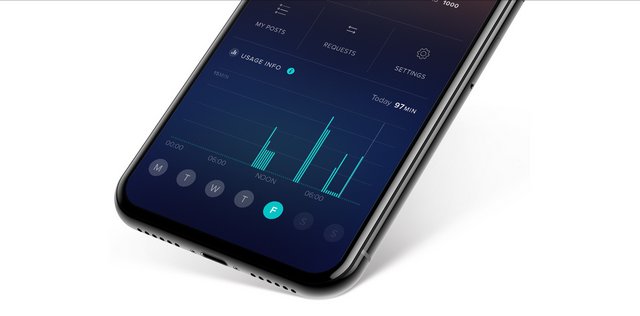
As an advertising free platform, we don’t view addiction to our service as a measure of success. We want Vero to enhance your life, not detract from it. That’s why we stay away from using methods like sending notifications about things we ‘think’ you may be interested in just to get you back into the app. Whilst Vero has not been designed to be addictive, digital addiction is rampant and many of us struggle to find a balance when using technology - particularly social apps. Vero is proud to be the first social network to show users how much time they are spending on the platform.
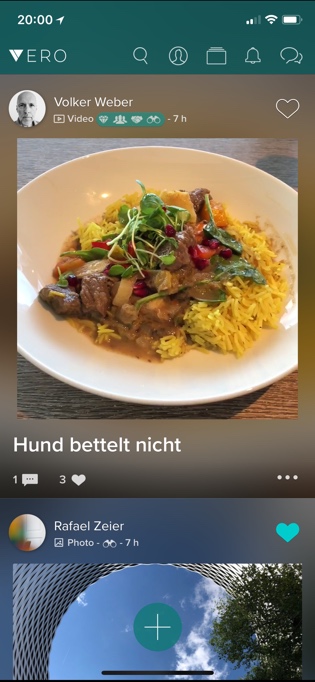
Vero has a been a most pleasant experience ever since they mastered the initial swell of users checking it out.
My current rules of engagement:
Close friend: You live at my house
Friend: You have been at my house
Acquaintance: I have met you in person and I like you
You present yourself with photo and full name: I follow you
Lytro has been around for a bit of time now, as one of the most ground-breaking companies in the camera field, but it looks like some big changes are on the way.
Continue reading →
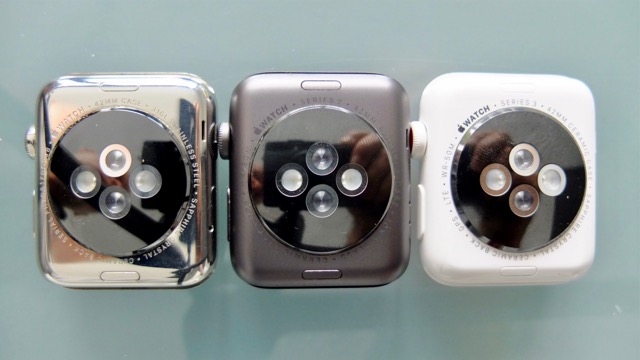
A continuing study into the medical potential of consumer wearables has confirmed devices like Apple Watch are sensitive enough to detect abnormal heart rhythms with a 97 percent accuracy, a performance that beats out add-on ECG accessory KardiaBand.
I expect Apple to dial up the health services on the Apple Watch over the coming years. That will save quite a few lives. You may remember that it helped me. Today it only alerts you if your heart rate is unusually high for your current level of activity. Which was one of my conditions.
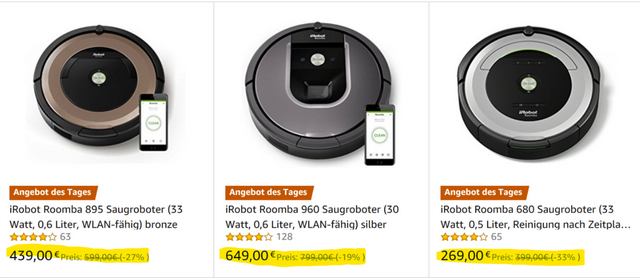
Surface Pro m3/4/128 ist die Einsteigermaschine. Lautlos, selbes brilliantes Display wie meine, geeignet für Office, Surfen, Videos anschauen. Boom 2 ist die beste Lösung für einen robusten wasserdichten Lautsprecher. Braun Thermometer, die CTEK und Vileda scheinen so ein bisschen "out of character" aber die benutze ich tatsächlich selbst und bin sehr zufrieden damit. :-)
Das sind zum Teil Tagesangebote, also eher fix zugreifen.
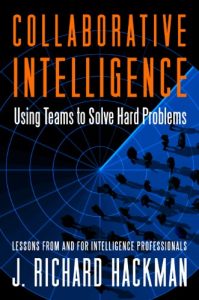
I first met Richard Hackman in my doctoral studies. I was taking his course on the social psychology of organizations and the twenty five page reading list was an early hint that I might not have fully understood what I had signed up for. The enrollment was small so there was no place to hide. I did survive the experience and learned much of what was on that reading list. Better still, Hackman was THE authority on creating and leading teams.
This book grew out of his work with the U.S. Intelligence community post 9/11. That work flowed out of the belief that “what is most needed these days to generate the insights that policymakers demand are interdisciplinary teams that cross traditional institutional boundaries.” That is a need that is central to the mission of any knowledge intensive organization operating in today’s environment. This book is Hackman’s distillation of decades of work with teams of all forms and missions.
The essential message of the book is that the biggest payoff in quality team results comes from the work the goes into setting the team up for success at the outset. Getting the initial conditions right and crafting good performance strategies proves to be far more important than team-building, coaching, or process management along the way. Think of it as empirical support for the adage “well begun is half done.”
The book is organized around exploring and elaborating on six enabling conditions that set a team up for ultimate success. These six conditions each get their own chapter:
1. creating a real team (rather than a team in name only),
2. specifying a compelling direction or purpose for the team,
3. putting the right number of the right people on the team,
4. specifying clear norms of conduct for team behavior,
5. providing a supportive organizational context, and
6. making competent team-focused coaching available to the team
Much of what follows is solid, but unsurprising, advice for creating and directing teams. That doesn’t make it any less valuable, particularly given how often it is ignored in practice.
There are interesting insights that are especially relevant for teams doing knowledge intensive and innovative work. For example, Hackman points out that “only rarely do teams spontaneously assess which members know what and then use that information in deciding whose ideas to rely on most heavily.” This is part of a larger problem that managers generally don’t seem to do a very good job of designing work to take advantage of what teams can bring to a problem. Managers seem to be biased toward carving tasks up in a quest for the illusion of manufacturing efficiency rather than on “ways to elicit and integrate the contributions of a diverse set of performers.”
In an interesting parallel to Fred Brooks’s observations about the “mythical man-month”, understaffing teams seems to produce extra motivation and energy, while overstaffing appears to mostly lead to problems not benefits.
Diverse, interdisciplinary, teams are assembled on the premise that pooling team members collective knowledge and expertise will produce more innovative solutions. Here is Hackman’s cautionary take on that goal:
Perhaps the greatest advantage of teamwork is that team members have diverse information and expertise that, if properly integrated, can produce something that no one member could possibly have come up with. It is ironic, therefore, that teams typically rely mainly, and sometimes exclusively, on information that is shared by everyone in the group. Information uniquely held by individual members may not even make it to the group table for review and discussion. For decision-making and analytic tasks, that can significantly compromise team performance.
This reinforces his advice that team effectiveness depends greatly on the design of team structure, membership, and performance strategies. Putting the information in the room is not sufficient; you must also explicitly design for surfacing and sharing that information.
One of the most interesting findings about effective teams comes from research that Hackman worked on with his colleague Connie Gersick. They discovered an interesting pattern in how effective teams managed their time over the course of a project. They found that
every group developed a distinctive approach toward its task immediately upon starting work, and then stayed with that approach until precisely half-way between its first meeting and its project deadline. At that point, all teams underwent a major transition that included altering member roles and behavior patterns, re-engaging with outside authority figures or clients, and exploring new strategies for proceeding with the work. Then, following that midpoint transition, teams entered a period of focused task execution that persisted until very near the project deadline, at which time a new set of issues having to do with termination processes arose and captured members’ attention.
This would seem to contradict assumptions about what constitutes best practice in project management circles. Project managers are trained and rewarded for their ability to develop an initial plan and carry it to conclusion. Few project managers are likely to prepare or submit project work plans built around the assumption that the plan will be scrapped and rewritten halfway through the effort.
The way that I reconcile this apparent contradiction is to observe that many projects are not about exploration or innovation but about executing to a well specified final result. Hackman and Gersick’s observations appear to be most relevant to teams tasked with addressing the non-routine. It suggests that project managers need to be very careful to understand and communicate the limits and relevance of mainstream project management practices when dealing with less well-defined questions. This is increasingly relevant in the turbulent environment that more and more organizations are compelled to work in today.
This is not a long book, but it is dense. There is a lot of wisdom within that is grounded in a combination of rich field experience and rigorous thinking.
During the historic mission to the moon and back, some of the most famous words ever said were transmitted between the Apollo 11 spacecraft and Earth. Between those icons moments was a great deal of chatter—mostly about technical matters but also about how the Earth looked from space, bounding around on the moon, and even sandwiches.
Sidewalk Labs is currently in the process of negotiating provisions to guarantee the privacy and respectful use of the data that will eventually flow through the Sidewalk Toronto development.
At two consecutive March 20th, 2018 presentations at the Metro Toronto Convention Centre, Sidewalk Labs’ head of urban development Rohit Aggarwala discussed the company’s commitment to protecting individual privacy.
“What matters in a city is when people feel comfortable, people feel respected, people feel a sense of ownership in that place,” said Aggarwala. “And they can’t do that if they feel they’re being monitored for the wrong reasons or for any reasons.”
“What matters in a city is when people feel comfortable…”
During the presentation — itself meant to bring attendees up-to-date on the latest developments since Sidewalk Toronto held its open hall forum earlier this year — Aggarwala stated that Sidewalk Labs is not “the kind of firm that’s going to get a lot of data and figure out what to do with it [later].”
According to Aggarwala, the goal is to establish data provisions that speak to Canadian values and Canadian standards and requirements.
In order to accomplish this feat, Aggarwala said that the company is utilizing the Canadian principle of ‘privacy by design.’
Privacy by design was developed and pioneered by Ann Cavoukian, the former information and privacy commissioner of Ontario.
“You start with a problem and then you figure out what is the minimum amount of information that we need to affect this problem.”
“The fundamental essence of privacy by design is that you don’t ever start the idea of hoovering up a bunch of information and then figure out what it’s there for,” said Aggarwala. “You start with a problem and then you figure out what is the minimum amount of information that we need to affect this problem.”
Answering public questions, addressing public concerns
The subject of data storage was pressed during the presentation’s Q-and-A segment.
Asked where precisely Sidewalk Toronto plans on storing all of the data that will eventually flow through the project, the company’s general counsel and head of legal Alyssa Harvey Dawson said that the company is still working with governmental and other actors “to be innovators in terms of data governance,” at the first Q-and-A.
During the second of the Q-and-A presentations, Dawson also addressed a question about privacy by design.
“If we can’t answer positively how getting personal information — your personal information — is going to make your life better in this district, then that’s where the conversations stops,” said Dawson.
Representatives from Waterfront Toronto — a collaborative not-for-profit created by the Government of Canada, the Province of Ontario and the City of Toronto — were also present.
“…data residency question is something we’re actively working with Sidewalk on…”
Waterfront Toronto’s vice president of innovation, sustainability and prosperity Kristina Verners stated that the “data residency question is something we’re actively working with Sidewalk on…to ensure that the sensitives are loud and clear and the legislation and regulatory framework is completely adhered to.”
Verners later told MobileSyrup that talks between Sidewalk Toronto and involved groups and organizations are ongoing, but that the Sidewalk Toronto recognizes that it’s important to all individual groups receive the information that is necessary for their operations.
Verners also told MobileSyrup that the goal is to get privacy and data management codified into contracts established between Sidewalk Labs, Waterfront Toronto and the other involved groups.
In a separate conversation with MobileSyrup, Sidewalk Labs’ privacy program director Lauren Reid said that data storage will be determined by what makes sense.
“So there are some reasons why we may want to store data in Canada, there are also reason why it may be — we may sacrifice some values,” said Reid. “For example, in the cloud there’s better privacy and security than there are in a local data centre here in Canada. You just got bigger scale and you got bigger computing power.”
“Sometimes, that might be the right choice.”
Reid also stated that in a large project like Sidewalk Toronto, a “blanket statement” about privacy would be “premature” to make.
Talking data privacy and governance with Alyssa and Lauren of Sidewalk at the @SidewalkToronto public meeting We’re committed to being part of the open data community and we’re exploring innovative governance models such as a data trust. pic.twitter.com/V1uiJTjkj6
Sidewalk Labs serves as the urban planning and development arm of Google-parent Alphabet Inc. While the company is owned by Alphabet, it operates relatively autonomously.
“Data will be used to improve quality of life,” said Doctoroff, at the January 17th, 2018 event.
Sidewalk Toronto’s Master Innovation and Development Plan is currently in development and is expected to be unveiled at the end of 2018 or in early 2019.
Linkedin has released the first-ever Canadian edition of its Top Companies 2018 roundup, which looks at the most sought-after companies to work for.
The findings are based on the actions of LinkedIn’s over 546 million professionals; in Canada, there are over 14 million users. It also looks at four main pillars: interest in the company, engagement with the company’s employees, job demand and employee retention.
While TD Bank took the top of the 25-company list, a couple of tech companies made the list; Vancouver-based Hootsuite found itself at third place, called out by Linkedin for its stretch program, which encourages employees to spend one day a week trying a new position. Ottawa-based Shopify sat at eighth place.
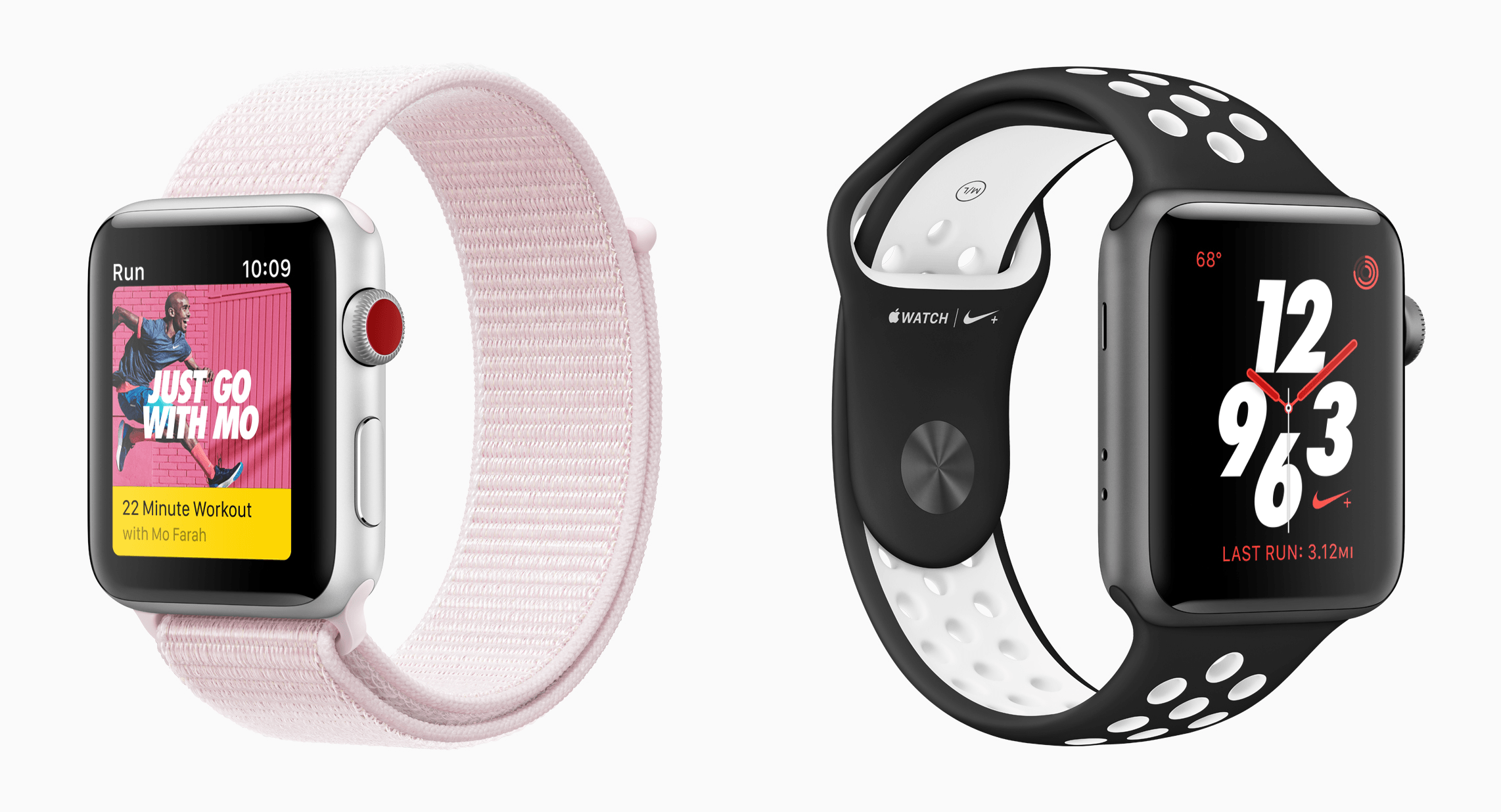
Similar to the announcement the tech giant made last year on the first day of Spring, Apple has revealed its spring 2018 collection of Apple Watch bands the company says feature ‘vibrant colours and unique designs’
The new bands fall into the Apple Watch’s Sport, Nylon and Classic Buckle designs, as well as Nike and the ridiculously expensive high-end fashion Hermes straps.
The following four new bands are designed with all Apple Watch models in mind:
Sport Band in Denim Blue, Lemonade and Red Raspberry
Woven Nylon in Black Stripe, Blue Stripe, Gray Stripe and Pink Stripe
Sport Loop in Flash Light, Hot Pink, Marine Green and Tahoe Blue
Classic Buckle in Spring Yellow, Electric Blue and Soft Pink
The Nike Sport Loop watch strap is set to be sold without a watch for the first time and will be available in two new colours:
Nike Sport in Barely Rose/Pearl Pink, Black/White and Cargo Khaki/Black
Nike Sport Loop in Black/Pure Platinum, Bright Crimson/Black, Cargo Khaki, Midnight Fog and Pearl Pink
Below are the various Hermes bands coming this spring as well:
38mm Double Tour in Indigo with rouge H polished edge and rouge H contrasted loop
38mm Double Tour in Blanc with rouge H polished edge and rouge H contrasted loop
42mm Single Tour Rallye in Indigo with rouge H polished edge and rouge H contrasted loop
42mm Single Tour Rallye in Blanc with rouge H polished edge and rouge H contrasted loop
Apple plans to bundle the new watch straps with the Apple Watch in specific regions, including Australia, Canada, China, France, Germany, Hong Kong, Japan, Singapore, Switzerland, the U.K. and the U.S.
All of the watch straps are set to go on sale in Canada later this month at Apple Stores across the country.
Gestern also war die Tübinger Straße und die Autoumleitung während der Baustelle am Österreichischen Platz in diesen Sommerferien und im kommenden Jahr über die Fahrradstraße Thema im Bezirksbeirat Süd.
Hier mein Bericht aus dem Gedächtnis.
Stadtplanungsamt und Ordungsamt stellten dar, dass der Autoverkehr, der nicht mehr über den Österreichischen Platz auf die Hauptstätter Straße abbiegen kann, schon vorher weiträumig umgeleitet wird. Es wird deshalb keine Umleitungsausschilderung über die Silberburgstraße in die Tübinger Straße geben, sodass man erwartet, dass nur der örtliche Verkehr den Weg über die Fahrradstraße nimmt.
Allerdings soll die jetzige Sperre für Autos an der Feinstraße aufgemacht werden. Dann soll dieses Jahr für mindestens sechs Wochen in den Sommerferien für Autofahrer die Geradausfahrt Richtung Torstaße und das Rechtsabbiegen in die Feinstraße möglich sein. Diese Sperre wird auch in der Bauphase 2 im kommenden Jahr für rund drei Monte für Autos offen sein. (In der Bauphase 3 ist die Tübinger Straße nicht mehr betroffen.)
Radfahrende werden auf diesen knapp 200 Metern außerdem an zwei Ampeln warten müssen. Die eine steht bei Dinkelacker an der Cottastraße und soll den Verkehr zwischen abbiegenden Autos aus den Richtungen Silberburgstaße und Marienplatz regeln. Zumindest die Radfahrer, die vom Marienplatz her kommen, müssen dann ebenfalls an einer roten Ampel warten. Wie die Signalisierung genau sein wird, konnte man noch nicht sagen. Außerdem gibt es eine Ampelanlage an der Kreuzung Fangelsbach, bzw. Silberburgstraße. Hauptsächlich zum Schutz der Schulkinder vor den Autos, die die Silberburgstaße runter kommen, und den Autos, die aus der Fangelsbachstraße kommen. An diesen Ampeln müssen dann auch die Radfahrer warten.
Im Sommer voller Autos oder doch nicht?
Es entwickelte sich eine rege Diskussion zwischen den Bezirkbeiratsvertretern der Grünen und von Stadtisten und Linken, die für einen weniger schwerwiegenden Eingriff an diesen beiden Stellen in die Fahrradstraße plädierten und Alternativen vorschlugen. Tenor: Die Fahrradstraße ist zu jung und zu kostbar, um sogleich wieder, und sei es auch nur temporär, dem Autoverkehr geopfert zu werden. Die Vertreter der anderen Parteien schwiegen. Anschließend meldeten sich viele Radfahrende zu Wort, die verschiedene Aspekte herausstellten, die dieser Eingriff für Radfahrende bedeutet.
Ich gebe hier die Argumente und Fragen summarisch wieder. 1. Wenn es eine großräumige Autoumleitung gibt, wozu brauchen wir dann auf der Fahrradstraße diese aufwändige Fahrbahnmalerei. Mit den Autos, die dann da noch fahren, kommen wir zurecht. 2. Sollen wir das so verstehen, dass die Fahrradstraße eine reine Verfügungsmasse für Engpässe bei Autostraßen ist? Wenn das Fahrrad nicht stört, kriegt es mal Raum, stört es, werden Räder wieder an den Rand gedrängt und Radfahrende durch Ampeln ausgebremst. 3. Was ist das für ein Signal an die Radfahrenden in Zeiten von drohenden Fahrverboten und Feinstaubalarmen? 4. So einen Aufwand für 200 Autofahrer? Auf der Fahrradstraße fahren 3.000 Radler pro Tag. (Die Zahlen wurden dann vom Ordnungsamt noch mal relativier, siehe unten bei den Antworten). 5. Müssen die Radfahrer an der T-Kreuzung vor Dinkelacker Richtung Marienplatz wirklich an einer Ampel halten? (Nein, das werde man wohl so nicht machen, so die Antwort.) 6. Schon jetzt sind Autos im Shared Space zu schnell unterwegs, wenn jetzt zusätzlich Autos bei offener Sperre geradeaus bis zur Torstraße vorfahren können, wird das noch schlimmer. Außerdem nimmt der Parkplatzsuchverkehr zwischen Silberburg und Gerber zu, weil man wieder durchfahren kann. 7. Welche Prioritäten setzt eigentlich die Stadt,? fragte ein Vater, der mit seiner kleinen Tochter radelt. Geht es der Stadt um Eltern und ihre Kinder (er fahre mit seiner Tochter dann nicht mehr durch die Tübinger Straße) oder um den Autoverkehr? 8. Die Stadt habe nach eigenen Aussagen alle Aspekte des Verkehrs berücksichtigt, um welche Aspekte handelt es sich da eigentlich genau? Und eine Frau beschwerte sich über die Radfahrer, sie traue sich nicht mehr mit dem Auto zu fahren. Sie war augenscheinlich für einen Rückbau der Fahrradstraße.
Hier summarisch zusammengefasst die Antworten der Verwaltung: Ziel sei die Sicherheit und die Leichtigkeit des Verkehrs für alle Verkehrsteilnehmer gewesen, antwortete der Vertreter des Ordnungsamts. Damit der Verkehr fließe, gebe es eben auch Einrichtungen für den Radverkehr. Er glaube nicht, dass dann weniger Leute dort Rad fahren. (Eine kleine Bemerkung kann ich mir hier nicht verkneifen: Es redeten Männer unter Männern. Männer fahren anders Fahrrad als Frauen oder als Eltern mit Kindern. Für routinierte Radler sind Radstreifen und Ampeln (die werden missachtet) keine Problem, sie kommen mit dem Stellungskampf auf den Straßen besser zurecht. Mehr Frauen als Männer weichen diesen Konflikten allerdings auf Gehwege aus oder fahren gar nicht dort, wo die Lage für sie unübersichtlich wird, weil zu viele Autos in zu viele Richtungen über Radstreifen hinweg abbiegen.)
Die Sperre muss nach Ansicht des Ordnungsamts offen sein, damit die Autofahrer in die Tiefgaragen der WGV (die da auch Begutachtungen von Unfallwagen macht) und des Caleido kommen. Außerdem soll der Lieferverkehr hier geradeaus zum Gerber fahren. Laut Angaben der Stadt handelt es sich in Spitzenzeiten abends um 200 Autos, die aus der WGV-Tiefgarage heraus fahren (Anmerkung dazu von mir: das allerdings über die Feinstraße oder wie bisher auch über die Fangelsbachstraße und hoch in die Silberburgstraße, für die braucht man die Öffnung der Sperre nicht.) Diese 200 Autos fahren vormittags allerdings in die Tiefgaragen. (Sie könnten, was die WGV betrifft, in der Fangelsbachstraße schon rein fahren, allerdings die Autos, die zum Caleido wollen, nicht.) Tatsächlich dürften es mehr Autos sein, die Sperre heute über die Feinstraße passieren. Eine Zahl hat das Ordnungsamt nicht genannt.
Anmerkung von mir: Bei der Zählung im Rahmen des Stoppschildkonflikts kam am 10. 6.2105 heraus, dass 2.220 Radfahrende 1.930 Autos gegenüber standen. Vor allem war der Lieferverkehr bei weitem nicht so stark, wie vorher von der Stadt angenommen. Inzwischen ist die Zahl der Radfahrer auf 3.000 täglich gestiegen, weil die Tübinger Straße Fahrradstraße geworden ist. Die Zahl der Autos ist zumindest in der Tübinger Straße zurückgegangen. Wie viele Autos heute über die Feinstraße vom und zum Gerber fahren, ist unklar. Eine Umleitung des Parksuch- und Tiefgaragenverkehrs über das Gerberviertel (Gerberstraße, Paulinenstraße, Tübinger,str Feinstraße) oder über die Marienstraße Richtung Shared Space lehnte das Ordnungsamt mit dem Argument ab, dass dann viel zu viel Autoverkehr in beiden Richtungen auf dem so genannnten Shared Space und zwischen Feinstraße und Gerber herrschen würde. Der Begegnunsverkehr der Autos werde dann auch die Radler behindern und die Fußgänger natürlich sowieso.
Die Diskussion war, wenn sie ungewohnt wegen der regen Beteiligung der Bürger/innen, freundlich, unaufgeregt und unaggressiv. Allerdings gingen beide Seiten auseinander, ohne zu einer Verständigung auf einen Kompromiss gekommen zu sein.
Dieser Kompromiss könnte nach meiner Ansicht lauten: 1. Wir erwarten nicht viel Autoverkehr über die Silberburgstraße zur Cottastraße (Autofahrer warten so lange an der Ampel zur Hauptstätter Straße, dass die das nur einmal machen), deshalb soll das dort so sein wie geplant. Wir finden auch den Radstreifen auf der Cottastraße zur Tübinger Straße super. Die Ampelanlage brauchen wir dort allerdings nicht, denn sie dient ja nicht unserer Sicherheit, sondern nur der Regelung der Autoströme. (Die Ampel an der Fangelsbachkreuzung reicht vollauf, und auch die dient nicht unsere Sicherheit, sondern dem Schutz der Schulkinder vor dem Autoverkehr.) 2. Dafür aber bleibt die Sperre an der Feinstraße geschlossen, und der Autoverkehr zu den Parkhäusern in der Feinstraße wird über das Gerberviertel abgewickelt. (Zur WGV können Autofahrer ja ohnehin auch über die Fangelsbachstraße einfahren.) Und eines zum Schluss: Ich höre immer: "Es sind ja nur sechs Wochen!", (zumindest diesen Sommer, nächsten sind es mindestens drei Monate). Ja, es sind nur sechs Wochen, aber wem sagen wir das eigentlich anklagend ins Gesicht, den Radfahrern ("Habt euch gefälligst nicht so!") oder den Autofahrern ("Ja, dann fahrt halt mal nicht da lang oder nehmt mal die Stadtbahn oder das Fahrrad!")? Wer muss sechs Wochen zurückstecken, die Stadtgesellschaft, die hier zu Fuß unterwegs ist und im Sommer die Ruhe der Fahrradstraße genießt und all die die Menschen, die mit dem Fahrrad unterwegs sind (zahlreicher als diejenigen, die mit dem Auto hier sehr viel Platz beanspruchen), oder die Autofahrer? Und wie viele Menschen betrifft die Änderung nachteilig: 3.000 Radler und mindestens drei mal so viele Fußgänger jeden Tag, nur damit rund 1.500 Autofahrer keine komplizierten Umwege in Kauf nehmen müssen? Passt das? Wie setzen wir hier die Prioritäten? Was ist das für ein Signal?
This short book (132 page PDF) contains an overview of the concept of 'dimensional modeling' and then a ton of examples. You can find the origin of dimensional modelling in Ralph Kimball's 1997 Manifesto. "The data that can be measured are called the ‘Facts’ and they are stored with the things that can be measured by, which are called the the ‘Dimensions’." These are also sometimes referred to as 'data marts'. The point here is to support 'self-service business intelligence (BI) where this is "a facility provided to end-users which allows them to select the data they want and the Dashboard or Report they would like to use to see their data displayed... without depending on IT."
This is a David Bowie song that I gather was mostly forgotten — I’d certainly never heard
it — until it popped up on Nirvana’s
MTV Unplugged In New York. This was in 1993, after which Bowie apparently added it to his
regular live set; which is cool.
The whole Unplugged set is great; it doesn’t have any Nirvana chestnuts, just obscure numbers and covers. My
second-favorite song on it is Plateau, for which a few
Meat Puppets joined the band and has the immortal lyric You see a lot up there but
don’t be scared / Who needs action when you got words. But gimme a break, this is one of Bowie’s best and Kurt didn’t put any of his
own on the record, so I think it’s the one to pick.
I can’t even type Kurt Cobain’s name without getting all sad. So much talent exploding out of him, even with his amateurish
carrying on and lack of showmanship, the music was still so great so often; he was maybe the greatest songwriter of his generation.
Here’s a little-known fact about me; I once had a gig writing for audiophile mag
The Absolute Sound, and I wrote Kurt’s obituary.
Mozilla has opened applications for its 2018-2019 Fellowships. Mozilla Fellows are technologists, activists, and policy experts building a more humane digital world
The internet is vast: It’s layered into billions of lives, influencing everything from economies and governments to education and romance. This pervasive internet can promote opportunity, empowerment, and free expression — but also misinformation, mass surveillance, harassment, and abuse.
More than ever, we need a movement to ensure the internet remains a force for good. We need people who stop the spread of misinformation, who put individuals in control of their data, and who keep artificial intelligence accountable. We need people who ensure smart cities and next-generation voice technology are diverse and equitable, and who conduct open research.
Mozilla Fellows do just this.And today, we’re opening applications for our 2018-2019 cohort of Mozilla Fellows, with $1.2 million in support.
Mozilla Fellowships provide resources, tools, community and amplification to those building a more humane digital world. During their tenure, Fellows use their skill sets — in technology, in activism, in science, in policy — to design products, run campaigns, influence policy and ultimately lay the groundwork for a more open and inclusive internet.
Mozilla Fellows hail from a range of disciplines and geographies: they are policymakers in Kenya, journalists in Brazil, engineers in Germany, privacy activists in the United States, and data scientists in the Netherlands. During a 10-month tenure, fellows work on individual projects, but also collaborate on cross-disciplinary solutions to the internet’s biggest challenges. The Fellowships run from September 2018 through June 2019.
Mozilla Fellowships are a transformative experience for emerging leaders concerned with making the internet a safer, more accessible resource for everyone. Fellows expand their network and sphere of influence; design impactful projects with the potential to reach millions; and learn from and collaborate with a global community of thousands of Mozillians. Mozilla Fellows are also awarded competitive funding and benefits.
We’re currently seeking Mozilla Fellows that fit three particular profiles:
Open web activists: Fellows who work in the realm of public interest technology, addressing issues like privacy, security, and inclusion online. These open web activists will embed at leading human rights and civil society organizations from around the world, lending their technical expertise. Check out the list of this year’s featured host organizations, and apply to work with them.
Scientists and researchers: Fellows who infuse open-source practices and principles into scientific research. “Science” is defined broadly; Fellows may work in the natural sciences, formal and applied sciences, or humanities, social sciences and library and information sciences. Fellows are based in the research institution with which they are currently affiliated.
Tech policy professionals: Fellows who examine the interplay of technology and public policy, and craft legal, academic, and governmental solutions. These tech policy professionals are independent researchers and are not necessarily matched with a host organization or an institution.
Learn more about Mozilla Fellowships, then apply. Applications close on April 20, 2018. Below, meet a handful of current Mozilla Fellows:
Amba is a Mozilla Fellow focused on tech policy, examining how India’s experience with protecting the open internet can inform the global debate on issues like net neutrality and online privacy. Previously, Amba was a legal consultant at India’s National Institute of Public Finance & Policy. Read Amba’s recent op-ed in the Indian Express.
Orlando Del Aguila | Guadalajara, México | @eatcodetravel
Orlando is a Mozilla Fellow focused on the open web and making it a safer place for marginalized communities. He is working with the Bahraini nonprofit Majal to expand Ahwaa, a secure and anonymous discussion platform for the LGBT community in the Middle East. Learn more about Ahwaa, Majal, and Orlando.
Amel is a Mozilla Fellow focused on science and a bioinformatician at Institut Pasteur de Tunis. She is developing open-source guidelines and resources for improving biomedical research across the African continent. Learn more about Amel’s recent work.
On Tuesday, March 27th, Huawei will officially announce the Huawei P20 and the P20 Pro, the Chinese company’s pair of 2018 flagships.
With writers like Evan Blass and Rowland Quandt providing plenty of pre-release details on the two devices, there’s not much about the P20 and P20 Pro we don’t know already. Ahead of the launch, which is less than a week away, we’ve compiled all the past Huawei P20 and P20 Pro rumours in one place.
Design
Design-wise, the Huawei P20 and P20 Pro will look almost identical to one another. Similar to the recently announced Asus ZenFone 5Z, both phones will feature an iPhone X-inspired notch with a 19:9 aspect ratio display.
In addition, both phones will feature a front-facing fingerprint sensor, even though they have tall, almost bezel-less displays. Both fingerprint scanners will likely work similar to the sensor on the P10. It will likely double as a home button, as well as offer gestures as a way to navigate the phone’s interface.
The P20 Pro is said to include a 6.1-inch 2240 x 1080 pixel resolution OLED display. The P20, on the other hand, will use a 5.8-inch LCD display.
Both handsets will also come in an array of different colours. The Huawei P20 Pro will likely be available in a violet-blue gradient colour option that the company may call ‘Twilight.’ According to past leaks, the P20 Pro will also come in blue and black. The P20, on the other hand, will come in a peach-like colour, as well as blue and black.
Camera
This is the insane Huawei P20 Pro – the first Leica triple-cam smartphone – with a 40 MP main cam, 8 MP 5x hybrid zoom lens, 20 MP b/w sensor. (almost) all specs etc. here: https://t.co/Oa238dToNS
Evan Blass leaked that the Pro will feature a triple rear camera setup that includes a 40-megapixel sensor and 5x hybrid zoom. In a recent report, WinFuture revealed more information about the camera.
According to the German publication, the phone will also include an 8-megapixel telephoto lens and a 20-megapixel black-and-white sensor, while the above mentioned 40-megapixel camera will function as the phone’s main camera.
It’s currently unknown what kind of camera setup the Huawei P20 will feature. However, rumours point to a Leica-branded dual camera setup.
Most rumours point to the Huawei P20 Pro including a 4,000mAh battery (similar to the Huawei Mate 10), while the Huawei P20 is said to feature a 3,400mAh battery
Both handsets will feature Huawei’s Kirin 970 octa-core chipset. Most reports say the P20 Pro will include 6GB of RAM and 128GB of internal storage. The P20, on the other hand, is rumoured to feature 4GB of RAM and 128GB of storage.
New Features
As image compression takes away a lot of the quality, here are the full size renders of the Huawei P20 PRO 1/x (add :orig to the end of the pic URL to get full size, if reposted, please mention src link: https://t.co/Oaq5NCi8tk) pic.twitter.com/BVjZJMgrfS
The Huawei P20 and P20 Pro will feature some sort of face unlock. When Huawei revealed the Honor 7X and Honor View 10, the company said its facial recognition tech would consistently unlock a phone in 0.4 seconds, but noted that it wouldn’t be available for mobile payments.
With both phones including Huawei’s Kirin 970 processor, it’s likely they’ll have many of the same features as the Mate 10 Pro, which shipped with a dedicated AI-driven camera algorithm.
Price
What you get for ur money when buying the P20/P20 Pro (WEU): P20 = 5.8in, 4/128GB = 679 Euro. P20 Pro = 6.1in (not 6.01), 6/128GB = 899 Euro. no other memory variants planned for Euroland, it seems. Other regions will get more variants. Some more official shots (size comparison): pic.twitter.com/ldi9oZ9jbj
According to leaker Roland Quandt, the Huawei P20 will cost €679 (approximately $1,087.09), while the P20 Pro will retail for €899 (approximately $1,439.31 CAD). While those numbers are a useful reference point, it’s likely Canada carriers will sell the P20 and P20 Pro at a price point that’s appropriate to the Canadian market.
Like many technology organizations, Customer Care Technology, my team at The New York Times, uses scrum as our main process. To plan our sprints, we would go through the backlog, pick stories and assign a story to each of our six engineers, who would then work hard to get their story done. Because of unforeseen roadblocks, the stories would often get pushed to the next sprint or we would work together on a story to finish it before the end of the sprint. The problem with this process was that by the time we realized we needed to work together, it was often too late in the sprint.
Recently, we started working together, or swarming, for our entire sprints and only taking on a small number of stories at a time. Swarming is not a new concept; Many agile teams often swarm on a story to finish it before moving on to a new story. We took the definition of swarming and made it or own: We don’t just swarm to finish what has already been started, we swarm as soon as we start something new. And we’ve become more productive and collaborative as a result.
How we got here
A few months ago, the head of our department had a meeting with our team to encourage us to try a new way of working. As an engineering organization, it is important to focus on the right metrics, so we often focus on utilization or efficiency. However the more important metric is throughput: How much value can we deliver to the business and how quickly can we achieve this?
Translate this to scrum. Focusing on reducing the amount of inventory (work in progress) we have at any given time means we can execute faster. Working on fewer stories at one time means we can finish more, faster.
To understand how this works in practice, imagine this sprint scenario: We start with one story (let’s call this Story One), but Story One gets blocked by an external dependency, so we move on to the next story (we’ll call this Story Two). We have more work in progress. Because we started on Story Two late in the sprint, it is not done by the end of the sprint. During the next sprint planning we identify three new high priority stories (Stories Three, Four and Five). Now there is even more work in progress.
At this point, the dependency that blocked Story One is resolved, so we switch gears to work on Story One again. But when our product manager asks us when we can get to Story Six, we have to finish stories one through five first. Increased work in progress hinders throughput. It takes longer and longer to get anything done.
The head of our department suggested that instead of assigning one story to each engineer, multiple engineers should work simultaneously on one story. Thus we would have less inventory, less waste and increased throughput.
At our first sprint planning meeting where we were going to swarm for an entire sprint, we divided the team into subteams and took on only two or three stories. When my subteam met for the first time, we looked at each other and scratched our heads; Trying to figure out how to divide the work was awkward.
The idea behind swarming is to divide a story into smaller tasks that can be done in parallel, but sometimes it can be hard to divide the work because the tasks can end up being very interdependent and even overlap.
Different stories will require different solutions. Here are some of the ways we tackled this.
Techniques for Swarming
Divide by functionality
This may be the easiest and most logical one. If the story is, “Display a list of transactions, and for each transaction, there should be a ‘delete’ button to delete that transaction,” one engineer could work on displaying the list, while another could work on the ‘delete’ aspect.
Another example, if the story is, “build new functionality that should only show up under certain circumstances,” one engineer could start working on the conditional display of the feature, while another engineer works on the feature itself. It is probably the most natural way of dividing up work, but everyone would still need to work closely together to coordinate the touchpoints between the two tasks.
Divide by front-end and back-end work
This is pretty obvious as well and is an easy way to divide work. Very often an engineer can start working on the UI, while another can work on the back-end. Again, working closely together is key. Agree on the contract that will bind the front-end and back-end first before you start working.
Pair program
Two engineers work together on one machine: one person is the driver and one person is the navigator. The driver writes the code and the navigator sets the direction, observes and reviews. The benefits of pair programming are well documented: fewer bugs, shared knowledge, more efficient problem solving. As part of our effort to swarm, we have done our share of pair programming as well. Especially for more thorny issues or complicated features, it has proven quite valuable.
Test-driven development
If you practice true test driven development, you’re supposed to write the test first, see it fail and subsequently write the feature. In our version of swarming, one engineer starts writing component tests and/or integration tests, while the other one works on the underlying functionality.
Integrating QA in the development process
We have gotten much better about integrating QA in our development process. We used to loop QA in after our code was pushed to the master branch, which was clunky. Now our QA engineers will identify and create a test plan as soon as we begin working on a new story. As initial development nears completion, an engineer and a QA engineer will run through test scenarios together on our local machines.
The QA engineer may notice something that we had not thought of, or something that was missed in development, and at that point it is easy to remedy and fix. When the QA engineer likes what they see, we merge the branch into master and QA can verify it again on the dev server.
The way we are doing QA now has been a huge revelation to me and has had a major impact on our team. Because QA is more involved with the coding earlier on in the process, we have been able to develop features much faster. Bugs and unforeseen features are discovered earlier in the process and can be handled immediately.
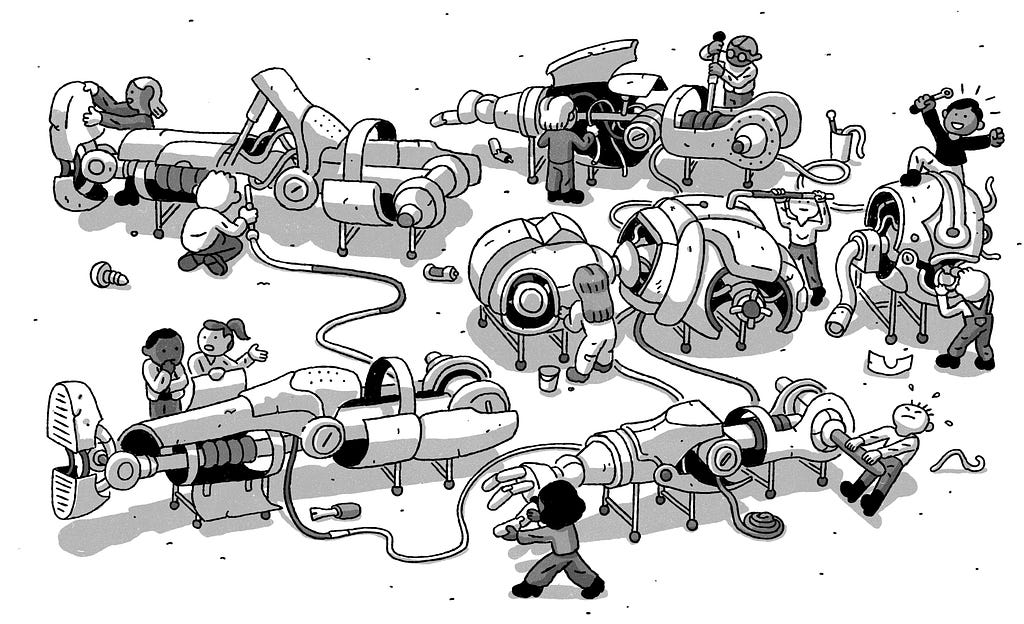
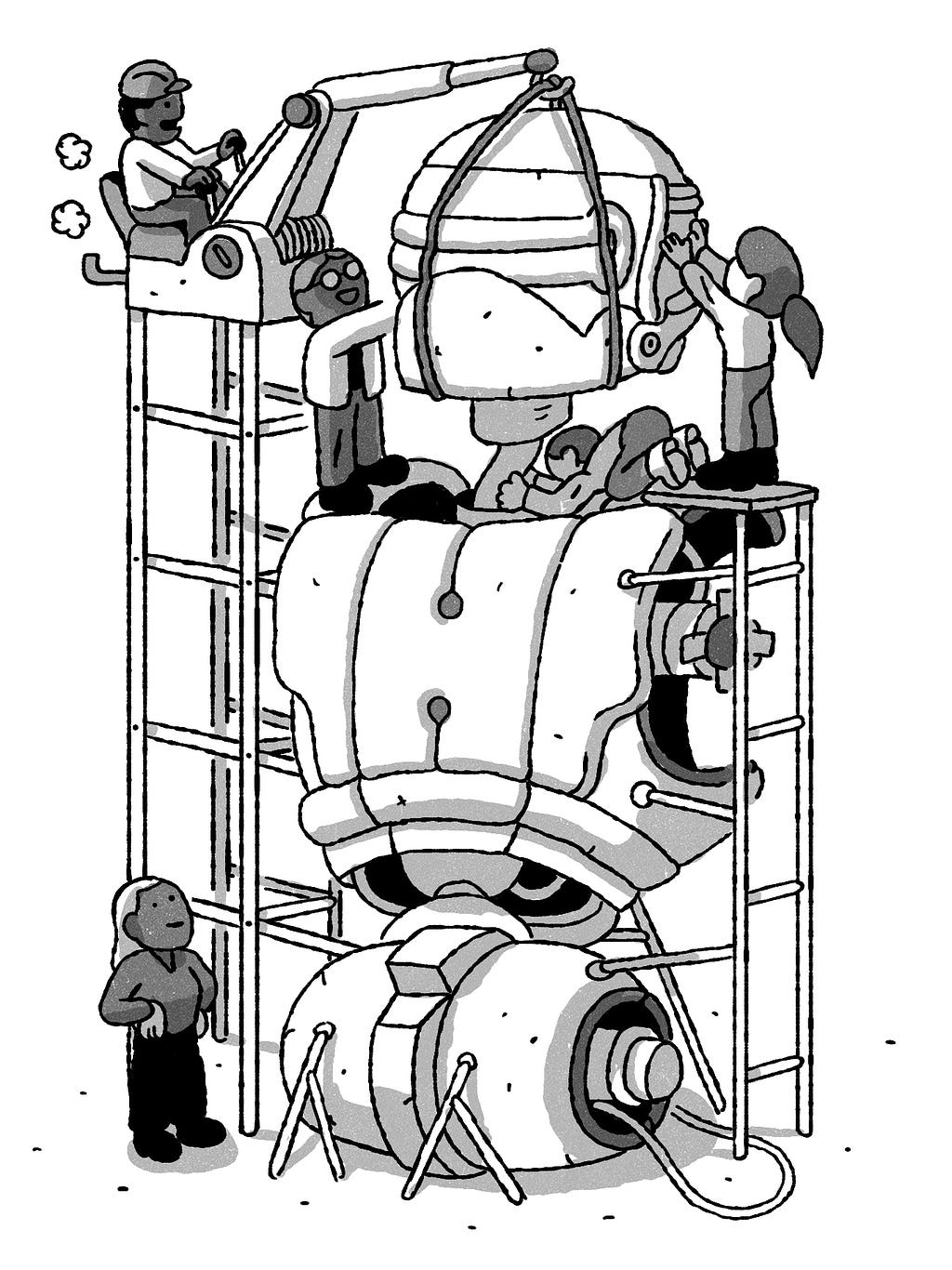
Illustration by Tim Peacock
Intense planning and coordination
In order to make sprint-length swarming work, you need planning and more planning. We typically have a story lead who meets with the members of the team and together, they break the story into subtasks in the way that makes the most sense. It is a collective planning effort. At that point we also agree on the contracts between the various subtasks. We also rely on the story lead to perform any needed coordination as we move along with the development.
It is often believed that scrum involves less (project) planning, but we all know that this is not true. When you swarm, you need even more planning.
Takeaways
After “swarming” for a few sprints, we started to get the hang of it. But ultimately, we are increasing throughput, which means we are completing features faster and delivering more.
There are some other benefits as well.
Few problems in this world don’t benefit from increased communication and software development is no exception. We talk about how to divide up the work, and we stay in close contact while we’re working because our projects often overlap. This means we can identify issues or roadblocks early in the sprint and correct accordingly.
I would also argue that increased communication leads to better software design decisions. We often have a healthy debate about the best way to tackle problems, and we probably wouldn’t have these conversations if we worked independently
By working closely together and discussing new features, we inevitably learn from each other: we learn about our specific domains, about the application we’re working on and general software building best practices.
All in all, this has been a very positive experience for our team and I encourage everyone to try it. If you have any questions, feel free to reach out.
Recently, a familiar face returned to Rogue Amoeba, and not for the first time. We’re glad to announce that our old friend Lee Falin is back on the team once again.
Lee has followed a rather roundabout career path over the past decade. He first joined us in late 2008 to work as a support technician, and a couple years later transitioned into the role of part-time Windows dev. He eventually took on full-time development of Airfoil for Windows for several years. However, he also spent some doing academic research and teaching as a university professor, but soon discovered that academia was not an ideal place for teaching about software development. During that time, Lee often worked part-time here, but even when he left fully, he still wound up doing contract work for us on iOS and Android.
Now, Lee’s returning to us in a full-time role. He’ll be focusing on Mac development, while likely also assisting on work on other platforms, and we’re delighted to have him back. His varied talents are a great asset, and we can’t wait to unveil the new updates he’ll help us create.
At Dropbox, we encourage, support, and celebrate independent open security research.
One way we do this is via our bug bounty program. We recently tripled our rewards to industry leading values. We also celebrated some of the amazing hacker community results with top-up bonuses, where we retroactively issued additional rewards for particularly unusual, clever, or high-impact findings.
This post, however, is not about bug bounty programs. While a well-run bug bounty program is mandatory for maintaining top-tier security posture, this post is about the foundation on which bug bounty programs are built: the Vulnerability Disclosure Policy (VDP). It’s possible to have a great VDP without having a bug bounty program, and organizations should start their security journey there.
Unfortunately, open security research, publication, and reporting has faced decades of abuse, threats, and bullying, such as:
Legal threats, formal legal suits filed, and inappropriate referral to authorities.
Public attacks on character or motivation.
Laws that are vague or misguided, and may ban or criminalize good faith security research or publication.
Pressuring, gagging, or firing researchers by abusing law or business relationships to the detriment of scientific publication.
Anything that stifles open security research is problematic because many of the advances in security that we all enjoy come from the wonderful combined efforts of the security research community. Motivated by recent events and discussions, we’ve realized that too few companies formally commit to avoiding many of the above behaviors.
Looking at our own VDP, we realized we could do better, and immediately committed to updating our VDP to be best-of-breed. Our updated VDP contains the following elements:
A clear statement that external security research is welcomed.
A pledge to not initiate legal action for security research conducted pursuant to the policy, including good faith, accidental violations.
A clear statement that we consider actions consistent with the policy as constituting “authorized” conduct under the Computer Fraud and Abuse Act (CFAA).
A pledge that we won’t bring a Digital Millennium Copyright Act (DMCA) action against a researcher for research consistent with the policy.
A pledge that if a third party initiates legal action, Dropbox will make it clear when a researcher was acting in compliance with the policy (and therefore authorized by us).
A specific note that we don’t negotiate bounties under duress. (If you find something, tell us immediately with no conditions attached.)
Specific instructions on what a researcher should do if they inadvertently encounter data not belonging to themselves.
A request to give us reasonable time to fix an issue before making it public. We do not, and should not, reserve the right to take forever to fix a security issue.
And there’s one thing our VDP does not contain: we don’t gate researchers who wish to publish vulnerability details. Using policy or bug bounty payments to muzzle or curate scientific publication would be wrong.
We’re also happy to announce that all of the text in our VDP is a freely copyable template. We’ve done this because we’d like to see others take a similar approach. We’ve put some effort in to this across our legal and security teams and if you like what you see, please use it. Similarly, if you have improvements to suggest, we’d love to hear fromyou.
Of course, running a top-notch VDP isn’t just about the formal policy. It’s also about showing respect to researchers. We try and do this in various ways, including via prompt responses, fast payouts, transparency, and open conversations directly with our security engineers. For top bug bounty participants (for Dropbox or just generally), we invite them to visit our offices and give talks, and occasionally set up special internal contracts.
In order to do our part to expand protections for researchers more broadly, we’re going to take an unfavorable view of potential suppliers who do not have VDPs protective of researchers, or do not have VDPs at all. A missing or restrictive VDP is often a sign of poor security. Conversely, a VDP welcoming arbitrary research and offering researcher protections is usually a sign of a mature security posture.
We value the open security research community and have taken steps to protect researchers. We expect any company which has security as a priority will do the same. We invite the broader industry to join us in these protections and expectations.
Topology of Power What does it mean to say that power operates ‘topologically’ in politics, economics and everyday life? Topology concerns non-Euclidean geometries – the kinds one might observe if one stretched a drawing of a triangle. Another example of a topological transformation is if one added dimensions to the drawing, extending the triangle into … Continue reading What is Strategy? The Topological Exercise of Power →
Canada’s telecom watchdog is set to release its revised decision on Wi-Fi-first mobile virtual network operators (MVNOs) tomorrow through a media-only conference call.
According to a March 21st, 2018 media advisory, the call will allow the Canadian Radio-Television Telecommunications Commission’s (CRTC) chairperson Ian Scott to discuss “whether wireless offerings based on different business models and technologies, such as Wi-Fi access, could be leveraged to improve the affordability of wireless services for Canadians.”
The revised decision follows from the minister of Innovation, Science and Economic Development’s instruction to reconsider the decision on mandated wholesale roaming that effectively shut down backdoor MVNO Sugar Mobile. If the CRTC decides in favour of opening up a Wi-Fi-first MVNO market, the potential influx of budget players could majorly change the state of wireless competition in Canada.
How the Commission will rule, however, is anyone’s guess at this point.
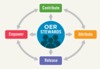
This is a much longer reply to David Wiley's recent take on open education stewardship than my recent posts here, though as the author suggests, it says much the same thing. Jim Like writes, "What might discourage faculty from attributing or contributing? Faculty will not share, will not contribute, and will not attribute when they see that their efforts and time get abused by others who don’t adhere to the social norms. It’s not just over-use that can doom a commons. Enclosure and extraction can destroy a commons just as well." I think this is a pretty definitive response to Wiley, and addresses the real issues of value and community at stake in the discussion.
With a death of a pedestrian the seemingly relentless march forward of autonomous vehicles has taken a pause as reported by the New York Times. From a legislative standpoint autonomous vehicles (AVs) are operating in a piece meal legal environment, and the state of Arizona was an early adopter, inviting these vehicles to be tested on the state’s road network in a “regulation free zone. “Then on Sunday night, an autonomous car operated by Uber — and with an emergency backup driver behind the wheel — struck and killed a woman on a street in Tempe, Ariz. It was believed to be the first pedestrian death associated with self-driving technology. The company quickly suspended testing in Tempe as well as in Pittsburgh, San Francisco and Toronto. The accident was a reminder that self-driving technology is still in the experimental stage, and governments are still trying to figure out how to regulate it.”
The Uber car, a Volvo XC90 sport utility vehicle outfitted with the company’s sensing system, was in autonomous mode with a human safety driver at the wheel but carrying no passengers when it struck Elaine Herzberg, a 49-year-old woman, on Sunday around 10 p.m. Sgt. Ronald Elcock, a Tempe police spokesman, said during a news conference that a preliminary investigation showed that the vehicle was moving around 40 miles per hour when it struck Ms. Herzberg, who was walking with her bicycle on the street. He said it did not appear as though the car had slowed down before impact and that the Uber safety driver had shown no signs of impairment. The weather was clear and dry.
There has been early discussion on the computer based “ethics” of the autonomous vehicle, and the fact that the vehicle was being designed to save its occupants first. Autonomous vehicles have been hailed as way to stem the annual deaths of over 37,000 (2016 figures) people on the road by safer, logical control. But the technology is only a decade old, and “now starting to experience the unpredictable situations that drivers can face.”
“This tragic incident makes clear that autonomous vehicle technology has a long way to go before it is truly safe for the passengers, pedestrians, and drivers who share America’s roads,” said Senator Richard Blumenthal, Democrat of Connecticut. While autonomous vehicle testing has temporarily halted with this death, investigators are examining what led to this vehicle’s failure to recognize the pedestrian. Vehicle developers have expressed challenges in teaching the systems to adjust for unpredictable human behaviour. As a professor at Arizona State University expressed “We’ve imagined an event like this as a huge inflection point for the technology and the companies advocating for it,” he said. “They’re going to have to do a lot to prove that the technology is safe.”
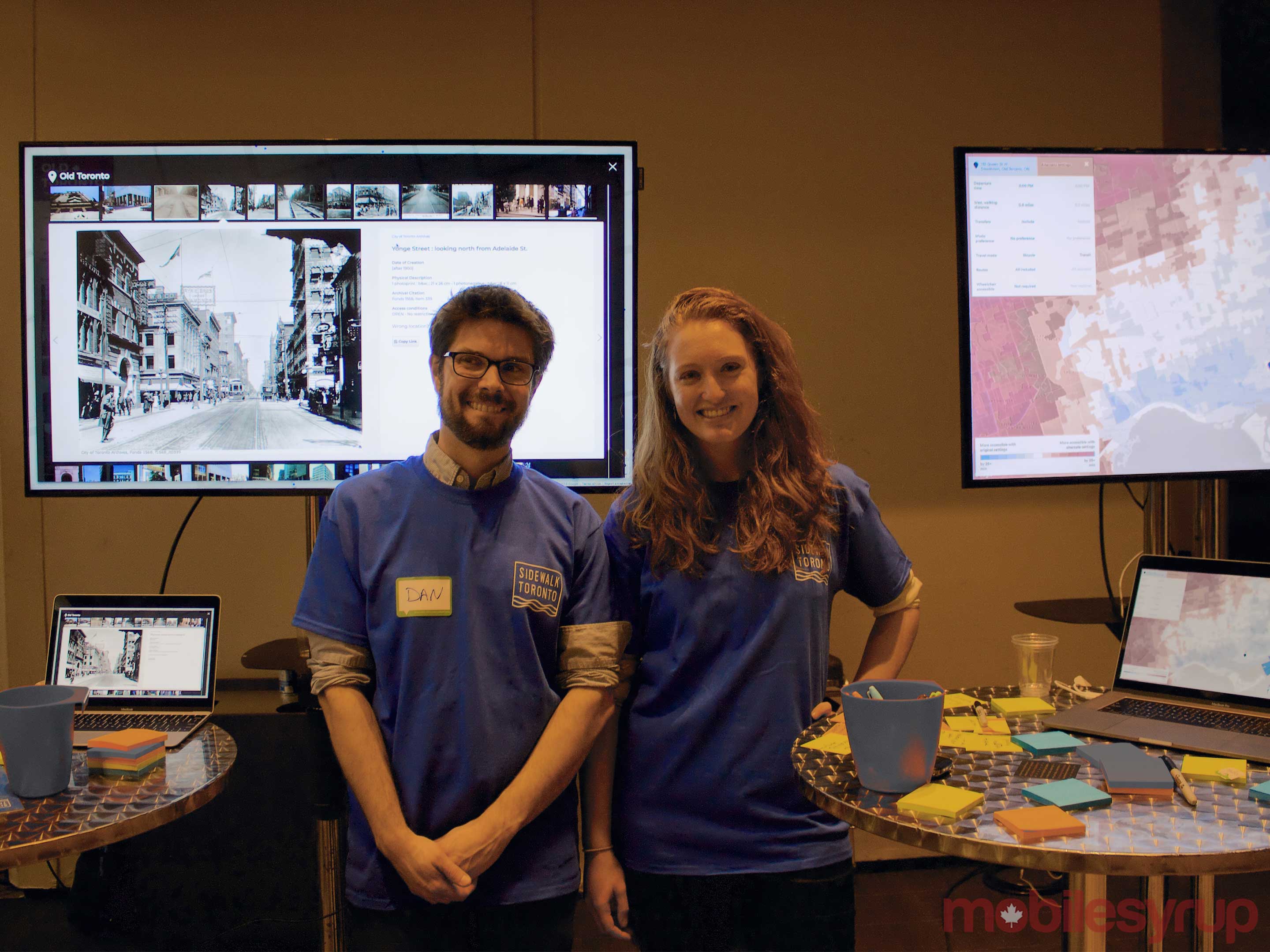
Sidewalks Labs showed off two new Toronto-based apps at the Tuesday event it co-hosted with Waterfront Toronto.
The apps are called Old Toronto and Toronto Transit Explorer. Both are developed by Sidewalk Labs and are the first of many Toronto-specific apps the company plans to make.
Old Toronto, a web app that lets users discover old photography of the city through an interactive map, was developed by a small team led by senior software engineer Dan Vanderkam. This isn’t his first foray into mapping historical photographs — previously he’s created two other maps that are full of historic photos for New York City and San Francisco.
To get these types of projects running Vanderkam usually works in conjunction with libraries and archives to source photos they have already digitized so that his team can code them onto an interactive map.
Dan Vanderkam and Samara Trilling at the Sidewalk Toronto event
“When we started working with Toronto I was naturally curious if there was a collection that we could work with and I pretty quickly discovered the Toronto Archives,” said Vanderkam.
He says the archives have around 1.7 million old photos of the city but only about 100,000 of them are digitized. From that number, they’ve been able to add 30,000 of them to the online map with many more to come in the future.
Not all photos can be located — “some are just photos of the insides of an apartment so we’re never going to be able to get those,” says Vanderkam — but he thinks his team can get 50,000 to 60,000 in total.
Right now the data for the project can be downloaded from the Old Toronto website and VanderKam says it will soon be open-source.
The Toronto Transit Explorer web app was also shown off, but hasn’t launched yet. This app was developed by software engineer Samara Trilling and can be used to see if transit or biking is more efficient for the distance someone wants to travel.
The app works by selecting a position on a map and then it will show users how far they would need to travel by bike before transit becomes the faster option. The app shows different colours; anything in blue means biking in that area is the most efficient form of transportation, white means that both transit and biking take about the same amount of time and red means public transit is fastest.
A photo of the Toronto Transit Explorer web app
This tool “can be really useful if you’re looking for the most accessible new apartment or a new school or if you want to compare if its worth it for you to buy a bike-share membership,” said Trilling.
She also mentioned how this can help cities identify transit dead zones and open up other possibilities for city planning.
In the future, Trilling plans on adding the ability to combine modes of transportation so users can see if a combination of transit and bike-sharing can change how people get around the city.
The Google Pixel XL seems to be experiencing a new problem since Android’s recently released 8.1 update. The problem causes the smartphone to overcharge, which can be dangerous for the device’s battery.
The reason for the bug is currently unknown, and not every user is experiencing the issue.
Pixel XL usually draws 18 watts of power when in rapid charging mode. However, the bug causes the Pixel XL to draw up to 25 watts.
The Pixel charger features a safety mechanism that shuts off the charging flow when it detects an overcurrent — even though the phone will try to repeatedly draw more energy until it gets to a safe current.
This means that if the sound is turned on, you’ll repeatedly hear the charging notification.
John McNulty, Google’s head of safety and compliance engineer, has responded to the issue and says that a fix is set to arrive in the coming weeks. His comment also explains that Google designed the Pixel with safety protections to further prevent overheating.
Read his response below.
“Thank you for submitting information on this bug. Our engineering team has verified a fix that will be rolling out in the coming weeks to prevent this from occurring.
Tests run by our safety engineers have also confirmed that even if a momentary overcurrent draw of the kind described were to occur in normal-use conditions, it would not pose a safety hazard. In addition, Pixel XL was designed with multiple layers of safety protections to further prevent overheating:
the phone input circuit is designed to carry more than the observed level of current;
both the battery and the phone have multiple layers of protection to avoid battery and phone overheating and overcharging;
the in-box charger, as well as any third party chargers that meet safety industry standards (UL and similar), have overcurrent protection.”
While overcurrent has been a problem in the past, according to Google as long as the user has a safety industry standards charger, the Pixel’s overcurrent shouldn’t be a safety concern.
The Pixel forum user who originally reported the issue says that they first noticed the issue near the end of January.
Let us know in the comments below if you’ve noticed your Pixel XL experiencing this problem.
 merely outstanding architectural design at specific locations that avoid protected view corridors but further, a development that addresses an array of city planning and urban design objectives and requirements.
 Another notable example is the striking, Bing Thom-designed 556 ft. high “Butterfly” (rezoned in 2017, in conjunction with the West End Community Plan, 2013) on 1000- block Nelson behind the heritage First Baptist Church on Burrard St., which will be restored and seismically upgraded as part of the development.


 Lytro has been around for a bit of time now, as one of the most ground-breaking companies in the camera field, but it looks like some big changes are on the way.




 Radfahren in Stuttgart.



 Amba Kak | New Delhi, India |
  Orlando Del Aguila | Guadalajara, México |
  Amel Ghoulia | Tunis, Tunisia |

 CommitStrip.
 Recently, a familiar face returned to Rogue Amoeba, and not for the first time. We’re glad to announce that our old friend Lee Falin is back on the team once again.