Shared posts

18 Oct 15:29

From the Top

by Article Author
Leonardo da Vinci helicopter.

In the last article we saw if you building, creating, designing or developing things is your first job then explaining those things is job two. And three. And four. Look at it this way: If you can’t explain it, sooner or later someone is going to decide that this thing is just too much trouble to keep around and toss it. And it’s not just the stuff you build. Explaining is a key way that you can make the people around you more effective, your company more efficient and your work life more interesting.

Have a Plan

If you do want to improve your explaining chops then you need to start with the one thing that every explanation has: A plan. Since every explanation is a package of transportable facts that you are trying to copy into the head of your listener, every single explanation is built according to some plan. The plan may be well thought out or just cobbled together but there will be a plan. A carefully planned explanation is like a Leonardo da Vinci drawing or a Dutch masters' paintings, enjoyable and functional.

Still life with a bottle of rum

Even if you don’t consciously plan your explanation, it will still have a plan, what I think of as the default plan. Instead of laying out the important ideas and facts in a logical sequence, with the default plan you take more of a stream of consciousness approach.

If you are a software developer and you are called on to explain the system you are working on, you might start with the last feature you worked on. Or the first. Of the part of the system you like the best. Or the least. Or the part that was going to be so cool but was cancelled. Or the part that always seizes up in production. All of which may be interesting — and possibly entertaining — but is probably not going to jell into an effective explanation. Like a Picasso painting, all of the parts may or may not be there, but what is certain is that they will be jumbled together into a hard to decipher whole.

As I say, you need a plan.

Lead With the Big Picture

So if you want to avoid the Picasso style explanation you need to do a little bit of planning. This can be as simple as pausing to take a breath in the hallway before you jump into an explanation of how this thing works. During that breath you might decide to go for the top down layout for you explanation.

Zoom In!

Imagine you are working with a developer who is new to your project and the two of you are going to tackle the next development task — perhaps you need to build a login screen. How do you orient your partner? If follow the top-down plan then you start with the big picture:

We are, of course, trying to get rich selling pet food on the Internet…​

And then zoom in a bit:

So we are building this e-commerce site…​

And then finally:

And so we need a login screen which can deal with either a password, finger or paw print authentication…​

None of this is rocket science — it just requires a bit of planning and thought. You start with the big picture, which provides the context, the setting for for your explanation and then you work down to the details.

I was recently reminded of the value of a top down explanation when I happened to mention at a party that I was in building a 3D printer in my spare time. Instead the oh that’s cool excitement I was expecting, I got a number of blank stairs. It was then that I realized that perhaps not everyone knows what a 3D printer is. No problem, you just need to zoom out a little bit and start with the big picture:

So a 3D printer is a gadget for creating most anything that is reasonably small and made of plastic. They work by depositing thin layers of molten plastic on a glass plate. They are about the size of a an ordinary print text on paper printer and are driven by a computer in pretty much the way an ordinary printer is.

That’s the big picture, and now it’s time to zoom in:

So I have been building a 3D printer on my dinning room table…​

And then everyone can be properly thrilled by my stories of motors and belts. Or at least they won’t be completely confused by them.

The Best Top Dow Explanation Ever

While my little tale of 3D printing is a decent top down explanation, my favorite example actually comes from the most famous speech in US political history, the Gettysburg Address. Lincoln delivered that speech at the height of the US Civil War and famously — at least if you are an American — it starts with these words:

Four score and seven years ago our fathers brought forth on this continent, a new nation conceived in Liberty, and dedicated to the proposition that all men are created equal.

Don’t let the archaic language distract you. Lincoln is starting with the big picture by going back to the founding of the United States (for him) 87 years previous.

He then zooms in a bit by focusing on the last few years:

Now we are engaged in a great civil war, testing whether that nation.. can long endure…​

And then finally to this afternoon, right now:

We are met on a great battle-field of that war. We have come to dedicate a portion of that field, as a final resting place for those who here gave their lives that that nation might live.

That is the entire history of the US from the beginning to today in a single paragraph. That is a first class top down explanation.

Or You Can Reverse the Neutron Polarity

A second way that you can organize an explanation is to reverse the flow of the top-down explanation and go from the details to the bigger picture. So you start in the weeds:

Here we are, working login screen which can deal with either a password, finger or paw print authentication…​

And then work outward:

Because our e-commerce site needs a log in screen…​

And finally the big picture:

Because we are trying to get rich selling pet food on the Internet…​

It doesn’t matter which direction you do it, what does matter is that you connect the messy details, a log in screen for example, to the more global picture. You need to do this because it’s the context that is the critical thing that every good explanation provides. Look at it this way: All I have to do is reach for my browser and I have a billion individual facts at my fingertips. The thing a good explanation provides is how the facts fit together. Not just how a 3D printer works or where the password field should go but what a 3D printer is for and why we are creating the login screen.

Wrapping Up

So there you have it. You need a plan for your explanations, because if you don’t have a plan you explanation is likely to come out looking like abstract art: Lovely perhaps, but less than informative. So in this article we looked at top down and bottom up explanations. Either start with the big picture and work down to the details or start with the details and work up. The idea is to anchor the details in a context that makes sense to your listener.

Happily, top down and bottom up are not the only items on the explanation plan menu and so in the next couple of articles we will look at process and simple to complex explanations.

 — Russ

11 Apr 21:38

Samsung Galaxy Note 9 Rumors Point to 6.4-Inch Display and 4,000mAh Battery

by Rajesh Pandey
With the Galaxy S9 receiving less than stellar response, Samsung is now focusing on its next major flagship: the Galaxy Note 9. While previous Galaxy Note handsets have been based on the company’s flagship Galaxy S handset from earlier this year, the Korean company is looking to improve the Note 9 in some aspects to help it better stand out. Continue reading →
11 Apr 21:38

The Development of Davie West – 1

by pricetags

In 2013, City Council passed this:

This community plan was a response to objections over the development of a few highrises (particularly the ones at Comox and Broughton, and at Bidwell and Davie) under a rental incentive program.  Opponents objected to the spot rezonings without the context of a community plan.  So they got one.

And they very likely got way more than they expected:

It is estimated that over the next 30 years, the West End will experience a population growth of 7,000 to 10,000 residents. While growth will happen incrementally, it is anticipated that approximately half of this growth might occur in the first 10 years …

Growth was cleverly accommodated on the edges, notably along the Alberni corridor and between Thurlow and Burrard, to allow highrises of a scale not seen before (over 50 storeys!). But the centre and slopes of the West End would essentially keep their scale and character, with allowances for infill.

One area, however, within the ‘traditional’ West End centre would be transformed – the so-called Lower Davie blocks between Jervis and Denman.  It was considered a ‘corridor,’ not a village, like the blocks uphill to the east – the centre of gay life in the community.  Indeed, the planners wanted to keep dense residential development out of that area in order to avoid night-life conflicts.  And so the development was shifted to ‘Davie West,’ effectively creating a new village with a new identity.

This is a plan for the next 30 years.  Except it’s likely going to be built out in the next 15.  And the first area to go through the fastest transportation is Davie West – now under construction on a scale not seen in the West End since the 1960s.

A rental highrise on what used to be a parking lot in the 1600 block


The single biggest change is across the street, on a full half-block where the Safeway used to be …


And which is now a very large hole:


11 Apr 21:37

The best questions that senators asked Mark Zuckerberg yesterday

by Josh Bernoff

Based on my Twitter feed yesterday, people in Congress were asking some pretty dumb questions of Facebook CEO Mark Zuckerberg yesterday. (One analyst tweeted that her head was going to explode.) So I looked at the transcript. What I found was some excellent questions that don’t have any simple answers. Here’s a good sampling. (The … Continued

The post The best questions that senators asked Mark Zuckerberg yesterday appeared first on without bullshit.

11 Apr 21:37

I interviewed Aaron Bendickson — Omni sysadmin,...

I interviewed Aaron Bendickson — Omni sysadmin, pinball wizard, Very Patient Man Who Loves His People and Isn’t Bothered At All Ever By All My Incessant Questions — for the latest episode of The Omni Show.

11 Apr 21:37

Bike Plan Plods: It’s not too late to put the plan on course

by dandy

Image by Warren Wheeler.

Why can’t Toronto do bike lanes right?

There’s still time to put our bike plan on course

by Albert Koehl

Cyclists who believe City Hall can be trusted to implement the 2016 bike plan haven’t been paying attention to history. As with previous plans, the current plan is long on promises, but, so far, short on progress. There isn’t much cyclists can do about old plans that failed to deliver, but there is still time --- and many ways --- to help ensure the current plan yields on-road results.

The most recent ten-year bike plan, passed by council in June 2016, promises 335 km of new bike lanes and sidewalk-level bike paths. If we’re lucky we’ll get 27 km by the end of year three. The 2001 Bike Plan, promised 460 km of bike lanes and delivered 80. The 1978 Barton-Aschman report for the city studied the creation of bike lanes along east-west and north-south corridors, but delivered little more than a wide curb lane on part of Harbord St. The 1974 Strok report, passed by Metro Council, promised over 400 km of trails, but delivered around 80, then threw in the towel. After almost half a century of bike plans, Toronto still doesn’t have a cycling network.

The history of failures makes clear that cyclists can’t simply leave implementation of the current bike plan to City Hall. If we do, we shouldn’t be surprised to find ourselves still riding in the gutter. We must demand accountability, apply pressure strategically, and treat the plan as a first step in a longer process. We certainly needn’t worry about ruffling feathers, even among our City Hall allies. Public pressure --- instead of hopeful silence --- supports civil servants and councillors who are trying to make the case among their colleagues for better cycling conditions.

Much of the success of the current bike plan now hinges on the completion of major corridor studies along important cycling routes. These studies involve in-depth assessments of the impacts of bike lanes on other road users i.e. motorists. The 2001 bike plan, on the other hand, simply avoided proposing bike lanes on controversial routes. The current plan makes corridor studies the prerequisites for bike lanes, although the studies don’t actually guarantee that bike lanes will ultimately be installed.

When City Council approved the new plan on June 7, 2016, it deferred indefinitely most of the corridor studies --- and along with them, the possibility of bike lanes on the associated routes --- except for Bloor-Dupont and Yonge. The two Yonge studies have progressed -- one to completion in connection with Yonge St. cycle tracks in North York. The cycle tracks, which are opposed by the mayor, must be approved by Council. One additional corridor study for the length of Danforth Ave. was approved but has not been initiated, although there is some nebulous connection with an ongoing ‘planning study’ for an eastern portion of Danforth. (At the time of publication, dandyhorse had not yet received any clarification from City staff about this study.)

City staff, in a recent meeting with Cycle Toronto's Ward 20 advocacy group, indicated that no progress has been made on the Bloor study, even though it was described as ‘currently underway’ when council approved the bike plan in 2016. Requests over the last two months for a meeting with Acting Cycling Manager Shawn Dillon or Transportation Services Manager Barbara Gray about the corridor studies have thus far been unsuccessful.

The stagnation of the corridor studies is troubling in the context of the lack of progress on other elements of the plan. The proposals for 2018 encompass only a small number of bike lanes, mostly on relatively quiet streets internal to York University and the Flemington and Thorncliffe Park neighbourhoods. And even if all staff recommendations for new cycling infrastructure for 2018 are approved by council, we’re not anywhere close (as previously documented) to a pace that would achieve the objectives of the plan within the ten-year framework.

Illustration above by Ness Lee from our June 2014 issue and the story Bike Lanes on the Back Burner Again? Please Note: the numbers in the illustration are no longer current. One thing is constant thoughBike lanes are always something we'll get "next year" (or the year after). That's the legacy of the bike plan.

A number of questions are prompted by the current mediocre pace and the choices for new cycling infrastructure.

  1.     Why has there been no progress on the Bloor-Dupont or Danforth Ave. corridor studies, both of which were to be informed by the Bloor pilot completed last year? If the issue is staff resources, why has a consultant not been hired?
  2.     Who at City Hall is accountable to the community for deciding which bike lanes will be proposed for implementation each year - the city’s cycling manager, the public works committee, local councillors, or some combination of the above? 
  3.     On what basis were the priorities determined for this year’s proposed new bikeways (i.e. cycle tracks, bike lanes, sharrows, and trails)? Are the proposed bike lanes for York University, for example, based on cycling surveys, local pressure, and safety concerns, or simply the result of staff taking the path of least resistance?    

The objective isn’t to make the bike plan so rigid that it’s impossible to respond to new priorities. This flexibility, however, should be based on cyclists’ safety needs instead of some back-room deliberations that give us bike lanes only where they’re convenient to motorists.

Improving City Hall accountability on cycling infrastructure, should, for starters, include regular consultation with cyclists in setting the annual action plan. Mayor John Tory should also appoint an elected official to oversee bike plan implementation -- ideally in conjunction with implementation of the Vision Zero Road Safety Plan. Montreal, for example, has a councillor responsible for cycling issues - as do many cities around the world. As well, the current bike plan’s required progress report by staff, which is supposed to be completed in the fourth quarter of 2018, should be released for public review prior to the election. (The election is on October 22.)

The fact that 2018 is an election year is no reason to put off bike plan decision-making and action. Cyclists aren’t protected by some magic, election-year cloak from being hit by motorists.

The bike plan is our plan. It’s our business to make sure it’s implemented to make our roads a safe place to cycle and our city a better place to live.

Albert Koehl is an environmental lawyer and founding member of Bells on Bloor.

Related on dandyhorse:

How Council likes Bike Plans More than Bike Lanes.

11 Apr 21:36

Fix Coffee + Bikes fixes abandoned bikes for new Canadians to ride

by dandy

Together with not-for-profit CultureLink, Fix Coffee + Bikes created the Fix Re/Cycle Program: An initiative that rehabilitates abandoned bicycles and then matches them up with new Canadians who need them.

The idea for the project came from seeing hundreds of bikes around the city that had been locked up and forgotten.

These sad abandoned bikes may have looked pretty bad at first glance after having been rained and snowed on, and some parts stolen off the bike, but many of them had good bones and just needed a bit of love to get them roadworthy again.

Each of the Re/Cycle bikes had been recovered by City of Toronto staff from posts and rings around the city. Fix staff picked up the bikes, brought them back to the shop, repaired and restored all usable parts and replaced any broken parts, and then gave each bike a thorough tune-up.

The bikes are being distributed through the program’s partner, CultureLink, which works with newcomers and runs programs to get more people on bikes and learning skills to ride independently.

On March 27, 2018, Fix and CultureLink staff went to Kipling Collegiate to deliver these newly restored bikes to their new owners.


The first batch of bikes went to high schools students who are members of the school bike club, and each one wrote an essay to talk about why they could use a new bike and how they would care for it.

Fix plans to run this project again next winter and hopes to distribute even more bikes to those who need them. They’re also encouraging other bike shops in Toronto and beyond to take this type of project on themselves so even more bikes can be recycled and matched with a new owner.

Related on dandyhorsemagazine.com:

Spotted: Updated bicycle map

11 Apr 21:36

Apple developing Isaac Asimov ‘Foundation’ series with ‘The Dark Knight’ trilogy writer

by Bradly Shankar
Apple logo

Apple’s next original series will focus on the acclaimed Foundation trilogy of science-ficton novels by writer and biochemistry professor Isaac Asimov, according to a report from Deadline.

The show is currently in development at Skydance Television, who produced this year’s sci-fi show Altered Carbon for Netflix. Screenwriters David S. Goyer (Batman BeginsThe Dark KnightMan of Steel) and Josh Friedman (Terminator: The Sarah Conner Chronicles and the upcoming Snowpiercer TV series) are will serve as executive producers on the show.

The Foundation property is huge get for Apple, as Asimov’s original 1950s novels were highly popular and influenced other sci-fi classics, including George Lucas’ Star Wars. Many major studios have tried to adapt Asimov’s books for the big screen, including Fox, Warner Bros. and Sony, although none of these projects saw the light of day.

The Foundation series focuses on the development of the titular Foundation, a group of artisans and engineers that travels across the galaxy and aims to reestablish a galactic civilization.

In total, Apple reportedly has 12 original series in development, including a revival of Steven Spielberg’s anthology series Amazing Stories, a drama series based on NBA star Kevin Durant, a drama series from La La Land writer-director Damien Chazelle and a scripted comedy starring Kristen Wiig.

Apple is expected to begin releasing its slate of original series by March 2019.

Source: Deadline

The post Apple developing Isaac Asimov ‘Foundation’ series with ‘The Dark Knight’ trilogy writer appeared first on MobileSyrup.

11 Apr 21:35

Google is reportedly considering buying Nokia’s in-flight Wi-Fi technology

by Igor Bonifacic

Google could soon start offering in-flight Wi-Fi.

The search giant is reportedly pursuing an acquisition of Nokia’s Oyj airplane broadband business, according to a new report from Bloomberg.

Citing “people familiar with the matter,” the publication says “an agreement may be reached soon” — though it cautions that both Google and Nokia may decide against a potential deal.

The acquisition, were it to go through, would be a major boon for travellers who lament the lack of connectivity on commercial airplane flights.

Nokia’s LTE A2G technology works differently from the spotty tech typically associated with in-flight Wi-Fi. Instead of bouncing off broadband signals off a satellite, LTE A2G establishes a direct link between an aircraft and the ground. With Google’s resources, travellers could quickly find the technology available on most flights.

Currently, the best known provider of in-flight Wi-Fi is a firm called Gogo.

In November, the company announced a partnership with Air Canada to provide the airline’s frequent flyers with complimentary Wi-Fi. At the time, Air Canada was the only airline in North America to offer complimentary Wi-Fi to its frequent flyer members.

Image courtesy of Flickr user Caribb

Source: Bloomberg

The post Google is reportedly considering buying Nokia’s in-flight Wi-Fi technology appeared first on MobileSyrup.

11 Apr 21:35

Fido offers 50 percent discount on Home Internet 75 to wireless subscribers

by Igor Bonifacic
Fido

Fido has launched a new promotion designed to entice its wireless customers to add a home internet package to their monthly wireless bill.

The flanker brand is currently offering a monthly 50 percent discount on its Fido Home Internet 75 service to select customers.

For the first 12 months of a new home internet contract, current Fido wireless subscribers can get the 75 home internet bundle for $32.50 per month, instead of $65 per month. After the first year, the monthly cost of the service increases to $65 per month. Over the course of a full year, the discount amounts to $390.

The Fido Home Internet 75 package includes unlimited bandwidth at 75Mbps. Not included in the deal is installation, which is priced at $49.99 for customers who decide they’d like a technician to install the modem at their home. Customers are also required to return the modem when and if they cancel the service.

The deal is only available to new internet subscribers that have a mobile data plan with the carrier. Data-only and Fido Home plan holders are exempt from taking advantage of the promotion.

The offer ends on April 30th, 2018.

The post Fido offers 50 percent discount on Home Internet 75 to wireless subscribers appeared first on MobileSyrup.

11 Apr 21:35

2.2 million people played HQ Trivia’s $300,000 game hosted by The Rock

by Patrick O'Rourke
Rampage

In a game that was filled with great but also laughably horrible Dwayne ‘The Rock’ Johnson puns, over 2.2 million people played HQ Trivia’s $300,000 match.

The game, which featured questions like “when gorillas walk, what part of their hands do they put pressure on?” and “what land animal holds the Guinness World Record for the largest mouth?” has gone down as one of HQ Trivia’s most-played sessions.

Instead of the typical 12 questions, this special match required winners to answer 15 questions correctly in a row.

HQ trivia

This is also one of the first examples of HQ Trivia’s plans for monetization, with this particular match being sponsored by the upcoming movie Rampage. HQ Trivia also recently was sponsored by Warner Bros.’ Ready Player One for a $250,000 cash prize pool.

The upcoming Rampage film is based on the 1980s Midway arcade game that had absolutely no plot — why a studio opted to make a movie based on the property remains a mystery.

Those who survived to the 15th question walked away with an incredible $3,614.45 prize, a number that’s substantially above the usual prize earnings in the game.

HQ is available on Android, iPhone and iPad.

The post 2.2 million people played HQ Trivia’s $300,000 game hosted by The Rock appeared first on MobileSyrup.

11 Apr 21:35

Apple Music hits 40 million subscribers, names new worldwide chief

by Patrick O'Rourke
Apple Music

While Apple Music reported 38 million subscribers back in March, it now looks like the music streaming service has managed to hit 40 million subscribers.

This means that Apple’s Music Streaming platform managed to amass two million subscribers in just one month.

Variety is also reporting that Apple is shuffling up its music team’s leadership and has named Oliver Schusser as the head of Apple Music’s worldwide division.

Schusser previously held the position of vice president of Apple Music and international content.

Apple Music’s leadership has changed frequently over the last few years, with high profile hires like Bozoma Saint John and Ian Rogers leaving the platform and Apple entirely.

While Apple Music continues to grow rapidly, the service still has a long way to go before it reaches Spotify’s base of 70 million paying subscribers. Including Spotify’s free tier, the streaming service has a total of 159 million users.

Reports also emerged earlier today that Spotify has plans to significantly revamp its free tier, giving users additional control over what songs and playlists they’re listening to.

Apple Music is available on both the iOS App Store and the Google Play Store.

Source: Variety 

The post Apple Music hits 40 million subscribers, names new worldwide chief appeared first on MobileSyrup.

11 Apr 14:25

The World Brain Experiment

by Serge

“We want a reconditioned and more powerful Public Opinion. In a universal organisation and clarification of knowledge and ideas, in a closer synthesis of university and educational activities, in the evocation, that is, of what I have here called a World Brain, operating by an enhanced educational system through the whole body of mankind, a World Brain which will replace our multitude of unco-ordinated ganglia, our powerless miscellany of universities, research institutions, literatures with a purpose, national educational systems and the like; in that and in that alone, it is maintained, is there any clear hope of a really Competent Receiver for world affairs, any hope of an adequate directive control of the present destructive drift of world affairs. We do not want dictators, we do not want oligarchic parties or class rule, we want a widespread world intelligence conscious of itself. To work out a way to that World Brain organisation is therefore our primary need in this age of imperative construction.” World Brain, H. G. Wells, 1938

“We want a reconditioned and more powerful Public Opinion”

Those words were written by H. G. Wells in 1938, the year Hitler made a triumphal entry into Vienna to celebrate the Anschluss with Austria, the year of the Munich Agreement consenting to the annexation of the Sudetenland region of Czechoslovakia in return for peace (!), the year of the Kristallnacht when Jewish shops and synagogues were destroyed and their owners later fined for the destruction!!!

To many, the world of 2018 might not look as bad as the one of 1938… But what would a survivor of Rwanda’s genocide have to say about today’s world (800,000 Tutsi murdered)? An Iraqi living in “liberated Irak” (between 180,807 and 202,757 civilian deaths) or a Syrian (+500,000 killed, 5.1 million refugees and 6.3 million internally displaced)? To add insult to injury, let’s not forget that Syria’s rulers used the informed advice of Alois Brunner, an Austrian SS officer who worked as Adolf Eichmann’s assistant and ran the notorious Drancy camp. What goes around…

While one might find disturbing similarities between the annexion of Crimea by Putin to that of Sudetenland by Hitler, or between the Russian involvement in Syria and that of the Condor Legion during the Spanish war, this is probably not what we should worry about most. What should worry us is the withering of “public opinion” and its bodies, the free press, the trade unions and the political parties, its fragmentation at the most atomic level, the individual, under the influence of the new mass media, the ill-named social media.

“Imagine a school newspaper that only ever discussed bullies — what they’re wearing, what they said, which one was on top. That’s American thought now — it doesn’t know how to think anymore. It’s been scared, or maybe hypnotized, into submission” writes umair haque in Why America Still Doesn’t Get Authoritarians are (Just) Bullies. He adds “I’m not just saying: ‘ignore the trolls.’ I’m saying: ‘bullies thrive on attention. The best way to defeat a bully is to conquer them with more, better, worthier, attention.’”

Far from accomplishing H. G. Wells’ dream of reconditioning a “more powerful public opinion” we now have multiple evidence that traditional mass media and the improperly named social media, are actively contributing to destroying the very fabric of our society: trust. We knew from numerous statistics that our western societies have a serious problem with trust, trust in institutions, trust in politicians, trust in media etc. We are reaching a new stage where we are being told that trust, a property that might have been useful in the past, is now becoming redundant.

A new technology has emerged claiming to have made trust superfluous: the (public) blockchain. The success of a public blockchain like the Bitcoin or Ethereum is based on a very  interesting property, it is trust-less (the Newspeak word for distrust), i.e. it would remain fully functional in a society were everybody is at war with everybody. In fact, the ideal condition for a (public) blockchain like Bitcoin to be protected against sibyl attacks, is when the nodes contributing to the network distrust each other — an agreement between those holding 50% of the computing (mining) power would be necessary to take over the network. Distrust, the destructor of civil society, is what makes public blockchains so reliable—and Oceania so stable! As the Bitcoin has demonstrated, distrust is a business that can make you rich if you are ready to share the same infrastructure with weapons smugglers, human traffickers, pimps and drug dealers, who already thrive on distrust in the real world and are more than happy to work with you, hand in hand (don’t forget to recount your fingers!) to inflate the Bitcoin bubble.

Is there an alternative to a world where social media is being used as propaganda under disguise? Is a technology based on distrust the best way to create a trustworthy society? Can we bring Tim Berners Lee’s invention, the World Wide Web, to a new stage of maturity to support a “reconditioned and more powerful Public Opinion”?

“We want a widespread world intelligence conscious of itself”

“Please do not imagine that I am indulging in any fantasy when I talk of your work and your accumulations as the rudimentary framework of a world brain. I am speaking of a process of mental organisation throughout the world which I believe to be as inevitable as anything can be in human affairs. The world has to pull its mind together, and this is the beginning of its effort. The world is a Phoenix. It perishes in flames and even as it dies it is born again. This synthesis of knowledge is the necessary beginning to the new world.” (ibid.)

The field of Artificial Intelligence (AI), is often presented as divided into two main paradigms: Symbolic AI and Connectionist AI. Symbolic AI, also referred to as Good-Old-Fashioned Artificial Intelligence (GOFAI) is based on the application of a set of explicit rules using symbols and logic as performed by expert systems, while the Connectionist approach is based on a computational system inspired by the human brain, like neural networks. Some, like Eliezer Yudkowsky, claim that this AI dichotomy is irrelevant (link),

Similarly, the field of learning is divided between cognitivists and constructivists —there are also behaviourists, but who really cares for what they have to say about humans when what they have learned is primarily based on the observation of dogs (Pavlov) rats (Watson) and pigeons (Skinner). Cognitivism can be described as an enhanced form of behaviourism, where the stimulus-response model of Pavlov, Watson and Skinner is augmented with a representation of mental structures and processes. The main avatar of this model is the representation of the brain as a kind of sophisticated computing machine. The study of dogs, crawling rats and flying rats is now superseded by the study of computers (mice again!) as a model for how we learn. Cognitivism, that can be defined as digital behaviourism, uses computers to model human learning in order to… use computers to support human learning (sounds a bit self-referential, doesn’t it?).


So, how do we learn?

“When we associate experiences in our mind, we aren’t performing any sort of inference on them, and we don’t even typically represent them in a language. We see our child’s face every day, and we don’t describe it to ourselves, we simply come to recognize this particular collection of features as it is presented to us every day. To ‘know’ that one sort of thing causes another is simply to recognize this circumstance each time we see it. To be able to read, to infer, and even to reason, is to recognize common word forms, syllogisms, or commonalities. The recognition, and the fact of recognition, is the knowledge and the justification for knowledge all rolled into one – a direct, non-inferential form of knowledge.” (Stephen Downes, Knowledge as Recognition)

How from what precedes can we follow H. G. Wells’ invitation to widespread a world intelligence conscious of itself?

The World Brain Experiment

“A World Encyclopaedia no longer presents itself to a modern imagination as a row of volumes printed and published once for all, but as a sort of mental clearing house for the mind, a depot where knowledge and ideas are received, sorted, summarised, digested, clarified and compared.“ (ibid.)

If we start from the hypothesis that knowing is recognising, then a world brain should be able to recognise: recognise people, ideas, places, events, etc. This can be achieved using artificial intelligence and/or collective intelligence, i.e. “the intelligence that emerges from the collaboration, collective efforts, and competition of many individuals” (Wikipedia).

Pierre Lévy defines collective intelligence as, “a form of universally distributed intelligence, constantly enhanced, coordinated in real time, and resulting in the effective mobilization of skills. I’ll add the following indispensable characteristic to this definition: The basis and goal of collective intelligence is mutual recognition and enrichment of individuals rather than the cult of fetishized or hypostatized communities.” (Collective Intelligence: Mankind’s Emerging World in Cyberspace, highlights are mine).

We have our first construct to set our World Brain experiment: mutual recognition, something easily instantiated using recognition tokens such as Open Badges. Let’s imagine a place in the cyberspace where all these recognition tokens are stored (under our control): the recognised entities would be like neurones while the recognition tokens synapses. Of course, today’s Open Badges are very primitive synapses (while individuals would—usually— be extremely sophisticated neurones) but this is just the first iteration of a nascent World Brain independent from any infrastructure à la Facebook or other pseudo social media.

Our first World Brain, the connection through mutual recognition, would be like our primitive brain, a kind of reptilian brain. It wouldn’t be involved in sophisticated knowing, but could be very useful to identify predators, trolls and other enemies of democracy. Should cancerous cells appear in our World Brain promoting authoritarian or racist views, it would be easy to cut those cells out and let them have their own mini-reptilian brain, as it is a well known fact that racists have smaller brains than humans (and smaller hands!).

This first stage of the World Brain could be used to recognise not just predators, but many other useful things, like ideas, places, projects, initiatives, skills, knowledge, values, achievements etc.

The second stage of the World Brain could benefit from artificial intelligence exploiting the set of data connected through the World Brain. The “widespread world intelligence conscious of itself” of H. G. Wells could be rephrased as “distributed world intelligence conscious of itself” using artificial intelligence the way we use a GPS to travel — or GOMs (Good Old Maps).

We would be the empowered operators of the clearing house for the mind!

The World Brain Experiment should take place during the Open Recognition Week, 22-28 October 2018, the week of ePIC 2018. So, if you are interested to join and contribute to its success, please send a message to week at openrecognition.org.

11 Apr 14:24

Ken sent me

by Volker Weber

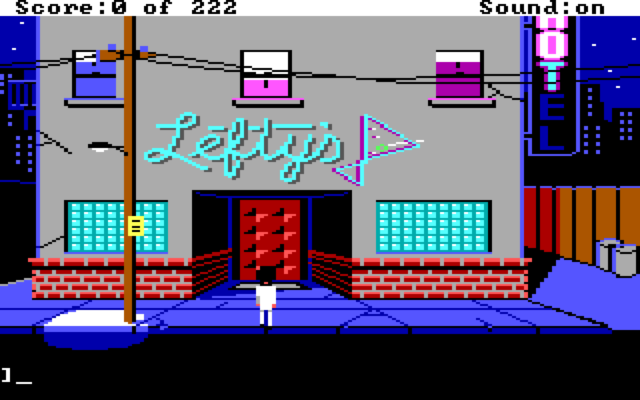
Leisure Suit Larry 1 In the Land of the Lounge Lizards 1

I think this was the last time I lost time on a game.

11 Apr 14:24

Telekom-SIM mit 2x 5 GB kostenlos

by Volker Weber

ZZ123D0380

Keine Vertragsbindung, einfach nur zum Kennenlernen. Die SIM gilt sechs Monate. Zweimal kann man 30 Tage bis zu 5 GB Daten übertragen.

More >

11 Apr 14:23

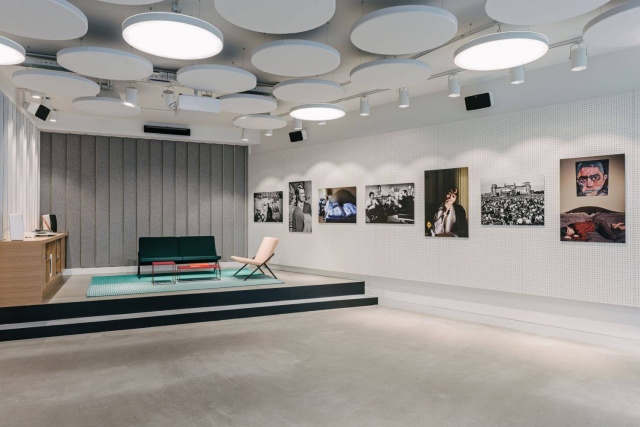
Sonos Store in Berlin

by Volker Weber
11 Apr 14:23

Maps show spring arriving earlier

by Nathan Yau

From Joshua Stevens at the NASA Earth Observatory:

But over the longer term, climate change is causing spring to begin earlier and earlier across the United States. These maps reveal just how much earlier spring is arriving in National Parks across the country. The data were published in 2016 by ecologists from the National Park Service, working in collaboration with colleagues at other agencies and institutions.

Griddy.

Limited to only national parks, the view still provides a good idea. For a model-based view at higher granularity, check out the USA National Phenology Network.

Tags: first leaf, global warming, NASA

11 Apr 14:23

Spectacles model “002” make their way through FCC certification

by Igor Bonifacic
Snap Spectacles

A new FCC listing seemingly confirms that Snapchat creator Snap will release a new pair of Spectacles later this year.

The application was filed by Snap on April 2nd, 2018 and granted to the company on April 11th. The filing describes a “wearable video camera” with support for Bluetooth 4.2 and Wi-Fi.

Normally that wouldn’t be much information to go on, but the listing also makes mention of the Spectacles trademark and includes a model “002” reference.

Included in the filing is the FCC label that will adorn the new wearable’s packaging. It features a “Made for iPhone” logo, with a list of supported iPhone models. The wearable will work with every Apple smartphone made between the iPhone 5 and iPhone X.

While there’s no mention of Android devices, it’s likely the new Spectacles will be compatible with a variety of Android smartphones as well.

The filing corroborates a report by Cheddar‘s Alex Heath. In a series of tweets dated to March 2018, Heath revealed Snap was working on two new Spectacles models. According to Heath, Version 2 of Spectacles, which is almost certainly the model referenced in this FCC listing, will be an iterative update offering new colours and improved performance.

Snap’s decision to continue investing in wearables is interesting. According to a report published by The Information in October 2017, the company had “hundreds of thousands” of Spectacles collecting dust in Chinese warehouses at the end of last year after initial interest in the wearable died down.

Moving forward, it’s likely we’ll see the company be more conservative with its sales estimates.

Source: FCC Via: Android Authority

The post Spectacles model “002” make their way through FCC certification appeared first on MobileSyrup.

11 Apr 14:23

Appear.in, a Skype alternative

by Ton Zijlstra

The acquisition by Microsoft of Skype hasn’t worked out well for the product itself, judging by the level of sighs and complaints I hear whenever Skype is mentioned. So I was glad when longtime blogging connection Phil Wolff pointed me to Appear.in as an alternative. He said he’d been using it for a year or so, as an alternative to Skype.

Appear.in seems very easy to use, and no account is needed. Simply create a sharable link, and send the link to your conversation partners yourself, and you’re all set to talk with up to 4 people. The paid version allows up to 12 people in one call. I intend to use this more from now on.

Appear.in is a Norwegian company started in 2013 as an intern project at Telenor, which is still a minority shareholder, according to Techcrunch’s Crunchbase.

11 Apr 14:22

Time for a Return of the Blogroll?

by Ton Zijlstra

It used to be, when I started blogging in 2002, me and others had blogrolls visible on our sites. A blogroll was a list of links to other blog authors (mine came with little profile pictures of the authors, then an uncommon thing), and mentioning them was both a recommendation for further exploration, and a way to show which blogs you followed and regarded as part of your social network. Then everybody and their cat started blogging, and blogrolls disappeared as they no longer represented anything meaningful.

It seems many blogs have been discontinued, became part of general platforms (Medium e.g.), or outlets. The individual blog seems less prominent and less easy to find than a decade and a half ago.

Given that renewed scarcity, is it time for the return of the blogroll as a social recommendation tool? Or what would be a blogroll-ish 2018 equivalent?

11 Apr 03:55

Say Hi to Anna!

anna our new basemap editor

It’s time again for a new person to join the Datawrapper team! Since last week, we have Anna Thieme on board and we couldn’t be happier about that.

With Anna, we’re filling the position of the basemap creator. Meaning, Anna will take care of creating and updating maps for our mapping tool. She calls herself a “data gardener”; converting shapefiles to TopoJson, making sure projections and IDs etc are in order, etc.

You want us to add election districts for the next election? You find that a particular map has been outdated? You need the newest or historical census tracts? Get in touch with Anna at support@datawrapper.de. She works for three days a week exclusively for the map needs of our users.

To get to know Anna a bit, we asked her two questions:

What did you do before working at Datawrapper?

The last 2 years I’ve been running my own catering company, making food for all kind of events from a juggling conventions to weddings, cooking with kids, etc. I had a little break from maps 🙂

Before that, I worked with geo data visualization of the cell phone network at NC Group. One project I worked in was to visualize and compare the upload/download quality of mobile data for different network providers: Data was collected from an app where users could test their own provider’s quality and at the same time contribute with data to the map. The end result was a web map where an average result from all measurements in areas 500 x 500 meters was displayed. I was working on the calculation of the results, managing of the database and rendering of the tiles used for the web map.

I’m from Sweden and I was supposed to do an exchange semester at the TU Berlin and then go back. But that’s almost 8 years ago and I still haven’t moved back. I finished my studies and started working here in Berlin.

In Sweden, I studied archaeology and it was through mapping excavation sites I became more and more interested in working with maps, so I changed my path of studies.

Why did you want to join Datawrapper?

I find it interesting to work with an application that is used by journalists all over the world to visualize data in a straightforward way. I’m curious to follow which maps the users’ request and what they are used for!


If you need maps, Anna is the person to talk to. Ask her your questions at support@datawrapper.de.

11 Apr 03:55

Visualizing the Baby Boom

by Kieran Healy

To close out what has become demography week, I combined the US monthly birth data with data for England and Wales (from the same ONS source as before), so that I could look at the trends together. The monthly England and Wales data I have to hand runs from 1938 to 1991. I thought combining the monthly tiled heatmap and the LOESS decomposition would work well as a poster, so I made one. I think it turned out pretty well.

Visualizing the baby boom in the US, and England & Wales.

Visualizing the baby boom in the US, and England & Wales.

As a piece of visualization, we can see the strengths and weaknesses of both the tiled heatmaps and the more standard time series plots. The Viridis palette really does a good job of showing a continuous variable in color—far, far better than traditional rainbow and terrain palettes, and for my money also better than most of the standard balanced palettes. The time series decomposition shows the data and the trends together. I separated out the seasonal components for easier viewing. I also played with the aspect ratios of those two pieces in order to convey the seasonality while keeping comparability with the rest of the plot. For this plot, the seasonality is modeled quite simply—other specifications might put more of the remainder into the seasonal trend. You can see that the seasonality of births differs between the US and England & Wales, however.

Substantively, the plot shows just how big the Baby Boom was in comparison to other “generational” moments (such as Gen-X and Millennials and all that). Those other demographic trends may be in the data, but they are dwarfed by the scale of the Baby Boom. Meanwhile, comparatively, we can see that while the boom happens in both regions at the same time, the US sustains its post-demobilization boom through the 1950s. The boom in England and Wales is smaller and over much more quickly. Post-war Britain was an austere place, with rationing of some goods, including meat continuing as late as 1954. Things pick up in England and Wales in the 1960s, as the US boom is in decline. The lowest birth rates in England and Wales are in 1977.

Shameless plug: If you liked this poster and would like to learn how to make something like it, why not take a look at Data Visualization: A Practical Introduction, forthcoming later this year from Princeton University Press. A full draft is available for viewing at http://socviz.co. Data and code to reproduce the plots is available at https://github.com/kjhealy/boom.

11 Apr 03:55

German engineering :: Old school Sonos controllers

by Volker Weber

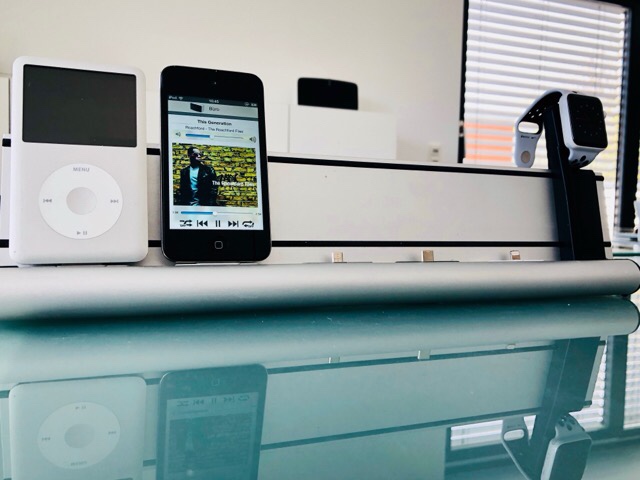
Don't like the new Sonos experience? SonoPhone and SonoPad may be just what you need.

Added benefit: it runs on iOS 6.1.1 (iPhone/iPod) and 5.1.1 (iPad). Which makes a 2010 iPod touch a working Sonos controller. Or iPhones from 3GS and any iPad ever made.

1c2b4c3ad87dd1dbbca9a219640b7a92

There is now an old iPod touch as a permanent Sonos controller living on the udoq at my desk.

7c2f673974dde1cfade235c62c6bc6e9

[Thanks, Frank]

11 Apr 03:54

What is an Empirical Educator?

files/images/Bridgette_Martin_Hard.PNG

Michael Feldstein, e-Literate, Apr 13, 2018


Icon

I think the phrase 'empirical educator' is clever marketing and a not-bad attempt to capture the ideas of "efficacy, evidence-based, research-backed, data-informed, etc." under a single rubric. Philosophically, I am also an empiricist, in the classical sense (as compared to, say, 20th century empiricists, also known as logical positivists, or even its 20-21st century alternative, constructive empiricism). So maybe there's something interesting here. What we get is a "taxonomy of levels" (naturally, because the taxonomy of levels is the apex of education research). And (sorry) not a very good one, classifying between intuitive, mindful, meta-cognitive and social empiricist educators. These may be different ways of being teachers, but they are not different ways of being empirical. I think that if you're going to appropriate a term with hundreds of years of history behind it, you should do so more literately.

Web: [Direct Link] [This Post]
11 Apr 03:54

The Digital Divide Starts in Rennes

by Martin

When I recently traveled on a high speed train in France to the coast I experienced what the ‘digital divide’ really means. For the first one and a half hours of the trip on the 350 km long TGV line from Paris to Rennes, LTE coverage along the route was excellent. I don’t know if the train had on-board RF signal repeaters but since the signal was usually excellent I suspect so. Not only was the signal coverage good but I also managed to get quite some work done with web based services at 300 km/h. Upload and Download data rates were in the region of several megabits a second and I didn’t notice coverage holes that would have impeded with my work. That’s how it should be.

While the train was packed with people up until Rennes, most of them with their laptop open in front of them and a dozen or so Wifi tethering hotspots on-air, most people then got off which makes me wonder if most of them were business travelers that make the daily commute to Paris!? Once we left the station towards Brest at the coast it didn’t take very long until network coverage became very patchy and working online was no longer possible. Also, the high speed train was no longer on a high speed train track and it seems no efforts were so far undertaken to improve network coverage along the older railway line. From my point of view this shows very nicely what is possible from a connectivity point of view if network operators, the government and the train company work together.

11 Apr 03:53

Jean MacDonald: A Guide to Micro.blog For Peopl...

11 Apr 03:53

Trying to Save the Best Farmland in Canada from Richmond City Council

by Sandy James Planner
mkalus shared this story from Price Tags.

PNG1504  StevesR4.jpg

It is very hard to believe that we still need to be reminded about the importance of food security and ensuring that our agricultural land, which in Metro Vancouver is the finest arable land in Canada, is protected for future generations.  Price Tags Vancouver has been tracking the unbelievable story of the City of Richmond Mayor and Council allowing mansions of over 10,783 square feet in size to be built on agricultural land that is over one half-acre in size. These “farms” are being bought at an agricultural land price as they are in the Agricultural Land Reserve, then redeveloped with large mansions and then quickly turn into multi-million dollar gated estates, exempt from the foreign buyer’s tax (they are on agricultural land) with a large land lift as these countrified estates demand top dollar for offshore buyers. These lands will never return to agricultural use and are now economically out of the reach of farming buyers. The City of Richmond has forgotten its farming past by  dithering and not making the responsible decision to limit houses on farmland to 5,382 square feet, still a remarkably large size. Arable land is being squandered for future generations by short-sighted developer profit, most of it in offshore holdings.

Finally Metro Vancouver has stepped in and they have drafted a set of guidelines subject to comment and approval for farmland. They have asked the Province to bring in legislation to limit house size and to discourage the use of agricultural land for other purposes. Metro Vancouver has also recommended reforming the farm property tax policy so that ‘non-farm’ or residential estates and commercial enterprises on the Agricultural Land Reserve pay the same taxes as in urban areas.

Simon Fraser University is hosting a City Conversation with Councillor Harold Steves, a founder of the Agricultural Land Commission, and Jack Trovato, community activist. If you have not heard Harold Steves speak, it is well worth attending to hear from this Richmond City Councillor and farmer whose family still works the land. His family had the first seed company in British Columbia, and the town of Steveston was named after his forebears. He and Jack Trovato will put in context the importance of saving the best soils in Canada for future generations, and outline how farming can still be viable.

 Saving the Best Land in Canada: Crime, Policy and Food Security

Some of our country’s most productive soil lies in the delta of the Fraser River. The “Class 1” soils found here cover only half a percent of all land across Canada. As climate changes, this land will become even more valuable for growing our food. But current policies allow them to be built over, and with low tax rates because they’re ostensibly for farming. This land is increasingly being used to build “farmer’s houses” as large as 24,000 sq. ft., and there are reports that some of these houses have been sites of illegal activity.

To start the conversation, we’re honoured to have Councillor Harold Steves, a founder of the Agricultural Land Commission, and Jack Trovato, community activist. Then it’s your turn to ask questions, offer your opinions, and make observations. It’s a conversation! Feel free to bring your lunch.

THIS SFU CITY CONVERSATION IS A PRESENTATION OF SFU PUBLIC SQUARE, SPONSORED BY SFU VANCOUVER AND SFU’S CITY PROGRAM.

WHEN
April 19, 2018 | 12:30 PM – 1:30 PM

WHERE
SFU Vancouver at Harbour Centre
515 West Hastings St., Vancouver

Room 2270

Can’t make the event? Watch the livestream and join the dialogue at #CityConv

SUN0201N lifestylealr 05


11 Apr 03:52

Existentialism really isn't about despair and death. It is about understanding that we are free, and that our life is what we want it to be. In this sense existentialism is the most positive philosophy ever produced.

by existentialcoms
mkalus shared this story from existentialcoms on Twitter.

Existentialism really isn't about despair and death. It is about understanding that we are free, and that our life is what we want it to be. In this sense existentialism is the most positive philosophy ever produced.


Posted by existentialcoms on Monday, April 9th, 2018 9:01pm


2227 likes, 696 retweets
11 Apr 03:52

Listen to a random episode from a podcast

11 Apr 03:49

Canadians trust AI and Facebook less than politicians and media, says study

by Bradly Shankar
Facebook Mark Zuckerberg presentation

Canadian trust in social networks and artificial intelligence (AI) is low, according to Proof Inc.’s CanTrust Index, an annual study of trust levels among Canadians.

In fact, Proof’s study found that Canadian trust in government, leaders and most information sources remains “stable and strong” in contrast to AI and social media like Facebook, which are less accepted among Canadians.

Specifically, Proof found a 17-point drop in Canadian trust in Facebook 51 percent in 2017 to 34 percent in 2018, a number the firm says is consistent across all ages, gender and geography in Canada.

As well, trust in Facebook’s news feed also fell in recent years from 31 percent in 2016 to 19 percent in 2017 and is now at a new low of 18 percent. Trust in social media platforms overall has remained in the low twenties for three years, Proof says.

In spite of the mistrust, 76 percent of Canadians still report themselves as weekly users of Facebook. Overall, Facebook says 23 million Canadians use Facebook at least once a month.

It’s important to note that the survey was conducted before news surfaced of Facebook’s involvement in Cambridge Analytica’s breach of user data, which has since caused the social network to come under significant scrutiny.

Proof CEO Bruce MacLellan acknowledged this point, stating in a press release that “though our study was fielded before Facebook’s recent privacy scandal, the company has been slow to manage this issue — which could further damage their brand and lead to a further decline in consumer trust.”

Trust levels for AI are also low, with only 38 percent of Canadians reporting that they think AI will have a positive impact on the country’s economy. Similarly, only 37 percent of Canadians trust AI to improve the customer experience.

A large number of Canadians are also undecided on AI, as 30 percent report that they neither trust nor distrust AI to have a positive impact in Canada.

By contrast, 55 percent of Canadians said they trust their company’s CEO or most senior boss the most of any leader. Even lower ranking categories were more trusted by Canadians than social media or AI, with 52 percent saying they trust the mayor the most, 48 percent favoured the Governor-General and 46 percent placed their faith in the Prime Minister at 46 percent. Premiers ranked last at 33 percent.

Additionally, while the topic of ‘fake news’ is ever present in modern society, 61 percent of Canadians say they trust the media, up from 57 percent last year.

Part of the problem may stem from the fact that Canadians don’t know what AI actually is, according to a May 2017 report by Havas.

“With the rise of the surveillance society, social media platforms and the AI sector now face a trust tipping point,” said MacLellan. “As algorithms track online behaviour, listening tools pattern the words and tone of conversations, and social media platforms share personal data, society will need to build consensus on what is acceptable and permitted.”

To compile the CanTrust Index, Proof surveyed 1,560 Canadians aged 18 and over between January 18th and February 5th, 2018.

Source: Canada Newswire

The post Canadians trust AI and Facebook less than politicians and media, says study appeared first on MobileSyrup.