Shared posts

18 Jun 21:55

Arbutus Greenway

by Stephen Rees

The greenway is really showing how well the plan is working now. The start of sunny weather and car free days in Vancouver is bringing people outside. We walked from King Edward Ave to Granville Island

IMG_3479

13th Avenue

IMG_3483

10th Avenue

IMG_3484

6th between Cypress & Burrard

IMG_3485

6th between Cypress & Burrard

IMG_3487

5th at Fir

IMG_3490

5th at Fir

IMG_3492

5th at Fir

IMG_3495

5th at Fir

IMG_3497

5th at Fir

All these photos were taken on my iPhone 6 and are as shot, no post processing at all.

18 Jun 21:47

At E3, video gaming's bigots have lost

files/images/gamer.jpg

Dave Lee, BBC News, Jun 20, 2018


Icon

This is how an institution gets better. Four years ago, Gamergate ricked the gaming industry. It was a harassment campaign intended to drive women out of gaming. It failed. "What were once referred to as the 'thinly-veiled' elements of Gamergate are now fully visible. But it no longer matters. As I leave Los Angeles, with another E3 behind us, it’s clear that the Gamergate way of thinking has lost. The industry has stepped up - and video games will be all the better for it." There will be longer term impacts as well. The rise of male-only gaming was followed by a male-only technology industry. It may be that we're seeing the end of that as well. Long overdue.

Web: [Direct Link] [This Post]
18 Jun 21:47

Sometimes, Evolution Does What No Pivot Can

by Eugene Wallingford

From an old New Yorker article about Spotify:

YouTube, which is by far the largest streaming-music site in the world (it wasn't designed that way--that's just what it became)...

Companies starting in one line of business and evolving into something else is nothing new. I mean, The Connecticut Leather Company became Coleco and made video game consoles. But there's something about software that make this sort of evolution seem so normal. We build a computer system to solve one problem and find that our users -- who have needs and desires that neither we nor they fully comprehend -- use it to solve a different problem. Interesting times. Don't hem yourself in, and don't hem your software in, or the people who use it.

18 Jun 21:45

Thinking About Density? Or Rezoning in Vancouver? Or Voting?

by Ken Ohrn

Pseudonymous housing wonk YVRYIMBY (Vancouver, Yes In My Back Yard) has created a wonderfully simple yet powerful, data-driven graphical view of Vancouver and its housing crisis.

Consider it a required backgrounder to the premise that land locked up in exclusionary, low-density zoning inflates the cost of land in higher-density zoned areas, due to scarcity. Rezoning more land for higher density should reduce land cost per built square foot and, secondarily, reduce the demolition of existing rental stock.

Needless to say, these ideas attract varying opinion. Sort of like bike lanes did in the bad, primitive olden days.

YVRYimby has a longish thread, further discussing the ideas which follow from the data:

It’s necessary context in the face of the October 2018 civic election, as candidates transition from the “who’s nominated, who’s really running” phase, to the “here’s my platform” phase*, and finally to the “my opponent and their platform is <insert snark and expletives here/>” phase.

Will housing remain the big topic? Will density become untouchable, a poisoned lightning rod attached to the political third rail?

Will the wealthy’s save-the-mansion-zone spinmeisters succeed?

Will tomorrow’s earnest reformers win council and save the day?

*with thanks to Justin McElroy at CBC.ca.

18 Jun 21:45

Happy Car-Free Day, Vancouver. BTW, Can There Be ‘Good Congestion’?

by colinmstein

On the occasion of Vancouver’s big car-free weekend — Car Free Day events occurred yesterday in the West End and Kitsilano, and the main event takes place today along 20+ blocks of Main Street — perhaps it’s time to roil the waters with a question. Does traffic congestion slow down economies, productivity, or job growth?

As reported by CNU Public Square, researchers at the University of Colorado at Denver and Florida Atlantic University conclude that it doesn’t.

In fact, they suggest there could be such a thing as “good congestion” and “bad congestion,” just like there’s “good cholesterol” and “bad cholesterol.”

The study, entitled “Revisiting the relationship between traffic congestion and the economy: a longitudinal examination of U.S. metropolitan areas“, states:

Conventional wisdom regarding traffic congestion suggests that higher levels of peak hour delay would be associated with decreases in GDP and jobs as well as higher wages to compensate workers for the increased costs of travel. We did not find this to be the case. For our regions, peak hour delay had a statistically significant and positive effect on both per capita GDP and jobs. This suggests that our current concerns about traffic congestion negatively impacting the economy may not be particularly well founded.

In terms of per capita income, the results were statistically insignificant. Thus, regions with more congestion were more economically productive with more jobs, and this took place without traffic congestion manifesting itself with higher labor costs.

In other words, congestion is merely an inconvenience with minimal economic impact.

“Without traffic congestion, there would be less incentive for infill development, living in an location-efficient place, walking, biking, and transit use, ride sharing, innovations in urban freight, etcetera,” one author explained via email to CNU Public Square. “And if your city doesn’t have any traffic congestion, there is something really wrong.”

Researchers also referenced the most recent Urban Mobility Scorecard by Texas A&M; of the ten most congested cities in the U.S., seven rank in the top ten for lowest driving mode share, eight rank in the top ten for highest transit mode share, and four rank in the top ten for highest active transportation mode shares.

While Price Tags did not purchase the full report, it’s worth noting that topics like housing affordability, population health, environmental impacts of increased motor vehicle use are not mentioned in the article, nor do keywords like ‘housing’, ‘health’, ‘physical activity’, ‘CO2′, ’emissions’ or ‘pollution’ appear as dependent variables in the data tables of the report appendix.

That said, if a pure focus on economic impact floats your boat — GDP per capita, job growth and per capita income growth — this might be a nice bomb to throw down on the table to unsuspecting family members and friends tonight, after car-free day celebrations.

Photos courtesy CNU (Marcy McInelly) and Car Free Vancouver Society

18 Jun 21:45

Final reflections on Bologna – more worker co-ops.

by William

So many great images from our walking tour. #bologna2018 #vancitybologna

A post shared by William Azaroff (@wazaroff) on

I’m back at home and making sense of all I’ve learned and experienced over the last two weeks studying the co-operative sector in Bologna, Italy.

Nine years ago, I attended this same program, and it opened my eyes to the role co-ops can play in our economy and started me down my path of greater involvement with co-ops. This trip has given me greater depth and language to describe the way co-ops act as a counter balance to some of the harmful effects of the market.

Resist!

A post shared by William Azaroff (@wazaroff) on

I have gained quite a lot of experience over the last few years working with businesses and organizations in impact sectors. I am very concerned with a few societal issues, chief amongst them income inequality, climate change, housing and rental availability and affordability in this region and making reconciliation a priority so that gaps that exist between Indigenous and non-Indigenous people finally start to disappear.

Co-ops can be part of the solution to all of these issues.

In BC, most co-ops I deal with are consumer co-ops. I came back from Bologna with a strong sense that many more worker co-ops are needed to help deal with these societal and environmental issues. We have some worker co-ops in BC, but it is a solution for many more people who want to self-organize to solve an issue or address a market failure.

What’s needed? Teaching the co-op model in our business schools, introducing policies friendly to people organizing worker co-ops, aligning partners in our incubators and business networks and creating education materials introducing the model to people thinking of starting a company. The model requires greater patience and care to work properly and won’t be right for most entrepreneurs, but someone starting a company should know all the business structures, models and options open to them and not just the one prevalent corporate model in our economy.

In parallel to promoting worker co-ops, there should be a greater focus on worker co-op succession, or Worker Buy Outs as they call them in Bologna. This model is timely as so many aging entrepreneurs will be looking to retire from their businesses over the next 10-15 years. If some of these are sold to their workers as a co-operative, it will share benefits and accountabilities in a way that should address inequality and keep established businesses in our community from failing.

I feel very privileged I was able to attend this program again and deepen my understanding of co-ops, and walk away inspired to focus on worker co-op creation and succession as a key part of a more equitable and sustainable local economy.

18 Jun 21:45

Father’s Day treat The Tasting Room [Flickr]

by vanderwal

vanderwal posted a photo:

Father’s Day treat The Tasting Room

I'm at The Tasting Room! 4sq.com/aDGDYU

18 Jun 21:45

Survey Shows London Bike Commuters are Happier and More Productive

by Average Joe Cyclist

Recent infrastructure upgrades in London have greatly increased the number of people who bike to workA survey has found that Londoners who cycle to work are happier with their commute than those who use public transport. Over 1,000 London workers shared their thoughts on commuting to work. An overwhelming 91% of Londoners who cycle to work reported that their commute is acceptable in terms of length, ease, and comfort. It also appears that bike commuting can improve productivity in the office.

The post Survey Shows London Bike Commuters are Happier and More Productive appeared first on Average Joe Cyclist.

18 Jun 21:44

Has Consciousness Lost Its Mind?

files/images/square_850x850.jpg

Tom Bartlett, Chronicle of Higher Education, Jun 20, 2018


Icon

This review of the Science of Consciousness conference, held recently in Tucson, illustrates everything that is wrong with academia. The Chronicle of Higher Education seems offended that people outside the orthodoxy of what he styles as the "field of consciousness studies" would gather and discuss the topic in a serious way. I get that he thinks a lot of the content is nonsense. A lot of the content in most conferences is nonsense. But if it's approached earnestly and carefully, it sometimes turns out that this nonsense is valuable. And that's why people have conferences like this, and hatchet jobs by Chronicle reporters do far more harm to scholarship that people thinking hard about the idea of consciousness out there in the desert.

Web: [Direct Link] [This Post]
18 Jun 21:44

How and why I use (neo)vim

by Tom MacWright

Preface: if you’re reading this and you use Sublime Text or VSCode or anything else, and this gives you the feeling that you should or must switch to vim, or that I consider it a lower class of editor and think that the mere existence of vim makes other tools ‘newbie’ tools and you immediately start installing vim and spending the rest of your day learning the modes: please don’t. If the editor you’ve been using is working for you, it’s working. Somehow text editors became status symbols in technology, the kind of topic that some jerk in the office goes ‘harumph’ when he (it’s a he) discovers that the new hire uses Coda.

Also when I’m talking about neovim, I’m also talking about vim. I switched from one to the other two years ago and, well - I enjoy neovim and appreciate the project’s goals, and I also like the vim project. For me as a user, the differences between the two are relatively minor, and the battle between the two is mostly irrelevant.

With that out of the way: I use neovim more than any other application. I switched to vim in 2011 and have used it full-time since then with few exceptions - I used IntelliJ when I had to, when I was working on an Android SDK, but switched back as soon as I was done.

Why vim

I initially switched because I had a repetitive strain injury from pulling long hours coding and complementing it with lots of playing guitar. I suspected that vim’s modal editing and complete lack of mouse-based interactions would help. I switched and the RSI got better.

I don’t mean that switching to vim fixed my RSI. I don’t have a copy of myself to serve as an experimental control and the human body is a mysterious thing. I do know that mouses and trackpads hurt my hands, because whenever I need to use a mouse constantly - like in the period I was using IntelliJ - the RSI flares up.

I also switched to vim after using a lot of other editors. I used jEdit for years, and then gedit during my Linux phase, and TextMate when I initially switched to a Mac.

I saw TextMate go out of style and other contenders enter, and that solidified my decision to stay with vim. The lifecycle of a flashy new text editor is shorter than my intended career track, and I want to invest in tools that will stick around. That very much applies to projects like Atom: I think Atom’s great, and am happy that GitHub supports it so vigorously, but I think it’s right to regard the Microsoft-GitHub acquisition with some degree of doubt. The current CEO of GitHub, promised that Atom would be maintained indefinitely, but CEO roles tend to cycle, and so do corporate priorities. And the open-sourciness of the project doesn’t mean it continues forever: projects end when nobody’s working on them. It happens all the time.

Modal editing, huh?

There are plenty of reasons to rally for vim, but the one that is so ‘sticky’ for me, the one that makes it near-unthinkable to switch away, is modal editing.

Take “quitting vim” as an example. The fact that ⌘Q doesn’t exit vim, like it does for nearly every other process, is the reason why millions of people have to Google it, and the source material for innumerable bad jokes. To dissect how you quit vim:

  1. You have to be in normal mode
  2. You type : to enter command mode
  3. You type q to tell vim to quit
  4. You hit return

What’s normal mode? What’s :q? Why do some people type :wq instead?

Keyboard shortcuts

But first: what’s normal? Normal would be ⌘Q. Command-Q. So, command is a modifier key and it doesn’t do anything on its own. Combining modifier keys with letter keys or other keys on the keyboard is how keyboard shortcuts come to be.

Take Sublime Text as an example: common operations are mostly keyboard shortcuts with 2 keys involved, but some keyboard shortcuts have as many as 4 keys you must press simultaneously: distraction-free mode is ⌃ + ⇧ + ⌘ + F.

Vim is not free of keyboard shortcuts, but it has far fewer than other applications because it is designed around modal editing. What it does have instead are:

  • normal mode, in which ‘home row’ buttons like asdfghjkl; serve vital navigational purposes
  • command mode, in which controlling the editor in more complex ways, like saving files, executing tests, or searching for text, can all be done with easily memorable

So most interfaces rely on a sort of chording, whereas vim is more about, well, melodies - individual keys hit in succession. This clicked with me from the start - commands could be composed in a natural way: that if I want to edit the text in a Markdown link, I can hit ci[ for ‘change inside of []’ and it’ll just work. One part of the brain remembers the change command, then another the inside command, and then surrounding character.

Vimcasts were key to learning the ins and outs of some of vim’s advanced functionality - and they still are, because I’m not even using 90% of vim in everyday usage.

The setup

My neovim setup is online - and slowly gets updates as I refine it. The key parts are:

  1. Vim has really benefited from people like Tim Pope writing extremely high-quality plugins. vim-fugitive, for example, which handles Git interactions, is just world-class.
  2. I started with a vim setup that was trying to imitate another editor - using NERDTree and airline to add fancy status & file browsing UIs. But removing those made everything better. Navigating only using path autocompletion and a fuzzy finder works so much better than navigating a tree.
  3. The biggest disappointment has always been autocompletion. Microsoft promises to fix it with Language Server and related initiatives, but I’ve never been able to achieve a robust solution that works with a variety of JavaScript projects.

An alternative history

I think vim seems especially weird because it’s another direction that software could have taken. It’s always interesting to think of what if Xanadu had succeeded instead of the internet, or if the CLOS school of design had won out over the MIT/Stanford schools.

Text editors are an extreme example, because I think it’s entirely appropriate to view the initial battle as emacs vs everything else, and emacs won. When I look at Atom, VSCode, Sublime Text - the basic editing paradigm is all, essentially, emacs.

Vim is one of the few examples of a non-emacs-lineage editor that’s still commonplace. A rarer example is acme, which promotes mouse chording and has some really fascinating UI paradigms that are unlike anything else.

It’s a good time to think about this stuff because arguably the era of the keyboard & mouse - those basic ingredients of all UIs leading up to this point - is ending.

18 Jun 15:43

Recommended on Medium: How Apple can fix 3D Touch

I should start with the obvious. 3D Touch is broken! The user experience is far from great. Apple introduced 3D Touch and its new related interactions Peek and Pop in 2014. It’s been almost 4 years since its first introduction, yet people don’t know/use 3D Touch. Why would they? Even tech-savvy users don’t know which buttons offer 3D touch. Let alone regular users.

What would happen if we decide to make all links same color and style as the regular text? People would not know what to click on right? Why is 3D Touch be any different? We rely on our vision to decide actionability before anything else. If you can’t distinguish 3D Touchable buttons from those that are not, how are you supposed to know you can press on them? Look at this screenshot and see if you can tell which of the buttons can be 3D Touched.

iOS 11 Control Center

Not all of these buttons can be 3D Touched. How are you supposed to know which is which? The only possible thing you can do is try 3D Touch and remember it. And to make things worse, 3D Touch is not a gimmick anymore. You need to know you should be pressing hard on the “4 Button Control” to access “Personal Hotspot” or “AirDrop” toggles.

Now that we know what the problem is, here is my solution. Like we did with the link texts years ago on the web, we should visually distinguish 3D Touchable buttons. Look at this same screen and see if you can tell which toggles accept 3D Touch.

iOS 11 Control Center with Force Decorators

My solution is adding a line on bottom-right of things that can be 3D Touched. Let’s call them Force Decorators (with reference to Force Touch).

Notifications with Force Decorators
Mail with Force Decorators

3D Touch is missing the most obvious thing to be mainstream. Visual cues. I think this is the answer.

What do you think about this?

You can reach me at Twitter at twitter.com/eliz_kilic. Thanks designcode.io for awesome Sketch resources.

18 Jun 15:41

Twitter Favorites: [IanKing] @sillygwailo The only logical, moral, and responsible direction is to wear them like a motherfucker, live it all ou… https://t.co/3SXeQ5VrgL

Ian King @IanKing
@sillygwailo The only logical, moral, and responsible direction is to wear them like a motherfucker, live it all ou… twitter.com/i/web/status/1…
18 Jun 15:40

Twitter Favorites: [MrSteveTweedale] Democracy isn't just about counting up the votes, it's about reasoning together. Join me on June 30th to talk about… https://t.co/pZJ3UPI3CP

Stephen Tweedale @MrSteveTweedale
Democracy isn't just about counting up the votes, it's about reasoning together. Join me on June 30th to talk about… twitter.com/i/web/status/1…
18 Jun 15:40

Twitter Favorites: [Newbornstranger] Tinder, but for finding people to talk to for the 6 minutes your friend leaves you alone in public

TREV📛R @Newbornstranger
Tinder, but for finding people to talk to for the 6 minutes your friend leaves you alone in public
18 Jun 15:38

Climbing is Not an Annoying Grueling Tax

by rands

I’m a hockey guy. Picked it up in college and spent the next two decades playing all forms of hockey: deck, roller, and ice. The Sharks arrived in San Jose and made my chosen sport official. I was set.

However, there were two sports before hockey. It started in junior high with cross-country running and followed by a summer of intense bike riding. My sixth-grade science teacher, Mr. Momberg, recruited me and would not take no for an answer after I demonstrated a tepid interest in his summer cycling club.

I’m a country mouse, too. Outside of the window right this second I can see oaks, bays, and redwoods… for miles. These trees thrive on the hills of the Santa Cruz mountains. Roads in various forms of disrepair cover these hills, and the cycling club biked everywhere: New Brighton Beach, Big Basin, Soquel, Aptos, Felton, Corralitos, and Ben Lomond. We finished the summer with a Century: a 100-mile ride over the course of a day. I couldn’t walk for two days. It was divine.

Mr. Momberg transferred to a different school, the bike gathered dust and then rust, college arrived, and then hockey showed up. While the physical calculus of hockey remains one favorite part of both playing and watching the game, there are not a lot of hockey rinks in or near the Santa Cruz mountains. Getting to the various rinks, playing three periods of hockey, and getting back is a three and a half hour process with only one of those hours being precious exercise.

My wife suggested biking in early 2014. Mountain biking specifically because we live in the Santa Cruz mountains. Right next door is the Soquel Demonstration Forest(“Demo”) which contains some of the best mountain biking in California and perhaps the planet.

“Yeah, sure, let’s get bikes.” So, we did.

Strava1 records 2014 and tells the familiar and painful tale of my surge of interest in a new hobby. Peak interest followed by gradual decay. In 2014, I biked 427 miles over 52 hours. In 2015, I biked 116 miles over 15 hours. Interest clearly fading.

Alexa is the name of that first bike. A Specialized Camber. She introduced me to the wonders of good shocks on rough terrain, but she also stared at me from the garage for most of 2015 asking, “Bro, can we ride?”

We didn’t ride much. My riding guilt spilled over into the purchase of a second mountain bike. Mackenzie, a Santa Cruz 5010 with a carbon-frame and decreased weight made climbing more manageable, but Mackenzie disappointingly quickly joined Alexa in the garage for many months.

The guilt overwhelmed me in 2016 and Mackenzie rides per week finally increased, but as I examined each ride, Strava recorded and told me, “You are not getting better.” Was I not riding enough? Was I not riding correctly? I repeated familiar short loops and the elapsed times were steady but flat. Time to reflect.

The Basics of Biking

There are two basic activities in cycling in the mountains: bombing down a hill and climbing that hill. Veteran cyclists will add a third activity, “Grinding out the long flat road.” I don’t consider that a basic activity, but punishment2. My ideal sports must supply stimulus whether that’s that position of players on the ice rick or the real-time discovery of the perfect downhill line on the mountain.

As the return of biking occurred with mountain bikes, I found myself seeking the thrill of the downhill bomb. What is the fastest and most efficient way to get down the hill in Demo? The climb to get to the top of that hill was an annoying grueling tax followed by twelve and a half minutes of pure adrenalin. It’s your own the personal roller coaster in the redwoods. I can not recommend it enough.

My problem with these thrill-rides was two-fold: I wanted to improve, and as I looked at my downhill times to see if I was going faster, I learned I was not. As I stared at the data, I realized there is an equally important, but less measured status for the downhill bomb and that is mean time between crashes. Going faster meant the time between crashes decreases and… crashes suck. As I watched my fellow riders head into Demo, I saw from their armor and full-sized helmets and realized that they are both prepared and expected to crash and… crashing hurts.

Time for new life goals. I was not going to make up time on the downhill because I was unwilling to invest the time, money, and blood to get better at crashing, so we are left with climbing and climbing is an annoying grueling tax.

Climbing is Not an Annoying Grueling Tax

The downhill thrill is a mathematical mental combination of speed moderated by improvisation. How quickly and efficiently can I traverse obstacle X? There are ever changing unpredictable variables on your average mountain bike trail (fallen branches, tackiness of ground, rocks, roots. other riders moving at impressive speed) which means that the higher the speed, the less time you have to react to a new variable which implies improvisation is essential. High speed with successful improvisation rewards you with commensurate thrill. Until you crash.

Realizing climbing was where I was my new focus of training, I began to repeat rides with significant climbs. Repetition, right? MacKenzie and I climbed the Church Pop segment dozens of times and, like the downhill bomb, our times did not consistently improve. What’s the problem?

Mountains bikes are built for mountains. In addition to being sturdy (because crashes), they usually have shocks to allow easier traversal of complex surfaces (fewer crashes). Some bikes have front and rear shocks, but others have front shocks. Why would you want just front shocks? Energy transfer.

As I carefully watched the mechanics of climbing, I felt how much energy I was transferring out of my body through the bike and into the road. Shocks are designed to absorb energy, and while the goal of these shocks is to absorb the energy of the fork and frame rapidly adapting to a rough trail, it also absorbs some of the energy of pedaling. With each pedal, a small percent of my work is unhelpfully eaten by the shocks. A mountain bike without a rear shock is called a hardtail and while a bumpier ride, it’s superior at efficient climbing because it provides better energy transfer.

My second realization regarding climbing also involved energy transfer: the gearing. Mountain biking often involves steep complex climbs which means you need a very low gear that allows you to climb these grades consistently and slowly. That’s great for a steep climb, but for me, it was a crutch. When a climb became hard, I’d drop to the lowest and least efficient gear. It was easy to climb, but it did not allow me to improve.

Time to buy another bike! Enter Isabelle. On a recommendation from friends, I purchased an Open UP gravel bike. She’s a gravel bike that combines a road riding position with clearance for mountain bikes. Slightly larger and knobby tires make perfect for the roads and trails in the woods. She weighs a feather over 19 pounds, and she’s geared for climbing.

During my first Isabelle ride up a familiar climb, I slowly geared down as the climb worsened. I was alarmed when I could suddenly gear no lower. At the lowest gear, each turn of the pedal was a tremendous effort. Did I buy the wrong bike? This is about to be an expensive lesson.

So I stood up.

A couple of critical differences between the Mackenzie (the Santa Cruz 5010) and Isabelle (the Open UP). Not only is Isabelle six pounds lighter, but she also has drop bars. Those are those curvy handlebars found on road bikes. Drop bars offer you three different hand positions: dropped (the lowest position), hoods (just above the brake mechanism, and tops – just to the right and left of the stem.

All of these positions keep your arms and body more central and compact than Mackenzie’s wide mountain bike handlebars because Mackenzie is designed for high fidelity steering to allow to avoid obstacles that create crash-worthy situations. When you mountain bike, you want moment-by-moment fine-grained control of where you are headed, and wide handlebars give you a high degree of control.

Coming from years of mountain biking, drop bars initially feel like a loss of steering control, but they quickly make up the difference in, once more, energy transfer. With Isabelle gearing forced me to stand up, I felt the weight of my entire body behind each pedal. Every single bit of expended energy efficiently transferred out of my body through my legs through the bike and straight into the planet Earth.

The reward? Immediate and impressive gains on climbs where improvement had stalled for months.

The Climbing Math

Stimulus: my requirement for any sport. The mind-numbing inanity of a stationary bike or standing in place lifting heavy things is the reason I stopped going to the gym years ago. Biking provides an immediate visual upgrade with the ever-changing scenery of the forests of the Santa Cruz Mountains, but isn’t climbing the same hills time and time again… boring?

If the downhill thrill is How quickly and efficiently can I traverse obstacle X?, what’s the uphill equivalent? I’m glad you asked. The uphill thrill is a study in attention to detail including:

  • What is the current grade of the climb and it’s length?
  • What is my current heart rate?
  • How much energy do I have remaining in the tank?
  • Finally, how much of that energy can I spend on every… single… pedal given the current hill, heart rate, and remaining energy?

How does this mental and physical stimulus compare with the roller-coaster thrill of the downhill bomb? First, there’s less blood. Second, there is the zen thrill in both defining a system and then working to refine it. As each descent represents an opportunity to find the perfect line through an ever-change set of obstacles, each climb represents a chance to find the optimal climbing solution. For me, now, a good climb is when I feel I’ve spent every single calorie efficiently.

The Positive Feedback of Improvement

Strava records the change in my climbing ability for the last six months, but more importantly, I feel the difference. Impossible wheezing anaerobic hills become afterthoughts. 10-mile rides became 25. Since January 2018, I’ve biked 800 miles and climbed over 90,000 feet. Since January, I’ve bled less.

I know when I’ve properly exercised when I got to bed. I close my eyes and I automatically replay the day’s exercise. It used to be the running trail ahead then it was hockey. I’d replay goals I’d scored seeing the seconds before the puck hit the back of the net. Each move in vivid detail.

These nights when I close my eyes, I feel the handlebars in my hands and my position over the bike. Looking ahead, I see a climb through a stretch of redwoods. It’s long, I can’t see the end, and it looks like 8% grade. I’ve been biking for almost two hours. What’s my attack? How much is left in each of my legs? How much can I spend on each pedal? My brain loves this math because the thrill is in the details3.


  1. My Strava profile
  2. Avid bikers and those who finish this piece will understand the long flat grind contains the same thrills of efficient climbings, It’s just… so boring. 
  3. Rampant accessory acquisition is a sure sign that interest in becoming an obsession. I humbly present my current necessary accessories for a good gravel or mountain bike ride:
    • The Garmin 820 lives on my handlebars and provides various stats during my ride. You can install different screens and my favorite is the Edge520Visual because it shows a clear graph of historic heart rate which is my primary measure of effort.
    • My outfit is a function of the weather, but there is some combination of socks, bib/shorts, undershirt and a jersey. I like biking when it’s raining and it’s very easy to stay dry in such conditions. Rapha is featured prominently and proudly.
    • Shoes. Isabelle has clip-ons. So Shimano. For Mackenzie the mountain bike, no clips-ons because crashes, but super tacky shoes.
    • A bright orange helmet because being super visible on roads with cars strikes me as a winning strategy.
    • Black glasses. Maui Jim. Sturdy. Oakley’s for when it’s shadowy.
    • For the long rides Skratch gels and Kind bars. I like the sea salt chocolatey ones.
    • Two bottles of water. Both with three scoops of Skratch or Gatorade in a pinch.

18 Jun 15:38

If you want to increase your chances of winning more you better understand how to improve your power efficiency.

by Jacques Devore
mkalus shared this story from Jacques Blog - Sirens & TItans Fitness.

In the video I explain what the difference between strength and power is.  Understanding this concept is crucial in training athletes.  Examples of absolute power are a vertical jump, shot put, short sprint, broad jump etc.  They combine force and velocity to overcome gravity.   These are one shot efforts.  However, in most sport you need more than one shot.  What wins is who is jumping the highest or running the fastest at the end of the game.  This is Power Efficiency.  In other words how fuel efficient are you at producing power so that you can produce the highest percentage of your absolute power longer?


You do not jump higher, you just jump higher longer!


Below is a good example of how to train for improvement of your power efficiency using box jumps. In my center we utilize the Kbox and the Versapulley for these workouts.  However, there are a lot of DIY substitutes.   The objective of the workout is to produce as close to your absolute power for long periods of time.  When you keep requiring the body to jump at close to maximum for long periods of time it adapts by recruiting more muscle fiber.  You spread the workload out so that you can produce the same efforts with less fatigue.  It is like carrying a log on your shoulders.  Carrying it yourself you will soon fatigue.  If you can spread the load out by recruiting friends to help you can carry the log much farther.  With that in mind, you are not jumping higher on each jump you are just jumping at close to your highest output longer.  The rest of 20 seconds allows this to occur for long periods of time in the workout.  These are power cluster sets.  You can adjust the number of jumps and the time to match the sport you are competing in. 


#1.  Establish a box height that is about 90% of your maximum jump height.


#2. Execute 4 jumps in a row, stepping down after each jump. Rest for 20 seconds, then do 4 more.  Keep executing these jumps for as many rounds as possible without compromising form or reducing the height.  Stop, when you start to question your ability to make the jump.  You want to jump as close to maximum as possible or you will just be executing an endurance exercise. 


#3.  Mark how many rounds you were able to execute.  Have complete recovery between sets and then go again.   The rest between the 4 jumps allows you to replace ATP in the muscles.  If you tried doing them all in a row you would quickly fatigue.   As your efficiency improves you will be able to go for more and more rounds.  Be careful as these are taxing, both metabolically and they will make you sore.  In this example it is primarily a concentric load (jumping up).  You have much less eccentric load as you are stepping down in between jumps. 


Using the Versapulley and Kbox we add a much bigger eccentric load and are able to accurately measure the output. 


After a few weeks of this type of training you will see huge gains in your ability to produce big power longer.  Enjoy!


Truth in Fitness


Jacques DeVore, CSCS

Sirens and Titans Fitness

18 Jun 15:38

Those stats show that Germany was better at everything, except accuracy. It explains why Mexico is so good at building cars.

by MrJamesMay
mkalus shared this story from MrJamesMay on Twitter.

Those stats show that Germany was better at everything, except accuracy. It explains why Mexico is so good at building cars.


Posted by MrJamesMay on Sunday, June 17th, 2018 5:01pm


1722 likes, 392 retweets
18 Jun 15:37

Thinking About Density? Or Rezoning in Vancouver? Or Voting?

by Ken Ohrn
mkalus shared this story from Price Tags.

Pseudonymous housing wonk YVRYIMBY (Vancouver, Yes In My Back Yard) has created a wonderfully simple yet powerful, data-driven graphical view of Vancouver and its housing crisis.

Consider it a required backgrounder to the premise that land locked up in exclusionary, low-density zoning inflates the cost of land in higher-density zoned areas, due to scarcity. Rezoning more land for higher density should reduce land cost per built square foot and, secondarily, reduce the demolition of existing rental stock.

Needless to say, these ideas attract varying opinion. Sort of like bike lanes did in the bad, primitive olden days.

YVRYimby has a longish thread, further discussing the ideas which follow from the data:

It’s necessary context in the face of the October 2018 civic election, as candidates transition from the “who’s nominated, who’s really running” phase, to the “here’s my platform” phase*, and finally to the “my opponent and their platform is <insert snark and expletives here/>” phase.

Will housing remain the big topic? Will density become untouchable, a poisoned lightning rod attached to the political third rail?

Will the wealthy’s save-the-mansion-zone spinmeisters succeed?

Will tomorrow’s earnest reformers win council and save the day?

*with thanks to Justin McElroy at CBC.ca.

18 Jun 15:36

Why do we need a Theory of Functional Programming?

by Eric Normand

Though I have gotten good reception for the theory in general, a few people have asked me why we need a theory. More people have told me I’m complicating Functional Programming, which should be a simple idea.

Transcript

Eric Normand: Why do we need a theory of functional programming? Why is it important to develop this whole thing that I’m doing right now? Hello, my name is Eric Normand. These are my thoughts on functional programming. As you may know from previous episodes, I am developing a book called “A Theory of Functional Programming.”

An idea is to set out the definitions and relationships in terms and ideas of functional programming, write them all down and then carry them to their logical conclusions. People have asked me why I think it’s important. Some people as like, “Oh, yes, we definitely need that.”

Some people have questioned whether functional programming isn’t much simpler than I’m making it out to be, that I’m complicating it by talking about…Some people say that functional programming is really simple. It’s programming with pure functions.

I’ve talked a little bit about why I think that’s inadequate already. Just to summarize it, what about everything else? What about data? It’s not sufficient as a definition. If you’re just programming pure functions, that’s lambda calculus. That’s not what we do. If you have data, you’ve already broken your definition.

We need to talk about data. If we’re going to talk about data, we might as well talk about side effects. Also, functional programmers do talk about side effects. Let’s not even talk about them programming. They have a definition of side effect that they use, and other paradigms don’t.

If you read a book on object-oriented programming, they don’t talk about side effects. That’s not part of their thinking. They’re talking about messages, classes, and has-a, is-a, all that stuff. Side effects are somewhere else on their radar. Maybe they get to it like the command queries separation thing.

They’re not thinking about mutable state, and global state, stuff like that. I mean, they’re thinking about it, but it’s secondary to their paradigm, whereas it’s primary to the functional programming paradigm. Someone should write that down.

The most common question I get is like, “Isn’t functional programming just much simpler than I’m making it out to be?” The other question is, “Why do we even need a definition?”

The answer that I have to that is that if you look at the object-oriented programming — redirect the discourse about it — they have all these rich books that have defined terms, that have laid out the best practices, the worst practices, some common ideas, patterns, idioms, all these things.

When they talk about it, they have this common lexicon. It’s a wonderfully rich language that they can use to discuss code, and to teach people how to code, when they’re teaching. We don’t have that in the functional programming community.

All of the books that I have found on functional programming are either about a specific language — it’s mostly about the language — or are highly academic. They are talking about a category theory, lambda calculus, or something like that.

There’s not a book that’s meant to start the discussion about what it means to do functional programming, what are the important ideas, what are their definitions, how do we start taking those ideas, and building bigger ideas on top of them. Just lay out the field.

We don’t have that. I want to do that. I’m poised to do that. The theory that I’ve been talking about has the potential to do that. I’m crossing my fingers that enough people will care for that, that it will have some impact.

This stuff is out there already. What I’m saying is I’m not bullshitting. I’m not making this all up. I’m merely talking about what I’ve seen, what I’ve read people do, what I see in code. I’m trying to codify it into something coherent. I hope it is the start of something.

I would love for people to take the ideas in my book, run with them, and say, “If we apply that in this domain…” What’s an example that I can give? You have the book design patterns. It’s like a seminal book in the field of object-oriented programming. Whether you agree with it, or not, l don’t want to get into that discussion.

This book has given people a vocabulary to talk about common patterns, and show people what is possible at a higher level when you’re doing object-oriented programming. You don’t have to use for-loops. You’re not using an object, or a class as a C struct. You should treat it like something higher level.

You have a visitor pattern. Instead of using a for-loop, and going through a link list, you should have some interface on your list, so that you can do a map over it. This is the thing that that book talks about. I don’t know if people actually read the book. They all know the book. They know what design patterns means in general.

Other people can write a book called “Design Patterns for Legacy Systems,” and “Design Patterns for XYZ,” and “A Look at Design Patterns in…” They can write up these other books. They don’t have to establish the idea of design patterns.

In another book where it is talking about object-oriented programming, you can reference the visitor pattern, the interpreter pattern, because someone has defined it. We need a set of books like that, or at least one book to get that started as industrial functional programming, not academic.

Academic is great, but then they’ve already got their books. I want something for the industry that sets it on a good course.

All right. That’s why I’m developing the theory. That’s why I’m writing a book. These ideas need to be talked about. We can’t just rely on these super simple definitions that don’t actually cover what they claim to cover. They’re just pulling into this middle academic world, where it’s actually a virtue to have a simple definition like, “We just use functions.”

Pure functions. Can program with only pure functions. It sounds great in an academic context. It’s great in an academic context to make your definitions smaller, because then, you can control it. You can know exactly what the consequences are to meet.

In layman’s industrial expert context, where things have to get done, you’re not looking for something to be picked apart by peer reviewers. You’re actually looking for something useful that can bring it to the next step, to the next level of understanding. That’s what I’m trying to do.

All right. I’m sure you disagree with me. You need to tell me about it before I write this book. Tweet me at @ericnormand, with a D. I’m also eric@lispcast.com over email. Yes, I’d love to hear from you. Let me know. I’ll see you then. Bye.

The post Why do we need a Theory of Functional Programming? appeared first on LispCast.

18 Jun 15:35

We are all trapped in the 'Feed' :: Om Malik

by Volker Weber
No matter where I go on the Internet, I feel like I am trapped in the “feed,” held down by algorithms that are like axes trying to make bespoke shirts out of silk. And no one illustrates it better than Facebook and Twitter, two more services that should know better, but they don’t. Fake news, unintelligent information and radically dumb statements are getting more attention than what matters. The likes, retweets, re-posts are nothing more than steroids for noise. Even when you are sarcastic in your retweets or re-shares, the system has the understanding of a one-year-old monkey baby: it is a vote on popularity.

More >

18 Jun 15:35

Neues Ziel: 100k #dontbreakthechain

by Volker Weber

83ea8d8b5bf2b9e33563f69c2d826ac6 fa535b6925c183f0c412f6b6750e2ce5

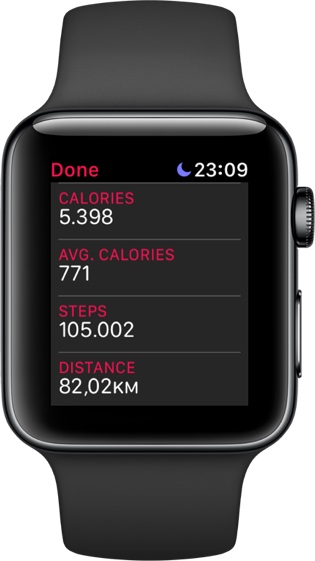
Ich muss wieder mehr laufen, damit mein Knie nicht wackelig wird. Radfahren zählt nicht. Deshalb habe ich mir ein neues Ziel gesetzt: Erst einmal 100.000 Schritte, dann 100 km. Seit zwei Wochen laufe ich morgens kurz nach sieben los. 14 Tage bisher mit mehr als 10 km am Tag.

18 Jun 15:35

HomePod kaufen?

by Volker Weber

HomePod Music-Control 06152018

Ab heute kann man in Deutschland den Apple HomePod für 349 Euro kaufen. Sollte man das tun?

Was ich gut finde:

  • Apple tritt mit einem Qualitätsanspruch an. Statt einen möglichst billigen Smartspeaker anzubieten, hat Apple ordentlich in die Klangqualität investiert. HomePod passt sich an den Raum und den Standort im Raum an. Der Nutzer merkt davon gar nichts, da die Anpassung automatisch erfolgt, nachdem der HomePod bewegt wurde.
  • HomePod passt sich perfekt in das Apple Ökosystem ein. Ob Apple Music, iPhone, iPad oder Mac, alles passt zum HomePod.

Was ich schlecht finde:

  • HomePod ist ein geschlossenes System. Spotify, Amazon Music? Tough luck.
  • One Size Fits All. Es gibt nur einen Speaker. Ob großer Wohnraum oder kleines Bad, das muss passen.
  • Wer gerne Stereo hören will, braucht zwei. Und ja, Stereo ist eine Supersache. Schon seit einem halben Jahrhundert.
  • Keine TV-Integration. Man kann in Apple TV auswählen, dass der Ton an HomePod gehen soll, aber so gelingt kein Mehrkanalsystem.

Was besser werden kann:

  • Siri.
  • Kabel in verschiedenen Längen, die man durch kleine Löcher verlegen kann.
  • Alles, was ich schlecht finde. :-)

Das sind alles nur Gedanken ohne praktische Erfahrung. Ich habe keine HomePods und die wären hier auch in schwieriger Umgebung. Playbase + Sub + 2 Play:3, Playbar + Sub oder 2 x Play:5 + Sub, dazu ein Zoo einzelner Sonos-Lautsprecher, verbunden mit einem halben Dutzend Musikdiensten und Alexa, dagegen ist schwer anzustinken.

Interessieren würde mich schon, wie sich das einsoriert. Meine Erwartung ist, dass ein HomePod mit einem Sonos ONE gut mithalten kann, aber sich einem Paar davon geschlagen geben muss. Zwei HomePods gegen einen Play:5 sind wohl auch ein fairer Wettbewerb, aber zwei Play:5? Bei Sub oder Surround sind wir auf einem anderen Niveau. Auch preislich. Da ist der HomePod geradezu preiswert.

18 Jun 15:35

Why I love the first workday after a vacation

by Josh Bernoff

I’ve been on vacation for two weeks. I’m writing this at 6 a.m. on my first day back. I’m eager to get started. The page proofs for a book I’m working on have come back. I’m eager to review them, so we can turn this manuscript into an actual book. This is where my knowledge … Continued

The post Why I love the first workday after a vacation appeared first on without bullshit.

18 Jun 15:33

You’d think a futurist would clean the windows.


You’d think a futurist would clean the windows.

18 Jun 15:33

mapsontheweb:Quantum Europe: Europe redrawn using the...


mapsontheweb:

Quantum Europe: Europe redrawn using the longest-lasting borders between 1000 and 2000 AD.

18 Jun 15:33

iOS 12 Will Add New Emergency Calling Feature

by John Voorhees

Apple has announced a new emergency calling feature for iOS 12, which wasn’t revealed at WWDC two weeks ago. The new functionality will provide automatic, precise location information to first responders when iOS 12 users call 911 in the United States. According to Apple’s press release:

Approximately 80 percent of 911 calls today come from mobile devices, but outdated, landline-era infrastructure often makes it difficult for 911 centers to quickly and accurately obtain a mobile caller’s location. To address this challenge, Apple launched HELO (Hybridized Emergency Location) in 2015, which estimates a mobile 911 caller’s location using cell towers and on-device data sources like GPS and WiFi Access Points.

Apple today announced it will also use emergency technology company RapidSOS’s Internet Protocol-based data pipeline to quickly and securely share HELO location data with 911 centers, improving response time when lives and property are at risk. RapidSOS’s system will deliver the emergency location data of iOS users by integrating with many 911 centers’ existing software, which rely on industry-standard protocols.

The FCC has mandated that mobile phone carriers locate callers within 50 meters 80% of the time by 2021. According to Apple’s press release, Apple’s HELO technology is capable of meeting and exceeding those standards today, and with the adoption of RapidSOS’s protocol this fall in iOS 12, those benefits will be enjoyed by 911 call centers too.


Support MacStories Directly

Club MacStories offers exclusive access to extra MacStories content, delivered every week; it's also a way to support us directly.

Club MacStories will help you discover the best apps for your devices and get the most out of your iPhone, iPad, and Mac. Plus, it's made in Italy.

Join Now
18 Jun 15:31

Of Flying Cars and the Declining Rate of Profit | David...


Of Flying Cars and the Declining Rate of Profit | David Graeber

Toffler might best be seen as a lightweight version of the nineteenth-century social theorist Auguste Comte, who believed that he was standing on the brink of a new age—in his case, the Industrial Age—driven by the inexorable progress of technology, and that the social cataclysms of his times were caused by the social system not adjusting. The older feudal order had developed Catholic theology, a way of thinking about man’s place in the cosmos perfectly suited to the social system of the time, as well as an institutional structure, the Church, that conveyed and enforced such ideas in a way that could give everyone a sense of meaning and belonging. The Industrial Age had developed its own system of ideas—science—but scientists had not succeeded in creating anything like the Catholic Church. Comte concluded that we needed to develop a new science, which he dubbed “sociology,” and said that sociologists should play the role of priests in a new Religion of Society that would inspire everyone with a love of order, community, work discipline, and family values. Toffler was less ambitious; his futurologists were not supposed to play the role of priests.

18 Jun 15:27

HomePod Review: The best smart speaker for Apple users

by Patrick O'Rourke
HomePod

Apple’s HomePod is one of the most divisive products the company has released in a number of years.

On one hand, the HomePod is a technically impressive smart speaker that surpasses its competitors in audio fidelity — it’s acoustically impressive and is a great example of Apple’s design prowess in action.

But then there are the HomePod’s various missing features.

Siri isn’t as capable of a voice-activated helper as Google Assistant and Amazon Alexa. Apple’s smart speaker also doesn’t include Bluetooth or a 3.5mm auxiliary input like its competitors, leading to a complete lack of compatibility with Android devices.
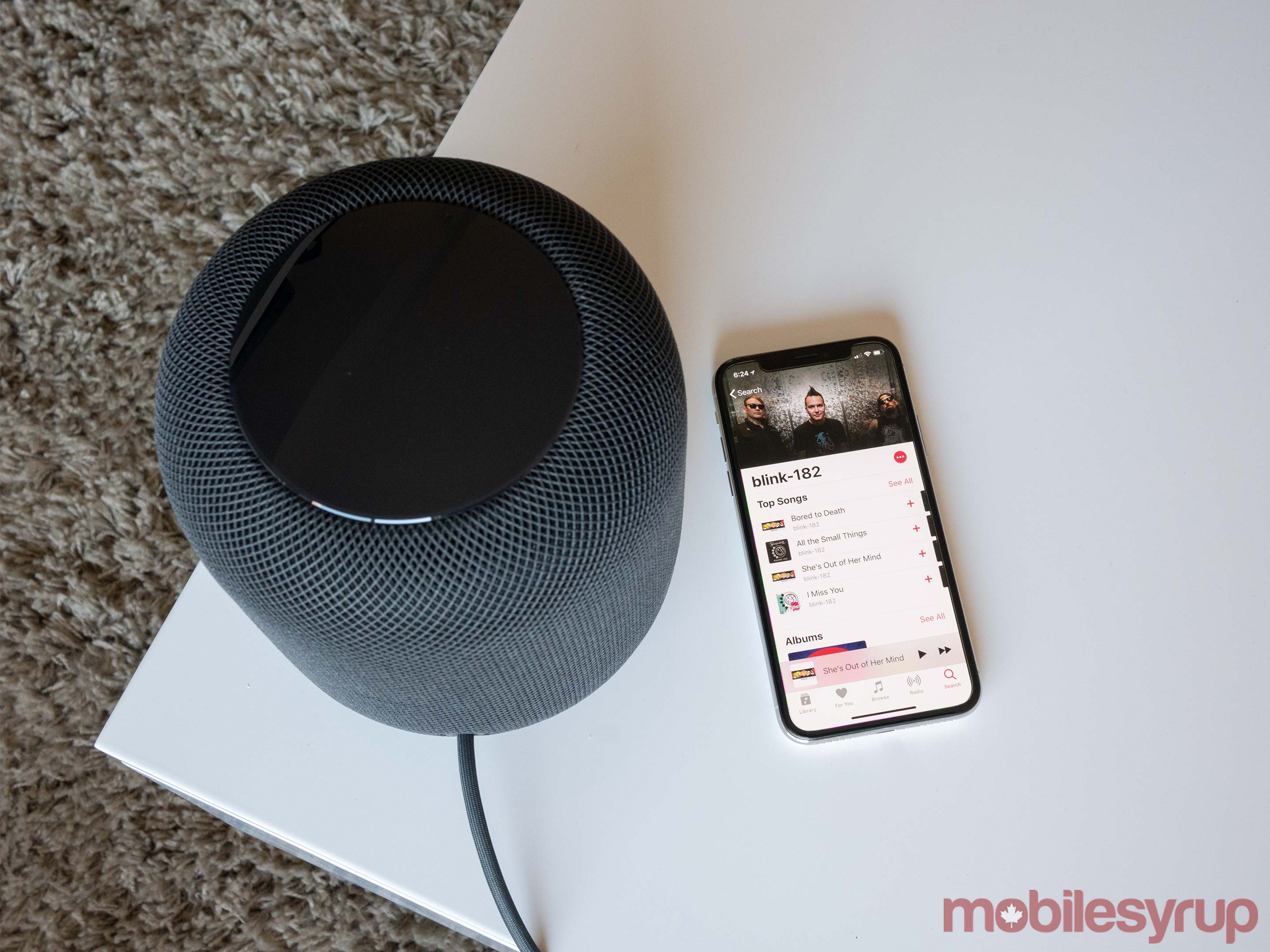
HomePod and Apple Music

Many of these issues should have been expected.

After all, Apple is notorious for its walled-garden approach to almost everything. While a tightly curated ecosystem of apps, laptops, smartphones and desktop devices is the company’s strength, as well as what separates Apple from its competition, it’s also a weakness in some situations.

In the case of the HomePod, this dichotomy is more apparent than ever, especially when compared to multi-platform speakers like Amazon’s Echo series or the Google Home line, which arguably work just as well with the iPhone as they do with an Android device.

With this in mind though, from an acoustic perspective, the HomePod still sounds stellar, even with its premium $450 CAD price tag. Further, if you’re an Apple device user that also utilizes the company’s various apps and services, then the HomePod is hands-down the best smart speaker for you.

The look
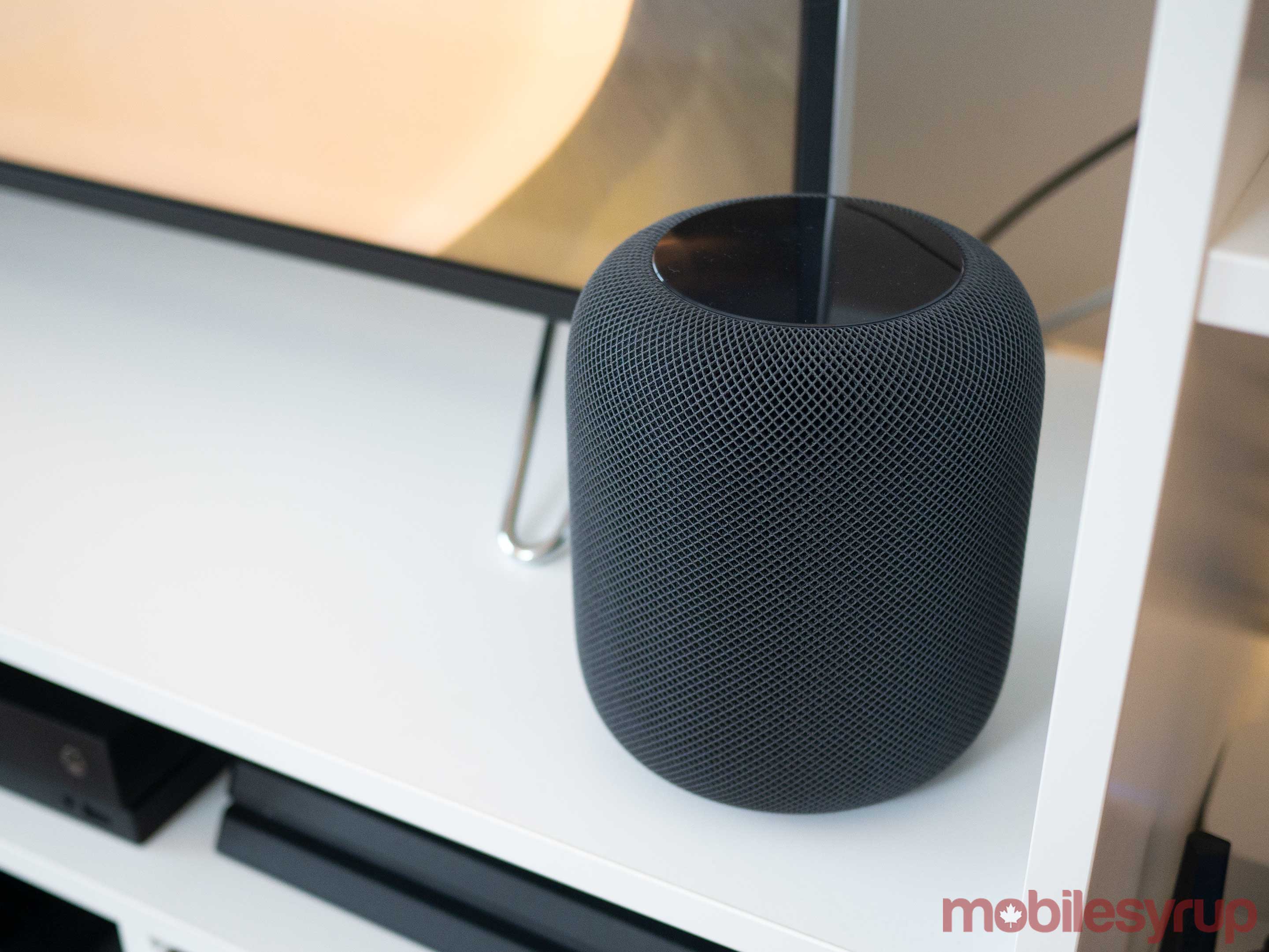
HomePod on table

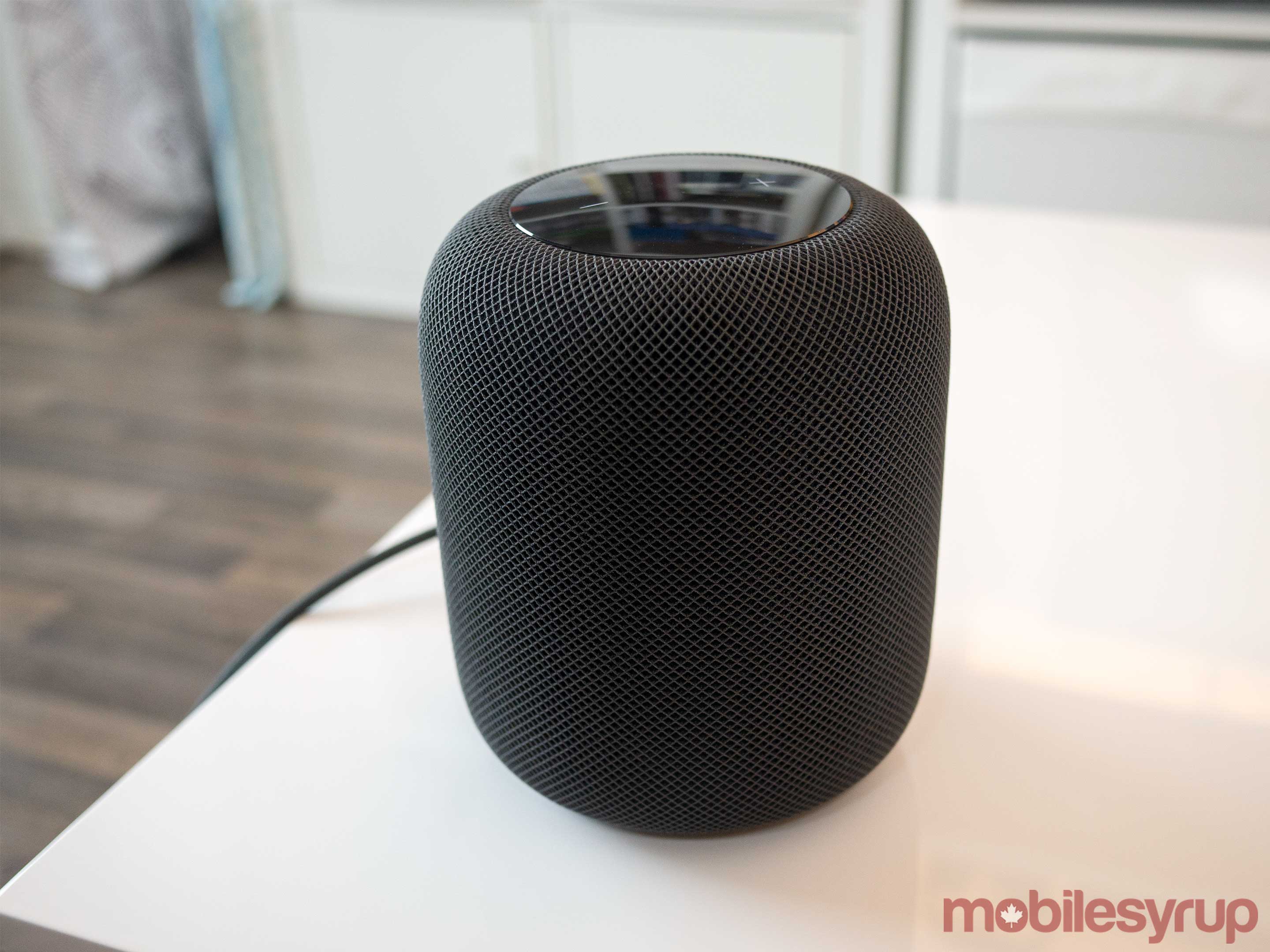
The material lining of the frame of Apple’s HomePod has a softness to it not present on competing, fabric-clad speakers like the Google Home or 2nd-gen Amazon Echo.

The overall look of the HomePod is sleek, though it’s also slightly larger than most other smart speakers out there. Since Apple’s smart speaker isn’t designed with portability in mind, I didn’t find this to be an issue. Google’s competing Home Max is much bigger and heavier than the HomePod.

The HomePod’s cable is built-in and can’t be removed. It’s also wrapped in fabric, just like the smart speaker’s body. The device’s display has a cloudy film pasted over it, resulting in it looking less like a traditional screen and instead more like a colourful touch panel. The screen’s only purpose is to display a pinwheel of jumbled colours when you’re communicating with Siri. This means the HomePod’s display isn’t capable of showing text, video or images like Amazon’s Echo Spot.

It’s also possible to raise/lower the smart speaker’s volume, as well as to pause, by tapping on the HomePod’s display. In my experience, the HomePod’s screen was responsive, though I typically used voice commands to increase and lower volume. As a side note, the plastic covering the screen is soft and easily scratched. I’ve already accidentally managed to scuff it a few times during my brief time with the smart speaker.
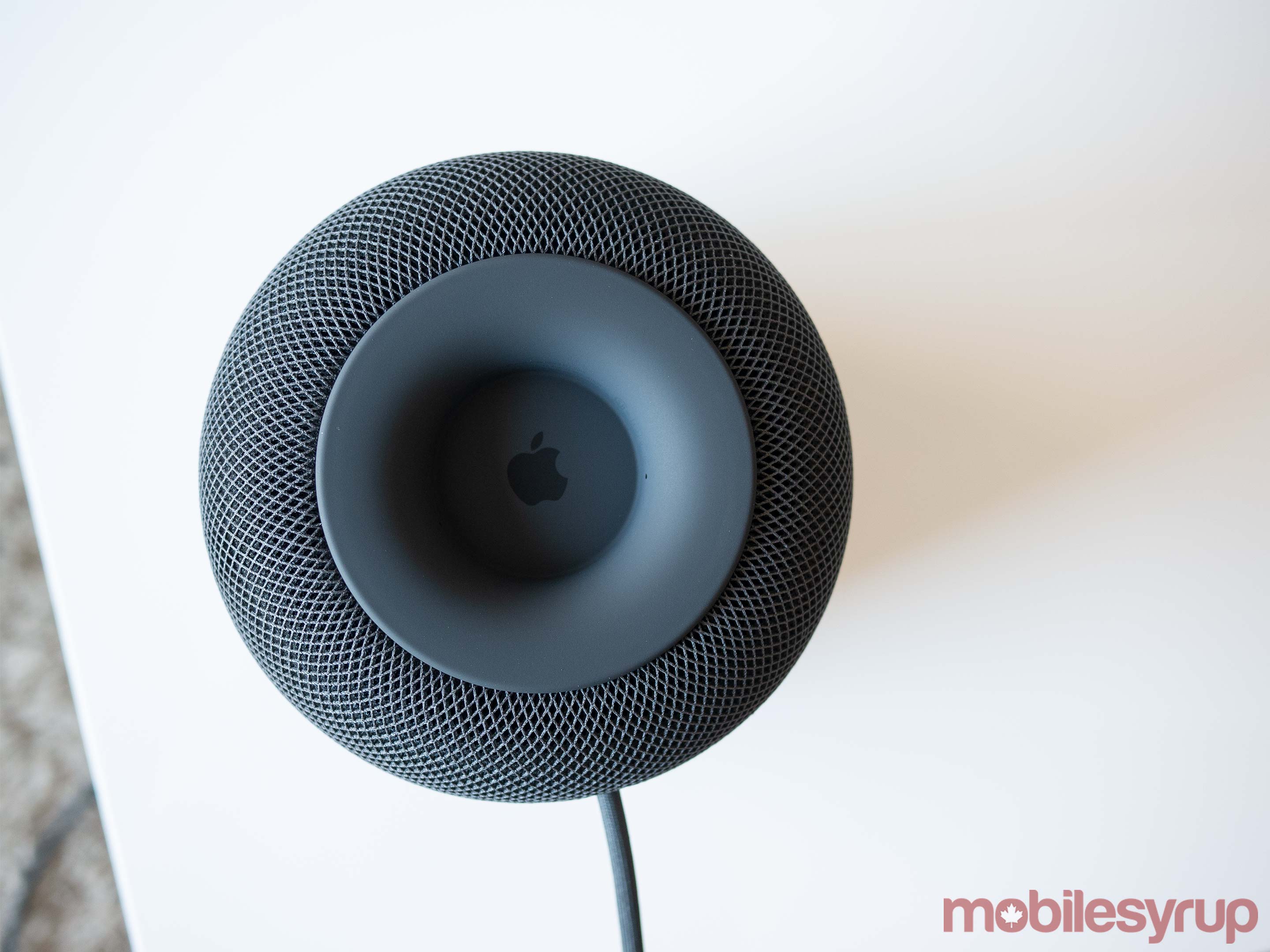
HomePod base

The base of the HomePod features a rubbery material, which makes sense since most of the device’s internal speakers shoot audio downwards. As a result, you’ll want to place Apple’s smart speaker on a hard surface, as setting it down on a soft platform results in subpar sound quality. For what it’s worth, I haven’t encountered the dreaded and often-talked about wooden ring issue yet, even after moving the smart speaker around my apartment a few times and placing it on different surfaces. Of course, the rings could show up after a few weeks of use.

On the plus side, the HomePod’s setup process is effortless. All you need to do is place an iPhone or iPad near the smart speaker and tap through a few brief options — including allowing the smart speaker to access your phone’s data — in order to get it up and running. You will need an iOS device to set up the HomePod.

I was able to setup a pair of HomePods, even with AirPlay 2 stereo pairing (more on this later), in a matter of minutes.

Top-tier sound quality
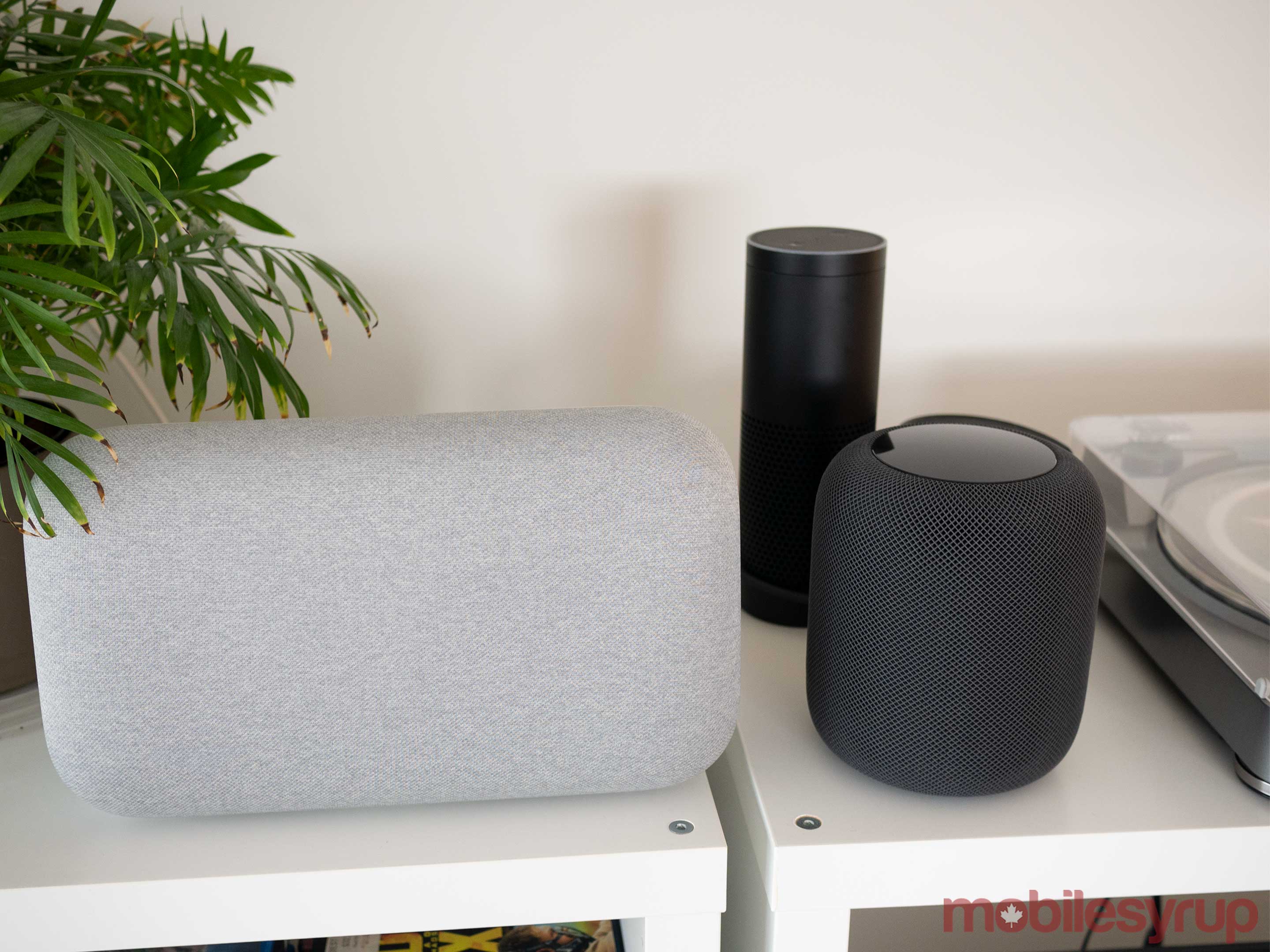
HomePod vs Amazon Echo vs Google Home Max

I’ve spent time listening to most of the smart speakers out there, including the Google Home Mini, Home, Home Max, 2nd Gen Amazon Echo and Sonos One.

Overall, the HomePod surpasses all competitors in the sound quality department. Highs sound crisp and clear from any area of my apartment. Bass and low tones are equally deep, but not overwhelming like I often experienced with the Google Home Max.

Emo rapper Lil Peep’s ‘Awful Things,’ which features a mix of high guitar sounds, as well as deep bass, sounded great pumping through the HomePod, while Trophy Eyes’ ‘You Can Count On Me,’ a track featuring primarily highs, but also backing vocals and multiple layers, was sharp. The HomePod was capable of handling any music genre I threw at it handily, whether it was pop, hip-hop or heavier genres, more so even than the Google Home Max and Sonos One.
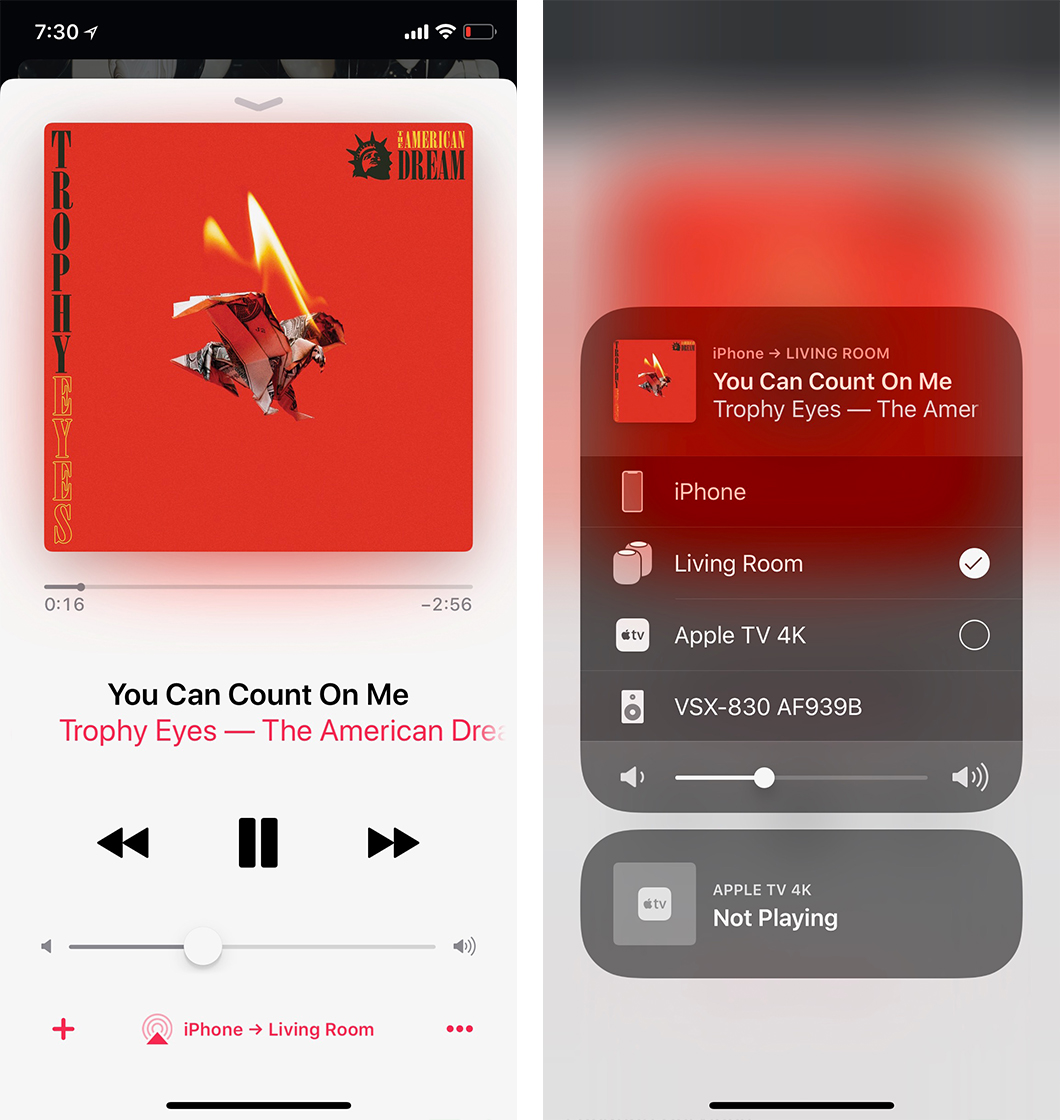
Apple Music HomePod

The HomePod’s closest competitor in terms of audio fidelity and price is the Sonos One, Sonos’ $250 Alexa-enabled smart speaker, followed by Google’s powerful $499 Home Max. That said, to my ear, Apple’s HomePod is only marginally better than Sonos’ and Google’s offering. In fact, I’d even go so far as to say the average listener may not even notice a difference — the law of diminishing returns definitely comes into play here.

The HomePod’s impressive fidelity is amplified when paired with a second HomePod, creating the most impressive sound stage I’ve experienced yet from a smart speaker. Again, two Sonos One speakers, which cost $500 compared to the $900 price of a pair of HomePods, sound just slightly less impressive than Apple’s significantly more expensive offering.

Another feature that makes the HomePod stand out from its competitors is the fact that regardless of where I was in my apartment, the speaker sounded stellar. To be clear, my apartment is relatively small, but whether I was in my living room on the couch, laying in bed or even in the bathroom, it felt like Apple’s smart speaker was pushing music towards me.

I had a similar experience with the Google Home Max and its auto audio adjustment feature, as well as the Sonos One, which needs to be set manually through a dedicated iOS app. The HomePod seems capable of adapting to its surroundings significantly better and faster than its competitors.
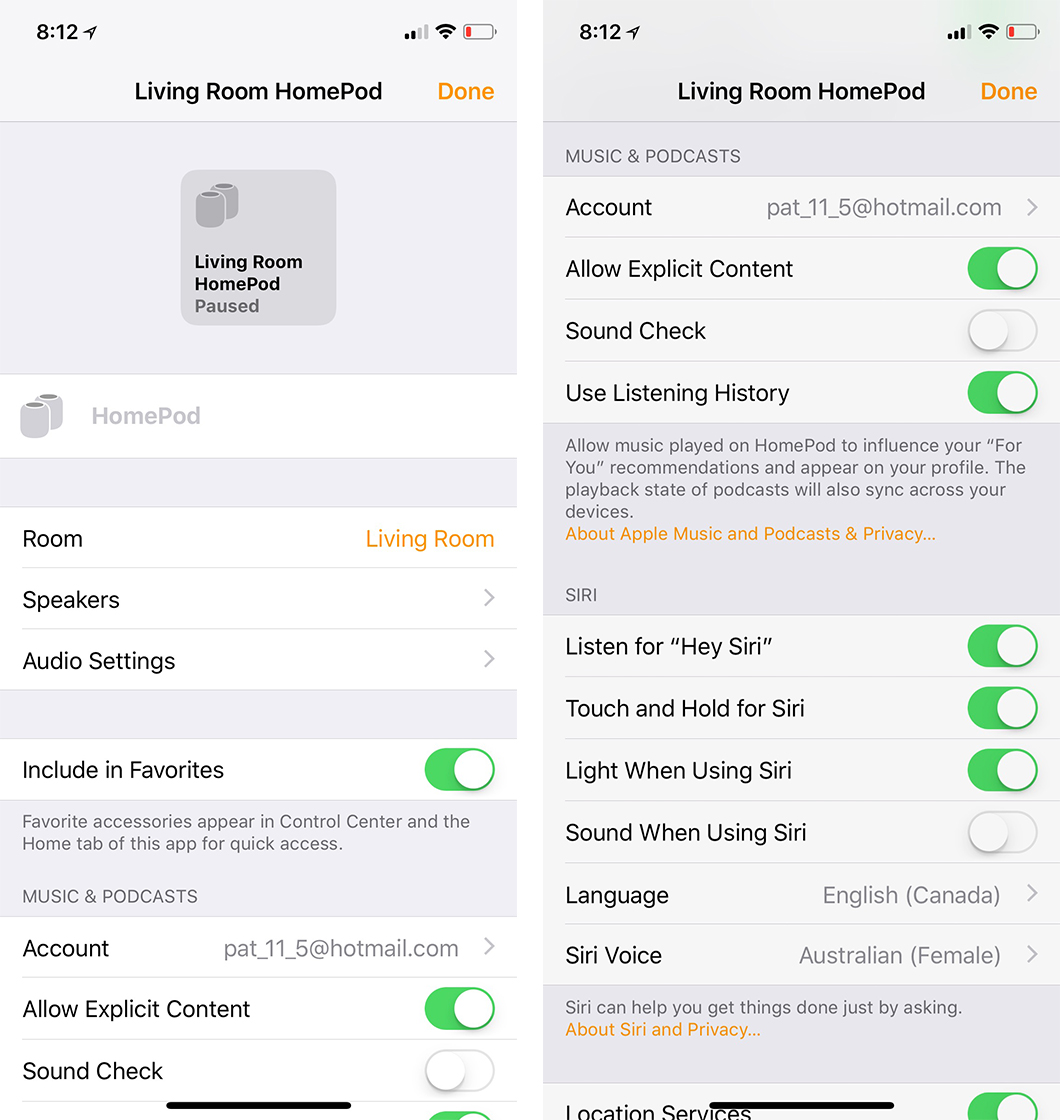
From a technical perspective, Apple is doing a lot behind the scenes to make the HomePod sound as good as possible under a variety of circumstances. First, the HomePod attempts to create a model of the room its in by detecting sounds reverberating off the walls. Apple says this happens in two steps: first the smart speaker establishes the sound portfolio and the second step refines the initial model. All this happens in the background without the user even knowing, just like with the Google Home Max.

There’s more to this calibration process, too. By utilizing the smart speaker’s seven-tweeter array, the HomePod creates sound beams that shoot out across the room. If you happen to place the smart speaker by a wall, sounds that are considered ‘direct,’ such as vocals or guitars, for example, are featured in one beam, while ‘ambient’ noise, like a crowd on a live track or other background sounds, reflects off the wall. Apple calls this process “beamforming” and the technology powering it consists of an impressive 200 patents, according to the company.

What this means in practice is the HomePod sounds great under any circumstances, even when you’re across the room, surpassing the Google Home Max’s ability to adjust to its surroundings in my experience.

Under the hood, Apple’s HomePod is also an impressive device. The smart speaker features the compay’s A8 processor, the same piece of silicon in the iPhone 6, along with 1GB of RAM and 16GB of internal storage.

Whats the deal with no Bluetooth?

HomePod on table

The HomePod isn’t capable of Bluetooth. This means the smart speaker can’t connect to external Bluetooth devices like many of its competitors.

As result, AirPlay 2 is the only way to wirelessly play audio to the HomePod, whether you’re using Apple Music or Spotify. This also means that it isn’t possible to use the HomePod with an Android device. Given even Apple Music has an Android app, this is a perplexing decision on Apple’s part that unfortunately limits the smart speaker’s compatibility with devices.

Of course, if you’re strictly an iPhone and macOS user, this won’t be a problem for you.
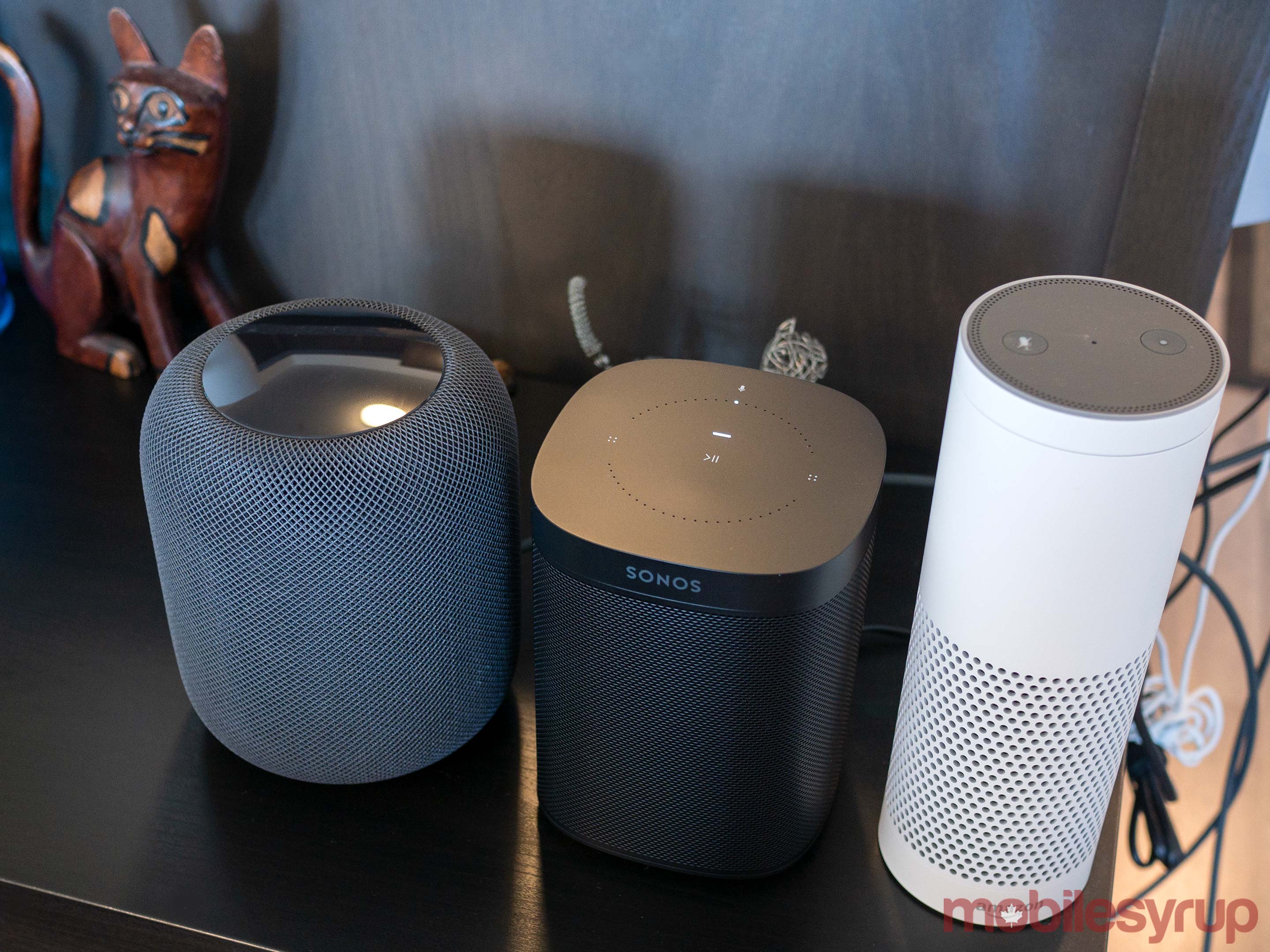
HomePo, Sonos One, Amazon Echo

While the HomePod works best with Apple Music, both in terms of how quickly and reliably music streams to the smart speaker, contrary to what some might guess, the device is also compatible with Spotify via AirPlay– though not flawlessly. I experienced instances where songs would occasionally drop, as well as times where AirPlay 2 stereo audio became out of sync, resulting in a strange echo effect.

It’s worth noting these are also issues I encountered with Spotify and the Google Home Max, as well as other smart speakers I have in my apartment.

It’s also not possible to use Siri voice commands to play music from Spotify, with the feature being exclusive to Apple Music. The same goes for other music streaming services that support AirPlay.

Siri isn’t as capable as Apple’s competitors’ assistants
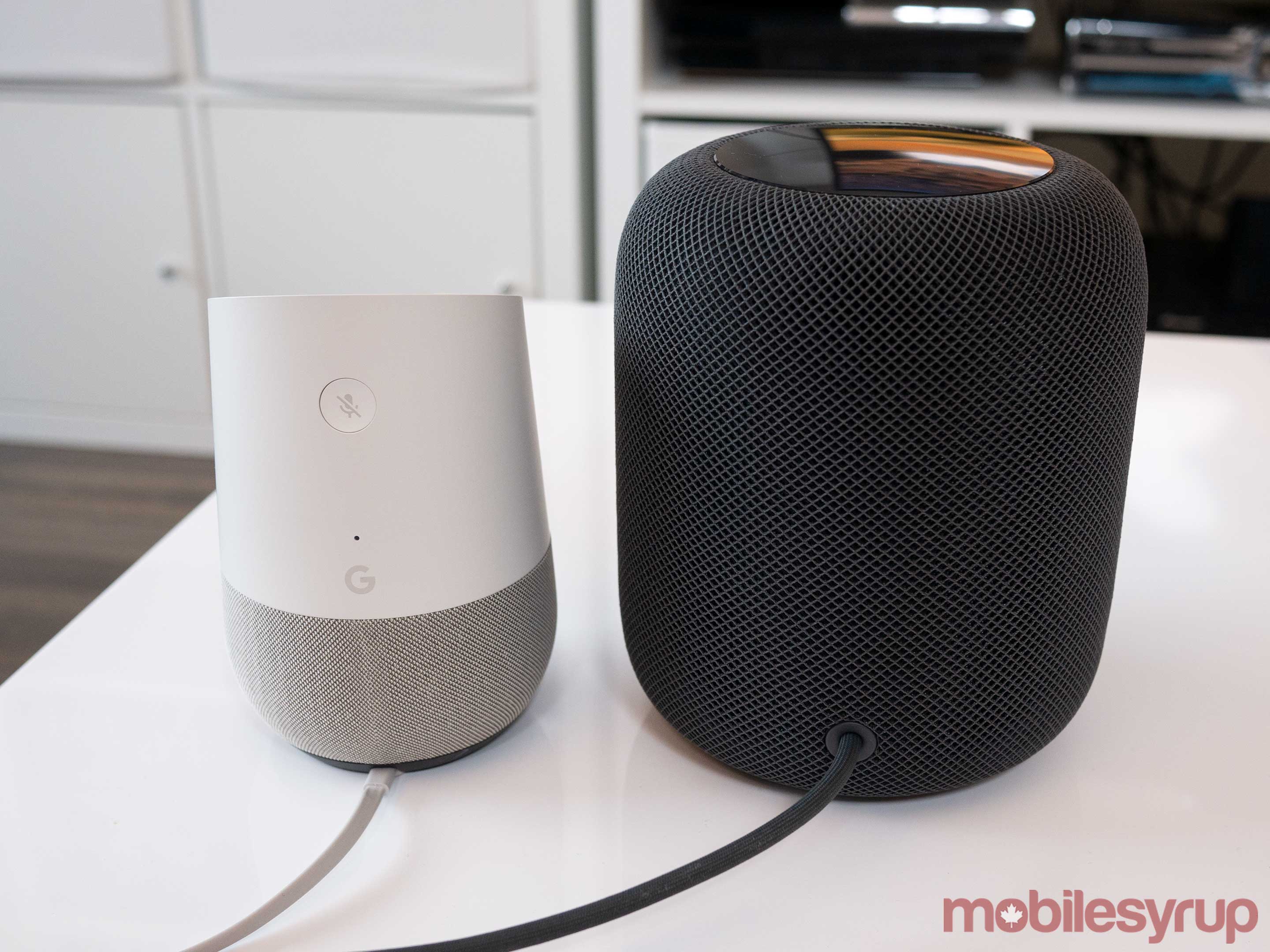
HomePod vs Google Home

While the HomePod’s built-in Siri functionality works for playing tracks via Apple Music, is able to check your text messages and is answers a limited set of questions, the speaker isn’t nearly as capable as Google Assistant or Alexa-equipped speakers.

Further, multi-user voice matching isn’t available and calls can’t be made from the HomePod (though you can transfer them to the speaker when they’re already in session).

On the plus side, I didn’t run into a single instance where Siri wasn’t able to hear my query, even with music playing loudly. This is an issue I’ve frequently encountered with every smart speaker I’ve used, with the exception of the Google Home Max. In terms of specs, the HomePod features six built-in microphones.

The HomePod’s lack of multi-user support is a strange move on Apple’s part, especially from a privacy perspective. This is a feature both the Google Home and Amazon Echo include, even in Canada. Given Siri is able to recognize a specific user’s voice, adding support for multiple voices/accounts to the HomePod should — at least in theory — be relatively easy. It’s likely Apple has some sort of solution in the works, but it’s unclear when it will actually be released.
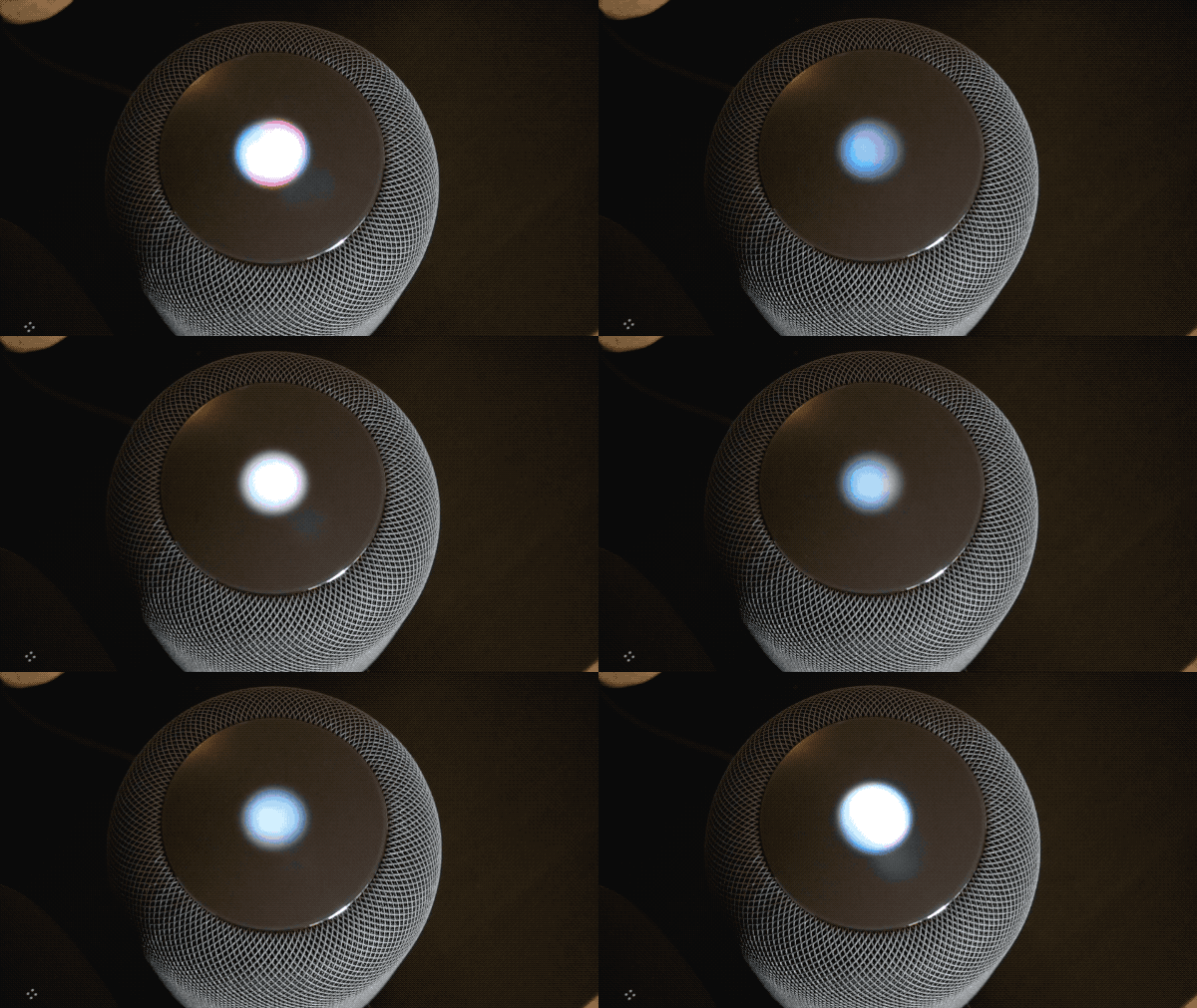
HomePod

In terms of other features, Apple’s HomePod is capable of sending texts, but your phone needs to be present for it to work. Also, as long as your iPhone is around, everyone in your home has access to these messages given the smart speaker doesn’t support multiple accounts. While those who live alone won’t take issue with this, anyone with a family, roommates or a partner using the smart speaker, could have privacy concerns.

It is possible to turn the messaging feature off in the HomePod’s settings. Apple’s smart speaker is also capable of controlling smart home devices that are HomeKit-enabled like Philips Hue lights and Toronto-based Ecobee’s smart thermostat line. I have a variety of smart home devices and the HomePod controlled them without any issues, using natural language to launch the commands.

AirPlay 2 is finally here
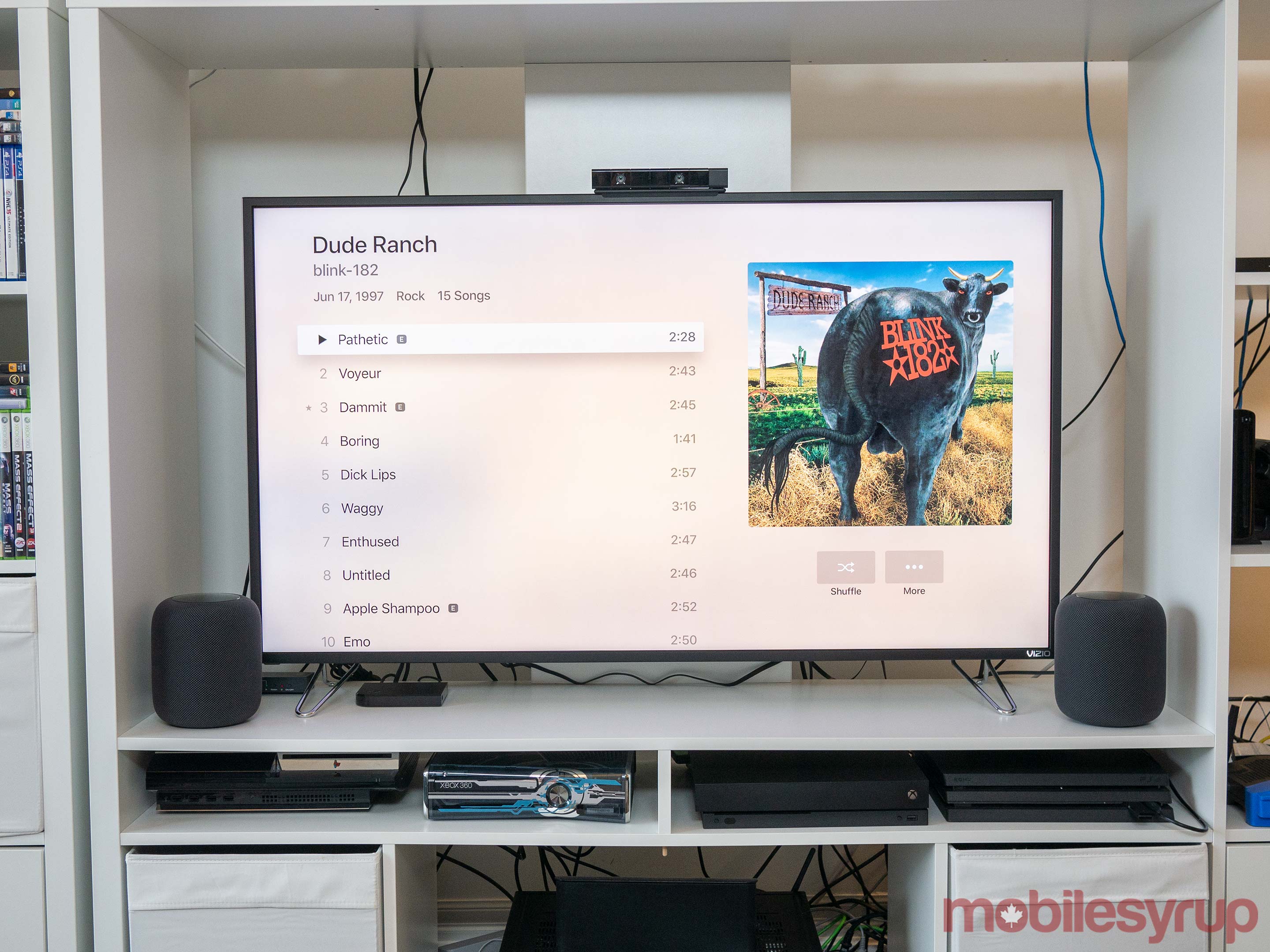
HomePod AirPlay 2

AirPlay 2, the latest version of Apple’s AirPlay protocol that first launched back in 2010, finally rolled out with the release of iOS 11.4.

Acting as a trojan horse of sorts when it comes to the HomePod, AirPlay 2 is actually quite useful and is one of the smart speaker’s defining features that sets it apart from the competition.

For instance, while AirPlay 2 adds stereo speaker playback to the HomePod, allowing two of Apple’s smart speakers to be connected together, the wireless protocol also has the potential to turn a soundbar or surround sound system hooked up to a 4th-gen Apple TV, into an additional audio source.
homepod table

In my case, I connected two HomePods together via stereo pairing, but also added my Apple TV 4K to the mix, which runs through my 5.1 surround sound system after piping the audio from my TV. Further, third-party speakers that support AirPlay 2 can be added to this setup, though most manufacturers haven’t updated their devices to support Apple’s new wireless protocol yet.

While most of the third-party AirPlay 2 compatible speakers are ultra high-end and pricey, the Sonos One is included in this list as well. Once AirPlay 2 comes to Sonos’ smart speaker, it should be possible to connect the HomePod to the Sonos One.

Apple says that more than just two speakers can be connected through AirPlay 2, but I wasn’t able to try this feature.

This is also possible with Google Cast supported devices, including hooking Chromecast Audio up to an older, not Wi-Fi-connected speaker, coupled with Google Home, as well as a standard Chromecast.

The post HomePod Review: The best smart speaker for Apple users appeared first on MobileSyrup.

18 Jun 15:27

Waze and Ford Sync 3 Review: Too late to arrive?

by Ted Kritsonis
Waze Ford Sync 3

Built-in navigation packages have long been a cash cow for automakers and the dealerships they support, but no matter what they offer, the market is looking elsewhere. Waze’s integration into Ford Sync could be a big first step toward making them all but obsolete.

This integration isn’t the one already possible through Android Auto, nor is it the one that Apple announced as part of CarPlay and the upcoming iOS 12 rollout. It’s the iOS integration Ford had previously intimated at Mobile World Congress (MWC) last year.

At the time, it was made for SmartDeviceLink, the consortium headed by Ford and Toyota as an automotive-driven platform for better mobile integration. Now it’s live and part of Ford’s AppLink in-car infotainment suite of services.

For drivers who love crowdsourced mapping on the road, having Waze integrated is a major addition. Its success could pave the way for more of this from other automakers.

Setup

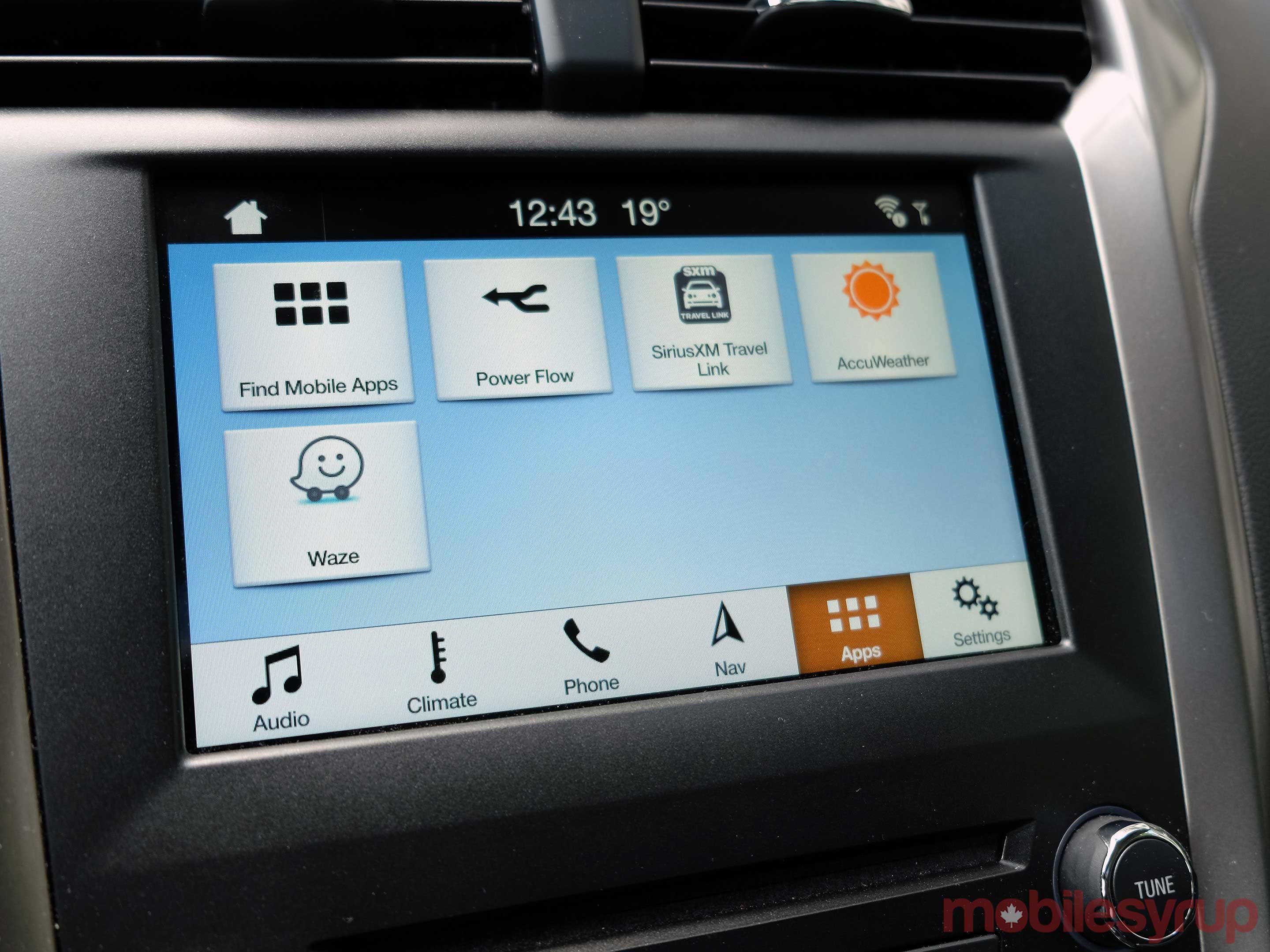
Waze Ford Sync AppLink screen

Not since Apple used the 30-pin adapter has it been possible to integrate apps into an automaker’s infotainment system. Not that it hasn’t happened since. There are a smattering of examples, including how Ford integrated Spotify into Sync 3 when it launched.

While unrelated to this story, Spotify pulled the plug on that deal earlier this year, forcing drivers to use the streaming music service over Bluetooth, USB, CarPlay or Android Auto.

Which brings us to Waze. Having any useful app function right on the vehicle’s own screen is the whole point of integration, particularly when the app itself is visual. Ford is making it available to all 2018 model Ford vehicles running Sync 3 version 3.0 or later. Drivers with previous models running the platform can get Waze by updating the system via USB or going to a dealership. Ford Canada has told me there’s no way to do it over-the-air.

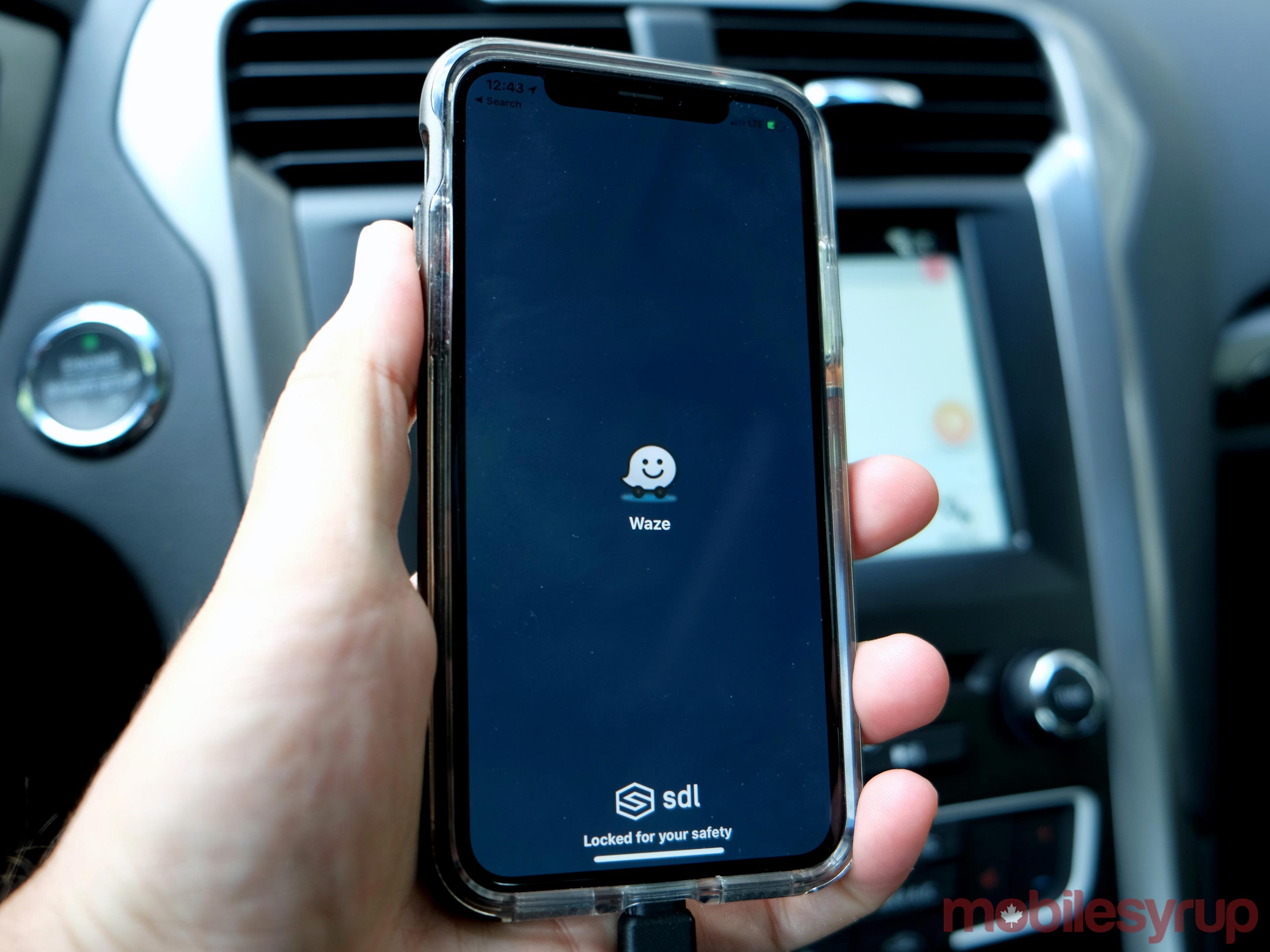
There is nothing to install on the iPhone other than Waze itself. It’s also entirely separate from CarPlay, so I had to disable it on Sync just to get this setup to work.

Getting familiar

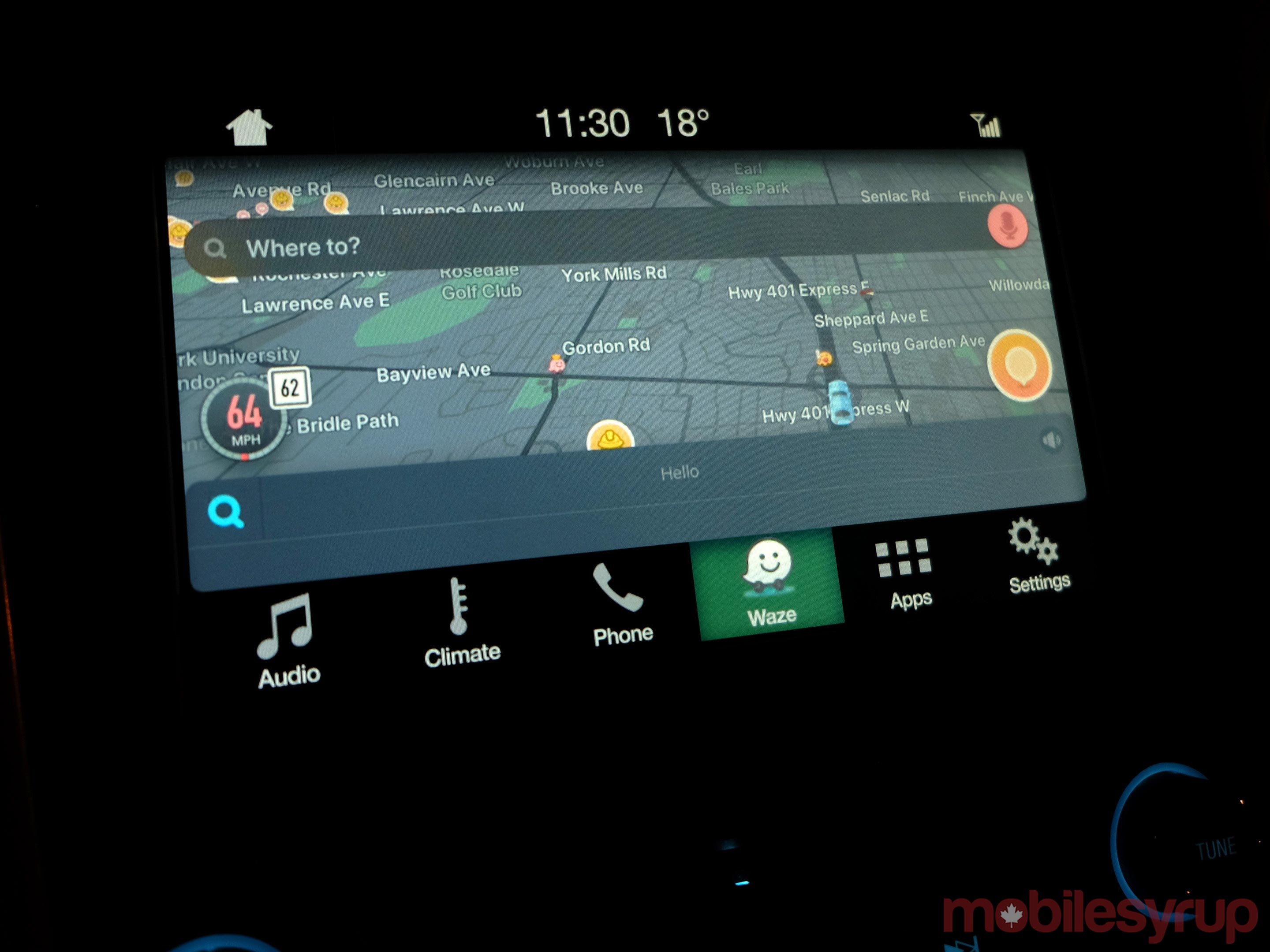
Waze Ford Sync night

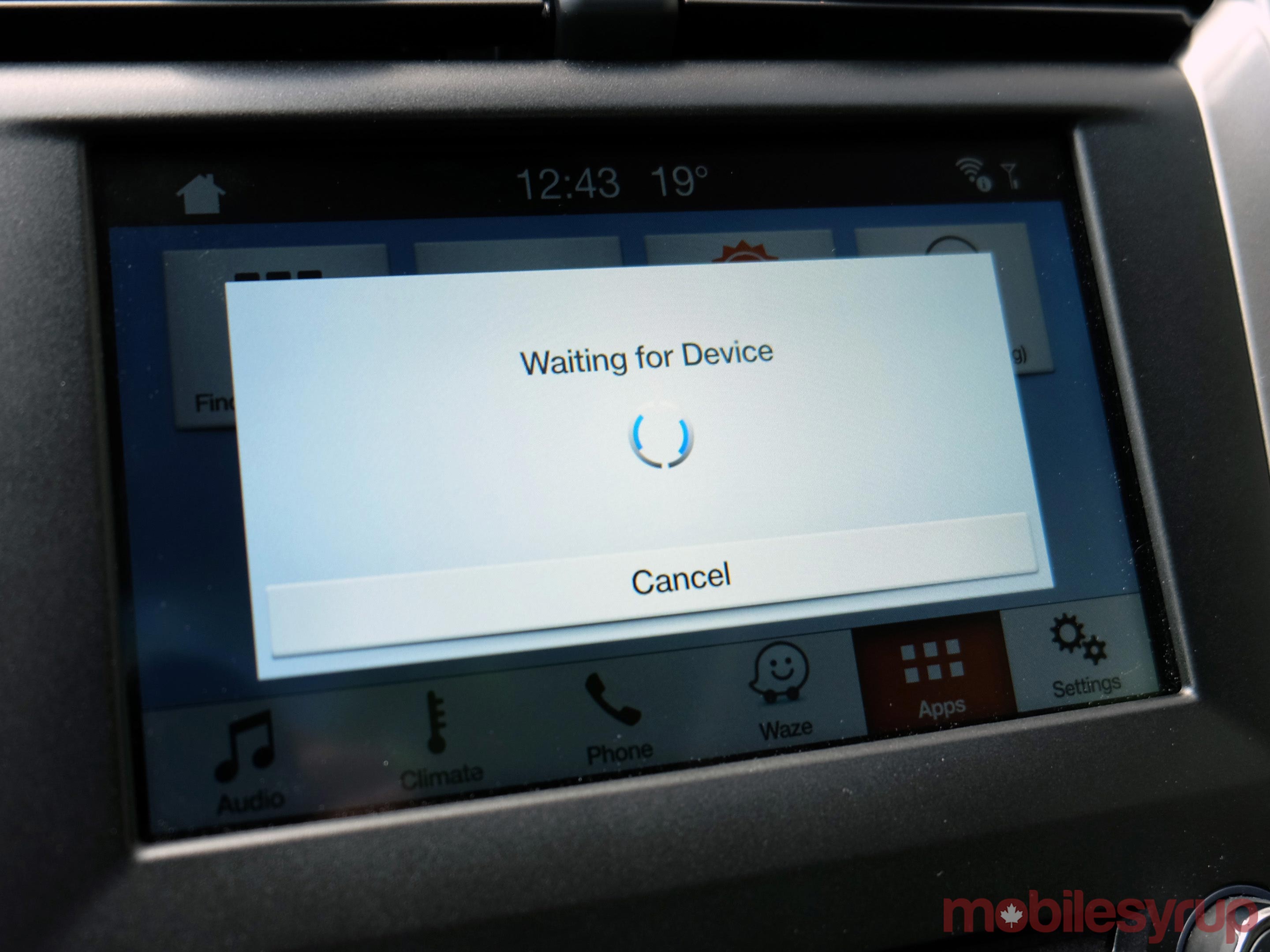
It wasn’t quite as simple as just plugging in the iPhone and seeing Waze pop up. Disabling CarPlay was a key part of the process because it was only then that the app appeared on Sync’s list. I tapped it and a waiting screen appeared, essentially telling me to launch it on the phone. I did, and sure enough, the familiar map showed up onscreen.

The map could only maintain its presence on the display so long as it was running on the phone too. The moment I picked it up and navigated to the home screen, the map disappeared on the car’s display. And unlike CarPlay, tapping the Waze icon again couldn’t launch the app on the phone to bring it back. The process is one-way, meaning that it has to be on the foreground on the phone at all times to stay active.

In cases where I was in the middle of a route, getting out of the app didn’t kill the turn-by-turn directions. The audio was still active, directing me where to go.

CarPlay’s dormant status under this setup also silences Siri, pushing other features, like calls and texts, over to Sync. Ford’s system can keep Bluetooth open for hands-free calling despite the phone being plugged in via USB. I found a bit of a workaround by using Siri Eyes Free holding the talk button on the steering wheel for a few seconds. Siri didn’t register anything related to Waze, so I couldn’t use the voice assistant to ask for directions.

I didn’t need it to make or take calls because Sync handled that well on its own. Messaging is a little less robust through Sync, but I did manage to at least send messages out when Siri would pop up.

I was very surprised to see that Waze’s keyboard actually worked while the car was in drive. Normally, developers disable keyboard inputs for in-car use unless the vehicle is parked.

Driving around

Waze Ford Sync app in hand

Beyond that, much of the Waze interface was available. I could report a police speed trap, crash, or other road hazard the same way I could otherwise. I could search for a destination or select one from a list of favourites.

Generally, the map was nice and vibrant, and the re-routing Waze is known for worked like a charm when traffic got heavy.

But there were some problems, too. The map randomly froze a number of times — yet the turn-by-turn directions continued unabated. One time the entire app crashed, forcing me to handle the phone to relaunch it again. In a couple of instances, the map eventually came back to life, but wasn’t in sync with the audio for the route.

I couldn’t be sure it was the iPhone’s fault or that Sync caused it, but either way, there were obvious bugs that need to be squashed. There also needs to be a better way to launch the map directly from Sync’s AppLink screen without having to touch the phone.

Waze-Ford Sync waiting for device

Waze’s onscreen voice control was fine for searching a route or navigating to a preset destination (home, work, etc.), but there is no physical integration otherwise. You have to tap the mic on the screen each time you need to say something.

Playing music also needs to be planned in advance, unless you have a passenger handling things. CarPlay enables access to multiple music apps, all of which are inaccessible through Sync. Ford’s platform can only show what the phone is playing and present basic playback controls, but to switch from Spotify to Tidal, for instance, I could only do it on the phone itself.

The post Waze and Ford Sync 3 Review: Too late to arrive? appeared first on MobileSyrup.

18 Jun 15:27

New leak corroborates Pixel 3 XL single rear-facing camera rumour

by Igor Bonifacic

The Pixel 3 XL will feature a single rear-facing camera, according to prominent Chinese leaker Ice Universe.

Ice Universe shared the news on Monday morning through their Twitter account. The leak corroborates the earlier leaks we saw last week, which showed a prototype Pixel 3 XL device with a single rear-facing camera.

Without knowing too much else about the Pixel 3 XL’s camera, one thing is certain: the camera won’t be as versatile as what’s available on devices like the P20 Pro and iPhone X. With only one lens, the Pixel 3 XL will force users to rely on digital zoom (or their feet) any time they want to zoom in a scene.

In almost every circumstance, digital zoom looks worse than optical zoom since the smartphone is cropping in on its sensor’s natural resolution to pull off the effect. Of course, in the past, Google has done a lot with software, so we’ll have to see what the company has up its sleeve before rendering final judgment.

Source: Ice Universe (Twitter)

The post New leak corroborates Pixel 3 XL single rear-facing camera rumour appeared first on MobileSyrup.