Shared posts

26 Jun 17:05

Kepler.gl, an open source tool for mapping large-scale spatial data

by Nathan Yau

Kepler.gl, a collaboration between Uber and Mapbox, allows for easier mapping of large-scale data. From Shan He for Uber:

Showing geospatial data in a single web interface, kepler.gl helps users quickly validate ideas and glean insights from these visualizations. Using kepler.gl, a user can drag and drop a CSV or GeoJSON file into the browser, visualize it with different map layers, explore it by filtering and aggregating it, and eventually export the final visualization as a static map or an animated video.

It plays nice with Mapbox if that’s your jam.

Tags: mapbox, spatial, Uber

26 Jun 16:28

Pixel and Nexus cameras are now getting built-in Google Lens

by Jonathan Lamont
Google Lens on Pixel 2 XL

Google Lens is coming to the camera on Pixel and some Nexus devices today.

The Google phones are joining manufacturers like Motorola, Sony and LG, which have all added Lens directly into the camera app.

The new feature works similarly to the other manufacturers — Lens is a selectable mode in the camera app now. Users can swipe open the side panel in the camera. Lens resides there with the other camera modes, like Portrait, Panorama and AR Stickers.

This follows a slew of updates for Lens that Google has been pushing out since its I/O conference in May.

Google Lens has received a visual overhaul along with new real-time object lookup. Additionally, it gained a copy-paste feature that allows users to copy text in the real-world and paste it on their phone.

Finally, Google Lens received a new app in the Play Store. The app works more like a shortcut, breaking Lens out of the Google Assistant app.

Lens’ implementation in the camera app accomplishes the same goal. It gives users another option for launching the feature, instead of forcing them to go to Assistant and navigate to Lens from there.

It also makes sense to put it in the camera. Chances are, if you’re already pointing your camera at something, you may want to know more about it. And if you do, it’s much easier to open Lens from the camera and find out.

The addition is part of an app update for the Google Camera. Version 5.2.025 adds Lens to the app and is rolling out via an update from the Google Play Store now.

Source: 9to5 Google Via: Engadget

The post Pixel and Nexus cameras are now getting built-in Google Lens appeared first on MobileSyrup.

26 Jun 16:28

Standalone virtual reality headset Oculus Go now available at Best Buy Canada

by Patrick O'Rourke
Oculus Go

After launching in the U.S. in October of last year, Facebook-owned Oculus’ new Go headset is now officially available in Canada through Best Buy.

The 64GB version of the Oculus Go is priced at $329 CAD. As of right now it doesn’t seem like Best Buy is selling the smaller 32GB $269 version of the headset.

That said, the 32GB version is available through Oculus’ official website for $269, along with the $329 64GB iteration. Oculus began officially shipping the Go to Canada from its official website back in May.

Oculus’ new headset features a 2560 x 1440 pixel display with a 180-degree field-of-view, as well as a Snapdragon 821 processor.

Unlike the Oculus Rift or HTC Vive, which require a high-end PC to power them, or Samsung’s Gear VR, which needs a Samsung device that acts as the headset’s display, Oculus Go is a standalone device that features its own internal hardware.

Along with Canada, the Oculus Go is also now widely available across Europe.

We’ll have more on the Oculus Go in the coming weeks

The post Standalone virtual reality headset Oculus Go now available at Best Buy Canada appeared first on MobileSyrup.

26 Jun 16:28

Welcome the Amadeo León Collection to the Flickr Commons!

by Leticia Roncero

We’re thrilled to welcome the Amadeo León Collection of Boconó Photographs to the Flickr Commons! The Amadeo León Collection is a private effort to digitize about 12,500 film negatives of the people and sights of a small city in the Venezuelan Andes.

CAL13096.JPG

Amadeo León was a photographer in Boconó, Venezuela in the 20th century, and his images are a time capsule of the people, lives, customs, and landscapes of Boconó. Upon his passing, his son, Dr. Alonso León Rocha asked local institutions to store and preserve his father photographic legacy, but the lack of resources, technology, and equipment made it impossible.

CAL05404.JPG

In 2010, a family friend, Pablo Miliani, learned of Dr. León Rocha’s plight and offered to store, digitize, and preserve the collection. By sharing the photographs online through the Collection’s Facebook page and other platforms, Milani opens up the possibility to react on, and learn more about the history of Boconó so other people, including their descendants, have a chance to see the images and contribute information.

CAL07760.JPG
CAL07338.JPG
CAL00249.JPG

We’ve selected a few of our favorites here, but it’s worth checking out the entire collection on Flickr.

You can also visit the Amadeo León Collection website here, or click on the video below (in Spanish) to learn more.

Amadeo Leon
26 Jun 15:36

Our tools shape us

by Bryan Mathers
Our tools shape us

A library of code, a palette of brushes, a diary of thoughts, a schedule of plans, a smorgasbord of apps, a myriad of processes…

Quote: John Culkin – “A schoolman’s guide to Marshall McLuhan” – via Doug Belshaw’s Thought Shrapnel.

The post Our tools shape us appeared first on Visual Thinkery.

26 Jun 15:36

New Rental in Vancouver: Transportation Re-thought

by Ken Ohrn

When deciding to build this attractive rental property, Strand Developments latched onto a site adjoining the good old Arbutus Greenway.

As with the City of Richmond, and elsewhere in Metro Vancouver, it seems transportation has become a decision-making factor with more than one dimension.

Strand’s building (15-page PDF) will be a six storey “boutique rental community of 48 homes” containing 3 studios, 20 1-BR, 15 2-BR, and 10 3-BR bedroom suites, to open in 2020.  Tellingly, it’s called “Kits Walk”.

Strand touts the location as being “highly connected to the city” by a variety of choices, including the upcoming Skytrain Broadway extension, the current B-line, bicycle and walking. All pointing to many transportation choices.

It certainly makes great sense, too, that the building is located close to Broadway, BC’s second-largest employment corridor. This potentially puts jobs close to home for at least some tenants, and reduces the length of their commute.

Site stats from Yamamoto Architecture show 32 parking places for motor vehicles (4 for electric vehicles) and 60 for bicycles — half having an electrical outlet. Several hints here about what Vancouver is, and what it’s becoming.

Kits Walk replaces an old motor vehicle repair shop.

It’s a good example of what density can look like, with 48 homes placed on ~10,900 sq. ft. (1011 sq.m., 0.25 acres) of land. It’s a good example of what Vancouver’s low-density neighbourhoods need to see a lot more of.

26 Jun 15:36

Apple Opens iOS 12 Public Beta

by John Voorhees

Apple has released the first public beta of iOS 12. The first developer beta of iOS 12 was released at WWDC on June 4, 2018. iOS 12 includes new features such as Memojis, Siri Shortcuts, new notification, Do Not Disturb, and Screen Time features and settings for managing time spent on iOS devices, updates to Apple Books, Photos, Stocks, and Voice Memos apps, support for up to 32 simultaneous FaceTime users, ARKit 2.0, and more, which we cover in depth in our our iOS 12 overview.

You can sign up for the beta program here, but be sure to follow the instructions, which include backing up your iOS device, because it’s still early in the iOS 12 beta release cycle. There will be bugs and running a beta always runs the risk of data loss.

→ Source: beta.apple.com

26 Jun 15:36

NewsBlur Blurblog: State of the Site: Metafilter financial update and future directions

sillygwailo shared this story from MetaTalk.

Important site updates, folks:

1. The site is running at a significant deficit and we urgently need to make that up. Part of that is through additional direct community funding; you can help here.
2. We're looking at—and inviting community input on—several big-picture questions.

Today I want to lay out our budget and income streams, to explain where we're at and what we need to accomplish. I'll also talk a bit about how the community is doing, and what's coming up in the future.

THE SHORT VERSION

Right now, because of recent steep drops in ad revenue, we're running at an $8,000/month deficit. I'm bringing this to you all now because we need to fix that shortfall soon to avoid significant cuts to our current payroll levels. We're still operating as normal right now thanks to the cushion members built up last fall, and that and conservative budgeting have worked as intended: it's given us a few more months of leeway to work on the problem, so we can consider our options and make smart, non-panicky decisions. But we need to get to work on it ASAP.

First, we're cutting spending further in the limited places we can, to buy a little more time.

Second, we're looking at ways to increase revenue. We're open to ideas in addition to this, but a core part of our plan here is moving to a more sustainable community-funded model, where we rely more on members and supporters to fund the operation of the site and less on the whims of the ad market. We never want anyone to be turned away from Metafilter for money reasons, and that's going to remain a firm commitment in whatever system we settle on. But for those who can afford it, we're considering moving toward a formal subscription model, where we'd try to meet our budget needs through a more explicit focus on monthly subscriptions. This place costs money to run, and the more that money comes from people who care about the site rather than disinterested corporate third parties, the better off we'll all be.

Some details:

- We are, specifically, running about $8,000 a month short of an operating budget of about $38,000 a month.
- This is a new problem as of this year and specifically the last few months.
- At the start of 2018, we were breaking even, but there's been a significant decline in Adsense revenue the last few months.
- We've also been affected by Amazon's reduction in affiliate program payouts starting around the middle of last year.
- At our current rate of loss, we have enough in savings to bear us through the next four months or so with no change to spending.
- After that we'll hit a critical point where cutting the budget by $8K/mo will be necessary to keep a minimum safe amount in savings month to month.
- Almost all of our budget goes to payroll, and cuts would have to come out of that, which means pay cuts and/or laying moderators off.
- Our two obvious paths to reducing or eliminating that budget shortfall are (1) new ad revenue and (2) new recurring contributions from members and supporters of the site.

I am working on the ad revenue aspect, and will talk more about that more in the future. We're also looking as a team at what we can manage for immediate small-scale, hopefully temporary, reductions in pay to slow the approach of that critical major-cuts point.

But the community funding part we can address right now, so I'll lay it out here:

If you can afford to help support MetaFilter with a recurring contribution, we need that help now.

If you already support MeFi but can afford to up that a little, we need that help now.

Every extra five or ten or twenty dollars a month, every quarterly or yearly or one-time contribution, will help.

I can never thank the MetaFilter community sufficiently for the finanical support you've already provided over the years. It has been decisive in keeping this place stable in the years since the big financial crises and layoffs back in 2014. It's become clearer over time that the stability and closely-connected nature of community funding is workable for community-centric projects in a way that can't be likewise said for disinterested ad income; expanding that support right now will be decisive in helping us avert a new looming staffing crisis and stabilizing our long-term funding model.

I'm 100% committed to keeping MetaFilter around and operating as a good place to be on the internet. I will make sure that happens one way or the other. But I also want very badly to continue to provide the MeFi staff with the jobs they have been so giving in and dedicated to over the years, and to provide the MetaFilter community with the level of attention and stewardship their work makes possible. If you can help there, that would mean a great deal to me and to the team.


THE LONG VERSION

Okay, buckle up. I'll break down our current revenue and our current expenses, talk about site activity and engagement, and lay out some short-term and long-term goals related to everything going on with the site. While we've talked about bits and pieces of this in MetaTalk in the interim, this is substantially a followup to the change of ownership announcement back at the end of July last year.


REVENUE

We currently have three major revenue sources:

1. Google Adsense ad units running on the bulk of the threads on Ask MeFi and on MetaFilter proper, for logged-out users.
2. Amazon affiliate program income from folks reaching Amazon via affiliate-coded links in comments and from members using our link when shopping.
3. Direct user contributions, via PayPal and Stripe and in a few cases paper check.

Adsense and Amazon income are down. Adsense in particular, by a lot since the beginning of the year. Direct contributions have been steady and I'm ridiculously thankful for that.

Details on those revenue streams:

1. Our Adsense income has shown a signficant decline since the start of 2018. This looks to be a combination of lower CPM/RPM rates overall -- that is, fewer clicks per thousand ads shown and/or less money per ad actually clicked -- and somewhat lower total number of ads being served in the first place. It's difficult to reduce this to a single explanatory factor; increased ad blocking, decreased advertising demand, lower levels of search traffic from some Google adjustment, and a lower total number of ad-serving threads to begin with because of Google content filtering rules may all be contributing factors. I'm trying to better prise those apart to see what we can address and how on each front.

But the overall effect is significant: the change in Adsense revenue from the January to May accounts for basically the entirety of our current budget shortfall.

In the last month, that revenue hasn't dropped further, and it's possible it will stabilize or even recover somewhat; Adsense has always been somewhat variable for us, and swung around significantly in 2017 as well, though in an up-and-down fashion rather than the current down-and-down-some-more way. But the current situation is precarious and there's no specific reason to believe it will improve, so I'm planning for the scenario where it doesn't.

Right now, Adsense represents on the order of $17,000 a month.

2. Amazon's affiliate program changed its rates in mid-2017; as a result, we are now making several thousand dollars less each month from that program than we had in the few years prior. That lower rate has looked fairly stable the last several months as the new normal. The loss of income in 2017 wasn't greatly worrying because Adsense was performing well enough. In the current situation, that extra few thousand dollars would make a big difference, but it's not something over which we have any control.

I don't expect Amazon's affiliate rates to decrease again soon, but in practice our revenue from that program is tied in part to our level of search traffic, just like our Adsense revenue is: if fewer people arrive at the site to click a link, fewer people will end up generating sales credit for MeFi. So long-term drops in traffic to the site from changes in Google's search decisions could eat at this revenue, which is something I'll be monitoring.

Right now, Amazon represents on the order of $5,000 a month.

3. Direct financial support from users and lurkers has been solid and consistent over the last 18 months. Even as we've seen revenue decreases elsewhere, y'all have been very steady in your continuing support, and goddam do I appreciate that. And when I announced the change of ownership of the site and the need to do some fundraising last July, folks dug in extra and provided about ten thousand dollars in one-time donations along with a small bump in the rate of recurring donations.

All in all direct support has been by far the most reliable stream of revenue the last few years and I find that incredibly heartening; it also leaves me with very complicated feelings about asking for more because I understand that that steadiness to some extent just represents what people are collectively comfortable with contributing.

But it's also a level of support that has corresponded to a period of relatively stability and mild financial recovery for the site. And it has declined, if very shallowly, over time, down from a high of around $9,000 a month back when the old financial crisis played out. And it has slid like that in part I imagine (and understandably so!) because of the site's stability; things have been keeping steadily along for a few years now, and folks have this or that come up and need to trim back or pause monthly donations, etc.

What it comes down to is: I don't look at these financial contributions lightly or take them for granted. It's an incredible string of generosity from the MetaFilter community. So I wouldn't ask for more if we didn't need it, and to whatever extent that folks *can* afford to do a little more without putting themselves in any kind of duress, now is when increasing that support level would really, really matter. And in the long-run, this may be the model we need to focus most on; we'll be looking at how to support and develop that going forward.

It's also, and I cannot emphasize this enough, okay if contributing or contributing more is not personally doable for you; nobody should feel they need to pay to be a part of this place, and everybody's financial situation is different.

But for those it is workable for, finding that extra little bit to help us with, finding a way to put another however much a month toward this place to help it remain stable long-term, would matter a lot.

Right now, direct financial contributions represent about $7,500 a month.


EXPENSES

Our fixed monthly expenses are about $37,500 a month. Almost all of that is payroll; we spend about $2000 a month on non-payroll expenses.

Payroll covers all costs for the seven folks on staff (me, LobsterMitten, restless_nomad, taz, goodnewsfortheinsane, Eyebrows McGee, and our technomancer frimble), which includes both full-time and part-time schedules, insurance benefits where possible, site development and maintenance work, and administrative fees from our small business HR services provider.

Non-payroll consists mostly of hosting costs on AWS; there's also couple hundred dollars a month for employee phone/data service for moderating from mobile devices or emergency data tethering during residential internet service outages, and another couple hundred in miscellaneous recurring fees and subscriptions for our site infrastructure, API services we depend on, etc.

There's very little flexibility in the non-payroll section of the budget -- MeFi just needs a certain amount of hosting infrastructure by definition -- though I am working with some folks at Amazon to try and trim a little off our AWS bill if possible.

Payroll is where we're able to make signficant cuts if it comes to that, but obviously that's a hard thing to have to do. We're currently looking at where things can give a little in what folks are getting paid, hopefully only temporarily, without any actual staffing changes. But to cover a gulf of $8,000 a month we'd have to pay for fundamentally less moderation every month.

And avoiding cutting back on moderation matters to me for two different reasons. One, MetaFilter works best when moderation can happen 24/7, when we're able to respond promptly all day every day to the kinds of questions and issues that arrive in a free-form community space. Two, I care a great deal about these folks I work with and want to provide them with the reliable employment that they deserve in exchange for their dedication to this community.

We also have incidental expenses, for things like employee equipment replacement or yearly renewals/fees and for fill-in staffing when scheduling requires it, or fees for legal or financial advice and services. These don't average out to a lot month to month -- maybe $500/mo, maybe less -- but they're there and the possibility of a large incidental expense is part of why it's important to me that we maintain some level of savings in the bank beyond just bare minimum monthly expenses.

Being tight on budget also means that we have to look much closer at whether and when to pay for extra fill-in hours (e.g. Eyebrows working extra hours beyond her normal weekend coverage, or Jessamyn doing a week of temporary modding), vs. just rearranging our basic scheduled shifts to trade off an overbooked week here for some vacation time there and vice versa. It's an expense we can avoid but it makes things more difficult and increases burnout risks.

To sum up: I'm looking at where we can recover a sliver of our non-payroll expenses, and where we can minimize incidentals; there's not much room to move there, though, and while we're gonna do a little belt-tightening right away on our monthly payroll to make our savings last longer, I'll have to look at some kind of staffing cuts by or before the end of the year to stabilize site finances if we can't improve our revenue situation.


COMMUNITY STUFF

Revenue woes aside, MetaFilter's been kicking along as the community I know and care about, and I'm thankful every day that it's here and that you're all here. This has been and remains the place I want more of the internet to be like.

It's been a hard couple of years out in the world and that's come out in how folks are feeling on the site, what they're posting about and commenting about, how their worries and their burdens inform the kinds of interactions they have here. Some of it has been pretty trying, and tiring for users and mods alike.

But there's also been a lot of good, and a lot of that comes down to people actively pushing for good stuff on the site, which I really appreciate. Sometimes that's meant carving out dedicated spaces for venting or political grar in an effort to keep that stuff from spilling out elsewhere on the site; other times, it's folks deciding to post positive stuff on the front page, or to foster fun or fascinating discussions on MetaTalk, or to organize activities like card exchanges or group games. And y'all have been finding ways to just support each other, to be there in the face of the hard stuff.

And folks have continued to do the sorts of useful, engaging things that make MetaTalk an important part of this place: reporting site issues, proposing tweaks, requesting this or that pony, celebrating milestones and saying goodbye to folks we've lost, and bringing complicated or discouraging site discussion issues to the community to try and work through. MeFi's, and MeFites', willingness to try and make self-examination and growth as an empathetic community an ongoing goal is something really valuable for the health of this place, and really important to me in how I see this place.

I think we're continuing to struggle to find a good balance for the outsized impact of the current clusterfuck of the US administration and the broader regressive elements of the geopolitical situation, but the times are what they are and I appreciate the degree to which folks on the site have shared in making some of that effort to balance things. I'm also hugely appreciative to the moderation team for sticking with this weird shambling attempt to find a throughline under such difficult prevailing conditions.

But all in all, I feel good about where MetaFilter is at as a community, notwithstanding the state of the world. This is my home online, and the same is true for a whole lot of you, and I'm glad for that.


SITE ENGAGEMENT

One thing that's been a point of concern over time is the idea of ongoing decline in MetaFilter's overall activity level. There's no question that overall daily activity has declined over time, particularly since the peak years around 2008-10. Ultimately I think that as a community MetaFilter can tolerate a pretty wide range of activity, and so a quieter site on average isn't inherently a problem.

That said, giving new folks reasons to join up, and existing members positive or interesting or fun stuff to engage with, is a good goal for such a long-running site, and there's a number of things that the MeFi team has been looking at in service of that.

Part of that is just encouraging everybody to find the things you like about the site and do them, support them, contribute to them, and I'd like to continue to find ways to do that. Several folks have made a particular effort to do so in the last while, in posts and site activities, and that's been great. We also have traditions that have fallen by the wayside over the years that I'd like to get back to more, things like organized MeFi Music album collaborations and a more visible and actively supported meetup/IRL culture on the site. I hope y'all will help us push to make those fun things happen.

Part of it is looking at what is and isn't working on the site for potential new users. There's a lot of possibilities here: some we've talked about before, like revamping FanFare to be more broadly accessible or reworking the signup documentation to be a little more modern and explanatory of contemporary MetaFilter in the context of a contemporary internet; some are more experimental, like reworking the signup process itself, or tweaking/expanding the content of the logged-out front page of MetaFilter to make it clearer to new readers and passersby the wealth and variety of interesting stuff that's lurking under our old-school reverse-chrono text interface. I'll be working through those ideas with the team and talking with the site about any developments or experiments on that front.

As a goal, I think a moderately increased rate of new users signups would be good for the site. I would not want to fundamentally change the pace or feel of new signups because I think MeFi has always benefited from bringing folks onboard through a slow-and-steady process of acclimation and modeling good behavior, but if we went from a small handful of new users every day to a medium-sized handful that'd be a positive, manageable change.

But a thing worth noting: our non-user revenue is tied to external search traffic in a way that, for better and for worse, has always been oddly disconnected from what's happening in the MetaFilter community itself. Measureably declining user activity doesn't necessarily, and hasn't historically, tracked closely with our search-based traffic revenue; the flip side of that is that increased user activity wouldn't by any account necessarily lead to an increase in search-based revenue. So I see the idea of bringing new users in and keeping existing members engaged more as a good in itself than as a solution to Adsense or Amazon revenue problems.


WHAT'S NEXT

There's a lot to think about and a lot of ideas to work through here. I've got a laundry list of things I'm working on or planning to work on, but as usual we're also interested in what all of you in the community are thinking. If you have ideas, suggestions, etc. we're all ears, so please let us know.

Our financial shortfall is clearly the most pressing issue. I'm going to be heavily focused on that right now, to try and contain the problem as much as possible. That means the push for new direct support and the belt-tightening stuff I talked about above; that also means looking at new revenue possibilities, which includes potential new/different ad approaches, new third-party ad partners, exploring a more externally-facing fundraising approach to supplement direct support from within the MeFi community, and so on. I'm incredibly averse to burying MeFi under crap in order to save it, but I think there's lower-impact possibilities worth giving a closer look. I'll keep you all posted about any changes or proposals there as they come together.

The site's 19th birthday is coming up, July 14th; next year it'll be the big Twenty. This feels like a tricky time to talk about plans for throwing any sort of big shindig, but I think anniversaries of shared spaces and shared experiences are good things, so I'd love folks to think about having a local meetup this year in the vicinity of the birthday. Maybe you haven't had one in your town in a while; here's a good excuse to get back on the horse. Maybe you throw 'em all the time and it'll be a cinch. Maybe you live in a MeFite desert and we can have a long-distance meetup in MetaTalk with y'all. But it's good to get together, and good to see each others faces sometimes. And in the long run, I'll think about what we might be able to pull off in 2019, even if only with shoestrings and paper plates and a few freshly scanned cats.

This is a lot of words and a lot of it has been kinda heavy. We're in a bind financially, and it's frankly a pretty scary situation to be resonsible for navigating and I really don't know how it's going to play out. But.

But MetaFilter's value as a place, as an idea, as an example of what is possible on an often troubled and toxic internet, is something more durable than its specific business circumstances. This is a community that matters, to me and to you and to so many people over the years. Whatever else happens, I believe in MetaFilter, and in all of you who make it what it is. I believe in that come storm or sun, and I'm glad you're all here with me as we make our way forward.
26 Jun 15:35

Twitter Favorites: [CycleW19] Proposed changes include: continuous bike lane; right turn bike boxes at intersections; leading cyclist intervals;… https://t.co/qKRImCYpg4

Ward 19 @CycleW19
Proposed changes include: continuous bike lane; right turn bike boxes at intersections; leading cyclist intervals;… twitter.com/i/web/status/1…
26 Jun 15:35

Twitter Favorites: [CycleW19] Richmond-Adelaide is still a pilot (astoundingly!) but will include proper separation and raises bus stops (ala She… https://t.co/WuxHyrtomY

Ward 19 @CycleW19
Richmond-Adelaide is still a pilot (astoundingly!) but will include proper separation and raises bus stops (ala She… twitter.com/i/web/status/1…
26 Jun 15:35

Twitter Favorites: [CycleW19] Also, good news for Richmond #biketo! A traffic light is going to be installed for turning at Simcoe starting July.… https://t.co/u0FMJmguuJ

Ward 19 @CycleW19
Also, good news for Richmond #biketo! A traffic light is going to be installed for turning at Simcoe starting July.… twitter.com/i/web/status/1…
26 Jun 15:35

Current Notes on Airfoil & AirPlay 2

by Paul Kafasis

Since Apple first announced AirPlay 2 at WWDC 2017, we’ve heard many questions from users about how it would affect our home audio streamers Airfoil for Mac and Airfoil for Windows, as well as our software audio receiver Airfoil Satellite. It took quite awhile for Apple to ship AirPlay 2, but it’s finally here.

The biggest user-facing change provided by AirPlay 2 is the new ability for iOS devices to send directly to multiple AirPlay outputs. Airfoil for Mac and Airfoil for Windows have both been able to stream to multiple outputs for many years, so AirPlay 2 doesn’t change anything there.

However, there are some relevant questions, which we’re still in the process of answering.

Can Airfoil send to AirPlay 2 devices?

Update (September 13th, 2018): Sonos has now updated several of their newest speakers with AirPlay 2 support. Airfoil for Mac 5.8 and Airfoil for Windows 5.6 added support for streaming to these Sonos devices, as well as other AirPlay 2 compatible hardware from other vendors.


Currently, the only available AirPlay 2 receivers are the Apple TV and the HomePod. Airfoil has long supported playing audio to any number of these devices, all in sync, and that continues to work great. Below, you can see Airfoil sending to these devices perfectly:

Later this year, several dozen third-party devices from manufacturers like Sonos and Denon will add AirPlay 2 support. We expect to work with these devices when they’re updated. Watch for further updates to Airfoil in the future.

Can Airfoil send to a stereo pair of HomePods?

It’s possible to configure two HomePods in a special mode where they act as a stereo pair. When configured this way, audio is split between the two devices, with one playing the left channel and the other the right channel.

At present, sending audio to stereo pairs is not supported by Airfoil, but we’re exploring this for the future.

Can Airfoil Satellite receive AirPlay 2 audio?

Airfoil Satellite receives audio via the AirPlay 1 protocol. Because of this, it can’t currently be part of a multi-speaker group receiving audio from iOS. If you attempt to add Airfoil Satellite to such a group on iOS, it will become the only receiver.

It’s still possible to send audio from iOS to a group of outputs that includes Airfoil Satellite, with the help of Airfoil in the middle. As well, Airfoil Satellite can still be part as part of a multi-speaker group receiving audio sent by iTunes on your Mac.

It remains to be seen if we’ll be able to support receiving audio via AirPlay 2 in our Airfoil Satellite apps. We’re always working on updates to Airfoil, so stay tuned for more in the future.

26 Jun 15:29

A Movie Promoting Veganism – Science-Based Medicine

mkalus shared this story from Science-Based Medicine.


H.O.P.E. stands for Healing Of Planet Earth. The movie H.O.P.E. – What You Eat Matters is a slick propaganda film produced by Nina Messenger. It argues that all humans should stop eating meat, dairy, and eggs, because animal-based foods contribute to starvation, global warming, environmental degradation, cancer, diabetes, and heart disease. But its biggest objection seems to be that animal-based foods involve cruelty to animals. It didn’t achieve its goal of converting me to veganism. In my opinion, instead of being titled H.O.P.E. it might better have been titled H.Y.P.E. for Hyperbole Yoked to Persuasion through Emotion.

It features several talking heads:

  • Jane Goodall, famous for her chimpanzee research, who says how we treat animals is as important as how we treat each other.
  • Caldwell Esselstyn, MD, who claims heart disease is caused by food and can be cured and prevented by his version of a vegan diet. I have written about how his claims are misleading and based on skimpy evidence.
  • Colin Campbell, PhD, co-author of The China Study. The movie presents that study as conclusive evidence for a diet devoid of animal protein. It is not; Robert Carroll’s article in the Skeptic’s Dictionary explains why.
  • Vandana Shiva, PhD (in philosophy), is an activist who is vehemently opposed to GMOs and globalization. Her controversial views were criticized by Michael Spector in a New Yorker article.

There isn’t even a token attempt at balance. There are no interviews with anyone who disagrees with their overall premise or their specific scientific claims; they don’t even acknowledge that anyone might possibly have reasons to disagree with them about any of their claims. The movie relies on biased proclamations by people with an agenda, on anecdotes, and on emotional appeals.

Milk

I’ll just provide one out of many possible examples of how the movie’s information is unreliable: they demonize milk. Campbell claims his research shows that casein (a protein in milk) is one of the strongest promoters of cancer. He says he could turn cancer on and off in the lab by varying the amount of casein in the diet. But this research was in mice, not humans. And milk is a complex mixture, not just casein. There’s little evidence that his research applies to milk consumption by humans. In fact, a 2016 meta-analysis showed that “higher total dairy, milk, yogurt, butter and skim/low-fat milk intake was not associated with increased cancer mortality risk.” They did find an association with the highest intake of whole milk and prostate cancer.

They repeat the myth that milk causes osteoporosis, based on population studies that failed to look at vitamin D intake. Most experts agree that milk is a good source of calcium and can help prevent osteoporosis, but it must be accompanied by adequate vitamin D, which is why most milk is now fortified with vitamin D. The National Osteoporosis Society says there is no good evidence that dairy is bad for bones. And this review, while it is from a commercial site, is a reliable report of the evidence from scientific studies that “debunk the milk and osteoporosis myth.”

Studies have generally agreed that a high protein diet is associated with cancer. But they are talking about totalprotein; they don’t single out milk protein. Milk is a nutritious food that provides “complete protein” with a full mix of amino acids and is an excellent and convenient source of many other essential nutrients. Eliminating it might very well result in poorer nutrition for some people.

Anecdotal evidence

The movie’s patient testimonials are not convincing.

  • A patient with major coronary artery blockages turned down surgery and used food as her medicine. After 4 weeks, her pain went away, and eventually she was able to run a marathon. Was it the diet, or the fact that she lost weight, exercised, and developed collateral circulation?
  • A patient had recurrent coronary artery blockages after multiple stent procedures. After 30 days of Esselstyn’s diet, his angina and facial numbness(?) were gone. In 5 months, his diabetes was gone. His eyesight improved so that he only needed glasses for reading. Was it the diet? Was it the considerable amount of weight he lost? Had nutritional deficiencies on his old diet been impairing his visual acuity?
  • A cancer patient in Germany had advanced lung cancer. He had surgery to excise cancer and metastases; he refused chemo. After 12 years on a diet of “pesticide-free plants that haven’t been heated,” he says he is cancer-free. Is he really cancer-free? If so, isn’t it possible it was the surgery that cured him?
  • Campbell’s wife had melanoma, refused chemo and surgery. Got strict about her diet. 9 years later, no problem. No details are given. What did the biopsy show? Was a biopsy even done? What did her doctors have to say about this? Even if the story is accurate, there are many reports of spontaneous regression of melanoma. Was it the diet? No way to know.
  • One of the speakers “knows a lot of people” who get migraines, and “when you stop dairy they go away.”
  • Will Tuttle says he and his vegetarian friends feel great and have lots of energy.

Without proper documentation and comparison to control groups, anecdotes like these are meaningless.

Environmental arguments

They say meat consumption accelerates global climate change and species extinction. It damages soil, water, and air. It spurs global starvation. They quote Gandhi, “Earth provides enough to satisfy every man’s need but not every man’s greed.” They say animal foods won’t be able to support our increasing population. A former meat producer says that in 20 years there won’t be enough food. Animals are being fed while humans are starving. Only 10% of U.S. corn production goes to food; most goes to “tortured animals.” And corn “doesn’t suit their digestive system.” Europe has to import animal feed from South America, where the rain forest is being destroyed to produce grain and raise livestock.

Producing a kilogram of beef uses up 15,500 liters of water; 1 kg of eggs uses 3300 liters of water; plants require much less, around 700 liters of water for a kilogram of apples. Animals produce methane, which is much worse than CO2. Excrement pollutes the soil: it releases ammonia which causes long-term damage to soil and threatens our drinking water. “Forcing meat on people is a crime for the environment and for our bodies.”

Emotional appeal
This movie is a perfect example of the fallacy of emotional appeal: a type of argument that attempts to arouse the emotions of its audience in order to gain acceptance of its conclusion. It pulls at the heartstrings. It shows emaciated African toddlers covered with flies. It shows squealing piglets having their tails docked and their testicles “ripped off” without painkillers. It shows horrifying scenes of animal abuse in factory farms and slaughterhouses. A former slaughterhouse worker says, “I was a contract killer,” a mercenary for all the people who want to eat meat. It shows animals screaming in pain. It contrasts the misery of animals confined in narrow cages to pigs happily playing outdoors and rolling in mud. “There is more suffering in a glass of milk than in just about anything;” we are paying people to impregnate cows, kill their babies, and steal their milk. It shows tears falling from a cow’s eye. It says chickens are empathetic and feel the pain of other chickens; a claim that is questionable, to say the least (chickens are more likely to peck a sick chicken to death and eat it than to feel sorry for it). It asks us to individualize animals and say, “Who are we having for dinner,” not “What are we having.”

It shows appealing scenes of people cuddling with adorable farm animals. It shows happy families cooking together and enjoying colorful vegan meals adorned with edible flowers. It even shows cute kittens.

Big farm and big pharma

They emphasize the profit motive that drives sellers of meat, dairy, and eggs. They say that, in contrast, no one is financially motivated to keep people healthy. Medical and pharmaceutical industries make money by treating sick people. Big farm and big pharma have infiltrated the academic community and the government.

Other ways of thinking

The movie presents an extremist, absolutist point of view; it brooks no dissension. There are more moderate views. A vegan diet can be a healthy diet, but so can various other diets, especially those that emphasize plant-based foods. Humans can thrive on a wide variety of diets. I agree that we should eat less meat and more plant-based foods. I agree that the typical American diet is not healthy. But the poison is in the dose. I have seen no evidence that including modest amounts of animal products as part of a varied diet causes any measurable harm to human health.

I abhor animal cruelty as much as anyone; but rather than ban meat, why not find ways of raising livestock humanely? Temple Grandin has done outstanding research in reducing stress for food animals and in monitoring animal welfare at slaughter plants.

We mustn’t forget the Law of Unintended Consequences. A kneejerk prohibition on all animal foods might actually be worse for the environment. Some common vegetables use more resources per calorie than meats. Lettuce produces three times as much greenhouse gas emissions as bacon. Many foods are imported and transported long distances; their transportation has environmental consequences that could be lessened by eating locally grown foods.

Conclusion: Moderation makes more sense than elimination

Humans evolved as omnivores. We like the taste of animal products. The movie wants everyone to subsist only on plants. I don’t see that as either necessary or as practically achievable. I don’t see any reason we can’t enjoy meat in moderation while also minimizing harm to the environment and treating animals humanely.

H.O.P.E. is one of those pseudo-documentary movies that tell a one-sided story and promote their agenda by manipulating the viewer with appeals to emotion. Our decisions should be made on the basis of rational thought and a balanced assessment of all the scientific evidence, not on the basis of emotion.

26 Jun 15:28

How You Can Tackle Almost Any Project

by Eric Karjaluoto

TL;DR: Make projects manageable by knowing your purpose, defining steps, and identifying actionable tasks.

Business owners have many jobs—often ones they’ve never done before. Today’s founder might need to design products and manufacture them overseas. She might need to create a book, white paper, or podcast. Meanwhile, most founders need to prepare a sales pitch, keynote presentation, or RFP response.

When such projects are unfamiliar, they seem intimidating. This leads founders to procrastinate, squandering their time. Others act, but do so in the wrong ways, which is also inefficient. Here’s a simple approach for getting around this problem:

1. Figure out why

I’ve spoken with countless people who make things. These range from business owners and marketers, to designers, writers, and craftspeople. Many express an interest in taking on a big project. However, their motivations are often ambiguous. (E.g., “I’ve always known I had a book in me.”)

Ambiguous destinations are difficult to reach. For this reason, you must first answer the question “why?” for each project you take on. Do so explicitly, using plain language. For example, this blog has two “whys”. The first is to help founders act clearly, honestly, and with purpose. (I believe this can help them grow healthy businesses.) The second is to introduce such founders to Emetti.

“First, have a definite, clear practical ideal; a goal, an objective. Second, have the necessary means to achieve your ends; wisdom, money, materials, and methods. Third, adjust all your means to that end.”

—Aristotle

2. Identify the essential steps

With “why?” out of the way, we move on to “how?”. Specifically, I mean the sequence of “how?”. Some like to, “jump in and get started” without determining sequence. This approach can send them off in errant directions. This leads to misused time, and work that needs to be redone.

You must—in unmistakable terms—identify the tasks ahead, and their sequence. Never taken on this sort of project, before? That’s OK. Keep it simple. For example, if you were making a video about your company, your “how?” might read:

  • Draft a creative brief1
  • Write a script
  • Determine requirements
  • Shoot the footage
  • Clean up the files

Does the above seem basic? Good. It’s supposed to. You earn no points for complicating the job. Instead, you are attempting to demystify a complicated-seeming project. You do so by breaking a project into increasingly smaller tasks.

3. Break those into yet smaller pieces

The trick to completing a big/new job, is in not trying to do it all at once. With that in mind, you must identify the first, smallest task you can complete. By doing so, you move from planning to acting. This creates inertia.

First, break your key tasks into more detailed ones. Let’s give this a spin:

  • Draft a creative brief
    • Note what are we marketing
    • Determine what we want to achieve
    • Identify the audience (and their needs)
    • Clarify what we need to say
    • Choose the tone of the video
  • Write a script
    • Review the creative brief with the team
    • Set aside 3 hours to brainstorm ideas
    • Select the most viable option
    • Rough out a script
    • Test the script against the brief
    • Rewrite and/or refine
  • Prepare for the shoot
    • Draft a list of requirements
    • Check availability of actors
    • Put aside video and sound equipment
    • Collect required props
    • Book the filming location
  • Shoot the footage
    • Arrive at the set early, to prepare
    • Confirm that actors are on their way
    • Double check all props
    • Film/record scenes
    • Review collected media
    • Re-shoot as necessary
  • Clean up the files
    • Roughly sequence the clips
    • Review rough-cut with team
    • Edit as required; review again
    • Fine-tune the piece
    • Add music and sound effects
    • Export ready files

Sure, the above list misses steps. This is, in part, because I don’t work on a lot of videos. That said, such lists do become more detailed, as you work through your project. You might get the order wrong. That’s OK. Don’t worry about it. As you proceed, it’ll become clearer.

Why it works

I’ve found success with the above method. It works because it removes the ambiguity that surrounds unknown projects. Additionally, writing is efficient—especially when you use lists.

For the record, this same approach works for bigger things (even when starting a company). I recommend you use this approach for every new project—even on ones you’ve done before. This approach forces you to define your objectives and tasks. This can keep you from losing sight of what you need to achieve.

“Nothing is particularly hard if you divide it into small jobs.”

― Henry Ford

Homework

On your next new project, write a one-page project plan. Start by noting what the project is. Then write why you’re doing it. Keep your sentences short and to-the-point.

Next, imagine what the 5 – 10 key steps are for making this project happen. Again: stay brief and unambiguous. Then, identify discrete sub-tasks for each of these. Finally, go back to the first task, and act on it immediately. (I don’t mean in a day, hour, or after lunch. Right now!)

  1. In a future post, I’ll delve into creative briefs more. In it, I’ll explain how anyone can write a functional brief, and why they’re so important to all projects—especially ones with many possible outcomes. Subscribe and I’ll notify you of posts like this.

The post How You Can Tackle Almost Any Project appeared first on Eric Karjaluoto.

26 Jun 15:28

Trade Wars Are Easy To Win

As reported by Peter Eavis, The European Union last week raised tariffs on Harley-Davidson...
26 Jun 15:27

Make your own custom LEDs using hot glue!

by Alex Bate

Tired of using the same old plastic LEDs in your projects? It’s time to grab a hot glue gun and some confectionary moulds to create your own custom LEDs!

make your own custom LEDs for Raspberry Pi

Blinky LEDs!

Lighting up an LED is the standard first step into the world of digital making with a Raspberry Pi. For example, at our two-day Picademy training events, budding Raspberry Pi Certified Educators are shown the ropes of classroom digital making by learning how to connect an LED to a Pi and use code to make it blink.

Anastasia Hanneken on Twitter

Blinking LED Light @Raspberry_Pi #picademy! https://t.co/zhTODYsBxp

And while LEDs come in various sizes, they’re all pretty much the same shape: small, coloured domes of plastic with pointy legs that always manage to draw blood when I grab them from the depths of my maker drawer.

So why not do away with the boring and make some new LEDs based on your favourite characters and shapes?

Making custom LEDs with a whole lotta hot glue

The process of creating your own custom LEDs is pretty simple, but it’s not without its risk — namely, burnt fingertips and sizzled LEDs! So be careful when making these, and supervise young children throughout the process.

The moulds

I used flexible ice cube trays, but you could also use chocolate moulds. As long as the mould is flexible, this should work — I haven’t tried hard plastic moulds, so I can’t make any promises for those. Also be sure to test whether your mould will withstand the heat of the hot glue!

Check your LEDs

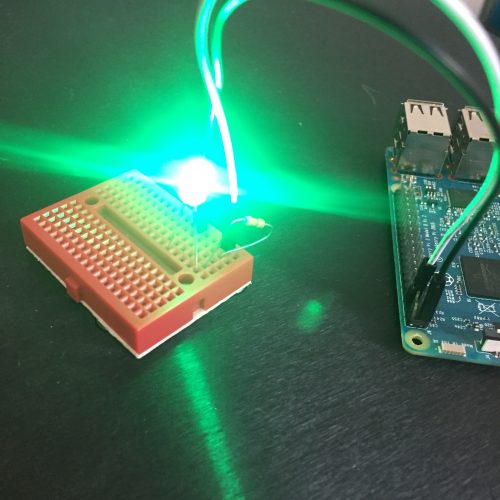
Before you submerge your LEDs in hot glue, check to make sure they work. The easiest way to do this is to set up a testing station using a Pi, a breadboard, some jumper wires, and a resistor. To save having to write code, I used the 3V3 pin and a ground pin.

make your own custom LEDs for Raspberry Pi

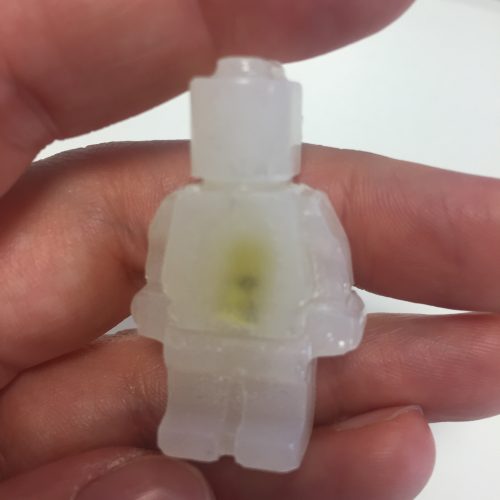
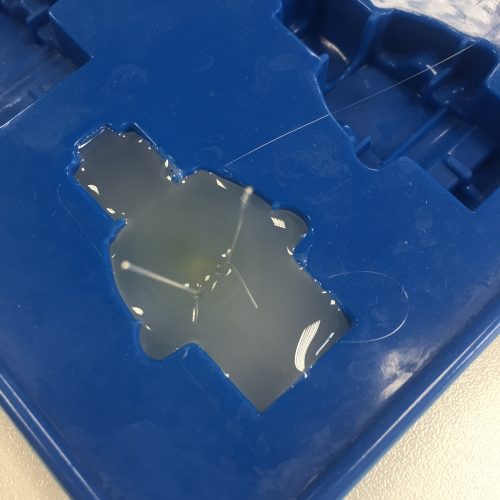
Remember, the shorter of the two legs connects to the ground pin, while the longer goes to 3V3. If you mix this up, you may end up with a fried LED like this poor LEGO man.

make your own custom LEDs for Raspberry Pi

Everything isn’t awesome.

Once you’ve confirmed that your LED works, bend its legs to make it easier to insert it into the glue.

Glue

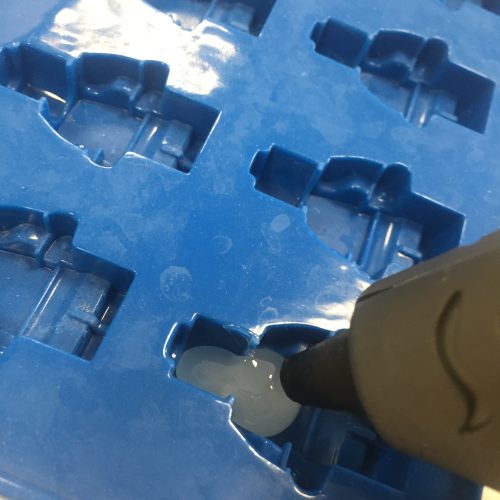
Next, grab a hot glue gun and fill a mould. The glue will take a while to cool, so you have some time to make sure that all nooks and crannies are filled before you insert an LED.

make your own custom LEDs for Raspberry Pi

Tip: test a corner of your mould with the tip of your glue gun to check how heat-resistant it is. One of my moulds didn’t enjoy heat and began to bubble.

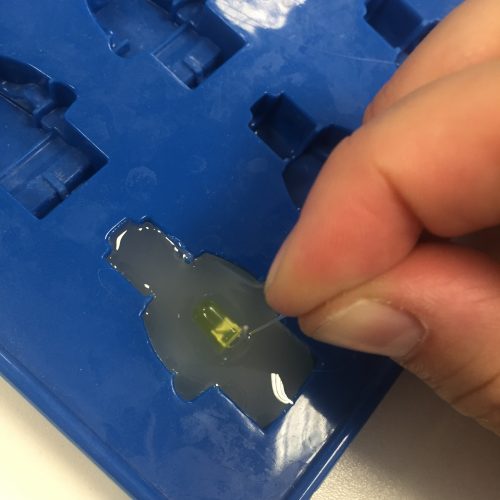
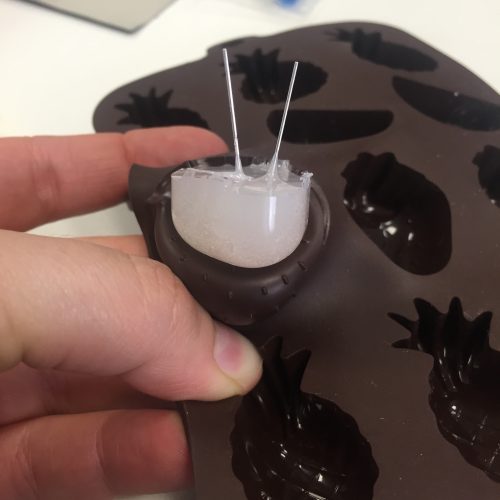
Once your mould is properly filled, push an LED into the glue, holding on to the legs to keep your fingertips safe. Have a wiggle around to find the bottom and sides of your mould and ensure that your LED is in the centre.

make your own custom LEDs for Raspberry Pi

Pick a colour best suited to your mould. You could try using multiple LEDs on larger moulds to introduce more colours!

You may notice that the LED tries to sink a little and the legs begin to drop. Keep an eye out and adjust them if you need to. They’ll stop moving once the glue begins to set.

make your own custom LEDs for Raspberry Pi

These took about ten minutes to cool down.

Be patient

Don’t rush. The hot glue will take time to cool down, especially if you’re using a larger mould like the one for this Stormtrooper helmet.

Custom hot glue LED

Here I used a gumdrop LED, which is larger than your standard maker kit LED.

You’ll know that the glue has set when the shape pulls away easily from the mould. It should just pop out when its ready.

make your own custom LEDs for Raspberry Pi

Pop!

Light it up

Test your new custom LED one more time on your testing rig to ensure you haven’t damaged the connections.

make your own custom LEDs for Raspberry Pi

As with all LEDs, they look better in the dark (and terrible when you try to take a photo of them), so try testing them in a dim room or at night. You could also use a box to create a small testing lab if you’re planning to make a lot of these.

Custom hot glue LED Custom hot glue LED Custom hot glue LED

Now it’s your turn

What custom LED would you want to make? How would you use it in your next project? And what other fun hacks have you used to augment tech for your builds?

The post Make your own custom LEDs using hot glue! appeared first on Raspberry Pi.

26 Jun 15:27

Two Keyboards at a Bar

by Rui Carmo

Michael Lopp on the MacBook keyboard fracas, kicking it out of the park.

26 Jun 15:27

Jason Kottke asks “is that normal?”. Comparing ...

by Ton Zijlstra
Jason Kottke asks “is that normal?”. Comparing both satellite images of the river it seems like a seasonal river that falls dry in summer, and finds its way back to the sea in winter. In the meantime the ocean will have deposited a new sand wall where the river meets the sea that needs to be breached after the rains.
26 Jun 15:23

Four steps that enable you to write in flow

by Josh Bernoff

I remember editing people at my last job. I would give them the charge on what to do, and then check back two days later. “How much did you write?” I would ask. “One paragraph,” they’d say. You will never achieve flow that way! Flow is effortless writing. You know how it feels. You sit … Continued

The post Four steps that enable you to write in flow appeared first on without bullshit.

26 Jun 15:23

Installing a fatter tire onto the Brompton

by jnyyz

In about three weeks I’m due to ride Seattle to Portland, just like two years ago. I’m going to do it on a folder again, but this time on the Brompton, rather than the Tikit.

I’ve been a little concerned as I seem to be pretty slow on the Brompton, having difficulty maintaining a 20 kph pace, even on shorter rides. Of course this might been that I’m just not in as good shape as two years ago, but I still have the impression that the Brompton is a bit more sluggish.

This past weekend, I decided to tweak the Brompton in search of a little more speed. Main items on the menu: faster tires and clipless pedals.

I didn’t want to go for the Kojaks as I’ve heard that they are quite flat prone. They are also too skinny for city riding in Toronto; they wouldn’t play well with streetcar tracks or sewer grates.  I decided to move the Greenspeed Scorchers over from the Tikit.

Problem: the Scorchers are a significantly higher volume tire than the stock Marathons.

The front tire went on with no fuss. However the back tire was a different story.

Firstly, I should note that I had already put a titanium rear rack from H&E on the bike, and had to remove two of the stock fender stays in the process. This is what the rear end looked like with the H&E rack, but only one set of fender stays.

IMG_8231

As it turns out, to get the stock fender to clear the bigger tire, I had to remove the remaining fender stay. I also had to remove the mounting plate that I used to anchor the rear of the fender.

IMG_8987

Once I did all that, the stock fender just barely cleared the fender, and it was rideable, with just a bit of rubbing. That fender clearance is really minimal.

IMG_8992

I decided in the interest of reliability that I should try to fit a larger fender: a 16: “Freddy Fender” from Planet Bike. Although the new fender was only minimally wider than stock, the profile of the new fender was more rounded and would fit the Scorcher better…. or so I thought.

However, there was work to do. First item was to modify the brake bridge mount so that the fender could move closer to the brake bridge, just like the stock fender (to the left)

IMG_8997

After a little work with the Dremel.

IMG_8999

It turns out in the end that I had to pay attention to three points to get adequate clearance. Firstly, the front of the fender had to be trimmed shorter so that it would sit above the frame.

IMG_9002

Second, the brake bridge mounting bracket had to be bent to clear the rack mount.

IMG_9003

Finally, the mount at the rear of the fender had to be modified. However I was able to use a stock hole on the new fender (after I removed the mudflap).

IMG_9004

After reading various comments on the web, I was prepared to have trouble with the removal and reinstallation of the rear wheel. However, it was no problem. Just remember to put the dropout clips in the correct orientation, even when you are working on the bike upside down. IMG_9001

Also use a nice wide set of tire levers. My favourites are Pedros, or the slightly harder to find ones from Schwalbe.

With the new fender in place, I think the fatter tire makes the bike look a little more aggressive.

IMG_9015

This is the set up that I rode Sunday night with no issues.

I also installed new clipless pedals, using the MKS EZ superior system so that it would be easy to swap in platform pedals for city riding.

IMG_9009

A couple of weeks ago, I also swapped out the M bars for the Joseph Kousac midrise bars (I’ll write this up separately). I also installed some older Cane Creek barends that unfortunately are no longer made.

IMG_7225

Also some Sped Dial hinge clamps. Highly recommended.

IMG_9011

With the new bars, the stance of the bike is a little more aggressive, with the bars about level with the saddle. This is with the saddle about a finger’s width lower than the highest position for the stock length seat post, which is right height for me.

IMG_9014

Also, last nights ride required lighting, so I picked up the Brompton specific Volt 400 light.

IMG_8996

It was a breeze to install, and it put out a decent amount of light; you might be able to tell from this picture. That’s my headlight beam in the foreground.

DSC02835

For a taillight, I had picked up the Cateye taillight that clips onto the 2017 and later Brompton saddle.

IMG_7223

However, I cannot recommend this light for one reason. Even when I bought it, I noticed that it didn’t seem to click very positively onto the saddle mount. Sure enough, it dropped off during a ride, but I noticed and picked it up. At that point I should have taped it into the mount. However, at some point in the next couple of days, it dropped off again, and so I didn’t have a taillight for Sunday.

I found an alternate solution: the Planet Bike taillight clip has the same mounting bolt spacing as the Brompton rear reflector.

IMG_9016

I thought it would be a problem for the bottom tab on the mount to hit the rear tire.

IMG_9017

However, this turned out not to be an issue. I bent the mount out enough to clear the tire, and it was still easy to mount and dismount the taillight.

IMG_9019

Here you can see that the Planet Bike superflash does not interfere with the fold, at least when you have a rack with EZ wheels.

UPDATE: there is enough flex in the mount on the rack that the plastic tab can get caught in the tire so this is not an ideal solution.

IMG_9020

I’ll be doing a few more tweaks before STP, but the main thing now is to train some more….

26 Jun 15:21

Tesla will charge for ‘premium’ LTE package on cars ordered after July 1

by Rose Behar
Tesla Model 3 on road

Tesla will no longer offer all of its LTE features for free in new cars starting July 1st, according to a report from Electrek. 

As of that date, the electric and self-driving manufacturer will offer two internet packages: the ‘Standard Connectivity package,’ which is free of charge, and ‘Premium Connectivity package,’ which is expected to be $100 per year.

Standard connectivity will deliver Tesla’s basic navigation system and over-the-air safety updates (the rest will need to be done over Wi-Fi). Meanwhile, premium connectivity includes the navigation system plus satellite maps, live traffic visualization, in-car streaming music and media, internet browsing and LTE over-the-air updates.

The news, which Electrek says comes courtesy of a mass email to the Tesla sales team, is not a surprise. The company noted in 2014 that it would only provide free data connectivity and internet radio for four years.

In fact, rather than charge customers who received all LTE features for free with their Model S, Model X or Model 3, Tesla is reportedly only focusing on charging going forward, leaving older customers with a free ride, so to speak.

Further, Model S and Model X vehicles ordered on or after July 1st will receive a free year of premium connectivity, as well Model 3 vehicles with premium interiors.

MobileSyrup has reached out to Tesla for confirmation.

Source: Electrek 

The post Tesla will charge for ‘premium’ LTE package on cars ordered after July 1 appeared first on MobileSyrup.

26 Jun 14:32

Premium AirPods, over-ear headphones and next-gen HomePod coming from Apple in 2019

by Patrick O'Rourke
AirPods

It looks like Apple is set for a pretty busy 2019 when it comes to product releases.

Apple is working on new premium AirPods, according to a report stemming from Bloomberg’s often reliable Mark Gurman.

The new high-end AirPods are expected to debut in 2019, along with a pair of over-ear headphones that won’t be Beats branded. Apple’s new AirPods will reportedly be water resistant, feature noise-cancellation, and are set to feature some sort of seal, or way of fitting them more snugly in your ear to make them more useful during exercise.

It’s also possible that the new AirPods could feature biometric sensors designed to detect the user’s heart rate. The standard AirPods will also be upgraded to include a new version of Apple’s W1 wireless chip, along with hands-free Siri support. The AirPods wireless charging case revealed back in September by Apple will also be included with the next iteration of the company’s earbuds.

The over-ear headphones Apple is working on will reportedly be priced higher than its current Beats offerings. This means the headphones will sit somewhere in the the $400 CAD plus price range, given that Beats’ current high-end offering, the Beats Pro, come in at $439.

Finally, Bloomberg is reporting that the next iteration of Apple’s HomePod is set to arrive in 2019. It’s still unclear what will be featured in the second-generation of the HomePod, though previous rumours indicated that Apple could be planning to release a lower-cost version of its smart home speaker.

Apple’s HomePod finally made its way to Canada at $450 on June 18th.

All of these products are set for a release at some point in 2019, says Bloomberg.

Source: Bloomberg

The post Premium AirPods, over-ear headphones and next-gen HomePod coming from Apple in 2019 appeared first on MobileSyrup.

26 Jun 14:32

Instagram’s estimated worth more than $100 billion USD

by Jonathan Lamont
Instagram app on Android

Instagram has come a long way in the last six years.

Facebook acquired the popular photo-sharing app for $1 billion USD back in 2012. At the time, the app had 50 million users across iOS and Android. Last week the social network hit 1 billion monthly active users and now Bloomberg estimates the service is worth more than $100 billion USD.

Bloomberg Intelligence analyst Jitendra Waral wrote in a report that the extra users would likely help push Instagram’s revenue passed $10 billion over the next 12 months.

Additionally, the social network is gaining users faster than Facebook. Currently the photo-sharing app is on track to pass 2 billion users in the next five years. While Facebook is already passed that point, its growth as slowed in western markets. Furthermore, Instagram’s audience is younger, making it a more appealing target for advertisers.

Bloomberg also estimates Instagram will account for 16 percent of Facebook’s revenue over the next year. This is up from 10.6 percent last year.

Most of Instagram’s revenue for this year will come from feed ads and not from it’s newest platform, IGTV. Instagram launched the new video platform last week. IGTV is the social network’s answer to Snapchat Discover and online video titan YouTube.

IGTV has a unique focus on vertical video — something only Snapchat Discover has really done — and a more personal approach when compared to YouTube. Creators can post up hour long videos on IGTV, with video being the central focus. When users launch the app, video starts playing immediately. Users can swipe through featured videos and search for creators they like.

While there’s no solid revenue model for IGTV yet, the app is still developing. Assuming IGTV gains traction — it likely will since there’s quite a large userbase to draw from — Instagram will implement some form of advertising model. What that looks like isn’t clear yet, however.

Regardless, Instagram will continue to grow as it draws in more and more users.

Source: Bloomberg

The post Instagram’s estimated worth more than $100 billion USD appeared first on MobileSyrup.

26 Jun 14:32

BlackBerry KEYone to be updated to Android Oreo on Rogers as of June 28th

by Brad Bennett
BlackBerry Keyone

The BlackBerry KEYone is getting upgraded to Android 8.0 Oreo at the end of June.

On June 28th the phone on the Rogers network will get a newer version of the Android operating system, as well as Wi-Fi calling.

So far no other Canadian carriers have confirmed that the device will be getting the update on its network, but usually, updates roll out to every carrier at similar times.

The phone launched in February of 2017 with Android 7.1 Nougat, which means it’s been over a year since the device has received a major software upgrade.

The device’s update brings the phone up to more modern standards but it’s still behind. Currently most high-end Android phones are running Android 8.1 Oreo. Android’s next version, Android 9.0 P, is also right around the corner.

KEYone users can look forward to a more streamlined settings menu, a better notifications experience and adaptive icons.

Source: Rogers

The post BlackBerry KEYone to be updated to Android Oreo on Rogers as of June 28th appeared first on MobileSyrup.

26 Jun 14:32

Google has made offline file sharing faster in Files Go

by Brad Bennett

Google’s Files Go app has been updated again and this time users can share files to other nearby phones faster than before.

Google claims that files will transfer four times faster than they did with the previous version of the app.

The company has also added a new tab allowing users to access file sharing even quicker.

To transfer files without an internet connection, Files Go uses 5 GHz Wi-Fi direct technology to give users transfer speeds of up to 490 Mbps.

Users can download the Files Go app on Android here.

Source: Google

The post Google has made offline file sharing faster in Files Go appeared first on MobileSyrup.

26 Jun 14:32

iOS 12 and tvOS 12 public betas are now available

by Patrick O'Rourke

The public version of iOS 12, the next iteration of Apple’s mobile operating system (OS), along with tvOS 12, its set-top box OS, is now available.

In order to download iOS 12’s beta, navigate to Apple’s beta software program page and sign-up. Next, head over to the device’s iOS tab, download the profile and then install it.

While iOS 12 is largely an update focused on stability, it does feature a number of interesting new features, including Memojis (only for iPhone X users,) a new function called Screentime that tracks how much time users spend on their devices, and a more efficient notification organization system.

Other notable features include group FaceTime and more expansive parental controls.

For a complete look at iOS 12, check out MobileSyrup’s recap of the new operating system’s ten most interesting features.

In terms of tvOS 12, the next version of Apple’s set-top box operating system includes Dolby Atmos support, along with other features like stability fixes and autofill passwords.

In order to download tvOS 12, navigate to the Settings app on the 4th-generation Apple TV or Apple TV 4K. Next, head on over to software updates under ‘System’ and ‘Get Public Beta Update.’ When this option has been turned on, the Apple TV will then download the latest version of tvOS’ beta software.

It’s expected that a public beta for macOS Mojave, the latest version of Apple’s desktop operating system, will launch later this week.

Apple has not launched a public beta program for watchOS, the company’s Apple Watch operating system. This means that it’s highly unlikely that watchOS 5 will get a public beta.

As always, download public betas at your own risk. Though the public beta versions of Apple’s various operating systems are historically pretty stable, there’s always an inherent risk when downloading unfinished operating systems.

Neither beta has arrived on my devices yet, though we do have reports of some readers being able to download the beta software.

The post iOS 12 and tvOS 12 public betas are now available appeared first on MobileSyrup.

26 Jun 14:32

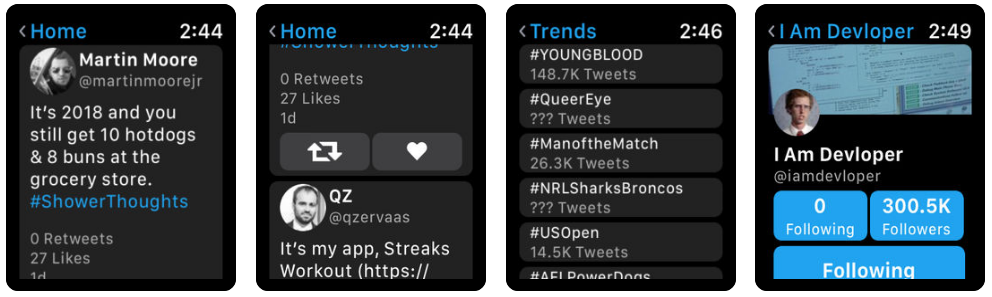
Apple Watch has a new Twitter client called Chirp

by Brad Bennett

A new Twitter app called Chirp offers a way for users to tweet from their wrist.

Twitter pulled its first-party watchOS App from the App Store during the fall of last year and since then reading tweets on a watch has been impossible.

Chirp was created by an Australian developer named Will Bishop. This is Bishop’s second Apple Watch app, with the first being a tiny Reddit client called Nano. 

The Twitter client lets users interact with almost all of the social network. Users can reply to their mentions or DMs, as well as check in on their timeline and what’s trending.

The app starts out with a free version but users will have to pay up to $4.99 USD to use. The pro version lets users read and reply to direct messages as well as, access Twitter lists.

Chirp is really customizable, even letting users choose what interface elements the user wants to see on their wrist. Users can pick whether or not they want to see images, the retweet counter and more.

Users can download the Chirp app on iOS here.

Via: TechCrunch

The post Apple Watch has a new Twitter client called Chirp appeared first on MobileSyrup.

26 Jun 14:32

Legacy pencil maker Staedtler is making styluses for Chromebooks

by Brad Bennett

Staedtler, a popular pencil and school supplies brand, is now making its way into the Chromebook stylus market.

The wood-based stylus comes in four different colours and is packed with a variety of modern features.

The stylus uses ElectroMagnetic Resonance technology and never has to be charged, so it’s always ready to be used. The company also says the stylus has palm rejection so it should be easy-to-use for kids and useful for professionals.

Wacom developed the technology behind the stylus, so it should be fairly high quality.

To start off the stylus will work with the Acer Chromebook Spin 11, Asus Chromebook Flip C213, the HP Chromebook x360 and the Samsung Chromebook plus and Pro.

The company said that this new stylus is built with the education market in mind and goes on sale at the end of the summer.

This isn’t the first version of the Norris stylus. There’s a Samsung Norris stylus that’s very similar to this one but only works with Samsung’s devices and costs $82 CAD on Amazon.ca. 

Source: Staedtler

The post Legacy pencil maker Staedtler is making styluses for Chromebooks appeared first on MobileSyrup.

26 Jun 14:32

WPA3 ushers in a new era of Wi-Fi security

by Rose Behar

The standards body behind Wi-Fi, the Wi-Fi Alliance, is now beginning to certify products using its next-generation of security protocol, WPA3.

Announced in January 2018, the new protocol is the first update since 2004.

WPA3 adds several new features to improve the former protocol, WPA2, which uses encryption to guard against man-in-the-middle attacks, but is vulnerable to hardware-level attacks and password vulnerabilities.

WPA3-Personal, the consumer version of the protocol, promises extra protection against brute force password cracking, including more resilient, password-based authentication even when users choose insecure passwords.

One of the features protects against offline password-guessing, wherein a hacker might capture data from your Wi-Fi connection, bring it to a private computer and brute force a password. WPA3 renders offline data useless, requiring the hacker to be present with the Wi-Fi device when they guess.

There’s also forward secrecy, which makes it so that an attacker who captures an encrypted Wi-Fi transmission and cracks the password can only see current information, not older data.

As for enterprise, the Alliance says WPA3 provides the equivalent of 192-bit cryptographic strength, which refers to the security key length — 192 bits. This cryptographic strength meets requirements for high-level government work.

Additionally, Wi-Fi Alliance is introducing Wi-Fi-certified Easy Connect, a program that makes it simpler to onboard Wi-Fi IoT devices with limited or no display interfaces while maintaining high security standards.

Further, there’s better guest access encryption. Wi-Fi networks like the ones at your local coffee shop or library, which are typically highly unsafe, gain individualized data encryption, meaning that even if the network is not protected by a password, your connection to the network will be encrypted.

WPA3 will maintain interoperability with WPA2 throughout the transition between the generations — meaning WPA2-certified devices and WPA3-certified devices will still work together — but the new protocol will become mandatory as adoption grows.

After a few years, WPA3 will become ubiquitous for new routers and devices — and all consumers will benefit from the new protections.

The post WPA3 ushers in a new era of Wi-Fi security appeared first on MobileSyrup.

26 Jun 14:31

The new, more personalized Google Maps is now widely rolling out on Android

by Rose Behar
Google Maps on Android

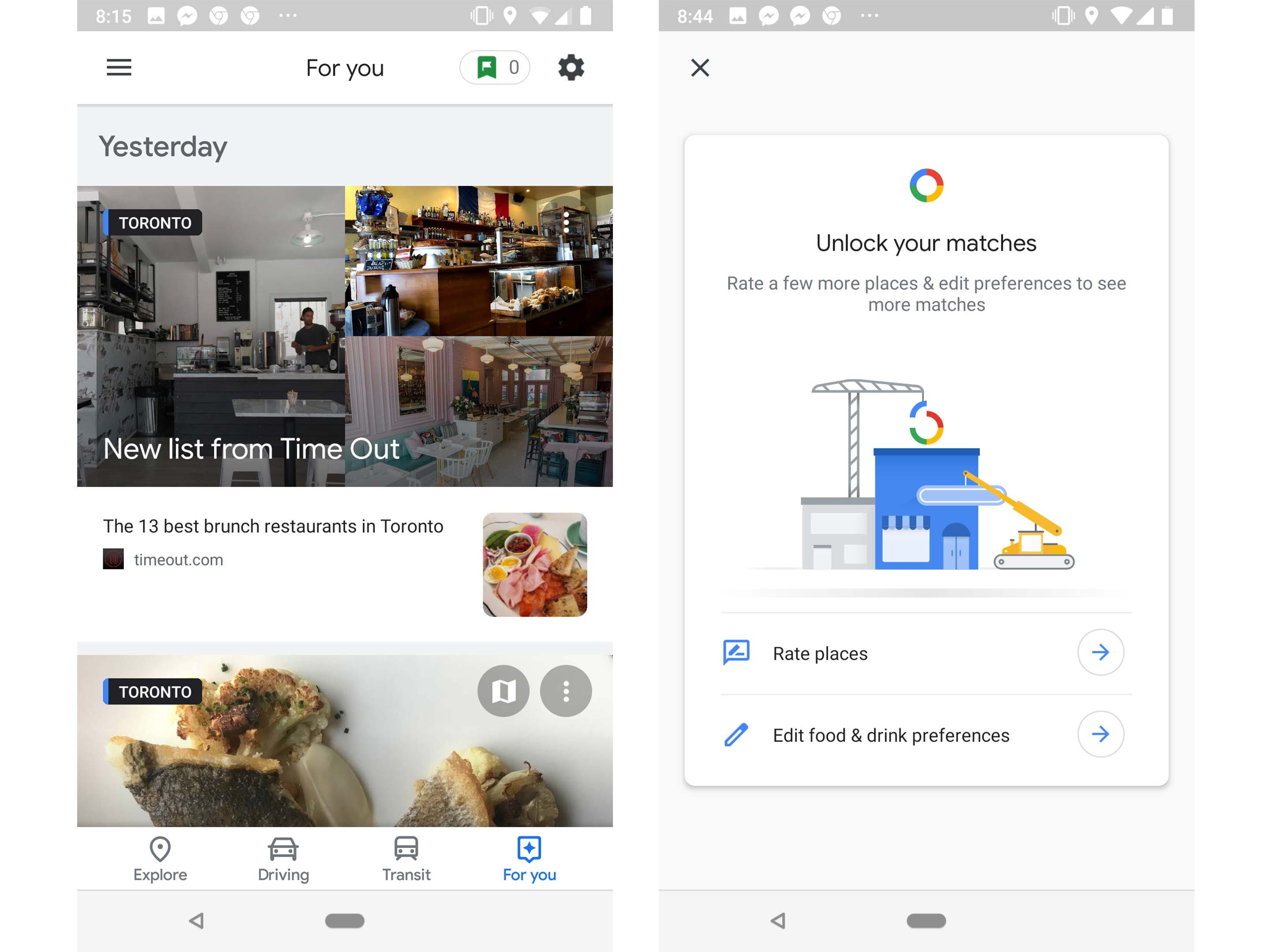
The newly revamped and more user-customized Google Maps is now rolling out more broadly to Android users, after first hitting the user base earlier this month.

As announced at I/O 2018, Google Maps is getting a full revamp with the strong focus being customized suggestions — and it’s more fun than ever for foodies.

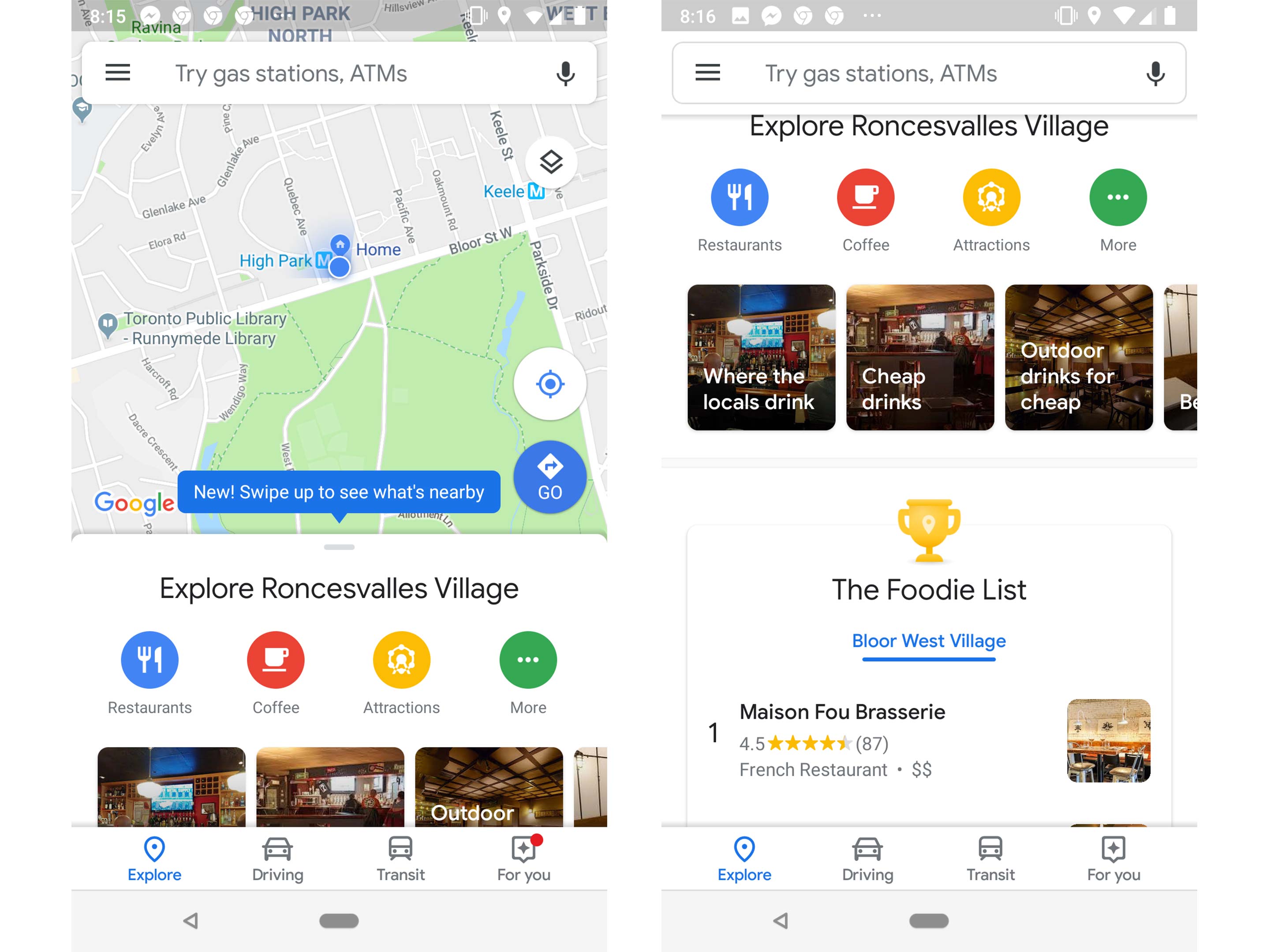
Upon opening the app, you’ll see it launches with the new ‘Explore’ tab popped up on the lower half of the screen (which you can swipe away, should you choose).

The Explore Tab is focused on the neighbourhood at hand, with colourful buttons that users can click for suggestions regarding restaurants, coffee and attractions, plus a ‘More’ button that contains options that range from takeaway to the gym.

Underneath the buttons, if one swipes up on the Explore card, there are some other inviting elements, like a horizontal scrolling bar of suggestions for specific types of outing — like a list of bars ‘Where the locals drink’ or a list of ‘Cheap drinks’ spots (all well-rated on Google, naturally). Below, there’s ‘The Foodie List,’ which has a top list of restaurants for food lovers “based on visits and the latest ratings.”

The list is updated weekly, and allows you the option to follow or share, plus a bar that tracks how many of the locations you’ve gone to, for those who are competitive in nature.

Then there’s the new ‘For You’ tab, which shows a Google News-type feed divided up by day and dedicated to places to go in your city or community. For instance, I received a list of the 13 best brunch restaurants in Toronto from Time Out, and a notification that a new restaurant opened and is getting good reviews.

Each restaurant also has a new ‘Your match’ score, to show how much Google thinks you’d like it based on your preferences and prior ratings —  so you may have to rate some of the places you’ve been before you see your match score (a win for Google).

All of this is not to mention Google Maps’ new use of the Material Theme, which gives it a friendlier, more modern look.

For those who don’t see the new Google Maps yet — make sure you’ve updated to version 9.80.2 in the Play Store.

The post The new, more personalized Google Maps is now widely rolling out on Android appeared first on MobileSyrup.