Shared posts

18 Jul 00:40

Use Case: UrbanLogiq – Making Urban Planning Faster, Cheaper and more Efficient

by aritchie

One of this year’s Vancouver Open Data Day sponsors was UrbanLogiq. This young startup team uses open data to unlock the value of city planning to make urban planning faster, cheaper and more efficient. The CEO and co-founder gave one of the opening presentations at this year’s event, sharing their journey from 2016 to present.

This story is a high level recap of UrbanLogiq’s trajectory, from hackathon participant to full-fledged company.

Every year the Vancouver Open Data Day event is streamed live on Periscope. In 2016 a team of four developers worked on their concept to use open data to map factors relating to property development and land-use planning for government throughout the day and presented at the end of the event. Soon after the event, a viewer from the U.S. who watched the live stream connected with one of the team members, the now CEO and co-founder of UrbanLogiq Mark Masongsong. The viewer believed the team’s idea was a great start, so the team began work to take their concept to the next level. Their experiences and growth over the next two years was staggering.

Starting in 2016, these developers were invited to present at the successful Startup in Residence Program (STIR) in San Francisco. The STIR program was created to build partnerships between government and tech entrepreneurs collaborating on critical challenges. The team was then invited to the White House to present. They were then invited to speak at the World Bank, Harvard and then were interviewed and later accepted into the prestigious 500 Startups an early-stage venture fund and seed accelerator where the company participated in a four-month master class in the many elements of building a viable, strong company. UrbanLogiq also received early stage venture funding from 500 Startups.

“The application developed by UrbanLogiq helped us immensely in our day to day work here at the City of Surrey. It will allow us to replace our very tedious and expensive data collection program by leveraging our existing infrastructure to provide real time traffic volumes without the need for any additional hardware in the field” – Taylor Spraggs, Traffic Engineer

UrbanLogiq recently completed a proof of concept for the Ministry of Transportation and Infrastructure, in partnership with the BC Innovation Council, and presented the results at the #BCTECH Summit. The proof of concept used existing ministry data to demonstrate how UrbanLogiq’s technology could assist in long-term planning, as well as showcasing the potential value of leveraging third-party data sets.
-Shannon Karner, Project Manager, Business Transformation Services

UrbanLogiq has been working with public and private sector clients all over the world and now has a team of ten employees, with an office in Vancouver. The company opened up its first American office in New York City earlier this year.

The B.C. government recently modeled the STIR program in 2017.

The post Use Case: UrbanLogiq – Making Urban Planning Faster, Cheaper and more Efficient first appeared on DataBC Blog.

18 Jul 00:40

How Vancouverites Cope

by Gordon Price

When there’s a three-hour delay on the Lions Gate Bridge.

18 Jul 00:39

Seattle to Portland on a Brompton

by jnyyz

This past weekend, I rode Seattle to Portland, a ride I also did in 2016. Two differences this time, leading up to the ride: the forecast was for beastly hot weather, and I decided to ride on my Brompton.

Here is Steve and I leaving his house at 5:45 am.

IMG_9191

Riding down the Burke Gilman trail towards the start.

IMG_9194

As we approach Husky stadium, we see more and more cyclists with luggage.

IMG_9195

One last picture just before we start.

IMG_9197

Off we go.

IMG_9201

Skirting Lake Washington, it’s still nice and cool.

IMG_9202

At the first rest stop in Kent, Kaiser Permanente were handing out cooling towels. They turned out to be really great on Sunday.

IMG_9205

A sign pointing out the obvious.

IMG_9206

Leading up to the major climb of the day in Puyallup. It was different hill than usual due to a road closure.

IMG_9207

At the top of the hill, I see a group from the Major Taylor project, a program run by the Cascade Bicycle Club to introduce diverse youth to cycling. They were all over the course during the first day.

IMG_9209

Lunch on the first day. It tasted better than it looked.

IMG_9210

Right after lunch, we are in heavy traffic.

IMG_9213

However, once we cross into Joint Base Lewis-McChord, we don’t have to deal with car traffic for 10 blessed kilometres.

IMG_9215

Very peaceful riding, if you ignore the sounds of distant gunfire.

IMG_9216

Coming out of the base, we hit an informal rest stop at Roy.

IMG_9218

I took this same picture the last time: first sign showing the mileage to Centralia.

IMG_9219

The city of Yelm put on a great rest stop where they were giving out free root beer floats and Gatorade. Just past the rest stop, I saw these Major Taylor riders on a Counterpoint Opus tandem that was towing a spare bike for good measure.

IMG_9220

One of the things that makes the first half of STP really pleasant is a 14 mile multiuse trail from Yelm to Tenino.

IMG_9221

After Tennino, there is this stretch along a railroad. It was very hard last time due to a strong headwind, but this year, no problem.

IMG_9222

Just a little further along, we come upon this unfortunate scene. Several cyclists called 911. No one was hurt, but the car was still in flames as we left.

IMG_9223

Arriving at Centralia College, the overnight stop for two day riders. The mist station was appreciated.

IMG_9224

Fueling up for the next day.

IMG_9225

This year we elected to stay in an Air BNB in town. It was a very scenic spot on top of Seminary Hill, which unfortunately entailed an additional climb of about 100m. The apartment itself was cute with many quirky details. Being a cyclist, I liked this toilet paper holder.

IMG_9226

Getting ready to descend Seminary Hill at first light. The only things up at this hour were some roosters jumping the gun by crowing, and many bats having their last flight of the night.

IMG_9227

Riding out of town during the golden hour.

IMG_9231

This kid in the Weehoo trailer was playing tag with us all day.

IMG_9233

Rolling hills between Napavine and Vader.

IMG_9234

This time we had to stop at the world’s largest egg in Winlock

IMG_9235

which was accompanied by one of the longer potty lineups for the day.

IMG_9237

At Vader, I heard a kid say “this is the stop with the potatoes!” so I had to try some.

IMG_9239

The short, steep climb out of Vader.

IMG_9241

This is probably the slowest anyone has gone wearing an HPVDT jersey.

IMG_9244

Medical riders wearing red jerseys were happy to supply pain meds on the road.

IMG_9246

Lunch the second day.

IMG_9247

It was getting pretty hot, so I decided to deploy the cooling towel.

IMG_9248

This fellow had one of the more interesting bikes I saw all weekend, a Rawland Sogn. It had high volume 26″ tires from Compass, and a very nicely fitted Honjo fenders.

IMG_9249

Approaching the Lewis and Clark bridge.

IMG_9251

Our timing was perfect. If you look closely, you’ll see that a group of bikes is just starting a crossing as we arrive, and we managed to get in on the tail end.

IMG_9252

Steve passing slower cyclists during the climb.

IMG_9255

Crossing the mighty Columbia.

IMG_9256

48 miles to go.

IMG_9258

A very welcome mist station at St. Helens. This was during the hottest part of the ride, with the sun beating down, and no shade. We passed a gas station whose sign flashed 101°F, but I didn’t want to stop to take a picture. This would have involved waiting for the sign to cycle through about four ads.

IMG_9259

Entering Portland! (still about 20 km to go, though).

IMG_9261

Some additional verbiage on the sign.

IMG_9262

One last climb up to the bridge access.

IMG_9264

Crossing the St, John’s bridge. There was some hesitation among riders to take the lane. Some wanted to take the sidewalk. There should have been a volunteer here.

IMG_9266

IMG_9267

At this point we were running a bit late and were rushing to beat the deadline for bike drop-off and the buses back to Seattle.

IMG_9270

The bus ride back was smooth and uneventful. However, they did not allow me to load the Brompton as luggage, and it had to come back with the regular bikes, which was a bummer.

We picked up our bikes on Monday morning.

IMG_9284

IMG_9285

Thanks to Cascade Bike Club and the army of volunteers for running a very smooth event. Thanks to buddy Steve who provided riding company and inspiration the whole weekend.

Just a few additional notes (more for my own use)

  • My Bikes and Beer jersey from Henderson’s Brewing got lots of comments.
  • The Brompton did fine. Many people commented whenever I did the quick fold as a built in kickstand. I also got a few comments when I passed people on one downhill at about 50 kph.
  • All the mods to the bike worked well aside from:
  • The only quibble was that I shouldn’t have switched to a new saddle a few weeks before the ride. I’m going to put my Selle Anatomica on this bike for the future.
  • We were slower than last time, but that was probably partially due to the punishing heat, and the fact that neither of us had trained as hard. We spent more than 12 hours on the road each day, and this event is really not geared to riders that are that slow. We barely made the 7 pm cutoff on Sunday, arriving around 6:30, and were not able to grab any food before boarding the buses.
  • One of these days I’m going to take the opportunity to spend a little time in Portland.


18 Jul 00:39

Buses for BC

by Stephen Rees

You may have seen some back and forth on twitter today. It started off with a tweet from iPolitics

Former federal budget watchdog Kevin Page will deliver a blunt message to premiers this week about the costs of a future national pharmacare program: if Canadians want one, taxes will have to go up.

To which I responded that it wasn’t actually necessary to raise taxes. All we have to do is stop subsidizing fossil fuels (something Canada does excessively and compulsively) and bailing out Kinder Morgan – which is also quite a needless waste of billions.

Then I got into a similar grouch with Bowinn Ma (who is actually one of the better ministers in the current BC government in my opinion) over the Auditor General’s scathing report on how we are doing in our attempts to reduce greenhouse gas emissions. Once again, BC need not build Site C, nor do we need to subsidize LNG. The present plan to open up a new plant in Kitimat being no more economically viable than the earlier ones despite a slight firming in LNG prices.  The release of methane from fracking alone is reason enough to call a halt, but the lack of revenue and the paucity of employment in the new plant also make the whole idea look very odd for a province that is looking to cut its carbon footprint. If we were pursuing renewables and a distributed system – not trying to create a bigger grid and a dodgy megaproject, we could be enjoying the sort of benefits that California, Germany and even the UK are experiencing.

But the story that made me think I did need to start writing was a tweet I seem not have kept which cited Rob Shaw in The Sun about the demise of Greyhound here and what it means for BC. “Hold on to your wallets” was that message – I did a trawl of the hashtag and although I didn’t find the one I wanted there are plenty like it.

In fact Shaw is not opposed exactly

Likely, some sort of cash will need to be offered for remote routes where passengers are sparse but transportation is a vital matter of public safety. And why not? The province already subsidizes B.C. Transit in urban areas, TransLink in Metro Vancouver, B.C. Ferries on the coast and inland ferries elsewhere. Certainly, a case could be made to financially backstop rural bus service, too.

But of course he cannot resist slagging of the civil servants

Expanding government control of buses will easily cost tens of millions of dollars and further pressure the provincial budget. The drivers and workers will want to be unionized. A new fleet will need to be purchased. And don’t expect the provincial government to be as nimble, quick or innovative as the private sector. If you thought Greyhound was intransigent, wait till rural B.C. has to deal directly with the provincial bureaucracy for its bus schedule.

But actually we don’t do so badly with urban services: despite the lies that people like Jordan Bateman repeat, both BC Transit and Translink are doing quite well by North American standards. And there is no reason at all to think that the private sector would do any better. Just look at these letters to the Guardian about the mess the UK has fallen into with the privatization of its rural buses. Interesting how that popped up on the same day. I particularly like this quote

Between 1972, when cheap bus fares were introduced in Sheffield, and extended to the whole of South Yorkshire from 1974, and 1986 when our buses were privatised, we had an excellent and very well used bus service. Pauline Gaunt’s claim that bus use was declining before deregulation and privatisation is a travesty as far as this part of the UK is concerned.

Yes, the buses were subsidised, but all the fare money went into providing frequent, reliable and affordable services, not into the pockets of private companies, and our electors voted year after year to pay the extra rates for a service they valued.

It seems to me that people are not actually opposed to taxes. But they do question how comes there are always funds for idiotic things we definitely don’t need but never enough for essentials. It bugs the heck out of me that also today MoTI put out a request for bids to build “and finance” the replacement Patullo Bridge. Did we learn nothing from the last bridge financing fiasco?

And then at the end of the day comes a new piece from The Narwhal.

Mining companies are extracting billions of dollars worth of gold from Canada every year but are paying only a tiny fraction in taxes and royalties compared to operations in other countries,

I mean, yes I knew we were on the hook for the mine clean ups. What I did not realize is the entire country seems to be throwing away our irreplaceable resources for a pittance.

Screen Shot 2018-07-16 at 5.14.47 PM

I mean even Burkina Faso seems to strike a better bargain than we do.

So I am not going to listen to “budget watch dogs” who think that we ought to pay more in taxes for essential services like medical treatments or rural public transportation. It’s the corporations that should be paying. Just like the Norwegians get far more for their oil and gas than we do – and invest it better too. We need to be looking much harder at how resources are being extracted and how much of that flows back to the people. Not off shore to some tax haven for the benefit of 0.01% of them.

18 Jul 00:38

Upward cycles

by Richard Millington

The community sends remarkable stories and case studies to the PR team. The PR team promotes the stories which drives more people back to the community. This generates more remarkable stories to share with the PR team.

The community sends leads to the sales team. The sales team send prospects/new customers to the community. This creates a bigger community which generates more leads to the sales team.

The community sends innovative ideas to product engineers. Engineers start soliciting the opinions of community members more frequently. This drives better engagement in the community and more innovative ideas to engineers.

The community begins reducing the workload on customer support agents, who begin driving more people to the community, which further reduces the workload of customer support agents.

The top 5 questions each week are sent to the content marketing team. They create content based upon these questions with links back to the community for more discussions. This leads to more questions for the content marketing team to answer.

There are plenty of upward cycles you can start today.

18 Jul 00:37

Mapping the IndieWeb a Webmention at a Time

by Ton Zijlstra

When I link to another blog or site that has enabled webmention, my server log should record that it received a 20* response when trying to reach a webmention end point.

Assuming this is indeed in my server log, then it should be possible to have a script that pulls the successful webmentions from the server log. From that a growing list of IndieWeb sites can grow. Especially if you’d share that list, and others do too, so you can compare and detect new additions to the list. An incremental way of mapping the IndieWeb. Might even become a new, indie Technorati of sorts. At the very least it’s a discovery vehicle to find others interested in the distributed web and outside the silos and media sites.

Or does something like that already exist?

18 Jul 00:37

"Happiness is not something that just happens… [it] is a condition that must be prepared for,..."

“Happiness is not something that just happens… [it] is a condition that must be prepared for,...
18 Jul 00:37

Stuff that works :: Scarpa #4

by Volker Weber

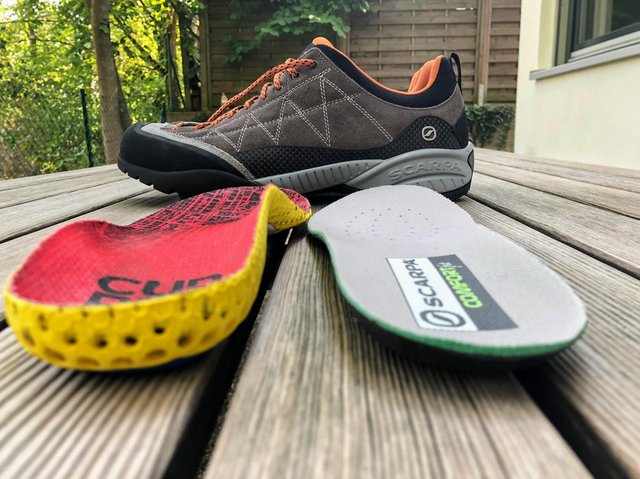
IMG 3922

Es gibt kaum etwas, wo ich so anspruchsvoll bin wie bei Schuhen. Ich habe schon einiges probiert. Bei den Laufschuhen passt mir noch am ehesten Nike, unbekannter, aber für meine breiten Füße noch passender sind Brooks Transcend 5. Aber alle diese Schuhe verschleiße ich viel zu schnell. Die halten vielleicht 2000 km.

IMG 3918

Frau Brandlinger verlangt nach mehr. Deshalb nehme ich heute das vierte Paar Scarpa Zen Pro in Betrieb. Auf den ersten Blick sehen die blauen Scarpas zwar noch ganz passabel wenn auch etwas schmutzig aus, aber das Innenfutter ist hin, der Abschluss am Knöchel löst sich langsam auf, und die Sohle ist nach 5000 km ziemlich runter:

IMG 3919

Was übrigens als erstes kaputt geht bei allen meinen Schuhen ist die Innensohle. Und die ersetze ich durch eine mit besserem Profil. Bei diesem Paar Scarpa Zen Pro tausche ich sogar die ganz neue Innensohle, weil ich eine bessere habe.

IMG 3920

Statt der mitglieferten Scarpa Innensohle trage ich currexSole Runpro. Auf die hoffentlich nächsten 5000 km.

18 Jul 00:37

amospoe: “The bedfellows politics made are never strange. It...


amospoe:

“The bedfellows politics made are never strange. It only seems that way to those who have not watched the courtship.”

– Marcel Achard

18 Jul 00:37

oldschoolsciencefiction: Sarah Connor, November 10,...


oldschoolsciencefiction:

Sarah Connor, November 10, 1984.


There’s a storm coming.

18 Jul 00:36

The Most Bizarre Part of Trump’s Disastrous Press Conference Was His Deference to Putin | Isaac Chotiner

The Most Bizarre Part of Trump’s Disastrous Press Conference Was His Deference to Putin | Isaac...
18 Jul 00:36

Twitter Favorites: [skeskali] My timeline: DON'T BUY ANYTHING FROM AMAZON BUY THIS ONE SMALL THING FROM AMAZON

Cecily Walker 🏳️‍🌈 @skeskali
My timeline: DON'T BUY ANYTHING FROM AMAZON BUY THIS ONE SMALL THING FROM AMAZON
18 Jul 00:36

Twitter Favorites: [skinnylatte] If you want to help, give money and join a board.

Adrianna Tan @skinnylatte
If you want to help, give money and join a board.
18 Jul 00:35

Cookie Acceptance Notices

by Tony Hirst

We’ve all seen them – repeatedly – those cookie acceptance notices that we’re encourage to just click “I Accept” on.

The above is taken from a fresh landing on the Evening Standard website, but it could have been a website anywhere…

But what if you don’t just click “I accept”? What if you follow the link for “More information”, just as you’d click thru on a “cute kitten picture” link?

You get to see some description of what data is collected, and how it is used, sometimes with the defaults set to “disallow”, or more likely, with the defaults all set to “On”. And notice how there’s no option to easily turn them all off with a single click – though you can make sure they are are enabled with just one click.

Here’s the rest of what you’re agreeing to in this case:

One of the handy things about GDPR is that you can also request information about who your data may be passed on to. To reduce the cost of responding to such requests, there may be a link to the vendors who may be supplied with data collected on the site. Here’s the first part of the list from the Evening Standard site:

And the second part:

And the third part:

And the fourth part:

And the fifth part:

Even with settings disabled, you may find third party providers (advertisers, third party stats/analytics trackers) loading code into your browser and updating cookies. Here’s a list of such parties taken from the Evening Standard cookie policy webpage:

evening-standard - cookie accept9

One way to stop this is to take control via your browser settings and directly prevent third party cookies from being set on any webpage:

If you disable cookies, however, a question arises as to how a website can remember that… If it really doesn’t know who you are, you would expect to be presented with the cookie acceptance notice each time you visit  the site, though perhaps not each page you visit during a particular session (the webpage may well track sessions through identifiers baked into the web page request headers and only prompt the display of the cookie acceptance banner at the start of each session).

18 Jul 00:35

Millions of internet-connected TVs track viewing habits

by Nathan Yau

Sapna Maheshwari for The New York Times on Samba TV software running on smart televisions:

Once enabled, Samba TV can track nearly everything that appears on the TV on a second-by-second basis, essentially reading pixels to identify network shows and ads, as well as programs on HBO and even video games played on the TV. Samba TV has even offered advertisers the ability to base their targeting on whether people watch conservative or liberal media outlets and which party’s presidential debate they watched.

I feel like this is something most people don’t want.

Tags: privacy, television

17 Jul 20:58

Chrome and Firefox are now compatible with Microsoft’s Windows 10 Timeline feature

by Brad Bennett

A third-party developer has created an extension for Google Chrome and the Firefox that allows the browser’s history to sync with Windows’ Timeline.

Microsoft released a feature called Timeline in April that lets the user see what they’ve been doing lately on their PC. This feature displays a recap of recently visited web pages and apps.

When a user clicks the Timeline button beside the search bar, everything they’ve done on the computer within the last 30 days is displayed.  This is helpful for remembering things like, “what was I looking at online on Monday?” or, “did we use green or blue for our PowerPoint?”

To get a better visual for how Timeline works check out the video below.

The extension is free and adds Chrome or Firefox’s browser history to the Timeline, and according to The Verge it works exactly like you’d expect. Timeline syncs the user’s web history into Windows so they are able to re-open their web pages from any Windows device they might be signed into.

Timeline isn’t that different than using Chrome’s tab sync feature, but if you’re a heavy Windows user it might be a bit easier to just use Timeline since it incorporates with the rest of the Windows platform really well.

To download the extension for Chrome click here and for Firefox click here.

Source: The Verge

The post Chrome and Firefox are now compatible with Microsoft’s Windows 10 Timeline feature appeared first on MobileSyrup.

17 Jul 20:58

Samsung Galaxy Tab S4 specs leak in full

by Igor Bonifacic
Samsung's upcoming Galaxy Tab S4

Near complete specs for Samsung’s upcoming Galaxy Tab S4 tablet have leaked, courtesy of SamMobile.

According to the website, the Tab S4 will feature a 10.5-inch Super AMOLED display with 2560 x 1600 pixel resolution and 16:10 aspect ratio.

Internally, SamMobile says the Tab S4 features a Snapdragon 835 chipset, 4GB of RAM, 64GB of internal storage and 7,300mAh battery. On the connectivity front, the tablet includes a USB-C port, Bluetooth 5.0, GPS and Wi-Fi 802.11 ac. Additionally, the tablet will ship with Android 8.1 out of the box and support for Samsung’s DeX productivity platform, which will allow the Tab S4 to function like a desktop PC with the help of a separately sold dock.

What the Tab S4 doesn’t include is a fingerprint sensor. Instead, it authenticates the user using an iris scanner.

The Tab S4 will also include a S Pen stylus. However, SamMobile says it’s unsure whether the S4’s S Pen stylus will feature Bluetooth connectivity like the S Pen on the upcoming Note 9. Lastly, the website says Samsung will ship the tablet in two colours: black and gray.

Samsung is expected to unveil the Galaxy Tab S4 either at its upcoming Note 9 Unpacked event in New York City on August 9th or, more likely, at its IFA Berlin Keynote in late August.

In either case, expect to learn more about the S4 in the coming weeks.

Source: SamMobile

The post Samsung Galaxy Tab S4 specs leak in full appeared first on MobileSyrup.

17 Jul 16:59

A place for antiheroic technology

by AG

As I seem to have acquired, in some quarters anyway, a reputation as an uncompromising and intractable Luddite where matters of networked technology in everyday domestic life are concerned, I thought I’d share with you today some minor evidence that I’m not unalterably opposed to each and every such appearance. I give you…the Ember.

This is precisely the kind of networked device I might have written off as a near-meaningless frippery a few years ago. It’s a nicely-designed ceramic mug with a rechargeable heating element built into its base, allowing you to set the temperature at which you prefer to drink your coffee or tea.

All it is, really, is a thermostat — but a thermostat in a surprising, and surprisingly welcome, place. There isn’t any computation to speak of going on. The networked aspect is nicely circumspect, and it’s mainly there to let a smartphone app serve as the user interface, keeping the mug itself appropriately stripped down. You pair it with a phone once, on first setup, and that’s it. Everything else is done through the app, and you don’t even need to interact with that too much once you’ve got your preferences dialed in.

I should say that Ember is not perfect, either as a product or as a piece of interaction design. The embedded, multicolor LED fails to communicate much of anything useful, despite its multiple, annoyingly blinky and colorful states; all I really need to know from it is when the mug needs to be recharged. That need arises far too often, at least when it’s set to maintain the temperatures at which I prefer to drink coffee. And inevitably, I have concerns about the nonexistence of any meaningful security measures, a nonexistence that in fairness is endemic to all consumer IoT devices, but remains inexcusable for any of them.

But Ember gets some things right, and when it does, they tend to be very right. By far the most important of these is that it works as a mug, prior to the question of any networked or interactive functionality. The vessel has a good heft to it, and when you set it down on a solid surface, the feeling of a damped but substantial mass that’s transmitted through the rubberized rings at its base is just very, very satisfying. The ceramic surface has a pleasingly velvety texture — so much so, in fact, that you can’t help but wonder if it’s one of those miracle materials that will turn out to have been threshold-carcinogenic twenty or thirty years down the line. It’s gratifyingly easy to clean.

And as far as that additional functionality is concerned, the mug does what it says it will, does it well…and it’s a hoot. It turns out that there’s a real Weiserian frisson to be had from something that violates all the subtle, subconscious expectations you’ve built up over a lifetime of drinking hot beverages from ceramic mugs. The confoundment of assumptions is so deep, indeed, that it takes you awhile to catch up with the new reality — to realize that you can go answer the doorbell or otherwise be distracted for five or ten minutes, and still come back to a piping hot beverage. In fact, Ember stands the principle of evaporative cooling on its head: because the heating element is still set to maintain a larger volume of liquid at a given temperature, but most of that volume will have been drunk away by the time you get to them, your last few swallows are noticeably, delightfully hotter than any you’ve had since first filling the mug.

To be clear, the Ember mug is not something anyone needs, especially at this price point. But I admire its clarity of purpose, in leveraging a modest deployment of technology to furnish its user with a small but nevertheless genuine everyday pleasure. And without wanting to be pompous about matters, I happen to believe there’s a crucial role for small but genuine pleasures in difficult times like the ones we happen to be living through. You may find yourself surprised by the degree to which a sip of hot coffee lands when you sip it forty or forty-five minutes after brewing — at least, I surely was, and am — and how psychoemotionally sustaining it can be when it does. Most of that is probably the coffee itself, doing what it is that coffee does, but better by far a networked product that is modest and humble in its aims, and succeeds in meeting them, than one which promises everything and does none of it particularly well.

16 Jul 23:11

Code is better when written with collaboration in mind

by Eugene Wallingford

In Collaboration considered helpful, Ken Perlin writes:

In the last few days I have needed to make the transition from writing a piece of software all on my own to bringing in a collaborator. Which means I've needed to go into my code and change a lot of things, in order to make everything easier to understand and communicate.

There was a part of me that felt grumpy about this. After all, I already knew exactly where everything was before this other person ever came on board.

But then I looked at the changes I had made, and realized that the entire system was now much cleaner, more robust, and far easier to maintain. Clearly there is something intrinsically better about code that is designed for collaboration.

Knowing that our code must communicate with other people causes us to write better code.

The above is an usually large quotation from another post for me. Even so, Perlin makes a bigger point than this, so read the entire post.

By the way, Perlin's blog has probably been the happiest addition I've made to my blog reader over the past year. He writes short, thoughtful posts everyday, on topics that include programming, teaching, academic life, and virtual reality. I enjoy almost all of them and always look forward to the next one.

16 Jul 23:01

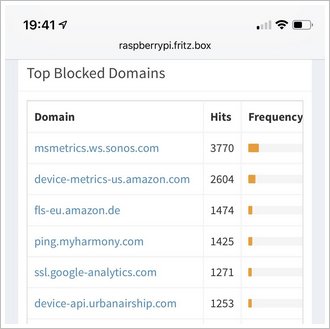
Can I have some respect, Sonos?

by Volker Weber

IMG 3917 IMG 3916

Sonos, if I ask you to not collect information, I expect you to not collect information. Understood?

16 Jul 22:26

Apple HomePod vs Sonos Beam :: Ein unfairer Vergleich

by Volker Weber

IMG 3908

Max hat heute seinen Sonos Beam geliefert bekommen, und ich konnte es nicht erwarten, den auch mal zu hören. Ich hatte den Beam blind empfohlen, weil er aktuell die meisten Fähigkeiten aller Sonos Lautsprecher hat: Airplay 2, Alexa, HDMI ARC, HDMI CEC, Ethernet, WLAN und natürlich alle Musikdienste. Die Alternative waren 2x Sonos ONE, aber dort könnte man keinen Fernseher anschließen, wenn er das mal will. Da Max ein Apple-Nutzer ist, iPhone, iPad Pro, MacBook Pro, Apple TV, kam natürlich auch ein HomePod in Frage.

Um es kurz zu machen: der Beam bläst den HomePod schlicht an die Wand. Das hatte ich nicht erwartet, sonst hätte ich mir den Vergleich erspart. Transparenz, Lautstärke, Soundstage, alles kann der Beam besser. Die Musik verteilt sich gleichmäßig im Raum. Wie auch bei der Playbar und der Playbase klingt der Beam viel breiter als er ist.

IMG 3910

Nicht direkt erkennbar: die Oberfläche ist leicht konkav, ich vermute, damit man die LEDs beim Fernsehen nicht sieht.

16 Jul 22:24

Oversimplified: Rolling Resistance

by brandon

Rolling resistance ostensibly has a short yet boring definition, and doesn't relate exclusively to cycling... 

"The force that resists the motion of a body rolling on a surface."

Ok, we got that out of the way, but how is knowledge of rolling resistance going to help you as someone who is definitely not boring and hopefully also a cyclist? By making your daily ride much more enjoyable and efficient! 

Science or Art:

There is a bunch of science involved but at its core you'll find that dialing in your ideal tire pressure is truly an art. Think of it as an arty science, or rather a sciency art. 

Our goal as cyclists is to minimize rolling resistance while ideally maximizing comfort. This is unfortunately a task easier said than done, as it's directly related to the PSI (pounds per square inch) of air in your tires, and dependent on a multitude of factors relating to the specific bike and its rider. We're talking riding style, bike geometry, tire size, body mass, etc. 

Tire Pressure 101:

Every tire generally lists its minimum and maximum pressure printed right on the sidewall. At the very least, they will list the suggested max. This is a great baseline to pump your tires up to, and usually what we recommend to begin with. Fine tuning within the suggested range is totally up to your preferences and something we urge you to experiment with.

Please, please, (please,) get a floor pump with a pressure gauge if you don’t already have one. You and your bike will be very grateful later on. Once you scrutinizingly decide on your ideal pressure, you can make note of that and use the floor pump to keep your tires inflated at this level regularly. It's a tool no cyclist should be without.

As a general rule, narrower tires need higher pressures than wider ones and heavier riders need higher pressures than lighter ones. Again this is a general rule, but one with merit to it. Narrower tires need higher pressures due to the fact that they have less surface area to distribute your weight across. 

Trending Towards Wide:

For generations the assumption of top tier road cyclists was that a narrower tire (21-23mm) would yeild a faster ride. "It's aerodynamic," they said.  "Pump them up rock hard," they said. Well, over the past several years, this attitude has changed among the majority of cyclists as it's been proven that a slightly wider tire (25-28mm) does actually roll faster than a narrow tire at the same pressure. 

This is due to the wider tire creating a smaller "contact patch" with the road (see illustration above.) Although the tire is indeed wider, it creates much less overall contact with the road. This means less rolling resistance, which leads to a faster rolling tire for the rider. In addition, you realistically don't lose anything to aerodynamics, and the added weight is something you should only be concerned with if you're a world class sprinter or climber.

Bearing this in mind while designing our latest generation of bike, we opened up the clearence on the fork to allow for tires up to 32mm in width. So although the integrated lighting definitely steals the show, the option of running tires wider than our previous max (25mm) is a secondary addition that our customers have been absolutely loving. 

Rolling Resistance:

Harder tire = faster revolutions (in an ideally smooth or lab setting)

But how does that hold up in a real life scenario? Recent studies have shown that in real life, roads can be quite bumpy. Bumpy roads lead to vibrations that will undoubtedly shake your bones, causing fatigue, and ultimately slow you down while riding. 

This means that running your tire at a slightly lower pressure than the recommended max actually absorbs the vibration of said bumpy roads much better and will potentially roll with less resistance albiet a larger contact patch. 

Getting a Grip:

Lower pressure (within reason) = More compression under weight

So what does this mean for you? More compression under weight means your tire will be putting more rubber on the road, which in turn leads to better grip. I know what you're thinking. "But won't this increase my contact patch and slow me down?" Yes, it will unfortunately increase the size of your contact patch, but you'll also be gaining something potentially more valuable than speed as a commuter – comfort. This is something for you to not only ponder on, but to experiment with and consider when finding the ideal tire pressure for your current setup.

Be Careful:

Running a lower pressure absolutely has its limits.

So opening up your valve wide open and dropping pressure sounds like it's gonna be awesome right? Not so much.

What can happen if you run your tire pressure too low?

  • It WILL slow you down - This will be fairly noticeable and an indicator that you need more air. No big issue here, just get to your nearest pump and top those tires up to the level you prefer.

  • Your bike will become unstable when cornering - This will be even more noticeable and a little scary. When we say "unstable," we mean your tire will want to slide out from under you. It could possibly even peel off the rim entirely, which is super-dangerous at speed. Let's avoid this one!

  • Your tires will become very susceptible to pinch flats - This will be extremely noticeable and a real bummer if/when it happens. A pinch flat occurs when your wheel hits an object with a sharp edge (curb, pothole, rock, etc.) while running at an unfavorably low pressure. This causes the tube to get pinched between the object and your rim, often leaving the tube punctured, your tire flat, and your rim bent. You'll need a patch kit or a new tube if this occurs, and a new rim in the worst case scenario.


So what’s the “best” pressure to run your tires at?

This is a question not easily answered. It’s different for everyone and factors in what tires your bike is running, your body weight, and the type of ride you are looking to get out of your setup. 

Our best advice is to experiment and find what gives you the best combination of comfort and performance for your individual setup! Start by inflating your tires to the max psi, and deflating them by increments of 5-10 psi at a time until you find your ideal pressure.

 ...now go forth and master the sciency art of finding your ideal tire pressure. 

--------------------------------------------------------------------------------------------------

Staff Pick: Continental Gatorskins

*Free upgrade with the purchase of any Mission bike this month*

Throughout the years we've ridden our fair share of tires but there's one we always come back to. The Continental Gatorskin encompases a trifecta of grip, speed, and puncture protection that we deem second to none. These are normally sold as a $50.00 upgrade on our bikes, but we're offering them up for $0.00 when you build and purchase a bike with us during the monthe of July 2018.

Just leave us a note in the comments section of your purchase and we'll be sure to knock them off the price of your custom build. Act fast!

16 Jul 22:23

NewsBlur Blurblog: How We Do Release Notes

sillygwailo shared this story from The Omni Group.

Apple has asked developers to do better with release notes — and so we figured we’d write about our system, in case it’s helpful to other developers.

Collecting the Notes

For major releases, our product managers (PMs) use our bug tracker (OmniBugZapper) to make sure there’s a note for each bug fix, new feature, and behavior change.

During TestFlight, sometimes its easier to use SCM logs (for example: svn log -r <revision of last release notes edit>:HEAD | less) to capture work in progress.

This phase is critical: being able to know exactly what has changed in a given release needs to be easy.

Writing the Notes

We have a build phase that renders Markdown to HTML and also replaces some tokens, so that, for instance:

- new - **Tags** --- Contexts have been replaced with Tags.

…becomes…

HTML version of release note

Our PMs use TextMate and BBEdit, and we’ve done some customization to make editing these easier, as in this screen shot:

Text editor showing popup menu used to make editing release notes easy

Editing the Notes

We have an internal editors mailing list that all the PMs and a few other people are on. Much of our written communication passes through this list — including this blog post! — since we all have an interest in making sure everything we publish matches our standards.

Editors don’t always have feedback. Sometimes it’s just a thumbs-up emoji. But, when they do, it might be a wording suggestion, a question about something not clear, or just pointing out a typo — but the point is that everything ends up better by going through this process.

(Yes, the downside of a process like this could be that everything ends up sounding like it was written by committee. We’ve avoided that, but not by any magic other than just everyone doing a good job.)

We use the Apple style guide and recommend that you do too. Many of us have internalized the common rules, but things come up from time to time where we have to refer to the guide.

Here’s an example of useful guidance from the guide:

future tense Whenever possible, use present, not future, tense. Don’t switch unnecessarily from present to future tense when present tense is sufficient to express a sequence of steps or events.

Publishing the Notes

Release notes are included with each app — for instance, on the Mac, choose Help > Release Notes to see the latest. They’re shown in a web view.

They’re also published on our website. See the OmniGraffle 7.8 release notes for a recent example. Our CMS knows how to turn the Markdown copy into the proper rendered HTML.

The App Store requires plain text, so we convert the rendered HTML to plain text. Links are turned into plain URLs.

We try to localize the App Store release notes for major and feature releases.

We also localize the introduction and poststcript for minor releases, so that customers who don’t read English know that it’s just a minor release, and they can read the info about contacting us for help or leaving a review. (OmniFocus PM Dave Messent uses a shell script that takes the introduction and postscript in each of our ten languages, and makes a sandwich using the plain text version of the meat of the release notes.)

We use fastlane to upload all the metadata for each release to App Store Connect.

Upon release of an app — once it’s been approved by the App Store and, in the case of Mac apps, also uploaded to our website — then there may be a blog post and accompanying social media posts, and these often link to the release notes. Minor releases don’t necessarily get a blog post, but release notes are still published on the website.

16 Jul 22:18

The Worst Public Space in Metro Vancouver?

by Gordon Price


So much competition, but on any short list, the Phibbs Exchange in the District of North Vancouver would be highly ranked.

Isolated, decayed, desolate, intimidating, no services, and no washroom. (It’s here.)

But there’s hope.

Are you a transit rider? Do you commute through Phibbs Exchange? 

Drop by this Open House to learn more about what’s happening with the upgrades out at one of North Vancouver’s most critical transit hubs and let TransLink planners know what you think.

Phibbs Exchange Open House with TransLink
Thursday, July 19th  from 4PM – 6PM
5-221 W Esplanade, North Vancouver, V7M 3J3

The format will be influenced by attendance so advanced registration is preferred. 
(Walk-ins still welcome.)

Photo credit: North Shore News

16 Jul 22:18

The B.C. Suburb Where You Can’t Play on the Street

by Sandy James Planner

Even BBC News picked up the absolutely unbelievable story of this “no fun” suburban neighbourhood.

The community of Chemainus (part of the District Municipality of North Cowichan on Vancouver Island) is famous for their internationally acclaimed mural festival which brings art, tourists and income to a former logging town. You would think that a place that brands themselves as an artistic hotbed would translate this creativity to other local endeavours and activities.

But no — the strata council of “Artisan Gardens”, a housing development not far from parks and a golf course, voted 15-4 in favour of a bylaw which basically prohibits any activity a child would do outside of their front door.

The bylaw prohibits using the roadway “for play, including hockey, baseball, basketball, skateboarding, chalk artistry, bicycling or other sports and recreational activities.”

The actual bylaw reads as follows:

Any use of a roadway for any purpose other than access to and from strata lots and, where permitted, for parking is prohibited. Without limiting the generality of the foregoing, a roadway may not be used for play, including hockey, baseball, basketball, skateboarding, chalk artistry, bicycling or other sports and recreational activities.”

If you think this was a direct affront for the 11 children residing in this suburban development, you’d be right.

And it is not, as the BBC suggests, about “declaring a war on fun”. It’s really about negating the very essence of what children need to do, which is to have at least one hour of active exercise a day, with three hours of intense activity a week.

The reason for the ban on children being children gets to the root of what’s wrong with the 20th century prioritization of motordom. Since the strata has control of the cul-de-sac which backstops Artisan Gardens, they’re making sure cars have priority, and kids…not so much.

Of course this story has been reported on nationally as well as internationally; you can view the video from CTV’s Your Morning below about “No Fun Town”.

16 Jul 22:16

Olle Goes to Mediamatic

by peter@rukavina.net (Peter Rukavina)

My friend Olle doesn’t blog very much, but when he does it is, as a result, doubly special.

Yesterday he wrote about a trip to Amsterdam and, in particular, to Mediamatic, which is a Dutch institution that I’ve followed agog, from afar, for many years.

After this journey into aesthetics, we relocated to a new  had very good pizzas at Mediamatic ETEN. Elderflower lemonade! Someone speaking Danish tended the bar. “Take a look around!” Aquaponics gardening in a greenhouse with colored LEDs. “Oh, all food here’s vegan.”

There are plans afoot for Oliver and I to return to the Netherlands at the end of August, and I hope that we can make Mediamatic one of our destinations.

16 Jul 22:01

Amazon Canada Prime Day 2018 tech deals [Updated]

by Ian Hardy

If you’re a deal hunter, this is the moment you have been waiting for — Amazon Canada’s Prime day has finally arrived.

Below are some of the main highlights from this year’s sale:

Amazon Devices

Wireless deals:

  • Up to 30% off Samsung tablet, wearables, and phone bundles [More here]
  • Save 30% off Unlocked ASUS ZenFone Max Plus [More here]
  • Save up to 37% on Select Anker SoundCore Bluetooth Speakers [Read here]
  • Save 30% on select Tile Bluetooth Trackers [Read here]
  • Save 30% on select Garmin Smartwatches [More here]
  • Save up to 33% on Select Anker Chargers and Charging Accessories [More here]
  • 26% discount on AmazonBasics and Pinzon products [More here]
  • Save 20% on select Fitbit Versa products [More here]

Video Games:

  • Nintendo Switch with Sandisk 64gb MicroSD Card and Nintendo $20 eShop Card for $379.99 [More here]
  • Xbox One S 1TB Starter Bundle w/ Rare Replay for $299.99 [More here]

Home:

Electronics and headphones:

Source: Amazon Canada

The post Amazon Canada Prime Day 2018 tech deals [Updated] appeared first on MobileSyrup.

16 Jul 22:01

Read-it-later service Instapaper is going independent again

by Jonathan Lamont
Instapaper Android app

Popular read-it-later app Instapaper is going independent.

Pinterest acquired the service in 2016 and has agreed to transfer ownership to Instant Paper Inc; the people who have worked on Instapaper for the last five years own and operate Instant Paper. These individuals have also worked on the service since Betaworks acquired it in 2013.

The company said in a press release the the transfer will take place in 21 days. Instapaper will give “users fair notice about the change of control with respect to their personal information.”

Furthermore the company stresses that not much is changing in regard to the app itself. The people who worked on the service since 2013 — and who own it now — will continue to maintain it.

Also in that press release, the company expressed gratitude to Pinterest for supporting the product for the last two years.

Under Pinterest, Instapaper rebuilt its search capabilities, introduced an extension for Firefox and optimized its app for the latest mobile systems.


However it’s important to note that the company’s product isn’t currently available in Europe since the platform doesn’t support the new GDPR regulations. Some of Instapaper’s loyal fans have declared their intent to leave the service due to lack of GDPR support.

Some users also speculated that the lack of compliance was due to Pinterest. Those users hope that by going independent, support for the GPDR will follow. However it’s not clear whether Pinterest has any impact on that decision, or why Instapaper doesn’t currently support GDPR.

Source: Instapaper

The post Read-it-later service Instapaper is going independent again appeared first on MobileSyrup.

16 Jul 16:45

Public Mobile is available at London Drugs locations throughout July

by Jonathan Lamont
Public Mobile website

Public Mobile is expanding its availability to London Drugs retail stores.

Throughout the month of July, customers can purchase and activate Public Mobile SIM cards. As with other retail options, customers can choose to activate online or in-store if they prefer.

Currently, customers can choose from Walmart, K-Mobile or Wow! Mobile for their retail needs.

Additionally, the expansion helps out Public’s western customers. London Drugs is a Canadian retail chain located primarily in British Columbia and Alberta.

Furthermore, Public Mobile is encouraging its community to send feedback on their experience using London Drugs. If you enjoy the convenience of Public Mobile at London Drugs, be sure to share that feedback with Public as it may help determine if the company will continue availability beyond July.

Around this time last year, the company expanded to Walmart and Wow! Mobile locations as well. Continued effort from Public Mobile to increase availability is certainly a good thing for consumers. Being available in multiple convenient locations provides Canadians more choice when it comes to picking a carrier.

Public Mobile is a self-serve prepaid mobile provider owned by Telus.

Source: Public Mobile

The post Public Mobile is available at London Drugs locations throughout July appeared first on MobileSyrup.

16 Jul 16:45

Some Canadian wireless customers are still paying a ‘system access fee’

by Rose Behar
MobileSyrup

While Rogers’, Telus’ and Bell’s $6.95 ‘system access fee’ for wireless customers was scrapped in 2009 for new customers, some customers on old plans are still paying the fee.

CBC News’ Sophia Harris brought the issue to light, with a report that 70-year-old customer Shanmugam Sivalingam is still being charged $6.95 by his provider, Telus.

His son, Harry, discovered the charge and was shocked that the long-outdated practice was still continuing.

Further, he found that switching his father off the plan to an in-market offer would only increase his monthly payment.

The big three Canadian national telecoms were never made to end the charge by Canada’s telecom regulator, instead leaving the practice behind when new providers eschewed the practice. Additionally, Rogers, Bell and Telus faced a class action lawsuit headed up by Regina lawyer Tony Merchant that was lodged in 2007.

The ongoing lawsuit claims that the system access fee was designed to give the impression of a government levy when, in reality, most of the fee simply went into the companies’ coffers.

After ending the fee, Rogers added a government regulatory recovery fee ranging from $2 to $3 per month, which was eventually dropped in 2012. All three carriers also raised the price of wireless plans by $5 in 2009.

Rogers did not comment on the lawsuit, but confirmed to MobileSyrup that any customer still paying the fee has always had the option to switch to a different plan that does not charge the fee. The customers still paying the fee make up a small group of customers, according to the carrier.

Bell spokesperson Nathan Gibson further told MobileSyrup:

“We wouldn’t comment on any active court cases, though I would note that most of this kind of litigation has been dismissed by the courts or significantly narrowed in scope over the years. Neither Bell nor MTS (relaunched as Bell MTS in March 2017) has charged a SAF on new customer accounts for many years. Any fees associated with a customer’s service are fully outlined in their contract.”

Telus did not respond to MobileSyrup in time for publication, but told CBC that the company made it clear to all customers that they could switch to new plans to avoid the charge.

Source: CBC News

The post Some Canadian wireless customers are still paying a ‘system access fee’ appeared first on MobileSyrup.