Shared posts

24 Jul 00:08

Britain’s Most Picturesque Cycling Routes under 100 Miles

by Average Joe Cyclist

Britains most picturesque bike trailsOne of the best ways to see Britain is from your bike. This post offers suggestions to enjoy some of Britain's most picturesque cycling routes under 100 miles.

The post Britain’s Most Picturesque Cycling Routes under 100 Miles appeared first on Average Joe Cyclist.

24 Jul 00:08

Glimmers

by Rui Carmo
a tiled water-filled trench glimmering in the sunshine
Glimmers of sunshine above weathered tiles.
24 Jul 00:07

Twitter Favorites: [pdxmottau] @sillygwailo I like it... I think this is even smaller https://t.co/dVF2k59bTE

Ryan Mottau @pdxmottau
@sillygwailo I like it... I think this is even smaller pic.twitter.com/dVF2k59bTE
24 Jul 00:07

Twitter Favorites: [Sean_YYZ] Statue of James Naismith, local resident who became famous for inventing basketball. https://t.co/a3EIa5Hq2G

Sean Marshall @Sean_YYZ
Statue of James Naismith, local resident who became famous for inventing basketball. pic.twitter.com/a3EIa5Hq2G
24 Jul 00:07

Twitter Favorites: [PortmanDoe] Just a reminder to my Canadians here, that @carrot_rewards is a free step-counter app, funded by the govt that give… https://t.co/N2B2vfpeRM

Portman Doe @PortmanDoe
Just a reminder to my Canadians here, that @carrot_rewards is a free step-counter app, funded by the govt that give… twitter.com/i/web/status/1…
24 Jul 00:07

Photographing Haida Gwaii

The photographic landscape is shifting under us. I took four lenses to Haida Gwaii, assuming you count the Pixel 2 as one of them, and you should; that’s the landscape shift. The “real” lenses:

  1. Fujifilm 35mm F1.4, my favorite lens I’ve ever owned. Also one of Fuji’s cheapest; goes to show something or other.

  2. Fufifilm 55-200mm F3.5-4.8. Super-useful zoom range, could be faster, but then it’d be heavier.

  3. Samyang 135mm F/2.0, which I’ve blogged about a lot here; a difficult, beautiful, opinionated tool.

Let’s start with a case study; some old weathered Haida totems on the beach at SG̱ang Gwaay, an astonishing place that deserves its own write-up. Here’s the 35mm version from back a bit:

Totems at SG̱ang Gwaay

Fuji X-T2, XF35mmF1.4R, 1/90 sec at f/8, ISO 200

I thought the grouchy totem at the right was the most interesting, and realized this was the kind of situation the Samyang was made for, and shot again.

Grouchy totem at SG̱ang Gwaay

Samyang 135F2, 1/300 sec at unknown aperture, ISO 200

From this we learn that the 35mm is wonderful at replicating what you saw during that moment when you were thinking “Wow, that’s beautiful’, and a long lens is just the ticket for composing detail shots at a distance.

But…

The problem is logistics. The Samyang is great when I go out for a nice leisurely walk looking for dramatic bokeh-laden detail shots. But when you’re switching from bouncy Zodiac to soft beach sand to scrambling over drift-logs to forest floor, carrying multiple lenses along and changing them really sucks, and so a wide-ish range zoom is just the ticket. Next time I do something like this I won’t take the Samyang.

But to its credit, it did a fab job on this Haida Watchman fire, which was producing some of the nicest-smelling smoke I’ve encountered.

Fire detail in Gwaii Haanas

Fuji X-T2, Samyang 135F2, 1/900 sec at unknown aperture, ISO 200

But in terms of outperforming expectations… Wow, that Pixel. Let me show off a bit.

Fallen totem in Gwai Haanas Forest fringe in Gwaii Haanas Stone flowers in Gwaii Haanas Mossy-laden trees in Gwaii Haanas

Pixel 2, 1/400 sec at f/1.8, ISO 51; 1/1250 sec at f/1.8, ISO 56; 1/120 sec at f/1.8, ISO 52; 1/320 sec at f/1.8, ISO 50

Don’t know about you, but I think the capture of detail and color is awesome. And unless you’re doing professional magazine or display work, here’s a news flash: You don’t need a wide-angle lens any more on your “real” camera.

Here’s another nice Pixel pic, and then the results of pointing the long lens at the same scene.

Crescent Inlet, Haida Gwaii Crescent Inlet, Haida Gwaii

Above: Pixel 2, 1/1150 sec at f/1.8, ISO 60; Below: Fuji X-T2, XF55-200mmF3.5-4.8, 55mm, 1/250 sec at f/3.5, ISO 200

In the boat, I kept my waterproof knapsack by my side with the Fuji, 55-200mm strapped on, near the top. I could get it out and shoot fast, and there was really no other reasonable lens choice. I always had the Pixel in my vest pocket; just had to undo a couple of layers of waterproof and I could have it ready almost as fast.

But that sweet little beat-up old 35mm remains my heart-throb. Point it at something interesting and it’ll almost never be the limiting factor in the quality of what you get.

Voyagers examining trees in Gwaii Haanas Natural bonsai in Gwaii Haanas Tree base in Gwaii Haanas

Fuji X-T2, XF35mmF1.4R, 1/125 sec at f/8; 1/480 sec at f/8; 1/250 sec at F5.6. All ISO 200.

I was reasonably happy with the results. But there’s a problem: The diminutive Fujifilm body is just kind of klunky and awkward with a long lens attached, even a relatively svelte one like the 55-200mm. Now, everybody knows that We Must Suffer For Our Art and since we’re talking metal and glass here, there’s not much relief on the horizon. But my wrists and neck got camera-sore.

One other person in the party had a Nikon SLR with an all-purpose zoom strapped on. Another had one of the “tourist” cameras with a built-in massive-range zoom. And there were a few old-school point and shoots. It’s not obvious that any of the above were a worse choice than what I took.

Final note: Haida Gwaii is more often dim, grey, and wet than bright and sunny as in my photos. We got seriously lucky. I wonder if shooting wet and under clouds would change the equation any?

24 Jul 00:06

jwz mixtape 196

by jwz
mkalus shared this story from jwz.

Please enjoy jwz mixtape 196.

24 Jul 00:06

First Voyage of the Cargo Trailer

by peter@rukavina.net (Peter Rukavina)

The final pieces of the homebrew bicycle cargo trailer came together today: I bought a large rectangular tote and a bag of bungee cords from Home Depot and, fortuitously, found that one 30 inch bungee on each end holds the tote snug.

There was a last minute departure delay on the tarmac when I went to affix the trailer to my bicycle and found the trailer hitch had, confusingly, switched sides and no longer mated with its bicycle counterpart. It took a lot of staring to come to the realization that this was because I built the cargo mod upside down, mounting the platform on the bottom of the frame instead of the top.

Fortunately the solution to this was as simple as moving the bicycle-side connector to right side from the left: otherwise the trailer runs equally well upside down.

The trip up Prince Street to Sobeys was in a cooling late-day sun shower, which was nice. I did my shop, packed my two bags of groceries into the tote, and headed home.

Just before I left the parking lot, an oldtimer ambled over and asked “you build that yourself?” This led to a brief conversation about 1x3s and bungee cords, and some oldtimer approval pixie dust which stoked me for the ride home.

Initial voyage: success.

24 Jul 00:06

The Tragedy of the Data Commons

by John Battelle

Before, and after?

A theme of my writing over the past ten or so years has been the role of data in society. I tend to frame that role anthropologically: How have we adapted to this new element in our society? What tools and social structures have we created in response to its emergence as a currency in our world? How have power structures shifted as a result?

Increasingly, I’ve been worrying a hypothesis: Like a city built over generations without central planning or consideration for much more than fundamental capitalistic values, we’ve architected an ecosystem around data that is not only dysfunctional, it’s possibly antithetical to the core values of democratic society. Houston, it seems, we really do have a problem.

I know, it’s been a while since I’ve written here, and most of my recent stuff has focused on Facebook. I’ve been on the road the entire summer, and preparing to move from the Bay area to NYC ( that’s another post). But before you roll your eyes in anticipation of yet another Facebook rant, no, this post is not about Facebook, despite that company’s continued inability to govern itself.

No, this post is about the business of health insurance.

Last week ProPublica published a story titled Health Insurers Are Vacuuming Up Details About You — And It Could Raise Your Rates.  It’s the second in an ongoing series the investigative unit is doing on the role of data in healthcare. I’ve been watching this story develop for years, and ProPublica’s piece does a nice job of framing the issue. It envisions  “a future in which everything you do — the things you buy, the food you eat, the time you spend watching TV — may help determine how much you pay for health insurance.”  Unsurprisingly, the health industry has  developed an insatiable appetite for personal data about the individuals it covers. Over the past decade or so, all of our quotidian activities (and far more) have been turned into data, and that data can and is being sold to the insurance industry:

“The companies are tracking your race, education level, TV habits, marital status, net worth. They’re collecting what you post on social media, whether you’re behind on your bills, what you order online. Then they feed this information into complicated computer algorithms that spit out predictions about how much your health care could cost them.”

HIPPA, the regulatory framework governing health information in the United States, only covers and protects medical data – not search histories, streaming usage, or grocery loyalty data. But if you think your search, video, and food choices aren’t related to health, well, let’s just say your insurance company begs to differ.

Lest we dive into a rabbit hole about the corrosive combination of healthcare profit margins with personal data (ProPublica’s story does a fine job of that anyway), I want to pull back and think about what’s really going on here.

The Tragedy of the Commons

One of the most fundamental tensions in an open society is the potential misuse of resources held “in common” – resources to which all individuals have access. Garrett Hardin’s 1968 essay on the subject, “The Tragedy of the Commons,” explores this tension, concluding that the problem of human overpopulation has no technical solution. (A technical solution is one that does not require a shift in human values or morality (IE, a political solution), but rather can be fixed by application of science and/or engineering.) Hardin’s essay has become one of the most cited works in social science – the tragedy of the commons is a facile concept that applies to countless problems across society.

In the essay, Hardin employs a simple example of a common grazing pasture, open to all who own livestock. The pasture, of course, can only support a finite number of cattle. But as Hardin argues, cattle owners are financially motivated to graze as many cattle as they possibly can, driving the number of grass munchers beyond the land’s capacity, ultimately destroying the commons. “Freedom in a commons brings ruin to all,” he concludes, delivering an intellectual middle finger to Smith’s “invisible hand” in the process.

So what does this have to do with healthcare, data, and the insurance industry? Well, consider how the insurance industry prices its policies. Insurance has always been a data-driven business – it’s driven by actuarial risk assessment, a statistical method that predicts the probability of a certain event happening. Creating and refining these risk assessments lies at the heart of the insurance industry, and until recently, the amount of data informing actuarial models has been staggeringly slight. Age, location, and tobacco use are pretty much how policies are priced under Obamacare, for example. Given this paucity, one might argue that it’s utterly a *good* thing that the insurance industry is beefing up its databases. Right?

Perhaps not. When a population is aggregated on high-level data points like age and location, we’re essentially being judged on a simple shared commons – all 18 year olds who live in Los Angeles are being treated essentially the same, regardless if one person has a lurking gene for cancer and another will live without health complications for decades. In essence, we’re sharing the load of public health in common – evening out the societal costs in the process.

But once the system can discriminate on a multitude of data points, the commons collapses,  devolving into a system rewarding whoever has the most profitable profile. That 18-year old with flawless genes, the right zip code, an enviable inheritance, and all the right social media habits will pay next to nothing for health insurance. But the 18 year old with a mutated BRCA1 gene, a poor zip code, and a proclivity to sit around eating Pringles while playing Fortnite? That teenager is not going to be able to afford health insurance.

Put another way, adding personalized data to the insurance commons destroys the fabric of that commons. Healthcare has been resistant to this force until recently, but we’re already seeing the same forces at work in other aspects of our previously shared public goods.

A public good, to review, is defined as “a commodity or service that is provided without profit to all members of a society, either by the government or a private individual or organization.” A good example is public transportation. The rise of data-driven services like Uber and Lyft have been a boon for anyone who can afford these services, but the unforeseen externalities are disastrous for the public good. Ridership, and therefore revenue, falls for public transportation systems, which fall into a spiral of neglect and decay. Our public streets become clogged with circling rideshare drivers, roadway maintenance costs skyrocket, and – perhaps most perniciously – we become a society of individuals who forget how to interact with each other in public spaces like buses, subways, and trolley cars.

Once you start to think about public goods in this way, you start to see the data-driven erosion of the public good everywhere. Our public square, where we debate political and social issues, has become 2.2 billion data-driven Truman Shows, to paraphrase social media critic Roger McNamee. Retail outlets, where we once interacted with our fellow citizens, are now inhabited by armies of Taskrabbits and Instacarters. Public education is hollowed out by data-driven personalized learning startups like Alt School, Khan Academy, or, let’s face it, YouTube how to videos.

We’re facing a crisis of the commons – of the public spaces we once held as fundamental to the functioning of our democratic society. And we have data-driven capitalism to blame for it.

Now, before you conclude that Battelle has become a neo-luddite, know that I remain a massive fan of data-driven business. However, if we fail to re-architect the core framework of how data flows through society – if we continue to favor the rights of corporations to determine how value flows to individuals absent the balancing weight of the public commons – we’re heading down a path of social ruin. ProPublica’s warning on health insurance is proof that the problem is not limited to Facebook alone. It is a problem across our entire society. It’s time we woke up to it.

So what do we do about it? That’ll be the focus of a lot of my writing going forward.  As Hardin writes presciently in his original article, “It is when the hidden decisions are made explicit that the arguments begin. The problem for the years ahead is to work out an acceptable theory of weighting.” In the case of data-driven decisioning, we can no longer outsource that work to private corporations with lofty sounding mission statements, whether they be in healthcare, insurance, social media, ride sharing, or e-commerce.


24 Jul 00:06

Cycling near Buntzen Lake, British Columbia, Canada

by Average Joe Cyclist

Cycling near Buntzen Lake, British Columbia, Canada.The Buntzen Lake area in British Columbia, 45 minutes out of Vancouver, is situated in pristine wilderness, and offers numerous beautiful cycling trails for cyclists of all skill levels - from average cyclists to skilled mountain bikers. Our post highlights some of the cycling trails in the Buntzen Lake area, and shows off the beauty of the area with photos and videos.

The post Cycling near Buntzen Lake, British Columbia, Canada appeared first on Average Joe Cyclist.

24 Jul 00:05

Why is Functional Programming more expressive?

by Eric Normand

I explore the idea that Functional Programming is more expressive than Procedural Programming (and why it is) using a metaphor of a pizza master.

Transcript

Eric Normand: Why is functional programming more expressive than procedural programming?

Hi, my name is Eric Normand and these are my thoughts on functional programming.

I want to explore this idea using a metaphor. Imagine there’s a master pizza chef and he’s trying to explain how he cooks pizza. How he makes pizza. He publishes books of recipes, lots of different recipes.

The recipe lists all these steps to take. First do this, then do that. First, you mix the flour with the water then you leave it out for two hours. Then you knead it so many minutes.

Of course, you could replicate a lot of those pizzas that he makes and simulate his knowledge by just following these steps.

In theory at least, if you followed his steps over and over and you followed multiple recipes, you would approximate his…you would learn the patterns. You have a pattern matching brain.

You would learn the patterns and see what’s going on, in theory. In reality though, there are books and books written on how to make dough. Even the different kinds of flours that are available. There’s a lot of deep knowledge going on there that you could never replicate in a series of steps.

Eric Normand profile image
Eric Normand
@ericnormand
twitter logo

There are books and books written on how to make dough. Even many books on the different kinds of flours that are available. There's a lot of deep knowledge going on there that you could never replicate in a series of steps.

ed.gr/xe1n

Mon Jan 14 16:00:57 +0000 2019
Twitter reply actionTwitter retweet action1Twitter like action2

Now, you might see the metaphor, but either way just to be sure, I’m going to explain it. In procedural programming, and I’m including object-oriented programming in this because it is just a series of what methods are you going to call.

In procedural programming, all we have to express are steps, steps to take. We know it’s too incomplete so we’re not going to go there. It’s a [indecipherable 2:45] discussion. You have this series of steps that can make a pizza or that can calculate an answer, can figure out what emails to send.

Do whatever needs to be done to keep your car on the road. The programmer — the person writing that program — has all the knowledge in them. They’re not able to express that knowledge. Only are they able to list steps that the computer can take to perform the calculation they want. What functional programming does is, it gives you a way to express deeper knowledge of the domain.

That deeper knowledge — is by analogy — is stuff like the chemistry going on in the flour when you’re kneading the flour. How to determine the right amount of rising your dough needs. How the combinations of flavors in your toppings are going to affect the final experience of the pizza.

Eric Normand profile image
Eric Normand
@ericnormand
twitter logo

What FP does is, it gives you a way to express deeper knowledge of pizza. That deeper knowledge is stuff like the chemistry going on in the flour when you're kneading the flour. How to determine the right amount of rising your dough needs.

ed.gr/xe2p

Mon Dec 03 20:01:49 +0000 2018
Twitter reply actionTwitter retweet action0Twitter like action0

What you’re able to do as a functional programmer is take these little bits of knowledge. These tiny little eensie-weensie bits of knowledge, thousands of them and put them together into a whole.

Instead of a series of steps that would get you there except, “Oh, the humidity was off,” and that wasn’t part of the steps. Or the flour you bought was a little old or a little dry and so it changes how it’s going to rise.

Your steps can never capture the entire variety of what could possibly happen in the world. Now, it’s not that your functional program can capture all that either. It simply captures more. You’re able to compose these things up in a much richer way than you can compose procedures up.

Which is basically just do one procedure then the other. Or you can build one procedure out of two other procedures. In functional programming, the ways of combining them are basically limited only by your imagination. That’s a metaphor I’ve been thinking about for how to explain how functional programming is more expressive.

The post Why is Functional Programming more expressive? appeared first on LispCast.

24 Jul 00:05

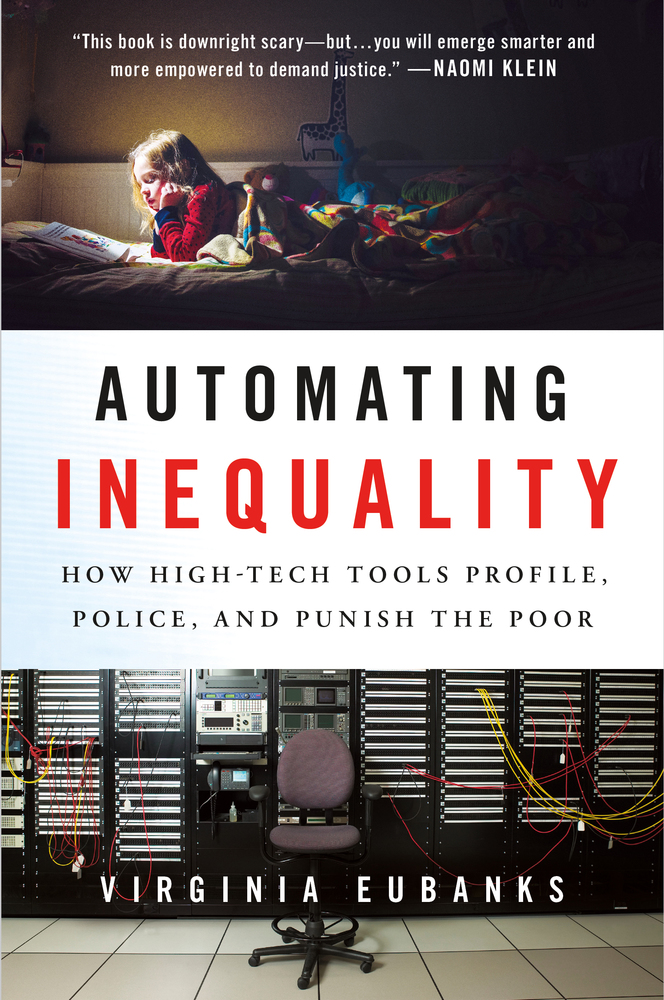
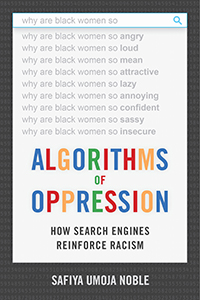
Algorithms Everywhere: Review of Noble, Eubanks and Bucher

by jennydavis

Algorithms are something of a hot topic.  Interest in these computational directives has taken hold in public discourse and emerged as a subject of public concern. While computer scientists were the original algorithm experts, social scientists now equally stake a claim in this space. In the past 12 months, several excellent books on the social science of algorithms have hit the shelves. Three in particular stand out: Safiya Umoja Noble’s Algorithms of Oppression, Virginia Eubanks’ Automating Inequality, and Taina Bucher’s If…Then: Algorithmic Power and Politics. Rather than a full review of each text, I offer a quick summary of what they offer together, while drawing out what makes each distinct.

I selected these texts because of what they represent: a culmination of shorter and more hastily penned contentions about automation and algorithmic governance, and an exemplary standard for critical technology studies. I review them here as a state of the field and an analytical grounding for subsequent thought.

There is no shortage of social scientists commenting on algorithms in everyday life. Twitter threads, blog posts, op-eds, and peer-review articles take on the topic with varying degrees of urgency and rigor. Algorithms of Oppression, Automating Inequality, and If…Then encapsulate these lines of thought and give them full expression in monograph form.

The books are tied together in their insistent imbrication of social, structural, and technical. Each resists technological determinism while giving careful attention to the materiality of code and its animation at the hands of user-publics. In their socio-technical analyses, each book also centralizes politics and power. This is critical. The authors weave patterns of status, power, inequality, and resistance throughout their texts. They spend time at the social margins and show with stunning clarity how personal troubles and public issues are entwined with technical systems from design to implementation. Together, these works show us what algorithms are, how they are social, and remind us that algorithmic configurations are neither natural nor inevitable, but products of value systems and political dynamics.

Noble’s Algorithms of Oppression addresses how algorithms sort and curate information. Focusing primarily on the Google search engine, Noble draws on traditional works from Library Sciences to contextual political and economic decisions about visibility, relevance, and legitimacy in information systems. Noble begins with a powerful and personal example of a Google search for “Black Girls.” Spoiler: the search returned images and links that had little to do with the interests or activities of children of color. Using this as a jumping off point, Noble traces the ways race, class and gender intersect with commercial interests and normalizing conventions in ways that perpetuate stereotypes and maintain Whiteness as the default subjectivity. “The more we can make transparent the political dimensions of technology”, says Noble, “the more we might be able to intervene in the spaces where algorithms are becoming a substitute for public policy debates over resource distribution—from mortgages to insurance to educational opportunities.”

Eubanks’ Automating Inequality takes up the very real and tangible algorithmic governance that Noble’s work highlights as significant. Eubanks draws on three case studies in which algorithms and poor Americans come in contact, with disastrous results. The book tells the story of Indiana’s welfare system, homeless services in Los Angeles, and child protective services in Pennsylvania. The work shows how poverty becomes a liability, service providers are alienated from clientele, and, like 19th century poorhouses, digital poorhouses do more to entrench economic instability than ameliorate it. With heart-wrenching accounts of lost health care, invasive data collection, and unjustly taken children, Eubanks highlights the contentious class dynamics that inform and are amplified through automated systems. “Technologies of poverty management are not neutral,” says Eubanks. “They are shaped by our nation’s fear and hatred of the poor; they in turn shape the politics and experience of poverty”. It is worth noting that this is one of the most rigorously researched books I’ve ever read. Eubanks even hires a fact-checker for herself, which sets a standard for intellectual integrity that rises beyond reproach.

Bucher’s If…Then: Algorithmic Power and Politics takes on the social side of automation. The theoretical work in the beginning of the text states in no uncertain terms that the banal platforms through which we socialize maintain deep and far reaching implications for the organization of daily life. As Bucher explains, “platforms act as performative intermediaries that participate in shaping the worlds they only purport to represent.” That is, platforms like Facebook, Twitter and Instagram are not only reflective mirrors, but powerfully efficacious in their own right. The text relies on case studies that capture social-algorithms from diverse angles. Bucher provides a technical study of the Facebook news feed, an exploratory study of everyday social media users’ “encounters” with algorithms, and documents how algorithms become institutionalized in the journalism and media landscape. Thus, Bucher tackles engineering and materiality, everyday experiences, and institutionalization of algorithmic systems, maintaining all the while a critical eye towards politics and power.

The three works are thus unified in their larger project of social scientific inquiry into algorithm studies, guided by a critical lens. Each are distinct, however, in their focus. The distinct substance of each book is a crucial reminder that algorithms are pervasive and polymorphous. They are not ends or entities in themselves, but vehicles of, and tools for, social organization in its myriad forms.


Jenny Davis is on Twitter @Jenny_L_Davis

24 Jul 00:05

Twitter Favorites: [ReneeStephen] I just finished a book series that was reeeaaally good and now I keep wanting to go read and then I remember it's over and I get sad.

Renée Stephen @ReneeStephen
I just finished a book series that was reeeaaally good and now I keep wanting to go read and then I remember it's over and I get sad.
24 Jul 00:05

Airmail: An Elegant, Customizable Email Client for Mac and iOS [Sponsor]

by MacStories Team

Airmail is the 2017 Apple Design Award-winning email client from Bloop for the Mac and iOS that marries elegant design with rich, customizable features that tame your inbox.

Everyone approaches email a little differently. For some people, their inbox is a sort of task manager. For others, keeping their inbox empty and messages neatly organized into folders is paramount. No matter how you manage your email accounts, Airmail has you covered.

Airmail is highly customizable while maintaining a clean, intuitive interface that makes it a pleasure to use. The app supports all major email technologies, including Gmail, iCloud, Exchange, IMAP, and POP3. On macOS, Airmail also incorporates the latest operating system features like the Touch Bar.

With Airmail, you can manage one or several email accounts. With multiple accounts, it’s just as easy to review messages from every account in a unified inbox as it is to dive into just one account. Airmail also features rich customization like the ability to send messages later, snooze messages, and create smart folders and rules. Actions let you send messages to other apps you use like task managers and your calendar or create a PDF from a message. On the Mac, Airmail supports the Touch Bar too. Best of all, you only need to set up Airmail once because your settings sync via iCloud to all your Macs and iOS devices.

Airmail is actively developed across all of Apple’s platforms. Most recently, Airmail has added a redesigned and improved search system, user templates that sync across all your devices, and Spotlight search, so you can find messages even when you’re not in Airmail. The app’s broad feature set and customization all add up to make Airmail the perfect choice for email power users.

Download Airmail for the Mac today from the Mac App Store and for the iPhone, iPad, and Apple Watch from the App Store.

Our thanks to Airmail for sponsoring MacStories this week.


Support MacStories Directly

Club MacStories offers exclusive access to extra MacStories content, delivered every week; it's also a way to support us directly.

Club MacStories will help you discover the best apps for your devices and get the most out of your iPhone, iPad, and Mac. Plus, it's made in Italy.

Join Now
23 Jul 23:59

The Daily Promo – Rob Fiocca

by A Photo Editor

Rob Fiocca

Who printed it?
CJ Graphics, Toronto, Ontario, Canada

Who designed it?
My team and I designed the piece together, with some help from CJ Graphics.

Tell me about the images?
The images are a collection of creatives and commissioned work over the last couple of years with a group of talented individuals. Creative collaborations with colleagues, in my opinion, always produce some of my best work.

The creative exploration on set these days is lacking. All too often the creative is already established long before scheduled shoot days. Spontaneity and happy accidents are looked upon as a negative rather than a positive in the production-heavy world we operate in today.

How many did you make?
1000 books

Do you think printed promos are effective for marketing your work?
We advertise regularly in AT Edge, Workbook, keeping an Instagram presence, Facebook, etc. My Reps also advertise in a similar way, fortunately through the years because of promotion or not we have been a busy studio.

I try every couple of years to produce pieces like this, but everyday work gets the better of us. Promos effective? I certainly hope so. Digital promos are important but disposable, a unique printed piece could live for a long time.

------------------------

Visit our sponsor Photo Folio, providing websites to professional photographers for over 10 years. Featuring the only customizable template in the world.

------------------------

23 Jul 23:59

There are things that I cannot explain well

by Volker Weber
23 Jul 23:58

Alan Lepofsky :: Analysis of IBM Notes Domino's Future

by Volker Weber

What do you think?

23 Jul 23:55

Google Chrome for Android’s web browser will support Quick Replies: report

by Dean Daley

The Chromium Gerrit has revealed information regarding an upcoming Chrome for Android update. The new update lets websites send notifications similar to how the feature works now, but with the addition of Quick Reply support.

For example, receiving a Facebook notification via the web browser will now allow users to reply without opening Chrome. However, there’s also a Facebook app that lets users do the same thing.

Quick replies will be located within the status bar, though it’ll only work with websites that provide the support.

According to XDA Developers, the feature is currently in testing.

After Google has completed its testing, the feature will likely be pushed through to the Chrome Canary app. To use the feature, however, you’d have to find a website that supports the functionality. But as XDA points out, it will be difficult to find a website with the support, considering it’s not officially out yet.

To try out the functionality when it becomes available, download the Google Chrome Canary app, or wait until it’s available on the regular Chrome app.

Source: XDA Developers

The post Google Chrome for Android’s web browser will support Quick Replies: report appeared first on MobileSyrup.

23 Jul 23:55

Second-generation Pixelbook to launch this fall with thinner bezels

by Igor Bonifacic
Pixelbook-alternate-header

Google will announce a new Pixelbook alongside the Pixel 3 and Pixel 3 XL, according to frequent device leaker Evan Blass.

In a tweet sent out on Sunday morning, Blass said Google’s new high-end Chromebook will feature thinner screen bezels than its predecessor.

Blass added Google will ship the second-generation Pixelbook to customers toward the end of the year. For reference, last year the company started shipping out the original Pixelbook to customers a few weeks after announcing the device.

At its upcoming annual fall hardware event, Google will reportedly also announce a new pair of Pixel smartphones, as well as second-generation Pixel Buds and a new Pixel smartwatch.

Source: Evan Blass

The post Second-generation Pixelbook to launch this fall with thinner bezels appeared first on MobileSyrup.

23 Jul 23:55

Sony’s new 48-megapixel smartphone sensor promises both high resolution and low-light sensitivity

by Igor Bonifacic
Sony Xperia XZ2 back

Sony has announced a new stacked CMOS image sensor for smartphones that promises to bring both exceptional low-light performance and extremely high-resolution images.

The IMX586 features an effective 48-megapixel count. To put that number in perspective, that’s even more megapixels than the sensor found on Sony’s $4,000 flagship A7R III full-frame mirrorless camera.

What’s perhaps even more impressive, is that Sony was able to cram all those pixels into a sensor that measures a mere 8mm diagonally.

Normally, high-resolution sensors fare poorly in situations where there’s limited light due to the small size of each of their individual pixel. However, the IMX586’s built-in ‘Quad Bayer’ colour filter is able to merge four adjacent pixels together to emulate a 12-megapixel sensor with an effective pixel pitch of 1.6 micrometers.

The Pixel 2, one of the best low-light performing smartphones on the market, has a sensor with a pixel pitch of 1.4 micrometers.

Sony is also touting the signal processing chops of the IMX586. The company claims smartphones with the IMX586 will be able to record 4K video at 90 frames per second, and 1080p slow-motion video at 240 frames per second.

Sony says the first samples of the IMX586 will arrive this September.

Source: Sony Via: Engdadget

The post Sony’s new 48-megapixel smartphone sensor promises both high resolution and low-light sensitivity appeared first on MobileSyrup.

23 Jul 23:55

Samsung will unveil Wireless Charger Duo for Note 9 and Galaxy Watch: report

by Dean Daley
Samsung logo on wall

With reports circulating that Apple’s AirPower wireless charging pad is set to finally be released at some point in the near future, it only makes sense that Samsung, the world’s top smartphone manufacturer, is preparing to drop its own multi-device wireless charging solution.

Smartphone leaker Roland Quandt tweeted an image of the box for a new Samsung wireless charger called the Wireless Charger Duo.

The Wireless Charger Duo (EP-N6100) will likely launch alongside the Galaxy Note 9 in early August.

The Wireless Charger Duo’s box indicates that a user can charge two smartphones and the Galaxy Watch at the same time.  Additionally, the charger features Samsung’s dual Fast Charging technology, which means that it’ll be capable of quickly charging both devices.

The box further indicates that the charger supports Qi certified products, such as the iPhone X.

Source: Roland Quandt 

The post Samsung will unveil Wireless Charger Duo for Note 9 and Galaxy Watch: report appeared first on MobileSyrup.

23 Jul 23:55

HomePod OS 12 private beta reportedly adds support for multiple timers, direct phone calls

by Patrick O'Rourke
HomePod

While Apple’s HomePod doesn’t yet feature a public or developer beta, the tech giant, reportedly, has been seeding a private beta to corporate and some retail employees for a few months now.

The latest rumours surrounding HomePod OS 12 indicate that there are some major new features coming to Siri and Apple’s smart home speaker, according to French tech blog iGeneration.

The beta reportedly includes phone call functionality, allowing the user to start and answer calls directly on the HomePod. Other upcoming features include a ‘Find My iPhone’ Siri command, as well as support for multiple timers.

If these new features do get a public release, this is another example of Apple playing catch up with the Google Home and Amazon Echo devices given both platforms already support similar functionalities.

Currently the HomePod isn’t capable of launching a phone call independently. A call must first be launched on the iPhone, with the audio output switching to the HomePod when the call begins. Further, if someone calls you, the HomePod isn’t capable of ringing. You must first answer the call on the iPhone and then transfer it to the HomePod.

It’s likely that Apple plans to release HomePod OS 12 along with iOS 12, macOS Mojave, watchOS 5 and tvOS 12 this coming fall.

Source: iGeneration Via: MacRumors 

The post HomePod OS 12 private beta reportedly adds support for multiple timers, direct phone calls appeared first on MobileSyrup.

23 Jul 23:55

Jeff Bezos plans to send people to space for $200,000 as early as next year

by Brad Bennett

When Jeff Bezos isn’t enjoying his recently anointed position as the wealthiest man on the plant, he’s finding new ways to become the wealthiest man in space.

Blue Origin, the billionaire’s space company, reportedly plans to start shuttling people to space in 2019 for a few hundred thousand dollars, according to a Reuters sources that state they’re familiar with the tech giant’s plans.

The company’s working to send earthlings 100km upwards into suborbital space for the speculative price range of $200,000 to $300,000 USD. Blue Origin’s autonomous rocket, the ‘New Shepard,‘ will shuttle its wealthy travellers to space where they’ll experience a few minutes of weightlessness and see the curvature of Earth, before the ship returns to the plant’s surface using parachutes.

The ship’s cabin is equipped with six observation windows that the company says are three times as tall as similar windows on a Boeing 747 jetliner.

The company has run eight test flights in Texas so far but never with any passengers onboard. That said, two launches have included a crash test dummy named “Mannequin Skywalker,” according to Reuters

Blue Origin is close to its next stage of development and hopes to start testing the rocket’s escape pods in the coming weeks, according to Reutersreport.

Each flight is estimated to cost close to $10 million and is capable of carrying six passengers. If this is the case, and the cost for a ticket is as low as $300,000, then the company stands to lose millions of dollars per trip when it launches.

Source: Reuters

The post Jeff Bezos plans to send people to space for $200,000 as early as next year appeared first on MobileSyrup.

23 Jul 23:55

Samsung Galaxy Note 9 makes an early unboxing video appearance

by Dean Daley
note-8-header

An early unboxing video of the Samsung Galaxy Note 9 reveals almost everything about the upcoming phablet. The video was leaked by MySmartPrice.

While it’s difficult to confirm if this is the Galaxy Note 9 or a knockoff, it looks close to what’s expected for the handset.

The video shows the phone’s horizontal dual camera setup with a LED flash and a fingerprint sensor below the cameras, similar to the Galaxy S9+.

The video also reveals the bottom of the phone, with its USB Type-C port, speaker grill, headphone jack and S-Pen slot. Unfortunately, the author of the video doesn’t show off the S-Pen.

Within the box there is a microUSB to USB Type-C converter, which is unusual since Samsung didn’t include one with the Galaxy S9. It’s a possible sign that the featured device is a knockoff.

There’s also a screen protector which is likewise suspicious as companies rarely put screen protectors in boxes as they are difficult to put on. Companies like Huawei and OnePlus, sell their phones with the screen protector preinstalled. Further, it’d make more sense if the Galaxy Note 9 came with a case, as the S9 did in certain markets around the world.

Spec-wise the box indicates that the phone features a 6.3-inch display (previous rumours claimed the Note 9 would sport a 6.4-inch panel), dual 12-megapixel lenses with dual optical image stabilization, 8-megapixel selfie camera, IP68 water and dust resistance, an iris scanner, 64GB of storage and 6GB of RAM.

While it seems likely that this the Galaxy Note 9, nothing is officially confirmed until Samsung reveals the phone on August 9th. 

Source: MySmartPrice, Via: SamMobile

The post Samsung Galaxy Note 9 makes an early unboxing video appearance appeared first on MobileSyrup.

23 Jul 23:55

Calgary may soon allow electric scooter rentals

by Bradly Shankar
Swagtron scooter

Rental electric scooters have been controversial in the U.S. for posing risks to pedestrians on sidewalks.

Now, some experts fear that the devices may soon be making their way to Canada, starting with Calgary.

“It will be a matter of months before someone starts deploying [scooters in Canada],” Euwyn Poon, a Vancouver-born businessman who co-founded San Francisco scooter-sharing company Spin, told The Globe and Mail. “Scooters will one day be as ubiquitous as cars.”

He noted that various scooter companies have posted jobs in Calgary, Toronto and Vancouver in addition to negotiating with city officials to expand their rental services.

Further, Calgary is now set to approve a two-year pilot project that would allow companies to rent out up to 10,000 devices. While the pilot would initially begin with bikes, the goal is to include electric scooters in the first quarter of 2019, providing exemptions from provincial transportation laws.

Calgary Ward 8 councillor Evan Woolley told CTV News that he sees a number of advantages to electric scooter rentals. “It’s an opportunity for us to provide better mobility choice. It’s no cost to the taxpayer. In fact, we’ll actually make some money off of this. There will be about 50 to 70 jobs created.”

Woolley said the city has so far met with 15 rental companies.

Via: The Globe and Mail

The post Calgary may soon allow electric scooter rentals appeared first on MobileSyrup.

22 Jul 16:13

New Fujifilm Lenses

Fujifilm had a lot to say about lenses yesterday, introducing the 8-16mm f/2.8 and 200mm f/2 lenses that had been on their roadmap. They updated the roadmap to include three new lenses, including a 35mm f/1 (but only coming in 2020). 

22 Jul 16:10

machine learning for continuous integration

by Joe Gregorio

Here are the slides for my OSCON presentation Machine Learning for Continuous Integration.

As usual my slides are pretty worthless on their own, except for the links.

Update (24-Sep-2018) Recording is now available:

22 Jul 16:10

2 Pixel, Watch, Buds and a Book

by Volker Weber
22 Jul 16:10

Live from the International Space Station ISS

by Andrea

ESA: Good evening, Kraftwerk / Guten Abend Kraftwerk, guten Abend Stuttgart! (YouTube, 11:48min)

“On 20 July 2018 around 21:50 local time, ESA astronaut Alexander Gerst welcomed the legendary electronic band Kraftwerk and 7500 visitors to the Jazz Open Festival on Stuttgart’s Schlossplatz – live from the International Space Station, where he will live and work until mid-December 2018. During the call with space, Kraftwerk founding member Ralf Hütter and Alexander played a special duet version of the track Spacelab, for which Alexander had a tablet computer configured with virtual synthesizers on board.”

Alexander Gerst’s Horizon Blog: Good evening, Kraftwerk!

““Here in the European Columbus laboratory, the successor to the Spacelab, the European Space Agency ESA is researching things that will improve daily life on Earth. More than 100 different nations work together peacefully here and achieve things that a single nation could never achieve. We are developing technologies on board the ISS to grow beyond our current horizons and prepare to take further steps into space, to the Moon and Mars,” Alexander said.

However, as Kraftwerk founding member Ralf Hütter emphasised, Alexander’s appearance was not only about greeting Kraftwerk and the audience in Stuttgart but also about “music as the universal language of the world”. After addressing the crowd, he and Alexander played a special duet version of the track Spacelab, for which Alexander had a tablet computer configured with virtual synthesizers on board.”

Alexander Gersts Horizon Blog: Guten Abend Kraftwerk!

“Nachdem Alexander Gerst sich mit einem „Good Night Earth“ vom Publikum verabschiedet hatte, fuhren Kraftwerk mit ihrem fulminanten Set fort, während die Zuschauerinnen und Zuschauer sich wohl noch ein paar Mal verblüfft fragten, ob das, was sie da gerade gesehen und gehört hatten, auch wirklich live und real war. Wir können sagen: Das war es.”

22 Jul 16:04

'I don't feel safe': Squamish van dwellers feel targeted as numbers rise

mkalus shared this story .

The first time Jenn Carter's camper van was vandalized, she brushed it off as a random act.

The second time paint thinner was poured over her vehicle in as many weeks, she began to feel targeted.

"I'm trying to pay off student loans right now. I live out of my van because I'm trying to put money towards that," said Carter, who has been living out of her van in Squamish, B.C., on and off since last year.

The vandalism caused thousands of dollars of damage and her van has been written off by ICBC because the cost of fixing it outweighs the vehicle's value.

RCMP are investigating the vandalism as an isolated event and said they have not noted a trend of attacks against camper vans recently.

'The paint was all bubbling, anything plastic basically melting, the light fixtures — so my brake light — was all melted and all the paint is basically stripped off,' says Jenn Carter. (Jenn Carter)

Municipal plans

But while attacks may not be increasing, the mayor of Squamish says there has been a discernible increase in recent years in the number of people living out of their vehicles.

"The climbing culture and people coming to Squamish to climb and living in their van for several months to climb is not a new thing for Squamish, but it's certainly increased over the last couple years," said Mayor Patricia Heintzman.

"It's something that we are obviously cognizant of, we're trying to figure out ways of managing it correctly."

She said Squamish is working on plans to create more designated, low-cost or free areas for people to park and camp.

"We want to make sure that there isn't friction between neighbourhoods and people camping."

The district has had meetings within the past month with various local organizations to address the issue.

Christina Methera, a Squamish resident who has spent more time living in a vehicle than in a house over the past six years, says the recent acts of vandalism point to a greater issue of attitudes toward van dwellers.

"It does spark the conversation again about van life," she said.

"When you live in a vehicle, people treat you like you're some sort of lower class individual."

Christina Methera has lived in vehicle more often than a house over the past six years and says she encounters negative reactions from people sometimes. Recently, she was rearranging her vehicle in a parking lot in Squamish and 'people started to take wider steps around me and tell their kids not to come talk to me,' she says. (Christina Methera )

Methera's camper vehicle was vandalized with spray paint more than a year ago while parked on a residential street in front of an apartment building where she was staying.

And not long before that, one of her friends had the word "squat" spray painted on his van.

"[Squamish] is outdoors oriented, but there is a really big class divide here too," she said.

Visitors, long-term van dwellers and residents

In Squamish, there are two main groups of people living out of their vehicles: long-term residents and visitors who come for the summer to camp and climb, according to the Squamish Access Society, a non-profit group that works on behalf of climbers. 

"The two types of people get conflated, I think, in residents' minds this time of year," said Toby Foord-Kelcey, president of the Squamish Access Society. 

Those who stay long-term tend to fly under the radar, he said, while newcomers don't always know the legalities and local sensitivities of the areas where they are staying.  

"Often people have an expectation that they will park up somewhere quietly for free," he said.

"In the last few years, the numbers have become very large and one or two locations that are close to residential areas that have become very popular."

Foord-Kelcey has heard concerns from residents about the environmental impact of an influx of campers and complaints about littering, defecating in the woods and starting fires despite bans.

The issue is not a new one, he said, but is growing as the number of people living in vehicles increases and needs to be addressed at a government level.

The Mamquam​ River Service Road, near the Stawamus Chief, is one of the popular areas for vans to park and is near the residential Valleycliffe neighbourhood. 

For Matthew Waring, originally from the U.K who lived in a van in Squamish for four summers, it comes down to respect and education.

"A big portion of the community in Squamish is quite accepting of this free and easy, outdoor lifestyle that van dwellers try and live," Waring said.  

"The problems really occur just occur from a practical sense — where can they stay, parking, the big questions of how much are they impacting the environment."

Jenn Carter's van was vandalized twice while parked in a residential area in Squamish, B.C. (Submitted by Jenn Carter)

On the nights Carter's van was vandalized — first in late June and then in mid-July — she'd been staying at her boyfriend's house and left it parked in his residential area.  

The nights she sleeps in her van, Carter parks in more remote locations outside the city.

"I don't feel safe," she said. "To be honest, I don't even want to park my van downtown at all."

Read more from CBC British Columbia