Shared posts

01 Aug 02:50

Nike Training Club Debuts on Apple Watch

by Ryan Christoffel

Over the last year it's become far too common to hear about a popular app dropping support for the Apple Watch – fortunately, today the opposite is happening: Nike Training Club has added an Apple Watch app for the first time.

Nike Training Club is a workout app containing over 180 different training sessions to choose from. The app offers guided instructions to help you complete your workout, along with activity data to see your exercise track record. It's a really solid, well designed app that gives you the tools needed to hit your workout goals.

The new Apple Watch app for Nike Training Club is merely a companion to the iOS app. You can't start workouts directly from the Watch, so despite the Series 3 model's cellular capabilities, you'll need to have your phone nearby at all times.

Despite its limitations, the Watch app can still be very useful during workouts. During a yoga session, for example, the Watch will show you which pose to take with a countdown for how long to hold it; you'll also see your heart rate and calories burned. Swipe over in the app to see the total length of your workout and an option to pause or end the session.

If you're a heavy Nike Training Club user, the new Watch app provides a much more convenient way to keep track of your workout's progress. I really hope some day the app becomes completely independent of the iPhone, but this is a nice first step.

Nike Training Club is available on the App Store.


Support MacStories Directly

Club MacStories offers exclusive access to extra MacStories content, delivered every week; it's also a way to support us directly.

Club MacStories will help you discover the best apps for your devices and get the most out of your iPhone, iPad, and Mac. Plus, it's made in Italy.

Join Now
01 Aug 02:50

Province House Hoarding

by peter@rukavina.net (Peter Rukavina)

Being neighbour to the multi-year restoration of Province House means we have a unique opportunity to see the job site evolve over time.

With the transition from Phase 1, Erect the Exoskeleton to Phase 2, Fix the Structure, one contractor has given way to another, and so new temporary buildings and signage have gone up. To escape the summer heat indoors last night I went for a bike ride and, a Receiver Coffee iced tea in hand, I stopped on the park bench in front of 180 Richmond and sketched some of the new arrivals.

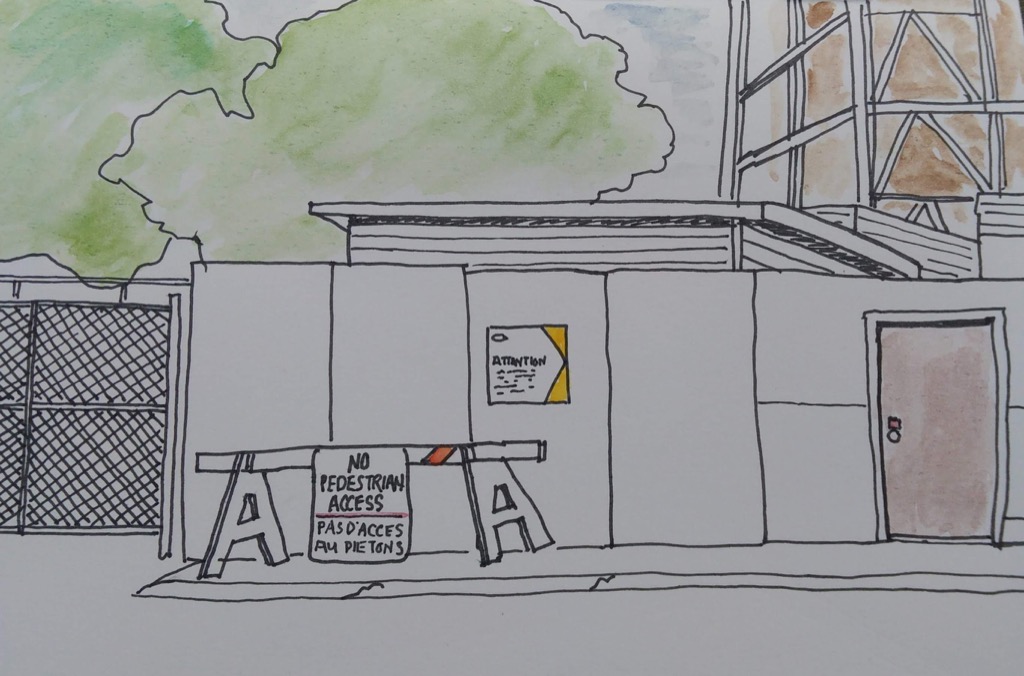
Sketch of Province House Hoarding

I’m proud of how close I came to getting the tricky angles of the “no pedestrian access” barrier down; less proud of the mess I made of the small part of the exoskeleton in the background. My favourite part is the orange swath.

01 Aug 02:49

It's not the heat, it's the electricity

by peter@rukavina.net (Peter Rukavina)

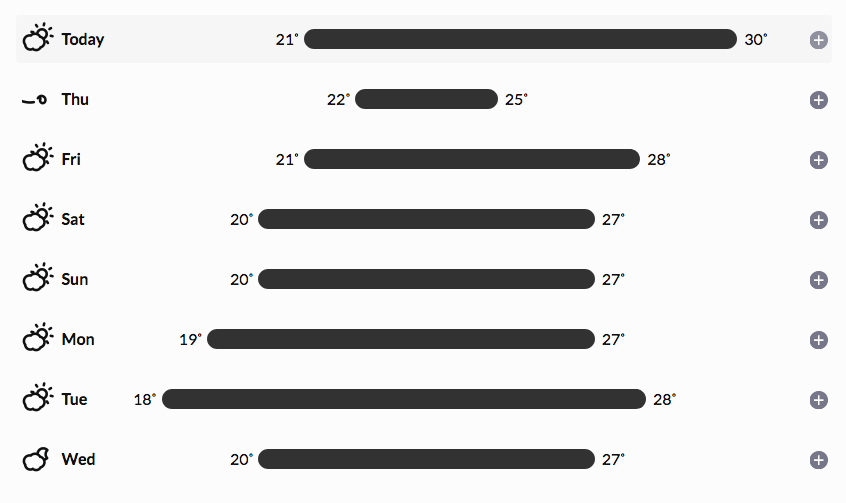
It’s been a hot summer week here in Prince Edward Island: it’s 28ºC as I type this, and the temperature isn’t forecast to go lower than 18ºC for the next week, with daytime highs in the upper 20s:

Charlottetown high and low temperature for the next week, from Darksky.net

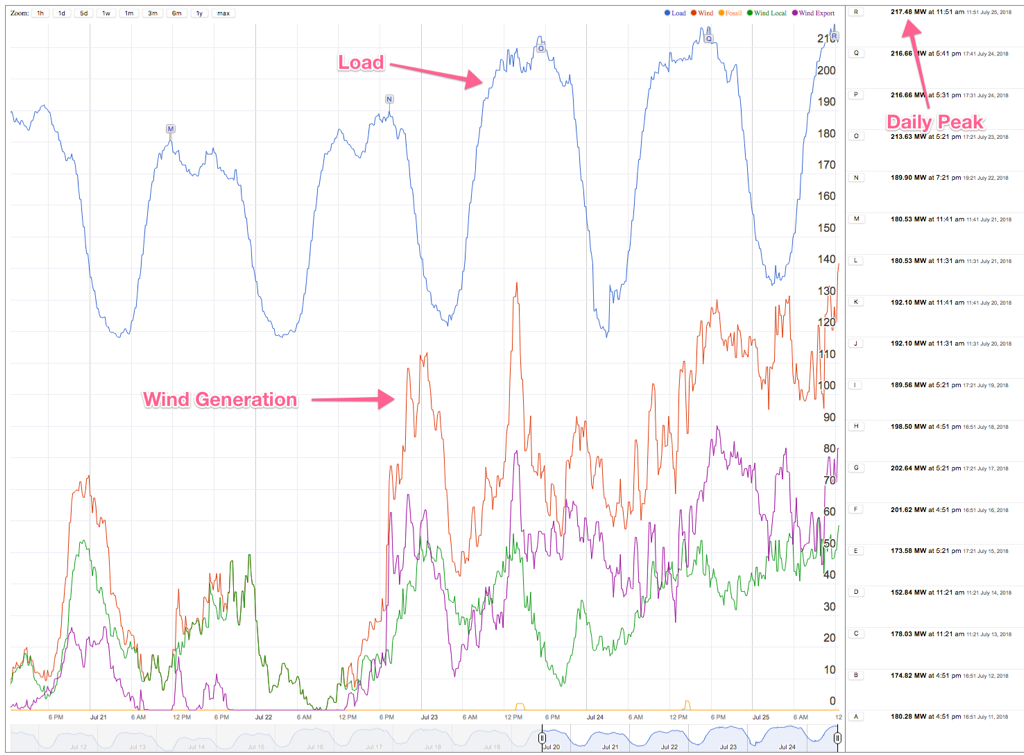
This heat, bolstered, I suspect, by the proliferation of air source heat pumps, has led to historic high electricity load for the province for the month of July; today’s peak, so far, is 217.48 MW, which is the highest load in July I’ve seen in the six years I’ve been archiving this data.

Indeed, of the 224,221 readings I’ve logged over 6 years, at 15 minute intervals, for PEI load and generation, the top 157 have been this month, and the previous July peak was in 2016 at 201.98 MW. That makes the 2018 peak 8% higher than the previous peak.

Here are the peak loads for the month of July for this year (so far) and for the previous five years, along with the peak temperature and the average daily temperature:

Electricity Load and Temperature in Charlottetown in July
Year Peak Load Peak Temperature Average Temperature
2018 217.48 MW 30.11ºC 20.11ºC
2017 200.35 MW 27.72ºC 18.89ºC
2016 201.98 MW 28.11ºC 18.89ºC
2015 190.38 MW 27.72ºC 18.06ºC
2014 196.72 MW 29.00ºC 21.00ºC
2013 195.34 MW 32.00ºC 20.29ºC

Note how the peak temperature and average daily temperature in 2013 were higher than this year, but the peak load was 22.14 MW (11%) higher.

Fortunately, at least for the last three days, we’ve been well-served by the wind, with wind generation accounting for as much as 93% of load (albeit in the middle of the night). As I type, in the early afternoon, generation from wind is a healthy 63%, despite the high load of 213 MW.

Snapshot of PEI load and generation for July 2018

If you’re interested in seeing how the rest of the summer plays out, you can follow along with:

You could also use this time to ponder how you might cool your own spaces using less energy-intensive means (says the lucky fellow ensconced in his naturally cool church basement). Or you could, at the very least, transfer your cooling to the windy times of the day.

01 Aug 02:49

Stop Playing Content Marketing Roulette

by Tris Hussey
Make a plan, define a goal, and measure the results There is a lot to starting off your content marketing program that starts off with throw everything against the wall and see what sticks. When you don’t have insight into what your audience would like, sometimes that’s the only option you have. You try a […]
01 Aug 02:49

Burnaby’s Brand New Skyline (and Station): Metrotown

by Gordon Price

The changing face of southeast Metrotown, as seen from the platform of Royal Oak Station.

Look down and to the south of the station, literally across the street, and there’s a remnant of old Burnaby: M-B Grocery.

Look further down the track to the west, and there’s the rebuilt Metrotown Station and all the new super-tall towers:

Making Metrotown the poster child of high-density TOD – transit-oriented development.

It’s worth noting that the station itself is effectively brand new, save for a few platform tiles and the concrete guideway.  TransLink reconstructed one of the busiest stations in the system without having to close it down – an engineering achievement for which it is unlikely to get much credit.  (Hey, despite complications, nothing really bad went wrong.  So frustrating to the critics.)

01 Aug 02:49

Why getting stuck is part of coming up with great titles and taglines

by Josh Bernoff

I help people with book titles and taglines. It’s not a linear process, and progress is impossible to measure. That’s a feature, not a bug. I had this insight recently when working with a client on a tagline for his business, along with some other language. (A tagline is a short description of what you … Continued

The post Why getting stuck is part of coming up with great titles and taglines appeared first on without bullshit.

01 Aug 02:48

Welcher Sonos Lautsprecher für den Fernseher?

by Volker Weber

Sonos System

Nachdem ich jetzt immer mehr Kaufberatung für Soundbars machen soll, schreibe ich das mal lieber allgemein auf.

Erste Frage: Wohin damit? Playbar und Beam stehen vor dem Fernseher, Playbase unter dem Fuß. Das muss passen. Ein zu großer Fuß passt nicht auf die Playbase, eine zu niedrige Bildschirmkante vesteckt sich hinter Beam oder Playbar. Hängt der Fernseher an der Wand, kann man jede nehmen.

Zweite Frage: Airplay 2? Dann Playbase oder Beam. Das lässt sich nicht nachrüsten, auch wenn man zwei One als rückwärtige Lautsprecher hinzufügt.

Dritte Frage: Welche Funktionen? Nur Beam kann HDMI ARC und HDMI CEC. Beides ist wünschenswert. Alexa gibt es oben drauf.

Vierte Frage: Klang? Alle gut. Speech Enhancement und Night Mode können alle. Und den Sound passt man individuell per TruePlay Tuning über iPhone oder iPad an. Sorry, no Android.

Fünfte Frage: Und der Sub? In der Mietwohnung eher nicht. Playbase macht auch so schon ordentlich Terror, Playbar und Beam etwas weniger. Wenn Geld keine Rolle spielt, immer her damit. Aber nicht weinen, wenn der Nachbar schimpft.

Drei Grundsätze: Erstens, nicht alles auf einmal kaufen. Bei Sonos steigt man einfach ein und kauft sich danach erst dumm und dämlich. Zweitens, keinen alten Kram kaufen. Sonos ist ein "langes" Spiel. Also besser One als Play:1. Was heute "nur" die Rückkanäle bedient, steht morgen vielleicht in einem anderen Zimmer. Drittens, alles bei ueberall-musik.de kaufen. Als Kunde registrieren und dem Thomas per Mail einen Hinweis geben, dass ihr von hier kommt. Das ist nicht zu meinem, aber sehr wohl zu Eurem Vorteil.

Ich würde in den meisten Fällen mit einem Beam und zwei One anfangen. Sub kann man später kaufen, wenn es nicht genug rumpelt. Im ersten Schritt würde ich die drei Lautsprecher in der Wohnung verteilen, um mal Sonos richtig kennenzulernen. Am besten geht das mit Spotify. Die beiden One kann man immer noch in Ruhe zum Fernseher hinzufügen.

01 Aug 02:48

Steve Jobs Interview Covering the First Month of the App Store Released by The Wall Street Journal

by John Voorhees

One month after the App Store debuted, Nick Wingfield of The Wall Street Journal sat down with Steve Jobs to see how it was going. Today, The Wall Street Journal released a full transcript and audio of the interview on their site. The interview is behind the Journal’s paywall, but it’s worth a read or listen if you have access to it.

At the time of Jobs’ conversation with Wingfield, there were over 1500 apps on the Store, and Jobs estimated around 50 were being added each day. According to Jobs, of the 1500+ apps on the App Store:

27% of them are free, leaving 73% paid. Of the paid apps, over 90% are under $10.

Jobs put the numbers in perspective by comparing them to iTunes downloads:

Users have downloaded over 60 million apps from the App Store in the first 30 days…. That is 30% as big as iTunes for music downloads.

Jobs went on to explain what that meant to developers:

The total revenue has been $30 million in the first 30 days. Developers get 70% of that. Developers get $21 million. Nine of that $21 million is going to the top 10 developers. A lot of small developers are making a lot of money.

What can only be captured by the audio of the interview, is Jobs’ apparently sincere astonishment at the success of the App Store. In retrospect, it’s amusing to hear Jobs speculate that the App Store might someday reach $1 billion in revenue when we know now that it’s paid out a net to developers of $100 billion:

We’re already at a $360 million a year run rate. This thing is going to crest to half a billion soon.

Who knows? Maybe it’ll be a billion dollar marketplace at some point in time. This doesn’t happen very often. A whole new billion dollar market opens up. 360 million in the first 30 days, I’ve never seen anything like this in my career for software.

Although I’m surprised that The Wall Street Journal waited more than two weeks after the 10th anniversary of the App Store to release the interview, I’m glad they did. The interview is full of interesting facts about the early App Store and a unique insight into Steve Jobs’ reaction to the Store’s runaway success. I highly recommend you listen if you can.

→ Source: wsj.com

01 Aug 02:48

Visualizing PEI Street Orientation

by peter@rukavina.net (Peter Rukavina)

You have likely by now seen the buzz about Geoff Boeing’s work to visualize city street orientations.

There’s nothing more frustrating than coming across something interesting like this and not finding code attached to it, to allow one to apply it to local conditions; fortunately Boeing more than rose to the challenge, and provided a handy Python notebook that is relatively easy to get running on a Mac. After installing Jupyter and some Python libraries, I was able to run his code out of the box, changing only the definition of the cities to:

places = {'Charlottetown'   : 'Charlottetown, PE, Canada',
          'Summerside'      : 'Summerside, PE, Canada',
          'Stratford'       : 'Stratford, PE, Canada',
          'Cornwall'        : 'Cornwall, PE, Canada'
          }

Less than a minute later, I had these beautiful visualizations:

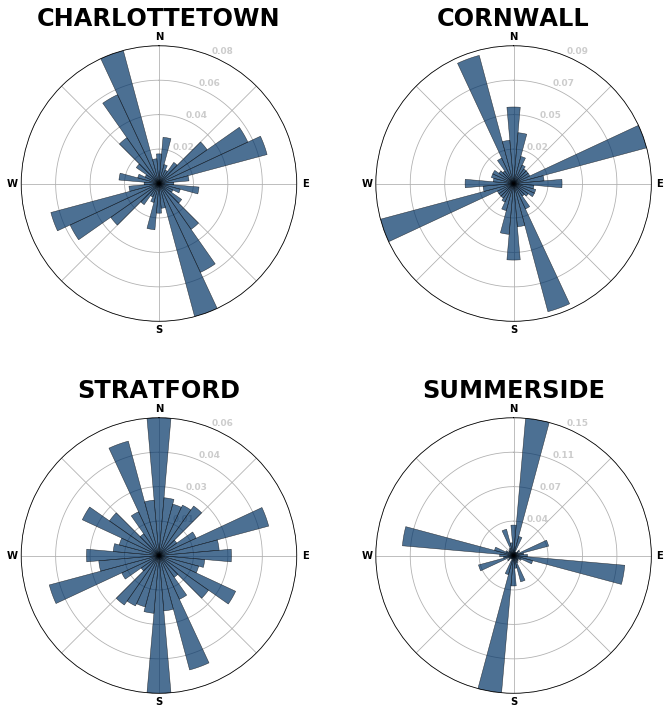
PEI Street Orientation Graphs

Here’s how Boeing describes these:

Each of the cities above is represented by a polar histogram (aka rose diagram) depicting how its streets orient. Each bar’s direction represents the compass bearings of the streets (in that histogram bin) and its length represents the relative frequency of streets with those bearings.

In other words, to generalize, Charlottetown and Cornwall follow what Boeing describes as an  “angled, primarily orthogonal street grid,” rotated slightly west, with Cornwall including a significant north-south departure from this, and Charlottetown including a subset of streets tilted slightly east, reflecting the cohort of St. Peters Road-aligned streets on the east side of the city.

Summerside is even more religiously “angled, primarily orthogonal,” but rotated slightly east.

Stratford, on the other hand, is, as Boeing describes Boston and Charlotte, “more evenly distributed in every direction.”

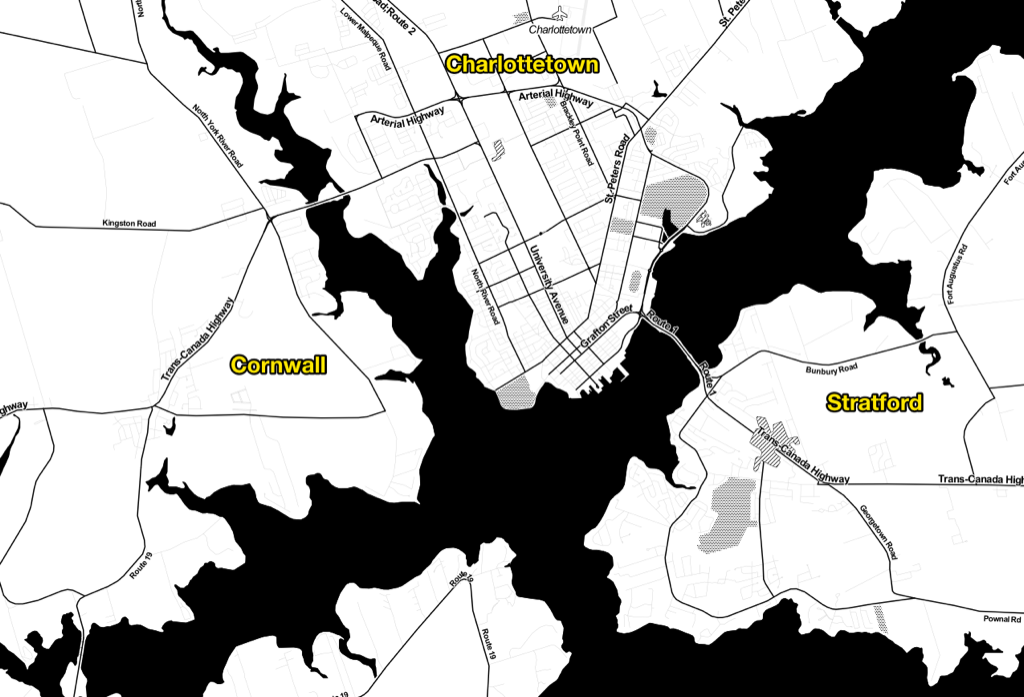
This is all born out when you look at the street networks in OpenStreetMap, especially in the Stamen Toner style:

Streets of Cornwall, Charlottetown and Stratford

Street of Summerside

Of Boston, Boeing writes:

Although it features a grid in some neighborhoods like the Back Bay and South Boston, these grids tend to not be aligned with one another, resulting in a mish-mash of competing orientations. Furthermore, these grids are not ubiquitous and Boston’s other streets wind in many directions. If you’re going north and then take a right turn, you might know that you are immediately heading east, but it’s hard to know where you’re eventually really heading in the long run.

This makes it harder for unfamiliar visitors to navigate Boston than many other US cities. It does not adhere to a straightforward north-south-east-west pattern (or any other consistent, predictable pattern) that our brains adjust to in most places – not because Boston apocryphally paved over its cow paths, but because of its age, terrain, and annexation of various independent towns.

The same thing could just as well be said about Stratford, compared to the Charlottetown and Summerside.

01 Aug 02:25

Twitter Favorites: [Ian_Mosby] File under: Toronto. A complete stranger just rang my doorbell and handed me my wallet. He apparently had just f… https://t.co/lWQefO0hXi

Ian Mosbγ @Ian_Mosby
File under: Toronto. A complete stranger just rang my doorbell and handed me my wallet. He apparently had just f… twitter.com/i/web/status/1…
01 Aug 02:24

NewsBlur Blurblog: How You Can Tackle Almost Any Project

sillygwailo shared this story from Eric Karjaluoto.

TL;DR: Make projects manageable by knowing your purpose, defining steps, and identifying actionable tasks.

Business owners have many jobs—often ones they’ve never done before. Today’s founder might need to design products and manufacture them overseas. She might need to create a book, white paper, or podcast. Meanwhile, most founders need to prepare a sales pitch, keynote presentation, or RFP response.

When such projects are unfamiliar, they seem intimidating. This leads founders to procrastinate, squandering their time. Others act, but do so in the wrong ways, which is also inefficient. Here’s a simple approach for getting around this problem:

1. Figure out why

I’ve spoken with countless people who make things. These range from business owners and marketers, to designers, writers, and craftspeople. Many express an interest in taking on a big project. However, their motivations are often ambiguous. (E.g., “I’ve always known I had a book in me.”)

Ambiguous destinations are difficult to reach. For this reason, you must first answer the question “why?” for each project you take on. Do so explicitly, using plain language. For example, this blog has two “whys”. The first is to help founders act clearly, honestly, and with purpose. (I believe this can help them grow healthy businesses.) The second is to introduce such founders to Emetti.

“First, have a definite, clear practical ideal; a goal, an objective. Second, have the necessary means to achieve your ends; wisdom, money, materials, and methods. Third, adjust all your means to that end.”

—Aristotle

2. Identify the essential steps

With “why?” out of the way, we move on to “how?”. Specifically, I mean the sequence of “how?”. Some like to, “jump in and get started” without determining sequence. This approach can send them off in errant directions. This leads to misused time, and work that needs to be redone.

You must—in unmistakable terms—identify the tasks ahead, and their sequence. Never taken on this sort of project, before? That’s OK. Keep it simple. For example, if you were making a video about your company, your “how?” might read:

  • Draft a creative brief1
  • Write a script
  • Determine requirements
  • Shoot the footage
  • Clean up the files

Does the above seem basic? Good. It’s supposed to. You earn no points for complicating the job. Instead, you are attempting to demystify a complicated-seeming project. You do so by breaking a project into increasingly smaller tasks.

3. Break those into yet smaller pieces

The trick to completing a big/new job, is in not trying to do it all at once. With that in mind, you must identify the first, smallest task you can complete. By doing so, you move from planning to acting. This creates inertia.

First, break your key tasks into more detailed ones. Let’s give this a spin:

  • Draft a creative brief
    • Note what are we marketing
    • Determine what we want to achieve
    • Identify the audience (and their needs)
    • Clarify what we need to say
    • Choose the tone of the video
  • Write a script
    • Review the creative brief with the team
    • Set aside 3 hours to brainstorm ideas
    • Select the most viable option
    • Rough out a script
    • Test the script against the brief
    • Rewrite and/or refine
  • Prepare for the shoot
    • Draft a list of requirements
    • Check availability of actors
    • Put aside video and sound equipment
    • Collect required props
    • Book the filming location
  • Shoot the footage
    • Arrive at the set early, to prepare
    • Confirm that actors are on their way
    • Double check all props
    • Film/record scenes
    • Review collected media
    • Re-shoot as necessary
  • Clean up the files
    • Roughly sequence the clips
    • Review rough-cut with team
    • Edit as required; review again
    • Fine-tune the piece
    • Add music and sound effects
    • Export ready files

Sure, the above list misses steps. This is, in part, because I don’t work on a lot of videos. That said, such lists do become more detailed, as you work through your project. You might get the order wrong. That’s OK. Don’t worry about it. As you proceed, it’ll become clearer.

Why it works

I’ve found success with the above method. It works because it removes the ambiguity that surrounds unknown projects. Additionally, writing is efficient—especially when you use lists.

For the record, this same approach works for bigger things (even when starting a company). I recommend you use this approach for every new project—even on ones you’ve done before. This approach forces you to define your objectives and tasks. This can keep you from losing sight of what you need to achieve.

“Nothing is particularly hard if you divide it into small jobs.”

― Henry Ford

Homework

On your next new project, write a one-page project plan. Start by noting what the project is. Then write why you’re doing it. Keep your sentences short and to-the-point.

Next, imagine what the 5 – 10 key steps are for making this project happen. Again: stay brief and unambiguous. Then, identify discrete sub-tasks for each of these. Finally, go back to the first task, and act on it immediately. (I don’t mean in a day, hour, or after lunch. Right now!)

  1. In a future post, I’ll delve into creative briefs more. In it, I’ll explain how anyone can write a functional brief, and why they’re so important to all projects—especially ones with many possible outcomes. Subscribe and I’ll notify you of posts like this.

The post How You Can Tackle Almost Any Project appeared first on Eric Karjaluoto.

27 Jul 15:29

Pebble 2 and Time Round update fixes dictation with iOS

by Dean Daley

Pebble device owners check your smartwatches as you should have just received an update.

The update fixes dictation with iOS on the Pebble 2 and the Pebble Time Round, and improves iOS dictation on all other Pebble watches, according to the update’s notes.

Pebble 2 and Time round devices can now use dictation again on iOS thanks to rebble! from r/pebble


The update also says that the dictation functionality still requires a subscription to a third-party service called Rebble. 

A Rebble account and subscription supplies users with firmware updates for Pebble devices such as the one above.

What’s also interesting is that Eric Migicovsky, the founder and former CEO of Pebble, has made it clear he has no intentions to create new hardware under the defunct brand.

While Fitbit acquired Pebble’s Technology’s intellectual property and engineers back in 2016, Vancouver-born Migicovsky still can create new hardware, just not under the Pebble name.

Migicovsky recently became a partner at Y Combinator, according to his LinkedIn [age. Y Combinator is an U.S.-based accelerator that helps accelerate the growth of startups.

Source: Reddit, Eric Migicovsky

The post Pebble 2 and Time Round update fixes dictation with iOS appeared first on MobileSyrup.

27 Jul 15:29

Snap vice president of hardware Mark Randall leaves company

by Dean Daley
Snap Spectacles

Mark Randall, Snap’s vice president of hardware, has left the company. This news comes from Cheddar, which obtained a memo that was later confirmed by a Snap spokesperson.

Randall’s old team will now work under Jerry Hunter, Snap’s senior vice president of engineering.

Within the memo it indicates that Randall plans to further grow his own company.

According to the sources Cheddar spoke to, Randall’s departure was unrelated to the recent launch of the second-generation Spectacles. 

Snap released the new Spectacles in Canada on April 26th. The new Spectacles are water resistant and feature a more compact frame. They come in three different colours onyx, ruby and sapphire.

The wearable is available for $199.99 via the company’s website.

Randall worked as VP of hardware since 2017. Before that, Randall worked as the vice president of operations for a little more than a year.

You can read Randall’s memo to the Snap team below:

Hi team,

When Snap Lab was first established, it made sense for our group to be completely separate from the rest of Snap’s engineering organization. But from our customers’ perspective, these separations will become less and less distinct over time — as the pillars of Snapchat, Lens Studio, and Spectacles continue to converge. As a result, we’ve decided to realign the team as a distinct group under Snap’s SVP of Engineering, Jerry Hunter.

To best facilitate this transition, I also made the decision that now was the right time for me to leave Snap and focus on growing my own company. Sahil Sharma, VP Hardware Development, will serve as acting lead. The rest of our organizational structure remains the same, and Jerry, Sahil and I are all committed to making sure this is smooth and seamless for all of you.

We will be holding an All Hands tomorrow (7/10) at noon in the Grotto area of 606 (calendar invite to follow + questionnaire form), to share more and answer any questions that you may have.

While this may feel sudden, please know we have been carefully discussing these decisions at the senior leadership level for several months. I’m confident that this is the right next step — both for me and for this team. The potential here within this group is huge and the world will be so excited over the next decade to see all of your amazing creations. 🙂

For my own next steps, I’ll be focusing on growing my own company, where I’ll be advising young, private companies, participating in early-stage investing and working on other passion projects.

It has been an absolute privilege working alongside this team. I’ve learned an incredible amount, and it has been a truly awesome experience. Please feel free to contact me anytime and I will always be more than happy to assist any of you with anything I can.

Mark Randall

Source: Cheddar

The post Snap vice president of hardware Mark Randall leaves company appeared first on MobileSyrup.

27 Jul 15:29

YouTube VR app coming to Samsung Gear VR

by Bradly Shankar
Samsung Gear VR

YouTube is bringing its VR app to the Samsung Gear VR, the video sharing website has announced.

In a blog post, the company confirmed that Samsung Gear VR users will be able to download the ‘YouTube VR’ app from the Oculus Store starting this week.

The YouTube VR app was previously only available on Google’s Daydream View, HTC Vive and PlayStation VR.

In addition to the Samsung Gear VR support, YouTube also announced that users of its VR app can now watch and discuss videos together in the same space. YouTube says the new feature can be accessed by clicking on the ‘Watch Together’ icon beneath the play controls.

Source: YouTube

The post YouTube VR app coming to Samsung Gear VR appeared first on MobileSyrup.

25 Jul 17:51

Waffles with a side of Tim Chaisson

by peter@rukavina.net (Peter Rukavina)

My friend Valerie spends the summer on Prince Edward Island, or at least a part thereof, and in past summers we often find ourselves at summer’s end realizing that we didn’t get to see each other at all. And so this summer we got together on one of the first Wednesdays that the Charlottetown Farmers’ Market was open mid-week, and have managed to repeat that, by cunning happenstance, every Wednesday morning since.

The Market being the Market, we’ve been joined by Special Guest Stars every morning: Sandy one week, Ann another, Ray this week and last.

The Wednesday Farmers’ Market is a very different beast than the Saturday one, especially the summertime Saturday market, which, with its throngs of tourists, is reaching a conceptual breaking point (I’ve resolved, after railing up ideas like “no tourists before 11:00 a.m.” regulations, that I need to just accept and release and go with the flow). Not only are the aisles clear on Wednesdays, but everyone’s calmer, and vendors can spend more time chatting with customers.

Another way it’s different is that our breakfast smoked salmon bagel provider isn’t at the Market on Wednesdays, leaving me casting about for other options. Today I opted for waffles from The Breakfast Guy. This is not, in and of itself, remarkable but for the fact that in 25 years of going to the market, I’ve not only never been a customer of The Breakfast Guy, nor paid his booth any heed. Such is being a creature of habit. And such is the power of Wednesdays to help break that. The waffles, with a side of potato, were very good, and I will be back.

Unable to break character completely, post-waffles I had my usual iced tea from Lady Baker’s Tea and my usual once-a-week, now twice-a-week, chocolate from Katlin.

I washed up my coffee mug and, on the way back to return it, I found myself walking by Tim and Jen Allen Chaisson, and we exchanged hellos. As I am a superfan, this made my heart go thumpety-thump.

Before I knew what happened, it was closing in on 11:00 a.m. and there was work to be done, so I decamped back to the office.

25 Jul 17:51

Amazon announces plans to open fulfillment centre in Caledon

by Sameer Chhabra
Amazon Canada

U.S.-based e-commerce giant Amazon has announced plans to open a new one million-square foot fulfillment centre in Caledon, Ontario.

According to a July 25th, 2018 media release, Amazon’s latest facility is expected to create approximately 800 jobs in the Greater Toronto Area.

The Caledon facility will be Amazon’s sixth fulfillment centre in Ontario, and joins buildings in Brampton, Mississauga and Milton.

Amazon also announced plans earlier this month to build a new fulfillment centre in Ottawa.

“We’re seeing an incredible workforce and community support in Greater Toronto,” said Glenn Sommerville, director of Amazon operations in Canada, in the same July 25 media release.

“It makes us proud to add a new fulfillment centre to better meet customer demand while creating more than 800 full-time jobs with great pay and benefits to support the local economy.”

In addition to the recent announcements in Ontario, Amazon revealed that it plans on expanding its operations in Vancouver by launching a 416,000-square foot development centre in British Columbia’s largest city.

The Vancouver project is set to complete in 2022.

According to Amazon, the company employs approximately 6,000 people across its operations in Ontario, British Columbia, Alberta and Quebec.

Source: Amazon

The post Amazon announces plans to open fulfillment centre in Caledon appeared first on MobileSyrup.

25 Jul 17:51

AeroPress Timer for iPhone, Now with Custom Recipes

by Brett Terpstra

One of my favorite iOS kitchen utilities, AeroPress Timer ($4.99 US), has updated to version 3 with a complete rebuild and new functionality.

AeroPress Timer is an iPhone app that steps you through the stages of coffee making with an Aerobie AeroPress. Each step, Pour, Stir, Steep, and Plunge, has its own countdown timer. Once you get into the world of AeroPress, there are a hundred different variations and precise recipes for making different types of coffee, so it's a handy guide.

The app has always had a great selection of AeroPress recipes, but the biggest, baddest new feature: you can now create and add your own recipes. You can also favorite recipes, add notes, and there's a new visual grind size guide accessible from any recipe.

This update did lose Apple Watch functionality, which is a bummer, but the developer plan to have it back soon.

AeroPress Timer is available on the App Store.


Support MacStories Directly

Club MacStories offers exclusive access to extra MacStories content, delivered every week; it's also a way to support us directly.

Club MacStories will help you discover the best apps for your devices and get the most out of your iPhone, iPad, and Mac. Plus, it's made in Italy.

Join Now
25 Jul 17:50

Surface Pro :: Eine unerwartete Liebe

by Volker Weber

IMG 3950

Meine Güte, was habe ich Windows XP gehasst. Ich bin von Windows 2000 direkt auf den Mac umgestiegen. Zunächst noch mit PowerPC und dann mit Intel-Maschinen. Vista blieb mir erspart, die relative Erleichterung mit Windows 7 auch. Erst mit Windows Phone, Windows RT, 8.0 und 8.1 hatte ich wieder engeren Kontakt. Aber nichts konnte mich vom Mac weglocken. Die Software erschien mir eine Zumutung.

Dann kamen Windows 10 und Microsoft Surface 3. 2015 habe ich angfangen, auf Reisen das Surface 3 mitzunehmen, weil ich mit den iPad keine USB-Sticks lesen konnte. Zu Hause war ich immer noch dem Mac verhaftet, aber Windows 10 war irgendwie gut genug. Mit OneNote konnte ich den Surface Pen sinnvoll nutzen und ich gewöhnte mich an diese neue alte Art, Notizen zu machen.

2016 kam dann bei mir Surface Pro 4 an. Die neue Puscheltastatur war ein riesiges Upgrade gegenüber dem, was ich von Surface 3 kannte. Übrigens immer noch eine lohnende Verbesserung für Nutzer der Surface Pro 3. Anfang 2017 habe ich dann sämtliche Workflows auf Windows 10 umgestellt. Mit dem Spring Creators Update war ich endgültig superzufrieden. 2017 bin ich von Surface Pro 4 auf Surface Pro gewechselt. Ich hatte jetzt drei Leistungssprünge von Atom/4/128 auf mittlerweile i7/16/512 hinter mir.

Ich bin bei Windows angekommen und nutze eigentlich für alles nur noch dieses eine Gerät. Der Umstieg war einfach, weil meine Dokumente alle im Netz liegen. Hier bei mir und draußen bei OneDrive. Gelegentlich packe ich noch mal die drei Macs an, aber dass ich einmal so eine Liebe zu Windows entwicklen würde, habe ich nicht erwartet.

Microsoft hat nun ein neues Einstiegsgerät angekündigt, das Surface Go. Ich habe darauf hin geschaut, ob man vielleicht die Tastatur auch an Surface 3 anschließen kann. Dabei ist mir aufgefallen, dass Surface Go noch einmal deutlich kleiner ist als Surface 3. Für mich hat Surface Pro die perfekte Größe, aber ausprobieren werde ich Surface Go auf jeden Fall!

25 Jul 17:50

French school in row over tracking pupils electronically

files/images/_102653790_lycee15jun17ok.jpg

BBC News, Aug 02, 2018


Icon

This is another story in the electronic tracking thread, this one from France, where a protest has erupted over the use of Bluetooth tracking devices to monitor students at the Lycée Rocroy Saint-Vincent de Paul. The Bluetooth devices (called 'fobs' in the article) were developed by a French tech start-up called NewSchool.

Web: [Direct Link] [This Post]
25 Jul 14:06

Twitter Favorites: [PortmanDoe] We are watching SNEAKERS.

Portman Doe @PortmanDoe
We are watching SNEAKERS.
25 Jul 14:06

Twitter Favorites: [counti8] Trawling through some records and stumbled upon some early (~1998) promotional material for Autoshare, the (non-pro… https://t.co/tnJMyxBsBU

Karen Quinn Fung 馮皓珍 @counti8
Trawling through some records and stumbled upon some early (~1998) promotional material for Autoshare, the (non-pro… twitter.com/i/web/status/1…
25 Jul 14:06

Twitter Favorites: [PortmanDoe] Watching that dance party scene in Sneakers, I feel that Dan Ackroyd puts on some music and dances with his wife Do… https://t.co/3dFf2poMIP

Portman Doe @PortmanDoe
Watching that dance party scene in Sneakers, I feel that Dan Ackroyd puts on some music and dances with his wife Do… twitter.com/i/web/status/1…
25 Jul 14:06

Twitter Favorites: [rtanglao] Hey @dale42 What About Using Wavelength + https://t.co/e9gNBAmCBx For Over40invancouver 2.0?: https://t.co/yA2iZAx2eU

Roland Tanglao 猪肉面 @rtanglao
Hey @dale42 What About Using Wavelength + micro.blog For Over40invancouver 2.0?: roland.micro.blog/2018/07/24/hey…
25 Jul 14:06

Das ist unsere Hauptradroute 1 - eine Analyse

by noreply@blogger.com (Christine Lehmann)
mkalus shared this story from Radfahren in Stuttgart.

Die Hauptradroute ist die erste, die in Stuttgart fertig wurde. Sie hieß ganz am Anfang Tallängsweg, weil sie von Vaihingen-Rohr längs durch den Stuttgarter Kessel nach Cannstatt und dann bis Fellbach führt. 

Sie ist allerdings kein durchgehender Radweg, sondern eine ziemlich gemischte Strecke. Die Route ist knapp 18 km lang. Alle, die sie ganz oder in Teilabschnitten radeln, wissen, dass sie etliche Stellen hat, die einer Hauptradroute nicht würdig sind. Es gibt nicht nur Engstellen und seltsame Führungen durch Fußgängerbereiche oder über Spielstraßen, wo man eigentlich Schrittgeschwindigkeit fahren müsste, wir werden auch über zu schmale so genannte Sicherheitsstreifen oder über Gehwege und durch reichlich Autoverkehr geführt.

Blogleser Habicht hat die Wegearten auf der Hauptradroute 1 jetzt einmal genauer analysiert. Er hat dafür OpenMaps benutzt. Ihn hat interessiert, auf wie vielen Kilometern wir gemischt mit dem Autoverkehr oder gemischt mit Fußgänger/innen radeln, wie viele Schutzstreifen oder Radstreifen und Radwege die Strecke enthält, und wie schnell wir radeln können und dürfen. Und er wollte wissen, auf wie vielen Abschnitten wir dem Risiko von Dooring-Unfällen ausgesetzt sind.

Mischverkehr
Hier seine Auswertung:
Auf der HRR 1 sind wir

  • 41 Prozent der Strecken nur mit Fahrrädern zusammen unterwegs. 
  • 59 Prozent teilen wir uns entweder mit Autos oder Fußgänger/innen oder allen zusammen. 
  • Auf 36 Prozent der Strecke fahren Autos mit uns zusammen.  
  • 20 Prozent teilen wir uns mit Fußgänger/innen.
  • 2 Prozent der Strecke werden wir über Busspuren geleitet
  • 1 Prozent teilen wir uns mit allen zusammen. 

Dooring-Zonen
Auf dieser Strecke sind wir auf 6,2 km dem Risiko sich öffnender Autotüren bei geparkten Fahrzeugen ausgesetzt, entweder weil die Streifen zu eng an geparkten Fahrzeugen entlang führen oder weil wir durch beidseitig dicht beparkte Wohnstraßen geführt werden, wo wir vor allem bei Gegenverkehr gar nicht die nötigen mindestens 1,5 m Abstand von geparkten Autos halten können. (Dooringunfälle hat es in den letzten Jahren vor allem in den Abschnitten gegeben, die als Fahrradstraßen deklariert sind.)

Tempolimits
Auf dieser Strecke werden wir mit Bereichen konfrontiert, in denen wir und alle anderen nicht schneller als 20 km/h oder wo wir alle nur Schrittgeschwindigkeit fahren dürfen, wo wir durch Tempo-30-Bereiche fahren und wo alle 50 km/h fahren dürfen.
Wo es eine Radinfrastruktur gibt, wir also getrennt vom Autoverkehr unterwegs sind, fahren Autos ihre Tempo 50 oder schneller.
Grundsätzlich kann man sagen, dass wir dort Radstreifen oder Radwege haben, wo Autos schneller unterwegs sind, und in Tempo-30-Zonen mit dem Autoverkehr gemischt fahren.

Habicht hat sich die Frage gestellt, die wir uns angesichts zu schmaler Schutzstreifen derzeit alle stellen: Sind diese Sicherheitsstreifen mit gestrichelter Linie, die von Autos bei Bedarf überfahren werden (also mitbenutzt) werden dürfen, eine Radinfrastruktur oder nicht? Sie signalisieren ja nur, wo Radfahrende fahren sollen, bringen Radler, die der Dooringzone weiter nach links ausweichen aber wieder in Konflikte mit Autofahrenden, die meinen Radler müssten in ihrem Gehege rechts bleiben. Und sie dürfen von Autos zum Halten benutzt werden. Ich neige deshalb der Ansicht zu, dass diese Streifen keine echte Radinfrastruktur sind, weil sie nicht schützen und nicht wirklich separieren. Habicht hat seine Rechnung mit beiden Varianten gemacht. Demnach ist auf 63 Prozent der HRR1 eine Radinfrastruktur vorhanden, wenn man Schutzstreifen nicht mitrechnet. Rechnet man sie aber mit, dann kommen wir auf einen Anteil 71 Prozent extra Flächen für Radfahrende auf der HRR1.

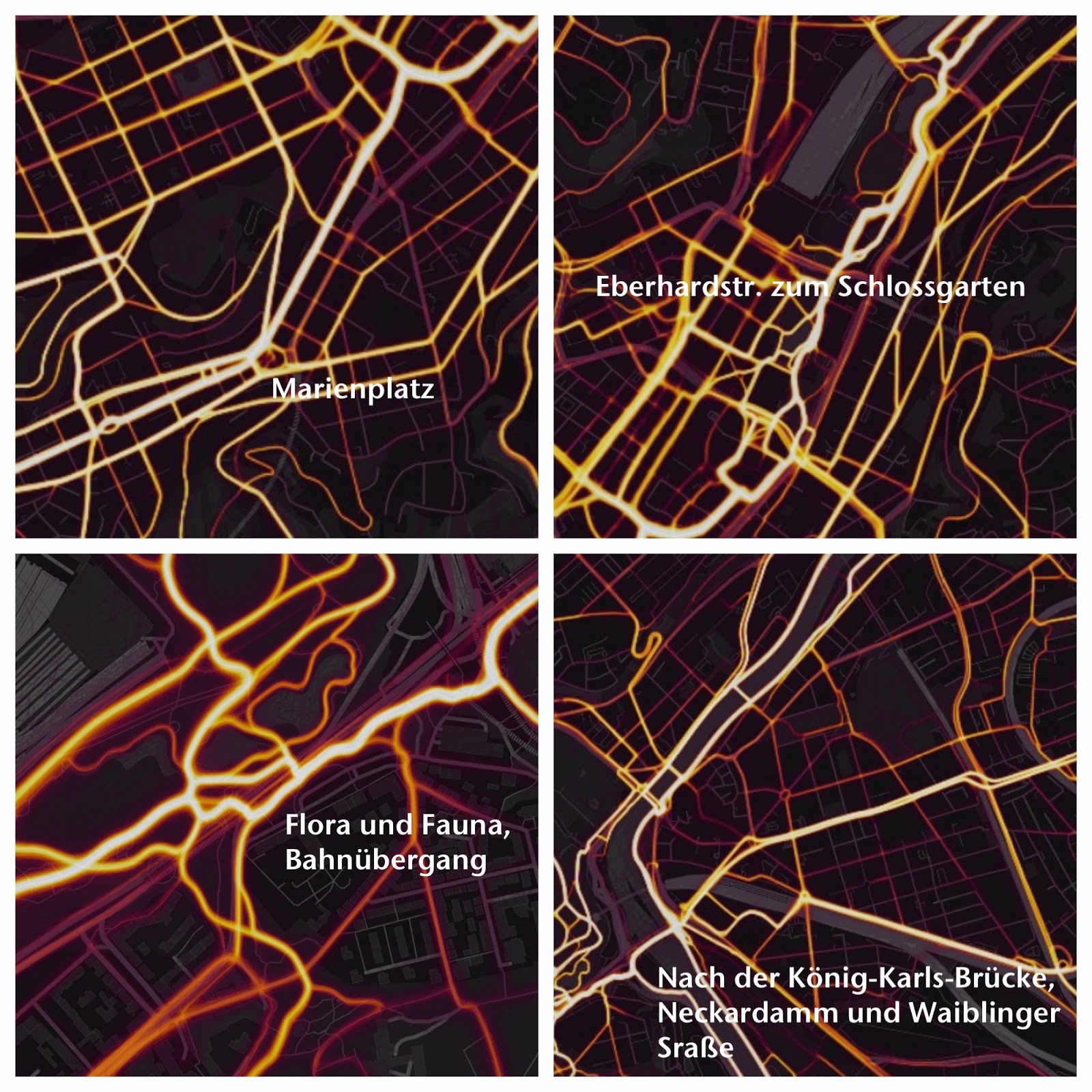
Was die Statistik nicht so deutlich macht: Es gibt auf der HRR 1 einige Hindernisse und Totalausbremser, beispielsweise die Ampeln am Waldeck, am Tagblatturm oder am Charlottenplatz, es gibt inakzeptable Engstellen wie beim Alten Rewe am Marienplatz, wo die Tausenden Radler gerade mal einen Meter Platz kriegen, um sich durch Fußgänger zu schlängeln, oder beim Flora und Fauna im Schlossgarten, wo sie durch einen Biergarten und durch Z-Übergänge kurven. Auf der Fahrradstraße Eberharstraße staut sich der Parkplatzsuchverkehr, auf dem Radweg Holzstraße stehen Lieferanten zum Be- und Endladen oder fahren Autos zu illegalen Stellplätzen. Und immer mal wieder steht ein Auto auf dem Radfahrstreifen.
Zum Glück fahren die meisten nur Teilabschnitte, werden also nur mit einem Teil der Hindernisse konfrontiert. Aber sie nerven die täglichen Pendler trotzdem.
Den schönsten und einer HRR 1 angemessensten Abschnitt finde ich die S21-Umleitung am Planetarium: breit, von Fußgängern fast wirkungsvoll getrennt, keine Autos.

Schön hat sich auch die Fahrradstraße Tübinger Straße entwickelt. (Sie wird allerdings durch die Umleitung in diesem und kommenden Sommer wegen der Baustelle Österreichischer Platz auf 200 Metern zerstört.) Und eine gute Nachricht gibt es auch: Die Ampeln am Tagblattturm verschwinden demnächst, auch die Ampelschaltung am Charlottenplatz aufseiten der Planie wird so geändert, dass wir meistens in einem Rutsch rüber kommen. Und an der Tankstelle beim Übergang aus der Burgstallstraße zum Radweg wird es eine neue und bequeme Querung geben. Aber am Marienplatz ist keine Änderung in Aussicht, und die Holzstraße bleibt ein Kampfplatz für Radfahrende.

Auf der Strava Heatmap, die Radlerstrecken aufzeichnet, wenn Radfahrende Strava verwenden, sieht man, dass die HRR 1 die meiste befahrende Route ist (dick weiß) und die meisten Radfahrenden den Marienplatz über die Möhringer Straße und damit die Entstelle beim alten Rewe anfahren (links oben). Am Ende der Eberahrdstraße teilt sich der Strom, die einen fahren über die Marktstraße und Münzgasse (in Fußgängerzone umgewandelt) und den Karlsplatz, die anderen über die Holzstraße (rechts oben). Die Ströme kommen wieder am Ferdinand-Leitner-Steg zum Schlossgarten zusammen. Auch im Rosensteinpark bei Flora und Fauna teilt sich der Strom. Die einen fahren durch den Biergarten, die anderen nehmen die nächste Z-Schranke (links unten). Und nach der König-Karls-Brücke zweigt ein breiter Strom auf den Neckardamm ab, der auch einer der Hauptstrecken in Stuttgart ist (teils nur freigegebener Gehweg). Ein ebensogroßer Teil radelt aber auch die Waiblinger Straße Richtung Fellbach weiter oder kommt von dort.

Übrigens haben wir in Stuttgart tatsächlich nur 8 km Radwege, also solche Wege, die baulich von der Fahrbahn und vom Fußgängerverkehr getrennt sind. Radfahrstreifen haben wir nur auf 36 km zur Verfügung. 133 km fahren wir auf gemeinsamen Geh- und Radwegen. Damit haben wir 193 km tatsächliche Radinfrastruktur zur Verfügung. gigantische 126 km radeln wir dagegen auf für Radler nur freigebebenen Gehwegen und auch mal Fußgängerzonen. Auch das hat Habicht für uns schon vor längerer Zeit festgestellt. Inzwischen hat er ein paar kleine Ungenauigkeiten korrigiert und mir diese Grafik geschickt.

25 Jul 14:05

“Against the smart city”: Impact metric, part II

by AG

Of such moments is a happy life made.

Once again, a note of cheer for those of you who may have suspected from time to time that all your creative efforts are in vain: this chart from a blathering McKinsey white paper on global adoption of “smart city solutions” acknowledges my 2013 pamphlet “Against the smart city” as part of an inflection point in the discourse.

Think about that for a second — I mean, I sure did, for well more than a second, and you can be equally sure it’s a thought I’ll return to in less affirmative moments. What we’re talking about here is a slim, self-published missive, written by an unaffiliated, uncredentialed independent, taking to task the offerings of hugely well-funded, global enterprises like IBM, Siemens, Hitachi, Cisco and Microsoft, and being cited by an equally global and well-resourced management consultancy as having helped blunt the force of their drive toward hegemony.

That the pamphlet in question was aided immeasurably by the simplemindedness, mendacity and brittleness of the things it set out to critique is beyond any doubt: you don’t need to wield much of a battering ram, after all, if all you’re trying to do is knock down a house of cards. Let’s be equally clear that by far the greater part of the c. 2014-15 retrenchment in corporate smart-city rhetoric stemmed from the fact that the multinationals found, to their great chagrin, that there simply wasn’t a viable high-return business model for what they’d been peddling. And finally, let’s not discount the influence of the multiple kinds of privilege I enjoyed (and continue to enjoy) in shaping the pamphlet’s reception. Those factors were all surely in play. But the lesson I derive from this experience is that at least some of the asymmetry and access to leverage those of us who were there cherished about the early Web remains a fact of the world — a fact that other uncredentialed, unaffiliated, independent actors can grasp and turn to their own advantage, whatever the flavor of their own particular struggle.

It’s not every day you wake up and see you’ve been given even partial credit for forcing Behemoth to alter its plan of attack, by a party granted all the credibility to perform such acts of discourse policing and consensus formation, and hope that the world is made that infinitesimal amount freer and more just as a result of your actions. As silly as this may certainly be, it’s also a gratifying and a sustaining thing. Know then that your pamphlet (mixtape, rant, supercut, outfit, etc.) can move mountains, if only by that much and only for awhile. I hope that more of you get to experience what that feels like — or still better, experience the reality of your impact for yourself, perceive it with your own senses instead of relying on some bottom-feeding consultancy to reaffirm what you already know to be true.

PETTY UPDATE: I get a huge, if somewhat cruel, kick out of seeing the McKinsey cats identify the June ’16 launch of Y Combinator’s New Cities initiative as a landmark moment in the triumphant return to credibility of the smart city. Headed up by the useless Ben Huh, New Cities appears to have been stillborn, with its blog featuring no activity to speak of since its initial announcement of intent, and a grand total of two posts on the associated research portal over the subsequent two years (one of which is a repost of the launch announcement). It really takes an impressive amount of intellectual dishonesty to anoint this as a milestone in anything but the annals of FAIL.

25 Jul 14:05

Air Canada, TD, CIBC, Visa propose $2.25 billion Aeroplan takeover bid

by Sameer Chhabra
Air Canada plane

A consortium consisting of Air Canada, TD, CIBC and Visa have offered to purchase the Aeroplan loyalty program from parent company Aimia for an estimated $2.25 billion CAD.

According to a July 25th, 2018 media release, the consortium is offering $250 million in cash, and is also willing to take Aeroplan points liability as of March 31st, 2018, worth approximately $2 billion CAD.

The group has set an offer expiry date of August 2nd, 2018, stating that they expect a “prompt response from Aimia regarding the proposal.”

“If completed, the Proposed Transaction would result in a positive outcome for Aimia shareholders and Aeroplan members, allowing for a smooth transition of Aeroplan members’ points to Air Canada’s new loyalty program launching in 2020, safeguarding their points and providing convenience and value for millions of Canadians,” reads an excerpt from the same July 25th media release.

The proposed figured is based on a $3.64 per share value of Aimia’s common stock, as well as a 52.3 percent volume weighted average price (VWAP) premium and a 45.6 percent premium to spot closing price as of July 24th, 2018.

Aeroplan recently announced that it plans on renewing its multi-year partnership with Carrot Rewards.

If Aimia accepts the consortium’s offer, the Aeroplan loyalty program would return to Air Canada.

The program was originally launched in 1984 as Air Canada’s frequent flyer program. It was spun off into its own company in 2002.

In 2017, Air Canada announced plans to launch a new loyalty program that would ultimately replace the Aeroplan program by 2020.

Aimia’s stock sits at $2.50 CAD at the time of writing, while Air Canada’s stock sits at $22.09.

Source: CNW

The post Air Canada, TD, CIBC, Visa propose $2.25 billion Aeroplan takeover bid appeared first on MobileSyrup.

25 Jul 07:17

The RISE Package for R: Reducing Time Through the OER Continuous Improvement Cycle

files/images/wiley-morton-bw-2.jpg

David Wiley, iterating toward openness, Aug 02, 2018


Icon

David Wiley's vision of open educational resources (OER) and mine continue to diverge. That's not a bad thing; it makes sense to explore different approaches. Just so, Wiley takes a production-oriented approach to OER: "When OER and learning analytics are used together, it becomes possible to engage in continuous improvement – empirically identifying weaknesses in OER, making improvements to those OER that need to be improved, and starting the cycle again." In support of this idea, he recently announced something called the RISE framework to find "which OER (out of thousands) are most in need of improvement." And in this post he announces a new open source R package that implements this framework.

Web: [Direct Link] [This Post]
25 Jul 07:17

OmniGraffle Stencil for Designing Mac Apps

by Brent Simmons
mkalus shared this story from The Omni Group.

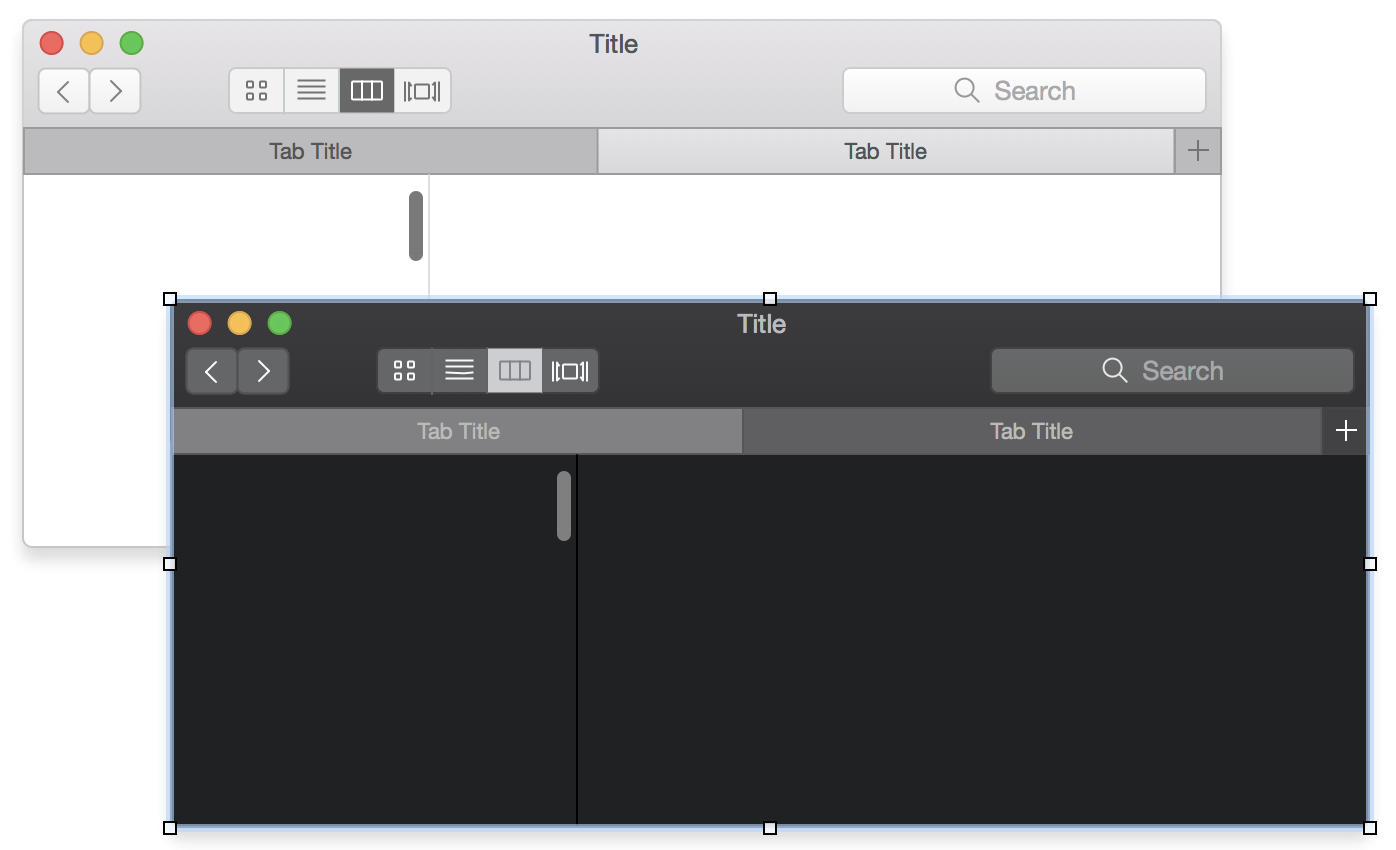
We’ve updated the OmniGraffle stencil by UX Kits for designing Mac apps to include dark mode support, so you can get to work designing apps for macOS Mojave right away.

The stencil includes windows, title bars, buttons, text fields, popup menus, and plenty more.

As always, you can download from Stenciltown using your browser, or open it directly in OmniGraffle via the Resource Browser.

Enjoy!

Screenshot showing light and dark macOS windows being edited in OmniGraffle

25 Jul 07:14

Sad Without a SID? This Comes Pretty Close

by Jenny List

The MOS Technologies 6851, popularly known as the SID, is a legendary sound synthesiser integrated circuit from the early 1980s that is most famous for providing the Commodore 54 home computer with its ability to make noise. At the time it was significantly better than what could be found in competitor machines, making it a popular choice for today’s chiptune and demo scene artists.

There’s a snag for a modern-day SID-jockey though, the chip has been out of production for a quarter century and is thus in short supply. Emulation is a choice, but of little use for owners of original hardware so it’s fortunate that [Petros Kokotis] has produced a SID replacement using a Teensy 3.6.

The operation is simple enough, the Teensy provides all the requisite SID data lines via some level shifters for the host microcomputer, and uses [Frank Boesing]’s ReSID library to do the heavy lifting part of being a SID. You can download the code from a GitHub repository, and he’s posted a video we’ve put below the break showing a prototype in action with a real Commodore 64. The audio quality isn’t brilliant due to a phone camera recording from a very tinny speaker, but notwithstanding that it has the air of the real thing.

This isn’t the first SID we’ve seen here. How about a MIDI synth using one?

25 Jul 07:11

Brand Communities Have Inevitably Changed

by Richard Millington

Bit of a rant today.

As our list of brand online community examples shows, the nature of a brand community has completely changed in the past two decades.

Until recently, brand communities referred to devout superfans of companies like Apple, Jeep, and Harley Davidson gathering together to celebrate their founder, revealing a revolutionary new technology, help one another customize their vehicles, or participate in long journeys with one another. But brand communities today are completely different. They’re less about superfandom, creating warm, fuzzy feelings, and instead about showing a clear, visible, impact.

Making people feel great is nice, but being able to show millions of dollars in costs saved, new customers attracted, or new products launched as a result of the community is what matters. A happy, chatty, community which doesn’t deliver any obvious results is a luxury few companies can afford (and nor should they). It’s not a ridiculous question to ask “what’s the purpose of all this activity?” if the answer isn’t ridiculously obvious.

Fortunately, the potential of brand communities today is bigger than it’s ever been. Almost all brand communities have moved online and can reach far more people than ever before.

They create resources and host discussions read and watched by millions. A useful tip shared over the barbecue at ‘Camp Jeep’ might be heard by a dozen people. A tip posted in the Fitbit community can be read by tens of thousands of people.

Better yet, it can be tested, improved upon, and become common knowledge amongst all. It can drive forward innovation in ways which are scarcely imaginable.

Most members of today’s communities are less likely to be seeking a deep sense of belonging and more likely to be looking for something they need right now. This might be expertise, a place to build their reputation, or a chance to help others and feel good about themselves.

Companies big and small too often lack the ambition for what a community could be and the determination to see it through. As the potential of brand communities has grown, the ambition of their creators has shrunk. It’s a lot easier to launch another Twitter account than to take a group of customers aside and build something special.

Managing a community, and being responsible for a brand’s best and most valuable customers, should be one of the most exciting and important jobs in any business. It should be a job others aspire to and covet. But too often the task of engaging customers online falls to a junior staffer with limited experience and worse prospects.

Too often these staff are forced to chase meaningless measures of engagement rather than forging an indispensable community among their members and their colleagues.

It’s impossible to build an indispensable community when we’re forcing members to choose between clicking ‘like’, ‘share’, or ‘comment’.