Shared posts

01 Aug 02:47

Lies Of The Marketing Industry

by noreply@blogger.com (BOB HOFFMAN)

There are two types of lies. Lies of commission (when you say something that isn't true) and lies of omission (when you neglect to say something that is true.)

The marketing industry is guilty of 10 years of lying by omission.

I am specifically speaking about the events at which the marketing industry comes together -- our conferences. These are the occasions when the industry "gathers" and "networks" and "shares" all the dumb shit that we happen to be obsessed with at the moment.

It seems that there is a new marketing conference every half-hour to solemnly explore whatever the marketing fad-of-the-month happens to be. The trade press, finding it ever harder to make a buck publishing, has jumped head-first into the conference business with a never-ending stream of "insider summits."

The problem with these conferences is that while they pretend to be educational, they usually have a hidden motive that is antithetical to truth-telling. In fact, most of the conferences you attend are financed to a significant degree by companies with an agenda. And what is the undercurrent that defines that agenda? Usually, the propagation and glorification of marketing and advertising technology.

The headline speakers at these conferences are often cheerleaders for whatever new technology is at hand. The talks are usually boosterism disguised as information. Dissenting points of view are rarely represented. The result is that we have become an industry that has lost its traditional sense of skepticism and does not even know what questions to ask when force-fed the latest techno-bullshit.

Do you think Facebook and Google want people at the conferences they are sponsoring to talk about the horrifying dangers of tracking and surveillance marketing? Do you think the adtech industry - whose members sponsor scores of conferences - want speakers spelling out the facts about the waste, fraud and corruption enabled by adtech? If you were paying good money to sponsor a conference would you want people onstage describing what a stupid, dangerous product you were creating? Let's not pretend the conference organizers don't understand the unwritten rules. Let's not pretend they don't book these conferences accordingly.

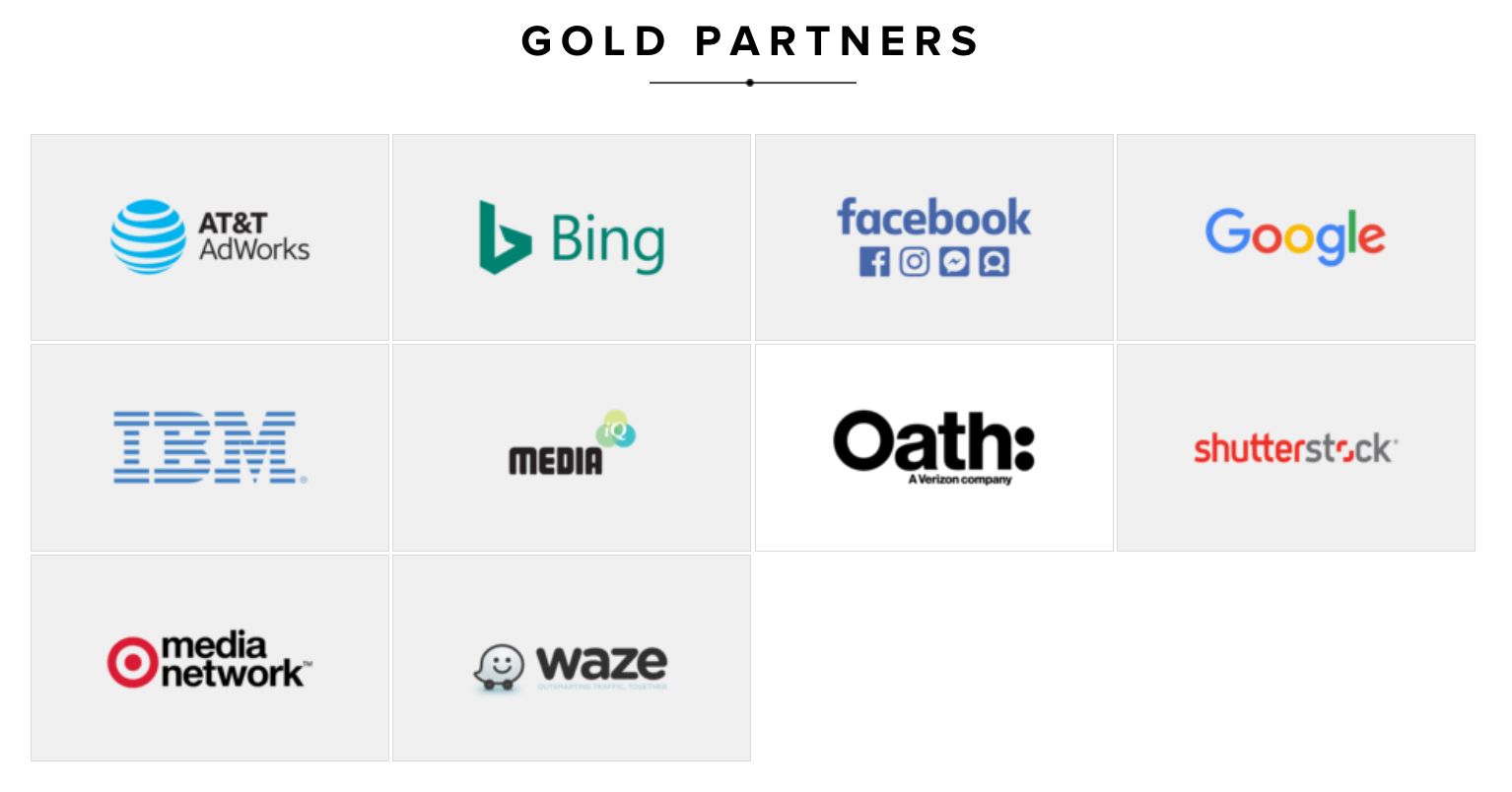
Here is a list of the so-called "Gold Partners" for this year's Advertising Week conference in NYC...

You don't have to be a philosophy major to figure out what segment of the ad industry is being advanced by this conference.

And who's going to be speaking at Advertising Week? Do you think Google will have a speaker at the conference? No, they'll have at least eleven of them...


Isn't anyone embarrassed that one company has eleven speakers at a conference? Have we gone so far down the rabbit hole that no one thinks this unseemly? And people are willing to pay good money to witness this?

I get invited to these conferences once in a while because I get cast as the amusing, slightly nutty old guy who thinks adtech is a bunch of dangerous horseshit. You know, comic relief.

These things are usually just a 3-day festival of self-congratulation and cheerleading for the stinky online ad industry, the dubious operators who serve it, the "futurist" baloney peddlers, and the gullible suckers who pay to suffer through it.

Adtech corrupts everything it touches.


01 Aug 02:24

NewsBlur Blurblog: Shawn Micallef: A temporary glimpse of a rare Toronto ruin

sillygwailo shared this story from TORONTO STAR.


The old fire tower up Yonge St. stands tall, its lower half looking scarred and battered as if it were a roman building — the site is being prepared for a residential development that will incorporate the tower into the design.

01 Aug 02:24

Twitter Favorites: [jimpick] The new Twitter app rules sound actively hostile to developers, most of which aren't abusing the platform https://t.co/jCdqLisCz2

Jim Pick @jimpick
The new Twitter app rules sound actively hostile to developers, most of which aren't abusing the platform blog.twitter.com/developer/en_u…
27 Jul 15:39

✚ How to Visualize Ranges of Data in R

by Nathan Yau

When you want to focus on the magnitude of differences between low and high values, use visual cues that highlight distance. Read More

27 Jul 15:38

Das funktioniert gut :: Buy me a coffee

by Volker Weber

Sketch

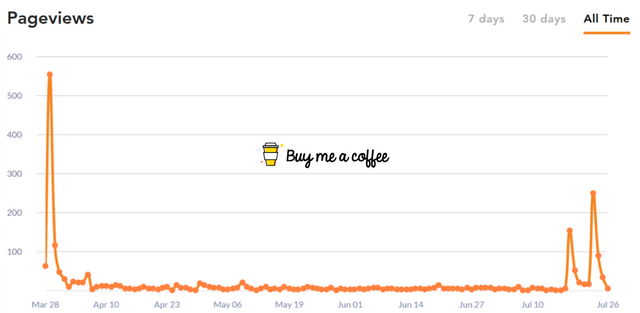
Vor vier Monaten habe ich die Seite buymeacoff.ee/vowe angelegt und davon erzählt. Das gab einen großen Spike in der Zugriffsstatistik und flachte dann relativ schnell ab. Aber Eure Bereitschaft, auch mal was in die Kaffeekasse zu stecken, war viel höher als ich gedacht habe.

Meine Eltern waren sehr sparsam, aber mein Vater hat immer reichlich Trinkgeld gegeben. Er hat mir beigebracht, dass das kein Almosen ist, sondern ein Ausdruck von Dank. Und so kriegt heute noch jeder Kurier, der ein Päckchen bringt, einen Euro. Der wird immer gern genommen, mit einem einfachen "Danke" und einem Lächeln. Und genau das macht mir Spaß.

More >

27 Jul 15:38

Security Headers for the Blog

by Martin

content security header evaluation

The Internet is a dangerous place, lots of bots have nothing better to do than probe for weaknesses everywhere. As you might know, I use WordPress to run this blog and they are pretty quick to fix security issues when they come up. But since I’m quite a bit on the security conscious side, I decided to add an extra layer of armor with HTTP Security Headers for extra protection for me and of course, you, the reader.

One of the reasons for migrating from Typepad to WordPress was that I could finally serve this blog over https with an SSL certificate. At first I bought one year certificates but have since moved to Letsencrypt. This is all nice and well but a man-in-the-middle attack could downgrade the encrypted https connection to unencrypted http. Well, this is no longer possible as I now set the HTTP Strict Transport Security (HSTS) which instructs the browser to only request future pages on my site via https. In other words, http is permanently switched off!

Other threats that occasionally pop-up are cross-site-scripting and click-jacking attacks. These are based on exploiting bugs that allow inserting Java Script code into the site that communicates with other servers and by putting this website into a frame on another web site and overlay it with invisible ‘buttons’. To counter such attacks I’ve set the following HTTP headers that instruct the browser to only load Java Script and other things from this site and not from anywhere else and to reject any attempts to embed this site into frames of other sites. This way, it can be ensured that all active scripts running on the site can only communicate back to the site and nowhere else:

// Load content including Java Script only locally
Content-Security-Policy:
 default-src 'self' data:
 font-src 'self' data:
 object-src 'none'
 script-src 'self' 'unsafe-inline' 'unsafe-eval'; " .
 style-src 'self' 'unsafe-inline'; " .
 connect-src 'self'
 worker-src 'self'
 frame-src 'self'

// The website must not be put into a frame. 
// Protects against some forms of click-jacking.
X-Frame-Options: deny

// Block rendering of the complete page if an XSS 
// attack is detected. Note: It would be better to 
// have script-src above not as "unsafe-inline" but 
// since in-line Javascript code is used, it's 
// better than nothing to have this protection.
X-Xss-Protection: 1; mode=block

// The browser must not try to change the MIME header 
// by sniffing. This reduces the risk of running code 
// embedded in up/downloaded files.
X-Content-Type-Options: nosniff

// Always send the full referrer to this page unless 
// there is a downgrade from https to http 
// (which HSTS prevents)
Referrer-Policy: no-referrer-when-downgrade

For more details on the security headers have a look at Scott Helme’s blog post here. If you are running Firefox and want to take a closer look at the headers that are now sent, press F12 on this page which opens the Firefox developer tools and then reload the page. Then go to the ‘network’ tab and have a look at the ‘headers’ of the first ‘GET’ request.

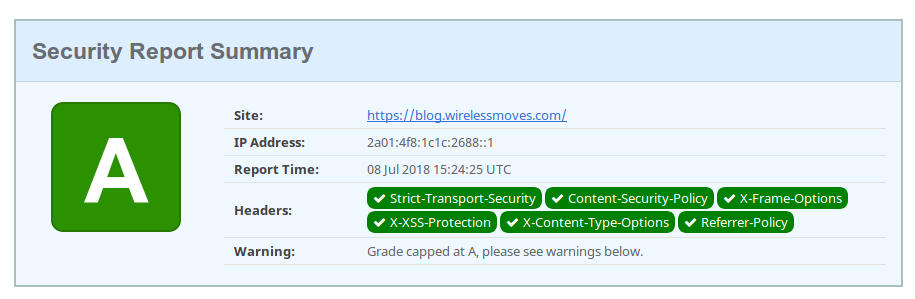
It’s good to see that my efforts seem to have a good effect as security-headers.com gives me a straight A!

27 Jul 15:38

Without A Community Strategy….

by Richard Millington

Most people running a community aren’t working from a strategy.

Without a community strategy, you’re letting yourself and your community down.

You’re making it more difficult for others to take you seriously.

You’re making it impossible for your colleagues to know how the community helps them and what help they need to offer in return.

You’re making it impossible for your boss and her boss to know what resources you’ll need and when you will need them.

You’re not accountable to any metrics and can’t prove the success of anything you do.

You’re not leading your community, you’re following it.

You’re not deciding what you need members to do, you’re reacting to what they already do.

You have no idea what motivates your members or how to amplify those motivations.

You resort to using a rising number of tactics instead of narrowing down your tactics to those that matter.

You collect a lot of data without any idea how to use it to improve your results.

Without a good community strategy, you’re not treating your work with the professionalism and thought with which it deserves to be treated.

Next week we’re going to open registrations for the Autumn semester of our Strategic Community Management course.

It’s helped over 200 community professionals create, rebuild, and rethink their community strategies. If your strategy isn’t driving your community forward today, I strongly recommend you consider it.

27 Jul 15:37

Tesla Model 3

About a month ago we got our Tesla Model 3. This is a rambling post about it.

Personally I don't mind spending money on some things, but I absolutely hate spending money on depreciating assets. Since I'm lucky enough to have money to save, I feel it should be in boring assets that make a solid return every year.

I've liked looking at fast and expensive cars, but when it comes to actually spending lots of money on them, I've always thought its a terrible idea. I've wanted a Porsche forever, but I've never wanted to spend the money on one. We've gone to buy cars and I've come away feeling grumpy and miserable that I've spent that much money on something that will depreciate.

And then along came Tesla. Sure Elon Musk and Tesla have a few problems at the moment, but here is a person who is actually trying to do something about the fact that our planet is burning up. This is a man on a mission to do good.

This is a company that released the Model S, a car so revolutionary that it broke Consumer Reports scoring. A car that has taken over the luxury model class. We test drove a Model S and it was amazing. Everything we drove after that felt like it was ancient technology. But there's no way in hell I'd spend that kind of money on a Model S.

Then along came the Model 3 and we put our refundable deposit down predicting we'd need a new car eventually. And waited and waited. Finally our spot came up and we had to buy the premium version which sucked. It meant more money and that made me grumpy. We thought about it, I got more grumpy but eventually we went for it.

There's a few reasons why. The time is right for electric cars. The infrastructure is in place. Most car manufacturers, spurred by Tesla, are producing electric cars. There's a tipping point and its happening over the next few years. In BC over 90% of electricity comes from hydro electricity. A car is rarely a green choice in terms of the plastic, metal and other materials used, the manufacturing process, the amount of road infrastructure dedicated to it and so on. But this is about as good as a car gets.

So how is it?

Amazeballs. I irrationally love this thing. I'm still making excuses to go places so I can drive the car.

The car is minimalist on the the inside and I like it. So many cars have a billion buttons and knobs for every function. Everything apart from lights, indicators and wipers are controlled through the tablet mounted in the middle. But most of those are automatic anyway, so hey why bother. Sitting in my Toyota now feels fussy and complicated.

It goes fast. Really fast. You put your foot down and it just goes and keep going. Silently and with power. It accelerates faster than that Porsche Boxster I wanted. And thats more than fast enough for me thank you. It's got a 500km range and we barely do that in a few weeks around town. Because of the huge battery in the bottom it goes round corners amazingly well. Everytime we get in it, its like driving a sports car. A quiet and amazing sports car.

For a car this price, I wanted a few more things like an automatically closing and opening trunk and front trunk. But then you've got other things like a great tablet as a dashboard that's fast and responsive and helpful. When you are on the phone its loud and clear. It's got full time LTE for traffic routing. I could go on and on. And no we didn't get autopilot, that is scary.

This feels like a car from the future that doesn't destroy the environment. Driving it is amazing and I still love it. Way more than I should.

Oh and my other favourite toy, my Cervélo S3, fits perfectly in the boot.

If you plan on buying one, here's my affiliate code.

27 Jul 15:37

Twitter Favorites: [shawnmicallef] Hamilton the Good https://t.co/mYwK5Wfeff

The People's Tweeter @shawnmicallef
Hamilton the Good twitter.com/fredeisenberge…
27 Jul 15:37

Your Local Blix Dealer: Portland, Oregon

by Blix PR

QUICK FACTS 

Local Shop: Cynergy E-bikes

Owner: Rich and Ruthellen 

Located: Portland, OR

Number of Employees: 6

Fun Fact:  Rich and Ruthellen aka the "happiness experts" are e-bike loyalists, they have gotten rid of one of their cars, and rarely drive at all! 

                                   __________________


Cynergy E-bikes truly believe that electric bikes are transformative. In fact, the owners Rich and Ruthellen, have heard time after time from their customers that "e-bikes change people. Whether it is changing their mode of transportation or getting them back into bike riding, e-bikes make people feel better."

The slogan of the bike shop, "Love your ride" is more than just words. At Cynergy they try very hard to give every customer a personal experience – from listening to their needs and expectations to teaching them about the various types of e-bikes, and then personally escorting riders out back in the quiet, low-traffic neighborhood (riding up the hills…).

That's why we have chosen to feature Cynergy Ebikes in this month's edition of "Your Local Blix Dealer!"


How did you end up in the fantastic world of bikes? 

Ruthellen and I want to save the world, by helping to reduce carbon pollution. Using an ebike as an alternative to a car is a great way to do it.  It puts only a tiny fraction of carbon into the air compared to a car.  Plus, they are fun and healthy to ride.  We also see them as a way to more people more often on to bikes, whether for transportation or recreation.

What is unique about your store? 

We really believe in treating our customers the way we would expect to be treated. No high-pressure sales. We focus on educating our customer on the differences between the different e-bike options and then finding the best bike to match their riding needs and their budget.

What is the funniest or strangest request you’ve ever had from a customer?

    1. Rich – we had a customer who came in to show me the motorized bike he invented that was powered by compressed air. He had the air compressed into a large tank used to hold CO2 for a restaurant soft drink machine.  It was strapped to the back rack of the bike.
    2. Ruthellen – had a customer who decided which bike she wanted to purchase by riding it up the longest, steepest hill in the area -- without electric assist.

How did you find out about Blix & what about the brand convinced you to become a dealer? 

Not sure.  I think it was that we were looking for a better folding bike.  We read a press release about the introduction of the Vika and decided to check it out.

What would you say is the biggest benefit of owning an electric bike? 

It makes it easier to use a bike for getting around.

In your professional opinion, what is the most important thing to consider when deciding what electric bike to buy? 

Comfort.

If you could only have one Blix Bike which one would it be and why? 

The Vika+. There are so many things we like about this bike.  Most important, the frame is extremely well constructed for a folding bike – the clamps are very strong and secure, yet quick to use. The low-step frame accommodates everyone.  The riding position is very similar to a full-sized bike. The motor delivers exceptional power and the bike looks great.


    If Cynergy E-bikes is your Local Blix Dealer, give them a call to set up a test ride or just stop by to say hi and find out more about the electric bike movement!

    If you do stop by for a test ride, don't forget to share your photos with us! 

    We love to see our Blix Community in action!

    Tag us and use the #OnABlix

    Blix Bike Facebook   Blix Bike Instagram

    27 Jul 15:37

    The Art of the Personal Project: Paul Ernest

    by Suzanne Sease

    The Art of the Personal Project is a crucial element to let potential buyers see how you think creatively on your own.  I am drawn to personal projects that have an interesting vision or that show something I have never seen before.  In this thread, I’ll include a link to each personal project with the artist statement so you can see more of the project. Please note: This thread is not affiliated with any company; I’m just featuring projects that I find.  Please DO NOT send me your work.  I do not take submissions.

    Today’s featured artist:  Paul Ernst

    Claimed as the 21st century Norman Rockwell, Paul Ernest’s photographic work has been received as a soulful interpretation of timelessness in today’s evolving informational and technological culture . Using the camera and his appreciation for American Realism, Paul has developed a style he calls Mise En Scene Realism. His focus on composition and lighting are primarily drawn from painters such as Wyeth, Rockwell and Johnson but with an influence from his former career as a Creative Director and designer. “We are a people of storytelling , parables and fables. Our perception of the aesthetics in life are absorbed and interpreted in a way that is no different from any style or technique that have ever been in existence. We learn from stories and the adoption of them into our way of thinking and living.”

    Since 2011 Paul’s work has earned him awards from WPPI and PPA, including Diamond Photographer of the Year in 2012 and 2015 and earning his Craftsman and Master Degree. Paul’s work has been accepted in galleries such as Craighead Green and premiere arts festival throughout the state of Texas. His commissioned work hangs in restaurants, hotels and private collections including the lobby of his alma mater where he received his Bachelor of Fine Arts. He also has developed his style into a line of home interior products sold nationally.

    Paul’s passion for education and continued growth in himself and others is evident in his teaching and mentoring which he does in his home state as well as across the U.S. He lives just outside of Dallas, Texas with his wife and children.

    To see more of this project, click here.

    APE contributor Suzanne Sease currently works as a consultant for photographers and illustrators around the world. She has been involved in the photography and illustration industry since the mid 80s.  After establishing the art buying department at The Martin Agency, then working for Kaplan-Thaler, Capital One, Best Buy and numerous smaller agencies and companies, she decided to be a consultant in 1999. She has a new Twitter feed with helpful marketing information because she believes that marketing should be driven by brand and not by specialty.  Follow her at @SuzanneSease.

    ------------------------

    Visit our sponsor Photo Folio, providing websites to professional photographers for over 10 years. Featuring the only customizable template in the world.

    ------------------------

    27 Jul 15:36

    Apple Releases New App Design Resources for the Mac and Apple Watch

    by John Voorhees

    As tweeted by Mike Stern, Apple’s Platform Experience and Design Evangelism Manager, Apple has updated its AppKit design resources with a comprehensive set of UI elements for making Mac apps. The UI elements come in both Aqua and the Dark Aqua variants for designing Dark Mode Mac apps.

    The update, also announced on Apple’s developer news website, includes new watchOS UI elements too, including ‘dozens of new UI elements for watchOS apps, watch face templates for designing complications, a color guide, and new text styles.’

    The design assets are available to download in both Photoshop and Sketch formats from the Resources section of Apple’s Human Interface Guidelines website. A full list of all the changes is available here.


    Support MacStories Directly

    Club MacStories offers exclusive access to extra MacStories content, delivered every week; it's also a way to support us directly.

    Club MacStories will help you discover the best apps for your devices and get the most out of your iPhone, iPad, and Mac. Plus, it's made in Italy.

    Join Now
    27 Jul 15:36

    Careful Progress, Baby Steps: Vancouver’s Jericho Lands

    by Ken Ohrn

    The 90-acre Jericho Lands, a huge greenfield, sits in Vancouver’s West Point Grey neighbourhood. We all wonder what will rise there.

    It’s mostly a former military garrison, now owned by the Musqueam, Squamish and Tsleil Waututh Development Corporation, and the Canada Lands Company. You’ll find it amid some of the priciest real estate in Canada, featuring very low density, and very expensive single-family homes. The Lands offer potentially spectacular view sites and nearby ocean-front parks. (Read some background  on this site HERE, HERE, and HERE).

    Amid the enormous pressure inherent in shepherding an allocation of this multi-billion dollar site, it’s hard to get much of a sense of the possible, ultimate outcome; a veritable bonanza of opportunities to reshape an entire community. What’s to come — cheesy car-centric suburb? A forest of high rises, ripe for speculators? A complete community for average humans — what?

    But maybe something beyond platitudes and vague statements is slowly emerging.

    This Policy Plan (18-page PDF) is another baby step, and the whisper of a hint of an inkling of a possible direction for the Jericho Lands.

    Since the City of Vancouver has zoning responsibility, it has the ability to somewhat control what the Jericho Lands will become. City Council approved this Policy Planning Program on July 24, 2018.  It includes the Lands’ owners, the city and massive rounds of public consultation.  See the timeline below.

    The process will lead to a Policy Statement which establishes principles, objectives and policies relating to a range of topics, including: land use, density, height, public benefits, transportation, built form and character, heritage, sustainability and development phasing. The Policy Statement will be presented for Council’s consideration at the end of the process and, if adopted, will be used to inform any future rezoning of the Lands.

    A schedule highlight:  rezoning of an anticipated Phase 1 would begin after council’s approval of the Policy Statement to be developed over the next 24 months.

    Click to enlarge

    Planning Events of Note:

    • May 2019:  Public launch, sub-area identification
    • October 2019: Draft site plans and initial concepts
    • March 2020: Preferred concept
    • July 2020: Policy Statement and Report to Council

    Personally, I’d be delighted to see transit-oriented development, with affordable housing for Vancouver residents and few (if any) towers or mansions aimed at speculators.

    I’d also be delighted to see transit in the form of the Broadway subway extended to the Jericho Lands from Arbutus, in conjunction perhaps with the much-discussed extension to UBC, and pedestrian-friendly overpasses across the 4th Avenue speedway to and from Jericho Beach Park.

    And as part of the Strategic Analysis:

    It is recommended that Council endorse a program that looks at site redevelopment options reflecting approved Council policies to optimize the Jericho Lands’ potential to meet City and community needs around sustainability, affordable housing, transit-oriented development, provision of ground-oriented housing suitable for families and public benefits.

    Concerning existing plans that inform the Jericho Lands’ plan, I’m happy to read these discussion points:

    Transportation 2040 Plan (2012):

    A number of goals are relevant to Jericho Lands, including the following:

    • Support compact community development, helping to preserve natural habitat and agricultural land throughout the region.
    • Making the majority of trips on foot, bike and transit.
    • Prioritize and encourage a dense and diverse mix of services, amenities, jobs, and housing types in areas well served by frequent, high-capacity transit.
    • Support vibrant public spaces that encourage a culture of walking, cycling and social interaction.

    Broadway Line:

    The Broadway Corridor is a regionally important corridor and rapid transit for Broadway has been prioritized in City and regional plans for over twenty years. In 2014, the Mayors’ Council on Regional Transportation approved a long-range transportation Vision (the Mayors’ Council Vision) which included an investment package for the first 10 years. The Vision prioritized rapid transit to UBC to be delivered in two stages. The first stage is the Millennium Line Broadway Extension (MLBE), a primarily tunneled SkyTrain extension under Broadway from VCC-Clark to Arbutus, to be delivered in the first 10 years of the Vision. A truncated B-Line bus service will continue to operate on Broadway/West 10th Avenue between Arbutus and UBC until stage two of rapid transit west of Arbutus is complete. This B-Line service stops at Alma and Broadway which is within 3 blocks of the southeast corner of the Jericho Lands.

    On June 28, 2018, TransLink’s Mayors’ Council approved the ‘Phase Two Investment Plan’ which includes planning work for rapid transit to UBC which would serve the Jericho Lands.

    Coordination with the Broadway planning program will occur throughout the planning process for the Jericho Lands.

    The final word goes to Ian Campbell, Vision Vancouver’s mayoral candidate, who has apparently stepped back from the MST Development Corporation, but certainly retains some memory of discussion to this point:

    “We’re not just a developer building a luxury product. The intent of those lands is to develop housing options.”

    With thanks to Frances Bula in the Globe and Mail.

    27 Jul 15:36

    Alex Norris on why it’s better to create like a child than a genius

    by Alice Tynan

    Photo of Alex Norris at Nicer Tuesdays

    After the success of his first series, Dorris McComics, suddenly attracted hundreds of thousands of followers on social media, Alex Norris decided it was a good time to take things to the next level: parody. The result is Webcomic Name, a satire of relatable comics that features a “badly drawn blob” who greets an unending onslaught of disappointments with the recurring punchline: “Oh no.” At a recent Nicer Tuesdays event, Alex delved into the origins of his series and the inspiration behind his approach. That inspired us to learn more about what fuels his creativity and why he thinks confidence is one of the most important tools an artist can possess.

    Alice Tynan: What does creativity mean to you?
    Alex Norris: [Dorris McComics] was me figuring out creativity and how I was creative. The thing I like to do often is just state the obvious. Webcomic Name took that to the next level. I literally just state the most obvious thing that you can possibly think of. Too often, you see people trying to be clever, but the way that they do that is by being esoteric or being purposefully confusing or mysterious. I was doing the opposite. [Creativity] is not mysterious at all. It’s really obvious. I love reading books on creativity. A lot of the time the book is just saying: Don’t read the book—do some of the art. If you want to be a writer, do some writing.

    “Creativity by necessity is doing something that’s unusual and not logical. We’re trying to look logically at something that is inherently not logical.”

    Does the idea of creative energy resonate for you?
    I think creativity is just habit. My entire life, I’ve always been drawing. When I was younger, I’d just be doodling a lot, so I’d often have ideas. But I never felt like, “Oh, I’m a genius. I’m having all these ideas.” It was just play. Now I’ve just learned to sit down and do that on demand. People always use the word energy when they don’t know what it is. A lot of time I just think of it as just confidence. There is no such thing as writer’s block. It’s just that I have ideas and then I’m not confident in them enough to carry them to the point of being finalized ideas.

    “I suppose what they are saying when they talk about creative energy is the excitement you get from being creative.”

    I definitely find that once I have some ideas that I’m really pleased with. I’ll lead into thinking of more and more. All that is is confidence. You become more excited by your own ideas. That can be triggered as well by seeing a good movie or going to see a good play or a comedian or reading a book. I have learned to know when to capitalize on that feeling.

    Photo of Alex Norris at Nicer Tuesdays

    What does flow state mean for you?
    I had that a lot with Dorris McComics, because they were slightly longer comics. I could sometimes sit down and be writing or drawing, then look up and it’s been three hours and I’m hungry now but I didn’t realize. I really like that feeling.

    With Webcomic Name, that doesn’t happen all the time. Webcomic Name is the smallest units of creativity I could possibly make. I can sit down, then sometimes within an hour have a completed thing. It doesn’t matter about flow state then. I’m not dependent on that kind of mindset for working. I find it funny how people love this flow state idea—whenever people enjoy feeling nothing or not thinking about anything. It’s like when you go on a night out, you get really drunk and you’re like, “Wow, that must’ve been amazing ’cause I don’t remember anything.”

    Can you give an example of something that’s a drag on your creative flow?
    Most of my comics are written in the space of a few hours. Maybe I’ll have one day in about a couple of three weeks or so, where I’ll be like, “Oh I have all these ideas,” then I write them all down. They’re a bit more laborious the rest of the time.

    “I think the drag state normally comes from lack of confidence.”

    Sometimes I look at what I’m doing and go, “Is this a hack art?” As soon as I lose the ironic enjoyment I get out of it, I’m like, “I’m just a bad artist.” This is the good thing about doing loads of comics. The value of them isn’t measured individually, it’s as a series as a whole. Not every bit of work you do has to be amazing. Eventually, the standard of the ones you just churn out will become higher.

    When we talk about work, stuff is very different in the last 20 to 30 years. You talk about how much content you are producing. Like you are a machine of productivity. You’re the best when you are like an automated machine. Whereas, a lot of the books I like to read are all about the kind of weird poet figure who is kind of weirdly inspired. It’s about tapping into that. Just think about yourself as a sensitive, and skillful, natural person, rather than an art-making machine.

    “I think the idea of the genius is very damaging.”

    What do you say to people who don’t identify as creative? How do they think they might tap into their creativity?
    I think the idea of the genius is very damaging. I was reading a book about people drawing as children. This is a classic Picasso idea: All children are artists, and the trick is staying one when you get older. I think drawing is one of the most pure acts of creativity in many ways because kids do it all the time. All you need is a pen and paper, then you can make something. Kids get a real joy from just literally making a mark on a page. There’s something special about drawing a circle and then putting a dot and a dot and a line in it and then being like, “Oh, I recognize that, that’s a person.” There’s a real magic to that. As people get older, it makes me sad when people say they can’t draw. They’re afraid of having that childlike joy which drawing definitely gives you.

    “Starting is fun. Finishing is scary.”

    What advice would you give younger self?
    I’d probably say just chill out. Stop trying to be so clever all the time. When children draw, they draw very automatically. If you watch a child up to the age of about nine, drawing, they will compose a picture. You know like the whole house with a sky and a sun and a family and some flowers? It’s amazing. That’s actually a well-composed picture. Then as you become a teenager, you start trying to make things look realistic. I got obsessed with things looking really good to the point that I stopped completing stuff.

    That’s a big issue: Starting is fun. Finishing is scary. Cause then you’ve got something to look at and be judged on. So if you never finish anything, then, “Oh, it’s unfinished, so it’s fine.” I used to do that all the time. But now I realized that it’s fun finishing something, looking at it and going, “That’s bad. That’s funny, I made that, I spent the last two hours making this bad thing.” I find that really satisfying. If I just made more final pieces when I was younger, then I would’ve more quickly learned how to do things that are more interesting with art than just starting projects.

    Photo of Alex Norris at Nicer Tuesdays

    Is there a point when you found yourself being able to step past the fear of judgement and just say, “Even if it’s bad, I’m finishing”?
    Yeah. I started drawing these cartoons that were like doodles, but I’d always finish the doodle. I got into this habit of finishing these doodles, and it became bigger and bigger when I was about 16, and I used to get A4 pages. They were like a meditation kind of thing. I would just start with drawing that in one plan. They’d always have the same elements. So I would draw something in a way that was very familiar. Then I would draw another one. I would tweak things and experiment a little bit. I would do those obsessively. With writing, it was basically making my stuff smaller and smaller. Now it’s three panels long. By the time you started, you basically finished. If I was to write a novel, I would have very short chapters, a bit like Kurt Vonnegut. It’d be like these little pieces. You can then edit them to make really nice large pieces. Which I think is actually how novelists make novels. But I only realized that recently.

    How does technology figure into your process?
    I’m not very good with technology. I still write all of my ideas in a sketchbook that I carry around with me ’cause I’m out and about a lot. Also, I have the worst laptop you have ever seen in your life. It’s embarrassing… Held together with tape. Seven years old. It makes a really loud kind of clunking noise. I have a weird relationship with technology, but at every point that I do get new technology it makes my life a lot easier. I kind of relish making my life a bit difficult. At the moment, I draw on a tablet, which I find really nice. I got it for Webcomic Name because Webcomic Name is so spontaneous. I want to do it very quickly and also on the go. I can just draw anywhere.

    To see some of Alex’s webcomics, check out webcomicname.com and dorrismccomics.com.

    Banner for Dropbox Paper

    27 Jul 15:36

    Aus für Hipchat und Stride: Atlassian investiert in Slack

    by Volker Weber

    atlassian slack

    Der australische Hersteller streicht die Segel im Markt für Echtzeit-Kollaboration und migriert die Kunden auf Slack.

    More >

    27 Jul 15:36

    Kano Announces Harry Potter Magic Wand Coding Kit

    by John Voorhees

    With three children, I’ve looked at many products over the years that are designed to make learning to code fun and engaging for kids. Of all the things I’ve tried, one of my favorites is a build-your-own computer kit from Kano. The kit is a kid-friendly Raspberry Pi with tiny, bright orange wireless keyboard.

    The Pi runs a Kano-skinned version of Linux with a bunch of activities for kids ranging from Minecraft mods to simple building block-style JavaScript programs that abstract away the language’s syntax but makes it available just under the surface as kids become more comfortable with coding. It’s an excellent kit that strikes a good balance between learning and fun.

    This week, Kano announced a new Harry Potter-themed magic wand. Kids build the wand, which contains an accelerometer, gyroscope, and magnetometer, and then use an iPad, Mac, PC, or Android tablet to program magic spells straight from the Harry Potter book series using JavaScript. Kano says the wand, which can be pre-ordered for $99 and will be delivered on October 1st, comes with a book of over 70 projects and can be ordered from Kano directly, Amazon, and other retailers.

    My kids are a little old for the Kano wand now, but I know that if it were available back when they were tearing through the Harry Potter series, the wand would have probably turned up at my house over the holidays.


    Support MacStories Directly

    Club MacStories offers exclusive access to extra MacStories content, delivered every week; it's also a way to support us directly.

    Club MacStories will help you discover the best apps for your devices and get the most out of your iPhone, iPad, and Mac. Plus, it's made in Italy.

    Join Now
    27 Jul 15:35

    The Spirited Culture of Feast Portland

    by Admin Edible

    The incredible array of food and beverages at Feast Portland never fails to amaze us! In this article, we will ‘delve’ into the participating distilleries to give our readers some insight to the ‘spirited culture’ associated with the festival.

    What is distilling? In a nutshell, it can be explained as the method of heating a liquid to create vapour, after which point, the vapour is condensed back into a liquid form.

    This process allows for the capturing of specific substances in a liquid, giving the distiller the ability to highlight and bring forward individual flavours.

    It takes great talent and attention to create the excellent distilled liquors at Feast Portland this year. As always, the list of participants is extensive, and with this comes the possibility for incredible spirits, cocktails and mixed beverages.

    A couple of our favourites:


    BULLEIT
    (LOUISVILLE, KY)
    In 1987, Thomas E. Bulleit, Jr., fulfilled a lifelong dream of reviving an old family bourbon recipe by starting the Bulleit Distilling Company. Inspired by his great-great-grandfather Augustus Bulleit, who made a high-rye whiskey between 1830-1860, Tom left a successful law practice and risked everything to experience life on the frontier. To this day, Bulleit™ Bourbon is distilled and aged in the Bulleit family tradition. High rye content gives it a bold, spicy character with a distinctively smooth, clean finish. Kentucky limestone-filtered water provides a foundation for the bourbon’s character, while charred American oak barrels lend a smoky backbone. Our aging philosophy is simple: we wait until our bourbon is ready.

    Find it at Feast Portland:

    BRUNCH VILLAGE PRESENTED BY BOB’S RED MILL
    NIGHT MARKET: RING OF FIRE PRESENTED BY ALASKA MILEAGE PLANT
    SMOKED!


    FREELAND SPIRITS

    (PORTLAND, OR)
    Freeland Spirits, Portland’s new craft distillery, is proud to be women owned and operated. From the gals who grow the grain and botanicals, to those who run the still, we’re creating superior spirits that celebrate all the Northwest has to offer. Freeland Spirits Gin is crafted by hand in small batches. A traditional copper pot still brings juniper and 13 other botanicals to life. Meanwhile, a state of the art vacuum still cajoles quieter flavors including fresh cucumber, rosemary, mint and thyme. Yes, delicious in cocktails but we suggest sipping it with just a cube of ice.

    Find it at Feast Portland:

    NIGHT MARKET: RING OF FIRE PRESENTED BY ALASKA MILEAGE PLANT


    ARIA PORTLAND DRY GIN

    (PORTLAND, OR)
    Since 2012, Martin Ryan Distilling Company has focused exclusively on distilling Aria Portland Dry Gin—a classic London Dry gin handmade using traditional ingredients and distillation. The result is familiar, yet new—a full bodied, aromatic gin with depth, complexity, and balance. Aria Gin has earned numerous gold medals and praise from local and national press. Everything used to make Aria Gin is verified fair-trade, sustainably grown, and GMO-free. In under five years Martin Ryan established itself as one of Oregon’s premier distilleries. Aria is one of Oregon’s best selling high-end premium gins and one of the fastest growing craft spirits brands in Oregon’s history.

    Find it at Feast Portland:

    NIGHT MARKET: RING OF FIRE PRESENTED BY ALASKA MILEAGE PLANT

    In the nature of celebrating and learning about beautifully made craft beverages, Feast Portland’s DRINK TANK events are a series of talks and tastings geared towards discovering cocktails, aperitifs, wines, and all things alcohol.

    The New (old) Italy is a DRINK TANK event that will give you the chance to learn from experts and gain new knowledge on old-world traditions.

    Step into the mystical realm of Italian wine with Helen Johannesen (Helen’s Wines, Los Angeles) and Marissa Ross (Bon Appétit, Los Angeles). While these ladies are making it rain grissini, your palate will be educated and enticed by killer wines from magical wine makers. It’s some of that new school style and the OG classics all converging over similar thought and methodology. Come be Italiano!

    FRIDAY, SEPT 14TH
    2:00PM – 3:00PM
    DIRECTOR PARK

    Tickets available here.

    The post The Spirited Culture of Feast Portland appeared first on Edible Canada.

    27 Jul 15:35

    The iPad vs. Mac Juxtaposition

    by Neil Cybart

    Apple has always publicly supported the iPad and Mac. However, that hasn't prevented questions regarding Apple's commitment to the two product categories from popping up. In recent months, Apple has shown a new level of openness when it comes to embracing both the iPad and Mac as unique and differentiated platforms for creative endeavors. The change is noteworthy when thinking about each category's future. 

    Ad Campaigns

    A few weeks ago, Apple unveiled a new Mac ad campaign, "Behind the Mac." The ads were meant to elicit fond memories professionals have of using Macs to get their work done.

    The main ad stood out because, aside from one shot showing the Touch Bar, it could have easily passed for something released by Apple a decade ago. Even the plastic white MacBook made a cameo appearance. After watching the ad, words like "familiar," comfort," and "nostalgia" came to mind. Apple was targeting long-time Mac users.

    The song used for the ad, "The Story of An Artist," reinforced this point. Here are the beginning lyrics:

    Listen up and I'll tell a story

    About an artist growing old

    Some would try for fame and glory

    Others aren't so bold

    The ads also gave a subtle nod to people using their Macs for a long time, which possibly served as a response to the recent uproar surrounding Mac keyboard reliability. 

    The Mac ads stood out that much more by being released a few months after Apple's "What's a computer" ad campaign for iPad Pro. That ad featured a young girl using her iPad (and Apple Pencil and Smart Keyboard accessories) around her neighborhood in various activities and adventures. 

    After watching the iPad ad, words like "new," "different," and "controversial" were the first to come to mind. Here was a young person using an iPad in different, and in some cases, fascinating ways, while drawing into question the traditional definition of a computer. The ad upset quite a few Mac users. 

    Apple relied on a similar message with the iPad ad shown at the end of its education event in Chicago back in March. A group of students use iPads (and Apple Pencil) to complete a group homework assignment about gravity. In each case, an iPad is being used for tasks that a Mac or PC wouldn't be able to handle. 

    With the Mac ad, Apple was selling comfort to a small percentage of its user base. Meanwhile, the iPad ads were selling newness to a different customer. The juxtaposition of the Mac and iPad ads symbolize the awkward relationship the iPad and Mac have within Apple's product line. 

    History: It's Complicated

    This iPad vs. Mac juxtaposition hasn't been static. At launch, the iPad was like a rocket, fueled by apps and intrigue found with larger a touch screen powered by iOS. After just a few months, iPad sales surpassed Mac sales. The iPad went on to double and even triple Mac sales. In an iPad vs. Mac battle, the iPad seemed to be the clear winner. 

    Screen Shot 2018-07-25 at 4.34.19 PM.png

    While Apple management never publicly showed disdain for Mac, the level of attention given to the iPad in the early 2010s likely corresponded with a declining amount of time and focus dedicated to Mac. Some of the Mac decisions made around this time, like the Mac Pro's design, later came back to haunt Apple. 

    The iPad vs. Mac relationship started to change after iPad sales peaked at the end of 2013. Management's efforts to entice iPad users to upgrade proved futile as iPad sales declined from a 75M units per year run rate to a 40M units per year sales pace. While iPad sales were in free fall, the Mac remained a steady ship, not moving far from its 20M unit sales per year pace. The Mac demonstrated a level of sales consistency that management may not have expected given iPad's popularity.

    Apple now finds itself with an iPad business that is twice the size of Mac in terms of unit sales, but smaller than the Mac when it comes to revenue. The iPad user base is nearly three time as large as the Mac user base and is growing by 20 million new users per year while the Mac user base is seeing more like 10 million new users per year. In a nutshell, both the iPad and Mac businesses have found stability and continue to connect with their respective user bases. 

    Different Tools for Different People

    The fact that Apple gave such dramatically different Mac and iPad ad campaigns the green light provides clarity regarding management's approach to the two product categories. Apple has become comfortable in accepting, and even embracing, the awkwardness that exists between the iPad and Mac. Apple isn't trying to hide the differences that exist between the Mac and iPad as creation platforms. Instead, Apple is embracing the unique attributes found with each platform.

    Instead of trying to come up with scenarios in which the average consumer will have a use case for both iPad and Mac in their lives, Apple is embracing its heterogeneous user base. For iPad owners, the Mac ads probably didn't connect on an emotional level. Meanwhile, the iPad Pro ad's hostility towards "computers" likely infuriated some Mac users. Apple is OK with such a situation. Their aim isn't to sell consumers on both the iPad and Mac as computing platforms, but rather to ship different kinds of tools that can improve people's lives. 

    Apple is betting that the Mac will appeal to some users, potentially those users with legacy workflows, while the iPad will appeal to a different set of users - a younger generation of creatives. Of course, the iPad is appealing to two to three times more people than the Mac, but the overall point still stands.

    Post-PC Era?

    For every Mac that Apple sells, the company sells approximately 15 non-Mac devices. This ratio is near an all-time high and is very likely to increase over time considering the growing momentum found with Apple wearables. If that doesn't describe a post-PC environment, it's difficult envisioning what would. 

    However, for many people, it doesn't feel like we are in a post-PC environment. There are at least 100 million people still using a Mac. More importantly, there are tens of millions of people with workflows that aren't handled by iOS. This group is unable to move beyond the Mac. The continued importance of Mac and PC have led some to conclude that the post-PC era has been a farce. However, this doesn't feel right either given how hundreds of millions of people have positioned their smartphones as the most valuable, and in some cases only, computers in their lives. 

    The reason the post-PC era has been so controversial is that smartphones and iPads have become Mac and PC alternatives, not replacements. This subtle, but important, distinction means tens of millions of people still need a Mac to get work done. However, for a much larger number of people, smartphones and iPads have been able to handle certain workflows formerly given to laptops and desktops. We are experiencing the post-PC era. It's just a bit more nuanced than initially imagined.

    Looking Ahead

    There's always been a grey area between the iPad and Mac within Apple's product line. Questions have swirled as to how Apple can best bridge the gap between iOS and multi-touch computing with macOS and the accompanying mouse and cursor. Some pundits have been vocal that Apple should follow Microsoft and ship hybrid devices that utilize elements from both paradigms. Others think a more practical solution is for Apple to ramp up its bet on the Mac as the iPad sees its use cases eaten by larger iPhones. 

    One way to address this grey area is to think about inspiration. 

    It's easy to think that Apple is getting inspiration for the iPad from the Mac. New multi-tasking features, an updated dock, and apps like Files would seem to bring up memories more reminiscent of Mac than iPhone. However, I think the opposite is true. Apple is using the iPhone as ultimate inspiration for where to bring its larger iOS sibling. Moreover, even the Mac is getting inspiration from the iPhone.

    Apple is bringing things like its custom silicon and Touch ID to the Mac platform. It's not a stretch to envision Face ID eventually making its way to the Mac (after first being brought to the iPad). There is then Apple's focus on making it easier to port iOS apps to macOS. All of these efforts demonstrate Apple utilizing the iPhone (and the iOS developer community) as a catalyst to push both the iPad and Mac platforms forward. This makes sense given the iPhone's ability to connect with the mass market as seen with a user base of approximately 900M users

    In terms of where Apple will bring the iPad and Mac platforms, a few things stand out: 

    • Larger, more powerful, iPads that share many features with their iPhone siblings.
    • Macs powered by Apple chips (likely starting at the low end of the Mac line) and gaining features made popular by iOS.
    • Powerful Macs that push the boundaries of a Mac. 

    In essence, Apple will continue to dedicate resources to pushing both the iPad and Mac categories forward, even if it means the products target increasingly different types of users.  

    Where things aren't headed:

    • Apple coming up with hybrid devices that amount to combining multi-touch tablets with laptops and desktops. 
    • An overall move away from iPad or Mac. 

    There is no evidence that Apple is growing frustrated or tired of the differences found between iPad and Mac. Instead, Apple's strategy for iPad and Mac is to position each as its own creative platform. The iPad ends up being a creative arm for iOS, while the Mac harnesses the potential with macOS to power the needs of a wide variety of creators. While this strategy doesn't prevent Apple from trying to share features between the platforms, Apple seems set on recognizing the key differences found with iPad and Mac - iPad's multi-touch user interface and Mac's cursor and mouse paradigm. 

    Large Screen Paradox

    Three major computing themes have grabbed Apple's attention in recent years:

    • Wearables
    • Smaller, more intelligent screens
    • More powerful and intelligent cameras 

    Apple is excelling in each of the preceding themes with clear vision and strategy. However, what about the largest screens in our lives? Is it a coincidence that these devices lack the compelling vision found with the smallest screens in our lives? If AR glasses were to become a mainstream Apple product one day, where would that leave the long-term trajectories for large screens like televisions, iPads and Macs? It's not entirely clear. 

    For now, Apple's strategy for iPad and Mac appears to be to position each as a tool for creators. While a growing number of people will be able to do more with smaller screens worn on the body, the iPad and Mac are allowed to handle workflows that require additional screen real estate and power. This doesn't mean Apple is free of challenges and risks.

    The company's approach to Mac continues to be a controversial one as legacy users feel uncomfortable with the direction in which Apple wants to take the platform. At the same time, there are some who think Apple isn't moving fast enough with iPad as a tool capable of handling legacy workflows still given to the Mac. Many of these challenges will likely remain for Apple in the near term. However, by embracing the somewhat awkward iPad vs. Mac juxtaposition, Apple is revealing to the world that it will remain true to each platform and focus on the attributes that make the iPad and Mac stand out as creator platforms.

    Receive my analysis and perspective on Apple throughout the week via exclusive daily updates (2-3 stories per day, 10-12 stories per week). Available to Above Avalon members. To sign up and for more information on memberships, visit the membership page.

    27 Jul 15:35

    Artist Trading Card Sneak Peak

    by peter@rukavina.net (Peter Rukavina)

    The upside of owning the means of production is that you can create just-in-time. In this case I still have a week today until the Artist Trading Cards event at Confederation Centre of the Arts.

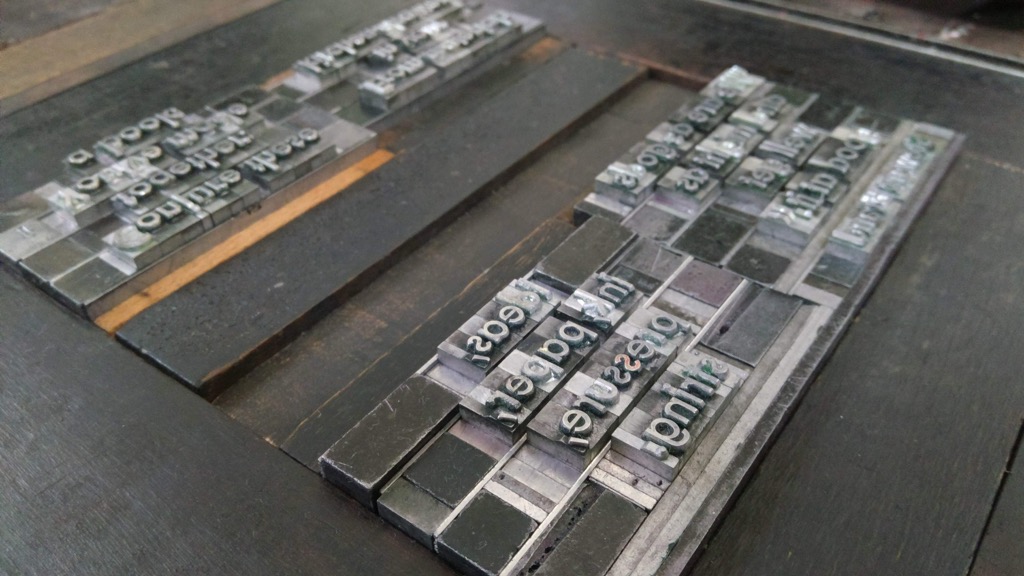
    Here is a sneak peak of the type that will print part of my piece:

    Sneak Peak on my Artist Trading Card letterpress type

    Although the “trader” deadline has passed, the event is open to everyone, of all ages, starting at 7:00 p.m. next Thursday, August 2, 2018, in the art gallery. There are snacks and the musical stylings of Todd E. MacLean.

    (Here’s my 2017 contribution to the trading).

    27 Jul 15:34

    Twitter Favorites: [browserdotsys] have started noticing when someone is posting from mobile vs desktop by the style of their quotation marks / apostrophes

    bowser ❌ @browserdotsys
    have started noticing when someone is posting from mobile vs desktop by the style of their quotation marks / apostrophes
    27 Jul 15:34

    Twitter Favorites: [MetroManTO] At the very core of democracy is the right of citizens to choose their representatives. It’s so important for the h… https://t.co/cexmNUPCqD

    Pedro Marques @MetroManTO
    At the very core of democracy is the right of citizens to choose their representatives. It’s so important for the h… twitter.com/i/web/status/1…
    27 Jul 15:33

    Twitter Favorites: [RZaichkowski] Last weekend, I biked along Bloor from Renforth to Parliament. My new blog post discusses the conditions along the… https://t.co/R3cmIX310K

    Robert Zaichkowski @RZaichkowski
    Last weekend, I biked along Bloor from Renforth to Parliament. My new blog post discusses the conditions along the… twitter.com/i/web/status/1…
    27 Jul 15:33

    Twitter Favorites: [CatherineOmega] Twitter moving to kill fun bots like mine instead of actually banning Nazis and “Trump voter” accounts with stock p… https://t.co/07iNaavXrS

    Catherine Winters @CatherineOmega
    Twitter moving to kill fun bots like mine instead of actually banning Nazis and “Trump voter” accounts with stock p… twitter.com/i/web/status/1…
    27 Jul 15:28

    Qualcomm terminates NXP acquisition, must pay $2 billion termination fee

    by Rose Behar

    After nearly two years of acquisition efforts, Qualcomm has terminated its offer to purchase NXP Semiconductors, taking on a $2 billion termination fee.

    The chipset giant will pay the fee to NXP on July 26th, 2018 and has authorized a stock repurchase program of $30 billion. The company expects to buy back the majority of stock before the close of fiscal year 2019.

    Though Qualcomm gained approval for its acquisition of NXP from antitrust regulators in Europe and Korea in January 2018, China’s State Administration for Market Regulation (SAMR) held off from providing the stamp of approval.

    When Qualcomm reported its third-quarter earnings, the company set a firm expiration date of July 25th, 11:59pm ET — giving SAMR the chance

    While there was a chance that SAMR could approve the merger before 11:59PM ET yesterday, July 25th, the regulator let that deadline expire.

    This comes as trade conflicts continue to grow between the U.S. and China following the imposition of new tariffs by the U.S.

    Qualcomm first offered to purchase Netherlands-based NXP for $38 billion USD in October 2016, then upped the bid to appease some upset NXP shareholders to offer $44 billion in February 2018. If it had gone through, the purchase would’ve been the largest deal in chipset history.

    Source: Qualcomm

    The post Qualcomm terminates NXP acquisition, must pay $2 billion termination fee appeared first on MobileSyrup.

    27 Jul 15:28

    New design for Gmail for Android shown off at Google cloud conference

    by Jonathan Lamont
    Gmail for Android

    Google showed off some of what’s coming for Gmail at its Cloud Next 2018 conference in San Francisco on Wednesday.

    In a ‘directional slide’ the company gave attendees a look at the new Material Design of Gmail for Android. While the update appears to take some queues from the recent Gmail for Web update, it’s actually smaller in scale.

    An important note, the slide shows the direction the team is going in, but not necessarily the final product.

    Design direction for Gmail for Android

    That being said, it does look good if you’re a fan of white. Like many Google apps, Gmail for Android is going all white, with colourful icons that pop on the screen. That means the classic red accents are gone.

    Furthermore, the top of the app features a full-width search bar. The navigation drawer button resides on the left side of the search bar and a profile icon resides on the right.

    A large white circle button with a multi-coloured plus sign makes it’s home in the bottom right corner of the app.

    Additionally, the inbox view will feature a new list containing images, files and other attachments for easy access. Finally, Gmail will get new density options so people can decide how much information they want on screen.

    Gmail for Web new features

    Attendees also got a glimpse of upcoming Gmail for Web features. The Gmail team is testing a bottom carousel that can suggest contacts, attachment types and other filters.

    Attendees were also told during a Q&A that Inbox, Gmail’s experimental email app, would not change.

    Images: 9to5Google

    Source: 9to5Google

    The post New design for Gmail for Android shown off at Google cloud conference appeared first on MobileSyrup.

    27 Jul 15:28

    One week with Apple’s 2018 MacBook Pro

    by Patrick O'Rourke
    MacBook Pro 2018 15-inch

    Not since the release of Apple’s single USB-C clad MacBook back in 2015 has this level of controversy surrounded the release of a new Mac.

    The new 2018 MacBook Pro with Touch Bar, which once again comes in both 13-inch and 15-inch variants, features Intel’s 8th-generation 6-core Coffee Lake series of processors — including the highest-end i9 variant — along with other minor new features and higher spec configurations. For example, you can finally configure the 15-inch MacBook Pro with 32GB of RAM.

    MacBook Pro 2018 closed

    The tech giant has also controversially revamped the laptop’s butterfly keyboard to feature a protective silicon layer under each key. If you ask Apple, this keyboard tweak was made solely to ensure the keys sound quieter — a perplexing answer given the widely reported reliability issues the Pro’s keyboard has experienced since launch.

    In reality, the more likely reason for the new butterfly mechanism is a little murkier, with iFixit reporting the silicon enclosure is designed to prevent dust and other debris from getting under keys, an issue that causes some older versions of the ‘Butterfly Keyboard’ not to work reliably. iFixit also backed up this claim by uncovering a recent patent filed by Apple for the silicon key covers.

    Why exactly Apple is avoiding questions surrounding the Pro’s third-generation butterfly mechanism is anyone’s guess, though speculation indicates it has something to do with the multiple class action lawsuits the company is currently facing related to keyboard reliability issues. The company also recently launched a four-year free replacement program for all MacBook laptops experiencing the issue.

    MacBook Pro 2018 Rise of the Tomb Raider

    Given the frustration many long-time Apple fans have expressed with the company’s Mac ecosystem over the last few years, particularly since the release of the first-generation Pro in 2016, it’s no surprise that in most cases, those same voices have also taken issue with the 2018 version of the laptop.

    While the 2018 MacBook isn’t the USB-A, Retina display featuring MacBook Air with modern hardware, many people have been clamouring for — and it does feature a costly price tag — it still remains one of the most well-made, best-looking laptops out there.

    Despite its faults, there’s still a lot to like about the 2018 MacBook Pro.

    Apple’s new Butterfly keyboard is great
    MacBook Pro 2018 keyboard

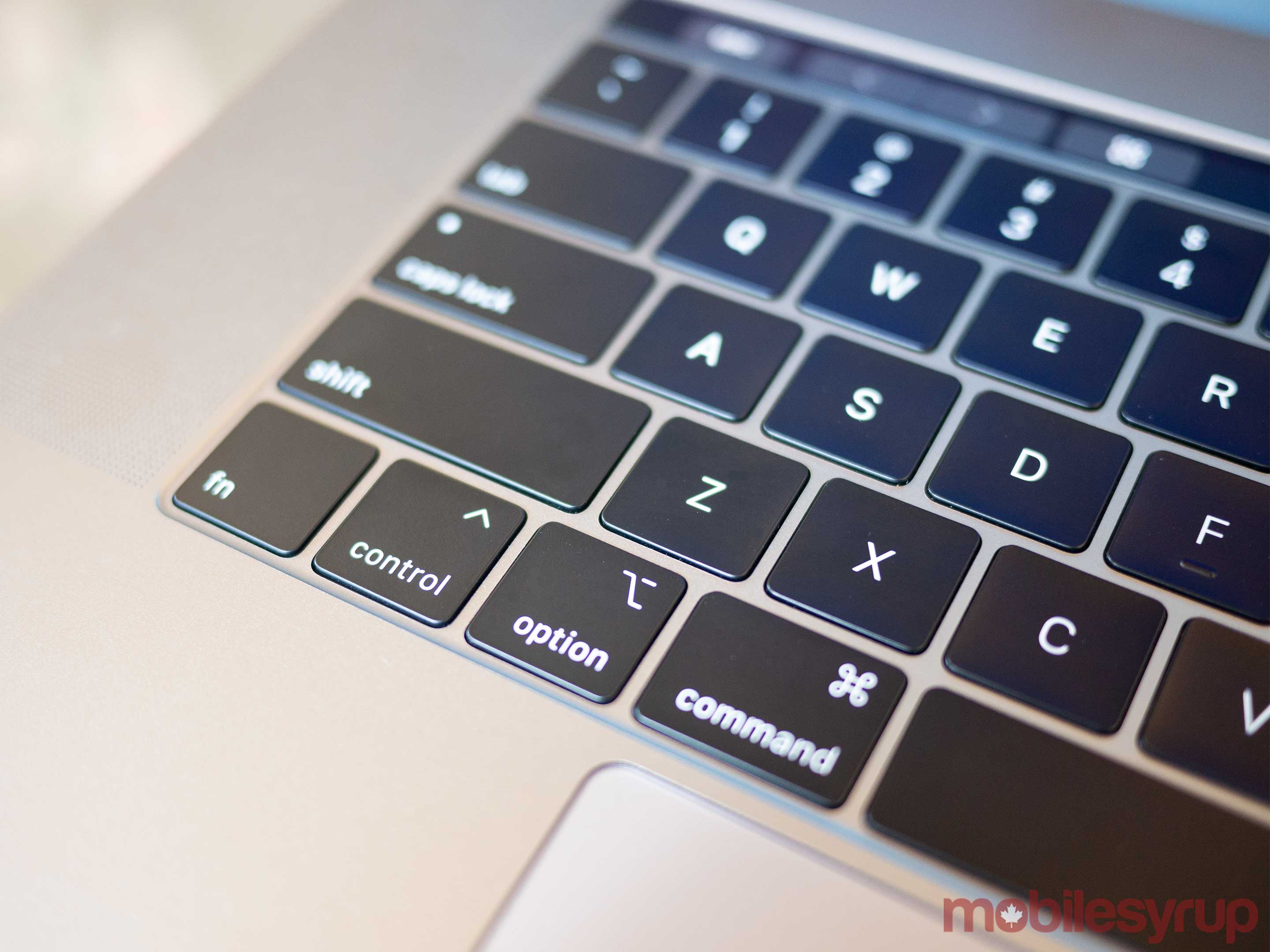
    Let’s get one thing out of the way first. If you weren’t fond of the first-generation or second-generation Butterfly keyboard, you aren’t going to like the third iteration of Apple’s low-travel keys. In fact, you’ll likely be less fond of it.

    The new keys generally feel similar to the second-generation version of the Butterfly mechanism, though, just as Apple claims, the new version is slightly quieter, leading to a consistent noise when keys are pressed, as well as smoother, more pronounced movement. It’s almost as if there’s additional resistance with each keypress, which I found more satisfying than I expected.

    “It’s almost as if there’s additional resistance with each key press.”

    Despite generally being a joy to type on, both the first and second-generation MacBook and MacBook Pro keyboard experienced issues, with keys either becoming unresponsive or just not working at all. While reporting on the issue, which was primarily led by The Outline’s Casey Johnston, seems to have convinced Apple to finally do something about the problem, it’s impossible to know how widespread the issue actually is. At the very least, the keyboard’s unreliability was enough to convince Apple to do something about it.

    MacBook Pro keyboard

    Apple claims the issue only affects a “small number” of MacBook Pro laptops. For what it’s worth, I have encountered unresponsive keys in two instances over the last two years. In one, the space bar in the 2016 Pro I was using worked intermittently, while in the other, the 2017 Pro’s ‘N’ key produced multiple letters with one press. With the first case, a quick spray of compressed air solved the problem, while in the second, I slid a folded piece of paper under the key to dislodge the dust.

    To be clear, issues like this shouldn’t happen and are in no way acceptable, especially when a laptop costs as much as Apple’s MacBook Pro.

    In my experience so far with the 2018 Pro, the third-generation, silicon-covered Butterfly mechanism seems to have solved the keyboard’s reliability issue completely, regardless of the fact Apple claims the new design is solely intended to make the keyboard quieter.

    Here’s what’s new
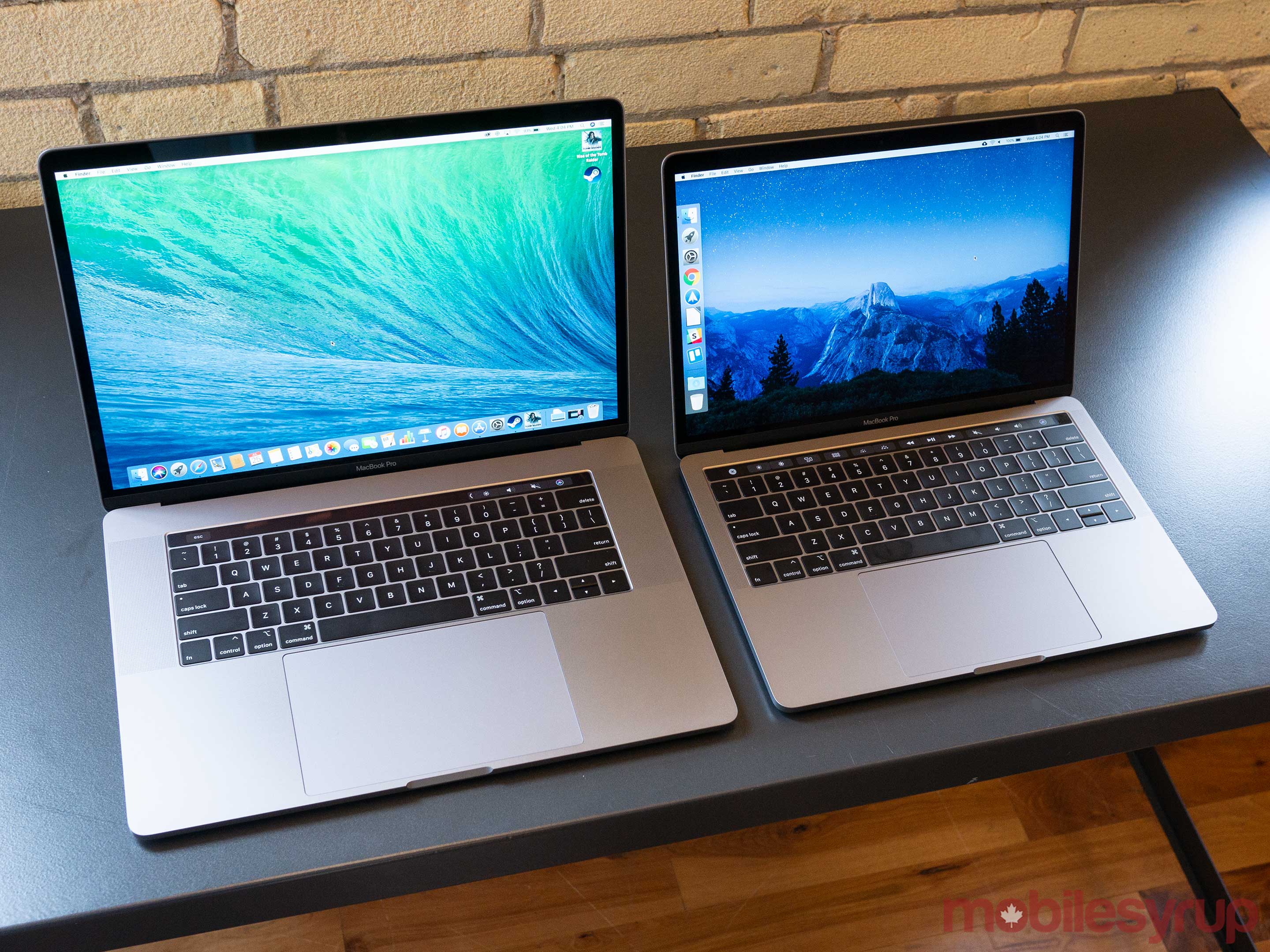
    MacBook Pro 2018 15-inch and 13-inch

    The trade-offs and benefits featured in past generations of the MacBook Pro remain with the 2018 version, though there are a few new features I’m fond of.

    For instance, the 2018 Pro’s display remains stunning and one of the best I’ve encountered in a laptop. This year though the MacBook Pro also features Apple’s True Tone technology, allowing the display to adjust to the ambient light in a room.

    While not everyone will opt to turn this feature on, especially those that do a lot of photo or video editing, I’m quite fond of it. True Tone makes staring at a screen for hours more bearable, just like I experienced with the iPhone X and the most recent version of the iPad Pro. True Tone is also amusingly featured in the Touch Bar, though it’s barely noticeable.

    Speaking of the Touch Bar, while I still think the secondary touchscreen holds a tremendous amount of potential, there are still few apps beyond Apple’s pro utilities like Final Cut and Logic, that take advantage of the Touch Bar in a way that truly improves productivity. That said, there isn’t a 2018 version of the MacBook Pro that doesn’t feature a Touch Bar.

    “True Tone makes staring at a screen for hours more bearable, just like I experienced with the iPhone X and the most recent version of the iPad Pro.”

    This is a shame because I’m two years into using the 13-inch MacBook Pro with a Touch Bar and I’d likely be just as happy with the version of the laptop that features a top row of physical keys.

    Further, the 2018 MacBook Pro still features four Thunderbolt 3 USB-C ports, which means you’ll still have to live the #donglelife if you want to use one of Apple’s laptops. Like it or not, USB-C is here to stay despite not living up to the still relatively new port format’s lofty one-cord-to-rule-them-all promise.

    The laptop also features a new custom Apple-designed T2 chip that controls much of the computer’s internal processes, according to the tech giant, including the laptop’s new True Tone display, expanded Hey Siri functionality that allows users to say “Hey Siri” to launch the voice-activated assistant, and finally, various security features — a narrative Apple has been pushing lately with all its devices. Further, Apple says the T2 chip handles file encryption, ensuring the laptop’s fast SSD drive isn’t slowed down.

    Going full throttle
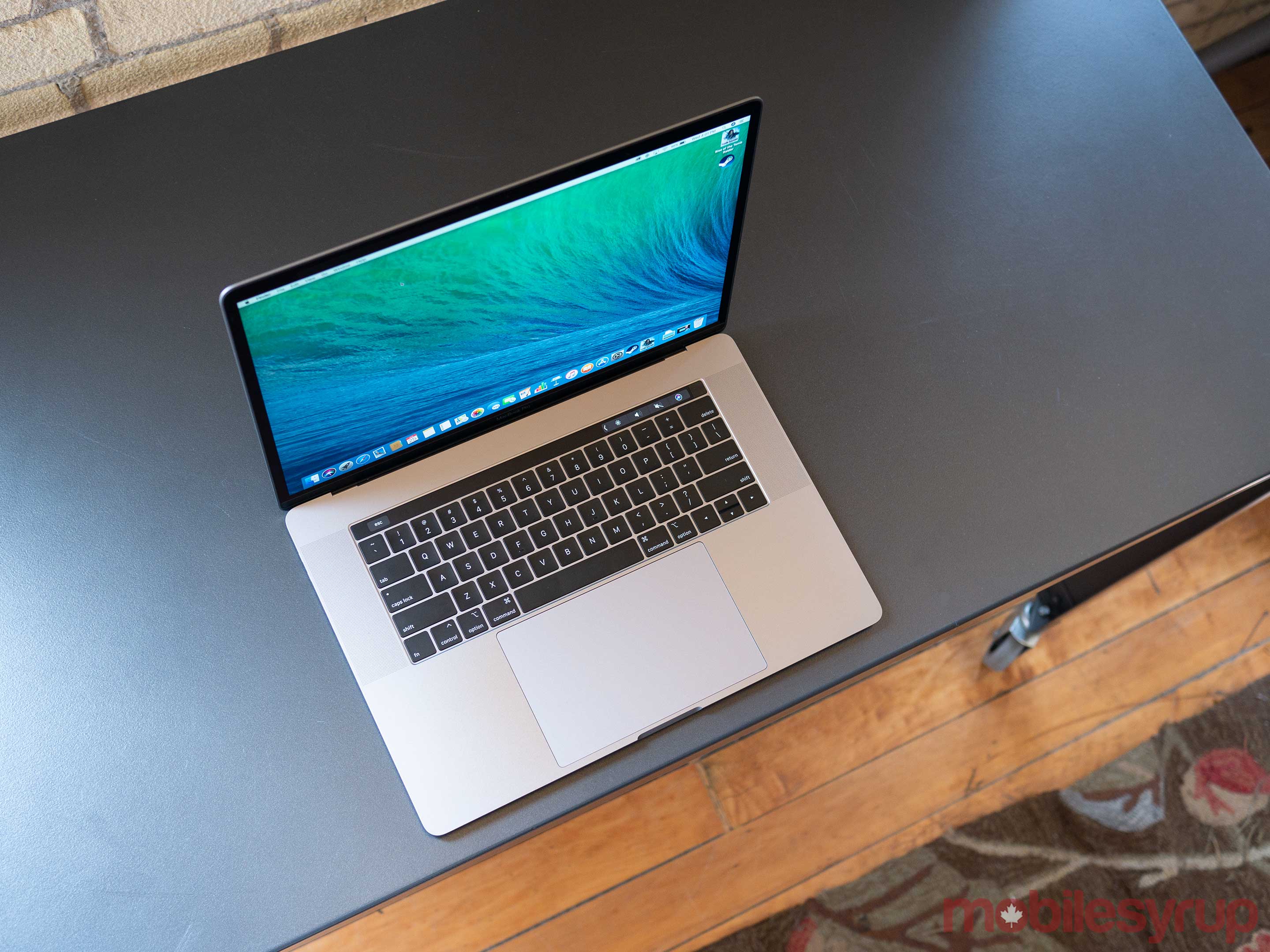
    MacBook Pro 2018 top down shot

    Here we are at what was once the main point of contention surrounding the 2018 MacBook Pro — processor throttling.

    The MacBook Pro review unit we have at the MobileSyrup office is the 15-inch, six-core i9, 32GB of RAM with a 4TB of internal storage. This particular version of the laptop comes to a positively astounding $8,379 CAD.

    Dropping the 4TB of harddrive space brings the computer down to $4,539, but still, any way you look at the larger 15-inch i9 version of Apple’s 2018 Pro, the price will be more than most people would ever consider dropping on a laptop.

    The controversy surrounding the i9 version of the 2018 15-inch MacBook Pro with Touch Bar stems from a video created by Toronto-based YouTuber Dave Lee (Dave2D). In the video, Lee performs tests and benchmarks showing that the Core i9 version of the Pro suffered from significant thermal throttling, resulting in the laptop not performing as well as even the 2017 Core i7 Pro.

    Lee found when running Adobe Premiere that the MacBook Pro failed to apply Turbo Boost and didn’t achieve a fast enough clock speed for such a resource-intensive task, dropping the speed to as low as 2.2Ghz — a number that’s well under the processor’s advertised base 2.9Ghz clock speed.

    As you may have expected, this sent the tech influencers of the world, as well as tech reporters, down a rabbit hole of benchmarks and armchair forum arguments.

    While disappointing, I’ve never put much stock in benchmarks. They’re an indication of how a device’s processor performs under a heavy load, but don’t reflect how the average person actually uses the product in question in the real world. Still, when you’re dropping this much money on a laptop, it should perform as advertised.

    Nevertheless, Apple uncharacteristically took the situation seriously and got in touch with Lee in order to replicate the results of his testing. The official word from Apple is there was a “missing digital key” in the laptop’s firmware that caused the internal throttling.

    The tech giant has since released an update on July 24th that fixes the issue.

    While I have not run formal benchmarks on the 2018 MacBook Pro we currently have at the office, I can confirm that post-update the laptop runs quieter, cooler and also feels marginally faster when it comes to resource-intensive tasks like processing video or watching high-resolution content. During my a little over the week with the 15-inch i9 MacBook Pro, I encountered few instances of slowdown when performing my day-to-day tasks.

    Various YouTubers and technically-focused sites have performed similar tests and revealed more concrete results showing that the update has indeed solved the 2018 MacBook Pro’s thermal throttling issue.

    Apple later uncharacteristically confirmed the throttling issue actually affects all versions of the 2018 MacBook Pro, including the 13-inch i5 and i7 variants of the laptop.

    Across the board, it seems like ‘throttle-gate’ is over.

    What about that crazy Blackmagic eGPU?
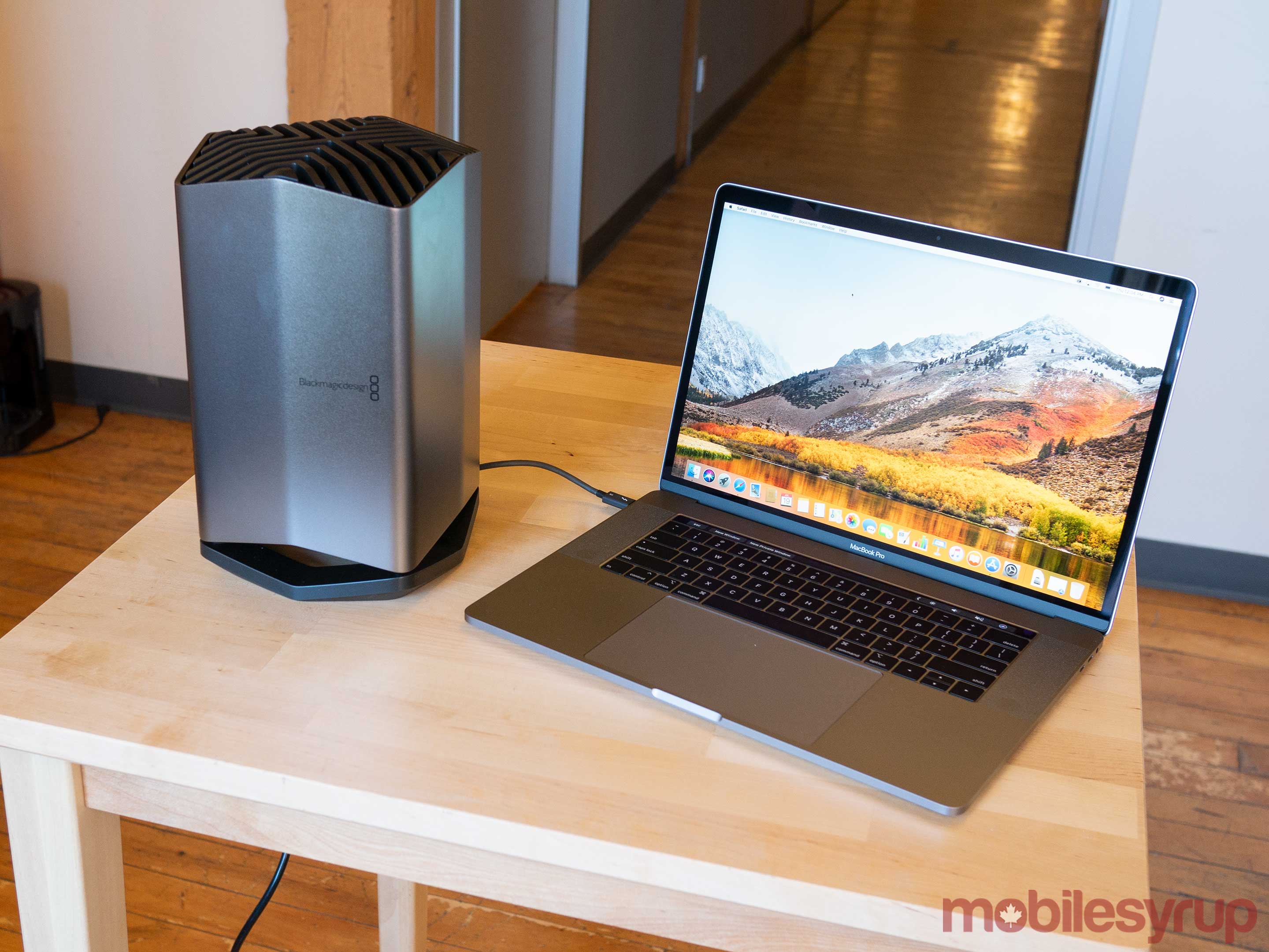
    MacBook Pro Blackmagic eGPU

    External graphics cards (eGPU) are something I wish existed years ago when I was more into PC gaming. Being able to take your laptop on the go and then plug it in either at work or at home to access more powerful hardware, is a dream come true.

    Given Apple rarely releases devices with manufacturing partners, it’s almost unthinkable the company worked with Blackmagic on this $900 eGPU. My main question surrounding the expensive accessory is for who it is really intended.

    While Mac gaming has improved significantly over the last five years or so, it’s not likely a hardcore gamer would be interested in an accessory like this. With this in mind, I did spend time using the Blackmagic eGPU to play Rise of The Tomb Raider with the graphics turned all the way up and encountered zero issues.

    Black Magic eGPU ports

    Further, unless you’re frequently doing high-end video editing, game development or other resource-intensive tasks, it’s likely you’ll find little use for Blackmagic’s Mac eGPU.

    I have a theory surrounding the accessories inception: developers at Apple working on VR and AR projects asked for a device like this, resulting in Apple forging a partnership with Blackmagic to create this eGPU with internal use in mind. The partnership ended up going so well that Apple decided it made sense to release the accessory to consumers.

    Hardware wise, the eGPU features a Radeon Pro 580 graphics card with 8GB of GDDR5 memory, two Thunderbolt 3 ports, four USB 3 ports, HDMI 2.0 and 85W of power delivery.

    The road ahead
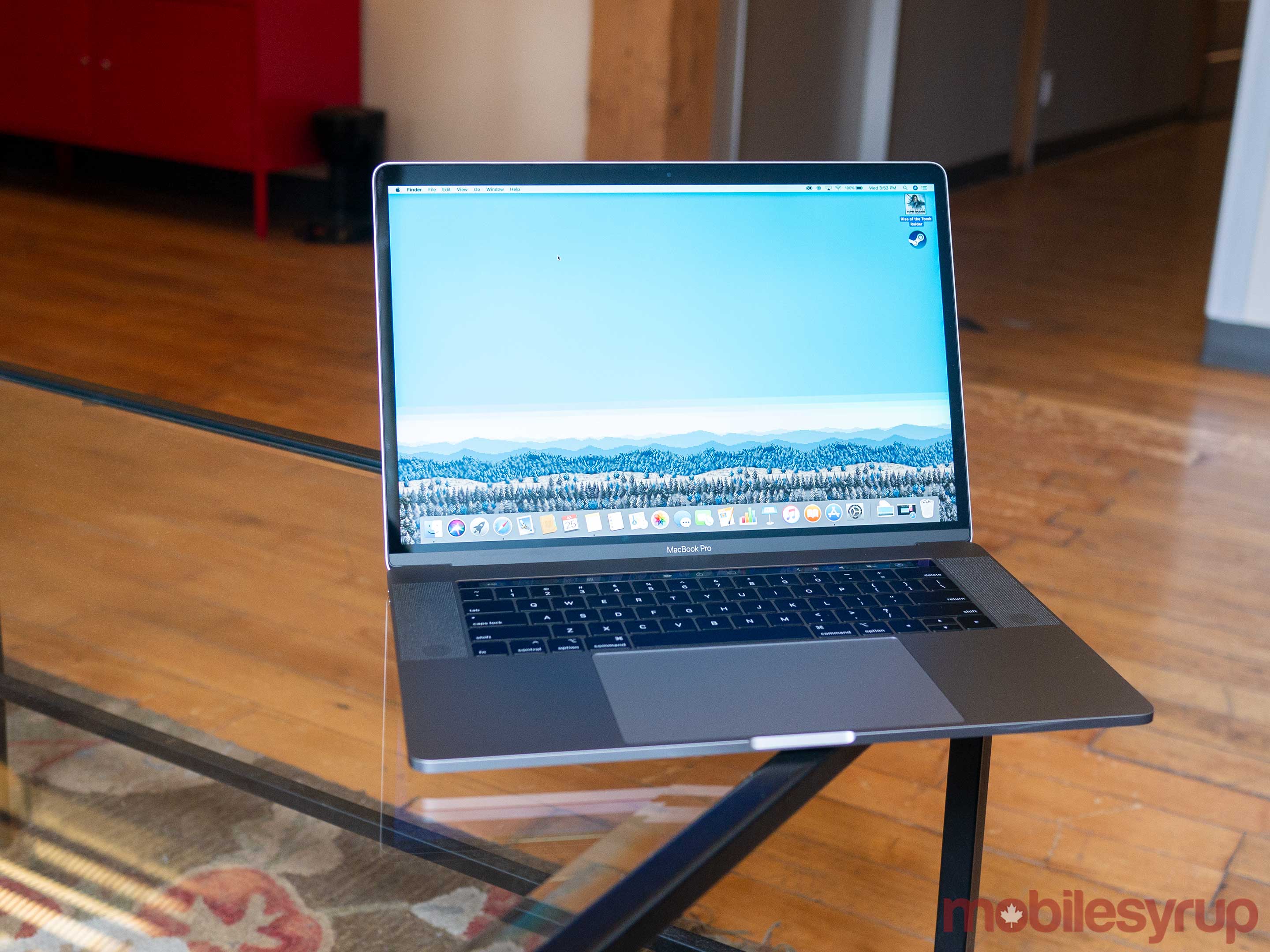
    MacBook Pro 2018

    Apple’s laptops once had a superb reputation across the industry. They were so far ahead of any Windows device on the market that the expensive price tag was worth the price of admission.

    Fast-forward to 2018 and the situation is vastly different.

    Microsoft’s Surface devices, including the Surface Laptop, Surface Pro and Surface Book, come close to rivaling Apple in the build-quality department, along with other laptops like HP’s XPS Spectre x360 or the Lenovo Yoga 920, also come close to hitting the same mark.

    Apple’s laptop dominance has been sullied over the last few years by the company’s insistence on sticking with USB-C, along questions surrounding battery life and most recently, the Butterfly keyboard issues and processor throttling glitch.

    While the tech giant’s laptops may not be leagues ahead of its Windows-based competitors like they once were, they remain some of the best looking and most capable laptops out there — as long as you’re willing to shell out the cash for one.

    What the 2018 MacBook Pro amounts to is an iterative, much-needed hardware update that addresses some of Mac users most significant gripes with the laptop.

    The post One week with Apple’s 2018 MacBook Pro appeared first on MobileSyrup.

    27 Jul 15:27

    2018 iPhones will exclusively use Intel modems: Qualcomm

    by Igor Bonifacic
    iPhone X

    On Wednesday, chipmaker Qualcomm said Apple likely won’t use its modems for the next iPhone.

    “We believe Apple intends to solely use or competitor’s modems rather than our modems in its next iPhone release,” said the company’s chief financial officer, George Davis, during the company’s Q3 2018 earnings call. Davis didn’t mention Intel by name, but Intel is currently the only other company that sells LTE modems to Apple.

    If Apple does, in fact, single source the next iPhone’s modem from Intel, it will be a dramatic move for the company. Even when one considers that Apple and Qualcomm are engaged in a messy legal feud, this is almost unprecedented for Apple; the tech giant typically attempts to dual source all of the major components that go into its devices so that it can leverage its suppliers against one another.

    An example of this is the iPhone X’s OLED display. Apple has gone to great lengths to reduce its dependence on Samsung, currently the only company manufactures smartphone-sized OLED displays to Apple’s quality and scale requirements, reportedly investing millions into LG Display.

    From a consumer standpoint, there’s a good chance any iPhone with an Intel-based modem won’t be as fast as Android current flagship crop when it comes to network performance. Even when throttled by Apple, previous generation iPhones with Qualcomm-based modems have outperformed their Intel-based counterparts, according to lab tests conducted by firms like Cellular Insights.

    Moreover, using data from Ookla, Qualcomm published a report this week that said Snapdragon 845-based Android smartphone outperformed Intel-based iPhones in network speed tests, delivering faster download and upload speeds, as well as lower latency. It’s likely Qualcomm published its Ookla report in an attempt to preempt Wednesday’s news.

    Source: Twitter, CNET

    The post 2018 iPhones will exclusively use Intel modems: Qualcomm appeared first on MobileSyrup.

    27 Jul 15:27

    Seth Rogen is the new voice of Vancouver’s TransLink transit

    by Bradly Shankar
    Seth Rogen at San Diego Comic-Con

    It’s official — comedian Seth Rogen will soon be heard voicing transit announcements on TransLink buses and Skytrains in his hometown of Vancouver.

    Rogen and TransLink made the announcement through a one-minute video posted to Twitter.

    Vancouverites have called for Rogen to voice transit announcements after Morgan Freeman‘s Visa ad campaign was scrapped in May in the wake of sexual harassment allegations made against the actor.

    An enthusiastic back-and-forth Twitter exchange between Vancouver Sun reporter Stephanie Ip, Rogen and TransLink kicked off the campaign shortly after.

    Unlike Morgan, Rogen’s voice recordings are not part of a Visa-related sponsorship. Instead, the funnyman will be heard making general transit announcements, including “I know your bag is probably very nice and you care deeply for it, but that doesn’t mean it needs its own seat.”

    In the announcement video, Rogen cited his love for his hometown as the reason for partnering with TransLink.

    “I’m very proud to be from Vancouver and I grew up taking public transit my whole life and I still use public transit when I’m in the city,” Rogen said. “Any opportunity to enrich the lives of the Canadian people is an opportunity I will take,” he added with his signature laugh.

    This has been a particularly big week for Rogen. On Tuesday, he and frequent collaborator and Vancouver childhood friend Evan Goldberg were also inducted into Canada’s Walk of Fame.

    Image credit: Flickr — Gage Skidmore

    Source: Seth Rogen

    The post Seth Rogen is the new voice of Vancouver’s TransLink transit appeared first on MobileSyrup.

    27 Jul 15:26

    Samsung hypes the Note 9’s battery life in new teaser

    by Brad Bennett
    Note 8

    Samsung’s latest ad shows a nondescript phone from one of the company’s competitors quickly draining its battery from 5 percent to zero at an inopportune time

    The ad doesn’t show any footage of Samsung’s upcoming Note 9 phablet, but if this ad is any indication, it will feature a long-lasting battery.

    Leaks have claimed that the Note 9 will feature a 4,000 mAh capacity battery. That’s an upgrade over last year’s Note 8 battery, which is rated at 3,300 mAh.

    In fact, Samsung made the battery in last year’s Note smaller since it was recovering from the Note 7 battery fiasco. The company shrunk the Note 7’s 3,500 mAh battery to 3,300 mAh for the Note 8.

    This year the company is back to making bigger batteries.

    The end of the video cuts to a black screen with the date, August 9th, 2018 which is the same date that Samsung has revealed as its next Unpacked event, meaning that this teaser is almost certainly for the Note 9.

    The phone is also rumoured to feature a 6.4-inch display, Snapdragon 845 chipset and dual 12-megapixel cameras.

    Source: Samsung Via: Engadget

    The post Samsung hypes the Note 9’s battery life in new teaser appeared first on MobileSyrup.

    27 Jul 15:26

    Three-day Best Buy $999 MacBook Air sale starts July 27

    by Sameer Chhabra
    MacBook Air

    While Cupertino computing giant Apple’s latest 13-inch and 15-inch MacBook Pros are now available for Canadian consumers, the company’s incredibly popular 13-inch MacBook Air computers are going on sale at Best Buy Canada locations across the country.

    According to a July 26th, 2018 post by RedFlagDeals user ‘MikeBrewerWheelerDealer,’ Best Buy Canada will be selling the base model 13-inch MacBook Air with a fifth-generation Intel Broadwell i5 processor, 128GB of internal storage and 8GB of RAM from July 27th, 2018 until July 30th, 2018.

    Apple currently sells the 13-inch MacBook Air for $1,199.

    While Apple hasn’t updated the MacBook Air’s design since 2010 and the laptop’s internal specs haven’t been updated since 2017, the device remains one of the company’s most-popular and best-selling devices, based on its affordable price, its durable processor, its substantial 8GB of RAM, as well as its almost unrivalled 1o to 12 hours of battery life.

    It’s worth noting that according to a flyer posted to RedFlagDeals, Best Buy will also be selling a 256GB MacBook Air for $1,249.99.

    Source: RedFlagDeals

    The post Three-day Best Buy $999 MacBook Air sale starts July 27 appeared first on MobileSyrup.