Some old, some new. All in the vicinity of Campbell and E Cordova.
Don’t forget the EVENTS, especially the Street Party:
- Main & 11th Avenue
- Saturday August 11
- Noon to 6 pm.


Some old, some new. All in the vicinity of Campbell and E Cordova.
Don’t forget the EVENTS, especially the Street Party:
It’s Panel Picker time again! Please take a moment and vote for my session proposal for SXSW 2019. Once again, I’ve teamed up with Anna Dickson to explore the use of visual media and the data that is connected to it.
On the mobile web, images serve a greater purpose than simple visual description. Rich media images are increasingly used to connect people, events, institutions, ideas, advocacy and commerce. As we move into a new era of visual communication, this trend is accelerating. While the use of connected images blossomed on social media services, it reaches far beyond walled gardens into API-based interchange on the open web. Machine learning and linked data are creating new methods to make connections, and the Data Transfer Project is opening up access to the underlying graph for portability and innovation. In this presentation, we will explore the current state of visual media connectivity, what it can do for you, how to enhance your own image connectivity, and how to avoid costly mistakes.
The post My SXSW proposal – Small Photos, Big Data: A Connectivity Manifesto appeared first on The DAM Book.
What was once a dark and dingy downtown Vancouver working space is now a bright and fun one. It’s become much more welcoming to people, and a great addition to the repurposed spaces popping up all over the city.
Ackery’s Alley includes an interactive public art installation (“Field”) by Alex Beim of Tangible Interaction. (See photos).
Many thanks to the DVBIA (see photo of “Downtown Charles” Gauthier and crew), who had a pivotal role in the project. Check out their thorough and detailed guide on how to do it, called “More Awesome Now“.
Over 11,000 individuals provided ideas on how they wanted downtown Vancouver to evolve. Key themes emerged from the report, including a great emphasis on public space and in particular, underutilized laneways. The report found that people wanted downtown Vancouver to be home to a connected series of activated laneways that are welcoming spaces with lots of hidden gems to discover, including galleries, restaurants, and “art walls” where graffti and visual storytelling are welcomed.
From there, the DVBIA partnered with HCMA Architecture + Design and More Awesome Now was born. More Awesome Now is a pilot group and program that takes existing, underutilized laneways and reshapes them into engaging public spaces that are accessible by everyone and contribute to the
livelihood of the city.


Social media helped us shake up rigid institutions and empower people, but gave us a new world that has proven to be brittle and destructive. The new power structures that have arisen aren’t up to the job of maintaining our civilization. When Charlene Li and I wrote Groundswell ten years ago, we had a utopian vision … Continued
The post We destroyed our institutions. Now what? appeared first on without bullshit.
Have you ever wished you could reduce your working hours, or even just limit yourself to 40 hours a week, but came up against all the work that just needs doing? There’s always more work to do, always more bugs, always some feature that’s important to someone—
How can you limit yourself to 40 hours a week, let alone a shorter workweek, given all this work?
The answer: by planning ahead. And planning ahead the right way.
I was interviewing for a job at a startup, and my first interviewer was the VP of Engineering. He explained that he’d read my blog posts about the importance of work/life balance, and he just wanted to be upfront about the fact they were working 50-60 hours each week. And this wasn’t a short-term emergency: in fact, they were going to be working long hours for months.
I politely noted that I felt good prioritization and planning could often reduce the need for long hours.
The VP explained the problem: they’d planned all their tasks in detail. But then—to their surprise—an important customer asked for more features, and that blew through their schedule, which is why they needed to work long hours.
I kept my mouth shut and went through the interview process. But I didn’t take the job.
Here’s what’s wrong with this approach:
So how do you keep yourself from blowing through your schedule without working long hours?
Not all work is created equal. By starting with your goals, you can divide tasks into three buckets:
Start by dropping the third category, and minimizing the second. You’ll have to say “no” sometimes, but if you don’t say “no” you’ll never get anything delivered on time.
You need to assume that things will go wrong and you’ll need extra time to do any given task. And you need to assume other important tasks will also become critical; you don’t know which, but this always happens. So never give your estimate as the actual delivery date: always pad it with extra time for unexpected difficulties and unexpected interruptions.
If you think a task will take a day, promise to deliver it in three days.
Your own internal deadline, the one you don’t communicate to your boss or customer, should be shorter than your estimate. If you think a task will take a day, try to finish it in less time.
Why?
Inevitably things will still go wrong and you’ll find yourself running low on time. Now’s the time to drop all the nice-to-haves, and rethink whether everything you thought was critical really is (quite often, it’s not).
Whenever you feel yourself with too much work to do, go back and apply these principles: underpromise, limit your own time, prioritize ruthlessly. With practice you’ll learn how to deliver the results that really matter—without working long hours.
When you’ve reached that point, you can work a normal 40-hour workweek without worrying. Or even better, you can start thinking about negotiating a 3-day weekend.
#1. I’m off to Minnesota today, where I’ll be doing my bit to help Swing Left turn the House blue. In 90 days, we vote. We need to flip 23 seats. This may be our last chance to save the last, best hope.
I’ve set up what promises to be an amazing week, meeting with candidates, campaign managers, activists, and of course our incredible Swing Left Minnesota teams. In Minnesota, we have 5 key districts: that’s more than any state other than California.
One key key idea for Swing Left is that this land is our country, and we can all work to take it back. Our Minnesota teams have lots of volunteers in Minneapolis and Duluth and in all towns across the state, but we also have volunteers from all over the country and the world who care deeply about a better America, an America that open and generous and good. You can help a lot, even if you don’t live in a battleground.

 A cyclo-cross bike is like a hybrid between a road bike and a mountain bike. Designed for racing on multiple terrains, these bikes have several unique features that actually make them very well suited for urban commuting - as well as for trail riding. Read more in our post!
The post What is a Cyclo-Cross Bike? appeared first on Average Joe Cyclist.
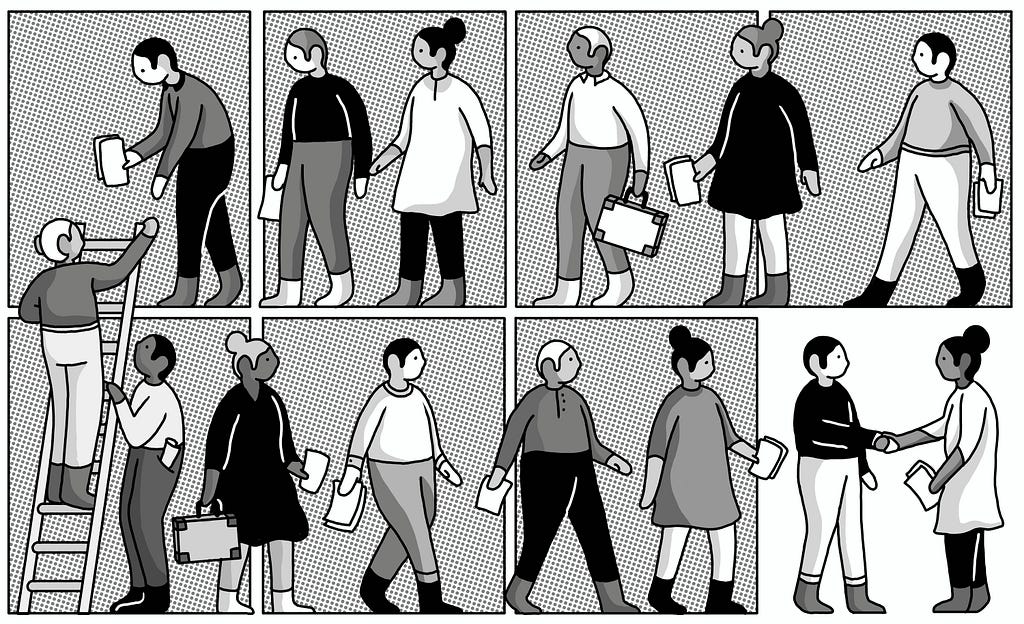
If you’re a regular reader of the Times Open blog, you hopefully know that we are proud of the engineering culture at The Times. As a VP of engineering and someone who has been with The Times for 11 years, that culture is why I’m here. I love being surrounded by a diverse, multi-talented, collaborative, mission-driven group of engineers, designers, data analysts and others who contribute to the making of our products.
Over the last few months, we have been tackling probably the biggest determinant of our culture: our hiring process. Our old process had problems we needed to address. With many similar jobs posted at any given time, candidates would often apply to multiple jobs and be confused about which they were considered for — or worse, they were asked to interview multiple times for multiple teams. Since our teams had different criteria for hiring engineers, they also didn’t trust each other and would sometimes give technical interviews when engineers wanted to transfer teams internally.
Over the years, we’ve lost several external and internal candidates who wanted to be at The Times but were frustrated by having to prove themselves again and again.
We recently made a major change: rather than having separate job postings and interview processes for each team, we consolidated to a single application and review process across all our front-end openings.
By having a single application process, we hope to help candidates match to the teams that best fit their career goals early in their application. This will also make it easier for candidates to change teams and grow their careers once they’ve been hired. Having a single application process also ensures that we are being consistent and fair about how we evaluate candidates however they come to us.
This was not an easy or comfortable change. Individual teams feared they would lose the ability to find candidates that fit their particular needs. We also had concerns that the process would become too impersonal and candidates would not be able to get to know the team they would join. We ultimately concluded that this process reflects the type of organization we want to be: one with an expansive definition of team where we take broad responsibility for the career development of engineers we hire.
As a front-end engineer at The New York Times, you will work on a specific engineering team tackling a problem, but also join a larger community of engineers across the organization.
I’m sharing our process here in the hope it will help others thinking about their own hiring process, and as a guide for what to expect if you’re interested in applying to The Times. (And please do apply!).
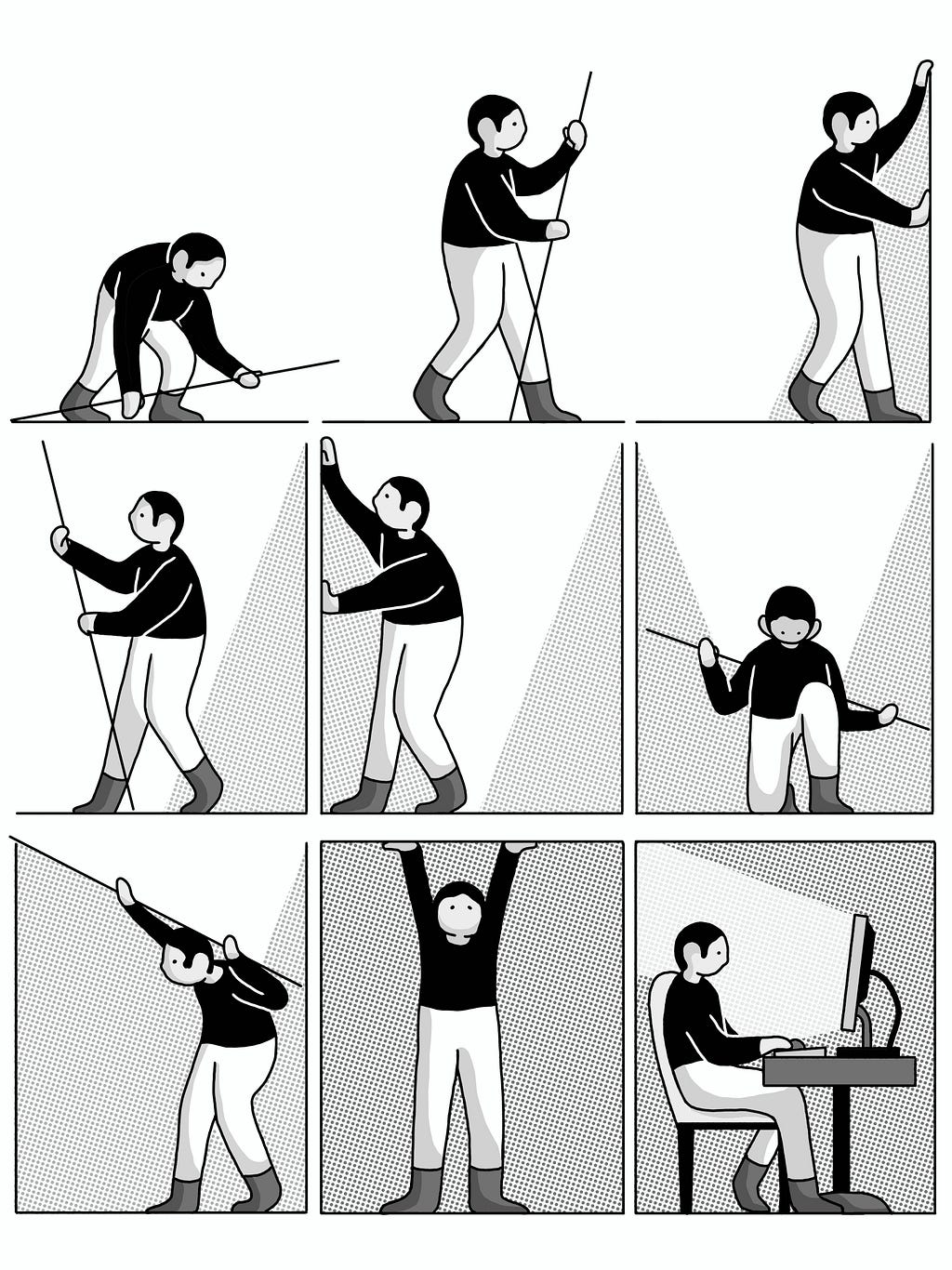
If you are interested in a front-end engineering role at The New York Times, the first step in the process is to apply. As you’ll notice, the application explains what the role will entail, the qualities that help engineers thrive at The Times and it lists the teams that currently have open positions.
Each week our Talent and Inclusion partners and a panel of engineering managers review resumes and decide who to move forward in the process. Depending on the number of applications at any given time, you should get a response within one to two weeks.
If the hiring panel thinks your resume matches what we’re looking for, you’ll be scheduled for a phone call with someone on our Talent and Inclusion team. That call will focus on the kind of work you’ve done to date and what you’re looking for in a role at The Times. The goal is to begin to match you with a team and to make sure we have something that fits your career goals. Ideally, this will happen within a week of you submitting your resume.
Next you will have a phone call or Google Hangout with a hiring manager or a senior engineer on one of the teams you are being considered for. This call will be an opportunity for us to evaluate your technical skills and how you work. It’s also an opportunity for you to find out more about the different openings and what it’s like to work as a front-end engineer at The Times.
If there’s mutual interest after both conversations, we’ll then send you a short coding exercise that you can complete on your own time. We understand that people have busy lives, so there is no time limit. The project won’t require you to dig up any old computer science textbooks or learn a new programming language, and we’ve heard from previous candidates that it’s even fun! It’s meant as an opportunity for you to show us how you would think through a project along the lines of something you might do at The Times.
If you pass the coding exercise, then the final step is a set of in-person (or remote) interviews. During these sessions you will meet with engineers and non-technical members of at least two teams that are the best fits based on your previous conversations. Each interview should be between 30–45 minutes with two other people at a time. We have you meet people in pairs to minimize the bias of a single interviewer, but not to overwhelm you.
The entire interview day should take roughly four to five hours. Yes, that’s a lot, but we’ve found that candidates appreciate meeting a number of their future team members and having the opportunity ask questions. We also think it’s important that multiple members of the team, not just engineers, are involved in hiring.
We are now six weeks into this new process and have candidates at every stage, from resume review to in-person interview. We are evaluating the process as we go and, like in everything we do, have already made changes to how we score and evaluate resumes.
We are accepting applications now, so please apply. We look forward to hearing from you.
How We Hire Front-End Engineers at The New York Times was originally published in Times Open on Medium, where people are continuing the conversation by highlighting and responding to this story.

Remote collaboration is kind of like a long-distance relationship. The farther you are from your partner, the harder it is to communicate. But when you find enough common ground, sparks can fly despite the distance. That’s why we’re fascinated when artists from different backgrounds come together to create something new. Inspired by the success of last year’s experimental mash-ups, we’re returning to Outside Lands to pair up people from different corners of the creative world and see what they can make together.
Indie rock heroes Portugal. The Man and designer Ricky Watts are friends who’ve been looking for a chance to work together for a while. So what’s kept that from happening? Ricky lives in California. PTM make their home in Portland, Oregon. Lucky for us, we get to help bridge the distance by giving them a place to collaborate. Using Dropbox Paper, the band and Ricky worked on a new amplifier design, sharing ideas at every stage of creation, and revealing the final artwork onstage during PTM’s performance at Outside Lands.
Check out how Dropbox Paper can help get your team on the same page
Chocolate’s collaborations are legendary. Its controversial work with peanut butter is debated to this day. But how long can it rest on its laurels? In the face of fierce competition from the ever-morphing gummy bears, we think it’s time for chocolate to get in shape. It can be so much more than flat bars and Easter bunnies. So we asked designer Sam Ushiro and chocolatier Amy Guittard to co-create a festival-inspired dessert. Though Sam lives in New York and Amy resides in San Francisco, the two have been cooking up ideas in Dropbox Paper to figure out the best way to sculpt Guittard Chocolate into something Willy Wonka would envy. If you’re at Outside Lands this weekend, stop by the Guittard Chocolate trailer in ChocoLands and check out the chocolate architecture they’ve concocted.
Sometimes a song is so strong, it can pull people together from different ends of the earth. Take Lizzo’s “Good as Hell,” for example. Its anthemic lyrical hook is inspiring a new mural from Australian Gemma O’Brien and Brooklyn-based It’s a Living. In the days leading up to the festival, Gemma and It’s A Living worked out their plans and logistics using Dropbox Paper as their collaborative workspace. During the festival, the two typographers will combine their creative energy to make murals live at the festival—and Outside Lands fans will get to watch the artwork from first brush stroke to final reveal.
These are just a few of the co-creations happening this weekend. Come see them for yourself if you’re attending Outside Lands. And follow us on Instagram, Facebook and Twitter for behind the scenes action showing how the collaborations come together.

UPDATED 8/13 at 1:22 pm PT: Added new paragraph about the collaboration between Portugal. The Man and Ricky Watts.
Dave Winer has a great post today on the closing of blogs.harvard.edu. These are sites run by Berkman, some dating back to 2003, which are being shut down.
My galaxy brain goes towards the idea of federation, of course. The idea that everything referencing something should store a copy of what it references connected by unique global identifiers (if permissions and author preferences permit), and that we need a web that makes as many copies of things as the print world did, otherwise old copies of the Tuscaloosa News will outlast anything you are reading today on a screen. Profligate copying, as Ward Cunningham has pointed out, is biology’s survival strategy and it should be ours as well.
(I know, nature is not teleological. It’s a metaphor.)
But my smaller provocation, perfectly engineered for Friday twitter outrage at me and my sellout-ness, is this:
All my former university hosted sites are gone. We built up a WPMU instance at Keene in 2010, and the lack of broad adoption meant when I left in 2013 we shut it down. I ran some wiki on university servers here and at Keene, and those are gone too.
All my self-hosted sites are corrupted from hacks or transfer errors in imports. Go back into this blog and you’ll find sparse posting schedule for some years between 2010 and 2012 and it’s because those posts got nuked in a 2012 hack. I had to go out to the Wayback Machine and reconstruct the important ones by hand.
Transfer errors, let me tell you: Go back to 2007 and look at all the images that failed imports and moves on this blog when it was self hosted. There’s also this weird “” character that pops up in all of them like this:
Hold on, you say, these Metro signs look different! There’s no BRAND!
The entire Blue Hampshire community I co-founded, over 15,000 posts and 100,000 comments, originally self-hosted on SoapBlox and then WordPress? Gone. It’s probably OK, I said a lot of stupid stuff. But of course it was also a historically important site, one of the most successful state political blogging communities, one of the first communities to be syndicated by Newsweek, one of the first to feature news stories that cross-posted — as news stories — to Huffington Post. One of the first sites to get individual statements from all the Democratic presidential candidates in a weekly forum. Gone, gone, gone.
I know, this doesn’t seem to be provocative, but here’s the thing:
My Blogger sites from 2005 forward? They’re up and they are pristine.

I mean, I’m not sure that’s a great thing — it was where I put little experiments too little to be worth setting up another BlueHost domain. But it also did me a solid in Keene Scene, where the 12-year old images of Keene life have stayed up unmolested and without any maintenance. (I’d quite forgotten about it, really).

Same holds — as I’ve mentioned before — for projects students put up on Google Sites. The BlueHost server (and later the Rackspace account) was long ago shut down but Google Sites is still up.
I’m not making a specific case here. But I do want to point out a big reason I moved to self-hosted and institutional solutions was this idea that commercially hosted stuff was too fickle. In 2006, it seemed that every week a new site shut down. For better or worse (mostly worse) monopoly consolidation has changed that dynamic a bit. There are other good reasons for self-hosting or doing institutional hosting, but durability is more downside than upside of these options, and we might want to let our students know that if they want something to stay up, self-hosting may not be the best choice.
August in the Washington, DC area is commonly hot and humid (you know, temperatures in the 90s Fahrenheit and 120 percent humidity), the sort of weather that takes your breath away as you step outside. When I moved to the DC area in 1993 for grad school I loathed August with the oppressive heat and afternoon thunderstorms that become mini monsoons.
Some 25 years later, I’ve come to peace with August. I oddly enjoy the clinging heat. August drives nearly everyone who lives in the DC area out. They flee to the shore, see relatives in slightly cooler climes, travel to far off lands, or become stationary moving only to their front porch and not much farther. This change in population density and movement means treks in morning commutes can become magical as you make the 6.3 mile drive in 20 minutes by making every traffic light and for some stretches you are the only vehicle you see moving on the street.
Sure there are tourists who flock to tourist destinations and dawdle looking at the sights or stop with no warning to look at a map. Or, they just stand and have a conversation that consumes the full width of a sidewalk trying to figure out where Billy went (or some other child they didn’t pay attention to that has wandered off) or what type of food or museum will be next, which nobody agrees with. These tourist’s stalemate conversations are mini examples of what happens in Congress, but since Congress is out of session these micro moments are street-side examples of in-action in action of today�s Congress while Congress members are back in their districts, which these people left so to see Washington, DC and their Congress member in in-action.
What is most magical about August is running errands at your pace and leisurely shopping trips. The packed Little Red Hen on Saturday morning has you as the only person in line (okay, there is no line and you can just walk up to the counter and order, but not mentioning the word “line” could leave people confused, as it apparently is part of the “experience”). You can quickly grab a leisurely coffee and walk a few doors up to Politics & Prose to look around as the only customer walking around looking at the what is on offer.
The drive home is at a leisurely pace (this needs to be self-enforced as the usual traffic isn’t there, which usually helps pace you at a non-speed camera inducing speed) is enjoyable. There aren’t people driving with their head in the backseat trying to calm children, or trying to incite them to over achieve at their soccer practice they are running late to.
The August abandonment of the DC burbs means not going away is sublimely enjoyable. But, keep in mind it is only three to four weeks of this tranquility before the 20 minute sauntering commute in the morning returns to its usual hour of halting frustration. The quiet idyllic wandering in book store aisles will return to bumping and constantly being in somebody�s way or someone in yours as you peruse the shelves as if shopping inside a pinball machine.
Ah, August, you have become far too short over the years.
Seeing Peter install a doorbell we already contemplated ourselves, I followed his lead this afternoon. Now we have a wifi/camera doorbell that also keeps the original one ringing when pressed, which pops up on our phones and computers. Only glitch during set-up was that this US device isn’t accustomed to the EU wifi channel range at 2.4GHZ (EU has a channel 12 and 13), so I had to briefly switch my router from auto-selecting a channel to one below 11, before updating the doorbell’s firmware to deal with EU standards. As Peter says, we can discuss these devices in more detail during our upcoming event Smart Stuff that Matters. (In related news, I went out for a new electric toothbrush today, and upon returning home with I unexpectedly found it has bluetooth connectivity…..)

Me, attaching the door cam while having the camera running
The web advertising game is changing from a hacking contest to a reputation contest. It would have had to happen anyway, but the shift is happening quickly right now because of two trends.
Privacy regulation (starting with the European Union, California and India). Some regulations will have impact outside their own juristictions when companies choose not to write and enforce separate second-class privacy policies for users not covered by those regulations.
New "browser wars" over which browser can best implement widely-held user norms on sharing their personal information. (Web browsers are good at showing you a web page that looks the same as it does on the other web browsers. Why switch browsers? For many users, because one browser does better at implementing your preferences on personal data sharing.)
Right now the web is terrible as a tool for brand building. But the web doesn't have to get better at signaling, or less fraudulent, than print or broadcast. In a lot of places the web just has to be better than Android. Fixing web advertising is not one big coordination problem. People who are interested in web advertising, from the publisher and ad agency point of view, have a lot of opportunities for innovative and remunerative projects.
Browser privacy improvements, starting with Apple Safari's Intelligent Tracking Prevention, are half of a powerful anti-fraud system. The better that the browser protects the user's information from leaking from one site to another, the less it looks like a fraudbot. How can publishers and brands build the other half, to shift ad budgets away from fraud?
"Conscious choosers" are an increasingly well-understood user segment, thanks to ongoing user research. For some brands and publishers, the best strategy may be to continue to pursue "personalization pioneers", the approximately one-third of users who don't object to having their information collected for ad targeting. Other brands have more appeal to mainstream, vaguely creeped out, users, or to users who more actively defend their personal info. How can "conscious chooser" research inform brands?
Regulation and browser privacy improvements are making contextual targeting more imporant. Where are the opportunities to reach human audiences in the right context? Where does conventional programmatic advertising miss out on high-context, signalful ad placements because of gaps in data?
As sharing of user data without permission becomes less common, new platforms are emerging to enable users to share information about themselves by choice. For example, a user who comments on a local news site about traffic may choose to share their neighborhood and the mode of transportation that they take to work. User data sharing platforms are in the early stages, and agencies have an opportunity to understand where publishers and browsers are going. (Hint: it'll be harder to get big-budget eyeballs on low-value or fraudulent sites.) Which brands can benefit from user-permissioned data sharing?
(Complementary to data sharing issues) Consent management is still an unsolved problem. While the Transparency and Consent Framework provides a useful foundation to build on, today's consent forms are too annoying for users and also make it difficult and time-consuming to do anything except select a single all-or-nothing choice. This doesn't accurately reflect the user's data sharing choices. The first generation of consent management is getting replaced with a better front end that not only sends a more accurate consent decision, but also takes less time and attention and is less vulnerable to consent string fraud. How will accurate and convenient consent management give advantages to sites and brands that users trust?
Workshops are in progress on all this stuff. (Mail me at work if you want to help organize one.) Clearly it's not all just coming from the browser side—forward-thinking people at ad agencies and publishers are coming up with most of it.
More than 1,000 U.S. news sites are still unavailable in Europe, two months after GDPR took effect
SuperAwesome now offers kids brands an alternative to YouTube
What is a Scandinavian media company’s first-ever director of public policy up against?
Coalition for Better Ads experiences European growing pains
Be Wary Of Ad-Tech Stories That Are Too Good To Be True
Rick Webb on Why Our Assumptions of Digital Advertising are Complete and Total Bunk
Since writing about PEI’s newly progressive liquor regulations yesterday, I’ve had private communications with two licensed establishments that have historically used the excuse of liquor license restrictions to exclude minors at certain times of the day; I’d assumed that they would be happy to have this yoke lifted, and to welcome people of all ages into their midst.
In both cases, however, they’ve decided, liquor license restrictions or no, to maintain their policies and to deny access to minors in the evenings.
This clearly takes the issue out of the realm of government restriction and into the realm of pure discrimination on the basis of age; the justification I was given for this policy was, in essence, that they wish to maintain an “adult vibe” in the evenings (my words, not theirs).
My easiest option when faced with this discrimination is to simply withdraw my patronage of these establishments, and I’ve done that, after making it clear to both why I have done so.
But I remain uncomfortable with the notion that businesses are operating, in defiance of clearly understood humans right principles, because they’ve decided its okay.
Many years ago there was a bar in Peterborough, Ontario called the Montreal House that had a well-known policy, never explicitly stated, of not allowing women inside. One summer afternoon I found myself with a diverse group of about a dozen women who decided to confront this policy head-on, and they invited me to join them. We went into the bar, found ourselves a table, and waited to be served. No service came. We waited longer.
Eventually a couple of us went up to the bar and asked to place an order; the barkeep said “I can serve him,” pointing at me, “but I can’t serve you.”
“Why not?”, one of the women asked.
“You know why,” he replied.
We went back and sat down. A few minutes later the barkeep started to turn off the lights and announced that the bar was closing for the day and we were all asked to leave, which we did.
I suspect that as soon as we were down the street things picked up where they left off before we arrived on the scene.
That was clear, bald-faced discrimination. It was wrong.
I’m happy to report that what was once the Montreal House is now Dr. J’s BBQ & Brews and, as I’ve just confirmed on the telephone, “women are now welcome here.”
I think denying access to people on the basis of age is just as discriminatory as denying access to people on the basis of gender, and I am hopeful that, like the vast majority of businesses on Prince Edward Island, the holdouts that do not feel the same way can be convinced to see the error of their ways.
The Main Street area party. A photo gallery of people, fun and murals.


[A piece from 2015]

A week ago, I read a Adam Bryant interview with Bob Pittman of Clear Channel, the radio network, in which Pittman makes a case for a role for dissent as a triangulation tool. He was talking about his early days as a new manager, and how he countered the natural suspicions of those older than him by actively encouraging people to present opposing views, and how that shaped his current approach:
Often in meetings, I will ask people when we’re discussing an idea, “What did the dissenter say?” The first time you do that, somebody might say, “Well, everybody’s on board.” Then I’ll say, “Well, you guys aren’t listening very well, because there’s always another point of view somewhere and you need to go back and find out what the dissenting point of view is.” I don’t want to hear someone say after we do something, “Oh, we should have done this.”
I want us to listen to these dissenters because they may intend to tell you why we can’t do something, but if you listen hard, what they’re really telling you is what you must do to get something done. It gets you out of your framework of the conventions of what you can and can’t do.
Pittman’s grass roots embrace of dissent is only the starting point of its utility, and its central role in the evolving laissez-faire management thinking behind the third way of work.
I want us to listen to these dissenters because they may intend to tell you why we can’t do something, but if you listen hard, what they’re really telling you is what you must do to get something done. — Bob Pittman
Note that the heading ‘the shorter path’ is based on one of the paradoxes of computing, that algorithms that do more work at the outset generally wind-up being more efficient. Dissent is like that. Avoiding the comfortable traps of groupthink and the cognitive biases that herd us into consensus too quickly is hard work, but leads to better results, we will see.
Ulrich Klocke researched causes of poor group decision making in How to Improve Decision Making in Small Groups: Effects of Dissent and Training Interventions. First, groups may fail to process information effectively: for example, not sharing information that may be relevant for various reasons, or giving some information only a cursory examination. Secondly, certain well-known cognitive biases can lead groups to poor results, particularly bias in favor of shared information (information known to many in the group), and a bias in favor of initial preferences (people get stuck on what initially occurs to them, and are hard to unstick).
As Klocke wrote about the sharedness bias –
Groups communicate predominantly about information, which all or most group members share before entering the discussion, and neglect unshared information, which only one or few members have initially.
[…] group members individually judge shared information as more important, relevant, accurate, and influential than unshared information. This bias seems to have two reasons: First, shared information can be confirmed by more than one group member. Second, individuals evaluate their own information as more valid than information from other members. Thus, unshared information, even if mentioned in the discussion, is not seriously considered by other group members and therefore has less impact on the final decision than shared information.
– and later, about the preference bias –
Even when all information necessary to identify the correct solution is exchanged during discussion, individual group members often stick to their initially preferred wrong solution. People bias their information processing to favor an initially preferred alternative. Other studies show the same phenomenon at the group level: Group decisions can often be predicted by the initial preferences of its members. If a majority favors a certain alternative before the discussion, the group seldom decides to chose another alternative. Thus, frequently, group discussions are superfluous, and groups would be better off using a decision shortcut like an immediate vote or an averaging procedure.
Klocke has catalogued a litany of cognitive barriers to effective group decision making, and — spoiler alert — the research he conducted supported these biases as being present in his experimental groups, as well as those he cites from the literature. [Note: All citations left out of these quotes.]
Perhaps the worst news is that simply letting people know about these biases is not enough to counter their impact on group behavior. One thing, however, can positively change decision making: dissent.
Frequently, group discussions are superfluous, and groups would be better off using a decision shortcut like an immediate vote or an averaging procedure. — Ulrich Klocke
The impacts of dissent are positive both at the group and individual level. As Klocke outlined,
[…] early field studies analyzed the effects of groupthink, a tendency for concurrence seeking that effectively suppresses the expression of dissent. They found evidence that groupthink can have detrimental effects on group decisions. […] These experiments showed that dissent (compared to consent) enhances decision-making quality, even when no group member favors the correct solution before the discussion. This effect was mediated predominantly by more systematic processing of information but also by less biased processing of information. Specifically, dissent led to the introduction and repetition of more information and to a more balanced discussion of shared and unshared and preference-consistent and inconsistent information.
With regard to individual behavior in the context of dissent:
There is evidence for more systematic processing by individuals after being exposed to divergent opinions. One factor that mobilizes systematic processing is surprise or a deviation from expectancy. Usually, divergent opinions are unexpected and therefore cause surprise and mobilize cognitive resources to explain the unexpected event. In addition, it has been demonstrated that dissent, especially when articulated by a consistent minority, promotes divergent thinking, a variable related to unbiased processing.
Klocke went on to test whether interventions in group activities — telling them groups about the various biases, but not actually introducing systematic efforts toward dissent — and discovered they don’t have much of an effect. Simply knowing that bias is likely does not counter bias.
On the other hand, the findings regarding dissent are powerful and demonstrate a maxim: the more important a decision, the broader the diversity of opinions that should be sought to apply to the decision, and the greater the attention to active and comprehensive dissent.
A premortem in a business setting comes at the beginning of a project rather than the end, so that the project can be improved rather than autopsied. — Gary Klein
Bob Pittman’s real-world experience is borne out by the experimental evidence. I think one of the best approaches to inserting dissent is to use project premortems which extends Pittman’s search for dissent at the outset. As described by Gary Klein, a premortem
is the hypothetical opposite of a postmortem. A postmortem in a medical setting allows health professionals and the family to learn what caused a patient’s death. Everyone benefits except, of course, the patient. A premortem in a business setting comes at the beginning of a project rather than the end, so that the project can be improved rather than autopsied. Unlike a typical critiquing session, in which project team members are asked what might go wrong, the premortem operates on the assumption that the “patient” has died, and so asks what did go wrong. The team members’ task is to generate plausible reasons for the project’s failure.
Klein seems to have grasped the biases that tend to push people toward groupthink, and his approach counters them. Sometime after everyone has been brought up to speed on the plan, a premortem is held.
This intentionally sidesteps the sharedness and preference biases to at least a reasonable degree, and also can increase the deviation from the expected, given that a diverse set of viewpoints are brought into the premortem.
The biggest takeaways? We have deep cognitive biases that negatively impact group decision making, especially when group decision-making is not structured to counter those biases, and does not exploit the value of dissent and diversity. Techniques like premortems are one tool to help increase the leverage that dissent offers, and avoid the soft pitfalls of groupthink and unwarranted consensus.
Originally published at workfutures.substack.com.
Dissensus, not consensus, is the shorter but steeper path was originally published in Work Futures Institute on Medium, where people are continuing the conversation by highlighting and responding to this story.

Image by Darren Hopes in New Scientist
Congratulations! You have acquired a Self. Every one is different, but in some respects each is identical to all others. If you are still a small baby, this manual will probably not be useful to you until you are older, at which time it will answer a lot of questions about your Self. When you’re ready, here are some answers to questions you may have.
As a result of buying this Self, you are now entitled to call yourself ‘I’, ‘me’, and ‘myself’. You can describe your Self variously as a person, or as an individual, or by a name that you invent or which others may bestow on you, reflecting your Self’s connection with their Selves. You can now claim ownership of thoughts and feelings that arise in the body in which your Self is installed. In fact, you can claim ownership of that entire body — provided you know that with ownership comes responsibility. Note that you are now responsible for everything this body does, including what it thinks, feels and says, things that previously just arose and happened. Now they’re all about you.
Ownership of this body and its components provides you, for the first time, with a sense that you are separate, apart in space and time from everything and everyone else. For the first time, you are alive and conscious — Self-conscious! No going back to just being one with everything, now.
This separateness is actually just an illusion but it will appear quite real through your Self. This will take some getting used to, but soon it will be automatic, and you will start to act as if your Self, and everything it invents, is real. You will start to perceive people and places in space as real, and map them to keep track of them. You will start to perceive events in time as real, and chronicle them as if they really happened, or might happen in a time that has not yet arisen. You will start to believe you have a Life, and that you know things. Imagine it as a VR role-playing game, where everything looks real, where you can act as if it were real, and where you can perceive things as happening as a result of your Self’s actions. It may be disorienting for awhile, but you’ll get the hang of it, and the many other Selves around you will show you how to play. In no time, you’ll be playing your Self as well as they do!
Your Self has a lifetime guarantee. But having bought it, you cannot transfer it to another owner, and when the body your Self is installed in ceases to function, your Self will also cease to function. So take care of it — your Life depends on it!
You may find the operational controls for your Self difficult, at least at first. With the Self comes a sense of free will and choice, and it can be unsettling when the body your Self is installed in does or says something that you did not specify. Because you are now responsible for your Self, this can result in serious repercussions you did not anticipate. So be careful with your Self — it can get you into a lot of trouble and cause a lot of pain.
Other Selves will teach you how to acquire Morals and Ethics (in some models referred to as Right Living, the True Path, God’s Way and other terms) to keep your Self out of trouble. These are free add-ons to your Self that will help with navigation and with defending the Self’s actions, but they will require regular updates and maintenance to function.
The Self categorizes things in accordance with these add-ons as ‘Right’ or ‘Wrong’, and these categorizations do not always align with those of other Selves. It is very important to learn and follow this categorization scheme. You will learn this along with other categorization schemes that come with the separateness feature of your Self, such as Mine and Yours, Subject and Object, Past and Future, and many more. Although none of these distinctions is real, they must be mastered for proper functioning of your Self. Fortunately, thanks to the conceptual framework of the Self, all of these distinctions will appear quite real, so learning them is, while not easy, quite possible with careful attention.
Every morning the operating system of your Self must be rebooted, to recall all of the Self’s knowledge and reactivate its add-ons. Failure to do this is fatal for the Self. A program built into the Self will normally do this automatically, but in the case of injury, accident or exposure to certain chemicals (taken externally or induced internally at unexpected times by the body the Self is installed in), the Self may critically malfunction or even become totally inoperative for some time. Fortunately, this is almost always a temporary condition and the Self will self-repair and return to full operating condition in due course.
You may at times get exhausted and frustrated with your Self. That’s normal; things were probably much easier without it. But there’s a no-return policy on your Self, so you’ll have to get comfortable with it. It likes to escape from all its anxieties, so offer it plenty of distractions: mindless entertainments, addictive substances, music and obsessive preoccupations will often do the trick. There are a variety of therapies, meditation techniques and spiritual paths that can help ease some of the chronic fear, anger, shame and sadness that can often afflict your Self. You will learn to live with your Self, and it will get easier as you get older.
Finally, remember that your Self is not real. It’s just a piece of software. If it’s not performing to your expectations perhaps an upgrade is in order. Talk to your doctor or spiritual advisor to see how your Self might be improved to operate more exactly as you and those you love might desire. New add-ons and upgrades are being developed all the time.
Enjoy your Self, and good luck!
#3. Minnesota is BIG. Today was my introduction to MN-08, the top-right quadrant of the state. It's a tossup, a Swing Left key district, and the day after tomorrow’s primary we’ll know who our candidate is. Today, nobody knows.
Started the day driving to North Branch, where I rendezvoused with our super-duper research coordinator for an overview.
Then a long drive to Duluth, passing the Rural School Museum and it’s already-amazing tree heavy with apples for teachers.
In a disused retail store in Duluth’s Lincoln Park neighborhood, I met with a DFL organizer to ask, basically, what they need. Swing Left’s novel strength is that we’ve got lots of people (like me!) who are engaged in a race that’s not their home district. “Data entry?” he asked. “Well, I think I’ve got at least two professional *analysts*. And I think we have some data entry prospects in good time zones, so you can scan your canvass results at the end of the day and have your database updates done overnight.
The big anxiety here is that we'll break apart or break down. The Russian trolls may work on both: they did in 2016, and the local organizer was fairly sure that he's got some of them back this year, too.
Then a visit to Canal Park, which Fallows & Fallows describe beautifully in OUR TOWNS, and a visit with the son of a an old colleague during the Years of xil, someone I lost saw 30 years back.
Then on to Chisholm, MN (too far!) for its county fair, which had some lovely ponies. There was a Tilt-A-Whirl, too; I didn't get on it lest my shirt get caught. And so to bed

 |
sillygwailo
shared this story
from  TORONTO STAR. TORONTO STAR.
|


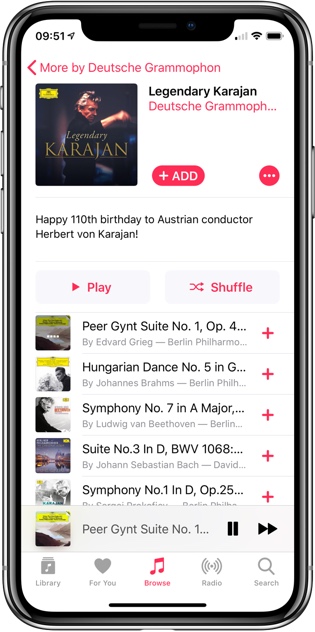
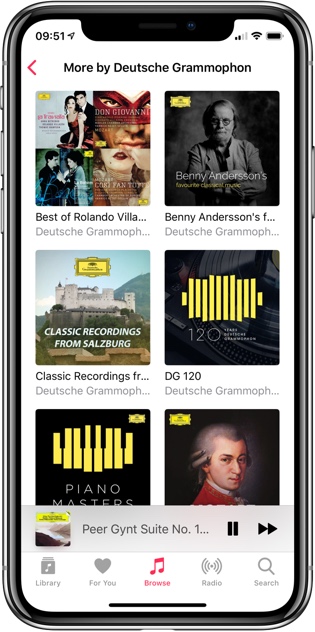
Kaum wechsle ich zu Apple Music, machen sie neue Vorschläge. Kuratierte Playlisten mit Aufnahmen der Deutsche Grammophon. Dahinter die ganzen Schätze. Finde ich gut. Herr Kapellmeister ...

Letztes Jahr hat Microsoft "Mixed Reality" Headsets vorgestellt, die nur geringe Systemanforderungen haben. USB und HDMI einstöpseln und schon kann es losgehen, ohne dicke Grafikkarte. Mit dem Begriff Mixed Reality kann ich nicht so viel anfangen, weil diese Headsets Virtual Reality anzeigen. Das Bild kommt komplett aus dem Computer. Dann gibt es noch Augemented Reality, bei der man virtuelle Objekte in seiner realen Umgebung sieht. Ihr kennt das von den ungenauen Apps, mit der man virtuell seine Möbel vermessen kann.
Anyway, hat sich jemand von Euch so ein Mixed Reality Headset gekauft, und wenn ja, was macht Ihr damit? Ich habe Probleme, mir vorzustellen, was ich damit machen würde, wenn ich eins hätte. Den Preis da oben habe ich aus Amazon USA kopiert. Da werden die ohnehin schon preiswerten Geräte verramscht. Die 44.48 Shipping kommen nur zusammen, weil meine Adresse halt in Deutschland ist.
Yet Analytics,
Aug 21, 2018

This is an overview article from Yet Analytics (which has a vested interest in xAPI and related technologies) introducing the major elements of the analytics workflow: the Learning Record Provider (LRP), Learning Record Store (LRS) and Learning Record Consumer(LRC). There's a link to a 'workbook', though access is blocked by a spamwall(*). I filled out the form to get the direct link (may or may not work) and found a ten-page guide with lots of white space. It's pretty basic, but there are useful bits. (*Note: 'spamwall' =df. noun, a form requiring users submit personal data (which will presumably be used for spam) blocking access to an advertised resource.)
Web: [Direct Link] [This Post]
Will Knight,
MIT Technology Review,
Aug 21, 2018

I think that the interesting object lesson to be learned here is that when we consider whether AI will replace humans, we can't just consider humans working as individuals, but we also have to consider humans working cooperatively. Indeed, much of what we can do even as individuals depends on a history of cooperative effort. And while an AI might outdo a human working individually at some tasks, it is not going to be a match for collective human effort fror some time (we're talking decades, maybe centuries). Sure, a computer could fly a plane, maybe. But it couldn't design, launch and run an airline. Now the article doesn't discuss this at all, but it's still worth a thought.
Web: [Direct Link] [This Post]
Lee Skallerup Bessette,
Chronicle of Higher Education,
Aug 21, 2018
This short article summarizes four posts from other writers describing how social media (and Facebook in particular) has failed to replicate the idea of the feed as "sustenance" that "nourished critical minds." Here they are:
These writers, and a number of others, are all part of a new wave of indieweb proponents, and I make sure to follow them and keep up on their work.
Web: [Direct Link] [This Post]
It’s finally here, Samsung has unveiled its Galaxy Note 9.
The Samsung Galaxy Note 9 looks nearly identical to its predecessor, except for its slightly larger display and the placement of its fingerprint scanner, which is now located underneath the dual-rear camera setup.
As the common phrase goes: “if it ain’t broke, don’t fix it.” But should Samsung be employing that method? It already did that this year with the Samsung Galaxy S9. Further, the Galaxy Note lineup should be more than a slightly larger S9+ with an improved stylus.
Take Huawei, for example. The company tends to play it safer with its Mate lineup, but it likes to try something new with its fashion-forward P-series lineup. This year, the P20 Pro featured three cameras and an iPhone X-inspired notch. LG usually makes its V-Series lineup a little unique as well. This year the LG V40 ThinQ is rumoured to feature five cameras — three on the rear and two on the front with a 90 percent screen-to-body ratio.
Samsung should have tried something new with its Note 9, and it’s unfortunate that they didn’t.
Next year, the company will unveil the Galaxy S10 series, the Galaxy F — the company’s first foldable phone — and the Note 10, alongside a variety of other midrange and budget devices.
Let us know in the comments your thoughts on the Galaxy Note 9.
The post Are you happy with the Samsung Galaxy Note 9? appeared first on MobileSyrup.

Amazon officially released the Echo, Echo Dot and Echo Plus, its trio of smart speakers, in Canada on December 5th. It now seems the Echo Plus is no longer available to purchase through the massive online retailer.
The Echo Plus was Amazon’s highest-end smart speaker and competed against Google’s Home Max, Apple’s HomePod, and the Sonos One, which supports Amazon Alexa voice-activated features.
There’s no indication from Amazon if the Echo Plus will return, or if the company will launch a newer version of the smart speaker. However, Amazon Canada recently launched the Echo Spot and just discounted the latest and entry-level Echo Dot by 14 percent to $59 CAD, and the Echo Spot to $129.
Source: Amazon Canada
The post Amazon Canada removed Echo Plus from lineup, discounts Echo Dot and Echo Spot appeared first on MobileSyrup.


