Shared posts

04 Sep 05:15

Bahnschrift

Microsoft has introduced a new font with the latest Windows Insider build:

Bahnschrift is our own rendition of the DIN font standard. Apart from being the standard road sign font in Germany and much of Europe, DIN is frequently used by graphic designers for its high legibility and clean, hard-working design style. Bahnschrift supports a smooth spectrum of weights from Light to Bold, as you can see in the above image. In this image, each letter is a slightly different weight than its neighbors. All these weights are “duplexed” – meaning they do not change in width when you change weight. You can switch from Light to Bold without changing the layout at all.

It looks good. I've been a fan of the Segoe font family but it's been starting to show its age (especially after Apple and Google updated their system font). For the Fluent Design System to be wholly considered the next chapter in Microsoft's design language it needs distinct typography. I was actually surprised nothing was revealed when Fluent was announced, and would have liked more clarity in today's notes on Bahnschrift's role going forward.

04 Sep 05:15

The Translink Pop-up store is LIVE! This weekend only! Friday...

by illustratedvancouver


The Translink Pop-up store is LIVE! This weekend only! Friday Aug 17, 8-6pm, Saturday Aug 18, 1-6pm. https://www.facebook.com/events/293663574700260/?event_time_id=293663581366926

04 Sep 05:15

2018 House forecast from FiveThirtyEight

by Nathan Yau

Ever since the huge forecasting upset in 2016, I’ve tended to stay away from that stuff. I mean, it was painful to watch the Golden State Warriors, a huge favorite to win the championship basically the whole series, lose to the Cleveland Cavaliers. Yeah. The Warriors. What were you thinking of?

Alas, it is 2018, and FiveThirtyEight has their forecast for who will control the House. Mainly, I post for the burger menu to select the type of forecast you want.

Tags: election, FiveThirtyEight, forecast

04 Sep 05:15

A Cambridge Computer Walking Tour

by Martin

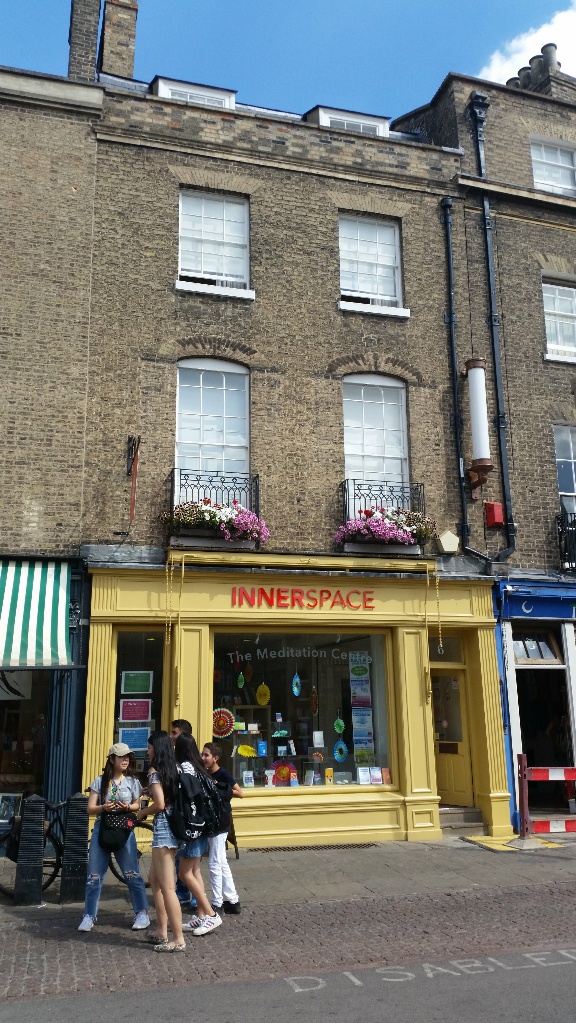
Sinclair house CambridgeWhen most people think about Cambridge, they think about the colleges in medieval looking buildings and lots of history. And indeed, there is lots of history, including a lot of computer history! After all, Cambridge was a computing hotspot after the second world war and again in the 1980s when companies like Sinclair and Acorn set up their shop there. If you are interested in this part of ‘memory lane’, have a look at ‘Turing, Hauser, Sinclair – haunt computing’s Cambridge A-team stamping ground‘ over at ‘The Register’. Makes you see Cambridge in a different light than the mainstream bus tours! The picture above, by the way, is the house in which Clive Sinclair set up his office in the early days of the ZX80 and 81!

04 Sep 05:14

Airfoil for Windows 5.5 Brings Full Chromecast and HomePod Support

by Paul Kafasis

We’re now shipping an official version of Airfoil for Windows 5.5. This update adds the ability to stream any audio from Windows to the Google Chromecast as well as other Google Cast devices, like the Google Home third party Cast-enabled players! It also includes full compatibility with Apple’s HomePod devices. With this update, you can stream audio from your Windows PC to more devices than ever before.

We’ve been testing these updates with Public Previews for the last few months. Those previews provided early access to the new functionality, while we worked out the kinks. Now, we’re pleased to provide this update to all users. It’s a free update for owners of Airfoil 5, so be sure to get it now, right from the Airfoil for Windows page.

If you’re still using an older version of Airfoil for Windows (version 3 or lower), now’s a great time to upgrade to the latest.

04 Sep 05:14

Diversity “Goals”

Many of us (speaking from the tech sector where I work) think the sector’s workplace diversity isn’t very good. Specifically, there aren’t enough women. Large companies — all the ones I’ve worked for, anyhow — have goals, and generally work hard at meeting them. Many companies now say they care about diversity, and have goals around improving it. But improvement is painfully slow; why? Maybe part of it is that those aren’t the same kind of “goals”.

How business goals work

When I say “large companies have goals”, I mean that in a very specific way. Each planning cycle, company groups and their managers take on a set of explicitly written-down goals for that planning cycle. Goals are tracked in a simple database and at the end of the year, each group/manager gets a pass/fail on each. The way that goals are defined and refined and agreed to and recorded and structured differs from place to place; at Google and several other big high-techs, they’re called OKRs.

The percentage of goal completion that’s regarded as “good” also varies, but it’s never 100%. The idea is that your reach should exceed your grasp, and if you score 100 you might have been sandbagging, choosing insufficiently ambitious goals to make yourself look good.

Goal completion is deadly serious business among most management types I’ve known, and the number has a real effect on career trajectory and thus compensation. I don’t think it’s controversial to say that in business, those things matter a whole lot.

Goals are sorted into “output goals” (example: $100M in sales for a product) and “input goals” (example: five customer visits per week by every salesperson). They can be technical too, around things like uptime, latency, and trouble tickets.

Input and output are not mutually exclusive. Input goals are at some level more “reasonable” because they are things that an organization controls directly. Output goals are more aggressive, but also liberating because they turn teams loose to figure out what the best path is to getting that sales number or uptime or whatever.

Generally, I like this management practice: Setting goals and measuring performance against them. It drives clarity about what you’re trying to achieve and how well you’re doing.

Diversity goal questions

Here’s a question: For any given company, do its diversity goals work like regular company goals? That is to say, do they go into the percentage completion number? The number that managers get judged on and rewarded for meeting?

I actually don’t know what the answers would be for most high-techs, but I suspect it’s “Not often enough.” I suspect that because the diversity numbers across the high-tech landscape are universally pretty bad, and because the people in management are generally, you know, pretty smart, and will come up with remarkably clever ways to meet the goals they’re getting judged on.

I’ve also observed that while the numbers are unsatisfying in the large, there are teams who consistently manage to do better than others at hiring and retaining women. And by the way, anecdotally, those are good teams (with good managers); the kind who get things done and have low attrition rates and happy customers.

Here’s another question: For diversity, should we be talking input or output goals? I say: Why not both? I’m not expert on the state of the art in building diversity, but wherever we know what the equivalent of “five customer visits per week” is, let’s sign teams up for a few of those. And yeah, output goals. Let’s ask managers to double the proportion of women engineers, measure whether they do it or not, and leave the details to them. The good ones will figure out a way to get there.

It’s like this: If you claim you have diversity goals, but your managers’ careers don’t depend on their performance against those goals, you don’t really.

04 Sep 05:14

Ride James Ride (day 1)

by dandy

James Potvin is a 10 year old who is riding from Whitby to Coney Island, NY, a distance of about 1000 km, in order to raise funds for two charities associated with autism treatment. He did a similar ride last year, biking 450 km from Whitby to Ottawa and raising over $10,000 in the process. Today was the first day of his ride, and I had the pleasure of riding with him, his dad Chris, and several other friends and supporters. I met them at the eastern border of the GTA at Rouge Beach, and rode in as far as Roundhouse Park. This afternoon, they will continue west to Clarkson. You can find information about his ride, and track him in real time at his website.

Here is James and his dad, Chris, at Rouge Beach. James being a no nonsense kid, wanted to ride on without much of a pause.

Molly the fire dog and her chauffeur were part of a group of 10 cyclists who rode in from Whitby. Seven of them (including James and Chris) rode on to downtown Toronto.

This section of the Waterfront trail between Rouge Beach and Highland Creek is very beautiful.

James looking determined on an uphill section.

He and his dad are having a discussion about what gear he should be in 😉

One of several shortcuts that we took that didn't appear to save us any time.

Taking in a bit of Guild Park.

There is a gap in the Waterfront Trail along Kingston Rd that is not much fun. However, we had the advantage of safety in numbers.

Lunch break at KFC.

Regrouping so that we could stay together as we passed a construction site where traffic was down to one lane.

We met two more cyclists at Balmy Beach, but I didn't get any pictures as James was determined to push forward. Here we are on Lakeshore headed towards downtown.

On a day like today, there are advantages to travelling by bike.

Now on the Martin Goodman Trail. Everyone remarked on how poor and unsafe the trail crossing was at Cherry St.

After biking for about 60 km, who wouldn't want to get sprayed with a little water? (at Sherbourne Commons)

Waiting for a light at Lower Simcoe.

...and now another short break to take a train ride.

James will be ending his day at Clarkson, and then he will be onto Niagara, and points beyond.

If you are interested in riding along with James, you can track him at his website, or you can follow the hashtag #RideJamesRide on Twitter.

You can also support James by making a donation via his website.


It was a pleasure to meet James, who is a remarkable young man, his family and his supporters. Best of luck and safe riding!


Update: Sept 1: James made it to Coney Island!

04 Sep 05:13

Decisions, Decisions, Decisions

by Mark Finkle

A big part of leading people and teams is making decisions. You can’t move forward without making decisions. As the lead, or manager, it’s part of your job. Don’t pass it down to someone on your team. They’re looking to you.

  • Get the facts: Try to be well informed about the situation, the inputs effecting the decision, and the outcomes from the decision. If you’re not well informed, start asking people who are. They might have the information, or parts of it, but aren’t in the position to make the decision.
  • Trust your gut: It’s unlikely you’ll ever have 100% of the information you need. That’s fine, the 40/70 rule says waiting for 100% is waiting too long.
  • Know the risks: Not all decisions will be the right decision. Mistakes happen, but the trick is trying to minimize the cost of a potential mistake by knowing and lowering the risk. People point to the 10/10/10 approach as a way to do this.
  • Be consistent: Try to have a process or convention or guideline or philosophy to fall back on to help shape your decision. Exceptions can happen, but decisions are easier to make if you have a well know starting place to build from.
  • Don’t delay: The longer it takes to make a decision, the more problematic a situation can become. In the long run, every decision is short term. Delays keep the team from moving forward. Brian Valentine, lead developer on Windows 2000, had a famous quote: “Decisions in 10 minutes or less, or the next one is free.”

These guidelines can be useful when you’re in a period of heavy decision making. Decision fatigue is a real condition. It can lead to a reduced ability to make trade-offs, understand risk, or even just flat out avoid making the decision altogether. If you’re not prepared, your decisions will suffer and so will your team.

04 Sep 05:13

Hamilton Glowriders

by jnyyz

The Hamilton Glowriders is a group that rides around downtown once a month during the summer after darkness falls. Everyone shows up with bikes decorated for the occasion. I’ve been reading about this group for a while and decided to hit the QEW to check out their August ride.

The ride starts at Durand park, and the route takes full advantage of the scenery around Cootes Paradise and the harbour front.

Screen Shot 2018-08-19 at 9.36.42 AM

This picture gives you an idea of the age range of the riders. In actual fact, the great majority of the riders looked to be in their twenties or early thirties. I can’t remember the last time I was in a group ride where I was decades older than the average. When many bike clubs bemoan the aging demographics of their membership, these people seem to have done something right.

DSC03142

The other thing that I didn’t expect was to see was the diversity of interesting bikes. Two small examples. Firstly a Hase Pino that the owners got used, and they also added a Rohloff hub to the back. This is the centre stand with lowrider pannier mounts.

DSC03141

Another fellow had an immaculately detailed 650B gravel bike, and this was his girlfriend’s bike: a vintage Nishiki mixte with interesting Nitto bars that he had ordered from Blue Lug.

DSC03143

Meet up time was 8 pm, but we didn’t really get rolling for about an hour. As darkness fell, more and more riders showed up. Here is Don, one of the ride leaders, taking pictures of people.

DSC03144

More lights.

DSC03145

I was told these fiber optic lights were from Dollarama.

DSC03147

In total, there were probably two or three hundred riders at the start.

DSC03149

Lining up to get ready to roll.

DSC03148

On King St, crossing the QEW. Note that a full lane of traffic has been given over to bikes. This is the main westbound thoroughfare in the city. Imagine the Bloor viaduct having one full lane reserved for bikes.

DSC03152

This couple was asked what they would do to top these costumes at Hallowe’en. Yes, that is a cat skeleton.

DSC03153

The leaders did a great job of having enough regroups to give this very large group together. There was no corking at traffic lights, but at these pauses in the ride, everyone was able to get back into one large group.

IMG_9482

Skirting the harbour front.

DSC03161

DSC03162

DSC03166

Now riding through downtown on James St. Lots of supportive calling out from pedestrians.

DSC03171

The ride leaders. That’s Tyler in the captain’s hat.

DSC03172

Another surprise was the large number of riders on Sobi bike share bikes. The Sobi system seems to be doing very well.

DSC03173

Turning the last corner onto Augusta.

DSC03175

Captain Tyler thanks everyone for coming, and suggests we all have a beer. Unfortunately, given that it was past my bedtime and the fact that I had a drive ahead, I was not able to stick around.

DSC03176

At any rate, it was a spectacularly fun evening for me. I got to geek out on bike hardware, met lots of friendly people, and soaked in the laid back vibe of downtown Hamilton on a summer Saturday night with several hundred new friends. Thanks to Tyler, Don et al for a great event.

You might get a better impression of the ride from this video, minus the occasional whiff of cannabis.

The final glow ride of the year will be on September 22, and you should watch their facebook page for details. I heard that the start time will be moved earlier as we would be at the equinox.

04 Sep 05:13

7 Tips for New Recumbent Trike Riders

by Guest Author

7 tips for Recumbent Trike Riders.Have you ever considered getting a recumbent trike? A recumbent trike is a bike with three wheels and a reclined style. While recumbent trikes are especially great for older cyclists with balance challenges, they are also ideal for all kinds of people for many reasons. Here we offer 7 tips for new recumbent trike riders.

The post 7 Tips for New Recumbent Trike Riders appeared first on Average Joe Cyclist.

04 Sep 05:12

Lucy and I check out Open Streets TO

by jnyyz

Today, Lucy and I took a ride downtown. Wait a minute, something is different about Bloor today, but I can’t quite put my finger on it.

DSC03177

Today was the first of two Open Streets events, from 10 am to 2 pm.

A gathering of cargo bikes at Curbside, with some Bromptons hanging around for good measure.

DSC03179

Councillor Kristin Wong Tam has been a champion of this event. She led an official group bike ride.  Smile, Peter, smile 😉

DSC03180

This was the finest bike decorating I saw today.

DSC03182

These people were going nowhere in an awfully big hurry.

DSC03184

There was also a group dog walk put on by Toronto Animal Services, but Lucy said “no, I prefer to keep riding”.

DSC03185

Cycle Toronto had a demonstration fully protected intersection laid out at Bloor and St. George.

DSC03186

The location meant, of course, that it was within sight of the Dalia Chako ghost bike.

DSC03191

Temporary markings indicated how bicycle and pedestrian traffic should flow.

DSC03192

Ironically, since there was no car traffic at this crossing, most people were just strolling or riding through the intersection.  Sort of like the King St. pilot.

Hopefully the city will install one of these, even just as a trial. Of course Vancouver is way ahead of us, and they already have the real thing.

DkuxKGTV4AEnvbq

Parks and Rec advertised a temporary grass installation at Yonge and Bloor. 5000 square feet sounds like a lot, but when you actually look at it, it looks rather small compared to the acres of concrete and asphalt everywhere else.

DSC03188

Lucy and Yonge St. This time there wasn’t a selfie station in the centre of the intersection, which was too bad.

DSC03190

On the way home, we passed bike buddy Doug who was riding his new Wike Salamander cargo bike. Most in the bike community have met Honey the dachshund, but now Chelsea can also attend bike events as well.

DSC03196

There is going to be one more Open Streets event on Sunday, September 16. Mark your calendars!


04 Sep 05:10

Just Published: a Review of the Haibike SDURO HardSeven – Haibike’s Budget Mountain Ebike

by Average Joe Cyclist

Just Published: a Review of the Haibike SDURO HardSeven - Haibike's Budget Mountain Ebike.We just published a review of the Haibike SDURO HardSeven - Haibike's Budget Mountain Ebike. This is a rugged, good looking ebike, suitable for all kinds of terrains. We bought it mainly for off-road cycling, where it excels, but it also runs well on paved roads. It is best classified as a mountain ebike (eMTB), although Haibike calls it a Sport Hardtail.

The post Just Published: a Review of the Haibike SDURO HardSeven – Haibike’s Budget Mountain Ebike appeared first on Average Joe Cyclist.

04 Sep 05:10

Customizing the Odroid Go handheld gaming system

by John

I stumbled across the Odroid Go handheld gaming system a few weeks ago. I was looking for more details on another handheld (which will be detailed in a later post as I await parts from overseas). Odroid is an ESP32 based all in one chip that also contains wifi and bluetooth. The ‘Game Kit’ as it’s being called is to celebrate the 10th anniversary of Odroid hardware from its maker, Hardkernel and it’s a pretty amazing little gadget.

First of all, it’s $32us for EVERYTHING you see above…well that doesn’t include a microSD card. For $32 you get the mainboard, the case, the battery, speaker, a 2.4″ LCD screen, the buttons and a micro USB cable. It comes in the box you see above and you do have to put it together but there is no soldering, just screw the parts together – which only takes a few minutes. The parts all plug into the mainboard via pre-wired JST plugs. The LCD screen is a little tricky since it’s a thin ribbon connector but it easily slides into place.

I got mine from Ameridroid which cost a few bucks more but it was shipped from California for $10. You may also find them on Amazon but it looks like everywhere is sold out due to it being so popular – the listing is gone from Amazon completely. Ameridroid is saying (as of this post) that they won’t have new stock until mid/late September.

What does it do?
It’s basically a gameboy clone with a programmable operating system and firmware. There is a burgeoning community of developers making apps, porting emulators and such to the platform. It’s not the fastest chip on the market but it does what it says it will just fine.

Despite coming with a fairly small 1200mah battery, people have been getting 6-7 hours of game play on a single charge.

As of right now, it currently supports Atari 2600, Atari 7800, MSX, NES, Gameboy, Gameboy Color, Game Gear, Sega Master System, Colecovision and ZX Spectrum emulators along with some standalone games and apps like Doom (of course) but the list is changing daily as more ports get published. It looks like people are also porting Arduboy titles too which is great.

To install any software, you need to populate a microSD card. The instructions on the wiki get you going right out of the box. But you’ll likely need to flash a new firmware to get the latest emulators running and source your own roms. The firmware requires a dedicated flashing app to get it up to date but you may only have to do it once as they seemed to have streamlined the update process beyond the initial firmware release. But YMMV depending on version you receive.

I used a 16gb card but that’s likely overkill for now as I only have about 5 gbs of software on there right now…but who knows what emulators will come next.

There is a speaker but no headphone jack. Some folks are working on a ‘hat’ that plugs into the expansion port that will give you a proper headphone jack but it’s easy enough to change the volume or mute the device completely I probably won’t bother with one.

Customization Options
The Go comes in a clear shell by default but people quickly started customizing theirs and I wanted to as well. I started with painting the shell innards and then 3D printed a new DPAD and buttons. ETA Prime did a great painting how to video:

I picked up some Tamiya PS-44 Translucent Green polycarbonate paint from a local hobby shop:

After taping the outside of the case with painters tape, I did two quick coats (about 20 minutes apart) and then let it dry for a few hours…the recent heat wave made it dry real fast.

It turned out far better than I could have hoped for. It was my first time using this type of paint and was very easy to do. The results speak for themselves:

The stock buttons and DPAD are fine and I almost left them as is but I found a really good set of files for 3D printed replacements and couldn’t resist making an all green Go:

They feel just like the stock parts and are near perfect copies. I did have to trim one of the alignment tabs on the B button but it doesn’t affect usage at all. I also used support and a raft which was tricky to remove from the buttons but a pair of tweezers worked.

I also printed this stand for the Go which works great:

I also discovered that an old Nintendo DS Lite case I had laying around is a perfect fit for the Go:

Lastly, I put some green painters tape on the inside of the back part of the case to mask the backlight bleed through. While not totally necessary due to the shade of paint I used, it seemed like a nice finishing touch but I may remove it since it looks like tape.

This really is a great handheld for the money. You likely won’t be emulating SNES or N64 games (nor would you have the controls for those) but if you like older school consoles & computers, you’ll love this. Plus it’s fun to customize.

You can read more about the Odroid Go on their forum, wiki, Facebook group and Reddit.

Update: I ended up switching to lime green buttons for more contrast…love how it looks!

Update 2: I couldn’t leave the buttons alone so I remixed them and adjusted a few things specifically for the ODroid Go. I removed the extra tab from the B button, made the A button the same height as the B (it was 0.5mm shorter) and removed the button text.

Printing them at 0.1mm layer height turned out fantastic (the photos are a little misleading since the filament is semi-transparent).

The post Customizing the Odroid Go handheld gaming system appeared first on johnbiehler.com.

04 Sep 05:10

$Trillions – What is a Trillion dollars?

by David McCandless

Apple’s heading to a likely $trillion dollar valuation. You thought a billion was hard to conceptualise. Try imagining a trillion.

Here’s a quick graphic to help.

» trillions

04 Sep 05:10

525 Carrall Street

by ChangingCity

This 1985 ‘before’ image of a Chinatown society building would have looked very similar, although somewhat more battered, up to two years ago. Now after extensive repair and restoration work the building looks almost identical to when it was first built in 1903. Known today, and since 1923 as the Lim Sai Hor Association Building, it was first developed by Chinese scholar Kang You-wei, with financial support from leading local merchants (including Chang Toy, owner of the Sam Kee Company, who probably donated the land). It was the Vancouver home to the Chinese Empire Reform Association, an important Chinese-Canadian pre-Revolutionary association.

Kang You-wei arrived in Victoria in 1899 as a political refugee who escaped a death sentence in China after he supported the Guangxu Emperor’s short-lived reforms aimed at modernizing Chinese political, economic, military and educational systems. The Emperor’s aunt, the Empress Dowager Cixi, was opposed to modernizing the country and she carried out a coup d’etat three months after the reforms were announced, placing the Emperor under house arrest.

Kang You-wei hoped to raise support from American and British governments to restore the Emperor and the reformist movement, but he was barred from entering the United States due to the Chinese Exclusion Act and received little assistance from the British government. He was, however, warmly received by Chinese communities in Victoria, Vancouver, and New Westminster. Kang founded the Chinese Empire Reform Association (CERA) in Victoria on 20 July 1899. This organization was also known as the Society to Protect the Emperor, or the Baohuanghui. One of their first pieces of business was to send a birthday telegram to the Empress Dowager which started: “Birthday congratulations. We request your abdication.” In 1903 Kang’s equally famous associate, Liang Qichao, laid the cornerstone of this $30,000 building.

Oddly, the original architect appears not to be known, although in 1914 W H Chow designed $2,000 of repairs to the building. It appears to have been built as two separate structures, with the Shanghai Alley part built separately and then linked. The original façade elements of the building that were recently replaced could have been removed when Lim Sai Hor Kow Mock Benevolent Association purchased and renovated the building in 1944-45. The family association for ‘Lim’ Chinese named members was established in Vancouver in 1923, although dating back to 1908 in Victoria. When the Association bought the building they paid just $10,250, and raised $26,000 by issuing shares to members to pay for the building and the renovations. There was a retail unit on the main floor, leased out; 18 rooms on the second floor, and the meeting room and offices of the organization on the top floor as well as another 8 rooms, which like the second floor rooms were leased to members as living space.

Image source: City of Vancouver Archives CVA 790-2408

04 Sep 05:09

Odd Numbers

by Frank Pasquale

Algorithms increasingly govern our social world, transforming data into scores or rankings that decide who gets credit, jobs, dates, policing, and much more. The field of “algorithmic accountability” has arisen to highlight the problems with such methods of classifying people, and it has great promise: Cutting-edge work in critical algorithm studies applies social theory to current events; law and policy experts seem to publish new articles daily on how artificial intelligence shapes our lives, and a growing community of researchers has developed a field known as “Fairness, Accuracy, and Transparency in Machine Learning.”

The social scientists, attorneys, and computer scientists promoting algorithmic accountability aspire to advance knowledge and promote justice. But what should such “accountability” more specifically consist of? Who will define it? At a two-day, interdisciplinary roundtable on AI ethics I recently attended, such questions featured prominently, and humanists, policy experts, and lawyers engaged in a free-wheeling discussion about topics ranging from robot arms races to computationally planned economies. But at the end of the event, the differences of opinion about how best to proceed were made apparent. One attendee was quite blunt in expressing his reservations about whether the academic disciplines represented at the workshop were up to the task of solving these problems.

Algorithms and data could be misused, but were also responsible for enormous benefits — how could we turn back the clock on them now?

Most corporate contacts and philanthrocapitalists are more polite, but their sense of what is realistic and what is utopian, what is worth studying and what is mere ideology, is strongly shaping algorithmic accountability research in both social science and computer science. This influence in the realm of ideas has powerful effects beyond it. Energy that could be put into better public transit systems is instead diverted to perfect the coding of self-driving cars. Anti-surveillance activism transmogrifies into proposals to improve facial recognition systems to better recognize all faces. To help payday-loan seekers, developers might design data-segmentation protocols to show them what personal information they should reveal to get a lower interest rate. But the idea that such self-monitoring and data curation can be a trap, disciplining the user in ever finer-grained ways, remains less explored. Trying to make these games fairer, the research elides the possibility of rejecting them altogether.

One of the algorithmic accountability movement’s greatest initial successes — getting the attention of corporate leaders — is limiting its larger political imagination. In an era of Trumpism, Tory chaos, and ethnonationalist resurgence, it is easy for academics to give up on trying to influence government policy and seek changes directly from corporate leaders. However, the price of that direct approach is translating one’s work into a way of advancing overall corporate goals — a distortion similar to the mistranslation of reality into code that provoked algorithmic-accountability scholars in the first place. Such corporate goals may help burnish scholars’ reputations at first, but eventually they need to boost the bottom line. Even monopolistic firms like Google, Amazon, and Facebook, which should have a much freer hand at engaging ethically than the run-of-the-mill corporate giant, are ultimately beholden to investors.

What investors want is assurance that a company’s products are going to be more widely disseminated. This tacit expectation has circumvented important debates. Consider recent controversy over cutting-edge surveillance systems. We now know that many commercial facial recognition systems have more difficulty identifying nonwhite — and particularly black — faces. MIT has advanced a project that would ensure that facial recognition systems can better identify black persons, and particularly black women, who have been the most “unidentified” in systems tests. But is the answer for accountability here really to perfect the ability of corporations and the police to match every face to a name — and an algorithmically generated record? It may be that police use of facial recognition deserves the same reflexive “no” that greeted Google Glass, and that scholars Evan Selinger and Woodrow Hartzog have sought to extend to ubiquitous facial recognition, arguing that biometric faceprints should be like fingerprints or Social Security numbers — something that it should not just be fair game to just collect and disseminate.

In the case of AI recognizing black faces, Social Science Research Council president Alondra Nelson observed earlier this year, “Algorithmic accountability is tremendously important. Full stop. But I confess that I struggle to understand why we want to make black communities more cognizant in facial recognition systems that are disproportionately used for surveillance.” Stopping false positives is an important goal. But to critique facial recognition in terms of its accuracy seems to already accept that its enormous power will inevitably be deployed in more settings — an assumption that privacy and Fourth Amendment activists are quick to dispute.

In short, power dynamics are key. In “Beijing’s Big Brother Tech Needs African Faces,” an essay for Foreign Affairs, Amy Hawkins noted that being “better able to train racial biases out of its facial recognition systems … could give China a vital edge,” but also that “improving” this technology abets an authoritarian approach to controlling populations. If South Africa had had the technological infrastructure that Beijing now deploys in the largely Muslim province of Xinjiang, would the anti-apartheid movement have developed? It is hard to spin a narrative where that apparatus helps a would-be Mandela.

The debate over the terms and goals of accountability must not stop at questions like “Is the data processing fairer if its error rate is the same for all races and genders?” We must consider broader questions, such as whether these tools should be developed and deployed at all.

I have to admit that I have been part of the problem here. In the past I have been too focused on narrowly legalistic questions while downplaying larger issues in political economy. In a talk on algorithmic accountability in 2016, I focused on how to reform Uber’s practices of rating, “activating,” and “deactivating” drivers, which raise questions of fair process. Algorithmic accountability researchers have aspired to ensure that aspects of Uber’s practices are “fairer” — that is, that ratings can be contested; that drivers’ credit scores have not been unduly reduced by the precarity of their employment; that surge pricing actually persists long enough to justify drivers’ travel to surge zones.

But we should not confuse the necessary work to incrementally reform a system with the moral imperative to also question its basic presuppositions. In my talk, I downplayed at least two larger issues. First, is there any practical limit to “limitless worker surveillance” now practiced at so many firms? Or to the proliferation of devices designed to track and measure us in any role? Whenever a reformer proposes to solve an algorithmic-sorting problem with “more data,” that is an invitation to more surveillance, which can go to absurd lengths. For example, a scheme called “Greater Change” in the U.K. recently proposed bar-coding homeless people to enable digital donations. The algorithmic imagination can propose even more data processing here: perhaps pedestrians could look up each rough sleeper’s story using a QR reader to decide if they deserved help. Bureaucrats could give commendations to homeless persons who were particularly polite or inobtrusive, or who helped with “volunteer” clean-up efforts. Even if this approach were to lead to more donations, would it be worth the cost in human dignity? Or entrenching dynamics of voyeurism and judgment in interpersonal relations?

The second issue I should have emphasized is distributional. Even if platform capitalism (and all the surveillance it entails) prevails in urban transport, how are its spoils divided? How is Uber’s cut of revenue determined, and is there any practical limit to it? A recent industrial action by Uber drivers in Australia focused on exactly this issue, demanding that the firm reduce the percentage of fares it kept for itself.

Neither privacy nor distributional concerns come naturally to technocratic reformers. At a recent roundtable discussion on “ethics in artificial intelligence” and “algorithmic accountability,” one convener, seeking to reassure corporate participants, remarked, “We’re not Luddites here — we’re not trying to slow down the collection of data.” I then brought up a recent example of Chinese school surveillance, which monitored students’ facial expressions and bodily comportment in the classroom, producing daily summary reports for teachers on who paid attention the most, who was distracted, who slumped on the desk, and so on. Whatever benefits to learning or even mental health outcomes might result from nonstop videotaping of student facial expressions, I didn’t want that data collected.

The dispute over how to reform or restrict algorithms is rooted in a conflict over to whom algorithmic processes should be accountable

The comment had a deflationary impact, as if the smooth momentum toward rational solutions to technology deployment had halted and we were suddenly shipwrecked on an island of fundamental value conflicts. But the conversation soon shifted back to a calmly reformist tone: Algorithms and data could be misused, but were also responsible for enormous benefits — how could we turn back the clock on them now? Credit scores and Uber ratings have disciplined consumers and workers, pressuring each to be more reliable, polite, and predictable. Why not apply that rationality to schoolchildren at a critical time of their development? The path to reform must run through technology, not in attempts to limit its use. More accurate and comprehensive data will set us free.


The dispute over how to reform or restrict algorithms is rooted in a conflict over to whom algorithmic processes should be accountable. If it’s to a community of engineers and technocrats, then accountability will usually mean more comprehensive data collection to produce less biased algorithms. If it is accountability to the public at large, there are broader issues to consider, such as what limits should be placed on these tools’ use and commercialization, if they should even be developed at all. Technology-intensive firms (and the researchers they fund or support) tend to think of algorithmic accountability as a limited and technical project, while social critics challenge the underlying logic of applying algorithms to social situations and conditions. The narrowest conceptions of accountability can themselves be treated algorithmically, while the broader conceptions demand political engagement and social change.

The legal scholar Edward Rubin has defined accountability as “the ability of one actor to demand an explanation or justification of another actor for its actions, and to reward or punish the second actor on the basis of its performance or explanation.” That means that accountability is transitive: Firms and governments have to be accountable to some person or community. But tech companies and their critics have different ideas of who the developers of algorithmic tools should be accountable to. Firms assume that the demand for accountability must be translated in some way into computer science, statistics, or managerialist frameworks, where concerns can be assuaged by a tweak of a formula or the collection of more data. But computer scientists and statisticians do not represent everyone’s concerns and are only one part of the community to whom tech companies should be accountable. Other academic fields have much to offer, particularly when they are rooted in the lived experience of people marginalized by the digital turn.

Social theory, critical race theory, and feminist theory can all help construct a more inclusive and critical conception of algorithmic accountability. In Algorithms of Oppression, Safiya Umoja Noble tracked search engines’ representation of black women and found disturbing evidence of sexist and racist overtones in search results. Algorithmic representations of people were all too vulnerable to manipulation by racists, or bias from a disproportionate number of salacious searches. Noble’s work is not bogged down in efforts to score search results as either “legitimate” or “illegitimate,” valid or outliers, as a corporatized view of algorithmic accountability might demand.

Instead, she reframes search results as a question of social justice and sociological investigation, rather than a mere business or technical problem of optimized relevance and profit maximization. Rather than acceding to demands to make her case for accountability in a computationally tractable way — for example, delineating procedures for sorting and ranking the data that influences results — Noble returns to the roots of the accountability movement, insisting that the owners of algorithmic systems ensure that they perform in ways that relevant communities can identify as fair. This demand is part of a larger recognition that platforms such as large search engines function just as much as media companies (where questions of meaning and representation have always been prominent) as they are communications intermediaries (where the problem of connecting one user to others has traditionally been treated as a question of optimized technical protocols).

What might constitute that “fairness” is yet another front on the battle for algorithmic accountability that is less about improving existing processes than developing entirely new ones. Standards and issues of accountability are always in play and always need debating and reassessment. No algorithmic system can circumvent the necessary and endless conversations that these ultimately political and moral questions demand. That is one reason my recent work has focused on the balance of power among different professions and interest groups in identifying and solving algorithmic accountability concerns. We cannot code solutions here, but we can assure more diverse and inclusive conversations about how algorithmic assessments should work, and their proper extent.

Complementing Noble’s focus on the private sector, Virginia Eubanks’s Automating Inequality identifies profound problems in governmental use of algorithmic sorting systems. Eubanks tells the stories of individuals who lose benefits, opportunities, and even custody of their children, thanks to algorithmic assessments that are inaccurate or biased in profound ways — but she does not recommend policy changes that are amenable to simple software redesign or user interface improvement. Were we to approach the problem from a purely technical perspective, we might promote more and better data gathering about the struggling individuals she describes, to ensure that they are not misclassified. But Eubanks argues that complex benefits determinations are not something well-meaning tech experts can “fix.” Instead, the system itself is deeply problematic, constantly shifting the goal line (in all too many states) to throw up barriers to access to care.

Scholars like Noble and Eubanks need to be at the center of future conversations about algorithmic accountability. They have exposed deep problems at the core of the political economy of information,  in data-driven social control. They diversify the forms of expertise and authority that should be recognized in the development of better socio-technical systems. And they are not afraid to question the goals — and not simply the methods — of powerful firms and governments, foregrounding the question of to whom algorithmic systems are accountable.

Our practices of accountability can sometimes be made fairer by becoming more algorithmic. But leading practitioners of algorithmic approaches to social order have made their fortunes via complicity with unjustifiable hierarchies of wealth, power, and attention. An algorithmic accountability movement worthy of the name must challenge the foundations of those hierarchies, rather than content itself to repair the wreckage left in their wake.

04 Sep 04:21

The Best Kids Lunch Boxes

by Sonjia Hyon and Anna Perling
The Best Kids Lunch Boxes

We spent a total of 22 hours testing 16 lunch boxes for kids and found that the L.L.Bean Lunch Box is the best option for an affordable, insulated lunchbox that can be lost without drama. If you prefer a more organized bento-style lunch box, we recommend the OmieBox. Both are more durable and easier to clean than most models we looked at, and they offer a lot of flexibility in what foods can be packed, hopefully making it more likely that your kid will finish their lunch.

04 Sep 04:01

"There is nothing wrong with America that cannot be cured by what is right with America."

“There is nothing wrong with America that cannot be cured by what is right with...
04 Sep 04:01

justsomeantifas: rich people: millennials:

justsomeantifas: rich people: millennials:
04 Sep 04:01

"People will come to love their oppression, to adore the technologies that undo their capacities to..."

“People will come to love their oppression, to adore the technologies that undo their...
04 Sep 04:01

macgregor1013: For Paul Ryan, Mitch Mcconnell, and the...


macgregor1013:

For Paul Ryan, Mitch Mcconnell, and the Republican politicians. We should see a list of large companies that have employees having to live off public assistance. After all, we are paying for it. It is time that these companies pay a livable wage. Banks are notorious, fast food and now we hear that Disney is even not paying a decent wage. Whose fault is this? It is the present government who favours big business over the average American.

04 Sep 04:00

dailyoverview: Thousands of vehicles are stored at a salvage...


dailyoverview:

Thousands of vehicles are stored at a salvage yard in Rapid City, South Dakota, where they will be scrapped for usable parts and recycled back into raw materials. In the U.S. alone, between 12 and 15 million vehicles reach the end of their lives every year, making them the most-recycled consumer product in the nation. Currently, about 75% of all vehicle materials can be salvaged and recycled.

44.109263, -103.184094

Source imagery: Nearmap

04 Sep 04:00

"Man is an animal suspended in webs of significance he himself has spun."

“Man is an animal suspended in webs of significance he himself has spun.” - | Clifford...
04 Sep 03:59

"Everything that rises must converge."

“Everything that rises must converge.” - | Flannery O'Connor, based on Teilhard de...
04 Sep 03:42

A hot Apple autumn

by Volker Weber

6009792cv2d

September is usually the month when Apple announces new iPhones. And to keep everybody on message, it's usually iPhones and iPhones only. This year might be different. There is a lot going on. Let me go out on a limb:

  • iPhone 8 will be replaced by a new iPhone. I suggest they call it just iPhone, much like they did with iPad.
  • iPhone X will be replaced by a two new iPhone X in regular and plus sizes. All of these phones share the iPhone X design.
  • Two new iPad Pro, sharing the iPhone X design. We will see how they handle the front facing sensors. Notch or no-notch.
  • Apple Watch 4th gen with larger display in same body. Please improve HR sensor.
  • Airpower and new AirPods.

I have no doubt that Apple will once again up the chip game. Last year's iPhone X still beats every other new device and I think Apple will make that gap larger. One area of possible improvement is Face ID. When it goes to iPad Pro it needs to unlock both in portrait and landscape mode. That may be coming down to iPhone X as well. Storage may go up to 512 GB. I can see the day when Apple ships a TB. Faster charging, maybe with USB-C to Lightning.

What I don't know is how Apple will change the portfolio of more affordable iPhones. Corporate buys tons of iPhone SE, and Apple still offers the 6S and 7 models in two sizes. It's possible they drop the 6S, keep 7 and 8, and refresh the SE. Or something completely different.

There are a couple of wildcards. Apple needs to update their Mac story. Successor to the MacBook and MacBook Air? What about the Mac mini? I think it is too early for Mac Pro. A Mac event may be separate, but I have no doubt it is coming before the year is out.

04 Sep 03:40

Ed Bott :: How to master Microsoft's free cloud storage

by Volker Weber
In this article, I explain how to use some of OneDrive's most important features. Even if you're an old hand with OneDrive, you might be surprised, because several of the features I describe here are new in 2018.

Excellent article. It's missing just one piece of information. If you share a folder without write permissions, the recipient cannot integrate it into their OneDrive. If you receive a share with write permissions, you can hit the "Add to my OneDrive" option and it will appear to be your own.

6013f155bd6821720cad741f1953337c 03b6dc1d141fd9154dbb546ea1bdb28e

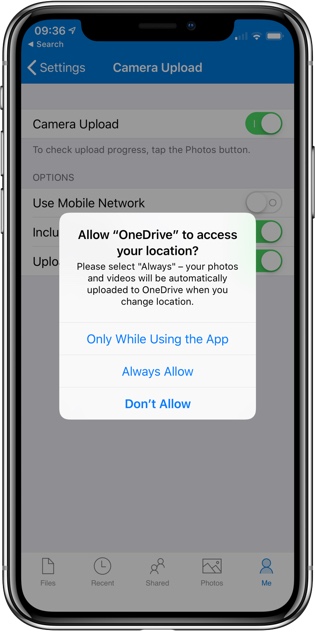
If you use OneDrive on iOS to auto upload your photos, you will have to open the app once in a while just to trigger the upload. Or, as I just learned from Franjit, you can set it to upload in the background.

More >

04 Sep 03:40

Sen.se is kaputt

by Volker Weber

cf4b06ea2864edee3e9aba75f92f455a

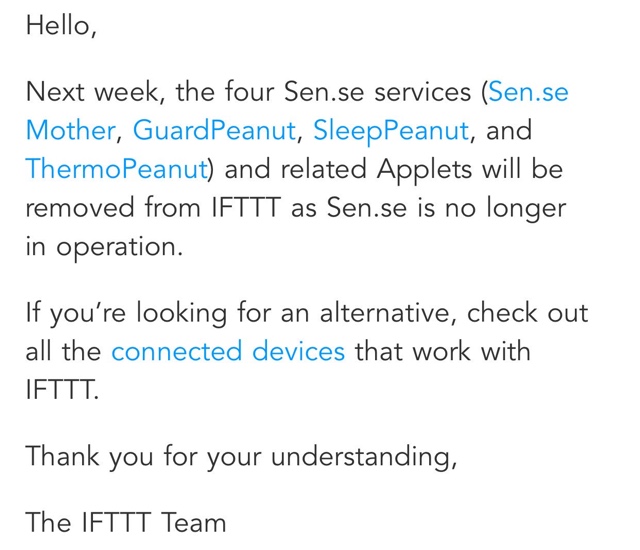
Hardware startups are difficult. Sen.se went bust a few weeks ago.

04 Sep 03:40

When you mass delete files from OneDrive

by Volker Weber

35faa4563bdee27f619f1a64b9d8cbca 5b8f2e0cacb1412253194d924d3d5eba

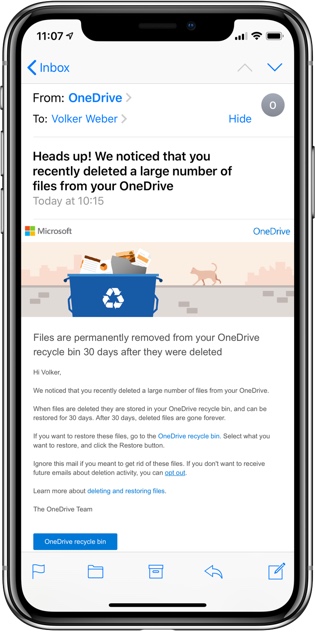
You can always restore deleted files from the OneDrive recycle bin for 30 days, unless you manually empty it. But if you mass delete files, you also get a set of warnings via email and push message. On top of that, there is File Restore which lets you set recover your whole OneDrive from a previous state, when disaster strikes.

I have seen many people lose files because a machine dies or gets lost. But I have always been able to restore from the cloud.

03 Sep 16:28

How to Hide Apps in Android

by Rajesh Pandey
Generally, most OEMs offer the option to lock apps in a device as a part of their skin. Even if the feature is missing, it can be added by using a third-party app from Google Play. However, there’s no option to completely hide apps in either stock Android or OEM skins like Emotion UI or Samsung Experience. The reason to hide apps could be many.  Continue reading →
03 Sep 16:28

Huawei Mate 20 Renders Show an Essential Phone-like Notch

by Rajesh Pandey
Renders of Huawei’s upcoming flagship handset, the Mate 20, have leaked online which show the device as having a teardrop notch similar to the Essential Phone. The renders are created based on the actual engineering sample of the device, though they are not to scale. Continue reading →