Shared posts

08 Sep 15:57

Algorithms That Work, A Bit… On Teaching With Things That Don’t Quite Work

by Tony Hirst

Grant Potter picked up on a line in yesterday’s post on Building Your Own Learning Tools:

including such tools as helpers in an arts history course would help introduce students to the wider question of how well such algorithms work in general, and the extent to which tools or applications that use them can be trusted

The example in point related to the use of k-means algorithms to detect common colour values in images of paintings in order to produce a “dominant colour” palette for the image. The random seed nature of the algorithm means that if you run the same algorithm on the same image multiple times, you may get a different palette each time. Which makes a point about algorithms, if nothing else, and encourages you to treat them just like any other (un)reliable witness. In short, the tool demoed was a bit flakey, but no less useful (or instructive) for that…

Grant’s pick-up got me thinking that about another advantage of bringing interactive digital — algorithmic — tools into the wider curriculum using things like responsive Jupyter notebooks: by trying to apply algorithms to the analysis of things people care about, like images of paintings in art history, like texts in literature, the classics, or history, like maps in geography and politics, and so on, and showing how they can be a bit rubbish, we help students see the limits of the power of similar algorithms that are applied elsewhere, and help them develop healthy — and a slightly more informed — scepticism about algorithms through employing them in a context they (academically) care about.

Using machine “intelligence” for analysis or critique in arts or humanities also shows how many perspectived those subject matters can be, and how biases can creep in. (We can also use algorithmic exploration to dig one level deeper in the sciences. In this respect, when anyone quotes an average at me I think of Anscombe’s Quartet, or for a population trend, Simspon’s Paradox.)

Introducing computational tools as part of the wider curriculum, even in passing, also helps reveal what’s possible with a simple (perhaps naive) application of technology, and the possible benefits, limits and risks associated with such application.

(Academic algorithm researchers often tout things like a huge increase in performance on some test problem from 71.2% success to 71.3% for example, albeit at the expense of using a sizeable percentage of the world’s computers to run the computation. Which means 3 times in 10 it’s still wrong and the answer still needs checking all the time to catch those errors. If I can do the same calculation to 60% success on my Casio calculator watch, I still get a benefit 60% of the time, and the risk of failure isn’t that much different. You pays your money and you takes your choice.)

This also relates to “everyone should learn to code” dogma too. Putting barebones computational tools inline into course materials show’s how you can often achieve some sort of result with just a line or two of code, but more importantly, it shows you what sorts of thing can be done with a line or two of code, and what sorts of thing can’t be done that easily…

In putting together educational materials, we often focus on teaching people the right way to do something. But perhaps when it comes to code, rather than “everyone should learn to code”, maybe we need “everyone should experience the limitation of simple algorithms”? The solutionist good reason for using computational in methods the curriculum would be to show how useful computers can be (for some things) for automating, measuring, sorting and filtering. The resistance reason is that we can start to show people what the limits of the algorithms are, and how the computer answer isn’t always (isn’t often?) the right one.

08 Sep 15:57

Build a Raspberry Pi pocket projector…how awesome is that?!

by Alex Bate

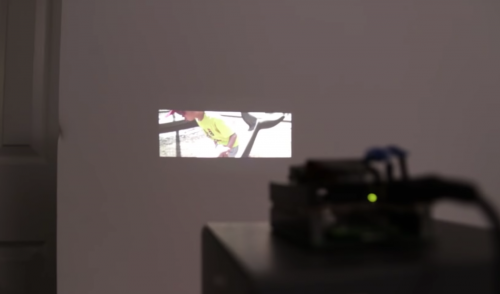
YouTuber MickMake has been working hard on producing a Raspberry Pi pocket projector with the Raspberry Pi Zero W. We’re excited. We know you’re excited. So enough of us talking, here’s Mick with more!

#210 Build a Pi Zero W pocket projector! // Project

2 for 10 PCBs (48 hour quick turn around): https://jlcpcb.com/?ref=mickmake Make a pocket projector based on the DLP2000EVM and Raspberry Pi Zero W! Nice!

Sharing is caring

YouTuber Novaspirit Tech released a new video yesterday, reviewing MickMake’s Raspberry Pi Zero W pocket projector, and the longer the video ran on, the more we found ourselves wanting our own!

Thank you, Novaspirit Tech, for reminding us to subscribe to MickMake. And thank you, MickMake, for this awesome project!

The Pi Zero W pocket projector of your dreams

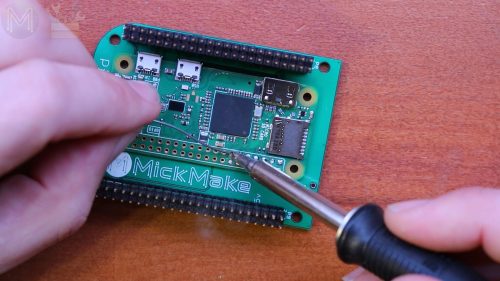
In his project video, Mick goes into great detail about the tech required for the project, along with information on the PCB he’s created to make it simpler and easier for other makers to build their own version.

raspberry pi pocket pi projector mickmakes

The overall build consists of the $10 Raspberry Pi Zero W, a DLP2000 board, and MickMake’s homemade $4 PCB, which allows you to press-fit the projector together into a very tidy unit with the same footprint as a Raspberry Pi 3B+ — perfectly pocket-sized.

Specs and things

While the projected images obviously aren’t as clear as those of high-end projectors, MickMake’s projector is definitely good enough to replace a cheap desktop display, or to help you show off your projects on the go at events such as Raspberry JamsCoolest Projects, and Maker Faire. And due to its low power consumption, the entire unit can run off the kind of rechargeable battery pack you may already be carrying around for your mobile phone. Nice!

In his review video, NovaSpirit Tech goes through more of the projector’s playback and spec details, and also does a series of clarity tests in various lights. So why read about it when you can watch it? Here you go:

Pi Projector by MickMake | The Raspberry Pi Zero Pocket Projector

this is a small footprint low power consumption raspberry pi zero powered projector using DLP2000 by mickmake ○○○ LINKS ○○○ MickMake PiProjector Video ► https://www.youtube.com/watch?v=XFciR-U7yhc MickMake Channel ► https://youtube.com/mickmake DLP2000 digikey ► https://www.digikey.com/product-detail/en/texas-instruments/DLPDLCR2000EVM/296-47119-ND/7598640 raspberry pi zero ► https://amzn.to/2Q8h1Hz ○○○ SHOP ○○○ Novaspirit Shop ► https://goo.gl/gptPNf Amazon Store ► http://amzn.to/2AYs3dI ○○○ SUPPORT ○○○ patreon ► https://goo.gl/xpgbzB ○○○ SOCIAL ○○○ novaspirit tv ► https://goo.gl/uokXYr twitter ► https://twitter.com/novaspirittech discord chat ► https://discord.gg/v8dAnFV FB Group Novaspirit ► https://www.facebook.com/groups/novas…

Custom PCBs

We see more and more makers designing their own custom PCBs to make everyone’s life that little bit easier.

Raspberry Pi pocket pi projector mickmakes

If you’ve created a custom PCB for your Raspberry Pi project, feel free to use the comments section as free advertising space for one day only! You’re welcome.

The post Build a Raspberry Pi pocket projector…how awesome is that?! appeared first on Raspberry Pi.

08 Sep 15:57

Visualization in the 1980s, just before the rise of computers

by Nathan Yau

Graham Douglas, a data journalist at The Economist, looks back on the days when getting data and visualizing it was tedious from start to finish:

But even these seemingly simple charts had their challenges and took a lot of time to make. Data were found in books by a research department skilled in the art of extracting obscure economic figures and statistics, which were copied to scraps of paper. We would use rulers, dividers, protractors and geometry (Thales’s theorem) to divide axis lines into equal parts to draw the scale ticks. We would plot the data manually in pencil on a special drawing board and sketch out the wording and title for approval before we inked the whole thing in. Text was added last using stencilling, or later, Letraset dry-transfer lettering. Making a spelling mistake was distressing. Areas were filled with sticky-back plastic pre-printed film cut out with a scalpel.

Maybe grabbing data out of PDF files isn’t so bad.

No. Still horrible.

This reminds me of my dad’s work though. He’s a retired civil engineer. When I was young, he brought home these giant blueprints. He’d roll them out after dinner, and armed with a protractor, a scaled ruler, and a calculator I could never figure out, he’d mark up building plans. Towards the end of his career, he kept everything on a flash drive.

Tags: tools, vintage

08 Sep 15:55

Here may lie an Open Badge programme. Time for a pre-mortem…

by Bryan Mathers
Pre mortem

Last week I was facilitating a Think-a-thon with a WeAreOpen client in Edinburgh alongside co-op member Grainne Hamilton. We were helping our client to think through the integration of an Open Badge programme into their current offering.

The Pre Mortem is an extremely helpful way to air intuitive spider-sense discomforts amongst the team, without anyone being seen as negative or disloyal.

Here’s Dr Doug’s whistlestop tour if you’re curious…


The post Here may lie an Open Badge programme. Time for a pre-mortem… appeared first on Visual Thinkery.

08 Sep 15:44

Friday Funny — New Tech Got You Baffled?

by Ken Ohrn

I’m afraid it’s a well-known problem.  People just need help to get the hang of new tech — witness this medieval monk making the transition to “books”.


08 Sep 15:43

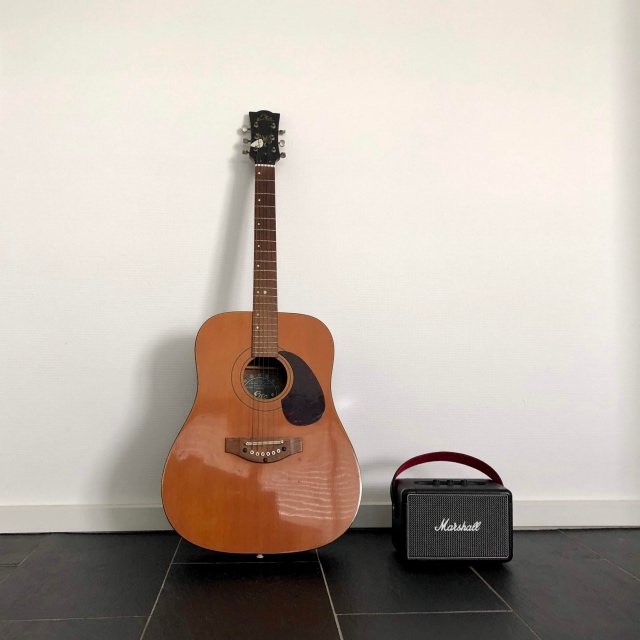
Marshall Kilburn 2 :: Der Giftzwerg

by Volker Weber

ZZ6BAA4495

10 Minuten. So lange hat es gedauert, bis sich der Nachbar beschwert hat. Der selbe Nachbar, der stundenlang kärchern oder laubsaugen kann. Und dabei lief der Kilburn nur mit zwei Drittel Leistung. Laut ist er also. Bis zu 100 dB soll er in einem Meter Abstand schaffen. Ich glaube es gerne.

ZZ50084F50

Klein und kompakt ist der Kilburn. Und er hat einen sehr soliden Riemen, an dem man die 3 kg herumtragen kann. Der Akku soll zwanzig Stunden halten, aber soweit bin ich noch nicht. Ausgepackt, eingeschaltet, und los geht's. Er fühlt sich im besten Sinne analog an. Die drei Regler für Volume, Bass und Treble machen einen soliden Eindruck. Man dreht gerne dran.

ZZ39B24403

Bluetooth 5 mit aptX soll der Kilburn kennen. Ich habe ihn einfach auf Knopfdruck mit dem iPhone X verbunden. Feine Klangunterschiede stellt er ohnehin nicht dar. Ich habe ihm meine Nam-Playlist gefüttert. Auf der Rückseite sieht er nicht ganz so stylish aus, aber das tun echte Marshalls auch nicht. Einen Klinkeneingang für 3.5mm gibt es auch, aber ein Kabel habe ich im Karton nicht gefunden. Der Stromanschluß für ein einfaches zweipoliges Kabel ist mit einer Gummiklappe geschützt. Der Kilburn hält ein paar Tropfen Wasser aus; mehr als IPX2 ist aber nicht drin.

ZZ171399DD

Dann gibt es noch einen Maintenance-Anschluss hinter einer Blende, die man nicht öffnen soll. Ich wette, das ist ein USB-Port, mit dem ich mangels Software eh nichts anfangen kann. Außerdem hat es hinten zwei Öffnungen, so dass der Player rundum abstrahlt. Allerdings klingt er von hinten ganz anders als von vorne. Blumlein Stereo-Sound soll er haben. Das musste ich erst mal nachlesen. Gemerkt habe ich das nicht.

ZZ36E74894

Knuffig ist das Ding. Marshall hat eigentlich alles richtig gemacht. Robust, leicht zu transportieren, Netzteil eingebaut, leicht zu bedienen. Aber ich weiß nicht so recht, was ich damit machen will. Ich mag meine Nachbarn nicht ärgern und drinnen wird das Ding selbst von jedem HomePod verprügelt. Er ist zu schwer, um in auf Reisen in Bahn oder Flugzeug mitzunehmen.

Auf die Dauer fiel mir bestimmt noch was ein, was ich damit machen kann, aber Marshall will ihn nächste Woche zurück. Und sie kriegen ihn auch. No editor-refuses-to-give-it-back award.

Nachtrag: Die Scheffin meint: "Oh, der ist aber hübsch. Aber wir haben schon so viele Lautsprecher."

08 Sep 15:43

Open Questions: A Conversation with Fastly CEO Artur Bergman

by Nick Rockwell
Illustration by Joey Yu

Artur Bergman is the Founder and CEO of Fastly, a cloud computing services provider. I spoke with Artur about building Fastly on open source technology, why early internet protocol design could have benefited from more diverse contributors and how the speed of light kind of pisses him off. Editor’s note: The New York Times uses Fastly in our technology infrastructure.

Q: One of the things I admire about Fastly is that from the beginning, you went straight at a powerful, entrenched incumbent with a long track record of crushing upstart rivals through various means. And, you did it with nothing but a better product. Was that scary at the start?

A: We never really thought about it that way. We had a unique product that solved a specific set of problems for companies with changing and evolving content, and we started selling it that way. It wasn’t until we started talking to investors that we heard their fears about how past competition in the space has fared. I think it pushed us to grow up faster, and operate in a strict legal and ethical fashion, something other Bay Area startups probably should have done. This paid off in our compliance work, and when we started working with larger companies that had the same expectations of us.

Someone recently said to me that you are one of the people who most deeply understand the internet at the protocol level. What’s your take on the success of early internet protocol design? What would you like to travel back in time and change?

Historically, we (protocol designers) didn’t adequately threat model the core protocols. Because of this, we paid for it with spam, traffic interception, spying and other abuses of the commons. The flip side is that we didn’t know how successful the internet would be, so maybe focusing on threat modeling wouldn’t have allowed it to take off in the way it has.

I also feel that, despite the early focus on a reliable network operation with limited resources, we lost track of that vision, and the parts of the world without the same level of infrastructure are paying that price now.

Take HTTP/2 PUSH as an example. Server Push allows the server to preemptively “push” website assets to the client without the user having explicitly asked for them. When used with care, we can send what we know the user is going to need for the page they’re requesting, which makes the perceived page load time quicker. And this is fine, until you realize that large parts of the world pay for bandwidth, which doesn’t take into account request data, just data. So we now move from a model where the user-agent — a.k.a. the browser — decides what to get based on the user’s actions, to a model where the server side decides. This is a new example of the same problem.

You built your company very literally on open source — in particular, on Varnish. What drove that choice, and to what degree have you forked or diverged from Varnish and why?

We built Fastly on top of Varnish because it let us reverse proxy, it was highly customizable and it was built with performance in mind. We forked from Varnish to make it scale at our size. Our version of Varnish is optimized for large-scale deployments, since we have caches in many locations across the globe. Most of the changes we’ve made to customize Varnish for ourselves don’t make much sense for many people, which is why we didn’t upstream the changes.

We give back to the open source community in many other ways; we give free Fastly services (including CDN, DDoS mitigation and Image Optimization) to open source projects and nonprofit organizations. Projects like PyPi, Rubygems, Terraform, Haskell, Tor Browser and Debian all use Fastly for free to deliver their software and packages around the world. We also continuously sponsor meetups, conferences and projects that center around open source. We still care about the success of open source Varnish. We subsidize the maintainer’s work on it monthly.

It seems like we have transitioned from a time when open source was driving infrastructure innovation (Linux, MySql, Varnish) to a moment when it’s the big cloud providers (AWS, GCP, Azure) doing that. Do you think that’s true? What does it mean for open source? Is an era ending?

To me, the era ended when we won the battle — it’s hard to have a movement when the enemy isn’t clear. Are the large cloud providers the new enemy? It seems like a difficult argument, since they all continue to invest in open source, releasing new software and tooling.

Cloud providers are driving infrastructure innovation using open source, and just like in the past, second movers are using open source more aggressively to counter the first mover advantage.

The era ended when people could operate things on their own, because the complexity grew to a level where specialists took over. I am sure open source will adapt to that era.

As an infrastructure startup, how does it feel to compete, cooperate, exist alongside the big cloud providers? It seems perilous…

With a career in 24/7 critical infrastructure, things some might view as ‘perilous’ don’t feel that way to me. We have mastered operating a distributed system in the most unfriendly environment you can have — the internet. If you look at the 10 fallacies of distributed computing, we hit all of them.

Our servers have to be in the most power and space constrained, yet bandwidth-rich, environments. This is not an environment the core cloud can presently operate in. I believe that more workloads should be at the edge (like personalization, data validation, authentication), but certainly a lot of workloads belong in the core cloud (like data storage and analytics), and we have to work well with them.

Doesn’t the speed of light kind of piss you off? Wouldn’t the Universe be more fun and interesting if something could go faster?

Without it, I wouldn’t have this interesting business and technical challenge to solve :). Then again, I could travel to any planet and solve different problems… So yes, it does piss me off.

You have spoken about how to expose people — young engineers, new additions to an existing ops team — to appropriate risk, so they can learn. This is something I worry about a lot, that the youngsters don’t get to do enough stupid things. Do you think that’s a real problem, if so how do you address this at Fastly?

It is a real problem: how to create an environment where people can safely learn.

I think both of us grew up in a world — and I am dating us — where the penalty for error was much lower. No one really used the internet for critical things; if a site was down, it wasn’t a big deal. Sites went down all the time. It was an environment where people could just do things, and quite frankly, had do things because no one else had done them. When Brad Fitzpatrick invented memcache, it was because it was absolutely necessary, but I don’t think we can claim that we actually really knew what we were doing.

I think the social networks we see today will be the last large sites that have survived early years of instability. If Snapchat had to work through those problems, I doubt the current generation of consumers would have tolerated it.

Fastly has traditionally been a workplace of senior engineers. We have an on-boarding pipeline but it is not very easy for junior people to be successful. We are working on correcting by investing in guardrails, in shadowing and mentoring, and in giving people time to gain context and expertise. We strongly believe in the idea of recoverability as a point of resiliency. Attempting to eliminate downtime and impact is always a laudable goal, but systems that are not designed to gracefully handle failure and recover easily are still brittle. The longer they go without exercising failure modes, the harder those failure modes will be when they inevitably come. By embracing resiliency over brittle availability, we also create safer environments for engineers who are still learning and growing. This enables stronger pipelines for newer engineers, growth within the company and continued focus on ownership of our own hiring destiny.

The average age of a Fastly employee is 38 years. Many of our leaders and engineers are veterans who have had chances to learn through some pretty massive outages. At today’s scale however, we need to control how our engineers learn to manage failures. This is where reliability engineering, architecting for failure management, guard rails built into tooling and even chaos engineering come into play. And really, it’s a much better option for all of our collective sanity!

As a company, Fastly does a lot of good things without seeming to make a big deal about it, such as donating services to charitable and open source organizations. In particular, Fastly has been pretty direct and outspoken in support of inclusivity. Where does that come from?

Donating services to open source and nonprofit organizations is one way we give back to the communities that enabled us to exist as a company. Open source also personally gave me the opportunity to become who I am, so it is incredibly important to both Fastly employees, our business and me.

I grew up in a significantly more feminist environment in Sweden, as well as a significantly smaller power distance culture; committing to a culture of inclusivity is the right thing to do. Studies show that diverse teams that reflect your customer base deliver better outcomes — the more diverse your leadership, the easier it is to attract diverse talent and build products that truly add value for customers. An inclusive environment also makes it easier to hire and retain great people.

Going back to the HTTP/2 PUSH example, I feel that if the group of people writing the protocol had been more diverse, we would have had a different outcome. If the contributors were immigrants or had families in third-world countries, or had themselves experienced periods of slow and expensive connectivity, they probably would have left that control on the client side.

I’ve noticed that many of the people that work at Fastly seem happy. Why is that?

We work on a product that matters and helps customers reach, enrich and inform a vast global user base. We work with some of the best companies in the world on meaningful technology that makes an impact. We prioritize transparency and caring.

90 people at Fastly have been here over four years — that’s nearly 25 percent of the company, which is a testament to our internal values and culture. And those same values are at the helm when it comes to growth at Fastly. As we continue to grow, we want to make sure we bring on new voices, opinions and experiences. Diverse teams deliver better outcomes. Our executive team is almost evenly split between men and women, while over 50 percent of our engineering leads have self-identified as women, people of color or LGBTQ. Over 50 percent of the company works outside of San Francisco. We’re building a global product, and you have to have a diverse company to execute on this vision.

I found an old picture of you on the internet with… a Smart car. That made me sad and confused. Can you explain this to me?

I am not a big believer in compromise. It tends to make everyone unhappy, or products that do nothing well. When it comes to cars, I seek out ones that excel at the thing they are designed for. In the case of my truck, this means off roading into remote parts of the American West. In the case of the Smart car, it means parking anywhere in a city and having fun at slow speeds on tiny mountain roads in the Bay Area. And just to be clear, it was a convertible.

This interview has been edited.


Open Questions: A Conversation with Fastly CEO Artur Bergman was originally published in Times Open on Medium, where people are continuing the conversation by highlighting and responding to this story.

08 Sep 15:39

On leveling the playing field and online tracking

by ehsan

(Please note that this post does not reflect Mozilla’s position or policies.)

Like many parts of our computing systems, some of the core parts of the Web platform weren’t designed with security in mind and as a result, users are suffering to this date.  The web platform has tried to provide a secure sandboxed environment where users can run applications from untrusted sources without the fear of their devices or data being compromised.  But the fact is that if we were to design a second iteration of this platform from scratch, we would probably make vastly different choices when it comes to issues such as execution of third-party code, or persistence of global data exposed to third-parties.

Over the years, browsers have spent significant efforts to restrict the attempts that these third-parties that are present on the Web today can do.  However, these basic foundational problems have remained unsolved in most browsers.  As a result, third-parties have been engaged in activities like collecting the user’s browsing history, personal data, information about their device, and so on, which is a subversion of the built-in protections that browsers provide to prevent the “straightforward” ways of getting this data from the third-party’s own website (aka, their own users).  Safari is the notable exception in at least the area of exposure of global data to third-parties.  I think they got the right defaults from the beginning which was hugely advantageous for both Safari and the browser community at large — for the latter since it showed that the “holy grail” of exposing no global data to third-parties is achievable, not some far-into-the-future dream which will never happen.

What’s worse, the presence and actions of these third-parties is often hidden from the user.  Even when their presence is obvious (e.g. through a visible iframe) their appearance may give the impression that they’re inert until interacted with, which is far from what’s actually going on behind the scenes.  As a result, when the user uses a browser, they often have very little knowledge of the implications of any of the actions they’re taking while browsing, in terms of the presence of these third-parties.  After all, the browser interface has traditionally been designed around the concept of a safe sandboxed environment where the user can navigate from page to page freely (and the browser would intervene if something would go wrong by putting up a prompt).  The whole online tracking ecosystem is fundamentally incompatible with the basic UI principles of browser design IMO.  Not that the problem is on the browser design side.  🙂

One thing that has been interesting is the response of the industry to the norms enforced by the browser.  Safari’s privacy protections have been under attack many times (such as by Google and Criteo).  This pattern of circumvention of browser provider privacy protections shows a will to exceed the limits of doing what’s allowed.  It also demonstrates that the third-party side of the picture here is willing to enter an arms race.

But what about users in this picture?  Right now, they have very little power, if any at all, in this picture.  In social and political sciences, power is defined as the ability to control or shape other people’s behavior.  Users need to have some ability to change the behavior of these third-parties, if we have any hopes of the Web improving.  There are many potential solutions one could think of, and some have been tried, but I think users could use more technical leverage here.  One problem is that most browsers have traditionally been on the side of the third-parties, through not clamping down on the problematic practices hard enough, so the playing field is highly skewed for the benefit of these actors.

I think there is also an equity aspect to this.  Those with technical know-how typically learn enough to protect themselves through installation of tracking protection extensions, and using more privacy friendly browsers.  But based on the public data available we know the reach of these add-ons is quite tiny compared to the population of users who are on the Web.  Furthermore, the situation is astonishingly bad in Chrome-majority Android markets on mobile, where users often stick to the OS-provided browser, contractually required by Google, which currently has no plans to support extensions on mobile, even though they have been shown viable for years by competitors such as Firefox for Android, Yandex Browser (based on Chromium), etc.  So many users there are stuck with a browser that doesn’t even allow them to find a way to protect themselves, unless if they seek a secondary browser, and know which one to pick.  The technical know-how required for this sometimes corresponds to aspects of the individual such as the background of their family, where they came from, their wealth and social class, etc.  Whereas privacy should really be considered a human right, irrespective of any of these factors.  In order to address this aspect, we need protections that work out of the box, don’t need configuring anything, and don’t get in the way of the user, and don’t need educating the user, and don’t put any burden on the user by assuming they’re going to understand or care about the technical details of how online tracking works.

Safari has led the way here in the past few years with ITP, and Mozilla recently announced that Firefox will be changing its approach going forward as well.  We need other browsers to join us in this battle as well, and we need to engage on many fronts and try to win back our users’ privacy bit by bit.  When thinking about the future, one can look at browsers realigning themselves with the user’s privacy expectations as leveling the playing field between the user, the website and the third-party.  We may never find the perfect balance, but we can surely do better than the Web that we have on our hands so far.

08 Sep 15:38

Nokia might launch a smartphone with five rear-facing cameras

by Dean Daley

HMD Global, the Finnish owners of the Nokia-brand, might be working on a smartphone with five rear-facing cameras.

Surprisingly this isn’t the first time we’ve seen rumours of a smartphone featuring five shooters, with Huawei and LG reportedly also working on devices that include the same number of cameras.

A leaked image shows off the handset with what appears to be a seven-sensor setup, though it only features five camera lenses, one flash and an additional sensor. Below the top-centre lens, the phone features Zeiss branding similar to Nokia’s past handsets.

It’s currently unclear why anyone would ever require that many camera lenses in a smartphone. The Huawei P20 Pro features a triple rear-facing camera and in total sports 68-megapixels, with up to 3x optical zoom or 5x hybrid zoom. It’s possible that this Nokia handset could feature zoom past 3x, along with other unique camera functionality.

Further, the handset looks somewhat similar to Light’s crazy looking nine camera phone setup.

Source: IThome Via: The Verge

The post Nokia might launch a smartphone with five rear-facing cameras appeared first on MobileSyrup.

08 Sep 03:24

Ist die Luft rein? :: Atmotube Plus

by Volker Weber

20f2dfdf71cc4cde2b211705e236dbde a595282fe942d089d001c65ecfb4da91

Klein Frieda: 'Imma wenn Pappa auffe Aabeit is, kommt der Mann vom Umweltschutz!' - '?' - 'Der fraacht die Mamma imma, ob die Luft rein is.'

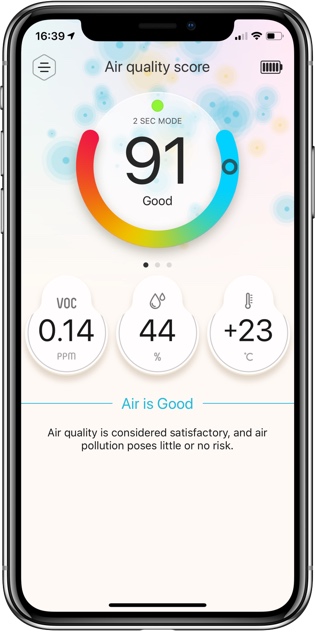
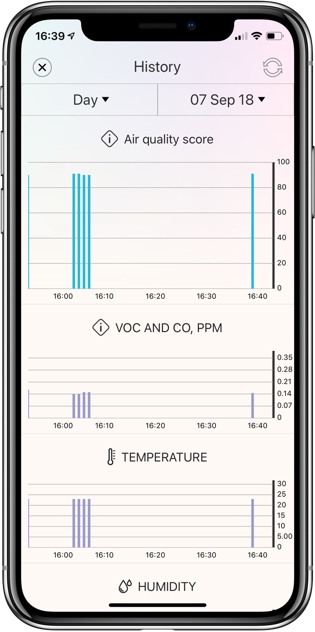
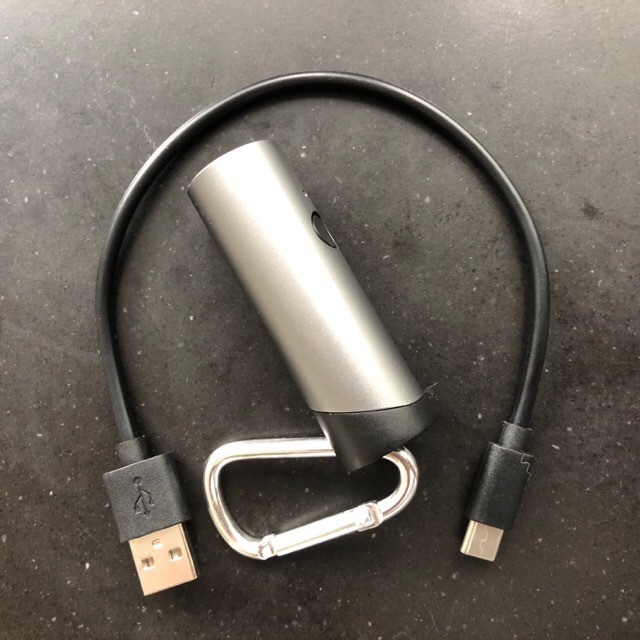
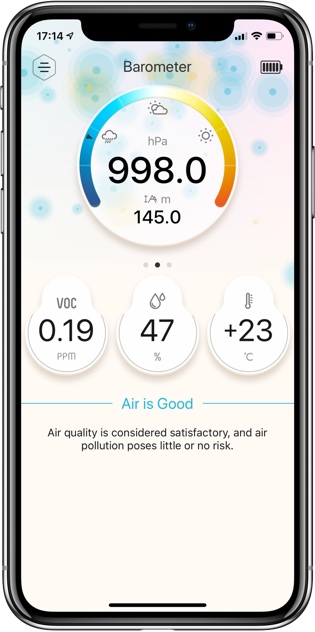
Ja, ganz flach, Aber fiel mir gerade ein. Diese App jedenfalls meint, die Luft ist superrein. Woher weiß sie das? Von diesem kleinen Röhrchen:

5e56098b1e13b1d3c9d30473b8eec9d6

Und was ist das? Zitieren wir mal die Eigenauskunft:

Atmotube Plus und Atmotube Pro sind kleine Zylinder aus Titan, passen bequem auf eine Handfläche und ermitteln automatisch Kohlenmonoxid und über 50 flüchtige, organische Verbindungen, sogenannte VOCs - dazu gehören auch Allergene. In der Pro Variante kann Atmotube auch die Feinstaubbelastung messen. Mittels einer App werden diese Daten in Echtzeit per Bluetooth aufs Smartphone übertragen und visualisiert. Dabei zeigt eine Skala von 0 bis 100 an, wie sauber die Luft ist. In der App sieht der Nutzer zudem eine Karte seiner Stadt und bekommt einen Überblick welche Gegenden besonders verschmutzt sind. Ist die Luftqualität in der unmittelbaren Nähe sehr schlecht, so warnt sogar ein Alarm. Wer kein Smartphone besitzt, kann Atmotube dennoch nutzen: Auf der Vorderseite der Geräte zeigt eine LED-Leuchte per Farbampel die jeweilige Luftqualität an. Bei blau ist die Luft rein, bei rot stark verschmutzt.

Ich habe hier das Atmotube Plus und das funktioniert soweit ganz prima. Kohlenmonoxid ist brutal gefährlich, weil es geruchlos und hochgiftig ist. Es gibt immer wieder Leute, die sich unabsichtlich beim Wintergrillen umbringen, wenn sie den Grill rein holen, weil es ihnen draußen zu kalt ist. VOCs kann man leicht messbar hochtreiben, wenn man meine Zauberkraft einsetzt: Ich kann machen, dass Luft stinkt. Andere VOCs kann man so leicht nicht wahrnehmen, etwa die Abgase von Billigschuhen oder -möbeln. Ich befürchte allerdings, dass Leute, die sowas kaufen, eher kein Geld für ein Atmotube ausgeben.

Solche Sensoren wird man jedenfalls zunehmend sehen. Die Withings-Kamera etwas misst VOCs, die Withings-Waage CO2. Hat man die im Schlafzimmer und nachts das Fenster zu, dann sieht man sehr schön, dass das mit dem geschlossenen Fenster eine schlechte Idee ist.

Ich habe mit dem Atmotube nur ein Problem:

6d2622e066745b354bbaa06d6a34714c

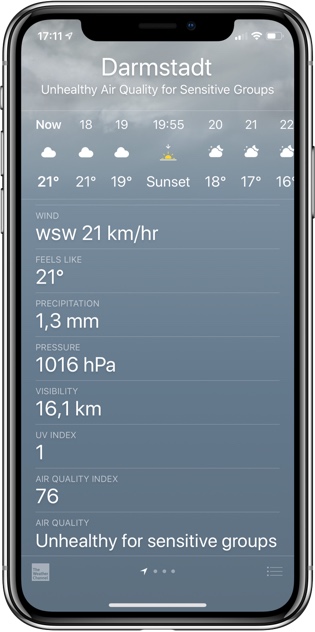
Die Apple Watch meint nämlich, dass die Luft gar nicht so super ist, wie Atmotube meint. Woran liegt das? Da müssen wir mal auf das iPhone schauen:

216971a806a37ec41b2e6341aeab35d4 93a07105232b4f336fbadc1b6368adc9

Die Apple Watch zeigt Infos aus der Weather-App und die meldet einen Luftqualitätsindex von 76 statt der 91 von Atmotube. Die Skala geht von 1 bis 100 und richtig gut ist die Luft erst ab 80. Wie kommt die Abweichung zustande? Die Werte haben überhaupt keine Beziehung zueinander. Ich vermute, Apple bezieht sich auf den European Air Quality Index, der ganz andere Schadstoffe subsummiert und (natürlich) gar keine lokale Messung macht:

Der neue Onlineservice der EUA und der Europäischen Kommission, der European Air Quality Indexen (europäischer Luftqualitätsindex), bietet Informationen zur aktuellen Luftqualität. Grundlage sind Luftqualitätsmessungen von mehr als 2 000 Überwachungsstationen in ganz Europa.

Der Index umfasst eine interaktive Landkarte, auf der die lokale Luftqualität an der Station basierend auf den fünf gefährlichsten Schadstoffen für Mensch und Umwelt angezeigt wird: Feinstaub (PM2,5 und PM10), bodennahes Ozon (O3), Stickstoffdioxid (NO2) und Schwefeldioxid (SO2).

Während Atmotube VOCs und CO am Ort misst, gibt der Index eine ganz andere Auskunft. Die Messstation steht in Darmstadt geschickterweise am Ausgang des vom Verkehrstrom entlüfteten City-Tunnel. Dickere Luft gibt es nirgendwo.

More >

07 Sep 05:25

Build Your Own Learning Tools

Tony Hirst, OUseful Info, Sept 19, 2018


Icon

Tony Hirst explores the idea of creative reusable learning resources with Jupyter Notebooks. Because: "the computational engine that is available to us when we present educational materials as live Jupyter notebooks means that we can build quite simple computational tools to extend the environment and allow students to interact with, and ask a range of questions of, the subject matter we are trying to engage them with." My question is, can we put them in an RSS feed and syndicate them? What would that look like?

Web: [Direct Link] [This Post]
07 Sep 00:48

Logitech Crayon Availability Is Expanding on September 12th

by John Voorhees

The Logitech Crayon stylus that was announced at Apple’s spring education event was available originally to education customers only. Logitech has announced however, that beginning on September 12th the Crayon will be available to anyone who wants one.

The Crayon has many of the same features as Apple’s Pencil but lacks pressure sensitivity. The device is also designed with kids in mind. The rubberized cap that hides a Lightning charging port is tethered to the device, and the replaceable tips can only be removed with a special tool. The barrel of the Crayon is also squared off so it won’t roll off a table.

Logitech says the Crayon will be available initially at Apple retail stores, Apple.com, and Logitech.com. However, beginning in October, availability will expand to other retailers.

The Crayon will continue to be available to education customers for $49.99. Everyone else can purchase the Crayon for $69.99, which is $30 less than the Apple Pencil.

It’s interesting that the Crayon goes on sale to the general public the same day as Apple’s fall event. Perhaps this indicates that new iPads will debut during the event, despite the lack of iPad rumors and leaks compared to the iPhone and Apple Watch.


Support MacStories Directly

Club MacStories offers exclusive access to extra MacStories content, delivered every week; it's also a way to support us directly.

Club MacStories will help you discover the best apps for your devices and get the most out of your iPhone, iPad, and Mac. Plus, it's made in Italy.

Join Now
07 Sep 00:48

Apple’s Acquisition of Shazam Approved by the European Commission

by John Voorhees

Last December, Apple announced plans to acquire music-discovery service Shazam. The service, which makes iOS, watchOS, and macOS apps that can detect songs, TV shows, and advertisements from their sound signatures, has been on Apple’s platforms since the early days of iOS and is the engine behind Siri’s ability to recognize songs.

Since February, the deal has been on hold while the European Commission considered whether it would adversely impact competition. In a press release today, Commissioner Margrethe Vestager, who is in charge of competition policy, explained:

“Data is key in the digital economy. We must therefore carefully review transactions which lead to the acquisition of important sets of data, including potentially commercially sensitive ones, to ensure they do not restrict competition. After thoroughly analysing Shazam's user and music data, we found that their acquisition by Apple would not reduce competition in the digital music streaming market."

Elaborating on the Commission’s findings, Vestager said the Commission concluded that “Apple and Shazam mainly offer complementary services and do not compete with each other.”

There has been no official word from Apple on the Commission’s decision, but it should clear the way to allow that deal to be consummated soon.

Past MacStories coverage of Shazam is available here.


Support MacStories Directly

Club MacStories offers exclusive access to extra MacStories content, delivered every week; it's also a way to support us directly.

Club MacStories will help you discover the best apps for your devices and get the most out of your iPhone, iPad, and Mac. Plus, it's made in Italy.

Join Now
07 Sep 00:47

Die weltgrößte Synth-Sammlung startet Kickstarter-Kampagne für ein interaktives Synth-Museum

by Ronny
mkalus shared this story from Das Kraftfuttermischwerk.

Die gemeinnützige Organisation Swiss Museum und Centre for Electronic Music Instruments (SMEM) hat eine Kickstarter-Kampagne gestartet, um ihre Sammlung öffentlich zugänglich zu machen.

Der Playroom soll den öffentlichen Zugang zu über 1.000 Synthesizern und 5.000 Instrumenten – darunter Effekte, Tape Echos, Drum Machines, Reel-on-Reel, Handbücher, Mischpulte, Kassettenrekorder, Orgeln, Verstärker und Computer ermöglichen. Feine Sache.


(Direktlink, via The Vinyl Factory)

07 Sep 00:47

The Big Berkey Water Filter System: Uncertified and Inconvenient

by Tim Heffernan
The Big Berkey Water Filter System: Uncertified and Inconvenient

The Big Berkey water filter has a strong following, and we’ve been asked about it several times over the years that we’ve spent researching the best water filter pitchers and the best under-sink water filters. Its manufacturer claims that the filter can remove far more contaminants than other filters; however, the unit is not independently certified to NSF/ANSI standards like our other filter picks.

07 Sep 00:47

"The sink sounds like a didgeridoo!"

by peter@rukavina.net (Peter Rukavina)

The first time Oliver used the sink at our Malmö Airbnb, he emerged exclaiming “The sink sounds like a didgeridoo!”

I asked him to record this, and he emailed me this sound.

Which does, indeed, sound like a didgeridoo.

07 Sep 00:47

Proposal For a Universal Lifelong Learning Credit System

Ronny De Winter, Class Central, Sept 19, 2018


Icon

The old standbys never really disappear. The idea of a single credit standard has been around for as long as I have, which I regret to say, is a long time. The basis for the current proposal? "Imagine a system in which we allocate one Universal Study Point (USP) per 25 study hours. This system could help participating universities, learners and employers understand and reward all kinds of studies, regardless of educational institution." Yes, we'll base it all on perceived seat time. Or, maybe not.

Web: [Direct Link] [This Post]
07 Sep 00:47

For safety’s sake, we must slow innovation in internet-connected things

Martin Giles, Technology Review, Sept 19, 2018


Icon

This story relates the views of internet security expert Bruce Schneier, "who fears lives will be lost in a cyber disaster unless governments act swiftly." Even if I thought this would be a good idea (and I don't, really) I wonder how it could be implemented. Will everyone in the world simply agree to put down their digitl development tools? Probably not. And in any case, things aren't secure now - our best hope for security is more development. Still, it's a catchy headline that people will like. And I love the photo. Love it!

Web: [Direct Link] [This Post]
07 Sep 00:22

Setting expectations for open source participation

by Brett Cannon

(If you would prefer to watch a 30 minute talk on this same content, you can watch my Python US 2018 keynote)

Who am I? [1]

To start, I want to provide my bonafides so you know I'm not some crank spouting some armchair advice with nothing to back up their opinion other than having an internet connection.

For a day job I am the dev lead for the Python extension for Visual Studio Code. Originally the extension was an open source, personal project, but then Microsoft decided it would be a good idea to support the most popular extension for VS Code, so we hired its creator (Don Jayamanne), put me on the team, and then we re-launched the extension as an official open source project from Microsoft (and now we are a team of four developers and a product manager). So I participate in what I would call corporate open source for a living because even if we never received a single outside contribution ever again, the extension's development will continue thanks to Microsoft.

One day a week for a day job plus plenty of spare time I'm also a core developer on the Python programming language. I have had commit privileges to Python since April 18, 2003, so over 15 years at the time of writing this. So I also participate in community open source where if people who weren't paid to work on Python stopped contributing, the project would collapse (I'm considered extremely lucky to get a day/week of paid work time to spend on Python, so if it weren't for volunteers there would be no Python programming language).

I've also been lucky enough to have contributed a patch in some form to around 90 projects (depending on how you count). Now a lot of those are documentation changes where I probably fixed a spelling or grammar mistake, but the key point is that I have been exposed to a lot of open source teams.

So, to summarize: I contribute to and manage a corporate open source project for a living, I have been actively contributing to a major open source project for over 15 years, and I have contributed to about 90 other projects. I would like to think I know a little bit about how open source works. 😉 Hopefully that means what I am about to say comes from an informed place and you don't view me as a total crank.

What is the purpose of open source? [2]

When you first release open source code to the world, it's a code dump. With zero participation from others you're essentially setting the code free into the world, but it's very much a monologue.

But the instant you get that first contribution to your code, it becomes an open source project with an open source community of two (if you have users who are just providing feedback then it's still a community of users, it just isn't driven by open source yet). And once you get over that initial hurdle of your first external contribution, your project grows in purpose from being a way to share code with the world to being about two things:

  1. Collaborating on the maintenance of the project
  2. Having fun

Going forward, your open source project is about balancing those two things. If you're not collaborating with others then you're back to a code dump in which case you don't have to care about collaborating. And if you're not having fun then you will find yourself wanting to do something else, which means you will no longer want to participate. In both cases, though, bit rot can very easily set in. While participating in an open source project ebbs and flows can occur between these two goals, if you ever lack in one of them then the project will collapse.

How do you sustain open source? [3]

Now that we know that the purpose of an open source project and community is to sustain the project and have fun, how do you accomplish that? First, you need people.

Initially your project is going to be very small, so getting more people to help out is great simply because every little bit helps. But as the project grows you also need to attract new people in order to replace people who have left the project. People have children, suffer from burn-out, change jobs, or die. There are various reasons people stop contributing to open source, but it happens and so if you don't bring new people in then your project's participants will eventually dwindle down to zero.

But you also can't forget about those that already participate. Retaining folks must also be considered as people build up knowledge and unique skills for a project. If all of the preexisting participants left en masse then it would take awhile to bring new participants to the same level as those that left.

The trick is balancing both of these needs. For instance, existing participants probably like the way the current workflow works. But then new participants might want some newer approach that the project has not taken on yet. Do you keep things as-is to satisfy current participants or do you change things to try to attract new participants?

In case it wasn't obvious, making sure open source works is hard. 😉

So what's the goal (and why are we failing at it)? [4]

For me, the overall goal of open source is to attract and retain people to help maintain an open source project while enjoying the experience. I don't think this is a radical or controversial perspective of what the purpose of OSS is. We all want open source to be sustainable and that requires people who enjoy doing open source. If we don't have this then there simply won't be people willing to work on open source because the enjoyment has been sucked out of the experience for them.

Unfortunately we are failing at meeting this laudable goal of making open source sustainable through keeping it enjoyable to do so. An example I like to give is a tweet written by Cory Benfield when he was the maintainer of hyper-h2, urllib3, and requests:
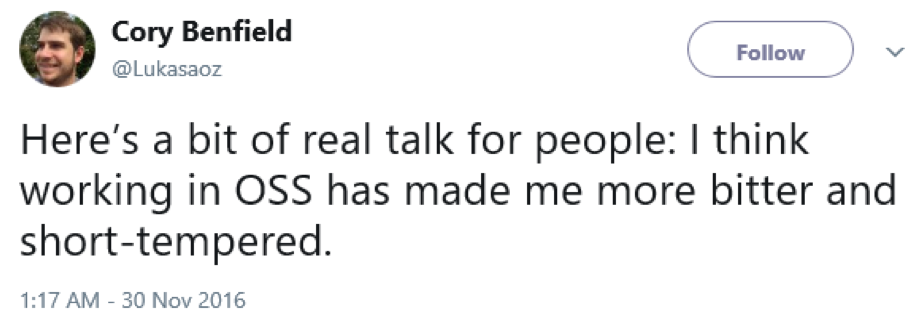
Cory Benfield: "Here is a bit of real talk for people: I think working in OSS has made me more bitter and short-tempered"

First, I hope everyone who reads that feels somewhat disturbed by the fact that trying to do a nice thing by working on open source has led someone to becoming a worse person. That is not a reasonable thing to ask of anyone and is definitely not sustainable as it doesn't exactly make one happy to work on open source.

Look at it from the perspective of Cory's partner. By letting him spend time on open source she has ended up with a worse partner in life. How is that a reasonable trade-off? As a community we drove Cory into a position where his partner could very reasonably say "it's either open source or me", and I suspect Cory's partner would win (and rightfully so). It is simply not acceptable that Cory could even conceivably be put in that position due to him trying to do a nice thing by maintaining some open source project(s).

And this is not an isolated case. I had to take the entire month of October off in 2016 to prevent burn-out from open source. I actually now take a full month off annually from volunteering as an "open source detox" to fight off any potential burnout. I also take at least one day off every weekend from open source work to guarantee that I at least get one day a week that isn't impacted by open source.

So how have we ended up in this position where we are failing at meeting this reasonable goal of making open source sustainable by keeping it fun to do? Why are volunteers or people paid by someone other than ourselves actually disliking working on open source to the point of it making them worse people? Why do I have to take one day off a week from open source to make sure it doesn't ruin every day of my life? It all comes down to how people treat each other in open source.

Now I don't think everyone who treats someone else poorly does it on purpose. I think a large part of the problem is most people have not stopped and thought about what open source is and how that should guide how they interact with others involved in it. Open source is more than just some free source code; there are real people involved here and that simple fact cannot be ignored. Unfortunately, I think a decent amount of people do forget this by not thinking about two key details.

EVERYTHING in open source has a cost [5]

While open source, by definition, is monetarily free, that does not mean that the production of it is free. Even when someone volunteers their time, there is a cost of their time and effort.

Every time I spend work time on open source that's my employer choosing to donate my time. But it's also my choice to work for an employer that lets me put any effort into open source. If I'm not enjoying that work then that's unpleasurable effort which makes me either want to change my job or quit (just like any other job you don't enjoy doing).

And whenever I volunteer my time for open source, that is me choosing to divert my personal time from doing something else. Whether that's spending time with family, friends or doing something else that I find fun and entertaining, by spending my personal time on open source I am giving up time that I could have spent on other things. I am literally choosing open source over everything else in my life when I choose to work on it in my spare time.

And I only have so much time to give. Not only am I not spending time with my wife and cat when I contribute to open source in my spare time, but I'm choosing to give up a part of the finite time I have to be alive on top of it. While I haven't quite hit the midpoint of my expected lifespan, I will eventually die and so choosing to spend what personal time I have left being alive probably shouldn't be squandered doing something that I do not enjoy.

And this is why whenever anyone says something is "just" a quick fix is not taking into consideration what they are truly asking someone to give up for their benefit. The cost of asking someone to do something for you is disproportionate to the cost of what you're asking the other person to give up on your behalf. And this applies to everything, including email where the cost of you sending an email has a huge cost on the world's time as you're potentially asking hundreds of people to spend what little time they have to be alive to read what you have written. You have to always consider whether what you're asking of others is reasonable.

To reiterate, just because open source software is free for you doesn't mean someone else hasn't paid some price on your behalf to get you that code.

Everything in open source should be a series of kindnesses [6]

Since open source is paid for by others in effort and time, that would suggest that there really shouldn't be any expectations on your part from what you get out of an open source project that you choose to use. You could view everything in OSS as a kindness that someone has done for you and others. Putting things into that perspective takes away the feeling of expectation and entitlement. This frames open source participation as someone doing something nice for the community and project, as someone having done a kindness for you.

As soon as you start demanding or expecting something from open source you have stopped viewing it as it was intended, and that distortion can be poisonous. When I choose to donate my precious time to open source I do it voluntarily as a nice thing that I enjoy doing. I didn't do it because someone demanded it of me, and the instant I feel that my time is not appropriately appreciated as the gift that it is, I stop enjoying doing open source. And when someone stops enjoying their contributions to open source, they burn out and quit.

Taking the altruistic view of open source keeps things grounded and healthy. Viewing open source as a kindness someone else has done for you gives the appropriate perspective that this is something nice and no one has any expectations from it. It's like when I hold the door open for someone. Ultimately I don't expect anything in return (although a "thanks" is always appreciated). And the person passing through the door doesn't expect anything else from me either. But when someone in open source makes demands it's like the person passing through the door criticizing how I held the door open. It's pointless and simply leads to people no longer being willing to hold open doors for others.

To reiterate, you should view open source as a series of kind acts people have done altruistically. That means you cannot make any demands or hold any expectations of an open source project. Or as Evan Czaplicki, the creator of Elm, put it, "Remember that people do free work because it is fun, not to get stressed by strangers".

Typical scenarios in open source [7]

Knowing that open source always has a cost and should be viewed as a series of kindnesses, I want to go through some typical scenarios that occur in open source to point out how people accidentally stop viewing open source as kindnesses. I'm going to talk from the perspective of me as an OSS project maintainer, and that of Stuart, an external participant to a project (and who happens to be the person who gave me the idea of framing these examples in this fashion). I will signal who is doing a kindness for whom using arrows, e.g. "Stuart → Brett" signifies that Stuart did a favour for me.

Using open source [8]

Brett → Stuart

It can be like someone leaving out a pamphlet you find offensive.

When I release open source, I'm doing a favour for you. I obviously didn't have to release any source code that I produced for others to use for free, but I do it as a kindness for you so you can benefit from what I have already done (later on we will see how Stuart can give back by doing me a kindness by helping with the project).

For the longest time I didn't think giving away source code could really go badly. But then when a large open source project had a scandal break out about a tasteless joke made in their docs I realized that open source projects can be hurtful, discriminatory, etc. from something as simple as their documentation. Luckily this does not seem to be common, but when a project explicitly tries to exclude or is hurtful towards others then it's no longer being released as a kindness.

Providing feedback [9]

Stuart → Brett

It can be like someone telling you, "you're stupid".

Any piece of positive feedback is a wonderful kindness to receive. I'm always elated when someone tells me that they enjoy using Python, how it made things easier for them, etc. Positive feedback is always welcome (and unfortunately can be somewhat of a rarity).

There's also constructive feedback. That is also an appreciated kindness as that leads to improvement. The key here, though, is that the feedback must be constructive, not negative. If you don't have feedback that can help improve the project then your other option is to simply admit the project doesn't meet your needs.

But negative feedback is never necessary. If you called a project stupid it helps no one. It doesn't help me because I can't act on being called stupid. And it isn't a kindness because you could have simply said that my project wasn't helpful to you for whatever reason (e.g. didn't meet your needs, doesn't have the stability you require, etc.). Receiving negative feedback simply makes me come to regret spending time away from my loved ones to work on open source. If you don't understand why something is the way it is you can always ask why instead of making a declaration that something is stupid.

And people forget that someone put their time and effort into that project that is being called stupid (remember that open source always has a cost). For example, an article once reached the front page of Hacker News which started off by saying the author liked Python ... but then they proceeded to point out all the "stupid" and "dumb" parts of the language (most of which, by the way, were because of backwards-compatibility). As I read the article I was able to point out which "stupid" features were mine and which were done by friends of mine. Essentially the author wrote an entire article calling me and my friends stupid. I don't think the author meant to be insulting to me, but they were and so is everyone else who chooses to call something I put my time and effort into stupid or dumb or some other needlessly negative insult. (When confronted with the fact that he was being unnecessarily negative, the author claimed he didn't expect the article to be widely shared; the internet is public, so always assume the entire world will read what you post, especially by the people who will take the greatest offense.)

And this extends to bug reports and feature requests. It's a kindness when you report a bug so that I have a chance to try and fix it. But just because you reported a bug doesn't mean I specifically owe you anything. I should try to thank you, but there is no contract here that says I have to address your bug or feature request. My kindness was to provide my time and effort for the open source project up until now, but there's no expectation beyond that of my time and effort. Open source really should be viewed as self-service unless I choose to help further. If something doesn't work for you then you are free to take the code and modify it to meet your needs; that's a key tenet of open source. So the idea that any open source project owes anyone anything is a misunderstanding of what open source fundamentally is.

Submitting a contribution [10]

Stuart → Brett

It can be like someone trying to give you a puppy you didn't ask for or saying, "I'm cleaning up your mess".

When you submit a change to something, I'm sure your intentions are good. You have put in the effort to try and improve the project somehow and that's appreciated. But where this tends to go wrong is when people don't take into account the fact that your considerations for a change are often very different from mine. Think of a contribution like a puppy: you might view it as this cute, wonderful thing you're giving me while I'm looking at it as over a decade of feeding, walking, and vet bills.

Let's say you submit a contribution and I accept it. What that means is that I am now expected to maintain that code for a decade or more (Guido released Python to the world in February 1991 which predates Linux's release in August of that year). So while you might feel done with your contribution once it's accepted, for me it's the start of having to care and worry about it for potentially decades.

And then there's the impact on the Python community. People who identify as a Python software developer number well into the millions. Toss in people who use Python but don't identify themselves as software developers and we are probably talking about an 8-figure number. That means I have to consider the impact of your change on tens of millions of users and indirectly billions of people using Python software because it is guaranteed to break something when you are dealing with that sort of scale (the fact that Instagram's 1 billion users are using a Django web site means your change could prevent you and everyone else from seeing cute cat photos someday). And then there's the fact that your change may have just made literally tons of physical books in bookstores around the world obsolete; something else I have to consider.

Assuming your contribution makes sense, you also need to pay attention to how you communicate. It is not uncommon for someone to submit a change and point out how they are trying to "fix this broken/wrong thing". I don't think people necessarily intend to be mean, but realize that when you say something like that you are telling me I failed and you're trying to clean up my mess. The put-down of saying I did a bad job does not motivate me to want to review your change, nor does it motivate me to want to contribute further if my work is just going to be viewed as bad.

A better way to phrase it is to say you're trying to help the project out. As stated earlier, open source is about trying to come together to help maintain a project, so if you phrase things around that common goal then your contribution won't come off as hostile.

Lastly, realize that contributing is not a right. I am under no obligation to accept your or anyone else's contributions. We are all doing this open source thing to try and help each other out, but if I have to say "no" to you, that does not mean you are allowed to yell at me about blocking you from contributing. Remember, part of my work for the project that we are both trying to help out is to say "no" as necessary. I understand that getting to contribute to a project can be a very proud moment (I know I felt that when I got my first contribution into CPython), but please realize that yelling at me over it is not going to help get your contribution in and it will upset me and contribute to my burn-out (which means less people to look at your next contribution). Also realize that even as a core developer, I don't get all of my changes accepted into Python; sometimes I make changes that people disagree with and they end up being reverted.

Contribution feedback [11]

Brett → Stuart

It can be like someone saying, "you're doing it wrong" or reacting with "why don't you love me?!?"

When responding to a submitted contribution, maintainers should try to say "thank you". It's a simple acknowledgment of the time and effort someone put in to try and help out the project everyone involved in is attempting to keep going. It can be hard to have enough time to say it for every contribution, but it is a good goal to strive for.

Feedback for a contribution should also be constructive. Telling someone they are doing it wrong helps no one; it's just as bad as when someone says your project is stupid. The goal of working with someone on a contribution should be:

  1. To help them get their contribution to a place where you're comfortable in accepting it.
  2. Help them learn how to contribute again in the future more effectively.
  3. Pass on some knowledge to the contributor.

In other words the goal is to get the contribution in, make it easier for the contributor to contribute again in the future, and to teach someone something new.

Maintenance [12]

Brett ⇄ Guido

It can be like arguing about politics with friends.

While everything I have discussed so far is how maintainers of a project and everyone else can clash, issues also arise among maintainers themselves. I have actually come close to tears due to an argument I had over email with a fellow Python core developer. If anything it's actually harder to deal with hostility and negativity from fellow maintainers because not only are they typically very passionate about the project, but you are also most likely going to be working with them for quite a while so it can lead to stress whenever you end up interacting with them in a negative way.

Much like anyone else on the internet, maintainers should try to be self-aware enough to know when something has upset them so they can step away from the keyboard and gather their composure first. Open source is typically not a time-driven thing, so there's almost never a need to respond immediately to that email, tweet, etc. Waiting an hour or twenty-four before responding is never a bad thing and in general leads to a more level-headed response.

Scale & the abuse of maintainers [13]

I am well-aware that this blog post paints things as much worse for maintainers than external contributors and project participants, and that's because it is. Scale factors easily lead to this being a much bigger issue for maintainers than for those only casually contributing to or using a project.

Take Python for example. There are currently 91 people who have commit rights to the CPython repository. The last time I calculated the number of people who call themselves a "Python developer" I got 7 million. To have an easy number to work with that also includes every user of Python who doesn't call themselves a programmer (e.g. scientists probably typically don't label themselves a developer first and a scientist second), let's round up to 10 million. Now let's say that 1% of Python users are mean (which I suspect is way too low to be accurate; would you say that only 1 out of every 100 people at your workplace is mean?). That's 100,000 people I potentially have to contend with who are quite willing to be mean to me.

And we don't say this often enough, but maintainers get psychologically abused by people. Insulting me and a project that I have put 15 years of my life into is not exactly being done to help my mental health 😉. And it's very easy to end up in a situation where people abuse me because most interactions I have with people are either about a question they had, a problem they ran into, or a change they want to see happen; these are not interactions to talk about the weather outside or to thank me, but about something people want to see changed.

And the abuse does pile up. Some work has shown that if you don't have a 5:1 ratio of positive to negative interactions with your spouse when arguing you're heading towards divorce due to the mental toll arguments end up having on you. And from personal experience I would say that ratio is probably a little low when trying to counter-act a negative interaction with someone online (personally it feels more like 10:1). I actually on occasion go online to e.g. Twitter and say I just had a bad interaction knowing that it will lead to some nice comments in order to help cope with the negativity I'm struggling with.

Basically it's really unfortunate that negativity is driven by reactions while positivity is driven by reflection. I sometimes wish there was #ThankfulThursday or something, similar to #FlashbackFriday so there was something people could react to for thanking people for what they do instead of hoping someone stops and thinks about thanking others.

We all need to act nice towards one another

I think if everyone would just act nice towards one another with the proper perspective of what open source is and how it functions then most of the frustrations people have and the burn-out that occurs would drop significantly. As I said earlier, I have found that phrasing everything in open source as being a kindness really helps put things in the proper perspective. To make sure what I mean by a "kindness" is understood and why I think this is a healthy perspective to take, I wanted to clarify these points.

A kindness should not come with an expectation of something in return [14]

I used to say everyone should view open source as a series of favours. But as time went on I realized that favours easily end up with a connotation of expecting something in return. For instance, how often have you heard someone say, "If I do this favour for you, will you do this other thing for me in return?" This makes favours a pay-it-forward situation where you are doing something with the expectation of it being repaid later.

I switched to using kindnesses because being kind in the cultures I'm familiar with has no expectation of something in return. This does away with unhealthy expectations that people doing something for them has an expectation of something in return. It sets everyone's expectations for the kindness appropriately; that the person doing the kindness expects to be treated nicely (like any other interaction in the world), but otherwise there is no expectation of getting something in return for that kindness.

For instance, if I view sending a project a pull request as a kindness then I have no expectation of what will eventually happen to that pull request (e.g. accepted, rejected, languishing, etc.). It's reasonable to expect I will be treated nicely, but beyond that I have to go into the situation with the expectation that nothing will ever happen to my pull request and the only thing I got out of it was the experience of writing the code.

And the same goes the other way. If someone sends me a pull request and I ask for changes, my review was a kindness to the pull request creator to give them feedback to help them get their PR accepted and maybe teach them something. If they never come back and update their PR, then that's fine as I didn't do the review with an expectation that it would necessarily go anywhere.

Everyone should act like everything is being done as a kindness for them [15]

When you expand what acts should be treated as kindnesses to all acts, it has an interesting effect that no one has a reason to get angry or upset anymore when something doesn't happen. While you still have a right to expect to be treated nicely (as you should be as a reaction to any kindness done for you), once you let go of any presumption on your part about what will happen, things become a lot less stressful for everyone involved. And when the stress in a situation drops, it tends to actually lead to more motivation to help because the whole situation becomes much more pleasant for all involved.

Now when I point out that I think open source should be viewed this way, inevitably someone asks about how I would expect anyone to be motivated to work on open source. The thing is that if you're involved with open source long enough you end up noticing that people are quite happy to help because they want to help. Remember, open source is done by people giving something away for free because they choose to; you could say you're dealing with a bunch of digital hippies. 😄 In other words you don't need to worry about open source collapsing if everyone operated as if everything was just a kindness because plenty of people already operate like that. It's actually those who don't come in with that expectation who end up "poisoning the well" as it were and inevitably driving away those that would have happily volunteered their time and effort, leading to just those with the improper motivations left to keep a project running (which will inevitably fail due to no one being motivated to help out).

How should we act towards one another? [16]

In case I haven't made it clear enough, I think we should all act towards each other with kindness. If we were all open, considerate, and respectful towards one another (as the PSF Community Code of Conduct suggests), then I think open source would go much more smoothly:

  1. Open to people doing a kindness
  2. Considerate about the kindnesses being done
  3. Respectful of what eventually is done with your kindness

It's sort of a three-way handshake of kindness (much like TCP's three-way handshake). When you do a kindness you start the conversation, the recipient of your kindness should be open and considerate to that kindness in response, and then you should be respectful of what the recipient ultimately decides to do with your kindness as the acknowledgment.

Being rude/mean is also never needed. If you look at the purpose of yelling, being rude, or being mean you will notice that their purpose is to try and intimidate the person you are arguing with into being too uncomfortable or frustrated to continue. It has nothing to do with the points being made in the discussion but instead to try and be exclusionary without directly addressing the contents of the discussion. In other words being rude is using bullying tactics as a way of being intolerant of ideas you happen to not like and can't address directly and fairly.

If I ran the HR department of the internet [17]

It's one thing to accept that people should treat all of this as acts of kindness and be nice accordingly, but how do you help make sure you act nicely when communicating?

Assume you're asking me a favour

While this blog post has emphasized considering everything as a kindness, to help you phrase things for effective communication, assume you're asking me for a favour. For instance, if you have a bug you want fixed then assume when you file that bug that you are asking me to do you a favour and fix it. Since I'm under no obligation to fix the bug, treating the request as you asking a favour of me helps make sure you don't phrase the bug report as a demand for a fix.

Also assume you're asking your favour of me in-person. It's very easy to forget tone when writing text online, so pretending you're talking to the person at e.g. PyCon might help put you in the right frame of mind.

Assume your boss will read what you say

Make sure that whatever you write your boss and employer will be happy with it. When you do things for work in open source you are representing your company so it does matter how you communicate. I for one do pay attention to what companies people work for and how they treat others in open source (and from conversations with other project maintainers I am definitely not alone in doing this). I also have a pretty good memory so assume I won't forget which companies have an employee that has treated me poorly.

Assume your family will read what you say

Finally, assume your entire family will read what you say. Would your partner or parents approve of how you communicated? If you have kids, would you like them to pick up on how you communicate? Would your children approve of how you're communicating? If the answer is "no" then consider rephrasing how you are asking for something.

My thinking is that somehow you will care either how your boss, family, or I think of you and so you will stop and pay attention to how you are communicating.

Pay for open source with kindness [18]

In case the message in this post wasn't obvious, being nice to one another and realizing that open source is fundamentally self-service would lead to open source being more sustainable and pleasant to participate in. We shouldn't be putting the significant others of open source participants in a position where they have to have a chat about how open source is making their partner a worse person.

When I have talked about this publicly I commonly get two questions. First is what about blunt cultures? Should they be penalized by not inherently teaching members of that culture to be as kind/soft in delivery as others? To that I first say we should all give people the benefit of the doubt. So if someone comes online and discovers that they are more blunt than others expect, they should learn that fact in a kind manner and not a rude one (remember, responding to rudeness with more rudeness never solves the problem, it just aggravates it). The other thing I say is realize there's a difference between being blunt and being rude, e.g. saying "I don't think that's correct" is very different than saying "that's not correct"; one is a blunt opinion while another is someone claiming something is a fact when it isn't. While I would argue it'd make discourse among strangers easier by rephrasing things as questions for clarification, I wouldn't say bluntness is the same as rudeness.

The other question I get is about someone having to be the "tone police" and how do you prevent abuse? First, to get the point across as to why we need someone setting standards, I ask if the person would like it IF I ALWAYS TALKED LIKE THIS TO THEM, YOU BLOODY JERK! Doesn't exactly feel good, does it? 😉 So there is obviously some level of acceptability that we expect people to adhere to already.

As for the abuse worry, I think it's a red herring. Rudeness is never necessary to make your point so why do you care so much if you're told you can't be rude? For instance, do you really have to yell to make your point? Usually yelling is simply a way to try to bully the person you're arguing with, so it's simply an exclusionary tactic by trying to scare off the other person by talking louder than them or making them too uncomfortable to continue. With inclusion as a goal, allowing a communication style that provides no benefit but to exclude others simply does not need to be allowed. And if you object to rules from some principle you hold, then I'm sorry but then open source is probably not for you.

Participation in open source is a privilege, not a right. Some people forget this and make platitudes about free speech and such. The problem is people forget that in open source you can simply fork a project and go create your own community with your own participation requirements; you are never beholden to a project such that you can't ever leave. In other words this is not the equivalent of the government you live under restricting your ability to communicate since you can't "fork" your country and start a new one without a rebellion. You choose to be in a community, which means you choose to participate under their rules and expectations.

Going forward

I am hopeful that we can solve this problem of burn-out and making open source unwelcoming/uncomfortable for people as the solution isn't unknown. But I am worried that due to the social difficulties of getting people to change their general attitudes that fixing this problem is not easy. I'm even more worried for other open source communities, though, because if our great community is struggling with this I can only imagine how bad it is in other places. 😞

But we must start somewhere. So the next time you see someone being rude, kindly let them know that is how it's being perceived so they have a chance to change their behaviour. And when you interact with an open source project, realize that everyone is just trying to do kindnesses for others so don't go in with any set expectations or demands of others. If we could help others learn how to communicate better and not have unreasonable expectations then this grand social experiment we call open source will have a chance to continue to succeed.


  1. https://youtu.be/tzFWz5fiVKU?t=49m55s ↩︎

  2. https://youtu.be/tzFWz5fiVKU?t=51m50s ↩︎

  3. https://youtu.be/tzFWz5fiVKU?t=52m41s ↩︎

  4. https://youtu.be/tzFWz5fiVKU?t=54m1s ↩︎

  5. https://youtu.be/tzFWz5fiVKU?t=56m55s ↩︎

  6. https://youtu.be/tzFWz5fiVKU?t=58m30s ↩︎

  7. https://youtu.be/tzFWz5fiVKU?t=59m11s ↩︎

  8. https://youtu.be/tzFWz5fiVKU?t=59m39s ↩︎

  9. https://youtu.be/tzFWz5fiVKU?t=1h38s ↩︎

  10. https://youtu.be/tzFWz5fiVKU?t=1h3m21s ↩︎

  11. https://youtu.be/tzFWz5fiVKU?t=1h5m18s ↩︎

  12. https://youtu.be/tzFWz5fiVKU?t=1h7m16s ↩︎

  13. https://youtu.be/tzFWz5fiVKU?t=1h8m14s ↩︎

  14. https://youtu.be/tzFWz5fiVKU?t=1h9m47s ↩︎

  15. https://youtu.be/tzFWz5fiVKU?t=1h10m53s ↩︎

  16. https://youtu.be/tzFWz5fiVKU?t=1h11m54s ↩︎

  17. https://youtu.be/tzFWz5fiVKU?t=1h14m10s ↩︎

  18. https://youtu.be/tzFWz5fiVKU?t=1h15m59s ↩︎
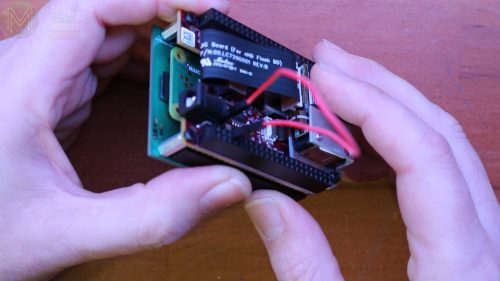
07 Sep 00:14

Short story: A Taste For The Exotic

by UR

“Look out for the sharks”

I wrote a steamy short story on my most recent stay in Goa, India. It’s titled A Taste For The Exotic and it’s about all the good stuff: travel, food, and sex.

Many thanks to Selma Carvalho and the editors of Joao-Roque Literary Journal for including “A Taste For The Exotic” in the September 2018 issue.

Excerpt:

…Ally felt confused and nauseous, and she realized she didn’t know Marcus very well at all. She’d believed him when he spoke about being sensitive to local culture. Did that sensitivity not apply to women? Was he just another Vodka and Chang—white men satisfying an appetite for exotic delicacies on the cheap? Continue reading


Thai bar girls standing on street, with text: A Taste For the Exotic, Joao-Roque Literary Journal.


07 Sep 00:12

Librem 5 general development report — September 6th, 2018

by Heather Ellsworth

Conferences

Some of the Purism team members attended Akademy 2018 in Vienna. This conference facilitated further discussions with KDE developers and it was nice to meet everyone in person!

There were also some team members that attended FrOSCon. Coming up, we have Todd presenting at AllThingsOpen, and Capitole du Libre where François and Adrien will be manning a booth (so be sure to stop by and say bonjour if you’re there).

Design

More improvements have been made to the shell mock-ups and those should be complete soon! Also some exciting new icons are on the horizon and we will use them early in our development builds and on the apps shipping with the phone; GNOME’s new icons are slated for inclusion in the 3.32 release in 2019.

Software Work

Images

Now the qcow2 images are archived as well as the raw image file. This makes the x86_64 VM image more accessible to those “can’t wait” to try things out today, or who haven’t ordered a development board. You can find the most recent builds and build artifacts here. See below for a demo of rotation in the qcow2 image. Also, a couple of packages have been added to the images to enable the resizing of the rootfs to fill the partitioned space.

We are now transforming Plasma Mobile’s Debian packaging into git repositories suitable for our build jobs and building them. These packages will eventually be included in a Plasma Mobile Librem 5 image. There is ongoing work with upstream Plasma developers to resolve the remaining build issues.

Phosh

Many fixes and tweaks have occurred in phosh in the last few weeks. Size calculations have been fixed (and therefore menu positions) on scaled displays with custom modes. The German translation has been updated. Now a login shell is used when we launch gnome-session, which ensures XDG_* is set up correctly so icons of flatpak applications are correctly recognized by phosh. To make phosh more robust, more compile warnings were enabled and the resulting errors were addressed.

gnome-settings-daemon

To lay the ground work for configuring your modem, an upstream discussion has been started to discuss how gnome-settings-daemon should behave regarding modems.

Wlroots

Wlroots was known to crash when phosh reconnects and that has been fixed. We also continue to keep wlroots up to date with new upstream snapshots.

GTK+ 4 and libhandy

Since the compositor and GTK+ need to work well together, an issue was fixed to make the xdg-shell’s app_id match GApplication’s application-id property. This makes it simpler for compositors to match applications to desktop files in Wayland.

Among the many fixes in libhandy recently, it has been made more robust during builds to now fail on warnings. There are three GTK+ bugs that currently affect the ability to create adaptive UIs that have been brought up with the upstream developers: a non-rounded corner issue, an off-screen popover issue, and an issue that causes the separator to sometimes be transparent. For the separator issue, a solution has been proposed as well. There is ongoing work upstream on the separator to add a selection mode variant and make adding a separator less complicated that is quite necessary to have cleanly defined panels in HdyLeaflet. Furthermore, the libhandy flatpak runtime (org.gnome.Platform) has been updated from 3.26 to master so we can be on the bleeding edge.

Keyboard

On the OSK front, the text-input-v3 patch-set has been included in wayland-protocols and gtk-3.24. The preliminary support of text-input-v3 has also been added to wlroots. Additionally, the virtual-keyboard protocol patch has been updated and is in review. There has even been an input-method-v2 protocol RFC posted. So get ready to type on your virtual keyboard!

Calls and messaging

Since the decision to implement a ModemManager back-end to the Calls application, some changes were needed to Calls. To give ModemManager more privileges, some policy kit files were created. To improve the UI of Calls, some of the Calls display code was cleaned up and made the Calls UI closer to the final design.

New and exciting things are on the horizon for the Messaging app. A new SMS libpurple-plugin has begun development and testing is ongoing with the Pidgin-Debug window to check if the ModemManager interface works. Work is advancing to glue the Chatty GTK+ objects to libpurple UiOps structs and signals for conversation handling. A blog post on Chatty—complete with a demo video—has just been published so go read it if you haven’t already!

Kernel

A significant effort has been put in to make the 4.18 kernel work with the devkit SoM. In order to help debug kernel hangs, some work was done on openocd like adding a board configuration for the particular board that will be used on the dev kits and warn when the CPU is not halted by invoking phys2virt. The openOCD folks were a great help on this effort!

Efforts continue on other pieces of the kernel too. Work continues on the power supply driver for the battery charger with upstream kernel developers and should be accepted soon. USB 2 has been tested and is working. There were also some clock issues that were resolved and both SDMA and RTC are both now working as well.

Hardware Work

The Purism hardware team has sent out the manufacturing files for PCB fabrication and assembly of the prototypes. The files are currently under review.

Community Outreach

An issue template has been added to the current phosh, libhandy, calls, chatty, docs, and virtboard projects to guide the user to provide all of the necessary information when filing an issue against these projects. For more information on filing issues, see our documentation page on reporting an issue.

A big Thanks goes out to all of the external teams that have helped review and merge changes into upstream projects. Everyone’s time and contribution is much appreciated!

That’s all for now folks. Stay tuned for more exciting updates to come!

The post Librem 5 general development report — September 6th, 2018 appeared first on Purism.

07 Sep 00:11

Google Will Announce the Pixel 3 and Pixel 3 XL on October 9

by Evan Selleck
Rumors had suggested that Google was scheduling an early October for the unveiling of its newest flagship smartphones, and that is indeed the case. Continue reading →
07 Sep 00:11

Poaching Tesla

by Neil Cybart

Apple and Tesla share some similarities. Both companies possess remarkably strong brands, loyal customer bases, and products capable of maintaining that loyalty. Each also has a visionary product leader. Apple has Jony Ive while Tesla has Elon Musk. Accordingly, some have concluded that Apple should acquire Tesla as a way of quickly jumping into the transportation industry.

A Tesla acquisition doesn't make sense for Apple. However, Tesla does have something that Apple has a use for: talent.

Project Titan

Apple's ambition with Project Titan, a catch basin for the company's transportation R&D endeavors, continues to be underestimated. The number of signs pointing to Apple expanding Project Titan initiatives in recent months is on the rise. 

One word to describe Apple's Project Titan strategy is "methodical." Apple appears to be gradually doing everything one would expect of a company establishing a large test fleet of autonomous vehicles on public roads. All the while, Apple's hardware ambitions remain intact. The company appears to still own a web of buildings across the Sunnyvale / Santa Clara / San Jose area that are dedicated to heavy manufacturing and have open space for future growth. (A map of the various locations is available for Above Avalon members here.) This is a company that wants to come up with new transportation solutions consisting of hardware, software, and services. 

When news of Project Titan's existence broke in early 2015, many people were skeptical because Apple had no expertise in the auto industry. Apple would be starting from scratch. 

In what was a departure from the iPhone development playbook, Apple looked outwardly for Titan talent. Specifically, Apple turned to the auto industry for hardware expertise. As shown below, a list of select Titan members (as of mid-2015) served as a wakeup call to skeptics. Apple was indeed working on a vehicle.

Screen Shot 2018-09-06 at 6.01.18 PM.png

In late 2015, Project Titan began to hit speed bumps as friction between designers and engineers intensified. In order to come up with a truly new user experience, Apple designers wanted to skip human-driven vehicles and instead go straight to an autonomous vehicle. Others argued the better strategy was to begin with an electric car and then position autonomy as a future feature. Not surprisingly, the designers won. 

Bob Mansfield, a hardware engineering guru who is arguably one of Apple's most successful liaisons between the design and engineering teams, was brought in to right the Titan ship. The initiative was refocused on developing the core technologies that would power a variety of transportation hardware options. The refocus on autonomous driving led to a culling of hardware talent.

At least 40% of the outside hires listed in the table above are no longer at Apple (based on LinkedIn updates). Most of the departures took place between August 2016 and early 2017, which fits with the reported timeline of Mansfield overseeing Titan changes. In addition to turning to outside auto hires, Apple ended up poaching itself by taking veteran Apple product design managers off of other teams. There doesn't appear to be much turnover with those Titan additions. Recent reports peg the number of people working on some aspect of Project Titan to be between 2,000 and 2,500.  

Apple's Goal

The best way to understand Apple's goal with Project Titan is to think about the company's design-led culture. Apple's strength lies in taking existing product categories and using design to rethink our assumptions about that category. By rethinking how we use products, Apple is able to come up with products that can change the world. 

Apple wants to rethink the automobile. While electric powertrains, autonomy, and ridesharing will help in Apple's efforts, something more is needed. Our fundamental assumption of what a car is (and isn't) is still in need of being reimagined. Without fresh thinking when it comes to design, we are still left with most of our prevailing assumptions about cars. 

This lack of fresh perspective in automobile design is one factor likely fueling the growing interest in bikes and scooters in high density areas. However, the problem with automobile design goes beyond city centers. People are increasingly tired, frustrated, and bored with cars. The dramatic shift to SUVs in the U.S. is driven by consumers caring less about traditional car value metrics such as performance. Instead, consumers are craving personalization in any form possible. Unfortunately, personalization options, especially when it comes to driver and passenger compartments, remain limited in the auto industry. 

Screen Shot 2018-09-07 at 4.54.30 PM.png

Tesla did something extremely well: It developed electric cars that people actually wanted to drive. Talk of other luxury car makers competing with Tesla is likely more fantasy than reality. However, it's not clear if Tesla is actually on the right path given the car's changing value proposition. 

One way Tesla has been able to do so well in the luxury segment is by competing on old-school value metrics like performance and style. The problem for Tesla is that these values won't matter in the future. Instead, the focus will shift to convenience and personalization. While iPhone relies on software to become a personalized computer for 900 million people, we will demand a similar personalized experience from automobiles. As it stands now, personalization when it comes to the automobile amounts to CarPlay, moving the driver seat back and forth a few inches, and folding down a row of back seats.

Screen Shot 2018-09-06 at 3.42.53 PM.png

Why Not Acquire Tesla?

Given Apple's interest in transportation and Tesla having the most popular, highest-rated car on the road, many have positioned Tesla as an Apple acquisition target. Apple's strong balance sheet adds fuel to the fire. With $129B of net cash, Apple could pay $70B+ to acquire Tesla and instantly become a player in the auto space. 

However, Tesla isn't a realistic acquisition target for Apple. More importantly, Apple doesn't need to acquire Tesla in order to meet its goals. The best way to understand why is to look at the key components of Apple's M&A philosophy: 

  • A strong brand and product aren't enough for an Apple acquisition. There has to be more to an Apple acquisition target besides strong branding and a popular product in the marketplace. 
  • Apple doesn't use M&A to acquire revenue. Apple doesn't use M&A as a tool to grow revenue.
  • Apple doesn't use M&A to acquire users. Apple doesn't acquire companies simply to grow its user base. This tenet has become that much stronger in recent years as Apple's user base has grown. Apple currently has one billion users. When considering how the vast majority of those users comprise the premium segments of the smartphone and tablet markets, Apple has no need to acquire what ends up being its own users. 

In essence, Apple isn't interested in buying its way into new product categories. Instead, Apple positions M&A as a tool to either enhance its existing product line or plug holes in the product development process. M&A is used to a tool to supplement, not replace, Apple's design-led product development process. Accordingly, there are two things Apple looks for when acquiring companies: 

  • Apple uses M&A to acquire technology. Apple looks at M&A as a tool for plugging holes in its asset base. Given how Apple is constantly working on new products, one hole is often the need for new technology. 
  • Apple uses M&A to acquire talent. One area in which Apple is resource constrained is talent. As Apple moves from one industry to another, the company is always on the lookout for teams of talent that help boost knowledge and expertise. 

A look at Apple's acquisition history demonstrates these core M&A tenets. Acquisitions such as P.A. Semi, AuthenTec, LinX, and Metaio were about technology and talent. Even acquisitions that included consumer-facing products like Beats, Beddit, and Shazam (pending approval) were ultimately about the technology behind the products.    

Netflix

Netflix represents a great example of how Apple doesn't use M&A. In a Netflix acquisition, the two primary things Apple would have bought are a strong brand and lots of users, neither of which is enough to justify an acquisition. In addition, Apple users already had full access to Netflix. It's unclear how Apple owning Netflix would lead to an improvement in Apple products. Positioning Netflix's technology as justification for an acquisition is quite the stretch. Netflix is a media company, and the company's content library is grossly overrated when moving beyond the 15 to 20 marquee series. 

Instead of spending $100 billion to acquire Netflix, Apple opted to poach talent from the entertainment industry and build something on its own. The result is a new "Apple Studios" division overseen by former Sony Pictures Television executives. Apple is reportedly planning to launch its new Apple Video streaming subscription service sometime next year. 

Arguing that Apple should acquire Tesla because it has a great brand and popular product in the marketplace is faulty thinking. Instead, Tesla would need to provide resources that can either strengthen Apple's existing product line or plug holes in Apple's design-led product development process. Some will say that Tesla's fleet of human-driven cars ends up being the company's secret weapon when thinking about the race to autonomy. I'm not so sure about that claim. Others think Tesla's charging network or factories represent the company's crown jewels. Both claims are questionable. Instead, those items could end up being viewed as liabilities, which is one reason Apple embraced contract manufacturing nearly two decades ago. 

Poaching

A Tesla asset that Apple may have an interest in is talent. Given Apple's ambition, Project Titan can benefit from having employees with experience developing cars that people love. However, instead of acquiring Tesla to bring on tens of thousands of employees, which would raise many red flags, a better strategy would include Apple selectively seeking out talent that would be the best fit for Titan. 

When selling prospective hires on the Titan message, Apple is ultimately selling two things: vision and process.

  • Vision. Explaining Apple's mission to come up with products that can change the world. Even though new hires aren't likely given the full lay of the land when joining Titan, the Apple mission can still be telegraphed. 
  • Process. Explaining the process in place for turning vision into reality.

It's not that Apple has necessarily struggled appealing to new hires for Titan. Instead, Tesla likely had the stronger message up to now. In the early 2010s, Tesla was successful at picking off members of the Mac, iPod, iPhone, and iPad teams looking for the next big challenge. At the time, Apple's focus was on Apple Watch, a product that ultimately had a relatively small development team. Project Titan was still a few years away. Doug Field was one of these employees who always had an interest in the transportation space and jumped at the Tesla opportunity.

Around the time Apple began ramping up Project Titan hiring in 2014 and 2015, the Apple versus Tesla talent wars began in earnest. Tesla was much farther along than Titan, with cars already on the road.

However, the environment has changed. The past few months have been a tough stretch for Tesla. The company's long-term goal is to usher in the era of sustainable transport. To reach such a goal, Tesla needed to take a luxury detour and sell cars to those most willing to pay top dollar for a high-performance electric sports car (which happens to have more than two seats). The problem is that Tesla finds itself having trouble getting back on track. A truly mass-market Model 3 remains missing in action. Tesla has become a case study of a company led by a product visionary struggling to turn vision into reality.

Elon Musk has consolidated power, and it's not clear that this is for the better. It's one thing for a product visionary to focus on details. It's a completely different story when a product visionary is being stretched too thin. Recent comments Musk gave to The New York Times regarding him being the only person that can solve Tesla's manufacturing problems is worrying. 

These challenges may give Apple a potential opening for poaching Tesla for talent. Meanwhile, after leadership changes and some shaky times, Project Titan is now in a much more orderly state. Apple would make the case that it has a better process in place than Tesla. It's relatively easy to design a great car. The challenge is to build tens of millions of that car and to then be able to develop new versions over time. 

Tesla's problem is ultimately its desire to do everything on its own. While such a decision was made given the lack of alternatives, Tesla faces less flexibility and financial capacity as a result. This has opened the door for Apple in terms of appealing to Tesla employees. Other factors may include being attracted by Apple ideals such as protecting data privacy and security, which will become a crucial topic in the auto space. 

Doug Field

Tesla critics have been quick to point out the growing list of executive departures as a sign of major issues within Tesla. While the turnover does raise an eyebrow, Doug Field's departure stands out.

Field was Tesla's second-highest ranked engineer, behind CTO JB Straubel. Field was responsible for vehicle engineering and Model 3 production. Back in 2013, his hire from Apple was positioned as a huge win for Tesla. With experience that included Segway's CTO and Mac product design, Field had experience in both personal transport and shipping consumer products at scale. 

Field's job at Tesla was to turn Musk's vision into reality. As recently as this past April, Musk viewed Field as one of the most talented engineering executives in the industry. Accordingly, it's telling that Field ended up quitting Tesla to join Titan. It will be interesting to see if any of Field's deputies at Tesla make the same move. Such a defection would end up being a major coup for Titan. 

Elon vs. Jony

There will be a role for cars in the new transportation paradigm. Two visionaries to keep an eye on are Elon Musk and Jony Ive. Each is taking lessons learned from other industries with the goal of rethinking transportation. It is no surprise that Musk has thrown a few snide comments and jokes Jony's way in recent years. 

Two of the more interesting things to watch in the auto space remain design and manufacturing. Instead of asking questions about legacy auto's software expertise, the more valuable question to ask is, Who is that company's Jony Ive? While auto manufacturers have teams of talented designers, such talent ends up being wasted as upper management and boards mitigate design risk out of fear of losing sales.

Over at Tesla, a company more geared towards engineering than design, Musk and company are learning the harsh realities of auto manufacturing. Many of Tesla's decisions won't be repeated by others.

Meanwhile, Apple's Project Titan is becoming a testbed of new technology that can be used to power new vehicle concepts from Apple's industrial design group.

Receive my analysis and perspective on Apple throughout the week via exclusive daily updates (2-3 stories per day, 10-12 stories per week). Available to Above Avalon members. To sign up and for more information on memberships, visit the membership page.

07 Sep 00:07

Dan Pontefract: Open Thinking


Do you take the time to pause and reflect. Do you allow your mind to wander? Are you organized? Do you take account of facts? Are you willing to revisit a decision? Are you in charge of your focus? Are you acting with reserve and patience? Are you flexible in a moment of acting?

, , Sept 06, 2018 [Link]
[Comment]
Share |
06 Sep 23:37

One week with the Nissan Leaf: What it’s like to drive an electric vehicle in 2018

by Patrick O'Rourke
2018

Everyone has likely met an especially opinionated person at a point in their life who, at the mere mention of an electric car, dismisses the prospect of ever considering one as a viable transportation option.

“Good luck traveling more than 100km,” they might say. They then may go on to mention something about electric cars being slow, frustrating to drive and really not being that good for the environment, before jumping into their massive, gas-guzzling SUV.

While I can’t debunk every myth surrounding EVs, I can say that, depending on your transportation needs and where you live in Canada, it’s now possible to easily use a battery powered car as your daily vehicle as long as you’re willing to put in a little extra effort. Given that this is my first experience with an electric car, I now have an entirely new perspective on the technology.

Nissan Leaf

Contrary to what some might assume, you also don’t need to opt for a pricey Tesla either — though the company’s Supercharger infrastructure remains impressive.

It’s worth noting that beyond the 2018 Leaf, which is the main focus of this story, there are a variety of other capable EV cars out there, including the Chevrolet Bolt and well-reviewed Hyundai Ionic.

Neither of these vehicles would even come close to falling into the luxury automobile category like other higher-end EVs, but they’re still capable electric cars that easily rival the 2018 Leaf.

2018 Nissan Leaf

I spent roughly a week-and-a-half this summer driving a 2018 Nissan Leaf, a sleek hatchback that, to my surprise, could easily pass for a gas-powered vehicle with its performance and looks. It seems the era of putting up with an off-putting aesthetic as part of owning an electric car is a thing of the past.

In terms of range, the 2018 Leaf is capable of traveling 241km on a single charge and features a new e-powertrain with 139 horsepower. Further, the 2018 model now includes a 110kw EV motor and 40kwh battery, resulting in the vehicle having 37 percent more horsepower and 67 percent more range than last year’s Leaf. In practice, this means the Leaf handles precisely as you would expect any car to.

I’d even go so far as to describe the experience of driving the Leaf as a little more responsive than my 2014 Ford Fiesta, a similarly sized and capable gas-powered hatchback.

Concerning actual distance, with the air conditioning pumping and a phone charging and plugged into the vehicle’s infotainment system, I found I’d typically get about 230km out of the leaf, as opposed to Nissan’s advertised 241km. While some might find this number disappointing, it’s better than I expected given that in the world of smartphones, handsets rarely meet a manufacturer’s promised battery life.

Nissan Leaf interior

The specific model of Leaf I spent time with was the SV edition, which is priced at approximately $40,000 CAD. Given Ontario’s EV rebate offer is no longer available thanks to the province’s new Progressive Conservative government, this is the actual price of the car in Ontario. Previously it was possible to get roughly $14,000 off the Leaf in Ontario, putting the car in the same price range as other affordable entry-level sedans and hatchbacks.

Other Canadian provinces still have EV incentives though, with Quebec offering up to $8,000 off the purchase of an electric vehicle and British Columbia also offering various electric vehicle incentives.

The SV version of the car also features ProPilot Assist, Nissan’s lane guidance system that maintains the distance between the vehicle in front of you, while also staying in between lanes. Your hands always need to stay on the wheel, with the car emitting aggressive beeping noises if you happen to let go.

While useful on long drives and relatively common in most newer vehicles at this point, I found that I rarely used ProPilot Assist, though the feature does seem quite capable as long as the weather is clear and lines are visible on the road.

There’s also a NissanConnect EV telematics app for Android and iOS that offers useful information about the vehicle’s current status, including battery life. The app also allows users to remotely turn on the car’s air conditioning, though I found it unnecessary given the amount of information packed into the Leaf’s dashboard.

NIssan Leaf shifter

Speaking of the centre display, the car features a detailed screen that shows battery life, along with a useful marker on the speedometer that suggests how to most efficiently utilize the car’s battery based on your acceleration and speed. I found that in most cases I was able to hit this mark, but that rapid acceleration rapidly pushed the meter out of the optimized zone.

Then there’s the e-Pedal, a battery regenerative breaking method commonly found in most EVs. The way the e-Pedal works is a little difficult to describe if you haven’t used one before.

When you push it down, just as you would with a car’s gas pedal usually, the vehicle accelerates, but when you let up on it, the car slows down. To be clear, this is accomplished with a single pedal, which is a strange feeling given vehicles are typically driven with an individual gas and brake pedal.

While not a feature I’m comfortable with given most of my driving is done in a stop and go city environment, I could see the e-Pedal being useful in a highway driving situation where you’re rarely applying the brake. Thankfully, the e-pedal can easily be turned on and off with the press of a button.

The Leaf’s infotainment system is also capable of running both Android Auto and CarPlay, another set of features that are becoming increasingly common even in entry-level vehicles.

While both platforms, particularly CarPlay, are significantly more capable than any in-car infotainment system I’ve encountered, they also remain disappointing and fail to provide a reliable experience that lives up to their smartphone namesakes.

Perhaps my expectations were just too high when it comes to Siri and Google Assistant’s ability to understand my voice commands when on the road, but after the fifth time Android Auto crashed on me, I switched to primarily using the Leafs built-in dashboard during my time with the vehicle. I will say that Apple Music integration through CarPlay is pretty great.

Finally, while not directly related to the 2018 Leaf’s ability as an electric vehicle, I found the car’s seats to be incredibly uncomfortable, as well as the front window to be angled strangely.

CarPlay

I’d describe the experience of sitting in the Leaf as being similar to sitting on a hard kitchen chair, which is in stark contrast to how snappy the car actually handles.

Getting creative with charging

Nissan Leaf charging dock

Charging is likely the main question most people have when it comes to electric vehicles. I was pleasantly surprised with how easy the entire EV charging process is, even though it looks intimidating at first.

First, let’s go through the options for charging an electric vehicle, which are split into three distinct categories.

According to Nissan, when using a Level III CHadeMO DC charger, the Leaf is capable of going from zero to 80 percent battery capacity in roughly 40 minutes. Every 2018 Leaf sold in Canada features this charging port, along with an additional plug capable of both Level 1 and Level 2 charging.

The plugs are located in the front of the vehicle under a hatch where the latch to open the vehicle’s hood would typically be found.

Flo EV charger

You won’t be able to use DC charging at home and instead will need to pull up to a charging station and fork over cash. In my case, there was a CHadeMO charger roughly 10 minutes from my apartment at a local mall, with the price coming to $20 per hour.

Compared to other forms of charging, CHadeMO is more expensive — though it’s still well under the cost of gas — and I would only use it in specific circumstances. For instance, before driving from Toronto to my parent’s place north of Barrie, Ontario, I decided to charge up the Leaf, which was sitting at roughly 20 percent battery capacity at the time. In less than an hour, I was back up to 100 percent battery power thanks to the DC charger. The process of paying for the charge through Flo was also as easy as signing up for an app, inputting my credit card information and selecting the nearby charger.

Next, there’s Level II 240v charging, which typically results in 30KM of range for roughly one hour of charging. This type of charger is easy to install at home as it’s the same as the type of plug used for a stove, resulting in it being one of the most commonly found charging stations across Canada and North America. Level II Charging stations offered by companies like ChargePoint seem to feature slightly higher voltage when compared to at-home setups, resulting in charging that’s a little bit quicker. Prices vary significantly, but in most cases you’ll only end up paying a few dollars for a couple hours of charging.

Level 1 charging, the slowest of the three available options on the Leaf, creates 8km of charge for one hour through a basic wall plug. In most cases, given I was driving the 2018 Leaf the roughly 30km to and from work, this is the form of charging I opted for. Every day, except for a situation where I was planning to travel roughly 175km that evening, I found that this form of charging topped up the Leaf enough to use it as a commuter vehicle.

Given that I live in an apartment building, hunting down an available wall plug to use Leaf’s included Level 1 charging adapter was more difficult than I expected, though I eventually found one in the guest parking area.

Unfortunately, the building’s management wasn’t pleased with this and at one point attempted to charge me for the tiny amount of energy I used during an overnight charge, despite the wall plug being a common element of the condo. Most newer buildings should feature some sort of EV charging station, so this won’t be an issue for most.

To find local charging stations, as well as to plot my route from my apartment in Toronto to my parent’s house north of Barrie, a drive that amounts to a little over two hours, I used a crowdsourced app called PlugShare.

PlugShare, which is available across iOS, Android and desktop, allows users to look up plugs owned by EV charging networks like Flow and ChargePoint, as well as private charging locations added to its database by users.

Getting past the charger fear

NIssan Leaf Logo

The first time I drove the Leaf I was admittedly concerned the vehicle’s battery would suddenly overheat or drop to zero, leaving me stranded and in desperate need of a charger that I just wouldn’t be able to find.

I quickly realized that just isn’t the reality when it comes to current charging infrastructure in most populated areas of Canada.

With the help of the Leaf’s built-in charger finder, or a more capable app like PlugShare, I never really felt like a charger was that far away.

That said, EV chargers are far from being as prevalent as gas stations, especially along major highways, though they are slowly getting there.

Electric car apps

It’s important to keep in mind that I live in southern Ontario in Toronto where EV charging ports are becoming increasingly common.

If you happen to reside in a more rural or isolated area of the Canada, a quick look at PlugShare reveals that you’ll have a vastly different experience charging an EV.

Further, in order for an electric vehicle to be a viable transportation option, you can’t treat charging an EV in the same way you would a gasoline-powered vehicle. Constant top-ups are necessary, rather than a weekly, or depending on how often you use your car, almost daily trip to the gas station.

If you head to the mall, park in an EV spot and take advantage of the available Level 2 EV charging stations — maybe your office even has a free EV charging port. Finally, charging overnight is also a necessity if you intend to use your car a commuter vehicle.

EVs are a viable option now

2017 Nissan Leaf

Electric vehicles have come a long way in a relatively short period, contrary to what some people may still firmly believe.

That person mentioned above who scoffs at the concept of a car not powered by burning gasoline, likely won’t be convinced quite yet, though an EV technology inflection point has certainly been hit. For myself in particular, the price of an EV remains the biggest purchase barrier, but hopefully that changes over the next few years.

You likely couldn’t head out on a cross-country road trip in an EV without a significant amount of planning, but even after roughly only a week with the 2018 Nissan Leaf, I feel that I could easily replace my gas-powered car with a modern electric vehicle.

The post One week with the Nissan Leaf: What it’s like to drive an electric vehicle in 2018 appeared first on MobileSyrup.

06 Sep 23:33

Google confirms it will unveil the new Pixel smartphones on October 9th

by Ian Hardy

As expected, Google is set to unveil its next flagship smartphones on October 9th.

The tech giant has sent out invitations to a media event in New York City at 11am ET.

The new devices, which have been tipped to be named the Pixel 3 and Pixel 3 XL, are a follow-up to the Pixel 2 and Pixel 2 XL.

As for rumoured specs, the Google Pixel 3 XL will reportedly feature a 6.2-inch display with a Snapdragon 845 processor, 4GB of RAM and also include a glass back for inductive charging. The Pixel 3 is expected to feature a 5.5-inch display with a 2160 x 1080 pixel resolution.

pixel

Related: Pixel 3 XL leak showcases the phone’s hardware, specs and camera

The post Google confirms it will unveil the new Pixel smartphones on October 9th appeared first on MobileSyrup.

06 Sep 15:07

Build Your Own Learning Tools

by Tony Hirst

A long time ago, I realised that one of the benefits of using simple desktop (Lego) robots to teach programming was that it allows you to try – and test – code out in a very tangible way. (Programming a Logo turtle provides a similar, though less visceral, form of direct feedback*.

One of the things I’ve started exploring recently is the extent to which we can create “reproducible” (open) educational resources using Jupyter notebooks. Part of the rationale for this is that if the means of producing a particular asset are provided, then it becomes much easier to reuse the assets with modification. However, I’ve also come to appreciate that having a computational environment to hand also means we can explore the taught subject matter in a wider variety of ways.

In that context, one of the units I am looking at is an art history course on OpenLearn (Making sense of art history). One of the activities asks learners Are the colours largely bright or dull? in a selection of paintings, although I struggled to find a definition of what “bright” and “dull” may be. This got me thinking about how images can be represented, and the extent to which we could create simple tools using powerful libraries to support student exploration of a particular topic. For example, helping them “test” particular images for different attributes in both a mechanical way (based on physical measurements) as well as personal experience.

As another example, the unit introduces the notion of a colour wheel, which made me wonder if I could find a way of filtering the “blueish” colours by doing some image processing on the colour wheel image provided in the materials:

The original image is the one on the left; the “blueish” values filtered image is the one on the right.

(I couldn’t find a general colour filter function – just an example on Stack Overflow for filtering blues… What I did wonder though was about a control that would let you select an area of the colour wheel and then apply that as a filter to another image.)

With such a filter in place, when the course materials suggest an image is “predominantly blue” I can check it to see exactly where it is predominantly blue…

(This also raises questions about our perception of colour, which is another important aspect of art appreciation and perhaps demonstrates certain limitations with computational analysis; which is a Good Thing to demonstrate, right? And it also makes us think about things like cognitive psychology and the art of the artist…)

Another question in the OpenLearn unit asked students to compare the colour palette used in two different images. I tried to make sense of that in terms of trying to build some sort of instrumentation that would identify the dominant palette / colours in an image, which is – and isn’t – as simple as it sounds. From a quick search, it seems that the best approach is to use cluster analysis to try to identify the dominant colour values. Several online recipes demonstrated how to use k-means clustering to achieve this, whilst the color-thief-py package uses a median cut algorithm:

(Another advantage of analysing images in this way is that it may provide us with things we can describe (automatically, as text) when trying to make our materials accessible. For example, Automatically Generating Accessible Text Descriptions of ggplot Charts in R.)

Basic code for generating the palette was quite easy to find, and the required packages (PIL, opencv2, scikit-image) are all preinstalled on Azure notebooks (my demos are here – check the image processing notebook). This meant I was relatively quick to get started with a crappy tool for exploring the images. But tools that provided immediate feedback relating to questions I could ask of arbitrary images, and tools that could be iterated on (for example, improving the palette display by ordering the palette relative to a colour wheel).

One of the tricks I saw in the various palette-cluster demos was to add the palette to the side of an image, which is a neat way of displaying it. This also put me in mind of a two-axis display in which we might display the dominant colour in particular horizontal and vertical bands of an image as a sidebar/bottom bar. That’s on my to do list.

Using techniques such as k-means clustering for the palette analysis also made me think that including such tools as helpers in an arts history course would help introduce students to the wider question of how well such algorithms work in general, and the extent to which tools or applications that use them can be trusted. k-means algorithms typically have a random seed, so each time you run them you may get a different answer (a different palette, in the above case, even when the same algorithm is applied to the same image). This encourages learners to see the computer as providing an opinion about an image rather than a truth. The computer’s palette analysis can thus be seen by the learner as another perspective on how to read an image, say, but not the only way of reading it, nor even a necessarily reliable way of reading it, although one that is “informed” in a particular sense. (The values used to see the k-means clusterer can be viewed as biases of the clusterer that change each time it’s run; many times, these differing biases may not result in significantly different resulting palettes – but sometimes they may…)

Anyway… the point of this post was supposed to be: the computational engine that is available to us when we present educational materials as live Jupyter notebooks means that we can build quite simple computational tools to extend the environment and allow students to interact with, and ask a range of questions of, the subject matter we are trying to engage them with. Because after all, everyone should learn to code / programme, right? Which presumably includes educators…? Which means we can all be ed-techies now…

See also: Jupyter Notebooks, Cognitive Tools and Philosophical Instruments.

* I’ve recently started to learn to play a musical instrument, as well as read music, for the first time, and this also provides a very powerful form of direct feedback. In case you’re wondering: a Derwent Adventurer 20 harp from the Devon Harp Center in Totnes. By the by, there is also an Isle of Wight harp festival in Ryde each year.

06 Sep 14:43

Walmart Canada to buy 30 more Tesla Semi electric semi-trucks: report

by Sameer Chhabra
Walmart Canada

The Canadian arm of U.S.-based department store giant Walmart announced that it plans on purchasing 30 more Tesla Semi electric semi-trucks.

According to a September 6th, 2018 Reuters report, the purchase of the 30 new electric trucks is part of Walmart’s plan to use a 100 percent alternatively powered fleet by 2028.

The 30 new Semi vehicles will join the 10 electric trucks previously purchased by Walmart Canada.

Reuters reported that 20 of Walmart’s electric trucks will be used in Mississauga, Ontario, while the remaining 20 will be used in Surrey, British Columbia.

The purchase of 30 new Tesla electric vehicle falls in line with Walmart Canada’s previously reported plans to move towards more environmentally friendly operations.

The company announced in July 2018 plans to open a 300,000-square foot fulfillment centre in Surrey between 2022 and 2023.

The new fulfillment centre is planned to be a zero-waste facility that will use energy efficient LED lights, alternative lithium batteries, as well as energy efficient refrigeration systems and a special HVAC designed to reclaim heat from the centre’s fridges.

Source: Reuters

The post Walmart Canada to buy 30 more Tesla Semi electric semi-trucks: report appeared first on MobileSyrup.

06 Sep 14:43

Apple, Amazon execs take to TIFF to find new content

by Igor Bonifacic

With the Toronto International Film Festival (TIFF) set to kick off today, Hollywood stars and movie buffs from all across the globe will descend on Canada’s most populous city for 11 days to celebrate the medium of film.

This year, they’ll also be joined by executives from Apple.

According to Variety, one of Zack Van Amburg and Jamie Erlicht — two of the Cupertino computing giant’s top entertainment programming executives — will be at the festival attempting to lock up new content.

This marks the first time Apple has attended TIFF for the purpose of acquiring content for its upcoming entertainment service. To date, the company has mostly focused its efforts on television shows as opposed to films.

However, Apple is likely to face tough competition in its quest; Amazon executives looking to do the exact same thing will be in attendance at TIFF as well, according to Variety.

Apple is expected to launch a video streaming service at some point in the future. There have been few details as to what that service will look like, and how the company plans to distribute the original content it has been stockpiling.

This year, 342 films will be shown off at TIFF, with Netflix’s Outlaw King headlining the festival.

Source: Variety

The post Apple, Amazon execs take to TIFF to find new content appeared first on MobileSyrup.

06 Sep 14:43

Amazon Canada announces new Amazon Fire HD 8, available October 4

by Sameer Chhabra
An Amazon tablet placed on a patch of grass.

U.S.-based e-commerce giant Amazon Canada has announced that a new Amazon-branded tablet is coming to Canada.

According to a September 6th, 2018 media release, the “all-new” Amazon Fire HD 8 is now available for pre-order and will begin shipping on October 4th, 2018.

Amazon’s latest tablet has an eight-inch, 1280 x 800 pixel resolution display, an undisclosed quad-core 1.3GHz processor, 1.5GB of RAM and either 16GB or 32GB of storage.

The tablet also features Dolby Atmos dual-stereo speakers. The 16GB model will cost $99.99 CAD, while the 32GB model will cost $129.99.

It’s worth noting that, based on specs and pricing alone, it’s not quite clear what the difference is between the 2018 Fire HD 8 and its 2017 predecessor.

In fact, on paper, it appears that the 2017 and 2018 Fire HD 8 models are identical.

The 2017 Fire HD 8 tablet was an unassuming black slab that was perfect for media consumption — including Netflix, YouTube, Amazon Prime Video and games like Hearthstone — and very little else.

Considering that the tablet market is almost entirely dominated by Apple’s significantly more expensive iPad line of products, a supremely affordable Tablet — even one as limited as the Fire HD 8 — is a welcome breath of fresh air in an otherwise quiet space.

Source: Amazon Canada

The post Amazon Canada announces new Amazon Fire HD 8, available October 4 appeared first on MobileSyrup.