Shared posts

31 May 05:42

Halide Introduces Smart RAW for iPhone XS, Joining a Host of Other Improvements

by Ryan Christoffel

Since its debut Halide has been one of the best manual camera apps available on iPhone. The month of September brought a number of challenges to Halide's team though, thanks to all the photography work Apple put into iOS 12 and the iPhone XS. And in response, within the span of a few weeks Halide has receive two major updates: version 1.9 on iOS 12's release date, and releasing today is version 1.10 featuring Smart RAW.

Let's start with the latest update first. Last week Halide's designer Sebastiaan de With published an in-depth walkthrough of the radically-revised approach the iPhone XS takes to capturing photos. In short, the iPhone XS' photography prowess doesn't simply stem from an improved wide-angle lens, larger sensor, and other hardware changes – some of the most significant advancements have arrived through software and a new Smart HDR feature. As Apple noted in its announcement keynote, Smart HDR enables the iPhone to capture multiple images in quick succession at varying exposure levels then combine those into a single comprehensive image – all of this happens invisibly, without the user doing anything but hitting the capture button.

While for most iPhone photographers, Smart HDR will be a major step forward that leads to improved images in most lighting situations, it poses some problems for those who prefer to shoot in RAW using an app like Halide. Because of camera changes designed to make Smart HDR possible, an iPhone XS RAW photo that eschews Smart HDR will often contain additional noise and be overexposed.

To address this problem, Halide's team in version 1.10 is introducing a feature called Smart RAW. Designed specifically for the iPhone XS and XS Max, Smart RAW is a way Halide has been custom-tuned to capture the best photos with the new cameras. I'm no expert photographer, but I'm excited to see what kind of images the new feature makes possible.

Smart RAW doesn't require turning on or off, it's simply the new way Halide takes photos on an iPhone XS and XS Max. As it gets in the hands of users starting today, I'll be interested to see comparisons between RAW photos taken on the new iPhones with Halide versus those taken using one of its competitors. For more information on Smart RAW, a full overview is being published by Halide later today, and until then you can read the preview published last week.

Even if you don't own one of the latest iPhones, Halide's recent updates still bring plenty of noteworthy improvements. These include Siri shortcuts support for triggering the shutter by voice, a new Technical Readout mode to view detailed information about your device's cameras, a custom-made bokeh in depth photos, and more. The feature I've enjoyed playing with most is Halide's support for iOS 12's Portrait Effects Matte.

From left to right: captured depth photo, Portrait Effects Matte, and traditional Portrait matte.

From left to right: captured depth photo, Portrait Effects Matte, and traditional Portrait matte.

iOS 12 brought a big upgrade to depth photography in that it introduced the Portrait Effects Matte, a brand new way that iOS detects depth via the camera. In the past the iPhone has struggled with elements like hair and glasses when capturing depth photos, and the new matte does a much better job of detecting these details and creating an accurate border around human subjects. You can see the difference in the photo above, where the new matte captures the detail around each tiny piece of hair while the traditional matte is far more imprecise.

Not every Portrait image captured on iOS 12 will include the new matte, but those including human subjects always attempt to, pending environment conditions. And unlike Apple's Photos app, Halide enables viewing the Portrait Effects Matte so you can see the exact subject border recognized by the iPhone's computational photography system. This can be accessed on compatible depth photos by tapping the human portrait icon near the top-center of the screen.

There's still some uncertainty regarding in which situations, and on which devices, a Portrait Effect Matte is captured by the system Camera app. Sebastiaan de With notes on Twitter, however, that Halide uses it for images captured on the iPhone 8 Plus and X, in addition to the XS and XS Max. The iPhone 7 Plus unfortunately can't capture the new matte due to its lack of included neural engine in the phone.


In a busy season for iPhone photography, Halide's team has been capitalizing by making its app the best showcase of everything the iPhone XS and iOS 12 have to offer. Today is merely day one for Halide's Smart RAW feature, but I'm hopeful that it will raise smartphone photography to a whole new level for seasoned RAW shooters. And with the variety of other changes to the app, it's an exciting season for Halide users whether you carry an iPhone XS or not.

Halide is available on the App Store.


Support MacStories Directly

Club MacStories offers exclusive access to extra MacStories content, delivered every week; it's also a way to support us directly.

Club MacStories will help you discover the best apps for your devices and get the most out of your iPhone, iPad, and Mac. Plus, it's made in Italy.

Join Now
10 Oct 21:59

Fiery Feeds Updated with Design Refinements and New Ways to Filter News Feeds

by John Voorhees

There are a lot of good RSS readers on iOS that are continually being updated with new features and other improvements. It’s a competitive category, and Fiery Feeds, which is one of my favorites, was just updated with a focus on design and new ways to filter the feeds you follow.

Before (left) and after (right) Fiery Feeds' update. Source: blog.cocoacake.net

Before (left) and after (right) Fiery Feeds' update. Source: blog.cocoacake.net

I like the design changes to Fiery Feeds a lot. Everything is bolder and easier to read than before. The headers of each view reflect the same sort of bold typography found in Apple apps like Maps and Music. Icons are more pronounced, and various pickers in the settings have been updated to make choosing options easier.

One of the biggest difference though is to the article view that uses the main image of an article as a header for the story. The top and bottom toolbars have been redesigned too, and article styling can be applied while viewing an article, so you can see the effect of the changes as you make them.

Fiery Feeds' redesigned article view (right). Source: blog.cocoacake.net.

Fiery Feeds' redesigned article view (right). Source: blog.cocoacake.net.

I don’t like that author information has been turned off by default in the article view though. On many sites, I’m more likely to read a particular author’s work than everything the site publishes. You can still go to the web view to see author information or turn it back on in Expert Settings by long pressing the setting icon, but I’d prefer to see it in every view by default.

There are new ways to filter articles too. Fiery Feeds already had Hot Links and Low Frequency smart lists, but the latest version adds Today view of just the pieces published on the current date and Long and Short Reads lists for quickly picking something to read based on length. Fiery Feeds also supports Siri Shortcuts for opening accounts like Inoreader, Pocket, or Instapaper, but the support is much more limited than lire’s which lets you open individual feeds, folders, tags, and saved searches.

The top RSS readers are updated so regularly that I keep a few installed on my iOS devices at all times. Although I prefer lire, which Federico has covered in the past, Fiery Feeds is a close second. It’s also one of the best picks if you want to combine your RSS reading with a read-it-later service because its supports services like Pinboard, Pocket, and Instapaper, which lire doesn’t. For that reason and dozens of other differences big and small that come down matters of personal preferences and reading habits, I recommend considering Fiery Feeds, if you’re looking for an RSS reader.

Fiery Feeds is available on the App Store as a free download, though certain of its features are only available as part of a paid premium subscription.


Support MacStories Directly

Club MacStories offers exclusive access to extra MacStories content, delivered every week; it's also a way to support us directly.

Club MacStories will help you discover the best apps for your devices and get the most out of your iPhone, iPad, and Mac. Plus, it's made in Italy.

Join Now
10 Oct 21:59

Google to shut down Google+

Martin Brinkmann, ghacks.net, Oct 23, 2018


Icon

It surprises no one to hear that Google is finally announcing the end of the Google+ network. It never came close to being a Facebook rival, despite the effort Google put into it. That said, some parts of it - such as Hangouts - were significant successes in their own right. It's interesting to read that " One of the findings of the project team was that Google+ 'has not achieved broad consumer or developer adoption' and that it 'has seen limited user interaction with apps'." This could have been done much differently - I've looked into it with respect to gRSShopper and it is not a trivial process to use the API. Ultimately, though, I think the reason Google+ failed was that it was always about Google, not individual people using the network.

Web: [Direct Link] [This Post]
08 Oct 22:33

Today in "Landfill Capitalism" News

by jwz
mkalus shared this story from jwz.

To the surprise of absolutely nobody:
"Every homeless person has like three scooters now," Michael Ghadieh, owner of an electric bike store in San Francisco, told CNET. "They take the brains out, the logos off and they literally hotwire it." [...]

What's funny is that the companies tend to dismiss these vulnerabilities as insignificant. Lime's director of government relations and strategic development [said] that theft and vandalism of scooters is rare because they're so often in use. Reacting to complaints that hacking has become common, he added: "It hasn't in any way limited our ability to operate in the markets in which we do operate."

Right, that's because their business model is that these objects are disposable and that paying for their disposal will be someone else's problem.

Previously, previously, previously, previously.

08 Oct 22:29

Playing catch-up and tweaking small habits

by Liz

Coming back to work after 6 weeks leave – Here is my plan.

* Bugzilla needinfo: A few people were still trying to talk to me while I was out so, doing that first.
* Deal with email: inbox ~2000, anything older than a week, I will archive it in large batches by filtering and then read whatever is leftover and seems important.
* Study the calendar and absorb where we are in the current release cycle
* Read meeting notes: my team meetings, product cross-functional, recent channel meetings
* Read the post-mortem notes for the 62 release, and the subsequent dot releases, though that may depress me (I got sick in the last stages of this (“my”) release)
* Figure out what I should be doing next, probably that means prep for Firefox 65 if I’ll be the release owner for that, and I believe for ESR 60.4.0 (that goes along with the 64 release)
* I can always peck away at some new regression triage

That’s plenty for the next day or so.

Meanwhile during my recovery from surgery I have been trying to change or add small daily habits. Another list!

* I have integrated doing 3-5 minutes of gentle tai chi a few times a day (first thing in the morning, mid-morning, and before lunch are the most important).
* Writing and drawing around 15 minutes each, even if not particularly inspired, I have to stop whatever else I’m doing and give it a try. Sometimes I end up going further or having good ideas!
* Making sure to go outside and lie in the sun, while we still have sunny patches on the front porch and on our back patio. Sun hour is currently around 9:45 to 11 in the front. By late October we won’t have any more direct sun, not until March. So I had better take advantage while it’s still here (And also, it structures my day nicely — important, as Coleridge says, to organize the hours and give them a soul.)
* Posting more here, in my more private journal, or writing in my notebook rather than just on Facebook, which has become an ingrained bad habit.
* I moved Twitter off the front page of my phone and replaced it with Duolingo and Feedly, so now when I have the impulse to zone out reading Twitter (and rage-tweeting about politics) I instead either read some actual blogs that I like, or do some poking away at Duolingo. (Spanish and French). I also still look over Hacker News which usually has something worth reading, if only so that I can laugh at n-gate afterwards
* Sending snail mail. When I realized I’d be in bed for weeks, I asked for postcards from people, and got around 100 cards! It was very cheering. I’m still answering that batch of cards.

Here’s a little sharpie marker illustration of a black cat from one of my drawing sessions!
drawing of a black cat

08 Oct 21:05

Why the Japanese Media Would Rather Not Talk About Brett Kavanaugh

by Kaori Shoji

By Kaori Shoji

The Japanese media has been eerily calm about the Brett Kavanaugh hearings, or if you want the truth, ‘downright reticent’ is more like it. Kavanaugh’s confirmation as Supreme Court justice was covered by major news outlets but otherwise, mainstream media seems more interested in Tokyo’s biggest fishmarket moving from Tsukiji to Toyosu.

“I’m really not interested in American politics,” said 28-year old Ayumi who works for Asahi Shimbun, one of Japan’s four major newspapers. “Since Trump became President, I’ve kind of lost faith in the US. I still love American music and culture but the politics just seems crazy over there.” Before the confirmation, Asahi carried a few articles on the Kavanaugh hearings, but nothing beyond a short description of what was happening. No in-depth analysis or outraged editorials, just brief, straightforward reporting. “You can’t really blame the Japanese media for avoiding the Kavanaugh case,” said an Asahi journalist who spoke on condition of anonymity. “It’s not our battle. Personally though, I think that Dr. Blasey Ford was courageous in coming out like that. I can’t imagine a Japanese woman ever doing the same thing, at least not at that age.”

The journalist was inadvertently (or perhaps deliberately) voicing the opinion of Japanese society in general–that Japanese women of a certain age will rarely if ever, go public about a personal grievance that happened decades ago. A couple of years maybe, and if the woman were under 35. Otherwise, it would be like stumbling upon a blue rose in the desert.

His words remind me of another interview I did when the #MeToo movement was in full swing here, with a woman in her 40s. She had confessed to her husband about a sexual harassment incident that happened when she was 28, and when she tried to say how hurtful it was and ask what steps she could take now to lessen the damage, her husband scoffed. “He said no one was willing to listen to an old woman. He told me not to make waves, and that I shouldn’t embarrass our family.” She said this with a forced, self-deprecating grin but five minutes later she was in tears. Enraging, yes, but I was well aware of how typical the husband’s reaction was. Don’t make waves. Don’t embarrass the family. You’re too old. Don’t come to me with this, I’m tired.

The Japanese media traditionally sucks when it comes to covering issues related to women and sex –primarily because newsrooms have always been dominated by over-worked men too tired to deal with their womenfolk, from their mothers to girlfriends, daughters and wives. “Maybe it would be different if there were more women editors,” said the aforementioned journalist.

No, that’s not really it. It’s more an issue of empathy and the willingness to understand. It would also help if this society were not so youth-obsessed, especially when it comes to women trying to voice their opinions. An American (female) photographer once said to me that no man in her agency ever voluntarily made conversation with an older woman unless she was a foreigner. “So I guess I should be grateful for being 40 and getting attention, but I’m not,” she said derisively.

If the Japanese media is reluctant to discuss Kavanaugh, SNS show that the Japanese public is interested. Right after the confirmation, a large number of tweets expressed fear over America’s swing to the ultra-right, and what this may mean for Japan. “Abe will be executed,” was a familiar comment. But there is almost no mention of Dr. Ford and her ordeal and the ones that touch upon Kavanaugh’s accuser are far from positive. “I guess she went out on a limb for nothing,” said one anonymous tweet. “And then she was shot down like a dog.” Another said, “How can a woman of that age accuse a guy of something that happened so long ago and expect to be heard? She’s probably telling the truth, but at her age she should have known it wouldn’t work.”

At this point, such words feel like a slap in the face, and it’s hard not to feel the pain from old wounds that tend to flare up in bad weather. There are millions of women on the archipelago who have been assaulted, groped, raped, harassed and discriminated against. There are probably thousands if not more, of Kavanaugh equivalents in positions of power. As in the US, the elite boys club network in Japan is seemingly invincible.

There seems to be no antidote to the sorrow and injustice, apart from installing women-only train cars and hotel floors. Because harassment is so rampant here, gender segregation has become a luxury. I was in a hotel in Osaka where the male receptionist presented me with a key to the women-only lounge on the women-only floor, saying, “there are absolutely no men in the area so you can feel completely safe and relaxed.” Wow, um, thanks.

Still. We DO live in a world where it’s possible for an older woman to speak up about a traumatic episode that happened in her teens, and get the world to listen. There’s grounds for hope in that, even in Japan. If nothing else, the Kavanaugh hearings have gotten women talking and sharing about their own experiences of harassment and assault in this rigidly patriarchal society. Not in the scope and scale that’s happening in the US, of course. But a small, precious flame is flickering in the wind.

08 Oct 21:05

Weeknote 40/2018

by Doug Belshaw

This week I’ve been:

  • Sending out Issue #318 of my Thought Shrapnel newsletter. This one was called ‘Blisters a-go-go’. Today’s newsletter is delayed due to something I discuss below! Thanks to those who make Thought Shrapnel possible via their support on Patreon.
  • Working on the MoodleNet project:
    • Getting ready for Mayel de Borniol, our Technical Architect heading off on holiday for three weeks! He’s left Alex Castaño with plenty to get on with!
    • Documenting the fork of the Pleroma codebase we’re planning to build upon. Alex created a new branch in the repository, started creating the architecture documentation, added some comments to schemas, and started work on an ActivityStreams library.
    • Meeting with colleagues about registrations, as well as wider issues around how MoodleNet will work with Moodle Core and MoodleCloud.
    • Adding GitLab milestones. A lot of them are placeholders for now, but it helps us with dependencies.
    • Meeting with our COO to discuss project resourcing.
    • Putting the finishing touches to our (accepted) Mozilla Festival session which will be in London right after Mayel gets back.
    • Asking Mary Cooch some questions about the existing moodle.net service for an interview to be featured in an upcoming blog post.
    • Contributing to the Culture Champs organisation of Wellbeing Week (next week!)
    • Investigating who we could hire to do security testing of MoodleNet pre-MVP.
    • Meeting with Emilio Lozano to discuss approaches to project management.
    • Writing a post on the new technical area of the MoodleNet blog about our decision to use Elixir (Alex’s post based on Mayel’s docs)
  • Recording, editing and releasing Episode 110 of the Today In Digital Education (TIDE) podcast with my co-host Dai Barnes. We entitled this episode ‘Coaching and bullshit’, discussing career advice, coaching, the ‘lower left’, a bullshit receptivity scale, post-truth, walking, Google activity controls, and more!
  • Meeting with my co-op colleagues to plan upcoming gigs. Amongst other things, we’ve started on a comic to explain how to setup a room for remote participation!
  • Curating interesting things I came across on the Thought Shrapnel blog:
  • Helping with 6th Morpeth Scouts:
    • Recording the proceedings of the Executive Committee meeting (as Secretary).
    • Performing the role of ‘catcher’ on the ‘mini-twilight’ held on Thursday night.
    • Leading a team as part of Operation Twilight on Saturday. Essentially a huge game of hide-and-seek across a 26km walk – great fun!

Next week, I’m working four days for Moodle (Mon-Thurs) and then doing some co-op work on Friday.

08 Oct 21:05

s w a y

by Emily Chang

s w a y

Photo Caption: s w a y

Photo taken at: Honolulu, Hawaii

Instagram filter used: Rise

View in Instagram ⇒

08 Oct 21:05

Struggling to pick up the trash in the face of weaponized evaluation

by Chris Corrigan

Most of my work lies with the organizations of what Henry Mintzberg calls “The plural sector.” These are the organizations tasked with picking up the work that governments and corporations refuse to do. As we have sunk further and further into the 40 year experiment of neo-liberalism, governments have abandoned the space of care for communities and citizens especially if that care clashes with an ideology of reducing taxes to favour the wealthy and the largely global corporate sector. Likewise on the corporate side a singular focus on shareholder return and the pursuit of capital friendly jurisdictions with low tax rates and low wages means that corporations can reap economic benefits without any responsibility for the social effects of their policy influence.

Here’s how Mintzberg puts it, in a passionate defence of the role of these organizations:

“We can hardly expect governments—even ostensibly democratic ones—that have been coopted by their private sectors or overwhelmed by the forces of corporate globalization to take the lead in initiating radical renewal. A sequence of failed conferences on global warming has made this quite clear.

Nor can private sector businesses be expected to take the lead. Why should they promote changes to redress an imbalance that favors so many of them, especially the most powerful? And although corporate social responsibility is certainly to be welcomed, anyone who believes that it will compensate for corporate social irresponsibility is not reading today’s newspapers.”

What constantly surprises me in this work is how much accountability is placed on the plural sector for achieving outcomes around issues that they have so little role in creating.

While corporations are able to simply externalize effects of their operations that are relevant to their KPIs and balance sheets, governments are increasingly held to account by citizens for failing to make significant change with ever reduced resources and regulatory influence. Strident anti-government governments are elected and they immediately set out to dismantle what is left of the government’s role, peddling platitudes such as “taxation is theft” and associated libertarian nonsense. They generally, and irresponsibly, claim that the market is the better mechanism to solve social problems even though the market has been shown to be a psychotic beast hell bent on destroying local communities, families and the climate in pursuit of it’s narrowly focused agenda. In the forty years since Regan, Thatcher and Mulroney went to war against government, the market has failed on nearly every score to create secure economic and environmental futures for all peoples. And it has utterly stripped entire nations of wealth and resources causing their people to flee the ensuing wars, depressions, and environmental destruction. Migrants run headlong into the very countries that displaced them in the first place and meet there a hostile resistance to the newcomers. Xenophobia and racism gets channeled into policy and simply increases the rate of exploitation and wealth concentration.

And yet, the people I know who struggle under the most pressure to prove their worth are the organizations of the plural sector who are subject to onerous and ontologically incorrect evaluation criteria aimed at, presumably, assuring their founders that the rabble are not only responsibly spending money (which is totally understsndsble) but also making a powerful impact on issues which are driven by forces well outside their control.

I’m increasingly understanding the role of a great deal of superficial evaluation in actually restricting the effectiveness of the plural sector so that they may be relegated to harm reduction for capitalism, rather than pursuing the radical reforms to our global economic system that will lead to sustainability. It’s fristrating for so many on the frontlines and it has led for calls for much more unrestricted granting in order to allow organizations to effectively allocate their resources, respond to emerging patterns, and learn from their work.

There are some fabulous people working in the field of evaluation to try to disrupt this dynamic by developing robust methods of complexity informed research in support of what the front line of the plural sector is tasked with. The battle now, especially now that science itself is under attack, is to make these research methods widely understood and effective in not simply evaluating the work of the plural sector but also shunting a light on the clear patterns at play in our economic system.

I’ll be running an online course in the winter with Beehive Productions where we look at evaluation from the perspective of facilitators and leaders of social change. We won’t shy away from this conversation as we look at where evaluation practice has extended beyond the narrow confines of program improvement and into larger social conversation. We will look at history and power and how evaluation is weaponized against radical reform in favour of, at best, sustaining good programs and at worst shutting down effective work.

08 Oct 21:04

Blockchain Technology Overview

by Volker Weber

Annotation (1)

Blockchains are tamper evident and tamper resistant digital ledgers implemented in a distributed fashion (i.e., without a central repository) and usually without a central authority (i.e., a bank, company, or government). At their basic level, they enable a community of users to record transactions in a shared ledger within that community, such that under normal operation of the blockchain network no transaction can be changed once published. This document provides a high-level technical overview of blockchain technology. The purpose is to help readers understand how blockchain technology works.

This publication is designed for readers with little or no knowledge of blockchain technology who wish to understand at a high level how it works. It is not intended to be a technical guide; the discussion of the technology provides a conceptual understanding. Note that some examples, figures, and tables are simplified to fit the audience.

More >

[Thank you, John, for the recommendation.]

08 Oct 21:03

Machine Translation in an RSS Reader?

by Ton Zijlstra

I was a bit surprised to see a Dutch title above one of Peter’s blog posts. It referred to the blog of Marco Derksen, that I follow. I think Peter may have found it in the list of blogs I follow (in OPML) that I publish.

Peter read it through machine translation. Reading the posting made me realise I only follow blogs in the languages I can read, but that that is limiting my awareness of what others across Europe and beyond blog about.

So I think I need to extend my existing list of demands for an RSS reader with built-in machine translation. As both Tiny Tiny RSS which I self host and Google translate have API’s that should be possible to turn into a script.

08 Oct 21:01

The Premier Helps Oliver Turn 18

by peter@rukavina.net (Peter Rukavina)

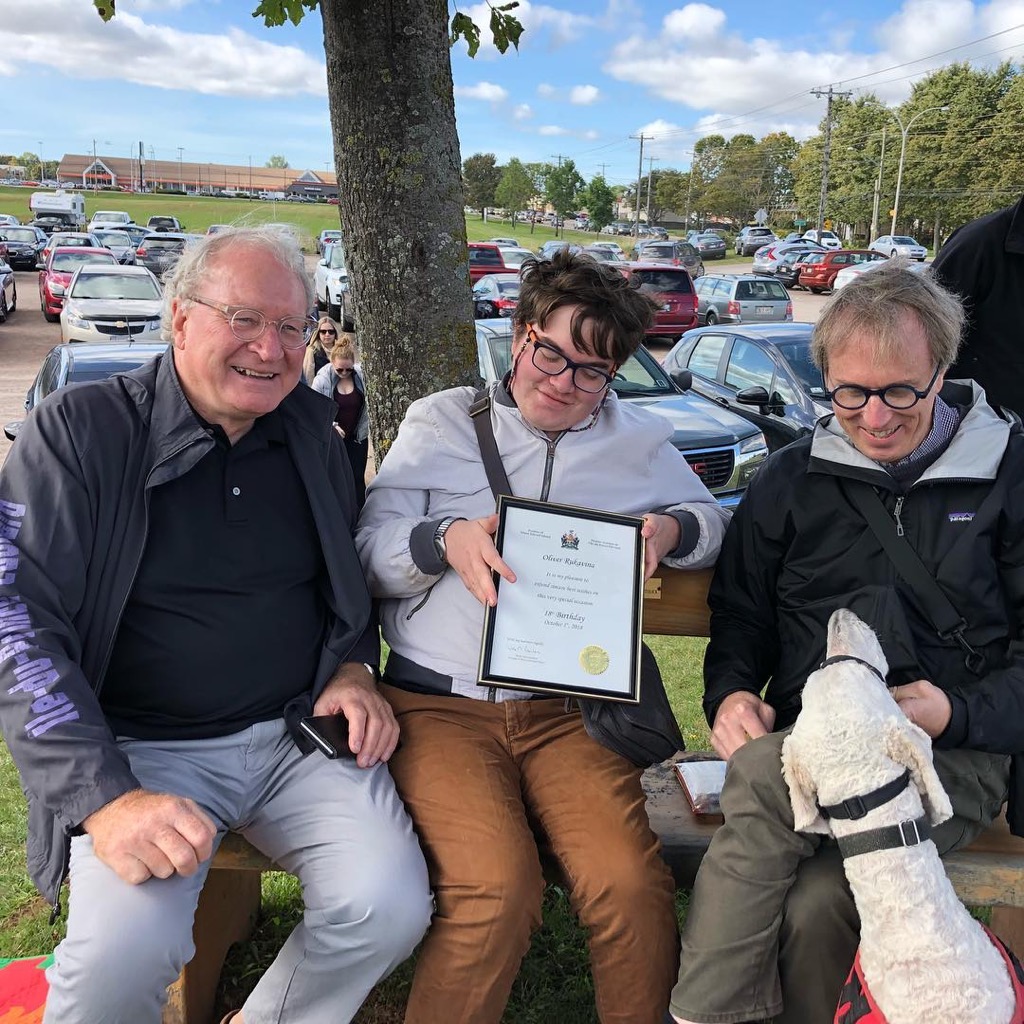
Oliver and I rendezvoused with Premier MacLauchlan yesterday morning at the Charlottetown Farmer’s Market and he kindly presented Oliver with a certificate recognizing his 18th birthday. A passing Kevin Yarr helpful snapped a photo of the occasion.

Oliver and Premier MacLauchlan

08 Oct 21:01

My Sunday Routine

by Richard

Back when I thought I wanted to be a sysadmin, I read Time Management for System Administrators by Thomas A. Limoncelli. The sections that appealed to me the most were about routines. The routine of his that I always remember is that he gasses up his car on Sundays. Despite being a believer in the cashless society, the thing I always do now on Sundays is get cash. That way I don't have to think about it for another week.

My Sunday routine is a list of tasks, all requiring a low amount of brain power, all which can be done in a single evening. I use the process.st recurring checklist app to remind me what to do for my Sunday routine. I got the idea of having a written-out routine after reading the article Atul Gawande wrote about checklists. (He would turn that article into a book, which I would later read.) On my "Sunday Routine" checklist are things like "take out the recycling and the trash"; "water the plants"; "download and queue up podcasts"; "charge all the things"; "fill the kettle and make some fizzy water with the SodaStream"; and other mundane but necessary things that I'd rather not do on workdays.

My hope for my Sunday routine was that it would offload some mental energy to a written list. I would say that has happened, but I can't say for sure that it has added to the amount of energy I have for the rest of the week. At least everything that need to get done gets done. I've added other checklists to my life, including a "Leaving Home Checklist" (so I don't forget my resuseable coffee cup and turn off the lights) and a Start Work Checklist (for all of the systems I have to log into before starting my pager duty shifts in the mornings). That has led to less forgetting to do the important but brainless things I have to do every day so I don't think of it a block away from my apartment or the easy things are out of the way when getting to work.

08 Oct 20:59

Twitter Favorites: [bmann] OK! It's 🇨🇦🦃 and I started cooking yesterday, have a turkey stock that got turned into stuffing already. Here's the… https://t.co/PjDAHi2PXS

Boris Mann @bmann
OK! It's 🇨🇦🦃 and I started cooking yesterday, have a turkey stock that got turned into stuffing already. Here's the… twitter.com/i/web/status/1…
08 Oct 20:58

Neue Pixel

by Volker Weber

Do9zl01VAAAs6XF

Diese Woche gibt es neue Pixel-Telefone von Google. Das schaut schon mal sehr sauber aus. Es wäre schön, wenn Google mehr davon verkaufen würde, denn das sind die einzigen Android-Telefone, die ihr Update sofort bekommen.

08 Oct 20:58

Activity Pub Stream From RSS

by Ton Zijlstra

In the past weeks I’ve enjoyed using a bot that turns my blog’s RSS feed into an Activity Pub stream. That stream I follow from my Mastodon account, and that way I can ‘retweet’ any of my postings in an easy way. You too can follow my blog on Mastodon through the account @ton@bots.tinysubversions.com.

The bot that turns RSS into Activity Pub was created by Darius Kazemi, a coding artist and art creating coder. In the context of musing about my ideal RSS reader, I started running my own Tiny Tiny RSS instance. Tt-rss is not only a feed reader but can also create feeds, e.g. from the things you bookmark or like while reading. So I thought if you’d mount the bot that Darius created on the back of Tt-rss, you could publish curated feeds of what you read not just as rss but as activity pub streams. I pinged Darius Kazemi to hear if the code is available.

Screenshot of me resharing a blogpost on Mastodon.

08 Oct 20:57

After I moved my Mastodon accounts from a gener...

by Ton Zijlstra

After I moved my Mastodon accounts from a general server to a self-run instance last week, I was curious to see how many of the followers I had on the old account would make the move to my current Mastodon account. After all the ‘cost of leaving’ is always a consideration when changing course in social media usage, in this case specifically the portability of your existing network. Last week I had 43 followers on the old account, and I now have 11 on my new account, so that is about 25%. Let’s see if it grows in the coming days. Likely some of the followers I had no longer use Mastodon. So another question is when I reach the same number of followers by engaging in new conversations.

08 Oct 20:52

A short ride out to Streetsville

by jnyyz

Today was the most rain free day of a three day weekend, and so I planned to ride the holiday tourist ride out to Streetsville with TBN. However, it turns out that I was the only one that showed up. Many riders that might have shown up were probably on the Niagara ride that was rescheduled for today. Ride leader Joey was good enough to come out to the start, but he has been having issues with his knee, and so was unable to ride. I decided to ride it solo as it was a route that I had done a couple of times. Going solo allowed me some time to take pictures at my leisure.

The ghost bike at Colborne Lodge and Lakeshore for Jonas Mitchell has been extensively decorated.

IMG_9725

I’ve never noticed this mural at Islington and Lakeshore before.

IMG_9726

Shout out to Peter Wen: this is first time I’ve used the telehex on a ride: tightening up a loose bottle cage.

IMG_9727

On Mississauga Rd, a bike lane starts just before the underpass crossing the QEW. Just north of this point these wayfinding signs are new.

IMG_9728

Unfortuately, on this section just short of the connection to N. Service Rd, the sign is set back so far from the road that it is hard to read. These signs petered out north of UTM.

Just shy of UTM, a display of fall colours. They will be even better next weekend. Here’s hoping for sunny weather.

IMG_9729

On the north side of the intersection with Dundas, I see this unusual treatment of the bike lane. It seemed to work OK, but there wasn’t much traffic today.

IMG_9730

Downtown Streetsville. Never too cold for a little ice cream.

IMG_9732

Heading back east on Bristol Rd, I see that much of it has a bike lane along its length, for which they appear to have removed the on street parking on the north side. While this is much appreciated, I wish that the bike lane didn’t devolve to sharrows at major intersections like this one at Huronontario.

IMG_9733

The TBN route had me going south on Orbitor Dr into Centennial Park, but I elected to turn east on this new bi directional bike lane / multiuse trail on the north side of Eglinton. There are no markings at all on it, but it is plenty wide.

IMG_9734

OK there are a few markings near intersections.

IMG_9735

The path ends at Rathburn, but the intersection markings indicate that I should cross to the south side.

IMG_9736

Here I’m on the south east corner, looking east, and I see the familiar section of bike trail that goes under the 427.

IMG_9737

My impression is that the bike infra is getting a bit better in Mississauga, but there are still many gaps in the network, and also bike lanes starting and stopping at ward boundaries as well.

Overall, a nice ride that might just offset some of the calories that were consumed yesterday.


08 Oct 20:50

It's time to check our English privilege

mkalus shared this story .

By Graeme Richardson

I have spent the last few days in a European city trying to find work, which is kind of a humbling experience. I'm married to an EU national and the issue of leaving the UK was already in the balance when our first child was born in 2014. Then Brexit tipped the scales.  Everything our leaders have done since has smashed them to smithereens. So here I am, in a suit so new it might even pass for expensive.

I came here just after Christine Blasey Ford's testimony before US Senators. Like others, I found Brett Kavanaugh's subsequent defence repellent. The contrast between the two speakers was stark.  And it made me think. I'm in this city to assert myself, to look 'in command' and seem impressive. That's been my mission throughout my professional life so far. And in pursuit of that, I have sometimes talked across women, not listened, and disregarded contributions.

I have also liked them only if they seem to like or admire me. I have sometimes liked difficult people and found them useful. I have recognised that in any institution you need to value people who ask awkward questions. But when I look back, those difficult people have uniformly been men. I have all my life despised men like Kavanaugh. But I have shared sometimes in the male arrogance he epitomises.

I have also shared in an English arrogance. How we laughed at those visiting German kids, so mild and obedient, wearing stonewashed jeans well into the 90s, with their rucksack-straps on both shoulders. They had none of our punkish swagger. They didn't realise the importance of not giving a damn. They didn't know it was cool to look like you weren't trying. They still sang songs round the campfire. Well – we would say, in our best approximation of Liam Gallagher – Kumbaya you sad bastards. 'Sieg Heil!' as well.  Because that was an easy joke too. After all, their niceness and orderliness were why they'd fallen for the Nazis. Unlike us, the buccaneering, devil-may-care English.

Those kids now run the job market I want to enter. It seems remarkably law-based. Everyone seems to have qualifications relevant to their jobs, from waiting staff upwards. Vocational training is obviously highly valued.  Jobs are rarely something you ended up doing by accident. Hotel receptionists have degrees in Hospitality. Nursery staff are trained pedagogues. Want to work in HR?  You have to have a certification in HR.

Of course, this is all bureaucratic – that great criticism of Brussels – but in a way, it's simply fair. Do we want to promote well-qualified people, or the well-heeled and well-connected? Bluffocracy has, after all, not worked out so well for the UK. And the more you invest in something, the more you value it. Those working in fairly low paid jobs seem to value them more. The place seems cleaner, tidier, with better public transport and better public provision generally.

The solution to male arrogance surely starts with listening. To be better at understanding that communication is a two-way street. Maybe the answer to English arrogance is the same.

Among Remainers, there is general astonishment that Leavers constantly talk as though Brussels can't hear. When Jeremy Hunt compared the EU to the USSR, his Lidl-Trump act did not go unnoticed. But continentals, for a certain sort of English chauvinist, are a bit like women. There's a lot of talk, but it doesn't really mean anything. They have laws and regulations by the bucketful – just like a nagging wife! But the rules don't really mean anything, and we should be free to bend or break them as we want. They won’t understand, because they don't have our wonderful transgressive wit, loved around the globe. Like the wife, they're hopeless with jokes.

In the face of those attitudes, whatever the EU does enrages the Leavers. If they enforce the rules, refusing to compromise the four freedoms, they are humourless bureaucrats, even Soviet goons. If they make a joke, as Tusk did with his cherry-picking jibe on Instagram, we cry foul and beg them to have some respect. No-deal may eventually arrive just because the EU gives up trying to play this stupid rigged game. It's a game some women may recognise.

So I walk around this city, knowing practically now the bravery it takes to be a citizen of nowhere, to be one of those who goes to hustle for their family in a strange land. One recruiter starts to tell me, in perfect English, about the scope of a particular role. I feel desperate to cut across her with a joke, a pun on the words she's just unselfconsciously used. I stop myself just in time.

Graeme Richardson is an Anglican priest and a former chaplain and fellow of Brasenose College, Oxford.  He writes on poetry for the Times Literary Supplement and is a contributor to the Oxford Companion to Modern Poetry in English.

The opinions in politics.co.uk's Comment and Analysis section are those of the author and are no reflection of the views of the website or its owners.

08 Oct 20:47

Smart helmet lets you talk to Google Assistant, see directions in AR display

by Jonathan Lamont
Jarvish smart helmet

These smart motorcycle helmets from Jarvish want to make your ride smarter with virtual assistants and an augmented reality heads-up display.

There are two models of the Jarvish smart helmet. The first is the more “basic” model, the Jarvish X. It has integrated microphones and speakers for Siri, Google Assistant and Amazon Alexa.

This makes it easy for the wearer to ask for directions, updates about the weather and control music. It also has a built-in 2K camera for recording your ride.

The Jarvish X will set you back $799 USD (about $1,035 CAD).

However, the Jarvish X-AR is arguably the more impressive helmet. Along with everything in the Jarvish X, the X-AR adds a Google Glass-style AR display.

Jarvish X-AR AR display

The display can show things like current speed, turn-by-turn directions, weather and incoming calls. It even has a rearview video feed from a second camera on the back of the helmet.

The helmet is an ambitious project. AR displays are notoriously hard to do well. Furthermore, the tech makes the helmet far more expensive at $2,599 USD ($3,366 CAD).

Additionally, the Jarvish X-AR won’t be available until later. Jarvish will run a Kickstarter in the second half of 2019 for the helmet.

Those worried about whether Jarvish can deliver should rest assured. The company already sells the Jarvish X in Taiwan, according to Engadget.

Overall, this looks like a solid entrance into the smart helmet space. I’m excited to see if Jarvish can pull off the AR display well. If they do, we could see more smart helmets and AR displays come to market.

Source: Jarvish Via: Engadget, The Verge

The post Smart helmet lets you talk to Google Assistant, see directions in AR display appeared first on MobileSyrup.

08 Oct 20:46

Facebook announces Portal and Portal+, an Alexa-enabled video chat device for you home

by Ian Hardy

In a race to own your home, Facebook has announced its rumoured video chat smart speaker called “Portal.”

The goal of Facebook’s first piece of hardware is to connect your “closest friends and family and feel like you’re in the same room.”

There are two devices, aptly called Portal and Portal+, which come in a 10-inch 1280 x 800 display will retail for $199 USD and a 15-inch 1920 x 1080 version that will retail for $349 that has the option for the display to change between portrait and landscape mode.

Unfortunately, Portal devices are only scheduled for a November release in the United States with no set Canadian availability.

Facebook notes that Portal devices include its built-in AI, Smart Camera, and Smart Sound, noting “Smart Camera stays with the action and automatically pans and zooms to keep everyone in view. Smart Sound minimizes background noise and enhances the voice of whoever is talking.”

Portal works by connecting to your friends through Facebook Messenger, but you’ll also be able to call them if they don’t have a Portal (up to seven people at the same time).

Similar to its competitors, Facebook has programmed Portal to operate by saying “Hey Portal” and gives you the option to start a video call hands-free. Amazon’s Alexa is built-in — which is a surprising partnership — and allows you to ask about traffic, weather, news, order products, or control other smart home devices.

In addition to a partnership with Amazon, Facebook has partnered with Spotify Premium, Pandora, and iHeartRadio, Food Network and Newsy.

Since security is a major issue for everyone, especially with all the security breaches Facebook has experienced within the last year, the company stated that users can completely disable the camera and microphone, and each Portal and Portal+ comes with a camera cover to block the camera lens.

Finally, Facebook also noted that it will not “listen to, view, or keep the contents of your Portal video calls.”

Source: Facebook

The post Facebook announces Portal and Portal+, an Alexa-enabled video chat device for you home appeared first on MobileSyrup.

07 Oct 04:58

Another less than obvious Apple Music feature

by Volker Weber

22c74a386ec7033ee96333ef1ef2a232

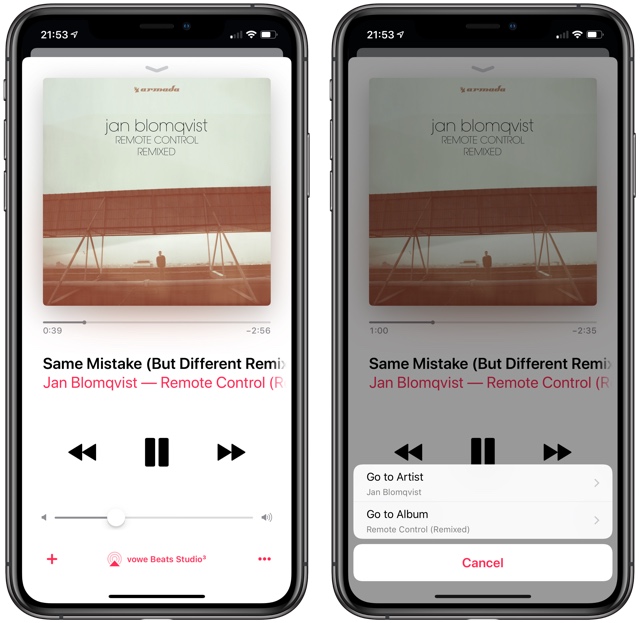
If you tap on the artist, not on the track title, you get two options: go to the artist or the album page. I always looked for this down at the ... menu.

07 Oct 04:58

Check out the Video playback options in Windows 10 1809

by Volker Weber

Video Playback

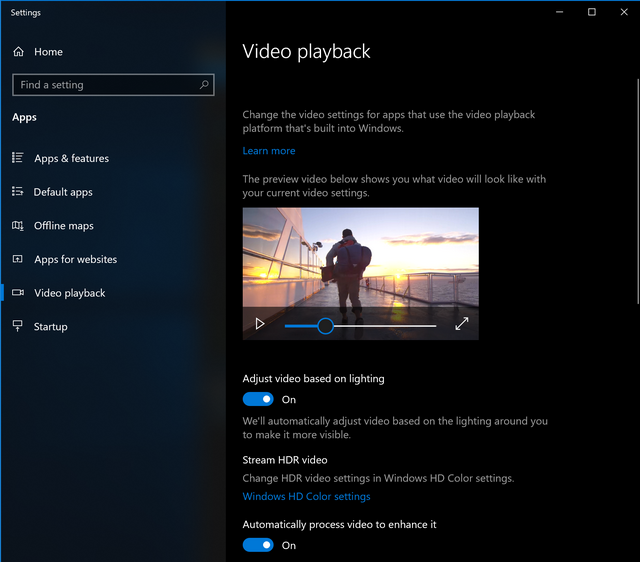
Windows 10 can now adjust the video based on the lighting. This goes beyond adjusting the brightness of the screen. Great results on Surface in bright light!

07 Oct 04:58

Primer On Housing – 2018 Vancouver Civic Election

by Ken Ohrn
The more things change — visibly agitated citizens

HERE‘s a deep overview of the housing question, the single top of mind issue for citizens of Vancouver.

With thanks to Christopher Porter, it’s part backgrounder and part parsing of various candidate and party platforms.

Lurking just out of view, for most pundits and journalists, is a broad schism in Vancouver.  Renters (50% + of its citizens, cheesed off and looking for homes) vs. homeowners (recognisable by their mating call “awk — neighbourhood character — awk”, and by their love of veto power).

There seems to be only one issue this election that everyone is talking about, and it’s housing (note: I covered the minor issues last week). We’re in a crisis and every politician has a plan to make it better.

I’m happy for all the attention. I’m a renter who is frustrated by the ridiculous price of housing and the ever-increasing rents. When I moved to Vancouver in 2006, the market was crazy and it has only gotten worse since.

So what are the politicians promising and will it actually fix anything? . . .

I think the most important part of any party’s housing platform is not the specific policies, but the urgency to act. It feels like some parties are favouring older property owners who are resistant to change over younger renters who are desperate for it. The language is guarded but the biases are clear. The NPA and Green Party are the NIMBY parties, talking about preserving neighbourhood character and consultation with neighbourhood groups. It is language you won’t hear from the YIMBY parties like OneCity, YES Vancouver, or (to a lesser degree) Vision. Even COPE shows more urgency to act with policies targeted at renters.

07 Oct 04:57

Canadians too lazy, busy to go outside and play: survey

mkalus shared this story .

A survey released last week confirms grown-up Canadians still like to groan about going outside to play, often because they find outdoor activities too uncomfortable or time-consuming. 

The Ipsos poll asked 2,000 Canadians to report how often they traded urban comforts for a natural setting. Although nine out of 10 agreed they're happier when surrounded by wilderness, three-quarters admitted they find staying inside "easier."

That answer varied considerably by age, with 80 per cent of millennials agreeing to the statement, compared to 68 per cent of baby boomers.

Rain, extreme temperatures and work pressures topped the list of reasons people avoided the outdoors, with a full third of respondents saying they don't like the bugs and a quarter claiming they can't find the motivation to leave the city.

Seven percent said they "didn't know what to do" in nature.

Nature not a priority

But as two-thirds of respondents recalled, it wasn't always that way. The bulk of participants had strong memories of spending more time outside as kids.

"It did reveal that Canadians aren't spending that much time in nature — certainly not as much time as they used to," said Lesley Marian Neilson, spokesperson for the Nature Conservancy of Canada, which partnered with Ipsos for the survey.

Whether that discrepancy reflects reality or stems from a rosy perception of the good old days isn't clear, Neilson said.

Canadians say they're spending more time indoors than they used to. (CBC)

But Neilson found it concerning that four out of 10 Canadians say they don't spend any recreational time away from human-made environments at all.

"That's a little alarming," Neilson said. "There's a saying — 'People will protect what they love, and love what they know.' If they know nature, and love it, they'll protect it. There's a chain effect."

On average, the survey found Canadians spend just over an hour in nature on weekdays, going up to two hours on weekends.

Neilson said the average was likely skewed up by a few people who spend lots of time outdoors. The vast majority, she explained, spend very little time outside. 

The poll is accurate to within 2.5 percentage points, 19 times out of 20.

Urban nature booming in Vancouver

Survey results weren't broken down by city. 

But, anecdotally speaking, Celina Starnes, public education manager for the Stanley Park Ecology Society, says the trend seems to be reversed in Vancouver.

The society has doubled the number of people showing up for events at the park in the last three years.

"I think it's very regionally specific for us in Vancouver," she said. "People are saying, hey, we want to be a short walk from an ecologically-diverse space."

Starnes points to creative programs like their bitters-making workshop, which teaches people how to create their own tinctures from plants found in the park, as possible motivators.

But she's also noticed more excitement over the beavers, otters and other wildlife in recent years, with visitors eager to encounter critters firsthand.

"We're seeing a boom because of that authentic experience. You're not just watching a movie about exotic birds, you're seeing baby eagles with their heads popping over the sides of their nests," she said.

Starnes said there's an emerging market for those real-life sights, and has a hunch as to why. A generation that grew up listening to David Suzuki has now settled down in their careers, she suggests, and had kids of their own.

With a rainforest on their doorstep, "they're looking for different things to do, not just finding their dream jobs and going to the bar every night," she said.

"Plus, there's the Instagram cred."

With files from Daybreak South

07 Oct 04:57

Leiderschap in de nieuwe netwerksamenleving

by peter@rukavina.net (Peter Rukavina)

In Leiderschap in de nieuwe netwerksamenleving, Marco Derksen writes (machine-translated from Dutch to English):

In an era of uncertainty and rapid technological change there is a great need for leaders who, on the one hand, are not afraid to outline a vision for the long term, but on the other hand also dare to be vulnerable. By returning to previously made decisions, by admitting mistakes made and by being open to the input of otherwise-minded people. Organizing and being able to deal with diversity is perhaps the most important leadership competence in the complex world of today and tomorrow!

I couldn’t agree more: having ideas—vision—is easy; everybody’s got ideas. Humility is a rare commodity, rarer still in leaders. When you witness the two together in one person, it’s delightful to behold.

And organizing and being able to deal with diversity is so seldom discussed, a skill few have, and yet without it we’re left with an intellectual monoculture incapable of evolving.

07 Oct 04:57

Growing Up at the Charlottetown Farmers' Market

by peter@rukavina.net (Peter Rukavina)

Although I’ve described myself as “printer, developer, writer” for many years, I haven’t written professionally since my days as the restaurant reviewer for The Buzz, many years ago.

Until this week, when I contributed a piece to the Lady Baker’s Tea blog.

07 Oct 04:56

Twitter Favorites: [shawnmicallef] “Real Ontario” https://t.co/WvyPF6enEb

Barrett's Pamphleteer @shawnmicallef
“Real Ontario” pic.twitter.com/WvyPF6enEb
07 Oct 04:56

NewsBlur Blurblog: Interoperability and Competition (for Scooters, Bikes, etc)

sillygwailo shared this story from Continuations by Albert Wenger.

I was in Berlin a couple of weeks ago and there appear to be at least half a dozen bicycle and scooter networks in the city. This makes for a terrible experience because you have to sort of guess which network you might want to use and if that one doesn’t have equipment nearby try another one. It also means that usage of equipment on any one network is far below what it could be resulting in lots of bikes and scooters sitting around on sidewalks.

What should be done instead? Cities should get together and publish an interoperability standard that every bike and scooter sharing company needs to adhere to. Then as an enduser, I could pull up a single app (either by one of the networks or by a third party provider) and see + book all available equipment.

This would mean that equipment providers would have to compete on the quality of their equipment (e.g. comfort, safety) instead of who has raised the most money to build the densest network themselves. It would also allow cities to have an easy birds-eye view of total capacity, utilization, etc. – which is the type of information needed for intelligent planning and regulation (eg where should the city create more bike and scooter lanes).

I believe a similar approach would work well for ridesharing networks, such as Uber, Lyft, myTaxi and others. 

07 Oct 04:54

Microsoft stops Windows 10 October 2018 Update, investigating issues

by Jonathan Lamont
Microsoft logo

Following reports that the Windows 10 October 2018 Update was deleting user files, Microsoft has paused the rollout.

The company said via its support site that it had stopped the 1809 update to investigate “isolated reports of users missing some files after updating.”

Furthermore, the company recommends that affected users contact the company directly. Also, if you have downloaded the update but not yet installed it, Microsoft recommends that you don’t install it. Instead, you should wait for a new update from the company.

It appears that file loss isn’t the only potential problem for those who update. Some users have reported that the Edge browser and other store apps can’t connect to the internet after the update. Some PCs may even block the update due to incompatibilities with Intel drivers.

At this time, it isn’t clear how many people are affected by the Windows 10 update issues. Considering the update was only available for users who manually checked for it, likely the number is small at this point.

Regardless, it’s surprising how many issues there are, given the scope of testing Microsoft performed before issuing the update.

The company had planned to push the update to all users automatically starting on October 9th. However, it will probably postpone this while the company investigates.

Source: Microsoft, Via: The Verge

The post Microsoft stops Windows 10 October 2018 Update, investigating issues appeared first on MobileSyrup.