Shared posts

11 Mar 19:50

The Three Reasons For Source Code Publication.

by Stanislav

There are innumerably many reasons for writing a computer program; but, to my knowledge, the publication of its source code is nearly always motivated by one of these three:


I. Subordination: "Open Source."

Some of the earliest -- and arguably, highest quality -- computer programs with openly-published source code were developed inside conventionally-structured organizations, by full-time paid programmers, and -- at some point after their completion -- ended up "opened" to the public via the workings of some bureaucratic mechanism.

One classic example of such a program is Macsyma -- originally a product of the U.S. Department of Energy's wunderwaffen efforts, its source code ended up published through a quirk of period American law: whereby any taxpayer-funded work not explicitly deemed a military secret was to be made available to (notably: paying) third parties upon request.

Even today there are still organizations which permit (or even command) their full-time programmers to publish source code. Unfortunately, the resulting publications do not often resemble Macsyma -- more commonly, they are merely attempts to outsource the maintenance of dour shitware to unpaid volunteer labour (See: Type III.)

Not infrequently, today's commercial organizations publish source code in order to impede possible advancements in the state of the art which threaten to undermine their business model or to overturn the political paradigm they rely on.

Observe, for instance, the computer (in)security industry's lavish support for "mitigations" -- and wholly-absent interest in giving a proper cement burial to the idiot C machine and its braindamaged excuses for operating systems, compilers, and other idiocies which make these mitigations appear "necessary".


II. Constructive Problem-Solving: "Free Software."

Some people write programs and publish their source code to in order to offer others solutions -- in the ancient spirit of scientific collaboration -- to concrete problems: aiming to turn previously-unattainable ideals into practical realities; to advance civilization and resist the encroachment of barbarism; or simply to make daily life slightly more livable for them and theirs.

Whatever else has been said about R. Stallman, his publication of GCC 1.0 remains one of the best-known examples of such an act.

The anonymous publication of the original Bitcoin client was yet another.


III. Psychopathology: "Open Sores."

Unfortunately, this appears to be the overwhelmingly most common motivator; and may account for the bulk of what is commonly circulated as "open source software". Virtually without exception, this activity superficially masquerades as Type II; and, in exceptionally catastrophic cases, turns into a variety of Type I without retaining any of the desirable attributes of the latter.

The impetus for psychopathological publication is similar to that which drives a graffiti "artist" to spray paint over street signs, or a teenager to remove the muffler from his junkyard "muscle car" -- a deeply mammalian instinctual spraying of urine, or an elaborate technological substitute for same, on whatever public surfaces conveniently present themselves.

The sufferer -- who may or may not be a true graphomaniac -- is normally a not-unintelligent fellow, and is driven by an insatiable desire to display 'cleverness' by exhibiting gratuitously-complex solutions to trivial (or wholly imaginary) problems. Often enough, these consist of reproductions, to varying degrees plagiarized, of existing work -- not uncommonly, the work of fellow sufferers, which accounts for their typical "xerocopy of a xerocopy" flavour:

It is like going to a library full of books that took 50 man-years to produce each, inventing a way to cut down the costs to a few man-months per book by copying and randomly improving on other books, and then wondering why nobody thinks your library full of these cheaper books is an inspiration to future authors. (Naggum)

Such work is invariably presented (and usually believed by the author himself) to be an "improvement" of something or other; but in all cases this belief closely resembles a schizophrenic's earnest conviction that his pen scribbles "improve" the walls of bus stations.

Frequently, this activity is motivated by sheer ennui; in other cases -- by unemployment and hunger, which give rise to a usually-mistaken belief that such displays of "cleverness" will make the scribbler more attractive to prospective employers.

At times, however, the psychopathology of one becomes the misfortune of many others, when such a "complexity artist" is in fact hired somewhere and "lives happily ever after" polluting the intellectual ecosystem with modern Type I atrocities.


Sufferers of Type III have come to exist in astonishing numbers, and have banded together into organizations (and, not infrequently, with the connivance, or even miserly financial support, of Type I entities); they compulsively swarm, like flies to fresh meat, to all places where remaining Type II practitioners still gather.

If you're a Type II practitioner, you are an endangered species. But you will not be listed in the "red book", no one will defend you; you must defend yourself.

The approaches to such defense are well-documented: disrupt the biofilm formation of Type III invaders by whatever means necessary. Publicly shame and ridicule electro-graffiti "artists"; refrain from rewarding complexity-exhibitionists; resist their attempts to promulgate "niceness", "codes of conduct", and all similar tumour-signaling mechanisms.

15 Feb 20:39

The baseline for web development in 2022

The baseline for web development in 2022

"TL;DR:The baseline for web development in 2022 is: low-spec Android devices in terms of performance, Safari from two years before in terms of Web Standards, and 4G in terms of networks. The web in general is not answering those needs properly, especially in terms of performance where factors such as an over-dependence on JavaScript are hindering our sites’ performance."

Via Alex Russell

15 Feb 20:39

Writing better release notes

Release notes are an important part of the open source process. I've been thinking about these a lot recently, and I've assembled some thoughts on how to do a better job with them.

  1. Write release notes. Seriously - if you want people to take advantage of the work you have been doing to improve your projects, you need to tell them about it!

  2. Include the date. The date matters a lot, because I want to be able to determine how old a release is - especially important for the dependencies I am using.

    It’s much more reasonable to assume people will be running as a minimum a version from 3 years ago than one that came out last week.

  3. Make sure people can link to the release notes for a version. This can be a page-per-release or an anchor target on the releases page, but it needs to be possible and it needs to be discoverable.

    There are some projects for which I have to view source on the HTML page to find the anchor links for the version headers - don’t make me do that!

  4. For larger releases, break them up with headers. “New features” v.s. “Bug fixes” is a useful distinction.

  5. Emphasize the highlights. It can be easy for the highlights of a larger release to get lost in a sea of bullet points. I’ll sometimes include an introductory paragraph highlighting the major themes.

  6. Link to relevant documentation from the release notes. If I want to know more about a new feature that should be the best place for me to start.

  7. Flesh them out with examples and screenshots. Most release notes are pretty dry - there’s no space limit on these things, so feel free to use all of the tools at your disposal to best answer the question “what has changed and why does this matter to me?”

  8. Link to the associated issue thread. If I want to know more about a feature, and you’ve been using issues effectively, the issue link can tell me the entire story of the new feature in more detail than anything else.

  9. Credit your contributors! If someone helped build a feature the release notes are a great place to give them a shout out.

  10. Once shipped, let people know. I mainly use Twitter for this, but I also write about releases on my blog (in my weeknotes) and push out news about major releases through my project newsletter.

    When I tweet my release notes (recent example) I include both a link to them and, if they’re short, a screenshot of the release notes with an alt= attribute duplicating their content.

GitHub Releases and GitHub Actions

I really like the GitHub releases feature. You can easily create new release attached to tags, and each release gets its own linkable page. Release notes are written in Markdown and you can edit them later on, expanding them further and fixing any typos or errors.

Releases pages also automatically link to a zip or .tar.gz file of your repository at that tag, and you can attach binary builds to that page too.

Plus they have a good API, and they integrate well with GitHub Actions.

I manage all of my Python package releases using this - I have an actions workflow which triggers on a new GitHub release, builds and packages that tag and then uploads it to PyPI - so all I have to do is click “new release” and fill in the form and my automation does the rest of the work.

I use the GitHub API to show links to my most recent releases on both the Datasette homepage and my personal GitHub profile.

Annotated release notes

Something I’ve been trying with my own projects is publishing annotated release notes to accompany the official ones.

The idea here is that while the official release notes succinctly document “what changed”, the annotated ones are a place where I can provide personal notes about the new features - the background on them, what I learned along the way and my own opinions on what they are useful for and why.

I enjoy writing these, but I’ve not yet got a great feel for if people find them useful or not - so I’m not ready to recommend them as a thing that other projects should aim to replicate. I like them though, so if you write them for your project I will look forward to reading them!

Some examples

I'm a huge fan of Django's release notes - they're some of the best I've ever seen. It's worth exploring both minor releases and major releases for an example of what this looks like when it's done really well.

For my own projects, I put the most effort into the release notes for Datasette and for sqlite-utils. Both of those projects have a dedicated page in their documentation.

sqlite-utils 3.10 and Datasette 0.44 are some of my better examples.

I also write about them on my blog. Here's the full series of annotated release notes for Datasette, and my write-ups of new features added to sqlite-utils.

My smaller projects use GitHub Releases rather than having a dedicated page in their documentation. datasette-graphql 0.10 and s3-credentials 0.9 are two good examples there.

14 Feb 06:08

Update on Firefox Reality

by Mozilla

Mozilla’s mission is to make sure the Internet remains open and accessible to all. Four years ago, we launched Firefox Reality, a browser for mixed reality, and our exploration in browsing in new and emerging realities. We’ve been at the forefront of developing new technologies, like WebVR and WebAR, and in some instances, Mozilla continues to remain the host and incubator of those new technologies, as with Hubs. With other technologies, we find communities and organizations where our projects can continue to grow and contribute to the web like WebAssembly, Rust and Servo. Today, we’re delighted to announce that the Firefox Reality browser technology will continue under Igalia where they will uphold the same principles we started when we created Firefox Reality — an open source browser that respects your privacy.

“On mobile or desktop, the web is woven into everything. It’s how we communicate, get information, entertain ourselves, and so much more. In the last few years, XR has really matured. The increase of devices shipping with an immersive OS is incredible. As such, now is an especially critical time to ensure that we establish the web on them in a healthy way,” said Brian Kardell, Developer Advocate at Igalia. “The Firefox Reality project was created with similar aims, to give users some choice and ensure that open and unlimited access to the web remains strong on these devices. These ideas are core to what we do at Igalia, so we’re thrilled to be able to carry the torch forward in leveraging that work to create a new browser, Wolvic. Together, we will help to ensure that the web ecosystem remains healthy.”

What you can expect next

The Firefox Reality browser will be removed from stores in the coming weeks. Igalia’s browser, Wolvic (which is based on Firefox Reality’s source code) will be available next week. For more information about Wolvic you can visit here and wolvic.com.

Since its launch, Firefox Reality offered users a unique browser in the mixed reality space. It was the first cross-platform browser built by a trusted company, Mozilla, and quickly adopted by companies for use in their hardware devices. 

We are excited about Igalia building on the legacy of Firefox Reality and look forward to good things to come from it. At Mozilla, we will continue to invest in new and emerging technologies. Stay tuned for more to come from us in 2022.

The post Update on Firefox Reality appeared first on The Mozilla Blog.

08 Feb 03:33

Six Colors’ ‘Apple in 2021’ Report Card

by Federico Viticci

For the past seven years, Six Colors’ Jason Snell has put together an ‘Apple report card’ – a survey that aims to assess the current state of Apple “as seen through the eyes of writers, editors, developers, podcasters, and other people who spend an awful lot of time thinking about Apple”.

The 2021 installment of the Six Colors report card is now out, and you can find an excellent summary of all the submitted comments along with charts featuring average scores for different categories on Six Colors.

I wasn’t able to participate in last year’s report card, but I’m happy Jason invited me back to share some thoughts and comments on what Apple did in 2021. As it turns out…I had a lot of opinions I wanted to share this year, particularly about the Mac. This may be surprising coming from me – a longtime iPad Pro user – but I’m incredibly fascinated by Apple’s new direction with the Mac platform and how it’s changed thanks to Apple silicon.

I’ll have much more to share about macOS and the M1 Max MacBook Pro I’ve been testing in the near future. In the meantime, I’ve prepared the full text of my answers to the Six Colors report card, which you can find below. Once again, I recommend reading the whole thing on Six Colors to get the broader context of all the participants in the survey.

Mac

How would you rate Apple’s performance in the Mac in 2021? Consider new Mac models, the Apple Silicon transition, new macOS versions, and anything else you deem relevant. 5 is best, 1 is worst. ⇾ 4

Comment on the Mac

The greatest compliment I can pay to Apple’s renewed approach to the Mac is that, for the first time in a decade, they got an iPad user like myself interested in the Mac again.

While I was intrigued by the first-generation Apple Silicon computers but not to the point of feeling like I was missing out on something, the new MacBook Pros are the kind of generational leap that is too important and groundbreaking to ignore – even if macOS hasn’t been my operating system of choice for years. This isn’t to say I plan on switching from the iPad Pro as my primary computer; however, the speed, battery life, incredible performance, and fantastic display of the new MacBook Pro is helping me rediscover the Mac in a way I didn’t think possible a few years ago.

Compared to when I left the Mac years ago, the platform I found is one where there’s greater parity of features and apps with iOS and iPadOS, which allows me to seamlessly switch between working on the iPad and Mac without feeling like I have to learn a new idiom or reset my expectations every time. Years ago, my problem was finding iPad counterparts of established Mac apps; now, my priority is making sure there are Mac versions of the iPad apps I use on a daily basis. Such is the ecosystem Apple has built up over the past decade.

The most important app that I can now access on the Mac is, unsurprisingly, Shortcuts. I’m thrilled by the arrival of Shortcuts on macOS and Apple’s commitment to it as the future of automation, but the first version of the app is also a symptom of larger problems underlying macOS: software quality of apps and limitations of SwiftUI. I understand the desire to “start fresh” with a new Shortcuts app for Mac by also rewriting the whole thing in SwiftUI, but that technical decision resulted in a plethora of bugs that continue to affect the app on all platforms for new and existing users – including those who had no issues whatsoever with Shortcuts in iOS 14. It’s almost as if launching Shortcuts on the Mac made the app worse than before for everyone else.

I’m optimistic that Apple is aware of these issues and working to resolve them with an accelerated timeline (the current developer beta of macOS Monterey already features an improved Shortcuts app), but none of this should have happened in the first place, and I hope this story of “dogfooding” serves as a wake-up call at Apple about the longstanding problems and limits of SwiftUI. I should also mention the mysterious disappearance of Universal Control from macOS Monterey – a sign that Apple still hasn’t perfected the art of estimating which features announced at WWDC will make it by year’s end.

iPhone

How would you rate Apple’s performance on the iPhone in 2021? ⇾ 3

Comment on the iPhone

The new iPhone is…fine? By this, I don’t mean to sound like one of those people who claim that 2021 was a “boring” year because we got an “S model” of the new iPhone. What I mean is that I personally only care about two of the new features in the iPhone 13 Pro lineup: battery life, which is outstanding on the 13 Pro Max, and the ProMotion display, which I love. Everything else is either not meant for me or not my taste.

I dislike the colors of the iPhone 13 Pro, and I don’t understand why we can’t get a pure black iPhone or an iPhone Pro with more fun and vibrant colors. I have no idea what do with Cinematic Mode, ProRes video, and Photographic Styles, but I’m glad they exist for other people. I can’t tell if the new chip is faster than before because I don’t perform CPU-intensive tasks on my iPhone or play 3D games on it. Macro photography is neat, but I’m not going outside much these days, and there’s only so many macro shots of your dog’s nose I can capture. The camera improvements with 3x optical zoom and better low light performance are good, but – at least for me – not revolutionary. I don’t think it’s a coincidence that I had to double-check what was new in the iPhone 13 Pro on Apple.com.

Part of me also wonders if maybe this is a software problem? iOS 15 is, by and large, an addendum to iOS 14 that didn’t bring any meaningful changes to the features that made iOS 14 so popular and fun. Is it time for the iPhone to get more multitasking options, customization features, or more powerful widgets on the Home Screen? Time, and iOS 16, will tell.

iPad

How would you rate Apple’s performance on the iPad in 2021? ⇾ 4

Comment on the iPad

Speaking of software holding back hardware, there’s no better example of this predicament than the latest generation iPad Pro with an M1 chip. The new iPad Pro, particularly in its 12.9” flavor with Liquid Retina XDR display, is a beautiful, lightweight, fast, modular computer and the best iteration of this form factor to date. At the same time, the new iPad Pro is more of the same that doesn’t really unlock anything new in terms of “pro” computing despite its M1 SoC and adoption of Thunderbolt 4. As I argued in my review, iPadOS 15 brought some welcome updates for power users in terms of keyboard integration and multi-window management, but it didn’t add any major new functionalities: it only refined the iPad’s existing foundation. Widgets on the Home Screen are nice, but their lack of inline interactivity is in direct opposition to the ” pro” nature of the iPad Pro. So, once again, it still feels like we’re waiting for the iPad Pro’s next shoe to drop. Is it proper integration with external displays? System-wide access to shortcuts modeled after macOS Monterey? A more desktop-like Home Screen? More options for picking window sizes in Split View and Slide Over? We’ll have to see at WWDC.

In my opinion, what saves the iPad line in 2021 is the arrival of the redesigned iPad mini. I love it. By adopting the iPad Pro’s industrial design with no Home button and smaller bezels, Apple was able to make the iPad mini’s display bigger but the overall device smaller, all while bringing the device into the modern era of iPadOS gestural multitasking. It doesn’t matter that the iPad mini doesn’t have a mini-LED display or a Magic Keyboard; at least for now, I love it as it is, and it’s become my favorite “consumption” computer for watching videos, reading, and listening to music. I’m glad Apple decided to revive this product in 2021; I just hope we won’t have to wait three years for another update.

Apple Watch

How would you rate Apple’s performance on the Apple Watch in 2021? ⇾ 2

Wearables (including Apple Watch)

How would you rate Apple’s performance in Wearables overall in 2021? ⇾ 3

Comment on Wearables

AirPods Pro, which are the wireless earbuds I use, were not updated in 2021, and I’m still skeptical about the redesigned AirPods 3 – at least based on reactions I’ve seen from people close to me who were previous AirPods 2 users. The new shape doesn’t work for them, and I’m intrigued to see how this story will evolve over time. On the other hand, I was surprised by how much I liked the sound and design of the Beats Fit Pro.

The Apple Watch Series 7 is the definition of a boring update that I only purchased because I wanted to sell my Apple Watch Series 6 and switch to a base model aluminum Watch without cellular. The screen is slightly bigger, there is a QWERTY keyboard, which is actually kind of nice, and there’s support for fast charging. That’s it. Meanwhile, watchOS is still infuriatingly limited when it comes to watch face personalization and updates to older watch faces and complications. The Apple Watch Series 7 gets the job done, but if I weren’t selling my old Watch, I wouldn’t have bought it. I can’t really tell I’ve upgraded to a new Watch.

Apple TV (hardware/OS)

How would you rate Apple’s performance on Apple TV hardware and tvOS in 2021? ⇾ 3

Comment on Apple TV

If you were to ask me to recall what’s new in tvOS 15 off the top of my head, I don’t think I’d be able to answer that. The ability to see HomeKit cameras on the big screen maybe? The redesigned video player?

None of this matters for me because Apple did the one thing I wanted to see in TV hardware, and they did it extremely well: they redesigned the Siri remote and brought back physical buttons. Saying that a new TV remote had a positive, meaningful impact on my daily life may sound like an exaggeration, but given the amount of TV we watch in these pandemic times, it absolutely isn’t. I love that I can easily change volume with physical buttons or navigate the tvOS UI with a clickwheel. I bought three new Siri remotes in 2021 and placed them everywhere I have an Apple TV.

Is it weird to love a TV remote? Is this love the result of how much I fundamentally despised the old one?

But seriously, what’s new in tvOS 15?

Services

How would you rate Apple’s performance in services in 2021? ⇾ 4

Comment on services

Of all the services I’m supposed to grade here, I do not use (either because I can’t or don’t want to) Apple News+, Apple Fitness+, or Apple Card, and I don’t have any particular thoughts about AppleCare. However, I think Apple did a good job expanding Apple Arcade to include classic games and ‘App Store greats’ – basically using game preservation as a way to build a back catalogue of content, which is clever – and I’ve been pleasantly surprised by the evolution of Apple TV+. I enjoyed season 2 of Ted Lasso (despite its false and distasteful start) and season 2 of For All Mankind, and I loved Foundation. Apple Music had a pretty quiet year with no major changes in the iPhone and iPad app, which is why I find myself more excited about Apple TV+ these days.

A lot of people in our community dislike Apple’s transformation into a hardware company that also sells services for recurring revenue; I think it’s fun, and I like how you can mix and match the services you subscribe to and unlock different experiences on Apple platforms based on your needs and preferences. If an audiobook service is next, that’s likely another one I’ll subscribe to.

HomeKit/Home

How would you rate Apple’s performance in HomeKit/home tech in 2021? ⇾ 1

Comment on HomeKit/Home automation

At the moment, Apple does not have a Home strategy.

They have a Home app, and they have a HomePod mini, which is “mini” in comparison to…nothing since the original, regular-size HomePod was discontinued. At this point, it’s fair to say that Apple is merely the maker of a HomeKit API and aggregation dashboard (the Home app). If Apple wants to compete with Amazon and take back control of the home from the Echos of the world, they need to make more hardware, and they need to make it fast. And that’s not even to mention the clunky and outdated design of the Home app, the lack of interactive HomeKit widgets on iOS, or absence of Home complications on the Watch. I hope we see any kind of new story from Apple regarding the Home in 2022.

Overall reliability of Apple’s hardware

How would you rate the overall reliability of Apple’s hardware in 2021? ⇾ 5

Apple software quality

How would you rate the overall quality of Apple’s software, including operating systems, bundled apps, and sold apps, in 2021? ⇾ 4

Comment on software quality

See my notes above about Shortcuts on all platforms. I don’t have anything else to add, but I want to mention how surprised I was to see how well Apple handled the criticism surrounding Safari in the iOS/iPadOS 15 beta and iterated on it quickly.


Support MacStories and Unlock Extras

Founded in 2015, Club MacStories has delivered exclusive content every week for over six years.

In that time, members have enjoyed nearly 400 weekly and monthly newsletters packed with more of your favorite MacStories writing as well as Club-only podcasts, eBooks, discounts on apps, icons, and services. Join today, and you’ll get everything new that we publish every week, plus access to our entire archive of back issues and downloadable perks.

The Club expanded in 2021 with Club MacStories+ and Club Premier. Club MacStories+ members enjoy even more exclusive stories, a vibrant Discord community, a rotating roster of app discounts, and more. And, with Club Premier, you get everything we offer at every Club level plus an extended, ad-free version of our podcast AppStories that is delivered early each week in high-bitrate audio.

Join Now

08 Feb 03:30

Sha256 Algorithm Explained

Sha256 Algorithm Explained

Absolutely beautiful interactive animated explanation by Domingo Martin of the SHA256 hashing algorithm.

Via Hacker News

08 Feb 03:29

New VO x RoadRunner Bags: Tool Rolls and Burrito Supreme

by noreply@blogger.com (VeloOrange)


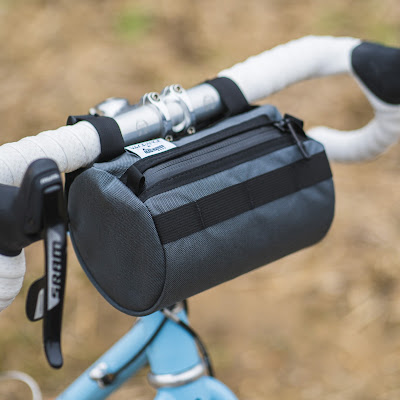
Joining our family of Road Runner x VO bags are the new Burrito Supreme Handlebar Bags and Tool and Saddle Rolls!


If you're looking to add easy and quick carrying capacity to any bike, the Burrito Supreme by Road Runner Bags is what you need!

The Burrito Supreme is similar to the Mini Rando Bag but in a cylindrical shape, rather than a box. The bag is 8" wide, with a 5.5" diameter, for a total volume of ~150 cubic inches of space.


Installation is a breeze. Simply wrap the handlebar straps around your bars and the velcro around your steerer or heatube. 

A reinforced, oversized zipper ensures your bag stays closed and your gear is safe. There is also a strip of Molle webbing on the front for anything else that might need to be strapped down.


Carry your essentials in style! These Tool and Saddle Rolls are a great place to put all your roadside tools and accessories.

Three separate pockets (3"x 4" on the sides, center pocket 3" x 5") allow you to neatly organize your quick-fix tools, and a button-snap flap ensures your gear will never fall out. With the flap buttoned down, the bag is 5 1/4" tall, meaning you can fit tools up to 5" long in the pockets. The bag then folds neatly into itself in thirds, and uses a strap and buckle to secure itself to the saddle rails. Also included on the underside is a loop and strap to tether the bottom of the bag to the seatpost ensuring the bag wont move around or slide up on rougher terrain. 


08 Feb 03:28

Twitter Favorites: [Kimli] @sillygwailo @ReneeStephen Please add the Haunted Ass-Ferry we found: https://t.co/hlTPZ6dyvL

Violently Moist @Kimli
@sillygwailo @ReneeStephen Please add the Haunted Ass-Ferry we found: imgur.com/HW0dZaF
08 Feb 03:28

Twitter Favorites: [ReneeStephen] @sillygwailo Absolutely! I can remenice about the time I fell asleep on the Cumberland and woke up back at Swartz B… https://t.co/bRvHOnUi7n

Renée Stephen @ReneeStephen
@sillygwailo Absolutely! I can remenice about the time I fell asleep on the Cumberland and woke up back at Swartz B… twitter.com/i/web/status/1…
08 Feb 03:27

Defining a Taxonomy’s Scope

by Heather Hedden

In planning a taxonomy, I have often said that it is important at the beginning to define the taxonomy’s scope, specifically the subject area scope of the taxonomy’s terms, but without going into more detail. Recently I was asked by a client how to define a taxonomy’s scope. This is a good question. The taxonomy should be suited to the subject area scope of the content that will be tagged with the taxonomy and to the scope of the user’s expectations. Terms or topics only marginal to the subject scope, however, could occur in the content, and whether they should also be included in the taxonomy is a question. Ultimately, that should depend on whether user expectations justify it, as the needs of users should also be a factor in creating a taxonomy. A taxonomy should suit both its content and its users.

Sources for Taxonomy Terms

For content as a source of taxonomy terms, a combination of manual and automated approaches is recommended. By manually reviewing sample individual documents or content items, you can discern the main ideas and main topics, which should form the start and basic structure of the taxonomy and also help define its scope. Automated methods of extracting terms, through text analytics technologies, can bring in many additional terms from a much larger corpus of documents more quickly, picking up terms that a limited manual review would miss. Even though automated text analytics extracts terms based on relevancy and frequency of occurrence, such terms could be out of scope of the subject domain. That’s why it’s important to start first with a manual review of content to define the subject scope.  Then, when you enrich the taxonomy with automated extraction, you can approve terms that appear to be in scope or at least closely relevant and reject others. But should you reject all that are out of scope, even if they appear with sufficient frequency and relevancy? My advice is to try to assume the role of the user. Ask yourself: Might a user want to search for content on this term in this content collection?
 
For user needs and expectations as a contributing source of taxonomy terms, obtaining this information can be very direct, such as by creating a user questionnaire (at least for your internal users) that asks what the topics of importance are, how those users would define the scope, and what “marginal” topics would be acceptable for them to include. You could also request sample challenging (not expected, basic, typical) queries that the users would make.  Another good way to obtain input from the user side is to look at search query logs that list search strings that users have entered over a period of time, ranked by frequency. If a search phrase that is slightly out of scope of the subject occurs frequently, then the term should still be considered for inclusion in the taxonomy.

In either case, the scope of the subject gets better defined as the taxonomy is created. For example, a taxonomy for recipes may initially be scoped to comprise terms for the names of dishes, ingredients, and cooking method. But then a different term shows up significant frequency, “Nutrition Facts.” If it occurs in both the content and the user research, then it likely should be included.  If it shows up in the content only, but is not validated in user research, then it is more questionable.

Taxonomy Structure

The initial taxonomy structure itself tends to impose limits on scope. Taxonomies tend to be hierarchical with a limited number of top terms. If a candidate term appears in the content that does not seem to belong anywhere in the current taxonomic hierarchy, you might be inclined to exclude it. Factors of user needs (they might want to look up this term in this content), however, should take precedence. For example, the term “COVID-19” might be marginal but still of interest to be included many taxonomies on varied subjects, but there would exist no broader term for diseases in those taxonomies. Then adjustments need to be made, such as renaming or adding broader terms, or perhaps, more likely, the proposed term should be modified to fit the context of the taxonomy, such as becoming “COVID-19 impacts.”

Another thing to consider is adopting more a thesaurus structure than a taxonomy structure, at least for the facet or concept scheme of the taxonomy that is for miscellaneous “topics.” One characteristic of thesauri is to not rely so heavily on extensive hierarchical trees. What this means is that you could decide that it is acceptable that not all terms have broader terms and thus it’s OK to have a very large number of top terms, with the more specific terms linked to other terms only by related-term relationships, another feature of thesauri, if not by broader/narrower-term relationships. Abandoning the full hierarchical tree structure should only be considered if this hierarchy is not displayed as a navigation to the end users.

Documenting Policy

In any case, you need to define policies regarding what kinds of terms can be added and what kinds should not. This will evolve out of the activity of building the taxonomy, especially from evaluating what extracted terms to approve and what search log terms to approve. Whoever is doing this task (hopefully more than one person), should document each instance of uncertainty. While many term approvals and rejections will be obvious, there will be a gray area. This should be collected and discussed together, and then a policy can emerge.

04 Feb 03:18

Why I Use a Chinese Cleaver More Than Any Other Knife

by Brittney Ho
Why I Use a Chinese Cleaver More Than Any Other Knife

As a daughter of immigrants from Hong Kong, I spent every night of my childhood cooking and eating traditional Chinese dinners with my family. Our nightly food-prep routine—smashing knobs of ginger, slicing slivers of beef for stir fry, chopping veggies—doubled as nonnegotiable bonding time. Quickly, what started as a chore grew into a precious part of our days.

Dismiss
04 Feb 03:17

Three Electric-Jaguar Years

This month marks three years of driving an electric car, a 2019 Jaguar I-Pace. I’ve written a lot about this, the research that went into it, what it feels like to own and operate, and the experience of driving it 1725km across Canada and back. All this on the theory that EV’s are an important tool in our best climate-emergency strategy. Like basically 100% of people who’ve gone electric, there’s no going back. In 2022, the requirements niche where a fossil-powered car makes sense is narrow and shrinking fast.

The Niche

IF you need to travel 500km (about 300 miles) on a regular basis, AND IF you really can’t handle that trip taking an extra hour, well then, suck it up, live in the past, get a vehicle that’s less reliable and more expensive to run and more damaging to life on Earth.

BUT, don’t invest too much, because in a small number of years that niche will have narrowed to zero.

But which EV?

If your driving is (like most people’s) mostly putt-putting around town, and you get on the highway to visit family or whatever once or twice a year… it doesn’t matter. Any modern EV will do the job. Shop by budget or by style and you won’t be unhappy. But I do have opinions.

Tesla?

They’re still ahead on charging — both availability and charging speed — and on cargo/interior space. As for style, it’s a matter of taste.

They still have real build-quality problems. And I think their experiment in moving all the interaction to a tablet off to the driver’s side can be declared a failure. When I’m driving I want the basic info right in front of me, and I want the meat-and-potatoes controls on physical knobs and levers that my hands can find without me looking. I don’t think I’m weird.

The Teslas are still great cars, on balance, But they no longer stand alone, not even close.

Style?

A lot of the really good EVs are ugly (Hyundai, VW) or just crushingly boring (Audi, Volvo/Polestar, Mustang). To give Tesla credit, they have a consistently unique design vocabulary, which some people like.

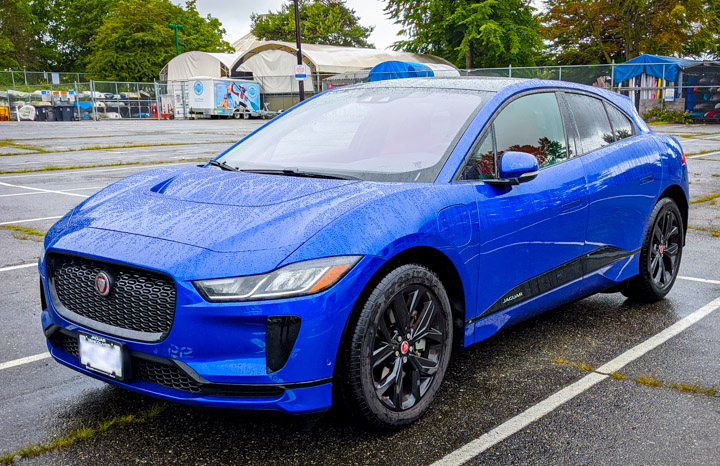
I think there are only two EVs that are uncontroversial design triumphs: The Jag and the Porsche Taycan.

Jaguar I-Pace in the rain Porsche Taycan

Observed unposed, in the wild.

Range

So, here’s the thing: Range doesn’t matter. No, really, it doesn’t. What that linked piece explains, in 1,300 or so words, is that range only matters for long-hauling, that most modern EVs have plenty, and that charging speed matters way more. So…

Charging speed

Remember, this only matters if you do a significant amount of long-haul driving. But then it matters a lot. At this point, Tesla still has a lead, because there are more Superchargers and the cars (recent models at least) charge damn fast.

Looking at EVs shipping today, as far as I know, only the Taycan and Hyundai Ioniq 5 have Tesla-comparable speeds, and that depends on finding 200kW-and-up chargers, and those chargers being in working order. Today, that can be chancy.

Having said that, there’s a tsunami of charging-station investment happening right now. It’s a problem that nobody’s really figured out the business model. But it would be surprising if the rest of the ecosystem weren’t at least very close to Tesla in a very few years.

Quality

Generally, companies that built high-quality gas cars also build high-quality EVs. But note that it’s a little easier with EVs because there are immensely fewer moving parts and nothing that needs to handle volatile burning fluids or wrangle gear ratios.

Which is maybe why companies that are not famous for a history of high quality seem to do well too, if my experience with the Jaguar is evidence. In three years I’ve had one trip to the dealer, when the aircon stopped working.

Tesla still has ground to make up on the quality front. For example, consider this comparo between a Tesla Y and an Ioniq 5 (the video is good too); Tesla comes out way behind on build quality, especially rattles and squeaks. When my Jag hits a pothole or I take a speed-bump too fast, it’s like a single silent block of steel, nary a rattle.

Infotainment

I suspect that the future here belongs to Google and Apple. The only car company whose infotainment/Driver-experience software comes close is Tesla. But it’s gonna be tough, CarPlay and Android Auto are getting really good. All I had to do is plug in my phone and then all my music and messaging and calendar and contacts and so on Just Worked. Why would I expect a car company to do better?

What I’d buy

Suppose a meteorite hits the Jag when I’m not in it and I’m back to square one. While I love the look of the Taycan, I wouldn’t go there because of this:

Jaguar I-Pace with back heavily loaded

The Jag has been overwhelmingly, ridiculously, practical. It can schlep a lot of crap. It can keep five people comfy. It can mush through deep snow and leap forward like a cat on the highway to dodge a clumsy merge-in even when you were already maybe a bit over the speed limit.

But, it can’t soak up more than 100kW from a fast charger. And it’s kind of expensive (although less than the roughly-equivalent Tesla.)

Anyhow, if I weren’t terribly price-sensitive, I’d consider the Polestar and the Audi but probably buy the Jag again.

If I wanted to step down into mid-range I’d go and have a look at the Ioniq 5 or very similar Kia EV6 and see if they’re as ugly in the flesh as they look on screen, because they seem to be really very nice cars, and charge fast.

But hey, I spend almost all my driving hours at low speed in urban traffic. So the rational thing would be to go pick up a basic Nissan Leaf or Chevy Bolt. They’re really good cars, very fully-debugged, and will get out of your way. And the price is right.

What it’s like

I mean, what buying a gas car is like in 2022. It’s like holding onto your flip phone in 2012. It’s like trying to find your hotel in a strange city after a red-eye with a paper map. It’s like putting your retirement savings into coal-mining investments. It’s over.

04 Feb 03:17

THEY'RE BACK! HISTORY WALK SCHEDULE FOR FEBRUARY/MARCH 2022

by lamiasabina.blogspot.com

Tosca Trasolini & The Flying Seven

Saturday February 26
East End/Strathcona History Walk - Tour #1
Departs: 10:00
From: SW corner of East Hastings & Heatley Avenue
Duration: Approximately 2.5 hours
Cost: $25.00/person
Reservations: To reserve a space on this or any other scheduled tour, or to inquire about setting up a private tour, please e-mail me at: historywalks@gmail.com

CVA Photo Re N8.2 - Hoboes at the City Dump

Sunday February 27
Working/Wild Side of Vancouver’s East End - Tour #2
Departs: 10:00
From: NW Corner of Raymur Avenue & Malkin
Duration: Approximately 2.5 hours
Cost: $25.00/person
Reservations: To reserve a space on this or any other scheduled tour, or to inquire about setting up a private tour, please e-mail me at: historywalks@gmail.com

CVA photo M-11-22

Saturday, March 5
West End History Walk - Tour #3
Departs: 10:00
From: SE corner of Robson & Bute and finishes at Davie & Denman
Duration: Approximately 2.5 hours
Cost: $25.00/person
Reservations: To reserve a space on this or any other scheduled tour, or to inquire about setting up a private tour, please e-mail me at: historywalks@gmail.com

CVA Photo Pol P4

Sunday, March 6
East End/Strathcona Ghost Walk - Tour#1G
Departs: 10:00
From: SW corner of East Hastings & Heatley Avenue
Duration: Approximately 2.5 hours
Cost: $40.00/person
All Ghost Walks are co-hosted by my ghost-whispering paranormal investigator friend Kati Ackerman. (See explanation below)
Reservations: To reserve a space on this or any other scheduled tour, or to inquire about setting up a private tour, please e-mail me at: historywalks@gmail.com

East End in the 1890s seen from what is now Olympic Village

Wednesday, March 9
East End/Strathcona History Walk - Tour #1
From: SW corner of East Hastings & Heatley Avenue
Departs: 10:00
Duration: Approximately 2.5 hours
Cost: $25.00/person
Reservations: To reserve a space on this or any other scheduled tour, or to inquire about setting up a private tour, please e-mail me at: historywalks@gmail.com

The trial of Gordon Northcott - Chicken Coop Murders

Saturday, March 12
Cedar Cottage History Walk - Tour #6 ⬅︎ NEW
Departs: 10:00
From: South side of East 18th Avenue at Commercial Drive
Duration: Approximately 2.5 hours
Cost: $25.00/person
Reservations: To reserve a space on this or any other scheduled tour, or to inquire about setting up a private tour, please e-mail me at: historywalks@gmail.com

CVA Photo 258-1 English Bay near Davie and Denman in 1927

Sunday, March 13
West End Ghost Walk - Tour#2G
Departs: 10:00
From: SE Corner of Robson & Bute and finishes at Davie & Denman
Duration: Approximately 2.5 hours
Cost: $40.00/person
All Ghost Walks are co-hosted by my ghost-whispering paranormal investigator friend Kati Ackerman. (See explanation below)
Reservations: To reserve a space on this or any other scheduled tour, or to inquire about setting up a private tour, please e-mail me at: historywalks@gmail.com


CVA Photo - LGN 1228

Wednesday, March 16
Grandview History Walk - Tour #4
Departs: 10:00
From: SE Corner of Commercial Drive & Venables and finishes at Commercial & Graveley
Duration: Approximately 2.5 hours
Cost: $25.00/person
Reservations: To reserve a space on this or any other scheduled tour, or to inquire about setting up a private tour, please e-mail me at: historywalks@gmail.com


Van Sc P47 - Looking north from City Hall 1938

Saturday, March 19
Mount Pleasant History Walk - Tour #5
Departs: 10:00
From: SE corner of West 12th & Yukon and finishes at Main & 6th
Duration: Approximately 2.5 hours
Cost: $25.00/person
Reservations: To reserve a space on this or any other scheduled tour, or to inquire about setting up a private tour, please e-mail me at: historywalks@gmail.com

CVA 99-1902 Skaters at Trout Lake, 1929 Photographer- Stuart Thomson

Sunday, March 20 - Tour
Cedar Cottage Ghost Walk #6G ⬅︎ NEW
Departs: 10:00
From: South side of East 18th Avenue at Commercial Drive
Duration: Approximately 2.5 hours
Cost: $40:00/person
All Ghost Walks are co-hosted by my ghost-whispering paranormal investigator friend Kati Ackerman. (See explanation below)
Reservations: To reserve a space on this or any other scheduled tour, or to inquire about setting up a private tour, please e-mail me at: historywalks@gmail.com


Kati and me after a very successful Mount Pleasant Ghost Walk

Meet Vancouver's very own paranormal investigator and ghost-whisperer Kati Ackermann! In 2006, Kati founded Vancouver Spooks Paranormal Investigators.Kati and I will be partnering up to host three Ghost-focussed History Walks during this limited 2022 History Walk season:

one in Strathcona on Sunday, March 6th,
one in the West End on Sunday, March 13th, and
one in Cedar Cottage on Sunday, March 20th.

The routes and content of these three “Ghost Walks” are the same as my regular Strathcona, West End and Cedar Cottage History Walks with the added value of Kati's spirit-tuned eyes and ears. Kati, who has been on a number of my tours before as a guest, will share with us about the spirits she sees and what they say to her.

Please note that the price for these Ghost Walks will be $40 per person and the size will be limited to 20 people, so reservations are a must.

To reserve a space, please e-mail me at: historywalks@gmail.com.


MORE DETAILS WILL BE ADDED TO THIS POST IN THE NEXT FEW DAYS

04 Feb 03:16

Toronto Island in winter

by jnyyz

It’s been many years since I ventured out to the island during the winter, but I was inspired by some pictures posted by bike buddy Sam on Saturday so I took a midday break to check it out. There were lots of people on the ferry with skates and sticks, but I didn’t want to get my hopes up for clear ice.

Sure enough there were a quite a few places where people had cleared the ice to be able to skate and to play shinny.

A little past the church I decided to check the depth of the snow myself, and I found that it was only about 5 cm. Totally bikeable. (note that I have studded tires).

This video immediately preceded my taking the above picture.

The sound and feel of cutting through the snow was something I hadn’t experienced before. Just like normal biking, but with a little drag. Also the ice was glass smooth underneath. It was especially nice to bike on untracked areas. However, even areas with lots of tracks was fine. I biked back east to just past the church where I started to get bogged down in deeper snow. Everyone that I passed was pretty chill about me biking by. I had a nice conversation with a fellow who had skated for three or four days on Grenadier Pond before the snow hit.

All the major roads were plowed, and there were no crowds.

They also cleared the snow off of the pier.

Waiting for the ferry. No worries about the flag; it was a group of First Nations and supporters. I guess all the troublemaker flag wavers were in Ottawa for the weekend.

Travelling back to the terminal.

I’m going to have to go out to the island more often during the winter. It was a very peaceful break.

04 Feb 03:14

Why minority leadership and recruitment matter - New Jersey Education Association

Why minority leadership and recruitment matter  New Jersey Education Association
28 Jan 20:51

New firmware for Poly Voyager 4320 and Jabra Elite 7 Pro

by Volker Weber

Both Poly and Jabra have released new firmware this week.

This is new for the Poly Voyager 4320:

• Poly has collaborated with Intel to optimize the Poly headset to meet the Intel® Engineered for Evo™ accessories program requirements for Bluetooth headsets
• Fixed issues that prevented music from resuming or switching between devices correctly

More >

This is new for the Jabra Elite 7 Pro:

• New feature: Multipoint support
• New feature: certified for Google Assistant – option to select Google assistant via Jabra Sound+ on Android devices*
• Updated: MyFit feature
• Updated: connectivity performance
• Performance and stability improvements

More >

28 Jan 20:37

Attacker exploits a bug in Qubit Finance allowing them to mint unlimited collateral and drain the platform of $80 million

A white Q on a yellow background

An attacker exploited a bug in Qubit Finance, a decentralized lending platform. The bug allowed them to call the "deposit" function without actually depositing any funds. This enabled the attacker to mint 77,162 xETH collateral, which they exchanged for BNB worth nearly $80 million. The platform has said they have tried to contact the exploiter to offer the "maximum bounty", which is apparently $250,000. Tempting, I'm sure.

28 Jan 20:31

Boring crypto definitions

by Doug Belshaw

We do tech a disservice when we over-hype it. After all, as Clay Shirky said, things get socially interesting when they become technologically boring.

My aim in defining some terms used in crypto in ‘boring’ ways, therefore, isn’t to dismiss them but to help people consider how they may be used practically in their sector. Magical thinking helps precisely no-one.


Blockchain — an append-only database stored on multiple computers.

Cryptography — using technology to try and stop third parties reading and/or modifying data.

DAO (Decentralised Autonomous Organisation) — an organisation (but not an ‘organisation’) without a currently well-defined legal status using blockchain and smart contracts to automatically process votes made by people who hold the right tokens.

Dapps (Decentralised Applications) — apps built on a blockchain using smart contracts to perform actions.

DIDs (Decentralised Identifers) — ways of identifying things in a verifiable way using cryptography, usually using a blockchain.

NFT (Non Fungible Token) — a token that can be verified using cryptography to prove that it is unique and therefore scarce and subject to property rights.

Self-sovereign identity — a method of identifying people using DIDs that they themselves control.

Smart contract — rules defined by code that are run on a blockchain.

Token — a digital asset which can be used for money, voting rights, or pretty much anything else.

Wallet — a place to store tokens.

Web3 — a way for people to refer to all of the above in a less-confusing way. Basically putting everything on some form of blockchain.


There are obviously a lot more terms, but these are the ones I think most people would benefit from learning and being able to discuss dispassionately. For more terminology, the Learn Crypto glossary is a good place to start, followed by Alexandria from CoinMarketCap.

The post Boring crypto definitions first appeared on Open Thinkering.
28 Jan 20:29

Morning notes

This morning is the first time I’ve been out of the house in 10 days (Covid) so I went for a walk, grabbed a coffee.

The sheer wonderful sensory overload of it all! The birdsong, sure, and the cold air on the skin. By the time I sat on the bench outside the coffee shop I was noticing the wisps of steam from buildings in the distance, my visual field having that uncentred fractal depth of a Burtynsky photograph, and the changing soundscape around me of bikes and people walking by on the phone; and the sugar and soft give, biting into the cannelle and the bitterness of the coffee.

The everyday anew.

Chatting with the barista I found similarly fresh, and I find myself thinking now about community and that our sense of sociality, togetherness, is as much of a sense as any of the others, conversational interaction no different from sound waves or photons.


I went back and read John Perry Barlow’s A Declaration of the Independence of Cyberspace from 1996. Here’s the gist:

Governments of the Industrial World, you weary giants of flesh and steel, I come from Cyberspace, the new home of Mind. On behalf of the future, I ask you of the past to leave us alone. You are not welcome among us. You have no sovereignty where we gather. …

I declare the global social space we are building to be naturally independent of the tyrannies you seek to impose on us. …

Cyberspace does not lie within your borders. …

We are creating a world that all may enter without privilege or prejudice accorded by race, economic power, military force, or station of birth. …

Your legal concepts of property, expression, identity, movement, and context do not apply to us. They are all based on matter, and there is no matter here. …

We will create a civilization of the Mind in Cyberspace. May it be more humane and fair than the world your governments have made before.

– John Perry Barlow, A Declaration of the Independence of Cyberspace (1996)

Punchy!

Yes punchy even for 1996, but I remember feeling pretty much like that too in the mid 90s.

BUT it turned out that cyberspace is in fact tethered to matter, and therefore to geography, and therefore to government, in two ways: one, our bodies; two, the physical infrastructure of the internet.

And it turns out that what got built very much resembles what humans collectively build in the early 21st century. We built a city. Like London, the internet is mostly privatised public space; with a small number of grand semi-public institutions propped up by traditional mainly; law and order maintained by psychologically panoptic surveillance rather than civility or community policing, and even then there’s a non-trivial black economy and there’s a bunch of crime so you need to have your wits about you; significant class differences encoded in the architecture.

Is the internet what we would have built in 1950? 2050? Probably not. It represents our time.

So of course I dug this out because there are similarly punchy statements about the independence of the new internet, this time from the incumbent corporations and financial systems. I’m talking about crypto and web3 of course – it’s decentralised, it’s self-governing, it’s not (or shouldn’t be) subject to existing regulation, and so on.

And maybe that’s a mistake? Instead of declaring or assuming independence, focus on the kind of society we can build with these new technologies, and the way the trajectory of our society can be inflected and toward what values, taking as a starting point that it will of course be enmeshed with the existing real world.


After posting about Soviet (community services) vs Western (household automation) approaches to laundry earlier this week, I learnt about The Washing Machine Project (thanks @cadars):

70% of the world’s population lacks access to an electric washing machine.

Handwashing clothes sounds like a simple task but for many women around the world, it poses a significant obstacle to their wellbeing and livelihood.

By providing displaced and low-income communities with an accessible, off-grid washing solution, our mission is to empower women with the time to take charge over their lives.

– The Washing Machine Project, Our Mission

This has caught my imagination as a general algorithm for progress: identify the cheapest way to create surplus hours for the largest number of people; do that; repeat.

Because there are other ways of lifting up communities around the world – public health initiatives, access to the internet for education and jobs, etc.

But there’s something really direct about about a focus on surplus hours. Which can be gained from reducing domestic labour (like this project) or by working on health (reducing family care overhead; extending lives). Same same, underneath it all. And hours in the day is what you need to do anything else; time is the ultimate constraint.

The metric for intervention includes cost, so you would look at: hours gained per million dollars spent. Economic utilitarianism (is that what we would call this?) is a blunt instrument but it would be fascinating to see different approaches stacked up.


On with the day! Gm as the kids say.

28 Jan 20:26

Twitter Favorites: [davidmccphoto] Finally got the three engines in a single shot. 🚂 #VIA6411 , 🚂 #VIA901, 🚂 #VIA2201 / 🛤 VIA Ottawa Station / 📆 2022… https://t.co/3Tgcc1F09N

David McCormack Photography @davidmccphoto
Finally got the three engines in a single shot. 🚂 #VIA6411 , 🚂 #VIA901, 🚂 #VIA2201 / 🛤 VIA Ottawa Station / 📆 2022… twitter.com/i/web/status/1…
28 Jan 20:24

How to structure the interviews process to limit bias in hiring

by Tara Robertson

So, you’ve done the work to take an honest look at your work culture and you’ve started to make systemic changes to make your culture more inclusive. Yay! You’ve been telling the stories about what it’s really like to work at your company, you’ve written thoughtful job postings, and you’re getting a wider range of people applying than before. Woo hoo! 

This post will address the next step: how to design an inclusive interview process, from the top of the funnel to hiring your next employee. 

Tell candidates what to expect in your hiring process

Be up front with candidates about the whole hiring process. How many stages are there? How quickly should they expect to progress to the next stage? Will they be given feedback along the way? Will there be a coding challenge, that they’ll need to allocate time to complete? Who should they contact if they need to request a disability accommodation? Will the whole process take 2 weeks, or is it closer to 2 months? Being explicit about the hiring process helps set candidates’ expectations, puts them at ease, and removes the advantage that some might have with certain types of companies or in certain industries. 

Angela Riggs makes a compelling argument for sending the interview questions to the candidate ahead of time. There are very few jobs that involve having to think on your feet and be eloquent in high pressure situations. Maybe it’s appropriate if you’re interviewing to be a game show host, but it’s not relevant for most jobs, so why is this practice so common? 

I like how Shopify spells out their entire process and explains what they mean by The Life Story interview

job candidates comparison: hand with magnifying glass analyzing a shortlist

Shortlisting resumes 

The recruiter and hiring manager should have already aligned on the key criteria for the role when the job posting was written. This post has good advice for hiring managers on division of labor and building synergy with recruiters. Generally the recruiting team will shortlist the applicants that will move on in the selection process. Shortlisting applications for a recruiter screen is usually the first step in the hiring process where bias can creep in. People on recruiting teams can have someone on else on their team double check the candidates who’ve been screened out to ensure you haven’t mistakenly screened out qualified candidates.

There have been many resume studies, where the same resume is sent out to a bunch of jobs with only one detail changed. Here’s the findings of 3 resume studies: 

  • “Jamal” needed eight additional years of work experience to be considered as qualified as “Greg”. (2004 study
  • Jennnifer was offered a starting salary of $4000 less than Greg. (2012 study
  • A queer woman who volunteered with a LGBTQ+ organization received 30% fewer callbacks than a straight woman who volunteered with a progressive student organization. (2016 study

Skills evaluation 

In many industries a skills evaluation is a common part of the interview process. For junior tech roles (where a company could get more than 1000 applicants) the technical screen will be scheduled early in the process to weed out candidates. For assessments like a writing test or presentation, these are typically scheduled later in the process to compare your top candidates’ skills. 

Without a skills assessment you are likely basing your perception of a candidate’s skills on their reputation, their degrees (or lack of degrees), the university they attended, or the prestige or name brand recognition of the places they worked. 

However you’re using a skills evaluation it should be as close as possible to “a day in the life” of someone on that job, designed to be done in a minimal amount of time, and to mitigate bias you should determine the evaluation criteria when you make the assignment. 

Technical screen

Technical screens or coding challenges are an objective way to evaluate a candidate’s skill. Like any assessment you need to be thoughtful and intentional about the design. Emily Thompson, a data science leader, shares “I really like interviews that test less for “textbook” knowledge, which biases more towards people who have had extra time to study, and test more for actual skills those people can bring to the table. The way I’ve done this in interviews has been to structure them as close as possible to “a day in the life” of someone in that role. Test for ability, not for memory.”

Engineering Director Pete Holiday, argues that there’s a better way to do this. He outlines that asking good interview questions will help you learn about the candidate’s direct experience. Having the candidate review your code will help you “identify candidates who can level-up your whole team’s code and make your office a better place to work in the process”. Finally Holiday says you should design a system together. He says that this works well across different amounts of experience. 

In this post, Terra Field, shares her frustration at what she calls “interview theater”. She states that candidates should be given the option to choose between live coding exercises or a take home assessment. Field also points out that as a senior engineer with almost 20 year of experience working on Linux and Windows based servers, do people think she’s faking knowing Python? Like Holiday, Field says it’s about asking the right questions. If you’re involved in hiring for software engineers her post is worth reading and reflecting on the candidate experience at your company. 

Interview scorecards

When you wrote the job post, you clearly stated the must-have criteria for the job. The interview questions should dig into these criteria. Use the same questions for each candidate and use a scorecard to minimize bias. Align on the differences between a decent answer, a good answer and an awesome answer. Google’s rework site has an example of scoring rubric for the imaginary role of Underwater Basket Weaver

Be consistent about which interviewer asks which questions across the interview process. Use a neutral opening question to put the candidate at ease, instead of commenting on points of commonality (like attending the same university, or a shared hobby). Schedule time right after each interview for the interviewer to fill out a scorecard and rank the candidate on each specific criteria. I know it’s easier in a busy environment to schedule four 30 min interviews over two hours, but recency bias means that you’ll be clearer about evaluating the 4th person than the 1st. At this stage, interviewers should not be backchanneling with each other about who is good and who isn’t–you risk groupthink, or the most powerful person in the team swaying others. 

I’m a huge fan of Dr. Joan Williams’ work on interrupting bias. Here’s a few of the bias busters she’s identified for hiring

  • Make sure to give everyone—or no one—the benefit of the doubt.
  • If you waive objective requirements, do so consistently and require an explanation.
  • Don’t insist on likeability, modesty, or deference from some but not others

Culture fit

Hiring for “culture fit” is something you should avoid. Culture fit is usually shorthand for people like us, or someone I’d like to have a beer with after work or hang out with on the weekend. In tech there’s usually an assumption of white maleness that excludes women, people of colour and some white men too! In libraries I observed that culture fit meant nice, white ladies like us, which excluded people of colour and women who weren’t nice or ladies. 

The reframe of “culture add” instead of culture fit can be useful–in addition to meeting the must-haves, who brings something that we don’t already have on our team?

If hiring people who are aligned with your company’s values is important then you’ll need to be explicit about those values and craft the right questions to get at those values and, like for everything else in the interview, determine the rubric for scoring answers. 

Take care with details, they matter

My name is often mispronounced in North America. Greenhouse, an applicant tracking system (ATS), has functionality where applicants can record their names. LinkedIn has similar functionality so you can record your name and I have this link in my email signature. If you’re not sure how to say someone’s name ask, “Before we get started can you tell me how to say your name? I want to make sure I’m pronouncing it correctly.”

The microaggressions I experience are small compared to BIPOC people with non-English names. I love this story from actor Uzo Aduba when she told her mom that she wanted to be called Zoe. Her mother replied “If they can learn to say Tchaikovsky and Michelangelo and Dostoyevsky, they can learn to say Uzoamaka.”

The same goes for the applicant’s pronouns. If you’re not sure, ask, or do your homework ahead of time. Being misgendered is a crappy experience, especially when you’re trying to shine in a job interview. As the interviewer you can share your pronouns with candidates, but don’t put the candidate on the spot to share theirs–they will if they’re comfortable. 

As I mentioned in the  post about job postings, if applicants requested accommodations ensure those are in place. The applicant is the expert in what they need. For example if a Deaf person requires CART transcription for a Zoom interview, booking an ASL interpreter is not adequate or helpful. It’s possible that this Deaf person doesn’t know ASL. 

All of these details demonstrate if you are paying attention, care, and a bit about what your culture is really like.

Be kind

The best experiences that I’ve had as a candidate were the ones where there was clear communication throughout the process and where it felt human. Even when Talent Acquisition teams are slammed it’s important to not take shortcuts on clear and empathetic communication throughout the process. Take the time to wrap things up with candidates who made it to the final round who didn’t get the job. It feels really impersonal to get the templated rejection email form an ATS after you’ve gone through many interviews with a company. Avoid ghosting candidates–it’s a good way to ensure that they won’t apply to work for your company again and it might impact if they want to be a customer too. 

By the time I’d made it through five rounds of interviews for my dream job I was at the stage where I was imagining relocating and what I was going to wear on my first day. When I found out I didn’t make it to the final round, I was disappointed. The recruiter shared feedback from some of the interviews about where I was strong and where they thought I needed more experience. The feedback was really valuable–I’d love to see more companies do this. 

Final post in this series

The last post in this series will be an introduction to analyzing your hiring pipeline data to understand where you need to focus your efforts to ensure an equitable hiring process. 

Thank you Emily Thompson, Angela Riggs, Celia Hodent and Annie Bélanger for feedback on this post. 

The post How to structure the interviews process to limit bias in hiring appeared first on Tara Robertson Consulting.

28 Jan 20:21

mapsontheweb:Green Ukraine / Zeleny Klyn was a projected country...


mapsontheweb:

Green Ukraine / Zeleny Klyn was a projected country where the Ukrainian majority attempted to secede and establish an entity during the Russian civil war.

28 Jan 20:01

Apple Music prominently features Neil Young’s music in apparent dig to Spotify

by Nida Zafar

Apple Music is taking advantage of rockstar Neil Young's rift with Spotify by promoting his songs on its app.

Spotify confirmed it was removing Young's songs from the streaming service earlier this week after the rockstar shared an open letter stating he doesn't want his music shared on the same platform as Joe Rogan's podcast.

The Rogan Experience is the most popular podcast on the platform, but it also boasts misinformation on a number of important issues, including the COVID vaccine.

“Spotify has a responsibility to mitigate the spread of misinformation on its platform, though the company presently has no misinformation policy,” Young wrote in his original letter.

In a recent tweet, Apple Music says it's now the "home of Neil Young."

https://twitter.com/applemusic/status/1486863052180004867?s=21https://twitter.com/applemusic/status/1486863052180004867?s=21%3E

On January 27th, just one day after Spotify pulled the songs, Apple Music highlighted the musician's catalogue with the header "We Love Neil." It was prominently placed under the apps "browse" section.

Apple isn't the only one to take advantage.

On the same day Apple Music showed its love, SiriusXM Canada released a press release stating the return of Neil Young Radio. The channel featured the show on a limited basis back in December, focusing on Young's music and stories. The now renewed show will feature rare insights from Young himself and every song from his latest album.

60 percent of Young's music was listened to on Spotify and in his letter, he acknowledged the impact of his actions. But it seems like Spotify's loss is to Young's benefit as other platforms are more than willing to feature his work.

28 Jan 19:59

The New Music Dilemma

by bob
You can’t get traction. And everybody who says they’re a worldwide star known by everyone is lying. Music used to be a controlled marketplace. The big hurdle was distribution. Retail paid incredibly slowly, and they tended to only pay those with a continuing conveyor belt of product. So if you were an indie, even if […]
28 Jan 19:59

Neil Young Leaves Spotify

by bob
Who has got more to lose? For a minute there, I thought Spotify wasn’t going to respond to Neil. The news cycle is so fast that if you let it go it oftentimes goes forever, when you respond you’re adding gasoline to the fire. Furthermore, Mr. Young removed the post from his website stating his […]
28 Jan 19:59

Re-Neil Young/Spotify

by bob
I cancelled my premium service with Spotify today.  I moving towards lossless audio anyway…gonna hang with Neil.  He’s always had my back since I’ve lived on Sugar Mountain. Bill Cason ______________________________________ You’re absolutely right that Spotify won’t listen unless users make a statement, so I just completely canceled my family plan and made sure they […]
21 Jan 02:51

Promoting the stable version of the documentation using rel=canonical

by Simon Willison

I was thinking about documentation SEO today. Like many projects, Datasette offers multiple versions of the documentation:

For other projects that do this I've often found myself running a Google search and landing on on older version of their documentation. How best to avoid that?

I started by looking at how Django addresses this. Django uses rel=canonical - so, on this page: https://docs.djangoproject.com/en/2.2/topics/db/ they have the following HTML:

<link rel="canonical" href="https://docs.djangoproject.com/en/4.0/topics/db/">

I tend to default to imitating Django, so I decided to see if I could do that for the Datasette documentation...

... and found out it's already solved for me! Read The Docs, the platform I use for the Datasette documentation, already implements exactly this pattern.

So https://docs.datasette.io/en/0.50/introspection.html includes the following HTML:

<link rel="canonical" href="https://docs.datasette.io/en/stable/introspection.html" />

Here's their documentation covering this feature. I think you need to have configured a "default version" (though they may set a sensible default for that already) - for my project the page for doing that is the Advanced settings page at https://readthedocs.org/dashboard/datasette/advanced/

This TIL started life as a Twitter thread.

21 Jan 02:51

Linking from /latest/ to /stable/ on Read The Docs

by Simon Willison

Read The Docs has a handy feature where documentation for older versions will automatically link to the latest release, for example on this page:

A documentation page with a note that says: You are not reading the most recent version of this documentation. 0.60 is the latest version available.

That feature is enabled by a "Show version warning" check box in their Advanced Settings preference pane.

It's implemented by this JavaScript in their default theme, called from here.

I had an extra requirement: I wanted pages on my /en/latest/ documentation (which shows documentation for the in-development main branch on GitHub) to link back to the /en/stable/ equivalent - but only if that page also existed in the stable documentation.

I ended up adding this snippet of jQuery JavaScript to my custom docs/_templates/layout.html template:

{% block footer %}
{{ super() }}
<script>
jQuery(function ($) {
  // Show banner linking to /stable/ if this is a /latest/ page
  if (!/\/latest\//.test(location.pathname)) {
    return;
  }
  var stableUrl = location.pathname.replace("/latest/", "/stable/");
  // Check it's not a 404
  fetch(stableUrl, { method: "HEAD" }).then((response) => {
    if (response.status == 200) {
      var warning = $(
        `<div class="admonition warning">
           <p class="first admonition-title">Note</p>
           <p class="last">
             This documentation covers the <strong>development version</strong> of Datasette.</p>
             <p>See <a href="${stableUrl}">this page</a> for the current stable release.
           </p>
        </div>`
      );
      warning.find("a").attr("href", stableUrl);
      var body = $("div.body");
      if (!body.length) {
        body = $("div.document");
      }
      body.prepend(warning);
    }
  });
});
</script>
{% endblock %}

The neatest piece of this solution is the way it uses an HTTP HEAD request via fetch() to confirm that the equivalent stable page exists before adding a link to it:

  var stableUrl = location.pathname.replace("/latest/", "/stable/");
  // Check it's not a 404
  fetch(stableUrl, { method: "HEAD" }).then((response) => {
    if (response.status == 200) {
      // Add the link

Here's what my fix looks like, running on https://docs.datasette.io/en/latest/csv_export.html

This page has a banner that says:  This documentation covers the development version of Datasette. See this page for the current stable release.

Alternative solution: sphinx-version-warning

Just minutes after I committed my fix I was informed of the existence of sphinx-version-warning, a Sphinx plugin that can solve this problem too. There's an example of using that to add a message to the /latest/ page in its own documentation configuration here.

# -- Version Warning Banner configuration ------------------------------------
versionwarning_messages = {
    'latest': 'This is a custom message only for version "latest" of this documentation.',
}
versionwarning_admonition_type = 'tip'
versionwarning_banner_title = 'Tip'
versionwarning_body_selector = 'div[itemprop="articleBody"]'

I decided to stick with my version, mainly because I like the fetch() solution I used.

GitHub issue: Documentation should clarify /stable/ vs /latest/ #1608

21 Jan 01:05

Twitter launches special hexagonal NFT profile pictures, so now you don't even have to check a username for ".eth" to know who to avoid

Screenshot of a popup announcing Twitter's NFT support, and showing off the hexagonal profile pictures

Although NFTs-as-profile-pictures on Twitter is nothing new, Twitter launched a new feature in which users can connect their crypto wallets to verify that an NFT belongs to them. Such verified NFTs will display with a hexagon shape, rather than the standard circle, presumably to differentiate these users from the right-clickers.

21 Jan 01:05

Pixel editing a favicon with Pixelmator

by Simon Willison

I wanted to add a favicon to Datasette, using a PNG image served from /favicon.ico as suggested in this article by Adam Johnson.

Initially I created a 128x128 icon image (using Figma and exporting as PNG) and allowed the browsers to resize it down to 32x32 - but I wasn't satisfied with the result:

Screenshot showing my resized icon in Firefox, Chrome and Safari

I decided to use Pixelmator on my Mac (since I already have a paid license) to hand-edit the icon at 32x32 to see if I could get better results.

Pixelmator's default interface doesn't include a tool for setting individual pixels - even at 1px size the default brushes affect nearby pixels too.

Thanks to Enabling a Pixel Brush in Pixelmator to Draw Pixel Art on Mac on OSXDaily I found the preference pane (in Preferences -> Tools -> Paintig) that lets you drag a pixel editing tool onto the tool palette.

With that added, I could bump up the zoom level on a brand new 32x32 image and start editing pixels.

I used the I keyboard shortcut to switch to the eyedropper to select colours, and the P keyboard shortcut to switch back to the pixel tool to edit the pixels.

I couldn't figure out how to delete individual pixels (in order to achieve a transparent PNG background) so I used the eraser tool to fuzzy-erase areas, then redrew the pixels by hand with the pixel tool.

Screenshot of the Pixelmator interface

I exported the finished image as a PNG, then used https://squoosh.app/ to shrink it down to just 208 bytes.

Screenshot of the Squoosh interface - I used effort=3 and colors=8

The end result, comparing the browser-resized icon to my hand-edited one:

The one I let the browser resize has some fuzzy edges. The hand-edited one does not.