Shared posts

19 Nov 01:27

Dark mode comes to Google Phone app in new beta

by Jonathan Lamont
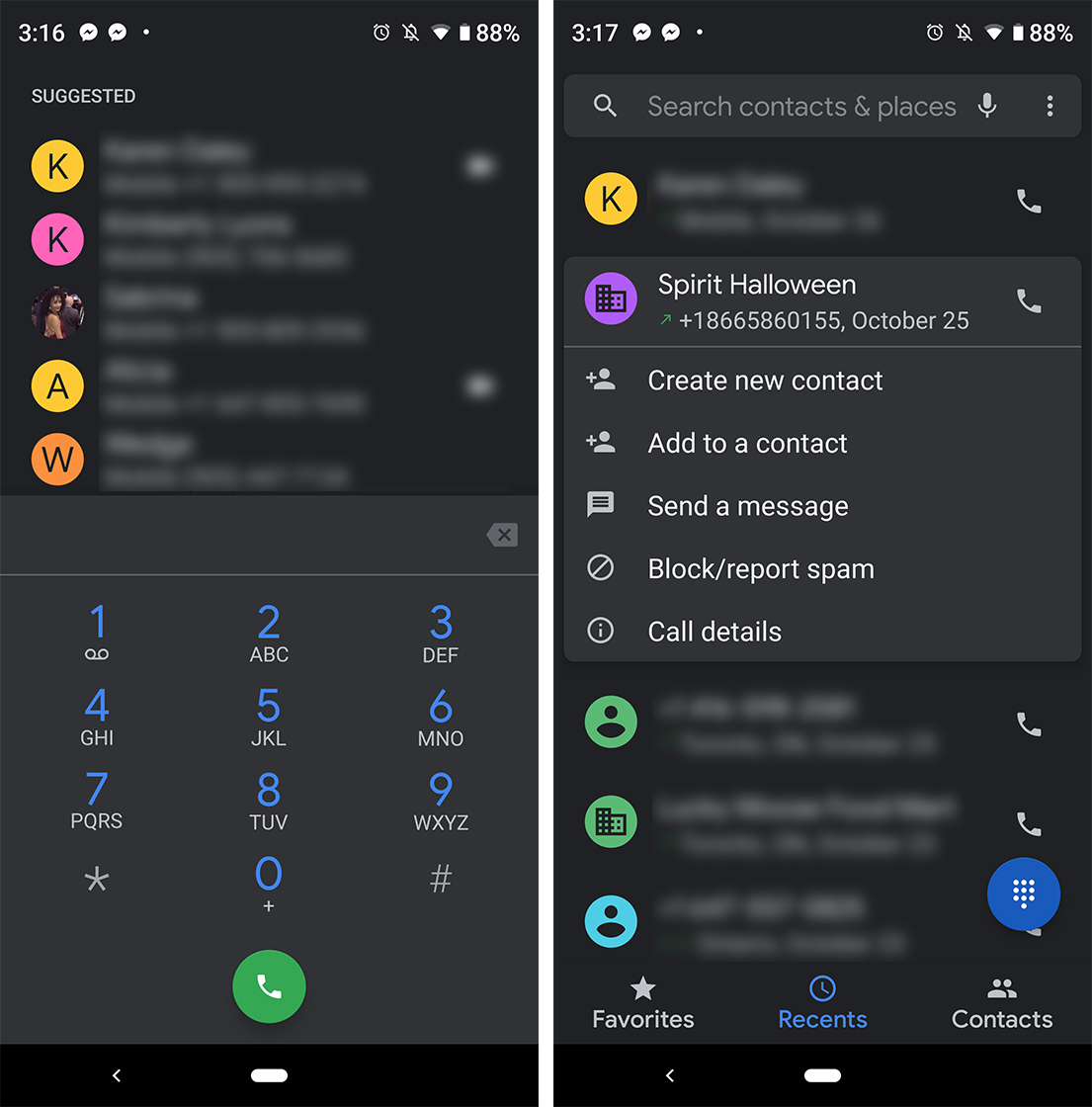
Google Phone dark mode

The Google Phone app is one step closer to bringing dark mode to Pixel users.

Since Google said a dark mode for its Phone app was coming back in August, app teardowns have revealed the development of the feature.

Further, some users grew tired of waiting and modded the APK to turn on dark mode themselves.

However, the recent Phone app beta, ‘version 26.0.221539659,’ brought dark mode to the operating system.

This means it’s only a matter of time before the new theme leaves the beta and comes to the stable release.

To enable dark mode, users just have to tap the overflow menu, select ‘Settings,’ and then ‘Display Options.’ In that menu, there should be an option to toggle ‘Dark Theme.’

To get access to the Phone beta, go to the app on the Play Store and navigate to the ‘Beta tester’ section below the developer information. Tap the button to join the beta program. You’ll have to wait a few minutes while you’re signed up, then you’ll receive an update to the beta.

It’s worth noting that just being in the beta isn’t enough to get the feature. I tried enabling it on my Pixel 2 XL, but the dark theme wasn’t in settings. However, on a Pixel 3 XL, the option was there. In other words, your mileage may vary.

With Phone getting a dark mode, we’re even closer to a dark, battery saving future.

You can get the Phone app for free from the Play Store for eligible devices.

Source: DroidLife

The post Dark mode comes to Google Phone app in new beta appeared first on MobileSyrup.

19 Nov 01:27

Panic’s Transmit Returns to the Mac App Store

by John Voorhees

In the summer of 2017, Panic released Transmit 5, a top-to-bottom update to the company’s excellent file transfer app for the Mac. At the same time, Panic left the Mac App Store like many Mac apps have in recent years. Panic’s Cabel Sasser explained that the company wanted the ability to distribute a demo version to prospective users, but couldn’t, though it would continue to reevaluate the decision and hoped to be back some day.

Today, just over about 16 months since that announcement, Transmit is back on the Mac App Store. The app’s return to Apple’s newly-redesigned Mac App Store has been anticipated since June when it was previewed at WWDC. As part of the announcement of the redesigned Store, Apple highlighted several apps that would be coming to the Store for the first time or returning, including Microsoft Office 365, Adobe’s Lightroom CC, Bare Bones’ BBEdit, and Transmit.

At WWDC, it wasn’t entirely clear what was being done to entice developers to come back, though changes to sandboxing seemed to be a factor:

No additional information emerged over the summer, and the new Mac App Store was launched alongside the release of macOS Mojave in September with no sign of Transmit or the other apps that appeared onstage at WWDC.

However, today, Transmit was released on the Mac App Store with a subscription-based business model that includes a 7-day free trial. In a blog post about the release, Cabel Sasser confirms that sandboxing played a role in the decision not to release Transmit 5 on the Mac App Store, but has changed to allow Transmit to return to the Store:

…sandboxing has evolved enough that Transmit can be nearly feature-parity with its non-sandboxed cousin.

The FAQs on Panic’s blog elaborate on the differences between the Mac App Store and direct-sale versions of Transmit:

Does it have the same features as regular Transmit 5?
With one small exception — “Open in Terminal” depends on AppleScripting the terminal, which isn’t possible with sandboxing (yet). But even viewing or editing or changing the permissions of files you don’t own is now possible, which wasn’t until very recently.

Transmit Disk is also not part of the Mac App Store version of Transmit.

As Panic indicated back in June, the business model for Transmit on the Mac App Store differs from the direct-sale version available on Panic.com. The Mac App Store version is subscription-only, which is designed to make the app more economical for users who only need to use it for a short time. The subscription costs $24.99/year and includes a 7-day free trial. The direct sale version of the app is still available from Panic for $45.

It’s good to see Transmit back in the Mac App Store and I’m intrigued by the business model. By targeting two very different types of users, the Mac App Store gives Panic a simple end-to-end solution to reach a new set of short-term users who might not have been willing to pay the up front cost of the app before. Meanwhile, the paid-up-front option is still available for heavy users. This is a model that I could see working well for many pro-level apps.


Support MacStories Directly

Club MacStories offers exclusive access to extra MacStories content, delivered every week; it's also a way to support us directly.

Club MacStories will help you discover the best apps for your devices and get the most out of your iPhone, iPad, and Mac. Plus, it's made in Italy.

Join Now
19 Nov 01:26

Wars of Conflicting Webs

Kicks Condor, Nov 16, 2018
Icon

This is an interesting article (from an unusual and interesting website) showing how many of the leading edge technologies for developing a distributed and decentralized web are at odds with each other. If I had to break it down, I'd say the conflict is between static (think HTML web pages, microformats, and RSS) and dynamic (think wiki and Activity Pub) online content. My approach (with gRSShopper and elsewhere) has always been to do both; static works for larger chunks of content, while dynamic is better for smaller content. The battleground, as always, is where these two intersect - which is around the size of a short blog post.

Web: [Direct Link] [This Post]
19 Nov 01:26

Inflated counts for cleared rape cases

by Nathan Yau

Newsy, Reveal and ProPublica look into rape cases in the U.S. and law enforcement’s use of exceptional clearance.

The designation allows police to clear cases when they have enough evidence to make an arrest and know who and where the suspect is, but can’t make an arrest for reasons outside their control. Experts say it’s supposed to be used sparingly.

Culled data from various police departments shows the designation is used more often that one would expect.

Tags: law, police, ProPublica, rape

19 Nov 01:26

Free themes on Samsung devices will reset to default after 14 days on Android Pie

by Jonathan Lamont

With Samsung’s Android Pie update coming next year, themes are going to change in a bad way.

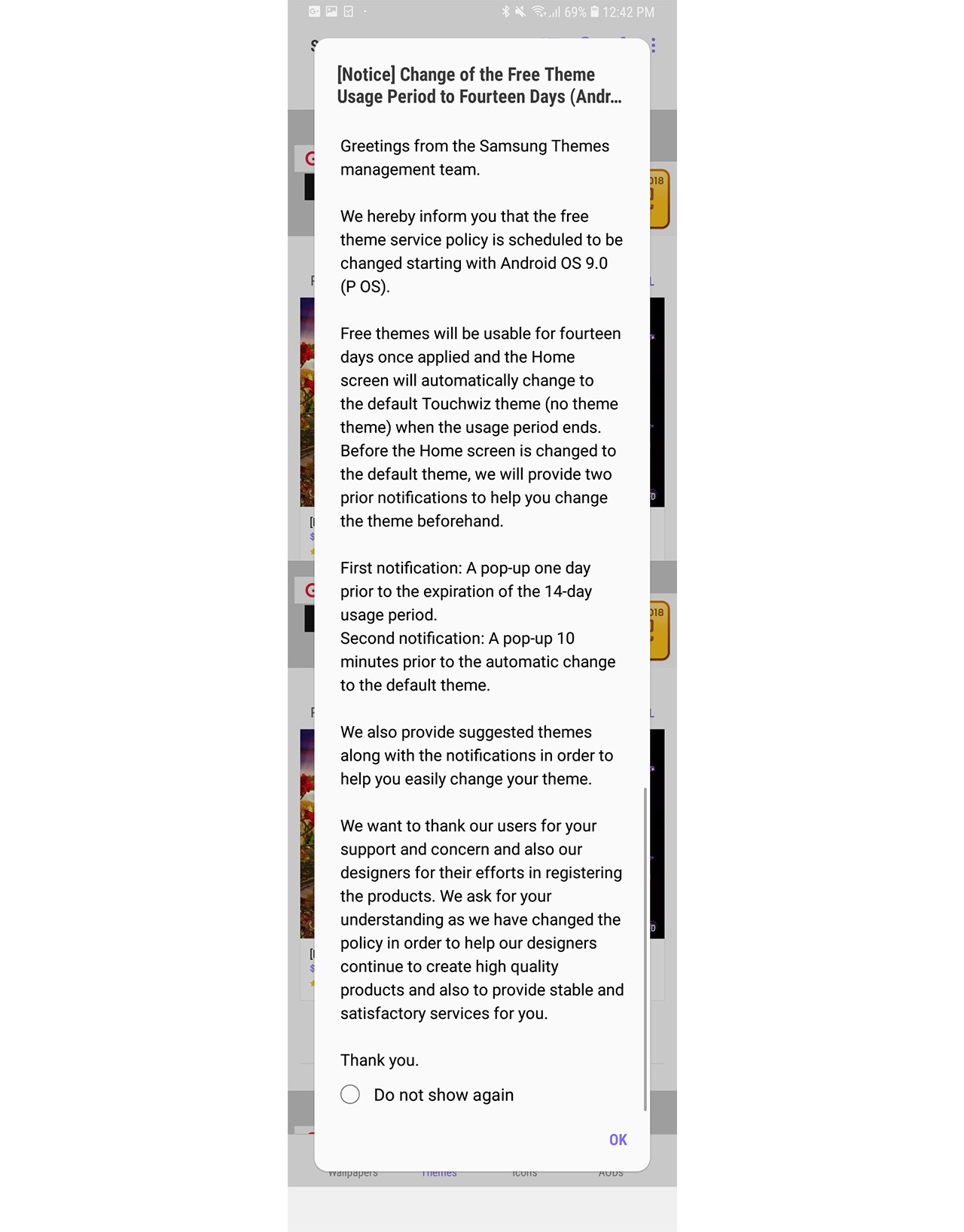
According to a notice that’s been circulating in the Samsung Themes Store, starting in Android 9 Pie, free themes will only work for 14 days.

Samsung Theme Store notification

After that trial period, the theme will revert to Samsung’s default theme — the new One UI in Android Pie.

Samsung says users will receive two notifications before a theme reverts. The first will arrive the day before the theme reverts and will suggest alternative themes. The second notification will come ten minutes before the change.

It’s not entirely clear why Samsung has chosen to do this. It could be an effort of the South Korean company to encourage people to use its One UI, or it could be a way to push more paid theme sales.

Regardless of the reasoning, it’s a frustrating change. Thankfully, users won’t have to deal with it until the new year. Hopefully, that’s enough time for Samsung to change its mind.

Image: 9to5 Google

Source: 9to5 Google

The post Free themes on Samsung devices will reset to default after 14 days on Android Pie appeared first on MobileSyrup.

19 Nov 01:19

The Thunderbird project is hiring: Software Engineers

by Ryan Sipes

We’re Hiring Again!

You read that right, we are hiring “Software Engineers”, plural. We have some big plans for the next year and you can be a part of it!

You can find the job post below. If you are interested Email your CV/Resume and cover letter to: apply@mozillafoundation.org.

About Thunderbird

Thunderbird is an email client depended on daily by 25 million people on three platforms: Windows, Mac and Linux (and other *nix). It was developed under the Mozilla Corporation until 2014 when the project was handed over to the community.

The Thunderbird project is lead by the Thunderbird Council, a group of volunteers from the community who has a strong interest in moving Thunderbird forward. With the help of the Mozilla Foundation, Thunderbird employs about a handful of staff, and is now hiring additional developers to support the volunteer community in making Thunderbird shine.

You will join the team that is leading Thunderbird into a bright future. We are working on increasing the use of web technologies and decreasing dependencies on the internals of the Mozilla platform, to ensure independence and easier maintenance.

The Thunderbird team works openly using public bug trackers and repositories, providing you with a premier chance to show your work to the world.

About the Contract

We need your help to improve and maintain Thunderbird. Moving Thunderbird forward includes replacing/rewriting components to be based primarily on web technologies, reducing the reliance on Mozilla-internal interfaces. It also includes boosting the user experience of the product.

Maintenance involves fixing bugs and regressions, as well as addressing technical debt and enhancing performance. Most tasks have a component of both maintenance and improvement, and any new component needs careful integration with the existing system.

We have compiled a high level list of tasks here; the work assigned to you will include a subset of these items. Let us know in your cover letter where you believe you can make most impact and how.

You will work with community volunteers and other employees around the globe to advance the Thunderbird product and mission of open and secure communications.

This is a remote, hourly 6-month contract with a possibility to extend. Hours will be up to 40 per week.

Your Professional Profile

Since we are looking to fill a few positions, we are interested to hear from both junior and senior candidates who can offer the following:

  • Familiarity with open source development.
  • Solid knowledge and experience developing a large software system.
  • Strong knowledge of JavaScript, HTML and CSS, as well as at least some basic C++ skills.
  • Good debugging skills.
  • Ideally exposure to the Mozilla platform as a voluntary contributor or add-on author with knowledge of XPCOM, XUL, etc.
  • Experience using distributed version control systems (preferably Mercurial).
  • Experience developing software cross-platform applications is a plus.
  • Ability to work with a geographically distributed team and community.
  • A degree in Computer Science would be lovely; real-world experience is essential.

You should be a self-starter. In a large code-base it’s inevitable that you conduct your own research, investigation and debugging, although others in the project will of course share their knowledge.

We expect you to have excellent communication skills and coordinate your work over email, IRC, and Bugzilla as well as video conferencing.

Next Steps

If this position sounds like a good fit for you, please send us your resume and cover letter to apply@mozillafoundation.org.

A cover letter is essential to your application, as we want to know how you’d envision your contributions to the team. Tell us about why you’re passionate about Thunderbird and this position. Also include samples of your work as a programmer, either directly or a link. If you contribute to any open source software, or maintain a blog we’d love to hear about it.

You will be hired as an independent contractor through the Upwork service as a client to the Mozilla Foundation. The Thunderbird Project is separate from the Mozilla Foundation, but the Foundation acts as the project’s fiscal and legal home.

By applying for this job, you are agreeing to have your applications reviewed by Thunderbird contractors and volunteers who are a part of the hiring committee as well as by staff members of the Mozilla Foundation.

Mozilla is an equal opportunity employer. Mozilla and the Thunderbird Project value diversity and do not discriminate based on race, religion, color, national origin, gender, sexual orientation, age, marital status, veteran status, or disability status.

19 Nov 01:16

The Crime Machine

by Nathan Yau

I’m behind on my podcast listening (well, behind in everything tbh), but Reply All covered the flaws of CompStat, a data system originally employed by the NYPD to track crime and hold officers accountable:

But some of these chiefs started to figure out, wait a minute, the person who’s in charge of actually keeping track of the crime in my neighborhood is me. And so if they couldn’t make crime go down, they just would stop reporting crime. And they found all these different ways to do it. You could refuse to take crime reports from victims, you could write down different things than what had actually happened. You could literally just throw paperwork away. And so that guy would survive that CompStat meeting, he’d get his promotion, and then when the next guy showed up, the number that he had to beat was the number that a cheater had set. And so he had to cheat a little bit more.

I sat in on a CompStat meeting years ago in Los Angeles. I went into it excited to see the data system that helped decrease crime, but I left skeptical after hearing the discussions over such small absolute numbers, which in turn made for a lot of fluctuations percentage-wise. Maybe things are different now a decade later, but I’m not surprised that some intentionally and unintentionally gamed the system.

See also: FiveThirtyEight’s CompStat story from 2015.

Tags: crime, discrimination, police, Reply All

19 Nov 01:15

Microsoft has a new light theme for Windows 10 in the works

by Jonathan Lamont
Microsoft Logo on Surface Pro 6

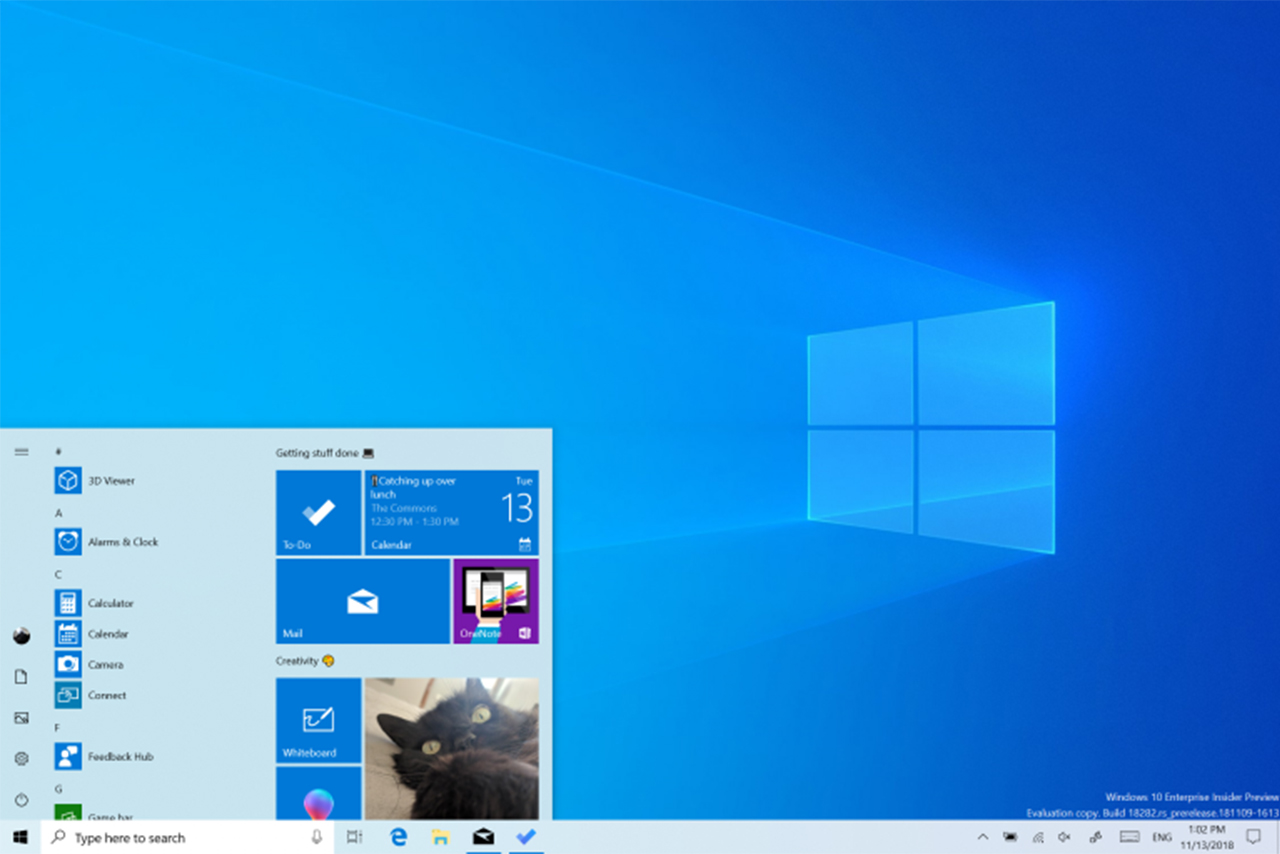
Microsoft is hard at work on features for the next Windows 10 update, including a newly unveiled light theme.

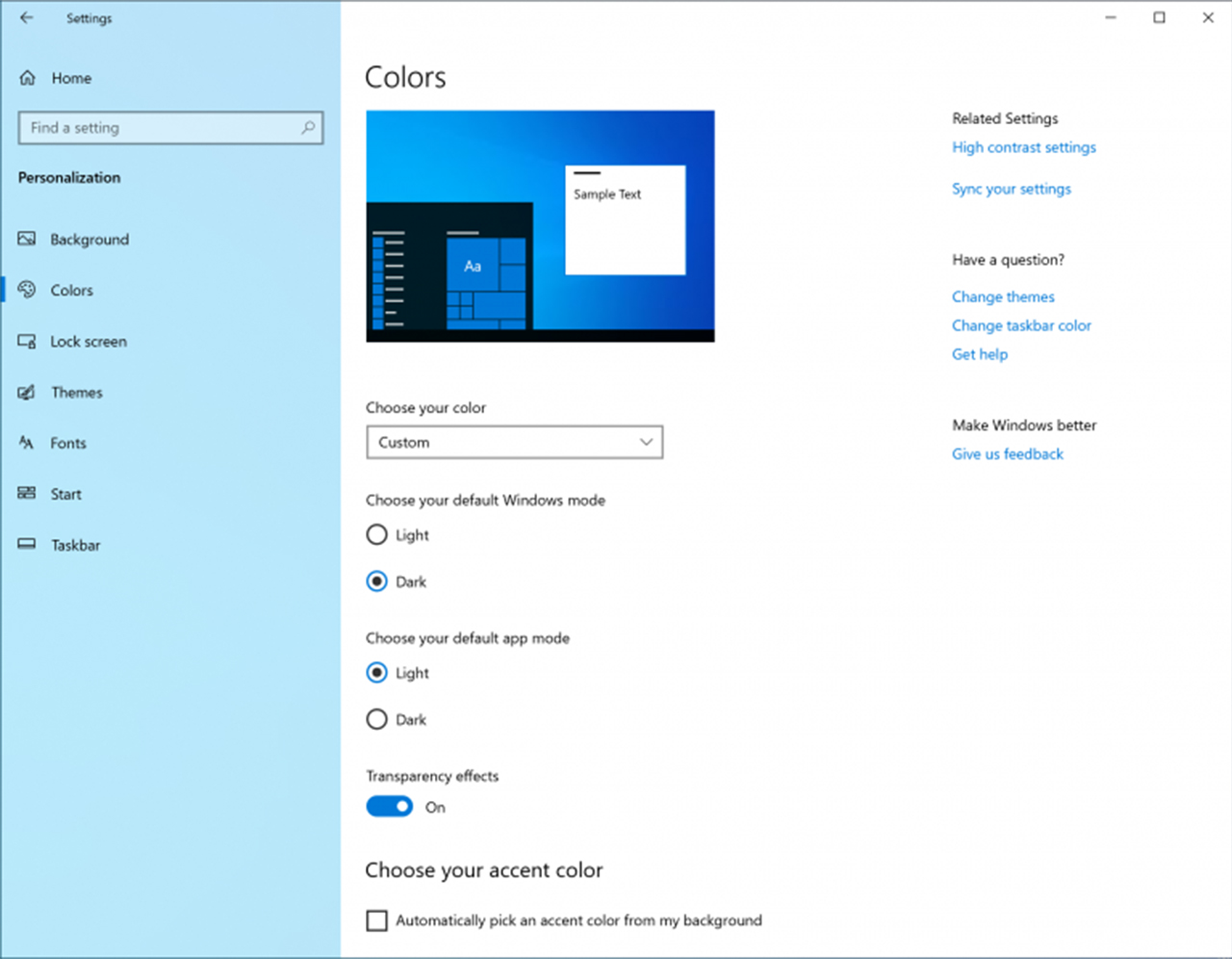
Revealed in a blog post about the new Windows test build, the theme reimagines the current white look, bringing it system-wide. This means that UI elements like the taskbar will also take on a white look, instead of the default black.

Further, Microsoft tweaked the default Windows wallpaper to fit the new white look better.

Windows 10 Light Theme

Users can expect the new look to debut with the next big Windows update, slated for April 2019.

Along with the new light theme, the company’s current test build of the new OS update includes improvements to screenshot and snipping tools, updates to the printing app and more.

Microsoft is also adjusting Windows Update to make it easier for users to delay updates. For one, the company moved its ‘Pause’ option to the update page in Settings so users can easily pause updates for a period.

Windows 10 Personalization Photos

Further, users can now enable ‘Intelligent Active Hours,’ which will allow Windows to adjust the time it can install updates based on your usage.

Overall, it looks like Microsoft is developing some thoughtful new features for the next version of Windows. Even though dark mode is all the rage these days, I like the light theme look and can’t wait to run it on my PC.

What do you think about the light theme? Is it too light? Or is it an excellent balance to the dark theme Windows added?

Source: Microsoft Via: The Verge

The post Microsoft has a new light theme for Windows 10 in the works appeared first on MobileSyrup.

19 Nov 01:14

Replied to Lezersblock by Frank Meeuwsen Fran...

by Ton Zijlstra
Replied to Lezersblock by Frank Meeuwsen
Frank reageert op Elmine's posting over lezersblock met herkenning en "Misschien een tip voor je Elmine? Timeboxed lezen."

Zo’n lezersblock, mooi woord van Elmine, herken ik wel. Vooral als het om non-fictie gaat. Ik heb een stapel papieren non-fictie boeken liggen nog van jaren terug, en een nog veel grotere virtuele stapel e-books, waar ik maar niet toe of doorheen kom.

Voor fictie heb ik dat timeboxing van Frank succesvol toegepast. Twee jaar geleden ongeveer ben ik begonnen met hoe dan ook voor ik ga slapen nog een half uur tot een uur te lezen. Dat zorgt ervoor dat ik gemiddeld een boek per week lees, soms iets sneller bij dunnere werkjes, soms langzamer bij kloeke werken.

Voor non-fictie is die timebox voor het slapen gaan ongeschikt. Dan wil ik geen input die me aan het denken zet. Voor het slapen gaan is een non-fictie boek een soort blauw licht voor me. Ik heb echter nog geen andere timebox kunnen bepalen. Misschien ook wel omdat ik nog niet weet waar ik heen ‘moet’ met alle associaties en ideeën die lezen in de regel bij me oproept. Die niet afgehechte draadjes blijven dan maar onrustig in mijn gedachten ronddwalen, en daar kijk ik niet naar uit. Een paar jaar geleden heb ik daarom heel bewust geen non-fictie boeken gelezen, want er was al veel te veel dat mijn persoonlijk en beroepsmatige aandacht nodig had. Te druk in mijn hoofd voor nog meer input.

Maar daarna is het niet gelukt wel weer te gaan lezen. Ik probeer het o.a. met Blinkist, een app die een soort samenvattingen van boeken geeft in hapklare brokken. Dat is alleen wel een beetje als een Michelin-kok die zijn naam onder vliegtuigmaaltijden zet. Het is niet voedingsloos, maar het geeft geen voldoening, en je hebt erna al snel weer trek. Het helpt me wel om snel door boeken heen te komen die op dat moment ‘de ronde doen’ en waar je een mening over ‘moet’ hebben, zodat ik in ieder geval weet wat de centrale ideeën in zo’n boek zijn. De stapel boeken die ik wil lezen wordt er alleen niet kleiner van.

19 Nov 01:14

Good to hear Protonmail, next to their own encr...

by Ton Zijlstra

Good to hear Protonmail, next to their own encryption, now also supports PGP.

You don’t need encryption you say? Apart from that itself being debatable (after all you do expect encryption for a wide range of your online transactions), think of it as herd immunity. If only those who need encryption to be safe (investigative journalists for instance, or dissidents) use it, that in itself makes them a visible target. The more normal it is to use encryption, the more it helps those whose lives depend on it. Don’t think that is a remote issue. In the EU for instance, journalists do get murdered when investigating corruption and fraud.

19 Nov 01:12

Chip's 26" Choose-Your-Own-Adventure Polyvalent

by noreply@blogger.com (VeloOrange)
by Igor

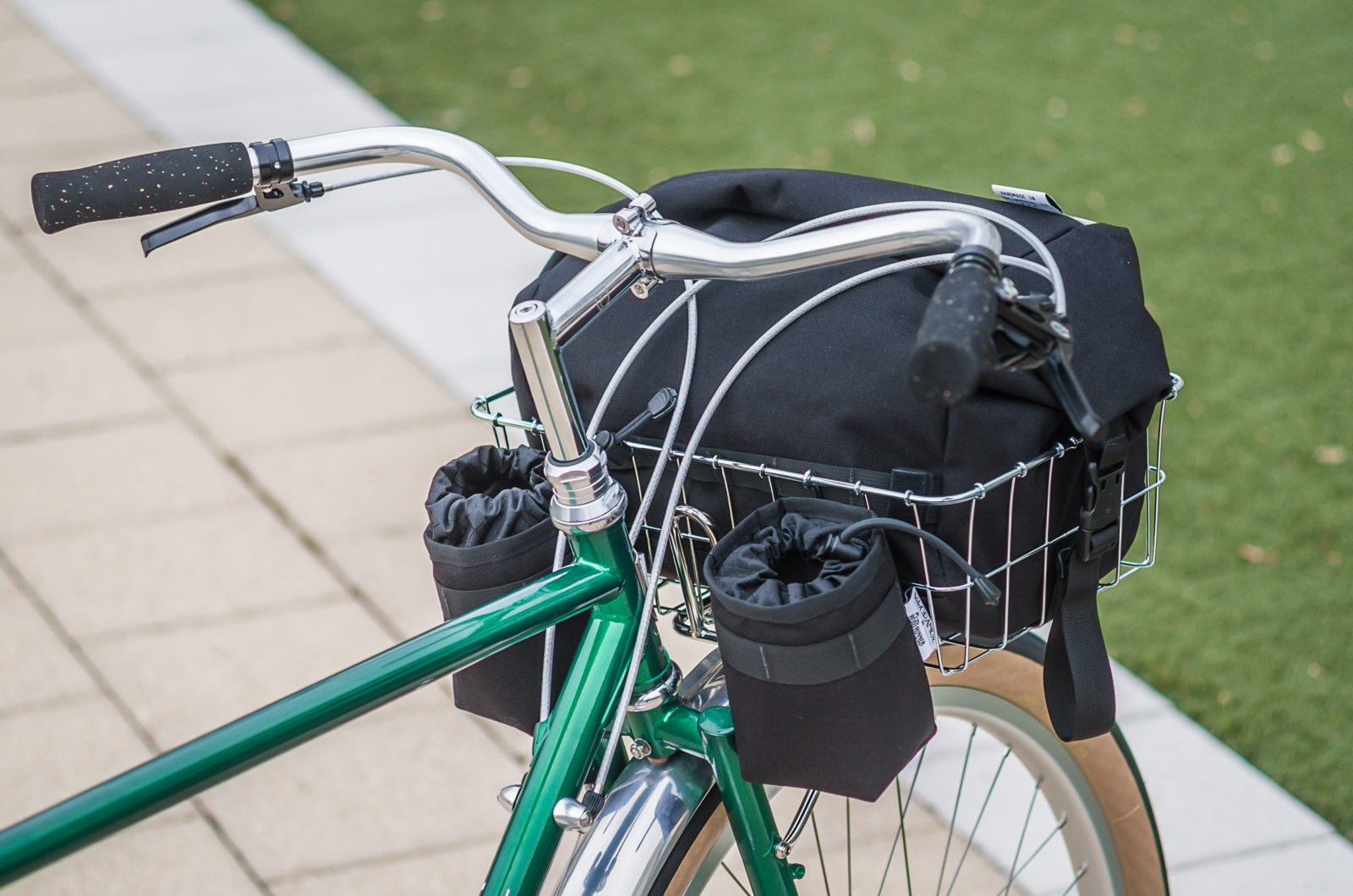
Chip runs this super cool alt and flat handlebar comparison site called Whatbars. So when we started talking about a new, super classy commuter/tourer/whatever-er, the Polyvalent with a nifty cockpit was the logical choice.

After going over builds a few times, we settled on a combo of classic and modern, silver and black. While I tend to go full silver or full black on my builds, I have to say this setup looks really great and rides supremely well. Enjoy!


Wolf Tooth provided a 110bcd narrow-wide, art-deco chainring that pairs quite nicely with our Single Crankset. I would be lying if I didn't take the bike off a few curbs and over the cobbled streets downtown without any dropped chains.


11-42 cassette and a SRAM Apex 11 rear derailleur is a great all-round shifting setup. The derailleur features a very powerful spring and clutch mechanism to ensure shifts are crisp and the chain has proper tension throughout the range. Especially useful when running a 1x drivetrain.


A single leather washer takes care of the rear fender mounting.


Chip opted for a Wald Basket in Silver, Transporteur Bag, and double Snapper Sacks for a water bottle and a compact camera. Or two drinks, or two compact cameras, or two lenses. So many possibilities!


Our new Curvy One Bars have been super popular and for good reason. Great width, perfect hand position, and terrific looks.


Foam Cork Blend Grips, Linear Pull Brake Levers, and SRAM Apex 11 Shifter.


Our Removable Faceplate Quill Stem keeps his cockpit secure and tidy. No shims here!


Mojave Cage for maximum thirst quenching.


External and internal routing. While his current build lacks a front derailleur, I left the non-driveside adjustor in case he wanted to change his setup down the line.


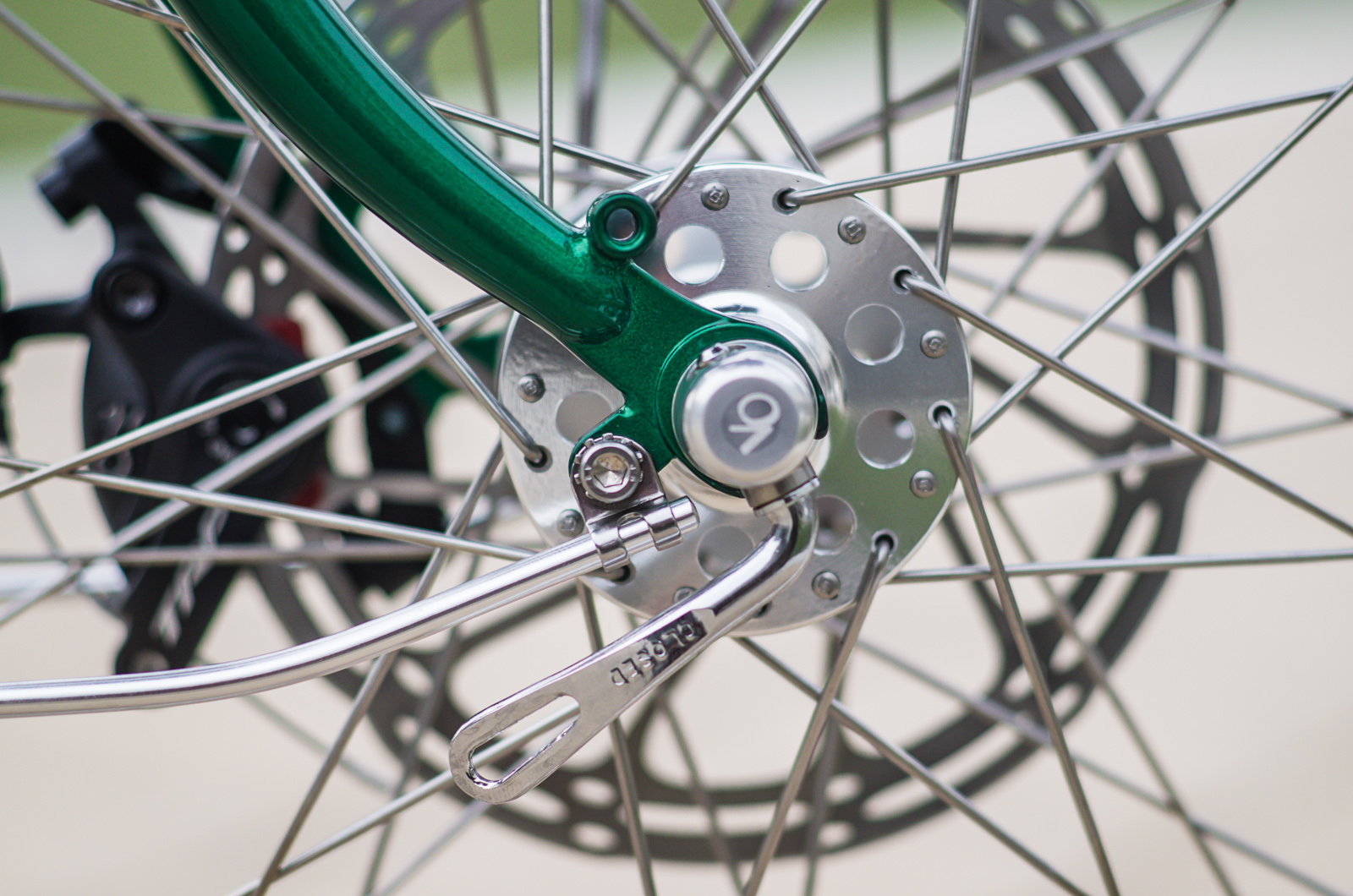
Non-polished Velocity Cliffhanger Rims laced to our Front and Rear Disc Touring Hubs makes a confident and elegant ride.


26" Smooth Fenders keep road muck and mud off his back.


TRP was sold out of Spyre Brakes, so we went with Spykes. That's their mountain variant. They still have an inboard and outboard piston and stop well.


Happy riding, Chip!
19 Nov 01:11

Firefox will start warning people if a website was breached

by Jonathan Lamont
Firefox iOS app

Over the past few months, Mozilla has taken steps to ensure it offers the best privacy and security options in its Firefox browser. The most recent addition to that is ‘Firefox Monitor Notifications.’

Firefox will detect if a website you visited experienced a recent security breach. If it has, the browser will notify you via a small pop-up. The pop-up includes a link to Firefox Monitor. The free web service, which launched in September, scans your email and tells you if you were included in a breach.

Further, the alert will only appear at most once per website. It will also only appear for breaches within the last 12 months. For users who don’t want to see these alerts at all, you can ask Firefox never to show the notification in a drop-down menu on the pop-up.

The Firefox Monitor notifications will begin rolling out to Firefox users over the coming weeks.

Along with the new notification, Mozilla has made its Monitor service more available.

Mozilla has added 26 new languages to Monitor, making it easier than ever for someone to check if they’ve been breached. The new languages include Canadian English, French, German, Traditional and Simplified Chinese, Italian, Russian and many more.

Overall, it’s great to see Mozilla working to improve security for users. The new notification will help keep people informed about breaches and security issues.

Source: Mozilla Via: The Next Web

The post Firefox will start warning people if a website was breached appeared first on MobileSyrup.

19 Nov 01:10

✚ Uses for Animation in Charts and Animating Your Own Data

by Nathan Yau

Important question: Is animation in visualization even worthwhile? Well, it depends. Surprise, surprise. In this issue, I look at animation in data visualization, its uses, and how I like to think about it when I implement moving data. Read More

18 Nov 20:47

Samsung is Going to Start Restricting Free Themes to 14 Day Trials

by Evan Selleck
In (hopefully) the near future, Samsung is going to roll out the Android 9 Pie update to some of its handsets, and when that new software arrives a potentially controversial change will be coming with it. Continue reading →
18 Nov 20:44

New York lights

by Doc Searls

I had a bunch of errands to run today, but also a lot of calls. And, when I finally got up from my desk around 4pm with plans to head out in the car, I found five inches of snow already on the apartment deck. Another five would come after that. So driving was clearly a bad idea.

When I stepped out on the street, I saw it was impossible. Cars were stuck, even on our side street.

So I decided to walk down to the nearest dollar store, a few blocks north on Broadway, which is also downhill in this part of town, to check out the ‘hood and pick up some deck lights to replace the ones that had burned out awhile back.

What I found on Broadway was total gridlock, because too many cars and trucks couldn’t move. Tires all over spun in place, saying “zzzZZZZzzzZZZ.” After I picked up a couple 5-foot lengths of holiday lights for $1 each at the dollar store, I walked back up past the same stuck length of cars and trucks I saw on the way down. A cop car and an ambulance would occasionally fire up their sirens, but it made no difference. Everything was halted.

When I got back, I put the lights on the deck and later shot the scene above. It’s 10pm now, and rains have turned the scene to slush.

I do hope kids got to sled in the snow anyway. Bonus links: Snow difference and Wintry mixing.

18 Nov 20:44

So done with the NFL

I've been an NFL for fan for a long time. It started before university when I rebelled against any sport that was vaguely popular at school (and seemed absolutely terrible). For no other reason than they did well at the time, I became a Washington Redskins fan (yes I'm old).

I started a football team at university, I was involved in it. I even heard Chuck Noll speak once. If there was a Redskins game on TV, I would go up to the local pub in my jersey and watch the game.

Over the last few years I've become pretty upset with what the NFL has become. Well the NFL has always been this way - but I didn't care. I enjoyed the game, the drama, the strategy, the rivalies, and I ignored or excused away all the problems for my own enjoyment.

Finally I realised that I couldn't keep doing this. The problems just kept increasing:

  • The Redskins is a terrible name for a team and is pretty much condemned as a racist. They need to change it, but they won't because the Redskins make lots of money for Daniel Synder (Redskins owner).

  • The treatment of players and the problems with concussions has been terrible. The NFL has swept it under the rug for so long. Yes they've introduced changes, but tried to balance the fundamental problems that constant head contact is part of the game.

  • Cheerleaders.

  • Colin Kapernick.

  • The owners siding with Trump over their players.

  • The NFL is technically taxed as a charity so it isn't a good corporate citizen.

  • The league owners hold regularly hold cities and tax payers to ransom over stadiums.

  • So many adverts.

Daniel Snyder is one such business person and I don't want to support him. I want to be proud of the thing I spend so much time following and I want to be a good example to my daughters. The only way I know how to do that is stop watching the NFL.

It's now over half way through the season, I haven't watched a game, I don't really know what's going. I've unsubscribed from all the football blogs, podcasts and tweets. They were showing the standings on the TV in a pub and it showed that the Redskins are doing quite well this year after years of being crap. But whatever, I don't care.

Perhaps something will change to make me go back, but its not the game being boring, it's the sides that the NFL takes. Somethings got to change.

Footnote: with the exception of the Green Bay Packers who are the only non-profit, community-owned major league professional sports team. Have no cheerleaders, play in all kinds of weather and are just awesome. They haven't solved the problem about treating their players properly or being in a league with other terrible people though.

18 Nov 20:44

The paranoid fantasy behind Brexit | Fintan O'Toole | Politics

mkalus shared this story from The Guardian.

Before the narrative of Len Deighton’s bestselling thriller SS-GB begins, there is a “reproduction” of an authentic-looking rubber-stamped document: “Instrument of Surrender – English Text. Of all British armed forces in United Kingdom of Great Britain and Northern Ireland including all islands.” It is dated 18 February 1941. After ordering the cessation of all hostilities by British forces, it sets down further conditions, including “the British Command to carry out at once, without argument or comment, all further orders that will be issued by the German Command on any subject. Disobedience of orders, or failure to comply with them, will be regarded as a breach of these surrender terms and will be dealt with by the German Command in accordance with the laws and usages of war.”

Written amid the anxieties of Britain’s early membership of the European Communities and published in 1978, Deighton’s thriller sets up two ideas that will become important in the rhetoric of Brexit. Since there is no sense that Deighton has a conscious anti-EU agenda, the idea seems to arise from a deeper structure of feeling in England. One is the fear of the Englishman turning into the “new European”, fitting himself into the structures of German domination. His central character is a harbinger of the “rootless cosmopolitan” who cannot be trusted to uphold English independence and English values, and who therefore functions as the enemy within, the quisling class of pro-Europeans. This is the treason of the elite, the puppet politicians and sleek mandarins who quickly accommodate themselves to the new regime.

Deighton was building on real historical memories of the appeasers whose prewar conduct makes the notion that they would have quickly become collaborators in the event of a defeat to the Nazis highly credible. This idea of a treacherous elite would later ferment into a heady and intoxicating brew of suspicion that the Brexiteers would both dispense to the masses and consume themselves. (In 2014, the BBC announced plans for a five-part TV version, which was screened in 2017, shortly after Brexit.)

The other crucial idea here is the vertiginous fall from “heart of Empire” to “occupied colony”. In the imperial imagination, there are only two states: dominant and submissive, coloniser and colonised. This dualism lingers. If England is not an imperial power, it must be the only other thing it can be: a colony. And, as Deighton successfully demonstrated, this logic can be founded in an alternative English history. The moment of greatest triumph – the defeat of the Nazis – can be reimagined as the moment of greatest humiliation – defeat by the Nazis. The pain of colonisation and defeat can, in the context of uneasy membership of the EU, be imaginatively appropriated. (Boris Johnson, in the Telegraph of 12 November, claimed that “we are on the verge of signing up for something even worse than the current constitutional position. These are the terms that might be enforced on a colony.”)

SS-GB was in part the inspiration for an even more successful English thriller, Robert Harris’s multimillion-selling Fatherland, published in 1992 and filmed for television in 1994. Harris had begun the novel in the mid-1980s but abandoned it. He revived and finished it explicitly in the context of German reunification in 1990 and of fears that the enemy Britain had defeated twice in the 20th century would end the century by dominating it: “If,” Harris wrote in the introduction to the 20th anniversary edition in 2012, “there was one factor that suddenly gave my fantasy of a united Germany a harder edge, it was the news that exactly such an entity was unexpectedly returning to the heart of Europe.”


In retrospect, German reunification is perhaps the greatest missed opportunity for the English finally to have done with the war. Had there been a capacity to generate new narratives of Europe, this could have been shaped as a moment of British vindication – the final working-out of the consequences of nazism. As Anthony Barnett puts it, “the triumph and relief of the unification of Germany could and should have belonged to us in Britain, as well as to Germany itself. It was the final liberation from nazism, the end of that country’s punishment, a time to welcome a great culture back into our arms.”

Why, then, were there no photographs of Margaret Thatcher and Helmut Kohl holding hands at the Brandenburg Gate to match the pictures of Kohl and François Mitterrand at Verdun in 1984? Because Thatcher literally carried in her handbag maps showing German expansion under the Nazis. This was a mental cartography that English conservatism could not transcend – the map of a Europe that may no longer exist in reality, but within which its imagination remains imprisoned. “Europe,” Barnett writes, “moved on from the second world war and Britain didn’t.” One might go so far as to say that England never got over winning the war.

In fact, Britain not only did not move on in 1990 – with the resurrection of a united Germany, it moved back. Harris is no anti-European reactionary and would become one of the most furious critics of Brexit. Yet, like Deighton, he was tapping into profound national anxieties.

The real twist of the knife in Harris’s story is that the novel is set in Germany and the main characters are German. There is nothing of significance to say about England 20 years after its surrender. Except, that is, that is part of a European Union: “In the west, 12 nations – Portugal, Spain, France, Ireland, Great Britain, Belgium, Holland, Italy, Denmark, Norway, Sweden and Finland – had been corralled by Germany, under the Treaty of Rome, into a European trading bloc. German was the official second language in all schools. People drove German cars, listened to German radios, watched German televisions, worked in German-owned factories, moaned about the behaviour of German tourists in German-dominated holiday resorts, while German teams won every international sporting competition except cricket, which only the English played.”

A dystopian fantasy this may be, but in the English reactionary imagination, dystopian fantasy was and is indistinguishable from reality. Rhetorically, it was commonplace among British anti-Europeans that the EU was a continuation in another, more insidious form, of previous attempts at domination from the continent. In 1989, for example, the Bruges Group of anti-European Tories heard Prof Kenneth Minogue of the London School of Economics tell them that “the European institutions were attempting to create a European Union, in the tradition of the mediaeval popes, Charlemagne, Napoleon, the Kaiser and Adolf Hitler”.

The sleight of hand was not subtle: Hitler tried to unite Europe, so does the EU, therefore the EU is a Hitlerian project. But the lack of subtlety did not stop the trope from being used in the Brexit campaign: “Napoleon, Hitler, various people tried this [unifying Europe], and it ends tragically. The EU is an attempt to do this by different methods,” Boris Johnson told the Telegraph on 14 May 2016, a month before the referendum. That Napoleon and “various people” were not the point of the argument became clear in Johnson’s reiteration of the real point: that the EU was “pursuing a similar goal to Hitler in trying to create a powerful superstate”. While Harris was writing Fatherland in 1990, the British secretary of state for trade and industry, Nicholas Ridley, a close friend and ally of the prime minister, Margaret Thatcher, told the Spectator that the European monetary system being introduced by the EU was “all a German racket designed to take over the whole of Europe … I’m not against giving up sovereignty in principle, but not to this lot. You might as well give it to Adolf Hitler, frankly … I’m not sure I wouldn’t rather have the shelters and the chance to fight back than simply being taken over by economics.”

The cover of that issue of the Spectator’s bore the headline “Speaking for England” – a conscious reference to one of the moments of high drama in September 1939 when Leo Amery in the House of Commons invited Labour’s Arthur Greenwood to “Speak for England!”, implying that the appeasing prime minister Neville Chamberlain did not do so.

Ridley’s remarks were dismissed by Lutz Stavenhagen, minister of state in the German foreign office, as the sort of thing that might be heard “in the pub after a football match”. And Ridley himself had to resign. But these were not the mere rantings of a marginal crank. As Peter Jenkins wrote in the Independent at the time, “it is widely supposed that Mrs Thatcher’s heart is with him, if not her head … It is no secret that she, like him, fears that monetary and economic union in Europe will become the tool of German domination rather than the means of containing a united Germany. She too instinctively mistrusts the Germans and finds it impossible to forget the experiences of the second world war.”


Thatcher had the Falklands war. It may have been a last hurrah for Britain’s imperial pretensions, but it functioned even better as a kind of epilogue to the great psychodrama of the second world war and a real-life version of the invasion thrillers. In her victory speech of July 1982, Thatcher was quite explicit in invoking the Falklands as a renaissance of the old wartime spirit, and victory as proof that Britain was no different then from what it had been during its Finest Hour. She chided those who believed that “we could never again be what we were”. The doubters “were wrong. The lesson of the Falklands is that Britain has not changed and that this nation still has those sterling qualities which shine through our history. This generation can match their fathers and grandfathers in ability, in courage, and in resolution. We have not changed. When the demands of war and the dangers to our own people call us to arms – then we British are as we have always been.”

Yet even in this triumphal mode, Thatcher gave new life to the metaphors of retreat and invasion. “We have ceased to be a nation in retreat,” she said, implying that the nation had been precisely that for a long time. “Why,” she asked, “do we have to be invaded before we throw aside our selfish aims and begin to work together … ?”

Within this question is a claim: “we” were invaded. The beauty of the Falklands conflict is that it played out the invasion fantasy of SS-GB – a fascist regime violating the sanctity of the homeland – but at a safe distance of almost 8,000 miles. The tiny population of the Falklands – 1,820 people in 1982 – served as a metaphor for the UK. “British people,” said Thatcher, “had to be threatened by foreign soldiers and British territory invaded and then – why then – the response was incomparable.” What had not happened in 1939–45 had finally happened in 1982.

It helped that the tiny Falklands population that was serving this microcosmic function was almost entirely white – a “British people” that no longer existed – and that this “British territory” was an almost entirely rural landscape. The Falklands was a kind of make-believe England with no black and brown immigrants. Its pre-industrial terrain was a fantasy version of the post-industrial landscape that Thatcher herself was in fact creating at home in England, without the empty steel plants and rusting machines.

It was not just war that was needed to reassure Britain that it had a meaningful collective existence, it was the idea of invasion and submission.

There could be no release from the dark fantasies haunting the imagination of British conservatism, and there would continue to be a need for an imaginary invader and dominator. In 1990, while Germany was being reunified, there was very little depth to anti-German feeling in Britain – surveys at the time showed that most British people were in favour of German unity and trusted the Germans a lot or somewhat. The imagining of a German-dominated Europe through the evocation of Hitler was not an authentic popular prejudice against an old enemy. It was a way – albeit one that still seemed to have few real-world consequences – of thinking about the European Union itself, of summoning it into being as the ghastly ghost, not just of the Nazis, but of Nazis who had in reality won the war.

The war imagery filled a hole. England had no deep imaginative commitment to the European project. As an idea, the EU had a distinctly weak grip on English allegiance. It was always understood by most people as a more or less grudging concession to reality, a matter for resigned acceptance rather than joyous embrace. The popular mood a year after Britain joined was nicely captured by an official at the Department of Trade and Industry, who likened the British public to “a crowd of holidaymakers who, after much doubt and expense, have made a dangerous journey only to find the climate chilly, the hotel not what it was cracked up to be and the food too expensive … bloodthirsty feelings are mounting, not only towards the other nationalities in the hotel but to the courier who got them there.”


The sheer volatility of public opinion in Britain was clear in the 1975 referendum on whether or not to stay in the common market: between January and June 1975, Harold Wilson’s government managed to turn a 57% leave preference in polls to a 67% remain vote on the day. The referendum was “the only really sustained debate the British had ever had on their role in the world” and, as the Daily Express put it, in a jubilant editorial: “Britain’s Yes to Europe” had rung “louder, clearer and more unanimous than any decision in peacetime history”.

Yet a result that seemed both decisive and conclusive proved to be neither – Europe continued to poison British politics. And perhaps one of the reasons it did so is that, as the 1975 referendum campaign showed, there was a very deep underlying division about the meaning of the second world war. The war was – and remains – crucial in structuring English feeling about the European Union. In 1975, many of the leading advocates on both sides were veterans, as were many voters. But instead of this common experience creating a common emotional ideal of Britain’s relationship to Europe, it fed two completely opposite stories, each very deeply felt.

One of these stories was that the catastrophic experience of the first half of the 20th century carried two lessons that must never be forgotten: unrestrained nationalism led to war, and Britain could not stand aside from the fate of Europe. As the historian Robert Saunders has shown, the successful pro-European campaigners in 1975 were both highly explicit and highly emotive in making these connections. For them, “the emphasis was on the horror of war, which had devoured millions of lives in the prosecution of national rivalries. Britain in Europe used the poppy, the flower of remembrance, in its literature, while its logo was a dove of peace.” Pro-Europe posters said “Nationalism kills” and “No more Civil Wars”. Another, published for the anniversary of victory in Europe, directly evoked the joy of that triumph and sought to channel it into a sense that the common market was the great reward for victory: “On VE Day we celebrated the beginnings of peace. Vote Yes to make sure we keep it.” Another poster read simply: “Forty million people died in two European wars this century. Better lose a little sovereignty than a son or daughter.”

These appeals worked for the majority of voters, but this very mention of sovereignty opened up, for a significant minority, a gaping wound. “For some,” wrote Saunders, “the surrender of national sovereignty to the EEC was a betrayal of all those who had fought and died ‘to deliver Europe from Nazi dictatorship’.” A woman from Bournemouth wrote to the anti-EEC Labour minister Barbara Castle that “I … did not fight and suffer a war for six years to be dictated to by the Germans.” “Hitler’s ghost,” wrote another of Castle’s correspondents, “must be shaking with laughter at Roy Jenkins, Hattersley & the rest of the traitor crew.” Some, Saunders writes, “viewed the Community as a new power-grab by Germany, a country which ‘on two occasions … has failed to conquer the British militarily’”. For Castle’s correspondents, the notion “that the GERMANS love us any more today than they did in 1914 & 1939” was dismissed with contempt. “The leopard does not easily change its spots.”

What’s striking is that we can begin to see in this hysterical rhetoric the outlines of two notions that would become crucial to Brexit discourse. One is the comparison of pro-European Brits to quislings, collaborators, appeasers and traitors. The leave campaign in 1975 likened the treaty of accession to the Munich agreement of 1938, remembered as a shameful act of surrender to the Germans. Christopher Frere-Smith, who ran the Get Britain Out campaign, warned repeatedly that accession to the common market marked a “new Munich”, with Ted Heath and Roy Jenkins (who was leading the in campaign) playing the roles of Neville Chamberlain and his foreign secretary Lord Halifax. Voters were warned not be “fooled by the press bosses and the establishment politicians. They were wrong about Hitler and they’re wrong again.”

But the other idea is the fever-dream of an English Resistance, and its weird corollary: a desire to have actually been invaded so that one could – gloriously – resist. And not just resist but, in the ultimate apotheosis of masochism, die. Part of the allure of romantic anti-imperial nationalism is martyrdom. The executed leaders of the Easter Rising in Dublin in 1916, for example, stand as resonant examples of the potency of the myth of blood sacrifice. But in the ironic reversal of zombie imperialism, the appropriation of the imagery of resistance to a former colonising power, this romance of martyrdom is mobilized as defiance of the EU.


In his anguished complaint about the vitiating effects of membership of the common market in 1977, Enoch Powell lamented: “The breath which condemns submission to laws this nation has not made condemns submission to scales of value which this nation had not willed. To both sorts of submission I ascribe the haunting fear, which I am sure I am not alone in feeling, that we, the British, will soon have nothing left to die for. That was not a slip of the tongue. What a man lives for is what a man dies for, because every bit of living is a bit of dying. Patriotism is to have a nation to die for, and to be glad to die for it – all the days of one’s life.” This takes martyrdom to new levels of self-annihilating fantasy: death in the anti-EU resistance is not a fate or even an act. It is a daily pleasure.

The anti-Europe campaign in 1975 very consciously evoked the language of wartime resistance. The Common Market Safeguards Campaign published a newspaper called Resistance News, and the group of MPs around the leading Tory leaver, Neil Marten, was known as the “R” Group – R for resistance. During the war, Marten had been dropped into both France and Norway to work with the resistance movements, so presumably his followers could think of themselves operating behind enemy lines in deepest Dorset. All of this is much more ’Allo, ’Allo! than Army of Shadows – tragedy played out the second time as farce. But, in what would become the camp sitcom of Brexit, that would not diminish its force.

Europe’s role in this weird psychodrama is entirely pre-scripted. It does not greatly matter what the European Union is or what it is doing – its function in the plot is to be a more insidious form of nazism. This is important to grasp, because one of the key arguments in mainstream pro-Brexit political and journalistic discourse would be that Britain had to leave because the Europe it had joined was not the Europe it found itself part of in 2016. In Andrew Gilligan’s formulation on the 40th anniversary of British accession in the Telegraph in 2012, “the British people joined, and were happy to join, a common market. They did not sign up to a social chapter, a single currency or any moves down the road to a superstate.” Or as Boris Johnson put it in September 2017, the “post-imperial future” was “sold to the people purely as a common market, a way of maximising trade”. But “then came the gradual realisation that this was a very different agenda, an attempt not just at economic but political integration of a kind that the British people had never bargained for.” In itself, this is no more than usually mendacious – the truth being that “ever closer union” was always an explicit part of what the British signed up to in 1973 and voted for in 1975.

What matters, though, is the way it misses the point. The idea of Europe as a soft-Nazi superstate was vividly present in 1975, even when the still-emerging EU had a much weaker, less evolved and less intrusive form. The imaginary existential struggle between the gallant English Resistance and the Euroreich was already being played out in one part of English consciousness. It was not a product of the ways in which the nine-member Common Market became the 28-member European Union. It was a product of England’s deeply divided and strangely unsettled relationship to the second world war and what it meant.


Yet what brings these disparate modes together is the lure of self-pity, the weird need to dream England into a state of awful oppression. If we return to Nicholas Ridley’s rant, the striking thing is the way it wishes Britain back into wartime: “I’d rather have the shelters and the chance to fight back.” This suggests that what Britain was experiencing in the 1990s at the hands of the EU was actually worse than the war of 1939–45 in which it triumphed. And what could be worse than winning the war? Only losing it. Ridley’s conjuring of the EU as a “German racket designed to take over the whole of Europe” evokes a worse kind invasion than that in Deighton’s SS-GB: invasion by stealth. The suggestion is that a physical invasion by the Nazis would have been preferable to the membership of the EU which achieved the same ends by more cunning and dishonourable means. At least the Nazis could have been, in Churchill’s great and galvanic rhetoric, fought on the beaches, hills, fields and streets. They offered the “chance to fight back”.

The new German invasion, cloaked in the guise of peaceful cooperation, is more damnable because it does not give the English Resistance a proper physical target. Hostility to the EU thus opens the way to a bizarre logic in which a Nazi invasion would have been, relatively speaking, welcome. This is a deeply strange kind of displacement – a victor learning to think like the vanquished. But it makes a kind of sense. On the one hand, as the white paper on entry to the common market emphasised in 1971, the experience of not being invaded was one of the genuinely distinctive things about being British: “Our physical assets and our economy had suffered less disastrously than those of other western European countries as a result of the war: nor did we suffer the shock of invasion. We were thus less immediately conscious of the need for us to become part of the unity in Europe.”

Yet the paper went on to contrast the fate of Britain since the war with that of the six members of the existing common market, all of whom had been invaded: “The contrast between their experiences in recent years as members of the Communities, and ours outside, when our resources have not been growing sufficiently to do all we should like to do at home and abroad, suggests that they chose the right road … All the Community countries enjoyed rates of growth of gross national product (GNP) per head of population, or of private consumption per head, roughly twice as great as Britain’s.” It was not entirely ridiculous at some subliminal level to see these two things – being invaded and growing twice as fast as the country that wasn’t – as cause and effect. The “right road” to prosperity did not seem to lie through successful self-defence – on the contrary, invasion worked well for the six.

Britain was genuinely in a topsy-turvy situation, the winner that had been surpassed by the losers. Why not draw a topsy-turvy conclusion: in a dark stratum of the reactionary mind, we must think of ourselves as a defeated nation? And if Britain was to be defeated, the EU must be its invasive oppressor. Must be, because there was no other possible candidate. The very absurdity of this notion was its strength. The paranoiac must at some stage ask himself: but why are they out to get me? Since there was no actual evidence of any western European hostility, the answer must lie in some deeply hidden motivation. How could they hate us when we saved them in the war? The proto-Brexiteers came up with a counter-factual truth that was at the same time highly satisfying: they hate us because we saved them.

Since the English mood in relation to joining Europe was largely one of surrendering to necessity, it was not so hard to think of the act as surrender full stop. In the literary journal Encounter’s 1971 symposium on whether the UK should join the common market, for example, Sir William Hayter, warden of New College, Oxford, and former British ambassador to Moscow, looked back on his contribution to its debates almost a decade earlier: “in 1962 I wrote that ‘in a few years we shall have to make an unconditional surrender to get in’. I am afraid those few years have gone by, and now it is not even certain that an unconditional surrender will get us in.” Peter Shore MP, the most persistent Labour party critic of Europe, during the 1975 referendum took up this theme: “What the advocates of membership are saying … is that we are finished as a country; that the long and famous story of the British nation and people has ended; that we are now so weak and powerless that we must accept terms and conditions, penalties and limitations almost as though we had suffered defeat in a war.” It was a masochistic rhetoric that would return in full force as the Brexit negotiations failed to produce the promised miracles.

This is an edited extract from Heroic Failures: Brexit and the Politics of Pain by Fintan O’Toole, published on 22 November by Head of Zeus, and available at guardianbookshop.com

• Follow the Long Read on Twitter at @gdnlongread, or sign up to the long read weekly email here.

… three years ago, we knew we had to try to make The Guardian sustainable by deepening our relationship with our readers. The revenues from our newspaper had diminished and the technologies that connected us with a global audience had moved advertising money away from news organisations. We knew we needed to find a way to keep our journalism open and accessible to everyone, regardless of where they live or what they can afford.

And so, we have an update for you on some good news. Thanks to all the readers who have supported our independent, investigative journalism through contributions, membership or subscriptions, we are starting to overcome the urgent financial situation we were faced with. Today we have been supported by more than a million readers around the world. Our future is starting to look brighter. But we have to maintain and build on that level of support for every year to come, which means we still need to ask for your help.

Ongoing financial support from our readers means we can continue pursuing difficult stories in the challenging times we are living through, when factual reporting has never been more critical. The Guardian is editorially independent – our journalism is free from commercial bias and not influenced by billionaire owners, politicians or shareholders. This is important because it enables us to challenge the powerful and hold them to account. With your support, we can continue bringing The Guardian’s independent journalism to the world.

If everyone who reads our reporting, who likes it, helps to support it, our future would be much more secure. For as little as CA$1, you can support the Guardian – and it only takes a minute. Thank you.


Paypal and credit card
18 Nov 20:39

When I need to fill out webforms I regularly fi...

by Ton Zijlstra

When I need to fill out webforms I regularly fill in nonsense or rants in fields that are not needed for what the form is for. This then ends up in databases, and sometimes comes back to me in surprising ways.

Such as yesterday, when I received this letter. I had to fill in my address some time ago while buying a book (it was a VAT invoice), but also a range of mandatory fields that were completely unnecessary, and some running afoul of the GDPR. Hence this letter addressed to the ‘read the GDPR, this form sucks‘ department of my company 😀

This form sucks

18 Nov 20:39

Federal government issues permanent postal ban on hate speech publication

mkalus shared this story .

A Toronto-based publication widely criticized for disseminating hate speech against minorities, Jews, women and the LGBTQ community has been permanently banned from distribution through Canada Post.

In May of 2016, the federal government issued a temporary order banning Your Ward News from using Canada Post following a number of complaints about its discriminatory content.

A board of review was struck to review the decision; it held 11 public hearings between April of last year and Feb. 2018.

The final report of the review board recommended issuing a final order that would have the effect of prohibiting the publishers — or any agent of the publishers, or any other company publishing Your Ward News under a different name — from distributing hate propaganda through the mail.

"After having carefully considered the recommendations of the independent board of review, I have decided to issue a final prohibitory order that will prevent the delivery of the publication Your Ward News, or any substantially similar material developed by its authors, through Canada Post's unaddressed bulk mail," Carla Qualtrough, the minister responsible for Canada Post, said in a statement.

"My decision is consistent with the applicable legislation and the government's values and stance on inclusiveness and diversity."

Your Ward News publishes quarterly and bills itself as the "world's largest anti-Marxist publication." But it's been widely criticized as a purveyor of hate speech. Its editor and publisher both face charges of wilfully promoting hatred.

The newspaper is the brainchild of editor-in-chief James Sears, who has presented himself on his website as an expert in seduction skills. His licence to practise medicine was revoked after he pleaded guilty to sexually assaulting patients.

Sears and publisher Leroy St. Germaine, 76, were arrested and charged in November 2017 with the wilful promotion of hatred against women and Jews.

'This is totally unacceptable'

It was the first time in Ontario's history that a charge of wilful promotion of hatred against women had been laid, according to the Office of the Attorney General.

"We commend minister Qualtrough for her principled decision," said the Centre for Israel and Jewish Affairs in a statement Thursday.

"Your Ward News promotes disgusting anti-Semitic conspiracy theories, misogyny, homophobia, and racism. Our taxpayer-funded mail service should not be used to distribute such hateful content to hundreds of thousands of households.

"It is shocking that such vile messages are being peddled here in Canada in 2018. Just think about a Holocaust Survivor picking up their mail only to find neo-Nazi propaganda on their doorstep. This is totally unacceptable."

'Hitler Fan Club'

In an editorial posted on the publication's website, Sears vowed to "continue to print and deliver 305,000 copies of our paper using private companies and our volunteer army."

In the same editorial, Sears also said that he will soon restart his monthly "Toronto Real Men" meetings to teach men seduction skills and the secrets of masculinity, and is planning to set up "a clubhouse for my Hitler Fan Club."

Political consultant Warren Kinsella and his wife Lisa started a group called Standing Together Against Mailing Prejudice (STAMP) to pressure Canada Post to halt delivery of the publication. Both said they were pleased with the government's decision Thursday.

"We are delighted and grateful that minister Qualtrough has taken concrete steps to prevent this hateful filth from being delivered to homes in the greater Toronto area and beyond," said Lisa Kinsella in a statement.

18 Nov 20:34

The Best Wired Fast Chargers

by Nick Guy and Sarah Witman
The Best Wired Fast Chargers

Smartphones are capable of charging a lot faster than they could just a few years ago, but you may not know it because some phone makers (mainly Apple) have continued to include slower chargers in the box. If you have a newer iPhone, you’ll need to pick up a third-party USB-C PD unit if you want the fastest possible charging. We spent more than 20 hours testing and researching 14 power banks, wall chargers, and car chargers to find the best fast chargers for home, for car, and even for multiple devices.

18 Nov 20:33

Book of hand-painted ski maps

by Nathan Yau

When you go skiing or snowboarding, you get a map of the mountain that shows the terrain and where you can go. James Niehues is the man behind many of these hand-painted ski maps around the world, and he has a kickstarter to catalog his life’s work.

This is kind of amazing. I went skiing a lot as a kid, and I have distinct memories of these maps. I would stand at the top of the mountain, rip off one of my gloves with my teeth, and then pull out a folded map from a zipped pocket. I never knew they were by the same man, but in retrospect, it makes sense.

Tags: paintings, skiing

18 Nov 19:59

Microsoft will allows developers to compile ARM64 apps on Windows 10

by Jonathan Lamont
Microsoft Logo on Surface Pro 6

Windows on ARM is about to get a lot better thanks to a new move from Microsoft.

The Redmond, Washington-based company will allow developers to create 64-bit ARM (ARM64) apps. Thanks to an update of Microsoft’s Visual Studio 15.9, developers can now recompile existing win32 or Universal Windows Apps to run natively on Windows 10 on ARM hardware.

Ultimately, users should expect an improvement in 64-bit app performance — as along as developers recompile their apps.

Windows on ARM progressed steadily over the past year. Despite the progress, there are still some big issues. Namely, performance and app compatibility. The later should improve with ARM64 support.

Windows 10 also includes an emulation layer for x86 apps that run on ARM processors. Currently, it’s the way you’ll experience most desktop apps on a Windows on ARM machine. Unfortunately, emulation isn’t the best way to do things. If developers recompile their apps to run natively using ARM64, performance will likely increase.

While improving Windows on ARM is great for Microsoft, Intel will be feeling the pressure. As the company wrestles with its 10nm chip technology, competitors are closing the gap.

ARM says its Cortex-A76 chip design will have laptop-level performance that competes with Intel’s Kaby Lake range when it arrives in 2019.

Additionally, Apple’s in-house A12X chip in the iPad Pro is surprisingly competitive, surpassing the Surface Pro 6 with an 8th generation Intel CPU in benchmarks.

Ultimately, it looks like more support for ARM on Windows could lead manufacturers to ditch Intel for other processors from companies like Qualcomm.

Source: Microsoft Via: The Verge

The post Microsoft will allows developers to compile ARM64 apps on Windows 10 appeared first on MobileSyrup.

18 Nov 19:52

The Surrey Decision

by Stephen Rees


IMG_1128

The Mayor’s Council has decided to support the choice of the electors in Surrey who want SkyTrain over LRT. I am not going to get into why that might be, since they are mostly new Mayors (good) and I have no doubt that the strongest instinct for human beings in group situations is don’t be the awkward, difficult critic. Try and find some consensus, or if you prefer, don’t block their favourite project this time as next time they will block yours.

The difference between SkyTrain and LRT is not the technology. The whole point about the Plan was that it was a real effort to try to match transit technology to the desired land use. There was actually a diagram I saw, not so long ago, that showed how buildout of Surrey LRT would see service on all of the major arterials. This would have facilitated building four to six storey apartments over commercial at street level all along the main roads while a mixture of “missing middle” would fill the bits in between. The Light Rail trains would have priority signals at intersections and exclusive right of way – so not streetcars. This produces journey times door-to-door comparable to grade separated – but without the escalators. Stations on LRT are cheap, and can be relatively close to each other. While the train is loading/unloading, the traffic crosses in front of it.

SkyTrain’s main selling point for electors (boomers: older white males) is that they don’t get in the way of the cars. Because the trains are small, and automated, you can build elevated structures (much cheaper than tunnels) along the highway alignments – see Millennium Line, Evergreen Line. Stations are more widely spaced than LRT. That is because to get people up to the platform you have to offer a faster ride for longer distances. Basically SkyTrain endorses sprawl: it makes longer distance commutes tolerable because the train is faster.  The Canada Line, by the way, is not SkyTrain and it isn’t fast. It’s just not as slow as the jammed up traffic on the surface.

SkyTrain does not have a driver. That means instead of running long trains with long gaps between them (like Edmonton) you can run short trains at shorter intervals, like the Millennium Line, as the cost is the same, but the service level much more attractive. Stations are expensive as they have to have elevators and some escalators. Ideally lots of entrances and exits to make transfers convenient (something the Canada Line deliberately ignored to keep the initial capital cost down) as the punters don’t like to have to cross two six laners just to catch their connecting bus which stops far side of the traffic signals and won’t wait for you.

IMG_1132IMG_1131

The development pattern produced by SkyTrain is now most clearly visible at Brentwood. The Lougheed Highway and Willingdon are both wide stroads with fast traffic. The station is surrounded on three sides by high rises. This does not look like a Walkable City. Yes, it is indeed Transit Oriented Development. But it is not at human scale. I used to think that the views made possible by living high up, would compensate for the inconvenience of waiting for the elevator (no one walks up to the 40th floor). But if all you can see out of your windows are the serried windows of the high rise across the street …

That is what the region has now endorsed for Surrey. The population and the overall density won’t be much different, but the point density at transit stations will be very different. But that allows the bits in between to stay something like they are now for longer. So not only do you not have to wait for a streetcar to finish loading, but you can also stay in your present accommodation.  No wonder it appeals to the sort of people who will vote for Doug McCallum.

POSTSCRIPT

Hours after I first posted this opinion piece some new analysis came to my attention from the Georgia Straight 

Written by Stuart Parker it is worth your time

…why Surrey could choose an LRT without sufficient public buy-in for the project and then have that project defeated by a candidate claiming that he could fund a $3-billion asset using $1.6 billion of other people’s money that they had set aside for a different project.

Who is Stuart Parker? “Stuart Parker teaches international studies and history at Simon Fraser University. He ran for Surrey council in 2018 as a member of Proudly Surrey.”

Note also there is a comment by Frank Bucholtz under the article which endorses it.

Towers at Marine Drive Station

High rise towers at Marine Drive Canada Line station


18 Nov 19:52

Apple nimmt bis 8. Januar zurück

by Volker Weber

d324675f341776c76172fe27480bbaf6

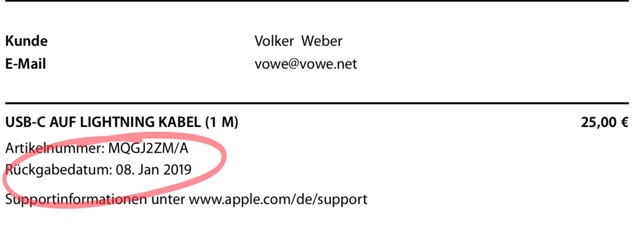
Heute habe ich bei Apple ein kleines Kabel gekauft und die Rechnung hat mich an eine Pressemitteilung der letzten Tage erinnert. Zum Schutz der Weihnachtseinkäufer nimmt Apple alle Artikel bis zum 8. Januar zurück.

18 Nov 19:35

The Future Of Learning? Well, It's Personal

Anya Kamenetz, NPR, Nov 16, 2018
Icon

This NPR article on personal and personalized learning (cast here as two types of personalized learning) has a hard focus on U.S. schools sector issues and voices, which is unfortunate. It also lacks some historical depth, and as a result doesn't explore the application and development of personalized learning and competency-based learning in the military (think: Advanced Distributed Learning) and corporate sectors. And for 'evidence' we get Sal Khan's opinions. "We're all learning about factoring polynomials," he says, "but you're doing it in a context of something that interests you, say soccer.. That's not the type that we focus on. There's not evidence it's effective, and it's hard to implement."  It's a well-written but incomplete article and I have quibbles, at the very least.

Web: [Direct Link] [This Post]
18 Nov 19:17

The End of the Housing Crisis As We Knew It

by Gordon Price

Okay, the headline is clickbait.  The housing crisis is not over.  But its causes are being addressed in a substantive way.

Here’s the latest evidence on the supply side:

This is the first set of housing projects selected through the B.C. government’s $1.9-billion Building B.C.: Community Housing Fund established to construct more than 14,000 affordable rental homes for independent families and seniors.

It’s part of a larger $7 billion commitment by the B.C. government to build 114,000 affordable homes over 10 years.

Were you aware of these announcements in the last few weeks?  Did you think it was ‘a landmark investment’?  That this was an ‘historic’ commitment?  That’s how it was described in the press release.

By the standards of the last two decades, it is – a return to senior-government commitment to fund thousands of new affordable housing units.

Along with the federal government’s National Housing Strategy, Vancouver’s Housing Vancouver Strategy and the new mayor’s commitment of “25,000 new non-profit affordable rental homes over the next ten years”, there will be a continual flow of targeted units, something not seen in quantity since before the mid-1990s.

Will it be enough?  It’s never enough.  Will it be acknowledged without qualification by most housing advocates?  Nope.  (Maybe: ‘it’s a good first step.’)  Will it give hope to those who believe the housing market is now out of reach for lower income people?  Unlikely.  Cynicism is more credible than optimism.  (Which is a pretty cynical thing to say.  See how easy that is.)

It’s not that such announcements like the one above are never reported.  The Sun gave it 14 short paragraphs on a back page, and I assume it was picked up for a day in other media. But then that’s it.  There’s no repetition to the point where it shapes the larger narrative; there’s no perspective on the scale of the intervention – partly because that’s not clearly described but mostly because it’s not believed that anything will.

Advocates for more affordable housing are reluctant, even resistant, to acknowledging progress.  They fear the public and their leaders will then believe the problem has been addressed and withdraw support.  They fear criticism from more radical advocates who will belittle their support as a sell-out.  They see raising the bar as their continuing task, not settling for achievements earned.

The failure to acknowledge unqualified progress, much less success when it actually occurs, can be a dangerous symptom of a society losing confidence in itself.  Cynicism undermines collective institutions, which convinces people that government is so broken and corrupt that it justifies the demolition strategies of opposition-only politics, tribalism and authoritarianism.  (That would have been an overwrought thing to say a few years ago.  Today, not so much.)

See for yourself, PT readers.  You’re informed, and probably respected for your perspective.  Try dropping ‘landmark’ or ‘historic’ or ‘progress’ or ‘success’ in a conversation about the housing crisis. See how tough that is to do, and how sceptical if not contemptuous the response will be.

If acknowledging change on the supply side doesn’t work, then there’s always comment to be made on the demand side. Like this prediction from Michael Alexander three weeks ago:

No-brainer prediction: the price of a Vancouver house or condo will come down, starting tomorrow.

Yesterday, the Bank of Canada increased a key interest rate by 1/4 percent, to a 10-year high. It did this to keep inflation under control. Today, the Big Four banks, RBC, BMO, CIBC and TD Canada Trust, raised their prime rates by the same amount. Effective tomorrow, when you get a bank loan which is linked to the prime rate, that loan will cost you more each month.

As a result, fewer people will be able to qualify for home loans. With fewer buyers in the market, the prices being asked for homes or condos will drop.

What’s the lesson for people looking to buy a home? When interest rates are low, as they have been for a decade, home prices go up. When interest rates go up, home prices come down. So, when you buy a home, you pay the homeowner more and the bank less, or you pay the bank more and the homeowner less.

All the headlines about high home prices in Vancouver never accounted for the fact that borrowed money has been cheap.

By the way, home prices are essentially equally high in every major West Coast city. Let’s stop thinking that Vancouver is some economic island.


18 Nov 19:16

California Wildfires: The Mask We Recommend (But You Should Stay Indoors Instead)

by Kalee Thompson
California Wildfires: The Mask We Recommend (But You Should Stay Indoors Instead)

California’s deadliest and most destructive wildfire season has left millions of people struggling to manage daily life while their cities and towns are shrouded by dangerously smoky air. Hundreds of California schools and businesses closed in the aftermath of the fires—the thinking being that the safest thing people can do when air quality is at a hazardous level is to stay home in rooms with filtered air.

Since the best thing to do is to stay indoors, the most important piece of protective gear for dealing with poor air quality after a wildfire is a home air purifier. We’ve just completed a new round of testing for a rewrite of our guide to the best air purifiers, and we also have some advice specifically on how to use an air purifier to clear your house of wildfire smoke.

If you do need to go outside, you’re probably considering a mask—namely, an N95 or P100 respirator. Municipalities have handed out such particulate respirators in the wake of wildfires, but at least one, Sacramento, has recently had second thoughts, as the masks may do more harm than good, especially if not worn properly (PDF). They may also give people a false sense of security, prompting them to venture outside when it’s far safer to stay in. The EPA’s “Wildfire Smoke: A Guide for Public Health Officials” (PDF) provides more perspective on the benefits and limits of mask use.

In our guide to emergency preparedness supplies and emergency to-go bags, we recommend stocking 3M Aura 9211+ Particulate Respirator masks, which meet the EPA’s recommendations (PDF) for wildfire smoke (look for a NIOSH-approved N95-type or P100-type mask with two straps that secures below the chin). We think the Aura 9211+, a relatively comfortable and flexible N95 mask with a vent that allows you to exhale without fogging glasses, is the best choice of this type, and we like that it comes in packs of 10 since disposable masks like these are generally meant to be used for only about eight hours in dirty conditions.

Note that although there are particle respirator masks sized for kids and sold on Amazon, experts in the US, including at the Environmental Protection Agency (PDF), recommend against using them with children. Respirators obstruct airflow, so while they make the air safer to breathe, they also make it more difficult to breathe, which is riskier when it comes to kids than it is for adults. Although it’s likely difficult and inconvenient, the far better course is to keep children inside and away from hazardous air conditions as much as possible. Because children’s lungs are still growing, they’re especially vulnerable to wildfire smoke and ash, according to the EPA.

To check your local air quality, type your zip code into AirNow, an EPA resource that also provides a national map of current fires and a series of factsheets on preparing for and coping with the effects of wildfire. Your city may designate “clean air sites”—such as libraries, malls, or municipal buildings—when conditions are bad.

Our guides to the best emergency preparedness supplies and emergency to-go bags (also known as bug-out bags or ready bags) are aimed at helping people prepare for all manner of natural disasters. Please add any suggestions for improvement in the comments.

18 Nov 19:16

Crosley is making retro stereos that play cassette tapes

by Brad Bennett

Music hardware manufacturer Crosley has started selling two new tape players designed for retro music enthusiasts.

Crosley makes a wide range of turntables, but the company is most known for making budget-level record players. Each of the new tape players come with one mono speaker, a single-direction tape deck, an AM/FM radio and a mic.

The cheaper CT100 model includes an SD card slot and a USB-A port, allowing users to play music from digital sources. The larger CT200 features knobs for adjusting the treble and bass, as well as a VU meter to help record audio from the mic.

There isn’t much information available the devices yet, but anyone who’s a vaporwave fan, or has a collection of old tapes at home, will likely be excited that a new tape player is hitting the market.

MobileSyrup has reached out to Crosley to find out Canadian availability.

The CT100 costs $60 USD (roughly, $79 CAD) and the CT200 is a little bit more expensive, coming in at $70 USD (roughly, $92 CAD).

Source: TechCrunch

The post Crosley is making retro stereos that play cassette tapes appeared first on MobileSyrup.

18 Nov 19:16

Twitter Favorites: [ddale8] This is cool to me! I wrote in the Post about why I fact-check everything Trump says, what it’s like to do this rid… https://t.co/FDSnHjEvlM

Daniel Dale @ddale8
This is cool to me! I wrote in the Post about why I fact-check everything Trump says, what it’s like to do this rid… twitter.com/i/web/status/1…
18 Nov 18:20

Twitter Favorites: [shawnmicallef] I don't want to be called a hero, but I just unblocked a sewer grate that was covered with leaves. The rushing gutt… https://t.co/mMyORz0kCe

Dysphoric Cinesphere @shawnmicallef
I don't want to be called a hero, but I just unblocked a sewer grate that was covered with leaves. The rushing gutt… twitter.com/i/web/status/1…