I may be having the most boring mid-life crisis that any man has ever had, or I may be opening a whole new chapter of my computing life. I don’t know.
This year, I decided to make a change. I switched from an iPhone X to a Google Pixel 2XL phone, and then switched from a combination of Apple portables - a 12.9” iPad Pro and a 2015 MacBook - to a Google Pixelbook.
This change has been so surprising to some people that I am told that friends are asking friends if I’m psychologically OK. Don’t worry about me - I’m absolutely fine. I thought I would try and get back into longer-form writing by trying to explain my thinking here and see if it’s really what I think.
There is no single reason why I decided to make these changes, and the reasons are different for the phone and the laptop cases. Some have been brewing for a long time and others are more recent. In this post, I’ll concentrate on the phone question and come back to the laptop question later.
The phone story is perhaps simpler, and mostly revolves around price. I had misgivings about the value of the iPhone with the release of the iPhone X and it breaking the £1000 barrier. I wondered if Apple would be able to continue to increase the price of iPhones much more. Still, I ended up with a new iPhone X last December. That deal ran out and I wondered about what to do next.
This year, Apple released iOS 12 and along with that came a feature called Screen Time. In iOS 12 you can look in Settings and find out how much time you spend in particular apps and what you really do with your phone.
I always imagined myself to be a high-end iPhone user. I had all the powerful iOS apps installed: Keynote, Pages, Word, Excel, Ulysses, OmniFocus. Then I turned Screen Time on early in the beta versions and started to watch what I really did with the phone.
It turned out that, consistently, what I did with my phone was exactly this, in order of screen time:
Twitter
iMessage
YouTube
Google Maps
Instagram
Overcast (although Screen Time doesn’t count screen-off time, which would have put Overcast at #1 by a country mile.)
Everything else was typically minutes per day at most. This started to sow a seed of doubt in my mind - why do I have this £1,000 phone to do such, well, basic things?
Then the iPhone XS and XS Max came along. The iPhone Upgrade Program prices in the UK ranged from £51.45 to for the 64GB XS to £73.95 for the 512GB model - this is without any carrier service added. Even the lower-cost XR ran from £41.45 to £48.95.
At the same time as this, I have three children - two of whom are old enough to be phone users now too. I suppose I just started feeling the pinch, imagining how I would be able to fund even infrequent iPhone purchases for three people.
As I was coming to the end of my year on the iPhone Upgrade Programme, I decided to see what life might be like on the other side. I saw a deal for the Google Pixel 2XL phone which was £33/month. I was already paying £18/month on top of my iPhone program costs for carrier service on my iPhone, so this was effectively a brand new flagship Google phone for £15/month.
So one Friday, armed with my Screen Time data and the knowledge that all but one of my most-used iPhone apps were also available for Android, I just took the leap and signed on for a 2 year plan on the Pixel 2XL.
My expectation was that I would find it almost entirely fine but that I would eventually come across something that I really hated about it. So far, that honestly hasn’t happened.
I’m aware that I’m still using Android with a heavy iOS accent. My launcher is organised to be mostly like an iPhone; I can’t stop opening Chrome before starting a search and I cannot swipe-to-type for all the tea in China. I have no clue about home screen widgets. However, I’m getting used to it and I’m as productive as I need to be on a phone.
Like many others, I thought that the loss of iMessage would have been a serious limitation. It simply hasn’t been. I never cared about iMessage stickers or apps and it turns out that, in Europe at least, almost literally everyone is also on WhatsApp. Chats with some American friends have moved to Twitter DMs as WhatsApp doesn’t seem to be so big over there.
I replaced Overcast with Pocket Casts. I still liked Overcast better but Pocket Casts is honestly fine. I replaced OmniFocus with Todoist. Honestly, I was doing a terrible job of my GTD system in the six months before the switch, so there was practically nothing that had to be moved over there.
Virtually every app that I used on my iPhone also exists on the Android side of the house and they’re all virtually identical - not just at the feature level but almost down to the pixel level. It’s interesting that so much of Google’s Material Design influence had rubbed off on iOS apps - particularly Google’s apps but others too - that the shift from iOS to Android hardly even looks different in many apps.
One thing that is very alien, but very interesting as an iOS user, has been watching the various parts of Google update their Android apps on a rolling basis. As Apple users we are used to watching WWDC with the hopeful expectation that whatever part of iOS or macOS that you particularly care about will get its moment in the sun this year.
Unfortunately, several parts of the Apple ecosystem seem to go years and years without being significantly improved. Look at Mail, Calendar, Contacts and even Safari. They’ve had virtually no engineering resources devoted to new user-level features in multiple years now. At the same time, though, I watch the updates rolling through on this Android phone and I see the Contacts app getting an update, the Calendar and Gmail apps getting regular feature improvements. Even the Camera app just delivered this incredible new Night Shot feature in an overnight update.
Maybe I’m just old and boring now. Maybe I just want to clear my inbox and go home earlier and maybe I don’t want to do any of this in an Augmented Reality battle-scape. This is what I want now - I want my email to help me go on a trip. I want the lock screen of my phone to surface useful and timely information. I love being able to just quickly and precisely search my email on my phone.
I also like that it came with a rapid charger in the box. The physical design of the phone is fine to me. It’s another black rectangle. The placement of the fingerprint sensor on the back is weird to an iPhone user but it works OK - although it’s much less forgiving than Touch ID ever was. The only thing I really don’t like about the physical design of the phone is that the only shortcut to launching the camera when the phone is locked is to double-press the power button. The button is small and narrow and I find it very difficult to do the double-press accurately and fast enough for the OS to recognise it.
Honestly, the switch from iOS to Android has been fine. Much, much easier than I expected and far more interesting. The iOS 12 team should take great heart - I am spending much less time on my iPhone since I started using it!
A few weeks ago, after trying out the iPhone XR in store and realizing I had pretty much no other option, I went out and got an iPhone XS. After a few weeks, if I were to summarize my experience in a word, I would call it… excessive.
An Upgrade?
The XS replaced a long-lived iPhone 6 that had its battery replaced a while back. However, even with a fresh battery the phone was getting too slow and hard to use on a daily basis.
Launching Outlook (or OneNote, or just about anything else non-trivial, even Twitter) would take 3-10s, taking calls would sometimes lead to awkward pauses as the display caught up with what was actually going on, and battery life would be sub-par whenever I listened to podcasts on my commute, since Overcast‘s audio processing could easily wipe out up to 10% battery life in an hour.
iOS 12 massively improved performance, but on the other hand power management became an issue again. Even with nearly every single form of background processing turned off (including Screen Time), the phone would either last me half a day or just barely past dinnertime, with any significant app usage taking its toll.
It also bears mentioning that battery life on Altice Portugal’s absolutely crummy mobile network (which drops calls everywhere, has lousy throughput and does not filter unsolicited inbound traffic to devices1) is usually terrible, but I mitigated that by setting the phone to 3G mode.
The XS, in comparison, has excellent battery life (for now) and is (occasionally) terrifyingly fast, so on that count it was indeed an upgrade.
Even considering the iPhone 6 ran the latest iOS version, niceties like tap-to-wake and hardware support for the Siri wake word blunted some of the edge off the Samsung S8 I have to carry for work, and I was able to go back to using the apps I needed to on my personal phone.
But there was so much else involved in the transition…
Why Not The XR?
Given that Apple doesn’t do AppleCare+ in Portugal (we still don’t have official Apple stores in 2018…), splurging on such an expensive piece of personal gadgetry is a bit risky.
Being the thrifty kind, I spent a couple of evenings mulling the risks and making a mental list of everything else I could have bought instead, and I’m still not completely at ease…
I was certainly overdue for an upgrade and was originally considering the XR, but my experience handling one was, in a word, lousy. The (caseless) size and weight were a major turn-off, and even though I had zero issues with the display and the (nominally) inferior camera, the form factor completely killed it for me (like I wrote earlier, the 6 was already too big for my taste, and the 5 was the perfect size).
There’s also the old adage about never buying the first revision of an Apple product (and, anectodally, the store attendant said the XR wasn’t selling anywhere as well as the XS/XS Max), but in this case I was more than willing to overlook that–if the thing didn’t look and handle like a Chicco phone.
I suspect I will come to envy the XR’s extended battery life, and if there is one extra I am planning to buy, it is a battery case for travel, which I hope Apple has plans for (I used one with my iPhone 6, and getting an XS-sized one is a no-brainer given the time I spend on the move).
Form Factor
Compared to the iPhone 6 it is replacing, the XS feels slightly larger than the 6 with a leather case (which I prefer, since in my case it weathered well and provided a very nice grip), but add its own leather case and it quickly becomes just a little too wide to use with one hand.
And the crux of the matter here is the size, not just the weight. I would say that the XR (without a case) feels harder to handle, but not noticeably larger–but I would never use a glass-backed iPhone without a case, and in the XR’s case, the use of nominally worse glass was also another factor against it.
I can use the phone single-handedly without qualms while sitting down, but when standing or moving handling the phone that way is hard and feels a tad hazardous.
It annoys me considerably that all of Apple’s modern phones are too big for comfort, and even if the XS falls into the lower end of the spectrum, it is still too big to hold and use comfortably at length given the way the UI has failed to keep up with the new screen sizes.
I have had to enable Reachability to be able to use it at all (even two-handed, it is too big for me to thumb up and tap to use the ridiculously tiny “back” indicator on the top left to return to the previous app or to tap the URL bar2), and with the case on, taking calls on it feels like bringing a leather slipper to my ear (without the olfactory overhead).
Screen
I like the size and resolution, loathe the notch, and find it more tolerable than the Samsung S8’s oversaturated tones until True Tone kicks in.
Then I just hate the color shifts it introduces when looking at photos, although to be fair it’s likely to be a matter of habit, and it does look slightly more natural than other devices when both Night Shift and True Tone are on.
The gesture interface is a no-brainer when you’ve been using the iPad equivalents for a while, but 3D Touch is… annoying enough for its own section.
3D Touch
3D touch isn’t new to me, but I didn’t have it on the 6, and so far it has been more of a hindrance than help for daily tasks since long presses for flagging items, popping up context menus or quick actions like copying text suddenly became inconsistent and hard to discover once I switched over to the XS.
Reeder, Twitter and other apps that use 3D Touch for “diving” into content became a minefield, and the only place where it improved the experience was GarageBand (which I appreciate, but is hardly significant in the greater scheme of things).
I’d much rather long presses were standardized across all iOS devices, really. Deprecating the increasingly archaic long press to delete apps would be a nice start, and be a lot easier for everybody…
In Your Face
Face ID is, in a word, fine.
I don’t like it because I (still) prefer Touch ID for explicit authentication (the power button double click to confirm purchases in the App Store doesn’t cut it for me), but having notification previews expand when it recognizes me is a nice touch.
I’ve had to train an alternate appearance already for unlocking my phone in the mornings without my glasses on, and it’s failed on me a few times in direct sunlight (even the relatively dim Autumn variety we’ve had recently), so no, it’s not perfect.
The Camera
I have taken an exact total of two portrait mode photos, and find the feature uninspiring and gimmicky because I see every bit of the fudged edges on the fake bokeh (and miss the real thing).
I have Halide as my “go-to” camera (which makes me resent Android‘s ability to set third-party apps for common tasks) and have taken a few excellent photos with it, so I can confirm the dual camera system is indeed a substantial improvement over the iPhone 6’s.
But in the intervening weeks I still took more photos with the Samsung S8 than with my iPhone simply because (again) the XS is still too awkward to handle comfortably.
Let this sink in: Even though both devices are about the same size, I can take my Samsung S8 (which I am not a fan of, on the contrary) out of a jacket pocket, unfold its folio cover, hold it securely and frame a shot single handedly, while in comparison getting the XS out of a pants pocket is, at best, fiddly, and at worst, nearly impossible–such as when sitting in a car.
I have as yet to figure out a way to fit HEIF and HEVC formats into my photo triage and archiving workflow, and expect to overhaul a few of my scripts within a few weeks. In the meantime, I find Live Photos intriguing, but not terribly useful since I haven’t yet taken enough for the advantages to matter.
The Lightning Connector
I’m a bit annoyed at this year’s phones not having switched to USB-C. Not because it’s a pressing need (after all, I still have plenty of Lightning cables and other Apple hardware around the house), but because I would very much like to stop treating my phone like a special snowflake and carry less cables around with me.
For all of Apple‘s “courage”, they show remarkably little of it sometimes.
As to alternatives, the promise of Qi wireless charging is interesting, but I never charged my Samsung wirelessly given that other than airport lounges, public charging spots are thin on the ground.
The IKEA desk lamp I picked up this weekend has a Qi charger, but I expect to get more mileage out of the USB plug on it.
I do, however, expect to get a lot of mileage out of this phone…
I had that feature active when I worked at SAPO a few years back, and battery life was vastly superior. But nothing beats Vodafone Portugal’s network, though… Shame I can’t use it for work. ↩︎
I fully expect all essential iOS navigation to gravitate to the bottom of the screen and match Android’s within a couple of years. ↩︎
This post has an in-depth comparison of using a smart phone vs. using a bike computer to record bike rides. Compare the pros and cons, so you can decide for yourself which will work better for you.
Frank writes about how the Netherlands became the first connection outside the USA on the open net by the NSF (as opposed to the military initiated ARPANET academic institutions used then), thirty years ago yesterday on November 17th 1988. Two years previously .nl had been created as the first ever country top level domain. This was the result of the work and specifically the excellent personal connections to their US counterparts of people at the Amsterdam CWI, the center for mathematics. Because of those personal connections the Netherlands was connected very early on to the open internet and still is a major hub. Through that first connection Europe got connected as well, as the CWI was part of the European network of academic institutions EUnet. A large chunk of the European internet traffic still runs through the Netherlands as a consequence.
I went to university in the summer of 1988 and had the opportunity to early on enjoy the fruits of the CWI’s work. From the start I became active in the student association Scintilla at my electronic engineering department at University of Twente. Electronic engineering students had an advantage when it came to access to electronics and personal computers and as a consequence we had very early connectivity. As first year student I was chairman of one of Scintilla’s many committees and in that role I voted in late ’88 / early ’89 to spend 2500 guilders (a huge sum in my mind then) for cables and plugs and 3 ethernet cards for the PC’s we had in use. I remember how on the 10th floor of the department building other members were very carefully connecting the PC’s to each other. It was the first LAN on campus not run by the University itself nor connected to the mainframe computing center. Soon after, that LAN was connected to the internet.
In my mind I’ve been online regularly since late 1989, through Scintilla’s network connections. I remember there was an argument with the faculty because we had started using a subdomain directly of the university, not as a subdomain of the faculty’s own subdomain. We couldn’t, because they hadn’t even activated their subdomain yet. So we waited for them to get moving, under threat of losing funding if we didn’t comply. Most certainly I’ve been online on a daily basis since the moment I joined the Scintilla board in 1990 which by then had moved to the basement of the electronics department building. We at first shared one e-mail address, before running our own mail server. I used telnet a lot, and spent an entire summer, it must have been the summer of ’91 when I was a board member, chatting to two other students who had a summer job as sysadmin at the computer center of a Texas university. The prime perk of that job was they could sit in air conditioning all summer, and play around with the internet connection. Usenet of course. Later Gopher menus, then 25 years ago the web browser came along (which I first didn’t understand as a major change, after all I already had all the connectivity I wanted).
So of those 30 years of open internet in the Netherlands, I’ve been online daily 28 years for certain, and probably a year longer with every-now-and-then connectivity. First from the basement at university, then phoning into the university from home, then (from late ’96) having a fixed IP address through a private ISP (which meant I could run my own server, which was reachable when I phoned into the ISP), until the luxury we have now of a fiber optic cable into our house, delivering a 500Mbit/s two-way connection (we had a 1Gb connection before the move last year, so we actually took a step ‘backwards’).
Having had daily internet access for 28 years, basically all of my adult life, has shaped both my professional and personal life tremendously. Professionally, as none of my past jobs nor my current work would have been possible without internet. None of my work in the past decades would have even existed without internet. My very first paid job was setting up international data transmissions between an electronics provider, their factories, as well as the retail chains that sold their stuff. Personally it has been similar. Most of my every day exchanges are with people from all over the world, and the inspiring mix of people I may call friends and that for instance come to our birthday unconferences I first met online. Nancy White‘s husband and neighbours call them/us her ‘imaginary friends’. Many of our friends are from that ‘imaginary’ source, and over the years we met at conferences, visited each others houses, and keep in regular touch. It never ceases to amaze.
To me the internet was always a network first, and technology second. The key affordance of the internet to me is not exchanging data or connecting computer systems, but connecting people. That the internet in its design principles is a distributed network, and rather closely resembles how human networks are shaped, is something we haven’t leveraged to its full potential yet by far. Centralised services, like the current web silos, don’t embrace that fundamental aspect of internet other than at the hardware level, so I tend to see them as growths more than actualisation of the internets’s foremost affordance. We’ve yet to really embrace what human digital networks may achieve.
Because of that perspective, seeing the digital network as a human network, I am mightily pleased that the reason I have been able to be digitally connected online for almost 30 years, is first and foremost because of a human connection. The connection between Piet Beertema at CWI in Amsterdam to Rick Adams at NSF in the USA, which resulted in the Netherlands coming online right when I started university. That human connection, between two people I’ve never met nor interacted with, essentially shaped the space in which my life is taking its course, which is a rather amazing thought.
Karen Quinn Fung | 馮皓珍@counti8
First Cantonese class in the bag! Biggest thing for me was really about “how to be a student” - how to use a romani… twitter.com/i/web/status/1…
Mozilla took the next step today in the fight to defend the web and consumers from the FCC’s attack on an open internet. Together with other petitioners, Mozilla filed our reply brief in our case challenging the FCC’s elimination of critical net neutrality protections that require internet providers to treat all online traffic equally.
The fight for net neutrality, while not a new one, is an important one. We filed this case because we believe that the internet works best when people control for themselves what they see and do online.
The FCC’s removal of net neutrality rules is not only bad for consumers, it is also unlawful. The protections in place were the product of years of deliberation and careful fact-finding that proved the need to protect consumers, who often have little or no choice of internet provider. The FCC is simply not permitted to arbitrarily change its mind about those protections based on little or no evidence. It is also not permitted to ignore its duty to promote competition and protect the public interest. And yet, the FCC’s dismantling of the net neutrality rules unlawfully removes long standing rules that have ensured the internet provides a voice for everyone.
Meanwhile, the FCC’s defenses of its actions and the supporting arguments of large cable and telco company ISPs, who have come to the FCC’s aid, are misguided at best. They mischaracterize the internet’s technical structure as well as the FCC’s mandate to advance internet access, and they ignore clear evidence that there is little competition among ISPs. They repeatedly contradict themselves and have even introduced new justifications not outlined in the FCC’s original decision to repeal net neutrality protections.
Nothing we have seen from the FCC since this case began has changed our mind. Our belief in this action remains as strong as it was when its plan to undo net neutrality protections last year was first met with outcry from consumers, small businesses and advocates across the country.
We will continue to do all that we can to support an open and vibrant internet that is a resource accessible to all. We look forward to making our arguments directly before the D.C. Court of Appeals and the public. FCC, we’ll see you in court on February 1.
Slowing down can help one see the previously unseen. This is as much a philosophical as a practical observation. In many ways, the two seem dependent: by allowing oneself the time to observe in leisurely detail, one is making a choice to think at a different pace and potentially towards a different meaning.
Improvements in smartphone image processors provide the ability to examine the world in slower ways. Sony’s 2017 flagship model – the XZ Premium – was one of the first capable of recording video at 960 frames per second (fps) in 1280 x 720 pixel resolution (720p). Apple’s iPhone X and XS record 240fps, but at a higher resolution of 1920 x 1080 (1080p). Sony’s offering places it among even the most capable standalone cameras, although still falling short of specialist, professional rigs which can record tens of thousands of frames per second.
I’ve personally been experimenting with the Blackberry Keyone’s more rudimentary 60 frames per second at 1080p. This has been sufficient to reveal things I hadn’t noticed before, particularly about the movement of water. I’ve been inspired by just how mesmerising ripples and waves look in slow motion.
Google’s Photos app, which serves as the image gallery on the Keyone, applies a particularly effective treatment, where one can adjust which segments of the video are slowed after capture. This creates an arresting contrast of watching, say, a sailing boat moving through the waves at normal speed, then slowing it down to an exaggerated and considered pace for closer examination.
However, while the product of these endeavours is imbued with a sense of calm and an implicit invitation towards slower contemplation, the act of creating them remains more hectic.
As of November 2018, most smartphones with slow motion capabilities still require users to actively select this mode before shooting video. This can feel like a pressured choice in the moment: which mode do I need? Am I willing to sacrifice resolution and sound for the slow motion? These decisions have to be made in advance, as relatively little can be adjusted after the act. Slower observation is all very well, but does it defeat the purpose if one is rushed in the creative process?
It is tempting to regard these developments as simply incremental improvements, just as the quality of still photos captured by smartphones gets a little better each year. I wonder if we’re reaching a tipping point though, where a better user experience of capturing in slow motion combines with higher resolution and frame rates to make this new lens on the world common place. It is already a mass market behaviour to rely on smartphone cameras for documentation – from taking copies of paper receipts to making visual notes – and it is not a huge leap of imagination to believe slow motion could become similarly widespread.
Part of MEX Inspirations, an ongoing series exploring tangents and their relationship to better experience design.
Because there are so many electronic devices on the market, you can easily find yourself lugging around a bunch of cables at once.
With that in mind, New York-based manufacturer 49101 Electronics has come up with the Changer, an Indiegogo-backed device that’s part-phone charger and part-headphone pair.
When listening to music, the Changer can function as a pair of Bluetooth earbuds that have a battery life of up to 12 hours, according to 49101. Later, when you need to charge your phone, you can snap the actual headphone bits off to reveal Lightning, microUSB and USB-C connectors. The cable can be plugged into the wall, a power bank or into another device like a phone to share a charge (as well as transmit data).
49101 stresses that this dual-functionality doesn’t come at the cost of the headphone or charging quality, though. The company says the headphones have been awarded “Japanese Hi-res certification” and are IPX5 waterproof. The charging components, meanwhile, are “high-speed” and have 500H standby, according to 49101.
The Changer is available in ‘Sparkling Black,’ ‘Passion Red’ and ‘Champagne Gold’ on Indiegogo. Currently, you can snag the Changer at the early bird price of $88 USD (about $116 CAD), with a $9 shipping cost added to Canadian orders.
Verdict: Sticky
This seems like a solid solution for someone who wants to lighten their cable load. Beyond the usual crowdfunding issues that can arise, I’m a bit skeptical that 49101 will be able to meet its $20,000 goal, seeing as how only about $1,250 has been raised at the time of writing. Assuming that all pans out, though, then this could end up being a really neat product.
We get asked this quite a lot — “So, what’s the difference between Pixelmator and Pixelmator Pro? I already have Pixelmator, why should I switch?” We don’t think a comparison table is the best way to explain the difference, but since it’s a pretty common question, we thought we should take the time to answer it.
Vanlife. Illustration by Justine Shirin, created using Pixelmator Pro.
Same idea, new approach
Possibly the most important thing to start with is not a difference, but a similarity. The idea inspiring Pixelmator Pro is exactly the same as the idea behind the original Pixelmator. Making powerful but complex pro image editing tools easy to use and accessible to everyone. Even your grandparents. Pixelmator Pro is not a ‘professional’ version and Pixelmator is not an ‘entry-level’ version. Both apps are focused around time-tested image editing tools (and some innovative new ones).
So if both apps are inspired by the same kind of thinking (the Pixelmator philosophy), how come they’re different? With Pixelmator Pro, we wanted to be more true to ourselves and more trusting of our own intuition instead of relying on established approaches. Pixelmator Pro is the realization of that vision — a new approach to the same idea.
The future of Pixelmator
The original Pixelmator has been in development for almost 12 years. While it’s a fantastic image editing app, without a complete rewrite, we’d be much more constrained about the new features we could bring to it. In software development, you sometimes reach a point where you have to start from scratch to make sure you’re equipped to face the future. We now know a lot more than we did when we started and we put that knowledge to good use with Pixelmator Pro. It has a very solid foundation on which we can build without reaching roadblocks. So another difference between the two apps is that Pixelmator Pro is the new Pixelmator and most certainly the future.
Features, features, features
Alright, that touched upon some theoretical things and a little bit of history, but the most important things are features, right? So what’s actually new in Pixelmator Pro? Well, one thing that’s changed is everything (ha ha). Everything has been rewritten from scratch to be faster and work more reliably. You won’t notice that in the screenshots, but it’ll become immediately obvious once you start using the app.
As for actual features, all the things mentioned below are new to Pixelmator Pro.
Pixelmator Pro has a completely new design — it has a single-window, fully Mac-native interface. Layers are now on the left, tools on the right, and the overall workflow is much more user-centered. We’ve also added a beautiful light appearance, which was an often-requested feature with the original Pixelmator. There are smaller (but equally awesome) things as well, like the ability to completely hide the interface, intelligent auto-centering (and the ability to scroll beyond the edges of the canvas), a redesigned photo browser, and more. We also have a whole bunch of plans for improving the interface and workflow of Pixelmator Pro and having a completely new design opens up some very exciting possibilities. Things are only going to get better.
Resizing in Pixelmator Pro is nondestructive (so if you scale something down and decide to scale it back up later, you won’t lose quality). It’s one of those things you might not really notice at first, but once you get used to it, you’ll wonder how you ever lived without it. We’ve added completely new alignment and distribution tools to make it easier to even out the spacing between objects. The Layers sidebar has two different views — Thumbnails and List — which you can choose between based on whether you like more text or image-based layer organization. And the Core ML-powered automatic layer naming feature automatically detects the contents of images you add and gives descriptive names to your layers. All great features new to Pixelmator Pro.
In terms of painting tools, Pixelmator Pro has a completely new, Metal-powered painting engine that brings the same great painting experience we created in Pixelmator for iOS to the Mac, with customizable dual texture brushes, full support for graphics tablets (including the ability to adjust brush opacity using pen pressure), dynamic paint blending, watercolor brushes, and more.
The color adjustments have been conceived and built from scratch — they’re nondestructive and intelligently preserve color detail. There’s full RAW support, RAW layers, a live histogram (three, in fact!), plus you can save combinations of adjustments as presets, share them, and use them for batch processing. Oh, you can also enhance your photos using themost intelligent auto-enhance tool out there (powered by machine learning, naturally). Is that it? No, there’s more, but I’m running out of space…
The effects are nondestructive. There are new effects, like Box, Disc, and Spin blurs, a Bokeh filter, as well as new Image and Pattern fills. You can save combinations of effects as presets, share them, use any effect or combination of effects for batch processing, and easily copy effects from layer to layer. All things the original Pixelmator doesn’t have.
More, more, more
That covers much less than half of what’s new in Pixelmator Pro. Some other highlight features include a much more powerful Export for Web tool, which includes support for exporting images at multiple scale factors, advanced PNG compression, export presets, and a Quick Export feature. The vector tools have been redesigned so it’s much easier to combine multiple paths into shapes and work on them. Oh, there’s SVG support too! The Reshaping tools preserve image quality and sharpness much better and work faster. Live blending mode previews make it easier to pick and choose how to blend your layers.
And, of course, that’s still not everything. But that should give you a good idea about what to expect. If you use the original Pixelmator for editing your photos, there’s a whole range of awesome additions for you in Pixelmator Pro. If you use it for painting, ditto. If you use it for social media imagery for your business, YouTube thumbnails, UI designs, layouts, anything at all, really, you’re sure to find some great new features to love. And if you find something you’d like to us to improve, we’re always listening. Over the past 11 months, we’ve added so much to Pixelmator Pro already and we have no plans to slow down.
One more thing…
The price. After almost a year at $59.99, we can say that this wasn’t the right price. Obviously, we had somewhat different plans for pricing when we launched and we could leave things as they are, try to power through, but if things aren’t working, you need to change them. Today, as we’re (finally) ending our sale, Pixelmator Pro will now be sold for $39.99.
Deciding on a price for your app is a weird and wonderful thing. Despite what some people may think, it’s not motivated by greed (at least not for us). In fact, it’s mostly common knowledge that profits don’t change too much depending on your price (that’s all down to shipping good updates and continuously improving your app). A higher price results in lower sales and a lower price in higher sales, so everything evens out in the end. Essentially, the price often acts as a filter.
We make Pixelmator Pro for a particular kind of user, mostly people like ourselves. The price and the message can attract different kinds of users with different expectations — people who want every possible feature, people who want an entry-level app experience, people who want a completely pro experience, people who want the app to be similar to one app or another, and so on. If you attract users whose expectations you aren’t aiming to meet, you’re going to have a bad time.
We want people who see things the way that we do to become our users and to shape the future of Pixelmator Pro. And that’s where this new price comes in. So if you’re currently using the original Pixelmator, give Pixelmator Pro a try — we’ve got a completely free 30-day trial that you can use with no restrictions. And we hope you’ll join us in making Pixelmator Pro the kind of dream app we all want it to be.
We are the place where the smoke gathers as it tries to pour out of the Bay but can’t. The wind has been blowing from the east and northeast for a while, so even he brief west wind didn’t help, as the air that blew into town from the ocean was just more smoke from earlier in the week.
It is sobering to think of all the people in the Camp Fire area, and the people between there and here, breathing this toxic soup. I have inhalers, air filters in the house, and a good mask. I’ve barely been outside all week. My chest hurts and eyes are burning. It has got to be doing damage to people.
In the respirators, everyone looks a little like the people in Nausicaa of the Valley of the Wind.
What philosophers dreamed of accomplishing: 500 BC: understanding everything 300: understanding virtue. 1100: understanding God. 1700: understanding even a single thing. 1950: understanding just how say something that makes sense. 2018: I don't know, to get my article published?
Posted by
existentialcoms
on Friday, November 16th, 2018 8:01pm
This is the story of a love affair that ends in heartbreak.
Only for Ed Savenye, the sorrow comes from the decision to close Sikora's Classical Records, the business he poured his heart and soul into for over 20 years.
"As you can imagine, it's pretty much the range of human emotions. There's obviously sadness ... and I'll be honest, anger in that a lot of people, for the sake of a couple of bucks, they just deserted us."
Sikora's Classical Records will close its doors for good Feb 28, 2019. (Karin Larsen/CBC)
Record and books stores are the serial victims of new technology and online commerce. Sikora's managed to keep going beyond what seems reasonable in a Spotify and Amazon world by offering human service in a niche market.
But reality finally caught up with the store at 432 West Hastings, and on Feb 28, 2019, exactly 40 years after Sikora's first opened, it will shut its doors for good.
Gathering place
CBC classical music executive producer Denise Ball says its a sad reminder of changing times. To her, Sikora's was a place where the like-minded people gathered to explore music and learn from knowledgeable staff.
Ed Savenye first encountered Sikora's in 1991 as a customer. He became co-owner 10 years later. (Karin Larsen/CBC)
"It's the only remaining outlet for people who want to get classical music on an artifact, and as we all know, artifacts are going away," she said.
"What we are losing is that curatorial oversight, and we are left to Spotify to tell us what to listen to. But Spotify doesn't know anything about classical music."
Savenye, on the other hand, knows a lot about classical music.
From customer to owner
He first entered Sikora's as a customer in 1991 and like the character in High Fidelity, never left.
In 1998, he got his first paying job in the store as "cash register grunt," a gig that eventually evolved into an ownership position with partners Rob Scobie and the store's namesakes, Dorothy and Dick Sikora.
The saying "if you love what you do, you'll never work a day in your life." That was written about Savenye.
One of Sikora's more famous customers is actor David Ogden Steirs, who came into the store weekly during the years he was shooting Dead Zone in Vancouver. (Karin Larsen/CBC)
"You can schlep hamburgers or shoes or CDs, but at the end of the day, I've been exceptionally lucky to be working at this place, to be a customer at this place, owning and managing this place," he said. "There was always something rewarding to take home at the end of the day."
Saying goodbye
On Thursday, Savenye took time out to tell neighbourhood businesses and classical music colleagues the sad news in person.
"I did the rounds — the Vancouver Pen Shop, McLeod's Books, Vancouver Early Music and especially the Vancouver Recital Society. It was really tough, like telling someone that a close friend was dead," he said.
Spreading the word to loyal clientele has been equally difficult.
"The customer part is just the collateral of our relationship now. When you see somebody every Saturday or Sunday for 20 years, they're way beyond a customer."
In the newsletter announcing Sikora's end, Savenye suggested the achingly beautiful "Morgen" by Richard Strauss as a fitting accompaniment.
There's a catch in his throat as he explains why he picked that particular composition.
"It just captures the loss and the resignation to the loss," he said quietly.
I gave this presentation at a16z’s annual tech conference last week.
Close to three quarters of all the adults on earth now have a smartphone, and most of the rest will get one in the next few years. However, the use of this connectivity is still only just beginning. Ecommerce is still only a small fraction of retail spending, and many other areas that will be transformed by software and the internet in the next decade or two have barely been touched. Global retail is perhaps $25 trillion dollars, after all.
Meanwhile, as companies address more and more of this with software and the internet, they do it in new ways. We began with models that presumed low internet penetration, low speeds, little consumer readiness and little capital. Now all of those are inverted. So, we used to do apartment listings and now Opendoor will buy your home; we used to do restaurant reviews and now you can get a hot meal delivered to your door. Tech is building different kinds of businesses, and so will take different shares of that opportunity, but more importantly change what those industries look like. Tesla isn’t interesting because of what it does to gasoline, but because of what it does to the car. Netflix changes TV, but so does Twitch.
Finally, as we think about the next decade or two, we have some new fundamental building blocks. The internet began as an open, ‘permissionless’, decentralized network, but then we got (and indeed needed) new centralised networks on top, and so we’ve spent a lot of the past decade talking about search and social. Machine learning and crypto give new and often decentralized, permissionless fundamental layers for looking at meaning, intent and preference, and for attaching value to those.
I’m not a huge fan of monologues. The traditional conference paper, someone reading to me for 20 minutes and often failing to leave time for Q&A, has always seemed wasteful. Either publishing work-in-progress papers or recording and sharing videos would disseminate the work at a fraction of the economic and ecological cost of a conference.
If we are going to bring people together for a conference, it should be to talk to rather than at one-another. The first time I actually participated in such a conference was OLC Innovate in 2016. Having just left OLC Accelerate 18, I am still struck by how well these conferences facilitate conversation.
In stark contrast to the single author paper of the history conference, all of the session that I saw at OLC Accelerate were presented by multiple people. In the panel presentations, these presenters were in conversation with each other and provided their varied experiences on the ideation and implementation of their projects at different schools. The panel that I saw on the Scholarship of Teaching and Learning provided perspectives from R1s, SLACs, and for-profit schools. Because of this, the presenters were able to answer questions form the audience from relevant experience.
One conference format, the express workshop, pushed this conversational format even further by having panel members sit with the audience at round tables and lead conversations. I was one of six presenters on a panel about academic podcasting that Ryan Straight organized, and I loved it. I partnered up with Jonathan Pizzo from UCF, and we talked with attendees about the technical process of posting podcasts to the web. Jon asked everyone we talked to what they currently do, and then we talked with rather than at them about how to take the next step. Rather than presenting papers on our experiences with podcasting, we drew on that experience to actually help the attendees plan their own pods.
With any rule there are exceptions. I don’t generally like keynotes, because they fit into the category of monologues. However, I’ve so enjoyed Jane McGonigal’s work, that I was genuinely excited for her keynote.
Jane provided a glimpse into one possible future of education taking us to the year 2028. In this not-to-distant future, peer-to-peer education, micro-credentialing, and block chain ledgers have democratized education to the point that all skill-related experiences can be recorded in your personal education transcripts. She talked about how various games, like Pokemon Go, serve as previews of this future. Augmented reality games provide motivation for people to do and record activities in the real world. The peer-to-peer, just-in-time training available for these games on YouTube and Twitch are a model for entertaining educational content that people seek and watch voraciously.
Jane’s provocation was interesting and had the desired effect of starting conversations on the pros and cons of such a future. However, what I was particularly excited about was that we were able to engage Jane in conversation around her work in OLCLive!
Starting at OLC Innovate 18 and continuing into Accelerate, I’ve been part of a team (Autumm Caines, Dave Goodrich, and Kelvin Thompson) that has been hosting conversations online as OLCLive! Originally modeled on the great work of Virtually Connecting, we have been able to bring the keynote and featured speakers in for interviews that anyone can join online.
YouTube playlist of OLCLive interviews for OLC Accelerate
This year, I got to talk to Jane McGonigal right before her keynote. In her keynote, Jane came across as a techno-determinist. While she was trying to provoke critical discussion, you could get the impression she thought technology would solve all our educational problems (a position that almost no educational technologist holds). In conversation, we got much more into the importance of ethics and the unintended consequences of all technologies. We talked about the biases of programmers and the importance of context in design. We will be uploading the interview on the OLC site and YouTube in the next couple of days.
One of the other really great experiences for me at Accelerate was the Escape Room designed by Maddie Shellgren. Maddie was nice enough to let us stream our attempted escape for OLCLive! Clark Shah-Nelson, Taylor Kendal and I got one of the last slots before the room’s were broken down, so that we could share the whole experience with the online audience.
This experience was so different than a delivered paper, but it served the same purpose of providing an educational experience. Maddie built her rooms around the importance of accessibility and Universal Design. The frustrations that we experienced in the room mirrored the challenges facing faculty in making their courses accessible. My engagement with these challenges, my memory of the experience, and my enjoyment of negotiating the game in collaboration with friends were transformed by the format. Getting to debrief with Maddie (and my daughter who was mocking our failed attempt) provided another layer of context for both me and anyone watching the conversation via OLCLive! We were even able to dive into some of the ideation and iteration that brought the Escape Room into existence.
In this tweet from Maddie Shellgren, you can find a link to a Flipgrid with participant reflections on the escape room.
Looking back at OLC Accelerate 18, what I am most excited about are the conversations. From the multi-presenter, conversation-centered presentations, to the online conversations in OLCLive!, to the great experiential learning in the Escape Room and Technology Test Kitchen more broadly, OLC has built this conference around conversation rather than monologues. I appreciate how Christine Hinkley and Katie Fife Schuster have allowed the many volunteers to take ownership of these spaces and how they/we have sought to use that license to create conversations around online education.
Even though the OP-1 has been around for a while, I’ve only become aware of it recently, and it is amazing.
It is also pretty expensive and spectacularly hard to get hold of (it used to be on sale on MoMA), which is sad–I’ve been spending a few of my evenings lately watching YouTube videos of what people can do with it (Red Means Recording has some amazing tracks made on it), and would love to get one for Xmas.
Das ist aktuell mein meistbenutztes Kabel. Apple liefert zum iPad Pro nämlich nur ein USB-C-Ladekabel mit. USB-C an beiden Enden, damit bekomme ich nichts vom iMac auf das iPad Pro. Dann wollen iPhone und Beats geladen werden, damit brauche ich drei Kabel mit USB-A an einem Ende und Lightning/MicroUSB/USB-C am anderen. Und genau das macht das Schlitzohr mit einem Kabel. Nein, das sind keine drei Stecker sondern ein MicroUSB mit wechselnden Aufsätzen.
I have written a lot about being a childless woman. About me being childless; about other women. But I’ve never written about men in the same situation. Why should I? If Mick Jagger can have a child who’s younger than his great-grandchild, there’s always hope. Right?
Wrong. Dr Robin Hadley, 58, and childless by circumstance, recently completed a PhD exploring the experiences of involuntarily childless older men. “I found,” he says, “there was little difference in the desire to become a parent between female and male childless individuals. But that study also indicated that for some male participants, not becoming a parent had a greater negative effect. That’s because there are no narratives around childlessness for men.”
The narratives for childless women can be awful, but they are changing, because we are talking and writing about them. But for men? Hadley, founder of wantedtobeadad.com, says, “If a man tells you, ‘I’m infertile’, that’s a really big statement. He’s opening himself up to being seen as lesser somehow, and being judged.”
Do men get the pity treatment? “No. But people think I’m weird,” says Kelsey, 43, a designer, and also childless by circumstance. “The idea of a 43-year-old man who isn’t married, who doesn’t have a family… People think it’s odd. I’m not sure I’d feel so weird if I were a 43-year-old woman who didn’t have a family. There’s a plethora of films and TV shows about kooky, cool women. It’s been addressed in our culture. But there isn’t a 43-year-old man who’s single and cool: he’s a loser and he lives in his mum’s basement.
“I know women feel they’re ignored,” Kelsey adds, “but they are listened to and their thoughts are engaged with and debated – at least more than men’s. I know a woman will feel childlessness way worse than me – of course – but there is also a biological instinct for men. I always wanted a child. It’s one of the most profound things you can do.”
Do men get physically broody? Hadley says, “My interest in involuntarily childless men is in part due to my own sense of broodiness. Within women’s cycles, there’s a time when they are broody and want to have sex. It would be a bit mad biologically if there wasn’t a drive in men to have sex at certain times, too. There’s an actual feeling – ‘I want to have babies’ – on a core level.”
Kelsey agrees: “I was really desperate for children, even in my early 20s. Because of my own childhood, I wanted a son. I never thought about having a daughter. I knew I couldn’t change my childhood, which was traumatic, but I thought I could give a child – a boy – the childhood I didn’t have. I thought I’d be a really good dad.
“The first time it hit me that I might not have children was when I turned 30. I was upset and talking to my friends and they said, ‘It will happen. You’ll see.’ But I had a feeling it wouldn’t. Then I hit 40 and another low: a feeling of, it’s really not going to happen now.”
Jody Day, founder of Gateway Women, the global friendship and support network for childless women, talks about the importance of finding your “tribe”, the women who really understand what you’re feeling; there’s no “As a mother” or “You can have my children if you want!” ridiculousness with them. How do childless men cope without a tribe?
Rod Silvers, 52, an actor and writer, says there’s no choice. “When we were going through IVF [he and his ex-wife tried IVF twice], and afterwards, there were no forums for men. No point of contact for when you’re supporting your partner. So you just take it for granted that your attitude has to be: I’m a bloke and I get on with it. I know young men are a lot more open now, but, especially for working-class blokes, you just don’t talk about emotions. Painful? Hurt? Those are words I just don’t recognise.”
Silvers has written a play, Terry And Jude, about two older, single men and the impact of childlessness on their lives; his short film, England Expects, explores the IVF journey. Why did he create them? “Writing is my form of therapy. Some people talk, I write. I wanted to do rather than think. I’d never really explored this in my head or my heart, never talked about it, because at the time I was just there for my girl, for her agony.
“I needed to write. This isn’t having a go at people with kids – I’m happy for them – but I think some people say stupid things because they want to believe they understand. They don’t. The examples in the film [from “I’m gutted for you – we’re men and we’re here to procreate” to a relative sending a baby scan photo to a grieving couple], those were said and done. Because people don’t think.”
Not having a child is the worst thing that has happened to me – the pain, the loss, the grief, the depression, the “meaning fuck-all in society” icing on a rotten cake. Do men feel the same way?
In one study, Hadley interviewed 10 men, “most of whom said their childlessness contributed to depression. You start thinking, how am I performing economically? Socially? And if I’m not performing well economically and I’m not doing well socially, and I’m not reproducing biologically – then what am I as a man?
“When I was really broody in my 30s, I was very frustrated by all this,” Hadley says. “But I just kept it to myself: being a bit depressed and withdrawn; throwing myself into work, into drink. Now, because of my research, I don’t feel shame.
“Did you know,” he adds, “there are more men who aren’t fathers than women who aren’t mothers? It’s really hard to get the statistics, but the childlessness rate is around 20% for women in the UK and 25% for men.”
The loss will always be there, Silvers says. “The whole thing is grief – for a baby, for my marriage – but what do you do with that? Let it eat you away, or accept it and do something positive with it? The reason I did the film and play was for other childless blokes to know they’re not the only ones.”
And what about the Mick Jaggers? “Don’t buy into the Mick Jagger myth that men are fertile from puberty to death,” Hadley says. “Jagger has elite status – he’s not the bloke down Aldi. If you’re 75, an ordinary bloke, and you have a baby, you will get a different sort of attention.”
“It’s bullshit that I’m biologically able to have kids when I’m older,” Kelsey says. “Yes, I can. But is it ethically OK? It’s selfish. I could have a child when I’m 50. And be 68 when he is 18. Ridiculous. There has to be a cut-off point. A lot of my devastation at not having kids has already passed. But there is a sense of loss when I see a quiet little boy and he’s reading a book in a restaurant or something, and I think: what a lovely little kid. I can see the joy between the parent and the child, but that’s a million times bigger when you can look at his face and he looks like you. He’s part of you. I can’t imagine what that feels like.”
• Comments on this piece are premoderated to ensure the discussion remains on the topics raised by the article.
Commenting on this piece? If you would like your comment to be considered for inclusion on Weekend magazine’s letters page in print, please email weekend@theguardian.com, including your name and address (not for publication).
One of the main questions that my doctoral students have asked me most frequently is “how do you structure your daily work routine, professor?“. While I am a scholar of neoinstitutional theory and I know the importance of routines, I have to confess that I don’t think about my own daily work routine often enough to share a clear outline of how I work on a daily basis. BUT I also love Dr. Eva Lantsoght’s series “How I Work“, in which she interviews schoars who describe their daily routines.
I do love structure, perhaps a little bit more than I should. I am very regimented with my daily routine (wake up, write/read/analyse data/exercise/shower/run to campus) but at times, I wonder if having very rigid daily schedules has been counterproductive. I will admit that for the most part, no. I like structure, routine and discipline and a regimented life. When I was a teenager, having this kind of “militarized” daily routine was super helpful to me: I had a lot on my plate and juggling all my tasks required smart planning and thinking very systematically about what my long term priorities were. At the time, I was doing competitive dancing, high-performance volleyball and volunteering for adult literacy campaigns, so I had to wake up at 5 am to head to the gym and train for 2 hours, then go to school, then train volleyball for 2 more hours.
Once I was done with volleyball training, I still had to do 2 hours of dance training, then focus on my homework. After finishing my assignments, I still had to do volunteering, so these commitments required me to be very, very strict about not wasting my time. I feel lucky I retained this kind of thinking and regimented discipline throughout my undergraduate and my Masters and PhD. Being disciplined and systematic about my daily routines has helped me sustain a regular research and writing practice, particularly because I get distracted rather easily.
I superimposed a regimented structure onto my PhD, because that’s basically the only way I know how to work. I am not someone who can just “fly by the seat of his pants”. I need to know what I am doing when, and I don’t foresee that this approach will change through time. But I know quite well that having unstructured time is challenging, not only for faculty but also for students. This is a common concern I see on Twitter, from doctoral students:
I am particularly reminded of this very important tweet by Stephanie McKellog on the challenges that unstructured time can present (particularly in the summer time, for doctoral students, but also for faculty and post-doctoral researchers, etc.):
the summer time is often especially hard for academics. what we do is so isolating by nature; the summer takes away structure & interaction
Unstructured time in the summer is really difficult – I totally hear you. I have to more or less create some structure for myself, some habits I'll keep (like, coffee at place A every morning, library every afternoon) otherwise the time overwhelms.
My daily writing and research routine when I’m on campus looks more or less like this:
This is not an exact “How I Work” post/thread like the ones on @evalantsoght ‘s blog, but basically this is how I approach daily work routine. I get to campus and arrive to a clear desk and working table. I unpack my laptop and take out writing utensils for the day. pic.twitter.com/xiUqOwkj16
At a glance, i check my Google Calendar, Bi-Weekly Project Whiteboard and Everything Notebook to check what I have to do for the day. If it were up to me I would spend my days writing and reading but being a professor requires other duties (preparing class, lecturing, meetings) pic.twitter.com/q1HfUPysX5
One of my most powerful weapons for #AcWri is my wooden lectern. I use it to hold papers. Particularly valuable for when I’m editing a paper (which is what I’m doing right now) pic.twitter.com/og8FI90S2t
At the end of every day, I try to leave my desk cleared and my work papers organized so that when I come back the next day, my working spaces and areas are perfectly organized. That way I can work without worrying about organizing my desk or where a specific paper went. I don’t waste time in the mornings organizing stuff because I put order into my things the previous day/evening/night.
After a long day, I decided to leave some papers behind (piles by topic I am addressing in the paper I am finishing up). My desk, however, as usual remains clear. Tomorrow, I will pick up where I left off. pic.twitter.com/qjazDoRBdF
My approach to clearing my desk and organizing my office as I leave and finish a work day is in reverse: I organize papers and pack books and articles first and leave my laptop until the very end. pic.twitter.com/ljnDLlgeVb
I know many people loathe the idea of as much structure as I give my life, but I have found that if I don’t do this, I am lost. Hopefully my process will help my students and anybody else who reads this blog post!
One thing that I think is important to add is that if you have care duties (children, parents, etc.) I believe that you should schedule everything around those commitments, not all the other way around. For example, one of my doctoral students has to pick up her kid at 2pm. I told her to work from home in the morning, pick her child up, have lunch with him and THEN come to campus. This routine works better for her. As someone who is childless and single, I am keenly aware of how parenting and more generally, care work can become a hurdle for doctoral students and academics/post-doctoral researchers. So, I try to make my planning processes as family-care-friendly as possible. I champion a more human, kind and humane academia and therefore my strategies, mentoring approaches and routines reflect this belief.
British Columbia's great outdoors is getting a bit smaller — at least for dogs and their owners, as more and more parks around the province ban the four-legged companions.
For dog owners like Tia Fomenoff, individual bans in specific areas aren't as much of a concern as the growing trend towards restricting freedom in B.C.'s backcountry.
"It really limits us, so we usually stick to some of the same places," said Fomenoff, who explores the trails with her Siberian Husky, Gron.
"It makes it tough, because I think for anyone who is a really good dog owner, all they want to do is spend more time with their dog outside."
'We usually try to get him out on one of the trails just so he can get a little bit of extra activity, burn out some of that energy from the week from being stuck inside an apartment all week,' says Tia Fomenoff. (Tia Fomenoff)
The BCMC trail on Grouse Mountain recently banned dogs and, earlier this year, the popular Joffre Lakes Provincial Park also put a stop to dogs.
Similar restrictions exist on trails in the Sea To Sky Corridor and in places like Garibaldi Provincial Park, Bowron Lake and the Kokanee Glacier.
"I have mixed feelings on [the bans]," said Heather Heit, a Vancouver rock climber and hiker, who brings her puppy, Frankie, along on the adventures.
"I understand why they banned the dogs, but it also does make it more difficult when I want to do things, because it's not really an option not taking her with me."
Heather Heit takes her eight-month-old puppy on outdoor adventures around B.C. from rock climbing crags to hiking trails. (Heather Heit/Facebook)
Environmental concerns and the potential for human-dog conflict are often given as two of the underlying reasons for banning dogs from parks, particularly as increasing numbers of people head to the mountains.
Grouse Mountain, where the latest dog ban was introduced, had roughly 100,000 visitors last year.
"We know we need to welcome people in, so they can connect with nature and learn about it and we also need to protect the natural resources," said Jeff Fitzpatrick, Metro Vancouver's regional parks manager for the western area.
Dogs were banned on the BCMC trail on Grouse Mountain two weeks ago as part of a 20-year plan to upgrade the park. (BCMC Trail/Facebook)
Pets on the trails can present problems, especially if they're unruly or out of control.
But when it comes to the environment, experts agree that too many feet on the trail is damaging — but dogs aren't the main culprit.
"The concern is how do we actually reduce the number of visitors," said John Innes, dean of forestry at UBC.
"You do have this conflict that if something becomes really popular, you can actually destroy it because too many people are coming and putting too much pressure on it."
Places like Joffre Lakes are renowned for being overcrowded, with hordes of visitors scrambling to find parking and littering the trails. Dogs were banned earlier this year. (Shutterstock / LeonWang)
The number of hikers is growing at double the rate of the increase of population in the Lower Mainland, according to Chris Ludwig, the president of the B.C. Mountaineering Club.
"It's unfortunate when restrictions are added to the backcountry, but I understand that it's an inevitability as the number of people and users grow," said Ludwig.
"It's not a future I necessarily look forward to. It's a future of basically rules and regulations applied to every single trail."
He said more restrictions are likely to crop up in the coming years unless something changes.
To hear more about this story, including possible solutions, click on the audio link below:
The Early Edition
Dogs and their owners squeezed out of B.C.'s great outdoors as new bans introduced
Since the U.S. midterm elections I’ve been playing around with some Congressional Quarterly data about the composition of the House and Senate since 1945. Unfortunately I’m not allowed to share the data, but here are two or three things I had to do with it that you might find useful.
The data comes as a set of CSV files, one for each congressional session. You download the data by repeatedly querying CQ’s main database by year. In its initial form, the top of each file looks like this:
Results for 79th Congress
,
Last,First,Middle,Suffix,Nickname,Born,Death,Sex,Position,Party,State,District,Start,End,Religion,Race,Educational Attainment,JobType1,JobType2,JobType3,JobType4,JobType5,Mil1,Mil2,Mil3
Abernethy,Thomas,Gerstle,,,05/16/1903,01/23/1953,M,U.S. Representative,Democrat,MS,4,01/03/1945,01/03/1953,Methodist,White,Professional degree,Law,,,,,Did not serve,,
Adams,Sherman,,,,01/08/1899,10/27/1986,M,U.S. Representative,Republican,NH,2,01/03/1945,01/03/1947,Not specified,White,Bachelor's degree,Construction/building trades,,,,,,,
The bottom of each file looks like this:
Young,Milton,Ruben,,,12/06/1897,05/31/1983,M,U.S. Senator,Republican,ND,,03/19/1945,01/03/1981,Mormon,White,Unknown,Agriculture,,,,,Did not serve,,
Zimmerman,Orville,,,,12/31/1880,04/07/1948,M,U.S. Representative,Democrat,MO,10,01/03/1945,04/07/1948,Methodist,White,Professional degree,Education,Law,,,,Army,,
,
,
"Export list of members by biographical characteristics. Washington: CQ Press. Dynamically generated November 10, 2018, from CQ Press Electronic Library, CQ Press Congress Collection: http://library.cqpress.com/congress/export.php?which=memberbioadv&congress=198&yearlimit=0"
To make the files readable in R, the first thing we’ll want to do is strip the first two lines of each file and the last three lines of each file. (Of course I checked first to make sure each file was the same in this regard.) There are several ways to get rid of specific lines from files. The venerable sed command is one. We loop it over each CSV file, telling it to delete (d) lines 1 and 2:
## Remove first two lines from each csv file
for i in *.csv; do
    sed -i.orig '1,2d' $i
done
The -i.orig option makes a copy of the original file first, appending a .orig extension to the filename.
We do the same thing to delete the last three lines of each file. You can use some versions of head to do this quite easily, because they accept a negative number to their -n argument. Thus, while head -n 3 usually returns the first three lines of a file, head -n -3 will show you all but the last three lines. But the version of head that ships with macOS won’t do this. So I used sed again, this time taking advantage of Stack Overflow to find the following grotesque incantation:
## Remove last three lines from each csv file
for i in *.csv; do
    sed -i.orig -e :a -e '1,3!{P;N;D;};N;ba' $i
done
The -e :a is a label for the expression, and the '1,3!{P;N;D;};N;ba' is where the work gets done, streaming through the file till it locates the end, deletes that line, and then branches (b) back to the labeled script again (a) until it’s done it three times. Gross.
You could also do this using a combination of wc (to get a count of the number of lines in the file) and awk, like this:
awk -v n=$(($(wc -l < file) - 3)) 'NR<n' file
There’s a reason people used to say sed and awk had those names because of the sounds people made when forced to use them.
Anyway, now we have a folder full of clean CSV files. Time to fire up R and get to the fun part.
Then, instead of writing a for loop and doing a bunch of rbind-ing, we can pipe our vector of filenames to the map_dfr() function and we’re off to the races:
data <- filenames %>% map_dfr(read_csv, .id = "congress")

colnames(data) <- to_snake_case(colnames(data))

data

#> # A tibble: 20,111 x 26
#>    congress last  first middle suffix nickname born  death sex   position party
#>    <chr>    <chr> <chr> <chr>  <chr>  <chr>    <chr> <chr> <chr> <chr>    <chr>
#>  1 1        Aber… Thom… Gerst… NA     NA       05/1… 01/2… M     U.S. Re… Demo…
#>  2 1        Adams Sher… NA     NA     NA       01/0… 10/2… M     U.S. Re… Repu…
#>  3 1        Aiken Geor… David  NA     NA       08/2… 11/1… M     U.S. Se… Repu…
#>  4 1        Allen Asa   Leona… NA     NA       01/0… 01/0… M     U.S. Re… Demo…
#>  5 1        Allen Leo   Elwood NA     NA       10/0… 01/1… M     U.S. Re… Repu…
#>  6 1        Almo… J.    Linds… Jr.    NA       06/1… 04/1… M     U.S. Re… Demo…
#>  7 1        Ande… Herm… Carl   NA     NA       01/2… 07/2… M     U.S. Re… Repu…
#>  8 1        Ande… Clin… Presba NA     NA       10/2… 11/1… M     U.S. Re… Demo…
#>  9 1        Ande… John  Zuing… NA     NA       03/2… 02/0… M     U.S. Re… Repu…
#> 10 1        Andr… Augu… Herman NA     NA       10/1… 01/1… M     U.S. Re… Repu…
#> # ... with 20,101 more rows, and 15 more variables: state <chr>,
#> #   district <chr>, start <chr>, end <chr>, religion <chr>, race <chr>,
#> #   educational_attainment <chr>, job_type_1 <chr>, job_type_2 <chr>,
#> #   job_type_3 <chr>, job_type_4 <chr>, job_type_5 <chr>, mil_1 <chr>,
#> #   mil_2 <chr>, mil_3 <chr>
A little data-cleaning later and the congress variable is properly numbered and we’re good to go. The to_snake_case() function comes from the snakecase package.
The data are observed at the level of congressional terms. So, for example, we can draw a heatmap of the age distribution of U.S. representatives across the dataset:
Or we can look at it a different way, using the ggbeeswarm package. We layer a few different pieces here: a trend line for average age, a ribbon showing the 25th and 75th percentiles of the age distribution, the distribution itself (exlcuding its oldest and youngest 1%), and the names of the representatives in the oldest and youngest percentiles. We’ll create a separate dataset for each of these pieces.
age_counts <- data_all %>%
    filter(position == "U.S. Representative",
           party %in% c("Democrat", "Republican")) %>%
    group_by(party, start_year, start_age) %>%
    tally() %>%
    mutate(freq = n / sum(n),
           pct = round((freq*100), 1)) %>%
    arrange(desc(start_year))

mean_age_swarm <- data_all %>%
    filter(position == "U.S. Representative",
           party %in% c("Democrat", "Republican")) %>%
    group_by(congress, party) %>%
    summarize(year = first(start_year),
              mean_age = mean(start_age),
              lo = quantile(start_age, 0.25),
              hi = quantile(start_age, 0.75)) %>%
    mutate(yr_fac = factor(year(year)))

oldest_group_by_year <- data_all %>% filter(party %in% c("Democrat", "Republican"),
                                      position == "U.S. Representative") %>%
    group_by(congress, party) %>% filter(start_age > quantile(start_age, 0.99))

youngest_group_by_year <- data_all %>% filter(party %in% c("Democrat", "Republican"),
                                        position == "U.S. Representative") %>%
    group_by(congress, party) %>% filter(start_age < quantile(start_age, 0.01))
Here’s what they look like:
age_counts

#> # A tibble: 3,410 x 6
#> # Groups:   party, start_year [76]
#>    party    start_year start_age     n    freq   pct
#>    <chr>    <date>         <int> <int>   <dbl> <dbl>
#>  1 Democrat 2019-01-03        29     1 0.00448   0.4
#>  2 Democrat 2019-01-03        30     1 0.00448   0.4
#>  3 Democrat 2019-01-03        31     1 0.00448   0.4
#>  4 Democrat 2019-01-03        32     2 0.00897   0.9
#>  5 Democrat 2019-01-03        34     2 0.00897   0.9
#>  6 Democrat 2019-01-03        35     2 0.00897   0.9
#>  7 Democrat 2019-01-03        37     3 0.0135    1.3
#>  8 Democrat 2019-01-03        38     5 0.0224    2.2
#>  9 Democrat 2019-01-03        39     4 0.0179    1.8
#> 10 Democrat 2019-01-03        40     5 0.0224    2.2
#> # ... with 3,400 more rows


mean_age_swarm

#> # A tibble: 76 x 7
#> # Groups:   congress [38]
#>    congress party      year       mean_age    lo    hi yr_fac
#>       <dbl> <chr>      <date>        <dbl> <dbl> <dbl> <chr>
#>  1       79 Democrat   1945-01-03     51.5  42      59 1945
#>  2       79 Republican 1945-01-03     52.8  46      59 1945
#>  3       80 Democrat   1947-01-03     50.5  43      58 1947
#>  4       80 Republican 1947-01-03     52.0  45      59 1947
#>  5       81 Democrat   1949-01-03     49.4  42      56 1949
#>  6       81 Republican 1949-01-03     53.7  47      61 1949
#>  7       82 Democrat   1951-01-03     50.8  43      57 1951
#>  8       82 Republican 1951-01-03     53.8  46.5    61 1951
#>  9       83 Democrat   1953-01-03     50.7  43      57 1953
#> 10       83 Republican 1953-01-03     52.9  46      60 1953
#> # ... with 66 more rows


oldest_group_by_year

#> # A tibble: 181 x 38
#> # Groups:   congress, party [76]
#>    congress last  first middle suffix nickname born       death      sex
#>       <dbl> <chr> <chr> <chr>  <chr>  <chr>    <date>     <date>     <chr>
#>  1       79 Doug… Robe… Lee    NA     NA       1863-11-07 1954-10-01 M
#>  2       79 Mans… Jose… J.     NA     NA       1861-02-09 1947-07-12 M
#>  3       79 Eaton Char… Aubrey NA     NA       1868-03-29 1953-01-23 M
#>  4       79 Welch Rich… Joseph NA     NA       1869-02-13 1949-09-10 M
#>  5       80 Doug… Robe… Lee    NA     NA       1863-11-07 1954-10-01 M
#>  6       80 Mans… Jose… J.     NA     NA       1861-02-09 1947-07-12 M
#>  7       80 Saba… Adol… Joach… NA     NA       1866-04-04 1952-11-06 M
#>  8       80 Eaton Char… Aubrey NA     NA       1868-03-29 1953-01-23 M
#>  9       80 Lewis Will… NA     NA     NA       1868-09-22 1959-08-08 M
#> 10       81 Bloom Sol   NA     NA     NA       1870-03-09 1949-03-07 M
#> # ... with 171 more rows, and 29 more variables: position <chr>, party <chr>,
#> #   state <chr>, district <chr>, start <date>, end <chr>, religion <chr>,
#> #   race <chr>, educational_attainment <chr>, job_type_1 <chr>,
#> #   job_type_2 <chr>, job_type_3 <chr>, job_type_4 <chr>, job_type_5 <chr>,
#> #   mil_1 <chr>, mil_2 <chr>, mil_3 <chr>, start_year <date>, end_year <date>,
#> #   name_dob <chr>, pid <int>, start_age <int>, poc <chr>, days_old <dbl>,
#> #   months_old <int>, full_name <chr>, end_career <date>, entry_age <int>,
#> #   yr_fac <fct>


youngest_group_by_year

#> # A tibble: 163 x 38
#> # Groups:   congress, party [76]
#>    congress last  first middle suffix nickname born       death      sex
#>       <dbl> <chr> <chr> <chr>  <chr>  <chr>    <date>     <date>     <chr>
#>  1       79 Beck… Lind… Gary   NA     NA       1913-06-30 1984-03-09 M
#>  2       79 Foga… John  Edward NA     NA       1913-03-23 1967-01-10 M
#>  3       79 Ryter John  Franc… NA     NA       1914-02-04 1978-02-05 M
#>  4       79 Benn… Mari… Tinsl… NA     NA       1914-06-06 2000-09-06 M
#>  5       79 Byrn… John  Willi… NA     NA       1913-06-12 1985-01-12 M
#>  6       80 Bent… Lloyd Milla… Jr.    NA       1921-02-11 2006-05-23 M
#>  7       80 Kenn… John  Fitzg… NA     NA       1917-05-29 1963-11-22 M
#>  8       80 Will… John  Bell   NA     NA       1918-12-04 1983-03-25 M
#>  9       80 Nodar Robe… Joseph Jr.    NA       1916-03-23 1974-09-11 M
#> 10       80 Pott… Char… Edward NA     NA       1916-10-30 1979-11-23 M
#> # ... with 153 more rows, and 29 more variables: position <chr>, party <chr>,
#> #   state <chr>, district <chr>, start <date>, end <chr>, religion <chr>,
#> #   race <chr>, educational_attainment <chr>, job_type_1 <chr>,
#> #   job_type_2 <chr>, job_type_3 <chr>, job_type_4 <chr>, job_type_5 <chr>,
#> #   mil_1 <chr>, mil_2 <chr>, mil_3 <chr>, start_year <date>, end_year <date>,
#> #   name_dob <chr>, pid <int>, start_age <int>, poc <chr>, days_old <dbl>,
#> #   months_old <int>, full_name <chr>, end_career <date>, entry_age <int>,
#> #   yr_fac <fct>
Now we can draw a graph, faceted by Party:
## Don't show points for the people we're naming
exclude_pid <- c(oldest_group_by_year$pid, youngest_group_by_year$pid)


party_names <- c(`Democrat` = "Democrats",
                    `Republican` = "Republicans")

p <- ggplot(data = subset(data_all,
                          party %in% c("Democrat", "Republican") &
                          position == "U.S. Representative" &
                          pid %nin% exclude_pid),
            mapping = aes(x = yr_fac, y = start_age,
                          color = party,
                          label = last))

p_out <- p + geom_quasirandom(size = 0.1, alpha = 0.4,
                     method = "pseudorandom", dodge.width = 1) +
    # mean age trend
    geom_line(data = mean_age_swarm,
                mapping = aes(x = yr_fac, y = mean_age,
                              color = party, group = party),
                inherit.aes = FALSE, size = 1, alpha = 0.5) +
    # 25/75 percentile ribbon
    geom_ribbon(data = mean_age_swarm,
                mapping = aes(x = yr_fac, ymin = lo, ymax = hi,
                              color = NULL, fill = party, group = party),
                inherit.aes = FALSE, alpha = 0.2) +
    # Named outliers
    geom_text(data = oldest_group_by_year,
                    size = 0.9, alpha = 1, position = position_jitter(width = 0.4, height = 0.4)) +
    geom_text(data = youngest_group_by_year,
                    size = 0.9, alpha = 1, position = position_jitter(width = 0.4, height = 0.4)) +
    # Hackish compromise to label years:
    # we can't use a date object with the beeswarm plot, only a factor
    scale_x_discrete(breaks = levels(data_all$yr_fac)[c(T, rep(F, 4))]) +
    scale_color_manual(values = party_colors) +
    scale_fill_manual(values = party_colors) +
    guides(color = FALSE, fill = FALSE) +
    labs(x = "Year", y = "Age", title = "Age Distribution of Congressional Representatives, 1945-2019",
         subtitle = "Trend line is mean age; bands are 25th and 75th percentiles of the range.\n\n Youngest and oldest percentiles are named instead of being shown by points.",
         caption = caption_text) +
    facet_wrap( ~ party, nrow = 1, labeller = as_labeller(party_names)) +
    theme(plot.subtitle = element_text(size = 10))
Finally, here’s a neat trick. One thing I was interested in was changes in the composition of the so-called “Freshman Class” of representatives over time—that is, people elected to the House for the very first time. To extract that subset, I needed to create a term_id nested with each person’s unique identifier (their pid). I knew what Congressional session each person-term was in, but just needed to count from the first to the last. I’m sure there’s more than one way to do it, but here’s a solution:
first_terms <- data_all %>%
    filter(position == "U.S. Representative", start > "1945-01-01") %>%
    group_by(pid) %>% nest() %>%
    mutate(data = map(data, ~ mutate(.x, term_id = 1 + congress - first(congress)))) %>%
    unnest() %>% filter(term_id == 1)

first_terms

#> > # A tibble: 2,998 x 39
#>      pid congress last  first middle suffix nickname born       death      sex
#>    <int>    <dbl> <chr> <chr> <chr>  <chr>  <chr>    <date>     <date>     <chr>
#>  1     1       79 Aber… Thom… Gerst… NA     NA       1903-05-16 1953-01-23 M
#>  2     2       79 Adams Sher… NA     NA     NA       1899-01-08 1986-10-27 M
#>  3     4       79 Allen Asa   Leona… NA     NA       1891-01-05 1969-01-05 M
#>  4     5       79 Allen Leo   Elwood NA     NA       1898-10-05 1973-01-19 M
#>  5     6       79 Almo… J.    Linds… Jr.    NA       1898-06-15 1986-04-14 M
#>  6     7       79 Ande… Herm… Carl   NA     NA       1897-01-27 1978-07-26 M
#>  7     9       79 Ande… John  Zuing… NA     NA       1904-03-22 1981-02-09 M
#>  8    10       79 Andr… Augu… Herman NA     NA       1890-10-11 1958-01-14 M
#>  9    13       79 Andr… Walt… Gresh… NA     NA       1889-07-16 1949-03-05 M
#> 10    14       79 Ange… Homer Daniel NA     NA       1875-01-12 1968-03-31 M
#> # ... with 2,988 more rows, and 29 more variables: position <chr>, party <chr>,
#> #   state <chr>, district <chr>, start <date>, end <chr>, religion <chr>,
#> #   race <chr>, educational_attainment <chr>, job_type_1 <chr>,
#> #   job_type_2 <chr>, job_type_3 <chr>, job_type_4 <chr>, job_type_5 <chr>,
#> #   mil_1 <chr>, mil_2 <chr>, mil_3 <chr>, start_year <date>, end_year <date>,
#> #   name_dob <chr>, start_age <int>, poc <chr>, days_old <dbl>,
#> #   months_old <int>, full_name <chr>, end_career <date>, entry_age <int>,
#> #   yr_fac <fct>, term_id <dbl>
The trick here is that mutate(data = map(data, ~ mutate(.x, term_id = 1 + congress - first(congress)))) line, which nests one mutate call inside another. We group the data by pid and nest() it so it’s as if we have a separate table for each representative. Then we use map() to add a term_id column to each subtable. Once we have a per-person term_id, and we grab everyone’s first term, we can e.g. take a look at the breakdown of freshman representatives by gender for every session since 1945:
First-term representatives by gender, 1945-2019
And also to break that out by Party:
First-term representatives by gender and party, 1945-2019
Much has been written about Iridium’s history, and Ed’s role in driving its satellites into space, most of it negative toward Ed. But I’ve always thought that was at least partly unfair. Watching the flow of news about Iridium at the time it was moving from ground to sky, it was clear to me that Iridium would have remained on the ground if Ed wasn’t a tough bastard about making it fly.
My ad agency, Hodskins Simone & Searls, worked for Ed when he was at Motorola in pre-Iridium days. He was indeed a tough taskmaster: almost legendarily demanding and impatient with fools. But I never had a problem with him. And I believe it’s a testimony to Ed’s vision and persistence that Iridium is still up there, doing the job he wanted it to do, and paving the way for Elon and others (including @IridiumComm itself).
In February 1943, an American friend sent physicist Freeman Dyson
a copy of Kurt Gödel's "The Consistency of the Continuum
Hypothesis" while he was an undergrad at Cambridge. Dyson wrote
home about it to his parents:
I have been reading the immortal work (it is only sixty pages long)
alternately with The Magic Mountain and find it hard to say
which one is better. Mann of course writes better English (or
rather the translator does); on the other hand the superiority of
the ideas in Gödel just about makes up for that.
Imagine that, only five years later, Dyson would be "drinking tea
with Gödel at his home in Princeton". Of course, after
having taken classes with the likes of Hardy and Dirac, Dyson was
well-prepared. He seems to have found himself surrounded by
superior ideas much of his life and, despite his modesty, added a
few himself.
I've never read The Magic Mountain, or any Mann, for
that matter. I will correct that soon. However, Mann will have
to wait until I finish Dyson's Maker of Patterns, in
which I found this passage. It is a quite readable memoir that
interleaves letters Dyson wrote to his family over the course of
thirty-some years with explanatory text and historical asides.
I'm glad I picked it up.
Karon Liu@karonliu
Ottolenghi came into the kitchen and made this fantastic green bean and tofu with chraimeh dish from his latest boo… twitter.com/i/web/status/1…
Last year, 12,812 hectares of B.C. forest was sprayed with the herbicide glyphosate. It's an annual event — a mass extermination of broadleaf trees mandated by the province.
The eradication of trees like aspen and birch on regenerating forest stands is meant to make room for more commercially valuable conifer species like pine and Douglas fir.
But experts say it also removes one of the best natural defences we have against wildfire, at a time when our warming climate is helping make large, destructive fires more and more common.
"It blows my mind that nobody is talking about this," said James Steidle, a member of the anti-glyphosate group Stop the Spray B.C.
"The experts know this stuff. They've known about this stuff for decades, but it's just not being translated into reality."
When aspen and other broadleaves are allowed to flourish, they form "natural fuel breaks" if their leaves are out, according to Lori Daniels, a professor of forest ecology at the University of B.C. That's why aspen stands are often referred to as "asbestos forests" in wildfire science circles.
A forests ministry spokesperson said the government recognizes that aspen and other deciduous trees can help reduce the wildfire threat to communities, and that in the future, more thought will be put into planting broadleaf trees near homes and businesses.
Nonetheless, the rules about aspen in managed forest stands remain largely unchanged.
The province's Forest Planning and Practices Regulation states that when a block of forest is regrowing after a wildfire or logging, broadleaves can't make up more than five per cent of trees, or two hectares — whichever total is smaller. The concern is that trees like aspen will out-compete conifer species, which are the lifeblood of the timber industry.
If there's too much aspen, the block must be sprayed with glyphosate, a chemical known more familiarly as the active ingredient in Roundup. Over the last three years, 42,531 hectares of B.C. forest have been treated with the herbicide.
'That's just nuts'
"At the end of the day, we have rules that make fire-resistant trees illegal in our forests. That's just nuts," Steidle said.
Aspen naturally thrives after a forest has been cleared by logging or wildfire. Their root systems can survive for thousands of years underground, and they're capable of sprouting new clone trees as soon as there's enough sunshine and moisture.
Glyphosate doesn't just kill aspen trees — it can also destroy the root system.
"When you spray a forest, that's going to last for the lifetime of the forest," Steidle said.
The Shovel Lake wildfire burns through a coniferous forest in the summer of 2018. (B.C. Wildfire Service)
According to Daniels, that's a major loss in a province that struggling with how to prepare for wildfires after two record-setting seasons in a row.
"When fire is burning through needle leaf forest, it tends to be very vigorous and very fast-moving," Daniels said. "When fire comes into a forest that has broadleaf trees in it, the conditions change so the fire behaviour is less vigorous and the rate of spread slows down."
Trees like aspen naturally have a higher water content and don't usually contain the volatile chemical compounds that can make trees like pine so flammable. They also provide more shade, which creates a cooler, more humid environment in the understory, Daniels explained.
Often, a "candling" wildfire that's engulfed the crowns of a conifer forest will fall back down to ground level when it hits a clump of aspen.
"If a fire is spreading toward a community and we know that there's a band of aspen trees that it's going to have to cross before it approaches that community, the firefighters can use that band of aspen trees to make a stand and try to stop the fire," Daniels said.
Spraying causes 'irreparable harm'
The research backs that up. One 2010 study conducted by a fire behaviour specialist with the federal government tested the fire-resistance of aspen by doing experimental burns of a forest that was split between conifers and trembling aspen.
Even when there was a "high-intensity flame front" in the conifers — with flames leaping into the crowns of the trees — the fire "failed to sustain itself upon entering the leafed-out hardwood portion of the plot," the study says.
A test burn conducted by a federal fire behaviour specialist shows, at bottom right, how aspen can resist a wildfire spreading through jack pine and black spruce. (The Forestry Chronicle)
Daniels believes B.C. needs to immediately change its forest management strategies to prioritize growth of aspen and other broadleaves.
"We're still stuck in the vortex where we're trying to maximize timber production from conifers, and that is causing irreparable harm in our forests, given climate change and the types of changes in forests and insects and fire that we're witnessing," she said.
The province has promised it's updating forest practices as new research becomes available. That includes some recent adjustments to the rules on aspens in the Cariboo-Chilcotin. Because the region is so dry and few aspen can survive anyway, they're not considered a threat to local conifers and don't need to be sprayed, a ministry spokesperson said.
Calls for glyphosate ban
But critics like Steidle would like to see a complete end to the use of glyphosate in forests across the province.
"We need to ban glyphosate. There's no question," he said.
On a recent visit to the area of northern B.C. burned by the Shovel Lake wildfire this summer, James Steidle documented aspen trees that were left standing even though surrounding conifers were incinerated. (James Steidle)
The idea has some political support. Last week, Green Party Leader Andrew Weaver raised the issue during question period in the B.C. legislature, and asked how the province could justify spraying growing forests.
"The result is reduced plant diversity, leading to monocropped forests that are vulnerable to more frequent and destructive wildfires and beetle infestations," Weaver said.
Daniel Rotsztain is fighting to save support pillars that no longer have anything to support.
Nestled in a lot near Union Station and the shadow of the Gardiner Expressway, they're salt-stained and scarred leftovers from the demolition of the York Street highway ramp.
But to him, the pillars are beautiful, important, and worth preserving.
"It's like Toronto's modern Stonehenge," Rotsztain, a writer and cartographer, told CBC Toronto. "It's one of Toronto's best unintentional art projects."
The support pillars are currently slated to be razed when a new park is built next year in the space, which runs along York Street between Queens Quay West and Harbour Street.
Armed with an online petition, Rotsztain is hoping that Waterfront Toronto, the agency presiding over the transformation, will reconsider.
A point of connection to the past
"I see an opportunity to create a monument to how far we've come as a city, and our past," said Rotsztain, whose writing and illustration work is posted on his website, theurbangeographer.ca.
He believes that keeping the pillars will remind people of the area's industrial roots and the successful reclamation of public space.
"Taking down highways is still part of the public discourse," he said. "It's still an issue, as we saw in the last mayoral election."
'There’s something to be said about a unique-to-Toronto design tradition that embraces its concrete heritage,' Rotsztain says. (CBC)
In early October, Waterfront Toronto announced that Montreal firm Claude Cormier and Associates had won a design competition for the space.
Their design, featuring a pond ringed with trees as its focal point, was unanimously selected for its "simple and timeless nature," Waterfront Toronto wrote in a release at the time.
A rendering of the design for the York Street Park by Claude Cormier and Associates. (Claude Cormier and Associates)
Claude Cormier and Associates are known for their work on other iconic Toronto spaces like Sugar Beach and the Berczy Park fountain.
'They have no aesthetic value'
In his admiration for the pillars, Rotsztain might be in the minority.
Ulla Colgrass, chair of the planning committee for the York Quay Neighbourhood Association, has been waiting for them to be gone since 2008, when her group started asking the city to take down the ramp.
"People who live here are very, very anxious to get those pillars down," she told CBC Toronto. "They have no aesthetic value and they have no historical value."
In response, Rotsztain said he thinks that historical value is subjective and that the pillars are a unique artifact of Toronto history.
The bentway is a cathedral-like space under the Gardiner Expressway years in the making. It's played host to a skating trail and various events and art installations since it opened. (Christopher Katsarov/Canadian Press)
"[They] are a mirror to Toronto's history and its design culture. We are a concrete city. We are a city full of big brutalist buildings and expressways," he said.
Major changes unlikely
In a statement, a spokesperson from Waterfront Toronto told CBC News that the park design selection process had included opportunities for the public to make its feelings known, including through online feedback and public consultation.
But Rotsztain writes in his petition that despite a public consultation and online survey during the selection process, "we believe that our desire to keep the pillars was not heard."
He plans to deliver the petition to the Waterfront Toronto executive team in the next few weeks.
Waterfront Toronto says while the winning design might be refined, it's unlikely that any major changes will be suggested, though another round of public consultation is coming in the spring.
Rotsztain argues against wiping away the vestiges of Toronto's mega-highways, especially with the ongoing debate about tearing down the eastern end of the Gardiner Expressway. Shown are former Gardiner support pillars on a section of Lake Shore Boulevard East. (Google maps)
Rotsztain said though he knows his bid might not be successful, he had to try.
"It's not the hill to die on, but I want to be active in the city I live in," he said.
"There's a risk when you create a blank slate out of a park and put something that could be anywhere."
Sending outIssue #324 of my Thought Shrapnel newsletter. It was entitled ‘Two steps forward, one hour back’ and was, as ever, made possible via those who support me on Patreon.
Adding a bit more detail to the plan about integrating with Moodle Core.
Working with Mayel on our approach to bounties for privacy and security testing.
Creating videos for CET Israel as part of the Digital Literacy MOOC they’re creating for teachers in Beer Sheva. It involved me buying a green screen and lights, a bit of a learning curve, and lots of editing. While it was intense work to get finished in time, it was enjoyable!
Accepting an invitation from Ilona Buchem to an Open Badges workshop in Brussels next month.
Recording two microcasts, which are available only to Patreon supporters:
Last weekend the whole family spent a few days in London and it was a blast. I’ve been to London a few times over the last two years, and I’m a big fan. We did a bunch of things, but I’ve been unable to shake the Video Games Exhibit at the Victoria & Albert Museum, so I figured I would blog a bit about it.
It basically focused on a number of fairly recent games (last 10 years or so): Journey, The Last of Us, Bloodborne, Splatoon 2, Consume Me, Kentucky Route Zero, and No Man’s Sky (I may be missing one or two). The vignettes explored various design elements that make the selected games unique, essentially arguing that the last 10-15 years has been a particularly fecund period for video game narrative and design. For example, with the The Last of Us the focus on the AAA (mean big budget) approach to The Last of Us with hired actors, extensive green screening, and the robust character development of the main character Tess (a name near and dear to my heart).
The also had the very analog approach to the game narrative that I really enjoyed. Seeing the game development outside the screen was quite compelling (and the same was true with Journey).
The concept art for the grown over infrastructure that defines the world of The Last of Us was powerful, it’s work we can come to take for granted in the artistic process—but this exhibit laid it bare again. I appreciated the way in which the exhibit integrated the various complex components of acting, art, design, and narrative that frame a game before it even get to the programming stage.
And the exploration of narrative continued with the discussion of a game I had not heard about before seeing the exhibit, namely Kentucky Route Zero. This is an Interactive Literature game that framed its relationship to a wide range of literature, experimental films, surrealist artists and the history of computing and technology. I have not played this game, but after the discussion of the various influences and plays through I am planning on it.
The following screenshoted moment from the videogame is playing on the painting Le Blanc Seingby René Magritte.
An another influence was Jane Veeder’s 1982 video art piece Montana, the first of its kind, and a brave new world of early 8-bit video graphic art for me.
There was also an interesting breakdown of the mobile game Consume Me by Jenny Jiao Hsia, a puzzle game that frame questions around body image through her compelling imagery.
You could play the game, and it was fascinating how consumed those who did became, almost a double entendre of the game’s name.
Another game I need to explore is No Man’s Sky, the aesthetic is deeply rooted in the 1970s scifi aesthetic I have found myself drawn to more and more these days.
The game features a procedurally generated, open world universe, which includes over 18 quintillion planets. I have no idea what that means, but the screenshots are quite compelling. Miles warned me it’s not that good, but I want to cruise around it for the aesthetic experience more than the gameplay.
But the thing that most compelled me by the exhibit was the final room which featured a bunch of DIY arcade cabinets.
Much of which is linked to a “players_offline” idea, wherein folks go to a place to both create and play these games, and they are quite awesome—and according to the following placard define a “punk scene” within the gaming culture where anything is possible and nothing predictable.
That’s all fine and good, but were the games any good? Actually, they were damn good. The Queers In Love at the End of the World cabinet is a crazy game wherein you have like a split second to make a choice as the world is ending. it is all text-based, and remarkably compelling and compassionate at once. It all happens so fas you don’t know what hit you, and I think that’s kind of the point.
The Bush Bash is a DIY cabinet from Australia made out of half a car. The car is cut in half and you sit in the driver’s seat and shoot other cars, almost like a full scale Spy Hunter. The gear shift is the joystick and the steering wheel controls the car, while the road is projected on the wall. It is an awesome thing to behold, I want to try and make one of these.
You can see Tess playing it in the videos below to get a better sense of what I am talking about:
And then there was the Line Wobbler, which blew my mind. It is essentially a full blown dungeon video game programmed on an LED strip. I was absolutely mesmerized; I could not stop looking.
The sheer simplicity and brilliantly evocative and tangible nature of the design and execution of the Line Wobbler was so powerful for me that I could not stop thinking about it since. So much so that I decided to try and make one, and with Tim Owen’s help we did thanks to this clone (I love the internet), but that is fodder for my next post wherein I give a play-by-play for anyone wanting to give it a shot.
I came out of this exhibit wanting to turn transform Reclaim Hosting headquarters into a space to both make and play such video games (amongst other things). An excuse to return to the idea of making part of CoWork a maker space that can feed my growing DIY arcade obsession Now to go cut a car n half and figure out how to re-create Bush Bash!
 This post has an in-depth comparison of using a smart phone vs. using a bike computer to record bike rides. Compare the pros and cons, so you can decide for yourself which will work better for you.




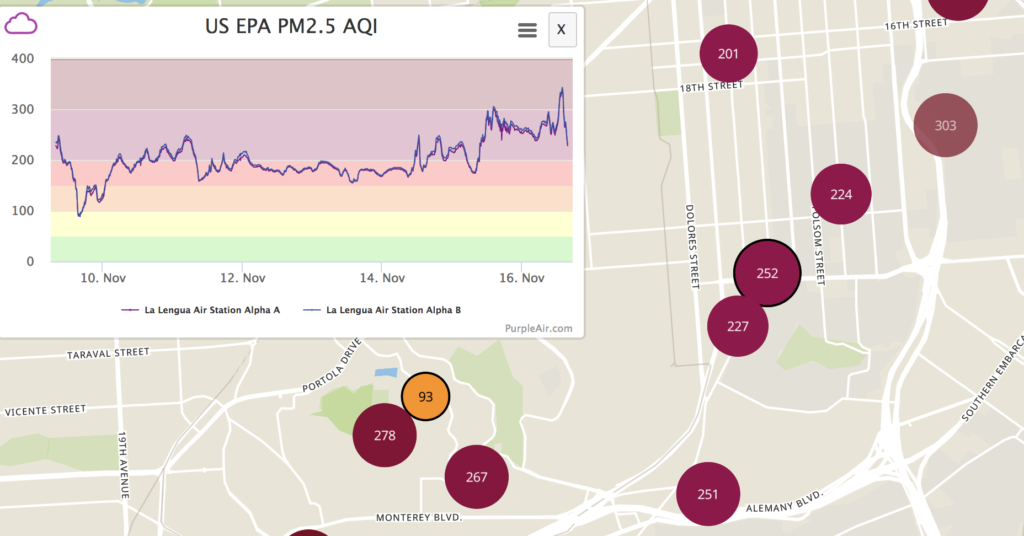


 existentialcoms on Twitter.



 The Guardian.
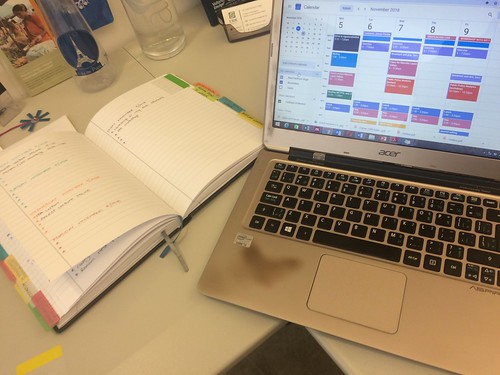





 The original pioneer in space-based telephony isn’t





 It basically focused on a number of fairly recent games (last 10 years or so):
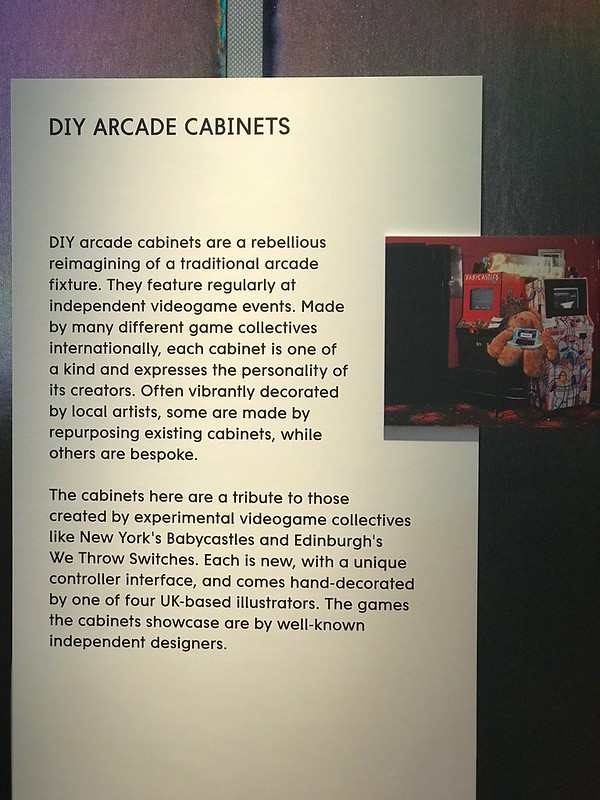


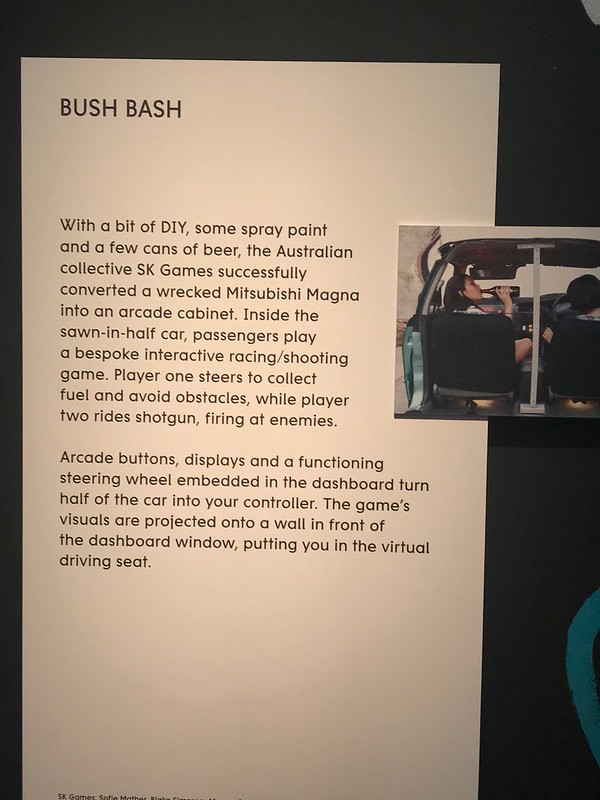
 Now to go cut a car n half and figure out how to re-create Bush Bash!
