Why do advertisers keep sponsoring illegal activity on
big Internet platforms such as YouTube and Facebook?
Platforms are running so many copyright-infringing
copies, cryptocurrency scams, state-sponsored campaign
finance violations, and even functioning as the IT
department for genocide (d00d wtf?) that it's hard
to understand why so many good brands are still there.
A big part of the problem
is that even though platforms do
invest a lot of time and money in removing illegal
activity,
the advertisers never know. If you're a CMO making
decisions about where to spend your ad budget, your
experience of a highly customized social platform is
completely different from what most of your brand's
customers see. As a CMO, you see content from people
in your social and professional circles, and ads from
high-bidding advertisers who want to sell high-margin
items such as conferences and SaaS subscriptions.
You don't see as much of the bad stuff. Advertisers
pay the bills for illegal activity because they lack
the information they would need to stop doing so.
It's time for Internet platforms to stop
hiding this information.
General Assembly CHI@GA_Chicago
📰 Breaking news: Whitespace isn’t best practice universally. Chinese versus Western world design aesthetics:… twitter.com/i/web/status/1…
If you plan on a long-distance ride, be it for competition or just for fun, you need to prepare carefully. While the health benefits of cycling are undeniable (Environmental Health Perspectives), there are some risks to the activity. Those risks become more pronounced when you push your body to ride for a long time. You’ll need to take certain precautions to reduce those risks and make the bike ride a true health-booster. Here are our top five tips to ensure your long-distance bike rides make you feel healthier - rather than making you feel awful!
Below are the formal remarks I made this evening on the floor of the Legislative Assembly regarding the Autism Secretariat Act.
There were friendly amendments to the bill adopted this evening during the debate that changed the name of the act to the Autism Coordination Act, and specified that a committee of deputy ministers be cast to oversee this coordination, a committee responsible to a designated member of Executive Council, and that would report at least annually to the Legislature.
The amended bill received unanimous consent after a thoughtful, collaborative debate. Barring any last minute changes, it will receive Third Reading and Royal Assent in the days to come.
Which is awesome.
MLA Sidney MacEwen deserves tremendous thanks for introducing the bill, working together to get it passed, and being open to amendments. All members who spoke to the bill deserve thanks for their open mindedness and for their comments in solidarity with people with autism.
It was a good night.
Thank you, honourable members, for the opportunity to contribute to this debate.
It is an honour to be able shed some light on the needs and aspirations of Islanders with autism and the challenges faced by their support networks, and to speak to the utility of establishing cabinet-level responsibility for autism.
I am here because I am the father of Oliver, a young adult on the autism spectrum. I am mindful that I see autism primarily through Oliver’s experience, and I am also mindful that I am not on the autism spectrum myself, so I cannot speak for people who are.
As a technologist, however, I understand a thing or two about how systems work, about the importance of leadership and coordination, and about how the bureaucracy works, and sometimes doesn’t work, and it’s those experiences, as well as my 18 years of parenting, that I bring to bear this evening.
A few days ago I consulted with Carolyn Bateman, chair of Stars for Life. “Have I got it right?”, I asked Carolyn about the remarks I bring to you now.
After some encouraging words, Carolyn wanted to make sure I accurately reflected the unique struggles of living with autism. Difficulties getting a diagnosis. Sleep deprivation. Meltdowns. Problems making friends. Issues with dating and relationships. Lack of safe, supported housing options. Problems getting and keeping a job. And her list went on.
Those are all real concerns.
I witness many of them every day, as do families across the Island.
But, with all due respect to Carolyn, that is not where I will focus my comments today.
I want to focus, at least to begin. on what we’re doing right.
I want to mention Dr. Peter Noonan, who was there in the delivery room when Oliver was born, who helped coax him to life, and who saw him every 6 months until he turned 18, who referred him to the IWK for an autism diagnosis, and, later, referred us all to the Strongest Families program to help us with anxiety.
The pre-school special needs team that helped Oliver with psychological supports and occupational therapy before he entered public school.
The staff at Holland College Child Development Centre, where Oliver went to daycare and kindergarten, who made sure, despite tight funding, that he had an educational assistant.
Teachers, resource staff, EAs and administrators at Prince Street, Birchwood and Colonel Gray schools who have done everything in their means to help Oliver learn and to participate in school life.
Of Taylor and Lauren and Drake and Johannes and Derrick and Lindsay, who, over the years, School Age Autism funding has allowed us to hire as community aids to support Oliver after school, in the community.
Of Barb, Oliver’s Disability Support caseworker, who’s helped us arrange for respite care and summer programming.
I mention these people, and these supports, because I want to make it clear that we have not been in this alone: this is a caring Island, an Island that understands that people on the spectrum need support, an Island that has lightened Oliver’s load and helped us be better parents to him.
We are thankful.
But here’s the thing: all of this is done almost entirely without coordination or integration.
As government’s Autism Action Group wrote in its 2009 report, “the department-based, or service-based silos are entrenched, and cannot be penetrated by the good will and intent of the Autism Action Group participants alone because each department or service applies very different approaches to ASD supports and services.”
And that is certainly our experience as Oliver’s parents.
I mentioned School Age Autism funding. This program, administered by the Department of Education, provides us with funding to hire community aids to work with Oliver after school and through the summer.
Oliver also receives Disability Support funding from the Department of Family and Human Services. That program overlaps with, but is not quite the same as School Age Autism funding, and has a completely separate staff, eligibility criteria, and forms to fill out.
We’ve received School Age Autism funding since Oliver’s diagnosis, but Disability Support funding only for the last couple of years.
Why?
Because we didn’t know it existed.
Somehow, from the autism diagnosis at the IWK, through years of public school, and regular appointments at the QEH, and all the while receiving School Age Autism funding, everyone assumed that we knew about the Disability Support program. But we didn’t.
No matter which provincial department the funding comes from, families who wish to hire someone to work with their child must register as employers with Canada Revenue Agency, and thus must make monthly payroll remittances, create T4s and records of employment.
Raising a child on the autism spectrum can be a complicated, exhausting endeavour; to juggle two funding programs, with two different parts of the bureaucracy, and to additionally deal with a federal department, is more than many families can take on, and so supports that could be incredibly helpful go unused.
We can do better than that.
The Department of Education has a “Guide to Early Years Autism Services” on its website, last updated in 2012, the introduction to which reads:
This guide will focus specifically on services for young children with autism provided through the Department of Education and Early Childhood Development. For more detailed information about programs and services available through other Departments, please see www.gov.pe.ca/departments.
Not only does that web page no longer exist, but the “there may be others in government who can help, good luck!” message is not helpful to the parent looking for support.
I think we can do better than that too.
In 2014, when we were working with the English Language School Board to make arrangements for Oliver’s Autism Assistance Dog Ethan to join him in school everyday, a school board official told us that “educational assistants are in schools to allow students to survive, not to thrive.”
While I admired their candour for admitting this, those words haven’t left me since I heard them.
We surely must be able to do better than that.
When I told Oliver that I was coming here tonight, I asked him if he would consider watching the live stream online and his quick reply was “of course I will, this is an historic milestone — like when women were recognized as persons.”
Oliver’s wise words allow me to highlight another important aspect of this bill: in laying out the objects and purposes of the bill, the emphasis not only on facilitating and coordinating services and programs for people with autism, but also “to heighten awareness of the needs and aspirations of people with autism.”
Aspirations.
That’s a word we don’t often hear when speaking about people with autism.
And yet people with autism, like everyone else, have dreams, plans for their lives, things they want to do, people they want to become. When Oliver spoke of tonight’s “historic milestone” he was, I believe, proud to live on an Island that was willing to say to people like him “you exist.”
But, as I began, I am not here, primarily, to make an emotional appeal to you.
I do not need to convince you that autism exists, that people with autism are important and valued Islanders, that parenting someone with autism can be both wrenchingly difficult and unimaginably wonderful, often on the same day.
I do not need to tell you that autism is unique and complex enough that it demands targeted, specific support.
I do not need to convince you that government has a role to play in supporting autistic Islanders: the supports already in place make it clear that’s understood.
But I do need to convince you that what we are lacking is determined, coordinated, leadership.
Leadership that can transcend departmental boundaries and focus instead on the needs and aspirations the bill speaks to.
Leadership that can seek to weave together our patchwork of programs and services into a cohesive supportive framework.
Hon. Marion Reid, former Lieutenant Government and member of this Assembly, once gave me a valuable piece of advice: when you want government to do something better, she told me, come up with a plan for how it can be done. Don’t just say “you need to make things better,” say “here’s how you can make things better.”
There is, at present, not a single act or regulation in Prince Edward Island that mentions the word autism.
I think it’s time that changed, and I think this bill sets out a reasonable way for that to happen, a reasonable way to make things better: it is not the “wake up jerks and do something about autism act,” it is the “we’re on the right track but it’s time to take a bird’s eye view and work together on this” act.
I sincerely believe that the leadership and coordination that would logically follow can take the good works and goodwill that already exist and build on them.
I believe that having someone around the cabinet table looking at things through what the Hon. Premier might term “an autism lens,” would allow us to ensure that we build a truly autism-friendly Island, an Island that allows our autistic brothers and sisters to thrive.
Dropbox invests heavily in our security program. We have lots of teams dedicated to securing Dropbox, each working on exciting things. Some recent examples covered on our tech blog include:
Because security is everyone’s responsibility, our Security Culture team helps our employees make consistently secure and informed decisions that protect Dropbox, our users, and our employees
Our Detection and Response Team (DART) implementation of extensive instrumentation throughout our infrastructure to catch any indications of compromise.
And that’s just a few teams so far—you’ll hear from all of our teams in upcoming blog posts.
This post will focus on our Offensive Security team. These are the people that leverage real-world adversarial techniques to test and improve the effectiveness of our security program at Dropbox.
We recently conducted an attack simulation as a red team exercise with a third-party vendor. Penetration testing is great for identifying unknown vulnerabilities in your systems and showing how susceptible they are to being exploited; however, the tester’s goals are typically limited to just that. What about post-exploitation? An attacker who wants access to our user data, for example, still has their work cut out for them. They need to learn how to navigate through our environments, breach other internal security barriers, exfiltrate data out of our networks, and do so without raising alarm. Or at least, if they do raise alarm, be able to accomplish their goals before we’re able to kick them out.
We’ve invested a lot in our hardening, detection, alerting, and response capabilities at Dropbox. Even if an attacker breaks in and accesses various systems in our environments without triggering an alarm, we have extensive instrumentation to trace activity post-exploitation. So how do we know we’re doing a good job? That’s the kind of testing we were going for with our most recent attack simulation. Our testing goals included measuring the steady-state of our detection and alerting program, as well as measuring our team’s response when a breach has been identified. Identifying new ways to break into Dropbox was in scope for this engagement, but even if none were found, we were going to simulate the effects of a breach by just planting malware ourselves (discretely, of course, so as not to tip off the detection and response team).
However, we didn’t have to simulate this breach. Our third-party partner, Syndis, found vulnerabilities in Apple software we use at Dropbox that didn’t just affect our macOS fleet, it affected all Safari users running the latest version at the time—a so-called zero-day vulnerability). When chained together, these vulnerabilities resulted in the ability for an attacker to run arbitrary code on a victim’s computer by having the victim simply visit a maliciously crafted web page.
We notified Apple of these issues, and they were quick to acknowledge our report. Apple released fixes for the issues in about a month, which is much better than the industry norm of “within 90 days.” The issues were granted CVEs, and we’ve validated the fixes, as did Syndis. We provide details of the vulnerabilities and the validation of the fixes in the Appendix.
This engagement was a win for us, for Apple, and for internet users on various levels. Not only did we get to test our defensive posture, we also made the internet safer by identifying and reporting vulnerabilities in macOS. Syndis went above and beyond in finding this exploit chain during our engagement, and using it during our attack simulation exercise allowed us to test our readiness against attacks using zero-day vulnerabilities. This is an excellent example of the security community becoming stronger because of good actors doing the right thing.
Dropbox protects the data of more than 500 million registered users. We know that we are targeted by adversaries that could develop and use zero-day exploits against us, and we need to protect ourselves accordingly. The risk of getting hit with zero-day exploits is a reality of being connected to the internet, but detecting these is tricky. A powerful zero-day will always gain a foothold, so this was a test of our instrumentation for detecting and alerting on post-exploit activity. Our partner noted “Dropbox demonstrated admirable monitoring, detection, and incident response” after the engagement. Although our teams and systems performed well against this well-armed adversary, we won’t get complacent. Extensive independent validation will always be a core strategy of Dropbox Security Team, and we’ll continue to adapt and learn from each new incident.
Appendix
Timeline of disclosure
February 19, 2018—Report vulnerabilities to Apple
February 19, 2018—Apple acknowledges report
February 21, 2018—Apple is provided with proof of concept
February 21, 2018—Apple thanks us for the additional information and says they are investigating
March 29, 2018—Apple releases security updates here.
The vulnerabilities
1. Safari automatic download and mounting of disk images
CoreTypes defines a list of a safe Uniform Type Identifiers (UTI) that will automatically be opened by Safari. These can be found in LSRiskCategorySafe. Of particular interest here is com.real.smil.
If we check the Launch Services database with lsregister, we see this is defined in CoreTypes and described as “synchronized multimedia integration language,” and appears to be associated with the Real Player media application. A number of file extensions are associated with this UTI, including “.smi”.
We can see the “.smi” filetype has the com.real.smil content type, but it’s described as a “Self Mounting Image.” This is because on macOS 10.12.6 the Disk Image Mounter application also associates itself with this extension, and lists itself as the default handler for the extension. The Disk Image Mounter application specifies the com.apple.disk-image-smi UTI for “.smi” extensions, but the com.real.smil defined in CoreTypes takes precedence.
CoreTypes
Available for: OS X El Capitan 10.11.6, macOS Sierra 10.12.6
Impact: Processing a maliciously crafted webpage may result in the mounting of a disk image
Description: A logic issue was addressed with improved restrictions.
CVE-2017-13890: Apple, Theodor Ragnar Gislason of Syndis
2. Mounting disk image causes application launch
The bless utility is able to “set volume bootability and startup disk options.” An interesting option is --openfolder, which can be used to “Specify a folder to be opened in Finder when the volume is mounted by the system.” Despite that description, when the argument to --openfolder points to a loadable bundle, which are applications packaged as directories with names ending in “.bundle,” then the application will be launched instead of being opened in Finder. This effectively meant we now have a way to automatically launch applications by simply visiting a web page in Safari. However, the usefulness to an attacker is still limited at this point because they can’t launch arbitrary code. Gatekeeper protects against this kind of attack by only allowing applications downloaded from the app store and apps that are signed by known developers. Launch Services checks for these upon launching our application and throws the following error:
For the exploit chain to work, a Gatekeeper bypass was needed to avoid this check.
Disk Images
Available for: OS X El Capitan 10.11.6, macOS Sierra 10.12.6, macOS High Sierra 10.13.3
Impact: Mounting a malicious disk image may result in the launching of an application
Description: A logic issue was addressed with improved validation.
CVE-2018-4176: Theodor Ragnar Gislason of Syndis
3. Gatekeeper bypass
Notice the message in the error above: “’evil’ can’t be opened because it is from an unidentified developer,” with a note that “evil” is on a disk image downloaded by Safari. Syndis then noticed a couple things:
They could launch copies of signed application bundles, such as Terminal.app, located on our disk image.
Modifying the Info.plist of the bundle does not invalidate the signature.
With the Info.plist it is possible to specify which file extensions can be opened with an application. It’s also possible to register new file extensions, which will help ensure the application is the default handler. Upon launching the app, Launch Services registers the app and these file extensions associated in its database. This can be seen using the lsregister command:
This gives a way to register new file extensions and launch signed applications. However, we don’t yet have a way of launching our own applications or commands. Leveraging the Terminal app was the next logical step, considering it’s meant for running arbitrary commands. When trying to launch shell scripts with the techniques above however, Gatekeeper prevents execution because of the quarantine bit that’s set from being downloaded by Safari.
Here’s the real trick—if we’re able to open a file with our new extension that’s associated with our copy of Terminal, then the quarantine bit is not checked, and it runs in the system’s version of Terminal without prompt.
LaunchServices
Available for: OS X El Capitan 10.11.6, macOS Sierra 10.12.6, macOS High Sierra 10.13.3
Impact: A maliciously crafted application may be able to bypass code signing enforcement
Description: A logic issue was addressed with improved validation.
CVE-2018-4175: Theodor Ragnar Gislason of Syndis
The exploit
Syndis was able to chain these together in a two-stage exploit to achieve arbitrary code execution for a user who visits a specially crafted web page with Safari. The first stage includes a modified version of the Terminal app, which is registered as a handler for a new file extension (.workingpoc). In addition it would contain a blank folder called “test.bundle” which would be set as the default “openfolder” which automatically would open /Applications/Terminal.app without prompt. The second stage includes an unsigned shellscript with the extension “.workingpoc” which is then executed within the running Terminal application without prompt.
CVE-2017-13890
The com.real.smil UTI appears to have been removed from CoreTypes. A quick check shows “.smi” files now have the appropriate content type:
As a result, Safari no longer automatically opens “.smi” files with the Disk Image Mounter application.
CVE-2018-4176
Using the bless command to open an loadable bundle no longer causes the bundle to launch. Instead, the directory is opened with the Finder application, as the command says it will do.
CVE-2018-4175
In 10.12.6 our script was launched without prompt in the second stage of our exploit. In 10.13.4 we are now presented with a warning that we have never launched this new application before:
Even if the first two CVEs weren’t addressed, we consider a user who’s presented with this dialog after simply visiting a web page in Safari has been sufficiently warned that continuing is potentially unsafe.
If we’re to click Open here, we notice the bundle flags for our modified Terminal no longer include launch-disabled in the Launch Services database:
Most company websites aren’t nearly as integrated with their community as they should be.
Too many have just a subdomain under a navigation tab where the community activity lives.
If you’re looking for a project which directly harnesses the full value of the community, better integration with the website is a good place to start.
There are more ways to integrate the community with your website, but the best will usually make it easier to find the community, easier to navigate the community, easier to ask a question in the community, find relevant information, and identify experts who can help visitors right now.
Prince was an astoundingly prolific artist, releasing nearly 40 albums under his own name(s), and thousands of songs for himself and others. His concerts were legendary, spellbinding from arenas to intimate clubs, flooring audiences around the world.
But videos? Prince was a lot more ambivalent about videos. He made dozens of them, some great, some... well, some were barely more than home videos he threw together with his friends or bandmates around Paisley Park.
It's in his videos, though that we see Prince's relationship with his music as a commercial artist. A few times, Prince really told a story or expanded on the narrative of a song using a video. In his performance-oriented videos, he was often mesmerizing, capturing much of what made Prince the best live pop musician of his era.
And importantly, it is in his videos that we see Prince exploring the edges of his identity and public persona. There are hints and clues of what Prince wanted to do next at almost every phase of his career. Frustratingly, though most of Prince's videos, including some of his very best, remained obscure, getting almost no airplay back when there were music video channels, or being distributed through one-off VHS video collections, CD-ROMs or uneven and short-lived video streams on Prince's websites. As a result, it's been almost impossible to evaluate Prince's videos as a whole body of work.
Until now. With the Prince estate's release of his entire video collection, in high resolution, some easily accessible for the first time ever, we get a different glimpse at Prince. While Prince's recorded albums seldom featured his absurd humor, his videos often gave free reign to Prince's sillier side. While many of his songs were solo productions where Prince (as his album credits so often proclaimed) produced, arranged, composed and performed the entire song, in his videos, he would often cast his bandmates, friends and proteges in roles where they would mime his work and represent facets of Prince himself. We even get to see Prince directing (or ghost-directing) a number of works, as he grew in ability and confidence as a director over the course of his career.
Now, the truth is, many of Prince's videos just aren't that great. Especially when considered in comparison to the sheer mind-boggling breadth of Prince's musical genius, or the groundbreaking video innovation of his pop contemporaries like Michael Jackson, Janet Jackson and Madonna, the fact that Prince has fewer truly extraordinary music videos is a stark contrast. But as with all things Prince, when he was doing his best, there was absolutely nobody better.
Here, then, is a look at all of Prince's music videos, in chronological order. There are 124 released during the 35 years of his pop career, and I've included the 2 estate-released videos as well. Many of these annotations on these videos began as an ongoing Twitter thread that I've been updating as the estate released new clips (Questlove said it was worthy of his NYU class!) but here I've updated and expanded all the information on each video, and covered the videos I omitted on Twitter, as well as a number which are not available on the streaming services, but which were released over the years.
I hope having the full library of Prince's videos available will help people appreciate the extraordinary breadth of his musical gift, and provide a new lens on not just how remarkably prolific he was, but how absolutely fearless Prince was in constantly exploring new aspects of his expression. Enjoy!
1979
I Wanna Be Your Lover
Prince's first incontrovertible hit, from his second, self-titled album, featured an incredible look that nobody else could pull off. The open-necked blouse, with Prince still young enough to be openly aping Mick Jagger's prancing, also served to let a lot of new fans know that the new act they'd fallen for was, in fact, an individual man — not a group.
Why You Wanna Treat Me So Bad
The first time Prince ever appeared in a video fronting a band, Why You Wanna Treat Me So Bad is also the only appearance of early band member Gayle Chapman. The single dropped just as Prince was about to embark on his stint opening for Rick James on his 1980 tour, the biggest stage he'd yet commanded.
1980
Uptown
In the first video for his third album, Prince debuts a new look, an expanded band — including the first video appearance of Revolution stalwart Lisa Coleman on keys — and the stage set he'd use in that year's Dirty Mind tour. Also notable is one disappearance: pants. Prince is sporting bikini briefs, a dramatic way of introducing the coordinated looks he'd sport throughout the rest of his career, where the look on an album cover matched the looks on stage and the looks in his music videos.
Dirty Mind
Following on the heels of the Uptown single was this video for the title track of the Dirty Mind album. Filmed at the same time as the only other video of this era, the crowd stays excited throughout the clip, even as Prince shows off what must be his goofiest dance ever during the fade-out of the song, flailing his arm around while gripping his trench coat tight.
1981
Controversy
A huge upgrade in production values makes Controversy the turning point toward Prince's visual identity that launched him to superstardom in the 80s. There's a stained-glass window behind the set, just like on his hugely successful tour that year. The song itself is a thumping, all-time classic, and would remain a staple of his live sets for the rest of Prince's life. The band has nearly evolved into the Revolution with the addition of Mark Brown on the bass guitar, and Prince has his custom-tailored long trenchcoat with the studded epaulets already. The only thing missing? That slick custom coat is still colored black. A little splash of a signature color, and Prince was just about ready to show off the look he'd sport when he took over the world.
(There were a few signs that Prince's production team was still getting its act together in this pre-MTV era: check out the cameraman visible on stage left at 2:05.)
Sexuality
Prince at the peak of his No Pants Mode era, sporting his thigh-highs and briefs. At 2:30, Prince premieres his signature split, the move that would define his onstage presence during his greatest years of superstardom, and shape his life offstage long after he'd stopped doing that kind of dancing. But do stick around for the laser show at the end, as it evokes the lighting of Michael Jackson's Rock With You video from two years prior.
1982
1999
Now this is a superstar. Prince vaults into the stratosphere with the entire band (still not quite called the Revolution) sporting distinctive custom stagewear, nailing meticulous choreography for every note of the song, oozing sex appeal with each move, and becoming the purple force that would change the sound of pop radio for good. Standouts here are Jill Jones looking absurdly hot in a vaguely nautical hat, and the first time Prince showed off coordinated lighting synched to the motifs of the song.
Though this video was technically released first, it wouldn't get substantial airplay, or debut on MTV, until after his next video took off.
Little Red Corvette
More than any other, this is the video that made Prince a star. Alongside Michael Jackson, Prince would smash the color barrier at MTV through the sheer undeniable force of Litle Red Corvette's appeal. Beautiful, moody lighting carries through the whole video, making it look like nothing else on TV at the time.
Shot separately from the rest of the rest of the 1999 era videos, which had all been done in one session, Little Red Corvette was Prince's first video recorded on film. Bryan Greenburg, who directed the video, offered up a number of deeper insights into the creation of the video, including a cut sequence that would have featured Prince and Vanity tooling around in an actual little red Corvette. It's striking to think of Prince as just a 24-year-old still learning to do things like work with film cameras instead of videotape; he actually didn't realize he'd need to block out his dance moves with the cameraman, so when he did his signature split during the guitar solo, on the first take he had dropped below the frame of the camera.
It's also interesting to consider Prince's little spin moves in the pop culture moment of the time. Breakdancing was just starting to take off as a mass phenomenon, and even the few seconds of spinning Prince did in this video put him in the conversation as part of that movement, despite his having had almost no connection to hip hop.
None of that mattered, though, once the video premiered on MTV. The video rocketed the song up the charts, revived the fortunes of both the 1999 single and album, and set the stage for world domination. Suddenly, everything was purple.
Automatic
This was one of the first videos that Prince's estate shared online, and it's a scorcher. Recorded as part of the same marathon shooting schedule that captured the videos for 1999 and Let's Pretend We're Married, this shows off Jill Jones at her best, an unparalleled foil for Prince. And with the full song running for well over 8 minutes, Prince can fully let his freak flag fly; by 7 minutes on, Prince is tied to the bed onstage, and it's not long until Lisa is flogging him with a cat-o-nine-tails.
This one did not get any MTV airplay in 1982, sadly.
Automatic
1983
Let's Pretend We're Married
Unlike its sibling video Automatic, Let's Pretend We're Married was actually released as a single, albeit more than a year after the 1999 album had come out. By this time, Prince was already fully in the midst of creating the Purple Rain album and film, so this song was only a minor hit on the charts and the video, synched to a shortened edit of the song, basically never got an official release until it showed up online.
Let's Pretend We're Married
1984
When Doves Cry
Prince's most famous video, the debut of the Revolution (with the addition of Wendy Melvoin, the band was now complete), exciting footage that acted at the time as a trailer for the Purple Rain film that was then to come, and additional scenes that worked in the years that followed as a glimpse at what was cut from the movie. When Doves Cry had everything to bring Prince to the unprecedented plateau of having the number one film, album and single in the United States, all at the same time.
While the special effects at the end haven't necessarily held up as well as the rest of the clip, it was only appropriate that a song which sounded like nothing else on radio before or since was accompanied by a video that couldn't have been created by anyone but Prince. The full integration of Prince's visual identity into his presence across media was perfected with this song and the launch of Purple Rain. In the video, he sports looks that would show up in the film, on stage during the Purple Rain tour, and in other videos from the project. The Purple Rain album even came with a poster of the backdrop illustration from the end of the clip.
These days, fandoms take for granted that an artist will have an "era", where their entire public persona is fully aesthetically integrated across every public medium. This song, and this video, is where that concept was first demonstrated in pop culture. With When Doves Cry, Prince birthed not just one of the biggest hits of all time, but the template for multi-media artistic coherence that became the standard for every major artist.
And through it all, there's tons of purple, paisley and the subtle appearance of a peculiar and portentous little symbol. Just two months before this video was recorded, Prince had been in a studio all by himself, writing, recording, performing and producing every single sound on the track. By a month later, when the video debuted, he'd become one of the biggest stars in the world.
When Doves Cry
I’ve always found the construction and production of the song mesmerizing, so 2 years ago, I asked Prince about how he recorded the song. https://t.co/MeCYzmwcAd
No surprise, he didn’t exactly give a straight answer. But his joking response was maybe even better for preserving that mysterious aura Prince always cultivated. pic.twitter.com/VebaZI5lHN
Like many of his lyrics of the time, Prince jotted the words to When Doves Cry on a page from a spiral-bound notebook. Looks like the purple ink ran out, so he switched to pencil. pic.twitter.com/qnNY6t3ggX
(You can check out a short edit of the When Doves Cry video, too, but why would you want to?!)
Let's Go Crazy
Mirroring much of the opening scenes of the Purple Rain film, the video for Let's Go Crazy is one of the best performance videos that Prince and the Revolution ever made, while also functioning as an irresistible trailer for the film. And though it's over-edited in the final cut of the video (this was at the dawning of the hyper-fast-cutting MTV editing style), Let's Go Crazy is the first video to feature Prince soloing on his guitar in true rock god mode.
Let's Go Crazy
Purple Rain
Amazingly, Prince's signature song is among the very few of his videos that's not officially available online. (Though of course a fan has uploaded it.) Presumably, this is because the video was almost exactly the scene from the film where he performs the song, and perhaps the studio didn't want to simply share a lengthy clip of the film online.
In lieu of the proper video, here's a brief video about Prince's legendary 2007 Super Bowl halftime performance, where Prince commanded the heavens to unleash a genuine Purple Rain, and pulled off the most dominating victory of any Super Bowl ever.
You'll want to know the amazing story behind Prince's conception of Purple Rain; I've written a detailed history of his influences and inspirations for the masterwork here: I Know Times Are Changing.
I Would Die 4 U
Prince at the height of his stardom, in his very first live performance video, featuring an expanded Revolution that incorporates Sheila E. and her band, setting the stage on fire in front of 20,000 fans.
I Would Die 4 U
Baby I'm A Star
Flowing seamlessly from the I Would Die 4 U video, since it was recorded at the same concert in Maryland in November of 1984, the Baby I'm A Star is the Purple Rain tour at its most indulgent and over-the-top, giving the band a full work out for more than 13 minutes straight.
You might think it goes on too long, but check out where you're at by 11 minutes in, where Prince is going harder than James Brown in his cues to the band, controlling the dozens of people on stage and in the crew with just the twitch of his hand. Unstoppable!
Baby I'm A Star
1985
Take Me With U
Another scorching live performance, Take Me With U finds Prince and the Revolution at the height of their fame, during the Purple Rain tour, when they broke records selling out every seat in The Summit in Houston 5 times in one week.
In lieu of Appolonia's duet vocals as on the recorded song, the song becomes a rocking jam session with Prince's searing guitar solo rocketing into another gear with an interpolation of his own "Controversy" at the 3-minute mark. Add in some weird but fun special effects that make you feel like you're flying through the air while Prince shreds on his guitar, and it's hard not to love this one.
Take Me With U
4 The Tears In Your Eyes
As the phenomenon of the Purple Rain movie and tour wound down, Prince found himself in a more pensive mood. When the entire industry focused its attention on the USA for Africa effort, Prince chose to contribute a new song to the album rather than join in the "We Are The World" singalong. And in lieu of showing up for the mega-concert staged by USA for Africa, he decided to contribute an exclusive video for that new song: 4 The Tears In Your Eyes.
An unabashedly spiritual song, the version released on the charity album was a conventional rock arrangement, but the video was a very human, pensive acoustic version with just Prince, Wendy and Lisa. It was almost never aired again after the day of the USA for Africa concert.
Also notable here: this is where Prince debuted a totally new look after Purple Rain. The short hair, black and white film, and conventional trenchcoat (sans signature purple and spiky epaulets, after years of sporting the look) seemed to presage the sober aesthetic he'd adopt the following year for much of his work around the movie Under the Cherry Moon.
4 The Tears In Your Eyes
Raspberry Beret
Now, Prince might have cut his hair off after the Purple Rain tour, but that doesn't mean he was happy with how it turned out. You see, he'd also bleached it, perhaps trying to use his hair to indicate just how dramatically he was changing direction after the mega-success of his last album. But when it looked a mess, he decided to dye it back to black, with an end result that looked like a wig.
That wouldn't have been so bad, except that's the look he was sporting during one of his most famous videos ever: Raspberry Beret. Prince had first fought to not put out any video for the song, then tried to have it only be an animated video (the animation did end up being featured prominently in the clip), and finally eventually consented to appearing in the video. Accompanied by some of his best tailoring and costuming ever, with the absolutely beautiful cloud suit that perfectly evoked the song's vibe, the video helped put Prince back atop the charts almost instantly.
Despite the success, a lot of folks in the Prince camp (including members of the Revolution!) felt his hair looked like Liza Minelli in the clip, as they've mentioned in interviews. Prince himself felt that his hair evoked the style sported by Lou Ferrigno, who was then portraying The Incredible Hulk on the 80s TV show.
If you've ever had a bad haircut and hated your bangs, Raspberry Beret is the Prince song for you. (And keep your eyes peeled for a way-before-Nirvana Pat Smear in the background of the clip, too!)
Raspberry Beret
Paisley Park
Prince finally got his wish to disppear from his video, ironically on the song that would give a name to one of the most lasting parts of his legacy. Unfortunately, the video was essentially never released, and even diehard fans could only find bootleg copies of it that were sourced from a rare promo video years made by his record label years after the song came out.
Much of the public perception of the album Around The World In A Day (which included Paisley Park) was that it was Prince's "psychedelic" album. Though the influence of The Beatles and others on the album's sound has been a bit overstated, if this video had come out back then, its unabashed evocation of the aesthetics of 60s psychedelia would have undoubtedly cemented the idea that Prince had just been trying to evoke that era. Maybe it's better, then, that this video never came out at the time, allowing Paisley Park to come to represent a vision that is purely Prince's.
Paisley Park
America
Now this is what I'm talking about: one of Prince's greatest videos ever. Prince and the Revolution, in the south of France, going all-out on the funkiest jam from the Around the World In A Day album— America.
It's damn near 10 minutes long, and you will be knocked on your ass when, at 8 minutes in, after scorching guitar solos and an unbelievably funky horn section, Prince runs back and takes over the drum set. If you've ever met anybody who says, "I don't get why people like Prince so much?", show them this video. If they don't get it then, they can't be helped.
(Why were the Revolution in France? Well, as was always the case during the 80s, Prince had already moved on to his next project while he was supposed to be promoting the current one. They were filming the movie Under the Cherry Moon, the inspiration for his next album, Parade.)
America
1986
Kiss
One of Prince's biggest videos, and maybe because it's the first one where fans got to see that Prince was really, really funny. Effortlessly sexy, mugging constantly for the camera, and featuring a stripped-down set that's as minimal as the song itself, Kiss was delightful, efficient and funky.
Kiss
Mountains
Like When Doves Cry, Raspberry Beret, and Paisley Park before it, the video for Mountains has Prince and his band bluescreened in front of a video background. Like Take Me With U, there's footage of flying through the skies (though much more appropriate to the lyrics of this song). But this time, there's a cinematic breadth to the video, both due to the expansive arrangement of the song, and the presence of irresisible personalities like Kristin Scott Thomas and Jerome Benton, both of whom joined Prince in Under the Cherry Moon — the film for which this song and video were created.
In contrast to the minimalism of Kiss, this is the maximalism of the Revolution at its biggest, adding in horn players, dancers, and Prince's biggest sound yet.
Mountains
Girls & Boys
Unlikely as it may seem, one of the Revolution's funkiest songs ever is also its most elegant video ever. The expanded band shows up decked out in tuxedos and ball gowns, strutting to the unforgettable baritone saxophone riff that anchors the song. After weeks of filmng and recording in the south of France, Prince and the Revolution look as comfortable as if they'd been there their whole lives, breaking out some simple but delightful choreography at the song's fade.
But the highlight has to be Prince and Jerome Benton riffing as only they can, at 3:12 in the video. It's still absurdly funny after decades, and again shows a side of Prince's sense of humor that casual fans almost never got to see.
Girls & Boys
Anotherloverholenyohead
A wonderful glimpse into one of the most important concerts of Prince's career, his 1986 performance at Detroit's Cobo Arena on June 7, 1986 — his 28th birthday, a new maturity that was hinted at by one of the first times we ever see Prince ina suit and tie. The song was one of Prince's best slow-burning songs of the era, and as the final video appearance of the Revolution it marks the end of an incredible era.
Anotherloverholenyohead
1987
Sign O' The Times
As was his custom in the 80s, Prince continued his streak of releasing a new album each year, and in 1987 he marked the launch of his most ambitious effort yet with a video that was perhaps his most modest ever. Reflecting his growing ambivalence about the trappings of MTV-based celebrity, which had prompted him to release 1985's Around the World in a Day with no lead single or video preceding the album, his dramatic video for Sign O' The Times, lead single for its eponymous album, not only didn't feature Prince — it didn't feature any humans at all.
In its way, the Sign O' The Times video presaged the lyric videos of the YouTube and social media age, and served to center everyone's attention onto the lyrics of the song, one of Prince's most starkly political messages to that point.
Sign O' The Times
U Got The Look
Flipping from nearly invisible and focused on the world to front-and-center and outrageously sexy, Prince used the release of U Got The Look to feature an excerpt from the extraordinary Sign O' The Times concert film. Prince is all decked out in a fur coat, hoop earring and heels, and his duet partner Sheena Easton shares his peach and black palette as well as impeccable tailoring.
It's a fairly standard mid-80s high-production performance video, but the exuberance of the performance (and scandalously sexy appearances by the likes of musical director/percussionist/goddess Sheila E. as well as tour dancer Cat) elevates it to a perfect time capsule of the era.
I Could Never Take The Place Of Your Man
Perhaps the best "pure" rock single of this era of Prince's career, the effervescent an unabashed pop of I Could Never Take The Place Of Your Man hints at the romantic triangle that forms the nominal story of the Sign O The Times concert film, but this video is the one to watch if you want to see what is perhaps Prince's greatest band operating at its most ruthlessly powerful. Aside from the JB's at the peak of their run with James Brown or Tina Turner at her majestic best, it is almost impossible to find a document of a band making this much work look this effortless. (And do be sure to watch the entire concert film for the long version of this track — the bluesy breakdown and weeping guitar solo stand proud alongside Prince's very best solos ever.)
I Could Never Take The Place Of Your Man
1988
Alphabet St.
Alphabet St. is an extraordinarily colorful and hyper-saturated vision, reflecting Prince's desire that everything from the music to the visuals to the clothing design of the song should evoke a cartoon in its garishness and vibrance. But following a spiritual (and professional) reckoning after the cancelled release of his notorious Black Album just a few months earlier, Alphabet St. was clearly meant to reset Prince's persona for a new era.
The effects and extensive text overlays are very clearly of their era, but Prince's extreme eccentricity in everything from his choice of costume to his burying of hidden messages throughout the video keep the video from seeming as dated as it otherwise might. Indeed, the repetition and hyperactive editing of the clip make it one of the first of Prince's videos that seem to presage today's meme-based media.
Alphabet St.
Glam Slam
Something of an obscurity due to the relative lack of chart success of the single, Glam Slam is perhaps best regarded as a document of Prince's most ambitious effort of the 80s, the Lovesexy album and tour. The album was an extremely challenging work, attempting to introduce his giant audience to a deeply personal, if somewhat obtuse, spiritual vision. And the accompanying tour was extremely ambitious in its staging, as becomes obvious in the Glam Slam video, which features the entire band choreographed in-the-round as they were on the tour. Add to that an entire string section, Prince's first coterie of male backup dancers, and elaborate spandex-ridden costumes, and the overall effect is a definite sense that more is more.
Glam Slam
I Wish U Heaven
A delicate, almost minimal melody closes out the Lovesexy era for Prince, with a series of surreal and evocative objects working to pull us into a dreamlike state. One of the most effects-heavy videos Prince ever made, the clip was directed by Jean Baptiste Mondino, enjoying his heyday in the years between his directing of Tom Wait's "Downtown Train" and Madonna's "Justify My Love".
I Wish U Heaven
1989
Batdance
It's too bad "U Got The Look" was already taken, because this is a look. Prince latched into the Batmania that took over the world in 1989, and extended the mythos of the Burton/Keaton/Nicholson (and Basinger) film into a truly bizarre, brilliant visual that nobody else in the world could ever have attempted, let alone pulled off so well that it became a staple of both MTV and radio.
It's hard to itemize everything that's absurd and amazing about this clip. It's the first appearance of "Gemini", the half-Batman, half-Joker character that Prince had imagined as a persona on his soundtrack album. It's the first onscreen appearance of studio nerd Prince, alternating between geeking out on his samplers, keyboards and computers, and then hopping on top of the console to shred on one of his custom guitars.
It only gets weirder from there. An army of dancing Jokers and Batmen, a phalanx of Vicki Vales, and allusions to everything from Frank Miller's seminal Dark Knight to the theme song of the campy 60s Adam West series to, well... what we all imagined Paisley Park must have looked like?
In a world where we have a high-production-value comic book movie coming out every 3 weeks, it's hard to emphasize exactly how outrageous and incomprehensible this video seemed at the time. But as I noted in the years-long Twitter thread that I've been writing about the song, at three decades later, Batdance seems like it perfectly predicted the era of viral videos and how to market a superhero franchise with a meme-ready production.
29/47,619 With its frenetic editing & many Easter eggs, Batdance’s video feels like it was made for the meme era. https://t.co/lzNRNYqFIU
An amusing bit of trivia: Batdance was directed by Albert Magnoli, who had, a little over 5 years earlier, also directed Purple Rain.
Batdance
Partyman
Given how successful the Batman project was commercially, and how much Prince had invested in creating characters like Gemini, it's not surprising we saw his Batman universe continue into another video. The song was in some ways a pastiche of 1999 (which it had replaced in the Batman film), but given its prominence in scenes with Jack Nicholson, it was a no-brainer to choose for a single.
The scope and scale are astounding for a Prince video — there are countless extras, and from the minute Prince walks in (whistling "The Arms of Orion", also from the Batman soundtrack), the stakes keep going up. There's Joker-level mayhem throughout, Prince shows off his (genuine) ability to play a piano while lying on top of it, and just a year after Michael Jackson had ended part of his Moonwalker home video by pretending to balk at Bubbles the chimp wearing a Prince t-shirt, the Partyman video features... a chimp.
Though MTV only ever aired the single edit of the clip, the extended version is now widely available to stream, and it does full justice to the full madness Prince had pictured for the song. And though the song closes with a title saying, "This ain't over..." (or まだ終わりじゃないよ) it's sadly the last we'd see of Gemini in a video.
Partyman
Scandalous
Again veering from a massive production to something intimate and seductive, we come to one of Prince's very best seduction ballads, Scandalous. This clip clearly sets the stage for what D'Angelo would escalate a decade later with Untitled, though Prince appears here in a red jumpsuit instead of his birthday suit.
Though it's his most minimal video ever, employing just some simple lights, a microphone stand, and creative editing of Prince's solo performance, it perfectly suits the song and sets the song apart from not just its placement on a superhero soundtrack, but the rest of Prince's entire catalog. It's no wonder this was one of the rare times when a shot from a video became the cover of the single it was meant to promote.
Scandalous single coverScandalous
1990
Thieves In The Temple
Thieves In The Temple (Extended)
(The much more common short version of the video is available, of course.)
New Power Generation
The Question Of U
1991
Gett Off
Gett Off
Gett Off (Houstyle)
Gett Off (Houstyle)
Violet The Organ Grinder
Violet the Organ Grinder
Gangster Glam
Gangster Glam
Clockin’ The Jizz
Cream
Cream (Extended)
(This is one of those videos that has a short edit, which omits all of the introductory drama.)
Diamonds And Pearls
Diamonds And Pearls
1992
Money Don't Matter 2 Night (Spike Lee version)
Money Don't Matter 2 Night (Spike Lee version)
Money Don't Matter 2 Night (performance version)
Money Don't Matter 2 Night (Performance Version)
Jughead
Insatiable
Insatiable
Willing And Able
Willing And Able
Strollin’
Call The Law
Call The Law
Live 4 Love
Live 4 Love
Sexy M.F.
Sexy M.F.
2 Whom It May Concern
2 Whom It May Concern
My Name Is Prince
My Name Is Prince
Love 2 The 9's
Love 2 The 9's
The Morning Papers
The Morning Papers
The Max
The Max
Blue Light
Blue Light
Eye Wanna Melt With U
Sweet Baby
Sweet Baby
The Continental
Damn U
Damn U
7
7
1993
Peach
Hmm! I wonder why this one isn't online yet.
Pink Cashmere
Nothing Compares 2 U
Though there is a video of the live version of the song released in 1993, the estate hasn't yet released the footage.
1994
Interactive
Days Of Wild
Now
Race
Pheromone
Shhh
Acknowledge Me
Come
Loose
Papa
The Most Beautiful Girl In The World
The Most Beautiful Girl In The World (Beautiful)
The Most Beautiful Girl In The World (Mustang Mix)
Endorphinmachine
Endorphinmachine
Love Sign
Love Sign
Letitgo
When 2 R In Love
Dolphin
Dolphin
1995
Purple Medley
Purple Medley
Eye Hate U
Eye Hate U
Gold
Gold
Rock 'N Roll Is Alive! (And It Lives In Minneapolis)
Rock And Roll Is Alive! (And It Lives In Minneapolis)
1996
Dinner With Delores
Dinner With Delores
The Same December
The Same December
I Like It There
I Like It There
Betcha By Golly Wow!
Betcha By Golly Wow
1997
Somebody's Somebody
Somebody's Somebody
The Holy River
The Holy River
Face Down
Face Down
1998
Come On
1999
Beautiful Strange
Beautiful Strange
The Greatest Romance Ever Sold
The Greatest Romance Ever Sold
2000
One Song
How Wit U (Nasty Girl Remix)
Hot Wit U
2001
U Make My Sun Shine
U Make My Sun Shine
When Eye Lay My Hands On U
I actually don't have this video! And have never seen it. It's a tough one to find.
The Daisy Chain
The Daisy Chain
2004
Musicology
Musicology
Call My Name
Call My Name
Cinnamon Girl
Cinnamon Girl
2006
Te Amo Corazón
Te Amo Corazón
Black Sweat
Black Sweat
Fury
Fury
2007
The Song of the Heart
The Song of the Heart
Guitar
Guitar
(There's a totally different version that's a Verizon ad, too.)
I’m using OpenVPN for many years now and while in the past the uplink speed of my DSL connection at home was the limiting factor when it came to throughput, this might not be the case anymore. I was therefore keen to check if my current OpenVPN setup in a virtual machine on an Intel i3 based server can still handle the theoretical maximum throughput of 35-40 Mbit/s, which is the uplink speed of my vectorized VDSL line.
The two pictures in this post show that the OpenVPN server can easily saturate the available bandwidth. The first picture shows downlink (yellow) and uplink (green) throughput on my DSL line and that the uplink is fully utilized by a file transfer inside the VPN tunnel.
The second picture shows the file transfer speed and the processor load on the server running OpenVPN, which is around 23% on one CPU and 0% on the other. In other words, there is ample processing capacity on the VM left for future line upgrades.
Now the only thing I need is more uplink speed. It’s unlikely I will get more any time soon, however, because even upgrading my line from 100 to 250 Mbit/s once super-vectoring becomes available will not increase my uplink speed beyond the 40 Mbit/s that I currently enjoy.
Ich benutze iOS- und Android-Geräte parallel. Und endlich sind sie in der Bedienung näher aneinander gerutscht. Die neuen iPad Pro und iPhones funktionieren nun beide ohne Homebutton und bei Android 9 kann man die drei Buttons am Kinn des Displays ebenfalls ausschalten. Die Wischgeste nach oben ist nicht identisch, aber nahe genug dran, dass man nicht mehr daneben greift.
Sehr schön bei motorola one (aktuell 240 EUR) und Nokia 7 Plus (aktuell 330 EUR) ist, dass sie dank Android One nicht an der Oberfläche herumschrauben. Beide haben 4 GB RAM und 64 GB Speicher. Das moto hat einen SD 625, das Nokia den neueren und schnelleren SD 660. Außerdem hat das Nokia mit 3800 mAh die deutlich größere Batterie als das moto mit "nur" 3000. Das Nokia habe ich sicherer in der Hand als das sehr glatte moto, dafür ist das moto kleiner und unauffälliger.
Beide sind sehr brauchbar und sollten nächstes Jahr noch ein Android-Upgrade auf Q bekommen.
“When you invent the ship, you also invent the shipwreck; when you invent the plane you also invent the plane crash; and when you invent electricity, you invent electrocution… Every technology carries its own negativity, which is invented at the same time as technical progress.”
This is one of the best takes I got on the recent AWS announcement of ARM instances, and makes for a pretty interesting background story.
Given the amount of investment currently being thrown around at “the Intel problem”, I expect things in the server business to reach an inflection point in a year or so…
In der Android-Welt geht es komisch zu. Google möchte gerne vertikal integrierter Anbieter werden und von der Hardware bis zur Software alles liefern, siehe Pixel 3 und Pixel Slate. Und das geht regelmäßig schief. Die Stückzahlen, die Google abverkauft, sind lächerlich.
Samsung dagegen möchte gerne mit Google konkurrieren, bringt wieder mal eine eigene Android-Oberfläche an den Start, dilettiert zugleich mit Bixby herum, und will mit Smartthings was eigenes gegen Google Home etablieren.
Anders als Google hat Samsung eine phantastische Hardwareentwicklung und Produktion. Anders als Samsung hat Google Expertise in Software und AI, zugleich einen riesigen Schatz an Daten.
Zusammen wären die beiden stark, aber gegeneinander läuft nichts richtig. Samsung drängt sich den Kunden auf, bis sie pissed sind. Bixby Button, eigene Werbung im SmartTV (ja, immer noch) und faselt gleichzeitig von "offen". Samsung, wenn Ihr so offen seid, warum seid Ihr dann so schrecklich aufdringlich?
Und wer gewinnt? Huawei. Auch wenn die Amis einen Wirtschaftskrieg führen, hier sieht man Huawei und Honor aus jeder Jackentasche quellen. Die Chinesen planieren die ganze Techszene zweimal im Jahr mit ihren neuesten Geräten, überschütten die Carrier mit Marketing-Kohle und schicken sich an, Samsung vom Thron zu stürzen. Samsung kann das nicht egal sein, und Google auch nicht. Die Chinesen werden vor Google nicht halt machen.
Ob ein Smartphone mit faltbarem Display da noch was reißt?
Referenced works from recent talks: Books, articles, places, events. General topics include: Pilgrimage paths, vipassana meditation, book making, photography.
Books Art Space Tokyo, Ashley Rawlings & Craig Mod 僕らの時代の本、Craig Mod Flipboard for iPhone, the book, Craig Mod Koya Bound, Dan Rubin & Craig Mod Kuhaku & Other Accounts from Japan, Various Goodbye Madame Butterfly, Sumie Kawakami 裸でベランダ、うさぎと女たち, 菅原敏 Travels with Myself and Another, Martha Gellhorn The Rings of Saturn, W.
Last February, Australian musician G Flip uploaded her track “About You” to the Triple J Unearthed website, where fans can discover new music from emerging artists. Within hours, the track became a viral hit, quickly earning rave reviews from tastemakers like Pitchfork. Within weeks, G Flip was performing her first solo show in front of an audience at SXSW. That was just the beginning of her rocket ride. Since then, she’s signed with Future Classic and toured internationally. So how is Georgia Flipo navigating the journey from rock drummer to pop star to sought-after collaborator? Here’s what we learned during a recent interview.
As someone who’s famous for her skills as a DIY solo artist, could you talk about the transition to becoming an in-demand songwriter? What do you gain when you’re teaming up with other artists and producers? I think when I’m working by myself, I’m a lot more critical of myself, and the process seems to go a lot slower. When there’s someone else in the room and I have a melody idea or a hook idea, they’ll normally say, “Go with that! Go with that!” When it’s just me in the room, I’m way more critical. I think, “Oh, that’s rubbish.” I find when I work with other artists and producers, the working process is very efficient. We get to a goal quicker.
Can you describe your experience of collaborating other artists and producers?
I like to sing as many melodies as I can off the top of my head and just leave my phone open on voice memos, recording. Then I’ll go back through and pick out all of the melodies I thought were strong. Then the collaborator will help me decide which melodies are strong. Then we’ll piece them together: “Oh that sounds like a pre-chorus. That sounds like a bridge. That sounds like a verse A.”
So it’s just a decision-making process after you’ve given them a lot of options?
Yeah. Decision making and choosing which melodies work with the song. That’s one way that I write things. The other way is, if I’m feeling extremely emotional or I have such peak emotions about something that’s happening in my life, I feel like that draws a lot of inspiration. Then I can just sit down at a piano and just go for it and sing and cry. A lot of songs come out of that. But it’s always a different songwriting process with me. I’ve also got songs from back when I was 15 or 16 that I feel like I need to go back and patch.
When the songs start with a personal story or a strong emotion, do you feel more reluctant to share them with collaborators? Are there some that feel like “I’ve got to guard these because they’re too personal”?
Not really. I think pretty much my life is an open book. Part of the reason I like collaborating and working with other producers and artists is because I’m a pretty outgoing person. I like meeting new people. I’m not very shy. I probably give them too much information, if anything, about my feelings and emotions. So that doesn’t really cross my mind. Last week, I met up with a producer that I’d never met in Melbourne and I wrote a very deep, personal song. I’m not one to shy away from that. If the music speaks to you and the emotion comes out that way, that’s how you convey your emotions.
Do you ever have any tensions or disagreements you have to talk through? Did you ever have to make compromises that either hurt or strengthened the song?
I’ve never really had a disagreement. I’m very hands-on with everything. I’m a producer as well, so when I work with producers, they get a bit of a shock cause I’ll just jump on their computer and start adding new keys, you know? I’m pretty direct and straightforward and I voice my opinion. No one’s seemed to clash heads with me yet, which is good. To be honest, they’re probably scared of me because I’m so bold! I’m just like, “That’s not how it should sound. You need to put distortion on that or we need compression on that.” The knowledge I have of production helps as well, because I can make the producer understand what I want. But so far, that’s never come to a disagreement. I might say, “I want that track to sound dirtier,” and we might compromise and make it 60% dirtier instead of a full 100%.
Photo by Cody Rappaport
Do you ever collaborate remotely and pass ideas to each other over email or Dropbox?
I’ve done collaboration through Dropbox, adding production ideas. The producer will send me the stems or files, and I’ll add my thoughts and ideas and send it back, and see what they think. It’ll get sent back to me and I might record it a bit better.
In terms of lyrics, I normally write all my lyrics, actually. I think there’s one other artist, a pop writer. She’s a really good friend of mine. She tends to be the only one I like writing lyrics with me because I feel like we’re kind of the same person. We grew up in the same area in Australia. We’re the same age. We seem to like the same things. Other than that, most of the songs I write, I tend to write by myself in my bedroom. Or I’ll put pen to page in the studio when we’re writing. I might go to a producer and be like, “Do you reckon I should end it on this line or this line?” They definitely help me there.
“I like to sing as many melodies as I can off the top of my head and just leave my phone open on voice memos, recording.”
Where do you take it from there? Do you use those to create demos? Do portions of those early ideas ever get incorporated in final mixes?
It kind of depends on where I am. If I’m at home, I’ll take the melody that I might’ve sung in the car, then I’ll go down to my studio, sing the melody, and put piano chords to that. Then I might record into Logic, the piano chords and melody hook. Then I’ll work out production from there. Normally, I’ll take a piano part and find a synth part that flows with those chords. I normally start with a simple vocal and key, then it grows from there, the rest of the instrumentation fills out.
“I’ve done collaboration through Dropbox, adding production ideas. The producer will send me the stems or files, and I’ll add my thoughts and ideas and send it back.”
What inspired your evolution from a rock drummer to pop songwriter? Was there a moment in your former band when you thought, “I want to do more than keep the beat”?
I was always working on songs, but it was always behind closed doors. I’d never show anyone. And then as a drummer with EMPRA and other bands, I started singing in front of other people. After EMPRA, I was kind of lost about what I should do next. Frequently, I’d had this dream of doing a solo project. I just felt like the time is now. I went back through all of the songs I’d written over the years. And I just taught myself how to produce my own music.
How does your expertise as a drummer shape the way you write songs? Do most songs begin with a beat? Or does it influence your vocal phrasing and the way you build arrangements?
Yeah, I think being a drummer definitely influences all of that. Especially the vocal phrasing. My vocals are very rhythmic. I normally don’t start with a beat. I normally start with a key vibe. I just find that to be a way more expressive instrument, easier to convey emotion. It’s hard to draw raw emotion when I start off with drums. But I don’t know. I’m going to the studio today, and I might try starting with a drum beat.
After starting out as drummer and finding success behind the kit, did it surprise that you had such strong songwriting skills right out of the gate?
It definitely did surprise me. I wrote those songs in my room. I wasn’t sure what everyone was going to think. All my friends and my parents would tell me my songs were good, but getting a public reaction, I wasn’t too sure. I do remember making up songs in the schoolyard. Even when I had schoolie, which is like spring break, I remember writing with my friends, songs all about partying. I think I’ve always been able to put together feelings together with annoying, catchy melodies. But doing that in a serious setting… it was like, “Now I’m going to get a public opinion about these songs.” I just really like melodies. I think it’s my favorite thing about songwriting and collaborating. Just trying to get the most hooky melody possible, and trying to get hooks into every single percentage of the song.
I hear your first show was at SXSW. How did that go? Were you playing with a full band?
I’d called my mate, Toothpick, who I met on the road years before. He lives in Colorado. I said, “What are you doing, mate?” He said, “The band I was playing in just fell out. So that’s not going on anymore.” I said, “Some crazy events have happened and I’m playing my first show at SXSW. Would you like to play with me, man?” He actually quit his job, moved to Melbourne, and slept on my couch for a couple weeks, and me and him put the show together. We basically just brought all the equipment we had in our bedrooms. Now we look back and laugh at it, how the show at South by ran so smoothly with all this equipment up there. It was pretty dodgy. We needed a third member in the band. My management helped me find a third guy. We just gelled so well. Now [we] are this great trio. Those boys are my best friends. We travel well together. They really are like my brothers.
How did it feel to go so quickly from releasing “About You” to gaining attention from Pitchfork and others?
I spent a whole year putting the project together, and teaching myself how to produce before I even had management. I actually felt like my whole life has been working toward this G Flip project. It’s funny. When I look back, all my stage experience made sure I was confident at my first show, singing backup vocals, singing at my cousin’s wedding last year, which made me even more confident singing solo. These are all little elements in my life that helped me pick up skills along the way. It felt like it was a meant-to-be situation.
Did it take you by surprise? Did you feel ready for that rocket ride?
Before I released “About You,” I was already getting the live show together, and getting a band together. I wasn’t too sure how that was going to go. Then, definitely, when it blew up, it was a surprise. The shows I’ve played and my experience made me feel like I was ready. So I wasn’t scared at SXSW, which was my very first show ever. There was a power-taking moment where I was like, I’m going to take the mic and step off the drums, and that was the first time I’d ever done that. It’s been an absolutely memorable and crazy ride.
I’ve been predicting the rise of the “Transportation Service Provider” — a consolidator of every mode of movement imaginable, integrated with technology, and designed to provide consumers with a suite of services for which they pay (as with telecommunications) one provider with a lot of money.
This is based on the assumption a single provider or oligopoly can emerge. Look to see some of today’s giants try to get even bigger and more diverse as fast as possible in order to dominate the market.
Now it’s just a case of documenting how and how fast this is occurring. Like this, from The Conversation:
High-tech companies and venture capitalists have been striving to break into the transport and mobility market. Between 2016 and 2018, venture capital investment in urban technology surpassed that of many other areas, including pharmaceuticals and artificial intelligence. Almost 70% of this investment was in mobility
There’s Google, of course. And then our aggressive friend Uber:
Uber was founded in 2009 as a peer-to-peer ride-sharing company. It has been one of the most successful startups. As of August 2018, it was valued at US$72 billion. In a recent interview with The Economist, CEO Dara Khosrowshahi said his goal is for Uber to become the Amazon of transport. …
Uber is involved in a range of transport-related offerings, including ride sharing, pooled ride sharing, share bikes and scooters, autonomous vehicles, food delivery and freight.
The company is looking to expand into public transit. Earlier this year, it created the Cincinnati Mobility Lab to conduct research and engage with employers to help Cincinnati, Ohio, develop a transport plan to increase public transport use.
And of course there’s the Chinese:
The third major player is Didi Chuxing. Established in 2012, the Beijing-based company has attracted venture capital funding and was valued at US$56 billion as of August 2018. Didi was a major competitor to Uber in China until in 2016 it purchased Uber’s Chinese operations for US$35 billion. Until recently it operated in China only, but is now branching out in Mexico, Brazil and Australia, with plans for further expansion into a number of other countries.
Like Uber, Didi provides transport services across taxis, minibuses, ride pooling and ride, car, bicycle and e-scooter sharing.
The public thinks this battle is mainly about providing another option to taxis. The current coverage over allowing ride-hailing in BC is a good illustration of how we’re missing what this is really about. The provincial government has been wise to take its time, but I don’t see much evidence that it sees the larger picture and is preparing the tools needed to ensure the public interest prevails.
“Neighborhood is a word that has come to sound like a Valentine. As a sentimental concept, ‘neighborhood’ is harmful to city planning. It leads to attempts at warping city life into imitations of town or suburban life. Sentimentality plays with sweet intentions in place of good sense.”
.
Answer below:
Jane Jacobs, in Death and Life of Great American Cities.
Something to keep in mind when structuring the city-wide planning process.
Today I attended the public defense of the PhD thesis of Freddy Veltman-van Vugt, titled ‘Grensverleggend leren’ (roughly translates to ’moving the frontier of learning forward’). She focused on what it takes for teachers to learn and teach skills critical to our highly digitised and interconnected world in a self directed way. Her doctorate already started some 14 years ago (I think she started writing in earnest after her retirement), and I was invited because one of my all time favourite projects, the Homo Zappiens 2008 project, was one of four cases that were the subject of her empirical research. Ten years ago Freddy promised me to invite me to her public defense, and she kept word. This is the third time my work has become the object of study of a PhD thesis, and today I thought it’s a rather fun indicator of whether I’m working on something novel and worthwile. (The other two were my blogging practices and my open data work). Today when asked by one of the learned opponents at the defense, Freddy said she saw our 2008 project as one with the most compelling predictive value. During the reception afterwards she followed that up with the remark that our project from 10 years ago is still a rare and unique approach. She asked me if I had done any more projects like it, and actually there’s only the current project with the Library Service Fryslan ‘Impact through Connection’ that resembles what we tried to do then.
In the Homo Zappiens project about a dozen teachers of the Rotterdam university of applied sciences took a year to informally work together on changing their teaching towards more self-directed learning, while incorporating more of the affordances networked technology gives us. The form of the project was shaped exactly the same, self-directed, action-oriented. We held that you can’t learn to teach differently if that’s being taught the traditional way. The results clustered around authenticity, co-creation, the skills involved in creating that, knowledge transfer to colleagues not involved in the project, and formats for new or altered work forms during teaching to let form follow function. The project meant deep personal change for many of the members of our ‘gang’. Rediscovering the fun of learning, finding the guts to experiment, getting so much closer to students and colleagues. “I came to change my teaching module, I left having changed my world”. It’s a project I’m still very glad about, and I feel I was able to co-create what I think of as a Reboot—like turning point for the participants.
I also picked up a useful new word today from Freddy’s PhD thesis, “agency shyness”. She talked about the critical factors involved in self directed learning, and next to engaging with real intractable problems, then also referenced the guts needed to experiment in a settled working environment. Not all teachers she came across in her cases dared to experiment, to try and do things differently. They were shy to explore new agency.
Agency shyness is very much relevant to my current work with the Library Service Fryslan on networked agency. We encounter it in the teams we work with, in contrast with my own mission behind networked agency, battling feelings of disempowerment.
It was good to see Freddy get her doctorate, and to realise our 2008 project is still standing strong, and would still be novel to most. After ten years it is still an iconic project.
We have some news to share. Tiny has purchased a majority stake in Castro. We are still shareholders and will continue working on the app full time.
The post goes on to explain the reasons for this transfer of ownership.
Castro has reached a size where the demands of running the business have been pulling us in too many different directions. We haven’t been able to focus as much on the core work of designing and building a product. Selling to Tiny gets Castro access to more resources, contacts and expertise. By growing the team we can specialize our roles to be more focused individually and get more done collectively. We can get back to what we’re good at and what we love doing.
Castro underwent a business model transition earlier this year, moving from paid up front with Castro 2 to free with Castro 3 alongside the launch of the Castro Plus subscription option. It sounds like that shift has led to an increased amount of administrative work for Supertop's development team, which should be alleviated thanks to this acquisition. The post concludes:
We’ve started work on Castro 4. The plan is to improve the design to bring more listeners into the Castro flow. We’re excited, because for the first time in five years of work on Castro, we’ll have the resources to focus exclusively on it as product designers and developers, without contract work to distract us, and with a team around us to handle the administrative tasks.
Castro is one of the best podcast clients on iOS, so I'm thankful that today's announcement doesn't spell its end. On the contrary, it sounds like there's reason to be hopeful about the app's future in Tiny's hands. Only time will tell, of course, so I'll be curious to watch the app's update cycle over the coming year.
Support MacStories Directly
Club MacStories offers exclusive access to extra MacStories content, delivered every week; it's also a way to support us directly.
Club MacStories will help you discover the best apps for your devices and get the most out of your iPhone, iPad, and Mac. Plus, it's made in Italy.
Update (January 10, 2019): The Dropbox Extension for Adobe Sign is now live. Just hover over any PDF or document on dropbox.com, and select Adobe Sign from the “Open with” menu.
Important information can live in any number of tools, and we’ve been working to bring all of that data together in one place. Today, we’re taking a big step towards making that a reality for more of the tools you rely on every day. We’re launching Dropbox Extensions, a new way to work seamlessly in web-based apps while keeping everything organized in Dropbox—without additional integration work or coding.
Working in a web browser—and all of the uploading and downloading that goes along with it—makes it difficult to find the right file. And the bigger problem is that it keeps you from what you’re really trying to do: get work done. That’s exactly the kind of “work about work” we’re taking on with Extensions.
Extensions let you use the tools you already love while keeping everything organized, in sync, and in one place—Dropbox. Just like the right-click menu in Windows Explorer or macOS Finder, Extensions let you open files from dropbox.com in the web-based app of your choice. Starting today, you’ll see an “Open with” menu next to popular file types like PDFs, DWGs, Word docs, videos, and images.
From there, you’ll see a list of relevant web-based apps that you can open the file in and take action:
Request signatures. Send legal documents out through eSignature apps like Adobe Sign (coming soon), DocuSign, and HelloSign.
Send faxes. Use HelloFax to shoot out documents without a desk-cluttering fax machine.
Edit documents. Organize, fill out, convert, and compress PDFs with tools like Nitro, airSlate PDFfiller, and Smallpdf.
Edit CAD drawings. View and edit DWG files directly in the AutoCAD web app—no software installation needed.
Capture video feedback. Get comments from team members and clients with a Vimeo video review page.
Adjust images. Fine-tune color, add text, and make other quick fixes to photos with Pixlr X.
And once you’re done working, your files will be saved back to Dropbox. Everything stays organized, without the hassle of downloading from one place and uploading to another.
Our first batch of Extensions are available today for English language users, with support for more partner apps on the way soon. You can learn more—and get free exclusive offers from our partners—by visiting our Extensions page. Or get started today by looking for the “Open with” menu on dropbox.com when you hover over PDFs, videos, image files, Microsoft Office documents, and DWGs.
A look at one of the mini tape recorders used on the 1960s/70s TV series. If this video is well received I aim to cover some of the other machines in future videos.
-------------SUPPORT--------------- This channel can be supported through Patreon https://www.patreon.com/techmoan Patrons usually have early access to videos
The State of Mozilla annual report for 2017 is now available here.
The new report outlines how Mozilla operates, provides key information on the ways in which we’ve made an impact, and includes details from our financial reports for 2017. The State of Mozilla report release is timed to coincide with when we submit the Mozilla non-profit tax filing for the previous calendar year.
Mozilla is unique. We were founded nearly 20 years ago with the mission to ensure the internet is a global public resource that is open and accessible to all. That mission is as important now as it has ever been.
The demand to keep the internet transparent and accessible to all, while preserving user control of their data, has always been an imperative for us and it’s increasingly become one for consumers. From internet health to digital rights to open source — the movement of people working on internet issues is growing — and Mozilla is at the forefront of the fight.
We measure our success not only by the adoption of our products, but also by our ability to increase the control people have in their online lives, our impact on the internet, our contribution to standards, and how we work to protect the overall health of the web.
As we look ahead, we know that leading the charge in changing the culture of the internet will mean doing more to develop the direct relationships that will make the Firefox and Mozilla experiences fully responsive to the needs of consumers today.
We’re glad not to be at this alone. None of the work we do or the impact we have would be possible without the dedication of our global community of contributors and loyal Firefox users. We are incredibly grateful for the support and we will continue to fight for the open internet.
We encourage you to get involved to help protect the future of the internet, join Mozilla.
Several Samsung S10 and S10+ leaks have popped up lately, including a new benchmark that hints provides details on the company’s new high-end Exynos chipset.
A new AnTuTu benchmark suggests the phone is equipped with Samsung’s new Exynos 9820 SoC. There will likely be a version of the phone with a Snapdragon processor as well, if previous Galaxy flagships are anything to go by.
Further, the leak shows that the device will have 6GB of RAM and a 6.4-inch display with a resolution of 2280 x 1080 pixels. It’s also packing 128 GB of storage. What’s most interesting about this leak is that its AnTuTu score is 325,076, which is lower than the Snapdragon 8150’s score. The 8150 has hit highs of 360,000 in the same test, according to MySmartPrice.
However, it’s important to remember benchmarks don’t tell the whole story. They can be a great measure of performance in specific tasks, but often real-world performance is different. Further, benchmarks don’t include the context of other important features like power consumption.
Ultimately, both the 9820 and 8150 will likely make the S10+ a snappy device.
Gmail’s Smart Compose will no longer be able to suggest gender-based pronouns like “him” and “her” in emails.
Google reportedly made the change due to fear Smart Compose would get it wrong. The search giant introduced the limitation after a research scientist at the company discovered the issue back in January.
The researcher was composing an email about meeting an investor when Smart Compose suggested a follow-up question of “Do you want to meet him?” The question misgendered the investor.
Paul Lambert, Gmail’s product manager, told Reuters that his team tried several options to fix the problem. However, none of the solutions were reliable.
Ultimately, the team decided the best solution was to remove those types of suggestions entirely. Google says the change affects fewer than one percent of Smart Compose predictions.
Lambert told Reuters that it pays to be cautious with cases like this as gender is a “big, big thing” to get wrong.
While it might not seem like a big deal to some, this issue highlights some of the underlying problems with machine learning. Often, machine learning can reflect and reinforce societal biases.
Smart Compose, like many machine learning and AI systems, learns by studying past data. In the case of Smart Compose, and its sibling Smart Reply, it gathers data by learning from old emails.
In the researcher’s case, Smart Compose learned from past data that investors were more likely to be male than female and wrongly predicted this investor was as well.
This isn’t the first time an issue like this has cropped up. Recently, Amazon had to shut down an internal machine learning recruiting tool because it was biased against female candidates.
Ultimately, it shows that machine learning tools like this can have significant bias flaws.
The International Organization for Standardization has released a draft set of aerial drone operating regulations that are meant to keep aircrafts safe and hold operators accountable.
According to the MITTechnology Review, public consultations are open until January 21st, 2019 and new rules will be adopted worldwide next year.
Some of the standards include the call for a no-fly zone and making sure that there is enough distance from an airport or certain locations that require sufficient distance. It also suggests that operators should log flights, as well as training and maintenance requirements.
These specific regulations are suggested so operators “respect privacy and data protection.”
The rules are the first of four sets that address aerial drones. The next will include more details on technical specifications, manufacturing quality and traffic management.
The Digital Technology Supercluster launched with $153 million in federal funding to “leverage B.C.’s strengths and position Canada as a global hub for digital technology innovation.”
A November 27th, 2018 press release says the funding will help generate new jobs, grow Canada’s GDP and increase its global competitiveness “through the application of data analytics, quantum computing, and virtual, mixed/augmented reality.”
The British Columbia-based group includes a cohort of 29 members that represent 33 organizations. Members come from 14 small-to-medium sized businesses, 13 large companies, and six post-secondary institutions.
It said in the release it plans to invest in solutions that will help “enhance industry productivity, sustainability and competitiveness and the development of a diverse and skilled digital-ready workforce.”
“With funding from the Canadian government’s Innovation Superclusters Initiative and in collaboration with a consortium of diverse organizations, our leadership team and board of directors are looking forward to launch Canada into a digitally-driven future,” said Digital Technology Supercluster’s CEO Sue Paish in the release.
In Budget 2017, Justin Trudeau’s Liberal government announced it is investing up to $950-million over five years to help industry-led innovation superclusters across the country. The funding would help grow the economy, create more productivity and help Canada be more competitive.
Members of Canada’s Digital Technology Supercluster include:
Avcorp Industries Inc
AMPD Holdings Inc.
Boeing Vancouver
Careteam Technologies Inc.
Canfor Corp.
Change Healthcare
Convergent Manufacturing Technologies Inc.
Deloitte Canada
DNAstack
D-Wave Systems Inc.
Finger Food Studios Inc.
GE Digital
Genome British Columbia
Hatch Ltd.
Joule Inc.
Llamazoo Interactive Inc.
LifeLabs
MDA Systems Ltd.
Microsoft
MetaOptima Technology Inc.
Molecular You Corp.
Providence Health Care Business Corp.
Post-Secondary Education Network: BC Institute of Technology, Emily Carr University of Art + Design, Simon Fraser University, University of Northern BC, University of Victoria
Google dropped a new Pixel 3 ad, this time focussed on its new Night Sight feature.
The ad plays up the disadvantages of using the flash, showing several photos where the subjects squint at the flash and other instances where the flash ruins the picture.
Instead, Google suggests you use Night Sight, which does away with all the problems of flash and often produces better results.
About partway through the ad, a tagline says “Lose the flash, not the moment.” The ad switches from pictures with flash to images without.
For those who’ve used Night Sight, you already know that it works almost like magic. It turns plenty of pictures that used to be too dark into stunning photos.
Overall, I’d say that the ad is probably one of the better ones Google has put out. The company doesn’t always do the best job when it comes to accurate advertising, but in the case of Night Sight, I think the feature holds up.
The British Columbia Utility Commission (BCUC) has revealed the results of phase one of its inquiry into the business practices of electric vehicle charging stations.
The BCUC, an independent regulatory agency, looks after the public utilities in B.C by making sure that prices are fair and the quality of the service that residents pay for is what they need and expect.
There are currently 76 fast-charging and 663 public level-two mid-level charging stations in the province, according to the BCUC’s report, but with the province’s push for zero-emissions vehicles, this number is expected to grow considerably.
The first stage’s results were determined through input from 10 community sessions, 20 letters of comment, 84 parties that expressed interest in the inquiry and finally 1,939 pages of documents that were submitted to the BCUC.
The motivation behind phase one of the study was to discover if there were monopolies in the market and if existing infrastructure needs further regulation. The BCUC then examined several key areas to help improve B.C.’s charging situation.
When looking into whether or not EV charging stations qualify as a public utility, the BCUC notes that the broad definition of ‘compensation’ in the B.C. Utilities Commission Act renders some charging stations as public utilities.
The definition describes public utilities as an entity that provides a service to someone but doesn’t require a direct payment and instead recoups costs through other means. Tesla used to bundle Supercharger credits in with the purchase of a new car which made it seem like it was acting similarly to how B.C. describes a public utility.
Since the market doesn’t seem at risk of monopolization, the BCUC is requesting the B.C minister of energy, mines and petroleum resources to exempt charging stations from the BCUC’s regulations regarding public utilities. Although the BCUC wants the minister to continue holding responsibility for the safety of the stations.
The BCUC is worried about public utility companies like B.C. Hydro and FortisBC stepping further into the charging market and using the money they make off of selling power to regular people to subsidize their EV charging stations. This goes against the BCUC’s regulation regarding what a public utility can and can’t charge consumers for. This balance between public utilities and regular companies is on the BCUC’s docket to be investigated in phase two.
Since there are no monopolies thus far, the BCUC recommends that charging stations get exempt from BCUC regulations regarding monopolies. Which means that the stations will be able to set their own prices and the competitive market will keep costs in check.
Phase two
In the upcoming second phase of the report, the commission plans to examine how charging stations that are classified as public utilities and those that don’t can co-exist in the province.
It then wants to investigate how private charging station companies can help “kickstart” the EV charging market in B.C., and what obligations these companies have to customers.
In an interview with MobileSyrup, BCUC CEO and chairman Dave Morton said that the BCUC is trying to discover if more EVs on the road will bring more chargers to market due to supply and demand, or if more chargers are needed before people feel comfortable buying EVs.
The most intriguing aspect under investigation is if a non-regulated business entity should be created by a public utility to provide charging services across the province. Morton mentioned that this would likely be to help bring chargers to rural and remote areas in the region where private companies have less incentive to provide charging infrastructure.
The BCUC is also looking into determining wholesale rates for EV chargers and what are the justifications for non-public utility “ratepayers (and potentially non-EV customers) to subsidize the costs of EV charging services?” This section will dive deeper into how public utilities like B.C. Hydro can compete in the EV charging market while still following all of the regulations put in place on a public utility.
The BCUC is planning on exploring options to determine how both regulated and non-regulated chargers can operate in the same space and both offer attractive options for consumers while still making money.
Tesla spoke to the BCUC regarding phase one of the report, and it stood strongly against regulation on both pricing and charging port standards due to it wanting to have a tight grip on its business. Although it did mention it was going to invest in more chargers in the province if the market remained unregulated. This lines up with Elon Musk’s latest tweets claiming that more Superchargers will roll out in active markets in 2019.
Morton mentioned that B.C. could try and impose stricter regulations on chargers, but since it is just a province and not a country it doesn’t have the power to lead the charge in setting EV charging port standards.


 If you plan on a long-distance ride, be it for competition or just for fun, you need to prepare carefully. While the health benefits of cycling are undeniable (Environmental Health Perspectives), there are some risks to the activity. Those risks become more pronounced when you push your body to ride for a long time. You’ll need to take certain precautions to reduce those risks and make the bike ride a true health-booster. Here are our top five tips to ensure your long-distance bike rides make you feel healthier - rather than making you feel awful!


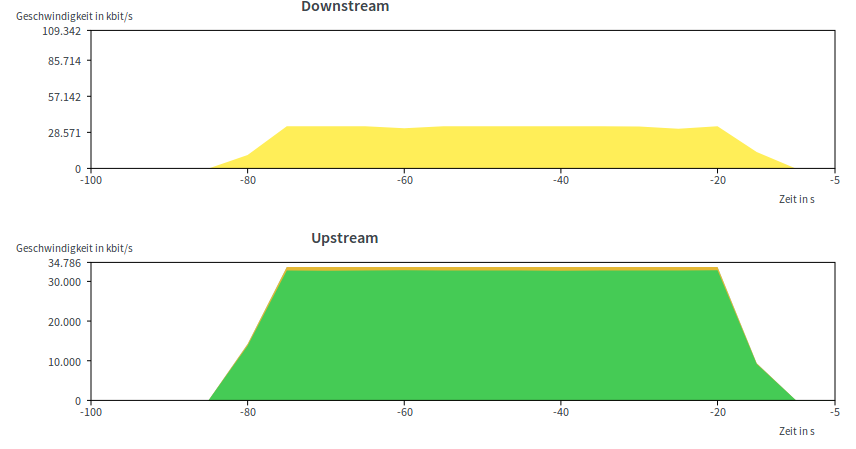
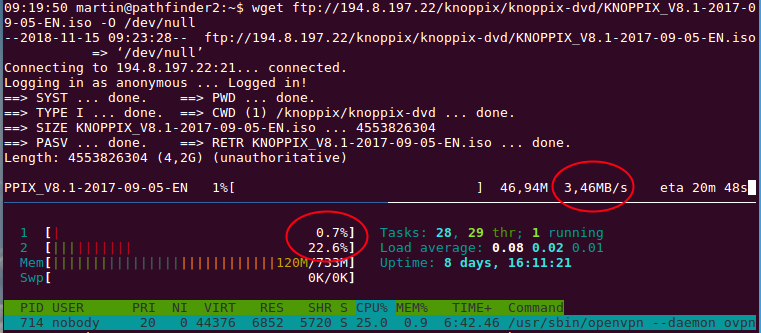
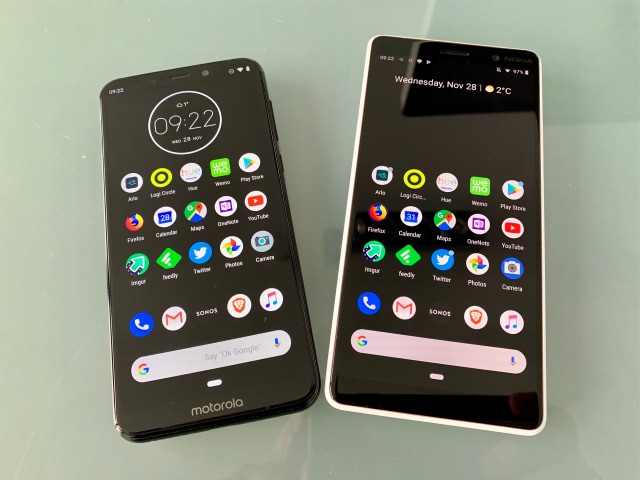





 Techmoan's YouTube Videos.