Shared posts

11 Dec 03:54

Microsoft Edge adopts Chromium

by Rui Carmo

I’m actually kind of sad about this because it risks turning the Web into a monoculture again. Even if it does have the potential of making it substantially easier to build and maintain web sites in the long run.

On the other hand, I’ve been using Firefox on Windows because Chrome tends to drain my batter faster than Edge and like the extensions available for it. But having Edge on the Mac with a Chromium engine would make it easier to keep my bookmarks synced across platforms…

As lean and mean as Safari is these days, however, I find it has niggling issues with cookie session management and odd corner cases on mobile, and there is already ample talk about it being left behind.

Your move, Apple.


11 Dec 03:54

Apple Watch EKG außerhalb der USA gesperrt

by Volker Weber

Anderes Locale, amerikanische Apple ID, nichts hilft. Die Watch muss in USA gekauft sein. Was sicherlich mancher gemacht hat. Die Einschränkung ist in watchOS fest verdrahtet. Mit Software-Updates lassen sich die Einschränkungen aufheben, und nur mit Software Updates.

11 Dec 03:53

Province House Disappearing

by peter@rukavina.net (Peter Rukavina)

The exoskeleton around Province House is finally getting its skin this week.

11 Dec 03:53

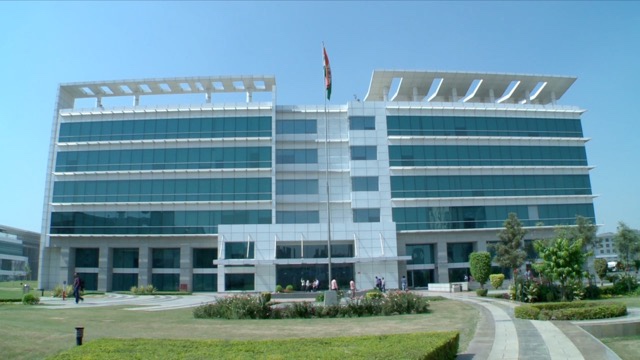
IBM verkauft Notes, Domino, Sametime, Connections, Portal und weitere Produkte

by Volker Weber

3ac939844602996f540f28bd5ab7d54a
HCL Technologies, Bild Wikipedia

Eine Ära geht zu Ende: Vor 23 Jahre kaufte IBM Lotus, nun ist Schluss.

More >

11 Dec 03:53

Gilets jaunes, Facebook et le populisme

by Tristan

Les gilets jaunes manifestent à Avignon par Sébastien Huette — licence CC-BY-NC-ND

Ces derniers jours, j’ai parlé de 3 articles passionnants pris séparément. Mais pris ensemble, mis en perspectives, ils sont encore meilleurs et démontrent à quel point Facebook est devenu un élément détonnant dans un contexte explosif. Les voici :

  1. « Gilets jaunes » : un cas d’école de la polarisation du débat public ;
  2. « C’est comme ça qu’on s’informe » : au sein des « gilets jaunes », Facebook plutôt que le « système » médiatique.
  3. Après avoir Liké, les gilets jaunes vont-ils voter ? ;

De chacun de ces articles, je tire une idée (pas forcément la plus centrale de l’article). Les voici, dans le même ordre :

  1. Plusieurs facteurs dans le débat sur les gilets jaunes font qu’il y a polarisation comme jamais auparavant. Les politiques font des petites phrases, les sites parodiques balancent des énormités, les gens sur Facebook relayent tout ce qui va dans leur sens (biais de confirmation) sans trop soucier de vérité, la presse ne parle que des manifs qui dégénèrent et enfin Facebook affiche les articles le plus susceptibles de créer de l’engagement (comprendre : faire réagir le lecteur en bien ou en mal) ;
  2. Les gilets jaunes, rejetant les médias traditionnels, ont tendance à s’informer sur Facebook, quitte à s’abreuver de fausses nouvelles. C’est un peu comme le téléphone arabe de notre enfance, sauf qu’en plus chacun est en colère (ça amplifie les déformations) et que le média (Facebook) favorise les messages les plus outranciers, peu importe qu’ils soient faux.
  3. Facebook sait précisément, nommément, qui a lu, liké, partagé, commenté (en bien ou en mal) des messages et vidéos sur les gilets jaunes. Facebook propose des catégories publicitaires automatiques extrêmement fines. C’est ainsi que la firme de Mark Zuckerberg et de Sheryl Sandberg a vendu (sans le réaliser) de la publicité ciblant des gens “détestant les juifs”. Facebook reconnait avoir été utilisé par les russes pendant l’élection présidentielles américaine de 2016. Et ça a recommencé en 2018.

On peut très bien imaginer lors de prochaines élections en France, une campagne d’intoxication médiatique visant les supporters des gilets jaunes et financée par un pays étranger voulant déstabiliser la France (rappelons le soutien de Poutine à l’extrême-droite en France et aux USA). Facebook dispose de tous les ingrédients nécessaires :

  1. Audience : Facebook est déjà utilisé par cette population ;
  2. Intimité : Facebook sait tout des opinions de chacun des utilisateurs ;
  3. Polarisation : Facebook est incité à mettre en avant les contenus les plus outranciers, qu’ils soient vrais ou faux ;
  4. Ciblage : Facebook permet de cibler les gens très finement en fonction de leurs opinions ;
  5. Finances : Facebook a une forte incitation financière à le faire : son business model qui le pousse dans ce sens-là.

Tout est en place pour rendre “intéressantes” les prochaines élections en France. Voilà qui n’est guère rassurant pour l’avenir. En substance, tous les ingrédients pour un Cambridge Analytica français sur base de gilets jaunes sont présents.

Mises à jour

  1. Voici un dessin de Marc Dubuisson sur la radicalisation via Facebook fort à propos, comme souvent.
  2. Olivier Ertzscheid (auteur de l’article #3 ci-dessus) explique à la Tribune de Genève comment Facebook “survalorise des sentiments d’injustice”. Il ajoute : « Facebook est un outil formidable pour favoriser l’émergence et l’évolution des mouvements, mais il rend les conditions de la victoire impossible, puisque son intérêt n’est pas que la révolution aboutisse, mais que la machine à revendications tourne à plein régime. Son algorithme va constamment jeter de l’huile sur le feu, pour entretenir cette interaction permanente qui construit le modèle économique de Facebook. » ;
  3. Sur Twitter, où on peut remarquer que sur les 600 comptes qui relayent les vues du Kremlin, le hashtag #GiletsJaunes est le plus actif. Voir aussi Russian accounts fuel French outrage online et « Gilets jaunes » : les autorités enquêtent sur de faux comptes Internet.
11 Dec 03:53

Liked Am I any closer to working on Doctor Who?...

by Ton Zijlstra
Liked Am I any closer to working on Doctor Who? by Ben WerdmüllerBen Werdmüller
Okay, but seriously, how can I get to work on Doctor Who? It's a dumb question, but my love for this show runs deep - I've been watching it since I was five years old at least. As a non-aggressive, third culture kid who couldn't fit in no matter how he tried, growing up in Britain in the eighties an...

Am I any closer to working on Doctor Who? What a fun question Ben Werdmüller asks himself each year.

11 Dec 03:46

Population mountains

by Nathan Yau

You’ve seen the maps of population density. You’ve seen the jokes. But you haven’t seen population at high granularity in a 3-D view. Matt Daniels for The Pudding used a mountain metaphor to show the peaks and valleys of population around the world.

You get more out of the data in this view than you would the overhead, which tends to obscure the variation in large cities. Although if you must, Daniels also provides the typical view to reference.

Tags: 3-d, population, Pudding

11 Dec 03:45

Cohort and age effects

by Nathan Yau

I’m just gonna put this xkcd comic right here.

Tags: causation, humor, xkcd

11 Dec 03:45

The ultra-unreal

by Liz

Enjoying this essay a lot: Modern China is So Crazy It Needs a New Literary GenreOn Living Through the “Ultra-Unreal,” and Writing About It

Many of China’s “ultra-unreal” phenomena are written about on the internet immediately after they occur. Reality is a text to begin with, and now that the internet can show us “ultra-unreal” phenomena that we otherwise would not know about, we end up with a sort of doubled “ultra-unreal.” This has created a huge challenge for fiction. Fiction can no longer just tell straightforward stories about single topics following single narrative arcs; reality is providing us with all sorts of rich possibilities for experiments in fictional form. To some degree, the more true to reality fiction is these days, the more avant-garde it will seem. The way we look at things determines the way we write about them. Reality is mutable.

There are some interesting statements about the nature of “magical realism”.

I need to read this author’s books. This sounds glorious & ridiculous. I lost the thread just reading a single paragraph of the synopsis of PART of the book.

There are three layers to my novel. The first is the story of a man who has been infatuated with libraries since childhood. He is the narrator of the novel. His dream is to live in a library, and in his apartment he has a lot of books and a lot of mirrors. Because of the infinite regress effect of the reflection of the books in the mirrors, he is able to approximate his childhood dream of living inside a library. He has no disability, but he likes to do his reading while sitting in a wheelchair. He likes to wheel himself around among his books and mirrors. He becomes a volunteer companion to inmates on death row, and he moves into the prison for a while. He talks to the inmates the way a priest would. He thinks of the prison as another sort of library.

11 Dec 03:44

"A Smooth Ride": Electric Bike Report reviews the Sol

by Blix PR


Recently, Pete from Electric Bike Report reviewed the Blix Sol Electric Cruiser and put our model to the test! To provide the most comprehensive review of our ebike, Pete analyzed and tested both the technical aspects as well as the experience of the Blix Sol. Between the ultra low step-through frame and comfortable ride of the Blix ebike, Pete was pleased with the quality, design, and affordability of the Sol cruiser.

Technical Aspects:

It is clear in Pete's review that his favorite technical aspect of the Blix Sol is the low step-through frame. He found the frame to offer "easy on and off movement" as well as having "substantial reinforcement" making the bike feel sturdy as well as maneuverable. Pete was not only impressed with the comfort of the frame style, but with the comfort of the seat as well and the material used for the handle bar grips which he argues "gives the Sol a smooth ride."  

Blix Sol ecruiser bike in Sky Blue

When Pete analyzed the fine details such as the motor, battery, and tires, he was pleased with both their design and functionality. He describes the motor as "one of the quietest geared hub motors I have ridden." The rear-hub motor of the Sol offered both power and a peaceful ride for Pete! The Sol offers 4 levels of pedal assist as well as a throttle. Additionally, Pete found the battery location on the Sol to be "centered and relatively low on the bike for good handling and balance."  The battery is also removable allowing riders to charge it indoors, store the battery in a safe location, and decrease the weight of the bike by nearly 8 pounds when removed. As for the tires, Pete describes them as "rolling smooth and at a quick pace." 

Blix Sol Ecruiser Rear Hub Motor

Experience:

After his first ride, Pete's initial impression was that the Sol is an "easy-going, comfortable, and fun eCruiser bike." Moreover, he was appreciative of the upright riding style that is created by the handlebar width and distance of the frame to the seat post. Because the Sol has the ability to easily adjust the seat height, Pete found the bike to be a "good bike for families with different rider sizes." Similarly, the low-step frame and varying pedal assist levels allow riders of different physical capabilities to enjoy their time riding the Sol! 

Pete's overall review of the Sol is that it "offers a lot of value at its price point."  As well as the fact that the Sol has "impressive features, quality components"  and a "clean overall look." The Blix Sol offers both a classic cruiser feel and the power of an electric bike to help people of all physical abilities enjoy biking while going farther and faster!


We would like to thank Pete and Electric Bike Report for reviewing the Blix Sol!

Check out the Technical Review here
Check out the Experience Review here
Check out the Blix Sol eCruiser here


11 Dec 03:44

The contortions US media outlets go through, to...

by Ton Zijlstra

The contortions US media outlets go through, to be able to ignore the inescapable conclusion that adtech isn’t GDPR compatible (adverts are though). After the bluntness of the LA Times and others switching their site off for EU visitors. Aside from the NYT berating me that I have an adblocker when ads are their lifeblood (which must be why they outsource it). Now comes the NPR with a novel twist: they provide a plain text version of their content. It seems to be an interpretation of the GDPR element that you can’t deny basic service to those that refuse permission to collect personal data. Basic service apparently means no CSS files. Although it’s a slightly silly choice, I do appreciate being able to read the articles. It’s not much different from how material is presented in my feed reader, after all. They provide the text version of the site for all, on a separate subdomain, which seems a rendering of their rss feed: text.npr.org

NPR GDPR Choices
Get tracked, or get text: NPR’s GDPR choice

NPR plain text
A plain text page version of an NPR article

11 Dec 03:40

3 models of software development as a factory

by Eric Normand

Summary: Agile software development came from borrowing processes and ideas from manufacturing. Is software engineering like factory work? I examine three metaphors of software engineering as a factory.

Many of the processes we associate with the Agile movement, and certainly many of the ideals, were inspired by manufacturing process management–Lean Manufacturing and the Toyota Production System. Many people criticize the Agile movement on the grounds that software development is very different from manufacturing and so the metaphor might be more harmful than helpful.

Because they believe it is harmful, people have pulled back from the metaphor and only used what seems to be appropriate for teams of programmers. However, do those people know anything about what manufacturing, especially Lean Manufacturing, is even like? How do they know that software engineering on a team is not like building a car?

I’ve been reading books on Agile and the Toyota Manufacturing Process to really understand what’s happening to my industry. My experience on development teams, and talking to other developers, is that only a few know anything about manufacturing. They only imagine what building a car must be like: turning the same screw on 1,000 different cars every day. My research tells me it’s anything but. And by doing that, they’re basically acting like a bad factory. Maybe it’s time to reexamine this bias.

In this essay, I’d like to really dig deep into the metaphor. I’m asking the question: how *is* software development like a factory? I explore three different interpretations and their consequences.

1. Dev team as the factory

I think the most popular way to imagine a dev team as a factory is to see it as a set of features moving down an assembly line, getting gradually closer to deployment. The feature goes from conception, to design, to scheduling into the sprint, to development, through code review, then testing, and finally deployment.

Ideally, the process always flows forward as each step is completed. This way of rationalizing the process is strangely soothing, especially to a manager who would like to track progress. Number of tickets deployed, or its proxy Velocity, feels like a nice metric to get a feel for how the features are coming along.

Fleshing it out

To flesh out the metaphor, the people working the process are like factory workers. Work comes to their station, and they do it. So a feature gets to QA, QA tests the software, then hits a button for it to proceed to the next step. Each worker is a cog in a greater machine, and no one has to know more than their job.

Consequences

So what are the consequences of this model? From my experience, this model makes the developers, and probably the other folks on the “assembly line”, feel like cogs in a machine. Everyone understands their part, but they can’t appreciate the whole. They are like so many Lucille Balls desperately trying to keep up.

People are rewarded for velocity. They don’t know how each feature fits into the whole. All they know is that it was upstream from them and if they pass it on, they can push that button. And so problems get pushed down the line. I’ve been there and it’s not fun.

The teams get divided by function. That means design is separate from dev is separate from testing, etc. Instead of working together, this metaphor can create animosity between the groups as they blame each other for problems.

2. Software as the factory

This is a metaphor that I have never really seen before, but I think it has some merit. Instead of seeing the team as a factory, you see the software as a factory. If car factories deliver cars, your accounting software delivers accounting. A smoothly running factory means smooth accounting. That means invoices move down an assembly line. Programmers build that assembly line.

Fleshing it out

If our software is the factory, then how do we correspond the various roles? Well, at the bottom, invoices and payments are the partially completed cars moving through the assembly line. As an invoice comes in, it is put through a series of steps, like review, recording, and finally payment.

The factory workers are the necessary humans in the accounting loop–usually the customers of the software, but occasionally someone from the software company will have to unjam the works. They work at their stations and review invoices or sign checks.

So what are the programmers, designers, and operations people, then? They’re the process engineers, of course. They are making the machinery that the factory workers use to do accounting.

Consequences

I like this model because it clearly aligns everyone to the job the customer is paying for. Think about it. It’s the process engineer’s job at Toyota to make sure the workers can safely and effectively deliver cars to customers. Wouldn’t it be nice if everyone’s job at an accounting software company was to ensure that accountants could effectively deliver accounting to customers? It’s much better than the job of delivering accounting software features. Customers aren’t paying for features. They want their accounting to be done.

This metaphor also means that every software engineer at the company has to understand accounting. I strongly believe that programmers should become subject matter experts themselves. Doesn’t someone engineering a process for building cars have to know about cars?

Further, it means that the programmer, just like the process engineer, will sometimes go into the factory to help clear things up. This means you’ll see programmers helping customers with accounting issues, like not knowing what to do with a particular invoice. If it’s your job to deliver accounting and your factory’s current machines can’t handle it, you’ve got to do it by hand.

Finally, this metaphor reunites teams. Programmers are not at different stations from designers. They’re all there to make this factory run smoothly and make the work of the customer better. What would an Agile team look like that took this approach?

3. Compiler as the factory

A final metaphor I’d like to explore is the compiler as the factory. In this metaphor, the various software artifacts that get deployed are the product. The compiler, the build tool, etc, those are the factory workers putting the thing together.

This metaphor was inspired by Glenn Vanderburg in a series of talks he has given.

Fleshing it out

Let’s see how the various pieces correspond in this metaphor. The car, our product, is the artifact that runs the software. That could be a binary for a compiled language, or a set of files that will be interpreted by a runtime. The factory workers, and the whole factory, are the compiler and build tools that assemble that artifact. So where do programmers fit in?

Well, the programmers are engineers. They design the artifact their compiler will build using high-level design documents that they call *programs*. That’s right. Coding up a solution is a blueprint for the compiler to use to know what to build. Engineers do tests and experiments to make sure their designs work. And so do programmers!

Consequences

This is a very neat metaphor, which boldly lets us call ourselves *engineers*. Seriously, watch the talk to understand how programmers typically caricature the idea of engineering. I really like that we can be engineers again and not “developers”.

The main problem with the metaphor is that where do the other disciplines come in? Where does the designer fit. Are they industrial designers, working alongside industrial engineers to design the product?

Another problem is how do programmers get feedback from customers about how the software can be improved? I imagine programmers and designers in an R&D lab, trying out different ideas and doing tests for how well they work with real customers. In this way, they may be more like an IDEO product design team than manual laborers.

Conclusions

We’ve assumed the manufacturing metaphor through the Agile movement, but have we really examined it? I believe the way we build software, under the Agile umbrella, is missing out on some of the best parts of modern factory work. If you look at it the wrong way, programmers are reduced to factory workers, trudging through their mindless work. Measurements of story velocity only incentivize the company to push for more features faster.

But we could be so much more! If you look through a different angle, programmers could be aligned with the business value, and measured on delivery of that, instead of delivery of features that may or may not help the customer.

I hope that exploring different ways of seeing our work can give us ideas for the ruts we’re stuck in. In my experience there is lots of room for improvement. We’re stuck thinking of ourselves as car assemblers when we could be designing cars–or even designing car manufacturing itself. And with these three metaphors, I wonder if there are more practices we can borrow from manufacturing.

The post 3 models of software development as a factory appeared first on LispCast.

11 Dec 03:38

November Notes

11 Dec 03:38

Heading to the cardiologist :: Reddit

by Volker Weber

From Reddit:

Ok holy hell.... strap in.

If you have the Apple Watch 4 please please update to the new firmware released yesterday and take your ECG.

I did last night and tried it out. Weird. Abnormal heat rate notifications. Ran the ECG app and came back afib. Well ... glitchy firmware. Let’s try again. Afib. Again and again and again. Piece of crap watch.

My wife wakes up and I put it on her. Normal. Normal. Me afib. Try the other wrist, try the underside of the wrist. Every time afib warning.

Ok. So go to Patient First. Parking lot full and I’m going to blow it off and head home. Look at the watch again, afib again.

Fine walk in and sign in. They ask what’s wrong and I’m embarrassed. ‘Ok so there is a new watch feature ... hahaha ... I’m silly but can we check this?”

I did not know that this comment was a quick queue pass for Patient First. I’m taken right back and hooked up. The technician looks at the screen and says “I’m going to get the doctor”

Doctor comes in, looks at the screen, looks at me and says “You should buy Apple stock. This probably saved you. I read about this last night and thought we would see an upswing this week. I didn’t expect it first thing this morning.”

Soooo long story short, heading to a cardiologist right now.

Test yourself. I didn’t have a clue. I may not ever have.

I am not waiting for the update since I already have a WIWE.

More >

11 Dec 03:38

Windows Subsystem For Linux – Part 2 – Graphical Stuff

by Martin

In the previous post I’ve been looking at Windows Subsystem For Linux (WSL) being a potential solution of how I could remotely administer and support a Windows box with tools and processes I use for supporting remote Linux machines. As it turned out this works great in practice. So how about using WSL and FOSS tools to do things locally on a Windows box with Linux tools for which there are no tools that I would rate as equivalent?

Out of the box, WSL does not support graphical Linux applications as it does not have a built-in X11 server. There are a number of X11 server implementations for Windows and I found ‘Xming‘ to work quite well. After installing and starting the X11 server on Windows, I could install and start graphical Linux apps on Windows in a bash shell just like I would do on native Linux.

One graphical Linux tool I like quite a lot is ‘gscan2pdf‘ to create PDF files out of jpg images. To start this Linux app after installing it with the usual ‘apt install‘ command, the only extra command that is required in a bash session to start the application is to make the X11 server known with ‘export DISPLAY=:0’. It’s also possible to start the program from Windows in a batch file with the following one-liner: ‘bash -c “export DISPLAY=:0; gscan2pdf”‘.

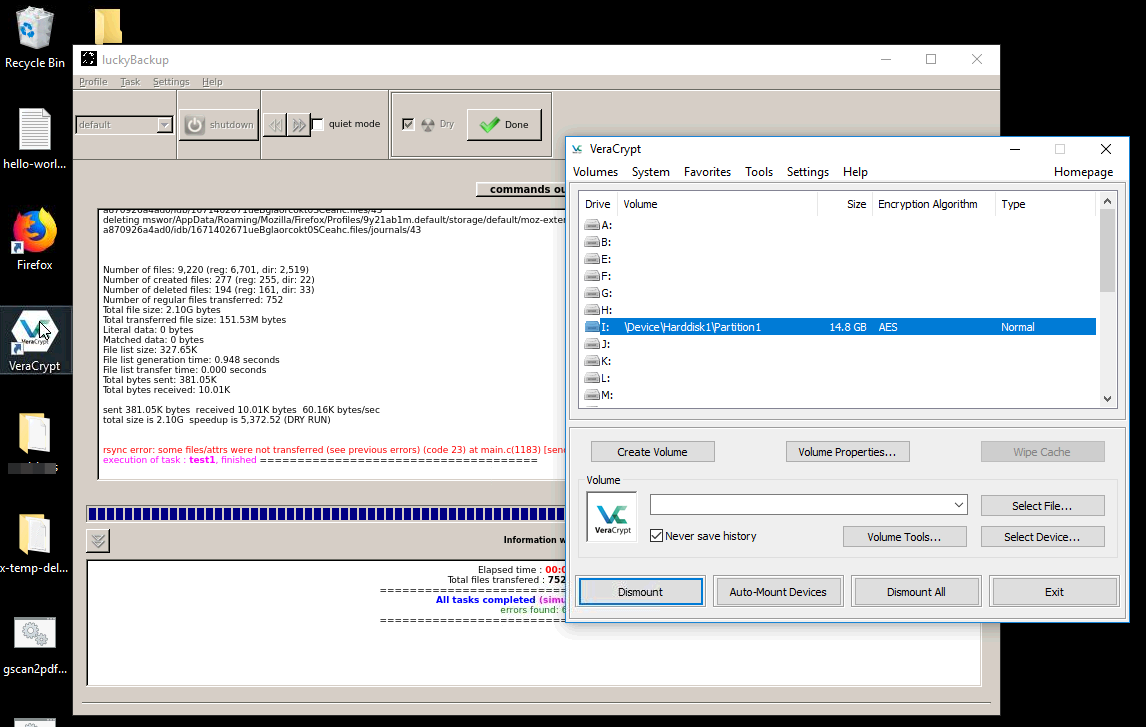
Linux version of Luckybackup running on Windows

Another tool that has become indispensable to me for local backups is Luckybackup, a graphical rsync front-end. It turns out that Luckybackup runs quite nicely as well and in combination with Veracrypt encrypted external drives and access of Linux programs to local files via ‘/mnt…‘, I could successfully make local backups to an encrypted external drive. The only addition I had to make is to add ‘–ignore-errors‘ to the manual options, as Linux programs in WSL can’t access some obscure files and links in the Windows user’s directory. Removable drives are not automatically mounted on the Linux side, but a single command line instruction does the trick: After initially creating in new directory in ‘/mnt‘, e.g. ‘sudo mkdir /mnt/i‘, a Veracrypt volume can be mounted on the Linux side as follows:

# Mount drive i: on the Linux side:
sudo mount -o gid=martin,uid=martin -t drvfs i: /mnt/i

No question, running Linux applications on a pure X11 server without a proper Window manager and desktop environment is not very pretty. But I’m after function here, so that’s a small price to pay.

11 Dec 03:37

Note-taking techniques III: The Cornell Notes Method

by Raul Pacheco-Vega

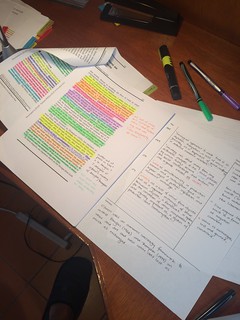
Reading and Cornell NotesAs I noted on Twitter, it’s been a VERY long time since I have taken a class, so while I have my old notebooks from courses I have taken, ranging from Comparative Public Policy to Chemical Engineering Plant Design, I am not sure I could teach anyone how I take notes. I’ve written a blog post on taking notes effectively, but it’s mostly as a tentative guide rather than something I’d like my students to learn. HOWEVER… I do think that my students would benefit from learning how to take in-class notes (and capture ideas from readings) using the Cornell Notes method. The Cornell Notes method was developed by Walter Pauk in his How to Study in College book, and it’s been widely used all over the world. Alison Innes (Brock University) and Katherine Firth (La Trobe University) have both produced excellent guides for how to use Cornell Notes, including handouts that can be easily downloaded as PDFs and printed out.

RESOURCES

  • Alison Innes’ first and second blog posts on Cornell Notes as note-taking methods. Alison’s template is ruled and included in her blog posts.
  • Katherine Firth’s first and second blog posts on Cornell Notes and how to take notes with them and turn them into scholarly writing. Katherine’s template is not ruled and therefore is easier for me to use, also included in her blog posts.
  • Descriptions of the Cornell Notes method by the Cornell Learning Center.
  • A Power Point by the Orange County Department of Education on the Cornell Notes method and how to use it.

MY OWN APPROACH TO CORNELL NOTES’ STYLE NOTE-TAKING

This blog post showcases how I take notes from books and journal articles with the Cornell Note method. If you use any of the methods I’ve written about on my blog, you’ll quickly see that you can either use a Cornell Notes-style Everything Notebook, an index-cards version, and an electronic version that combines the Conceptual Synthesis Excel Dump with a paper-based template. As I note on Twitter, you can dump your Cornell Notes into an Excel Dump row, OR an index card, OR a section of your Everything Notebook OR a synthetic note, OR a memorandum. It’s literally basically up to you which technique you use or how you combine them.

Basically, what I have used the Cornell Notes for is to draw relevant quotations from my readings as well as the proper page, and to make connections between themes and topics and stuff I have already read, or written about.

Clearly, you can use your Cornell Notes summary to write an Excel dump row entry.

You may also be interested in my other note-taking techniques blog posts: with Index Cards and with the Everything Notebook.

11 Dec 03:36

The ebbs and flows of software organizations

by Dries

This week I was in New York for a day. At lunch, Sir Martin Sorrell pointed out that Microsoft overtook Apple as the most valuable software company as measured by market capitalization. It's a close call but Microsoft is now worth $805 billion while Apple is worth $800 billion.

What is interesting to me are the radical "ebbs and flows" of each organization.

In the 80's, Apple's market cap was twice that of Microsoft. Microsoft overtook Apple in the the early 90's, and by the late 90's, Microsoft's valuation was a whopping thirty-five times Apple's. With a 35x difference in valuation, no one would have guessed Apple to ever regain the number-one position. However, Apple did the unthinkable and regained its crown in market capitalization. By 2015, Apple was, once again, valued two times more than Microsoft.

And now, eighteen years after Apple took the lead, Microsoft has taken the lead again. Everything old is new again.

As you'd expect, the change in market capitalization corresponds with the evolution and commercial success of their product portfolios. In the 90s, Microsoft took the lead based on the success of the Windows operating system. Apple regained the crown in the 2000s based on the success of the iPhone. Today, Microsoft benefits from the rise of cloud computing, Software-as-a-Service and Open Source, while Apple is trying to navigate the saturation of the smartphone market.

It's unclear if Microsoft will maintain and extend its lead. On one hand, the market trends are certainly in Microsoft's favor. On the other hand, Apple still makes a lot more money than Microsoft. I believe Apple to be slightly undervalued, and Microsoft is to be overvalued. The current valuation difference is not justified.

At the end of the day, what I find to be most interesting is how both organizations have continued to reinvent themselves. This reinvention has happened roughly every ten years. During these periods of reinvention, organizations can fall out out favor for long stretches of time. However, as both organizations prove, it pays off to reinvent yourself, and to be patient product and market builders.

11 Dec 03:35

mysharona1987: Jimmy Carter: IMO, only person in that picture...


mysharona1987:

Jimmy Carter: IMO, only person in that picture who is truly at peace with his life and legacy. 

He really does look magnificently above all the in-fighting, cold stares and bitchiness. 

Only good thing about getting really, really old: You really do stop giving a shit. 

11 Dec 03:35

"A poet has been appointed ambassador. A playwright is elected president. Construction workers stand..."

““A poet has been appointed ambassador. A playwright is elected president. Construction...
11 Dec 03:34

A view from my chair

by Volker Weber
There is nothing to writing. All you do is sit down at a typewriter and bleed.
— Ernest Hemingway
11 Dec 03:28

Surprise, surprise, Vancouver: Huawei CFO Sabrina Meng Wanzhou is a mansion-owning, satellite-parenting reverse immigrant

by Ian Young
With the arrest of Huawei CFO Sabrina Meng Wanzhou at the request of the United States, Vancouver has found itself at the epicentre of a ground-shaking, magnitude-nine, monster of a story. A distillation of two superpowers’ current and future battle for primacy on the world’s economic stage, the case has roiled financial markets and provoked fury from Beijing, as the US-China trade war hangs in the balance. It is a tale of epic sweep. And yet on another, granular, level, Vancouverites could…
11 Dec 03:24

How to Dress for Winter Cycling – Recommended Winter Cycling Clothes

by Average Joe Cyclist

OK, so maybe you won't be doing this (I know I won't!) But any cycling in the winter can be very, very cold if you are not dressed correctlyTips for dressing for winter cycling! This post explains how to dress in layers and keep your core, head, hands, feet and other parts warm and dry for comfy, safe, winter cycling.


The post How to Dress for Winter Cycling – Recommended Winter Cycling Clothes appeared first on Average Joe Cyclist.

11 Dec 03:15

Friday Funny: End the “War on Stolen Bikes”

by Gordon Price

From The Vancouver Glass:

CREEKSIDE PARK— As a bike theft epidemic washes over the city, solutions to the problem are few and far between. It might seem like a radical response to the issue but legalizing recreational bike theft could help. Demonstrators are hoping to convince people it’s worth a try. They are calling for an end to the failed “War On Bikes”. It’s their belief that prohibition on bike theft has done more harm than good and it’s now time to try something different.

Full article continued here.

(It’s satire, folks) 

11 Dec 02:21

Defining the Data Stack

Joe Pilla, IAB Data Center of Excellence, Dec 07, 2018
Icon

This report (18 page PDF) looks at data from a marketing and brand perspective, but offers a useful perspective for any digital enterprise, including education. It is based on "the need for a baseline understanding of how different types of data can enhance business performance for brands when used properly." It surveys four levels of data needs (and uses), a number of dataset types, and a typology based on data ownership. It's terse, but it draws out and makes clear some key aspects of data.

Web: [Direct Link] [This Post]
11 Dec 02:18

Nokia 7.1 FAQ

by Rajesh Pandey
Nokia recently launched the Nokia 7.1 in India. The mid-range device sits above the Nokia 6.1 Plus and features the same beautiful glass design and notch display as the Nokia 6.1 Plus. If you plan on buying the Nokia 7.1, check out our FAQ which will answer all your questions about the device. Continue reading →
11 Dec 02:14

Twitter Favorites: [ReneeStephen] I am super excited because my travel next week includes not one but two trains.

Renée Stephen @ReneeStephen
I am super excited because my travel next week includes not one but two trains.
11 Dec 02:14

Twitter Favorites: [femwriter] Well isn’t this spicy https://t.co/zkYPDioMMw

Anne Marie Aikins @femwriter
Well isn’t this spicy pic.twitter.com/zkYPDioMMw
11 Dec 02:13

Twitter Favorites: [Sean_YYZ] Today I learned that Vancouver has a special deicing truck for its trolleybus overhead. Neat! https://t.co/r4fmSXOEDN

Sean Marshall @Sean_YYZ
Today I learned that Vancouver has a special deicing truck for its trolleybus overhead. Neat! twitter.com/translink/stat…
11 Dec 02:11

China urges Canada to release Huawei CFO or ‘accept full responsibility for the serious consequences caused’

by Ian Hardy
Huawei P20 camera

Huawei’s unwanted spotlight on its CFO continues into the weekend.

Meng Wanzhou, Huawei’s global chief financial officer, has been under arrest in Vancouver since December 1st, reportedly for ‘alleged fraud.’ Meng is the daughter of the founder of Huawei Technologies.

On Friday, during a court hearing, it was revealed that the “U.S. banks became concerned about [the] relationship between Huawei and subsidiary SkyCom. Meng told banks the two were separate when in fact ‘Huawei is SkyCom.”

Today, in a statement to the press, China’s Foreign Ministry said urged Canada to release Meng, noting, “China strongly urges the Canadian side to immediately release the detained person, and earnestly protect their lawful, legitimate rights, otherwise Canada must accept full responsibility for the serious consequences caused.”

While awaiting potential bail, or to see if she will be extradited to the United States, Meng might face charges of conspiracy to defraud multiple financial institutions, which could lead to a maximum sentence of 30 years for each charge. The court will resume on Monday.

In Canada, several wireless carriers, including Telus and Bell, are backed by Huawei’s cellular infrastructure. In an earlier report, it was estimated that it would cost Canadian telecoms upward of $1 billion to remove Huawei equipment.

Source: National Post

The post China urges Canada to release Huawei CFO or ‘accept full responsibility for the serious consequences caused’ appeared first on MobileSyrup.

11 Dec 02:11

You’ll soon be able to order cannabis online from Shoppers Drug Mart

by Ian Hardy
cannabis

Shoppers Drug Mart is already a source to fulfill your everyday drug requirements, but it has now been approved by Health Canada to sell cannabis.

Under the name of “Medical Cannabis by Shoppers Drug Mart Inc.,’ Shoppers will soon be licensed to sell those in Ontario dried and fresh cannabis, plants, seeds, and oils. This will not be at its 1,300 locations in Canada but only available online.

On its website, Shoppers notes, “As a leader in health and wellness for Canadians, Shoppers Drug Mart will be your trusted source for medical cannabis from a variety of producers. Through a secure website, patients with a strict safety record will be able to meet the strictest standards, and rest assured that they will be delivered discreetly, right to their doorstep.”

There was no timing listed, only that it will be “coming soon.”

Shoppers Drug Mart was acquired by Loblaws in 2013 for $12.4 billion.

Related: OCS receives over 220,000 legal cannabis orders

Source: Shoppers

The post You’ll soon be able to order cannabis online from Shoppers Drug Mart appeared first on MobileSyrup.