Shared posts

11 Dec 03:24

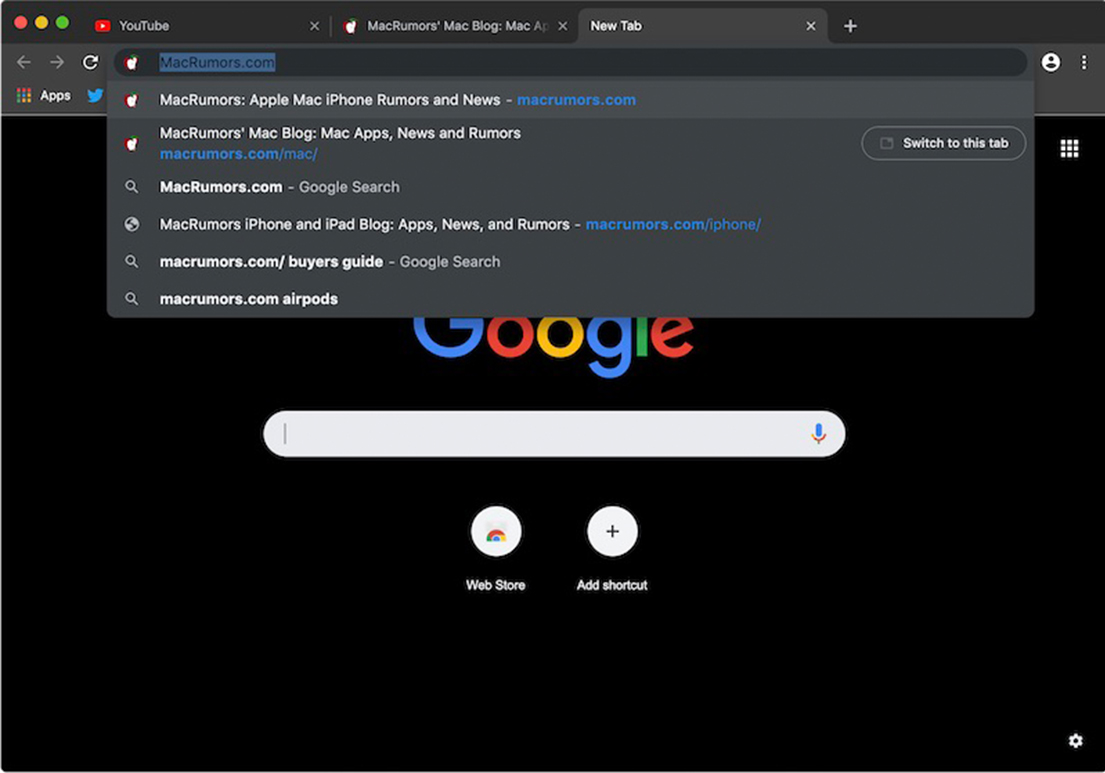
Microsoft Edge and Chromium :: From the horse's mouth

by Volker Weber
This document exists to clarify our thinking on how that work will proceed: we want to explain our plans and intentions related to Microsoft Edge and the Chromium open-source project. The audiences we think will find this document most relevant and useful are (a) the people working on Chromium as approvers/maintainers and leading that project, (b) the companies and engineers who build other browsers and will be interested in the contributions we plan to make, and (c) the broader community of web developers, corporate-IT managers and partners we work with on Windows and Microsoft Edge. And of course, we and all those audiences care primarily about the end-user, who is ultimately the audience this work is intended to benefit.

No second guessing. Just the intent, as published on Github.

More >

11 Dec 03:24

Sitting At The Crossroads Of Computing Paradigms

by Rui Carmo

Somewhat apropos this week’s Edge announcement, I decided to put forth some of what I’ve been mulling regarding current computing paradigms, since I’ve been pondering things for a while now and I’m not too fond of where we’re headed.

I haven’t been very keen on modern UX trends and application ecosystems for a while now, and this post has been sitting in my drafts folder for a few months. It all started innocently enough–around two years ago, in fact, as I reflected on interaction paradigms.

Despite having made the iPad my primary personal computer, I often find touch-based interfaces annoyingly limited and cumbersome, since it still requires too much effort to, say, manipulate text (undo on iOS, anyone?), edit tabular data, or even drag things about with precision, and a lot of it translates across to web interfaces.

But it’s not as simple as that (it never is), since today computers are whole systems that we can hold in our hands, and we’ve as yet been unable to evolve the UX to a point where it’s consensual across form factors, and (even worse) where the technology is actually fit for purpose.

From Cut and Paste to FrankenUX

Part of my dissatisfaction with iOS is certainly due to mongrel interface conventions that were brought over from desktop environments. In that transition from desktop to mobile, cut and paste was the most notorious offender from the outset, if only because it was in popular demand since the earliest days of the iPhone.

And yet, it’s not really suited to touch interfaces–it’s as much of a boon as a hassle to do repeatedly, and automatic text selection has become smarter, but it’s still inconsistent and (mostly) limited to text, and quite often only plaintext at that.

The situation has improved somewhat in iOS with better rich text support in native controls, but cut and paste still works mostly the same, and it remains fundamentally broken in Android–in some versions, the standard behavior placed an action bar at the top of the screen, forcing you to reach for something too far away from the selection, and it still doesn’t have the same caret positioning UX that iOS has, so pasting text exactly where you want it is a frustrating exercise, to say the least.

This is quite similar to what happened with web interfaces at the beginning. That was more jarring because, after all, web interfaces landed on desktops, and on desktops you were soon acutely aware that the web browser was an unfriendly place to edit things: you could only paste un-styled text into standard controls, and even with contentEditable, things were enough of a mess.

In fact, they are still messy, and I’ve kept track of a number of workarounds since 2009 (I essentially gave up on it over the past two years). But I have a lot more gripes with mobile and web applications, many of them seem to be carrying over to the desktop:

  • They typically require visual interaction (i.e., you have to look at what you’re doing, while you’re doing it, killing multitasking)
  • They have very low information density
  • They usually lack input alternatives (iOS is notorious here for its lackluster input device support, but web UIs usually have no keyboard commands either)
  • Lack of affordances and discoverability in favor of flashy visuals
  • “De-contenting” or removing features to sell “pro” versions

The only consistent upside from mobile and web UX (which is largely driven by their business goals) seems to be an increased awareness of interaction flows and how to streamline interactions to save users’ time–and maximize profitability for their creators.

The Electron Mess

The downside, for me at least, is that thanks to a warped variant on back-propagation the desktop app experience is deteriorating before our very eyes. The collected body of human-computer interaction expertise (that’s what we “old” people called UX before it became a hipster minefield) numbers in the thousands of man-years, but it troubles me somewhat that we’re letting it all fall into the hands of the Electron hordes and their massively inefficient, one-size-fits-all excuse for cross-platform development.

I get it that doing native development these days is complex, and that the learning curve might be daunting. I myself am writing a small Cocoa-based app for my own use, and really wish there was a widely accepted universal GUI toolkit, since if I ever want to port it to Windows (which is unlikely, but possible) I am going to have to rewrite a lot of it.

In much the same way, I fully get that the vast majority of people doing user interface work these days are largely focused on web technologies, but (and this is the crux of the matter for me) there is no excuse for mediocrity on any platform, and the explosive combination of the JavaScript language with Chromium technology is likely to be the death sentence for well-designed, responsive and, above all, usable desktop applications.

Yes, you can do excellent things with Electron. VS Code is a cardinal example of that I use daily on multiple platforms (although with increasing frustration as extensions start eroding responsiveness and speed). But VS Code has a very thin “native” interaction model (as a development tool, it falls outside “regular” interaction patterns), and is written (and its UX designed) by programmers for programmers.

Whereas most people doing Electron apps for non-technical users typically lack the skills to do so responsibly, and just churn out half-baked, RAM-intensive garbage that I typically uninstall on sight1 because the developer trade-offs (single codebase, common code, etc.) do not compensate for my grievances when attempting to use those applications.

And yes, I am very critical of JavaScript as a core language for complex applications, and am constantly coming across reasons to dislike its ecosystem and ethos–only the other day I was reviewing a widely-used package to figure out how it handled a certain piece of user input, and the only validation that string input had was liberal use of indexOf to check for separators instead of, you know, actually validating the data.

That is not to say that JavaScript programmers are generally incompetent, but every time I hear someone saying Electron applications are “lowering the barrier to access” or “delivering faster” I actually hear “lowering the bar for hiring resources” and “delivering shoddier releases”.

For all the industry’s emphasis on Agile, I’ve seen more half-baked releases of JavaScript software than just about anything else, and I see no sign of that abating even with transpilers and supporting technologies.

Going beyond the technical and the cosmetic, the non-native control ratatouille Electron foists upon users is also the death of accessibility and assistive technologies, not because of technology constraints, but largely due to human incompetence, developer ignorance and a general lack of effort that echoes the overall approach to QA in the ecosystem itself.

As an example, these piddling 92 lines of Markdown appear to be the entirety of Electron’s accessibility documentation, and pretty much nobody pays any attention to that matter unless you have a top-tier mainstream app like Slack or Teams.

The Useless Network Computer

It is often argued by Electron advocates that the browser-based UX we live in these days is the only sensible thing to develop for (some even call it the “post-desktop” experience), and that they are actually “enriching” the experience by barfing JavaScript-laden hairballs onto desktops for lower latencies and direct device access.

And it’s true that we’ve yet to settle on one working “desktop” metaphor even as we rush headlong into uneasy coexistence with touch environments (Marzipan, anyone?) and that computers (pocketable and otherwise) are largely used for media consumption.

But in that outreach for the masses we’ve lost (and keep losing) the ability to actually do something with most applications except fill out half-baked forms, and I blame the web browser. Not the paradigm per se, but the stupefyingly limited ways in which you can interact with data and content on the web today, and which I run up against every day even as I try to build working windows onto data.

Oh, sure, you can build “rich, interactive experiences” with JavaScript, and I come across a couple of new ones every week at my job, but they are all dead ends from a work/enterprise/productivity perspective.

Take data visualization, in which I have more than a passing interest: D3 is an excellent example of how JavaScript has pushed the envelope so far that even I would be hard pressed to use anything else for serious visualization work, but you can’t grab the data behind it and shove it onto a spreadsheet (or any other kind of data tooling) without a good deal of work (quick CSV dumps don’t count, and even then only a handful of solutions I’ve seen provide such affordances to web users).

Web interfaces are the least common visual denominator and they suit our monkey brains visually, but they are intractable and fundamentally broken for actual manipulation. But even if we’ve managed to mimic many “rich” interactions inside single web pages, they are still just smaller data silos.

Silos, but intentional

And speaking about silos, another aspect of the new computing model that I’ve been mulling is the willful design of applications (be they standalone apps on your device or online services) as silos where your data is effectively trapped, and the death of the computer as a generic data manipulation tool. Let’s ignore business data for a bit, and take PIM data (contacts, calendar, etc.) as an example.

Your address book is, comparatively, relatively easy to move from one service to another, largely because companies have realized it’s critical for customer acquisition and because the schemas involved are actually standardized–partially because if you can’t move your data in easily, then you’re not likely to use a service, and because RFC 6530 harks back to an era when standards were drafted by people without vested interests, which means that address book data exchange has been largely solved for a good while now (even though I’m still amazed at the number of failed attempts at doing so over the years).

Mass market was also a key driver there, and mobile tech made things (too) easy: Android, in particular, is notorious for making it embarrassingly easy for your app to become a contacts provider, leading to a mess of possible duplicates and half-cocked strategies for linking them in your local address book (with nearly pathological security and privacy issues, but that’s another issue).

And yet, there is no easy way for you to enrich contact information on your own machine without resorting to third-party services that are designed, from the ground up, to vacuum your data and keep it in a cloud service or a proprietary app2. It gets enriched, sure, but you can’t get the enriched data out.

In much the same way, documents and other “generic” data have become hostage of SaaS solutions of various kinds, with even password managers getting into the act, and more JavaScript hairballs being thrown at variations on the “rich editing” experience–again, with little to no interoperability with desktop environments or even across applications.

The Platform Gambit

Ironically (for a Mac and iOS user), I’m also increasingly biased against platform lock-in. Besides the usual criticism of the marked difference between yearly price increases and actual improvement across Apple hardware and software3, or OS-mandated default applications and services (which I actually object little to in iOS, but find irritating), I’m more worried about the lack of innovation.

I’m going to take the long way around it and start with hardware, since I’m also irritated by the death of repair (everything is hyper-fragile, glued or soldered) and the death of expansion options (no removable batteries or expandable storage), but I get them because they were necessary (up to a point) to deliver the kind of power and performance we can stuff into a trouser pocket today.

Even my current employer (Microsoft) ships densely-packed, vertically integrated hardware like the Surface Pro (which I love to bits) and the Surface Studio (which I honestly wish I could afford), because that kind of deep integration is the only way to improve the overall user experience, and people who design hardware properly have an innate understanding of who their user is–they do not treat users as mere eyeballs, and care about the feel of their deliverables.

And yet, nobody seems to have an iota of common sense regarding end-to-end hardware and software integration. Apple knows how to do vertical integration on the hardware side and had massive success with the curated App Store model in the mass market for the sake of convenience and security but has no clue how to merge mobile and desktop UX, Android and Chrome OS are being painfully stitched together and have effectively no reference platform (or even a standard version), and Windows has to deal with so much Intel legacy that even Surface devices still have occasional driver issues.

So it’s no surprise that integrating from the OS on up is such a mess, and that actually standardizing on Chromium for web browsers (and business applications, and maybe even clocking off Electron with something tamer) actually seems like a sane thing in comparison.

The Web, Only The Web

I stopped caring about front-end development back when it became apparent that front-end development frameworks had to spend 80% of their code abstracting away browser features. Or rather, just before people just started making stuff up on the spot to compensate for the shortcomings of the DOM either feature-wise or consistency-wise, and I’m not even blaming JavaScript here.

Web development has been broken in various ways for years, and it’s actually a good thing to take a stab at having a single consolidated runtime for it, as long as it stops just short of having every minor component become Turing-complete and self-aware. But I worry about things like security, power efficiency, lobbying, and someone baking in proprietary technology, surveillance enablers and fashionista tech of various kinds4, because there has to be room for innovation, and having what boils down to a single rendering engine is going to be yet another way for things to break, but with the potential to do so on a massive scale.

I’m worried about lack of innovation in the DOM, in web scripting, in interoperability between web applications, and, most importantly, in overall quality, richness and productivity of the whole experience of using computers, because the Web has become more of a shopfront than a playground, and you never create things while sitting in front of shopfronts.

So yes, I expect that we, as an industry, will keep glorifying web forms and SaaS solutions to the extent where they will become the only form of UX we will ever need, and remain gleefully ignorant of the irony of perpetuating the 5250 legacy atop terminal hardware that dwarfs the mainframes of yore by several orders of magnitude.

There will be a few holdouts on the desktop, which will have to be as native as possible–games (which have no UI conventions and need to run natively, or be streamed), media creation (music and video apps), and, generally, anything else that needs direct access to hardware for either performance or functionality.

On mobile, things will likely remain as they are for the foreseeable future–web applications simply aren’t good enough for a lot of use cases (no matter how many APIs people try to shoehorn into them), and it is the one domain where applications have the potential to become richer in terms of interactivity and graphics to a point well beyond what is possible with web technologies.

Summary

I’m positive there will be much ranting and crying and baying about Chromium taking over the web in one form or another, but I am more concerned about that newfound uniformity lowering standards and decreasing the incentive to innovate even further.

After all, web technologies (even in the messy state they are in right now) gave us Electron because it was easier to cheat at doing proper desktop UX than the alternative, and that is something that nobody appears to have internalized and decided to fix.

My only remaining hope here is that, like Ethernet (which was essentially the simplest thing that could possibly work at 1Mbps, and yet keeps getting pushed out into the Gb range), web technologies improve over time.

The thing is, Ethernet was simple and elegant. Web technologies are a complex, virulent mess that we will need to replace at some point in the future, and we keep piling on technical debt.


  1. I still refuse to use the Slack desktop client, for instance, and not just because of Teams (which I also ran in a browser until it officially replaced Skype for Business). ↩︎

  2. This business concept waxed and waned several times in the heydays of mobile operators (who most definitely wanted to own your address book) and as pretty popular in social network aggregators. GDPR seems to have made it unappealing for a while. ↩︎

  3. Where by “software” I mean the very few applications they don’t give away for free such as Final Cut Pro, since pretty much everything else (including macOS) is falling into various states of disrepair, but are effectively gratis. ↩︎

  4. I stopped caring about support for proprietary document formats back in the GIF wars, and can almost forgive Mozilla for PDF.js, but I draw the line at allowing the modern Adobe to push anything past a standards committee. ↩︎


11 Dec 03:24

Canada Map

by Kieran Healy

I taught my Data Visualization seminar in Philadelphia this past Friday and Saturday. It covers most of the content of my book, including a unit on making maps. The examples in the book are from the United States. But what about other places? Two of the participants were from Canada, and so here’s an example that walks through the process of grabbing a shapefile and converting it to a simple-features object for use in R. A self-contained R project with this code is available on GitHub.

Mapping data (and, more importantly, converting map data into a format that we can tidily use) requires a bit more heavy lifting behind the scenes than the core tidyverse libraries provide. We start by (if necessary) installing the sf library, which will also bring a number of dependencies with it. We’ll also install a few packages that provide some functions we might use in the conversion and mapping process.


install.packages("sf")
install.packages("rgdal")
install.packages("geojsonio")
install.packages("spdplyr")
install.packages("rmapshaper")

Then we load the packages, along with others we’ve already installed (as part of the seminar).


library(geojsonio)
library(rmapshaper)
library(rgdal)
library(tidyverse)
library(spdplyr)
library(sf)
library(socviz)


We make a function, theme_map(), that will be our ggplot theme. It consists mostly in turning off pieces of the plot (like axis text and so on) that we don’t need.


theme_map <- function(base_size=9, base_family="") {
    require(grid)
    theme_bw(base_size=base_size, base_family=base_family) %+replace%
        theme(axis.line=element_blank(),
              axis.text=element_blank(),
              axis.ticks=element_blank(),
              axis.title=element_blank(),
              panel.background=element_blank(),
              panel.border=element_blank(),
              panel.grid=element_blank(),
              panel.spacing=unit(0, "lines"),
              plot.background=element_blank(),
              legend.justification = c(0,0),
              legend.position = c(0,0)
              )
}

theme_set(theme_map())

Next we need to get the actual map data. This is often the hardest bit. In the case of Canada, their central statistics agency provides map shape files that we can use. The Shape File format (.shp) is the most widely-used standard for maps. We’ll need to grab the files we want and then convert them to a format the tidyverse can use. You won’t be able to run the code in the next few chunks unless the files are downloaded where the code expects them to be.

So, get the data from Statistics Canada. We’re going to use this link: http://www12.statcan.gc.ca/census-recensement/2011/geo/bound-limit/bound-limit-2011-eng.cfm. From the linked page, choose as your options ArcGIS .shp file, then—for example—Census divisions and cartographic boundaries. You’ll then download a zip file. Expand this zip file into the directory in your working folder named ‘data’. Then we can import the shapefile using one of rgdal’s workhorse functions, readOGR.


canada_raw <- readOGR(dsn = "data/gcd_000b11a_e", layer = "gcd_000b11a_e",
                      use_iconv=TRUE, encoding="CP1250")

Note the options here. This information is contained in the documentation for the shape files. Now we’re going to convert this object to GeoJSON format and simplify the polygons. These steps will take a little while to run:


canada_raw_json <- geojson_json(canada_raw)
canada_raw_sim <- ms_simplify(canada_raw_json)

Then we save the resulting GeoJSON file, which we can now work with directly from here on out:


geojson_write(canada_raw_sim, file = "data/canada_cd_sim.geojson")

We only need to do the importing, converting, and thinning once. If you already have a GeoJSON file, you can just start here.

Read the GeoJSON file back in as an sf object. The .geojson file is included in the repository, so you can load the libraries listed above and then start from here if you want.


canada_cd <- st_read("data/canada_cd_sim.geojson", quiet = TRUE)

canada_cd

## Simple feature collection with 293 features and 6 fields
## geometry type:  MULTIPOLYGON
## dimension:      XY
## bbox:           xmin: -141.0181 ymin: 41.7297 xmax: -52.6194 ymax: 83.1355
## epsg (SRID):    4269
## proj4string:    +proj=longlat +ellps=GRS80 +towgs84=0,0,0,0,0,0,0 +no_defs
## First 10 features:
##    CDUID          CDNAME CDTYPE PRUID                                  PRNAME rmapshaperid                       geometry
## 1   4609 Division No.  9    CDR    46                                Manitoba            0 MULTIPOLYGON (((-97.9474 50...
## 2   5901   East Kootenay     RD    59 British Columbia / Colombie-Britannique            1 MULTIPOLYGON (((-114.573 49...
## 3   5933 Thompson-Nicola     RD    59 British Columbia / Colombie-Britannique            2 MULTIPOLYGON (((-120.1425 5...
## 4   4816 Division No. 16    CDR    48                                 Alberta            3 MULTIPOLYGON (((-110 60, -1...
## 5   5919 Cowichan Valley     RD    59 British Columbia / Colombie-Britannique            4 MULTIPOLYGON (((-123.658 48...
## 6   4621 Division No. 21    CDR    46                                Manitoba            5 MULTIPOLYGON (((-99.0172 55...
## 7   4608 Division No.  8    CDR    46                                Manitoba            6 MULTIPOLYGON (((-98.6436 50...
## 8   4811 Division No. 11    CDR    48                                 Alberta            7 MULTIPOLYGON (((-112.8438 5...
## 9   4802 Division No.  2    CDR    48                                 Alberta            8 MULTIPOLYGON (((-111.3881 5...
## 10  5951 Bulkley-Nechako     RD    59 British Columbia / Colombie-Britannique            9 MULTIPOLYGON (((-124.4407 5...

Notice the proj4string there in the metadata. We’re going to change that to Canada’s favorite projection, the Lambert Conformal Conic projection. See this discussion for details.


canada_cd <- st_transform(canada_cd, crs = "+proj=lcc +lat_1=49 +lat_2=77 +lon_0=-91.52 +x_0=0 +y_0=0 +datum=NAD83 +units=m +no_defs")

canada_cd

## Simple feature collection with 293 features and 6 fields
## geometry type:  MULTIPOLYGON
## dimension:      XY
## bbox:           xmin: -2529065 ymin: 5816874 xmax: 2793734 ymax: 10396190
## epsg (SRID):    NA
## proj4string:    +proj=lcc +lat_1=49 +lat_2=77 +lat_0=0 +lon_0=-91.52 +x_0=0 +y_0=0 +ellps=GRS80 +towgs84=0,0,0,0,0,0,0 +units=m +no_defs
## First 10 features:
##    CDUID          CDNAME CDTYPE PRUID                                  PRNAME rmapshaperid                       geometry
## 1   4609 Division No.  9    CDR    46                                Manitoba            0 MULTIPOLYGON (((-457449.9 6...
## 2   5901   East Kootenay     RD    59 British Columbia / Colombie-Britannique            1 MULTIPOLYGON (((-1628202 69...
## 3   5933 Thompson-Nicola     RD    59 British Columbia / Colombie-Britannique            2 MULTIPOLYGON (((-1838098 74...
## 4   4816 Division No. 16    CDR    48                                 Alberta            3 MULTIPOLYGON (((-988280.5 7...
## 5   5919 Cowichan Valley     RD    59 British Columbia / Colombie-Britannique            4 MULTIPOLYGON (((-2253700 71...
## 6   4621 Division No. 21    CDR    46                                Manitoba            5 MULTIPOLYGON (((-461578.4 7...
## 7   4608 Division No.  8    CDR    46                                Manitoba            6 MULTIPOLYGON (((-500377.6 6...
## 8   4811 Division No. 11    CDR    48                                 Alberta            7 MULTIPOLYGON (((-1350599 73...
## 9   4802 Division No.  2    CDR    48                                 Alberta            8 MULTIPOLYGON (((-1372235 69...
10  5951 Bulkley-Nechako     RD    59 British Columbia / Colombie-Britannique            9 ## MULTIPOLYGON (((-1921887 78...

Finally, and just because I don’t have any census-district-level data to hand at the moment, we make a vector of repeated colors to fill in the map, for decoration only, if you want to color all the census divisions.


map_colors <-  RColorBrewer::brewer.pal(8, "Pastel1")
map_colors <- rep(map_colors, 37)


Instead, we’ll just map the fill to PRUID, i.e. the province level. But try mapping fill to CDUID instead (the census district ID), and see what happens.


p <- ggplot(data = canada_cd, 
            mapping = aes(fill = PRUID))
p_out <- p + geom_sf(color = "gray60", 
                    size = 0.1) + 
  scale_fill_manual(values = map_colors) + 
  guides(fill = FALSE) + 
  theme_map() + 
  theme(panel.grid.major = element_line(color = "white"),
        legend.key = element_rect(color = "gray40", size = 0.1))

ggsave("figures/canada.pdf", p_out, height = 12, width = 15)

p_out

Canada map

Map of Canada, colored by Province, showing 2011 Census District boundaries.

And there we have it. A map of Canada with census-division boundaries that you can join data to, in the same way as described in the “Draw Maps” chapter of Data Visualization: A Practical Introduction.

11 Dec 03:24

I Reported a Bug and It Got Fixed

by peter@rukavina.net (Peter Rukavina)

Seventeen days ago I reported a bug in the Bookmarks app for Nextcloud. Three days ago it got fixed, and today I installed the updated version.

The bug I reported concerned the way that tags are entered when the “bookmarklet” for the app is invoked: after every tag entry you had to click on the “tags” field to regain focus and enter another tag. This has now been fixed, as you can see in this short screencast that shows me entering several tags in rapid succession:

Sometimes submitting bug reports can feel akin to throwing bug reports into a black hole; it’s nice when this proves not to be the case.

11 Dec 03:23

From the feed

by Chris Corrigan

Some interesting links that caught my eye this week.

Why Black Hole Interiors Grow (Almost) Forever

Leonard Susskind has linked the growth of black holes to increasing complexity. Is it true that the world is becoming more complex?

“It’s not only black hole interiors that grow with time. The space of cosmology grows with time,” he said. “I think it’s a very, very interesting question whether the cosmological growth of space is connected to the growth of some kind of complexity. And whether the cosmic clock, the evolution of the universe, is connected with the evolution of complexity. There, I don’t know the answer.”

With a Green New Deal, here’s what the world could look like for the next generation

This is the vision I have been asking for from our governments.  This vision is the one that would get me on board with using our existing oil and gas resources to manufacture and fund and infrastructure to accelerate this future for my kids. The cost of increasing fossil fuel use is so high, it needs to be accompanied by a commitment to faster transition to this kind of world. Read the whole thing.

Why we suck at ‘solving wicked problems”

Sonja Blignault is one of the people in the world with whom I share the greatest overlap of theory and practice curiosities regarding complexity. I know this, because whenever she posts something on her blog I almost always find myself wishing I had written that!  Here’s a great post of five things we can do to disrupt thinking about problem solving to enable us to work much better with complexity.

Money and technology are hugely valuable resources:  they are certaintly necessary but they are not sufficient.  Simply throwing more money and/or more advanced technology at a problem will not make it go away.  We need to fundamentally change our thinking paradigm and approach things in context-appropriate ways, otherwise we will never move the needle on these so-called wicked problems.

rock/paper/scissors and beyond

I miss Bernie DeKoven. Since he died earlier this year I’ve missed seeing his poetic and playful blog posts about games and fun.  Here is one from his archives about variations on rock/paper/scissors

The relationship between the two players is both playful and intimate. The contest is both strategic and arbitrary. There are rumors that some strategies actually work. Unless, of course, the players know what those strategies are. Sometimes, choosing a symbol at random, without logic or forethought, is strategically brilliant. Other times, it’s just plain silly.

So they play, nevertheless. Believing whatever it is that they want or need to believe about the efficacy of their strategies, knowing that there is no way to know.

The longer they play together, the more mystical the game becomes.

They play between mind and mindlessness. For the duration of the game, they occupy both worlds. The fun may not feel special, certainly not mystical. But the reality they are sharing is most definitely something that can only be found in play.

How Evaluation Supports Systems Change

An unassuming little article that outlines five key practices that could be the basis of a five-day deep dive into complexity and evaluation. I found this article earlier in the year, and notice that my own practice and attention has come back to these five points over and over.

While evaluation is often conducted as a means to learn about the progress or impact of an initiative, evaluative thinking and continuous learning can be particularly important when working on complex issues in a constantly evolving system. And, when evaluation goes hand in hand with strategy, it helps organizations challenge their assumptions, gather information on the progress, effects, and influence of their work, and see new opportunities for adaptation and change. 

11 Dec 03:23

The Integral Accident

by Stowe Boyd

Paul Virillo | Erin Winick of MIT Tech Review | Phoneless Phone Booths | GM Plant Closings And Youngstown | Fair Workweek Law in Philly | AI v. MD

Beacon NY — 2018–11–29 — For obvious reasons — the furor around Facebook and other tech giants’ cavalier treatment of our personal data, for example — I think that the Paul Virillo quote, today’s quote of the day, is apt for our time.

Virillo is, I confess, new to me. But I find that he was an influential French cultural theorist. He died only a few months ago, in September. He is generally grouped with other notables, like Marshall McLuhan, Jean Baudrillard, Gilles Deleuze, Félix Guattari, and Jean-François Lyotard.

Virillo espoused the notion of the integral accident, that any technology is paired with the accidents it can create:

The integral accident wikipedia
Virilio believed that technology cannot exist without the potential for accidents. For example, Virilio argued that the invention of the locomotive also contained the invention of derailment. He saw the Accident as a rather negative growth of social positivism and scientific progress. He believed the growth of technology, namely television, separates us directly from the events of real space and real time. In it he suggested we lose wisdom and sight of our immediate horizon and resort to the indirect horizon of our dissimulated environment. From this angle, the Accident can be mentally pictured as a sort of “fractal meteorite” whose impact is prepared in the propitious darkness, a landscape of events concealing future collisions. Aristotle claimed that “there is no science of the accident”, but Virilio disagreed, pointing to the growing credibility of simulators designed to escape the accident — which he argued is an industry that is born from the unholy marriage of post-WW2 science and the military-industrial complex.

I will have to read more of his work.

If you’re getting this you probably signed up at workfutures.org (or one of its predecessors) or stoweboyd.com. If someone forwarded this to you, sign up here.

Consider making a donation. We appreciate your support.

Quote of the Day

When you invent the ship, you also invent the shipwreck; when you invent the plane you also invent the plane crash; and when you invent electricity, you invent electrocution… Every technology carries its own negativity, which is invented at the same time as technical progress.

| Paul Virilio, Politics of the Very Worst

Links

Work Awesome: Interview with Erin Winick of MIT Tech Review | I had the chance to ask Erin Winick, Associate Editor Future of Work at the MIT Tech Review, a few questions about the panel she will be moderating at Work Awesome on December 6 in NYC:

Stowe Boyd | In the past, I have characterized the split in the discourse about AI’s impact on the workforce as a face-off between the ‘Anotherists’, those who say ‘AI is just another wave of technological advance, like those in the past, and ultimately new jobs will be created to employ those initially displaced by AI’, and the ‘Otherists’, who say ‘AI is different from earlier waves of technological advance, since AI seeks to substitute for human reasoning, and so, it may not be the case that those displaced will find new work’. Where do you fall in this debate?
Erin Winick | I think it depends on the area of work we are talking about. AI is not a one-size-fits-all technology. There are certain things it is much better at than others, meaning different categories of jobs will be affected at varying speeds and scales. Some people, like writers who wrote data based simple stories like sports or financial reports, have already been replaced by technology in many areas. Other like politicians or artists haven’t seen too much change to their work yet.
For me I think some people will definitely be out of work, while in other categories, people will migrate to new jobs. Companies often tout that they are excited these new technologies will allow people to move into new more creative roles. But the question is whether the companies will see economic benefit from that or if letting the workers go is the better option for them. We have yet to definitely see what their choice will be. In a tight labor market, they are more likely to try to hold onto them.
I think investing in training the workers that want to be trained for new roles now is the right choice. I’ve learned firsthand that not everyone will want it, but beginning to prepare now for increased technological change is the right move.

Go read the whole thing. Sign up for her newsletter, Clocking In.

The Best Spot in the Office Is a Phone Booth — If You Can Get Into One — WSJ | Sarah Needleman chronicles the battle in open offices to snag a ‘phoneless phone booth’ for a private call.

GM’s Job Cuts Reopen Old Wounds in Youngstown, Ohio | Sherry Linkon and John Russo write about the probable impact of GM closing the Lordstown plant just outside of Youngstown Ohio. From 2001 to 2010, the region had the largest population decline of any of the nation’s 100 largest metro areas, and Youngstown continues to be one of the fastest-shrinking cities in the United States. Deindustrialization of the region has strip-mined the local economy.

The fall of Youngstown since the 1970s offers a textbook illustration of what happens when a significant portion of local workers lose their jobs. Businesses across the community suffer — not just suppliers or service providers who directly supported a closed plant, but also restaurants and bars and retailers of all kinds. Stores close, windows get broken, storefronts get boarded up, and downtowns empty out. Cities lose the tax dollars to pay for street repairs, police patrols, fire departments, and more; crime rises, the built environment deteriorates, and populations decline. Between 2001 and 2010, the population of Youngstown dropped from 82,026 to 66,982; the Mahoning Valley had the largest population declineof any of the nation’s 100 largest metropolitan areas. Since then, the region has lost another 23,000 people, 4.1 percent of its population. In May, the Wall Street Journal listed the area as one of the fastest-shrinking cities in the United States.

A must read.

Philadelphia Service Workers May Get Fair Workweek Law — CityLab | Sarah Holder reports on a planned vote by the Philadelphia City Council on December 6 on a fair workweek bill that would restrict the practice of on call scheduling in the city.

For the nearly 130,000 service workers employed in Philadelphia, finding a job is only half the battle to stability. Once hired, many must contend with constantly shifting schedules and variable hours each week. Some keep their schedules open just in case a shift pops up; others avoid taking second jobs or college classes because of their unpredictable call times. For parents especially, “on-call scheduling” makes organizing childcare and other family responsibilities an ongoing nightmare.
This isn’t just a Philadelphia story — on-call scheduling is legal in most U.S. cities, where it wreaks similar havoc on the lives of those in the service industry. But according to a recent survey of nearly 700 Philadelphia service workers conducted by U.C. Berkeley, the problem is particularly rampant in that city: 66 percent report irregular schedules, and 77 percent ache for a change.

An important trend toward making the lives of hourly workers, which is especially important in Philadelphia, which is the poorest big city in the US, and one with a minimum wage of $7.25 an hour, the Federal rate.

From the Archives

A.I. Versus M.D. | Siddhartha Mukherjee investigated the progress being made by AI medical diagnosis, back in 2017, and wondered

What happens when diagnosis is automated?

Originally published at workfutures.org.


The Integral Accident was originally published in Work Futures Institute on Medium, where people are continuing the conversation by highlighting and responding to this story.

11 Dec 03:23

Broken Like A Window

by Stowe Boyd

The Wage Gap, Recalculated | Team Dynamics and Performance | Prison As An Escape? | Google Contractors and Forced Arbitration | Call-in Interviews | Zygmunt Bauman

Beacon NY — 2018–11–30 — I came across a quotation by Harold Bloom (in a piece by Susan Gubar):

True criticism recognizes itself as a mode of memoir.

I reflected on the notion that my years and years of postings and writings — my criticism of trends and technologies, my questioning and tearing down icons — is, in the final analysis, a form of memoir. In a way, I have been writing about myself.

Reading old posts, as I search for material from the archives, and I try to reconnect to the author who wrote them, I think of what Sam Phillips sang in I Need Love:

Broken like a window, I see my blindness now.

Maybe we need to be broken like a window, to let things in and others out, and to hear what we were trying to say, so long ago.

I see my blindness now.

If you’re getting this you probably signed up at workfutures.org (or one of its predecessors) or stoweboyd.com. If someone forwarded this to you, sign up here.

Consider making a donation. We appreciate your support.

Links

How Big Is the Male-Female Wage Gap, Really? | There’s many ways to measure the wage gap between men and women, Annie Lowrey tells us:

Do women earn 80 cents on the dollar compared with men, as is commonly cited? Or is the pay gap just pennies, as one recent survey found? Or do women earn a shocking 49 cents on the dollar, as calculated by the social scientists Stephen Rose and Heidi Hartmann in a new analysis published by the Institute for Women’s Policy Research?
The answer is all of the above. Each number highlights a different aspect of a complicated and nuanced situation — one reflecting not only sexism and bias but the choices made more or less freely by millions of women in hundreds of thousands of workplaces. Rose and Hartmann’s number is lowest because it is in some ways most holistic.

By holistic, Rose and Hartman looked at the lifetime earnings of women, who are likely to take long stretches out of work when raising children or caring for aging parents.

Rose and Hartmann’s study found that women’s penalties for leaving the workforce have increased: Women who took a year off from work in the 15-year period starting in 2000 had annual earnings 39 percent lower than women who worked continuously over that time period, a gap that was just 12 percent for women working in the 15-year period starting in 1968. “Women’s earnings losses for time out are almost always greater than men’s,” they find.
According to Rose, these facts suggest that the most accurate way to compare women’s and men’s earnings is to take the career-long view. “When you look at all women versus all men over time, the gap is 51 cents,” he said, referring to the 15-year figure.

That’s a big gap to fill, and we will need to create across the board paid family leave and child-care subsidies if we want to close it. There is no way to lean in to eliminate this wage gap.

(from The Lifetime Wage Gap Between Men and Women | Stowe Boyd)

Exploring How Team Dynamics Affect Team Performance | Jacquline Wen looks into new research on team performance by Young Ji Kim of UC Santa Barbara that demonstrates the value of team members ‘social perception’:

“When a team was composed of individuals who were highly socially perceptive, on average, the team performed well on the cognitive tests that we have given. Being socially perceptive means that you are able to accurately infer other people’s mental and emotional states, so you’re aware of other people’s feelings and you know what other people are thinking,” she [Kim] said.
The researchers also noted that the ratio of females on a team mattered, with more women on a team linked to higher team performance.

This is a confirmation of the work of Anita Wooley and colleagues (see Women and the Paradoxes of Work Intelligence and How to make groups more productive? Add women.), which demonstrated that the fastest way to improve the performance of a team was to add women.

South Koreans lock themselves up to escape prison of daily life | South Koreans — who work some of the longest hours in the developed world — are turning to an odd escape: being locked up in a fantasy prison for a weekend getaway, with no human contact, devices, or entertainment.

Google Contractors Want to Be Included in New Policies on Sexual Misconduct | Ellen Huet notes that

Temporary workers had been largely excluded from policy changes announced earlier this month.

So they are still bound by forced arbitration agreements in the case of sexual harassment.

It’s Time for Your Job Interview. You’ll Be Talking to Yourself | Chip Cutter looks into the new trend of one-sided telephone job interviews, where the candidates answer canned questions:

The rise in phone interviewing is, in many ways, counterintuitive. More advanced hiring techniques exist, such as automated video or text interviews. Some companies, though, have shifted back to voice screenings, finding them more effective, particularly for hourly roles.
The Wisconsin job-recruiting firm Cielo, which hires 150,000 workers annually on behalf of clients, has found applicants far more likely to complete an audio interview than a video one, said Adam Godson, the company’s senior vice president of global technology solutions.
Over the phone, applicants needn’t worry about their appearance or their location, nor do they have to have access to a smartphone or a computer with a camera, Mr. Godson said.

From the Archives

Sidestepping the new groupthink in the workplace | Stowe Boyd 2015 | Susan Cain writes about

the new groupthink that elevates teamwork above all else.

Is team membership a burden? A barrier to creativity and a check on personal freedoms?

Quote of the Day

Questioning the ostensibly unquestionable premises of our way of life is arguably the most urgent of services we owe our fellow humans and ourselves.

| Zygmunt Bauman

Originally published at workfutures.org.


Broken Like A Window was originally published in Work Futures Institute on Medium, where people are continuing the conversation by highlighting and responding to this story.

11 Dec 03:22

Saying It Doesn’t Make It So

by Stowe Boyd

Robot Reality Check | Corporate Immune System | What Will Stay The Same | Corporate Sci Fi | Workers Hate Open Offices | Wallace Stevens

Beacon NY — 2018–12–03 — I grow weary of commentators making the assertion — with little evidence or backup, aside from the comments of like-minded others — that automation of work will not lead to a decrease in jobs. The latest is Christopher Mims who seems to think robots will increase wealth in the countries adopting them. We’ll see.

I found this fragment of poetry very apposite:

It is December, and nobody asked if I was ready.

| Sarah Kay, No Matter the Wreckage

If you’re getting this you probably signed up at workfutures.org (or one of its predecessors) or stoweboyd.com. If someone forwarded this to you, sign up here.

Consider making a donation. We appreciate your support.

Links

Robot Reality Check: They Create Wealth — and Jobs | Is Christopher Mims confusing correlation and causation? Obviously the most advanced economies — with the greatest degree of wealth — are the ones buying the most robots. But it does not mean that having the robots creates all that wealth: it could be that having wealth enables companies to invest in robots.

While ITIF [Information Technology and Innovation Foundation] correlates GDP growth with robot adoption, the way that wealth increase is distributed depends on how the country adopts those technologies, says Irmgard Nübler, a senior economist at the International Labour Organization in Geneva.
Typically, she says, adoption of automation goes through two initial phases: worker displacement then job growth. Prof. Nübler believes that the record inequality in the U.S. seen in 2018 suggests we’re at the turning point between these two phases. Without policies in place to deal with these impacts, the inequality that arises in the first phase might persist.

In an accompanying post, Are Robots The Goose Laying The Golden Eggs? We’ll See., I argue against Mims’ ‘Anotherist’ stance — ‘robots and AI are just another technological advance, like steam and electricity’ — and note than many of the economists he’s quoting have doubts about the long-term impact of automation on the economy.

[Also see Rajeev B’s comments at Techpost]

Never Under-Estimate the Immune System | John Hagel warns us of the almost reflex rejection of new ideas by the innately conservative culture of organizations, and which may be the central weakness of organizations to the world of today:

Every large and successful institution has an immune system– a collection of individuals who are prepared to mobilize at the slightest sign of any “outside” ideas or people in order to ensure that these foreign bodies are neutralized and that the existing institution survives intact and can continue on course. Just like the immune system all organisms have, this institutional immune system is adept at recognizing foreign bodies as soon as they appear and very effective at protecting the institution from infection. It is in fact what has helped large institutions to survive — they are in fact “built to last.”
But here’s the paradox: the immune system that has given large institutions extraordinary resilience in the past may be the very thing that makes these institutions so vulnerable today.

A must read.

I especially recommend John’s explicit arguments against the ‘existential threat’ fear mongering to drive transformation:

In driving transformation, there’s often a tendency to focus on the impending threat — for example, we’re all going to die if we don’t transform now. In my experience, that threat-based approach to transformation actually increases the resistance of the immune system. If we’re under imminent threat, the immune system reasons that it’s even more urgent to protect the institution and it becomes even more determined to resist anything that might distract it from the tried and true approaches that have led to the success of the institution so far.
Instead, position the initiative as addressing an opportunity, something that will help the institution to have even greater impact in its relevant market or constituency.

This dovetails with the following piece, which also avoids upsetting the immune response.

Research: To Get People to Embrace Change, Emphasize What Will Stay the Same | Merlijn Venus, Daan Stam, and Daan van Knippenberg present findings from their research that turns the conventional wisdom about change management on its head:

Common wisdom in management science and practice has it that to build support for a change project, visionary leadership is needed to outline what is wrong with the current situation. By explaining how the envisioned change will result in a better and more appealing future, leaders can overcome resistance to change. But our research, recently published in the Academy of Management Journal, leads us to add a very important caveat to this.
A root cause of resistance to change is that employees identify with and care for their organizations. People fear that after the change, the organization will no longer be the organization they value and identify with — and the higher the uncertainty surrounding the change, the more they anticipate such threats to the organizational identity they hold dear. Change leadership that emphasizes what is good about the envisioned change and bad about the current state of affairs typically fuels these fears because it signals that changes will be fundamental and far-reaching.
Counterintuitively, then, effective change leadership has to emphasize continuity — how what is central to “who we are” as an organization will be preserved, despite the uncertainty and changes on the horizon.
[…]
The implications of this research are straightforward. In overcoming resistance to change and building support for change, leaders need to communicate an appealing vision of change in combination with a vision of continuity. Unless they are able to ensure people that what defines the organization’s identity — “what makes us who we are” — will be preserved despite the changes, leaders may have to brace themselves for a wave of resistance.

Nike and Boeing Are Paying Sci-Fi Writers to Predict Their Futures | Brian Merchant takes a deep dive into the marketplace for sci-fi futurecasting and world building, and how major corporations, governments, and non-profits are using techniques developed for fiction can be applied to creating new products, strategies, and positioning.

In 2017, PricewaterhouseCoopers, the professional services firm that advises 440 of the Fortune 500 companies, published a blueprint for using science fiction to explore business innovation. The same year, the Harvard Business Review argued that “business leaders need to read more science fiction” in order to stay ahead of the curve. “We’re already seeing science fiction become reality today,” said Google’s then-CEO Eric Schmidt in 2012. “Think back to Star Trek, or my favorite, the Hitchhiker’s Guide to the Galaxy — much of what those writers imagined is now possible,” he said, ticking off auto-translation, voice recognition, and electronic books. Jeff Bezos’ product design team built the Kindle to spec from Neal Stephenson’s book The Diamond Age. (Stephenson himself is the chief future at the multibillion-dollar-valued Magic Leap.) Josh Wolfe, a managing partner at Lux Capital, is pouring millions of dollars into companies building what he explicitly describes as “the sci-fi future.” “I’m looking for things that feel like they were once written about in science fiction,” he told Fortune. “The gap between ‘sci-fi,’ — that which was once imagined — and ‘sci-fact,’ that which becomes manifest and real, is shrinking.”

I have used these approaches in my work with large tech companies, and also in published writing, such as What Will a Corporation Look Like in 2050? for Wired. I am also planning a graphic novel about the future of work (tentatively, A Working Future), which I have written about a bit (see A Working Future: Telling Lies To Get At The Truth About Work and A Working Future — Carla Paredes in the Cab, 2027).

A must read.

[from The Business of Sci Fi: Sci Fi in Business? | Stowe Boyd]

Statistics show how much U.S. workers hate their open plan offices | Kelsey Campbell-Dollaghan reports on the degree of hatred that has grown up around open offices. In a recent study, respondents were asked what they would trade for private workspaces:

  • 13% said they’d give up their end-of-year bonuses.
  • 13% said they’d give up five vacation days, and 16% said they’d do away with summer Fridays.
  • 17% said they’d give up access to a window or natural light.
  • 27% said they’d give up their office’s coffee machine.

Wow. Giving up natural light!

From the Archives

Two Men and the Fate of American Labor Policy | Stowe Boyd from February 2018 | What links William Emmanuel at the National Labor Relations Board and Neil Gorsuch at the US Supreme Court?

Quote of the Day

The imperfect is our paradise.

| Wallace Stevens

I’m an imperfectionist.

Originally published at workfutures.org.


Saying It Doesn’t Make It So was originally published in Work Futures Institute on Medium, where people are continuing the conversation by highlighting and responding to this story.

11 Dec 03:22

Why Most Solutions To Community Problems Fail

by Richard Millington

A large part of community consultancy is spending more time than most diagnosing community problems.

Far too many people rush into solutions without clearly defining the problem. Here are two (fairly common) examples.

Example 1 – The Bad Community Website

One client right now has a community platform that’s hindering people from participating. An obvious solution would be to suggest fixes to improve the website. But this doesn’t solve the problem. The problem is how did they wind up with a subpar community website in the first place?

Did they not know what they were doing? Did they pick the wrong partners to work with? Or did they not have the budget to do it well.

Once we probed deeper we discovered the person responsible for developing and managing the platform had never done the work before. They were influenced by what marketers wanted (who also had never managed a community before).

They didn’t know the principles of a great community website, didn’t have a great list of examples to work from, and didn’t have a peer group of support.

The solution is to build relationships and educate this group. We can provide them with the right resources, connect them with others, and share the best examples. We might make suggestions to the website as well, but we’re solving the causes of the bad community at the same time.

Example 2 – Declining Engagement

Another client last year had declining levels of engagement.

The obvious solution is to suggest ideas to increase activity. This might produce a few spikes of activity, but it doesn’t solve the question of why engagement was declining in the first place. To answer this, we need to answer a few key questions:

Are fewer members participating or are existing members making fewer contributions?

If, for example, it’s the former then why are fewer members participating? Are fewer people visiting the community in the first place? Are fewer converting into regular members etc?

And if fewer people are visiting in the first place is that a decline of interest in the topic, less money spent on promotion, or declining search traffic?

If it’s the latter (regular members are participating less), then why is that the case? Is their new competition from other communities, a shift to mobile we’re not catering to, or problems with the community itself. We might interview a few members who have stopped participating to find out the answer.

Having trained, consulted, and spoken with hundreds of community professionals – I’d argue most are rushing into solutions which fail because they didn’t clearly define the problem. You always spend more time diagnosing the problem than coming up with a solution.

If you’ve properly diagnosed the problem, the solution will present itself.

11 Dec 03:22

mapsontheweb: Eight ways to divide Finland.


mapsontheweb:

Eight ways to divide Finland.

11 Dec 03:21

Morgen :: Apple Pay

by Volker Weber

32baa5e5590a6e97393759f6e6e30d3d

Ich wage es selten, die Zukunft vorauszusagen. Aber vor zehn Tagen habe ich mich festgelegt: Apple Pay kommt morgen nach Deutschland. Um Apple-Mitarbeiter und andere Insider zu schützen: Niemand hat auch nur eine Andeutung zu mir gemacht. Niemand hat bestätigt, was ich zuerst ausgesprochen habe. Die Vorhersage geht allein auf meine Kappe.

Haltet mir die Daumen.

11 Dec 03:21

We Make the Media – a recent speech at Freedom of Speech Online 2018

by Ethan

I was honored to give the opening keynote this Friday at the Future of Speech Online, held at the beautiful Knight Conference Center atop the Newseum in Washington, DC. A few friends asked whether I’d share the remarks online, so here’s my best attempt, from my notes. Apologies for the differences between this and the talk I actually delivered – the perils of live performance, y’all.


It’s become necessary at gatherings about the future of media to start by banning the “f” word, a word that gets a lot of play in Washington, especially on the President’s Twitter feed. But there’s lots to talk about in the world of dis- and misinformation, that complicated space where words online can lead someone to “self-investigate” a DC-area pizzaria with a rifle to ensure that it isn’t hosting a pedophile ring in its non-existent basement. Online words have consequences, and we’re still trying to understand whether those consequences include swaying elections in the UK, the US or Brazil, or whether recent political surprises have causes other than the media environment.

There’s lots of people trying to solve the mis/disinformation problem with technology, and because I hail from a lab where people manufacture novel artificial limbs, 3D print buildings and design satellites to monitor African environments that I’m coming with a set of new tech solutions. You couldn’t be more wrong, because I’m bringing something far more powerful: history.

When people invoke history in journalism, they’re often talking about the “golden age” of broadcast media, sometime between the end of WWII and Watergate. We had a few authoritative voices – Edward Murrow, Walter Cronkite – and less doubt, perhaps, about what had actually happened in the world. “And that’s the way it is,” like Cronkite liked to say.

That model of media was the result of a very specific moment in technology and in economics that has more to do with the advertising industry depicted in Mad Men than it does with any specific view of how media and democracy work together. A small number of businesses did the very expensive work of producing news and packaged it with advertising on some of the very few channels that could reach a large public, a limited number of print publications and a tiny handful of broadcast television outlets. Those few outlets held a near monopoly over attention and sold slivers of that attention to advertisers for vast sums of money, which is a great business model as long as you can maintain it.

That concentration of power in the hands of a very few outlets meant that media wasn’t very representative. News was largely a white, male space – if you were Black, Latinx, Asian, female, queer or any other identity, news was often a space that wasn’t very open to you. I don’t want to return to a vision of 1950s news, where so many voices were missing from the conversation, even if that conversation was more coherent than the one we encounter today.

Our media now is dramatically more representative, for the simple reason that there are very few structural barriers to expressing yourself, even if there are massive barriers to being heard by an audience. Movements like Black Lives Matter and the gun control protests led by survivors of the high school shooting in Parkland, Florida both leveraged the power of participatory media to be heard and to shift media narratives to stories that often go unreported. This, I would argue, is generally a good thing. But the results of this change (which An Xiao Mina terms the shift from “broadcast consensus to digital dissensus”) means media is more conflicted, confusing and hard to navigate than it was in the mid-20th century. For help understanding our current media, we need a different guide.

I propose Benjamin Franklin, the sort of guy we like to celebrate at MIT. We know him as a statesman, a diplomat and a scientist, but the job he held the longest was as postmaster, first as postmaster of Philadelphia in 1737 and finally getting fired from his position as postmaster general of the Colonies in 1774, when the British finally figured out that he was a revolutionary who could not be trusted. (The dude literally used to post his letters by writing “B. Free Franklin” – as opposed to “B. Franklin – free” – it took the British a while to catch on that this was political propaganda as well as a way of getting free postage.)

Ben was a hustler, an entrepreneur who took full advantage of the various opportunities his position opened, including giving plum patronage jobs to many of the men in his family. His most profitable synergy came from printing newspapers and using the post to distribute them. Early in his career, he’d had difficulty distributing his writings because the postmaster disagreed with their political content and refused to transmit them. Franklin put forth a policy that was both progressive and profitable – neutral carriage. Under his leadership, the job of the post was to deliver letters and printed materials, not to prevent their transmission. This fact, combined with the fact that US presses were not required to reserve “caution money”, huge sums that might be drawn on if a paper was successfully sued for libel, led the US towards a new form of public sphere: a distributed public sphere of mail and print.

When we talk about the public sphere as scholars, we’re usually referring to Habermas’s conception of the public sphere, which was rooted in conversation of wealthy elites in coffeehouses. This dynamic of face to face conversation shapes much of how we traditionally think of the public sphere working, but that’s not how the public sphere evolved in the US. The colonies were physically huge, and in imagining a political conversation that included both Boston and Charleston demanded a creative way of envisioning how political debate could unfold. More than any of the founding fathers, Franklin was responsible for the shaping of this new space for policial discourse.

The founding father who picked up the torch from Franklin as he took over Jefferson’s work as ambassador to France was Dr. Benjamin Rush, a professor and public health advocate whose arguments about the role of the post and the press in the Continental Congress led to the most important piece of legislation you’ve never heard of, the Post Office Act of 1792.

The Post Office Act established the right of the government to control postal routes and gave citizens rights to privacy of their mail… which was deeply undermined by the Alien and Sedition Acts of 1798, but hey, who’s counting. The low cost of mailing newspapers as well as the absence of stamp taxes or caution money, which made it incredibly prohibitively expensive to operate a press in England, allowed half of all American households to have a newspaper subscription in 1820, a rate that was orders of magnitude higher than in England or France.

But what may be most important about the Post Office Act is that it set up a very powerful cross subsidy. Rather than charging based on weight and distance, as they had before Franklin’s reforms, the US postal system offered tiered service based on the purpose of the speech being exchanged. Exchanging private letters was very costly, while sending newspapers was shockingly cheap: it cost a small fraction of the cost of a private letter to send a newspaper. As a result, newspapers represented 95% of the weight of the mails and 15% of the revenue in 1832. This pricing disparity led to the wonderful phenomenon of cheapskates purchasing newspapers, underlining or pricking holes with a pin under selected words and sending encoded letters home for the price of a paper rather than a letter.

But the really crazy subsidy was the “exchange copy”. Newspapers could send copies to each other for free, with carriage costs paid by the post office. By 1840, The average newspaper received 4300 exchange copies a year — they were swimming in content, and thanks to extremely loose enforcement of copyright laws, a huge percentage of what appeared in the average newspaper was cut and pasted from other newspapers. This giant exchange of content was subsidized by high rates on those who used the posts for personal and commercial purposes.

This system worked really well, creating a postal service that was fiscally sustainable, and which aspired to universal service. By 1831, three quarters of US government civilian jobs were with the postal service. In a literal sense, the early US nation was a postal service with a small representative government and a tiny military attached to it. But the postal system was huge because it needed to be — there were 8700 post offices by 1830, including over 400 in my home state of Massachusetts alone, which is saying something, as there are only 351 towns in Massachusetts.

The key thing to understand about this is that it’s not a happy accident that we ended up with a public sphere that worked this way. Our founders built and regulated the postal system in such a way that its function as a sphere of public discourse was primary and its role as a tool for commerce and personal communication was secondary. They took on this massive undertaking explicitly because they believed that to have a self-governing nation, we needed not only representation in Congress, but a public sphere, a space for conversation about what the nation would and could be. And because the US was vast, and because the goal was to expand civic participation far beyond the urban bourgeois, it needed to be a distributed, participatory public sphere. To be clear, this was far than a universal public sphere – the founders saw this as a space for propertied white men – but the infrastructures of post and mail created powerful tools for abolitionists, for newspapers that helped free black men connect across vast distances, that helped carry the case for women’s suffrage.

All that said, I’m not going to argue for a return to the press of the late 18th and early 19th century any more than I would argue for a return to Murrow or Cronkite. Franklin’s press was littered with advertisements to a degree we’d find disconcerting today – as much as 90% of the text in these papers were commercial in nature, helping explain why so many of these early newspapers were called The Advertiser. The press was partisan, to an almost absurd degree. It wasn’t a party press – the political parties of the time emerged from the press, rather than the other way around. You read Hamilton’s New York Evening Post, and that, more than anything else, identified you as a Federalist.

Oh, and the 18th century press was LOADED with fake news. I don’t just mean Franklin’s habit of inventing personas like Silence Dogood, who he created because his brother’s paper, the New England Courtant, wouldn’t publish his letters until he began using a pen name. Franklin’s papers ran stories accusing the British of paying Indians to scalp settlers, a slander that both helped sell papers and turn colonists against the British. (Yeah, that part doesn’t get much play in his autobiography for some reason.)

Worse was Sam Adams – you know, the beer guy – who was a notorious propagandist whose articles in the Boston Gazette led a mob to sack the house of Thomas Hutchinson, the governor of Massachusetts Bay. The folks who attacked his house – “They were old men, young men, and boys barely old enough to read, all of them jacked up on ninety-proof Sam Adams prose,” – believed Adams that Hutchinson was responsible for the hated Stamp Act, a tax on newspapers. Actually, Hutchinson was against the stamp act and had warned his superiors in England that the colonists would never accept this restriction on their speech. (This story is from Eric Burns’s wonderful book, Infamous Scribblers)

Mis/disinformation isn’t a new phenomenon in American civic discourse. Nor is a disputatious, partisan press that veers into propaganda. But these shortcomings where counterbalanced by a carefully constructed ecosystem where diversity and free, inexpensive flow of information helped counterbalance the excesses that otherwise might have plagued the system.

The public sphere of the mid-20th century was carefully constructed as well. It was shaped by a strong professional norm, the firewall between the business and journalism operations of a newspaper, which allowed news organizations to investigate the politically powerful, and even the corporations that funded them. The introduction of the Fairness doctrine in 1949 somewhat heavyhandedly tried to assure equal representation of opposing viewpoints in the media. And after FCC commissioner Newt Minow declared the emerging space of television a “vast wasteland” in 1961, the philanthropic community responded by building the Corporation for Public Broadcasting and building public media as we know it in America.

The point is not that any of these interventions might be the right medicine for what ails us at present, but that the shape of our media is a choice. The media environment we live in is the most powerful factor that influences our civic and political life, and that these environments aren’t inevitable – they can be shaped by policy and by norms, as well as by technology.

We seem to have a strange sense of powerlessness when it comes to coping with the contemporary media environment. After stepping down from his role as VP of growth for Facebook, Chamath Palihapitiya now warns us that social networks are bad for us, and tells us that “i don’t let my kids use that shit.” It might have been nice had he mentioned something while working to bring 2.2 billion people to the platform. And perhaps he could do something with the billion dollars he made working for the company beyond a mea culpa.

Much of the discourse about social networks doesn’t develop beyond critique. We’re told that social networks are addictive and bad for our psychological health. We’re told they’re killing journalism. We hear reporting that social networks are easily manipulated and used to sway elections. And we’re told that the ideological isolation and polarization they cause is destroying our democracy.

But as a scholar, I’ve got to be a bit cautious about these claims. My lab does a lot of research on the dynamics of social media. My smart friends just published a 500 page book on the use of social media in the 2016 elections using the tools built in my lab. Despite what we’re learning, I will freely admit that there is TONS we don’t know about how social media is influencing political discourse and opinion. My guess is that honest scholars will tell you that the jury’s out on the psychological impacts of social media as well. And it’s not clear whether the damage that’s been done to journalism’s business model is the fault of the internet, or even whether journalism – rather than the journalism business – is suffering at present.

When we accept these equations that blame the current political and cultural moment on social media as valid, we end up with simplistic solutions to the dilemmas we face. There are dozens of organizations – some of them excellent – working to factcheck social media and reduce the amount of misinformation online. Much as factchecking became a part of the journalistic mainstream over the past decade, I expect social media factchecking to spread. But I also don’t expect it to radically alter the media environment. The people who most need factchecks are the least likely to see them or to believe them. If factchecking radically changed public discourse, it’s hard to imagine that after a decade of excellent work the American public would have elected a serial fabricator to the nation’s highest office.

Another overly simple solution: It’s become popular to advocate for people to delete their Facebook accounts, both as a form of protest and a way of reclaiming their interactions with the world. There’s nothing wrong with deleting your Facebook account, but it’s a mighty thin form of protest that’s unlikely to have much impact. Albert Hirschmann talked about exit and voice as strategies for trying to influence corporate behavior – if a product decreases in quality, you can switch to another brand, sending a signal to the corporation that their behavior needs to be changed. But Hirschmann notes that some systems, particularly political systems, can’t be exited – instead, you’ve got to use voice to make an impact. And while you, personally, can get off Facebook, you can’t get away from what Facebook is (or isn’t) doing to society locally or globally.

Facebook has a lot to answer for, both in the US and around the world. In some countries, it is – for all practical purposes – the internet. In a country like Myanmar, where Facebook is the main resource people use for search and messaging as well as social networking, and where it’s been abused by the military government to conduct a genocide against the Rohingya people, there’s a deep need for international pressure on Facebook to act with far more care and caution. Asking almost 20 million Myanmar users of Facebook to quit is probably less practical than helping pressure Facebook to behave better.

I want to challenge people to move beyond these criticisms of social networks – including all the valid ones – and towards a vision of what we’d like social media to do for us in a democracy. I want us to stop asking whether social media is good for democracy and start asking “What do we want social media to do for democracy?”

My friend Michael Schudson took on this question a decade ago in a slightly different context. In his book, Why Democracies Needs an Unloveable Press, he offered a brilliant essay titled “Six or Seven Things the News Can Do For Democracy”. Some of these things are unsurprising – they’re what we expect the press to do, to inform us, to investigate stories that demand deep reporting, to analyze the news of the day and put it into context. Other possible functions are less well known. The news can create a public forum, a space where people discuss the events of the day. It can mobilize people into a movement, sending them out into the streets, something that US newspapers have a strong taboo against doing, but which European media is much more comfortable advocating for. News can help give us empathy for people distant from us who are suffering from tragedies preventable and otherwise.

Importantly, Schudson doesn’t argue that media does all these things well, or that any one news organization can or should do all these things. Some of these goals come into conflict – if you are using your news organization for mobilization, it may conflict with its believability as an investigative outlet, for instance. But these are possible, legitimate functions for news media in a democracy and we could optimize any media outlet for any of these goals. In a diverse, rich media landscape, we might cover all these democratic functions through a plurality of media, trying to achieve different goals but working together to provide a public sphere.

I’m lazy, so I stole Schudson’s framing and wrote an essay this summer called “Six or Seven Things Social Media Can Do for Democracy”. As in Schudson’s essay, I’m arguing that social media could do these things, not that it currently does. And as in Schudson’s model, there are aspects of social media that are contradictory – the platform that lets us connect with the likeminded, amplify ideas and mobilize – the sort of platform that led people to protest in the Arab Spring – is not the same platform that is going to provide a sane and safe space for deliberation or introduce us to a diversity of people and ideas. The point is that we can build a variety of platforms, some of which help us connect with friends we already know, others which introduce us to people we don’t know. Some could help us mobilize action around causes we care about, others could introduce us to people we disagree with and help us have meaningful conversations.

In imagining what this vision of social media could look like, I’m imaging media that’s under personal control, plural in purpose, public in spirit and participatory in governance. (Those four P’s are nice and explosive when you’re giving a speech. Secrets of the craft, people.)

Personal – The first steps we’ve taken towards this vision of media in our lab is the Gobo.social project. Gobo is a social media aggregator – it allows you to view multiple social networks through the same client, a precursor for the social media world I’m imagining. It’s also deeply personalizable – you control a set of filters that let you decide the gender balance of friends you’re hearing from, whether you want to hear posts that are funny or serious, widely shared or shared only with a small group. These are features we believe should be available within social networks like Facebook, which uses an opaque algorithm to decide whose posts you see and whose are suppressed. Gobo puts that power in your hands, and shows you why each post is included or excluded from your feed, a feature we believe should be true on every social network. If the networks won’t provide these services, we can build them into tools we use with all social networks and put that control back into our hands.

Plural in purpose – LinkedIn doesn’t have much of a problem with hate speech – the people who use it know their possible next employer is reading their profile and behave accordingly. It’s not that different in function from Facebook, but the norms that govern the community’s behavior are sharply different. There’s potential to create a great diversity of online spaces with different purposes, each of which have different behaviors and norms. One of the main problems with Facebook is its desire to be all things to all people. There’s not a simple set of norms that governs a platform that some use for sharing baby photos and others see as a space for political combat. A social media landscape that’s plural would allow different rulesets for different spaces.

Public in spirit – Wael Ghonim was one of the key organizers of the Arab Spring in Egypt. He administered the We Are All Khaled Said Facebook page, which organized Egyptian resistance in the name of a young man tortured to death by the police. When young people began occupying Tahrir Square, Hosni Mubarak contacted Ghonim and asked him to call his people off, something Ghonim explained he couldn’t do. But while Facebook helped lead people into the streets, Ghonim was disappointed with its limitations as a space for serious discussions for how the Egyptian people might govern after the revolution. After liberal Egyptians were shut out of the country’s politics, Ghonim created Parlio, a social network designed not to reach everyone, but to reach a small audience of current and future civic leaders. The network had strong rules requiring civility and polite discussion and wasn’t shy about kicking abusers off the network. While it was a private company, eventually acquired by Quora (another social media company with a different purpose and practices from either Facebook or Twitter), it was public in spirit and intent.

Some innovative new networks may be built by companies who see value in creating civic-minded public spaces. But I suspect others will be built by public-spirited actors, local governments that want to create conversations between neighbors, civil society organizations who want to increase understanding because people from diverse backgrounds. I’m particularly excited about the idea that European public broadcasters could see value in building new social media spaces devoted to amplifying marginalized voices and creating dialog about difficult local issues.

Participatory in governance – Networks like Facebook and Twitter are largely unaccountable to their users. In the spirit of Rebecca MacKinnon’s Consent of the Networked, they are unenlightened monarchs, constrained by no Magna Carta and influenceable only by public shaming or by market forces. That’s not how social media systems have to operate. Reddit has an enormous range of communities, from the toxic to the deeply informative. THe difference, again, is not technology, but governance – the /r/science community has thousands of volunteer moderators who follow a strict set of rules to keep conversations productive and rooted in peer-reviewed research. As we imagine a world with a plurality of public-spirited social media communities, there’s no reason most can’t be self governing. Indeed, since moderation is one of the most expensive tasks in moderating an online community, there may be no other way to build many of these online spaces.

It’s important that we start imagining a pro-democratic vision of social media for the simple reason that people are already imagining the alternative. As the ethnonationalist right gets kicked off platforms like Twitter, they are building a possible future of social media on sites like gab.ai, a short-messaging platform that builds on Twitter but adds some interesting community features. It’s a mistake to let the Nazis develop the future of online community. And while there’s innovation coming from the crypto-libertarian camp as well, with platforms like Steemit adding compensation for contributions in the form of reputational currency, there’s a shortage of large-scale experiments that treat the public sphere as a public good. Imagining a world in which our public spaces are controlled by large corporations that might, someday, be lightly regulated isn’t good enough.

My favorite Ben Franklin quote is “Well done is better than well said.” It’s time for us to move beyond critiques and conversations about what’s wrong with social media with the hard work of imagining and building something better. If we want social media that increases diversity, creates a space for civil discourse, we have to build it. At the very least, we need to build the environment where it can happen. We need to fight for interoperability, for transparency and for the right to build our own networks.

I am a firm believer that America is a nation of ideas. One of the most powerful of those ideas was that we could, as a nation, build am media ecosystem that allowed us to participate in our own governance. At a moment where there’s fear and doubt about the state of our democracy, it’s a good time to ask just what we’re going to build.


This talk draws heavily on one I gave some months back at Independence Hall in Philadelphia, which Vincent Stehle, who invited me, draws on in this recent essay. It also hails back to a talk I gave at Data and Society years back (and to a lecture I give each year in my News and Participatory Media class.)

The details of Franklin and Rush’s influence on the shape of US media are largely from Paul Starr’s excellent The Creation of the Media. The idea of an internet of print and letters is inspired by his work and by Winifred Gallagher’s How the Post Office Created America.


11 Dec 03:21

Falling ticket prices for longer flights

by Nathan Yau

Based on data from Expedia, this is an interesting one from The Economist. Using polar coordinates, they used angle to represent percentage change in ticket prices and the radius to represent the distance of a flight.

Too bad they couldn’t get more data from Expedia. I would’ve liked to see the price changes for more flights, especially shorter ones to use as a point of comparison.

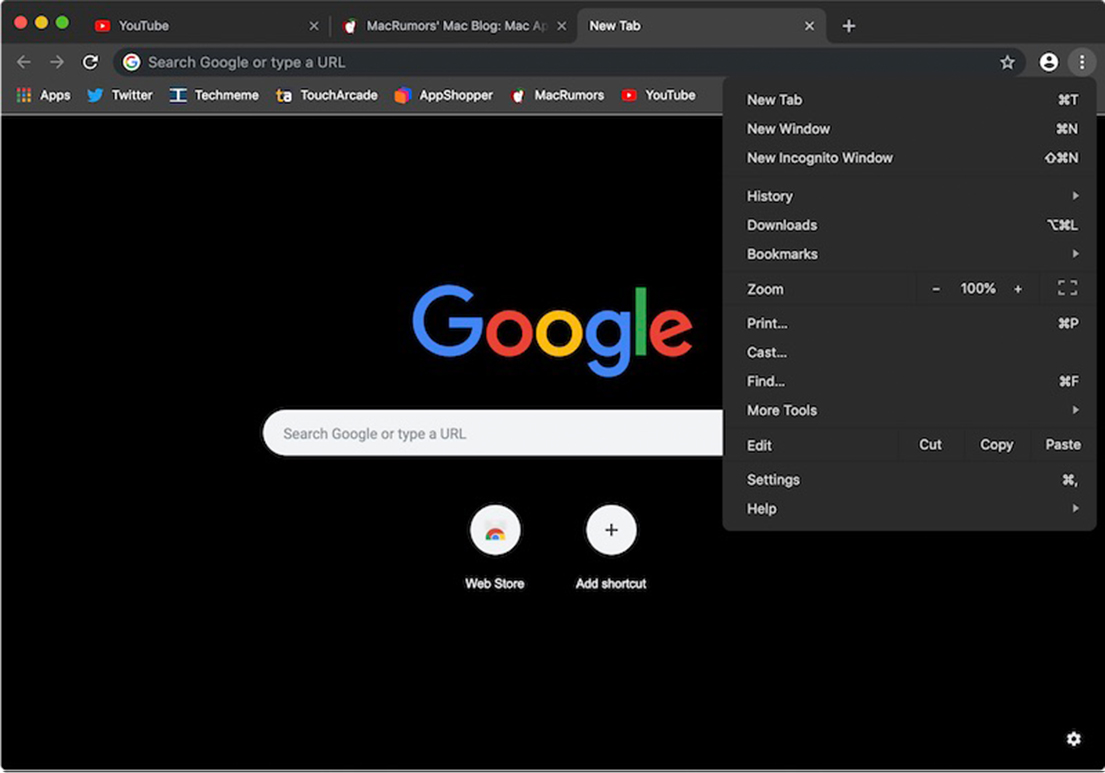
Tags: Economist, flights, pricing

11 Dec 03:21

Note-taking techniques IV: Use abbreviations and/or shorthand

by Raul Pacheco-Vega

When I was a child, I learned Pittman and Gregg shorthand because my grandfather taught me about them. He learned Gregg shorthand in secretarial/administrative assistant school, and I learned both Pittman and Gregg when I took a class (I was in grade 7 but this was not part of the school’s curriculum, so I had to take it outside of my campus). I knew that shorthand would be useful to me as an employable or hireable skill, but I never imagined it would also be helpful to my scholarly life down the road.

Shorthand

Photo credit: Christopher Newsom on Flickr. Creative-Commons Licensed Attribution-Non Commercial.

Note-taking - arrows and abbreviationsWhile I don’t usually insert Gregg shorthand symbols into my notes anymore (for fear of not being able to understand them down the road), I do sometimes when I am pressed for time and I need to capture ideas from a workshop or a conference. Nevertheless, I DO use abbreviations and I strongly encourage my students and research assistants to use them as well. I usually abbreviate “with” (w/), “because” (b/c), and I also use arrows and superscripts to indicate where I ran out of space and I need to make a note (like a footnote if you will, but on paper, and by hand). I’m a chemical engineer originally so I also use delta (the greek letter) as a symbol for “increase”, and the mathematical notation for “which is demonstrated”. I use arrows to indicate “therefore” but also “causes”, which sometimes becomes a bit confusing, I know.

I strongly believe that every student/scholar/practitioner should adopt whichever abbreviations and/or shorthand techniques they want to or need to, but I am hopeful these posts will be of use for their practice.

RESOURCES:

  • Handout with a few common abbreviations.
  • This post by the Learning Center of the University of North Dakota is golden.
  • This one from the University of Redlands also offers additional abbreviations that might be useful.
  • This blog post from the University of South Australia offers a few more insightful abbreviations.

You may be interested in my other posts on taking notes, which you can access by clicking on this link.

11 Dec 03:20

Mmmmh Weihnachtsplätzchen

by Andrea

The Washington Post: Holiday cookie generator. Celebrating 14 years of holiday cookies.

There are 331 recipes, “Find a recipe using your favorite ingredient, from chocolate chips to Sriracha.”

Almond Ricotta Bars, Pecan Sandies, Crumbly Lemon Creme Bars, Green Tea Shortbread with Poppy Seeds, Lime Thai Basil Shortbread with Passion Fruit Glaze, Lemon Ginger Bars, Raspberry Snow Bars, Ultimate Lemon Squares – are you hungry yet? I hope to find some time to bake cookies this week.

Allerdings werden das sicher einige Klassiker, die ich jedes Jahr backe, und vielleicht als neues Rezept Limoncello-Bällchen von Limettenschnitten ausprobiert habe. Lecker!

11 Dec 03:19

Google Maps Debuts ‘For You’ Recommendations in 40 Countries on iOS

by John Voorhees

Previewed in May, Google has added a ‘For You’ tab to its Maps iOS app that is rolling out in stages today to users in 40 countries. The Android version of the feature is debuting in 130 countries.

‘For You,’ which appears as a tab on the far right of the app’s toolbar, is a way to follow a restaurant news feed for particular geographic areas. According to Google’s The Keyword blog:

Simply follow neighborhoods or places you’re interested in to get updates and recommendations—everything from recent news about an opening or pop up, a new menu item, and even restaurant suggestions based on what you’re likely to enjoy. If you’re making a trip this holiday season, the For You can help you get a jump start on travel planning even before you take off.

The For You tab includes its own settings that suggest additional areas to follow based on your location history. You can also add regions manually by panning and zooming the map to show the location in which you are interested. Surprisingly, there is no search bar for finding areas to follow.

If the area you pick doesn’t include enough places to track, the app prompts you to zoom out. That’s not an issue in densely populated cities, but in the suburbs where I live, I had to zoom out to roughly a 10x10-mile square that included several towns before I could save the area. Even then, I had to scroll back about a week before I found any local news. Likewise, if the area you pick is too large (for example, the entire New York metropolitan area), you’ll be prompted to zoom in to a smaller area.

The For You tab overlaps with the Explore tab’s listings of area restaurants but focuses on recent reviews and other news aggregated from third-party sources instead of business listings. If you see a place you want to try, there’s tap the bookmark icon next to it to add it to your ‘Want to go’ list, another list you’ve created, or your ‘Short List’ for sharing with others, just as you can from the Explore tab.

In my limited testing, my recommendations were dominated by Chicago. That’s not a surprise, but there were only four nearby entries since the beginning of November, which is a pretty weak showing for suburbs just 25 miles outside of Chicago. It’s worth noting too that the For You tab is limited to restaurants, which I didn’t expect. Not including events feels like a missed opportunity. Despite the overlap with the Explore tab and limited content available, For You should be useful the next time I’m looking for a new restaurant to try in Chicago or visiting an unfamiliar city.

The For You tab is being released in stages and will show up in Google Maps without the need to update the app in the App Store. If you don’t see the feature yet, force quitting Google Maps and reopening it can cause the new tab to appear.


Support MacStories Directly

Club MacStories offers exclusive access to extra MacStories content, delivered every week; it's also a way to support us directly.

Club MacStories will help you discover the best apps for your devices and get the most out of your iPhone, iPad, and Mac. Plus, it's made in Italy.

Join Now
11 Dec 03:19

No one knows if a recession is coming. But that doesn’t stop them from writing about it.

by Josh Bernoff

The brutal stock downturn and indicators like the bond yield curve are signaling that a recession might be on its way. It must be that time again: Time for economists to make equivocal predictions, and journalists to equivocate madly writing about them. Neil Irwin of The New York Times feature “The Upshot” is here to … Continued

The post No one knows if a recession is coming. But that doesn’t stop them from writing about it. appeared first on without bullshit.

11 Dec 03:15

What the Missing Middle looks like in Portland

by Gordon Price

In planning for growth, there’s at least one generally agreed-on idea that most cities are trying out: Densifying along the major streets.  The arterials, boulevards and avenues, the wider ones, where the streetcars went, where transit does now.

Portland has a lot of them, radiating out from the river and downtown.  Here’s one of those streets – Division.  As you’d expect, it bisects the 19th-century suburbs:


Once it was a streetcar route, with a mix of bungalow housing and one-or two-storey commercial frontage – surprisingly narrow for a major corridor of activity.  It went into decline as Motordom prevailed, and became heavily auto-oriented.  Division, it was said, was where you went to get your car repaired.


But the combination of old houses and low-rent commercial was ideal soil for sprouting new businesses, opening restaurants and coffee shops and all kinds of eklecteria that made it more and more attractive for others.


As Portland grew and the old streetcar suburbs, still affordable, attracted more renters and owners, It was clear that growth had to be accommodated.  But there was agreement not to change scale or character in the single-family-residential neighbourhoods between the arterials.  The frontage along streets like Division would be the better if not only place for … ta da …more density, more housing choice, more retail, more frequent transit, hopefully more affordability.  It would look like this:


Portland started with four-storey condos and apartments, with retail at grade and significantly reduced parking requirements – in some cases, controversially, little or none at all.  Today, these blocks are redefining the corridor.


More floors have been added.  And more to the debate.


Hopefully some of that mix of uses, ages, styles and eccentricity, if not affordability, can be retained.


11 Dec 03:12

Raise a glass to the planet’s most stellar data visuals of 2018

by David McCandless

Massive congratulations to the innovative, imaginative & intrepid winners of 2018’s global Information is Beautiful Awards – a celebration of the world’s best data-visualisations and infographics.

Trimming down 100 world-class shortlistees to a handful of exceptional winners was a fierce challenge for our panel of expert judges & community voters. Given such unrivalled ambition & scope – graphic novels, mosaics, even play-doh – this year’s  accolades, trophies and $30k in cash prizes (courtesy of beloved sponsor Kantar) are very well deserved.

Scroll down for the ultimate winner.

Gold, silver & bronze category winners in the entry showcase:

Arts, Entertainment & Culture | Humanitarian | Leisure, Games & Sport | Maps, Places & Spaces | People, Language & Identity | Politics & Global | Science & Technology | Unusual


Special prizes

Community Vote = Historia de Zainab by Visualizar

Impressive IndividualLena Groeger for work including What Happened To All The Jobs Trump Promised


Non-English Language – Satellites: 60 Years in Orbit by Rossiya Segodnya


Outstanding OutfitReuters Graphics for work including Good Dogs

Page


Rising Star – Roni Levit for Physical Intervention in Public Space


Student = 30° by Stephan SchakulatMathias Foot, Janna Nikoleit & Franziska Rast

Student = Shifting Gears: Visualizing Cycle Rides by Hardik Chandrahas


Most Beautiful – $7,500 prize

Simulated Dendrochronology of U.S. Immigration 1790-2016

by Pedro M Cruz & team with Northeastern University & National Geographic


» All 2018 winners
» All IIB Awards winners ever
» 2018 shortlist
» 2018 longlist
» Judges


11 Dec 02:20

Repl.it Multiplayer

Faris & Amjad Masad, Repl.it, Dec 10, 2018
Icon

This is a really nice teaching tool, because it's a nice working tool. "Introducing Multiplayer: code with friends in the same editor, execute programs in the same interpreter, interact with the same terminal, chat in the IDE, edit files and share the same system resources, and ship applications from the same interface!" Open a new editor on the https://repl.it/ website and then click the Multiplayer icon (upper left) to get it started. Sadly, Repl.it doesn't support Perl (complains the last living Perl coder) (though there's a Python shell that will support a limited Perl).

Web: [Direct Link] [This Post]
11 Dec 02:20

Is there a RSS revival going on?

Andy Sylvester, Dec 10, 2018
Icon

Short item raising the possibility and linking to some commentary suggesting it might be true. Some of us (ahem) never left RSS at all. In a world of social media algorithm-driven content streams I've considered RSS to be my secret weapon over the last decade. It allows me to see all the stuff that Facebook and Twitter don't profit from me seeing. We probably need a next-generation RSS for the revival to really take off, but it might just be a matter of time.

Web: [Direct Link] [This Post]
11 Dec 02:20

Creating and Implementing Alternatives to Traditional Textbooks

Cathy Bill, SoftChalk Talk Blog, Dec 10, 2018
Icon

The impetus for creating digital alternatives to textbooks was "both reducing cost and having control over the content." However I question Columbus State Community College's decision to use Apple iBooks. As Cathy Bill notes, "A little more than 50% of our student population has an Apple device. Therefore, about half of our students would not be able to access the material, unless they used campus computers." They provided access to Apple devices to those who didn't had them, but this misses the point - the Apple content isn't interoperable with anything but Apple devices. Which in my mind means that they're broken.

Web: [Direct Link] [This Post]
11 Dec 02:20

Why Go Indie on the Web – ‘Cause It’s a Beatiful Thing

by Ton Zijlstra

As a long time netizen it is easy to forget that for many now online their complete experience of the internet is within the web silos. I frequent silos, but I’ve always kept a place well outside of it for over two decades. When you’ve never ‘played outside’, building your own space beyond the silos can be an eye-opener. Greg McVerry pointed to the blog of one of his students, who described the experience of stepping outside the silos (emphasis mine):

The fact that I now have a place where I can do that, where I can publish my thoughts whenever I want in a place open for people to read and to not be afraid of doing so, is liberating. I’ve always wanted a space online to call my own. I’m so tired of all the endless perfection I see on social media. My space, “Life Chapter by Chapter” is real. It’s me, personified by a website. And though this post is not digitally enhanced in any way, I love it because it’s representative of the bottom line of what I’ve learned in EDU 106. I’m my own person on this site, I’m not defined by Instagram, Facebook, or Twitter. I can post what I want, when I want, how I want. It’s a beautiful thing.

That’s a beautiful thing, indeed. Maybe this is the bit that Frank Meeuwsen and I need to take as the key to the story when writing a book, as Elja challenged us today (in Dutch).

Alnwick Garden - Walled Garden
There’s a world outside the walled garden. (Photo by Gail Johnson, CC-BY-NC)

11 Dec 02:10

Rumour suggests Google is also working on a Pixel 3 XL Lite

by Dean Daley

Over the past month, leaks surrounding a mid-range Pixel 3 have circulated on the internet. Now there’s a new report that claims Google is also planning a Pixel 3 ‘Lite’ XL — at least that’s what we’re calling it for now.

The rumour originates from frequent leaker Steve ‘OnLeaks’ Hemmerstoffer who has partnered with 91mobiles to share detailed information and factory CAD-based renders of the unannounced handset.

The leak indicates that the phone sports a 6-inch display with a 2,220 x 1,080-pixel resolution that ditches the 3 XL’s notch. In addition, the device reportedly drops the Pixel 3 XL’s dual front-facing cameras in favour of a single selfie shooter.

While the leak doesn’t provide any information on the rest of the device’s specs, going off the smaller variant’s rumoured specifications one could speculate that the Pixel 3 Lite XL will feature a Snapdragon 670 chipset, 4GB of RAM, a 12-megapixel rear-facing shooter and an 8-megapixel selfie camera. In terms of battery, the Pixel 3 Lite is expected to feature a 2,915mAh battery, so the 3 Lite XL will have a battery that’s equal to or bigger than the one in the smaller variant.

It’s unknown when Google will reveal either handset.

Source: 91mobiles & OnLeaks

The post Rumour suggests Google is also working on a Pixel 3 XL Lite appeared first on MobileSyrup.

11 Dec 02:10

Dark mode coming to future build of Google Chrome for macOS

by Jonathan Lamont
Google Chrome

Despite Chrome 71 rolling out, Google’s browser still doesn’t support macOS Mojave’s Dark Mode. However, it looks like that may change soon.

Initially pointed out on Reddit, a Google developer recently submitted a code change to implement a system-level dark mode in Chromium. For those unfamiliar, Chromium is the open-source browser that serves as the foundation for Google Chrome.

Google uses several Chrome builds to test code changes, starting with Chromium and working up through Chrome Canary, Chrome Dev, Chrome Beta before coming to stable Chrome.

Dark mode in Chrome Canary

Users can expect dark mode to release in either Chrome 72 or 73 officially, according to the Reddit post. Currently, the feature is in the Canary build, but its hidden behind a flag. Flags are essentially code toggles that can enable features.

MacRumours was able to force the dark theme in Chrome by running a command in Terminal and took several screenshots as well.

Chrome dark mode changes most of the Chrome interface, including the omnibox, tabs, menus, bookmarks bar, status bar and dialogue boxes. Additionally, the startup page with the Google search and shortcuts will have a black background as well.

Dark mode in Chrome Canary omnibox

Finally, one developer noted that the current colours are placeholders and may change before the final dark mode release.

Additionally, the developers are working to ensure the dark theme is distinguishable from Chrome’s Incognito mode, which also uses a dark theme.

With a Chrome 72 or 73 release, users can likely expect a dark mode in January or March 2019.

Source: Chromium Bugs, Reddit Via: MacRumours

The post Dark mode coming to future build of Google Chrome for macOS appeared first on MobileSyrup.

11 Dec 02:10

TTC loses $2.5 million weekly due to malfunctioning Presto machines

by Brad Bennett

The union representing Toronto’s transit workers has penned an open letter to Conservative Premier Doug Ford that details all the faults with the Preso system used across the various transit agencies in Toronto.

According to a report from Narcity, TTC workers also back up this claim by saying that the Presto system isn’t ready to handle the increased number of Presto card users as Metro Passes are phased out.

Not only do the machines fail often, but some bus drivers also complain that it takes around an hour to start up the devices in the morning, delaying their start time, the report noted.

When Presto machines break, it sometimes takes days for Presto maintenance workers to fix machines, which in turn keeps buses or streetcars out of commission for a few days, reads the report.

Bus drivers talked to in the report mention that they think somewhere between 10 and 20 percent of fares don’t get paid due to faulty machines during the average bus driver’s shift.

The TTC says that in 2017, 261,112,835 people rode the bus, which means there would be an average of 715,000 bus riders per day.

Twenty percent of those rides is 143,000, which is the number of people whose $3 fares aren’t being collected, resulting in $430,000 CAD being lost each day, reasons the report.

Source: Narcity

The post TTC loses $2.5 million weekly due to malfunctioning Presto machines appeared first on MobileSyrup.

11 Dec 02:10

It’s unclear when the Apple’s Watch Series 4’s ECG feature is coming to Canada

by Patrick O'Rourke
Apple Watch Series 4

Though the Apple Watch Series 4’s Electrocardiography (ECG) feature is now widely available across the United States, it remains unclear when the functionality will make its way to Canada.

According to a recent tweet from Health Canada’s official Twitter account, it looks like the functionality isn’t launching here anytime soon.

Health Canada states that the regulatory body hasn’t received a medical license application from Apple regarding the feature’s release in the Canadian market. Back when my Apple Watch Series 4 review was first published, I was told by the Cupertino, California-based company that ECG would likely launch at some point in 2018, though that no longer seems to be the case.

Typically, ECG monitoring is only available to medical professionals and healthcare providers. The Apple Watch Series 4 is one of the first widely available consumer devices to include ECG heart monitoring.

The U.S. Food and Drug Administration (FDA), which Health Canada often takes cues from, approved the feature a few months ago. ECG recently released for the Apple Watch Series 4 as part of the smartwatch’s watchOS 5.1.2 update, but only in the United States.

Further, it also looks like the wearable’s ECG functionality is region-locked to the United States. This means that changing the smartwatch’s region won’t give Canadians access to the feature.

Source: Twitter (@gary_ng)

The post It’s unclear when the Apple’s Watch Series 4’s ECG feature is coming to Canada appeared first on MobileSyrup.

11 Dec 02:10

The Real 7 Habits of Highly Effective People

by MobileSyrup

Do you ever feel ashamed that you’re not as productive as you should be? Don’t – as Robin Williams would say in Good Will Hunting, “It’s not your fault!” You never learned the proper work habits so you’re just wondering blindly and making all kinds of mistakes. But it’s never too late to turn over a new leaf and improve your ways. All you need is a good teacher like The Complete Productivity Booster Bundle.

This 8-course bundle will teach you the ins and outs of getting things done so you can become a productivity machine. You’ll how to stop zoning out, develop razor-sharp focus, and effectively manage your team. You won’t necessarily improve overnight, but if you keep at it, work hard, and have a growth mindset, you’ll become so productive that other people will ask you for productivity advice.

The Complete Productivity Booster Bundle normally costs $2,132.03 CAD, but you can get it now for just $38.84 CAD.

Buy it here.

The post The Real 7 Habits of Highly Effective People appeared first on MobileSyrup.

11 Dec 02:10

Microsoft’s new Chromium-based browser will support Chrome extensions

by Jonathan Lamont
Microsoft Edge on Android

Following confirmation that Microsoft would change its Windows 10 browser, Edge, to use Chromium, a project manager answered several user questions on Reddit.

Edge Project Manager Kyle Alden confirmed that the team intends for the new Chromium-based Edge to support Chrome extensions. For anyone that uses Chromes numerous extensions, this is excellent news.

Chrome offers some genuinely amazing extensions as well. From password managers to offline Google Docs, there is an extension for almost everything. There’s even one that allows users to hook their browsers into Windows Timeline.

Alden also confirmed that the Edge team intends to bring the new Edge to all Microsoft devices. While Alden said this in response to a question about the browser coming to the Xbox One, it could also mean we’ll see the browser come to Microsoft’s HoloLens headset.

Finally, Alden also confirmed what users could expect from Progressive Web Apps (PWAs) with the new browser. For one, the team plans to support installing PWAs directly through the browser as Chrome does. The team will also keep the ability to install through the Windows Store as Edge currently does.

Further, Windows will continue to support EdgeHTML/Chakra so current PWAs built for Windows won’t break with the new browser engine.

Overall, its good to have these confirmations from Alden. Changing the rendering engine that Edge runs on is a substantial move for Microsoft, with far-reaching implications for current software built around Edge.

Developers and users can both rest easy knowing Microsoft plans to support both old and new ways of doing things with its browser.

Source: Reddit Via: The Verge

The post Microsoft’s new Chromium-based browser will support Chrome extensions appeared first on MobileSyrup.

11 Dec 02:10

Instagram Direct now lets you send audio messages

by Jonathan Lamont
Instagram on the OnePlus 6T

Instagram’s joining the voice messaging game with a new feature rolling out to the app now.

Instagram Direct users will be able to send each other audio clips up to one minute long in both private and group chats.

Instagram Direct audio messages

To send a voice message, you’ll have to press and hold on the microphone button in a Direct chat. The text box will turn blue while you record. When you let go, the audio sends. If you want to re-record a message, drag your finger over to the trash can to delete the recording.

Instagram is a little behind when it comes to audio messages. Apple has supported it with its Messages app for some time, and WhatsApp, Facebook Messenger and others support it as well.

The feature is coming to both Instagram’s iOS and Android app.

The post Instagram Direct now lets you send audio messages appeared first on MobileSyrup.