Rolandt
Shared posts
Required Reading: The Mythical Man Month and Peopleware
Protein mania: the rich world’s new diet obsession | News
mkalus
shared this story
from  The Guardian. The Guardian.
|
Are you getting enough protein? The question provides its own answer: if you are worrying about the amount of protein in your diet, then you are almost certainly eating more than enough. This is the paradox of our new protein obsession. For many people, protein has become a kind of secular unction: it instantly anoints any food with an aura of health and goodness. On the menu at the gym where I go, a salad niçoise is now repackaged as “high-protein tuna”. It comes without the usual capers or olives – those are items that merely add flavour, and who needs that?
On Pinterest, the lifestyle-sharing site, you can now choose “protein” as one of your interests in life, along with “cute animals” and “inspirational quotes”. In 2017, there were 64m Google searches for “protein”. Anxiety about protein is one of the things that drives a person to drink a flask of vitamin-padded beige slurry and call it lunch.
You merely need to visit a western supermarket today to see that many people regard protein as some kind of universal elixir – one food companies are profitably adding to anything they can. “When the Box Says ‘Protein’, Shoppers Say ‘I’ll take it’” was the headline of a 2013 article in the Wall Street Journal. In addition to the ubiquitous protein balls, protein bars and protein shakes, you can now buy protein noodles, protein bagels, protein cookies and – wait for it – protein coffee. Even foods that are naturally high in protein such as cheese and yoghurt are sold in protein-boosted versions. Strangest of all might be “protein water” – clear, fruit-flavoured drinks laced with whey protein, as if ordinary water was insufficiently healthy.
Around half of all UK consumers are apparently seeking to add “extra protein” to their diets, according to market research from the cereal brand Weetabix – which has also cashed in on our hunger for protein. The protein version of Weetabix – a 24-pack of which costs 50p more than the same-sized pack of original Weetabix – is worth £7m in sales per year.
In a way, there’s nothing strange in the fact that we see protein as valuable, because it is. Along with fat and carbohydrate, it is one of the three basic macronutrients, and arguably the most important. We could survive without carbohydrates, but fat and protein are essential. Protein is the only macronutrient to contain nitrogen, without which we cannot grow or reproduce. There are nine amino-acid proteins – the building blocks of human tissue – that we can only get from food. Without them, we could grow neither healthy hair and nails nor strong bones and muscle, and our immune system would be impaired. A child who lacks vital protein in the first five years of life will suffer from stunting and sometimes wasting, too, as the dreadful persistence of malnutrition in the developing world reminds us.
So the puzzle is not that we should crave protein, but that our protein anxiety has become so acute at a time when the average person in developed countries has a surfeit of protein in their diet – at least according to official guidelines, which recommend a minimum of 0.8g of protein a day per kilogram of body weight. According to 2015 data from the UN Food and Agriculture Organization, the average person in the US and Canada gets a full 90g a day, nearly twice the recommended amount. The average European is not far behind with 85g of protein a day, and the average Chinese person consumes 75g.
When we seek out extra protein to sprinkle over our diets, most of us in rich countries are fixating on “a problem that doesn’t exist”, said David L Katz, an American doctor and public health scholar who is the director of the Yale-Griffin Prevention Research Center. In his latest book, The Truth About Food, Katz notes that while the “mythology of protein tends to propagate the notion that more is better”, there are serious concerns that a very high protein intake over a lifetime can result in harm to the liver, kidneys and skeleton.
The current protein mania has partly come about because so many people now regard carbohydrates or fats (and sometimes both) with suspicion. In the current nutrition wars, protein has emerged as the last macronutrient left standing. But the whole “macronutrient fixation” is a “boondoggle” that has been calamitous for public health, Katz told me. “First they told us to cut fat. But instead of wholegrains and lentils, we ate low-fat junk food.” Then food marketers heard the message about cutting carbs and sold us protein-enriched junk foods instead. “When we talk about protein,” said Katz, “we are dissociating the nutrient from its food source.”
And yet still we try to get more protein. In this world of abundance, humans seem to be on an eternal quest for the one safe substance that we can consume in limitless quantities without gaining weight. Such is the appeal of Diet Coke.
Our protein anxiety drives us to take diets already high in meats, soya, sugars and ultra-processed foods and dose them with yet more meats, soya, sugary bars and ultra-processed foods because they are marketed to us as “protein” – even though many of these products are not even particularly high in protein.
There is something paradoxical about our collective protein worship. When we pay good money for protein-enhanced food, we hope it will lead us to better health (however that is defined). Yet our single-minded pursuit of protein – as a disembodied nutrient whose presence trumps all other considerations – can lead us to behave as if we have forgotten everything we knew about food.
The intensity of our protein obsession can only be understood as part of a wider series of diet battles that go back half a century. If we now thirst for protein as if it were water, it may be because the other two macronutrients – fats and carbohydrates – have each in turn been made to seem toxic in the public mind.
Official dietary guidelines in the US and UK still insist that a healthy diet is one founded on plenty of carbohydrates with limited quantities of fat, especially saturated fat. The rationale for this low-fat advice goes back to the landmark Seven Countries Study, conducted in the 1950s by the American physiologist Ancel Keys. Based on his observation of healthy, olive oil-eating Mediterranean populations, Keys argued that affluent westerners would suffer fewer cases of heart disease if they could limit consumption of saturated fats such as those found in butter, lard and meat.
But as interpreted in the modern supermarket, the low-fat diet often ended up being a high-sugar and high-refined-carbohydrate diet, which was not quite what nutritionists had originally envisaged. In recent years, the low-fat, high-carb orthodoxy has come under fierce attack. In 2015, a meta-analysis conducted by a team of Canadian researchers concluded that intake of saturated fat was not associated with raised risk of stroke, type 2 diabetes or death from heart disease. Vocal anti-sugar campaigners such as Gary Taubes – author of The Case Against Sugar – have argued that the true cause of our current epidemic of diet-related ill health is not in fact saturated fat, but refined carbohydrate.
While the low-fattists and the low-carbists continue to slug it out, protein comes out the winner as the one safe thing that most of the population feel they can still put their faith in, whether for weight loss or general health. We have to eat something, after all.
The current protein fetish is merely the latest manifestation of a far larger phenomenon that Michael Pollan memorably referred to as “nutritionism” around 10 years ago. For decades now, there has been a tendency to think about what we eat and drink in terms of nutrients, rather than real whole ingredients in all their complexity. A combination of diet fads and clever marketing has got us here. It doesn’t matter whether we fixate on “low fat” or “low carbs” or “high protein” – we are making the same old mistakes about nutrition in a new form.
For a while, on my kitchen counter, next to the jars of rice and flour, there was another canister made of black plastic, much larger than the others. Its label said “SOURCE OF HIGH QUALITY PROTEINS” in huge letters. In much smaller lettering it said “READY TO MIX PROTEIN POWDER WITH SWEETENERS” and listed three kinds of whey protein: whey protein isolate, whey protein concentrate and hydrolysed whey protein. When you opened it, a fake vanilla smell wafted into the air and you saw a whitish powder and a black plastic scoop.
This soulless canister of ultra-processed whey protein was something that I, as a food writer, never thought I would see in my kitchen. The macho aesthetic of the packaging made my heart sink. I am also no fan of artificial sweeteners, which I believe do no favours either to the palate or to gut bacteria. What’s more, I believe most people should be able to get the nutrients we need from a balanced diet, rather than through supplements.
But nothing forces you to bend your own principles like parenthood. I turned to whey protein in a state of mild desperation for my very tall youngest son, who plays competitive sport five or six days a week. Three square meals plus multiple snacks only scratched the surface of his appetite, and he was sometimes almost crying with hunger by dinnertime. My conversations with other sport parents suggest that it’s not uncommon to be at least a little bit obsessed with their child’s protein intake. We grumble that protein bars are a pointless rip-off – and then we buy another pack of them.
Protein means different things to different people. To some, it symbolises “weight loss”, while to others it means “muscles”. To me it appeared as a magical filling substance that just might help my son to be less ravenous.
I had read studies suggesting protein was the most filling – or satiating – of the three macronutrients, and wondered if more protein at breakfast could be the answer. I tried him on homemade waffles enriched with almonds and hidden eggs (at that point he wouldn’t countenance whole eggs) and the improvement in his energy levels was dramatic. It was a short step to making him occasional smoothies from half a scoop of whey protein with milk and bananas or frozen berries. Despite my unease at the powder, I could genuinely see the difference in his levels of fullness. When the canister was empty I didn’t replace it, but I still monitor my son’s protein intake.
Having “enough” protein in your diet to meet your basic needs is not necessarily the same as having the right amount for optimum health. When I asked David Katz how much protein a person should consume, he said certain people may indeed require more than the minimum recommendation of 0.8g per kilo of bodyweight – including athletes like my son. The problem is that once we start thinking more protein is automatically better, it can be hard to know when to stop. The idea that protein is synonymous with healthy eating leads many people to eat in disordered ways that are far from healthy, either for body or mind.
A couple of years ago, Sarah Shephard, a thirtysomething British sports journalist, realised she was obsessed with protein. On a typical day, she was eating three or four protein bars, hard-boiled eggs, meat, fish and non-starchy vegetables and a couple of protein shakes. Virtually the only carbs in her diet came from the protein bars and shakes. It reached the point where she had so little energy in the evenings because of the lack of calories in her body that she stopped going out.
Shephard’s protein obsession started when injury forced her to give up running. After she started doing boxing and circuits with a new trainer, he told her she should be eating more protein to help prevent future injuries. To start with, Shephard’s new low-carb, high-protein regime felt wonderful. She lost weight, gained muscle and became one of the many people at the gym clutching their sleek flask of protein shake like an amulet.
However, she noticed her thoughts about protein were becoming obsessive. Given the choice between an apple and a protein bar, she always chose the protein bar, even though at a rational level she knew that a piece of fresh fruit with its fibre and vitamins had a lot to recommend it over a processed snack. By the time she finally sought help from a sports nutritionist, he said he had never seen anyone with such an intensive fitness regime who ate so little carbohydrate. She was consuming 150g of protein a day, around 2.5g per kilo of bodyweight – far in excess of the upper limit recommended for bodybuilders by the US Academy of Nutrition and Dietetics.
Shephard slowly weaned herself back on to a more balanced diet that included a range of complex carbohydrates such as oats and brown rice. Despite her apprehension, she did not gain weight. When I spoke to her, Shephard had been eating a balanced diet for more than two years without any ill effects, and was a bit mystified as to how she had drifted into her protein fixation.
Encouraged by the marketers of high-protein foods, many people talk about whether we we have reached our daily target for “macros”, but we do not talk so much about how much is too much. Adding extra protein beyond our needs can be harmful for people with underlying kidney or liver problems, as the body can struggle to process the excess.
In 2017 there were sensationalist headlines around the world when Meegan Hefford, a 25-year-old Australian bodybuilder, died after consuming high amounts of protein shakes and supplements. Hefford hadn’t realised she was suffering from a condition called urea cycle disorder, which meant that her body couldn’t metabolise protein normally. Defenders of high-protein diets immediately attacked the coverage of the story, pointing out that Hefford’s condition was rare and that her death was not caused by protein per se. This was true, but it is also true that there is a significant minority of the population for whom a high-protein diet is not advisable. For the 13% or so of people who have chronic kidney disease, a large amount of protein from red meat can damage renal function.
Above and beyond its long-term effects on the body, a fixation with protein can become a form of eating disorder. Three years ago, the American psychologist Richard Achiro decided to study men in Los Angeles engaging in excessive use of protein powders as well as other supplements such as caffeine. Achiro conducted a survey of nearly 200 active men who were using workout supplements and found that, for many of them, protein use had become a “variant of disordered eating” that threatened their health.
These men felt under intense pressure to achieve bodies that were not just thin, but that exhibited a supposedly ideal ratio of fat to muscle. Three per cent of the sample group had been hospitalised as a result of excessive supplement use, yet they still viewed supplements as healthy. Eating disorders have complex causes: Achiro told me the men who were overusing protein supplements also tended to be suffering from body dissatisfaction, low self-esteem and a sense of insecurity about their own masculinity.
But they were not helped by the fact that the culture they lived in told them that when they replaced most of their meals with protein shakes, what they were doing was normal. Achiro found that it was hard for these men to recognise that their relationship with protein might have become a problem, “because those of us living in western society have been groomed to view a protein-rich diet as the apex of healthful eating”.
By 2001, Arla Foods, a vast European dairy cooperative with Danish headquarters, had used up all of the whey in Denmark. The company realised it would have to look further afield to meet the insatiable demand for whey protein. Arla signed a contract with SanCor, an Argentinian dairy company, to build a giant whey protein plant in the town of Porteña, to the north of Buenos Aires. When you order “warm protein pancakes” with blueberries at the gym, the odds are the protein will have come from a plant such as this.
It was David Jenkins, a Scottish track and field athlete and silver medallist at the Munich Olympics, who first had the idea of marketing whey protein as a “recovery optimiser” for athletes called ProOptibol. It was launched in health food stores in Southern California and Hawaii in early 1988. At first it was a niche product that found popularity among cyclists and triathletes. The formula for this original whey protein was called WPC 75. It was a byproduct from the Golden Cheese company, based in Corona, California – a giant factory that produced Monterey Jack and other American cheeses.
In just a few decades, whey protein has gone from waste product to aspirational lifestyle enhancer. Whey is the watery stuff left over during cheese-making after the curds are separated off. On traditional dairy farms, it was put to good use in anything from bread-making to pickles, but in the vast American cheese factories of the postwar years it came to be seen as an unwanted nuisance. In US dairy states such as Wisconsin, cheese factories dumped thousands of litres of whey in nearby rivers. It was only in the 1970s, after local authorities placed limits on the dumping of dairy waste, that cheese manufacturers realised they had to find a way to use up this annoying whey. The quality of whey powders – known as “popcorn whey” – was poor, and it was mostly used to feed pigs. The key technology that made whey protein possible was the development of ultrafiltration techniques to pre-concentrate the whey before it was dried. This was when whey protein started to be made on an industrial scale.
There is nothing on the average tub of whey protein to suggest it ever came from cheese, let alone from a cow. Whey manufacturers work on the assumption that consumers want it to be as close as possible to flavourless, to preserve the illusion that it is some kind of magic potion for humans. In its unadorned form, however, whey varies considerably in flavour. There are two kinds of whey: sweet whey made from rennet cheeses such as cheddar and mozzarella, and acid whey made from the likes of cottage cheese. Cheddar whey has a tendency to taste cardboardy, mozzarella whey is milky and whey from cottage cheese can be sour or reminiscent of cabbage broth. But in the finished product, all these flavours are evened out and disguised by the cloying scent of chocolate, artificial vanillin or salted caramel.
Dairy whey protein has become a commodity that travels the world in 100kg sacks, generating vast profits, coordinated by GVCs (global value chains). Thanks to the shifting patterns of supply and demand, the protein shake a gymgoer in Tokyo drinks after lifting weights may have originated on a farm in Norway. The lowest-quality whey powder is called “permeate” and is mostly shipped to Asia, where it is made into infant formula. The higher-quality whey, called WPC 80 because it has an 80% protein content, travels the world to fuel our protein obsession. The global whey protein market is now a complex and hugely competitive global trade, forecast to reach $14.5bn by the year 2023: more than half as much as the global market in breakfast cereal.
Strolling through London at lunchtime a few weeks ago, I found myself walking down Bread Street, near St Paul’s Cathedral, which in medieval times was the site of the city’s bread market. Turning off Bread Street, I came upon a branch of Protein Haus, which claims to sell the “most amazing protein shakes you will ever taste”. The shakes have names such as Strawberry Warrior and Vegan Coffee Pump and Berry-Yatric, which must be a competitor for the most offensive food name ever. Protein Haus also sells protein foods such as “bliss balls” and indiscriminate steaming portions of various meats.
From Bread Street to Protein Haus – this sums up how our eating habits have changed in modern times. When I was in Protein Haus staring at the heaps of overcooked chicken, slabs of salmon and rows of whey protein shakes and vegan protein shakes, it suddenly occurred to me how crazy it is that we should treat all of these varied “protein” substances as if they were in some way identical. A scoop of ultra-processed whey is not, in fact, the same as a grilled salmon fillet, either in nutrition or in the experience of eating it. Salmon – even the farmed kind – will be high in omega-3 fatty acids and vitamin B12, whereas whey protein is low in vitamins and minerals (except for calcium) and fat-free. The only thing these foods have in common is that they tend to be fuel first and pleasure later (if at all).
At the same time, our reverence for protein as the one perfect nutrient tends to completely ignore how the protein we eat is produced, or what the environmental consequences of that production might be. Of the 90g of protein eaten each day by the average American, two-thirds is composed of animal products.
One irony of Britain’s obsession with protein is that we don’t actually produce very much of it. In fact, only 3% of arable land in Europe is given over to protein crops such as pulses, and Europe imports more than two-thirds of its animal feed. Much of the protein consumed in Europe is meat raised on materials that actually originate in South America or the US as soybean oil or other oilseeds and have to be shipped across the world. So long as we largely consume protein from animal sources, our obsession with protein is also likely to be bad for the planet.
At the end of September, at the Aldeburgh food festival in Suffolk, I had a lunch with Nick Saltmarsh, who runs Hodmedod, a company that works with British farmers to produce locally grown pulses. Saltmarsh told me he feels our mania for protein foods has gone so far that we sometimes can’t recognise real protein when it is right in front of us.
Vegetable proteins such as lentils and peas tend to be regarded as “low-quality” compared with meat, eggs and dairy. But Christopher Gardner, a professor of medicine at Stanford University, has argued that this “quality” argument is misleading. His great discovery was that all plant sources of protein – from peanuts to edamame beans – contain all essential amino acids. Admittedly they contain smaller concentrations of the amino acids than meat or eggs, but in the context of a plentiful and varied diet, this doesn’t matter.
The problem is partly that beans and lentils do not fit our tunnel-visioned conception of what protein is. Pulses such as lentils contain around 25% protein but also 25% carbohydrate – which makes them hard to categorise within the dogmatic categories of modern nutrition. Is the lentil a protein (good) or a carb (bad)?
When Saltmarsh takes his product range to food fairs, he finds that bodybuilders and fitness enthusiasts will sometimes pick up a packet of pea flour and say “ooh! Peas!” – because pea protein has become fashionable as a vegan alternative to whey. “But when they see that it also contains carbohydrate, they put it down again,” he said.
Some now shun any meal or snack that can’t be categorised as a “protein” fix. But they aren’t among the millions of people for whom a lack of protein is indeed a real and pressing problem – and who don’t tend to be the ones browsing pea protein at fitness fairs.
The word protein derives from the ancient Greek protos, meaning first. When a Dutch scientist called GJ Mulder first brought the term into use, in 1838, he proposed – rightly, as it turns out – that protein was a crucial substance in all animal bodies. But new research suggests protein is required not just in an absolute sense, but in a particular ratio to the other nutrients in our diets.
Going by official guidelines, as we’ve seen, the average person has access to more than enough protein for general health. It turns out our perplexing protein obsession may actually be a symptom of a larger problem in our sugar-heavy modern diets: if it feels like we are not eating enough protein, it’s because we’re eating too much of everything else.
In 2005, two biologists called David Raubenheimer and Stephen Simpson put forward the “protein leverage hypothesis”, in which they argued that protein could be the missing link in the obesity crisis. Since the 1960s, the absolute level of protein consumed by the average westerner has not changed. What has changed is the ratio of protein in our diets.
Because our overall calorie consumption has risen by 14%, the ratio of protein to carbohydrate and fat has significantly dropped. In 1961, the average American got around 14-15% of calories in the form of protein, whereas today it is 12.5%. This doesn’t sound like a big drop, but Raubenheimer and Simpson’s research suggests that even a small drop in the percentage of protein can have a big impact on eating behaviour – driving us to overeat.
Like many other animals, humans have what biologists call a “dominant appetite” for protein. The biological drive for protein is so strong that a cricket who feels short of protein will resort to cannibalism. When a locust is short of protein, it will explore different food sources to redress the balance. Humans are neither as ruthless as crickets nor as prudent as locusts. When given access to a diet that is low on protein and heavy in carbs and fats, humans will binge, in an attempt to extract the protein they need.
If many of us overeat, it could be partly because our bodies are desperately seeking out protein in a food environment flooded with refined wheat and oils and many kinds of sugar. As Raubenheimer and Simpson wrote in their startlingly original 2012 book The Nature of Nutrition: “Dilution of protein in the diet by fat and carbohydrate drives excess consumption, perhaps more so in some individuals, life stages and populations than others.” In other words, obesity may often really be hunger hiding in plain view.
The urgent question raised by this research is how we can get our protein ratios back to a healthy level. Our current protein mania – encouraged by the food business and the whey protein industry – suggests that the answer is to supercharge our diets with a flood of added protein. But eating protein to excess comes with its own costs, the main one being that it tends to shorten the lifespan.
A more effective way to concentrate protein in our diets, Raubenheimer and Simpson say, would be to keep our protein levels constant (assuming we have enough) but cut down on “fat, sugar and other readily digested carbohydrates”, which would allow us to reach the protein our bodies need at a lower level of calories. But given that sugar is poured into everything from bread to stir-fry sauces, this solution would require a radical restructuring of our food environment.
Our protein needs do not remain constant over the human lifespan: 0.8g per kilogram of bodyweight may be enough for a twentysomething, but not for an octogenarian. If anyone needs extra protein, it is not fit young gymgoers, but old people – particularly those on low incomes who may struggle to buy or cook meals for themselves. Instead of protein bars for the young and rich, we need omelettes and chickpea soup for the old and poor. From the age of 50 onwards we progressively lose muscle and our protein requirements become higher, just as appetite tends to decline. Rates of protein malnutrition are alarmingly high among elderly people admitted to hospital.
Most of those who can afford to buy a “high-protein” tuna plate are already well nourished in amino acids. By contrast, in these austere times, many hard-pressed eaters are forced into a kind of protein hunger by the economic circumstances of their lives. Think of the families who go to the chip shop and buy chips with no fish, or the person on universal credit living on plain pasta until the next cheque comes in. This is one reason there is a huge market for savoury snacks that taste like a ghostly echo of the hearty, protein-based meals of the past while consisting of little but refined carbs and oil: roast chicken flavour crisps, barbecue tortilla chips. Raubenheimer and Simpson’s research suggests that the colossal market for these cheap snacks could be another symptom of a world in which – despite all those bars and shakes on the shelves – many are still hungry for protein.
Behind the current protein hype, there is a kernel of truth. A deficit of protein is indeed part of the hugely complex puzzle of what’s wrong with modern diets. The problem is that the right question – am I getting enough protein? – is being asked by the wrong people.
Bee Wilson’s next book, The Way We Eat Now: Strategies for Eating in a World of Change, will be published by Fourth Estate in March. Preorder it now at guardianbookshop.com
• Follow the Long Read on Twitter at @gdnlongread, or sign up to the long read weekly email here.
Google Photos gets new faster, compact sharing menu

Google Photos is the latest app from the Mountain View search giant to feature a new sharing menu on Android and iOS
Android VP of engineering David Burke previously said that fixing the share menu was a priority for the company and it seems fixing the sharing menu really has been a priority.
Just last month, Google Maps received an updated sharing menu that debuted along with Google News at Google I/O. Now, Photos is joining the party.
The new share menu is much smaller, reducing options to just two carousels. The first carousel contains a list of contacts. Users can scroll through the contacts horizontally. Below that is another list for apps.
The new design reduces the number of elements that need to be drawn on-screen when a user opens the menu, increasing the speed.

Old share menu (left) vs. new share menu (right)
Thanks to its smaller profile, users can see a bigger preview of the photo they want to share. However, landscape photos, unfortunately, are cropped into a square in the preview.
Finally, the sharing menu now has a search bar placed prominently at the top. The search option makes it easy to find exactly who or where you want to share something.
So far, the new menu has only appeared on a Pixel 3 at MobileSyrup. However, some users have reported seeing the new sharing menu on other devices, such as the Huawei Mate 20 Pro and even the Nexus 6P.

It’s also worth noting that Google Photos on iOS has a very similar redesigned sharing menu that seems to be an amalgamation of the Android sharing menu and the iOS sharing menu.
Source: 9to5 Google
The post Google Photos gets new faster, compact sharing menu appeared first on MobileSyrup.
Friday File: Drivers Complain Raised Crosswalk Slows Vehicles


Vancouver has been creating raised crosswalks for twenty years. These are generally located near schools and are walkable speed humps that are at the same grade as the sidewalk on either side of the street. The raised crosswalk serve to elevate the pedestrian, and slow vehicular traffic which should be travelling the posted school speed limit anyway. You have probably seen the raised crosswalks located outside the Vancouver Airport.
The first temporary raised crosswalk in Vancouver was installed by Neighbourhood Transportation Engineer Jim Hall on the east side of Emily Carr Elementary School near Oak Street and King Edward Avenue. The first permanent raised crosswalk (and here is the Council report written by Engineering Traffic Manager Winston Chou) is on east 22nd Avenue at Commercial Street, adjacent to Lord Selkirk Elementary.
The raised crosswalks clearly have a function of slowing traffic and allowing pedestrians to be more visible crossing a road. But take a look at this news report from Longmeadow Massachusetts where drivers are complaining that they are damaging their cars going over the raised crosswalk. This crosswalk is located right beside a school, has vivid green signs to alert drivers to slow down, and was built to slow cars to 35 miles per hour (roughly 52 kilometers per hour).
The town had installed the raised crosswalk with a Complete Streets grant with the goal to make it safer for pedestrians and students to cross this road. Town Manager of Longmeadow Stephen Crane stated “Every car that slows down to the right speed doesn’t bottom out. Cars that are being inattentive or going too fast may feel that raised crosswalk and may in fact hit the asphalt with the bottom of their car.”
And is that not the whole point, to ensure that vehicles are travelling the posted speed limit, and yield to pedestrians in the crosswalk? Even the local news in the YouTube link below presents only half of the picture, that of the aggrieved drivers speeding over the raised crosswalk. There are no interviews of people or children using the crosswalk, or any video of what the pedestrian experiences crossing at this location. And that needs to change to have streets that are for all users, not just motorists.
The town manager gets it. He’s talking about a radar speed sign at the location to alert drivers how fast they are travelling. Speed enforcement, a change in road design, and getting tough on driver behaviour makes streets safer for vulnerable road users, prevents injuries, and saves lives.
Image: NACTO.org
Liberties advocates say Ontario’s new distracted driving law could target minorities

Ontario’s new distracted driving law could disproportionately target racial minorities, according to civil liberties advocates.
Under the new law, which took effect on January 1st, 2019, distracted drivers can face a $1,000 fine, three-day license suspension and three demerit points.
Police told CBC News that they will use “subjective” judgment when deciding to pull over drivers on suspicion of distracted driving.
However, advocates say this type of discretion may result in increased cases of racial profiling.
“There’s a type of police officer in Ontario who believes in what they consider good old-fashioned policing involving a hunch. And if they don’t like the look of somebody, they pull them over,” Michael Bryant, executive director of the Canadian Civil Liberties Association, told CBC News.
“[Police could say] ‘I thought I saw you on your cellphone, or I thought I saw you looking down as if you were on a cellphone or texting somebody. And that’s why I pulled you over.'”
“[Police] discretion too often ends up being abused,” Toronto human rights lawyer Anthony Morgan also told CBC News. “That could lead to racial profiling.”
Source: CBC News
The post Liberties advocates say Ontario’s new distracted driving law could target minorities appeared first on MobileSyrup.
The Netflix interactive drama “Bandersnatch”: the start of a new medium
The wizards from Black Mirror have delivered a new kind of entertainment on Netflix: a “choose-your-own-adventure” interactive drama called “Bandersnatch.” It involves the viewer (player?) in a way that’s goes beyond both games and film. I think “Bandersnatch” is a harbinger of amazing new kinds of entertainment to come. “Bandersnatch” is the story of Stefan … Continued
The post The Netflix interactive drama “Bandersnatch”: the start of a new medium appeared first on without bullshit.
Huawei demotes two employees following New Year’s Eve iPhone tweet debacle

Huawei has reportedly punished two employees for a New Year’s tweet that was sent out on an iPhone, according to Reuters.
The tweet was sent out on New Year’s Eve and quickly deleted, but not before a screenshot of it was widely circulated on the social network.
Reuters said it was able to obtain an internal company memo that detailed how the incident took place, as well as its aftermath. In the memo, Chen Lifang, Huawei’s corporate senior vice-president wrote, “the incident caused damage to the Huawei brand.”
That was fast pic.twitter.com/y6k0FJF7Gq
— Marques Brownlee (@MKBHD) January 1, 2019
According to Reuters, the memo went on to state that the blunder was caused when the agency that handles Huawei’s social media accounts, a firm called Sapient, experienced “VPN problems” with one of its desktop computers.
Twitter, like many other Western internet services, is blocked in mainland China. To circumvent the so-called Great Firewall of China, individuals and companies typically use virtual private networks (VPN).
In the case of the tweet Sapient was supposed to send out on January 1st, the company instead used an iPhone with a roaming SIM after it experienced its PC troubles.
Huawei demoted two employees for their part in the blunder, reducing their monthly salaries by 5,000 yuan (approximately $975.33) in the process. The company also froze the pay of its digital marketing director.
This isn’t the first time this has happened to Huawei. Earlier this year, Wonder Woman actor Gal Gadot sent out the first in a series of tweets to promote the Mate 10 Pro using an iPhone.
As with the New Year’s greeting, Gadot’s blunder was spotted by Marques ‘MKBHD’ Brownlee of YouTube fame.
Gal Gadot with the Huawei ad… tweeted from an iPhone. Niceeeee pic.twitter.com/aEKJVwoyBL
— Marques Brownlee (@MKBHD) April 24, 2018
The good news for Huawei is that its employees aren’t the only ones using the wrong platform to tweet marketing material.
In November 2018, the official Apple Music Twitter account was busted for using Twitter on Android to respond to a tweet from Ariana Grande.
Source: Reuters
The post Huawei demotes two employees following New Year’s Eve iPhone tweet debacle appeared first on MobileSyrup.
Plans
Courses
Offering online courses allows me to test my ideas in the real world, both in terms of the course design and software itself, as well as in terms of the ideas presented through the course. Last year's E-Learning 3.0 course was an excellent example of this.
I have a rough plan to offer three courses in 2019:
- Connectivism and Learning, reprising the content of the course I developed in Naples a couple years ago, but modified for delivery via gRSShopper in a cMOOC format.
- Educational Technology and Change, exploring the topics covered in my Contact North paper of a year ago.
- E-Learning 3.0, a second offering of the course I offered on advanced concepts last year.
I'm not sure where or how I'll publish them but the collection of articles should create a worthy body of work by the end of the year.
Conferences
Usually my travels take me where the winds blow (or where the conference organizers invite me to speak) but last year my calendar was pretty empty (Bayonne, Medellin, Riyadh, and a couple talks in Toronto) and this year it is even more so.
I have two definite bookings:
- CNIE in Vancouver, in May, speaking on "The Third Wave: the Next Generation of Distributed Learning Technology," covering issues I raised in E-Learning 3.0.
- Onliner Learning 2019 in Toronto, in October, where if previous years are any guide, I will give a couple of talks.
I should have access to money that will send me to one or two conferences to present a refereed paper. I can't make any concrete predictions about those since the paper has to be accepted first. But I want to make sure any such presentation is in China, India or Africa.
Papers
As I have often told my management, I really dislike planning papers ahead of time. This is to a large degree because I don't know what will be worth publishing in the future; a lot depends on what I develop and how it's received.
Having said that, NRC now values paper publication again (for a period in the past coinciding with previous NRC management, publication was not regarded as an employment outcome, but this has just recently changed). So I have a (soft) target of two papers.
My papers are not (and mostly never will be) the sort of paper where I buy or build some technology and then try it out on a class of students and then study the results. Data analysis of that sort isn't engaging to me (and we have people on staff who do it far better than I do).
Some things I've been thinking of:
- A paper describing how I integrated blockchain with gRSShopper and used it to record badges awarded during the course
- A paper describing the gRSShopper harvester and how it analyzes and processes input data, with suggestions on how this will be used to build a network of learning environments
- A paper compiling, displaying and interpreting the network of ideas and resoruces created in an online MOOC offering
- A paper looking at 20 years of OLDaily and identifying the trends in e-learning technology over that time, with maybe a grand graph of e-learning concepts
- A paper or papers looking at some of the E-Learning 3.0 concepts.
Projects
For the most part I don't want to deal with a formal project approval process. I had my fill of this while acting as a program leader a few years ago. But I'll probably end up participating in some projects this year:
- Distributed ledger technology - aka blockchain. There are aspects of this that have caught my interest (distributed networks, consensus systems, etc), and I've been working hard to bring my skills and background knowledge up to speed. We have some programs and some clients who want blockchain expertise, and a manager who understands the technology at a deep level, so it's a natural.
- Canada School of Public Service - I did a couple projects with them over the last year or so and this has developed into an ongoing relationship (at long last) between the School and NRC. Other people are managing these projects (yay) but I'm always happy to contribute to moving the school forward. (I got a paper out of it last year, too).
These projects are in addition to generic support work I may do. For example, I am participating in a committee to explore how NRC could move toward open science (yay) and as always I review funding proposals on a regular basis for IRAP and (sometimes) other funding agencies.
gRSShopper
I use gRSShopper to manage my website, daily newsletter, and various other things. I think of it as my research lab. It gets better and better over the years and I'm always trying to share it (it was approved as open source a number of years ago) . I have a roadmap of things I want to add to it, but like all my plans, it doesn't really map to reality.
There are two major flavours of gRSShopper and both need more development:
- Personal Learning Environment - I promised NRC's senior executive I would develop and deliver a personal learning environment, and I am the sort of person who is very stubborn about fulfilling promises. More to the point, gRSShopper is getting very close to the vision of a PLE I had all those years ago, and is still much closer to it than anything I've seen on the market.
- MOOC Platform - the concept of the cMOOC was originally devloped using gRSShopper and I've been adding to that capacity ever since. There is a complete absence of any MOOC platform that isn't just a semi-functional LMS, and so there continues to be a need for a platform that helps people seethe ideas behind connectivism
Web and Social Media
I quit Facebook 2.5 years ago and that's not going to change. Nor do I have any plan to use any Facebook product, such as Instagram or WhatsApp. This extends to using Facebook software, like React.
That said, I'm generally open to using the rest. Does that make me a hypocrite? Well, no - my main objection to Facebook is not its questionable ethics (though there is that) but rather its constant attempts to stuff advertising into my face. I think (as I've said many times) that advertising is the original fake news.
I'm also generally opposed to paywalls. Yes, there are somethings I subscribe to, but in general I prefer systems that make payment voluntary rather than required for access. At a certain point, though, I make exceptions - I pay for music, for video, for Major League Baseball, for gaming software, for some Google services, and various other things it would be impractical to offer for free online.
Things I need to do: restore the course websites that were taken down when I switched web hosts, restore fallacies.ca and mooc.ca.
Photography
I have already started the 2019 Photo a Day project. These will continue to post to my Let's Make Some Art Dammit art blog. I'd like to add some other art to this blog, but time is limited.
I want to improve the quality of my photos this year. That means more tripod shots, and means getting one of those clickers that lets you take photos without touching the camera. I'm also looking at getting a macro lens for some photos of insects and pebbles and things.
Every year I plan to make a calendar but every year I fail. I also have various photo book projects I've started and abandoned over the years (I had a great one almost done on pedestrian malls around the world, but then my computer died and I lost it).
Cycling
Last year I cycled 2100 kilometers, my personal best. I would like to improve on that (or at least match it) this year. There are still some challenging destinations locally that I haven't reached (Alexandria, Chesterville, Cornwall) and I'm like to make it to both rivers again, like I did last year.
This means getting back to the trainer, which I haven't used in a bit, to make sure I'm fit for a good start in the spring, like I was last year.
I'm also looking at trying some longer trips. This is a bit tricky for me because I have sleep apnea, which means I need a small battery-powered CPAP machine. But the big goal is to cycle Anticosti Island, which is a significant challenge. I might not be ready for it this year, but I'm working toward it.
So as an intermediate plan, to test out my gear and my plans, I'll try to cycle the Petit Train du Nord route this year, starting and ending in Mont Tremblant. I'll do the whole thing, in both directions, which is roughly the same distance as Anticosti, using the same bike and gear I would use there. There's a lot of support along this trail in case I run into problems (unlike Anticosti Island, where there's basically no support at all).
Speaking of Mont Tremblant, we definitely way to make it back to the Blues Festival this year. Andrea loves Mont Tremblant, which makes it a must-visit, and I enjoy it as well. It's not Prince Edward Island, but it's definitely first-rate.
The Rest
I will have the usual eye, dentist and doctor's appointments this year, all in an effort to stay healthy. I'll keep my weight stable or (ideally) lose some.
I need to put new shingles on the roof, because we last some during wind storms this past year.
I want to build some bookshelves more suited to the topology of this house and set things up so it looks like we didn't just move in last year (I am very slow at settling into a new house, and Andrea is even slower).
Andrea wants to paint the interior of the house, so I need to make sure we have the resources for this (she did my office in a nice green and it looks beautiful).
I want to build some garden planters in the back yard. Last year's tomato experiment was a big success, but we didn't have enough space and they were basically a tangled mess.
I need to clean the garage and put some of the stuff into the back sheds (which are still empty after three years).
I want to plant a proper tree in the front lawn.
---
So, that's the plan for the year. I can't imagine the year being anything close to this. But I think this is a great starting point, and helps ensure I will have an interesting, engaging and productive year.

Mophie’s new power banks use USB-C, fast charging to keep you charged

Mophie has announced several new portable battery charging options ahead of CES 2019 in Las Vegas.
Most exciting about the new announcement is a series of ‘powerstations’ utilizing the USB-C Power Delivery (PD) standard.
Dubbed ‘powerstation PD’ and ‘powerstation PD XL,’ Mophie says the new power packs can charge supported iPhones up to 2.5 times faster.
The USB-C PD port supports up to 18W charging, compared to the standard 5W charging provided by the charger included in an iPhone box.
To take advantage of the increased charging output, users will need a USB-C to Lightning cable, along with a newer iPhone that supports fast charging.

The powerstation PD series also makes a lot of sense for Android users, as many Android flagships can make use of the faster charging standard.
The new powerstations also have a regular USB-A port so you can charge a second phone at the same time.
The powerstation PD features a 6,700mAh battery, while the PD XL clocks in at 10,050mAh. They’re available from Mophie’s website now for $59.95 USD (roughly $80.42 CAD) and $79.95 USD (roughly $107.25 CAD).
MobileSyrup reached out to Mophie about in-store availability as well and this story will be updated accordingly.
Mophie also has a new line of ‘powerstation plus’ portable chargers rolling out in first quarter 2019. These come equipped with integrated Lightning and micro-USB switch tip output cables.
The powerstation plus comes in four sizes — 4,000mAh, 6,000mAh and 10,000mAh — and you can recharge the power bank using Qi wireless charging.
Overall, this looks like an exciting new portable charger lineup for Mophie. USB-C adoption is a big win for consumers, considering Mophie is one of the more popular portable charger brands.
The post Mophie’s new power banks use USB-C, fast charging to keep you charged appeared first on MobileSyrup.
No such thing as raw data
Nick Barrowman on the myth of raw data:
Assumptions inevitably find their way into the data and color the conclusions drawn from it. Moreover, they reflect the beliefs of those who collect the data. As economist Ronald Coase famously remarked, “If you torture the data enough, nature will always confess.” And journalist Lena Groeger, in a 2017 ProPublica story on the biases that visual designers inscribe into their work, soundly noted that “data doesn’t speak for itself — it echoes its collectors.”
So, when you work with data and make conclusions, you must consider everything that came before.
What Cook and company are still getting wrong about Apple in China
Twitter Favorites: [TheTyee] Communism, Chinese hip hop and global street culture converge on a Richmond bubble tea shop. What’s going on here?… https://t.co/359apMk7Hr

Communism, Chinese hip hop and global street culture converge on a Richmond bubble tea shop. What’s going on here?… twitter.com/i/web/status/1…
There’s a sense that we lost something importan...
There’s a sense that we lost something important when we turned our back on individual blogs and gave all our attention to Twitter, Facebook, and their ilk. Inspired writing and thinking turned into homogenized mush with click-bait headlines. Ads are everywhere, and the mechanisms that power them have been exploited for far more than just pure commercial gain.
It’d be easy to blame Facebook or Twitter of course, but I like John Battelle’s take better:
I think in the end, our failure wasn’t that we let Facebook, Google, Apple and Amazon get too big, or too powerful. No, I think instead we failed to consider the impact of the technologies and the companies we were building. We failed to play our hand forward, we failed to realize that these nascent technologies were fragile and ungoverned and liable to be exploited by people less idealistic than we were.
Some people never really gave up on the independent blog, of course. Dave Winer certainly didn’t. Neither did John Gruber. My friend Bryan Jones kept at it faithfully as well. Kudos to them, and many more like them.
Lena Leventi at a cafe in Thessaloniki. When I...

Lena Leventi at a cafe in Thessaloniki.
When I was wheeled into an emergency room in Frankfurt over a year ago, the physician who coordinated my care through those critical minutes before surgery turned out to be from the same city in Greece as my wife. Not only was this incredibly reassuring for Katerina since they were able to speak in Greek about what was going on, but we found that we had other connections through people that Katerina has known from her childhood.
Fast forward a year, and we were able to meet up with Lena in Thessaloniki for coffee and get to know her as a person, not just as a badass doctor. It’s so great to be able to get to know your heroes, especially when they’re partially responsible for you still being alive.
Glitch No. 1. Along the Thessaloniki waterfront...

Glitch No. 1. Along the Thessaloniki waterfront.
Take an iPhone while riding (not driving!) in a car. Start a panoramic shot while the car is in motion and let the iPhone use the car’s motion to paint the frame. Don’t try too hard to smooth out any bumps and certainly don’t try to avoid streelights as they go by. The result is a lovely glitchy view of the world that’s entirely the result of a computational process doing the best it can with the input you give it.
Tim Cook has written a letter to shareholders r...
Tim Cook has written a letter to shareholders revising Apple’s guidance for the previous quarter. The big surprise — other than providing a revision to advice in the first place — is the reason that Apple lowered their expected revenue:
…we did not foresee the magnitude of the economic deceleration, particularly in Greater China. In fact, most of our revenue shortfall to our guidance, and over 100 percent of our year-over-year worldwide revenue decline, occurred in Greater China across iPhone, Mac and iPad.
Wow. Just wow. Every single bit of the decrease in revenue is attributable to one market. Then comes the kicker:
We believe the economic environment in China has been further impacted by rising trade tensions with the United States.
The economic impact of the current administration’s actions is kicking in. I doubt this will be the last we hear of this.
“Hey,” she says, “can you show me what you’re d...
“Hey,” she says, “can you show me what you’re doing? Every time I see you working on your site, I see a black window with some mumbo-jumbo in it.”
“That’s the terminal,” I reply, “and this the command that builds the site. It launches a process to build the stylesheet and another to build the pages. And over here in this window is where I write.”
“So, um, why don’t you use Squarespace or something like that?”
“Because I’m a geek and I want control over what I’m doing. Besides, these are all technologies that I’ve been interested in now for a long time, and it’s good practice.”
“Can you tell if somebody has made their own site or not?”
“Not if you do it right, although there are always clues. Little details that probably only matter to a small number of people. Dorks like me.”
“Oh. OK. I think I’m going to go back to bed.”
On a recommendation from Brian Ketelsen, I sign...
On a recommendation from Brian Ketelsen, I signed up for a Coder.com account, and I’m seriously impressed. It’s a Linux shell running in a container with a Visual Studio Code instance that runs in your browser. It can scale on-demand up to 96 cores for when you need some serious development horsepower.
It’s still in alpha, and I’ve found a few rough corners, but it’s already usable and is damned impressive. In fact, I’m writing, testing, and posting this post from Coder.com in my browser.
“The network is the computer” — John Gauge
Cycling UK angered by Highway Code's 'victim blaming' helmet advice | Life and style
mkalus
shared this story
from  The Guardian. The Guardian.
|
Cycling campaigners have reacted angrily to a tweet from the Highway Code that said cyclists should wear helmets and protective clothing, saying the advice fuelled a culture of “victim blaming”.
The official Twitter account’s post encouraging people to wear “appropriate clothes for cycling” was met with negative responses from those who believe the suggestion to be ineffective. The code is published by the Department for Transport.
A spokesperson for Cycling UK said the recommendation led to a culture of “victim blaming” of cyclists and allowed careless drivers to evade responsibility.
“Helmets are only really effective in low-impact collisions, we need better infrastructure for cyclists and education for drivers,” they said.
“If you look at places like the Netherlands and Denmark, where there are more cyclists, it’s not helmets that contribute to low death rates for cyclists but roadscapes and townscapes that are designed to keep people safe.”
The Highway Code advises cyclists to wear a helmet that conforms to current regulations, to avoid clothing that may get tangled in wheels or obscure lights, and to wear light or fluorescent-coloured clothing, and reflective clothing or accessories in the dark. None of the guidelines are legal requirements.
The former Olympic racing cyclist Chris Boardman quoted the Highway Code account’s tweet and said: “Like the 1950s healthy people smoke Marlborough messages – we will look back on in years to come and ask what were we thinking.”
Ricky Carterna, a cyclist who responded to the tweet, said: “Hi-vis, helmets and appropriate clothing have no effect when hit by a careless, inattentive driver in a one-tonne metal vehicle traveling at 30mph.
“I have worn these recommended articles and still been wiped out. Focus your attention on the cause and stop victim blaming.”
Not everyone is opposed to the Highway Code’s advice, however. Last week, the sister of a cyclist who died after being hit by a tractor in Leicestershire launched a petition to make it compulsory for people to wear a helmet and display working lights while on the road.
Last August, the 2018 Tour de France champion Geraint Thomas also said he felt helmets should be made compulsory for cyclists.
Initial Notes… Jupyter Notebook To OU-XML
Scrabbly notes on generating OU-XML from Jupyter notebooks. There may well be spin-offs such as a route for producing OU-XML from markdown. (The OU has been using OU-XML for years so there’s surely a Markdown to OU-XML engine somewhere that someone has written, surely?)
With several courses looking at the possibility of using notebooks, having a workflow that supports authoring as well as interactive content delivery using notebooks or a Jupyter markdown / Rmd equivalent could make for a much lighter workflow than the current one.
I think the internal OpenCreate project has been shelved for now (anyone fancy FOI-ng how much was spent on it?;-) so I’m not sure if there are any bits of code or novel process/workflow that are salvageable or reusable from that, particular insofar as they relate to facilitating more agile workflows?
One of the issues we’ve found on TM351 is that notebook maintenance using Github is possible but can be a bit of a pain when trying to check-in or compare run notebooks. One thing I intend to explore is whether we could just as easily create a workflow around linked Jupytext documents that would allow us to author in notebooks and check-in dual markdown documents.
Something else to note is the extent to which the notebook .ipynb JSON format might be useful as a feed for accessibility tools. The cell structure and markdown code should presumably provide an easier to parse source for such tools than the mass of styled HTML that the notebook interface provides? I keep thinking that the Calysto nbplayer, which plays through a notebook a step at a time on the command line, might be useful as a route towards an accessible notebook player, perhaps with added support from pindent (code; see also these other random accessibility thoughts)? (By the by, other accessibility features we could explore include automatically generating image descriptions or sonifications from data driven charts.)
In terms of what needs doing on a, Jupyter nbconvert uses mistune (docs) to convert markdown to HTML, which looks like it should be easy to subclass, or fork if needs be, to generate a markdown to OU-XML converter. There are also some contributed packages which might provide some handy references…
The Jupyter nbconvert package also demonstrates how to extend mistune to render maths content. The HTML templates look like they should provide a good basis for a full OU-XML template.
What I Don’t Know
Ik heb soms het idee dat mij meer kennis en intelligentie wordt toegedicht dan de werkelijkheid heeft te bieden. Er zijn onderwerpen en kennisgebieden waar ik iets meer dan gemiddeld in ben geïnteresseerd maar ik kan me moeilijk een echte specialist op een gebied noemen. Het is goed om te weten dat...
Frank Meeuwsen (in Dutch) writes about “what I don’t know”. Two things stand out for me from Frank’s post:
One is how he quotes Colin Devroe who on the same topic says he calls himself a Reverse Engineer, figuring something out when the need arises. I love that ‘job title’.
Second is how Frank puts curiosity forward as the key ingredient for anything. Curiosity takes you a long way he says. And it does. Which is why I get worried when I don’t have the energy to be curious about new things. Or when I realise I’m no longer truly curious about the needs and drives of clients. It’s often a sign something needs to change, or that I might need to move on. In the past few years there was little space for curiosity, mostly because we had five major life events happen in the space of 24 months and it took a year to settle back into ‘normal’. This is why I am glad I found my blogging voice back in the past 12 months. Over the last 16 years my blog has been a good instrument to trigger, feed and explore my curiosity. Me blogging more means I’m curious to expand my horizons again. It’s also why I want to get back into the habit of reading more non-fiction, as reading the thoughts of others usually triggers thoughts and questions to explore on my end. And it addresses part of the knowledge gap. Even if it never fixes it, after all everyone has chronical impostor syndrome.
Fido reportedly offering $60/5GB Pulse plan winback deal

Toronto-based Rogers flanker brand Fido is reportedly offering a $60/5GB winback deal that also includes an iPhone X for $399 and a second-month credit for $300 on a two-year contract.
The offer was spotted by RedFlagDeals user ‘RFDler,’ who added that the carrier is also offering a 10GB plan for approximately $75.
RFDler’s original post is dated to June 26th, 2018, but January 4th, 2019 posts on the thread seem to indicate the deal is still available.
Former Fido subscribers looking to capitalize on the offer can call Fido’s retention hotline at 1-855-343-6946.
When MobileSyrup called the hotline, we were told that we’d need to provide a former Fido number to learn more about any of the carrier’s winback offers.
As such, we were unable to corroborate whether this deal is still available.
Source: RedFlagDeals
The post Fido reportedly offering $60/5GB Pulse plan winback deal appeared first on MobileSyrup.
FIRE, FIRE, FIRE!
In the late 1980s Canasta scene in Peterborough, Ontario of which I was an active member, it was tradition to believe that it was required to say “partner, may I please go out,” when ready to do so. The definitive The Complete Canasta suggests a slightly less formal “Shall I go out?”, so I’m not sure from where we derived the wordier version, but it persevered.
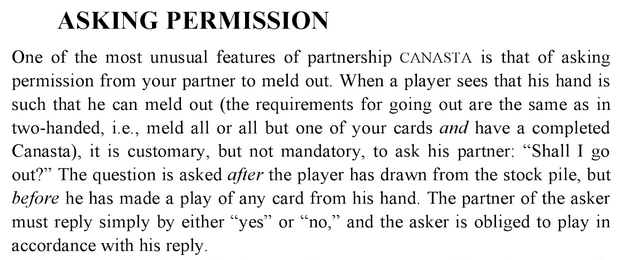
We certainly played more than our fair share of Canasta during the summer of 1987, and it remains the primary waypoint by which I mark that heady season.
I thought of “partner, may I please go out?” when I spotted this sign posted on the wall of the Queen Charlotte Armoury while attending its New Year’s Levee:

I appreciate the formality of the requirement to shout “FIRE, FIRE, FIRE!”, and also the seemingly strange suggestion–perhaps because this is a military installation where people have skills–that in step three one should “proceed to fight the fire” (standard civilian signage practice is, I believe, something more akin to “retire to a safe distance and allow professionals to put out the fire”).
2019 Predictions
As a new year is upon us, this is a good time to start thinking about context and read through the tea leaves of what’s next. I did miss out on predictions last year but I’m resuming past that hiatus. So here are some predictions about 2019
The easy one: Instability
We’ve had a preview of what 2019 in the last month of December: the stock market has been going on wild gyrations as investors are getting increasingly worried about the dangerous mix of increased interest rates, trade wars, and a general sense that this long boom is coming to a close. I expect this to translate into more stock market instability in the short to mid term, with a potential decline in the second half of this year as consumer and business confidence starts to wane.
In governments, we will see even further instability in the US, as the Mueller report comes out, leading to articles of impeachments being drawn out and questions as to whether the Republicans are willing to support Trump through impeachment proceedings in 2019 and guarantee a Democratic white house win in 2020 or oppose him and drive a rift between senators and their constituents.
Outside of the US, I see Europe continuing to grapple with the impact of a no-deal Brexit at the end of March, with potential medicine and food shortages in the UK and concerns across the rest of Europe, leading to more authoritarian candidates succeeding.
In Asia, the great Chinese experiment of trying to keep tight control of government while running a hyperactive capitalist economy could suffer as a result of trade wars, cheap access to capital (due to market uncertainties) and the looming threats of global warming (China is still highly dependent on coal).
The other easy one: Concerns about privacy
If 2018 was the year people started understanding digital advertising, 2019 will be the year they start understanding data trades. There is an old industry axiom that “if you’re not paying for the product, you are the product.” While one part of this equation has been advertising, the other part of it has been data. With the increased penetration of smart devices into homes and retail (Amazon Echo and Google Home as well as the ever-pervasive presence of smarter cameras), we will start hearing people asking questions about what happens to all that data.
This will lead to embarrassing revelations about improperly secured data from some of the biggest names in tech (Google, Amazon, Apple, and Facebook, of course), leading to more tech leaders being asked to talk to Congress about what they do and failed attempt at any kind of meaningful legislation on data.
The emerging one: It’s all about chatting
Messaging apps have become the new center for a lot of user digital behavior including gaming, payment, video, and commerce. At the same time, messaging features are increasingly stepping out of messaging apps by being embedded in other context like gaming (eg. Fortnite as a messaging app disguised as a game) and hardware (eg. Amazon Echo and Google Home as the new landline phone with drop-in and call features).
Just as customer service embraced social media many moons ago, chatbot are becoming the new customer agents on a variety of platforms, with business ranging from J-crew to Home Depot using them to handle customer service queries and automated purchasing. While many of today’s bots are following simple decision trees, the rise of AI-assisted bots (eg. Siri, Alexa, and Cortana) will drive to smarter interaction across a wide range of distribution platforms.
In this consumer market, expect Facebook to be the big winner (since it already owns a substantial part of the space thanks to its ownership of Instagram, Whatsapp, and Facebook Messenger) in the western world. However, it will be faced with challenges in Asia, where WeChat and Line are already dominant, limiting its access to a large portion of the market. Meanwhile, iMessage will continue to remain a closed Apple ecosystem while Google continues to try to figure out its position in the space (with apps ranging from the recently closed out Allo and Google Hangout to Google Messages and many others, it is hard to figure where big G is putting its priority).
In the corporate world, messaging has become the new tool for collaboration, with Microsoft Team and Slack merging bot functionality and document management into the new center of digital business processes. If Google wants to get serious about the enterprise market, it will try to acquire Slack.
The wildcard: Next new social – Fortnite
If you have a teenager in your house, you’re probably already tired of hearing about Fortnite. The game (which incidentally racked up $3B in annual revenue for a free game), will step from being seen as just a game to being seen as the next social network.
Over a decade ago, a social environment called SecondLife laid out some of the foundations for what a graphically rich environment where people can hang out could do. This eventually led to the creation of Minecraft (which, after getting tens of millions of kids addicted, was acquired for $2.5 billion by Microsoft) and now to Fortnite.
While Fortnite has spent much of 2018 as a game, creating “seasons” programming (a new concept pulled from television), the most interesting announcements its creators made were in December, when the company opened up the concept of “islands” where creators could build their own things and share creations with friends and others. This is taking away from the “shoot other people” model that popularized them and greatly expands the audience into a world builder type of environments that is essentially a less toxic social network (With over 200 million users, Fortnite is getting close to being as large as Twitter, with the bots and politically charged discourse).
Epic Games (makers of Fortnite) has also announced that it will offer the tools it uses to developers so they can create multi-platform immersive environments, essentially setting itself up to be the platform for the next generation of social interactions.
As a result, I predict that some brand will make the jump and create a Fortnite outpost in 2019, with more following based on its success.
The crazy set: Media acquisition game
By now, it’s a given that streaming has won. So we can put a nail in TV’s coffin, except for the fact that more TV is being consumed today than at any other times. Except it’s now called streaming and the leading streaming services, along with the legacy players, are all having one massive problem: they are running out of content to produce.
So while Netflix is looking to replace all of TV (not just HBO. If you look at their current collection, Netflix is already one of the largest TV channel for kids, one of the largest comedy channels, one of the largest documentary channel, etc…) and Amazon and Hulu are looking to grow their presence, the traditional players are about to launch their own offerings. This is leading to massive new content investments (yeah, “content is king” doesn’t sound quite as stupid anymore) and a search for more source.
So we will see podcasting as the next new mine for producing content. Just as TV shows in their early days mined radio serials, we are about to see an explosion of new video series based on podcasting serials.
All this will continue ensuring that you never have enough time to keep up with all the content sent your way, thanks to your monthly subscription (Netflix is not threatening HBO, it’s threatening cable TV packages and advertising).
This will also have a knock-on effect on TV advertising as its audiences continue to shrink (except for live events like sports and maybe news) and age (ask today’s youth about a big non-streaming TV show and they may look at you blankly; ask them about a streamer on YouTube or Twitch and they will come up with multiple names).
All this will lead to Disney acquiring the 40% of Hulu it doesn’t already own and Comcast or AT&T attempting to acquire Netflix (Apple might have considered it but will not go through as it focuses its energy on acquiring Spotify)
So… as always, feel free to ping me (let’s try Twitter, where you can find me at @TNLNYC) if you have any thoughts about these and, as always, I will revisit those predictions at the end of the year.
Have an amazing 2019!
Your gout, your fault? – Science-Based Medicine
|
mkalus
shared this story
from |

Gout feels like this
You or someone you know may have experienced gout before. It’s excruciatingly painful, debilitating, and not an event that anyone wants to repeat. Diet and alcohol consumption are regularly cited as causes of gout, and it’s widely believed that gout is a something you bring upon yourself, usually as a result of an indulgent lifestyle. This belief has been around for centuries – as long as gout has been documented. Gout used to be a status symbol – only those with enough wealth (and food) might be lucky enough to have a gout attack.
But what effect does diet really have on gout? While specific foods are undoubtedly aggravating factors, it’s also been known for some time that there is a genetic component to gout. However, the relative contribution of genetics vs. dietary choices is not as well understood. A new paper suggests that the impact of dietary choices on the causes of gout may be small, and that your genetics, not your diet, may be the primary factor influencing your risk of gout. So if you’ve had a gout attack, must you change your diet permanently? That’s the question that this new paper attempts to answer.
What is gout?
Gout is a consequence of excessive uric acid in the blood. Uric acid is produced by the body as a part of metabolism, and it is normally eliminated in the urine. Uric acid is only poorly soluble in blood, and when it crystallizes out of the blood (as urate) and into joints or the skin, it causes the condition known as gout. The big toe is affected in about half of cases, and it appears like a sudden case of inflammatory arthritis, causing swelling and pain.
Treating gout, once you have it, focuses on reducing pain and inflammation. Gout attacks will eventually go away on its own, but medication will reduce pain and hasten resolution. The non-steroidal anti-inflammatory drugs (NSAIDs) are commonly used, as are steroids, and colchicine, whose natural source (autumn crocus) was used to treat inflammation and swelling as far back as 1500 BCE. Most people need to treat a gout attack for about a week before symptoms resolve.
There are several factors that are associated with gout. Sex (males more than females), increasing age, race/ethnicity, and genetics – which we’ll come back to.
Once you’ve had one gout attack, you’re at risk of another. The focus then shifts to prevention. Lowering the blood level of uric acid is the goal, and that can be accomplished primarily through medication (a topic for another post) and lifestyle changes, which shift the balance of uric acid production (via the liver) and uric acid elimination (via the kidneys). Weight loss in the obese reduces uric acid levels. Medications can lower uric acid levels, which may be part of a long-term strategy to reduce urate deposits in the body. The other major intervention tends to be dietary changes, with the focus on reducing the consumption of foods that increase uric acid levels.
The relationship between diet and gout risk has been implicated for centuries. Through anecdotal observation, consumption of red meat, shellfish, alcohol, sugary beverages, and alcohol have been linked to a raised risk of gout. Dietary interventions, like the DASH diet and the Mediterranean diet have conversely been linked to reduced uric acid levels.
Despite dietary interventions and weight optimization, some people remain more at risk of gout, because of non-modifiable risk factors. This brings us to this new paper, which examines the relative contribution of diet and genetics to uric acid levels in a healthy population.
The latest study
This new paper is entitled “Evaluation of the diet wide contribution to serum urate levels: meta-analysis of population based cohorts“, was published in The BMJ, and is from Tanya J Major and colleagues. It was a meta-analysis, or a study of studies, of five different studies. The objective was to examine the relationship between diet and serum urate levels, evaluating the relative contributions of diet and genetics to serum urate. In total the researchers had data on over 16,000 individuals (mainly of European ancestry) who did not have gout and were not taking drugs that would affect uric acid levels. Participants had uric acid levels measured along with dietary data and other demographic factors that might affect gout risk. Genetic risk factors were also identified. The primary measure was average serum urate levels and the variance in serum urate levels.
Diet and urate levels
Fifteen foods were found to be significantly associated with serum urate levels in the total, male, or female cohort.
Increased serum urate levels
- Beer
- Liquor
- Wine
- Potatoes
- Poultry
- Soft Drinks
- Meat (beef, pork, lamb)
Decreased serum urate levels
- Eggs
- Peanuts
- Cold cereal
- Skim milk
- Cheese
- Brown bread
- Margarine
- Non-citrus fruit
The paper breaks down the differences between the males, females, and the full cohort, as well as the association with different diet scores. Here is the full table, which you’ll need to enlarge to view.

Figure 1. Click to embiggen
What’s remarkable is how modest the dietary effects are on serum urate levels, individually and in total:
Individually, the 14 food items associating with serum urate in the full cohort explained 0.06% to 0.99% of the variation in serum urate levels, and summed they explained 3.28% of the variation (table 1). All 63 food items, when summed, explained 4.29% of variation in serum urate levels (supplementary materials, table S5). Food groups (fruit, vegetables, meat, and dairy products) explained between 0.16% and 0.52% of variation in serum urate levels (supplementary materials, table S5). Unadjusted by the genetic risk score, the DASH diet score explained more of the variation in serum urate levels in the full cohort (0.28%; table 2) than the Healthy Eating (0.15%), Mediterranean (0.06%), or data driven (0.16%) diet scores, but each diet score explained less variation in serum urate than the most strongly associated individual food items (table 1).
Emphasis added.
Genetics had a much larger effect, and when you consider genetics, the food effects themselves are smaller:
In contrast, 30 genetic variants previously associated with serum urate levels at a genome wide level of significance in Europeans additively explained 8.7% of the variance in serum urate levels in the full cohort (excluding the NHANES III study; supplementary materials, table S8). A weighted serum urate genetic risk score constructed from these 30 variants,14 unadjusted by any dietary score, explained 7.9% of the variance (table 2). When included in models with the dietary scores, the percentage variance explained did not substantially change in the full, male, and female cohorts (maximum difference of 0.04%; table 2). The percentage variance explained by the dietary scores after adjustment for the genetic risk score fluctuated from a −0.09% difference for the data driven diet pattern in the male cohort to a +0.13% difference in the Mediterranean diet score in the male cohort (table 2). Genome wide estimations of serum urate heritability explained 23.9% of variance in serum urate levels in the full cohort (excluding the NHANES III study). The heritability estimates were 23.8% in the male cohort and 40.3% in the female cohort. Only the DASH diet score showed any evidence for an interaction with the weighted genetic risk score, and only in the female cohort (P=0.04); for all other interactions the P value was ≥0.21 (supplementary materials, table S9).
Emphasis added.
An accompanying editorial to this paper notes that these findings replicate the results of previous studies, but also note that correlations identified between potatoes, peanuts and margarine are new, and require confirmation.
There are several limitations to this study. The biggest limitation is the problem with food frequency questionnaires which are notoriously unreliable, and which differed slightly between the different studies that made up the meta-analysis. Secondly, this was a study in healthy patients, not patients that have gout, so a closer examination in those with gout is essential. This was also a group of patients who were mainly of European ancestry, living in the United States, so how far these findings can be generalized is not clear. It’s also important to note that this study doesn’t look at the impact of modifying diet on the risk of gout attacks, or whether specific foods can trigger gout in predisposed individuals.
Genes over diet?
Individual food choices contribute no more than 1% of an effect on serum urate levels, and diets overall appear to have very little influence. Genetic factors, conversely, are strongly correlated with urate levels and overall are responsible for over 20% of the variation in urate levels. While this is not a study of patients with gout, or a comparison of dietary changes vs. medication management, it does give further weight to the need for medication to help manage uric acid levels. This study should also give some reassurance to patients and health providers that, like so many other medical conditions, “blaming the patient” for their circumstances is harmful and wrong.
Why Reputation?
As I was reading An Xiao Mina’s recent (and excellent) piece for Nieman Lab, and it reminded me that I had not yet written here about why I’ve increasingly been talking about reputation as a core part of online digital literacy. Trust, yes, consensus, yes. But I keep coming back to this idea of reputation.
Why? Well, the short answer is Gloria Origgi. Her book, Reputation, is too techno-optimist in parts, but is still easily the most influential book I’ve read in the past year. Core to Origgi’s work is the idea that reputation is both a social relation and a social heuristic, and these two aspects of reputation have a dynamic relationship. I have a reputation, which is the trace of past events and current relationships in a social system. But that reputation isn’t really separate from the techniques others use to decode and utilize my reputation for decision-making.
This relationship is synergistic. As an example, reputation is subject to the Matthew Effect, where a person who is initially perceived as smart can gain additional reputation for brilliance at a fraction of the cost of someone initially perceived as mediocre. This is because quick assessments of intelligence will have to weight past assessments of others — as a person expands their social circle initial judgments are often carried forward, even if those initial judgments are flawed.
Reputation as a social heuristic maps well onto our methods of course — both Origgi and the Digital Polarization initiative look to models from Simon and Gigerenzer for inspiration. But it also suggests a theory of change.
Compare the idea of “trust” to that of “reputation”. Trust is an end result. You want to measure it. You want to look for and address the things that are reducing trust. And, as I’ve argued, media literacy programs should be assessing shifts in trust, seeing if students move out of “trust compression” (where everything is moderately untrustworthy) to a place where they make bigger and more accurate distinctions.
But trust is not what is read, and when we look at low-trust populations it can often seem like there is not much for media literacy to do. People don’t trust others because they’ve been wronged. Etc. What exactly does that have to do with literacy?
But that’s not the whole story, obviously. In between past experience, tribalism, culture, and the maintenance of trust is a process of reading reputation and making use of it. And what we find is that, time and time again, bad heuristics accelerate and amplify bad underlying issues.
I’ve used the example of PewDiepie and his inadvertent promotion of a Nazi-friendly site as an example of this before. PewDiepie certainly has issues, and seems to share a cultural space that has more in common with /pol/ than #resist. But one imagines that he did not want to risk millions of dollars to promote a random analysis of Death Note by a person posting Hitler speeches. And yet, through an error in reading reputation, he did. Just as the Matthew Effect compounds initial errors in judgment when heuristics are injudiciously applied, errors in applying reputation heuristics tend to make bad situations worse — his judgment about an alt-right YouTuber flows to his followers who then attach some of PewDiepie’s reputation to the ideas presented therein — based, mostly, on his mistake.
I could write all day on this, but maybe one more example. There’s an old heuristic about the reputation of positions on issues — “in matters indifferent, side with the majority.” This can be modified in a number of ways — you might want to side with the qualified majority when it comes to treating your prostate cancer. You might side with the majority of people who share your values on an issue around justice. You might side with a majority of people like you on an issue that has some personal aspects — say, what laptop to get or job to take. Or you might choose a hybrid approach — if you are a woman considering a mastectomy you might do well to consider what the majority of qualified women say about the necessity of the procedure.
The problem, however, from a heuristic standpoint, is that it is far easier to signal (and read the signal) of attributes like values or culture or identity than it is to read qualifications — and one underremarked aspect of polarization is that — relative to other signals — partisan identity has become far easier to read than it was 20 years ago, and expertise has become more difficult in some ways.
One reaction to this is to say — well people have become more partisan. And that’s true! But a compounding factor is that as reputational signals around partisan identity have become more salient and reputational signals around expertise have become more muddled (by astroturfing, CNN punditocracy, etc) people have gravitated to weighting the salient signals more heavily. Stuff that is easier to read is quicker to use. And so you have something like the Matthew Effect — people become more partisan, which makes those signals more salient, which pushes more people to use those signals, which makes people more partisan about an expanding array of issues. What’s the Republican position on cat litter? In 2019, we’ll probably find out. And so on.
If you want to break that cycle, you need to make expertise more salient relative to partisan signals, and show people techniques to read expertise as quickly as partisan identity. Better heuristics and an information environment that empowers quick assessment of things like expertise and agenda can help people to build better, fuller, and more self aware models of reputation, and this, in turn, can have meaningful impact on the underlying issues.
Well, this has not turned into the short post I had hoped, and to do it right I’d probably want to talk ten more pages. But one New Year’s resolution was to publish more WordPress drafts, so here you go. 
Twitter Favorites: [lyrra_sark] You should be as suspicious of someone who says "I don't like feminism" as you would be of someone who says "I don'… https://t.co/9xQHoOHpWh

You should be as suspicious of someone who says "I don't like feminism" as you would be of someone who says "I don'… twitter.com/i/web/status/1…
Twitter Favorites: [skinnylatte] Hello, I’m a Chinese man in a Hollywood movie. I speak in half Mandarin and half Cantonese words that don’t mean an… https://t.co/y1Ie1PrEwt

Hello, I’m a Chinese man in a Hollywood movie. I speak in half Mandarin and half Cantonese words that don’t mean an… twitter.com/i/web/status/1…
Twitter Favorites: [knguyen] my version of Comedians in Cars Getting Coffee is called Writers in Debt Getting Anxiety

my version of Comedians in Cars Getting Coffee is called Writers in Debt Getting Anxiety
Thunderbird to get revamped UI, improved Gmail support and more

Mozilla’s desktop email client Thunderbird is set to get some improvements in 2019 thanks to new staff hires.
Thunderbird’s community manager Ryan Sipes outlined plans to improve user interface and experience issues via a post on the platform’s blog. Further, Sipes mentioned plans to promote better integration with email providers like Gmail.
Along with those improvements, Sipes wrote about plans to rewrite parts of Thunderbird with newer, faster technologies. Additionally, the team will work towards making Thunderbird a multi-process application.
Currently, Thunderbird employs eight people with as many as six new engineers coming on. Sipes notes that the hirings are thanks to increased donations to the project. Further, the Thunderbird community is growing as well, with users expressing excitement about changes in Thunderbird 60.
The new hires will focus on “UI slowness and performance issues, improving notifications, boosting Gmail support” and plenty more.
Security will be a significant focus as well. One of the new engineers will focus primarily focus on privacy and security. Further, the team will make it easier for users to encrypt communications.
While the team may not have all these improvements and features ready by the next Thunderbird release, they will come eventually. Thunderbird users will welcome the improvements, and it may encourage others to try the platform.
I’ve had an eye on Thunderbird for some time, but haven’t been able to make the jump. Hopefully, with the coming changes, it’ll be more compelling for myself and other users.
Image Credit: Thunderbird logo (Ura Design)
Source: Thunderbird Blog Via: Engadget, TechCrunch
The post Thunderbird to get revamped UI, improved Gmail support and more appeared first on MobileSyrup.