Shared posts

18 Jan 23:45

The Blix Winter Riding Guide

by Blix PR
During winter, the weather becomes a consideration in our daily activities. It's important to remember that bad weather doesn't have to stop us from getting outside! Riding electric bikes in the rain, wind, and snow can seem like a drag, but with the pedal assist of a Blix it can help make your ride less taxing. Here's a list to prepare you for proper and safe winter riding. 
Download our Winter Riding Infographic for all the essentials discussed below!
                                                                 
Proper Clothing:
Keeping your body properly warm requires wearing the correct and enough clothing whether you are riding through rain, snow, or wind. You'll also heat up as you start to ride. Think "Essentials":
Under Layers: It is important to begin with warm moisture-wicking under layers such as long-sleeve shirts, pants and socks.
Jackets: Skip the heavy coat and choose a waterproof windbreaker to keep you dry and warm without overheating.
Accessories: Good quality waterproof gloves and a hat to wear under your helmet will keep your extremities warm. Shoes with trek are also important to prevent slipping and injury! 

    Bike Safety and Accessories:

    With earlier sunsets, slick roads, and more cars on the road, bike safety and preventive accessories are vital for safe winter riding. We want to stress that it is okay to get your electric bike wet when riding outdoors, however, making sure to dry it off and not let the water sit on the bike for extended period of times is important!

    Lights: Front and rear lights will increase your visibility on grayer days and darker roads.
    Fenders: Front and rear fenders will protect you from all kinds of dirt spray landing on you and protect your bike’s components potentially limiting the amount of maintenance and cleaning you have to do after your ride! 
    Brakes: Checking your brakes before you ride and keeping them clean is vital to making sure your bike properly stops in the snow or rain.
    Hydration: Keep yourself hydrated by bringing a water bottle in the front basket or bring a warm drink to have ready for after your ride. Although it's cold, your body still needs fluids!

    Blix Prima Mid Drive Blue in puddle

     Benefits of Winter Biking:

    If you can convince yourself to get outside in the cold and wet weather, the benefits of winter biking are seemingly endless.
    Weight Maintenance: Skip the overcrowded gym and find a fitness routine that you can stick through during the winter months to keep your muscles active and your body healthy
    Mental Health: Staying active helps keep seasonal depression under control by increasing your endorphins, stay happy and healthy this winter!
    New Adventures: Biking in the winter is adventurous, possibly a new experience, and likely to leave you with unforgettable memories!


    Wishing you a warm winter from the Blix Team!

    Learn how to riding your e-bike can help you avoid the flu! Read more here.

    Plus, check out how one rider didn't let winter stop her! Read more here

    Follow our social sites and share your winter rides with us! 


    18 Jan 23:45

    5G: if you build it, we will fill it

    by Benedict Evans
    • What is 5G? Why do we care? How much faster does the pipe get? What can we do with a fatter pipe?  How does this relate to VR? Cars? Broadband? What’s the killer app?

    •  Really, unless you work in a few very narrow niches, you shouldn’t spend much time thinking about it.


    In early 2000, right at the top of the dotcom bubble, the mobile bubble and the broadband bubble, European mobile operators spent €110bn on licenses for 3G spectrum. Now, almost 20 years later, I’ve just got back from CES, and 5G is a Topic. Many of my friends at big companies tell me that ‘what is 5G?’ floats around a lot of corporate headquarters almost as much as ‘what is machine learning?’ 

    There are a bunch of different ways to answer this. If I was still a telecoms analyst, I would be spending a lot of time thinking about spectrum, deployment schedules and capex - mobile operators around the world spend several hundred billion dollars a year on network capex, and 5G will become a big part of that. I’d talk about network efficiencies, refarming, vendors, Huawei, chipsets, and maybe NFV. But I’m not a telecoms analyst anymore - I work in Silicon Valley. So, seen from Silicon Valley, I think there are maybe four things to talk about.

    First, what actual changes should we expect?

    Without going into the technical details (any more than absolutely necessary), what do we actually get from this? A fatter pipe.

    • As with each previous generational change, 5G makes it cheaper and easier for mobile operators to build more capacity. So, they can continue to accommodate growing usage.

    • 5G will be deployed on existing cellular radio frequencies, but also lets operators address much higher radio frequencies (over 20 GHz, AKA millimeter wave or ‘mmWave’) that have never previously been usable for mobile services. (This will also require the installation of many short range base stations.)

    • Mainly because of this new spectrum, mobile 5G speeds in good conditions could be well over 100 megabits/sec and potentially several hundreds megabits/sec (mobile speeds of over a gigabit/sec are technically possible but unlikely in the real world).

    • However, deployment in these frequencies, and hence the eye-catching new speeds, will be possible only in pretty constrained areas and will happen pretty slowly. Signals at such frequencies have worse range and don’t go through walls (to simplify hugely), so don’t expect these speeds in rural areas or indeed inside buildings (this is why they have not previously been used for mobile at all). 5G deployment on more conventional mobile spectrum will have speeds (and coverage) closer to 4G.

    • 5G is promised to have much better latency than 4G - perhaps 20-30ms in the real world, down from 50-60ms for LTE (4G). It’s not clear how visible this will be to users.

    • Some people (eg Verizon) think that you can also use 5G in these higher frequencies for a home broadband service (which would mean an antennae on the outside of your house, or in a window), offering up to a gigabit/sec. There is also a fair bit of skepticism about both the economic and technical cases for this. Of course, the newest version of DOCSIS (cable internet) offer much the same - something around a third of the US population could have access to these speeds anyway.

    So, mobile gets better latency and the mobile pipe keeps getting fatter. Fixed broadband will get more competition, in some places.

    Second, what does it mean to have steadily fatter pipes?

    The internet first took off with dial-up, and the first consumer mobile internet service to get mass adoption, NTT DoCoMo’s i-mode, had 2G data speeds - both of these gave us tens of Kbits/sec at best. DSL and the first deployments of 3G gave us a couple of hundred Kbits/sec. Then improvements to 3G (‘3.5G’) and then 4G gave us tens of Mbits/sec (and also much better latency) and improvements to DSL and DOCSIS gave us fixed home broadband speeds in the tens or low hundreds.

    With each of these surges in speed, two things happen. First, the things we’re already doing get smoother and easier and quicker, and also get more capable (or bloated). Pages get more images and become more dynamic. Second, new things become possible. You could not have done Flickr or Google Maps on dialup, and you could not have done Netflix (or at least not well) on the broadband of 2003. In the following generation, Snapchat only worked when you could presume that all of your users can connect at tens of Mbits/sec (when they’re not on home WiFi, of course). That in turn means networks with the overall capacity to give that speed not just to one person at a time but to lots of people, and network infrastructure that can do that at a vaguely reasonable price. If you’d shown Snapchat to a mobile network executive in the early 2000s, their hair would have gone white - there was just no way the early 3G network could have supported that kind of load. 

    In the same way, then, 5G speeds, and ever-faster home broadband, will mean that existing applications will get richer, and also that new applications will emerge - new Flickrs, YouTubes or Snapchats. We don’t know what yet, exactly, though we can make some early guesses, but the creativity of entrepreneurs and platforms and the choices of consumers will decide. This is the great thing about the decentralized, permissionless innovation of the internet - telcos don’t need to decide in advance what the use cases are, any more than Intel had to decide what the use cases for faster CPUs would be.

    Third, AR and VR, and cars.

    Having said that we don’t know what the use cases will be, there are a couple that do repeatedly come up in conversations around 5G; AR and VR, and autonomous cars. It’s worth spending a little time talking about each of these. 

    I think of VR as fundamentally an indoor product - you will not use it walking down the street or pop it open for 20 seconds while you’re waiting for the bus. That means that the connectivity is whatever your home broadband is - DSL, fiber, cable or, perhaps, 5G, plus however you connect to that (i.e. WiFi, mostly). 5G here means two different possibilities. It might mean fixed 5G (with very limited coverage) at up to a gigabit/sec to an antenna outside your home and then WiFi to the headset, or else it means a cellular, ‘mobile’ modem in your device, in which case you will get speeds much closer to today’s 4G LTE (again, 20 GHz signals do not go through walls). You’ll also get 5G latency, which is better than 4G. Is 5G better than the existing connection? Will you notice? Is that really what VR is waiting for? For how many applications? 

    5G seems rather more interesting for AR. To clarify first, ‘AR’ today is used to describe three different things:

    1. Waving your phone at something and seeing things on the screen

    2. A wearable heads-up display (Google Glass) with no awareness of the world around you,

    3. An transparent, immersive, fully 3D color display with a sensing suite that allows it to map the room around you and recognise things and people. A bunch of companies (including Magic Leap, in which a16z is an investor) are working on this - it’s still a few years away from being a mass-market consumer product.

    The third of these seems much the most interesting to me. If you could put on a pair of reading glasses that could look at the world around you and show you things in response, that could be pretty useful, in much the same way that, say, having the internet in your pocket turned out to be useful, and to enable all sorts of new and unpredictable things (imagine pitching Snapchat when our only internet experience was on a PC over dialup). This would work on 4G, but continuous low power high speed low latency connections from 5G would make it a lot better. 

    At the other extreme, I also hear a fair bit about autonomy as a 5G application. I’m not sure about this one. Autonomous cars will certainly use a great deal of data. They will be downloading ‘maps’ (really, very high definition 3D models of the streets they’re driving along) and also updating those maps with data from their own sensors, and they will be downloading updates to their driving systems and uploading more data about how real people drive. However, very little of this needs to happen in real time - it can happen every night or even every week. No mainstream autonomous car project requires continuous connectivity at all, let alone through 5G - the car has to work with no cellular service.

    As we look further out, into a world with lots of autonomous cars, there is widespread interest in those cars being able to talk to each other (‘V2V’ or ‘vehicle to vehicle’), so that, for example, they can speed through a junction without slowing down. This might be done with 5G, or perhaps with another wireless technology. However, most of these use-cases only make sense in a world where there are no human drivers to worry about - this is, obviously, a long way away.

    More imminent is remote operation as a back-stop for when a vehicle gets confused and stops, or when you shift from manually-driven to autonomous - for when autonomy doesn’t work. This is particularly relevant to trucking: 90% or so of the mileage of a long-haul truck in the USA happens on highways, and highways are much easier for autonomy than suburban streets, so a number of companies are exploring a model in which the truck drives itself on the freeway and a human takes over when it leaves - either by physically getting into the vehicle or by connecting remotely. This would be a good 5G use case. But to begin with, you can do it with 4G. It doesn’t presume 5G. The advantage of 5G comes partly with latency, but also with things like network slicing, which takes me onto the next section. 

    Fourth, networking slicing and industrial uses.

    One of the cooler features of 5G is that it lets you split out dedicated capacity for particular use cases - so-called ‘network slicing’. Today (to simplify hugely), although network operators try to do traffic management, all traffic in the cell is fundamentally using the same capacity. 5G lets you create dedicated private capacity in the radio network with specific characteristics. So, you could sell a truck operator dedicated capacity on the two miles between a specific freeway exit and a specific warehouse. Or, you could offer an IoT operator (or alarm company) much lower bandwidth but over a wider area.

    Hence, you could theoretically customise any mix of data speed, coverage, quality, latency, and reliability, or even more narrow things like power consumption (potentially interesting for IoT), and there will probably be a layer of resellers that emerges to aggregate and implement these kinds of services on behalf of MNOs. This seems interesting - it also seems likely to be an enterprise and vertical application story, not a consumer story. On this theme, we are already seeing a trend for large industrial organizations to use private 4G networks instead of WiFi or even Ethernet. These issues will also apply to 5G.

    So, what’s the killer app for 5G?

    In 2000 or so, when I was a baby telecoms analyst, it seemed as though every single telecoms investor was asking ‘what’s the killer app for 3G?’ People said ‘video calling’ a lot. But 3G video calls never happened, and it turned out that the killer app for having the internet in your pocket was, well, having the internet in your pocket. Over time, video turned out to be one part of that, but not as a telco service billed by the second. Equally, the killer app for 5G is probably, well, ‘faster 4G’. Over time, that will mean new Snapchats and New YouTubes - new ways to fill the pipe that wouldn’t work today, and new entrepreneurs. It probably isn’t a revolution - or rather, it means that the revolution that’s been going on since 1995 or so keeps going for another decade or more, until we get to 6G. 

    18 Jan 23:44

    Context.IO Deprecation Blog Post #3: IMAP Sync Best Practices

    by Context.IO

    This is the general approach that Context.IO has used for systems that need to know about new messages.

    “Mailbox” below refers to what people would usually call a folder (inbox, spam, etc). We use “mailbox” because this is how it is referred to in the IMAP RFC. This post assumes some familiarity with IMAP concepts like how UID and UIDVALIDITY work.

    Sync State

    Each mailbox in IMAP is synced independently since mailboxes themselves are independent in IMAP. For each mailbox, Context.IO tracks:

    • mailbox name
    • uidvalidity — This is the same as the IMAP UIDVALIDITY value.
    • last_uid_seen — This is the UID of the last message that was synced in the mailbox.

    We decided to store all of the sync states for an email account in a single blob in our data store instead of having one record per mailbox for simplicity’s sake.

    Sync Algorithm

    A note: all IMAP commands and values are listed in all caps.

    1. Issue a `LIST “” “*”` command to get the current list of folders.
    2. For each mailbox send a pipelined series of `STATUS` commands requesting the UIDVALIDITY and UIDNEXT values for each mailbox. You can pipeline IMAP commands by separating them with a comma. Pipelining here is mostly to reduce latency which is important if you’re using a thread or process per sync.
    3. If the UIDVALIDITY value for a mailbox name changed we reset the last_uid_send field in our state to 0.
    4. Compare the UIDNEXT value from the server and last_uid_seen from the sync state. If UIDNEXT > last_uid_seen+1 then you know there are new messages in the folder.
    5. Request the new messages for each mailbox with new messages. For example: `UID FETCH last_uid_seen+1:* (BODY.PEEK[] INTERNALDATE)`.
    6. Persist the updated mailbox state. It may make sense to do this periodically during the initial sync or anytime you’ve found a large number of new messages to sync.

    Orchestration

    This is the tricky part. We’ve used many different approaches over time, but these are two methods that we recommend.

    Queues

    In this setup, we had a producer which would queue a sync for each account every 30 minutes or so. A pool of consumers would read a job off the queue, request credentials for the account, request sync state, connect to the account, sync it, and persist sync state.

    This generally works well, but it’s expensive to increase the sync rate because the amount of work around fetching the state to sync an account and connecting to an account tends to scale linearly.

    Requesting OAuth credentials can be slow, but that can be mitigated by caching them until they expire. Connecting to an IMAP server can be expensive CPU-wise, especially when using SSL. Make sure that whenever possible you are using SSL resumption to avoid the overhead of the initial handshake when possible (many IMAP servers don’t support SSL resumption).

    Persistent Connections

    In this setup, we split up accounts across sync processes and then have each sync process keep open a persistent connection to the IMAP server. The big advantage of this method is that you avoid the cost of credentials, as well as the cost of connecting and fetching mailbox state each time you want to look for new messages.

    This connection can use the IDLE feature (when available on an IMAP server) to be notified about new messages in a single mailbox or to periodically send NOOP commands which also trigger notifications from the IMAP server. IDLE is pretty restrictive in that you can only listen for messages on a single mailbox so we would usually listen on one mailbox for a period of time, and then use the general sync algorithm to periodically to pick up messages in other mailboxes.

    If all you need is to sync once a minute, then you may not even need to use IDLE at all.

    The difficult part here is coming up with a way to make sure that every account is being handled by a sync process. In the past, we’ve stored a mapping between accounts and persistently identified sync processes. For example, account X is handled by sync worker Y and when sync worker Y becomes available for work it fetches all accounts it’s responsible for. This is not ideal because the division of work can become unbalanced, but it works.

    Another option is to use consistent hashing to distribute accounts across a variable number of processes. It’s more work to get something like this right, but it’s easier to operate in the long term.

    We hope this info helps you to work with IMAP more easily. Please let us know if you have any questions!


    Context.IO Deprecation Blog Post #3: IMAP Sync Best Practices was originally published in Context.IO on Medium, where people are continuing the conversation by highlighting and responding to this story.

    18 Jan 23:44

    Purism announces PureOS Store

    by Sriram Ramkrishna

    Purism is pleased to announce PureOS Store, a secure alternative to proprietary app stores that respects your privacy and freedom. While there is much to do before we go live, we are well into building the infrastructure and refining the policy. PureOS Store will be a vibrant hub for both mobile and desktop apps.

    We envision PureOS Store as the primary community interface for app developers to contribute to the wider ecosystem, without having to understand the underlying technology like packaging or the mechanism of pushing apps upstream. We want to incentivize developers to create software that meets community values with the ultimate goal of incorporation into PureOS itself.

    Apps in the PureOS Store will be evaluated on an ascending scale, with maturity ranging from development and beta levels to a fully-endorsed and default app in PureOS. Correlating “badges” will be utilized to quickly and clearly display the status of a given app, while also reflecting on the software’s freedom, privacy, security, and ethical design.

    PureOS Store Badges
    PureOS Store Badge Concept

    This will not only facilitate trust in the ecosystem, but will empower users to make informed choices about apps before installing them.

    In this way, anyone using Librem hardware or PureOS can understand that the software they rely upon is developed, packaged, and distributed in a socially-conscious manner. The values of PureOS Store reflect the values at Purism and, in fact, those we all would like to see in society.

    In addition, we believe PureOS Store can facilitate the distribution of software across Librem devices that run PureOS, from laptops to mobile. We hope to develop real convergence — apps that “just work” regardless of which device they’re running on. Distributions like Debian that run on multiple silicon architectures have always held the promise of convergence, but most efforts at achieving this goal have fallen short. Purism is in the unique position of producing a Free and Open-Source Software (FOSS) laptop and smartphone, enabling an entire ecosystem based upon PureOS and our social values.

    Stay tuned for more announcements as we get closer to launch.

    The post Purism announces PureOS Store appeared first on Purism.

    18 Jan 23:44

    Why Data Is Never Raw

    Nick Barrowman, The New Atlantis, Jan 18, 2019
    Icon

    There's so much emphasis on things like evidence-based decision-making, or data-driven learning, as though the proponents had never read Kuhn, Lakatos and Laudan. It bears repeating, especially in these days of big data, that "data is never simply given, nor should it be accepted on faith. How data are construed, recorded, and collected is the result of human decisions — decisions about what exactly to measure, when and where to do so, and by what methods." Theory informs data in two key ways: first, the terms we use to describe the world themselves suggest that the world is one way, and not another; and second, what we already believe about the world informs what we believe we see or perceive in the world.

    Web: [Direct Link] [This Post]
    18 Jan 23:44

    Community Data Is What People Think It Is

    by Richard Millington

    (reminder prices for our Strategic Community Management course rise tonight).

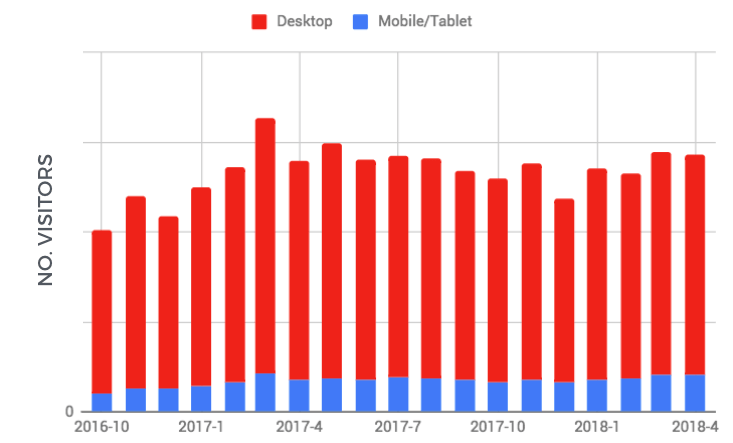
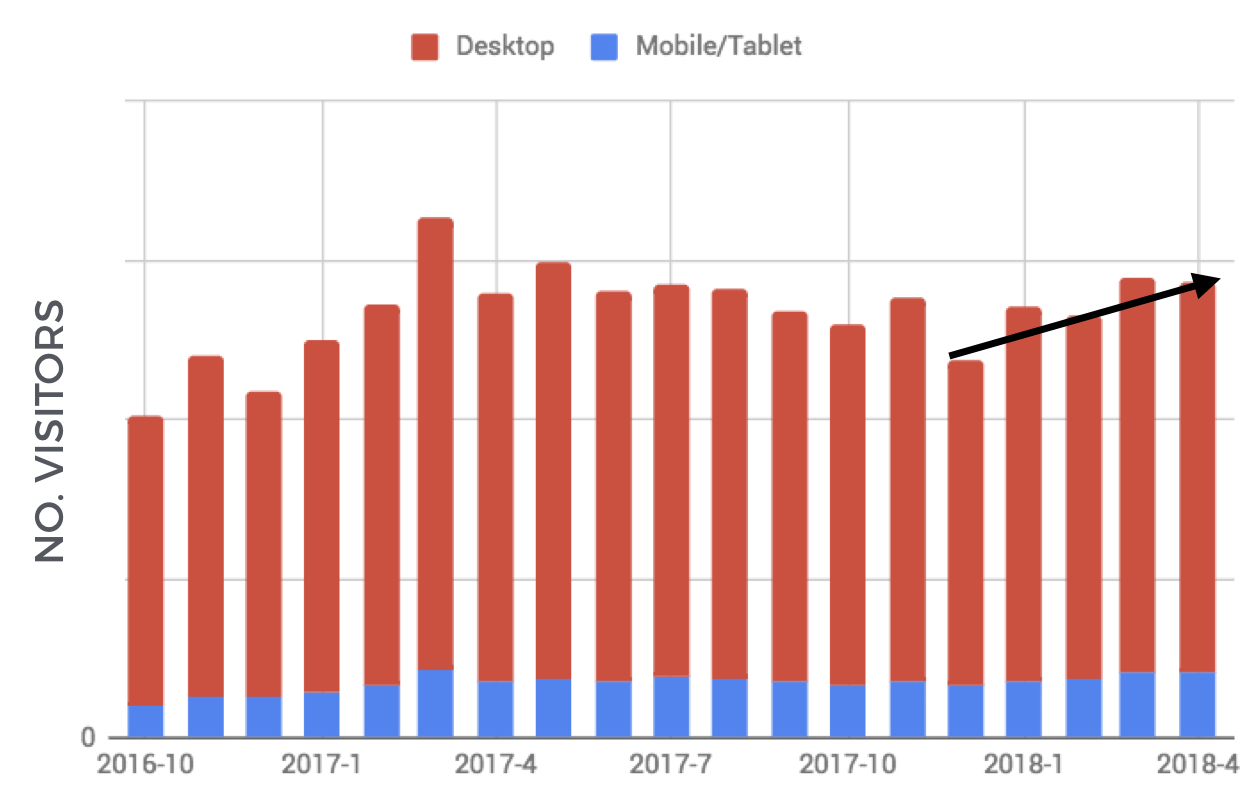
    It’s a mistake to believe that you win the argument if you have the right data. During this week’s webinar, I presented this slide and asked attendees whether the level of traffic was going up, down, or staying the same.

    The audience was split between the three.

    We’re all looking at exactly the same graph and coming to completely different interpretations.

    That’s pretty incredible don’t you think?

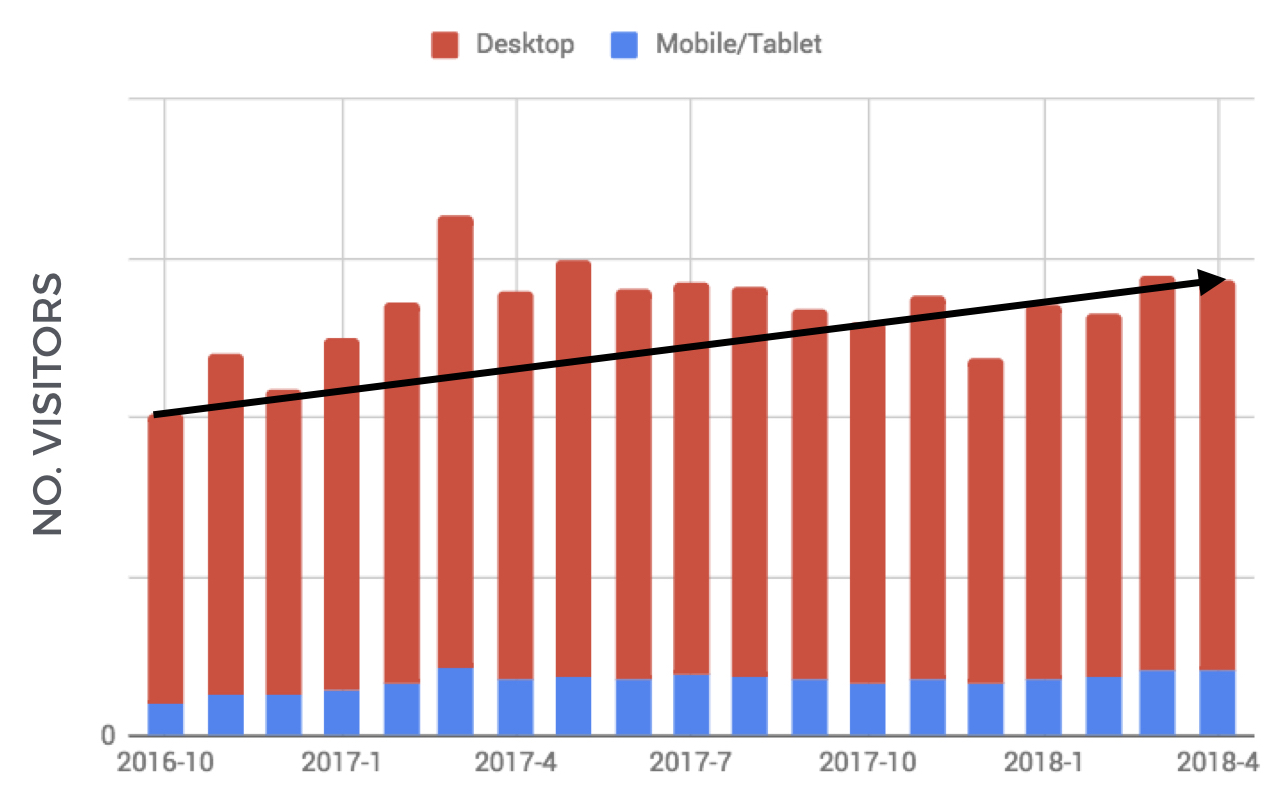
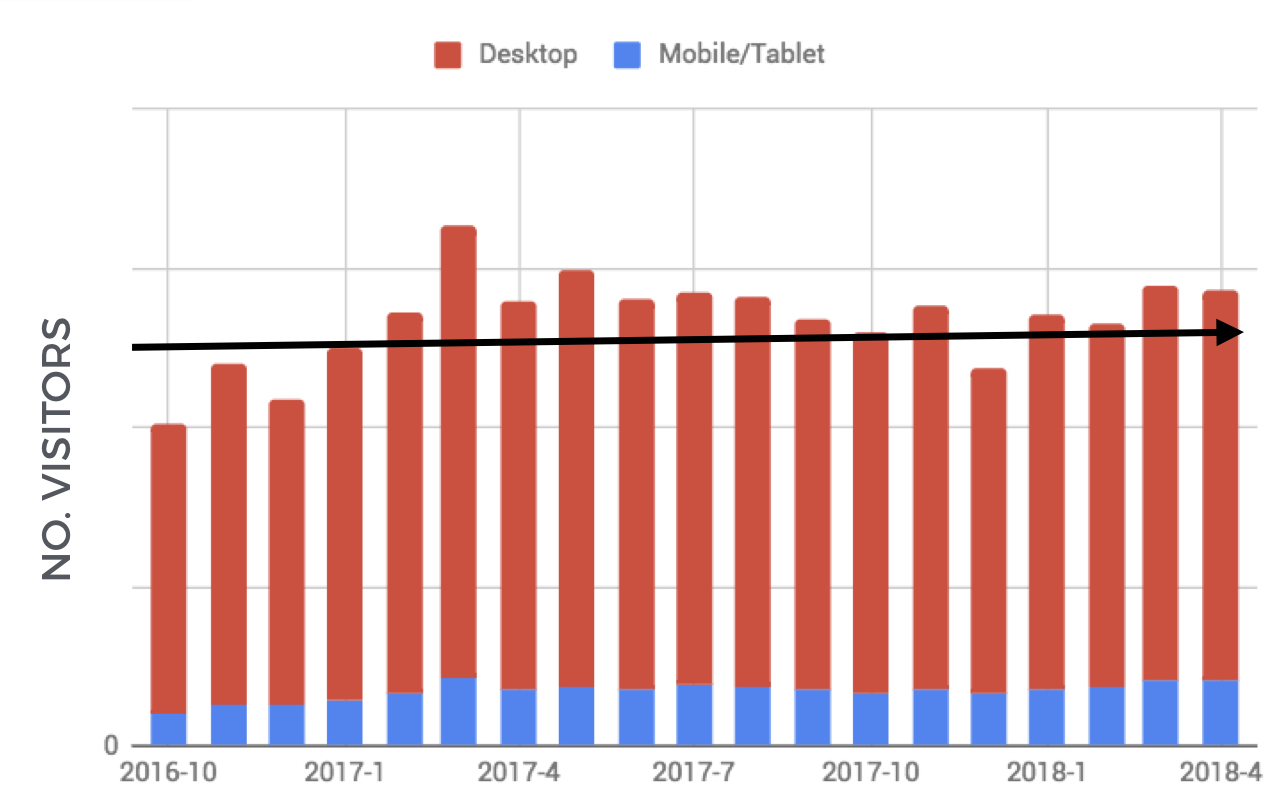
    But this is true of most data. Do you look for the line of best fit, the trend in the past few months/years, or some sort of average over them?

    You can see this in the images here:

    This happens with almost every possible metric. Everyone brings their own biases into their interpretation of data. If they don’t know you, don’t believe in you, or don’t understand the community then the same metrics you’re delighted to present can be perceived negatively.

    You might be delighted to show the community solved 20% more customer questions than last year while the head of customer support might note it’s still only 5% of the total questions the support team receives. Why bother?

    Data is one of many signals that helps people understand how the community is doing/what it’s worth. It isn’t the strongest or weakest. Others include the relationships you’ve developed with senior people, whether you’re delivering impact for them, what the narrative of the community is, who else supports the community, whether they’re engaged in the process of community etc. etc…

    It’s better to have great data than not, but don’t imagine it will be a silver bullet solution to get the support you want.

    18 Jan 23:44

    HCL is getting the band together

    by Volker Weber

    95b4024a35abd7db5fcbbe81417099b9

    Ever since the curious 'partnership' between IBM and HCL around the IBM Collaboration Solutions' products — HCL would develop and service Notes & Domino and IBM would keep sales and marketing (!) — I wondered how this would play out. Towards the end of the year the companies announced that HCL would buy out IBM and be responsible for Notes & Domino, Connections, Sametime, Portal and what not. Product Management, Marketing, Sales, Development, Service, everything. Watson Workspace was not part of the deal and is being discontinued.

    And there was one particular person I was interested in hearing about. No, not Ed Brill, who has moved on to Press Ganey for a new career. I was thinking about Uffe Sorensen, currently the Sales Director at IBM for the collaboration platform. I have known Uffe "forever" and clearly, this job would no longer be at IBM. Would he hold on to a different position or just retire. He has been at IBM for more than 48 years and he was going to see how IBM can celebrate a 50 year veteran. (→ There is no provision beyond 40 years service.)

    As it turns out, Uffe isn't ready to retire. And he is not going to stick it out with IBM. Uffe is joining the band at HCL:

    (Reference to the Hitchhiker's Guide to the Galaxy omitted, vowe)... I thrive in a particular environment - and seek that out. I started with IBM in July 1970 (SIC) working with APL/360: an ingenious interactive environment to help business professionals express their business problems and gain IT support to resolve - by yourself. The very first "citizen developer" environment - using IBM 1052 and IBM 2741 typewriter terminals ;o)

    But we did wonders - didn't know this would eventually be known as "analytics", "big data", "citizen developers", "portals", what have you.

    I'll stay close: I have joined HCL and will continue the #dominoforever voyage on a new vessel under Richard Jefts' lead. I remain committed to helping you and everyone taking advantage of this unique technology and to support the future development and growth of the Domino family as HCL offerings.

    I have witnessed the huge change in velocity since IBM and HCL announced the IP partnership in 2017 through the shipment of Domino V10 in 2018.

    To me, this is the way to go - and I trust you'll stay with us on this journey.

    If you have any doubts, I would love to dispel your concerns... And ensure that HCL exceeds your expectations delivering a high Return On your Investments !

    I have lots of good things to say about Uffe, but I will let him speak for himself here. I am looking forward to being in touch in the future.

    Next stop: HCL is bringing Episode 2 of The Factory Tour to Milan at the end of February. Who knows who is going to show up there?

    18 Jan 23:44

    Facebook ist nicht gesund für unsere Freundschaft

    by Carsten Thomas
    Zerstören digitale Freundschaften in Facebook echte Freundschaften?Micky Beisenherz im Dialog mit Johannes Ceh über Wutpostings und deren Auswirkungen auf unser Zusammenleben. „Lieber Andi*. Ich mag dich. Damit das so bleibt, werde ich dich jetzt bei Facebook löschen.“ Was drastisch klingt, war [...]
    18 Jan 23:44

    Twitter Favorites: [Dries] The new Slack logo features four little Druplicons. ;-)

    Dries Buytaert @Dries
    The new Slack logo features four little Druplicons. ;-)
    18 Jan 23:44

    Twitter Favorites: [gruber] The original plaid design in tech: @jkottke’s late great Stellar. (Predated Slack by at least two years.)… https://t.co/4bmbKYgDLq

    John Gruber @gruber
    The original plaid design in tech: @jkottke’s late great Stellar. (Predated Slack by at least two years.)… twitter.com/i/web/status/1…
    18 Jan 23:44

    Twitter Favorites: [JodiesJumpsuit] Toronto for the foreseeable future. #dlws https://t.co/pkwZkn7CeD

    jump for my love @JodiesJumpsuit
    Toronto for the foreseeable future. #dlws pic.twitter.com/pkwZkn7CeD
    18 Jan 23:43

    Teams, communities and networks: a case of our homeschooling group

    by Lilia

    Over last few months I almost gave up on investing in our local homeschooling community. What we had before fell apart, with lots of emotions, broken relations and learning in between. Rebuilding something like that is a challenge: distances matter and there we live there is a lack of critical mass of like-minded homeschoolers with the kids/rhytms/values that match. Still there is a need in others, a lot of social capital built in the previous period and willingness to make it work. Yesterday we had a meeting to discuss what and how do we want to do together after a period of “let’s see where things go by themselves”. Some requirements are clear, others have to be sorted out our further and we still have to come up with a way to make it work.

    The challenge that we are facing now is about creating a network of families with enough autonomy to go on with their individual educational trajectories and social life, while at the same time with enough overlap to do projects in different constillation of members on a regular basis. As soon as it became clear I had to think about the parallels with the work on distributed Agile teams and the insights that came from it.

    I think the main challenge we face now is about communication that allows to create enough coherence between various families in the group to enable getting things done together. This is where the ideas about teams, communities and networks in terms of communication forms come into play, as well as the framework from it.

    Core communication types for teams, communities and networks All this time I thought of our homeschooling group in terms of a community. This is how I describe it in the post of how it worked and what went wrong –
    A sense of community. At the same time the operational structure was more of a network, without a single core defining the norms. We had several active nodes, “pulsating” with events and attracting different overlapping groups of participants from much broader “cloud”. As long as those were in balance and communication between them went well, there was enough shared understanding and network density to give it a feel of a community.

    Communication and common groundWhat happened next is at some level pretty similar to the challenges of distributed Agile teams (right): relationships and the shared view of what, why and how we do together started to fall into pieces.

    Another interesting thing that happened is that from something that felt as a community it evolved into two directions. A dense group of people around one node went off into a “team mode” with closed boundaries, strong ties and structures that enabled getting more things done. The rest of people fell into the “network” end of the diagonal, with lack of the coherence to make things happen.

    All of which is very interesting to dive into, but right now I have to run across the border with the kids, so just two things so far:

    • I need to find more on working cases, practices, organisational structures in the networks that are capable of having projects and getting things done on a regular basis.
    • I have to dig out what was happening with conceptual understanding of the things in respect to communication and sort of ties in relation to networks, communities and teams while I was not actively present in the field. I’ve seen that Harold Jarche went on building some stuff inspired by the model above, but have to dig it out.

    Any thoughts and pointers are very welcome.

    The post Teams, communities and networks: a case of our homeschooling group appeared first on Mathemagenic.

    18 Jan 23:43

    LEGO in the Lab

    Charles Rapple, The Scholarly Kitchen, Jan 18, 2019
    Icon

    This article doesn't have much article to it, but there is a set of links pointing to interesting examples of how Lego is used in the lab and in the classroom (I wish I could see more than just the abstract for the Lego-Github presentation). I have to confess, though - when I was a kid there were two types of people in the world, Lego people, and Meccano people, and I was a Meccano person. Related: Pinterest Lego in the Classroom.

    Web: [Direct Link] [This Post]
    18 Jan 23:43

    Custom Charts – RallyDataJunkie Stage Table, Part 1

    by Tony Hirst

    Over the last few evenings, I’ve been tinkering a bit more with my stage table report for displaying stage split times, using the Dakar Rally 2019 timing data as a motivator for it; this is a useful data set to try the table out with not because the Dakar stages are long, with multiple waypoints (that is, splits) along each stage.

    There are still a few columns I want to add to the table, but for now, here’s a summary of how to start reading the table.

    Here’s stage 3, rebased on Sebastien Loeb; the table is ordered according to stage rank:

    The first part of the chart has the Road Position (that is, stage start order) using a scaled palette so that out of start order drivers in the ranking are highlighted. The name of the Crew and vehicle Brand follow, and a small inline step chart that shows the evolution of the Waypoint Rank of each crew (that is, their rank in terms of stage time to that point, at each waypoint). The upper grey bar shows podium ranks 1 to 3, the lower grey line is tenth. If a waypoint returns an NA time, we get a break in the line.

    Much of the rest of the chart relies on “rebased” times. So what do I mean by “rebased”?

    One of the things the original data gives us the stage time it took each driver to get to each way point.

    For example, it took Loeb 18 minutes dead to get to waypoint 1, and Peterhansel 17m 58. Rebasing this relative to Loeb suggests Loeb lost 2s to Perterhansel on that split. On the other hand, Coronel took 22:50, so Loeb gained 290s.

    Rebasing times relative to a particular driver finds the time difference (delta) between that driver and all the other drivers at that timing point. The rebased times show for each driver other than the target driver are thus the deltas between their times and the time recorded for the target driver. The rebased time display was developed to be primarily useful to the driver with reference to who the rebased times are calculated.

    So what’s going on in the other columns? Let’s rebase relative to Loeb.

    Here’s what it looks like, again;

    The left hand  middle of the table/chart shows time taking in making progress between waypoints.

    To start with we have the Stage Gap of each driver relative to Loeb. This is intended to be read from the target driver’s perspective, so where a driver made time over the target driver, we colour it red to show our target lost time relative to that driver. If a driver was slower than the target driver (the target made up time), we colour it green.

    The Stage Gap is incremental, based on differences between drivers of based on the total time in stage at each waypoint. In the above case, Loeb was losing out slightly to the first two drivers at the first couple of waypoint, but was ahead of the third place driver. Then something went bad and a larget amount of time was lost.

    But how much time? That what the inline bar chart cells show: the time gained / dropped going from one waypoint to the next. The D0_ times capture differences in the time taken going from one split/waypoint to the next. The horizontal bar chart x-axis limits are set on a per column basis, so you need to look at the numbers get a size of how much time gained/lost they represent. The numbers are time deltas in seconds. I ummed and ahhed about the sign of these. At the moment, a positive time means the target (Loeb) was that much time slower (extra, plus) than the driver indicated by the row.

    Finally, the Pos column is rank position at the end of the stage.

    If we look down the table, around Loeb, we see how Loeb’s times compare to the drivers who finished just ahead —and behind— hi. For drivers ahead in the ranking, their Stage Gap will end up red at the end of the stage, for drivers behind, it’ll be green (look closely!)

    Scanning the D0_ bars within a column, it’s obvious which bits of the stage Loeb made, and dropped, time.

    The right hand side of the figure considers the stage evolution as a whole.

    The Gap to Leader column shows how much time each driver was behind the stage leader at each waypoint (that is, at each waypoint, rank the drivers to see who was quickest getting to that point).

    Along with the Waypoint Rank, the Road Position and Gap to Leader, this is the only aspect of the table that is relative to the driver associated with that row: it helps our target (Loeb) put each other driver’s performance on the stage in the context of the overall stage rankings. The dot marker indicates the gap to leader at the end of the stage.

    The 0N_ columns show the time delta on stage between each driver and Loeb, which is the say, the delta between the accumulated stage time for each driver at each waypoint. The final column records the amount of time, in seconds, gained or lost by Loeb relative to each driver in the final stage ranking (penalties excepted).

    Looking at the table aound Loeb we see the column entries are empty except for the Gap to Leader evolution.

    The original version of this chart, which I was working up around WRC 2018, also includes a couple more columns relating to overall rally position at the start and end of the stage. Adding those is part of my weekend playtime homework!

    18 Jan 23:41

    "Even though the average American corporation resembles a giant Skinner box with a parking lot, no..."

    “Even though the average American corporation resembles a giant Skinner box with a parking...
    18 Jan 23:41

    The Best Work I Saw at the Medium Festival of Photography: Part 2

    by Jonathan Blaustein


    I never set out to be an opinion columnist.

    It’s true.

    Hell, before 2008, if you’d told me I’d become a professional blogger, much less do the job for nearly 9 years, I’d have taken you for a crazy person.

    But everything realigned 10 years ago, in the eye-teeth of The Great Recession, and frankly, I don’t think the world has been the same since.

    It’s funny, reading the papers, following the discussions about whether the 10 year bull market has finally turned bear.

    Will the stock market’s tumble, or the government shut down, or Trump’s stunning incompetence, finally derail the strong American economy, and lead to a recession?

    I find those articles patently absurd, and my guess is, you do too.

    I’m glad the stock market has gone its run, sure, but in every other way, it feels like America is still not back to where it was before the mix of horrible home loans, and the toxic derivative instruments built upon them, created a financial bubble that finally burst in September 2008.

    By January 2009, of course, the economy was in pure free-fall, and America inaugurated its first African-American President, tasked with putting the pieces back together. (Tough luck, Barack. You needed the crisis to get elected, I’d imagine, but it meant you spent your best years putting out another man’s fires.)

    I admit, knowing it was exactly 10 years ago has been on my mind lately. I first approached Rob Haggart, my long-time editor, because he put out a call looking for Great Recession images in early 2010.

    (He complimented the ones I emailed him, pictures from Southern Colorado I’ve mostly scrubbed from the internet, which I’m now re-visiting nearly a decade later.)

    Since we were corresponding anyway, I pitched Rob on writing a couple of articles for him, gratis, as I was a fan of the blog, and had been writing on a small-time blog with friends for nearly a year by then.

    At that point, when I wrote him, it was spring 2010, and my small commercial photography/printing studio in Taos had seen its business evaporate. I mean, I went from having clients to having none, all within a few months.

    The tell-tale sign, I discovered, was I was getting hired a lot, near the end, to do Canadian passport photos, because all the Canadians wanted to make sure they could get the hell out of the country.

    Pronto.

    Going into the Great Recession, I was an unknown artist doing all sorts of photo and printing services to make a living, while also running the studio as a gallery. (I sold next to nothing.)

    Afterwards, I was a somewhat-known artist, a professional blogger, and a college professor.

    But all these years later, I’m just about making what I made before the career-changes happened.

    Truth be told, I love the career exchange, and would make it every time, if I could. I get a lot of satisfaction and pleasure out of the work I do, despite the grind of permanent freelance living.

    My wife makes more money now, as she went into private practice as a therapist, (after years of working in a local school,) so that helps for sure.

    As I’m said, I’m personally very happy, but in no way do I think that things are “better” in the world than they were before the Crash, and in many ways they seem worse.

    Seeing all the income growth go to such a small percentage of Americans wears away social trust, as once people believe a game is rigged, they have much less interest in maintaining said system.

    And of course while Obama was left to clean up W. Bush’s mess, the real legacy of The Great Recession was Donald J. Trump.

    I’ve been a vocal critic of the now-President here for years, and even I’m stunned to read that the FBI actively investigated whether Trump might be a Russian asset.

    (And that he bought a room full of McDonalds and Wendy’s for the Clemson football team.)

    This truly unstable world, I believe, was first born in the ashes of the Global Economic Collapse.

    All of a sudden, America stumbled.
    Hard.

    Even worse than in Vietnam.

    The extreme elements in our Capitalistic system wiped out extraordinary amounts of wealth, for ordinary people, and in many cases literally kicked them to the curb.

    In the end, essentially no bankers went to jail.

    Foreclosed Americans were left to pick up their own pieces, and American taxpayers paid the bill for bailouts.

    Are we really surprised that so many people, doing so poorly in depressed areas, would fall for Trump’s con, feeling their pain and promising to bring their jobs back?

    Or that other major nations, like China and Russia, would see our inherent weakness, and push that much harder to take our mantle of power, geo-politically?

    I haven’t written a political column in a while, because I try to balance the style and tenor of these articles. It’s one way that I’ve managed to keep it interesting, given that the format is essentially unchanged all these years.

    But as it’s early in 2019, and 10 years since that evil 2009, I felt it was a good time to go in this direction.

    This story will ultimately be about the second batch of photographers I saw at the Medium Festival of Photography in San Diego last October.

    And last week, I wrote my spiel about the city, and gave you all some advice to get out there and hit up the festivals, or travel more this year.

    This column is meant to build upon that, if you can believe it.

    Because beneath the super-structure of the political critique, (I can’t believe I’m explaining my own meta-level writing,) what I really meant to say was: reinvention is painful.

    Change is hard.
    And yet it’s always worth it.

    One of the cardinal rules of being an artist is that once you realize how deeply you’re embedded in your comfort zone, it’s time to jump out of bed.

    Doing these things is much harder than saying them, and pretty much no one chooses to change.

    It’s normally forced upon us by life circumstances.

    But knowing that you eventually have to shake things up, and then having the guts to make the tough call, these processes lead to growth, as a human and an artist.

    I live by my own advice, I swear.

    Just the other week, I gave up my beloved Wing Chun Kung Fu, and switched to Aikido, because I knew I needed a new teacher, and a new beginning.

    It hurt, but I did it anyway. Because that’s how I was trained at Pratt.

    Many of the artists I meet at events like Medium don’t have the MFA degree. They didn’t go to art school, and some haven’t even taken a formal class.

    Many of the photographers had a first career. They didn’t follow their passion, initially, but when given the chance later in life, they took workshops, joined critiquing groups, and threw everything they had at their new career as an artist.

    Other times, I let my opinions fly, and I might be sitting across from an MFA photographer. Or even better, sometimes, I’ll be critiquing a professor from a really established school.

    This visit, a photographer came up to me to re-introduce herself, as I’d been really strong in my advice, during a previous review at Medium. (I insisted that she change her paper type from matte to a photo surface.)

    I published her work here, and never thought about it again. But apparently, the woman told me, I’d gotten under her skin, as she resented the advice at first, but then had finally done what I suggested, and found success with the change.

    Another person verified that this professor had told the story many times, as I was the “paper guy,” and it had been a big deal in her life.

    Honestly, I can’t keep giving beginning-of-the-year-advice-columns much longer. February is right around the corner, and anyway, after today, it will be enough.

    The best I can say to you is to try to embrace some change, in 2019, and push yourself hard.

    Try a different medium. Go somewhere new. Sign up for a class at a local community college. Switch to black and white. Make a video.

    Times of upheaval have a way of re-writing the rules of the game, and why not make yourself stronger, and pick up some new skills, for the decade to come?

    Enough said, now we’ll look at the second batch of the Best Work I Saw at the Medium Festival of Photography in October 2018. (As always, they’re in no particular order.)

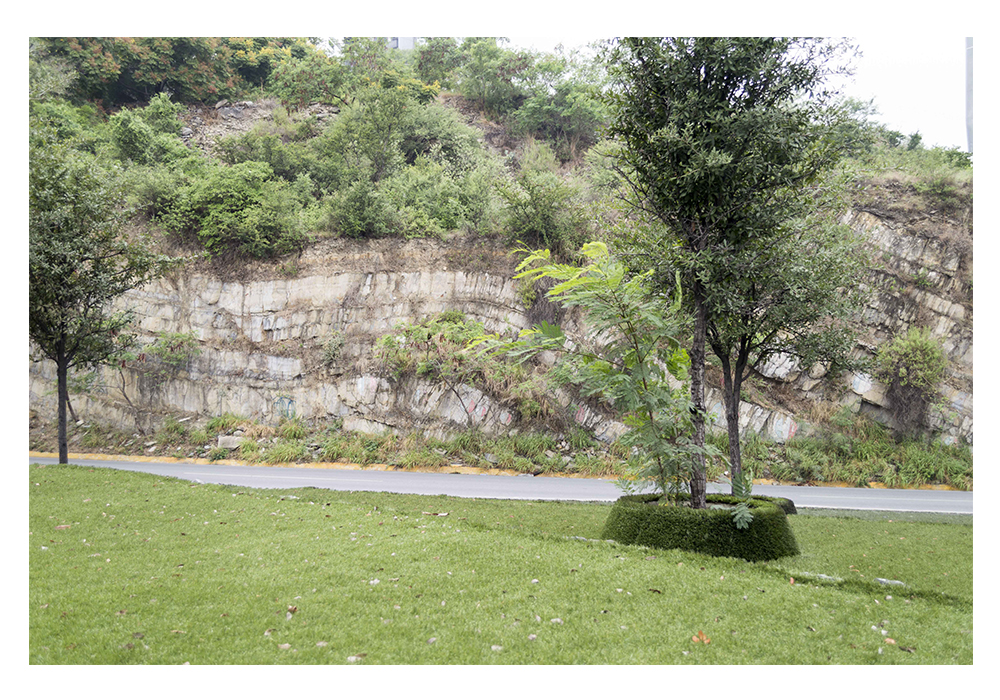
    Victoria Fava was visiting from Monterrey, Mexico. She studied art as well as photography, and we spent much of our chat discussing what the optimal medium would be to express her ideas.

    She’s been interested in the fact that astroturf, a chemical product developed by Monsanto, is highly utilized there, and oddly is often featured in wealthy homes. (From an American perspective, it seems downscale.)

    I like the photos, but personally thought creating installations, making mock-outdoor-scenes indoors, might be the way to go. (Easy for me to say. That’s much harder to pull off than making a photograph.)


    CJ Pressma is one of the types of people I alluded to above, as he’s been involved with photography at a high level since before I was born. CJ was visiting from Louisville, where he ran a residency program for many years.

    He’s was also a master printer, doing portfolios for people like Meatyard, and my colleague Brian Clamp even mentioned to me during the festival that he had vintage prints that CJ had made back in the day.

    At Medium, CJ showed me a book he’d made pairing (mostly) night photographs with faux dream diary statements he’d asked his friends to contribute. The one image of the frozen truck was probably the best single image I saw that week.


    Bil Zelman is one of the few people in the world who make me jealous, as he lives in Encinitas, my favorite beach town in California. (Though all of North County is pretty cool, IMO.)

    He’s primarily a commercial and editorial photography who self-financed a personal project looking at elements of the landscape that reflect our anthropocentric times. (Non-Native species, non-native trees, etc.)

    Given the high flash at night, they’re super dynamic. And I had to lay it on hard to convince Bil that he shouldn’t lead with 15 tree pictures before showing the alligators and Burmese python.

    Never bury the lede!

    But Bil told me he mixed it up for later reviews, and received some really great responses.

    Justin Nolan is another example of one of the types I mentioned above. He’s a professor at the University of Central Florida in Daytona, and he got his MFA at UNM in New Mexico not too long ago.

    Once I knew his training, I pushed him pretty hard, and asked some difficult questions. I never would have gone down that interrogative rabbit hole, though, with someone who was new to the field, or hadn’t been trained in the critique process.

    Needless to say, I didn’t love one of his projects, but found his take on Florida, his new home, to be witty and great. I make fun of Florida a lot on Twitter, (as does anyone paying attention to what happens down there,) but I liked that Justin’s subtle style contrasted with that over-the-top reputation.


    Finally, we have Sheri Lynn Behr, whom I met at Photo NOLA back in 2012. (See what I mean about going to festivals. You can stay in touch with so many people.)

    Sheri mentioned to me, in the hall before the review, that she’d heard I was tough, and that she wanted a tough critique. I knew her work was doing well, as she’d just had a solo show at the Griffin Museum in Massachusetts.

    Sure enough, though, she showed me a bunch of projects that were mixed together, and printed on different paper surfaces. It was one of those crits where she had an answer for most of my issues, and was fairly wedded to her process, so I let it drop.

    Her meta-project, which she made into a book, is called “BeSeeingYou,” and is all about surveillance culture. This one vertical piece stood out to me so powerfully that I’m going to show it by itself.

    That’s it for today, and we’ll be back to the book reviews next week. I am planning to hit up a few festivals in 2019 though, including Photo Lucida in Portland, which will be my first time.

    So I’ll be sure to report from the field again as soon as I’m able.

    The post The Best Work I Saw at the Medium Festival of Photography: Part 2 appeared first on A Photo Editor.

    ------------------------

    Visit our sponsor Photo Folio, providing websites to professional photographers for over 10 years. Featuring the only customizable template in the world.

    ------------------------

    18 Jan 23:41

    Reducetarian, not vegetarian

    by Caterina Fake

    I like a good steak. I really, really like a good steak. I order it rare. Other members of my family order it blue. And my grandfather used to eat his almost raw, instructing the griller, “just restore the body heat”, which, let’s be honest, is a really gross way to order food. That’s the kind of carnivores I come from. Tartare? Yes. Oh yes.

    And I love animals, really really really. Animal rights? Makes me sick. My first exposure to the ghastliness of the industrial meat issue was Sue Coe’s terrifying book Dead Meat, which I read in 1996. More recently we watched the documentary Food, Inc. with the kids, probably the first horror movie they’ve seen. As the years have passed we’ve become more and more aware of the terrible things required to produce industrially farmed meat–through movies, articles, books the rise of various organizations promoting animal rights, even The Smiths album Meat is Murder.

    As investors, we’ve looked at– and sampled–a lot of alternative protein products: classics like Tofurkey, Garden burgers and Boca Burgers. Second wave meat alternatives like Soylent, Beyond Meat, and we always get an Impossible Burger at Gott’s at the airport before boarding flights. We’ve eaten crickets, witchetty grubs, a vast array of soy products pretending to be meat, fake meat comprised of mushrooms and beets, and bland, frightening and generally unidentified frankenfood.

    I am a failed vegetarian. My efforts to eliminate meat from my diet made me realize how anemic I was: I wasn’t good about taking my vitamins or making sure I had a good source of iron. I fainted several times, and ended my stint as a vegetarian when I entered a kind of fugue state and found myself sitting at the counter of Jackson Hole Burgers eating a 7 oz. burger. That is not a small amount of meat. But what’s a woke carnivore to do?

    Reduce. Our kids call themselves not vegetarians–they still like the occasional slice of bacon–but reducetarians. Say it out loud: it sounds better than it looks. And it makes sense doesn’t it? I remember the short TED talk by Graham Hill in which is proposed to be a “weekday vegetarian” which is along reducetarian lines. Just eat less.

    This is the future of food. Millennials are all on board, and leading the charge. 70% of the world population reportedly is either reducing meat consumption or leaving meat off the table altogether, according to market research from GlobalData, who works with 4000 consumer brands.

    I really struggle with this, I’m a true carnivore. Some people have told me it’s my blood type, and maybe I need to take my vitamins. But it’s getting easier and easier for us woke carnivores to

    like we’ve wanted to.

    18 Jan 23:41

    Collecting Whole Earth

    by peter@rukavina.net (Peter Rukavina)

    Patrick Rhone:

    When passing by a used bookstore, there are certain things that I must buy if I see them. I simply can’t help myself, no matter the price. This is one of those things.

    “One of those things,” in this case, is copies of the Whole Earth Catalog.

    I suffer from the same condition:

    Photo of my collection of Whole Earth Catalogs, on my bookshelf.

    18 Jan 23:41

    New Issues for OERs

    by Stephen Downes
    This is based on my contribution to the new Creative Commons 'Education Platform' discussion of issues related to open educational resources (OERs). This is the next step following the development of a set of principles for the Platform.


    (I’m not sure of the origin of the set of suggestions above (in the original document, and here discussed below), but I am adding an extra set below based on issues created by next-generation technology (el30.mooc.ca) - because it seems to be the above issues are looking at the old problems (where OER is a kind of publishing) - Stephen)
    • Models and practices for the development and distribution of data-driven resources - issues here include open data, data API standards, OERs from technology such as Jupyter Notebooks - how do OERs, data and software interoperate? 
    • OERs and cloud technology (eg. is a resource in AWS or Google Cloud ‘open’, especially if it depends on cloud functionality), cloud-based open education systems (eg CodePen) - is the ‘hosting’ of an OER also required to be open? 
    • OER-graph methodology, eg., systems and methods for linking resources, version control, etc. Is a resource in GitHub an OER? GitLab? Does ‘attribution’ require hashed reference to the original? Is the provenance of a resource part of the resource? 
    • The relation between OERs and personal data - eg. is it a violation of the presumptions of OER for a provider to create a profile or identity graph of people using OERs? There are also questions (some raised above) about the role of OER in creating identity and therefore OER-colonialism 
    • Post-HTTP resource distribution, eg., the use of content-addressable networks such as Interplanetary File System (IPFS) - is licensing relevant when certain forms of publication are permanently open? 
    • The role of OER in recognition systems (for production, use, etc) and the relation between OER and credentials (especially closed or proprietary credentials), and similarly, the relation between OERs and competencies (esp. Closed proprietary content standards) 
    • The nature of truth in OERs - how is truth created and/or established in OERs (peer review? Consensus mechanisms?) and how does the community respond to the equivalent of fake news in OERs produced by advertisers and bad actors? How is agreement in the OER community reach (including but not limited to agreement about this set of issues?) 
    • The difference between previous iterations of learning technology, which are authority-based and centralized, and that which we are experiencing with modern web technologies where learning is based on creative activities that are distributed and democratized. 
    • The relation between OER and wider social-economic-political issues - not just inclusivity and access (mentioned above) but the role of OERs in promoting individual security, identity, voice, opportunity - is it an educational resource if it doesn’t advance the learner?


    Unattributed suggestions from the 'email thread', organized into categories by me (with my commentary  following):


           Funding, Support, Development - Faculty

    • Funding faculty development efforts around OER, including adoption/adaptation/creation/OEP (funds for course releases, peer reviewing, etc.)
    • Encouraging faculty use and creation of OER by changing promotion/tenure policies so that faculty “get credit” for OER
    • Better support for faculty interested in practicing open pedagogy (e.g., expanding resources like Open Pedagogy Notebook)  
    • Scholarly Activity: the “coin of the realm” for faculty in many disciplines is book/textbook publishing, which is a refereed process. Open publishing is not respected for promotion and tenure. We need more refereed open presses that are endorsed by disciplinary associations.
           I have a hard time supporting funding for the richest people in the education ecosystem. I think that support for OER will have to come from the community and especially from learners, and that those faculty who are supportive will be helpful, and those who are not will not likely be enticed by lobbying or even payment. I would note, in fact, that in the realm of open access publication generally it has been necessary to create open access mandates rather than support or incentives. The issue here is: should we encourage OER mandates for educational materials, and if so, how? Meanwhile, if there are cases where funding would help, we should be asking how funding can support those who would most benefit from it, not how it can be added to the wealth of those who are already well-funded.


           Funding, Support, Development - Other
    • Creation of OER by non-faculty scholars: where are these folks? How to reward them?
    • Better way to coordinate creation of new OER on a national/international scale, so different groups aren’t unknowingly working on similar projects. How can we as a community keep track of needed OER and prioritize what should be created next?
    • What models in other open communities (wikipedia as one example) can be used/recreated/modified to support individual contributions to continuously improved central resources?
      Making use of growing public-domain material (literature, especially) 
           I  think the OER movement in general needs to become more aware of the large body of learning resources that exist outside traditional OER circles, and thing about creating and defending ways using these, including such things as fair use/fair dealing. I don't think it's necessary to fund these people so much as it is necessary to give them space and encouragement. The issue is: how can we (the academic community) support others in the development of OER?


           Tools

    • An easier way to edit and customize OER with a free tool.
    • Open platforms, analytics, algorithms and adaptive tools to support open learning content.
    • Improving discoverability of OER Standardizing OER metadata (e.g, adding a field to MARC records to indicate whether something is OER?) 
    • Uniform rating system for OER
    • Better versioning control
    • Is a central repository for higher-ed OER a realistic option? (Faculty say they want one.) Who would manage such a thing? Where would ongoing funding come from?
    • Continuous Improvement” = “continuous change” which many faculty may not be comfortable with. “This section was in Chapter 4 last week. Why is it now in Chapter 5?? I can’t teach like this!” Perhaps on-the-fly online corrections of small errata (e.g. typos), with periodic “editions” that address bigger-picture feedback?
            I think that these are good suggestions in general. But I think the way we are stating the issue should be flipped around - instead of asking "how can we get other people to give us tools" we should be asking "how can we provide tools for other people (and especially those who are disadvantaged, from unrepresented cultures, or those who could not afford tools otherwise)


           Nature and/or Type of OER
    • Supporting the development of diverse, inclusive OER and determining methods for increasing the inclusivity of existing OER
      How can OER use and adoption be used to drive broader improvement of open materials and ongoing advances in understanding of how humans learn? What are necessary infrastructure components to realize OER potential in iterative improvement and learning science advances?
    • How can open models be brought to bear to advance and improve advanced technologies in ways that make these approaches more broadly accessible, affordable and that identify (and remove) bias? I’m especially thinking here of learning analytics.
    • Keeping accessibility for persons with disabilities in the forefront when creating/adapting/tagging materials.  
    • Creating a robust and rigorous set of open assessments to use with K-12 OER instructional materials
    • Expanding availability of free or low-cost ancillary materials (e.g., PowerPoint slides for instructors, test banks, courseware) to compete with commercial publishers’ “course in a box.”
            These items in general state requirements for OER - some specify the type of material (assignments, presentations, etc) and others desirable qualities in the material (diversity, inclusion, accessibility). In reality, though, when people are creating free resources, you can't come along and tell them what to create (and your statements about what ought to be created will be taken as pedantic and preachy. Diversity and inclusiveness are good, but the only way to ensure diverse content is to ensure diversity of origin, which means opening up the development of OERs beyond teachers and publishers.
     

           Research / Lobbying / Marketing
    • Expanded (systematic, mixed-methods) research into barriers/facilitators to the adoption and sustaining of open educational resources/approaches.
    • continued awareness raising re: the benefits of open education (and availability of OER as a viable option) directing public education funding to procure or create OER
    • Building faculty confidence in the quality of OER (e.g., more pre-publication formal peer review, listing other institutions that use a particular open textbook)  
            The question is, what are we lobbying for? Is it simply to convince government and institutions to shift their resources spending from commercial publishers to us? Based on what - low cost? Higher quality? Even if these bases are supported, it really feels like a shift from one sort of commercial production to another. We're no different from any other lobbying industry. Worse, I think direct funding to content creators is probably not the most sustainable solution for OERs, as they must be in constant production. Open access to education could be empowering and revolutionary, but not if it's presented as just another way to produce content.


            Defense against enclosure and commercialization
    • putting open content in proprietary platforms that restrict access and/or violate student data privacy
    • Dealing with competition from commercial publishers (e.g., inclusive access). These publishers have large sales forces that far outnumber OER advocates on a campus. A BIG challenge is weaning faculty away from publishers' turnkey solutions. Publishers have large dedicated development staff to create ancillary materials such as Powerpoints, test banks, and online interactive practice tools that feed student scores back to the LMS. Publishers (e.g. Pearson) may be shooting themselves in the foot by ceasing printing textbooks - many students still want a physical copy.
    • “Fauxpen” content and “openwashing” -- confusion among faculty over what’s free vs. what’s truly open 
    • Technologies for finding and using OER often are not compatible with the technology used by those with sensory or physical challenges.
            These issues again pose a marketing or promotion challenge for OER, as if it were just another type of content production enterprise, instead of a mechanism for making fundamental changes in the nature of education itself (changing it from being something only a few people can access, to something everybody can access). The true issue here is: how can we design OERs so they can't be enclosed in this way? Can we depend on market forces, legal forces and political forces? Doubtful.


           Legal and Ethical

    • As faculty using OER grows, knowledge base around copyright issues (it is a legal area and not too many non-law faculty are well-acquainted with issues)
    • Community standards around acceptable learning data: in-course use, collection, sharing, retention, research use.
    • More clarity around open licensing… there is still a great deal of confusion around how this works, particularly when materials are being developed by faculty as part of their teaching loads. Work for hire? Also, what happens “down stream?” What do I do when someone takes my text and revises it to incorporate bias and/or incorrect facts? These are questions we get a lot from faculty
    • Academic Integrity: Students need help understanding how to interact with open materials in terms of attribution/citation, etc., and faculty need help teaching this. “If it’s ‘open,’ can’t I just copy and paste?” We’re seeing increasing academic integrity issues on our campuses and folks are pointing to OERs as one of the culprits.
    • As government investment continues to increase in OER and expectation of lawmakers on adoption grows, how to maintain institutional autonomy and faculty academic freedom.
    • Insuring OER adoption does not become an economic divide. For example, California legislators suggested in 2016 and reflected in the new budget that prisoner education should use OER so the state would not have to spend as much on prisoner education.
            We need to think of ways of getting the legal and ethical issues out of the system entirely, rather than thinking of trying to entangle people in more legal and ethical issues. Wanting to teach and learn should be simple and basic things that anybody can do, not enterprises fraught with legal and moral risk. We should be asking questions like: how can we make OERs work without worrying about licensing? How can we make it so people can use and reuse without worrying about the morality of it all? Are there ways we can insulate OERs and education generally from budget considerations?
    18 Jan 23:38

    A circular firing squad of stupidity

    mkalus shared this story .

    Just when you think there is no further your expectations can fall, they find a way to surpass them. It's hard to imagine any two political figures behaving with less conviction or decency than Theresa May and Jeremy Corbyn this week. We must have truly done something terrible in a previous life to deserve this.

    At any other time, you'd presume that we'd reached some sort of nadir, a basement dungeon of political decency, beyond which it was impossible to fall. But this is Brexit, so they will invariably exceed themselves next week.

    May's attempt to 'reach out' in the wake of her historic defeat this week was as self-interested and false as it was possible to imagine. She refused to make any changes to her proposals at all. She was not willing to change her policy in the slightest.

    Instead, she appeared only interested in using the talks for short-term political advantage. A Downing Street statement was arranged for just hours after her invite, seemingly with the sole intention of pointing out to people that Corbyn had not attended yet. Those politicians who did attend talks - The Green's Caroline Lucas, the Lib Dem's Vince Cable, the SNP's Ian Blackford, and others - said there was nothing new on the table and that they wouldn't bother attending again unless something changed.

    Corbyn saw how badly the prime minister was failing to live up to the moment and tried to match it. There is a kind of solidarity of irresponsibility between the two. Or perhaps it is a competition.
    The Labour leader demanded that the prime minister "rule out" no-deal as a precondition for talks.

    This is a standard tactic of parties who do not want to engage. It's equivalent to when governments demand a terrorist group renounces violence before entering into talks with it. It treats the ultimate aim as a precondition of holding negotiations to achieve it.

    These talks are a way to stop May from allowing no-deal. They are a chance for opposition parties to get her to pull on the brakes. But there is no point simply demanding that as a precondition of holding the talks at all. That is a party political game.

    Even if May said she ruled out no-deal, it would be a meaningless promise. No-deal happens automatically on March 29th as a result of the Article 50 notification. It is the default outcome. To stop it, we need a parliamentary majority for something. That could be a motion demanding the government petition for an extension to Article 50. Or it could be legislation to hold a People's Vote, with an attached extension. Or perhaps a new mandate for talks on customs union and single market membership, again with an attached extension provision.

    Even if we were simply to revoke Article 50, we would still need a parliamentary majority. The European Court of Justice ruling allowing the UK to unilaterally cancel Brexit stated that it had to do that in accordance with its constitutional arrangements. And the Gina Miller case, back in the halcyon days of 2017, showed that governments cannot use the royal prerogative to overrule a decision which has been taken by parliament. In this case, parliament voted to trigger Article 50. So either by a motion or a piece of legislation - there is a lively legal debate on exactly which - there needs to be a majority even to cancel Article 50.

    Of course, none of this really matters. Whether Corbyn holds talks with May or not is immaterial. She refused to give the talks meaning, because she ruled out making any changes to her policy on the basis of them. And he ruled out taking part in the talks by saying he would not participate unless she made the changes in advance. This has been an utter waste of our time.

    They are the most inadequate, self-interested, unimaginative, unprincipled, irresponsible party leaders in living history. There is no thesaurus in the world which could contain all the descriptions of their failures. In a moment which requires towering political figures, we're lumped with them: a prime minister with the intellectual status of a pebble and an opposition leader with the cerebral qualities of crumbled paper.

    It cannot possibly be any clearer that these two figures have failed the country and are incapable of living up to the historic moment they find themselves in.

    It is now up to MPs to take the lead. There are proposals floating around Westminster to give parliamentarians control over the Commons timetable. This could be attached as an amendment to May's motion on what she plans to do next. It is imperative that this now passes. There are no other routes of preventing disaster. Parliament must formally take control.

    This moment has shown us what terrible political leaders we have ended up with. When things are quieter, we can ask ourselves some searching questions about how that came to pass. For now, there is just one cheerful thought. Their inadequacy might force a constitutional change which gives parliament lasting powers over the executive. That would be the closest thing we ever find to a Brexit dividend.

    Ian Dunt is editor of Politics.co.uk and the author of Brexit: What The Hell Happens Now?

    The opinions in politics.co.uk's Comment and Analysis section are those of the author and are no reflection of the views of the website or its owners.

    18 Jan 23:38

    inside the secret Fitzgerald probe the Navy doesn’t want you to read

    mkalus shared this story .

    A scathing internal Navy probe into the 2017 collision that drowned seven sailors on the guided-missile destroyer Fitzgerald details a far longer list of problems plaguing the vessel, its crew and superior commands than the service has publicly admitted.

    Obtained by Navy Times, the “dual-purpose investigation” was overseen by Rear Adm. Brian Fort and submitted 41 days after the June 17, 2017, tragedy.

    It was kept secret from the public in part because it was designed to prep the Navy for potential lawsuits in the aftermath of the accident.

    Unsparingly, Fort and his team of investigators outlined critical lapses by bridge watchstanders on the night of the collision with the Philippine-flagged container vessel ACX Crystal in a bustling maritime corridor off the coast of Japan.

    Their report documents the routine, almost casual, violations of standing orders on a Fitz bridge that often lacked skippers and executive officers, even during potentially dangerous voyages at night through busy waterways.

    The probe exposes how personal distrust led the officer of the deck, Lt. j.g. Sarah Coppock, to avoid communicating with the destroyer’s electronic nerve center — the combat information center, or CIC — while the Fitzgerald tried to cross a shipping superhighway.

    When Fort walked into the trash-strewn CIC in the wake of the disaster, he was hit with the acrid smell of urine. He saw kettlebells on the floor and bottles filled with pee. Some radar controls didn’t work and he soon discovered crew members who didn’t know how to use them anyway.

    Fort found a Voyage Management System that generated more “trouble calls” than any other key piece of electronic navigational equipment. Designed to help watchstanders navigate without paper charts, the VMS station in the skipper’s quarters was broken so sailors cannibalized it for parts to help keep the rickety system working.

    Since 2015, the Fitz had lacked a quartermaster chief petty officer, a crucial leader who helps safely navigate a warship and trains its sailors — a shortcoming known to both the destroyer’s squadron and Navy officials in the United States, Fort wrote.

    Fort determined that Fitz’s crew was plagued by low morale; overseen by a dysfunctional chiefs mess; and dogged by a bruising tempo of operations in the Japan-based 7th Fleet that left exhausted sailors with little time to train or complete critical certifications.

    To Fort, they also appeared to be led by officers who appeared indifferent to potentially life-saving lessons that should’ve been learned from other near-misses at sea, including a similar incident near Sasebo, Japan, that occurred only five weeks before the ACX Crystal collision, Fort wrote.

    <img src="https://www.armytimes.com/resizer/8OFAIAmNvTx4zo-5-EPMawoUNQg=/600x0/filters:quality(100)/arc-anglerfish-arc2-prod-mco.s3.amazonaws.com/public/LO7K7NYC4ZAUNFIJORJ6HOBD5A.jpg" alt="The guided-missile destroyer Fitzgerald sails limps back to Japan following a collision with a merchant vessel on June 17, 2017. (Kazuhiro Nogi/AFP/Getty Images)"/>

    Fort’s work took on added urgency after another destroyer assigned to the 7th Fleet, the John S. McCain, collided with the Liberian-flagged tanker Alnic MC on Aug. 21, 2017, killing 10 more American sailors.

    But it remained an internal file never to be shared with the public.

    Pentagon officials declined to answer specific questions sent by Navy Times about the Fort report and instead defended the decision to keep the contents of the report hidden from public scrutiny.

    “The Navy determined to retain the legal privilege in order to protect the legal interests of the United States, but provided information regarding the causes and lessons learned to families of those sailors, the Congress and the American people, again to make every effort to ensure these types of tragedies to not happen again,” said Navy spokesman Capt. Gregory Hicks in a prepared written statement to Navy Times.

    In the 19 months since the fatal collision, the Navy’s Readiness Reform Oversight Council has made “significant progress” in implementing reforms called for in several top-level Navy reviews of the Fitzgerald and McCain collisions — nearly 75 percent of the 111 recommendations slated to be implemented by the end of 2018, Hicks added.

    Navy Times withheld publication of the Fort report’s details until Pentagon officials could brief the families of the dead Fitz sailors about the grim findings.

    Sailors Xavier Martin, Dakota Rigsby, Shingo Douglass, Tan Huynh, Noe Hernandez, Carlos Sibayan and Gary Rehm drowned in the disaster.

    Coppock pleaded guilty to a dereliction of duty charge at court-martial last year.

    The Fitz’s commanding officer, Cmdr. Bryce Benson, and Lt. Natalie Combs, who ran the CIC, are battling similar charges in court but contend unlawful command influence by senior leaders scuttled any chance for fair trials.

    When Fort arrived at her CIC desk, he found a stack of paperwork Combs abandoned: “She was most likely consumed and distracted by a review of Operations Department paperwork for the three and a half hours of her watch prior to the collision,” Fort wrote.

    <img src="https://www.armytimes.com/resizer/hUm80rikCOQoasvljss1-nbQAiY=/600x0/filters:quality(100)/arc-anglerfish-arc2-prod-mco.s3.amazonaws.com/public/FOKE2VPTCVETLDULSSWMCRTR5Y.jpg" alt="Family, friends and shipmates attended a memorial ceremony at Fleet Activities Yokosuka on June 27, 2017, for the seven sailors killed when the guided-missile destroyer Fitzgerald collided with a merchant vessel off the coast of Japan 10 days earlier. (Navy)"/>

    Although Fort’s report drew parallels to a 2012 non-fatal accident involving the destroyer Porter and the supertanker M/V Otowasan in the Strait of Hormuz, his investigation focused on a near-miss by the Fitzgerald near Sasebo on May 10, 2017.

    During that incident, an unnamed junior officer “became confused by the surface contact picture” of vessels surrounding the destroyer and summoned the warship’s then-commanding officer, Cmdr. Robert Shu, to the bridge, according to Fort.

    Shu set the course to steer the Fitz behind the merchant vessel and then left the bridge.

    But once the officer in charge had cleared the other ship’s stern, he “became immediately aware that another vessel was on the opposite side” of the ship they had just dodged, Fort wrote.

    “(The officer) sounded five short blasts and ordered all back full emergency to avoid collision,” something Lt. j.g. Coppock failed to do weeks later when the ACX Crystal loomed out of the darkness, the report states.

    To Fort, the earlier incident should’ve been a wakeup call for both Shu and Cmdr. Benson, his executive officer who would soon “fleet up” to replace him as skipper, plus Benson’s future second-in-command, Cmdr. Sean Babbitt.

    “FTZ’s command leadership was unaware of just how far below standards their command had drifted,” wrote Fort, a surface warfare officer with more than a quarter-century of experience. “Had the (commanding officer) and (executive officer) critiqued the near-collision, they may have identified the root causes uncovered by this investigation.”

    When contacted by Navy Times, Shu recalled the incident that took place just east of the Tsushima Strait, “a normally busy and recognized waterway.”

    “As I was heading down the ladderwell to my cabin, I heard five short blasts and felt the ship back,” Shu said. “I ran back up to the bridge and there was another vessel behind the one we had just maneuvered for.”

    Although Shu couldn’t recall how close the two vessels got to each other, he insisted that the incident wasn’t a near-collision and that his bridge team “reacted appropriately” and later assured him that they had a good picture of the vessels around their destroyer.

    But Fort’s investigation pointed to a disturbing pattern of watchstanders failing to follow standing orders from a skipper and XO who often were inexplicably absent from the bridge, even when the warship was transiting potentially dangerous waters at night.

    One junior officer spoke of a similar near-collision during low visibility, when a watch team finishing their shift failed to identify a vessel that was closing on them and wasn’t being tracked, according to the report. The oncoming officer of the deck maneuvered out of the vessel’s way but never notified the commanding officer.

    Watchstanders admitted to knowing of other instances when ships got close enough to trigger a call to the CO, but they never made it, according to the report.

    “Procedural compliance by Bridge watchstanders is not the norm onboard FTZ, as evidenced by numerous, almost routine, violations of the CO’s standing orders,” not to mention radio transmissions laced with profanity and “unprofessional humor,” Fort found.

    <img src="https://www.armytimes.com/resizer/ZdTNd-Qbta5eMea4xckPXVFUwIE=/600x0/filters:quality(100)/arc-anglerfish-arc2-prod-mco.s3.amazonaws.com/public/VGXNVFA63NARTKPKAPABYXVRQU.jpg" alt="The Arleigh Burke-class guided-missile destroyer Fitzgerald was heavily damaged during a June 17, 2017, collision with a merchant vessel."/>

    Benson and predecessor Shu spent little time on the bridge during nighttime transits and Benson was asleep in his quarters on the fateful night the Fitzgerald collided with the ACX Crystal, Fort wrote.

    Some of Benson’s bridge team had never transited the busy waterway before, or had only done so during the day, and “his watchstanders were at least as fatigued as he was from a long day of operations without sufficient rest,” Fort found.

    It also was Benson’s first transit from Sagami Bay to the open sea as the warship’s skipper, a command he assumed just a few days after the near-collision off Sasebo.

    “It is inexplicable that neither Benson nor (executive officer Cmdr. Babbitt) were on the bridge for his first outbound Yokosuka transit as CO, at night, in close proximity to land, and expecting moderately dense fishing and merchant traffic,” Fort wrote.

    Ship travel is governed by the “rules of the road,” a set of guidelines regarding speed, lookouts and other best practices to avoid collisions, but Fort’s report casts doubt on whether watchstanders on board the Fitz and sister warships in the 7th Fleet had sufficient knowledge of them to safely navigate at sea.

    About three weeks after the ACX Crystal disaster, Fort’s investigators sprang a rules of the road pop quiz on Fitz’s officers.

    It didn’t go well. The 22 who took the test averaged a score of 59 percent, Fort wrote.

    “Only 3 of 22 Officers achieved a score over 80%,” he added, with seven officers scoring below 50 percent.

    The same exam was administered to the wardroom of another unnamed destroyer as a control group, and those officers scored similarly dismal marks.

    The XO Babbitt, Coppock and two other officers refused to take the test, according to the report.

    Reached by email, Babbitt told Navy Times that he declined because of the investigation and the fact that Fort had read him his rights.

    “The exam was also given weeks after the collision when the wardroom had not been concentrating on the rules of the road,” he said. “The crew had been pulled from event to event to include the memorial service and the dignified send off and the last thing anyone had been thinking about was how many lights a 50 meter towing vessel on inland waterways should have.”

    Speaking through his defense attorney, Benson declined to comment on the Fort report’s findings.

    In an email to Navy Times, Lt. Cmdr. Justin Henderson said Benson “has never declined or avoided the responsibility that is the burden of command at sea” and remains “accountable for the Fitzgerald and her crew, who remain at the forefront of his thoughts.”

    18 Jan 03:52

    Apple Questions in 2019

    by Neil Cybart

    Last year was a busy one for Apple, and all indications point to 2019 being another busy year. Earlier this month, Apple announced a rare negative revision to its quarterly revenue guidance due to an unforeseen sales drop in China. The news was quickly followed by announcements from the leading TV set manufacturers that Apple was extending AirPlay 2 support to smart TVs. In addition, Samsung announced Apple was bringing an iTunes app to Samsung Smart TVs. The moves are part of Apple’s long-standing ambition to strengthen its content distribution arm.

    January is a great time to embrace the unknown rather than come up with Apple predictions for the next 12 months. Accordingly, this is my fifth installment of Apple questions as a new year kicks off.

    Previous year’s questions are found here:

    Here are my questions for Apple in 2019:

    Big Picture

    • Major Themes. What will be the major themes for Apple in 2019? Apple unveiled an aggressive hardware strategy in 2018 with updates to every major product category. Apple Watch and iPad Pro saw especially strong hardware updates. A case can be made that Apple used 2018 to release powerful, new hardware that is now in a position to take advantage of new software and services that will be launched in 2019.

    • New Products. Will Apple unveil a completely new product? While Apple will likely release a number of updates to existing product categories, the best candidate for an entirely new product in 2019 is found with wearables (a pair of Apple-branded, over-the-ear headphones). New content distribution services are also likely in the pipeline.

    • Health Initiatives. What does Apple have in plan for health in 2019? With COO Jeff Williams leading Apple’s health initiative, management continues to position health as one of Apple’s more important long-term plays. According to Tim Cook, Apple’s “greatest contribution to mankind” will be about health. While the claim may come off as hyperbole, there aren’t many tools more important than those helping to improve one’s health. The major themes in Apple’s health strategy include adding health sensors to wearables, positioning the iPhone as a health data depository, investigating primary care, and hiring medical professionals to work on entirely new ideas and concepts.

    iPhone

    • New Models. How many new iPhones will Apple unveil in 2019? Last year marked the first time that Apple unveiled three new flagship iPhones at the same time. This added much complexity to the iPhone business. Reports point to Apple will once again unveiling three new iPhones later this year.

    • New Features. What will be the top features for this year’s new iPhones? The AR era is coming to smartphones, albeit at a slower pace than many expected. A safe bet is to look for upgrades to the device’s brain (processor) and eyes (cameras). Face ID improvements are also likely in the pipeline given how Face ID works in both horizontal and vertical positions with iPad Pro.

    • Differentiation. Will Apple add greater differentiation between iPhone models? Apple positioned screen size as the only differentiator between the $999 5.8-inch iPhone XS and $1,099 6.5-inch XS Max. A few, relatively minor items differentiate the iPhone XS from the $749 6.1-inch iPhone XR. Greater differentiation could play a role in pushing iPhone demand in a particular direction, say to the largest, most powerful model.

    • Screen Size. Is Apple working on a new, smaller iPhone? While the smartphone market has likely moved beyond the 4-inch iPhone SE, there may still be enough demand for an all-screen device, with Face ID, that comes in a smaller foot print than the iPhone XS.

    • Naming. Will Apple stick with the iPhone X nomenclature for its newest iPhones? While the “Max” branding works for Apple’s largest iPhone to date, the effectiveness found with “XS” and “XR” are more up for debate. A good argument can be made for Apple to stay away from a Roman numeral naming scheme. However, as long as Apple maintains an annual iPhone update cadence, it makes sense for Apple to rely on naming to differentiate new iPhones from older models.

    • Gauging Demand. How will Apple approach iPhone demand forecasting in 2019? One item that outsiders did not fully contemplate was the level of difficulty found in estimating demand for three different flagship iPhones. Not only did Apple management have to estimate overall demand for iPhone, which is incredibly difficult to do on its own, but the sales mix also had to be estimated. While much has been written about waning iPhone demand in 2019, demand fundamentals outside of China look healthier than consensus assumes.

    • Pricing. Will Apple maintain its current iPhone pricing strategy? While it may be easy to think lower pricing will lead to stronger iPhone demand, there are additional factors to consider. The growing gray market for iPhone is satisfying demand at the low end. This gives Apple more freedom to be aggressive at the high end. At the same time, Apple has likely been increasing pricing to compensate for including additional technology in flagship iPhones.

    • iOS 13. What will be the tentpole features in iOS 13? With iOS 12 being focused on performance and stability, iOS 13 will likely contain cosmetic and UI changes. Changes to the iOS home screen would not come as a shock, especially given the way iPhone usage has been changing with increased importance given to digital assistances.

    Apple Watch

    • New Models. How many new Apple Watches will Apple unveil in 2019? Last year, Apple discontinued the Watch Edition, a possible sign of Watch demand gravitating towards the lower-priced aluminum version.

    • Watch Bands. Will Apple continue to position Watch bands as the primary price differentiator between Watch models? Instead of using Watch case materials as a huge differentiator, Watch bands make more sense to appeal to the wide range of Watch wearers. Apple currently sells Watch bands ranging from a $49 Sport Band and Sport Loop to a $539 Hermès.

    • New Features. What will be the tentpole features in this year’s new Apple Watches and watchOS 6? After a rethinking of most of the Watch’s hardware last year, this year’s features will likely be focused more on internal changes, possibly related to expanded health monitoring.

    • Watch Faces. Should we expect Apple to rethink Watch faces? The app paradigm found on iPhone doesn’t extend to the wrist. Instead, Watch faces, including how complications are arranged on the face, play a big role in how we get information on our wrist.

    • Pricing. Will Apple continue to run with higher Watch pricing? Management raised Watch pricing by $70 to $100 moving from Series 3 to Series 4. At the same time, Apple increased entry-level Watch pricing by $30.

    AirPods

    • Update. Will Apple unveil an updated pair of AirPods in 2019? Based on unit sales, AirPods is the second best-selling Apple product of all time, behind only iPad. The product has seen incredible sales momentum despite not being updated in two years. An update to the AirPods charging case to support wireless charging has long been rumored. In addition, rumors of an AirPods update involving additional capabilities have been floating around. Given how the product has gained iconic status almost overnight, major cosmetic changes aren’t likely.

    iPad

    • iPad mini. Is Apple going to update the iPad mini? Peak iPad mini occurred years ago as larger smartphones permanently reduced the market for a small iPad. However, if management believes an updated iPad mini can generate a few million unit sales per year, such a product may receive the green light.

    • 9.7-inch iPad. What will happen to the low-end 9.7-inch iPad? Apple has been aggressive in cutting entry-level 9.7-inch iPad pricing. In addition, the 9.7-inch iPad has been the model used to target educational settings. Judging by iPhone ASP, the 9.7-inch iPad has been a success.

    • iOS 13. Will the iPad Pro be a beneficiary of iOS 13? Given strong iPad Pro hardware updates in 2018, positioning future iOS versions to take advantage of that more powerful hardware seems inevitable. The debate is found with how best Apple can add greater capability to iPad.

    Mac

    • Mac Pro. What will be the new Mac Pro’s design language? Based on previous management commentary, a modular machine is in the works. However, there are still questions regarding what such a design actually entails.

    • Standalone Apple Display. How will Apple position its upcoming standalone display? With a new Mac mini announced last year, Apple is likely going to target a display to a relatively small niche of the Mac installed base.

    • macOS. How will Apple’s efforts to make it easier for iOS developers to bring their apps to macOS impact the Mac’s overall narrative?

    • ARM-based MacBook. Will there be additional clues of a Mac powered by Apple chips being in the pipeline? Much of the intrigue found with taking frameworks from UIKit and bringing them to MacOS involves implications the move will have on an entry-level Mac powered by Apple chips.

    Home Accessories

    • Apple TV. Will Apple expand Apple TV partnerships to include additional cable providers? The Charter partnership (50M homes) is one of the more interesting news items for Apple TV from 2018.

    • HomePod. Is Apple planning a HomePod update in 2019? As Apple continues to roll out its stationary speaker to additional countries, a good argument can be made that Apple will skip a HomePod update this year.

    • Marketing. Will Apple market Apple TV and HomePod any differently given its focus on strengthening the content distribution arm? With AirPlay 2 extended to smart TVs and speakers, there are still important roles for Apple TV and HomePod to play in the Apple ecosystem. Each device ultimately provides the best Apple experiences available to those interested in smart TVs and stationary smart speakers.

    Content Distribution

    • Apple Music. What is the next chapter for Apple Music? Judging by M&A activity, such as the Platoon acquisition, Apple has been busy developing some of Apple Music’s behind-the-scenes pieces. One such focus is working more closely with labels by having a more powerful A&R platform. Apple has also been increasingly focused on growing the number of paid users by betting on partnerships and making the service available on as many devices as possible.

    • Apple Video. When will Apple launch its original video content initiative? There has been a constant stream of reports pointing to Apple developing a portfolio of original TV shows, movies, documentaries, and children’s programming. A few months ago, reports pegged Apple as making its original batch of content free to Apple’s TV app. However, a paid video streaming service, accessible to users on non-Apple devices, seems likely.

    • Apple News Availability. Will Apple make Apple News available beyond Australia, the U.K., and the U.S.? The primary reason for the painstakingly-slow rollout is likely found with difficulty in scaling Apple News’ human curation.

    • Paid News. Will Apple launch a paid tier to Apple News? Apple’s Texture acquisition certainly raised the odds of Apple expanding the paid magazine subscription model to include news.

    • Apple’s Distribution Arm. How will Apple continue to expand its content distribution arm? As mentioned up above, Apple’s decision to extend AirPlay 2 support to smart TVs can play a beneficial role when it comes to Apple’s streaming video initiative. At the same time, bringing Apple Music to Echo devices and expanding AirPlay 2 to various stationary speakers bodes well for Apple Music. A stronger content distribution arm ends up improving Apple’s digital content offerings, which ultimately adds value to Apple hardware.

    Services

    • Apple Maps. How fast will Apple roll out Apple Maps 2.0? Apple had a somewhat quiet launch of its enhanced mapping service in mid-2018 with a rollout limited to northern California.

    • iCloud. Will Apple adjust or modify its free and paid iCloud tiers? Apple currently offers 5GB of iCloud storage for free. There are three paid tiers: 50GB, 200GB, and 2TB for $0.99, $2.99, and $9.99 per month, respectively.

    • Apple Pay. What are Apple’s plans for improving Apple Pay adoption among U.S. retailers?

    Siri

    • Watch Face. How will Apple push Siri forward as a visual digital assistant? The Siri Watch face continues to be one of Apple’s most intriguing features.

    • Shortcuts. How will Apple push Siri Shortcuts forward? The technology and design philosophy behind Shortcuts say a lot about how Apple thinks about a digital voice assistant. Shortcuts are likely only being used by a small fraction of the installed base.

    Capital Management

    • Share Buyback. Will there be any change to Apple’s share buyback pace in 2019? Following the passage of U.S. tax reform, Apple began to utilize its foreign cash to fund share buyback. In FY2018, Apple spent $73B on share repurchases, although the buyback pace was closer to $80B per year by the end of the year.

    • Cash Dividends. How much will Apple increase its quarterly cash dividend? Apple has telegraphed that it will increase the cash dividend each year. Apple follows a stable dividend policy in which management targets a consistent dividend growth rate that does not follow the cynical nature of business. For more information on Apple’s dividend strategy, the Above Avalon Report, “Apple and Dividends: A Deep Dive into Apple’s Cash Dividend Strategy” is a 4,000-word deep dive into Apple’s dividend strategy (available here exclusively for Above Avalon members).

    Financial

    • Quarterly Guidance. Will Apple alter its financial guidance strategy after issuing a rare negative revision to 1Q19 revenue guidance? In an environment with increased volatility based on economic conditions in emerging markets, Apple has the option of adjusting the way it provides guidance.

    • Financial Disclosure. Will management refine its financial disclosure strategy in 2019?

    Management

    • Turnover. Will there be any turnover within Apple’s executive team? There was no turnover in 2018. Given Apple’s upcoming product pipeline, there is no obvious candidate within the SVP ranks when it comes to retirement or departures.

    • New Hires. Will Tim Cook and his inner circle expand the executive team? There are currently 12 members officially on Apple’s executive team. Last year, Apple expanded the team by one with John Giannandrea being promoted to SVP of Machine Learning and AI Strategy. For more information on Apple’s leadership structure, the Above Avalon Report, “Apple’s Leadership Structure Under Tim Cook and Jony Ive” is a 5,000-word deep dive into Apple’s leadership structure (available here exclusively for Above Avalon members).

    Industrial Design Group

    Emerging Markets

    • China. How will Apple respond to slowing economic growth in China? During the financial crisis of 2008 and 2009, Apple was a fraction of its current size, with the iPhone having just launched and the iPad still being developed.

    • U.S. / China Trade Tensions. Will Apple approach U.S. / China trade tensions differently in 2019? In what may not be a surprising development, Cook has remained characteristically upbeat about U.S. / China reaching some kind of deal or compromise.

    • Pricing. Will Apple continue to raise product pricing outside the U.S. to compensate for FX? The stronger dollar has been impacting demand for Apple products outside the U.S. as management has been raising prices.

    • India. What initiatives does Apple have in store to improve its positioning in India? Apple is being priced out of the market and there is no obvious near-term solution. In 2018, India was responsible for just $2B of Apple’s revenue, which officially positions India, when it comes to revenue, as a rounding error for Apple.

    R&D / Future Products

    • Apple Glasses. Will there be any signs of Apple getting closer to a Glasses unveiling? Based on M&A trends, odds of Apple holding a Glasses unveiling go up in 2020 and 2021.

    • Project Titan. What will be the major developments related to Titan in 2019? Last year, there were a number of notable news items regarding Titan, a catch basin for Apple’s transpiration R&D initiatives. Apple is reportedly working with Volkswagen on self-driving vans for Apple employees. There were also reports of a few notable hires, including Doug Field, hinting of Apple’s ongoing interest in auto hardware and proceeding with its plans to have a much larger test fleet of autonomous cars.

    • AirPower. Will Apple launch AirPower in 2019? In an uncharacteristic move, Apple did not provide a comment pertaining to missing AirPower’s launch deadline, which was assumed to be sometime in the first half of 2018. The lack of announcement points more to ongoing development efforts versus a complete project cancellation.

    Capital Expenditures / M&A

    • Manufacturing / Supply Chain. Will Apple unveil any significant changes to its manufacturing and supply chain apparatus? After a few years of little publicity, rising U.S. / China trade tensions have put Apple’s contract manufacturers and supply chain in the spotlight. Questions regarding Apple’s need to diversify out of China have been on the rise.

    • U.S. Expansion. Is Apple planning additional U.S. expansion in terms of additional facilities and real estate? Apple’s recent announcement about building a new campus near its current Austin, Texas campus led some to think Apple may still announce another campus in the U.S. In addition, Apple continues to own and lease manufacturing space in Silicon Valley.

    • M&A. Which companies will Apple buy in 2019? The question is difficult to answer as Apple tends to buy small, relatively unknown companies for technology and talent. Over the past few years, Apple has bought approximately ten companies annually.

    • Retail. Will Apple announce any major new retail initiatives? Apple has been focused on expanding Today at Apple sessions around the world, in addition to remodeling older stores. The number of new store openings has slowed with the focus centering high-profile locations in the world’s largest cities.

    Receive my analysis and perspective on Apple throughout the week via exclusive daily updates (2-3 stories per day, 10-12 stories per week). Available to Above Avalon members. To sign up and for more information on membership, visit the membership page.

    18 Jan 03:24

    4 ideas to advance teaching in 2019

    Thomas Arnett, Christensen Institute, Jan 17, 2019
    Icon

    There has to be a term for the placement of a controversial idea in the context of a set of widely accepted truisms (or, at the very least, messages your readers will want to hear, such as "put technology in service of teaching" or "prioritize student-teacher relationships"). The phrase "snake in the grass' comes to mind, but that isn't quite it. Anyhow, that's that we have here with the third idea: "decouple teaching and grading." Now this isn't anything that hasn't been proposed before (indeed, this set of 'disruptive' ideas resembles what you might have read in the 80s or 90s). But here's it's presented as a way to "advance teaching". Now, I don't disagree with separating teaching and grading. But this won't improve existing practice in teaching. It will replace it.

    Web: [Direct Link] [This Post]
    18 Jan 03:24

    Wikipedia - told you so!

    Doug Johnson, Blue Skunk Blog, Jan 17, 2019
    Icon

    The best part of this article is the list of topics covered by Wikipedia that would never find their way into Britannica. " Wikipedia includes fine entries on Kafka and the War of the Spanish Succession, and also a complete guide to the ships of the U.S. Navy, a definition of Philadelphia cheesesteak, a masterly page on Scrabble, a list of historical cats..." and so on. But it also makes the point that Wikipedia has passed the credibility test. Of course, we must note, it's only an encyclopedia, and that research and scholarship depend on original information from multiple (independent) sources.

    Web: [Direct Link] [This Post]
    18 Jan 03:24

    The replication crisis is killing psychologists’ theory of how the body influences the mind

    Olivia Goldhill, Quartz, Jan 17, 2019
    Icon

    The 'replication crisis' is the phenomenon afflicting the social sciences whereby research demonstrating significant results can't seem to be replicated by others. We've covered this issue before. The psychological theory called 'embodied cognition', meanwhile, is the idea that our bodies, as well as our brains, are implicated in thought (and learning, and memory). We've covered this as well. This article suggests that the replication crisis is casting doubt on the theory of embodied cognition, since so many research studies suggesting it cannot be replicated.

    Web: [Direct Link] [This Post]
    18 Jan 03:24

    A very complicated simple range plot

    This week, we look at one more of the most innovative charts of 2018, before finally leaving the past year behind us. The chart below might seem familiar. Like the chart we looked at one month ago, it’s a scatterplot turned crazy, it was published on The Times website, and its even by the same chart creator: Interactive Journalist Ryan Watts.

    Ryan builds mind-blowing charts out of the Datawrapper scatterplot. Make sure to hover over the chart and click “Edit this chart” to have a look at the data structure and the custom lines he added. Indeed, he wants you to steal from his chart; as he explains as a response to my question about how he created this chart:

    Fortunately it was fairly simple [to create the data structure for this chart] in Google Sheets. Each row is a point and each point needed a line so I went back to the data and worked out the coordinates for the first one and then copied them down – it was just a lot of concatenating. Making a shape with the “custom area” feature in Datawrapper just requires four pairs of coordinates, separated by commas, and is ordered from the bottom left to the bottom right moving clockwise. I often return to this chart to borrow the custom areas, so I would encourage others to do the same if it saves time.

    In general, I was surprised that Ryan did all this effort. Datawrapper offers two chart types that would have worked straight forward for this kind of data; arrow plot and range plot. But apparently, there was an extra feature that Ryan needed that only the scatterplot offered:

    The knife crime chart came from a reporter asking if we could add a horizontal average line to a column chart to show which police forces were over or under the mark. That last request came quite late in the day, so we had to get a little creative to meet a 4 pm deadline and show the data the way we agreed would be best. In an ideal world, we would have built something similar to the range plot so that the police force labels aren’t hidden behind a hover but this wouldn’t have been possible using the scatter plot and, with a few labels, our improvised Datawrapper solution told the story well.

    So how would the chart look like with our arrow plot (and without the average line)? I rebuilt Ryan’s chart to find out:

    My version of the chart works slightly better on mobile devices. But Ryan’s chart offers something that I appreciate a lot in all kinds of data visualizations: An overview. All elements are within our view. We can see the whole data “in one screen”.


    To see more of Ryan’s great Datawrapper skills, have a look at these charts about the most-polluted cities, a comparison of male and female life expectancy and London killings. I’ll see you next week!

    18 Jan 03:24

    Manton Reece writes, “I think 2019 is going to ...

    Manton Reece writes, “I think 2019 is going to be a great year for blogging.”

    I think so too.

    18 Jan 03:24

    These Weeks in Firefox: Issue 51

    by mconley

    Highlights

    Friends of the Firefox team

    Introductions

    • New Student Project: Fluent Migrations (watch out for email)

    Resolved bugs (excluding employees)

    Project Updates

    Add-ons / Web Extensions

    • Ongoing work on:
      • User opt-in for extensions in private browsing windows
      • Rebuilding about:addons in HTML
    • Old Lightweight Themes (LWTs) on addons.mozilla.org will be converted to XPI packaged themes next week

    Browser Architecture

    Developer Tools

    Huge shoutout to debugger community for all of their work during the winter break!

    Console
    Debugger
    Layout Tools
    Remote Debugging
    Fission Support
    Other

    Fluent

    • New student project started up last week. Goals are:
      • convert more strings to Fluent
      • increase tool support
      • research porting the fluent-rs parser to wasm and replacing the JS Fluent parser with the wasm fluent-rs parser

    Lint

    Performance

    • In Q1 we are focusing our efforts on startup performance. This time we’ll care both about first paint performance (which already received optimization efforts previously and is close to parity with Chrome) and the time to render the home page.
    • Doug landed his document splitting work that should enable faster rendering and is investigating creating a warmup service to preload Firefox files when the OS starts.
    • Felipe’s tab animation patch is going through review.
    • The code of the old about:performance is gone (both front-end and back-end pieces) and some test coverage was added.
    • Gijs continued his browser adjustment work (adding telemetry and about:support visibility), improved Pocket’s startup behavior, and removed some more Feed code.
    • mconley is unblocking enabling the background process priority manager, by removing the HAL stuff that was leftover from FxOS.
    • Perf.html improvements deployed recently:
      • Tooltips in the thread activity graph indicating the meaning of colors (most frequent request we got during the all-hands!)
        • A tooltip is floating over the colour-coded visualization of processing time in perf.html. The tooltip describes what the hovered colour means.

          This was a top request from users of the Profiler!

      • Memory track
        • A new track in the perf.html profiler view shows a graph of memory usage during the recorded time.

          This should help us notice memory allocation patterns in profiles.

      • Category colors in the stack chart
        • The stack chart is now colour coded, using the same colouring system as the thread tracks.

          This should help people narrow down slow code to the responsible components.

    Privacy/Security

    • We’re eliminating some interesting performance regressions from enabling cookie restrictions by default.
    • Erica is working on another Shield study on content blocking breakage
    • Baku refactored some of URL-Classifier to prepare it for future endeavors, including a neat new way to manually classify URLs on about:url-classifier

    Search and Navigation

    Search
    Quantum Bar
    Places
    18 Jan 03:23

    Recommended on Medium: The Death of Phone Numbers

    It’s a little existential.

    When’s the last time you texted someone?

    I’m not talking about a message over the internet (iMessage, FB Messenger, WhatsApp, Snapchat, Instagram, Twitter), but rather the phone-to-phone sms way.

    Unless it’s a confirmation code to verify your phone number in signing up for some internet service or a spam message from some unknown number either trying to sell or scam you… admit it, you don’t really text anyone anymore.

    You’re not alone.

    When’s the last time you called someone?

    I’m not talking about a call over the internet (WiFi calling, FaceTime audio, WhatsApp audio, Snapchat), but rather the phone-to-phone call way.

    Chances are you dial “the old-fashion way” less and less every year, likely using an internet-based service in its place to call someone.

    The only reason you haven’t switched is because either: 1. Your carrier isn’t charging you per minute, 2. Your carrier doesn’t give you the option to exclude it from data plan for a lower monthly bill.

    You’re not alone.

    Why are texts / calls not dead yet?

    Cuz money.

    If you live in a country where carriers charge per each text message sent, you probably use WhatsApp. If instead you live in a country where carriers force you to have unlimited text and calls (USA! USA! USA!), you might sometimes still use those services out of sheer convenience.

    The truth is, with exception to emergency call services (which carriers already charge us an additional service fee for anyway) you don’t need “unlimited call and text”. You don’t even need call or text, period.

    You just need a data plan and emergency services…

    But you can’t have that. Why? AT&T doesn’t give you the option. Comcast doesn’t give you the option. Nobody does! Why? Because you’d pick it.

    Instead, they duct tape these useless unlimited services to a $50 or $60 per month plan, listing these relics as “✔︎features!” to make you feel like you’re getting more for less.

    It’s all a marketing tactic. AT&T might as well mention “✔︎unlimited pocket time! ✔︎unlimited hand holding! ✔︎unlimited physical properties!” as features on your plan. Although these you’ll do more often.

    Does it feel like you’re getting ripped off?

    The truth is that these call/text services, given how little they are used, aren’t expensive to maintain for carriers like AT&T; it costs almost nothing to provide them to their customers. Therefor, rather than eliminating them and introducing data-only plans for less, it makes them look more “awesome” if they announce: “Our new data plans have all the same benefits, but at half the price!!!” The price is the roughly same regardless, but now you feel like you’re getting a deal.

    Since phone lines are no longer needed to communicate, carriers are really reaching when it comes to marketing what is essentially a $90 to $200 /per month subscription that gives you access to their data network (4G at first, 2G if you use too much), no matter which way you slice it; no matter which plan you get.

    Eventually, AT&T might decide that their tiny expenses for maintaining call/text features could be better squeezed out in exchange for larger profit margins. It’s at that point when they’ll start to work with device manufacturers on introducing phones that operate like a pure cellular data device (a la iPad, e.g. don’t have full-fledged call/text functionalities).

    And then, slowly, our definition of “phone number” will change.

    Phone number gets a new definition.

    Don’t panic. It was bound to happen.

    The Oxford Dictionary defines phone number as “The identifying number assigned to a telephone or group of telephones which is dialed in order to make a connection to it.”

    The definition of phone number will soon need an update. Today, we don’t need to dial a phone number in order make a connection between two devices. In fact, the connection is now continuous; it runs from the moment we connect to the internet via 4G (and 3G, LTE, etc) or Wi-Fi. And funny enough, a phone number isn’t necessarily needed to make that connection, but rather, an IP address is used.

    iMessage chats happen between IP addresses. So do FaceTime calls. As do WhatsApp calls and texts, Twitter DMs, and more. For the most part, only old-fashioned calls and sms texts are handled by phone numbers, everything else your phone does is handled by an IP address.

    The “number” part of your phone is now just an expensive string of digits you rent for online authentication and finding friends on Candy Crush.

    For all intents and purposes, your phone number is useless. Or is it?

    As we continue shifting our communication away from phone lines and towards internet channels, our sms inbox will only contain verification codes and telephone lines around the world will grow ever silent.

    Phone numbers will soon only serve as a cross-platform ID for internet connected user accounts. Phone calls and sms will eventually die. In the future, many phones will remove ability to call and text (with exception to emergency services), functioning as pure data devices.

    So what does that leave us with? Well…

    Soon enough, a phone number will be known as a unique string of numbers leased by an individual from a carrier for online authentication use and emergency services.

    A phone number will be known as a unique string of numbers leased by an individual for online authentication use and emergency services.

    That sounds like an awfully big responsibility for what was originally intended as digits that when dialed make a telephone somewhere go “ring ring!” In time, this too will have to change to meet ever increasing security and authentication standards. The phone number we know of today will need to be replaced or redefined.

    What will replace phone numbers?

    I have no idea.

    Maybe we’ll drop numbers in favor of IP addresses, but those are hard to memorize. The replacement should be just as easy as a phone number for humans to remember… or maybe it doesn’t have to be? Maybe we’ll replace numbers with usernames. But then, we might mistake one John Smith for another, or 1 of the 290,000+ people named Zhang Wei (张伟) currently living in China for another.

    Either way, one thing is for certain: Phone numbers, how we know them today, arguably one of the most impactful inventions of the 20th century, and one of the greatest communication tools humanity has ever created, will go the way of the VHS, cassette tape, and iPod…

    Replaced.

    18 Jan 03:23

    Twitter Favorites: [joe_cressy] We built a bike lane on Richmond & Adelaide and the results were overwhelming: 1094% increase in cyclists and a 73%… https://t.co/T5FTtbi9xD

    Joe Cressy @joe_cressy
    We built a bike lane on Richmond & Adelaide and the results were overwhelming: 1094% increase in cyclists and a 73%… twitter.com/i/web/status/1…