Rolandt
Shared posts
Instapaper Liked: The Unschedule: A Counter-Intuitive But Highly Effective Time-Planning Method to Beat Procrastination
Outdoor Smell
I had a pretty weird email from the Fredericksburg Alert system yesterday, and timed bizarrely while en route to Fredericksburg. The subject was “Outdoor Smell,” and the email read as follows:
This is a notification from the City of Fredericksburg:Please be aware that with current weather conditions, the noxious outdoor smell that is similar to a gas leak is actually the King George landfill odor wafting into the City. If there is a gas smell inside AND you have natural gas service, then please contact 9-1-1.
Tell a friend/coworker about Fredericksburg Alert! Forward this message to them and have them register for this free service at www.fredericksburgalert.com.
Disquieting to think a regional landfill is perfuming the city given weather conditions (not sure if it was wind, but assuming as much), but I worked at the College of Staten Island, so I’m no stranger to such realities. But about six hours later they sent a second email that was even more bizarre:
Follow up to this morning’s alert.
The source of the odor could not be confirmed.
No gas leaks were found in the city.
It almost reads like a decontextualized stanza to a poem, the idea that the smell is no longer linked to the landfill (I never knew a landfill to smell like gas), and there seems to be no evidence of where it came from now. It’s like I am walking into the beginning of an eerie movie plot, I kinda love it.
If we don’t, remember me….
"The internet is a vast wormhole of darkness that eats itself."
MSNBC correspondent Trymaine Lee had a heart at...
MSNBC correspondent Trymaine Lee had a heart at age 38:
Like other survivors of near-death experiences, some heart attack victims will develop post-traumatic stress disorder. Some will fall into anxiety and depression. They’ll wonder, “Why me?” Others will become hypervigilant, waiting for another heart attack to strike. I found myself replaying the terrifying moments of my heart attack, trapped in a cycle of fear and resignation — fear of dying and resignation that it was probably going to happen sooner rather than later.
After my own trip to the ER in 2017, my primary feeling was one of gratitude. Gratitude for being alive. Gratitude for getting another chance.
But every so often, there was the fear. Every ache and pain got further introspection, just to be sure. And heartburn? Oh man, heartburn freaks my shit out, every, single time. It doesn’t help that one of the medicines I take daily now causes it.
Themes vs. Concepts
TL;DR: Designers can build stronger identities—and companies—by prioritizing themes over concepts. Words are powerful. In spite of knowing this, I misuse them. For example, I continue to use the word “hue” in place of “color”, even though it isn’t the correct term. Most would say this doesn’t matter, so long as the person I’m communicating […]
The post Themes vs. Concepts appeared first on Eric Karjaluoto.
Stephanie Hobson added this to gallery Vancover Neon 2

Does “writing every day” work?
Lately, I’ve seen a lot of online commentary against the “write every day” mantra. Helen Sword, in a 2016 article, released results from surveys, interviews and focus groups she conducted with academic writers, challenging the results of Robert Boice’s research. For ME, writing every day (even if just a tiny bit, as I’ve explained in my #2ThingsADay blog post) really does help me. It is also true that there are some days when I can’t write for the life of me. When I travel across the ocean and I try to adjust to the new time zone, it’s really hard for me to write every day. I have also written ad nauseam on why I think we should consider emails to coauthors, draft notes, writings on the margins of journal articles, book chapters and books, calculations, etc. all forms of academic writing.

To be perfectly honest, I get tired from having the same conversation all the time. For a lot of people, writing every day works. For others it doesn’t. Therefore, people should just do whatever they think is best for them. Regardless of the Sword-Boice debate, I think we ought to consider that making a concerted, systematic effort to write every day, or at least, some semblance of whatever writing every day looks for each person may be actually helpful for discipline purposes, or for strategic purposes. Blocking time for research (whether it’s used for writing or for reading or for researching/calculating/analysing data) is perhaps the biggest challenge we ought to consider. Given the many demands on our time, I think this is what we should be discussing (how to make the time and challenge current institutional structures that place so many responsibilities on us so that we can more effectively do our job, including research and proper time allocation for teaching preparation), rather than whether we should be writing or not every single day.
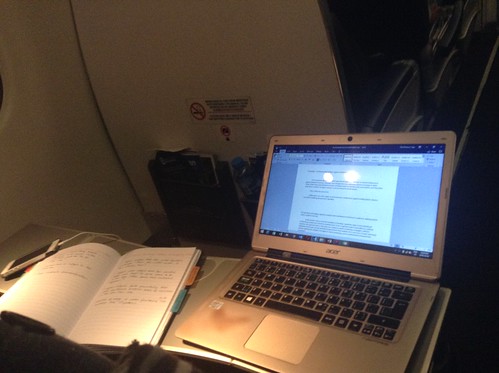
I tell my own students (undergraduate, and graduate) to write every day because I have seen through time that’s what helps them develop a systematic routine. That’s also why I recommend that they come to the office every day, for a few hours, to my lab. This is not for me to force them to just BE there, but to allow them to slowly but surely develop a framework from where to work.

I come back to Joli Jensen’s mantra: what we need is constant, low-stakes contact with a writing project. This means, write every day even if just a few words, so that you can feel you’re still in touch with your project, or write as much as you can/want/are able to endure. Constant, regular, daily contact with a project is a good thing. And yes, there are weeks when I am unable to make any contact with a research or writing project. So no, nobody is perfect, we are all trying to improve on a regular basis.
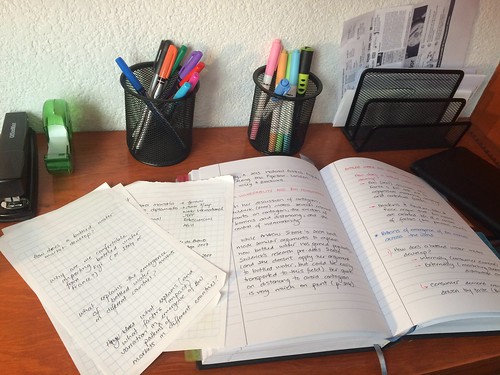
Again, the constant contact mantra is also one that Joan Bolker champions in her “write a PhD thesis in 15 minutes a day” book. It’s not that doing this in 15 minutes a day will get the dissertation written, but that you need to be in contact with your doctoral thesis or research at least 15 minutes every day. It’s again the “constant contact” mantra.
The “block time for research and writing” mantra posited by Zerubavel in the Clockwork Muse combined with the constant contact paradigm is perhaps the best combination of strategies that can help us develop a writing practice. Work around when you can’t write (mark those times) and then make time to research/write/study/learn/read – but also protect those times.
Hopefully this will be the last time I write about whether one should write every day or not. You do you.
Briefing: Huawei to lay off employees and cut costs as economy slows
Twitter Favorites: [samuelclay] Took an ice storm but I finally updated my personal site for mobile. It’s my portfolio and what I’m sending out in… https://t.co/r6c7hXmCtT

Took an ice storm but I finally updated my personal site for mobile. It’s my portfolio and what I’m sending out in… twitter.com/i/web/status/1…


Twitter Favorites: [effies] LOOK AT THIS BLOOD MOON THROUGH A TELESCOPE ECLIPSES ARE AWESOME https://t.co/6fRLCN7Du8

LOOK AT THIS BLOOD MOON THROUGH A TELESCOPE ECLIPSES ARE AWESOME pic.twitter.com/6fRLCN7Du8

Bulk Jupyter Notebook Uploads to nbgallery Using Selenium
I’ve recently started looking at nbgallery [repo], “an enterprise Jupyter Notebook sharing and collaboration platform” written in Ruby. The gallery provides a range of tools, including:
- a
Solrpowered notebook search engine; - a notebook “health check” (I haven’t tried this yet);
- integration with Jupyter notebooks, so you can run notebooks (I haven’t tried this yet).
One thing that seems to be lacking is the ability to bulk upload files (for example, contained in a zip file). I haven’t spotted an API either, or a Python wrapper to provide a de facto API. This makes a proper test over lots of notebooks tricky…
The notebook upload is a two step process.
The first step requires selection of a notebook, and a required acknowledgement of rights:

The second provides and opportunity to submit a required title and non-null description and a (repeated) rights acknowledgement:

The upload process utilises a multi-part form.
To upload a notebook, a user needs to be logged in.
Creating a new user requires an email confirmation step, which means you need to set up email server details in the docker-compose.yml file. I used my OU ones:
EMAIL_USERNAME: $OU_USERNAME
EMAIL_PASSWORD: $OU_PWD
EMAIL_DOMAIN: open.ac.uk
EMAIL_ADDRESS: ${OUCU}@open.ac.uk
EMAIL_DEFAULT_URL_OPTIONS_HOST: localhost:3000
EMAIL_SERVER: smtp.office365.com
My usual approach for automating this sort of thing would be to have a go with mechanical soup or mechanize, but on a quick first attempt using both of those, I couldn’t get the scraper to work.
Instead, I took the opportunity to have a play with Selenium With Python, a Python wrapper for the Selenium web testing framework. This provides a set of Python functions for automating the launching of a web-browser (Chrome, Safari, Firefox, etc) and the automated clicking of pages viewed within that automated browser.
The full script I used can be found here.
The initialisation looks like this:
from selenium import webdriver

#Selenium package includes several utilitities
# for waiting until things are ready
#https://selenium-python.readthedocs.io/waits.html
from selenium.webdriver.common.by import By
from selenium.webdriver.support.ui import WebDriverWait
from selenium.webdriver.support import expected_conditions as EC

driver = webdriver.Chrome()

#Allow the driver to poll the DOM for up to 10s when
# trying to find an element
driver.implicitly_wait(10)

#We might also want to explicitly define wait conditions
# on a particular element
wait = WebDriverWait(driver, 10)

driver.get("http://localhost:3000/")
The login function looks something like this:
def nbgallery_login(driver, wait, user, pwd):
    ''' Login to nbgallery.
        Return once the login dialogue has disappeared.
    '''

    driver.find_element_by_id("gearDropdown").click()

    element = driver.find_element_by_id("user_email")
    element.click()

    element.clear()
    element.send_keys(user)

    element = driver.find_element_by_id("user_password")
    element.clear()
    element.send_keys(pwd)
    element.click()

    driver.find_element_by_xpath("//input[@value='Login']").click()
The first form script looks like this:
    #path is full path to file
    if not path.endswith('.ipynb'):
        print('Not a notebook (.ipynb) file? [{}]'.format(path))
        return

    #Part 1

    element = wait.until(EC.element_to_be_clickable((By.ID, 'uploadModalButton')))
    element.click()

    driver.find_element_by_id("uploadFile").send_keys(path);
    driver.find_element_by_xpath('//*[@id="uploadFileForm"]/div[3]/div/div/label/input').click()
    driver.find_element_by_id("uploadFileSubmit").click()
And the script to handle the second part of the form looks like this:
    #Part 2
    element = driver.find_element_by_id("stageTitle")
    element.click()

    #Is there notebook metadata we can search for title?
    if not title:
        title = path.split('/')[-1].replace('.ipynb','')
    element.clear()
    element.send_keys(title)

    element = driver.find_element_by_id("stageDescription")
    element.click()

    #Is there notebook metadata we can search for description?
    #Any other notebook metadata we could make use of here?
    element.clear()
    #Description needs to be not null
    desc= 'No description.' if not desc else desc
    element.send_keys(desc)

    element = driver.find_element_by_id("stageTags-tokenfield")
    element.click()
    #time.sleep(1)

    #Handle various tagging styles
    #Is there notebook metadata we can search for tags?
    tags = '' if not tags else tags
    if isinstance(tags, list):
        tags=','.join(tags)
    tags = tags if tags.endswith(',') else tags+','

    element.clear()
    element.send_keys(tags) #need the final comma to set it?

    if private:
        driver.find_element_by_id("stagePrivate").click()

    driver.find_element_by_xpath('//*[@id="stageForm"]/div[9]/div/div/label/input').click()
    driver.find_element_by_id("stageSubmit").click()

    #https://blog.codeship.com/get-selenium-to-wait-for-page-load/
    #Wait for new page to load
    wait.until(EC.staleness_of(driver.find_element_by_tag_name('html')))
Here’s how it plays out:
There’s still stuff that could be added — error trapping for duplicate notebooks, for example — but I think this is enough to let me upload a complete set of course notebooks and see how useful nbgallery is as a way of presenting notebooks.
If it is, and I get the Jupyter notebook server integration working, then I wonder: would it be useable as a notebook navigator in the TM351 VM? It’d probably need really tight integration with the notebook server so that when notebooks are saved they are also committed to the gallery?
To the sea and back in January. A winter ride through Drenthe and Groningen + PPPPPP
Impfen!
Deutsche Welle: WHO warnt vor Impfmüdigkeit. “Mangelnde Impfbereitschaft zählt laut der Weltgesundheitsorganisation zu den zehn größten Bedrohungen der Weltgesundheit. Die Folgen lassen sich schon heute beobachten.”
“Welchen Folgen das haben könne, zeige das Beispiel Masern: Weltweit sei die Zahl der Fälle im Jahr 2017 um 30 Prozent im Vergleich zum Vorjahr angestiegen. Auch in einigen Ländern, die bereits kurz vor der Ausrottung der Krankheit gestanden hätten, gebe es wieder mehr Fälle. Zu einem Anstieg der Masern-Fälle kam es zuletzt auch in der WHO-Region Europa: Dort seien im gesamten Jahr 2017 knapp 24.000 Menschen erkrankt – 2016 waren es nur 5273, also weniger als ein Viertel. In Deutschland gab es 2017 rund 1000 Masernfälle. Ein Mensch starb, rund 40 Prozent der Erkrankten mussten stationär behandelt werden. Eigentlich sollten die Masern in der Bundesrepublik bis 2020 komplett ausgerottet werden.”
Jede(r) sollte bedenken, dass man sich nicht nur für sich selbst impfen lässt (bzw. die Kinder für sich), sondern dass man auch durch jede Impfung diejenigen in der Bevölkerung mit schützt, die nicht geimpft werden können, z. B. Neugeborene, Menschen mit geschwächtem Immunsystem und alte Menschen.
Real-time speed of light from Earth to Mars
Hurry up, light. We’re gonna be late:
By James O’Donoghue, the animation shows the speed of light in real-time. The distance between Earth, the moon, and Mars is to scale, but the locations are scaled up so that you can see them.
See also the animations for Earth to the moon and of light orbiting Earth.
Find all the colours of the rainbow with Picular [App of the Week]

Picular is a web app that might not be useful to everyone all the time, but when you do need it, it’s incredibly handy.
The web app uses Google Image Search, but instead of displaying the images it shows you the most dominant colour in the picture. This is a web-based app, but you can pin it to your phone’s home screen and then it acts just like a regular app by hiding the web-browsers search bar.
Searching for something like ‘Fire’ or ‘Oceans’ will give you results with varying shades of red and blue that are sourced from Google Images.
Once you get your results, you can tap on one to copy the HTML HEX code to use in any other apps where you might want to add a custom colour.
For example, I’ve used the app to find a new highlight colour on my Twitter profile and to customize the sidebar on my Slack desktop app.
I’m sure there are even more uses for this nifty little web-app, but what I really like about it is that it does one thing, and it does it exceptionally well. It’s even nominated to be the best mobile website of 2018 by Awwwards.com.

There is only one page, and that’s the search page, and the only additional function is a pin function that will keep your favourite colour at the top of the screen for safe keeping.
iOS users can visit the Picular website, then tap on the Safari share button and choose the ‘Add to Home Screen’ option. On Android, you can accomplish the same thing in Chrome by tapping on the three-dot menu and choosing the ‘Add to Home screen’ option again.
The post Find all the colours of the rainbow with Picular [App of the Week] appeared first on MobileSyrup.
Google Store discounts Pixel 3 and Pixel 3 XL by $200

Google has discounted its Pixel 3 lineup by $200.
After the discount, the Pixel 3 and Pixel 3 XL start at $799 and $929, respectively.
Also included in the sale are the 128GB variants of both devices. They’re priced at $929 and $1,059, respectively. Whatever your choice of model, Google also includes free shipping.
The offer is available until February 2nd.
The Pixel 3 and Pixel 3 XL were two of MobileSyrup‘s favourite smartphones from 2018. In my review of the Pixel 3 and Pixel 3 XL, I praised the smart and thoughtful additions Google made to the Pixel 3 lineup.
Source: Google
The post Google Store discounts Pixel 3 and Pixel 3 XL by $200 appeared first on MobileSyrup.
Further Automating My Book Keeping
Wrote a script that will cut back the time I need to do quarterly book keeping and VAT tax returns. It takes bank journal entries and creates the right procurement journal entries from it. An earlier script automates pulling transactions from my online banking environment and put them into my banking journal. These two steps are the most time consuming in doing the books each quarter. As in the coming week I will do the 4th quarter books of 2018, I will find out soon how much time exactly it will save me.
I’m trying to do weekly small hacks this quarter. This week I did three. One because I came across it in my feedreader, and two because they were of immediate practical use this or next week. So I’m slightly ahead of schedule with 5 hacks in 3 weeks.
Vancouver City Council: Climate Stuff
Vancouver City Council has declared there is a “global state of climate emergency“. Staff are to return in 90 days with updated plans to reflect a growing sense that time is running out, and that missing climate change mitigation targets is a practice that has to end.
OneCity’s Councilor Christine Boyle has brought forward a motion asking that council “. . . recognize the breakdown of the stable climate and sea level under which human civilization developed constitutes an emergency for the City of Vancouver”. It was approved unanimously.

Personal Changes
Meanwhile, ideas float around as to what personal changes may be required for us all to participate in mitigation. What — me change? [Thanks to Charlie Smith in the Straight].
- Switch to a plant-based diet. Reduce meat consumption.
- Have fewer children.
- Rein in the rich, who are 10% of humanity, but are responsible for 50% of global emissions.
Personal changes — always a hard sell to the cohort of comfortable and oblivious, not to mention the wealthy. After all, what’s in it for me, right now, today? But maybe, just maybe, the sense of urgency is beginning to rise above the acrid smoke of public discourse. And there’s a growing number of the young who get it big-time. After all, it’s all about the world that they’ll have to live in.
Bigger Changes
While these ideas are a good beginning, there are others, a lot more risky for any traditional public figure to champion, but necessary for major and lasting impact. They’re also inevitable, and their adoption will be the litmus test for our chances of survival as a species.
- Leave the fossil fuels in the ground. Meanwhile, what do we hear? <GASP>, what about Alberta, pipelines, LNG plants, oil tankers?? Let’s focus on the past, and what got us here in the first place!! And rip and ship as fast as we can, before the party is over. Oh yeah, and “war on the car”.
- Accelerate the transition to a society based on electrical energy. It’s highly doable, and clean energy sources are getting much cheaper. There’s a huge industrial opportunity in designing and manufacturing the bits, pieces and controls to put this in place and manage it. But — ya know — I think we’ve missed that train, and we’ll be buying it all from someone else. Hello, China. Sorry about that Huawei stuff. A provocative overview thread HERE (“Oil Fall”, Gregor Macdonald) discusses “Electricity is the new oil”. The full document is available HERE as a $9 PDF for that in-depth study you’re dying to read.
- Increase investment in transit. Tie it to land-use and city-making around compact and walkable ‘hoods. Sorry, Nimbys, but your time-honoured stance (No Poor Allowed) may not survive. It was really good while it lasted.
Briefing: Canadian phone company Telus says Huawei is ‘viable and reliable’
Briefing: iPhone assembler Foxconn prematurely laid off 50,000 contract workers
World's coffee under threat, say experts
mkalus
shared this story
from  BBC News - Home. BBC News - Home.
|
The first full assessment of risks to the world's coffee plants shows that 60% of 124 known species are on the edge of extinction.
More than 100 types of coffee tree grow naturally in forests, including two used for the coffee we drink.
Scientists say the figure is "worrying", as wild coffee is critical for sustaining the global coffee crop.
About one in five of the world's plants is threatened with extinction, and the 60% figure is an "extremely high" one.
"If it wasn't for wild species we wouldn't have as much coffee to drink in the world today," said Dr Aaron Davis of the Royal Botanic Gardens, Kew.
"Because if you look at the history of coffee cultivation, we have used wild species to make the coffee crop sustainable."
Research published in the journal, Science Advances, found conservation measures were "inadequate" for wild coffees, including those considered "critical" for long-term global coffee production.
The study found that 75 wild coffee species are considered threatened with extinction, 35 are not threatened and too little is known about the remaining 14 to make any judgement.
Furthermore, it was found that 28% of wild coffee species grow outside protected areas and only about half are preserved in seed banks.
A second study, in Global Change Biology, found that wild Arabica coffee can be classed as threatened under official (IUCN Red List) rankings, when climate change projections are taken into account.
Its natural population is likely to shrink by up to 50% or more by 2088 because of climate change alone, according to the research.
Wild Arabica is used to supply seeds for coffee farming and also as a harvested crop in its own right.
Ethiopia is the home of Arabica coffee, where it grows naturally in upland rainforests.
"Given the importance of Arabica coffee to Ethiopia, and to the world, we need to do our utmost to understand the risks facing its survival in the wild," said Dr Tadesse Woldemariam Gole, of the Environment and Coffee Forest Forum in Addis Ababa.
What is wild coffee and why do we need it?
Many coffee drinkers are unaware that we only use the coffee beans from two species - Coffea Arabica and Coffea robusta - in the thousands of different blends of coffee on sale.
In fact, there are 122 coffee species on top of that which occur naturally in the wild.
Many of these wild coffees do not taste good to drink, but may contain genes that can be harnessed to help coffee plants survive in the future, amid climate change and emerging diseases that attack coffee trees.
More stories you might like to read:
In the longer term, we will need to call on wild species to safeguard the future of the world's coffee crop, say researchers.
"We will call on those wild resources time and time again," said Dr Davis.
How does coffee compare to other plants in terms of extinction risks?
Globally, about one in five plants is threatened with extinction, compared with 60% for coffee.
As a comparison, about half of wild tea and mango species are threatened with extinction, 6% of hazelnuts and 9% of pistachios.
Where is wild coffee found?
The vast majority of wild coffee grows in the remote forests of Africa and on the island of Madagascar. Beyond Africa, wild coffee is found in other tropical climates, including parts of India, Sri Lanka, and Australia.
What types of coffee do we drink?
Global coffee trade relies on two species - Arabica (Coffea arabica) and Robusta (Coffea canephora).
A third species - Liberica (Coffea liberica) is grown around the world, but is rarely used for coffee drinks.
What are crop wild relatives?
Crop wild relatives are wild plants that are genetically related to cultivated crops.
They continue to evolve in the wild, and can be crossed with domesticated crops.
They have been used to improve the yields and nutritional quality of crops since the dawn of agriculture.
What are scientists calling for?
They say we must understand the risks to coffee farming and make sure we have the resources in place to overcome threats.
Coffee trees, like many tropical plants, have seeds that do not survive the freeze-drying process used in conventional seed banks - 45% of coffee species have not been "backed up" outside the wild.
Dr Eimear Nic Lughadha of Kew said this is the first time an IUCN Red List assessment has been carried out to find the extinction risk of the world's coffee, and the figure of 60% is "extremely high".
"We hope this new data will highlight species to be prioritised for the sustainability of the coffee production sector, so that appropriate action can be taken to safeguard the species," she said.
Follow Helen on Twitter.
Can pubs stand many more Dry Januarys?
|
mkalus
shared this story
from BBC News - Home:
|
|
| So, BBC, the gist of your story is: “would someone please think of the drug dealers”? |
"As a small independent bar group, we do feel a hit at the start of the year," says Tom Jackman, director of the Northcote, Venn Street and Old Street Records bars in London.
In January people are naturally recovering from the over-indulgence of Christmas, he explains, and have less cash to splurge on nice dinners, bottles of wine and going out.
But he's faced an extra challenge over the last few years: Dry January.
The charity campaign, which encourages people to stop drinking alcohol for the month, began in 2013 when just 5,000 people took part but an estimated 4.2 million Britons said they would participate this year.
That may be good news for people's health but less so for pubs and breweries.
"Imagine that each of these people would normally spend, say, £25 a week on alcohol," Mr Jackman says. "We don't have to do the maths to show you how much money the hospitality industry is set to miss out on."
Certainly the reasons to take part in Dry January sound compelling, even if not everyone agrees that one month on the wagon is the best way to curb your drinking habit.
According to a 2018 study by the University of Sussex conducted with over 800 Dry January participants, 88% said that they saved money, 70% had generally improved health and 67% had more energy.
Moreover, the benefits lasted long beyond January, with participants saying they were still drinking less in August.
But the campaign has hit pubs and breweries hard, says CGA Strategy, a consultancy that tracks the impact of Dry January. It found that the total number of alcoholic drinks served across the UK slumped by 7% in 2015 as the campaign gained momentum and is yet to recover.
The trend has particularly hurt smaller operators, says Ash Corbett-Collins, national director of the Campaign for Real Ale (Camra).
"Many breweries have chosen to brew less and many small, independent pubs that already have slim profit margins are bearing the brunt. Such a sudden cash-flow problem can spell life or death for these small local businesses."
Not surprisingly, bars and pubs have been fighting back, says CGA, with special offers on food and a wider range of non-alcoholic drinks leading to a "positive effect on sales".
A spokesman for pub chain JD Wetherspoon tells the BBC it "doesn't worry" about Dry January, noting its best-selling drink is in fact Pepsi and that it offers discounts on alcoholic drinks to offset the slowdown at the start of the year.
Mitchells & Butlers says it has "embraced" Dry January, offering a wider selection of non-alcoholic beers, ciders and spirits, while McMullen & Sons says its January sales are growing despite many of its guests abstaining during the month.
"Pubs are more than just about alcohol," says Heydon Mizon, joint managing director of McMullens & Sons. "We all need face-to-face interaction for our mental wellbeing and pubs play a vital role in this."
Britons are, on the whole, drinking less and embracing healthier lifestyles, suggesting that pubs and brewers may need to adapt their offerings for the long term, not just at certain times of the year.
According to research from industry-funded body the Portman Group, around a quarter of British drinkers have switched some of their drinks to low alcohol alternatives or would consider doing so in the next six months. The number of teetotallers is on the rise too.
"Being healthy is becoming the new cool," says Jonny Forsyth, an associate director at Mintel. "Ten years ago it was considered cooler to drink than not to drink, but there's a real social pressure now to drink moderately."
Brewers have responded with a raft of new low-alcohol products such as Heineken 0.0 beer, Kopparberg Alcohol Free Cider and Diageo's Seedlip, all of which are 0.5% alcohol by volume or less.
We're also seeing a much greater range of "mocktails" and non-alcoholic drinks in bars - some of which cost more than their alcohol-based equivalents.
"It's not that people are going to stop drinking alcohol but bars are going to need to be more seasonal in their approach, offering more non-alcoholic offerings at the start of the year and focusing on alcohol in the summer," argues Mr Forsyth.
Mr Jackman of the Records Bars thinks the January lull is here to stay, however, and will be putting more of his focus on busier periods.
"We prefer to maximise our biggest and best months, rather than changing our offer and our experience for the slower months. At the end of the day, there's still a massive amount of people out there who do want to party in January, so we stand our ground for them!"
How one heatwave killed 'a third' of a bat species in Australia
|
mkalus
shared this story
from BBC News - Home.
|
Over two days in November, record-breaking heat in Australia's north wiped out almost one-third of the nation's spectacled flying foxes, according to researchers.
The animals, also known as spectacled fruit bats, were unable to survive in temperatures which exceeded 42C.
In the city of Cairns, locals saw bats toppling from trees into backyards, swimming pools and other locations.
Wildlife rescuers found surviving animals clumped together, usually on branches closer to the ground.
"It was totally depressing," one rescuer, David White, told the BBC.
'Biblical scale'
Last week, researchers from Western Sydney University finalised their conclusion that about 23,000 spectacled flying foxes died in the event on 26 and 27 November.
That tally was reached through counting by wildlife volunteers who visited seven flying fox camps following the heatwave.
Lead researcher Dr Justin Welbergen, an ecologist, believes the "biblical scale" of deaths could be even higher - as many as 30,000 - because some settlements had not been counted.
Australia had only an estimated 75,000 spectacled flying foxes before November, according to government-backed statistics.
"This sort of event has not happened in Australia this far north since European settlement," says Dr Welbergen, who is also the president of the Australasian Bat Society, a not-for-profit conservation group.
The spectacled flying fox - so named for light-coloured fur around its eyes - can also be found in Papua New Guinea, Indonesia and the Solomon Islands.
In Australia, the species is only found in a small rainforest region of northern Queensland, where it helps to pollinate native trees.
Dr Welbergen says about 10,000 bats of another species - black flying foxes - succumbed to the heat during the same two-day period.
Flying foxes often experience fatal heat stress when temperatures eclipse 42C, scientists say. During November's heatwave, Cairns recorded its highest-ever temperature of 42.6C.
'Canary in the mine'
Flying foxes are no more sensitive to extreme heat than some other species, experts say.
But because they often gather in urban areas in large numbers, their deaths can be more conspicuous, and easily documented.
"It raises concerns as to the fate of other creatures who have more secretive, secluded lifestyles," Dr Welbergen says.
He sees the bats as the "the canary in the coal mine for climate change".
"It is clear from the present data that these [heat] events are having a very serious impact on the species," Dr Welbergen says. "And it's clear from climate change projections that this is set to escalate in the future."
Battle for protection
Experts have long been concerned about the survival of spectacled flying foxes.
Its population has more than halved in the past decade, says Dr David Westcott, who chairs the government's National Flying Fox Monitoring Programme.
In the past, mass deaths in the population were often associated with cyclones. But in recent years heatwaves have become a bigger risk, Dr Westcott says.
"We're very concerned. It's been a massive population decline for a species that isn't under a great deal of pressure outside of these weather events," he tells the BBC.
Even prior to November's heatwave, conservationists were lobbying the Australian government to upgrade its classification of the species from "vulnerable" to "endangered" - a move which would strengthen efforts to help it.
Some experts worry that public antipathy to bats may hinder conservation efforts. This is usually related to fears about contracting diseases from bats, and their noise in urban areas.
This week, amid a heatwave in New South Wales, authorities warned people against approaching bats due to reports of aggression.
"They're seen as these rats in the sky, so any preservation effort is hard going," Dr Westcott says.
"You can bet there were some people glad to see so many bats go down in the heatwave."
Behavioral targeting and investor relations
Eric Shih writes, on the Digital Content Next site,,
Leveraging data to make more informed ad targeting decisions is a breakthrough versus previous methods where ads were un-targeted. Personalized ads are a win for all parties. [emphasis added] It is better for:
- Users (connects them to more interesting and relevant ads)
- Advertisers (results in higher return on investment)
- Publishers (delivers higher CPMs and increased revenue)
Hold on a minute. That doesn't look right.
The win for all parties
is clearly bogus from
the user and publisher point of view. Behavioral
targeting means that users see more low-quality
and deceptive ads, because behavioral targeting
gives a long-running structural advantage to deceptive
advertisers.
As a potential customer, I also win as ad budgets
go into supporting context
that I care about,
such as news and cultural works, and lose as ad
budgets go into behavioral targeting with negative
externalities.
From the publisher point of view, behavioral targeting creates near-infinite saleable ad inventory on low-value and fraudulent sites, and forces publishers to contend with those sites for ad money. For users and publishers, the less behavioral targeting the better. But what about for marketers? Isn't behavioral targeting a win for them?
It looks like the answer is: not so much. Here's a must-read piece on research by Prof. Byron Sharp.
Personalised advertising may be one thing but getting people to respond to even micro-targeted ads is a whole other ball game. However, analysis of 3.1 million ad exposures shows that such adverts generate low click through rates (CTR). Furthermore, some of the responses to such ads are counterintuitive – with a higher CTR coming from ads mismatched to personalities and lower vs. the overall industry average for Facebook ads.
...
But if micro-targeting is arguably so ineffective, why do some many marketers use it? Sharp and Danenberg highlight several reasons:
- Marketers often do things based on theory/logic rather than evidence. The worst myths, the longest lasting, are those that sound plausible.
- Micro-targeted campaigns can boast of high ROI, largely because they are so small, reaching people who had a high likelihood of buying anyway. Marketers see the high campaign ROI from micro-targeting but fail to realise that the overall return to the company may well be lower.
- It’s fashionable!!!
Read the whole thing. Not surprising if you
follow the underlying #behavioralEconomics.
And Dave Trott agress with the fashionable
point: It's right because everyone's doing
it.
There might be another reason, though. Maybe part of the problem is that marketing science is hopelessly mixed up with investor relations. After all, adtech firms and ad agency groups are publicly traded companies. And creative ad work, hiring writers and artists and marking up what you pay them, is the kind of business model that stock markets get bored with. Margins are low, you can only grow as fast as you can hire, and your assets can quit and go work somewhere else.
Choosing to place an ad in a quality context is more cost-effective, but again, it doesn't scale. If your business is putting good ads in good places then the people who do good work have market power. But psychographic models and the underlying data sets are more investor-friendly. Even if it takes torturing the data and putting up with fraud to make adtech look effective. Mathemagickal woo-woo is scalable, more like the intangible assets of a software company. Markets see promise of big margins and high revenue/employee.
How much do investor-focused messages about the effectiveness of behavioral targeting companies interfere with marketer-focused messages about the effectiveness of behavorial targeting in campaigns?
Bonus links
The case against behavioral advertising is stacking up | TechCrunch
After GDPR, The New York Times cut off ad exchanges in Europe — and kept growing ad revenue
Why Online Ads Haven't Built Brands
‘GDPR will ultimately be good for the industry’: Guardian CRO Hamish Nicklin on 2019 plans
Google and publishers edge closer to reaching common ground for GDPR standards
Considering elevators
Yesterday I worked on my game for a while and we went to a friend’s (fan)vid watching party. Along the way we came across Orquestra de Calle 24 and people dancing in the BART plaza, then the entire Women’s March once we popped out of the station at Powell. Thousands of people with signs, drums, & that spine-shivering thing where you hear a cheer begin way down at another end of the march and it travels up and passes you like a wave!
The party was in a gorgeous building, the Medico-Dental building, and I assumed it was someone’s friend’s office. It was a dentist’s office with a huge screen TV and interesting decor – not at all dentist-y feeling – Odd things like a table made of what might have been an aluminum alloy cast of a gnarled section of a giant tree – Rococco chairs and mirrors and silver trays but then also a raw unfinished wooden beam with orange paint “MEETING ROOM” under a CAUTION HARD HATS REQUIRED sign. As we were leaving I found out that it was booked using something called Peerspace. Huh!!
It was nice seeing everyone – the vids were amazing – And I had fun dressing up. I had some doctors appointments near there and went into the Sephora to look for a specific shampoo and lotion – having never been in one of those stores before. And I was like Oh holy fuck I don’t wear makeup, like, I own one lipstick and an eyeshadow, but, now I want some because it is all strangely alluring and pretty and looks like candy. That was a couple of months ago and since then we have all been putting on “cyberpunk makeup” and now I own 4 colors of metallic matte lipstick (Fenty has a nice pencil one, but I like the Anastasia liquid matte a lot better.) So I busted out that stuff yesterday and had fun with it. Lipstick seems to have advanced since I last really wore it in like, 1990. It stays on and is not bothersome. As long as I feel properly like it’s a fun game and I’m in drag, all is well. Not really into it otherwise. (It is GLAM BUTCH CYBORG makeup.)

And, today I figured out a way around a problem that has been bugging me. I had modeled an example elevator which went between two floors, based on the simplest example in the Inform7 recipe book. Couldn’t figure out how to fix the logic to make it go to three or more floors, and also, with that and the more complicated elevator example (a skyscraper in Dubai) and a third way I thought of, I would end up with the problem of having to write 100 uniquely named elevators, each with their own logic. That would be tedious and make the code unnecessarily bloated so I have gone another route.
Instead of having the elevator be a room, I made it a vehicle, and put any room where the elevator could possibly be, into a region called Liftlandia. If the player is in the Liftlandia region, then the elevator is in the location of the player. I had to start it in nowhere, and haven’t quite gotten it to appear on the first time the player enters a room in Liftlandia. But, it works. If you try go up or down in Liftlandia (because you see stairs) it doesn’t let you- you need to use the elevator. Once you’re in it, you can go up and down to the rooms in whichever direction it’s possible.
Now, I’d like a nicer way to have the player push a button to go to the desired floor. With my ‘magic vehicle’ solution, I can write in a P, C, and S button (for Platform, Concourse, Street) and they are pushable. I’m not quite sure how to have the buttons take you to the correct place but it should be possible.
Along the way I also had to abandon my desires to build a nice simulation of the real life map because it was a huge pain in the ass and I am aiming for a different level of abstraction. Not without a pang but already you see that I have to have at least 3-5 “rooms” for each of 52 stations (platform, concourse, street, and likely something extra like more outside locations, or secret rooms in the stations, or whatever.) Mapping each station expanded that to like, 20 or more locations per station.
I started adding some NPCs with simple behaviors and I may try next to add “scenes”. For example, I’d like musicians to wander by, or, for some kids to get on BART and set up to dance and pass a hat and for stuff like that to happen randomly. Some NPCs or scenes would happen in particular locations and others might wander.
For the actual game aside from my mechanical difficulties, there will be magic and time travel, I still want to simulate various mobilities and sightedness states, and I have a sort of poetic mood or atmosphere in mind which stretches back to a book I never really wrote called The Secret Life of Buildings but which I could describe as a holographic vision of things that will lead people to see the city around them differently, and love it more deeply. (And to look things up.) We will see. And, I’m still working on another game with Milo. I may start systematically pasting in, running, and modifying each example from the Inform7 recipe book, as it is very helpful way to learn to make complicated things happen in the game.
A calendar of seasons for my time and place
It’s a beautiful day on the south coast of British Columbia. A strong northwesterly breeze is pushing wind driven swell down the Strait of Georgia onto the southwestern shore of Bowen Island. There is snow on the mountain tops, but down here at sea level, it’s 7 degrees. The sun is shining and everything points to a clear evening to watch the lunar eclipse.
The rest of North America is locked into a cold freeze, and next week I’ll be tasting a bit of it with a two week trip to New Brunswick, Ohio and Ontario. This is the time of year people on the west coast write to their friends and relatives in the east and show pictures of the daffodils coming up. It doesn’t feel like winter here anymore, and that’s not unusual for late January. Saying it’s winter until March 21 really has no bearing to what teh rest of the continent is going through. I’ve lived on this island for more than 17 years and I long ago decided that there needs to be a different way to talk about seasons here.
For various reason I identify much more with the Celtic calendar, which marks the year into six week blocks, like this:
- February 1 – Imbolc (“In the belly of the ewes”) which is the first day of spring and the new year.
- March 21 – Spring equinox
- May 1 – Bealtaine (“bright May Day”) marking the beginning of summer and the flourishing of life
- June 21 – Summer solstice and mid-summer day
- August 1 – Lughnasadh (“assembly to honour Lugh, the god of light”) which is the beginning of the fall harvest season
- September 21 – Fall equinox
- November 1 – Samhain (“the end of summer harvest”) which is really the beginning of winter and marked by commemorating ancestors and death.
- December 21 – Winter solstice and mid-winter day.
These markers line up much more with the feeling of seasons on Bowen Island. We mark some of these days locally, with a May Day festival, and a huge community celebration on Hallowe’en as well as its solstice celebrations. And it usually feels very much like winter is over by February 1.
Of course there is an ancient calendar in this part of the world, which from time immemorial has been known as Skwxwú7mesh temíxw. Today I spent time going through the amazing Squamish-English dictionary, reading and thinking about the seasons. The Squamish traditional calendar is focused on activities related to ceremonial and food gathering rhythms. It makes sense that the word for season is “tem” which means “the time of.” Instead of experiencing disconnection (like “it doesn’t feel like winter”), in Squamish the name of the season is based on what is happening on the land and sea, bound up in activities upon which the lives of human beings and communities depend. The season changes when life says it changes.
Traditionally Squamish seasonal names therefore aren’t generally tied to moons or the length of days. Looking at the names for seasons gives you an idea of where the attention of people is in any given time of year. The Squamish version of the European calendar uses names from seasons that roughly correspond to each month. Squamish new year begins in February, when the frogs start singing again, which signifies the end of winter. Of course this happens much earlier in the year on Bowen Island than it does up in the Cheakamus, Elaho and Squamish River valleys. Here on Bowen Island (Nexwlélexwm in Squamish), the frogs will usually start singing during late February.
The calendar is such a clumsy way of describing the rhythms in this territory. It creates arbitrary names and times for what is happening. That clumsiness is the result of the colonization that separated people from the rhythms of the lands and waters and, if you know the way things happen in the territory, you can tell reading through these names how clumsy the fit is between the Squamish times and the calendar months:
- February – tem welhxs (time of the last snow, or when the frogs come to life)
- March – tem lhawt’ (herring time)
- April – tem tsá7tskay (time when the salmonberry shoots are collected)
- May – tem yetwán (time when the salmonberries ripen)
- June – tem kw’eskw’ás (warm time, also used as a word for “summer”)
- July – tem ?w’élemexw (when the blackberries are ripe)
- August – tem t’aka7 (time when the salad berries are ripe)
- September – tem cháyilhen (salmon run time)
- October – tem p’i7tway (time when the deer mate)
- November – tem ekwáyanexw (fall time)
- December – etl’im lhkaych’ (short days month)
- January – mina lhkaych’ (small or child month)
So it makes sense to talk about seasons, especially on the south coast where lunar calendars are hard to use given how cloudy it is during much of the year. There are may other seasons that didn’t make the cut for translation to the calendar, during which the primary activity of the people is described:
- Tem mílha7 – “Winter dancing season,” when ceremonies take place in the longhouse.
- Tem t’ixw – “Winter,” meaning the time to go down, possibly from the idea that people would go down into pit houses in this time of year, or come down into the low parts of the land.
- Tem s7áynixw – “Time of the eulachon”, a small oily smelt that arrives in rivers in April, although these fish are almost completely extirpated from Squamish rivers now. This happens for a short time right after herring season in late March and early April.
- Tem kwu7s – “Spring salmon harvest time” which begins in early summer.
- Tem achcháwem – “Salmon spawning time,” from late August through to late November during which all the focus is on harvesting fish for the winter and spring. This is when the biggest runs of salmon come back to the territory, mainly chum and coho. This is also the time of the heaviest rains and storms on the coast, which fill the rivers, enabling the fish to find there way back to their home streams.
- Tem p’í7tway ta sxwi7shen – “Time when the deer are mating.”
- Tem kwáxnis – “Time when the chum salmon run.”
So living on Bowen Island in a community of settlers anchored in the rhythms of the land and sea, and the cultural traditions of newcomers, I’d say we could develop a calendar of sorts that relates to the way the we live here. We aren’t a big time ocean people, and are without a fishing fleet so our rhythms are much more dictated by what is happening in the forests around us. Inspired by the Squamish tradition of letting the frogs mark the new year, my first draft of such a calendar might look like this:
- Forest music time – in which the frogs wake up and the dawn chorus of songbirds starts to sing.
- New shoots time – when the skunk cabbage and salmon berry shoots begin to appear.
- Blossoms time – first flowers on the berry bushes and the cherry and plum trees around the island.
- Salmonberry time – Late May and into June, when the salmon berries ripen. Time to order firewood.
- Huckleberry time – Following the salmon berries, time of the first swims in the sea
- Salal berry time – the heart of summer when the salal berries are at their ripest.
- Blackberry time – August, when the blackberries are weighing down their bushes.
- Storm season – lasts about two and a half months, from the end of September to the middle of December and begins after the tourists have left and during which we hunker down and celebrate Hallowe’en, Remembrance Day, Light up the Cove and the traditional Christmas season. This time of year is dark and the predominant winds are the southeasterlies that bring rain and power outages.
- Winter – when the major wind storms are gone and we get snow at sea level and the Squamish winds are most dominant. This usually lasts from December to the end of January.
Sitting by my fire, I’m totally enchanted by the poetry of our place and time here on our little rocky island.
Note: the typeface on my blog does not render all the Skwxú7mesh characters correctly. In this post the underlined “k” and “x” characters are replaced with regular k and x’s. You can find the correct spellings for many of these words at this link.
I Should Have Written a JOMO Book.

About seven years ago, inspired by Caterina Fake's seminal essay about fear of missing out, I wrote a bit about the Joy of Missing Out, and for a little while, JOMO became a thing.
It showed up in those "100 trends to watch this year" roundups that come out at the start of every new year, percolated through think pieces over the next year or two, and eventually ended up a staple of the lifestyle influencers who talk about wellness. I think a few of them even wrote books about it, though they leaned a little more toward the script-font-and-mason-jar side of things, where I'm not very credible.
For me, the most delightful outcome was Jenna Wortham's 2012 essay in the New York Times, talking about FOMO and JOMO, but also mentioning my son and his proclivity for dancing; given that his birth was what had prompted me to reflect on JOMO in the first place, it seemed eminently appropriate.
I don't actively keep track of "JOMO", but even a quick glance shows it's a concept that is, if anything, even more popular now than when the conversation first started. At the start of a new year, the Financial Times writes that you should "allow yourself to embrace 'Jomo'. In the middle of the year, the New York Times writes about the "summer of missing out". Anytime's a good time for missing out!
Influencergrams
Presently, the social web is abuzz with people revisiting the ill-fated Fyre Festival. Two different documentaries have come out offering a perspective on the magnificent scams that surrounded the festival, and conversation focuses on that grift as well as the various ethical compromises and lapses of the documentary filmmakers.
But I'm struck by how one primary reason a fiasco like Fyre Festival could happen, or indeed how many of the worst aspects of influencer culture can happen, is because of the very real emotional effect of the Fear of Missing Out. It's especially true because FOMO is a designed, intentional result of using most modern social media apps.
It's been largely overlooked that FOMO was coined by Caterina Fake, a cofounder of Flickr — one of the very first people who ever helped create a large-scale social network for photo sharing. Her comments on FOMO came less than 6 months after Instagram launched. Though of course both services seemed superficially similar because they were social networks built around photos, Instagram's social design was almost always with the opposite intent of Flickr's social goals. It was almost as if Instagram was designed to optimize for FOMO. But check out what Caterina said in 2011:
Many people have studied the game mechanics that keep people collecting things (points, trophies, check-ins, mayorships, kudos). Others have studied how the neurochemistry that keeps us checking Facebook every five minutes is similar to the neurochemistry fueling addiction. Social media has made us even more aware of the things we are missing out on. You’re home alone, but watching your friends status updates tell of a great party happening somewhere. You are aware of more parties than ever before. [S]ocial software both creates and cures FOMO.
[There's a quaint habit that some of us old-timers still have where we call the technology behind social networks "social software".]
In Joy
Years have passed, and now FOMO (and to a lesser extent, JOMO) are just part of culture. I was walking through the Union Square subway stop not too long ago, and saw this Spotify ad, huge and unmissable.
@Caterina it’s wild that this is a subway ad in Union Sq. pic.twitter.com/xb8Hhpqgt6
— Anil Dash 🥭 (@anildash) December 21, 2018
And the broader principles of intentionality around consumption are an even bigger phenomenon. Marie Kondo is quickly graduating from being the author of a book that became a phenomenon into being a full-fledged global media tycoon. It's only a matter of time until she has a deal with a retailer to sell branded Konmari boxes for you to store your things in. (Maybe one of them will be a lead box that you can put your phone in so you don't look at it?) But interestingly, the fundamental framing of her entire approach to improving your life is to start with what brings you joy. That make a hell of a lot of sense.
The stakes are so much higher now then back when we just worried that social media would make us feel bad about missing a party. Yes, that's still a cause of stress, but far worse is social media enabling grifters to profiteer off of innocent people's credulity. How can we fret about missing our friends when the emotional manipulation of social apps has warped every institution in our entire culture?
Ultimately, though, this began as a conversation centered around joy. Isn't that a rare, and special, and fragile thing? How often do we talk about joy, let alone actively pursuing it or protecting it? I think pursuing joy, protecting peaceful moments, seeing our friends' happiness as a cause for celebration and not envy, and engaging with our lives on our own terms are quietly radical acts.
It is a brave and meaningful thing to talk earnestly about joy at a time when so many aspire to, and delight in, destroying it.
But yeah, obviously, I should have written a book about JOMO and become the "guru of JOMO". I'd probably be able to have my own private island with a music festival by now.
Continentals Vision: Robo-Taxis in Zusammenarbeit mit Lieferrobotern
 Continental zeigte auf der CES 2019, wie die Warenlieferung mit Lieferrobotern und fahrerlosen Fahrzeugen funktioniert. Pakete sollen so bis zum Verbraucher zur Haustür transportiert werden können, auch wenn dieser gar nicht anwesend ist. Das autonome [...]
Gogo Inflight Traffic Shapping
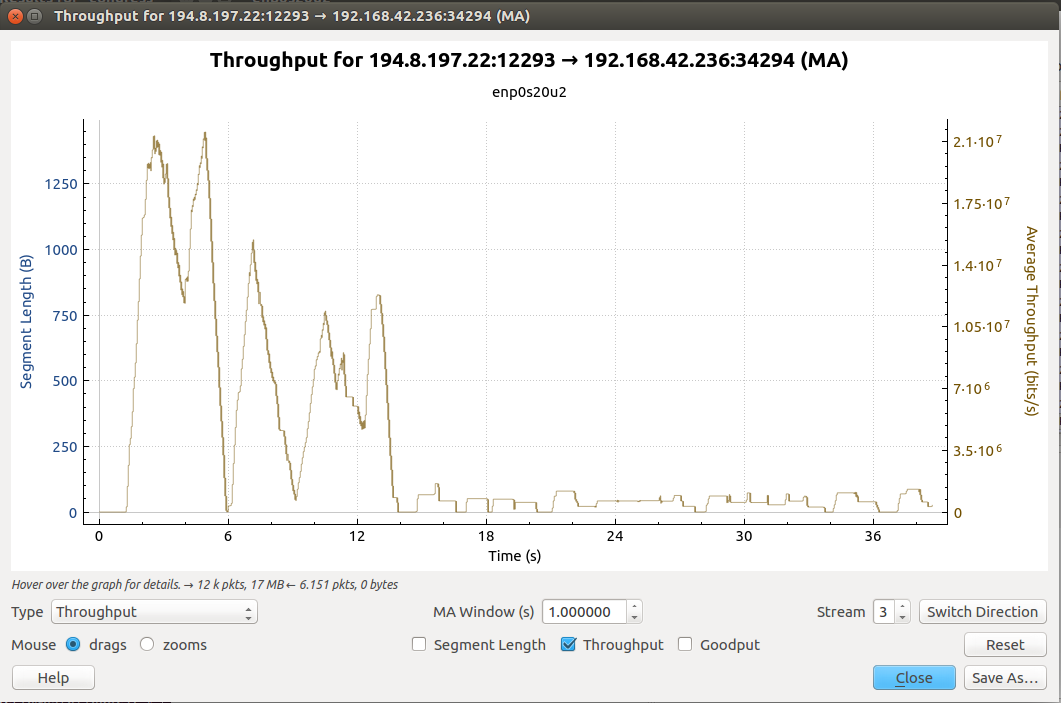
When I recently flew from Europe to the US with Delta Airlines I was quite positively surprised about the Internet access that was offered on board. Over recent years, I noticed that Internet connectivity in the air significantly slowed down to a point where it is almost unusable. On this flight however, I could browse the Internet just fine and get a lot of stuff done for which I needed to be online. However, I noticed an interesting traffic shaping method that made downloading larger files impossible.
Delta uses Gogo’s inflight Internet system that uses satellites over the Atlantic. There are different variants available and I am not quite sure which one was used on my flight. The graph above shows its capabilities and the traffic shaping used to prevent larger file downloads from hogging bandwidth. At the beginning of a TCP connection, throughput was around 20 Mbit/s for around 10 seconds into the data transfer. After that the connection was throttled down to just a few hundred kilobits a second for the remainder of the transmission.
This means that most web pages will download just fine and that the throttling is only encountered when a larger amount of data is transferred. I guess that also impacts video streaming but I didn’t give it tray. Also, I noticed that the inflight network wasn’t treating my UDP based OpenVPN tunnels very nicely, the tunnel would stop working after a few seconds. Even TCP based VPN systems will probably not have a good time with this if they use a single TCP stream for everything, as all data is throttled evenly and there is no ‘boost’ at the beginning of a new TCP connection inside the tunnel. That’s not good news for business travelers but probably good for all other people on board the plane as gigabytes of background software updates do not saturate the link.