Entry-level post introducing the reader to some of the heady ideas flying around recently about digital identities. "Imagine a world where we no longer needed to manage hundreds of credentials. Imagine an identity ecosystem where authoritative parties are the sole holders and providers of your valuable data, where you not only control who has access to what at all times, but you are now in a position to provide trust and information without actually sharing your valuable data." The key idea at play here: zero-knowledge proof.
Web: [Direct Link] [This Post]Rolandt
Shared posts
losing by winning
There's this view of the world that sees everything as a movement. A case in point is this post from Harold Jarche, and in particular the image by Greg Satell saying "you need more than an idea" and "forge a sense of shared purpose". And yes, I suppose that is one way to change the world. But it's not the only way, nor even the most desirable way, because it moves you from the realm of ideas to the realm of politics (where ideas go to die). The person (or people) who invented fire didn't need to forge a sense of shared purpose. The person who wrote Frankenstein did so anonymously. Wittgenstein never actually finished his 'big book'. Banksy worked alone. These to me are the far more interesting and important ways the world can be changed. The important things I work toward in my own life - open access to learning, distributed communities, personal empowerment - are to me far more important as ideas than as 'movements'. The minute we have to lobby for an idea, the integrity of the idea is lost.
Web: [Direct Link] [This Post]Programming paradigms for dummies: what every programmer should know
This article gets pretty deeply into the weeds, and it's just the summary of an article. Worth a look, though. Here's the bit that resonated with me (about half-way through): "The four most important programming concepts are records, lexically scoped closures, independence (concurrency) and named state." Each of these concepts is briefly explained. Articles like this force the reader to rethink what they know about programming. Chew on this, for example: "Instead of writing a set of instructions to be executed, in constraint programming you model the problem: representing the problem as a set of variables with constraints over those variables and propagators that implement the constraints. You then pass this model to a solver."
Web: [Direct Link] [This Post]How Little People Can Be Invisible in the Open
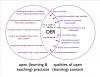
Maha Bali writes, "powerful people’s voices are louder, get heard, used, perpetuated, even when they’ve been influenced by little people" and raises in particular David Wiley's being credited for use of the term "OER-Enabled pedagogy" without any mention of the larger discussion that led to this new terminology. Wiley agrees "she (and many others) are definitely omitted from the discussion here about how the term came to be" and outlines the rather lengthy discussion that led to the new term. I think Mali's experience is quite common. But when it comes up in my own life (and it does, a lot) I say this: "you can change the world, or get credit for it. Not both." So just remember: the people getting the awards and the accolades are almost always not the people who did the work, they're just the ones getting the credit. This is true in general, not just in the case of open education. It all boils down to how you want to spend your time on this earth: seeking fame, or deserving it. Image: Open Practices Briefing Paper (Beetham et al., 2012).
Web: [Direct Link] [This Post]Red Clay Roads and Internet Wires
Seven years ago I posted the text of a talk I gave 25 years ago in St. John’s, Newfoundland, Adventures on the Information Red Clay Road: Getting Wired Cheap. I was able to do this because my friend Art Rhyno had kept a copy of the text and sent it to me.
At the time I didn’t have the slides that I used to accompany the talk–this was 1994, before Powerpoint and Keynote, so we used slide projectors for our “decks”–and so I could only post the text.
But a lucky bit of slide scanning yesterday produced the slides I’d used all those years ago, and so, with those slides scanned, I was able to update the post with the images that were projected while I spoke.
My favourite part of the talk–and the part that the images best help to illustrate–was a series of slides showing the route our leased copper connection to the Internet took from my office in the PEI Crafts Council on Richmond Street, into the basement, out the back of the building, along to Sydney Street, and up Queen Street to Island Tel and the Internet.
As I wrote in 2012, “It seems as though every decade or so I’m destined to revisit a talk I gave…” I’m 3 years early this time around. Perhaps someone will unearth the audio for the 2022 update?
Berg Builds Community
Invite you to take a little time and explore @Muhlenberg’s new Domain of One’s Own community portal. @floatingtim built it to raise engagement with and visibility of our Berg Builds #DoOO initiative. The portal and the work featured there is awesome. https://t.co/jP6LcaOaRr
— ltaub (@ltaub) January 16, 2019
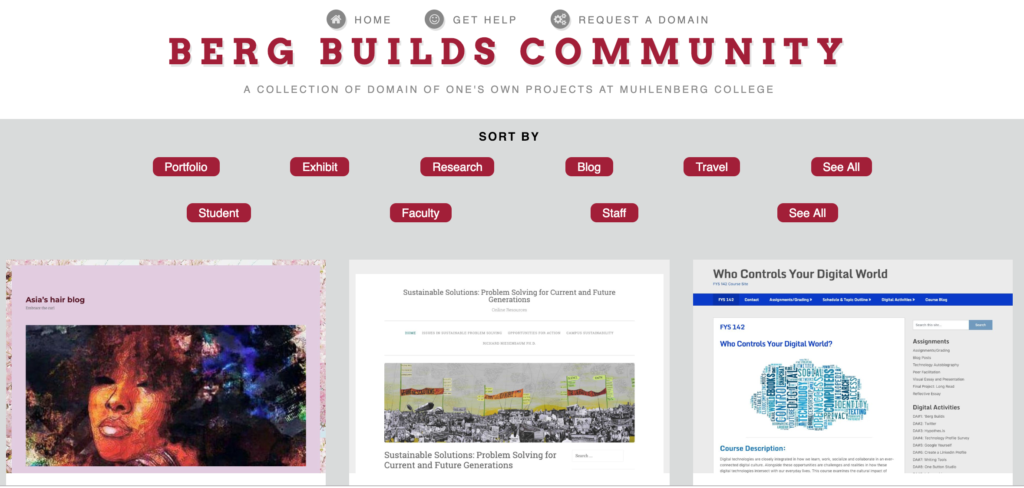
It’s been a week of travel and on-the-ground work at Reclaim’s Headquarters in Fred Vegas, but I would be remiss if I did not share the awesome community portal the folks at Muhlenberg College have built with their Domains instance.
It’s a beautiful thing, scores of featured sites around the community that can be filtered by a few key categories such as research, travel, portfolio, student, staff, faculty, etc. The screenshot above does not capture the long scroll of sites that provides an instant sense of just how much work is happening in the Muhlenberg community, and for me that is everything. I continually return to the idea that these educational publishing platforms are at their core a way to reveal the life of the mind of a community, and Berg Builds has nailed it. From what I understand the great Tim Clarke is behind this project, and he has really done a brilliant job, simple, elegant, and sensitive to the issues that surround be out there in this day and age.

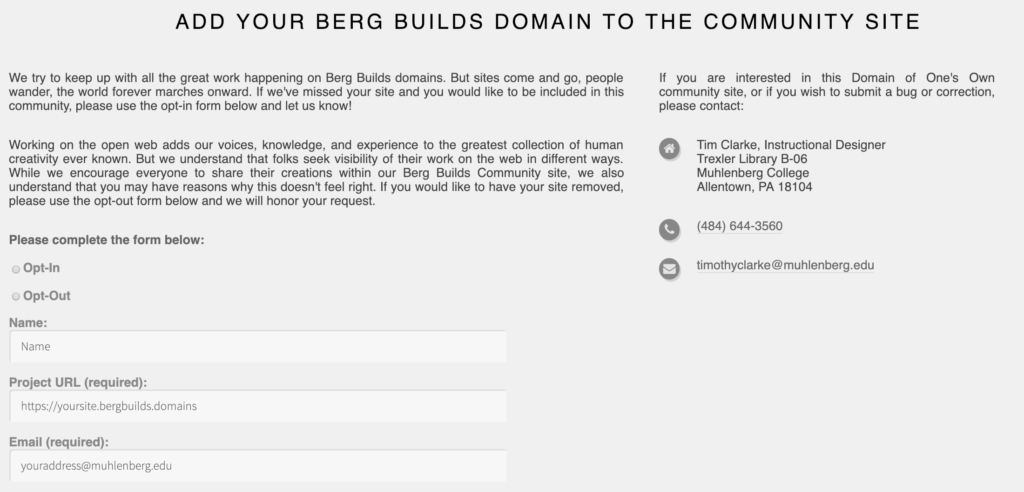
The opt-in/opt-out form does a nice job of inviting submissions as well as providing a place for users to remove their work if need be. And the blurb introducing the form lays it all out:
We try to keep up with all the great work happening on Berg Builds domains. But sites come and go, people wander, the world forever marches onward. If we’ve missed your site and you would like to be included in this community, please use the opt-in form below and let us know!
Working on the open web adds our voices, knowledge, and experience to the greatest collection of human creativity ever known. But we understand that folks seek visibility of their work on the web in different ways. While we encourage everyone to share their creations within our Berg Builds Community site, we also understand that you may have reasons why this doesn’t feel right. If you would like to have your site removed, please use the opt-out form below and we will honor your request.
I remain a true believer that working on the web can provide a unique space to share our work, and I also believe there is a special place on the web for higher ed given its foundational role in help shaping the internet. That said, we know the other side of that coin all too well these days, which makes the work Muhlenberg is doing to highlight the good work folks are doing all the more special. Opening up the inscrutable black box that is web hosting for discovery and connections is an act filled with hope and promise—it’s hard not to feel inspired.
I am looking forward to a play-by-play of this project, and imagine it’s either already published or on the way. And hey, there may even be a presentation in the works for Domains19—ya never, never know!
A thing that happened
So here I am on a Tuesday morning, in the bathroom, getting ready for work while my wife still sleeps. The only context you need for what’s about to happen next is that my intestines had been a little sore the previous two days and that last year I found out that I had diverticulosis. The latter found because when you turn 50 you get a free colonoscopy. I really don’t think there is a more apt metaphor for turning 50 than a free colonoscopy.
Warning, the rest of this story contains references to urine, feces, blood, needles, and any number of other unpleasant dinner table topics. If you are squeamish, or would be unable to look me in the eye the next time we meet, you should stop reading now.
I am sitting on the toilet when I get a huge flapping and stabbing pain in my intestines. This is a pain that is so intense and otherworldly that I’m thrown off the toilet onto my hands and knees. It is hard to describe this feeling, but imagine taking a wooden children’s block, you know the ones, with the big letters and numbers on them in bold colors? So take one of those, attach it to the head of a 3/8” drill-bit, shove that up your ass, and then turn on the drill. Yeah, that’s exactly what it felt like. I’m able to crawl a few feet before calling out to my wife, where she finds me naked in the fetal position on the cold bathroom tile floor. She asks, and as I can start to breath again as the pain descends, on a scale from 0 to 10, from a 10 down to about a 6, I explain what happened.
“What can I do?”
“Let’s start with getting me a pillow.”
After lying on the floor for awhile and having the pain subside down to about a 4, I get dressed, and get a 2pm doctor’s appointment. The office says they can and do want to see me soon given the severity of what might be going on, so I schedule a 2pm appointment.
We never make that appointment.
Lynne is out walking the dog, almost back to the house, when I call her, “Forget the doctor’s appointment, we need to go to the ER, now!” My pain has shot back up to an 8.
My pain for next two hours will oscillate between a 4 and an 8. Yes, you heard that correctly, the next two hours. It will take that long to get me though the triaging process and into an ER bed and enough tests run that they start to give me something for the pain. I do get the idea that the doctors don’t want to mask any pain that might help with a diagnosis, but do you really think that the difference between me howling incoherently and merely able to speak and tell them my pain is a 6 is that sharp of a diagnostic tool? Regardless, I spend the next two hours oscillating between a 4 and an 8, and anything above a 7 requires chanting the “Litany of Pain”:
"Shit. Fuck. Damn."
"Shit. Fuck. Damn."
"Fuck. Fuck. Fucking fuckity fuck."
Which I promptly did, for an hour, in the ER waiting room lying across a bench seat. Please note that I understand that your personal “Litany of Pain” may differ, and may change based on the pain level, for example mine tends to peter out at a 9 to just gurgling.
The CT scan comes back with “inflamed diverticulum” and a surgeon appears to explain that given my pain it’s probably ruptured and that she’d like to operate, or we could wait awhile and see if antibiotics make a difference in the pain. I’m not going to jump into any surgery, so I decide to wait, but the description of what the actual surgery will entail really makes me uneasy. The plan would be open me up, cut out the offending piece of colon, and route the end of the now shorter colon into an ostomy. I had no idea the human body was that flexible, “Hey let’s re-route your butt hole to somewhere in your abdomen!” seems more like a Zoidberg surgery than an actual procedure, who knew? Anyway, then the rest of the plan is to wait three months for everything to heal, and do the reverse surgery, undoing the colonostomy and reconnecting my colon to my anus. What exactly my anus is supposed to be doing for those three months is a question I forget to ask.
I spend the next 24 hours in the hospital with IV antibiotics as my temperature, white blood cell count, and pain continue to rise. A new CT scan confirms that I have a ruptured colon: I will not be avoiding surgery. In fact, they are so alarmed that they take me straight from the CT to the operating room.
Let’s talk about “Versed”, a drug that they give you before surgery so that you don’t remember any of the horrors that surgery, or surgery prep, or coming out of surgery entail. It does all that, but apparently it also pretty well scrambles your brain for some time following the surgery. When I woke up in my hospital room the doctor was there explaining my status, the surgery, what they found, and next steps to my wife. Except that my brain was translating their entire conversation into Kubernetes command line strings (essentially a kind of programming language). And I’m there taking in as if was completely normal, like I’m happy I got the surgery at such a cutting edge place that they’re using Kubernetes to control their surgical procedures. It’s not until days later in the hospital, in a fleeting instance of lucidity, that I realize how fucking insane and nonsensical that sounds. So I begin going back over the things I know and fact checking them. I know, for example, that they have me up and walking right after surgery and that I take regular walks on that hospital floor, and as I get better I might be able to go for a walk in the outside exercise area, which is a small stone-lined plaza in Italy. Wait, what?
Needless to say, the full eight days I spent in the hospital are a little fuzzy, and I might not be a reliable witness.
Over the eight days I had get to past certain milestones, such as peeing on my own. I never realized how happy you could make a nurse by peeing, which apparently comes in second place only to how happy you can make a nurse by producing stool from your stoma. I’m pretty sure I was an infant the last time that many people were excited by my poop production.
Now I am home recovering from colon surgery. It’s like having a new baby, all the conversations are about pee, poop, and sleeping schedules, except in this case, I’m the baby. Really it’s all about the gas. Every part of my now shortened digestive tract is swollen and irritable, so everything produces gas, and all gas produces discomfort. Which leads me to my three rules of colon surgery recovery discomfort:
- It’s always gas.
- Walking fixes everything. (See #1).
- Unless maybe you’re hungry.
So I walk, and I walk, and I walk. In the house though, because it has been either too cold outside, or drenching rain. So I walk up and down the upstairs hall, or loop-de-loops around the furniture downstairs, and I belch, and I belch, and I belch. That’s apparently yet another thing that makes nurses happy; I would be doing one of my regular walks in the hospital wing and let out one of those deep, loud belches that start at your toes, and a cheer would rise from the nurses station every time. Nurses are weird.
I’m just two days home from the hospital at this point, with another two weeks of recovery at least before I can return to anything resembling a normal life, except for the shadow of the reversal surgery hanging out there three months from now. Thanks for reading this far, as I know that writing it has certainly helped me process my adventure to date. Many thanks to family, friends, and co-workers for all their support, it means a huge amount to me and Lynne. Oh yeah, did I mention that Lynne had a sinus infection through all this, she’s been an amazing trooper, my rock, and I wouldn’t have made it through without her.
"Bureaucracy, the rule of no one, has become the modern form of despotism."
WhatsApp and Instagram to be integrated into Facebook
The New York Times:
Mark Zuckerberg, Facebooks chief executive, plans to integrate the social networks messaging services – WhatsApp, Instagram and Facebook Messenger … The services will continue to operate as stand-alone apps, but their underlying technical infrastructure will be unified … That will bring together three of the worlds largest messaging networks, which between them have more than 2.6 billion users, allowing people to communicate across the platforms for the first time. … The plan – which is in the early stages, with a goal of completion by the end of this year or early 2020 – requires thousands of Facebook employees to reconfigure how WhatsApp, Instagram and Facebook Messenger function at their most basic levels …
Welcome to Facebook hell.
Eve Light Strip Extension :: Zerschnitten
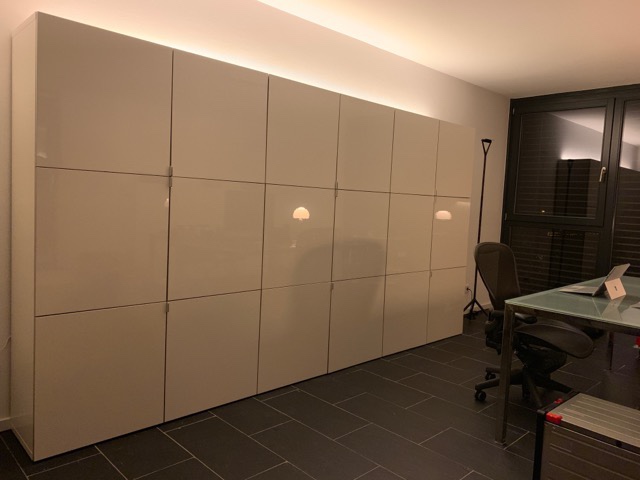
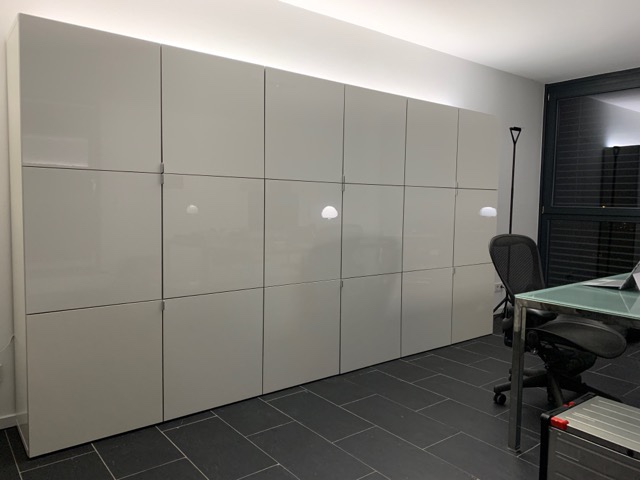
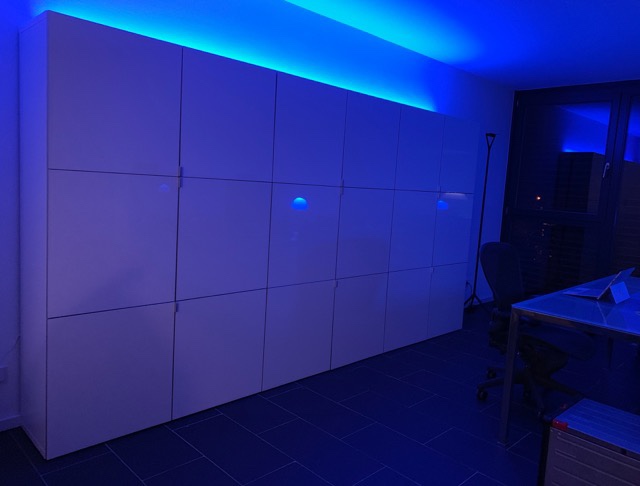
Puh, das war schwierig. Nicht schwierig zu montieren, aber ein harter Schnitt. Ich habe heute meinen 2 m langen Eve Light Strip verlängert. Bei Hue gibt es eine 1 m lange Verlängerung, bei Eve nur 2m. Da der Schrank 3,60 m breit ist, waren die 2 m des Light Strip viel zu kurz, die 4 m aber zu lang. Also musste ich die Erweiterung kürzen. Das geht in regelmäßigen Abständen, aber es tut einfach weh, weil man das abgeschnittene Ende nirgends verbauen kann. Es sei denn, man will sich was basteln, hier für Philips Hue.

Der Eve Light Strip hat sich bewährt. Superhell, braucht keine Bridge, sondern hängt direkt im WLAN an HomeKit, hier also eines der beiden HomePods oder Apple TV 4K als Hub. Das ist bei mir stabiler als Hue, weil ich eine perfekte Wifi-Abdeckung habe, aber das ZigBee-Mesh der Hues schon mal schwächelt. Nachteil: Alexa kann ihn nicht schalten. Da muss ich wohl noch mal an der HomeBridge drehen.

80 Euro für den Light Strip, 50 Euro für die Verlängerung – das ist ein teures Vergnügen. Aber das ist mir die liebste Beleuchtung überhaupt. Abends gelblich, morgens weiß, selten farbig.

Die Farbe bestimmt auch den Stromverbrauch. Light Strip plus (gekürzte) Verlängerung, jeweils 100 Prozent, wie in den drei Bildern: warm 10 W, weiß 22 W, blau 4 W. Das entspricht auch der gefühlten Helligkeit.
“Mr. Trump and his campaign repeatedly denied having such contacts with Russians during the 2016 election.”
The New York Times: Trump and His Associates Had More Than 100 Contacts With Russians Before the Inauguration.
“During the 2016 presidential campaign and transition, Donald J. Trump and at least 17 campaign officials and advisers had contacts with Russian nationals and WikiLeaks, or their intermediaries, a New York Times analysis has found. At least 10 other associates were told about interactions but did not have any themselves.
Knowledge of these interactions is based on New York Times reporting, documents submitted to Congress, and court records and accusations related to the special counsel investigating foreign interference in the election.”
Link via MMetaFilter.
Planning in pure dialogue
I’m just coming home from a couple of days in Victoria where Caitlin and I were with colleagues Rebecca Ataya, Annemarie Travers, and Kelly Poirier. We spent two days working on what I can only call “polishing the core” of the Leadership 2020 program that we offer on behalf of the Federation of Community Social Service of BC. We have run this leadership program for 8 years now, putting around 400 people through a nine month intensive program of residential and applied learning. The program has built collaboration, trust, and connection between the Ministry of Children and Family Development, indigenous communities and organizations and people working in the social services sector.
The program has evolved with every one of the 13 cohorts that has come through. Our core team has changed and this new configuration is our latest version. We are playing with a new set of constraints and ideas as we take the core need and purpose of the program and discover other ways we can offer it to meet the demand in the sector for leadership training that strengthens resilience, creativity, and the ability to thrive in complexity.
When we arrived on Thursday morning to begin our work, we had no agenda on tap, but instead had a compelling need. We started talking and discovered the path as we went being very careful to harvest. Our insights emerged in very deliberate conversation. As skilled dialogue facilitators, we are also skilled dialogue practitioners and we have a refined practice of hosting and harvesting our own work. When we get in flow, it feels like ceremony. With attention to a practice, working this way is extremely productive. Here are a few principles that I observed in working this way:
- Tend to relationships. As we were both building a new team and developing new ideas and products for our work, the most important focus in on relationships. We always build in social time in our work, and enjoyed a nice dinner out at 10 acres bistro, an excellent local foods restaurant in Victoria.
- Nourish bodies and minds. Working like this is physically and mentally draining, and we are very careful to nourish each there when we are working. This meant good snacks (bananas, nuts, and chocolate), ample time for tea and coffee breaks, a lovely prepared lunch by Rebecca and physical breaks to walk, or maybe even dance to Beyonce songs a little!
- Don’t silo the conversation, but structure the harvest. Our conversation wandered from program content, to context, to history, to practicalities, to new ideas for structure. We were all over the map. But as we went, Caitlin made good use of our supply of post it notes and we harvested into the Chaordic Stepping Stone categories that we are using the structure the evolution of the program. Sometimes the best hosting is good harvesting, and Caitlin took on that role beautifully.
- Don’t control the outcome. It sounds almost absurd to think that we would have controlled the outcome. Pure dialogue is about following the energy of the conversation and seeing what emerges. There was no facilitation tool used beyond the ability to listen carefully and address the need and purpose of our work. We stumbled on many beautiful ideas over these past few days and we constantly look for ways to incorporate them in our work. This leadership program has the quality of a polished gem, reflecting years of attention to what is needed, and what is no longer needed.
- Stay with the flow until it doesn’t flow anymore. In Open Space we talk about the principle of “When it’s over it’s over” meaning that all creative work has a rhythm and flow to it. When the brains are no longer engaged and the mental and cognitive tiredness sets in, it’s time to stop. Two intense six hour days of work can produce tremendous results, but when the flow stops, there is no point forcing it. Wrap it up, make a date for some next steps and celebrate the work.
Working like this has the feeling of working with the simplest and most ancient way of talking about what to do. For tens of thousands of years, this is mostly how humans have talked about need and purpose in the world. Long before there were professional facilitators and methods for strategizing, decision making and evaluating, there was dialogue.
Sometimes all you need is a powerful need and purpose, solid relationships, a good way to listen, and time. When it takes on the feel of ceremony, you know you’re getting it right.
Coding, swimming, biergarten, chocolate
A really nice day. I worked on my game nearly all day and the time just flew. I’m feeling deeply obsessed! Danny is obsessed with Lisp and Scheme so we are just quietly muttering to ourselves like toddlers doing parallel play.
Yatima took me swimming at the JCC and I did some real laps. First time in a long time too. It’s good going with someone else, it’s just more motivating and feels like nice social time rather than a boring lonely chore. The JCC is pretty nice, especially the locker room which has a sauna and steam room. I steamed, then saunaed. Sauna is my favorite, getting into a sort of dead horse pose with my legs going up the wall, feels great on my ankles.
Then Danny and I went off to Biergarten to hang out with friends and I let all the kids (maybe 8-11 year olds? ) try my powerchair and they were all taking turns zooming around (the bold ones) or cautiously spinning on speed 1 (the shyer ones) It’s fun to see how their faces light up and they are like OMG I’M DRIVING! I’M A ROBOT! WHEEEEE! at 4 miles an hour, which is pretty much how I feel in the chair as well. They were going around the little park there on Octavia and even took it over to get ice cream. Anyway, I thought it was super fun (always have) and it is sort of normalizing disability & mobility stuff and they’re not going to harm anything… they were reasonably cautious and didn’t run anyone over. Really… is there anything nicer than the feeling of indulging children, especially when it is a crowd of benevolent adults looking on all sharing that feeling.
Then Cory taught me a 1 minute physical therapy exercise to detach your nerve fibers from the fascia or something like that, sounds great, fucking bring it because my leg nerve is horrible. Fuck a fascia, fuck a leg nerve, fuck a sciatica, etc. Also every tendon. So we did a weird little leg kicking ankle flexing dance sitting on the picnic table with me going Ow! fuck! ow!!!!! and then notching down my flexing ambitions even for the 1 minute thing. I will be giving it a try (adding it to my pantheon of other one minute exercises which I can invoke while feeling restless or painful). Cannot tell if it just helped or if the buzzing feeling now is OMINOUS and means doom. Always hard to correlate but time will tell.
Home again to deeply contemplate how I can modify the “implicitly pass through other barriers rule” so that my wheelchairs and elevators in the game work together correctly. Danny is in the process of maybe realizing that using gnu stow may do what he was about to write in Lisp. He sounds a little sad about this.
On the bus on the way home I was chatting with a guy in the front of the bus with me (also in a powerchair) and we were like both eyeing each others gear. He and his friend were from Ireland. Then he was like do you like chocolate? Being kind of high (I wasn’t while I was at the bar, but then, figured why not make the bus ride more tolerable…Vape in my pocket…. what the heck) I was like “Oh ummm well yeah, why, is my face covered in ice cream because I was actually just eating chocolate ice cream”. No it was not but he gave me a fancy chocolate bar from Dandelion. As pickup lines go this is a pretty good one and I did not know how to refuse the badass chocolate bar. I mean. Also, he complimented my sexy wheels and told me to share the chocolate with someone I love and I was like Um like maybe my husband who is sitting right there LOL. Now I have this awesome chocolate and we need to be friends but I was too stoned to do anything clever like exchange social media names or whatever, instead, staring at the chocolate bar like a doofus and mumbling. The end!
Oh but one more thing. This flyer from yesterday’ event for Public Domain Day at the Internet Archive, of things created in 1923 newly (re)entering the public domain. It’s a nicely printed large yellow poster or broadsheet by queer.archive.work, with a photo of a sculpture by Nancy Elizabeth Prophet, with a poem by Jean Toomer handwritten over it:
Within this black hive to-night
There swarm a million bees;
Bees passing in and out the moon,
Bees escaping out the moon,
Bees returning through the moon,
Silver bees intently buzzing,
Silver honey dripping from the swarm of bees
Earth is a waxen cell of the world comb,
And I, a drone,
Lying on my back,
Lipping honey,
Getting drunk with that silver honey,
Wish that I might fly out past the moon
And curl forever in some far-off farmyard flower.
I have that book somewhere. It’s a good one!
"Sometimes, when you’re writing, it feels like you’re fingers are chasing your brain, trying to get..."
Helping kids learning to move around confidently
Being able to move around without an adult is part of growing up. As the kids grow, their space also grows, from house and garden, to familiar spaces and parks, and then to the town, the country and the world. And, since I do not really enjoy the logistics of bringing theree kids back and forth to where they have to be, helping them to move around without me being involved is a process that I’m happy to speed up. I had a talk a few days ago with other parents about that and decided to write down what do we do about it.
Responsibility for timing and packing is the first thing that we start from. Once kids start doing things outside of the house on a regular basis we help them to learn packing what is needed and taking care of being ready in time. Next to a lot of practice and scaffolding what helps here is learning to use calendars, schedules and alarms and smart organisation of the gear needed. When possible we also arrange for different bags for different activities, so swimming or judo clothes can be stored directly in bags when not in use or in the wash.
Pairing. Looking for opportunities to have more than one child for the same activity or time slot at the same location. That not only saves on my time assisting with the logistics, but also makes it easier for the kids. Some things that the younger ones do not dare to do by themselves (dressing for sports, waiting for me on the street, taking a bus) are much easier to do together with your older sibling.
Mobile phone. By now all three kids (12, 8 and 6) have them and we start from most simple models on prepaid accounts untill there is a clear case for a smartphone. A phone gives not only an opportunity to coordinate for unxpected, but also gives some reassurance of feeling connected to home that some kids need to dare to do things without having us around.
Walking and public transport instead of cycling. This might be counterintuitive in the country known for cycling, but makes a lot of sense when you realise that most of the times cyclists are part of the motor traffic and need abilities comparable to those of a car driver to be safe on the road. It is much easier for the kids to master what it takes to navigate regular routes by foot or with a bus than to learn how to do it safely on the bike. And, even for the older ones public transport is much safer option when it comes to travelling during rush hours, bad weather or winter darkness. Also, older kids can accompany younger ones much more easily when they go together by foot or bus than navigating unregulated crossing on multiple bycicles.
Reading maps and schemas comes naturally as part of our lifes, but once the kids start travelling more by themselves we pay more attention to practice. Knowing how your bus route goes is important, but it is becomes more so if there is a deviation in time or space from what they already know.
Own transport card comes naturally when they start using public transport. Despite all the easiness of having one that is automatically refilled, I always opt for a version which has to be topped up manually. This helps to teach the kids to watch the costs and balance on the card and to learn the logistics of adding money to it. Once they start using public transport on a regular basis we look for abonements that help to reduce the costs.
Own debit card. While there are cases where cash is useful, having a debit card gives more opportunities, especially in a house where cash is difficult to find and to manage. One that I like the most is a possibility for automatic bank transfers to the kids accounts for the reccuring costs and getting me out of the loop when the only thing that is actually needed from me is a payment on the spot. Using debit card also helps to learn a lot of financial management skills needed in a modern society – from remembering the pincode to online banking and financial management.
To be able to move around independently confidence is essential. We talk a lot to discover when someone is ready for a next step and what do they need to be able to do it comfortably. We discuss possible emergencies and what to do then and we practice together if needed. For example, when we talked with Alexander why he wasn’t comfortable riding a bus to the opposite side of the city, it came to be his uncertainty of identifying the right stop to get out. When bringing him to the location by car next time we looked for the bus stops and the signs (“after the bridge”) to pay attention to – that was enough for him to take the plunge.
Of course, there are also many other fringe ingredients (like managing all sorts of cards with three kids and remember to remind them about the essentials when they begin :), but those are the most important ones next to the focus and consistency of helping the kids to learn how to move around confidently and to use whatever tools are needed for that.
The post Helping kids learning to move around confidently appeared first on Mathemagenic.
In 2015 I wrote a series of articles on How Not...
In 2015 I wrote a series of articles on How Not To Crash. My favorite part is at the end of the last article, the “Cape, mask” section.
It begins:
When I was younger I wanted to be a code magician — or, really, a hero. But I learned that actual software quality is more important than what I imagine other people think of me.
And, more: quality is a reward that’s almost spiritual. It’s an act of devotion, both selfish and unselfish, to something more important than ego.
The Baseline Moves with You
TL;DR: Reflecting on your entire journey will help you see your progress more accurately. You aren’t making progress. Every day is like the one before. You are standing still, while others are winning. It’s all too hard. You weren’t meant for this. You ask: “Is it time to accept it was never meant to be, […]
The post The Baseline Moves with You appeared first on Eric Karjaluoto.
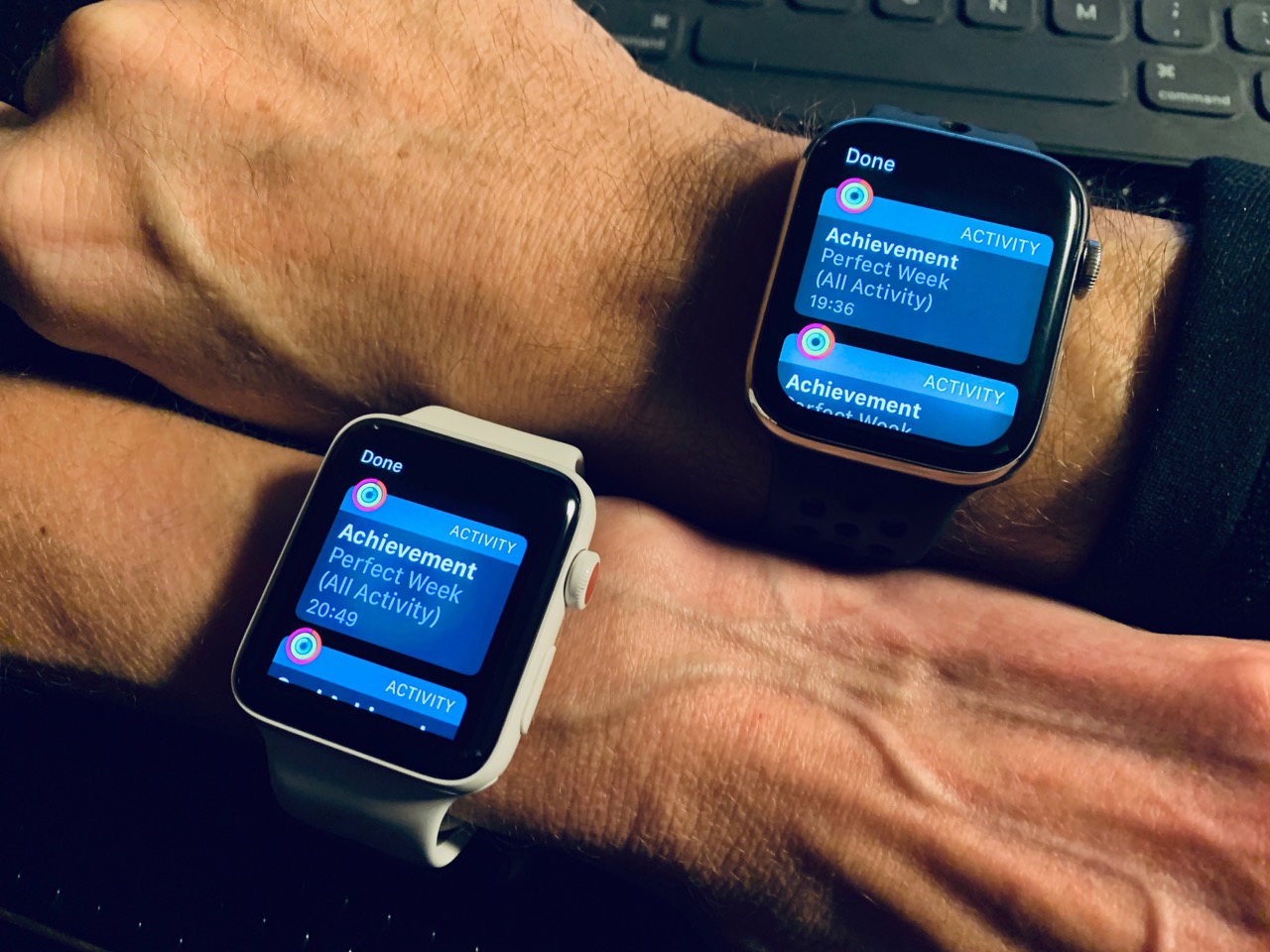
Und die vierte Januar-Woche #dontbreakthechain

Die Scheffin war wieder dabei. Und Ihr so?
PS: Apple hat sofort geliefert. Das ist schon lange nicht mehr passiert.

Tryon River Trail
My Saturday afternoon activity yesterday in Greater Crapaud was seeking out the Tryon River Trail, a trail maintained by the Tryon & Area Historical Society that runs through the woods and along the salt marsh beside the Tryon River.
The main trailhead is on Route № 10 before you go around the bend to the church, across the road from the Tryon Museum.
Conditions weren’t the best for a hike yesterday, so I could only make it about halfway through the first trail segment before I had to double back to Samuel Holland Lane and walk up the road a bit to where the trail continues along the river on the other side. About 5 minutes into that stretch of the trail there’s a lovely bench in a sun-filled glade that was about the most peaceful place on Earth I’ve come across in a long while.

I added the trail to OpenStreetMap, so it’s now available on Waymarked Trails should you like to seek it out one winter afternoon yourself; adding trails like this is another daily OpenStreetMap habit, like updating the hours of your local restaurant, that can be built into a blogging routine with positive spin-offs elsewhere.
Managing credit and rewards
There’s a letter in my files dated May 31, 1974. It’s on the letterhead of the Trustees of the Princeton University Triangle Club and signed by Peter Putnam. Class of 1942, then the Graduate Secretary of the Trustees. In it Peter says.
An axle or a stage manager is not a showy part of a vehicle, but without one, a car won’t go, and without the other, a company does not perform.
I was that stage manager.
That bit of praise from one professional to another sits at the heart of my career. I know I need to revisit it to discern what comes next.
There are two basic questions that interest me.
The first is about searching for the essential parts that make things go. I’ve sometimes talked about this as the messy middle. What are the critical connections between grand goals and effective execution?
The second question has to do with what it takes to make a living operating in those non-showy, essential, places. Particularly in a world that extols and rewards stars.
There’s an old adage that shows up in motivational posters and gets attributed to various sages. One version is “there is no limit to what a man can do who does not care who gains the credit for it.” A laudable sentiment but the reality is that getting things done requires gathering and distributing resources and credit.
What can you do with a stage manager temperament in a world that sees stars?
I don’t quite know what I mean by that yet but I’ve learned to trust the turns of phrase that pop into my head.
The post Managing credit and rewards appeared first on McGee's Musings.
Twitter Favorites: [JodiesJumpsuit] Every inch of air contains at least seven snowflakes. #dlws
Twitter Favorites: [Noahpinion] Twitter has killed the concept of a "straw man". No matter what idea you argue against, you're going to get simult… https://t.co/NdBZnl7GfN
Twitter has killed the concept of a "straw man". No matter what idea you argue against, you're going to get simult… twitter.com/i/web/status/1…
Twitter Favorites: [NowNowNow] Richard Eriksson profile: https://t.co/uLlidAGbYT @sillygwailo
Removing Legacy SPDY Protocol Support
SPDY is a network protocol designed to improve the performance of web browsing and other HTTP-based communication by addressing many limitations of the HTTP/1.1 protocol. Safari gained support for the SPDY protocol in 2014 with Apple’s OS X Yosemite and iOS 8 releases. This was achieved by adding SPDY support to the Foundation networking URLSession API.
Many components of the SPDY protocol proved to be successful improvements over HTTP/1.1, so the Internet Engineering Task Force (IETF) drafted a new protocol specification, HTTP/2, based on many of the same ideas, along with other improvements. Safari and URLSession added support for the HTTP/2 protocol in 2015 with Apple’s OS X El Capitan and iOS 9 releases.
Unlike HTTP/2 and HTTP/1.1, the SPDY protocol is not specified by an Internet standard from the IETF. Rather, it is an experimental protocol that served as a stepping stone to HTTP/2. In fact, many browsers and servers that supported SPDY quickly migrated to HTTP/2, and furthermore, have since dropped support for SPDY entirely (e.g., Chrome, Firefox, and Cloudflare).
Support for the legacy SPDY protocol is deprecated in the recently released Apple Developer Betas of macOS Mojave 10.14.4 and iOS 12.2. In an upcoming release, legacy SPDY protocol support will be completely removed from Safari along with Apple’s URLSession (and deprecated NSURLConnection) API. At the same time, support for the legacy NPN TLS Extension will be removed. NPN, which was added for SPDY, also was never standardized and has been replaced by ALPN.
Removing legacy SPDY protocol support will have little impact to many users of Safari and other applications using URLSession. Servers that did add support for SPDY continued to support HTTP/1.1, so connections to these servers will continue to work by gracefully switching to using HTTP/1.1 (if upgrades to add HTTP/2 support have not occurred), but may suffer from a loss of performance in doing so. To help identify any unexpected cases where SPDY is still being used, a new deprecation log message is generated by URLSession once per process launch if SPDY is negotiated with a server:
WARNING: URLSession (or NSURLConnection) is using SPDY protocol, which is deprecated and will be removed in a future release
This log message is available starting in the Apple Developer Betas of macOS Mojave 10.14.4 and iOS 12.2 and will be found in the system log.
For many, removal of legacy SPDY support requires no action, as the URLSession API will automatically switch to the best protocol available. However, if you own or operate a web server that still supports the SPDY and/or NPN experimental technologies, we encourage upgrading to HTTP/2 now so that your clients can take advantage of its many benefits. If you have any systems which prevent transitioning from SPDY to HTTP/2, please let us know by contacting our Web Technologies Evangelist or by filing a bug report with details.
MacOS Notarization
Zeplin Gazette: Automate notarizing MacOS apps
"With the release of macOS Mojave, Apple introduced a notary service to validate macOS apps that are not distributed through App Store. Although this process is currently optional, in a blog post published past October, Apple announced that Gatekeeper will require software to be notarized in an upcoming release."
I finally went through all the steps yesterday to get dev builds of Acorn notarized. I'm glad I held off on doing this till now, because previously Apple's notarization servers could take a long time- up to an hour to process things. I think yesterday the average wait time was about 3-4 minutes, which made the code/validate/fix cycle much faster than it would have been.
Acorn has a number of executables and frameworks in its app package, which made things a bit more complicated. And I was intent on making the notarization process an automated part of my build scripts. If your app is less complicated, it'll probably take less time for figuring out what needs to be done for your app.
And automating the notarization steps weren't as bad as I thought they would be. I wrote a Python script which calls out to the notarization tools with the addition of having the response format set to xml (and it was in the plist format, which was then easily fed into Foundation.NSDictionary). The script analyzed the current state of things and either waited a while before querying the notarization servers again to see if it's done, or stapled on the notarization bits if it was. Then a new build of Acorn makes its way to the internet.
Notarization adds a few minutes to the build time, but maybe it'll be worth it? I don't like having to depend on Apple's servers to put something up on mine. But if notariation prevents those "Foo.app is an app downloaded from the Internet. Are you sure you want to open it?" boxes from scaring customers unnecessarily, it will be worth the hassle. I can hope at any rate.
The Fallout at BC’s Legislature


Maria Dobrinskaya (@mdobrinskaya), a friend of Price Tags, has written a deep dive into the political fallout now descending on the Province from the Plecas report.
Read it HERE.
With a by-election upcoming in Nanaimo on January 30, and the possibility that the current GreeNDP Provincial Gov’t could collapse, this developing round of partisan finger-pointing is blazingly relevant.
One conclusion by Ms. Dobrinskaya that resonates with me is that Speaker Plecas shines as an exemplar of simple ethics.
As Ms. Dobrinskaya writes:
Mad props to @BCLegSpeaker for his integrity and his courage in daylighting this mess. Let’s root out the rot and ensure that those who are supposed to be in public service to British Columbians are clear about what that actually means.
Mozilla Fosters the Next Generation of Women in Emerging Technologies
At Mozilla, we want to empower people to create technology that reflects the diversity of the world we live in. Today we’re excited to announce the release of the Inclusive Development Space toolkit. This is a way for anyone around the world to set up their own pop-up studio to support diverse creators.
The XR Studio was a first-of-its-kind pop-up at Mozilla’s San Francisco office in the Summer of 2018. It provided a deeply needed space for women and gender non-binary people to collaborate, learn and create projects using virtual reality, augmented reality, and artificial intelligence.
The XR Studio program was founded to offer a jump-start for women creators, providing access to mentors, equipment, ideas, and a community with others like them. Including a wide range of ages, technical abilities, and backgrounds was essential to the program experience.
Inclusive spaces are needed in the tech industry. In technology maker-spaces, eighty percent of makers are men. As technologies like VR and AI become more widespread, it’s crucial that a variety of viewpoints are represented to eliminate biases from lack of diversity.
The XR Studio cohort had round-the-clock access to high quality VR, AR, and mixed reality hardware, as well as mentorship from experts in the field. The group came together weekly to share experiences and connect with leading industry experts like Unity’s Timoni West, Fast.ai’s Rachel Thomas, and VR pioneer Brenda Laurel.
We received more than 100 applications in little over two weeks and accepted 32 participants. Many who applied cited a chance to experiment with futuristic tools as the most important reason for applying to the program, with career development a close second.
“I couldn’t imagine XR Studio being with any other organization. Don’t know if it would have had as much success if it wasn’t with Mozilla. That really accentuated the program.” – Tyler Musgrave, recently named Futurist in residence at ARVR Women.
Projects spanned from efforts to improve bias awareness in education, self defense training, criminal justice system education, identifying police surveillance and more. Participants felt the safe and supportive environment gave them a unique advantage in technology creation. “With Mozilla’s XR Studio, I am surrounded by women just as passionate and supportive about creating XR products as I am,” said Neilda Pacquing, Founder and CEO MindGlow, Inc., a company that focuses on safety training using immersive experiences. “There’s no other place like it and I feel I’ve gone further in creating my products than I would have without it.”
So what’s next?
The Mozilla XR Studio program offered an opportunity to learn and build confidence, overcome imposter syndrome, and make amazing projects. We learned lessons about architecting an inclusive space that we plan to use to create future Mozilla spaces that will support underrepresented groups in creating with emerging technologies.
Mozilla is also sponsoring the women in VR brunch at the Sundance Film Festival this Sunday. It will be a great opportunity to learn, collaborate, and fellowship with women from around the world. If you will be in the area, please reach out and say hello.
Want to create your own inclusive development space in your community, city or company? Check out our toolkit.
The post Mozilla Fosters the Next Generation of Women in Emerging Technologies appeared first on The Mozilla Blog.