Facebook is onto us. It’s onto me, anyway. I am merely one anecdata point among billions, but I’m sure I’m not the only Facebook user who has found herself shying away from the very public, often performative, and even tiring habit of posting regular updates to Facebook and Instagram. Over the past year I’ve found myself thinking not about quitting social networks, but about redefining them. For me, that process has involved a lot more private messaging.
Und genau das ist hier auch passiert. Vor ein paar Tagen habe ich einen privaten Kanal geöffnet, an dem jeder teilnehmen kann. So ganz privat ist er also nicht, aber auch nicht so öffentlich wie die Kommentare hier.
Ich übernehme eine wichtige Regel: Wer rein will, benutzt seinen vollen Namen. Und ich bitte auch darum, ein Bild in das Profil zu stellen. Damit aus Namen Menschen werden.
The Magic Flying Circus ist ein durchschlagender Erfolg. Mehr als 200 Menschen, die freundlich mit einander umgehen und Hunderte von Nachrichten jeden Tag schreiben. Die Fragen stellen und Anworten haben. Es ist der heiße Scheiß.
Wer rein will, klickt hier. Bei Android muss man nach Installation der App einmal booten, sonst geht der Link in den Kanal nicht. Hot topics:
Nur mit vollem Namen. Keine Ausnahmen. Bonuspunkte für ein Profilbild, auf dem man Euch erkennt. Wir wollen Menschen, keine Avatare.
Nur iOS und Android. Kein Desktop. Nur auf einem Gerät. Desktop-Fernsteuerung im Browser, noch nicht so doll.
Das Netzwerk basiert auf Telefonnummern, plaudert Eure aber nicht aus. Das ist ein kommerzielles Produkt von Microsoft, das man kostenlos nutzen kann, aber hier noch nicht kaufen kann.
Ja, sieht aus wie WhatsApp und funktioniert auch so. Nur ohne Facebook im Nacken.
Ja, kompiliert eine Hashtabelle Eurer Telefonnummern, um Kontakte zu finden.
"Boah, das sind viel zu viele Nachrichten. Ich komm nicht mit." - Musst Du auch nicht. Vor drei Tagen gab es das noch gar nicht.
Was ist mit ginlo? Noch nicht so weit. Dort habe ich den Kanal geschlossen.
Warum nicht Signal? Weil das in Gruppen Eure Telefonnummern ausplaudert.
"Ich will aber Slack!" - Gerne, wir sind kein Monopol. Roll your own.
[Sorry guys, this channel is in German and there is no automatic translation.]
Some of Apple’s recent decisions regarding content distribution have sparked a debate. Is Apple embracing a new kind of strategy that elevates services at the expense of hardware? Episode 140 is dedicated to going over Apple’s content distribution strategy and how the company is looking to leverage its user base in an effort to establish one of the more formidable content distribution arms in existence. Additional topics include Apple’s history as a content distributor, how streaming is changing content consumption, misconceptions surrounding Apple’s content distribution strategy, the sudden collapse in stationary speaker buzz, Apple’s goals for its content distribution arm, and the various challenges facing the company.
The social model of disability is a way of viewing the world, developed by disabled people.
The model says that people are disabled by barriers in society, not by their impairment or difference. Barriers can be physical, like buildings not having accessible toilets. Or they can be caused by people’s attitudes to difference, like assuming disabled people can’t do certain things.
The social model helps us recognise barriers that make life harder for disabled people. Removing these barriers creates equality and offers disabled people more independence, choice and control.
The term special needs is one that I’ve never liked; reading the tenets of the social model of disability makes me realize that one of the reasons why is that it places focus in the wrong place: “special needs children” don’t have “special” needs, they have the needs they have (as we all do).
The needs they have may be unmet, but they are only “special” because we choose to class them as exceptional.
People are disabled by barriers in society, not by their impairment or difference.
The past few weeks have gone by in a blur of insomnia, stress and a bunch of random entropy that has triggered my penchant for radical simplification, so I turned off nearly all notifications on work apps, set some recurring reminders to go offline earlier in the day, and decided to spend some time tying up loose ends (as well as building Docker containers to run R, but that’s another story).
In summary, I’m exhausted, and the amount of typos in the first version of this post is ample evidence of that. So I’m cutting back and doing satisfying little hacks to relax.
There Can Only Be OneDrive
Even though this site is still managed via Dropbox (instant publishing and trivial updates are addictive), I’m planning to change that someday.
The trigger, ironically, was their move to restrict filesystem support on Linux. There’s an ingenious fix that injects a different filesystem check into the client, but since their CLI daemon is a nightmare to keep running (it insists on taking up 100% CPU without apparent reason now and then) and I’ve had an Office 365 family plan since well before joining Microsoft, the extra expense of paying for Dropbox and not being able to use it properly on two of the machines where it actually made a difference (my VM and my Linux laptop) doesn’t really pay off for me.
So I’m preparing to cancel it next Summer, and trying out abraunegg/onedrive, which has the great side benefit of being easy to run inside Dockerand get running on ARM–although, to be fair, it being written in D, of all things, is a major turn-off.
Someone really ought to rewrite the entire thing in Go because it’s single-threaded and slow, but it seems promising for my use cases, and this post was actually drafted on my Linux laptop while it synced my Arduino development tree across.
Limiting OMS Agent CPU Usage on Ubuntu 18.04
Another thing that has been bugging me is the amount of CPU omsagent uses in my Azure VMs, so I decided to deal with that too by using raw cgroups to limit its CPU usage to roughly 10%.
Limiting CPU usage for a single user is relatively trivial (but hard to piece together for Ubuntu 18.04), so after installing cgroups-bin I created a few files that create a limitcpu group that limits usage to around 10% of CPU shares, and that apply that policy to anything running under the omsagent user:
$ cat /etc/cgconfig.conf
group limitcpu {
  cpu {
    cpu.shares = 100;
  }
}

$ cat /etc/cgrules.conf
omsagent cpu limitcpu/
*:dropbox cpu limitcpu/

$ cat /etc/rc.local
#!/bin/sh
cgconfigparser -l /etc/cgconfig.conf
cgrulesengd
You can check if it’s working by poking around inside /sys/fs/cgroup and checking what PIDs are included inside the limitcpu group. Limiting RAM may require a bit more tweaking, but I did’t see a need for it just yet.
This was a bit of a surprise because I had no idea rc.local was still actually usable under systemd (it’s run at startup if it exists and marked as executable), but there you go. There are still bits of the Azure agents running as root, but at least now I don’t have the bloated Ruby components taking up resources.
The World’s Most Roundabout Doorbell Extender
I’ve got a weirdly-shaped flat with reinforced concrete walls, which besides being a bane for wireless coverage is also a problem for package deliveries, since it’s hard to hear the doorbell when you’re vacuuming or cleaning around the house. Over the past few weeks I came to appreciate that first hand as I worked from home for a while, and decided to do something about it.
My doorbell is a classic Friedland Type 4, which means it’s about the most analog thing in the house except for a couple of clocks, and getting a modern Honeywell doorbell “converter” kit is unaccountably hard (it’s been in and out of stock).
Plus I have a feeling a single extra doorbell isn’t likely to be enough, and it’s more fun to try to “fix” things yourself.
Sensor Hardware
I started by looking at building a powered ESP8266 sensor that could work off the 8-12VAC it’s powered with and was putting together a rectifier bridge when it hit me that the doorbell has a coil and that I could do something that wasn’t going to have to reboot at every bell push.
At first I thought I didn’t have any magnetic reed switches handy, but then the second round of that particular epiphany hit me–I grabbed one of my Xiaomi Aqara contact sensors, removed it from its casing, and taped it directly to the coil.
This Xiaomi marketing image is better than the crummy photo I took of the naked sensor
Sure enough, I now had a Zigbee-enabled doorbell. Which, by the magic of MQTT, I soon tied to HomeKit, after I fixed the irritating quirk of it sending out multiple messages a second.
Why? Because doorbells run on AC, and thus the reed switch actually vibrates every time the doorbell rings1. So I had to ignore new events after the first within a given time window (easily done with a trigger node in Node-RED acting as a software debouncer), and then it was just a matter of turning on notifications on the Home app (which are instant on my Mac).
Remote Buzzers
That having been dealt with, I started working on the hardware to cater to resident humans–a set of small, noisy devices to scatter about the house. Since I have a bunch of ESP-01S devices2 left over from my initial shenanigans with Azure IoT and a handful of passive buzzers, those were the obvious choice, although it doesn’t really feel like a finished solution and I’d have preferred something able to carry a tune:
The simplistic approach
The buzzer is driven by GPIO2 going low, and the 100Ω resistor limits the current so as to not fry the ESP-01S. I should have made it something like 200Ω to keep the sink current under 12mA3, but the buzzer isn’t visibly rated and my multimeter is MIA, so I chanced it and it has been working fine.
I had to borrow one of my kids' breadboards for this.
The ESP-01S is going to be mounted on a DIP connector on the final board in order to make it easily removable and re-flashable, and that will probably help keep the layout compact by moving the buzzer fully under it.
Software
I initially meant to write everything from scratch, but as I started putting together the Wi-Fi Manager library, an MQTT client and all the rest, I decided I wasn’t going to spend an afternoon in C++ land and took another look at Sonoff-Tasmota, which is what my smart sockets use anyway, and which has support for extra sensors and GPIO control over MQTT.
As it turns out, I was able to flash the ESP-01S with it, set it up as a Generic device and have it control the buzzer as an “inverted” relay, which was just great and saved me a lot of time, because:
It has the same MQTT topic structure as my smart sockets
I had to do pretty much zero extra work to get it working under Node-RED
Or, that is, it would have saved me a lot of time if both the Arduino libraries for the ESP8266 weren’t riddled with Wi-Fi bugs, which meant I spent around six hours flashing and re-flashing a couple of ESP-01S and a WeMos D1 with various firmware variants built atop three versions of the ESP8266/Arduino core–2.3.0, 2.4.2, and 2.5.0b3, of which only the latter actually worked for me (and isn’t easy to find, since it’s not directly linked from the project page).
I had previously reflected upon this firmware being a work in progress, and in retrospect I’m very happy I didn’t try to upgrade my smart sockets in the meantime. But I might end up doing just that, since it’s perfectly possible to place one of these passive buzzers inside a Sonoff S20 socket and have a dual-purpose smart socket and doorbell extender…
But first, I want to make sure we don’t miss any deliveries.
I don’t expect that sensor’s battery to last as long as the others, but the trade-off seems reasonable. ↩︎
I also have plenty of WeMos D1 Minis lying around, but since I have micro-USB connectors and discrete voltage regulators aplenty, I thought I’d use those too. But the D1 is a great alternative for this kind of thing, and you can just stick the resistor and buzzer onto it call it a day. ↩︎
Another option would have been to use a 2N7000 MOSFET to drive the buzzer, but I’m all out of those at the moment. ↩︎
For many years, I’ve been using the RSS button built into Firefox to copy and paste the feed link of a blog or website to my favorite RSS reader, Selfoss. That is until recently, however, when Mozilla decided to remove all RSS functionality, including the RSS button from the codebase. Shame on you Mozilla! Yes, compared to the billions of Facebook and Twitter users, those few (?) millions who use RSS seem to be nothing to you. Thanks for nothing! Frankly, I could not imagine to browse all the different sites I follow manually to check for new content without going utterly mad.
It was then I realized that I didn’t have an RSS icon and Feed link on this site, because I never really thought of it. After all, I didn’t need one because I had an RSS button in the browser. That was perhaps a bit thoughtless of mine as other browsers didn’t have an RSS button for quite some time as far as I can tell.
So here we go, I’ve added an RSS button and link on my blog now, see the status bar on the left or, on mobile devices, in the fold down menu when you click on the hamburger item. If you are not yet reading this blog and other sites via an RSS feed, think again, it is so much more convenient. And if you don’t want to run your own RSS aggregator at home, there are hosted alternatives such as Feedly and others to make life easier.
What can I say – I worked on my game all day again today. It was great. The feeling of seeing the entire huge structure holographically and knowing (more or less) what to do and how to break it down into pieces is just glorious. I’m all fizzy with ideas at really random times.
I spent some time trying to understand some excellent advice on the interactive fiction forum and halfway got there. Then needed to chill out a bit and let it percolate, so I worked through some of the examples in the inform7 manual and played around. At some point I realized a different way to approach the problem and plunged back in, making my magic elevator a room again instead of a vehicle.
Finally got that working around 6pm. But only imperfectly. Then had another epiphany, threw it out and refactored it again and now it is seamless! I thought of some good improvements and noted them as issues for later.
However, I still have to solve the original hard problem because my rideable vehicle (ie a wheelchair) has to be able to enter and exit another vehicle (the train.) It’s still satisfying to have the elevators work so neatly, in the meantime.
Danny and I went grocery shopping, he cooked (lamb with mint sauce and roast potatoes) and I cleaned up. He is still muttering into his beard about Lisp and stuff but I was too sunk into my own thing to know what about. A cosy and fabulous weekend.
If you ask a question and you don’t receive a quick response, you’re going to be annoyed, frustrated, and probably call customer support.
If you ask a question and receive 50 responses, that’s going to be pretty frustrating too.
Do you really want to test 50 solutions to find the one that works for you? Too much advice can be as frustrating as too little.
Usually, those 50 responses coalesce around a few similar ideas to test – but you still need to sift through a lot of responses to work that out (and then test the top ideas).
Somewhere between 0 and 50 lies the optimum number of responses. That number is 1. You only want 1 response…the right response (note: this obviously varies in discussion communities)
The more responses you have to sift through to find the solution, the more exasperated you’re going to feel.
Once a community has a high answer rate to questions (usually > 90%), your time is far better spent increasing the quality of answers in your community than the quantity of answers. This might result in fewer responses (less engagement!), but happier members.
Far too many people keep tackling the ‘too few answers’ problem (updating gamification systems, MVP programs, more recognition etc…) when they should be tackling the ‘too many’ problem. This is a very different type of work. Often more based in technology, relationships, and moderation.
If you had profited from a highly addictive drug that had done great damage to society, what would you do? A trial about this — about Insys and fentanyl — is happening right now in Boston. But I’m not talking about opioids. I’m talking about Facebook. Mark Zuckerberg’s op-ed in the Wall Street Journal looks … Continued
This is generally a good article providing an overview of the contribution of David Chalmers to the consciousness debate. I like the way Chalmers frames the question as "the hard problem". Consciousness is not the sort of thing we can understand by understanding the physical mechanisms that produce it, it seems. But I disagree with the article's suggestion that the debate has only recently emerged. The problem of consciousness periodically produces some of the best work in philosophy, such as Thomas Nagel's What is it Like to be a Bat? For those interested in my own position on consciousness, you can always read my paper on the subject here (see also Matthias Mecher's summary and diagram).
I continue to believe we should not look to actual human behaviour for ethical guidance with respect to automation and artificial intelligence. This study underlines my concerns. Drivers faced with critical decisions would make snap value judgements about who they hit (preferring, say, to hit fat people, or homeless people). This contrasts with a recommendation that "In the event of unavoidable accident situations, any distinction based on personal features (age, gender, physical or mental constitution) is strictly prohibited."
Good conversation with Robert and Lilia (company, Lilia’s blog) today over lunch in Enschede. Explored shared challenges concerning doing business, also as a couple, seeing the household as an economically active unit, finding your way back into a field, or extending into new fields and more. It was good to catch up, and take the time to do so. Definitely need to continue that soon for several directions the conversation took us in today. Also Enschede hasn’t changed much since we left, and the problems with trains being delayed and cancelled proved part of the reason we moved still stands :).
Having hacked together a bulk uploader for nbgallery and uploaded the TM351 notebooks to a test environment, I’m now in a position to start having a play with it.
All public notebooks are searchable, so how does the search fare?
The search box top right gets a little bit lost in the search results listing. It could be handy to at least print out the search string (“Searching for: …”) at the top of the results list, if not making the search box larger and in a more central location. The search results themselves take the form of the name / description/tag of each hit (i.e. the notebook metadata) along with a fragment showing how the search terms appeared in context within the notebook.
Some of my earlier experiments on notebook search here and here also show context.
A range of options are provided for ordering the results. Trending looks like it could be interesting (this is based on recent views, presumably), for example where students are searching notebooks relevant to the current week’s study.
That said, we can also display notebooks by tag, so it’s easy enough to display notebooks associated with a particular week’s study if we tag notebooks by study week:
(One thing I noticed zooming out on the page to grab the above screenshot is that the font size of the notebook titles doesn’t seem to respond to the zoom level; it would probably be worth checking to see if there are other accessibility issues.)
If we click through on a result, we see a list of related notebooks followed by a preview of the notebook. (nbgallery strips out all cell outputs on upload, so no cell outputs are displayed).
To search through the preview, we can use a normal browser in-page search (ctrl/cmd-F).
A range of options are provided to support community activity around a notebook for logged in users, including the ability to “star” a notebook, provide feedback or add a comment:
Logged in users can also click on the notebook tags to edit them.
Via the Further options menu, users can view various notebook metrics, email a notebook, or propose a change request:
The metrics available include number of views, runs, stars and the edit history.
If comments have been provided, the number indicator by the comment flag shows how many comments have been received, although this only appears on the notebook page. There doesn’t appear to be an indicator of how many comments are associated with a notebook on the search results page, nor did I spot a general “recent comments” feed anywhere.
When you post a comment, there is no indication that you have done so and the form remains in place. You need to close it manually. (Hitting “Post Comment” again just pops up a “can’t do that” alert on the grounds that you’re trying to post a duplicate comment.)
The comments themselves look as if they are an ordered (rather than threaded) list. It also looks like any signed in used can edit anybody else’s comment?
Users who aren’t signed in can download a notebook, but not star it, comment on it, modify the tags etc.
When I tried to add feedback, I got an error:
I’m not sure if there are settings I need to tweak to address that?
Logged in users can also run a notebook from nbgallery via an associated notebook server. (I’d prefer it if the Run in Jupyter flash wasn’t displayed if there isn’t a linked notebook server available for the logged in user.) For example, running a notebook server on port 443 on the same host as nbgallery using the nbgallery notebook container:
docker run --rm -p 443:443 -e "NBGALLERY_URL=http://localhost:3000" -e "NBGALLERY_CONFIG_TOKEN=letmein" nbgallery/jupyter-alpine
We can view the notebook server homepage on https://localhost:443 and log into it using the token-as-password letmein. Running the container in the way described above also gives permission for the nbgallery server running in on http://localhost:3000 to open notebooks via the notebook server.
Within nbgallery itself, a logged in user can associate one of more Jupyter environments via the user menu:
Each environment is given a name and the URL of the associated notebook server (in this case, https://localhost:443):
When a notebook server is associated with a user, notebooks can be opened from nbgallery within the notebook server.
If we create a new notebook in the linked notebook server, we can upload it to nbgallery, adding a title, description and optional tags as in a manual notebook upload step:
If we modify the notebook that is linked to one in the gallery (that is, that has been uploaded to the gallery or launched from the gallery), we can save a change to the gallery or submit a change request:
When uploading a new version, you can add tags but not additional comments such as a commit message:
Viewing the notebook details in nbgallery, we can see a summary of the change history:
We can also click through to a preview of each version of the notebook:
(The revision number doesn’t appear in the change history though, so it can be hard to reconcile a particular version with it’s appearance in the change history listing.)
A logged in user can make a change request to someone else’s notebooks by uploading a new version of them or by opening the notebook in the linked notebook server and submitting a change request:
When I submitted the change request, I got an error form in response, but it looks like the change request was made, as this listing of Change Requests from the user menu suggests:
An exclamation mark by the user menu also identifies that change requests are pending.
Viewing the change request provides a view over the current version of the notebook and the proposed changes. Notebooks can be viewed alongside each other or the diffs can be viewed:
The thumbs up/down indicators are used to accept or deny a change request, along with a brief comment:
Accepted changed notebooks are used to replace the current version of the notebook, and the change logged in the change history. Denied change requests are recorded as such in the change requests list, with a link to the version of the notebook containing the unsuccessfully proposed changes:
If feedback was provided, a comment icon identifies its presence and pops up the feedback in a tooltip when hovered over.
Health stats for linked and run notebooks are supposed to be available, but I couldn’t get those to work (as far as the health stat reports were concerned, the notebooks were never run no matter how many times I ran them), so maybe I’m missing something there in the setup too? [UPDATE: health settings run with a flag set: notebook instrumentation docs; specifically, -e NBGALLERY_ENABLE_INSTRUMENTATION=1 in the docker command line.]
I’m not sure how well this would work for managing TM351 notebooks compared to out current Github workflow (which I should write up somewhere). The error responses (whether they’re valid or not) for change requests and feedback are confusing, and I’m not sure how the feedback is handled if and when it works. Not being able to easily spot new comments easily (unless I’m missing something) could be a bit of a pain. That said, the proof would be in the testing-through-use, so I’ll maybe give it a week or two’s trial with some of my own notebook workflows.
In terms of use with students, it could be useful to provide a version of nbgallery with notebooks runnable by students without them having to log in to it. It could also be useful if notebooks could be run ‘inline’ from the notebook preview pages, for example using something like ThebeLab or Voila, particularly if a particular Binderhub repo / config could be specified in metadata somewhere.
If you remove the societal impact, just for a moment, the story of publishers’ demise — first newspapers, and now digital-only companies like BuzzFeed and Huffington Post, which both announced significant layoffs last week — is rather banal: infinite competition combined with an inferior product resulted in failed business models.
Infinite competition is the result of the Internet: any piece of content is only a tap away, a far cry from a world where geographic areas were dominated by a small number of newspapers. The inferior product is advertising: when newspapers were the only option, advertising inventory was scarce; now advertisers — which only paid for newspaper space as a matter of convenience, not principle — can reach the exact customers they want exactly where they spend most of their time and attention, namely Facebook and Google. And thus the failed business model: is it any surprise that commoditized content and non-competitive ad inventory did not work?
Perhaps the single most powerful implication of an organization operating with Internet assumptions is that iteration – and its associated learning – is doable in a way that just wasn’t possible with print. BuzzFeed as an organization has been figuring out what works online for over eight years now, and while “The Dress” may have been unusual in its scale, its existence was no accident. What’s especially exciting about BuzzFeed, though, is how it uses that knowledge to make money…
More importantly, with this model BuzzFeed has returned to the journalistic ideal that many — including myself — thought was lost with the demise of newspapers’ old geographic monopolies: true journalistic independence. Just as journalists of old didn’t need to worry about making money, just writing stories that they thought important, BuzzFeed’s writers simply need to write stories that people find important enough to share; the learning that results is how they make money. The incentives are perfectly aligned…The world needs great journalism, but great journalism needs a great business model. That’s exactly what BuzzFeed seems to have, and it’s for that reason the company is the most important news organization in the world.
JP: As [full-stack media companies] started to become received wisdom, it started to stop being true, that it was the best way to build a company, and that happened largely because there was this jump to mobile and to mobile apps, and probably the majority of content consumption is happening inside of mobile apps. You think “Facebook traffic”, but in a way that’s people opening Facebook, seeing a BuzzFeed story, clicking a BuzzFeed story…That has started to create an environment where media is much more distributed…
PK: So you built this system that was optimized for generating traffic and making money from stuff that happened on BuzzFeed.com and now you’re realizing that’s not what you want to do.
JP: What we realized is that that was just one piece of our business…What I’ve been doing is meeting with every team in BuzzFeed with this little chart that is our model for making content that people love — News, Buzz, Life, Video, Lists, Quizzes, all different types of content, and have great tools for making content that people love — and then we send that content to various places. We send it to our own websites and to our own apps, which are owned-and-operated properties and remain important to us, where we have a certain ability to get data and learn from what we’re doing, but we also send it natively to other platforms like YouTube, or Facebook.
2015 was the year that Facebook unveiled Instant Articles: publishers could put their content directly on Facebook, and Facebook, at least in theory, would help them monetize it. That seemed like a great deal! Facebook, for reasons I laid out in Popping the Publishing Bubble, was much better at advertising than any publishing company could hope to be:
In the pre-Internet era publishers had it easy: on one hand, they employed journalists whose goal it was to reach as many readers as possible. On the other, they were largely paid by advertisers, whose goal was to reach as many potential customers as possible. The alignment — reach as many X as possible — was obvious, and profitable for the publishers in particular.
[…]
The shift from paper to digital meant publications could now reach every person on earth (not just their geographic area), and starting a new publication was vastly easier and cheaper than before…The increase in competition destroyed the monopoly, but it was the divorce of “readers” from “potential customers” that prevented even the largest publishers from profiting much from the massive amounts of new traffic they were receiving. After all, advertisers don’t really care about readers; they care about identifying, reaching, and converting potential customers. And, by extension, this meant that differentiating ad inventory depended less on volume and much more on the degree to which a particular ad offered superior targeting, a superior format, or superior tracking.
[…]
The above graph shows the inefficiency of this arrangement: publishers and ad networks are locked in a dysfunctional relationship that doesn’t serve readers or advertisers, and it’s only a matter of time until advertisers — which again, care only about reaching potential customers, wherever they may be — desert the whole mess entirely for new, more efficient and effective advertising options that put them directly in front of the people they care about. That, first and foremost, is Facebook…
With Instant Articles it appeared that the social network would share the spoils: Facebook collects the advertising money, and publishers that embrace the platform share in the reward.
The core problem for BuzzFeed is that never really happened: Instant Articles relied on the Facebook Audience Network, not Facebook’s core News Feed ad product, and nearly all of Facebook’s energy went into the latter. Companies that embraced Instant Articles — and, in the case of BuzzFeed, built their business models around them — were left earning pennies, mostly on programmatic advertising.
Complete Commoditization
For the record, I was completely wrong about the degree to which Facebook would help publishers monetize Instant Articles: it seemed to me that it was in Facebook’s interest to create sustainable models for quality content that lived directly on its platform. Sure, the company would be giving up a slice of its revenue, but the impact on the overall user experience generally and establishing Facebook as the center of not just the consumption of content but the monetization of content specifically would be powerful moats.
The truth, though, is that the short-term incentives to maximize revenue, primarily through News Feed ads that Facebook kept for itself, were irresistible, and besides, the company had other fish to fry: Snapchat was looming as a threat through 2015, and by 2016 the company was starting to warn that ad loads were saturating. Quarterly growth was very much the priority, and once Snapchat was neutralized, was a content-based moat really necessary?
I suspect, thought, that there is a more fundamental reason why BuzzFeed’s strategy was untenable. I wrote about the Conservation of Attractive Profits in the context of Netflix back in 2015:
The Law of Conservation of Attractive Profits,1 [was] first explained by Clayton Christensen in his 2003 book The Innovator’s Solution:
Formally, the law of conservation of attractive profits states that in the value chain there is a requisite juxtaposition of modular and interdependent architectures, and of reciprocal processes of commoditization and de-commoditization, commoditization, that exists in order to optimize the performance of what is not good enough. The law states that when modularity and commoditization cause attractive profits to disappear at one stage in the value chain, the opportunity to earn attractive profits with proprietary products will usually emerge at an adjacent stage.
That’s a bit of a mouthful, but the example that follows in the book shows how powerful this observation is:
If you think about it in a hardware context, because historically the microprocessor had not been good enough, then its architecture inside was proprietary and optimized and that meant that the computer’s architecture had to be modular and conformable to allow the microprocessor to be optimized. But in a little hand held device like the RIM BlackBerry, it’s the device itself that’s not good enough, and you therefore cannot have a one-size-fits-all Intel processor inside of a BlackBerry, but instead, the processor itself has to be modular and conformable so that it has on it only the functionality that the BlackBerry needs and none of the functionality that it doesn’t need. So again, one side or the other needs to be modular and conformable to optimize what’s not good enough.
Did you catch that? That was Christensen, a full four years before the iPhone, explaining why it was that Intel was doomed in mobile even as ARM would become ascendent. When the basis of competition changed away from pure processor performance to a low-power system the chip architecture needed to switch from being integrated (Intel) to being modular (ARM), the latter enabling an integrated BlackBerry then, and an integrated iPhone four years later.2
More broadly, breaking up a formerly integrated system — commoditizing and modularizing it — destroys incumbent value while simultaneously allowing a new entrant to integrate a different part of the value chain and thus capture new value.
This is the theoretical explanation of what happened to publishers: newspapers previously integrated editorial and advertising:
Then Facebook came along and integrated users and advertising:
The result was the commoditization of content that I described above, which is exactly what you would predict given the integration elsewhere in the value chain. What I think is important, though, and under-appreciated by me (which is why I got Instant Articles wrong) is that the scale of integration — and correspondingly, the scale of commoditization — matters as well.
In the case of Facebook the integration is absolute: the social network has two billion users, which gives the company not only a network effect, but also a gargantuan amount of user-generated content to populate the News Feed where the ads targeted with an even larger set of user data can be placed. It follows, then, that content suppliers are absolutely commoditized: Facebook doesn’t need to do anything to keep them on the platform, because where else will they go? Might as well keep the money for itself.
Aggregation and Commoditization
You see a similar dynamic with other large aggregators: Google’s Answer Box trades away the long-term viability of sites generating the content that makes Google useful in exchange for a short-term benefit that, yes, accrues to users, but accrues even more to Google, keeping those users on Google properties. And why not? It is not as if the web is running out of content — indeed, most website owners are paying Google supply sourcing agents SEO specialists to figure out how to get their content into those Answer Boxes in pursuit of whatever crumbs of traffic result.
Amazon is following the same playbook: the company is ramping up its private label business, producing products that compete directly with companies that both sell to Amazon and are on the platform as 3rd-party merchants. After all, Amazon has integrated users and logistics: if suppliers pull their goods they will not pull customers away from Amazon; they’ll simply lose sales.
It’s the same thing with Apple and the App Store: the most valuable customers in most markets are on the iPhone, which is why Apple can get away with charging 30% on digital goods that have nothing to do with the iPhone. Customers are not abandoning iOS just so they can have a better experience buying digital books, and Apple’s management certainly can’t afford a hit in Service revenue, particularly right now.
That’s the thing, though: all of the big aggregators have been pursuing similar policies for years. To point to short-term pressure, whether that be falling China iPhone sales or Facebook ad load saturation is to miss the broader point: the more dominant an aggregator the more powerless the supply, and none of these companies are in the charity business.
Avoiding Aggregators
While I know a lot of journalists disagree, I don’t think Facebook or Google did anything untoward: what happened to publishers was that the Internet made their business models — both print advertising and digital advertising — fundamentally unviable. That Facebook and Google picked up the resultant revenue was effect, not cause. To that end, to the extent there is concern about how dominant these companies are, even the most extreme remedies (like breakups) would not change the fact that publishers face infinite competition and have uncompetitive advertising offerings.
What is clear, though, is that the only way to build a thriving business in a space dominated by an Aggregator is to go around them, not to work with them. In the case of publishers, that means subscriptions, or finding ways to monetize, like the Ringer, beyond text.3 For web properties it means building destination sites that are not completely reliant on Google. For manufacturers it means building relationships with retailers other than Amazon and building brands that compel customers to go elsewhere. And for digital content providers…well, this is why I view Apple’s policies as the most egregious of all.
As for BuzzFeed, it is not as if the company is dead: there is talk of mergers (which makes sense to reduce costs), and multi-pronged monetization strategies that emulate the success of the Tasty cooking videos: the company not only earns video advertising, but creates branded videos, has a line of branded cooking ware, and yes, takes programmatic advertising dollars on the companies owned-and-operated sites. Advertising can augment a publisher, but it’s hard to believe it can support one, even one expressly built for the Internet. That is now the realm of Aggregators.
Later renamed the Law of Conservation of Modularity
As I’ve noted, the iPhone is in fact modular at the component level; the integration is between the completed phone and the software. Not appreciating that the point of integration (or modularity) can be anywhere in the value chain is, I believe, at the root of a lot of mistaken analysis about the iPhone in particular, including Christensen’s
So what exactly is this thing and why does it play an integral part of mounting Randonneur Handlebar Bags? Well, a decaleur (deck-ah-lure) is part of an overall system that is designed to prevent a handlebar bag from flopping around. The idea is that the bag would rest all of its weight on the front rack while the decaleur exists to support/affix the top portion of the bag to prevent it from tipping off the side of the rack. One of the misconceptions of a decaleur system is that the decaleur is there to support the weight of the bag. That is not the case, that is the rack's job. I want to stress this. The rack supports the load, not the decaleur.
There are two parts of the decaleur system: the receiver and the bag mount. The receiver is most often mounted to the stem or headset and the bag mount is bolted directly to the back (facing the rider) of the bag. This makes for an effective and easy to use quick release system for securing the bag while also having the ability to quickly remove the bag from the rack to enter a restaurant, cafe, or office. While the likelihood of a bag bouncing out of the receiver is extremely low, we suggest using a toe strap or the integrated strap that goes along with our Randonneur Handlebar Bag to secure the bottom of the bag to the rack.
The Anatomy of a Decaleur
An alternative to the separate rack and receiver is a system where the decaleur is a part of the rack: the "Integrated Decaleur". This is our preferred system as it provides a stronger, simpler, and lighter system than a separate decaleur and rack system. The integrated system is best for medium to large handlebar bags like our Randonneur Bag. Note that our handlebar bag has pre-installed grommets so you don't need to drill, punch, or use a soldering iron on your new, fancy handlebar buddy. We have these available for cantilever brake studs (which also works with V or linear pull brakes) as well as braze-on styles (which also includes p-clamps for forks without rack mounts).
There are two other benefits of the Integrated Decaleur system: 1) it creates a standardized distance from the rack to the bag mount, thus making mounting and installing a medium/large handlebar bag a total cinch - just bolt the bag mount on the bag and slide the bag mount into the receiver. 2) it eliminates the potential issue of small frames not being able to take handlebar bags.
So! All decaleurs and parts have been put back into stock and are ready to receive your Rando Bags!
In 2002 I wrote TigerLaunch, a little app-launcher app, and released it for free.
In 2019 it still runs — and has 4.5 stars on MacUpdate and a number of comments over the years.
I’d pretty much forgotten about it, until recently when I started getting email from people asking me to make it 64-bit so it will continue to run on future OSes.
* * *
The idea behind TigerLaunch was to make the simplest app-launcher I could make. It adds a menu to your menubar. The menu is a list of apps on your machine, sorted alphabetically. There was a settings screen where you could exclude apps that you never launch.
I’m considering doing an update. It doesn’t have many users — but the app is 17 years old and it’s still in use. Seems like it would be a shame if it stopped.
It’s such a simple app. I’d just rewrite it from scratch in Swift, probably. Make it open source. The hard part is that it would need a new app icon.
Update a couple days later, because people keep asking: It would need a new app icon because Mac apps these days need larger sizes for app icons than was required in 2002, and I don’t have larger sizes of the icon.
Earlier this month Apple published a series of videos showcasing iPad Pro workflows for things like hosting a podcast, taking notes, and creating a presentation. Each ad's title began 'A new way to' followed by the description of a productivity-themed task.
While these videos were great showcases of the iPad's potential in their own right, what made them particularly interesting was that each ad ended by stating that it was made using the iPad Pro. Today, Apple has shared a follow-up video that goes behind the scenes into exactly which apps and processes were used to create this video series.
According to the video, Apple's production team used Procreate and Notability to handle design work for the ads, FiLMiC Pro to shoot each video, LumaFusion for video editing, Keynote and Core Animator for animation, and finally, GarageBand was the composition tool for the ads' music.
Federico and John discussed Apple's iPad Pro video series on this week's episode of AppStories, including some spot-on speculation that Apple used LumaFusion for editing the videos. This peek behind the curtain of iPad Pro video production further demonstrates the power of the iPad, and helps point users toward some of the best apps the App Store has to offer.
One of my favorite touches comes as the video ends, when we learn that, of course, the behind-the-scenes video itself was made on iPad Pro. A video made on iPad Pro, about the making of videos on iPad Pro, which all cover the subject of making things on iPad Pro. Perfect.
For years, web users have endured major privacy violations. Their browsing continues to be routinely and silently tracked across the web. Tracking techniques have advanced to the point where users cannot meaningfully control how their personal data is used.
At Mozilla, we believe that privacy is fundamental, and that pervasive online tracking is unacceptable. Simply put: users need more protection from tracking. In late 2018, Mozilla announced that we are changing our approach to anti-tracking, with a focus on providing tracking protection by default, for the benefit of everyone using Firefox.
In support of this effort, today we are releasing an anti-tracking policy that outlines the tracking practices that Firefox will block by default. At a high level, this new policy will curtail tracking techniques that are used to build profiles of users’ browsing activity. In the policy, we outline the types of tracking practices that users cannot meaningfully control. Firefox may apply technical restrictions to the parties found using each of these techniques.
With the release of our new policy, we’ve defined the set of tracking practices that we think users need to be protected against. As a first step in enforcing this policy, Firefox includes a feature that prevents domains classified as trackers from using cookies and other browser storage features (e.g., DOM storage) when loaded as third parties. While this feature is currently off by default, we are working towards turning it on for all of our users in a future release of Firefox.
Furthermore, the policy also covers query string tracking, browser fingerprinting, and supercookies. We intend to apply protections that block these tracking practices in Firefox in the future.
Parties not wishing to be blocked by this policy should stop tracking Firefox users across websites. To classify trackers, we rely on Disconnect’s Tracking Protection list, which is curated in alignment with this policy. If a party changes their tracking practices and updates their public documentation to reflect these changes, they should work with Disconnect to update the classification of their domains.
This initial release of the anti-tracking policy is not meant to be the final version. Instead, the policy is a living document that we will update in response to the discovery and use of new tracking techniques. We believe that all web browsers have a fundamental obligation to protect users from tracking and we hope the launch of our policy advances the conversation about what privacy protections should be the default for all web users.
Clarification (2019-01-28): Added a sentence to clarify the current status of the cookie blocking feature.
** The Long Shadow of ‘Help Wanted — Female’ | The Fragility Of Company Culture | Sharp Words, Blunt Words | How To Deal With Getting Interrupted | **
Beacon NY — 2018–12–05 — Today’s haul includes a number of stories where things just didn’t turn out as planned, ranging from going unisex on help wanted ads 50 years ago, to unanticipated conflicts arising from a culture audit, and finally the minefield of meetings, the scene of endless interruptions.
The Hagel piece, which I have scanned quickly on my phone, reminds me of the Donald Schon model of organisational change from the early 70s, dynamic conservatism. Which I usually summarise as saying that an organisation changes by the smallest amount required to absorb the external change, regardless of the merits of the external change.”
Well said.
…
If you’re getting this you probably signed up at workfutures.org (or one of its predecessors) or stoweboyd.com. If someone forwarded this to you, sign up here.
“Fifty years ago this week, this newspaper [The New York Times], after much prodding from protesters, effectively dropped “Help Wanted — Female” and “Help Wanted — Male” from its classified ads and went to just plain old “Help Wanted.” At the time, I thought this would be a game changer for women, and of course, it was — to a point. But the real mystery, after half a century, is why life at the top of large American corporations still seems so overwhelmingly male.”
Indeed. She continues [emphasis mine],
“In my reporting, I remember asking Herman Kahn, the “futurist” who founded the Hudson Institute, how long it would take for women to account for 25 percent of the C.E.O.s on the Fortune 500. His reply: “About 2,000 years, but make it 10 percent and I’ll say within 20 years.” In Mr. Kahn’s view, not that many women would want the top jobs, an opinion almost as unfashionable then as it is today.
I confess to thinking now that Mr. Kahn might have been right. For a futurist, though, his forecast is an embarrassment: At last count, some 40 years later, there are only 25 female C.E.O.s, just 5 percent, on the Fortune 500. There must be a reason for this weak showing, but access to the pipeline, we can now safely say, isn’t it.”
Kahn was right, alas.
…
The surprising fragility of a powerful perk: company culture | Lila MacLellan, one of the most avid and interesting writers in work futures investigates what went wrong at product ‘co-creation’ company C Space during a ‘culture audit’ and came up with four behaviors they wanted to emphasize:
I’ve got this.
Only accept awesome.
Show the love.
Do what scares you.
Maybe it’s not a surprise, but these behaviors, and the efforts to make sense of them, raised as many issues as they solved. A must read.
…
Concept Creep & the Buzzword Arms Race | Jane Watson is at it again, this time musing on how we can simultaneously experience terms we use frequently losing their emotive force, almost in real time, and paradoxically, when looking back in the archives, we can find that many old texts seem like they were written this morning:
“What’s New is Old Again
Last year, on a business trip to Australia, I decided I would use the uninterrupted alone time on my flight to read an anthology of classic organizational theory writing (I am a lot of fun). I was surprised to find that about 80% of the ideas and research it contained felt like they could have been published last week. So much of what we think of as new is not; it’s simply been given a new label. The cynical part of me assumes that some of this is an attempt to sell more things (books, consulting, ads based on clicks).
But I choose to believe that at least some of it is our instinct that in order to cut through the personal and organizational baggage that accumulates around abstract terms like ‘engagement’, ‘culture’, ‘leadership’, ‘collaboration’, or ‘inclusion’, we have to use new language. Language that provokes people to pause and listen, to inquire, rather than to mentally check a box and assume we’re talking about the same thing. Language that prevents people from thinking “Yeah yeah, I e heard this before” and zoning out. We need that mental speed-bump to have an actual conversation.
All Aboard
Imagine, if you will, setting off on a journey to change the way we work. The HMS Employee Engagement launches to clear skies with nothing in its cargo hold but the message that organizations should attempt to increase their employees’ commitment to, and satisfaction with, their jobs. Amen! Who can argue with that? (Well, no one. That’s kind of the point…)
Our shiny new vessel carefully navigates around some ship wrecks, the HMS Employee Morale and HMS Job Satisfaction (don’t look too close folks, nothing to see there) and takes on passengers at a few ports. Everyone’s very excited to get on board. They bring all sorts of stuff with them: suitcases, trunks, crates of their own experiences and ideas. It’s a big ‘Yes and’-apalooza. And then the boat starts to drift off course, takes on water and (you knew it was coming) runs aground.
Onlookers ashore quickly spring into action. Obviously the HMS Employee Engagement was doomed from the start, they say. It exceeded capacity! It had a bad map! No worries though. They’ve got a new boat ready to launch and it’s going to be different this time. The Employee Experience Express is a winner.
[Please note that I really wanted to work a Boaty McBoat Face joke into this post, but I ran out of time. I regret the omission and welcome your joke submissions.]”
And anyone who mentions Boaty McBoatface is always a must read here at Work Futures Daily. Go read the whole thing.
(Interesting that when I read Jane’s piece today (2018–12–03) I saw she curated the same Lila MacLennan post that I had encountered over the weekend!)
“Chime in early As a general rule, the sooner you can get your voice heard in a meeting, the better, says [leadership trainer Tania] Luna. Research cites roughly equal conversational turn-taking as one of the best predictors of high-performing teams, and the benefits of claiming your talking space early on in a meeting can help reduce the participation barrier throughout the discussion. In his book The Checklist Manifesto, surgeon Atul Gawande explores the impact of this within surgical teams. When all members of a team each voiced their names to each other before surgery, Gawande not only noted a positive impact on team members’ willingness to speak up during the procedure; he also observed a 35% decrease in the average number of surgical complications and deaths. He attributes the dip in part to an “activation phenomenon.” When team members participate early on, they feel an increased responsibility and comfort speaking up and calling out problems later.”
“Employees who work remotely 100% of the time are the least engaged of all remote workers.”
There’s a great deal more, there.
Quote of the Day
“Each technological revolution brings with it, not only a full revamping of the productive structure, but eventually a transformation of the institutions of governance, of society, and even of ideology and culture.”
Many Shadows was originally published in Work Futures Institute on Medium, where people are continuing the conversation by highlighting and responding to this story.
Electricity Grid Drones | Robot Janitors | Feeding AI Data | Agri-Bots | Avoid Women At All Costs | Perennials, Not Millennials | Juno Sells To Get | Helen Hester and Social Reproduction
Beacon NY — 2019–28–01 …
If you’re getting this you probably signed up at workfutures.org (or one of its predecessors) or stoweboyd.com. If someone forwarded this to you, sign up here.
“National Grid has turned to artificial intelligence to help it maintain the wires and pylons that transmit electricity from power stations to homes and businesses across the UK. The firm has been using six drones for the past two years to help inspect its 7,200 miles of overhead lines around England and Wales. Equipped with high-res still, video and infrared cameras, the drones are deployed to assess the steelwork, wear and corrosion, and faults such as damaged conductors.
Historically, such work was undertaken by engineers climbing up pylons or using helicopters.
[…]
[National Grid’s chairman John] Pettigrew said that while the company’s electricity network only accounted for about 3%, or £35, of a typical dual-fuel energy bill, protecting consumers was important. But he said ensuring returns were reasonable under the new regime was key to attracting investors, he said. “Many investors today are global, they can choose to invest in the UK, the US or Europe.”
He conceded that the reforms would mean a smaller National Grid in future. “The changes are likely to reduce some headcount,” he said.”
Oh, really? And he doesn’t hide that reality by claiming that the displaced workers will be reassigned to more creative pursuits.
“Is a powerful tool in helping our associates complete repetitive tasks so they can focus on other tasks within role and spend more time serving customers,”
But really, if you are rolling out 360 robot floor cleaners obviously that will reduce the hours of workers who formerly washed the floors.
“Everyone wants well-trained AI. In years to come, AI systems may scan your medical X-rays, drive your car, and decide whether or not you get a mortgage. AI promises vast gains in efficiencies, and, when combined with robotics, may replace human workers in many dull and repetitive jobs.
The humans currently doing those jobs will likely not be happy about being replaced. Many experts believe that AI will also make inroads on white-collar jobs, and say the transition to an AI economy will put vast swaths of people out of work. Kai-Fu Lee, the former head of Google China, recently predicted that 50 percent of the world’s jobs are in danger.
Techno-optimists argue that as AI does away with some jobs, it will create new ones, as has happened before in history — for example, in the transition from an agrarian to an industrial economy.
But the question remains: Will humans want these new jobs?
Prepping data for AI is certainly a growth area, says Darrell West, director of the Brookings Institution’s center for technological innovation and author of the recent book The Future of Work: Robots, AI, and Automation. “These are the new-style jobs that will be created by AI and automation: part-time, paid based on tasks completed, without benefits,” he says. “We do have to think about the quality of jobs that are being created.”
West argues that workers are about to suffer from a one-two punch, with increasing levels of AI and automation coming at the same time as a transition to a less-secure gig economy. “It’s the combination of technological revolution and the change in business models that will produce the long-term impact,” he says.”
“To ease financial pressure on farmers reluctant to make big one-off investments in equipment, the Small Robot Company plans to sell its services as a monthly subscription, charging 600 pounds ($765) per hectare a year.
With a bright orange 3D-printed body and beefy all-terrain wheels, Tom resembles an oversized roller skate. Their light weight means these robots won’t compact soil the way tractors do, Scott-Robinson said.
On Butler’s farm, Tom trundles along crop rows taking hundreds of thousands of high-resolution pictures during the growing season. The images are fed to Wilma, the artificial intelligence platform, which is being trained to tell the difference between wheat and weeds.
In 2019, the company will start trials for two more robots, Dick and Harry. Dick will deliver fertilizer directly to soil around roots, instead of wasteful blanket spraying and use a laser or micro-spray chemicals to kill weeds. Harry will insert seeds into the earth at a uniform depth and spacing, eliminating the need for tractors to plow furrows.”
I wrote a piece called Forty Acres and a Bot last year, where I suggested low cost and competent bots might allow workers displaced by automation to support themselves as homesteaders in exurbia:
“While we may see the creation and rollout of new training programs, it’s unclear whether they will be able to retrain those displaced from traditional sorts of work to fit into the workforce of the near future. Many of the ‘skills’ that will be needed are more like personality characteristics, like curiosity, or social skills that require enculturation to take hold. Individual training — like programming or learning how to cook — may not be what will be needed. And employers may play less of a role, especially as AI- and bot-augmented independent contracting may be the best path for many, rather than ‘a job.’
Homesteading in exurbia may be the answer for many, with ‘forty acres and a bot’ as a political campaign slogan of 2024.”
“Across Wall Street, men are adopting controversial strategies for the #MeToo era and, in the process, making life even harder for women.
[…]
Interviews with more than 30 senior executives suggest many are spooked by #MeToo and struggling to cope. “It’s creating a sense of walking on eggshells,” said David Bahnsen, a former managing director at Morgan Stanley who’s now an independent adviser overseeing more than $1.5 billion.
This is hardly a single-industry phenomenon, as men across the country check their behavior at work, to protect themselves in the face of what they consider unreasonable political correctness — or to simply do the right thing. The upshot is forceful on Wall Street, where women are scarce in the upper ranks. The industry has also long nurtured a culture that keeps harassment complaints out of the courts and public eye, and has so far avoided a mega-scandal like the one that has engulfed Harvey Weinstein.
Now, more than a year into the #MeToo movement — with its devastating revelations of harassment and abuse in Hollywood, Silicon Valley and beyond — Wall Street risks becoming more of a boy’s club, rather than less of one.
“Women are grasping for ideas on how to deal with it, because it is affecting our careers,” said Karen Elinski, president of the Financial Women’s Association and a senior vice president at Wells Fargo & Co. “It’s a real loss.”
There’s a danger, too, for companies that fail to squash the isolating backlash and don’t take steps to have top managers be open about the issue and make it safe for everyone to discuss it, said Stephen Zweig, an employment attorney with FordHarrison.
“If men avoid working or traveling with women alone, or stop mentoring women for fear of being accused of sexual harassment,” he said, “those men are going to back out of a sexual harassment complaint and right into a sex discrimination complaint.”
“Older workers — or “perennials,” as this cohort has sometimes been called — are now the fastest-growing population of workers, with twice as many seniors as teenagers currently employed in the US.
In the 30-year span from 1994 to 2024, workers aged 55 and older will go from being the smallest segment of the US working population to the largest, according to the US Bureau of Labor Statistics. Other industrialized nations are seeing similar trends; in Japan and South Korea, the workforce is aging even faster.”
I intend to work into my seventies, or longer, so long as I still have my marbles.
Strangely, few companies are adapting to how seniors want to wind down their working years: a little at a time.
“Only 19% of US companies offered some form of phased retirement to workers in 2017, according to the Society of Human Resource Management, and less than a third of those companies offered the option through formal programs. More commonly, it’s a perk given only to the highest performers. But addressing employees’ requests this way, on a case-by-case basis, opens the door to charges of age discrimination and can lead to valuable employees leaving altogether.”
Have to get that into the mix as soon as possible.
“At the macroeconomic view, Juno is perhaps simply a small, failed experiment in the burgeoning ride-hailing marketplace. But for the Juno drivers who held out hope for a piece of the pie, it’s another example of being at the mercy of the whims of the owners of the ride-hailing services, who seemingly can do whatever they want and get away with it.”
Quote of the Day
“The household as it currently stands (typically in the form of the nuclear family, in popular imagination, if not in reality) came into being largely through changes in working relationships. Expectations about what “the family” is and does have actually had a crucial role to play in determining things like wages, working hours, and public services. The official poverty line in the United States was designed on the basis that every household would include a housewife who could act as a shrewd domestic manager, shopping carefully, cooking skillfully, and making all the meals at home. The reality is that many households never had access to this fantastic resource of social reproduction, with a full-time home economist, so that the cost of living is really much higher.
Moving away from the single-family dwelling could offer more sustainable and energy-efficient ways of living, as well as cutting the labor needed for basic maintenance. If we are imagining households beyond the family, we might be picturing the formation of self-selecting groups living together — a mixture of relatives, friends, comrades, lovers. These new kinds of family could be based on affinity, affection, and shared worldviews rather than something as flimsy as mere genetic coincidence.”
“Something more about the grouped marriage — which I envision as a Gen Z response to economic disruption. Groups own things in common, rent a large house or collection of small apartments plus common area, relaxed attitude to sex pairings, group child rearing?”
Or to use Hester’s term, group social reproduction.
Paul Starr on a Disappointing Future | Decider Chatbot | Corporate Rebels on Smartlets | Tim Herrera on Starting What We Never Finish | NPR Temps | McKinsey on African-Americans and Automation
Beacon NY — 2018–10–17 — I’m inverting things by starting with the quote of the day and comments originally from 2014:
Starr juxtaposes techno optimism and pessimism, spiraling about the core question: why doesn’t rapid innovation in technology and science lead to a/ higher productivity and b/ better economic outcomes for all?
Brynjolfsson and McAfee, the authors of The Second Machine Age, blame the former on organizational inertia, and the fact that value may not be falling, even when prices are (think about the music industry). Basically, they say our economics hasn’t caught up with the foundational changes in our economy.
Robert Gordon is a Northwestern economist who has long contended that technology’s benefits are largely overstated. His work suggests that growth might be less than 1% in the decades to come because of various ‘headwinds’ — like demographic change, declining educational quality, inequality, and economic adjustment (think music business).
Starr summarizes Gordon’s position on b/:
“Unless we change our policies in such areas as education, health care, and taxation, the bottom 99 percent will not see much improvement in living standards. For the great majority of Americans, the problem is that productivity growth, whatever its real level, is not translating into higher incomes. The gains from growth are going to the top — and on this point Brynjolfsson and McAfee have no disagreement with Gordon.”
Starr wants to end on a hopeful note, so he suggests that ‘we will find a way forward only when we can put growth and equality back together’.
But that is more of dream than a roadmap. Piketty’s Capital in the Twenty First Century suggests that we might be moving into an era — the postnormal — when income inequality and the oligarchic conservation of wealth will become the new steady state. And technological innovation may be an engine for that, rather than a force for equality and a better future for all.
…
If you’re getting this you probably signed up at workfutures.org (or one of its predecessors) or stoweboyd.com. If someone forwarded this to you, sign up here.
Work Futures reader and fellow writer on the future of work, Paul Millerd, has recently completed a course that pulls together all of the lessons, secrets and tools he learned while a strategy consultant at firms like McKinsey and Boston Consulting Group for almost ten years. He is offering the course on a gift basis where you can pay-what-feels-right. Check out a preview of some of the lectures here.
Links
Decide Better Together | The nice folks at Nobl have developed a chatbot for Slack called Decider, designed to help groups decide how to make decisions.
“As your team grows, making decisions together becomes harder. As you add more people, reaching consensus often becomes too slow, and/or the compromises you have to make become too painful. In response, some teams simply put all the decision-making responsibilities on the leader, which overloads them and demotivates everyone else. But there are so many ways to make a decision together, far more than either giving everyone a say or only giving one person the authority. Decider helps you explore more ways to make a decision together and helps you understand when one model might be better suited than another.”
“Each team decides how it wants to work. Some teams select their team lead in a democratic way, others rotate the role, and others don’t even appoint a specific team lead and are therefore ‘leaderless’.
This might raise concerns about chaos, or lack of alignment with other teams. But this doesn’t have to be the case. At Smarkets, they organize weekly coordination meetings. Each team sends a representative to coordinate with the other teams. Once again, the teams decide who to send.
The Smarkets approach to self-management is continually evolving. Everyone is invited to challenge the model and suggest improvements. But that it already works is not in doubt amongst the employees.
An earlier quote by Software Engineer Annie Zhang is revealing: “It means being able to decide for yourself what to work on, and having the flexibility, as engineers, to decide the direction of the product. It also allows us to spend more time working independently and communicating with other team members however we see fit — instead of sitting through meetings that might not be relevant to what we’re actually working on.”
The firm also implemented salary transparency and self-set salaries. A hotbed of innovation. A must read, and on my list of companies to visit on my planned European trip in late Spring 2019 (Contact me if you want to connect when I am there: I will be planning get-togethers in various cities, like London).
Smarkets sounds like the sort of organization I meant when I coined the expression ‘fast and loose’ business.
“For decades, the public broadcaster has relied on a cadre of temporary journalists to produce its hourly newscasts and popular news programs. Without temporary workers — who are subject to termination without cause — NPR would probably be unable to be NPR. Temps do almost every important job in NPR’s newsroom: They pitch ideas, assign stories, edit them, report and produce them. Temps not only book the guests heard in interviews, they often write the questions the hosts ask the guests.
And there are a lot of them. According to union representatives, between 20 and 22 percent of NPR’s 483 union-covered newsroom workforce — or 1 in 5 people — are temp workers. The number varies week to week as temps come and go.
NPR’s management cites a somewhat lower figure, 16 percent, although its count reflects managers and interns and other employees in departments that aren’t represented by the union. NPR says the overall ratio of temporary workers to permanent employees has remained more or less stable for several years.”
The size of the temp workforce is unusual in media circles. While the workers are making at least $21,63/hour and receive health insurance and other benefits if they work more than 30 hours in a given two-week pay period. But it’s all very precarious.
It just doesn’t gibe with what I would have been the ethics of NPR, but who knows what they are, really. NPR has been converting many temp jobs into permanent work, so this may be transitory.
…
Automation and the future of the African American workforce | McKinsey report suggests ‘without concerted effort, automation could heighten disparities that already harm minority workers’. This is due to the fact that African Americans are disproportionally employed in support roles, rather than ‘directive’ — management — roles. This means they are generally paid less, and support work has a slower growth rate than directive work.
A must read.
Recent Issues
Work Futures Daily — A Kick In The Head | 2018–12–11 | Priya Parker: Wow! | Rededicated | Diversity at Slack | Janelle Monáe loves Slack | AI as Talent Scout | Compliment Yourself | Tom Loosemore on New Ways of Work | Lee Bryant: Change the system, change the culture
Work Futures Daily — Don’t Quit | 2018–12–09 | Four Steps To Creativity | Mental Models | Gender Equality, at Work and Home | Minimum Wage For Ride-Hailing | It’s Harder to Get A Promotion | Wellness Trends | Kevin Aston
Work Futures Daily — Robots, AI, Everywhere | 2018–12–07 | Electricity Grid Drones | Robot Janitors | Feeding AI Data | Agri-Bots | Avoid Women At All Costs | Perennials, Not Millennials | Juno Sells To Get | Helen Hester and Social Reproduction
From the Archives
Citizenship, Communityship, Ownership & Leadership | Henry Mintzberg May 2016 | A brilliant exploration of how we downplay the layer of human society he calls communityship while obsessing about the collective and individual layers, and especially, the individuals called up into leadership.
I moved a month of Dailies — December 2017 — onto work futures.org. I thought these issues were still of value:
Work Futures Daily — High Sierra Upgrade | Kranzberg’s six laws; Group brainstorming is nuts; Sallie Krawcheck on the deep bias against women in business; The Brotherhood of the Future; Exoskeletons
Work Futures Daily — We Are All In The Gutter | But some of us are looking at the stars | Corporate Rebels on Meetings | Unanimous AI’s Swarm Intelligence | AI in Law | AR Goggles | TV Futures | Instapay
Is Amazon The New Uber? | Bryan Menegus looks into Amazon’s growing use of freelance drivers who ‘compete for shifts on the company’s own Uber-like platform’, called Amazon Flex. After screening and minimal training, Flex drivers use their own cars, bikes, or public transportation to deliver packages to Amazon customers. What could be wrong with that? Plenty.
As the internet first made itself known to an increasingly large audience in the mid-1990s—baffling Katie Couric and Bryant Gumbel in the process—one of its earliest thinkers envisioned the web as a space beyond all physical limits.
In his iconic, hyperbolic, and ultimately misguided “Declaration of the Independence of Cyberspace,” published in 1996, technologist John Perry Barlow wrote, “Governments of the Industrial World, you weary giants of flesh and steel, I come from Cyberspace, the new home of Mind. On behalf of the future, I ask you of the past to leave us alone.”
Barlow saw cyberspace as an absence of physicality. “Ours is a world that is both everywhere and nowhere, but it is not where bodies live,” he wrote. Elsewhere, Barlow claimed, “We must declare our virtual selves immune to your sovereignty, even as we continue to consent to your rule over our bodies.” Barlow believed that an intangible internet transcended the material differences between rich and poor, placing all on equal footing in a “civilization of the Mind” that reconfigured distinctions found in three-dimensional space.
For nerds who were already well-established online, Barlow’s declaration was contagious, his words reproduced on 40,000 webpages within nine months. But his vision of the future was actually the inverse of how everyday early adopters came to grasp the internet’s power.
Instead, it was the viral success of Geocities, at one point the third-most popular website, which better explains how people came to comprehend their increasingly digital lives. Unlike Barlow’s placeless techno-utopia, Geocities succeeded by creating a sense of physical presence in the bits and bytes it doled out to users. But in sacrificing a sense of utopian ambition to give its early users something closer to their physical surroundings, the site also enacted a spatial politics rooted in American history, bound to the nation’s history of settler colonialism and suburban sprawl.
‘Homesteads’ and cyber-sprawl
It’s 1995. You’ve just purchased a Windows laptop (sticker price: $3,499, or $5,776 in today’s dollars), and thanks to the miracles of dial-up, you’ve reached the World Wide Web, which has just over 16 million users. Where do you go?
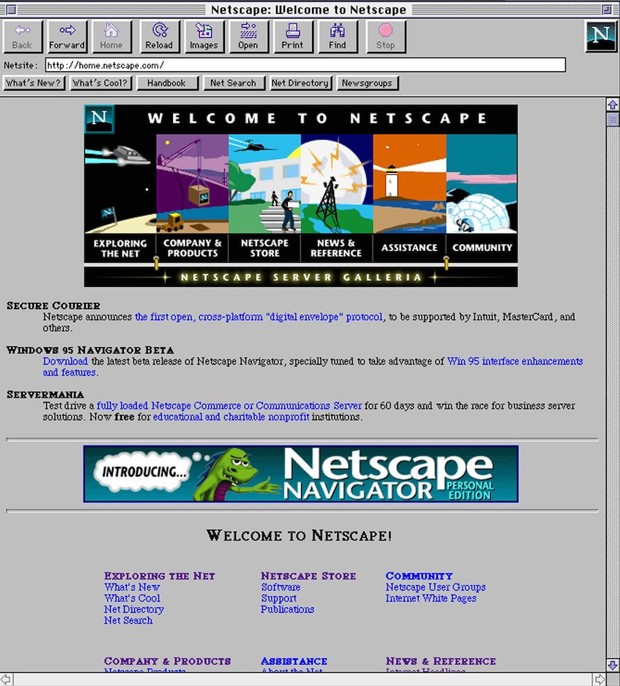
The 1995 homepage of Netscape Navigator, the dominant browser in the mid-1990s. (AP)
While AOL and Netscape helped early users find their way around the net, it was Geocities that gave them a home. Quite literally: In order to establish a presence on the nascent hosting site, users were tasked with finding an empty lot in one of the website’s 29 thematic neighborhoods. Whether it was the HotSprings (“where the focus is on health and fitness”) or Area51 (“A brave new world for science fiction and fantasy fans”), the ability to enter a community based on similar interests and hobbies, with fellow users understood as digital neighbors, was an alluring proposition.
“Discovery [was] so tough in that early period,” noted Ian Milligan, an associate professor of history at the University of Waterloo, who has done extensive research on Geocities. “People were surfing to find content, and these spatial metaphors helped them find what they were looking for.”
To artist Richard Veijen, giving a sense of Geocities’ physical dimension was essential as he sought to visualize the website after it was shuttered nearly a decade ago. When Yahoo announced it was deleting the site, Veijen created Deleted City, a virtual mapping of the entire 652-gigabyte collection. Veijen’s project captures Geocities’ liminal relationship between the digital and physical, mapping the site’s many neighborhoods as clustered information hubs, each comprised of thousands of individual pages.
Part of artist Richard Veijin’s map of Geocities, a website whose growth mimicked the physical expansion of cities into suburbs and used bucolic neighborhood names like “Dell” and “Meadow.” (Richard Veijin)
For Veijen, Geocities’ spatial emphasis was critical to its success, distinguishing it from other sites by giving users a clear understanding of its functionality. “I think it was a great example of introducing a new way of thinking to a large group of people,” Veijen said. “It did a good job of making various aspects of cyberspace, which is in itself a spatial reference, usable and accessible to a lot of people.”
But while Veijen’s visualization represents Geocities as a highly connected urban environment, the site was in practice very different. Beyond the neighborhood structure, which created a feeling of familiarity by making one’s digital “neighbors” easily accessible, Geocities hearkened back to U.S. settler colonialism. By calling its users “homesteaders,” the site offered them a vision of cyberspace as vast, uninhabited, ready to be populated. “We call our members ‘Homesteaders’ because they’ve staked a claim on their own plot of ‘land’ on the Internet,” one walk-through explained, suggesting a renewed American exceptionalism.
“The idea that in the beginning, cyberspace is an empty space that has to be populated, was I think easily linked to this idea of America being an ‘empty’ continent,” Veijen said. “They provided web space with a story, with a narrative.”
Not only were users encouraged to populate their virtual land like 19th-century pioneers, but they sprawled across it as Americans did in the middle of the 20th century. As users populated different neighborhoods, each community offered a fixed number of addresses (numbered 1,000 through 9,999), prompting the creation of thematically-appropriate suburbs. Dwarfing all other communities was “Heartland,” meant to “[represent] Main Street in cyberspace.”
Milligan argues that Heartland grew to be the largest community because it had the fewest subcultural distinctions, encouraging users interested in making a general homepage to call it home. Still, with an emphasis on “parenting, pets, and home town values,” the Heartland neighborhoods (including 41 suburbs with names like Plains, Meadows, Prairie, and Woods) also spoke to Geocities’ immense popularity with a specific demographic: wealthy, white, and American, those with the disposable income to become some of the net’s first users.
“Family is such a broad topic, you can take it so many different directions. There’s a lot of stuff focused on Christianity, a lot on genealogy,” Milligan said. “When people decided what neighborhood to pick, they were encouraged to look at sample sites and see what people are talking about, and if that’s what you want to talk about, you belong in this neighborhood.”
Hacking and squatting
Although Geocities is by far the best-known attempt at using a spatial metaphor to acclimate newcomers to the internet, another example suggests a logic not bound to the history of American suburbanization.
In 1994, a group of Amsterdam programmers launched the Digital City (De Digitale Stad in Dutch, or DDS), conceived as a digital forum for city residents to populate. Founded as an experiment supported by a $45,000 investment from the city government, DDS was an immediate hit, growing to more than 100,000 users in its first six months—a remarkable feat, considering the city itself only had a population of just under 1 million people. Born from the city’s rich legacy of communal space and open communication, DDS served as a genuine virtual city, a digital commons that connected residents to job opportunities, chat boards, and even a digital Metro.
Just as with Geocities, the DDS carried out its spatial metaphor to the fullest. But unlike Geocities, which used sprawling suburbs to accommodate its newest residents, DDS relied upon urban spatial tactics when the site filled up its predetermined 1,500 homes, building “flats” (multiple websites subdividing space behind the same virtual door), as well as letting users “squat” in abandoned homes. By encouraging business and government offices to populate virtual offices, DDS also served as a municipal repository, a kind of digital Yellow Pages.
The Amsterdam’s Digital City site had a more stacked, urban architecture than Geocities, with “flats” (multiple websites behind the same door) and virtual government and business offices.
Though the project shuttered in 2001, overrun by the explosion of new websites and a failed attempt at moving toward a for-profit model, DDS, much like Geocities, marks the significance of a spatial imaginary on the experience of early web adopters, eager to orient themselves in ways that could further enhance their own physical lives. For Gerard Alberts, a professor of the history of computing at the University of Amsterdam, it’s especially notable that the Dutch use the same word, kraken, for hacking as well as squatting, suggesting a direct lineage between the city’s legacy of squatting in the ’60s and ’70s into the anarchist-leaning work that created the DDS in the ’90s.
“People don’t talk about it because it’s so natural in Dutch to equate them, and this spatial metaphor is very deep in that anarchist culture that was ubiquitous in Amsterdam,” Alberts said. “Squatting a house was not just taking that space, but creating a whole alternative culture.”
When Yahoo purchased Geocities in 1999 for nearly $4 billion, it erased the distinct address structure that made Geocities appealing in the first place, contributing to its decline and eventual demise. (The final iteration of Geocities still online, hosted in Japan, will be closing in April this year.) And while the use of spatial descriptions of the internet have largely disappeared as people grew more comfortable online, their prevalence in several early web projects should serve as a reminder of the rapid transition that helped people grow comfortable with the internet in a short period of time.
Today, there’s a limited sense that the internet is tethered to our physical surroundings. One notable exception is Nextdoor, the social networking site that requires users to verify their addresses before participating in neighborhoods that typically comprise around 700 households. But to Alberts, it’s almost a moot point: As the digital has merged with our physical lives, there’s simply no longer a need to distinguish between the two in the way that people did just a couple of decades ago.
“In the time of Geocities, people would think, ‘Oh, I’m walking around in a different reality,’ and that is no longer the case. It’s all us,” Alberts said. “In the face of that technology, by the way we incorporate it, we define ourselves.”
Catherine Winters@CatherineOmega
The revelation that Nextdoor is available outside the US, followed by the revelation that it is not yet available i… twitter.com/i/web/status/1…
The U.S. Department of Justice (DOJ) is set to announce criminal charges related to embattled Chinese telecommunications hardware equipment manufacturer Huawei, reports Reuters.
Justice Department to announce criminal charges related to China's Huawei, sources say pic.twitter.com/i2Yp5aho5z
According to a tweet from Matt Ford, a law and justice reporter for The New Republic, a collection of U.S. officials — including acting attorney general Matthew Whitaker and FBI director Christopher Wray — are set to announce a “China-related law enforcement action” at 3:30 p.m. ET on January 28th, 2019.
Three Cabinet members and FBI Director Wray will announce a "China-related law enforcement action" at 3:30 PM ET, DOJ says. pic.twitter.com/cVcCaQK4cS
A later tweet from Ford explained that the DOJ pushed its media conference to 4:30pm ET.
It’s currently unclear if the charges pertain to Huawei’s global CFO Meng Wanzhou — who was arrested in Vancouver in December 2018 on allegations that she violated U.S. trade sanctions with Iran — or to President Donald Trump’s looming threat of an executive action banning U.S. companies from using any equipment from Huawei or Chinese hardware manufacturer ZTE.
It’s worth noting that Meng was granted bail, but currently faces potential extradition to the U.S.
Any extradition decision will depend on newly appointed Minister of Justice and Attorney General of Canada David Lametti, who has previously expressed opinions in favour of maintaining healthy Canada-China relations.
iOS and Android loyalty is reportedly at the highest ever, according to Consumer Intelligence Research Partners (CIRP).
CIRP measures loyalty by the number of people activating phones with the same OS as their previous device. According to CIRP’s data, iOS loyalty came in at 91 percent compared to a 92 percent loyalty measure for Android.
Android usually posts a higher loyalty rating than iOS, likely because of the vast array of phone options that run Android. In other words, users can remain loyal to Android while getting a phone from a different manufacturer every year.
However, CIRP noted that the 2018 trend indicates iOS loyalty could overtake Android sometime in 2019.
“Both systems have seen loyalty trending upward for the past several quarters, as customers have become comfortable with the features and consistency of their operating system,” said Mike Levin, partner and co-founder of CIRP.
“Learning a new operating system takes effort, so fewer and fewer customers have found the need to switch. This, coupled with the quality and reliability of new phones is likely contributing to the longer upgrade cycles we are witnessing.”
This elongated upgrade cycle certainly seems to have impacted Apple. The Cupertino-based company warned that its holiday quarter revenue would be lower than expected due to disappointing iPhone sales. Apple is expected to reports its latest finaicial results on January 29th.
The two budget smartphones sport the company’s ‘Infinity-V’ display, which features a small v-shaped notch positioned at the top centre of the display.
Samsung is launching the budget the ‘M Series’ in India on February 5th and will seel the duo of handsets through the company’s online store and Amazon.
The Galaxy M20 features a 6.3-inch display with a 2,340 x 1,080-pixel resolution and a 19.5:9 aspect ratio. Additionally, the phone offers an Exynos 7904 processor, 5,000mAh battery and either 4GB of RAM and 64GB of storage, or 3GB of RAM and 32GB of storage.
The M10, on the other hand, sports a 6.2-inch display, with a 1,520 x 720-pixel resolution, 7870 Exynos processor, 3,400mAh battery and either 2GB of RAM and 16GB of storage, or 3GB of RAM and 32GB of storage configurations. Oddly enough, this device utilizes older microUSB for charging and lacks a fingerprint scanner.
Additionally, both models sport expandable memory and Android 8.1 Oreo, though they will get Pie later this year, says Samsung. Both models will also utilize facial recognition functionality.
Camera-wise both phones feature a rear-facing dual camera setup with 13-megapixel and 5-megapixel sensors. The 5-megapixel rear-facing camera also sports an ultra-wide angle lens, while on the front, the phone features an 8-megapixel sensor.
The M20 costs ₹10,990 ($205 CAD) to ₹12,990 ($242), while the M10 costs ₹7,990 ($149) to Rs ₹8,990 ($167).
Although Samsung is bringing the M series to India first, the company will eventually launch the series globally. The timeline for the smartphone’s global release remains unknown.
Apple has announced that the App Store has given back $120 billion to developers since its inception in July 2008.
It’s important to note that this figure only accounts for earnings received once Apple takes its 30 percent cut, so the App Store has certainly generated even more money over the past decade.
Apple revealed at the Worldwide Developers Conference last June that App Store developers earned $100 billion. Altogether, Apple says that more than a quarter of that $120 billion total was earned last year alone.
Apple made the announcement at its Entrepreneur Camp in Cupertino, which hosts workshops and meetings with eleven female-founded app development companies.





 The search box top right gets a little bit lost in the search results listing. It could be handy to at least print out the search string (“Searching for: …”) at the top of the results list, if not making the search box larger and in a more central location. The search results themselves take the form of the name / description/tag of each hit (i.e. the notebook metadata) along with a fragment showing how the search terms appeared in context within the notebook.


 (The revision number doesn’t appear in the change history though, so it can be hard to reconcile a particular version with it’s appearance in the change history listing.)


 If feedback was provided, a comment icon identifies its presence and pops up the feedback in a tooltip when hovered over.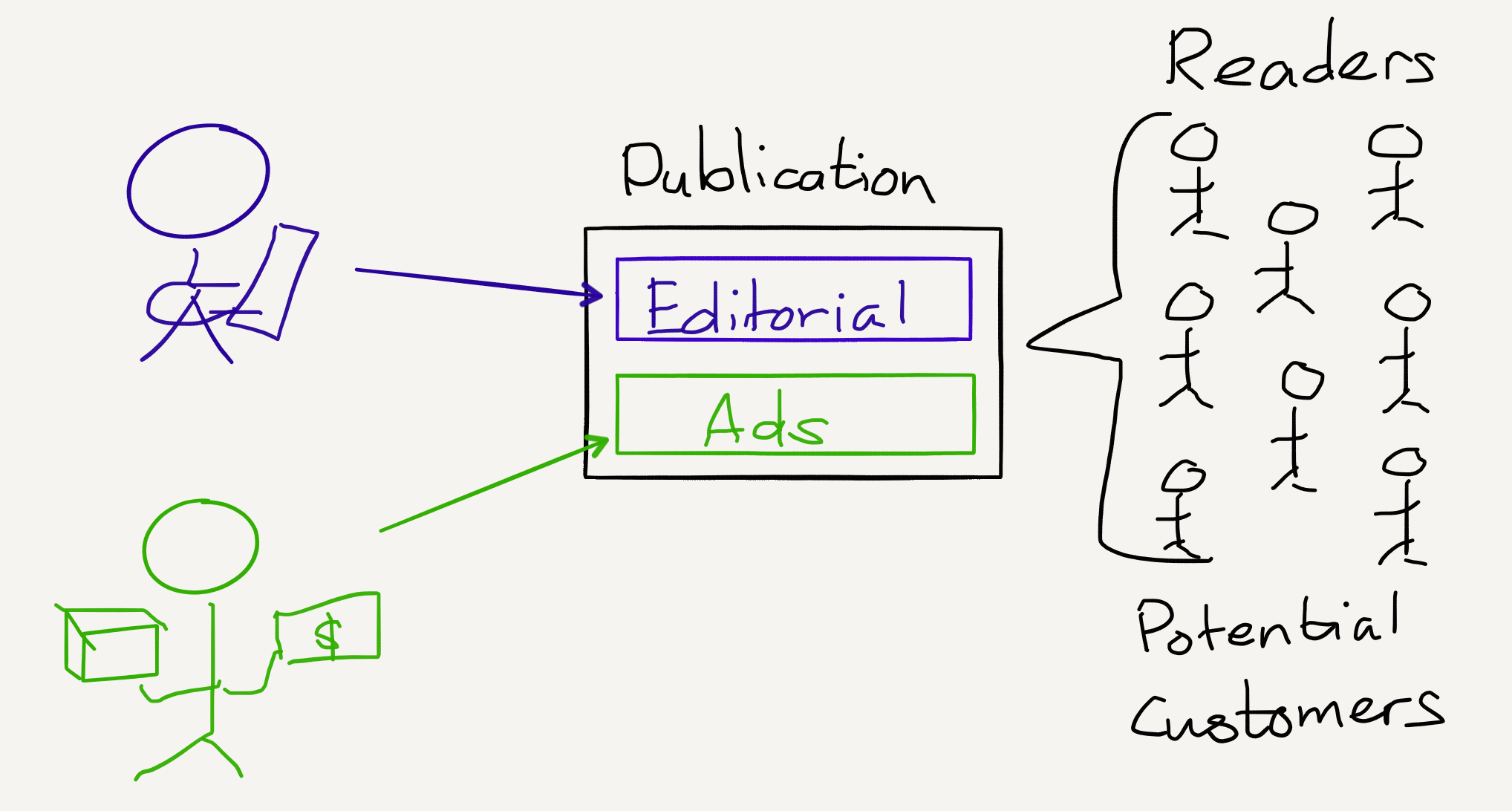


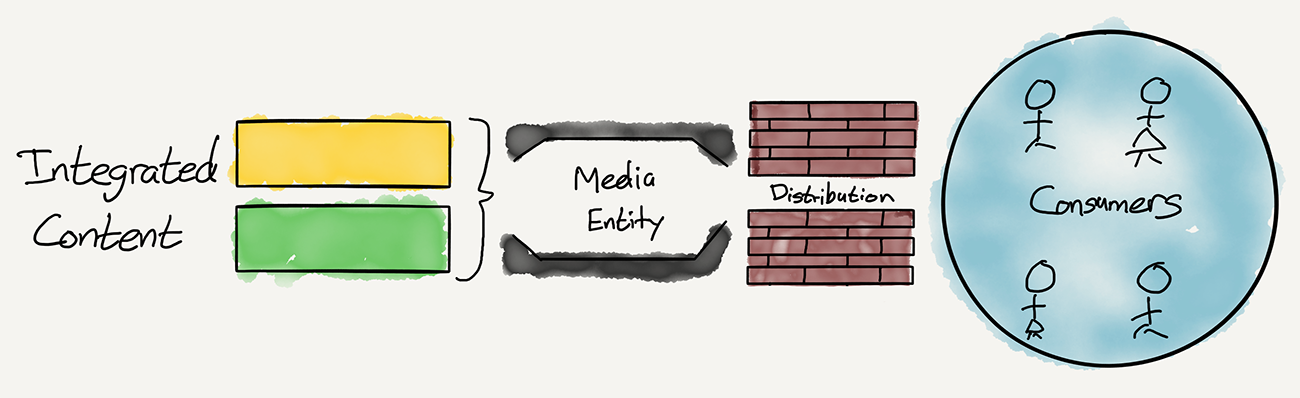



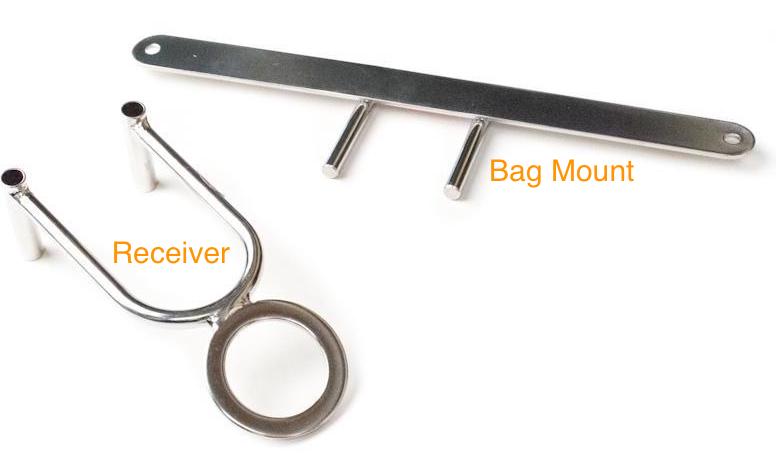









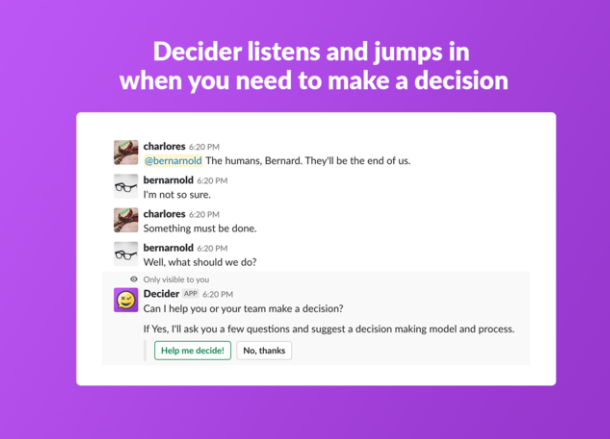
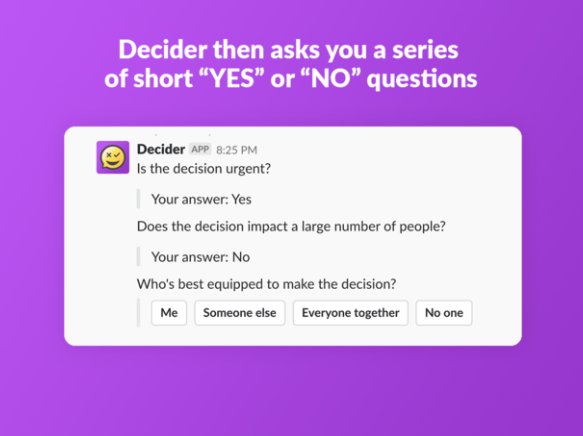
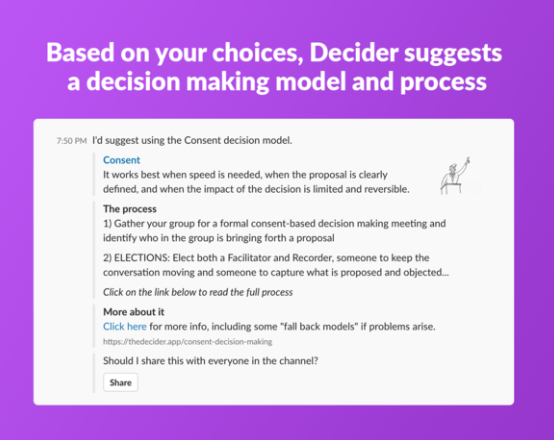
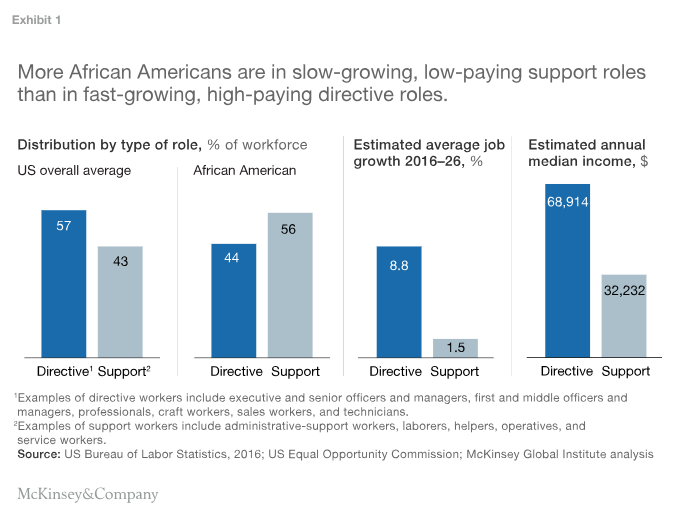

 CityLab | All Articles.